Tulsi (Holy Basil Tea)
typical season: sow Apr – Jun · harvest Jun – Oct · set your climate
The sacred Indian basil brewed as a warming, spicy-sweet tea called tulsi chai, revered in Ayurveda as an adaptogenic herb for stress relief.
On this pageOverview
Meet Tulsi (Holy Basil Tea)
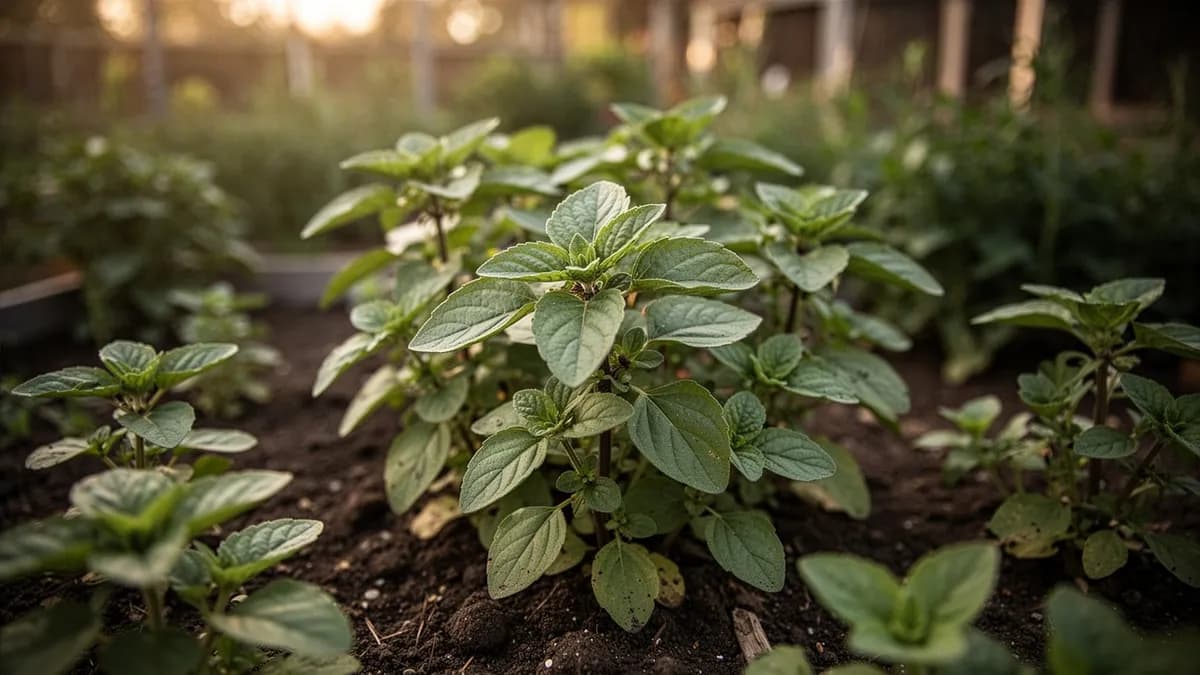
The sacred Indian basil brewed as a warming, spicy-sweet tea called tulsi chai, revered in Ayurveda as an adaptogenic herb for stress relief. Three varieties exist: Rama (green), Krishna (purple), and Vana (wild), each with slightly different flavor profiles for tea. Grow in warm conditions with regular moisture and harvest leaves and flower spikes for fresh or dried tea throughout the season.
When to plant Tulsi (Holy Basil Tea)
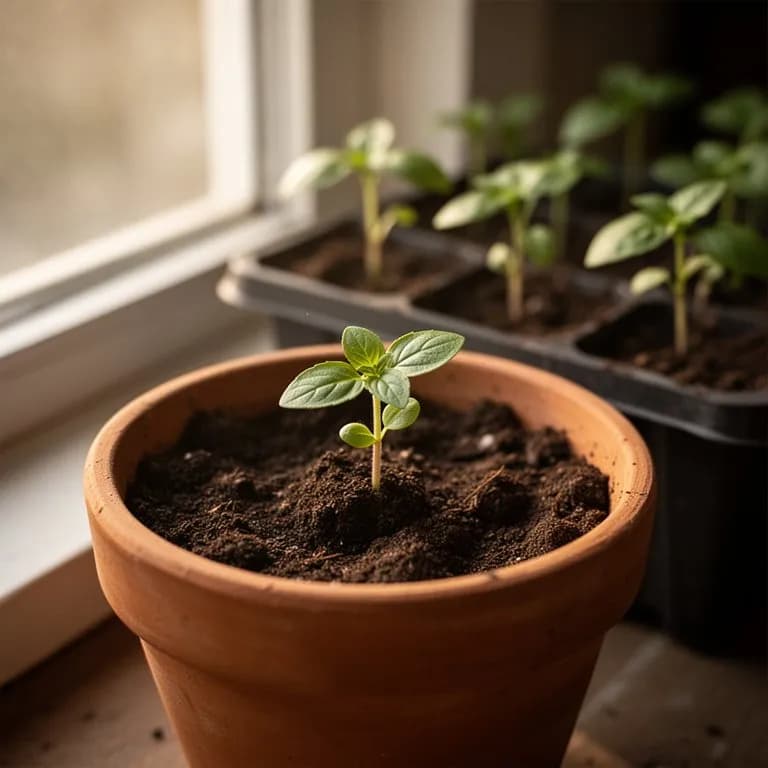
Sow tulsi seeds indoors 6-8 weeks before the last expected frost. Scatter tiny seeds on the surface of warm, moist seed compost—do not cover, as tulsi seeds need light for germination. Mist gently to settle seeds into contact with the compost. Maintain temperatures of 20-25°C with bottom heat for best results. Germination takes 7-14 days and can be erratic. Thin seedlings to the strongest when they have their first true leaves. Harden off gradually over 7-10 days before transplanting outdoors after all frost risk. Tulsi can also be propagated from stem cuttings—snip 10cm tips, strip lower leaves, and root in water or moist perlite in 1-2 weeks.
Your Tulsi (Holy Basil Tea) Year
Composed for Zone 7 · typical seasons · frost passes Apr 2, returns Nov 1
Plant Tulsi (Holy Basil Tea) Apr – Jun, pick Jun – Oct. Check the planting methods below and set your climate to personalize these windows.
Sowing Tulsi (Holy Basil Tea) this round? The next window opens Apr 1
One email two weeks before this window closes. We email you a few days before the next window opens where you garden. Plus one before the first autumn frost.
One email per milestone, never more than one a week. Unsubscribe with one tap. No account needed.
How to grow Tulsi (Holy Basil Tea)
Tulsi, or holy basil, is one of the most sacred plants in Hindu culture and one of the most important herbs in Ayurvedic medicine. A tender perennial native to the Indian subcontinent, tulsi grows as a bushy, aromatic herb reaching 30-60cm tall with a distinctive clove-peppery-mint fragrance quite different from sweet basil. In temperate climates it is grown as a warm-season annual, while in the tropics it persists as a short-lived perennial.
Sow seeds or transplant after all danger of frost has passed and soil has warmed to at least 18°C. Plant in full sun in fertile, well-drained soil with consistent moisture. Tulsi is more heat-tolerant than sweet basil and thrives in summer conditions. Space plants 30cm apart in beds or grow individually in 20cm pots. Pinch growing tips regularly to encourage bushy, multi-branched growth and delay flowering.
Tulsi benefits from rich soil and regular feeding—incorporate compost before planting and feed fortnightly with a balanced liquid fertilizer during active growth. Unlike sweet basil, tulsi's flowers are also harvested for tea, so flowering is not entirely undesirable. However, for maximum leaf production, remove flower spikes when they appear and allow only late-season flowers for seed saving. In tropical climates, tulsi may reseed freely and become a garden staple without annual replanting.
32 plants fit a 4 × 8 ft bed
Each Tulsi (Holy Basil Tea) wants 30 cm of elbow room. The planner keeps that spacing for you — every plant, every bed.
Tulsi (Holy Basil Tea)'s best neighbours
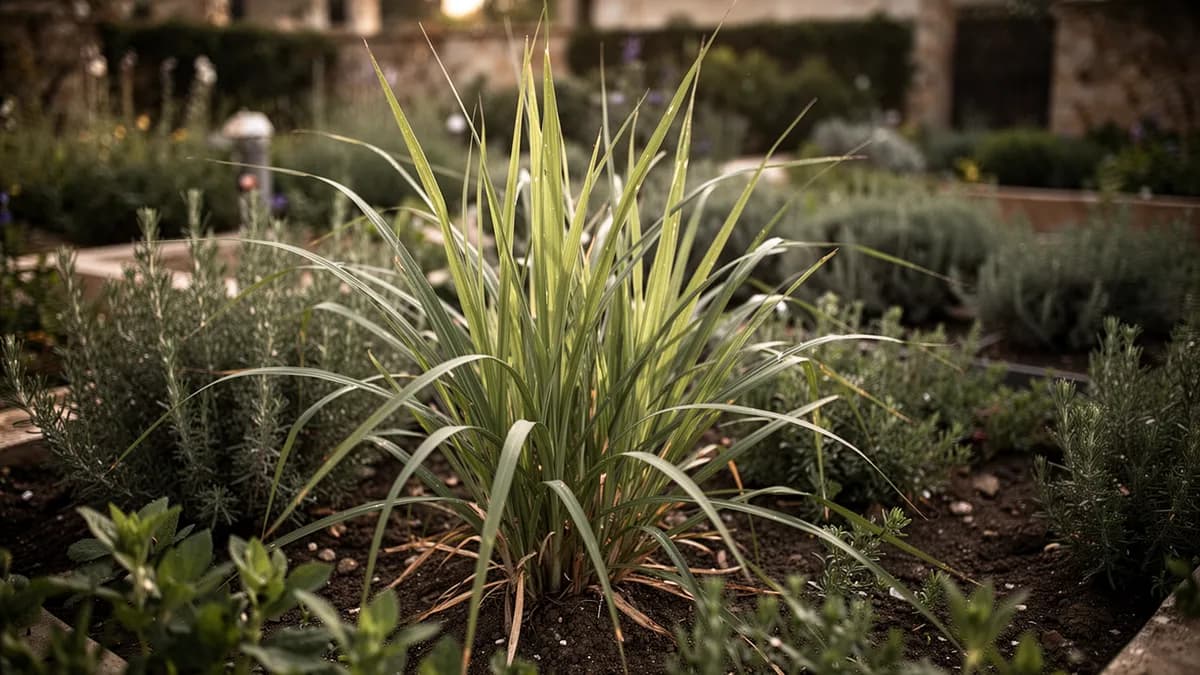
Tulsi is an excellent companion in the warm-season garden, repelling mosquitoes, flies, and various pest insects with its strong aromatic oils. Plant alongside tomatoes, peppers, and eggplant for mutual benefit—tulsi deters pests while benefiting from the warm microclimate created by larger vegetable plants. It grows well with other tropical herbs including lemongrass, ginger, and turmeric. In Indian tradition, tulsi is planted at the entrance of homes and near temple gardens. The flowers attract pollinators including bees and butterflies that benefit the entire garden.
Lemongrass belongs beside it.
Old growers' knowledge, checked against Tulsi (Holy Basil Tea)'s real companion table below — test any plant you're growing.
Related growing guides
Feed it well
Tulsi thrives in fertile, well-drained soil with a pH of 6.0-7.5, enriched with compost or aged manure before planting. It appreciates richer conditions than sweet basil and responds well to regular feeding. Apply balanced liquid fertilizer every two weeks during the growing season, or use a slow-release granular fertilizer at planting time. Mulch around plants with straw or leaf mold to conserve moisture and suppress weeds. For container growing, use a quality potting mix amended with extra compost and ensure pots have excellent drainage. Avoid letting soil dry out completely, as tulsi wilts dramatically in drought.
Ideal Temperature
Hardiness Zone Compatibility
From seed to harvest, stage by stage
Seed Germination
Tulsi seeds are very small and require surface sowing on warm, moist seed-starting mix. They need light exposure and consistent warmth of 20-25°C (68-77°F) to germinate reliably. Under optimal conditions, tiny white radicles emerge within 7-14 days. Germination is slow and uneven below 18°C (65°F), so patience and bottom heat are essential for success.
Seedling Establishment
Round cotyledon leaves unfold first, followed by the first true leaves which are small, oval, and finely serrated with a light covering of aromatic trichomes. Seedlings are slender and delicate at this stage, developing a thin central stem that gradually strengthens. The characteristic clove-pepper scent becomes noticeable when leaves are gently brushed.
Vegetative Growth
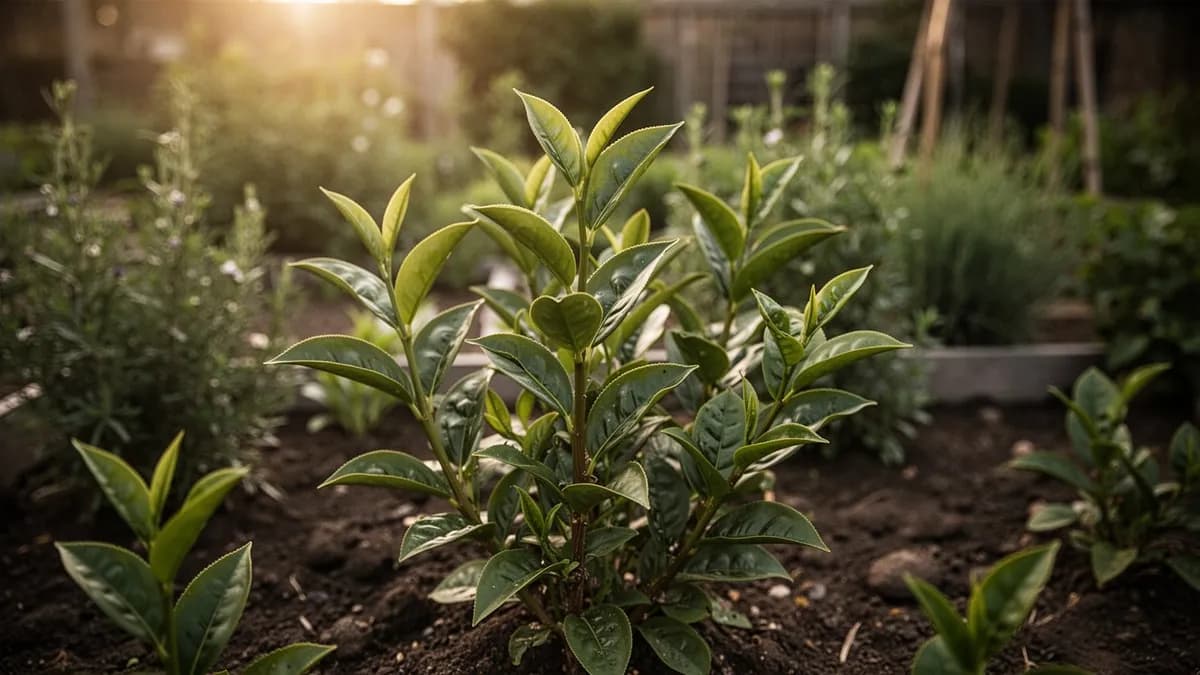
Tulsi enters a vigorous growth phase as temperatures rise, developing a semi-woody central stem with multiple branching laterals. Leaves enlarge to their full size — elliptical with serrated margins and covered in fine glandular hairs that release aromatic oils when touched. Plants grow 30-60 cm tall and wide, forming attractive rounded mounds of intensely fragrant foliage.
Flowering
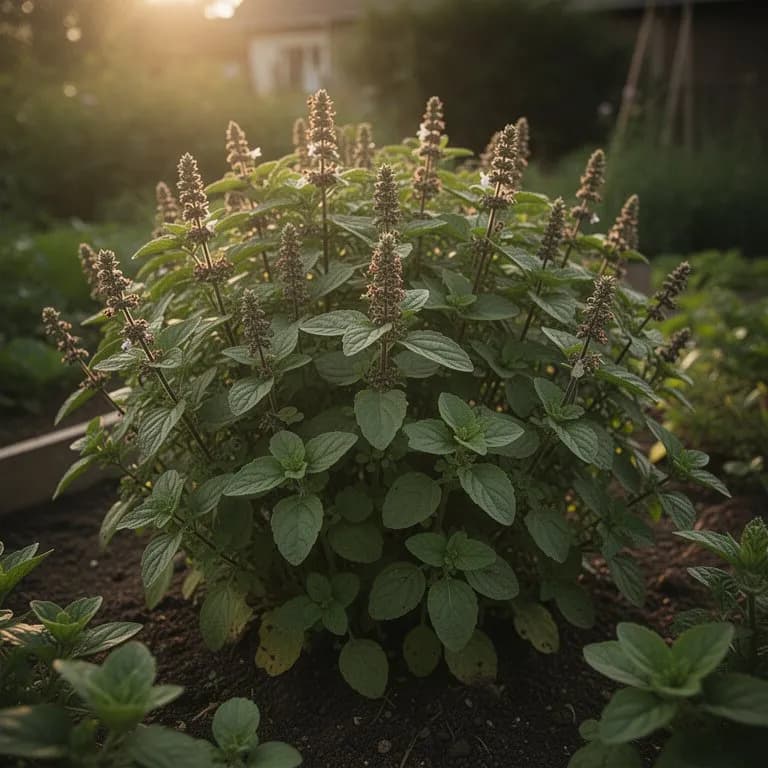
Terminal flower spikes emerge from stem tips bearing whorls of small tubular flowers in purple, pink, or white depending on the cultivar. The racemes elongate over several weeks, opening from the bottom upward and attracting bees, butterflies, and hoverflies. Essential oil concentration in the leaves peaks during early flowering, making this the optimal harvest window for medicinal use.
Seed Maturation
Pollinated flowers develop small dark brown to black nutlet seeds within papery calyxes along the spent flower spikes. Seeds become mucilaginous when wet, a characteristic used in traditional Asian beverages and desserts. Lower leaves may yellow and drop as the plant channels resources into seed production, and overall vegetative growth slows considerably.
End of Season
As autumn temperatures fall below 10°C (50°F), tulsi — a tropical perennial treated as an annual in temperate climates — rapidly declines. Leaves darken and wilt, stems become woody and unproductive, and the first light frost kills the plant entirely. In frost-free zones (USDA 10-12), tulsi persists as a short-lived perennial for two to three years before becoming too woody.
Start seeds indoors 6-8 weeks before the last frost. Press seeds gently onto moist mix without burying them — they are light-dependent germinators. Cover trays with clear humidity domes and place on a heat mat set to 23°C (73°F). Mist the surface daily with a fine spray to maintain even moisture without dislodging seeds.
Caring for Tulsi (Holy Basil Tea) month by month
What to do each month for your Tulsi (Holy Basil Tea)
October
You are hereIn zones 8 and below, harvest all remaining foliage before the first frost. Collect dried seed heads and store seeds in paper envelopes in a cool dry place. Pull and compost spent plants. Move potted tulsi indoors to the brightest available windowsill or under grow lights. Reduce watering frequency for indoor plants as growth naturally slows.
Harvesting Tulsi (Holy Basil Tea)
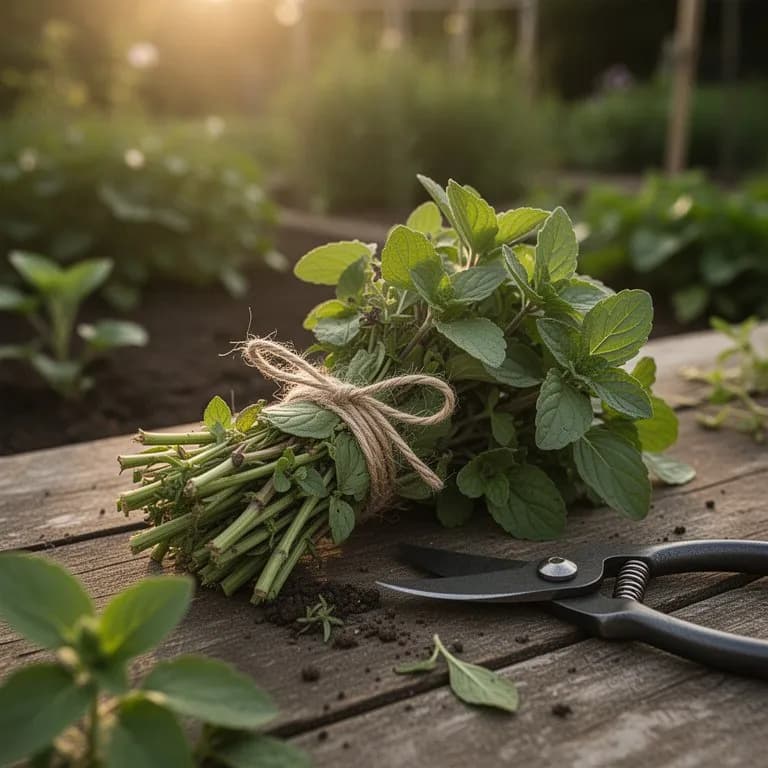
Begin harvesting tulsi once plants are 15-20cm tall with multiple branches. Pinch or cut stem tips regularly, taking 10-15cm of growth including leaves and any developing flower buds. This encourages branching and continuous production. For tea purposes, both leaves and flower spikes are used—the flowers have a concentrated clove-like flavor. The most aromatic harvest is taken in the morning after dew has dried. For large dried tea harvests, cut the entire plant back to 10cm above ground 2-3 times during the growing season. Plants recover quickly in warm conditions.
assuming you plant when the window opens — set your real date
Pick Tulsi (Holy Basil Tea) promptly and the plant keeps producing.
Storage & Preservation
Tulsi is best used fresh, as the aromatic essential oils are most potent immediately after harvest. For drying, bundle small stems and hang upside down in a warm, dark, well-ventilated room for 5-7 days, or use a dehydrator at 35-40°C. Crumble dried leaves and store in airtight, opaque containers away from heat and light. Properly dried tulsi retains good flavor for 12-18 months. Fresh tulsi can be frozen—blanch briefly, pat dry, and freeze on a tray before transferring to bags. Tulsi-infused honey is made by packing fresh leaves in a jar and covering with raw honey; use after 2-4 weeks of infusion.
What goes wrong — and the fix
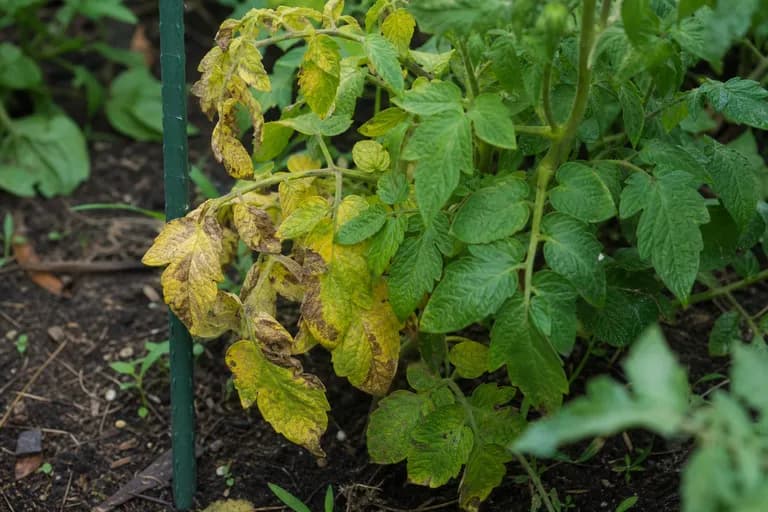
Fusarium Wilt
DiseaseWilting of individual stems or the entire plant despite adequate watering. Browning of vascular tissue visible when stems are cut cross-sectionally.
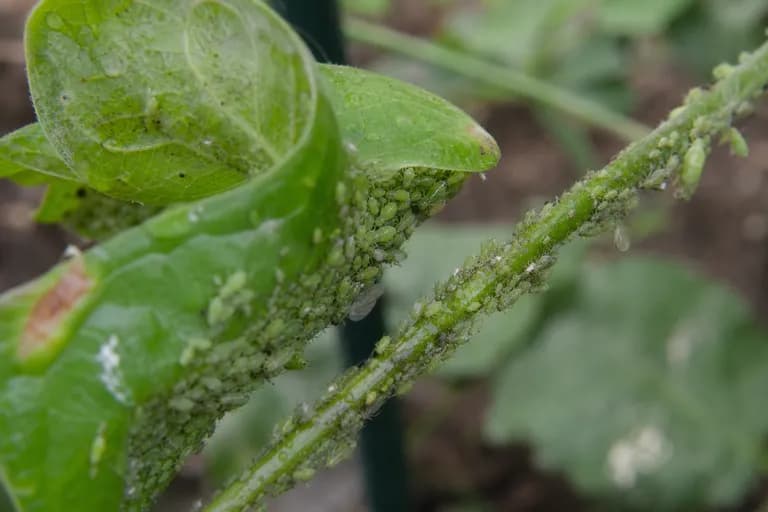
Aphids
PestClusters of small green or black insects on tender shoot tips and flower buds. Curling new growth and sticky honeydew residue.
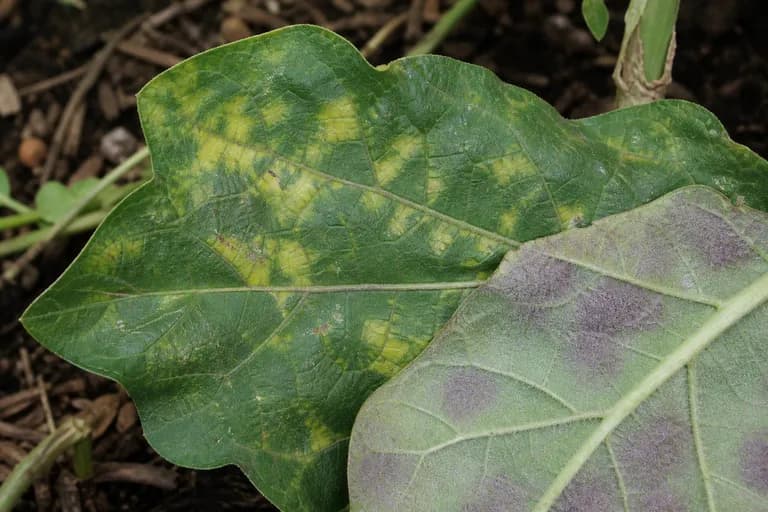
Downy Mildew
DiseaseYellowing patches on upper leaf surfaces with grey-purple fuzzy growth on undersides. Leaves may curl downward and eventually brown and die.
Troubleshooting Common Problems
Tulsi's primary limitation in temperate climates is its frost sensitivity—it is killed by the lightest frost. Start seeds indoors 6-8 weeks before the last frost to maximize the growing season. Slow germination can frustrate growers; ensure warm soil temperatures (20-25°C) for reliable sprouting. Leggy, sparse plants result from insufficient light or failure to pinch tips regularly—tulsi needs full sun and regular harvest to stay bushy. In cool, wet summers, downy mildew and other fungal diseases can be problematic; provide maximum sun and air circulation. Bolting to flower is less of a concern than with sweet basil, as tulsi flowers are also harvested for tea.
Growing Tips
- Always start tulsi seeds indoors on a heat mat set to 22-25°C (72-77°F) because germination is extremely unreliable in cool soil. Unlike sweet basil, tulsi will not germinate at all below 18°C and even at marginal temperatures the process is slow and patchy.
- Surface-sow seeds by pressing them gently onto moist seed-starting mix without covering. Tulsi seeds are light-dependent germinators and burying them even a few millimeters deep will significantly reduce your germination rate. A thin dusting of vermiculite helps retain moisture while still transmitting light.
- Begin pinching the central growing tip as soon as plants reach 15 cm tall and repeat every two weeks on all new side shoots. Each pinch forces two new branches from the node below, transforming a single-stemmed plant into a dense bushy shrub that produces far more harvestable foliage over the season.
- Plant tulsi in the warmest and most sheltered spot available — walls facing the midday sun, raised beds, and dark-colored containers that absorb solar heat all provide the extra warmth this tropical herb craves. Avoid windy or exposed positions that cool the foliage and slow growth.
- Water deeply but infrequently, allowing the top 3 cm of soil to dry between waterings. Tulsi is notably more drought-tolerant than sweet basil and resents constantly wet roots. Overwatering is the most common cause of root rot and fungal problems in home-grown tulsi.
- Harvest by cutting whole stems rather than plucking individual leaves. Snip each stem just above a leaf node, removing the top third of the branch. This pruning method stimulates two new shoots from the node below and keeps the plant compact, productive, and free of woody unproductive growth.
- Grow tulsi as a companion plant near tomatoes, peppers, eggplant, and cucurbits. Its potent aromatic oils repel aphids, whiteflies, and mosquitoes while its flowers attract bees, hoverflies, and predatory wasps — providing both pest deterrence and pollination services to the entire garden bed.
- Take 10-15 cm stem cuttings in late summer and root them in a glass of water on a sunny windowsill. Tulsi roots readily within seven to ten days. Pot up rooted cuttings and grow them under supplemental light indoors through winter to maintain a small but steady supply of fresh leaves year-round.
- Choose the right variety for your goals: Rama tulsi (green leaf) is mildest and best for daily tea; Krishna tulsi (purple leaf) has the richest, most complex flavor for cooking; Vana tulsi (wild forest type) is the most cold-hardy and vigorous for ornamental plantings and pollinator habitat.
- Use containers at least 25 cm (10 inches) in diameter with generous drainage holes for container growing. Tulsi develops a substantial taproot and lateral root system that becomes stressed in small or waterlogged pots. Unglazed terracotta is ideal because it allows excess moisture to evaporate through the pot walls.
Pick your Tulsi (Holy Basil Tea)
Rama Tulsi (Green Holy Basil)
The most common variety with green leaves and a mild, mellowing clove-pepper flavor. The most widely used variety for tulsi tea and the easiest to grow.
Krishna Tulsi (Purple Holy Basil)
Distinguished by its striking dark purple stems and leaves, with a sharper, more peppery flavor. Higher in essential oils and considered the most medicinally potent variety.
Vana Tulsi (Wild Holy Basil)
A larger, more tree-like variety that grows wild across Asia. Lighter, more lemony flavor than Rama or Krishna, often used in blended tulsi teas.
Kapoor Tulsi (Temperate Tulsi)
A variety better adapted to cooler climates with a strong camphor note in its aroma. Sets seed more readily than other varieties, useful for annual cultivation in temperate regions.
Premium organic tulsi tea retails for $10-18 per 100g at health food stores, and branded tulsi tea bags cost $7-12 for a box of 18-20 sachets. A single tulsi plant grown from a $3-4 seed packet produces 100-250g of dried leaves over one growing season — equivalent to $15-45 worth of store-bought dried tulsi. A modest planting of four to six plants supplies a full year's worth of daily tulsi tea for a household, saving $60-150 compared to purchasing commercial products. Fresh tulsi, rarely available outside specialty Indian and Thai markets, commands $4-6 per small bunch, making homegrown tulsi an outstanding value for both culinary and wellness use.
Quick recipes
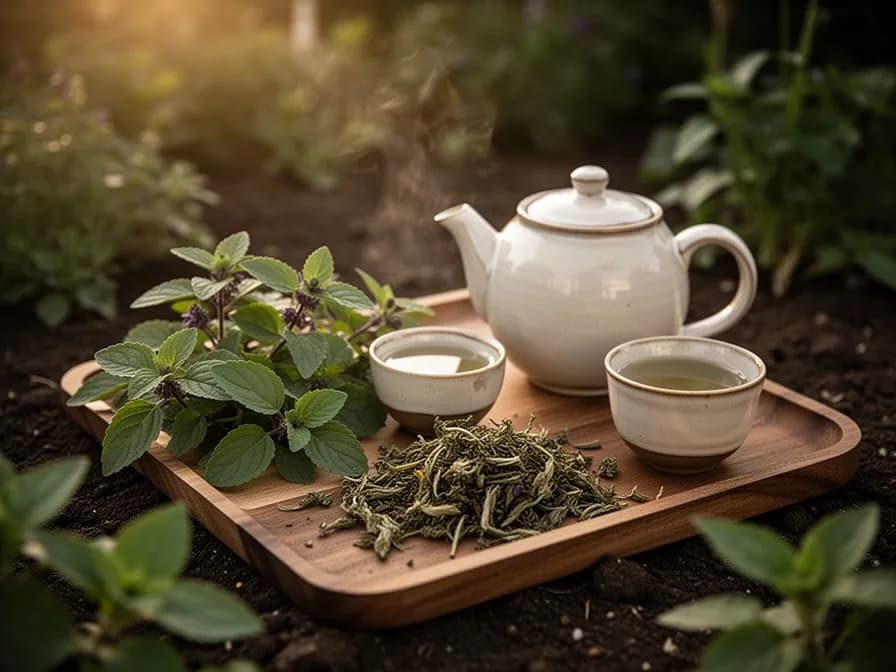
Classic Tulsi Chai
12 minA fragrant Ayurvedic tea that combines the peppery warmth of fresh tulsi leaves with warming spices. This traditional preparation has been a cornerstone of Indian wellness routines for centuries, valued for its calming adaptogenic properties and ability to soothe the throat and settle the stomach after meals.
9 ingredientsTulsi Pesto with Walnuts
10 minA vibrant twist on classic Italian pesto that replaces sweet basil with tulsi for a more complex, peppery-clove flavor. This pesto pairs beautifully with pasta, grilled vegetables, and flatbreads. The unique aromatic profile of tulsi transforms a familiar sauce into something distinctly memorable.
8 ingredientsTulsi and Ginger Lemonade
8 minA refreshing summer beverage that infuses lemonade with the aromatic complexity of fresh tulsi and the gentle bite of ginger. Served over ice, this drink showcases tulsi's ability to elevate simple ingredients into something extraordinary while providing a gentle intake of the herb's beneficial essential oils.
7 ingredientsCulinary Uses
Tulsi makes an outstanding herbal tea—steep fresh or dried leaves and flowers in hot water for 5-10 minutes for a warming, spicy-sweet infusion with notes of clove, pepper, and citrus. It is the primary ingredient in tulsi chai, often blended with ginger, cardamom, and black pepper. Beyond tea, tulsi is used in Thai and Southeast Asian cooking, where it is known as holy basil or Thai holy basil—it adds a distinctive peppery kick to stir-fries, curries, and soups. Fresh tulsi makes an aromatic addition to salads, cocktails, and infused waters. Tulsi pesto, made with the leaves as a basil substitute, has a unique spicy-herbal flavor.
What's inside
Health Benefits
- Tulsi is one of the most well-researched adaptogenic herbs in traditional medicine — clinical trials have demonstrated that regular consumption helps normalize cortisol levels, reduce perceived anxiety, and improve the body's overall resilience to physical and emotional stressors.
- The high eugenol content in tulsi provides significant natural anti-inflammatory activity by inhibiting COX-2 enzyme pathways, offering potential support for managing chronic inflammatory conditions and associated pain without the gastrointestinal side effects of synthetic anti-inflammatories.
- Multiple controlled studies indicate that tulsi consumption can support healthy blood glucose regulation by improving insulin sensitivity and reducing fasting blood sugar. Key compounds including ursolic acid and rosmarinic acid appear to enhance pancreatic beta-cell function.
- Tulsi's essential oils — particularly eugenol, camphene, and cineole — demonstrate broad-spectrum antimicrobial activity against bacteria, fungi, and certain viruses, validating the traditional Ayurvedic use of tulsi tea as a first-line remedy for respiratory and throat infections.
- Rich in powerful antioxidants including orientin, vicenin, rosmarinic acid, and apigenin, tulsi helps neutralize free radicals and reduce oxidative stress. Regular consumption is associated with improved markers of cardiovascular health and cellular protection against premature aging.
- Traditional Ayurvedic use of tulsi for respiratory health is supported by modern pharmacological evidence of its bronchodilatory, anti-tussive, and expectorant properties, helping open airways, calm coughs, and clear congestion during seasonal respiratory challenges.
Where Tulsi (Holy Basil Tea) comes from
Tulsi (Ocimum tenuiflorum, formerly classified as Ocimum sanctum) traces its origins to the Indian subcontinent, where archaeological and literary evidence confirms its cultivation for more than 3,000 years. Wild populations still grow across north-central India in forest clearings, disturbed soils, and along riverbanks at elevations from the plains up to 1,800 meters in the Himalayan foothills. The earliest written references appear in Vedic texts dating to 1500-500 BCE, where tulsi was already described as a sacred and healing plant integral to daily spiritual practice.
Tulsi occupies a position in Indian culture unlike any other herb in the world. In Hinduism, the plant is venerated as an earthly manifestation of the goddess Lakshmi and is considered a living bridge between the human and divine realms. Every traditional Hindu household is thought to be incomplete without a tulsi plant growing in the courtyard, tended with the same reverence as a family deity. In Ayurvedic medicine, practitioners classified tulsi as a rasayana — a rejuvenating tonic that promotes longevity — and prescribed it for respiratory infections, digestive disorders, skin ailments, fevers, and as a daily adaptogenic tea to strengthen the body's resistance to stress and disease.
From its Indian heartland, tulsi spread along ancient maritime and overland trade routes to Southeast Asia, where it became essential to Thai, Vietnamese, Malay, and Indonesian culinary and medicinal traditions. Thai holy basil, known as krapao, became the irreplaceable herb in pad krapao and other fiery stir-fried dishes. European botanists first documented the plant during the seventeenth century, but it remained a botanical curiosity in the West until the global wellness movement of the late twentieth century generated renewed interest in Ayurvedic adaptogens. Today tulsi is cultivated commercially in India, Thailand, Australia, East Africa, and across the Americas, and is marketed globally as herbal tea, essential oil, tincture, and supplement capsules.
Tulsi (Holy Basil Tea): did you know?
Fascinating facts about Tulsi (Holy Basil Tea)
Tulsi is considered the most sacred plant in Hinduism and is worshipped as a living embodiment of the goddess Lakshmi. Over 100 million Indian households maintain a dedicated tulsi plant on a raised pedestal called a vrindavan, where daily prayers are offered and oil lamps are lit at dusk.
Tulsi (Holy Basil Tea) questions, answered
When should I plant Tulsi (Holy Basil Tea)?
What are good companion plants for Tulsi (Holy Basil Tea)?
What hardiness zones can Tulsi (Holy Basil Tea) grow in?
How much sun does Tulsi (Holy Basil Tea) need?
How far apart should I space Tulsi (Holy Basil Tea)?
What pests and diseases affect Tulsi (Holy Basil Tea)?
How do I store Tulsi (Holy Basil Tea) after harvest?
What are the best Tulsi (Holy Basil Tea) varieties to grow?
What soil does Tulsi (Holy Basil Tea) need?
What is the difference between tulsi and regular sweet basil?
Can tulsi be grown indoors all year?
How should I dry and store tulsi for making tea?
Is it safe to drink tulsi tea every day?
Why are my tulsi leaves turning yellow?
Which tulsi variety is best for beginners?
Plant these alongside Tulsi (Holy Basil Tea)
More Tea Herbs
Grow your best Tulsi (Holy Basil Tea) yet — and everything around it.
Start a free plan today. Lay out your beds, drop in your Tulsi (Holy Basil Tea), and let PlotMyGarden handle the timing, spacing, companions and reminders from seed to harvest basket.
