Tea Plant
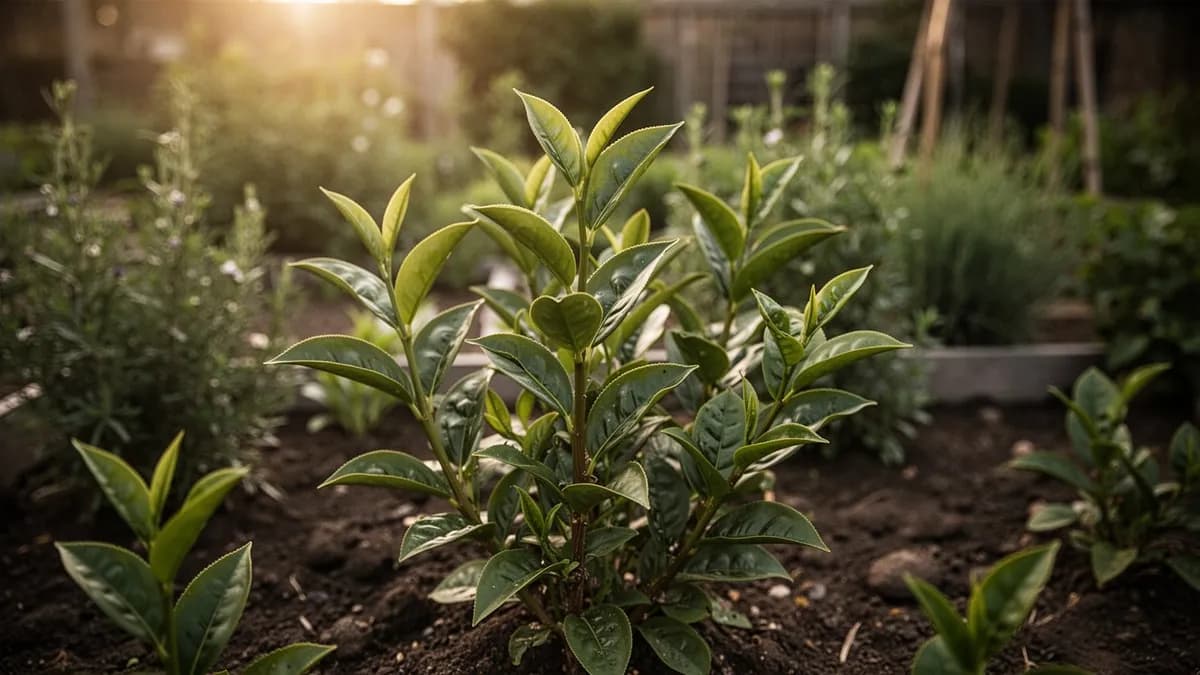
The actual tea plant from which all true tea types (green, black, white, oolong) are produced, an evergreen shrub with glossy leaves.





On this pageOverview
Meet Tea Plant
The actual tea plant from which all true tea types (green, black, white, oolong) are produced, an evergreen shrub with glossy leaves. Home-grown tea is surprisingly easy in acidic, well-drained soil with partial shade and regular moisture. Pluck the top two leaves and bud for the finest tea and process by steaming for green tea or fermenting for black tea.
When to plant Tea Plant
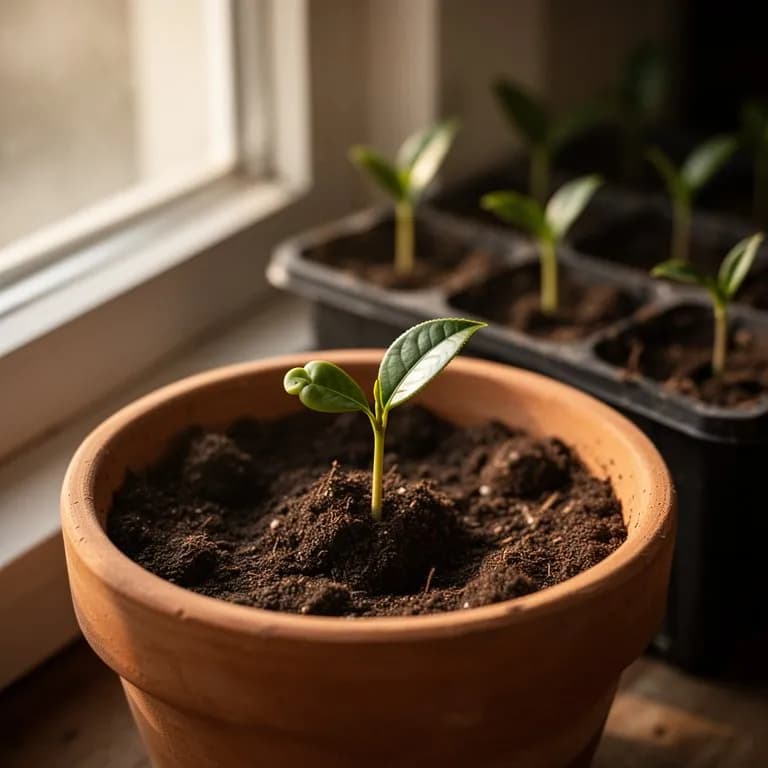
Tea plants are best grown from cuttings or purchased as nursery plants for faster results. If growing from seed, use fresh seeds (they lose viability quickly). Soak in warm water for 24 hours, then sow 2cm deep in acidic seed compost. Keep at 20-25°C with consistent moisture. Germination takes 4-8 weeks. Seedlings grow slowly for the first year. For cuttings, take 7-10cm semi-ripe cuttings in summer, insert into acidic compost with bottom heat. Rooting takes 8-12 weeks.
Your Tea Plant Year
Composed for Zone 7 · typical seasons · frost passes Apr 2, returns Nov 1
Plant Tea Plant Mar – May, pick Apr – Sep. Check the planting methods below and set your climate to personalize these windows.
How to grow Tea Plant
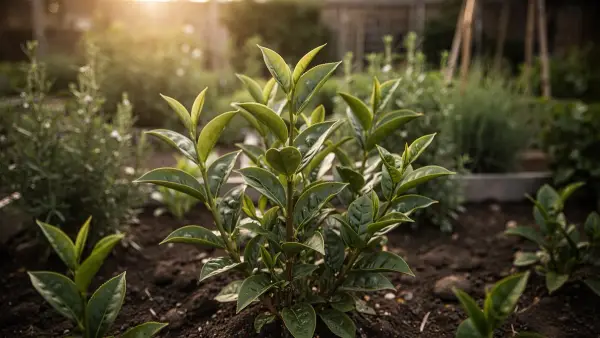
The tea plant is an evergreen shrub that in the wild can grow into a small tree but is typically maintained at 90-150cm through regular plucking and pruning. With glossy, serrated dark green leaves and small fragrant white flowers, it makes a handsome ornamental as well as a productive tea source. Home-grown tea is surprisingly achievable and rewarding.
Plant in partial shade with acidic, well-drained, humus-rich soil—the same conditions that suit rhododendrons and azaleas. Space plants 90cm apart. Water regularly and consistently, especially during hot weather, as the tea plant prefers evenly moist but never waterlogged soil. Mulch deeply with pine needles, bark, or leaf mold to maintain soil acidity and moisture.
Tea plants are hardier than many people realize—the var. sinensis (Chinese tea) tolerates temperatures to about -12°C once established, while var. assamica (Assam tea) is more tropical and less cold-hardy. Begin plucking the top two leaves and bud from the third year onward. Prune annually in late winter to maintain a bushy, table-top shape that maximizes the number of harvestable shoots.
2 plants fit a 4 × 8 ft bed
Each Tea Plant wants 90 cm of elbow room. The planner keeps that spacing for you — every plant, every bed.
Related growing guides
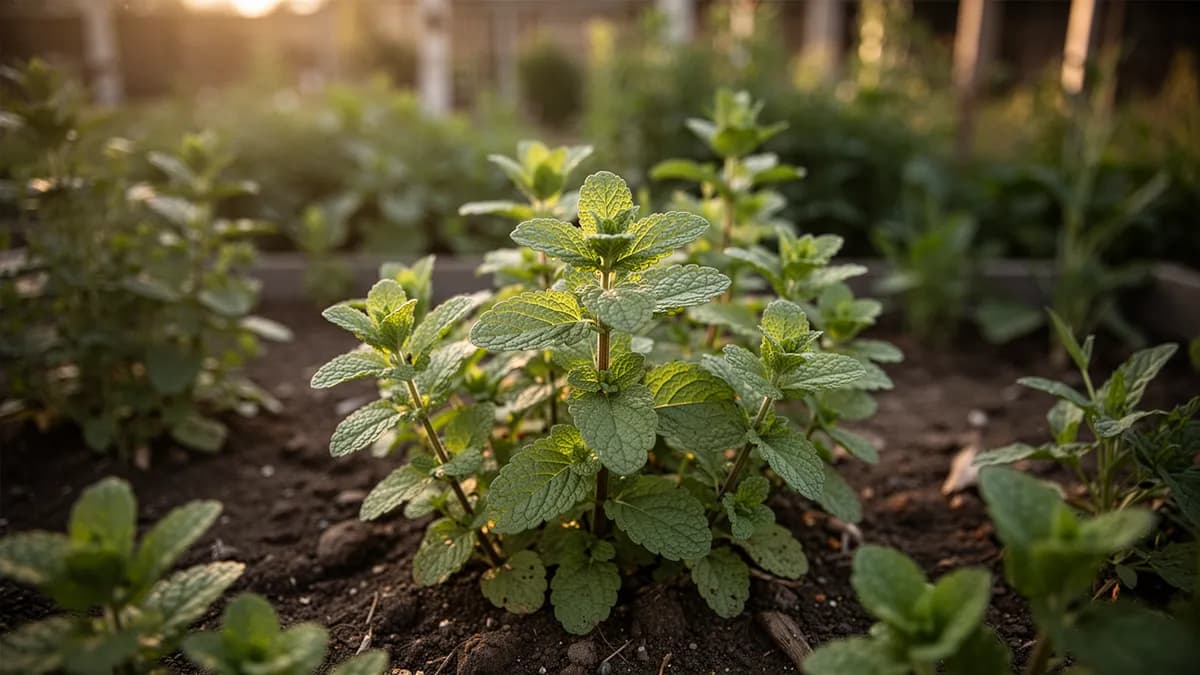
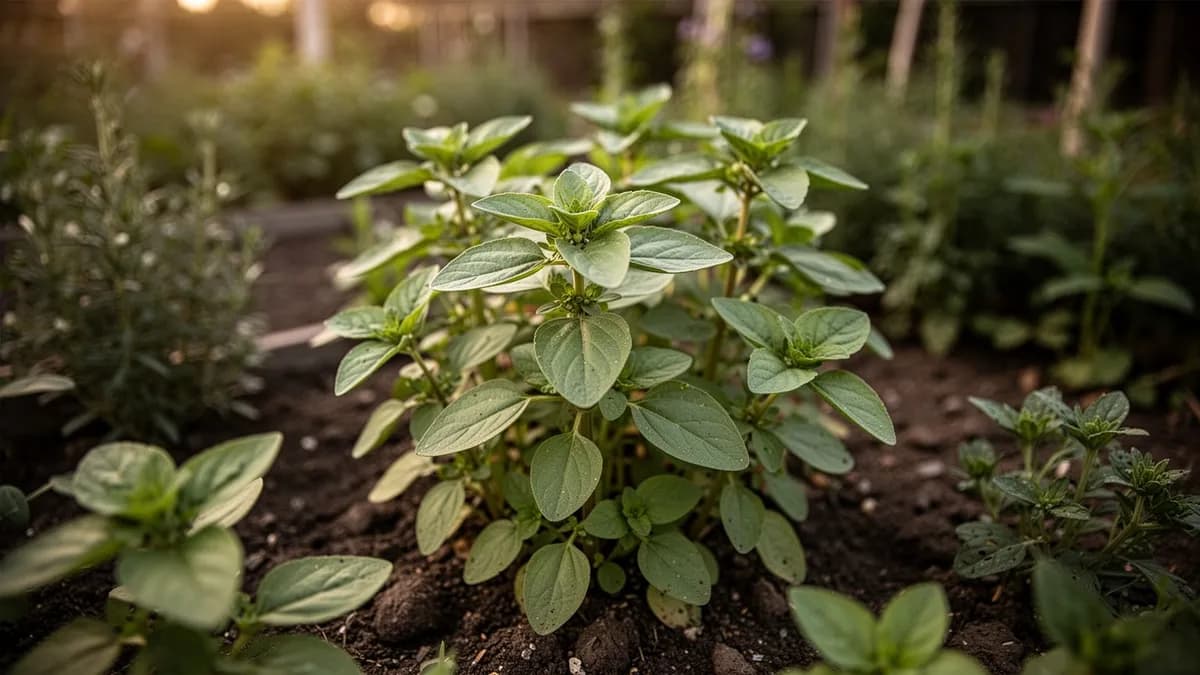
Feed it well
Tea requires acidic soil with a pH of 4.5-6.0—critical for nutrient uptake and plant health. Amend planting areas with ericaceous compost, pine bark, and leaf mold. Feed with an ericaceous (acid-loving plant) fertilizer in spring and again in midsummer. Top-dress annually with pine needle mulch to maintain acidity. Avoid lime and alkaline amendments. A soil test every few years ensures the pH remains in the ideal range.
Ideal Temperature
Hardiness Zone Compatibility
From seed to harvest, stage by stage
Seed Germination
Tea seeds are round, chestnut-brown, and roughly the size of a hazelnut. They require pre-soaking in water for 24-48 hours before sowing 2-3 cm deep in warm, moist, acidic seed-starting mix. Germination is slow and irregular compared to most garden plants.
Seedling Establishment
Young seedlings emerge with small, pale green leaves that gradually darken as they mature. The taproot begins developing during this stage, making the plant sensitive to transplant shock. Growth is slow but steady under proper conditions.
Vegetative Growth
The plant develops its characteristic glossy, leathery, dark green leaves with finely serrated edges. Branching increases and the bush begins to take shape. Leaves become progressively larger and the plant grows 20-40 cm in its first year under good conditions.
First Harvest Readiness
After 1-3 years, the plant is sufficiently established to begin light harvesting. New flushes of tender, bright green leaves appear at the tips of branches throughout the growing season. The classic two-leaves-and-a-bud plucking standard can now be followed.
Mature Production
By year 3-5 the tea plant reaches full production capacity, generating multiple flushes of harvestable growth from spring through autumn. The bush is dense, well-branched, and can be maintained at a compact 1-1.5 m height through regular pruning and plucking.
Flowering and Seed Set
Mature tea plants produce small, fragrant white flowers with prominent yellow stamens in autumn and early winter. These develop into round seed capsules containing 1-3 seeds each. Flowering typically indicates the plant is well established and under moderate stress.
Maintain soil temperature between 20-25°C and keep the mix consistently moist but not waterlogged. Cover trays with a humidity dome or plastic wrap to retain moisture. Patience is key as germination can take 4-8 weeks.
Caring for Tea Plant month by month
What to do each month for your Tea Plant
October
You are hereFinal harvests of the season as growth slows. Clean up fallen leaves around the base of the plant to reduce overwintering pest and disease pressure. Check soil moisture and water deeply before the first frost if conditions are dry.
Know exactly what to do in your garden — every month
One email at the start of each month: what to sow, plant, and tackle right now — for your Tea Plant and everything growing around it. Plus a short starter course that helps you dodge the classic mistakes.
- What to do, right now
- Matched to your season
- Starter course included
Harvesting Tea Plant
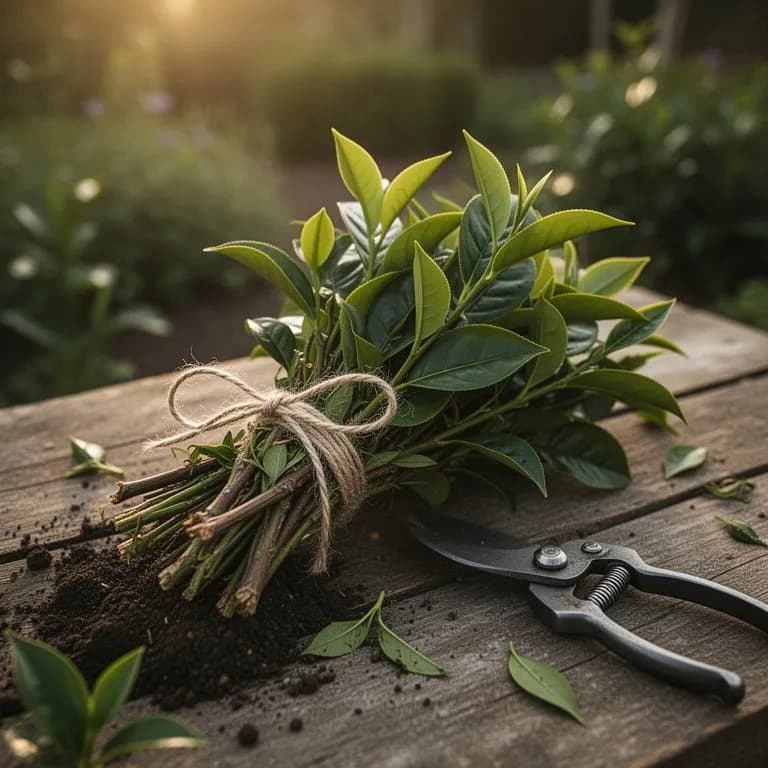
Pluck the top two leaves and the unopened bud from each shoot—this is the 'flush' that produces the finest tea. Begin harvesting in spring when new growth appears and continue through autumn. Pluck every 7-14 days during the growing season as new shoots emerge. A single mature bush can yield enough tea for personal use. Morning harvest after dew has dried produces the best flavor. The young shoots can be processed into green, white, oolong, or black tea depending on the method used.
assuming you plant when the window opens — set your real date
Pick Tea Plant promptly and the plant keeps producing.
Storage & Preservation
For green tea: immediately steam or pan-fire fresh leaves for 1-2 minutes to halt oxidation, then roll and dry at low heat. For black tea: wilt leaves for 12-18 hours, roll firmly to bruise, allow to oxidize until dark copper-colored (2-4 hours), then dry with heat. For white tea: simply wilt fresh buds and young leaves in shade for 24-48 hours, then dry slowly. Store finished tea in airtight tins or jars away from light, moisture, and strong odors. Home-processed tea keeps 6-12 months.
What goes wrong — and the fix
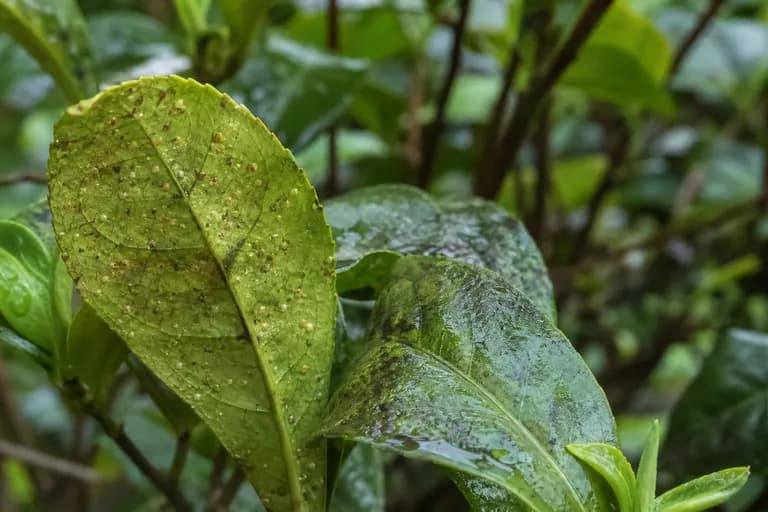
Tea Scale
PestYellow-brown oval scales on leaf undersides, causing yellowing patches on upper surfaces. Sooty mold may follow.
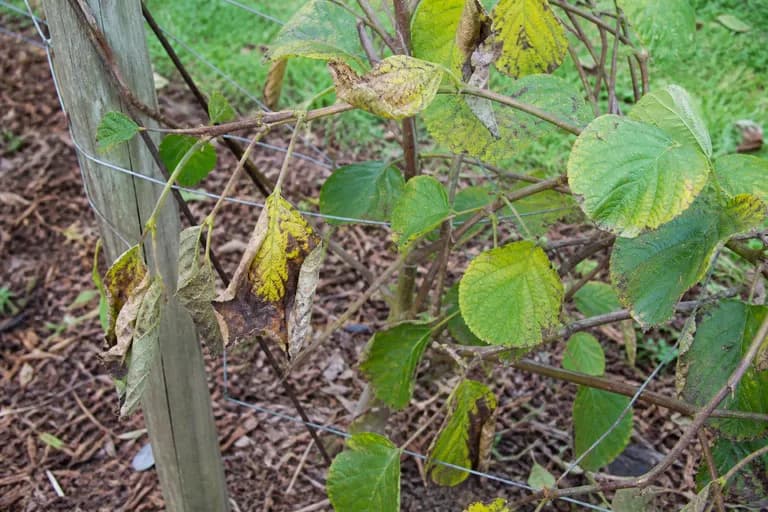
Root Rot (Phytophthora)
DiseaseWilting despite adequate moisture, yellowing leaves, branch die-back. Poor drainage is the primary cause.
Troubleshooting Common Problems
Alkaline soil causes chlorosis (yellow leaves with green veins)—test soil pH and amend with sulfur if above 6.0. Winter damage in marginal zones (7) can be mitigated with protective mulching and sheltered positioning. Slow early growth is normal—tea plants take 3 years to reach productive size. Poor flavor in home-processed tea usually results from incorrect processing technique rather than plant problems—practice improves results dramatically.
Growing Tips
- Plant Camellia sinensis in well-drained, acidic soil with a pH between 4.5 and 6.0. Amend alkaline soils with sulfur, peat moss, or pine bark before planting. The plant will not thrive in neutral or alkaline conditions.
- Choose a location with morning sun and dappled afternoon shade, especially in hot climates. Tea plants evolved as understory shrubs in forest environments and prefer bright indirect light over scorching full-day sun.
- Water consistently to keep the soil evenly moist but never saturated. Tea plants are sensitive to both drought and waterlogging. Use rainwater or filtered water where possible, as the plants dislike highly alkaline tap water.
- Mulch heavily with pine needles, shredded pine bark, or oak leaf mold to maintain soil acidity, conserve moisture, and suppress weeds. Replenish the mulch layer to a depth of 5-8 cm twice per year.
- Feed every 4-6 weeks during the growing season with a fertilizer formulated for acid-loving plants such as camellias, azaleas, or blueberries. Avoid lime-based fertilizers which raise soil pH.
- Begin harvesting only after the plant is at least 2-3 years old and well established. Pluck the top two leaves and the unopened bud from each shoot, leaving the lower mature leaves to power continued growth.
- Prune the plant annually in late winter to maintain a compact shape at a comfortable plucking height of 60-100 cm. A flat or slightly rounded top encourages lateral branching and more harvestable shoot tips.
- In regions with winters below -10°C, grow tea in large containers that can be moved to a cool but frost-free location such as an unheated greenhouse, garage, or bright porch during the coldest months.
- Propagate tea from semi-hardwood cuttings taken in summer for genetically identical clones, or from seed for genetic diversity. Cuttings root in 8-12 weeks in a humid environment with bottom heat of 20-22°C.
- Monitor for common pests including scale insects, spider mites, and tea mosquito bugs. Treat infestations with horticultural oil or insecticidal soap rather than systemic pesticides, especially since you will be consuming the leaves.
Grow your best Tea Plant yet — and everything around it.
Start a free plan today. Lay out your beds, drop in your Tea Plant, and let PlotMyGarden handle the timing, spacing, companions and reminders from seed to harvest basket.
Pick your Tea Plant
Camellia sinensis var. sinensis
Chinese tea variety with smaller leaves and greater cold tolerance (to -12°C). Produces finer, more delicate teas. Best for home growing in temperate climates.
Camellia sinensis var. assamica
Indian Assam variety with larger leaves, faster growth, and higher caffeine content. Less cold-hardy. Produces robust, malty black teas.
Camellia sinensis 'Sochi'
Russian-selected variety bred for exceptional cold tolerance. One of the hardiest tea plants available for northern gardeners.
A single tea plant costs $10-25 to purchase as a young nursery plant and can produce harvestable leaves for decades with minimal ongoing cost. Once established, a mature bush yields 200-500 g of dried tea per year, equivalent to 100-250 cups. With specialty loose-leaf teas retailing at $5-30 per 50 g, your homegrown tea plant could produce $20-300 worth of tea annually. Over a 10-year lifespan, a single plant can easily save $200-3,000 depending on your tea consumption and the quality of tea you would otherwise buy. Growing multiple plants amplifies the savings considerably.
Quick recipes
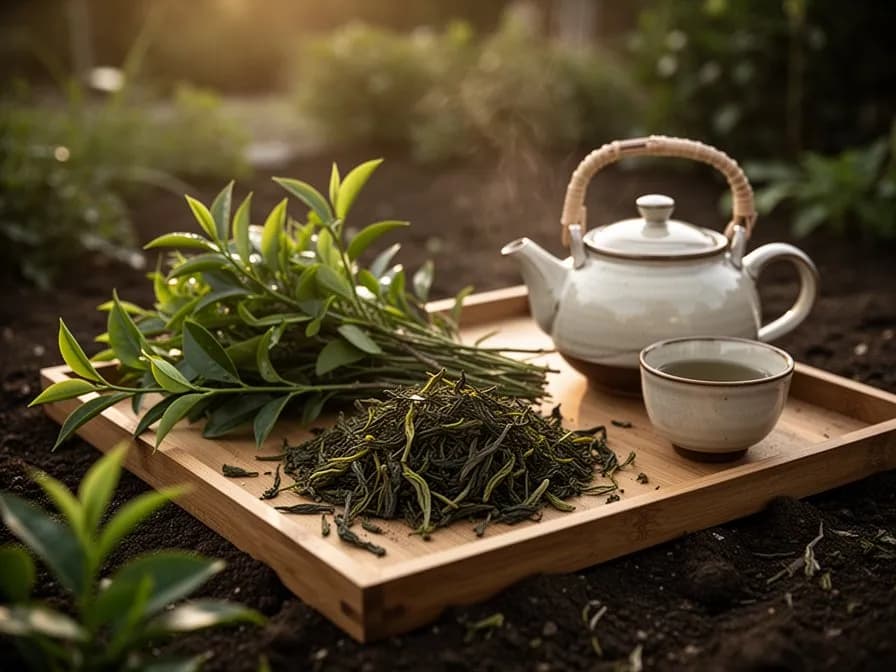
Fresh-Leaf Green Tea
15 minutesThe simplest and most rewarding way to enjoy homegrown tea. Freshly picked leaves are briefly heated in a dry pan to halt oxidation, then steeped in hot water to produce a remarkably sweet, vegetal cup with none of the bitterness often found in store-bought green tea.
5 ingredients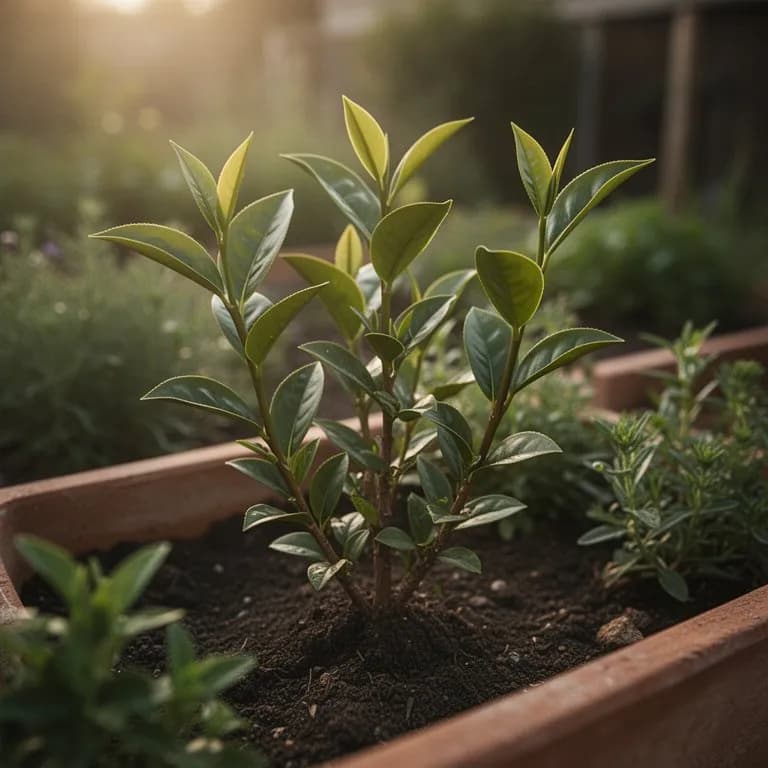
Homemade Oxidized Black Tea
4-6 hours total processingTransform your garden-fresh tea leaves into a rich, malty black tea through a traditional process of withering, rolling, oxidation, and drying. The result is a full-bodied tea with complex flavors that rival commercially produced varieties.
5 ingredients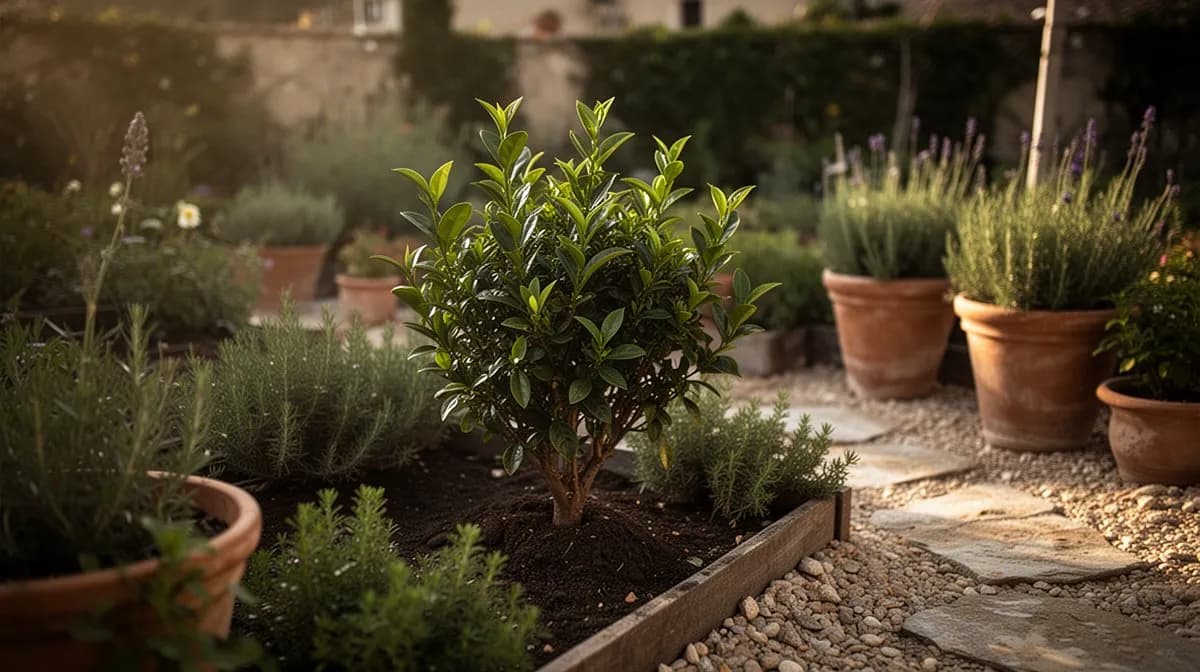
Tea Leaf Tempura
20 minutesA traditional Japanese preparation where tender young tea leaves are lightly battered and fried until crisp. The delicate, slightly bitter flavor of the leaves pairs beautifully with the light, airy tempura coating. Serve as a unique appetizer with a dipping sauce.
5 ingredientsCulinary Uses
Every type of tea—green, black, white, oolong, pu-erh—comes from this single plant species, with differences arising from processing methods. Fresh leaves can be pan-fired for green tea, wilted and oxidized for black tea, or simply dried for white tea. The young leaves also make an excellent cooking ingredient: grind dried green tea into matcha-style powder for baking, or use fresh leaves in tempura. Tea-smoked foods use spent tea leaves for a distinctive smoky flavor.
What's inside
Health Benefits
- Rich in catechin antioxidants, particularly epigallocatechin gallate (EGCG), which has been extensively studied for its potential to reduce oxidative stress, support cellular health, and lower the risk of chronic diseases.
- Regular tea consumption is associated with improved cardiovascular health, including lower LDL cholesterol, reduced blood pressure, and a decreased risk of heart disease and stroke according to large-scale epidemiological studies.
- Contains the unique amino acid L-theanine, which crosses the blood-brain barrier and promotes a state of calm alertness by increasing alpha brain wave activity, reducing anxiety without causing drowsiness.
- May support healthy weight management by gently boosting metabolic rate and fat oxidation, with green tea catechins shown in clinical trials to modestly increase daily energy expenditure.
- Supports oral health through naturally occurring fluoride and antimicrobial catechins that inhibit the growth of Streptococcus mutans and other bacteria responsible for tooth decay and gum disease.
- Associated with improved gut health, as tea polyphenols act as prebiotics that promote the growth of beneficial gut bacteria while inhibiting harmful strains, supporting a balanced intestinal microbiome.
Where Tea Plant comes from
Camellia sinensis, the tea plant, is native to the borderlands of southwestern China, northern Myanmar, and northeastern India, where wild tea trees still grow in the misty montane forests of Yunnan province. Archaeological evidence and ancient texts suggest that tea leaves were first consumed in China at least 5,000 years ago, initially as a medicinal tonic and later as a daily beverage. The earliest credible historical references appear during the Shang Dynasty around 1500 BCE, though widespread cultivation did not begin until the Tang Dynasty (618-907 CE), when the scholar Lu Yu wrote the Cha Jing, the first known comprehensive treatise on tea cultivation and preparation. Tea culture spread from China to Japan in the 9th century, carried by Buddhist monks who valued the drink for its ability to aid meditation. Japanese tea masters developed the elaborate tea ceremony, elevating tea drinking into a philosophical and aesthetic art form. By the 16th and 17th centuries, Portuguese and Dutch traders introduced tea to Europe, where it quickly became a fashionable luxury commodity. Britain's insatiable demand for tea profoundly shaped world history, driving the establishment of vast tea plantations in colonial India and Ceylon (modern Sri Lanka) during the 19th century and contributing to events as consequential as the Opium Wars and the Boston Tea Party. Today Camellia sinensis is cultivated commercially in over 50 countries across tropical and subtropical regions, from the highlands of Kenya and the slopes of Darjeeling to the volcanic soils of Japan and the rolling hills of the Azores, the only European tea-growing region. The plant thrives between latitudes 42 degrees north and 31 degrees south, wherever acidic soils, ample rainfall, and moderate temperatures converge. Two primary varieties dominate cultivation: Camellia sinensis var. sinensis, a smaller-leaved, cold-hardy Chinese type, and Camellia sinensis var. assamica, a large-leaved tropical variety native to Assam, India.
Tea Plant: did you know?
Fascinating facts about Tea Plant
All true teas including green, black, white, oolong, and pu-erh come from the same plant species, Camellia sinensis. The differences in flavor and color result entirely from how the leaves are processed after harvesting.
Tea Plant questions, answered
When should I plant Tea Plant?
What hardiness zones can Tea Plant grow in?
How much sun does Tea Plant need?
How far apart should I space Tea Plant?
What pests and diseases affect Tea Plant?
How do I store Tea Plant after harvest?
What are the best Tea Plant varieties to grow?
What soil does Tea Plant need?
Can I really grow tea at home in a temperate climate?
How do I process my harvested tea leaves at home?
How long does it take before I can start harvesting tea?
What kind of soil and pH does a tea plant need?
Does homegrown tea taste as good as store-bought tea?
How much space does a tea plant need in the garden?
You just read the theory. Now grow it on autopilot.
Everything that makes Tea Plant fiddly — the timing, the spacing, the companions, the harvest window — is exactly what PlotMyGarden handles for you, for every plant in your garden.
A plan that knows your weather
Set your location once. Get sow, feed and harvest dates built around your real last-frost date and live forecast — no more guessing from a generic seed packet.
From the “When to plant” sectionDrag-and-drop bed planner
Design beds on a grid. Every plant snaps to its proper spacing, and you can see your whole season laid out before you spend a cent on seed.
From the “Growing guide” sectionCompanion conflicts, caught early
200+ good-and-bad pairings checked live as you plant — so a season-wrecking mistake never makes it into the ground.
From the “Companions” sectionReminders you'll actually act on
“Water the beans.” “Pick today before it turns.” Timely, specific, and tied to the plants you're really growing.
From the “Harvest” sectionSuccession, scheduled
Want a harvest for six weeks, not six days? It spaces your sowings automatically and reminds you when each new block is due.
From the “When to plant” sectionA record that gets smarter
Every harvest you log teaches it your garden. Next year's plan starts from what actually worked in your soil, not a textbook's.
From the “Overview” sectionMore Tea Herbs
Grow your best Tea Plant yet — and everything around it.
Start a free plan today. Lay out your beds, drop in your Tea Plant, and let PlotMyGarden handle the timing, spacing, companions and reminders from seed to harvest basket.