Gandul
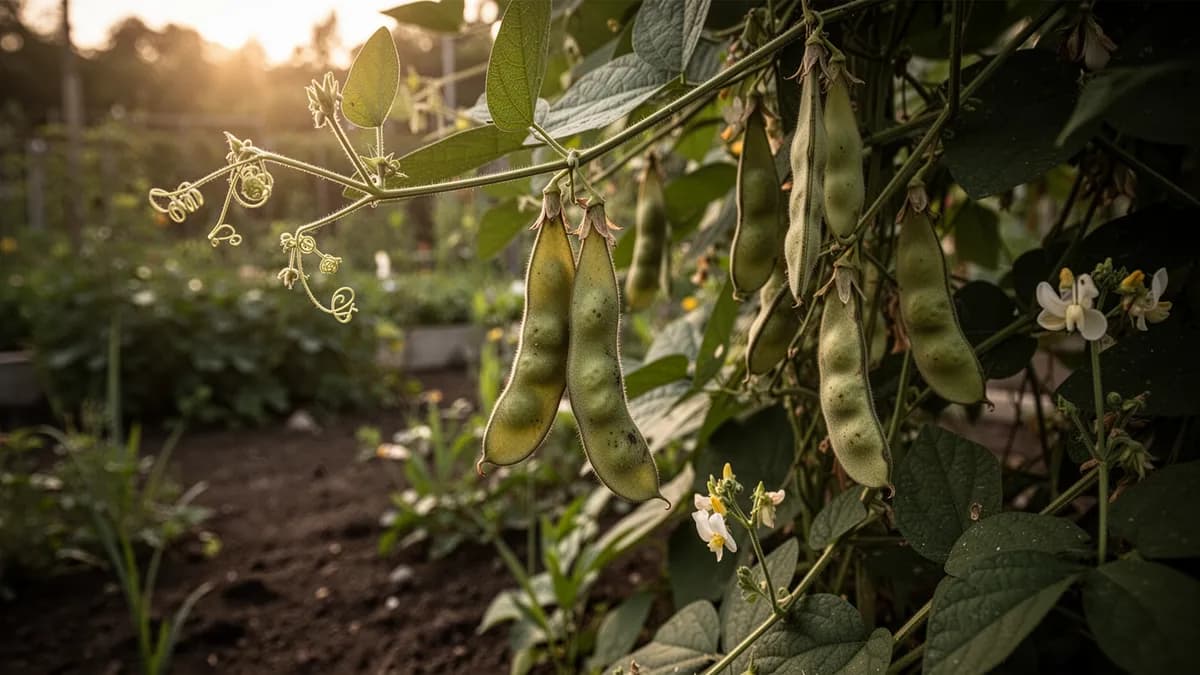
Cajanus cajan, conocido como gandul, guandú o frijol de palo, es una leguminosa arbustiva perenne originaria del sur de Asia y ampliamente cultivada en los trópicos.





En esta páginaResumen
Conoce Gandul
Cajanus cajan, conocido como gandul, guandú o frijol de palo, es una leguminosa arbustiva perenne originaria del sur de Asia y ampliamente cultivada en los trópicos. Produce vainas con semillas nutritivas ricas en proteínas que constituyen un alimento básico en la dieta de millones de personas, especialmente en la India, el Caribe y África.
Cuándo plantar Gandul
Siembre las semillas directamente en el exterior cuando el suelo alcance al menos 18°C, ya que la germinación es pobre en suelos fríos. Remoje las semillas en agua tibia durante 8-12 horas antes de la siembra para acelerar la germinación. Inocule con Rhizobium específico para Cajanus si no ha cultivado gandules previamente en ese terreno.
Tu año de Gandul
Ajustado a Zona 7 · temporada típica · la helada se va hacia el 2 abr y vuelve hacia el 1 nov
Planta Gandul Abr – May y cosecha Sep – Nov. Consulta los métodos de plantación y elige tu clima para adaptar los periodos.
Cómo cultivar Gandul
El gandul es una planta tropical que necesita una temporada de crecimiento larga y cálida, con al menos 150 días sin heladas. Siembre las semillas directamente en el exterior cuando la temperatura del suelo supere los 18°C, a una profundidad de 2-3 cm con una separación de 50-100 cm entre plantas. Como leguminosa, fija su propio nitrógeno atmosférico gracias a la simbiosis con bacterias Rhizobium.
El gandul crece como un arbusto leñoso que puede alcanzar entre 1 y 4 metros de altura según la variedad. Proporcione pleno sol y riego moderado, ya que la planta es notablemente tolerante a la sequía una vez establecida. Evite el exceso de riego que puede provocar pudrición de raíces. En climas templados, cultívelo como anual; en zonas tropicales puede mantenerse como perenne productivo durante 3-5 años.
La floración se inicia cuando los días se acortan, generalmente al final del verano o principios del otoño en latitudes templadas. Las flores amarillas o rojizas se autopolinizan en su mayoría, aunque la polinización cruzada por insectos mejora el rendimiento. Pode las ramas después de cada cosecha para estimular nuevo crecimiento y mantener la planta vigorosa y productiva.
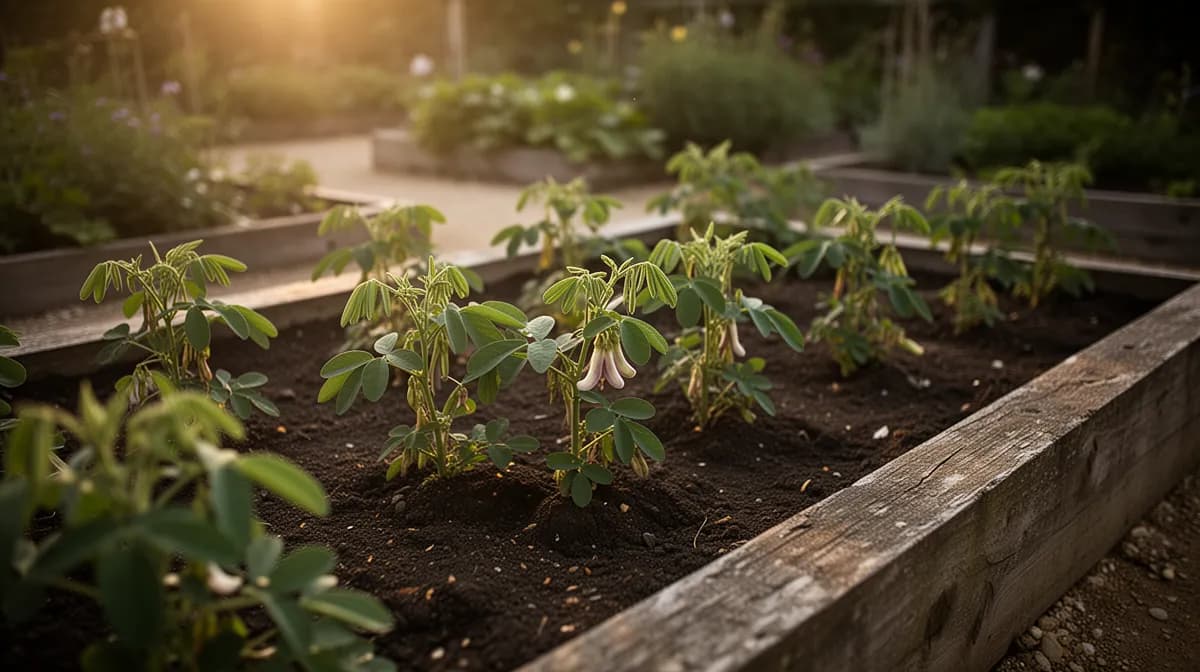
8 plantas caben en un bancal de 120 × 240 cm
Cada Gandul pide 60 cm de margen. El planificador guarda ese marco por ti — cada planta, cada bancal.
Los mejores vecinos de Gandul
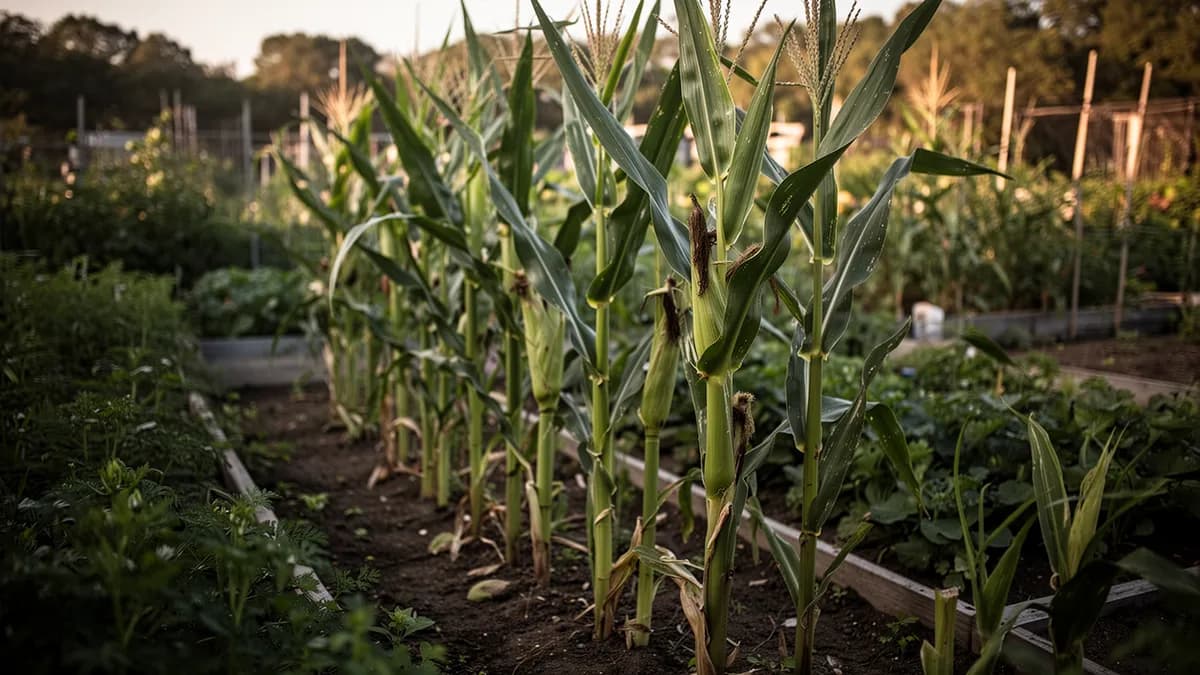
El gandul es excelente planta compañera gracias a su capacidad de fijar nitrógeno y mejorar la fertilidad del suelo. Se asocia tradicionalmente con maíz, mijo y sorgo en sistemas de cultivo intercalado tropicales. Sus raíces profundas rompen capas compactadas del suelo y reciclan nutrientes, beneficiando a los cultivos vecinos.
Maíz va a su lado.
Saber de huerto de siempre, cotejado con la tabla real de Gandul — prueba cualquier planta que cultives.
Prueba Gandul en un bancal, aquí mismo
Un bancal real del planificador con Gandul ya plantado. Toca una planta compañera para colocarla y mira cómo responde la comprobación de vecinos: verde para buenos vecinos, rojo si hay conflicto.


Guías de cultivo relacionadas
Abónalo bien
El gandul prospera en una amplia gama de suelos, desde arenosos hasta arcillosos, siempre que tengan buen drenaje, con un pH óptimo entre 5,5 y 7,0. Como leguminosa fijadora de nitrógeno, no requiere fertilización nitrogenada; aplique fósforo y potasio al momento de la siembra para estimular el desarrollo radicular. Inocule las semillas con Rhizobium específico si es la primera vez que cultiva gandules en ese suelo.
Temperatura ideal
Compatibilidad de zonas de rusticidad
De la semilla a la cosecha, etapa por etapa
Germinación de la semilla
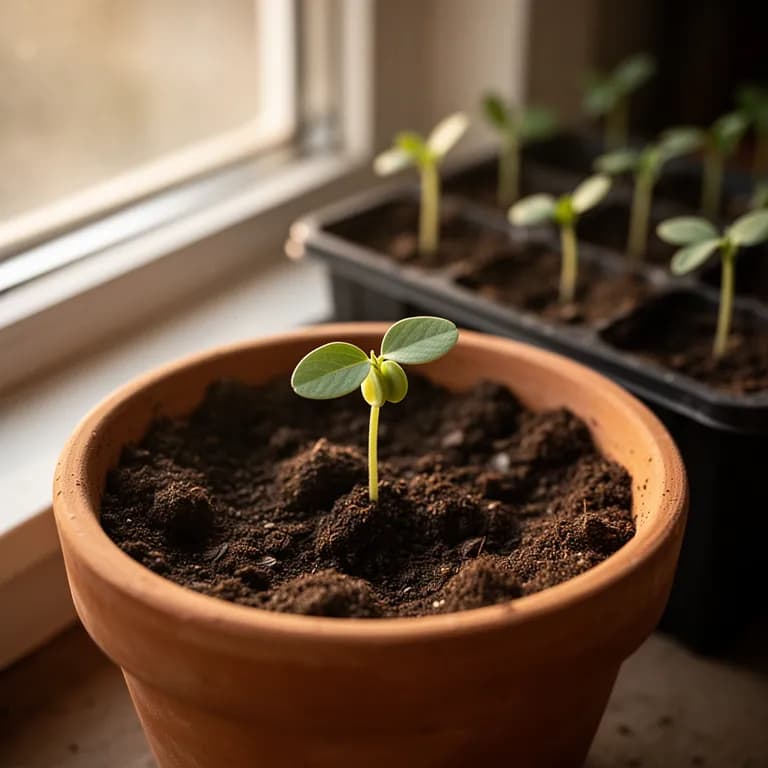
Las semillas se hinchan y se agrietan mientras emerge la radícula y desciende para formar una raíz principal profunda. El hipocótilo se arquea hacia arriba y arrastra los cotiledones por encima de la superficie del suelo. La germinación es más lenta que la de la mayoría de las judías y tarda 10–14 días en suelo cálido.
Crecimiento vegetativo
La planta desarrolla sus hojas trifoliadas características y comienza a ramificarse con vigor. El tallo leñoso se engrosa y el sistema de raíz principal profunda se expande rápidamente, accediendo al agua y a los nutrientes de las capas más bajas del suelo. Las plantas pueden crecer 30–60 cm durante esta fase.
Floración
En las puntas de las ramas aparecen racimos de llamativas flores amarillas veteadas de rojo o morado. Cada flor tiene forma de mariposa y atrae a las abejas y otros polinizadores. La floración puede continuar durante semanas, mientras se forman nuevos brotes en las puntas de las ramas en crecimiento y aparecen vainas en distintas etapas al mismo tiempo.
Desarrollo de las vainas
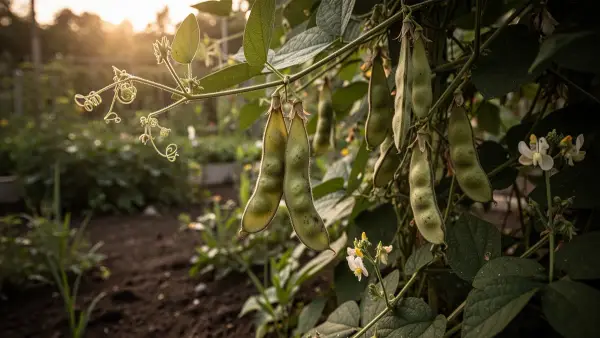
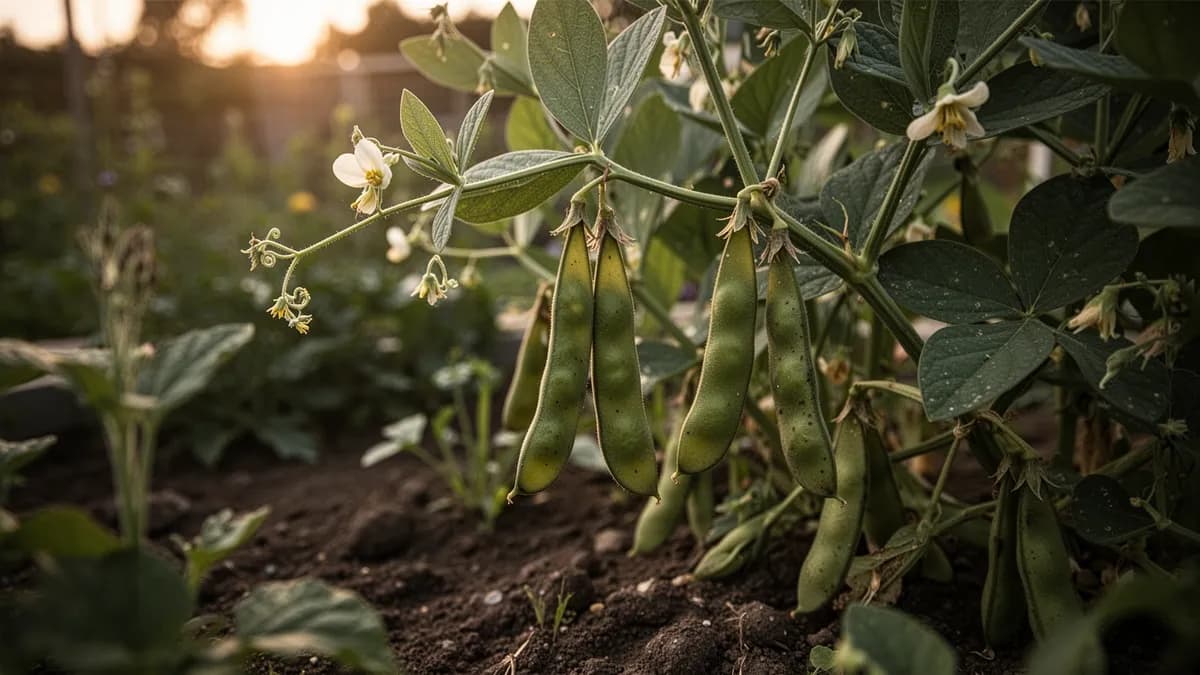
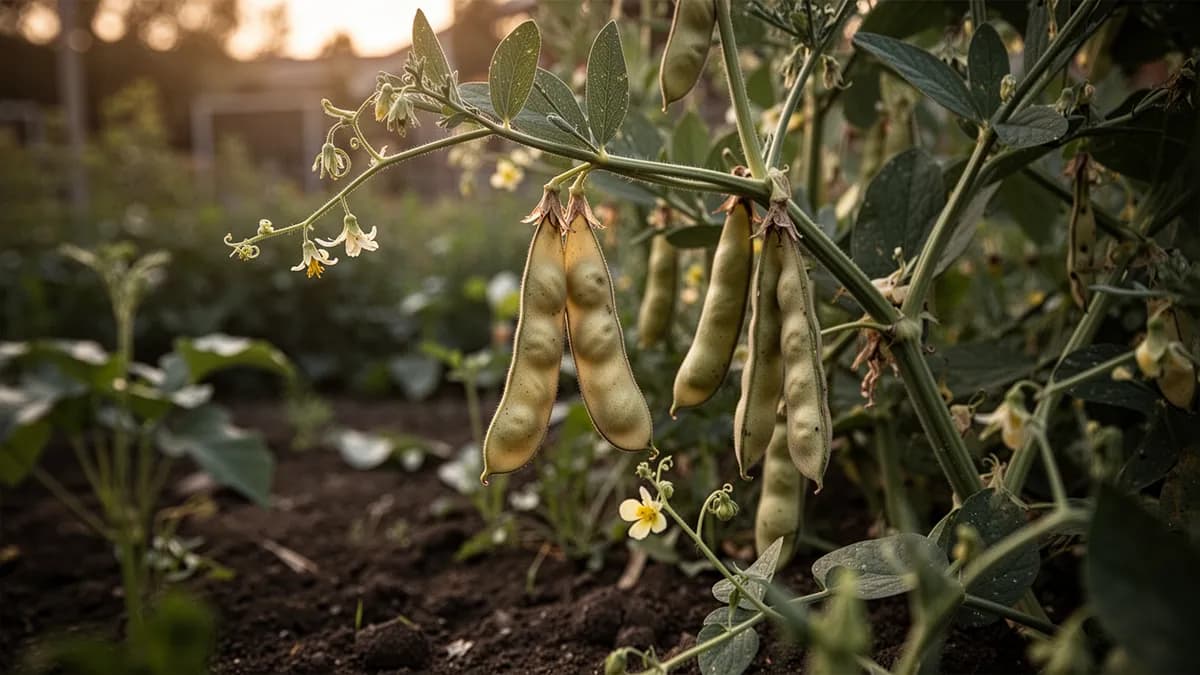
Las flores polinizadas se desarrollan en vainas verdes y delgadas que contienen de 3 a 7 semillas cada una. Las vainas se forman en racimos densos y se hinchan a medida que maduran los guisantes del interior. En esta etapa, las vainas pueden cosecharse verdes para uso fresco: los guisantes tienen un sabor dulce, a nuez y un color verde brillante.
Maduración y cosecha seca
Las vainas que se dejan en la planta pasan de verdes a marrones a medida que se secan. Las semillas del interior se endurecen y cambian de verde a un color maduro beige, marrón o moteado según la variedad. Las hojas pueden empezar a amarillear y caer mientras la planta redirige la energía hacia la maduración de las semillas.
Mantén la temperatura del suelo entre 21 y 29 °C para una mejor germinación. Conserva el suelo uniformemente húmedo, pero sin encharcarlo. Escarificar las semillas o remojarlas toda la noche en agua tibia mejora notablemente la tasa de germinación.
Cuidar Gandul mes a mes
Qué hacer cada mes para tu Gandul
Octubre
Mes actualMain dry harvest period in temperate climates. Harvest when pods are brown and rattle when shaken. Strip pods from branches or cut whole branches for threshing. In frost-free areas, prune for regrowth.
Ten claro qué hacer en tu huerto, cada mes
Un correo al empezar cada mes: qué sembrar, plantar y hacer ahora mismo — para tu Gandul y todo lo que crece alrededor. Más un breve curso inicial para esquivar los errores clásicos.
- Qué hacer ahora mismo
- Ajustado a tu temporada
- Curso inicial incluido
Cosechar Gandul
Las vainas verdes para consumo fresco se cosechan cuando están bien llenas pero aún tiernas, generalmente entre 90 y 120 días después de la siembra. Para semillas secas, deje las vainas en la planta hasta que se tornen marrones y comiencen a abrirse, entre 150 y 180 días. Coseche por la mañana cuando las vainas estén ligeramente húmedas para evitar que se abran y pierdan semillas.
se supone que plantas al comenzar el periodo — indica tu fecha real
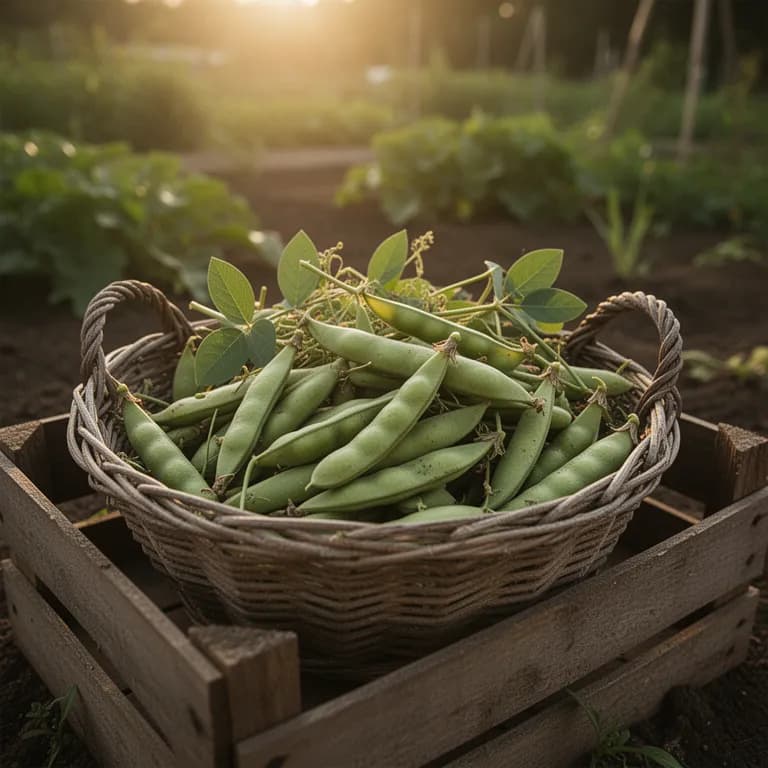
Cosecha las vainas verdes cuando estén carnosas y de color verde brillante para consumo fresco; para guisantes secos, espera hasta que las vainas estén completamente secas, marrones y crujientes al agitarlas
Almacenamiento y conservación
Las vainas verdes frescas se conservan en el refrigerador durante 3-5 días en una bolsa perforada. Para almacenamiento prolongado, desgrane y blanquee los granos verdes antes de congelarlos. Las semillas secas, bien curadas al sol y almacenadas en recipientes herméticos en lugar fresco y seco, pueden durar varios años sin perder viabilidad ni calidad nutricional.
Qué falla — y cómo solucionarlo
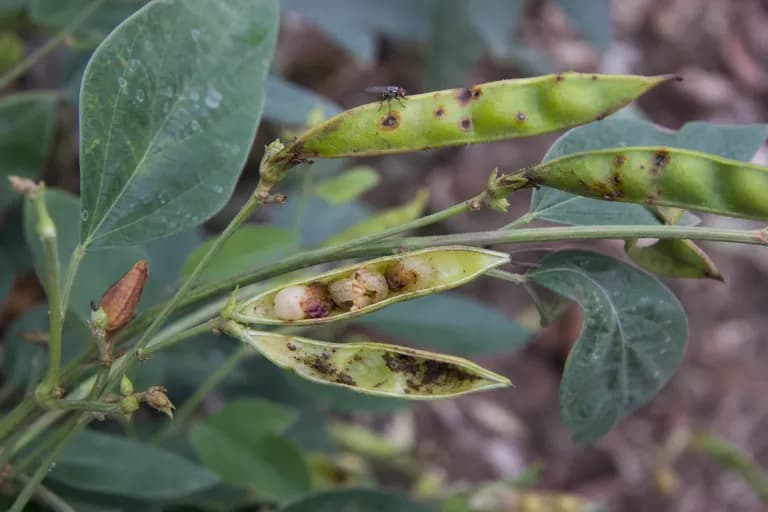
Barrenador de la vaina
PlagaLarvas que perforan las vainas y se alimentan de las semillas en desarrollo, dejando excrementos oscuros visibles en el exterior. Puede destruir hasta el 50% de la cosecha.
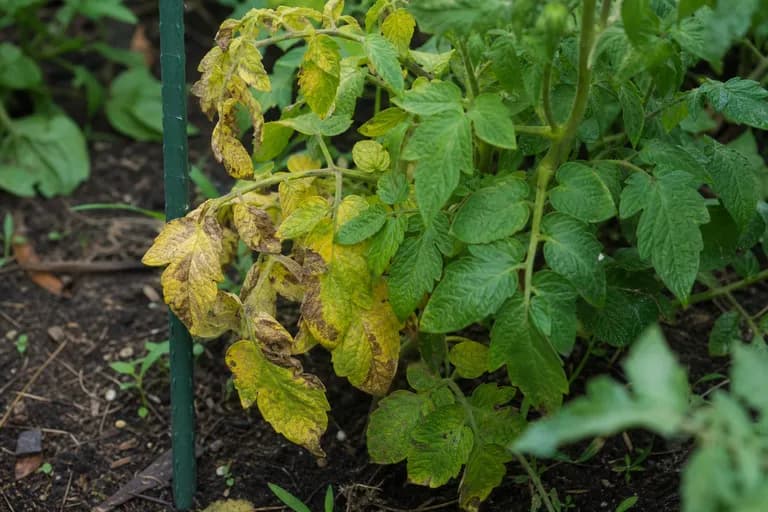
Marchitez por Fusarium
EnfermedadAmarillamiento y marchitamiento progresivo de las hojas, comenzando por las inferiores. Al cortar el tallo se observa una decoloración marrón del sistema vascular interno.
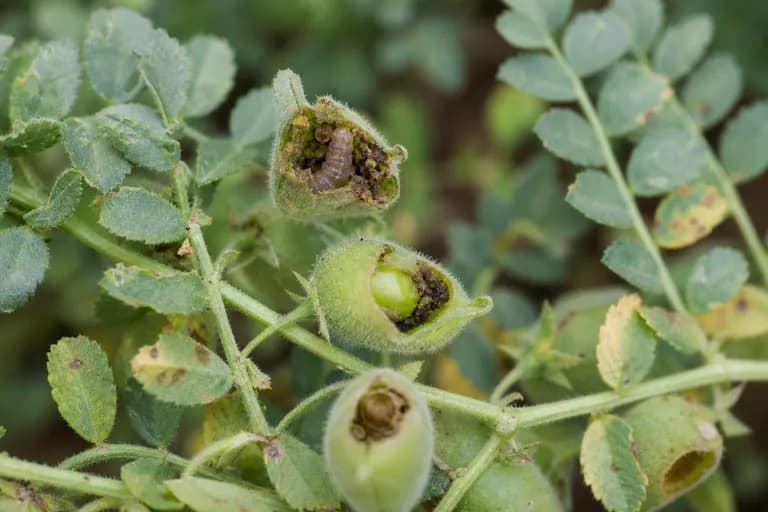
Pulgón del gandul
PlagaColonias densas de insectos verdes o negros en brotes tiernos y envés de las hojas, causando enrollamiento foliar, deformación y secreción de melaza pegajosa.
Solución de problemas comunes
El principal desafío en climas templados es la larga temporada de crecimiento requerida, ya que la floración se activa con días cortos y las heladas pueden llegar antes de la maduración completa. La sensibilidad al fotoperíodo puede retrasar la floración en latitudes altas. En zonas húmedas, las enfermedades fúngicas del suelo son problemáticas si no se garantiza buen drenaje.
Consejos de cultivo
- Pigeon peas are strictly warm-weather plants — never transplant until nighttime temperatures stay reliably above 15°C (59°F) and all frost danger has passed. In short-season climates, choose early-maturing varieties like Georgia 2 that can complete their cycle in 120-130 days.
- Plant in full sun with at least 6-8 hours of direct light daily. Pigeon peas tolerate partial shade but produce significantly fewer pods. South-facing positions with wind protection give the best results in temperate gardens.
- These are deep-rooted plants — prepare soil to a depth of at least 30 cm and avoid compacted or waterlogged ground. Sandy loam with good drainage is ideal. They tolerate poor, infertile soils remarkably well thanks to nitrogen fixation.
- Do not add nitrogen fertilizer. Pigeon peas fix their own nitrogen through a symbiotic relationship with Rhizobium bacteria. Excess nitrogen actually reduces pod production and interferes with nitrogen fixation. A small application of phosphorus at planting supports root nodule development.
- Space plants 90-150 cm (3-5 feet) apart for full-sized varieties to accommodate their spreading, bushy growth. Dwarf varieties can be planted at 60 cm spacing. Intercrop with shorter-season vegetables that will be harvested before the pigeon peas reach full size.
- Water regularly during the first 3-4 weeks after transplanting, then reduce to occasional deep watering. Established plants are highly drought-tolerant and overwatering is a bigger risk than underwatering. Soggy soil leads to fatal root rot.
- Prune the main growing tip when plants reach 60-90 cm tall to encourage lateral branching and a bushier habit with more flowering sites. In perennial plantings, prune back by one-third after each harvest to stimulate new productive growth.
- Harvest green pods frequently when they are plump and bright green to encourage continued flowering and pod production. Leaving all pods to dry on the plant signals the end of the reproductive cycle and reduces total yield.
Cultiva tu mejor Gandul — y todo lo que la rodea.
Empieza un plan gratis hoy. Diseña tus bancales, coloca tu Gandul y deja que PlotMyGarden gestione el momento, el espaciado, las asociaciones y los recordatorios de la semilla a la cesta.
Elige tu Gandul
ICPL 87119 (Asha)
Variedad de maduración media desarrollada por el ICRISAT, con alta resistencia a la marchitez por Fusarium. Produce abundantes vainas con semillas de color crema y excelente rendimiento.
Manak
Variedad de ciclo corto que madura en 130-140 días, ideal para temporadas de crecimiento limitadas. Planta compacta de 1,5 metros con buena tolerancia a la sequía.
No Eye Pea (Gandul del Caribe)
Variedad caribeña tradicional sin la mancha oscura del hilo de la semilla. Muy utilizada en la cocina puertorriqueña y dominicana para el clásico arroz con gandules.
UPAS 120
Variedad extra precoz que madura en 120 días, adaptada a climas subtropicales y templados cálidos. Planta de porte bajo, ideal para pequeños huertos familiares.
Dried pigeon peas sell for $4-8 per pound at specialty grocery stores, and fresh green pigeon peas are even pricier at $6-10 per pound when available. A single plant producing 2-4 lbs of dried peas saves $8-32 per season, and a small planting of 6-10 plants can yield your entire year's supply of dal. Beyond direct savings, pigeon peas fix nitrogen in the soil, reducing fertilizer costs for neighboring and subsequent crops — a hidden economic benefit worth $20-40 per year in a home garden.
Recetas rápidas
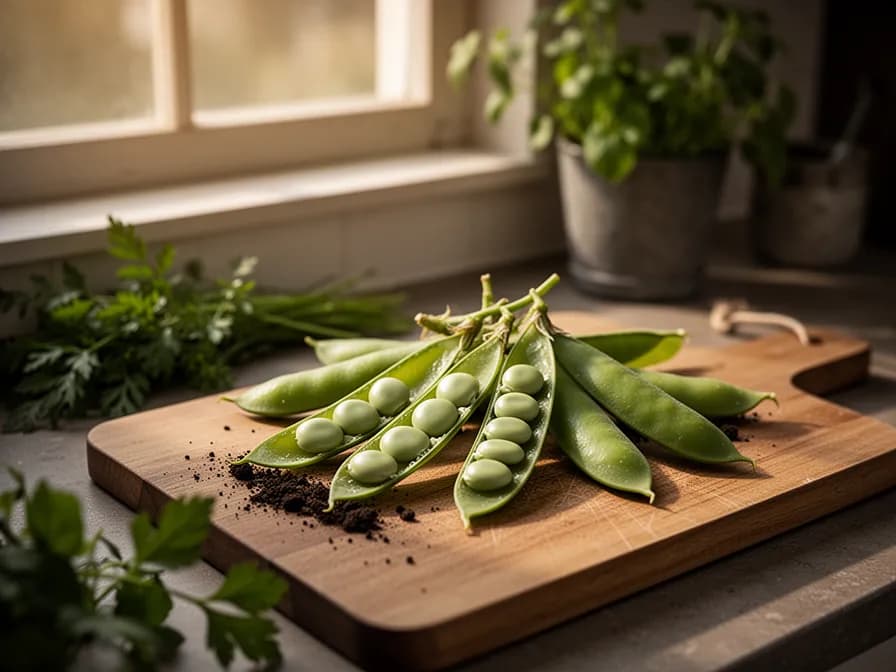
Classic Toor Dal
40 minIndia's most beloved comfort food — split pigeon peas simmered until creamy, then tempered with a fragrant sizzle of cumin, mustard seeds, and curry leaves in ghee. Served over steamed rice, this dish is nourishing, deeply satisfying, and endlessly customizable.
11 ingredientesCaribbean Rice and Peas
50 minA staple Sunday dish across the Caribbean islands. Pigeon peas cooked with coconut milk, thyme, and scotch bonnet pepper create a rich, aromatic rice dish that pairs perfectly with jerk chicken or stewed meats. Every island has its own beloved variation.
9 ingredientesPigeon Pea Coconut Curry
35 minA quick, vibrant curry where tender pigeon peas simmer in a fragrant coconut-tomato sauce with warming spices. Packed with protein and fiber, this one-pot meal is perfect for weeknight dinners served over rice or with warm flatbread.
11 ingredientesUsos culinarios
El gandul es fundamental en la cocina tropical y subtropical. En la India se prepara como dal (puré de legumbres especiado), toor dal, sambar y rasam. En el Caribe es esencial para el arroz con gandules, plato emblemático de Puerto Rico y República Dominicana. Las semillas verdes frescas se pueden saltear, añadir a sopas y guisos, o cocinar con arroz y coco.
Qué contiene
Beneficios para la salud
- Exceptionally high in plant-based protein (21g per 100g dried), providing essential amino acids that complement grains for complete protein nutrition — especially valuable for vegetarian and vegan diets.
- Outstanding source of folate (114% DV per serving), which is critical for DNA synthesis, red blood cell formation, and preventing neural tube defects during pregnancy.
- Rich in soluble fiber that slows glucose absorption, helping stabilize blood sugar levels after meals — beneficial for managing and preventing type 2 diabetes.
- Contains significant amounts of iron (29% DV) and zinc, supporting immune function, oxygen transport, and wound healing — important minerals often lacking in plant-based diets.
- High potassium content (40% DV) helps regulate blood pressure, counterbalances sodium intake, and supports healthy cardiovascular function.
- Provides isoflavones and other phytochemicals with antioxidant and anti-inflammatory properties that may help reduce the risk of chronic diseases including heart disease.
De dónde viene Gandul
Pigeon peas trace their origins to the Indian subcontinent, where they were first domesticated at least 3,500 years ago. Archaeological evidence from the Neolithic site of Sanganakallu in southern India confirms pigeon pea cultivation dating to approximately 1400 BCE. From India, the crop spread along ancient trade routes to East Africa, where it became deeply embedded in local farming systems and cuisines, likely arriving over 2,000 years ago.
The crop reached the Americas through the transatlantic slave trade in the 16th and 17th centuries, carried by enslaved Africans who brought seeds of familiar food crops to survive in the New World. Pigeon peas quickly naturalized in the Caribbean, Central America, and parts of South America, becoming a cornerstone of Creole and Caribbean cooking. The dish known as rice and peas, found across Jamaica, Trinidad, and other islands, is a direct culinary descendant of West African bean-and-rice traditions adapted with the pigeon peas that thrived in tropical American soils.
Today pigeon peas are grown in more than 80 countries across the tropics and subtropics, with India, Myanmar, Malawi, Tanzania, and Kenya leading global production. They remain critically important for food security in developing nations due to their ability to produce nutritious food on marginal land with minimal inputs. Modern breeding programs continue to develop faster-maturing and disease-resistant varieties, expanding cultivation into temperate regions where they are grown as productive annuals.
Gandul: ¿sabías que?
Datos fascinantes sobre Gandul
Pigeon peas are one of the oldest cultivated crops in the world, with archaeological evidence of their use dating back over 3,500 years in parts of India and East Africa.
Gandul: preguntas frecuentes
¿Cuándo debo plantar Gandul?
¿Cuáles son buenas plantas acompañantes para Gandul?
¿En qué zonas de rusticidad puede crecer Gandul?
¿Cuánto sol necesita Gandul?
¿A qué distancia debo espaciar Gandul?
¿Qué plagas y enfermedades afectan a Gandul?
¿Cómo almaceno Gandul después de la cosecha?
¿Cuáles son las mejores variedades de Gandul para cultivar?
¿Qué suelo necesita Gandul?
Can I grow pigeon peas in a temperate climate?
Do pigeon peas need a trellis or support?
How do I know when to harvest pigeon peas?
Why are my pigeon pea plants not producing pods?
Can pigeon peas be grown in containers?
Acabas de leer la teoría. Ahora cultívala en piloto automático.
Todo lo que hace que Gandul sea delicado — el momento, el espaciado, las asociaciones, la ventana de cosecha — es justo lo que PlotMyGarden resuelve por ti, para cada planta de tu huerto.
Un plan que conoce tu clima
Indica tu ubicación una vez. Recibe fechas de siembra, abonado y cosecha basadas en tu última helada real y el pronóstico en vivo — sin adivinar con un sobre genérico.
De la sección “Cuándo plantar”Planificador de bancales de arrastrar y soltar
Diseña bancales sobre una cuadrícula. Cada planta encaja con su espaciado correcto y ves toda la temporada antes de gastar un céntimo en semillas.
De la sección “Cultivo”Conflictos de asociación, detectados a tiempo
Más de 200 buenas y malas combinaciones comprobadas en vivo mientras plantas — para que un error que arruine la temporada nunca llegue a la tierra.
De la sección “Asociaciones”Recordatorios que sí vas a seguir
“Riega las judías.” “Recoge hoy antes de que se pase.” Oportunos, concretos y ligados a las plantas que de verdad cultivas.
De la sección “Cosecha”Escalonado, programado
¿Quieres cosechar seis semanas en vez de seis días? Reparte tus siembras automáticamente y te avisa cuando toca el siguiente lote.
De la sección “Cuándo plantar”Un registro que se vuelve más listo
Cada cosecha que registras le enseña tu huerto. El plan del año que viene parte de lo que de verdad funcionó en tu suelo, no en un manual.
De la sección “Resumen”Planta estos junto a Gandul
Más Legumbres
Cultiva tu mejor Gandul — y todo lo que la rodea.
Empieza un plan gratis hoy. Diseña tus bancales, coloca tu Gandul y deja que PlotMyGarden gestione el momento, el espaciado, las asociaciones y los recordatorios de la semilla a la cesta.