Konferenzbirne
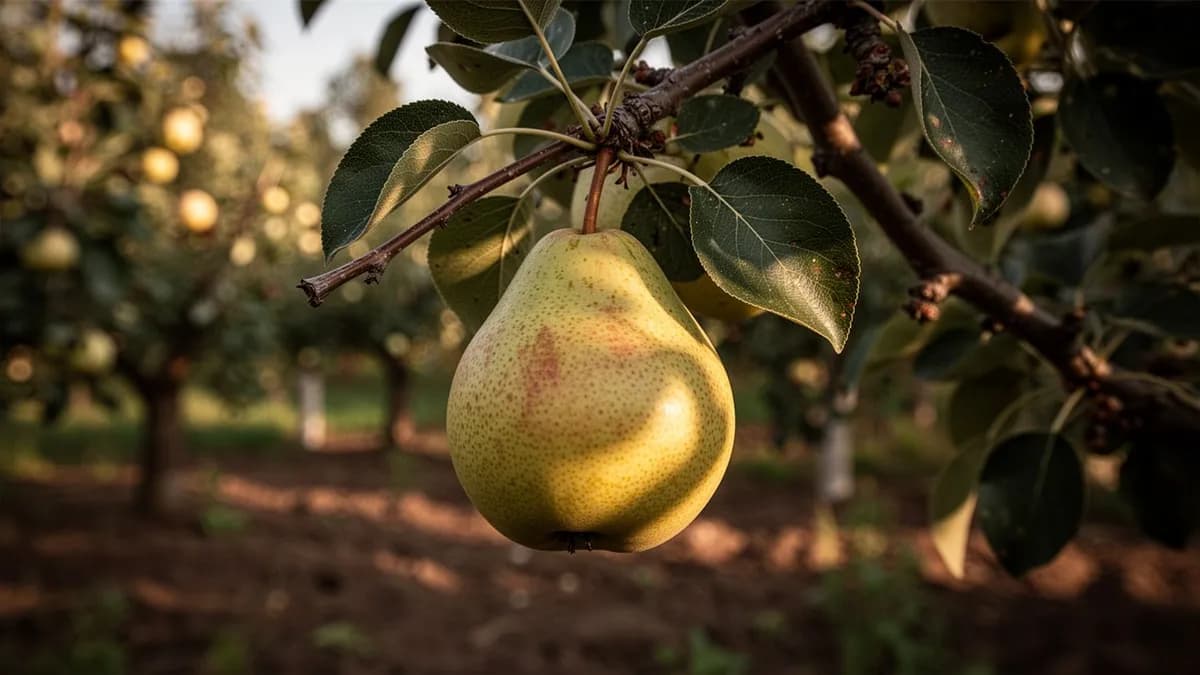
Die beliebteste Handelsbirne in Europa, die längliche, berostete Früchte mit süßem, saftigem, schmelzendem Fruchtfleisch und ausgezeichneter Lagerfähigkeit hervorbringt.





Auf dieser SeiteÜberblick
Konferenzbirne im Überblick
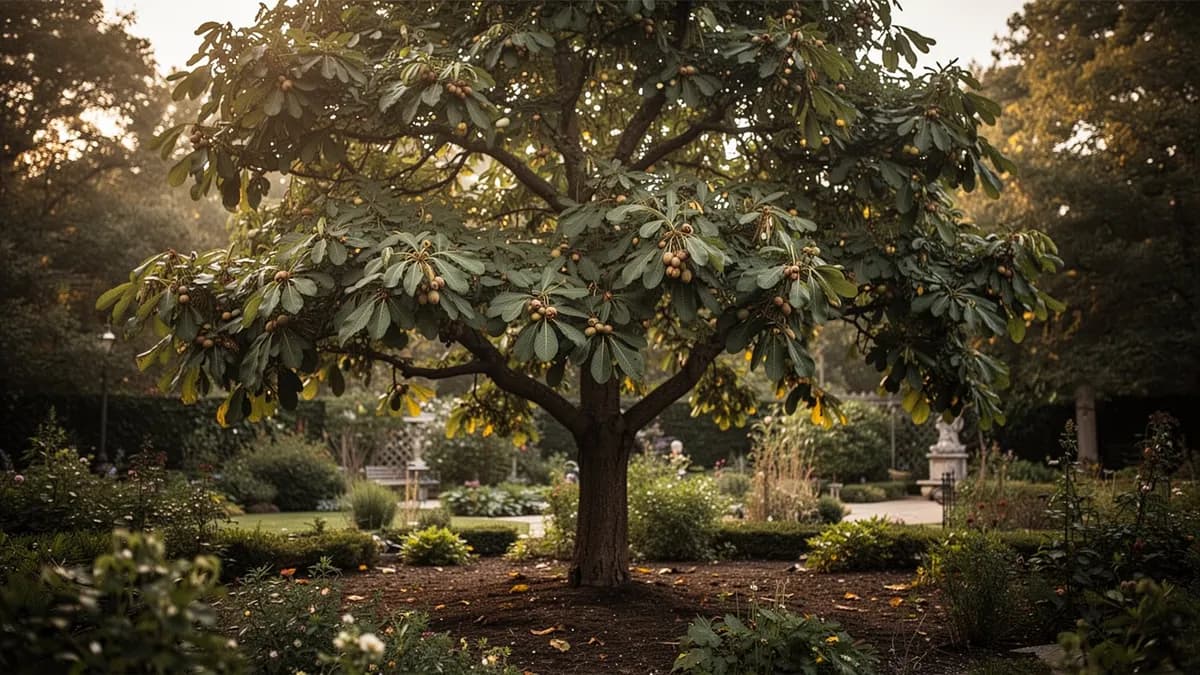
Die beliebteste Handelsbirne in Europa, die längliche, berostete Früchte mit süßem, saftigem, schmelzendem Fruchtfleisch und ausgezeichneter Lagerfähigkeit hervorbringt. Conference ist teilweise selbstfruchtbar und eine der zuverlässigsten Birnensorten, die auch ohne Bestäuber gute Ernten liefert. Die Bäume sind kompakt und aufrecht wachsend, hervorragend geeignet für die Erziehung als Spalier an Wänden und Zäunen.
Wann Konferenzbirne pflanzen
Birnensamen benötigen 60 bis 90 Tage Kältestratifikation vor der Aussaat. Birnensämlinge sind jedoch äußerst variabel und werden keine Conference-Früchte hervorbringen. Kaufen Sie veredelte Bäume von einer seriösen Baumschule. Für die Unterlagenproduktion stratifizieren Sie gereinigte Samen in feuchtem Material bei 1 bis 4 Grad Celsius. Säen Sie im Frühjahr 2,5 cm tief aus. Die Keimung dauert drei bis vier Wochen. Sämlings-Birnbäume benötigen acht bis zwölf Jahre bis zur Fruchtbildung.
Dein Konferenzbirne-Jahr
Abgestimmt auf Zone 7 · typische Saison · Frost geht um den 2. Apr. und kehrt um den 1. Nov. zurück
Konferenzbirne Feb – Mär pflanzen, Sep – Okt ernten. Beachte die Pflanzmethoden unten und wähle dein Klima für passende Zeiträume.
So baust du Konferenzbirne an
Pflanzen Sie Conference-Birnbäume im Spätwinter während der Ruhephase, in voller Sonne mit tiefem, gut durchlässigem Boden. Obwohl teilweise selbstfruchtbar, bringt Conference deutlich größere Ernten hervor, wenn sie von einer anderen Birnensorte wie Williams, Doyenne du Comice oder Concorde kreuzbestäubt wird. Pflanzen Sie Hochstämme in einem Abstand von 5,5 bis 6 Metern, Halbstämme auf Quittenunterlage in 3 bis 3,5 Metern.
Gießen Sie in den ersten beiden Jahren regelmäßig und stellen Sie 2,5 bis 5 cm Wasser pro Woche bereit. Einmal etabliert, wässern Sie während Trockenperioden gründlich, besonders während der Fruchtentwicklung. Conference eignet sich hervorragend für die Spaliererziehung an Wänden und Zäunen, ideal für kleine Gärten. Der aufrechte, kompakte Wuchs erfordert weniger Schnitt als ausladende Sorten.
Schneiden Sie im Winter, um die Form zu erhalten, und entfernen Sie kreuzende Äste und Wasserschosse. Sommerschnitt bei Spalierbäumen erfolgt im Juli durch Einkürzen des neuen Seitenwachstums auf vier bis fünf Blätter. Dünnen Sie die Früchte im Frühsommer auf ein bis zwei pro Büschel aus, um beste Größe und Qualität zu erzielen. Conference ist anfällig für Feuerbrand und Birnenschorf, daher sollten Sie genau beobachten und ein vorbeugendes Spritzprogramm durchführen, wo diese Krankheiten verbreitet sind.
Für Konferenzbirne ist ein Beet von 120 × 240 cm zu klein
Konferenzbirne braucht 350 cm Platz pro Pflanze. Der Planer hält diesen Abstand für dich ein — jede Pflanze, jedes Beet.
Die besten Nachbarn für Konferenzbirne
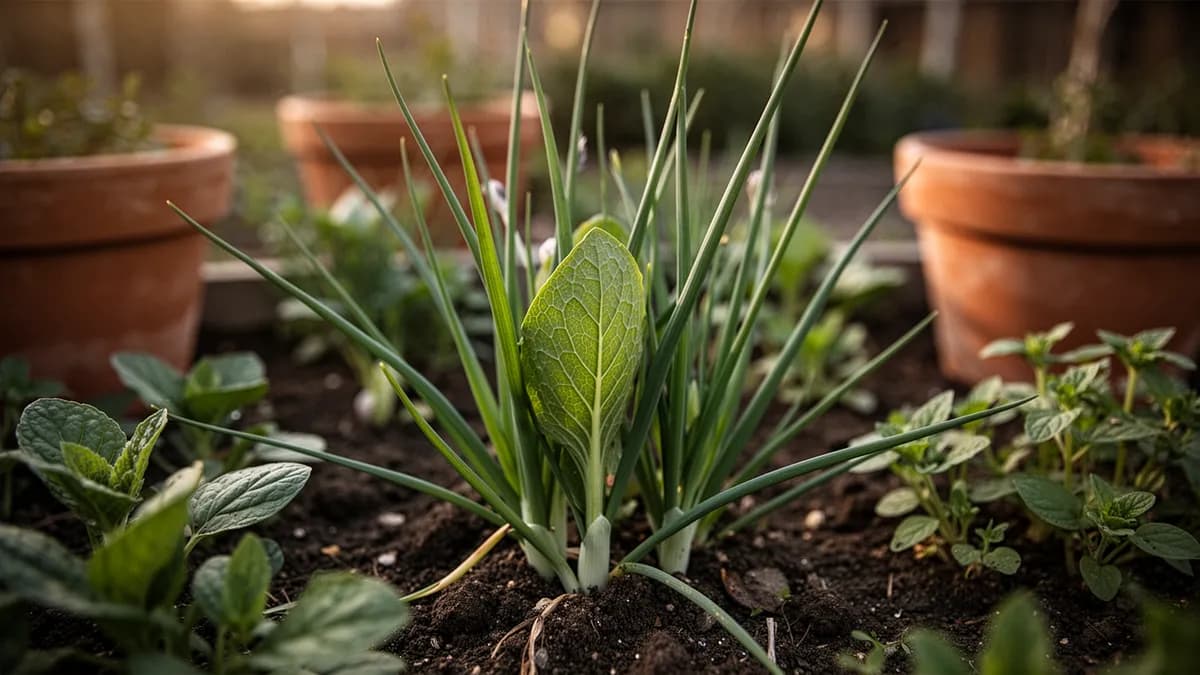
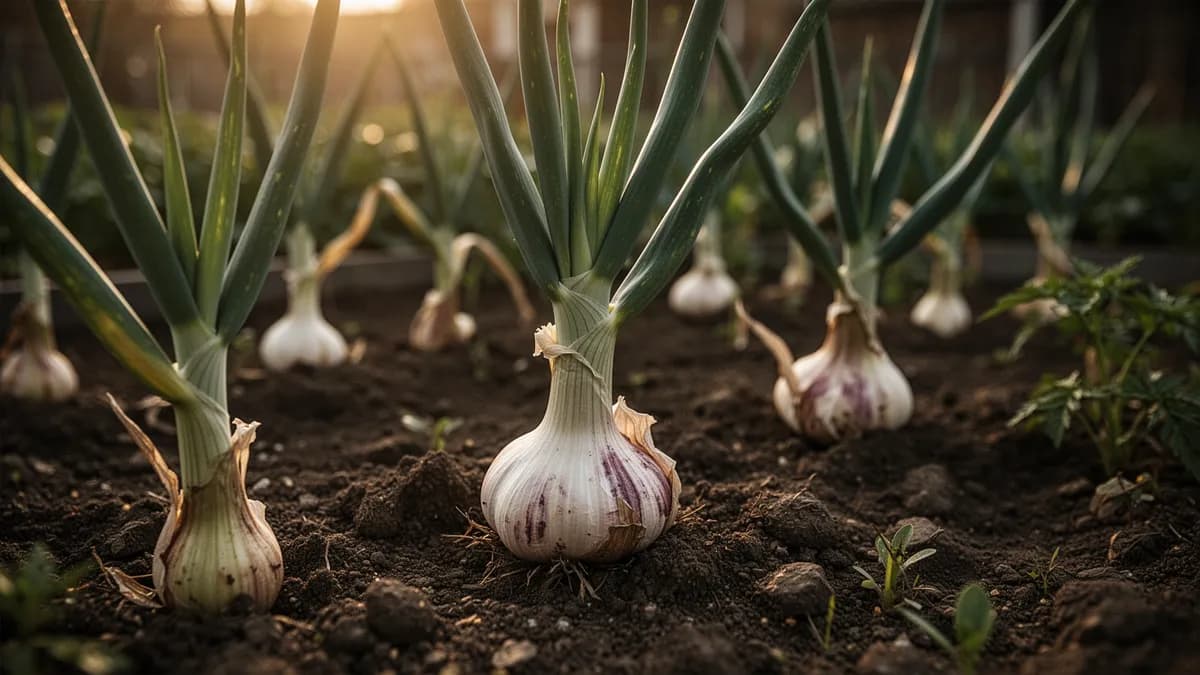
Pflanzen Sie für maximale Produktion eine kompatible Bestäuberbirne innerhalb von 15 Metern, obwohl Conference auch allein einige Früchte ansetzt. Gute Bestäuber sind Williams, Concorde und Doyenne du Comice. Schnittlauch und Knoblauch unter Birnbäumen können helfen, Krankheiten zu unterdrücken. Klee- oder Wicken-Bodendecker binden Stickstoff und locken Bestäuber an. Kapuzinerkresse vertreibt Blattläuse. Vermeiden Sie das Pflanzen in der Nähe von Walnussbäumen und Wacholdersträuchern.
Schnittlauch gehört daneben. Walnussbaum nicht.
Altes Gärtnerwissen, geprüft an der echten Nachbartabelle von Konferenzbirne — teste jede Pflanze, die du anbaust.
Probiere Konferenzbirne direkt hier im Beet
Ein echtes Planer-Beet, Konferenzbirne steht schon drin. Tippe einen Begleiter an, platziere ihn und sieh, wie die Nachbarschaftsprüfung antwortet — grün für gute Nachbarn, rot bei Streit.


Passende Anbau-Ratgeber
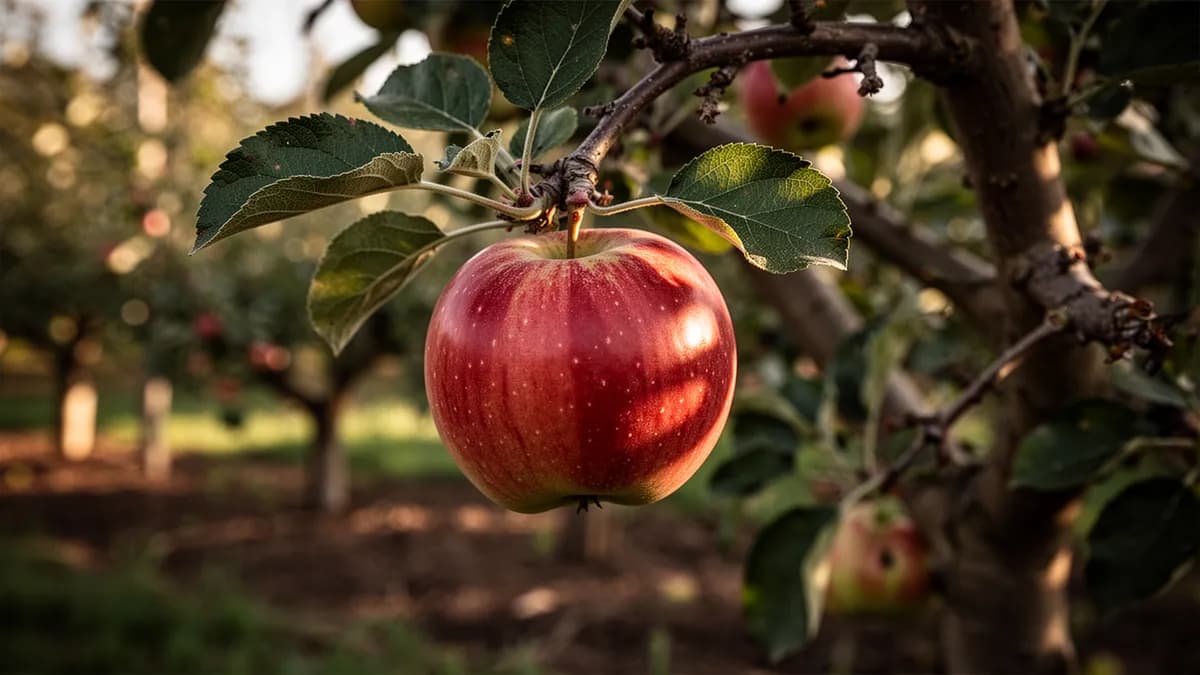
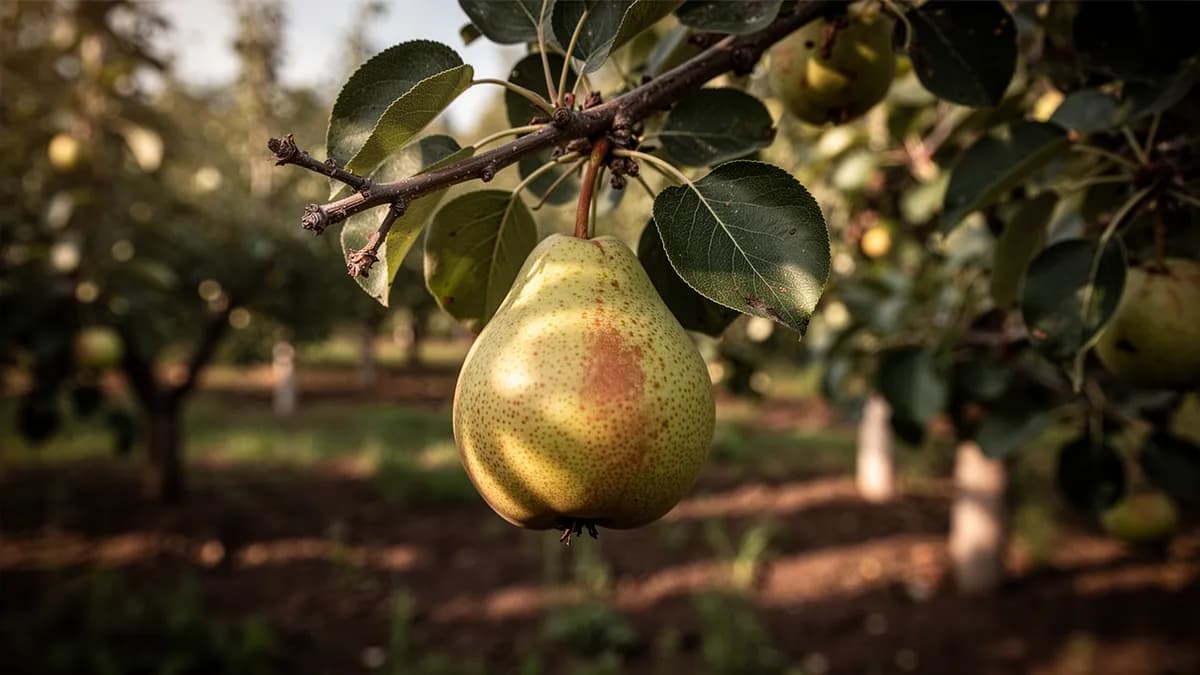
Richtig düngen
Conference-Birnen wachsen am besten in tiefem, gut durchlässigem, leicht saurem bis neutralem Boden mit einem pH-Wert von 6,0 bis 7,0. Der Baum verträgt schwerere Böden als die meisten Birnen, Staunässe muss jedoch vermieden werden. Tragen Sie im zeitigen Frühjahr vor dem Knospenaufbruch einen ausgewogenen Dünger auf, wobei der Stickstoffanteil moderat gehalten werden sollte, um das Feuerbrandrisiko zu verringern. Jährliche Kompostgaben verbessern die Bodenstruktur. Calcium- und Bor-Ergänzungen können je nach Bodentestergebnissen erforderlich sein.
Ideale Temperatur
Winterhärtezone-Kompatibilität
Von der Saat zur Ernte, Schritt für Schritt
Winterruhe und Pflanzung
Conference-Birnbäume gehen im Spätherbst nach dem Laubfall in die vollständige Winterruhe über. Während des Winters sammelt der Baum die erforderlichen Kältestunden an und benötigt typischerweise 600–900 Stunden unter 7 Grad Celsius, um die Ruhephase zuverlässig zu durchbrechen. Wurzelnackte Bäume werden in diesem Ruhefenster gepflanzt, idealerweise zwischen November und März auf der Nordhalbkugel, während containergezogene Bäume zu jeder Jahreszeit bei ausreichender Bewässerung gepflanzt werden können. Das Wurzelsystem etabliert sich still unter der Erde, auch wenn der oberirdische Wuchs keine sichtbare Aktivität zeigt.
Knospenaufbruch und Blüte
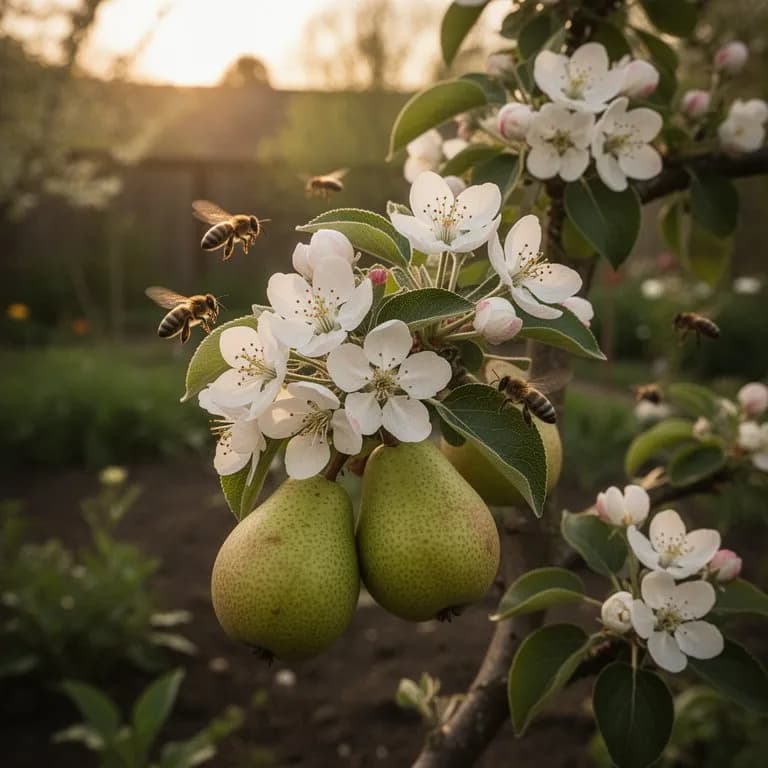
Wenn die Frühlingstemperaturen konstant über 10 Grad Celsius steigen, schwellen die überwinternden Knospen an und brechen auf, um dicht gepackte Blütenbüschel und silbrig-grüne, sich entfaltende Blätter freizugeben. Conference-Birnenblüten öffnen sich in gemäßigten Regionen Mitte April und zeigen Büschel aus fünf weißen Blütenblättern mit rosa Staubgefäßen. Das Blühfenster dauert etwa 10 bis 14 Tage. Conference ist teilweise selbstfruchtbar, kann also ohne Kreuzbestäubung einige Früchte ansetzen, aber die Erträge steigen deutlich mit einem kompatiblen Bestäuber wie Concorde, Williams Christbirne oder Beurré Hardy innerhalb von 15 Metern.
Fruchtansatz und Fruchtentwicklung
Bestäubte Blüten entwickeln winzige grüne Fruchtansätze an der Basis der verwelkten Blütenblätter. Der Baum durchläuft etwa sechs Wochen nach der Blüte einen natürlichen Junifruchtfall, bei dem er überschüssige Fruchtansätze abwirft, die er nicht bis zur Reife ernähren kann. Die verbliebenen Früchtchen wachsen schnell und strecken sich in die typische Conference-Flaschenform. Die Zellteilung innerhalb der Frucht ist in diesem Stadium am aktivsten, weshalb ausreichend Wasser und Nährstoffe entscheidend für die endgültige Fruchtgröße sind.
Fruchtvergrößerung und Reifung
Während des Sommers vergrößern sich die Früchtchen stetig, wobei sie von hartgrün zu einem weicheren Grün-Gold übergehen, das von der charakteristischen braunen Berostung überlagert wird, die einen Großteil der Conference-Birnenschale bedeckt. Zucker reichert sich im Fruchtfleisch an, Stärke wird in Fruktose umgewandelt, und die Frucht entwickelt ihre typische butterige, schmelzende Textur. Die Frucht erreicht bis Ende August bis Anfang September ihre volle Größe, sollte aber vor der Vollreife am Baum gepflückt werden, um beste Lagerfähigkeit und Essqualität zu erzielen.
Ernte
Conference-Birnen werden in den meisten gemäßigten Klimazonen von September bis Anfang Oktober geerntet, solange die Frucht noch fest ist und die Schalenfarbe von dunkelgrün zu hellerem Gelbgrün mit ausgebildeter Berostung gewechselt hat. Der klassische Test auf Pflückreife besteht darin, die Frucht in die Hand zu nehmen und waagerecht zu kippen; löst sie sich leicht vom Sporn, ist sie bereit. Anders als die meisten Obstarten reifen Birnen am besten vom Baum getrennt nach. Frühes Pflücken gewährleistet eine längere Lagerfähigkeit und verhindert die körnige Textur, die entsteht, wenn Birnen am Baum ausreifen.
Nachernte und Vorbereitung auf die Winterruhe
Nach der Ernte lenkt der Baum seine Energie in die Ausreifung neuer Triebe, die Anlage von Fruchtknospen für das folgende Jahr und den Aufbau von Wurzelreserven um. Die Blätter verfärben sich allmählich von Gelb zu Bronze, bevor sie im November fallen. Diese Phase ist entscheidend für die Produktivität der nächsten Saison, da die Fruchtknospen, die die Ernte des nächsten Jahres hervorbringen, im Spätsommer und Herbst an zweijährigem Holz und älteren Fruchtspornen gebildet werden.
Pflanzen Sie wurzelnackte Conference-Birnen in gut durchlässigen, leicht sauren bis neutralen Boden mit einem pH-Wert von 6,0 bis 7,0. Graben Sie ein Pflanzloch, das mindestens doppelt so breit wie die Wurzelausbreitung ist, und setzen Sie die Veredlungsstelle 10 cm über dem Bodenniveau an. Schlagen Sie einen stabilen Pfahl auf der Windseite ein, bevor Sie pflanzen, und befestigen Sie den Stamm mit einem Gummi-Bauband. Wässern Sie bei der Pflanzung gründlich und bringen Sie einen 8 cm dicken Mulchring aus kompostierter Rinde auf, wobei der Mulch 15 cm vom Stamm entfernt bleiben sollte, um Wurzelhalsfäule zu verhindern.
Konferenzbirne Monat für Monat pflegen
Was du jeden Monat für deine Konferenzbirne tun solltest
Oktober
Aktueller MonatSchließen Sie die Ernte verbleibender Früchte ab. Nachdem der Laubfall beginnt, harken Sie abgefallenes Laub zusammen und kompostieren Sie es, um das Birnenschorf-Inokulum zu reduzieren. Stellen Sie jegliche Düngung ein, damit der Baum für den Winter abhärten kann. Überprüfen Sie gelagerte Birnen wöchentlich und entfernen Sie solche mit Fäulnisanzeichen.
Immer wissen, was jetzt im Garten zu tun ist
Eine E-Mail zum Monatsanfang: was du jetzt säen, pflanzen und anpacken solltest — für deine Konferenzbirne und alles, was drumherum wächst. Dazu ein kurzer Startkurs, der dich vor den klassischen Fehlern bewahrt.
- Was jetzt zu tun ist
- Passend zu deiner Saison
- Startkurs inklusive
Konferenzbirne ernten
Conference-Birnen werden Ende September geerntet, solange sie noch fest und grün sind. Europäische Birnen müssen vor der Vollreife gepflückt und vom Baum abgereift werden. Testen Sie die Pflückreife, indem Sie die Frucht waagerecht anheben; wenn sie sich leicht vom Fruchtsporn löst, ist sie bereit. Die Frucht sollte bei der Ernte noch hart sein. Lassen Sie sie bei Raumtemperatur fünf bis zehn Tage nachreifen, bis das Fruchtfleisch in Stielnähe auf sanften Druck nachgibt. Für beste Textur kühlen Sie die Birnen zwei bis drei Wochen, bevor Sie sie bei Raumtemperatur nachreifen lassen.
angenommen, du pflanzt zu Beginn des Zeitraums — trage dein tatsächliches Datum ein
Ernte Konferenzbirne zügig, dann trägt die Pflanze weiter.
Lagerung & Konservierung
Conference-Birnen lagern außergewöhnlich gut in Kühllagerung bei minus 1 bis 0 Grad Celsius für drei bis vier Monate. Die berostete Schale bietet natürlichen Schutz während der Lagerung. Nehmen Sie sie aus der Kühlung und lassen Sie sie etwa eine Woche bei Raumtemperatur nachreifen, bevor Sie sie verzehren. Conference eignet sich hervorragend für Eingemachtes, pochierte Birnen und Trockenobst. Das feste Fruchtfleisch hält beim Backen und Einkochen gut stand. Birnenmus und Birnenkompott sind köstliche Alternativen zu den Apfelvarianten.
Was schiefgeht — und die Lösung
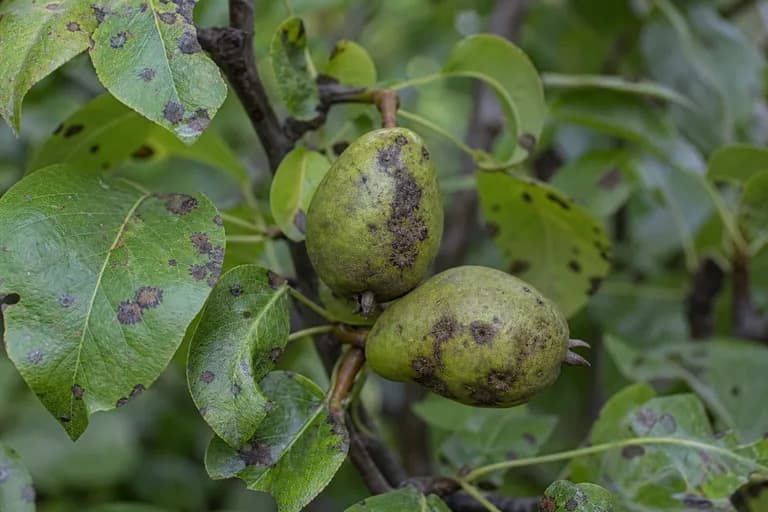
Birnenschorf
KrankheitDunkle, samtige Flecken auf Blättern und Früchten; Rissbildung und Verformung der Fruchtschale; vorzeitiger Blattfall.
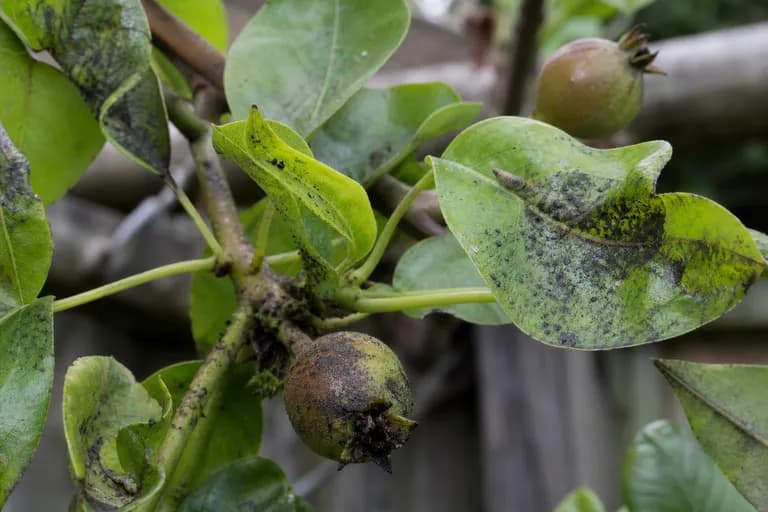
Birnblattsauger
SchädlingWinzige, geflügelte Insekten auf neuem Wachstum; Honigtauausscheidung, die Rußtau verursacht; Blattkräuselung und Triebstauchung.
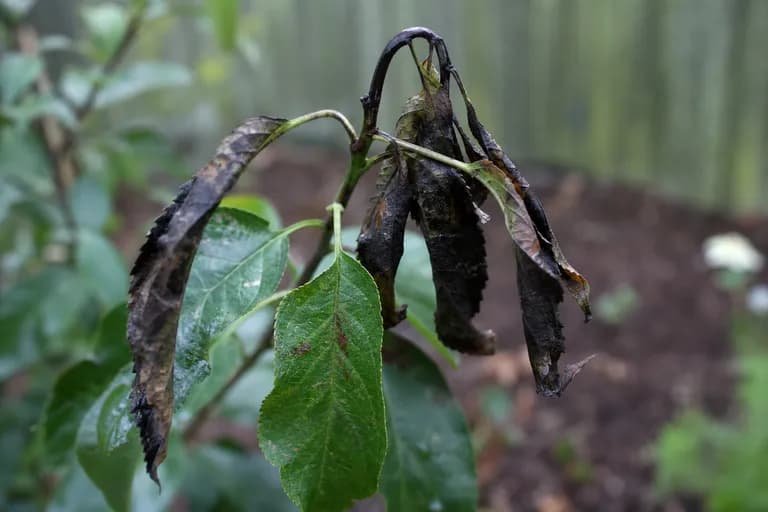
Feuerbrand
KrankheitGeschwärzte, welke Triebspitzen, die sich zu einer Hirtenstabform krümmen; nässende Krebsstellen; Blütenbrand während warmer, feuchter Frühjahre.
Fehlerbehebung bei häufigen Problemen
Feuerbrand ist die schwerwiegendste Bedrohung, besonders während warmer, feuchter Frühjahre, wenn die Blüten geöffnet sind. Birnenschorf erfordert in feuchten Klimazonen eine vorbeugende Behandlung. Die Frucht ist hart und ungenießbar, wenn sie direkt vom Baum ohne ordnungsgemäße Nachreifung gegessen wird. Die Berostung der Schale ist ein Merkmal von Conference und kein Mangel, obwohl manche Verbraucher sie unattraktiv finden. Mangelhafte Bestäubung führt zu verformten Früchten. Vögel können reifende Früchte beschädigen, die am Baum belassen werden.
Anbautipps
- Wählen Sie Quitte A als Unterlage für ein gutes Gleichgewicht aus Wuchsstärke und frühem Ertrag in den meisten Gartensituationen, oder Quitte C für sehr kleine Gärten und Kübel, wo ein kompakter Baum von 2,5 bis 3 Metern benötigt wird.
- Pflanzen Sie eine kompatible Bestäubersorte wie Concorde, Williams Christbirne oder Beurré Hardy innerhalb von 15 Metern, um Fruchtansatz und Ertrag deutlich zu steigern, auch wenn Conference teilweise selbstfruchtbar ist.
- Erziehen Sie Conference-Birnen als Spaliere oder Kordone an einer Süd- oder Südwestwand oder einem Zaun, um Platz zu sparen, die Fruchtqualität durch reflektierte Wärme zu verbessern und Schnitt und Ernte zu erleichtern.
- Wässern Sie neu gepflanzte Bäume in den ersten beiden Vegetationsperioden einmal wöchentlich gründlich, um ein starkes Wurzelsystem zu etablieren, wobei mindestens 20 Liter pro Gießgang verabreicht werden sollten statt häufiger leichter Sprühstöße.
- Verabreichen Sie von Juni bis August alle zwei Wochen einen kaliumreichen Flüssigdünger wie Tomatendünger, um die Fruchtentwicklung, Zuckereinlagerung und Knospenbildung für das folgende Jahr zu unterstützen.
- Dünnen Sie Fruchtbüschel Anfang Juni auf ein bis zwei Birnen pro Büschel in einem Abstand von 10 bis 15 cm aus, um größere, geschmackvollere Früchte zu erzielen und Alternanz-Tragmuster zu verhindern.
- Pflücken Sie Conference-Birnen im September, solange sie noch fest sind, und lassen Sie sie bei Raumtemperatur fünf bis sieben Tage nachreifen; am Baum nachgereifte Früchte entwickeln eine körnige, mehlige Textur statt der gewünschten schmelzenden Butterigkeit.
- Schneiden Sie im Winter, um eine offene Krone mit guter Luftzirkulation zu erhalten, was die wirksamste kulturelle Maßnahme zur Reduzierung von Birnenschorfbefall ist.
- Netzen Sie Bäume oder einzelne Fruchtbüschel ab August mit feinmaschigen Beuteln ein, um reifende Birnen vor Vogelschäden und Wespenfraß zu schützen, die in den letzten Wochen vor der Ernte eine Ernte verwüsten können.
- Tragen Sie im Dezember oder Januar eine Winterspritzung mit pflanzenölbasiertem Mittel auf, um überwinternde Blattlauseier, Birnblattsauger-Nymphen und Schildläuse in Rindenritzen abzutöten.
Bau deine beste Konferenzbirne an — und alles drumherum.
Starte heute kostenlos. Lege deine Beete an, setze deine Konferenzbirne ein und lass PlotMyGarden Timing, Abstände, Begleiter und Erinnerungen von der Saat bis zum Erntekorb übernehmen.
Finde deine Konferenzbirne
Conference (Standard)
Die klassische lange, berostete Sorte, die 1885 gezüchtet wurde und noch immer die beliebteste Birne Europas für ihre zuverlässig reichen Ernten und ihren ausgezeichneten Geschmack ist.
Conference auf Quitte A
Eine halbzwergige Form, ideal für Hausgärten und Spaliere, die im dritten oder vierten Jahr Früchte trägt.
Conference auf Quitte C
Eine stark zwergwüchsige Unterlage, die kompakte Bäume hervorbringt, perfekt für Kübel und kleine Räume.
Ein einzelner Conference-Birnbaum auf Quitte-A-Unterlage kostet zwischen 20 und 35 Euro und kann im ausgereiften Zustand 20 bis 40 kg Obst pro Jahr produzieren. Bei typischen Supermarktpreisen von 2,00 bis 2,50 Euro pro Kilogramm kann ein Baum jährlich Birnen im Wert von 40 bis 100 Euro liefern, womit er sich innerhalb des ersten vollen Ertragsjahres amortisiert und danach jahrzehntelang kostenloses Obst liefert. Selbst angebaute Conference-Birnen, die zum optimalen Zeitpunkt gepflückt und nachgereift werden, übertreffen zudem bei Weitem den Geschmack und die Textur von kommerziell gelagerten Supermarkt-Birnen.
Schnelle Rezepte
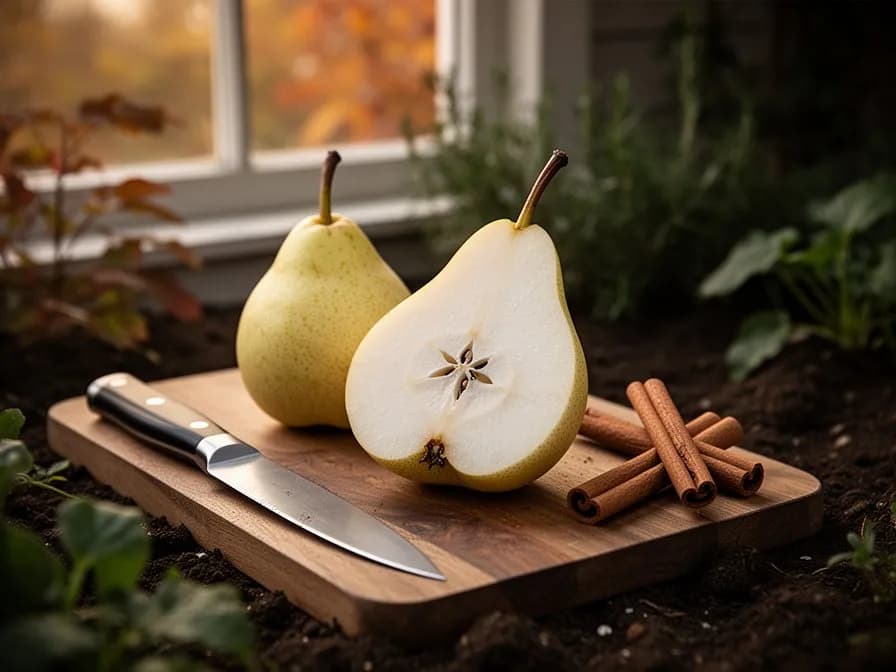
Pochierte Conference-Birnen in gewürztem Rotwein
45 Min.Ganze, geschälte Conference-Birnen, sanft in einem aromatischen Rotweinsirup mit Zimt, Sternanis und Orangenzesten gegart, bis sie zart und tiefrot gefärbt sind. Warm oder gekühlt serviert mit einem Schuss des eingekochten Sirups und einem Klecks Crème fraîche für ein elegantes, aber einfaches Dessert.
7 Zutaten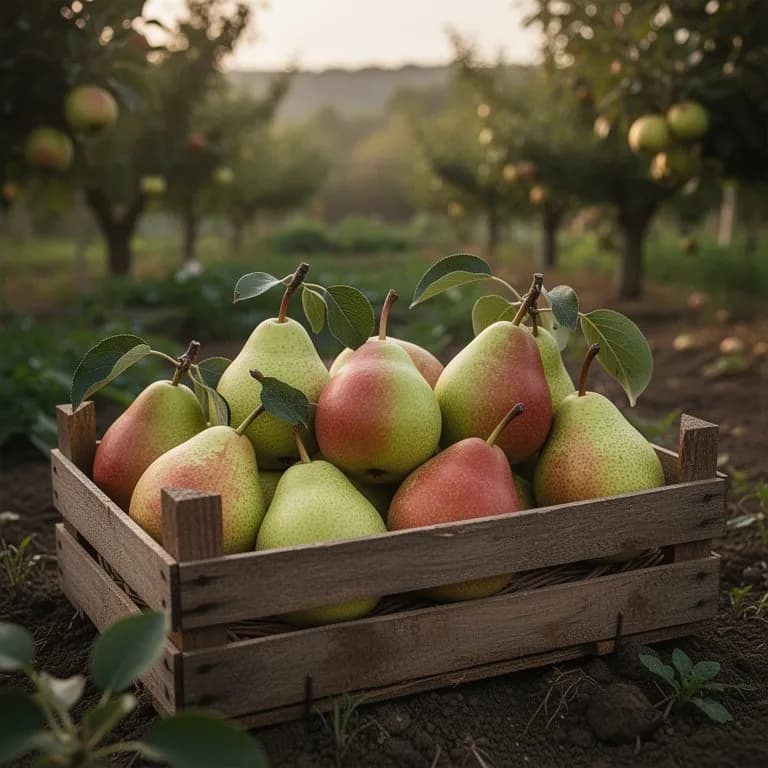
Conference-Birnen-Salat mit Walnüssen und Blauschimmelkäse
15 Min.Dünn geschnittene reife Conference-Birne, fächerförmig auf einem Bett aus pfeffrigem Rucola und Brunnenkresse angerichtet, bestreut mit gerösteten Walnusshälften und zerbröckeltem Roquefort, abgerundet mit einer Honig-Walnussöl-Vinaigrette. Eine perfekte Herbstvorspeise oder leichte Mahlzeit, die Süße, Salz und Knusprigkeit ausgewogen vereint.
7 ZutatenGewürztes Conference-Birnen-Chutney
90 Min.Gewürfelte Conference-Birnen, langsam gekocht mit Zwiebeln, Rosinen, frischem Ingwer, Senfkörnern und Apfelessig zu einem reichhaltigen, stückigen Chutney. Ideal als Konserve für die herbstliche Birnenschwemme, passt dieses Chutney hervorragend zu reifem Cheddar, kaltem Aufschnitt und knusprigem Brot. Ergibt etwa vier Standardgläser.
8 ZutatenKulinarische Verwendung
Conference-Birnen sind nach ordnungsgemäßer Nachreifung hervorragend für den Frischverzehr geeignet, mit süßem, saftigem, schmelzendem Fruchtfleisch. Sie lassen sich wunderbar in Wein oder Vanillesirup pochieren und ergeben elegante Desserts. Das feste Fruchtfleisch eignet sich ausgezeichnet für Tartes, Galettes und gebackene Birnengerichte. Conference passt hervorragend in Salate mit Blauschimmelkäse und Walnüssen. Der Saft ergibt köstlichen Perry, das Birnenäquivalent zu Cidre.
Was drinsteckt
Gesundheitsvorteile
- Reich an löslichen Pektinballaststoffen, die helfen, das LDL-Cholesterin zu senken, indem sie Gallensäuren im Verdauungstrakt binden und deren Ausscheidung fördern
- Enthält das Antioxidans Arbutin, das in der berosteten Schale konzentriert ist und auf seine potenziellen entzündungshemmenden und hautaufhellenden Eigenschaften untersucht wurde
- Niedriger glykämischer Index von etwa 38, was Conference-Birnen zu einer geeigneten Obstwahl für Menschen mit Blutzuckermanagement macht
- Liefert Chlorogensäure, eine polyphenolische Verbindung, die in Beobachtungsstudien mit einem verringerten Risiko für Typ-2-Diabetes und verbesserter kardiovaskulärer Gesundheit in Verbindung gebracht wird
- Hoher Wassergehalt von etwa 84 Prozent in Kombination mit Ballaststoffen fördert die Hydratation und unterstützt eine gesunde Darmregelmäßigkeit
- Liefert Kupfer und Vitamin K, zwei Mikronährstoffe, die für die Aufrechterhaltung der Knochenmineraldichte, Kollagensynthese und ordnungsgemäße Blutgerinnung unerlässlich sind
Woher Konferenzbirne stammt
Die Conference-Birne geht auf das Jahr 1885 zurück, als der renommierte englische Baumschuler Thomas Francis Rivers sie als Sämling in seiner Familienbaumschule in Sawbridgeworth, Hertfordshire, aufzog. Rivers war einer der bedeutendsten Obstzüchter der viktorianischen Ära, und die neue Sorte gilt als Kreuzung zwischen Léon Leclerc de Laval und einem heute nicht mehr nachvollziehbaren Elternteil. Die Birne feierte ihr öffentliches Debüt auf der Nationalen Britischen Birnenkonferenz von 1885, einer von der Royal Horticultural Society organisierten Veranstaltung zur Förderung des Birnenanbaus in ganz England. Der Sämling beeindruckte die Juroren mit seinem reichen Ertrag, zuverlässigem Fruchtansatz und ausgezeichnetem Geschmack und wurde mit dem ersten Preis ausgezeichnet, woraufhin Rivers ihn zu Ehren der Versammlung Conference nannte. Innerhalb weniger Jahrzehnte hatte sich die Sorte in Erwerbsobstplantagen in ganz England und in den Beneluxländern verbreitet, wo das maritime Klima ihren Bedürfnissen ebenso gut entsprach. Mitte des zwanzigsten Jahrhunderts war Conference zur vorherrschenden Tafelbirne in britischen Obstgärten geworden, eine Position, die sie bis heute innehat. Ihre Beliebtheit beruht auf einer Kombination von Eigenschaften, die nur wenige andere Birnen bieten können: teilweise Selbstfruchtbarkeit, beständig jährlicher Ertrag, gute Krankheitsresistenz, eine lange Lagerfähigkeit von bis zu drei Monaten unter kühlen Bedingungen und ein schmelzendes, butteriges Fruchtfleisch bei ordnungsgemäßer Nachreifung. Moderne Züchtungsarbeit hat Conference als Elternteil verwendet, um neuere Sorten wie Concorde zu schaffen, einen kompakten Baum, der viele der besten Eigenschaften von Conference teilt. Heute werden Conference-Birnen kommerziell vom Vereinigten Königreich und den Niederlanden bis nach Belgien, Italien und Portugal angebaut. Hobbygärtner schätzen die Sorte gleichermaßen für ihre Anpassungsfähigkeit an Erziehungsformen wie Spaliere und Kordone, ihre Toleranz gegenüber weniger idealen Böden und ihre zuverlässige Produktivität selbst in kühleren maritimen Klimazonen, in denen viele andere Birnensorten Schwierigkeiten haben, gleichmäßig auszureifen.
Konferenzbirne: Schon gewusst?
Faszinierende Fakten über Konferenzbirne
Die Conference-Birne wurde erstmals 1885 von Thomas Francis Rivers in seiner Baumschule in Sawbridgeworth, Hertfordshire, England, gezüchtet und wurde nach der Nationalen Britischen Birnenkonferenz benannt, die in jenem Jahr stattfand und bei der sie den Hauptpreis gewann.
Konferenzbirne: Fragen & Antworten
Wann sollte ich Konferenzbirne pflanzen?
Was sind gute Begleitpflanzen für Konferenzbirne?
In welchen Winterhärtezonen kann Konferenzbirne wachsen?
Wie viel Sonne braucht Konferenzbirne?
Welchen Abstand sollte ich zwischen Konferenzbirne lassen?
Welche Schädlinge und Krankheiten befallen Konferenzbirne?
Wie lagere ich Konferenzbirne nach der Ernte?
Was sind die besten Konferenzbirne-Sorten zum Anbauen?
Welchen Boden braucht Konferenzbirne?
Brauche ich einen zweiten Birnbaum, um meine Conference-Birne zu bestäuben?
Warum sind meine Conference-Birnen körnig und hart statt glatt und butterig?
Wie verhindere ich Birnenschorf an meinem Conference-Baum?
Kann ich eine Conference-Birne in einem großen Kübel auf der Terrasse anbauen?
Wann ist die beste Zeit, einen Conference-Birnbaum zu schneiden?
Wie lange dauert es, bis ein Conference-Birnbaum Früchte trägt?
Du hast die Theorie gelesen. Jetzt baue sie auf Autopilot an.
Alles, was Konferenzbirne knifflig macht — das Timing, die Abstände, die Begleiter, das Erntefenster — genau das übernimmt PlotMyGarden für dich, für jede Pflanze im Garten.
Ein Plan, der dein Wetter kennt
Standort einmal festlegen. Aussaat-, Dünge- und Erntedaten rund um deinen echten letzten Frosttermin und die Live-Vorhersage — kein Raten mehr nach Saattüte.
Aus dem Abschnitt „Pflanzzeit“Beetplaner per Drag & Drop
Beete auf einem Raster gestalten. Jede Pflanze rastet im richtigen Abstand ein, und du siehst die ganze Saison, bevor du einen Cent für Saatgut ausgibst.
Aus dem Abschnitt „Anbau“Begleiter-Konflikte früh erkannt
Über 200 gute und schlechte Kombinationen werden beim Pflanzen live geprüft — so landet ein saisonruinierender Fehler nie in der Erde.
Aus dem Abschnitt „Begleiter“Erinnerungen, nach denen du wirklich handelst
„Gieß die Bohnen.“ „Heute ernten, bevor's umschlägt.“ Pünktlich, konkret und auf deine echten Pflanzen bezogen.
Aus dem Abschnitt „Ernte“Staffel-Aussaat, geplant
Sechs Wochen ernten statt sechs Tage? Die App verteilt deine Aussaaten automatisch und erinnert dich, wenn der nächste Satz fällig ist.
Aus dem Abschnitt „Pflanzzeit“Ein Verlauf, der schlauer wird
Jede protokollierte Ernte bringt der App deinen Garten bei. Der Plan fürs nächste Jahr startet bei dem, was in deinem Boden wirklich funktioniert hat.
Aus dem Abschnitt „Überblick“Pflanze diese neben Konferenzbirne
Weitere Kernobst
Halte Konferenzbirne von diesen fern
Bau deine beste Konferenzbirne an — und alles drumherum.
Starte heute kostenlos. Lege deine Beete an, setze deine Konferenzbirne ein und lass PlotMyGarden Timing, Abstände, Begleiter und Erinnerungen von der Saat bis zum Erntekorb übernehmen.