Manzana Honeycrisp
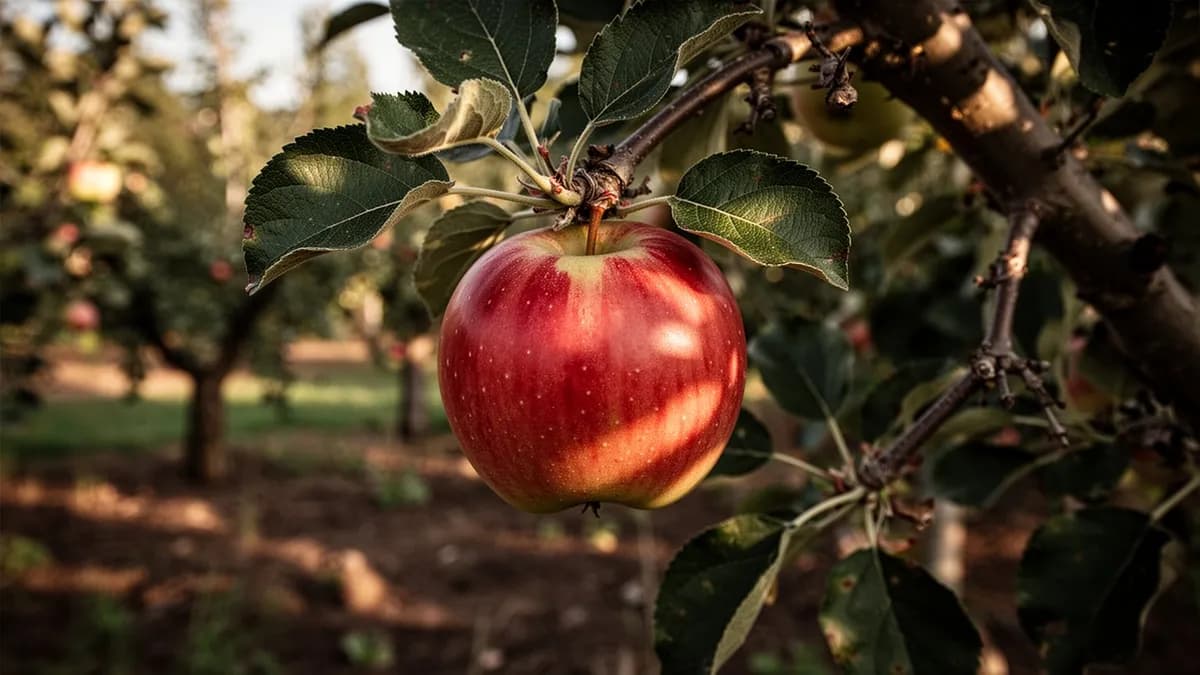
Una sensación moderna del programa de mejora de la Universidad de Minnesota, apreciada por su crujido explosivo y su equilibrado sabor agridulce.





En esta páginaResumen
Conoce Manzana Honeycrisp
Una sensación moderna del programa de mejora de la Universidad de Minnesota, apreciada por su crujido explosivo y su equilibrado sabor agridulce. Los árboles Honeycrisp pueden ser difíciles de cultivar, con susceptibilidad a la mancha amarga y tendencia a la fructificación alternante. Las grandes células de la pulpa crean una textura singularmente jugosa y crujiente que ha convertido a esta variedad en una opción premium.
Cuándo plantar Manzana Honeycrisp
Honeycrisp es una variedad patentada y su propagación está restringida sin licencia. Las semillas no producirán verdaderos árboles Honeycrisp, pero pueden cultivarse con fines experimentales. Recoja semillas de fruta madura, límpielas a fondo y estratifíquelas durante 60 a 90 días en turba húmeda a 2 a 4 °C. Plante las semillas a 1.5 cm de profundidad en un sustrato estéril y proporcione luz intensa. La germinación tarda de dos a cuatro semanas. Las plántulas resultantes producirán tipos de fruta desconocidos después de seis a diez años de crecimiento.
Tu año de Manzana Honeycrisp
Ajustado a Zona 7 · temporada típica · la helada se va hacia el 2 abr y vuelve hacia el 1 nov
Planta Manzana Honeycrisp Mar – Abr y cosecha Sep – Oct. Consulta los métodos de plantación y elige tu clima para adaptar los periodos.
Cómo cultivar Manzana Honeycrisp
Plante manzanos Honeycrisp a comienzos de la primavera en un lugar con pleno sol y un excelente drenaje del aire, ya que esta variedad es especialmente susceptible a las enfermedades que prosperan en condiciones húmedas y estancadas. Los árboles son resistentes hasta la zona 3 y, de hecho, rinden mejor en climas más frescos donde reciben suficientes horas de frío invernal. Separe los árboles estándar entre 6 y 7.5 metros, o los árboles enanos sobre portainjertos M.26 o B.9 entre 2.5 y 3 metros.
Honeycrisp necesita un polinizador y, gracias a su floración abundante y fiable, es un excelente polinizador para otras variedades. Entre sus buenos compañeros están Gala, Fuji y Golden Delicious. Conduzca los árboles en eje central y prepárese para un hábito de crecimiento algo desordenado, con ramas largas y de ángulo amplio que pueden necesitar apoyo cuando se cargan de fruta.
El aclareo agresivo de frutos es la práctica de manejo más importante para Honeycrisp. Aclare a un solo fruto por racimo en las dos semanas posteriores a la caída de pétalos, buscando una separación de un fruto cada 15 a 20 cm a lo largo de cada rama. Esto reduce la tendencia a la fructificación alternante y disminuye de forma notable la incidencia de mancha amarga al asegurar que cada fruto restante reciba suficiente calcio del árbol. Aplique de cuatro a seis pulverizaciones foliares de cloruro de calcio desde la caída de pétalos hasta agosto.
Para Manzana Honeycrisp un bancal de 120 × 240 cm se queda corto
Cada Manzana Honeycrisp pide 300 cm de margen. El planificador guarda ese marco por ti — cada planta, cada bancal.
Los mejores vecinos de Manzana Honeycrisp
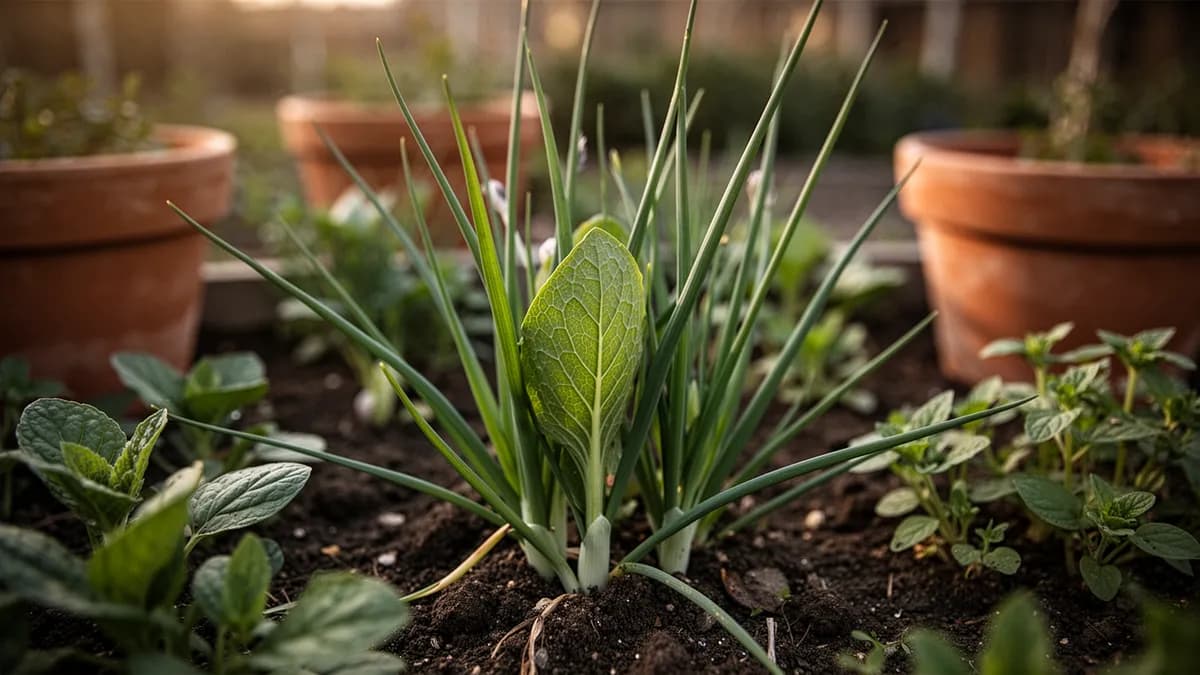
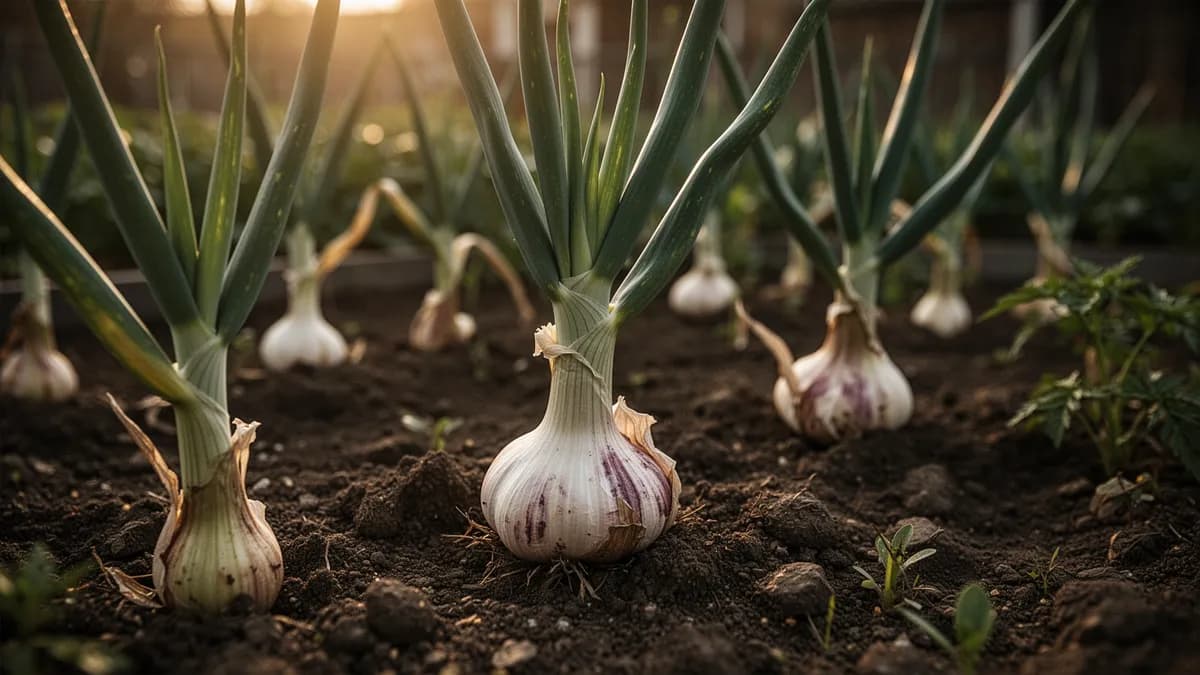
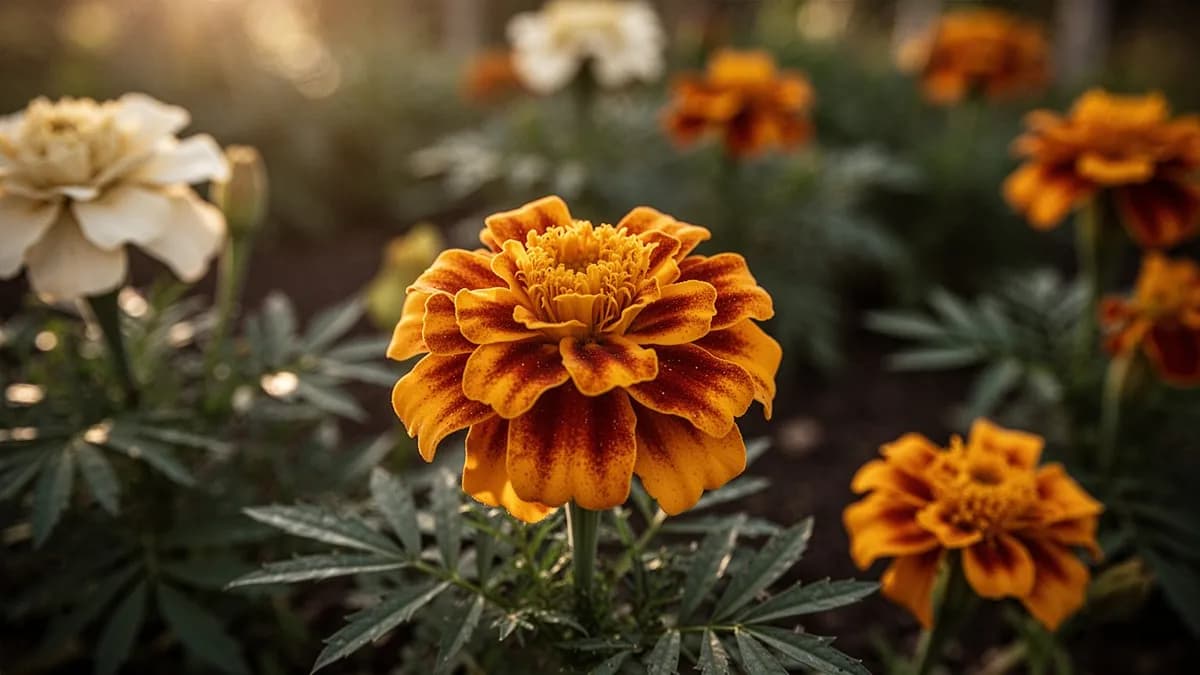
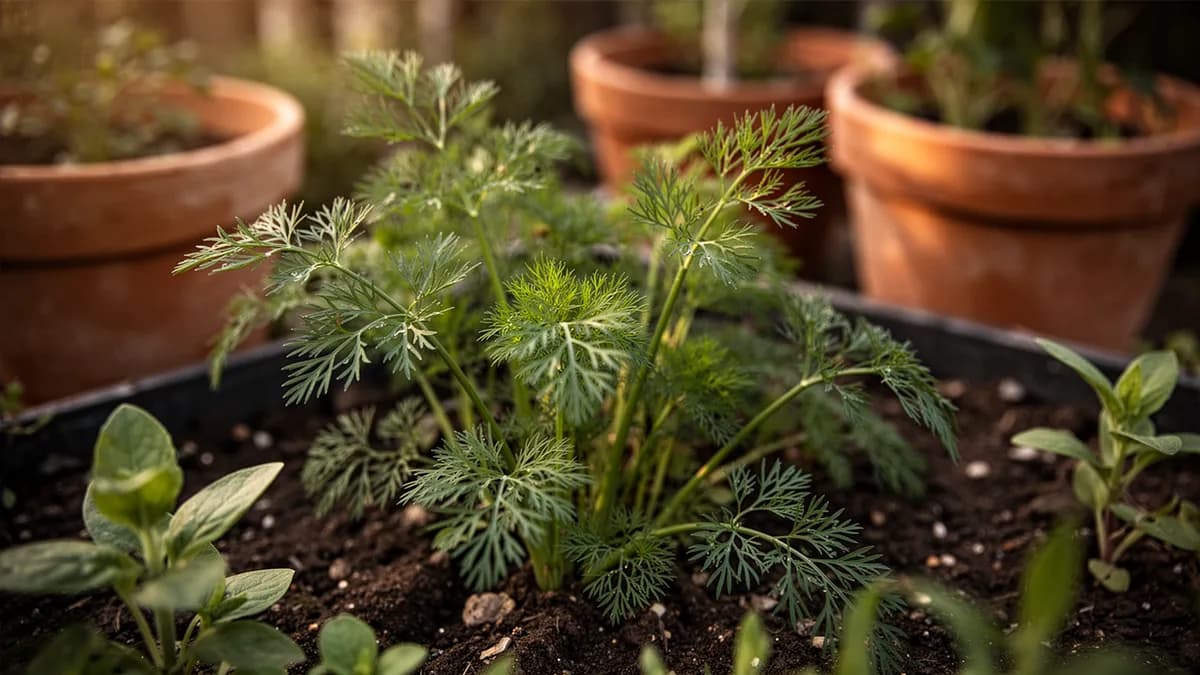
Rodee los árboles Honeycrisp con eneldo, que ya figura como compañero, para atraer avispas parasitoides beneficiosas que controlan la polilla de la manzana y los pulgones. El cebollino y el ajo disuaden a barrenadores y pulgones con su fuerte aroma. Plante consuelda como acumuladora dinámica que extrae calcio y potasio de las capas profundas del suelo, proporcionando material de mantillo rico en nutrientes cuando se corta y se deja alrededor del árbol. Las capuchinas atraen los pulgones lejos del manzano como cultivo trampa.
Cebollino va a su lado. Nogal no.
Saber de huerto de siempre, cotejado con la tabla real de Manzana Honeycrisp — prueba cualquier planta que cultives.
Prueba Manzana Honeycrisp en un bancal, aquí mismo
Un bancal real del planificador con Manzana Honeycrisp ya plantado. Toca una planta compañera para colocarla y mira cómo responde la comprobación de vecinos: verde para buenos vecinos, rojo si hay conflicto.


Guías de cultivo relacionadas
Abónalo bien
Honeycrisp rinde mejor en un suelo bien drenado, ligeramente ácido a neutro, con un pH de 6.0 a 6.8. Los árboles tienen una demanda moderada de nitrógeno y una fertilización excesiva favorece el crecimiento vegetativo que compite con el fruto por el calcio, empeorando la mancha amarga. Aplique una dosis ligera de fertilizante equilibrado a comienzos de primavera. El calcio es el nutriente crítico para Honeycrisp; aplique pulverizaciones foliares de cloruro de calcio desde la caída de pétalos y repítalas cada dos semanas durante el verano.
Temperatura ideal
Compatibilidad de zonas de rusticidad
De la semilla a la cosecha, etapa por etapa
Dormancia y plantación
Los árboles Honeycrisp se plantan durante la dormancia invernal como varas a raíz desnuda o ejemplares en contenedor. El árbol almacena toda su energía en las raíces y el tejido leñoso durante este periodo de descanso, acumulando lentamente horas de frío por debajo de 7 °C. Honeycrisp requiere entre 800 y 1000 horas de frío, suficientes para excluirla de los climas más cálidos, pero alcanzables en la mayoría de las zonas templadas de cultivo. Una acumulación correcta de horas de frío es esencial para una brotación sincronizada y vigorosa y para un cuajado completo en primavera.
Brotación y floración
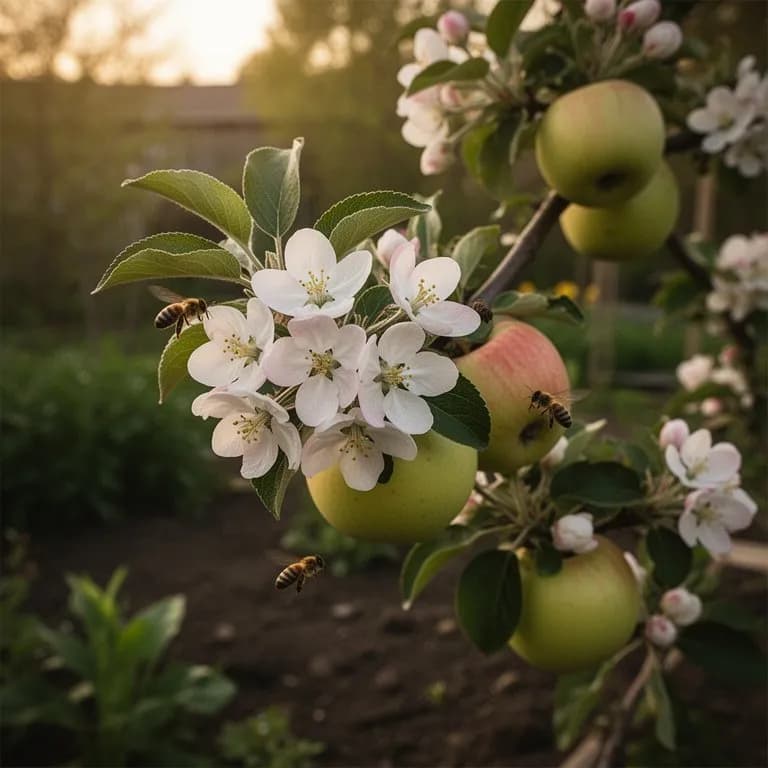
A medida que el suelo y el aire se calientan a mediados de primavera, las yemas de Honeycrisp se hinchan y se abren para revelar racimos de flores con tonos rosados. La floración suele producirse a mitad de temporada, lo que hace que Honeycrisp sea compatible con un amplio rango de polinizadores, entre ellos Haralson, McIntosh, Zestar y Gala. Cada racimo floral contiene cinco flores, y la flor central produce el fruto más grande y mejor formado. Las abejas y otros polinizadores deben visitar las flores durante la breve ventana de 7 a 10 días para que se produzca el cuajado.
Cuajado y caída de junio
Las flores fecundadas se convierten en pequeños frutitos que crecen rápidamente en las semanas posteriores a la caída de pétalos. Honeycrisp pierde de forma natural parte de su carga de fruto a comienzos del verano, la llamada caída de junio, mientras el árbol autorregula su cosecha. Sin embargo, Honeycrisp es famoso por cuajar una carga de fruto extremadamente alta que el árbol no puede engrosar ni madurar adecuadamente sin intervención. Los frutitos restantes deben aclararse de forma agresiva a mano para lograr los frutos grandes y de alta calidad que definen la variedad.
Desarrollo y engorde del fruto
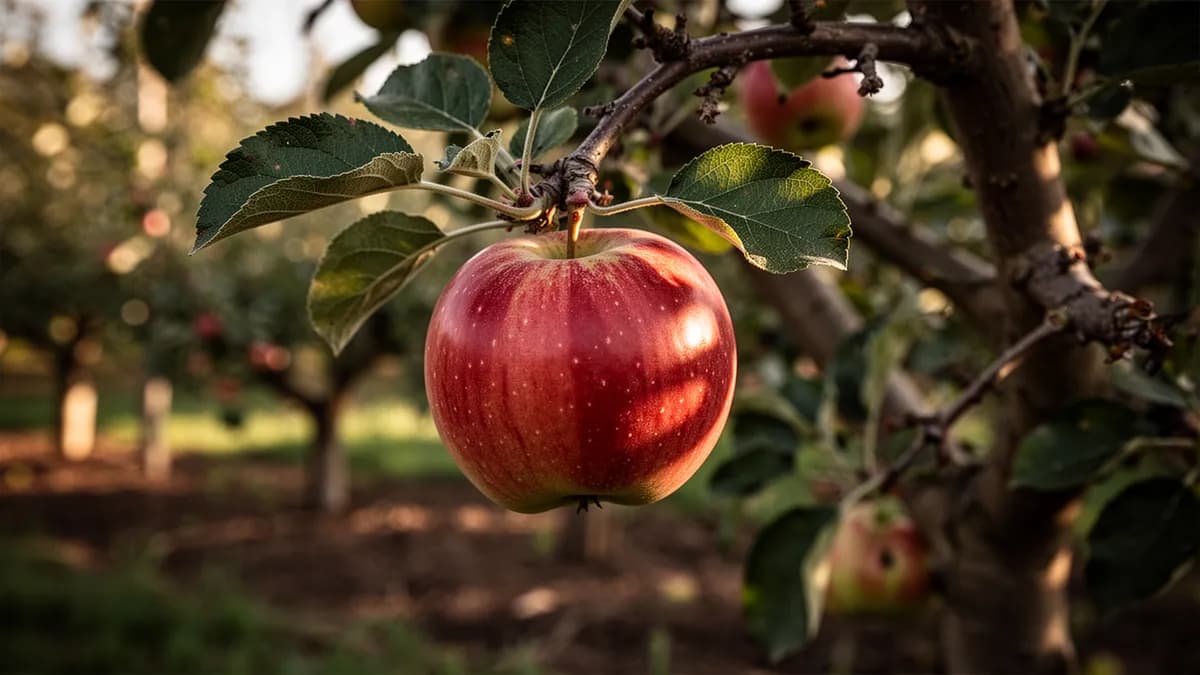
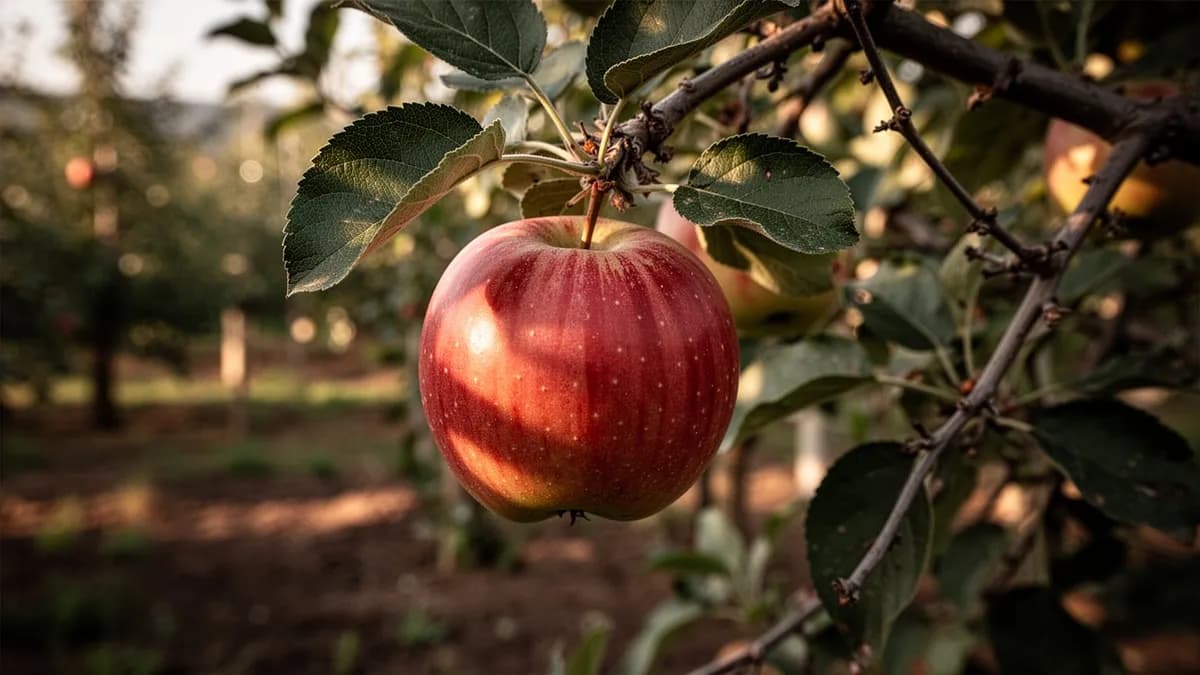
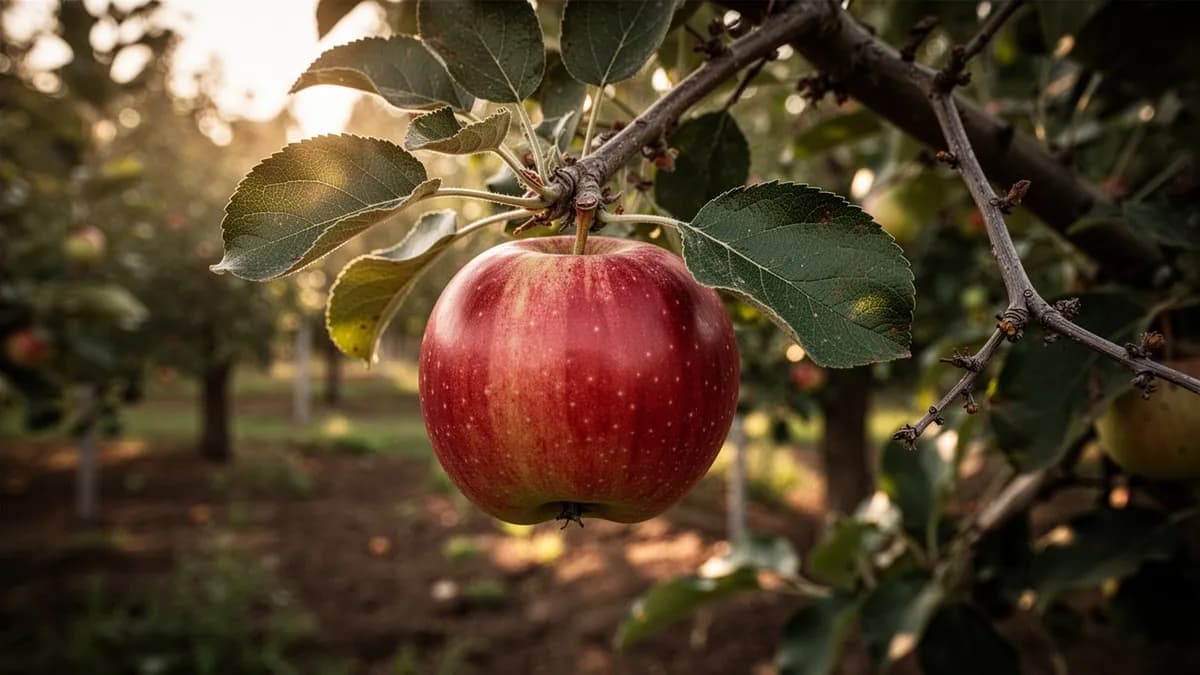
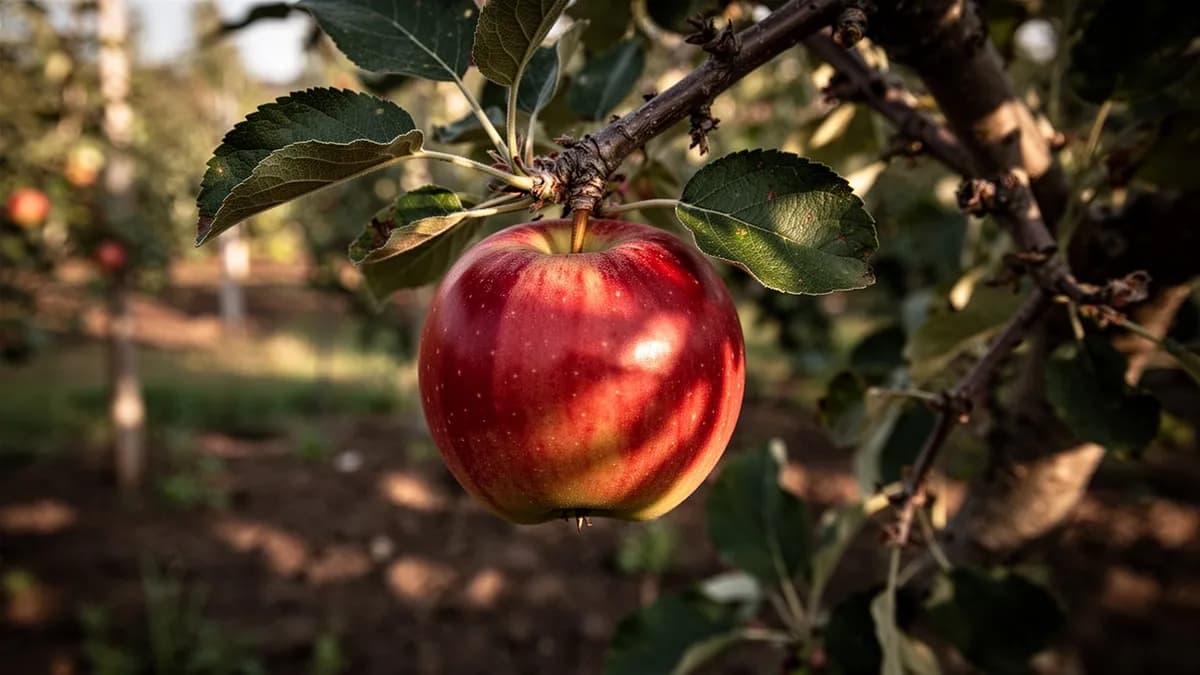
Los frutitos de Honeycrisp crecen de forma constante durante el verano y desarrollan la forma grande y redonda que los hace tan llamativos en el mercado. En su interior se está formando la estructura celular única de Honeycrisp: sus células son aproximadamente el doble de grandes que las de la mayoría de las variedades de manzana, lo que hace que estallen de forma espectacular con jugo al morderlas. El desarrollo del color comienza a finales del verano, cuando se acumulan pigmentos de antocianina rojos en la piel, especialmente en la cara expuesta al sol de cada manzana, creando el característico aspecto bicolor rojo sobre amarillo.
Desarrollo del color antes de la cosecha
En las tres o cuatro semanas previas a la cosecha, Honeycrisp experimenta su transformación más dramática. Los almidones siguen convirtiéndose en los azúcares responsables de su famosa dulzura con notas de miel. El color de fondo pasa de verde a verde amarillento pálido a medida que la clorofila se degrada, un indicador clave de madurez. El rubor rojo característico se intensifica con noches frescas y días cálidos: los contrastes térmicos diarios de las regiones septentrionales donde Honeycrisp prospera son críticos para lograr el color completo que hace tan atractiva visualmente a esta variedad.
Cosecha
Honeycrisp suele madurar a comienzos o mediados de otoño, aproximadamente 155 a 170 días después de la plena floración, lo que la convierte en una variedad de media a tardía temporada. Los indicadores de madurez incluyen un cambio del color de fondo a verde amarillento pálido, semillas que han pasado a marrón oscuro, un patrón de almidón-yodo que muestra una conversión significativa y frutos que se desprenden con facilidad con un suave giro hacia arriba. Honeycrisp tiene una ventana poscosecha relativamente corta si se deja a temperatura ambiente, ya que sus grandes células son propensas a la quemadura blanda, un trastorno por frío, si no se enfrían enseguida.
Poscosecha y dormancia
Después de la cosecha, los árboles Honeycrisp entran en la transición hacia la dormancia. Las hojas se tornan amarillas y doradas mientras el árbol retira nutrientes del follaje y los devuelve al tejido leñoso permanente para su almacenamiento invernal. La caída de hojas deja al descubierto la estructura de las ramas, revelando la calidad del crecimiento veraniego y cualquier problema estructural que deba corregirse durante la poda invernal. La acumulación de horas de frío del árbol comienza de nuevo, y las raíces pueden seguir creciendo lentamente siempre que la temperatura del suelo se mantenga por encima de 4 °C.
Plante los árboles Honeycrisp a raíz desnuda a finales de invierno, mientras siguen en reposo, idealmente en un día templado en que el suelo no esté congelado. Remoje las raíces desnudas en agua durante dos a cuatro horas antes de plantar. Sitúe la unión del injerto 5 cm por encima de la línea del suelo y extienda las raíces de forma natural en un hoyo ancho y poco profundo. Sujete con un único tutor en el lado de donde sopla el viento y aplique un anillo de mantillo de 10 cm de profundidad que llegue hasta la línea de goteo, manteniendo el mantillo a 15 cm del tronco.
Cuidar Manzana Honeycrisp mes a mes
Qué hacer cada mes para tu Manzana Honeycrisp
Octubre
Mes actualComplete la cosecha de Honeycrisp a mediados de octubre como muy tarde. Clasifique toda la fruta cosechada con cuidado, usando de inmediato las manzanas magulladas o con defectos. Almacene la fruta sana en una sola capa sobre bandejas a 0 a 2 °C en un ambiente de alta humedad. Rastrille las hojas caídas y compóstelas fuera del lugar para reducir las esporas de sarna invernantes. Coloque una banda de grasa pegajosa alrededor del tronco para atrapar polillas invernantes sin alas. Plante cultivos de cobertura entre los árboles para proteger el suelo durante el invierno.
Ten claro qué hacer en tu huerto, cada mes
Un correo al empezar cada mes: qué sembrar, plantar y hacer ahora mismo — para tu Manzana Honeycrisp y todo lo que crece alrededor. Más un breve curso inicial para esquivar los errores clásicos.
- Qué hacer ahora mismo
- Ajustado a tu temporada
- Curso inicial incluido
Cosechar Manzana Honeycrisp
Las manzanas Honeycrisp maduran entre finales de septiembre y principios de octubre en la mayoría de las regiones. La fruta está lista cuando el color de fondo pasa de verde a amarillo crema y el rubor rojo está bien desarrollado. Una prueba de almidón yodado que muestre entre un 50 y un 70 % de claridad indica el momento óptimo de cosecha. Recoja los frutos individualmente a medida que maduran durante dos o tres semanas, en lugar de hacerlo de una sola vez. Manipúlelos con muchísimo cuidado, ya que la gran estructura celular que crea su crujido característico también los hace propensos a magullarse.
se supone que plantas al comenzar el periodo — indica tu fecha real
Cosecha Manzana Honeycrisp a tiempo y la planta sigue produciendo.
Almacenamiento y conservación
Las manzanas Honeycrisp requieren un manejo especial de almacenamiento para evitar la quemadura blanda y el deterioro acuoso. Acondicione la fruta recién cosechada a 10 °C durante una semana antes de pasarla al almacenamiento en frío prolongado a 3 °C en lugar de los 0 °C estándar. Con el acondicionamiento adecuado, se conservan de tres a cuatro meses. Para el almacenamiento doméstico, guárdelas en el frigorífico y consúmalas en un plazo de dos meses. Honeycrisp puede congelarse en trozos para su uso posterior en repostería.
Qué falla — y cómo solucionarlo
Mancha amarga
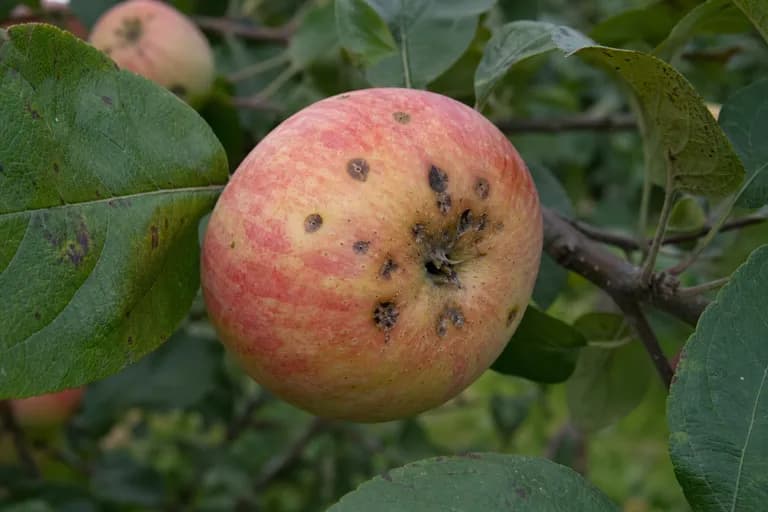
EnfermedadAparecen manchas oscuras, hundidas y corchosas en la piel y la pulpa, normalmente cerca del extremo del cáliz, y empeoran durante el almacenamiento.
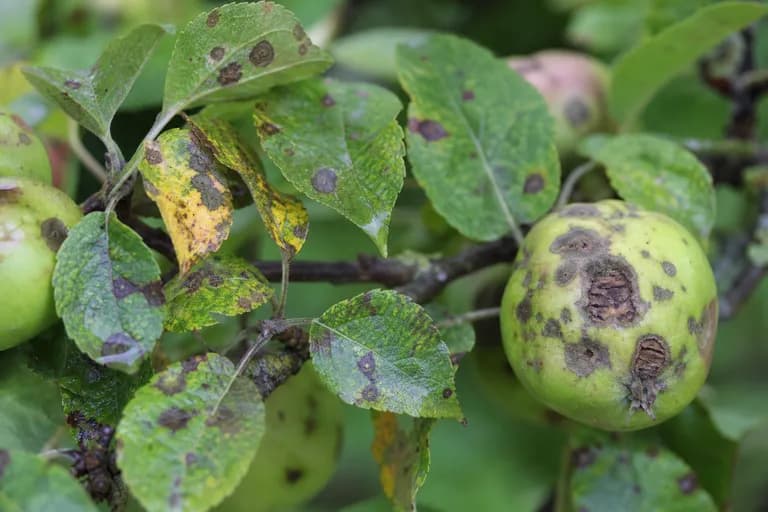
Sarna del manzano
EnfermedadLesiones de color verde oliva a marrón oscuro en hojas y frutos; la fruta infectada desarrolla manchas elevadas y corchosas y puede agrietarse.
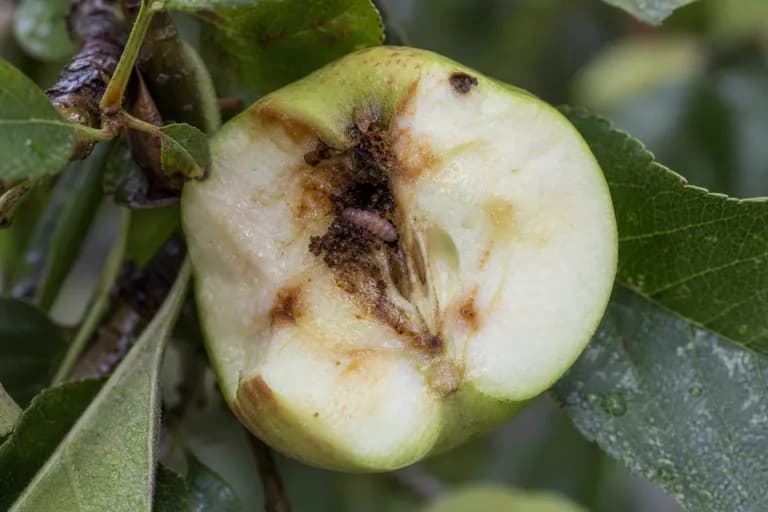
Polilla de la manzana
PlagaPequeños orificios en el cáliz o en el lateral del fruto, con larvas que excavan galerías y excrementos en el área del corazón.
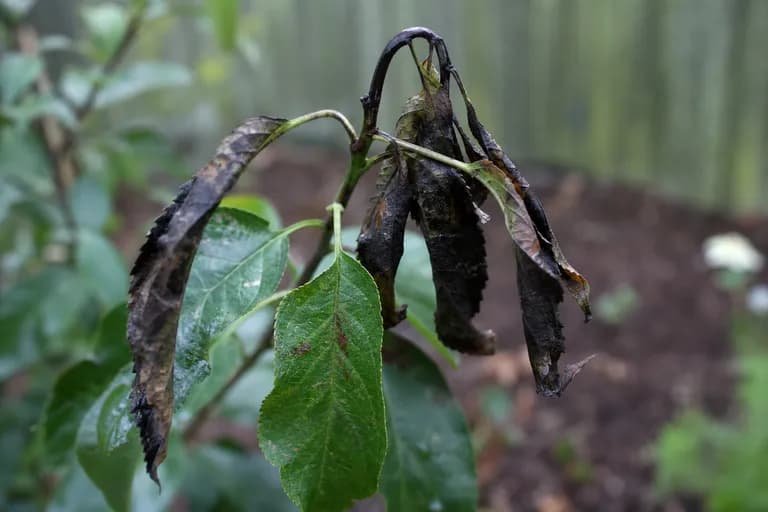
Fuego bacteriano
EnfermedadLas puntas de los brotes se ennegrecen rápidamente y se curvan formando un bastón de pastor; los chancros rezuman una baba bacteriana ámbar en tiempo cálido y húmedo.
Solución de problemas comunes
La mancha amarga es el principal problema de las manzanas Honeycrisp y provoca manchas oscuras y hundidas que empeoran durante el almacenamiento. Este trastorno está relacionado con la carencia de calcio en el fruto y se agrava con cargas frutales bajas, crecimiento vigoroso y frutos de gran tamaño. La fructificación alternante es frecuente si no se realiza un aclareo cuidadoso. Los árboles tienen un hábito de crecimiento largo y flexible que requiere formación y soporte. La quemadura blanda y el deterioro acuoso pueden arruinar la fruta almacenada si no se siguen los protocolos adecuados de acondicionamiento poscosecha.
Consejos de cultivo
- Elija con cuidado la variedad polinizadora, ya que Honeycrisp florece a mitad de temporada y necesita otra variedad compatible en las cercanías. Entre las opciones excelentes están Zestar (temprana-media), McIntosh (media), Haralson (media-tardía) y Gala (media). Evite usar otro Honeycrisp como polinizador, porque florece al mismo tiempo y pertenece al mismo grupo de incompatibilidad.
- Honeycrisp es especialmente propensa a la mancha amarga, un trastorno fisiológico relacionado con el calcio que provoca manchas marrones hundidas en la pulpa cerca de la piel. Prevenga el problema con tres pulverizaciones foliares de calcio (cloruro de calcio al 0.4 %) a las 6, 9 y 12 semanas después de la caída de pétalos, manteniendo un riego uniforme y aclarando agresivamente los frutos para reducir la competencia por el calcio.
- Aclara los frutos más de lo que parezca necesario: la tendencia natural de Honeycrisp a sobreproducir es su mayor reto de manejo. Reduzca cada racimo a un fruto y apunte a una manzana cada 20 cm de rama. Los estudios de rendimiento muestran de forma constante que un aclareo insuficiente es la causa más común de frutos pequeños, mal coloreados y afectados por mancha amarga.
- Traslade la fruta cosechada a almacenamiento en frío a 0 a 2 °C en cuestión de horas después de la recolección. Honeycrisp es inusualmente propensa a la quemadura blanda, un trastorno por frío que provoca grandes manchas marrones en la piel y la pulpa durante el almacenamiento. Acondicionar la fruta a 3 a 4 °C durante 7 días antes de pasarla a un almacenamiento más frío reduce de forma drástica la incidencia de quemadura blanda sin acortar mucho la vida útil total.
- Elija un lugar con excelente drenaje del aire y del suelo. Honeycrisp es sensible a las heladas tardías de primavera sobre las flores y a las condiciones húmedas que favorecen el fuego bacteriano y el oídio. Una ladera suave que deje salir el aire frío en noches despejadas ofrece una protección frente a las heladas muy superior a la de una zona llana o una hondonada.
- Sujete bien las ramas: Honeycrisp produce frutos muy densos y grandes que a menudo rompen las ramas estructurales si no se apoyan. Instale soportes acolchados de madera o tubos de PVC bajo las ramas cargadas de fruta en julio, antes de que el peso se vuelva crítico. Algunos fruticultores instalan alambres permanentes sobre el árbol para suspender las ramas en lugar de sostenerlas desde abajo.
- Vigile con atención el fuego bacteriano, al que Honeycrisp muestra una susceptibilidad moderada. Durante y después de la floración, busque semanalmente las flores empapadas de agua y las puntas de brote en forma de bastón de pastor. Pode las infecciones de inmediato, cortando 30 cm por debajo del borde visible de la infección y esterilizando las herramientas entre cada corte con una solución de lejía al 10 % o alcohol isopropílico al 70 %.
- No plante Honeycrisp en lugares con historial de enfermedad de replanteo, el complejo de patógenos del suelo y nematodos que frena el crecimiento de nuevos manzanos en suelos ya plantados. Si vuelve a plantar en un antiguo huerto, fumigue o trate con enmiendas biológicas del suelo, o utilice un portainjerto tolerante a esta enfermedad, como Geneva 41 o Geneva 935, en lugar de los más sensibles M9 o M26.
- A finales del verano, extienda una película reflectante de acolchado bajo la zona de la copa: el film plástico plateado refleja la luz hacia la parte inferior sombreada de la fruta en desarrollo y mejora la coloración roja de la mitad inferior de cada manzana. Esto es especialmente útil en climas de latitudes altas o nubosos, donde la luz puede ser limitada durante la ventana de coloración.
- Recoja la cosecha en varias pasadas durante 7 a 10 días en lugar de hacerlo de una vez. Los frutos Honeycrisp del lado sur y oeste del árbol reciben más sol y maduran unos días antes que los frutos sombreados del lado norte. Cosechar en dos o tres pasadas permite recoger cada manzana en su punto óptimo de madurez y evita la sobremaduración que provoca la textura harinosa que desarrolla Honeycrisp si se deja demasiado tiempo en el árbol.
Cultiva tu mejor Manzana Honeycrisp — y todo lo que la rodea.
Empieza un plan gratis hoy. Diseña tus bancales, coloca tu Manzana Honeycrisp y deja que PlotMyGarden gestione el momento, el espaciado, las asociaciones y los recordatorios de la semilla a la cesta.
Elige tu Manzana Honeycrisp
Premier Honeycrisp
Una selección deportiva con mejor color rojo, que aparece antes y de manera más uniforme que el tipo estándar.
SweeTango (Minneiska)
Un descendiente de Honeycrisp cruzado con Zestar, que madura antes y tiene un sabor agridulce aún más intenso y un aroma especiado.
Rave (MN55)
Un descendiente de Honeycrisp del mismo programa de mejora, que madura en agosto con una textura similar pero notas de sabor tropical.
Pazazz
Un descendiente de Honeycrisp con pulpa firme y crujiente y un perfil de sabor especiado y dulce que se conserva mejor que el progenitor.
Evercrisp
Un cruce entre Honeycrisp y Fuji que combina el crujido de Honeycrisp con la dulzura de Fuji y una vida útil considerablemente mejor.
Un manzano Honeycrisp maduro sobre portainjerto semienano puede producir entre 25 y 50 kg de fruta al año. Con precios típicos de especialidad de 5 a 8 € por kg para Honeycrisp ecológicas o premium, un solo árbol productivo representa entre 125 y 400 € de fruta al año. Aunque los árboles Honeycrisp cuestan entre 30 y 60 € en vivero y necesitan entre 3 y 5 años para producir de forma notable, siguen siendo productivos durante 25 a 40 años, por lo que el retorno total de la inversión es extraordinario. Cultivarlas en casa también elimina las concesiones de la cadena de frío del Honeycrisp comercial: se puede recoger y comer el mismo día, obteniendo un nivel de aroma, jugo y crujido que la fruta almacenada comercialmente simplemente no puede igualar.
Recetas rápidas
Taza de caramelo y Honeycrisp
20 minutosUna merienda elegante que combina manzanas Honeycrisp crujientes con una salsa de caramelo salado casera. Las rodajas de manzana mantienen su textura y ofrecen el equilibrio perfecto entre dulzor, acidez y cremosidad.
8 ingredientes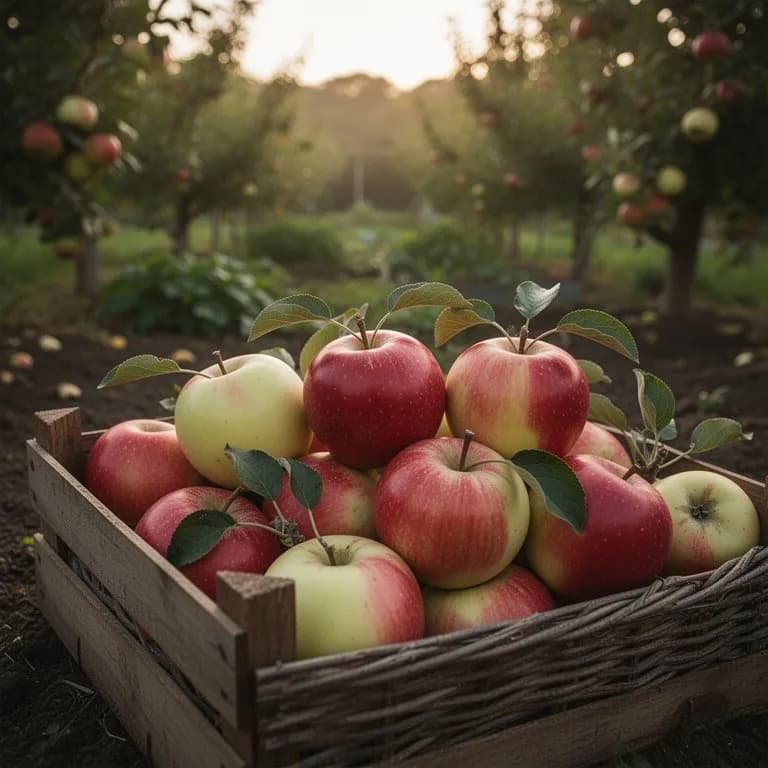
Ensalada Waldorf Honeycrisp
15 minutosUna versión moderna y más ligera de la clásica ensalada Waldorf, que destaca el crujido explosivo único de Honeycrisp como ingrediente principal. La manzana conserva su textura mucho más tiempo que la mayoría de las variedades cuando se mezcla con el aderezo, lo que hace que esta ensalada sea adecuada para preparar con antelación, una ventaja práctica para recibir invitados. Las nueces tostadas, el apio crujiente y un aderezo de yogur con miel y limón complementan sin eclipsar la complejidad natural de la manzana.
10 ingredientesHoneycrisp con cheddar curado sobre pan plano
25 minutosUn pan plano salado y dulce que combina la acidez afrutada de Honeycrisp con el carácter del cheddar curado en una mezcla que se ha convertido en una favorita moderna de la temporada de cosecha. Las finas rodajas de manzana se caramelizan ligeramente en el horno e intensifican su aroma, mientras conservan suficiente textura para ofrecer un bocado satisfactorio frente al queso fundido y la base crujiente del pan plano.
10 ingredientesUsos culinarios
Las manzanas Honeycrisp se disfrutan sobre todo frescas, donde su crujido explosivo y su sabor equilibrado se aprecian al máximo. Son una excelente incorporación a ensaladas, tablas de quesos y cajas de almuerzo. Aunque su textura se ablanda más que la de Granny Smith al hornearlas, funcionan bien en tartas rústicas y crumbles, donde cierto desmoronamiento es aceptable. Su zumo es excepcional para beberlo fresco y añade complejidad a las mezclas de sidra.
Qué contiene
Beneficios para la salud
- Aporta una combinación excepcional de fibra soluble de pectina y polifenoles vegetales que actúan como prebióticos en el intestino, alimentando de forma selectiva especies beneficiosas de Bifidobacterium y Lactobacillus y reduciendo al mismo tiempo poblaciones de bacterias nocivas asociadas a la inflamación y a trastornos metabólicos
- Aporta cantidades importantes de quercetina, catequinas y ácido clorogénico, un trío de antioxidantes polifenólicos concentrados en la piel roja y por debajo de ella, que actúan de forma sinérgica para reducir el estrés oxidativo y la inflamación sistémica en todo el organismo
- Contribuye con ácido málico natural, un compuesto orgánico implicado en el ciclo del ácido cítrico para la producción celular de energía y estudiado por su potencial para reducir la fatiga muscular, mejorar la recuperación deportiva y apoyar las vías de desintoxicación del hígado
- Favorece la salud cardiovascular por varios mecanismos: la pectina soluble reduce el colesterol LDL en el intestino, la quercetina mejora la flexibilidad arterial y reduce la agregación plaquetaria, y el potasio ayuda a regular la presión arterial contrarrestando el efecto vasoconstrictor del sodio
- Ofrece un tentempié saciante y bajo en calorías con un índice glucémico bajo, de alrededor de 38, lo que significa que sus azúcares naturales se liberan gradualmente en el torrente sanguíneo sin el fuerte pico de insulina asociado a los alimentos procesados de picoteo, favoreciendo el control glucémico y una energía sostenida
- El alto contenido de agua y fibra de Honeycrisp favorece una digestión saludable, la regularidad intestinal y una sensación de saciedad duradera que, según la investigación, se asocia con una menor ingesta calórica total a lo largo del día, una herramienta sencilla y deliciosa para un control de peso saludable
De dónde viene Manzana Honeycrisp
La manzana Honeycrisp tiene su origen en un cruce de mejora deliberado realizado en 1960 por investigadores del Centro de Investigación Hortícola de la Universidad de Minnesota en Saint Paul, Minnesota. El programa buscaba una variedad capaz de soportar los inviernos brutales del Alto Medio Oeste y, al mismo tiempo, ofrecer una calidad superior para consumo en fresco, una combinación que había escapado a los mejoradores de manzanos durante generaciones. Durante muchos años se creyó que sus progenitores eran Macoun y Honeygold, dos variedades respetables pero de limitada presencia comercial. Sin embargo, un análisis de huellas de ADN publicado en 2004 cambió esa suposición y reveló que uno de los progenitores es en realidad Keepsake, una variedad de final de temporada con excelente resistencia al frío y buena conservación, mientras que la identidad del segundo progenitor sigue siendo genéticamente ambigua. La plántula que acabaría convirtiéndose en Honeycrisp fue seleccionada entre cientos de candidatos por su crujido extraordinario y su sabor excepcional, pero el progreso fue lento. La variedad permaneció en evaluación durante décadas y, en varios momentos de las décadas de 1970 y 1980, el programa estuvo a punto de descartarla por completo debido a sus complicadas características de cultivo y a su susceptibilidad a ciertos trastornos de almacenamiento. Por fortuna, su estructura celular singularmente explosiva y su perfil intensamente agridulce convencieron a los investigadores para perseverar, y Honeycrisp recibió por fin una patente vegetal estadounidense en 1988 y fue lanzada oficialmente a viveros y cultivadores en 1991. La adopción comercial fue al principio cautelosa: los productores desconfiaban de sus exigentes necesidades de manejo y de sus rendimientos irregulares. Pero la respuesta de los consumidores fue inmediata y abrumadora. Los compradores que probaban Honeycrisp por primera vez en mercados de agricultores y tiendas especializadas a mediados de los años noventa pagaban gustosos precios premium y volvían una y otra vez, impulsando una demanda que rápidamente superó a la oferta. A mediados de la década de 2000, Honeycrisp se había convertido en una de las variedades de manzana con mayor valor económico en Norteamérica, e inspiró una nueva generación de programas de mejora en todo el mundo que buscaban replicar su magia textural en árboles más manejables.
Manzana Honeycrisp: ¿sabías que?
Datos fascinantes sobre Manzana Honeycrisp
Honeycrisp se desarrolló en el Centro de Investigación Hortícola de la Universidad de Minnesota durante más de dos décadas: se cruzó por primera vez en 1960 y no se lanzó al público hasta 1991. Casi fue descartada varias veces antes de que los investigadores reconocieran su extraordinaria calidad para comer.
Manzana Honeycrisp: preguntas frecuentes
¿Cuándo debo plantar Manzana Honeycrisp?
¿Cuáles son buenas plantas acompañantes para Manzana Honeycrisp?
¿En qué zonas de rusticidad puede crecer Manzana Honeycrisp?
¿Cuánto sol necesita Manzana Honeycrisp?
¿A qué distancia debo espaciar Manzana Honeycrisp?
¿Qué plagas y enfermedades afectan a Manzana Honeycrisp?
¿Cómo almaceno Manzana Honeycrisp después de la cosecha?
¿Cuáles son las mejores variedades de Manzana Honeycrisp para cultivar?
¿Qué suelo necesita Manzana Honeycrisp?
¿Por qué mi manzana Honeycrisp tiene manchas marrones por dentro cerca de la piel?
¿Por qué Honeycrisp es mucho más cara en la tienda que otras manzanas?
¿Puedo cultivar Honeycrisp en un clima cálido como California o el sureste?
¿Cómo evito que mi Honeycrisp produzca fruto solo un año sí y otro no?
Acabas de leer la teoría. Ahora cultívala en piloto automático.
Todo lo que hace que Manzana Honeycrisp sea delicado — el momento, el espaciado, las asociaciones, la ventana de cosecha — es justo lo que PlotMyGarden resuelve por ti, para cada planta de tu huerto.
Un plan que conoce tu clima
Indica tu ubicación una vez. Recibe fechas de siembra, abonado y cosecha basadas en tu última helada real y el pronóstico en vivo — sin adivinar con un sobre genérico.
De la sección “Cuándo plantar”Planificador de bancales de arrastrar y soltar
Diseña bancales sobre una cuadrícula. Cada planta encaja con su espaciado correcto y ves toda la temporada antes de gastar un céntimo en semillas.
De la sección “Cultivo”Conflictos de asociación, detectados a tiempo
Más de 200 buenas y malas combinaciones comprobadas en vivo mientras plantas — para que un error que arruine la temporada nunca llegue a la tierra.
De la sección “Asociaciones”Recordatorios que sí vas a seguir
“Riega las judías.” “Recoge hoy antes de que se pase.” Oportunos, concretos y ligados a las plantas que de verdad cultivas.
De la sección “Cosecha”Escalonado, programado
¿Quieres cosechar seis semanas en vez de seis días? Reparte tus siembras automáticamente y te avisa cuando toca el siguiente lote.
De la sección “Cuándo plantar”Un registro que se vuelve más listo
Cada cosecha que registras le enseña tu huerto. El plan del año que viene parte de lo que de verdad funcionó en tu suelo, no en un manual.
De la sección “Resumen”Planta estos junto a Manzana Honeycrisp
Más Frutas de pepita
Mantén Manzana Honeycrisp lejos de estos
Cultiva tu mejor Manzana Honeycrisp — y todo lo que la rodea.
Empieza un plan gratis hoy. Diseña tus bancales, coloca tu Manzana Honeycrisp y deja que PlotMyGarden gestione el momento, el espaciado, las asociaciones y los recordatorios de la semilla a la cesta.