Weiße Bohne (Navy Bean)
Eine kleine, weiße Bohne mit cremiger Textur, die die klassische Wahl für Baked Beans und weiße Bohnensuppen darstellt.





Auf dieser SeiteÜberblick
Weiße Bohne (Navy Bean) im Überblick
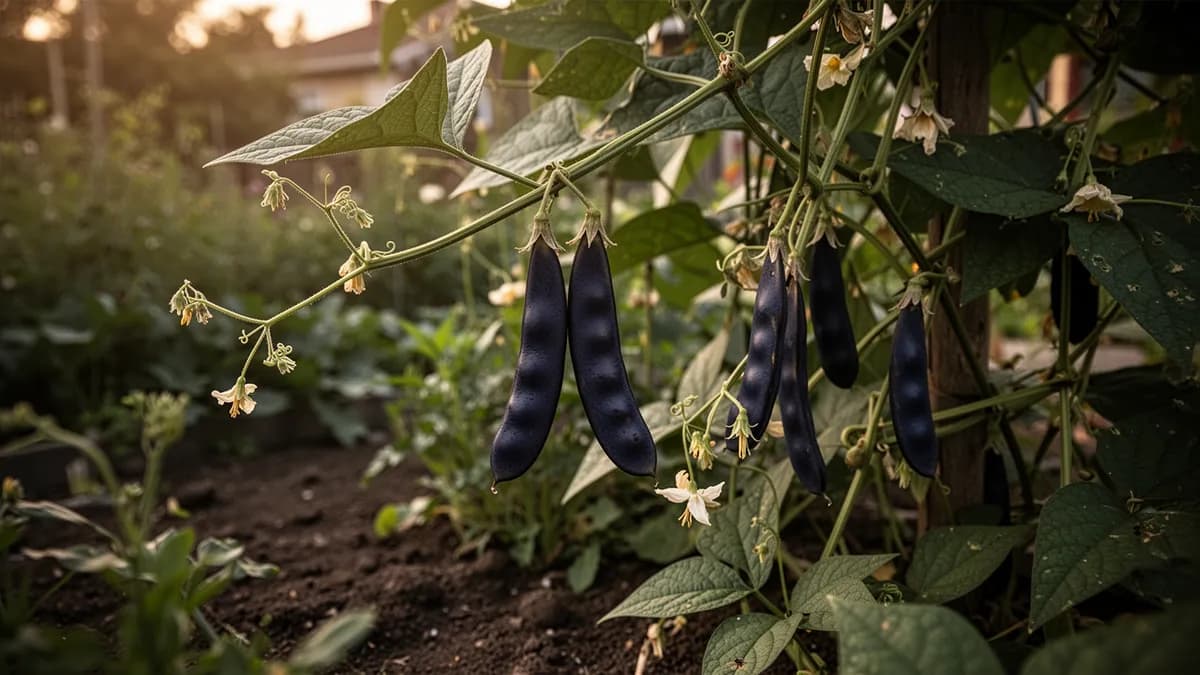
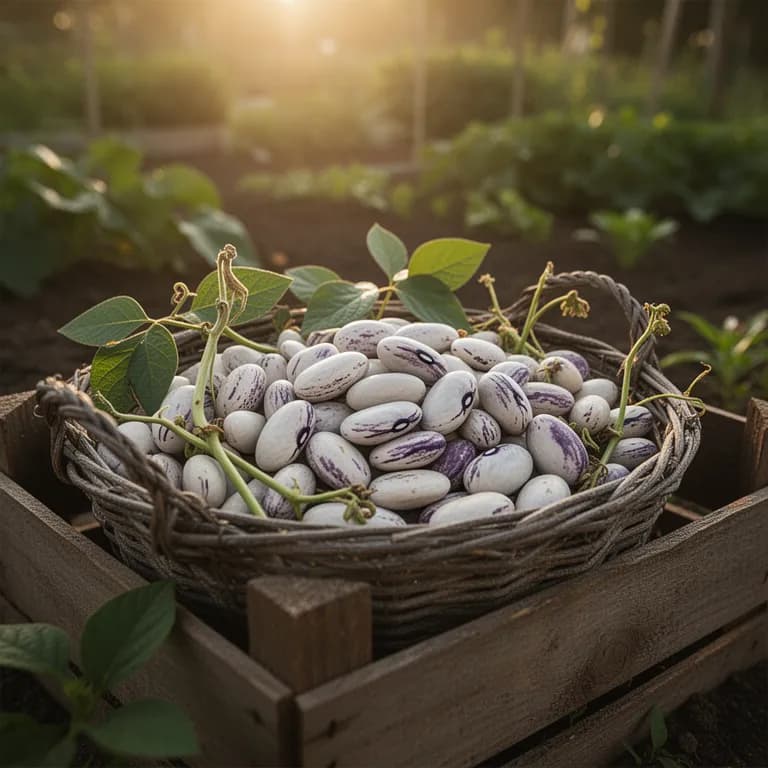
Eine kleine, weiße Bohne mit cremiger Textur, die die klassische Wahl für Baked Beans und weiße Bohnensuppen darstellt. Navy Beans garen im Vergleich zu größeren Trockenbohnen relativ schnell und haben einen milden Geschmack, der Gewürze hervorragend aufnimmt. Die kompakten Buschpflanzen sind pflegeleicht und tragen reichlich, was sie ideal für Hausgärtner macht, die eigene Trockenbohnen anbauen möchten. Lassen Sie die Hülsen vollständig an der Pflanze trocknen und ernten Sie an einem trockenen Tag.
Wann Weiße Bohne (Navy Bean) pflanzen
Säen Sie erst nach dem letzten Frost direkt ins Beet, wenn der Boden mindestens 16°C erreicht hat. Pflanzen Sie 3-5 cm tief. Impfen Sie die Samen vor der Aussaat mit Rhizobium-Bakterien. Keimung erfolgt in 7-10 Tagen. Weichen Sie die Samen nicht vor der Aussaat ein. Abstand 10-15 cm. Saatgut bleibt 3-4 Jahre keimfähig. Navy Beans keimen am besten in warmem Boden; vermeiden Sie eine frühe Aussaat in kalten, nassen Bedingungen.
Dein Weiße Bohne (Navy Bean)-Jahr
Abgestimmt auf Zone 7 · typische Saison · Frost geht um den 2. Apr. und kehrt um den 1. Nov. zurück
Weiße Bohne (Navy Bean) Mai – Jun pflanzen, Aug – Okt ernten. Beachte die Pflanzmethoden unten und wähle dein Klima für passende Zeiträume.
So baust du Weiße Bohne (Navy Bean) an
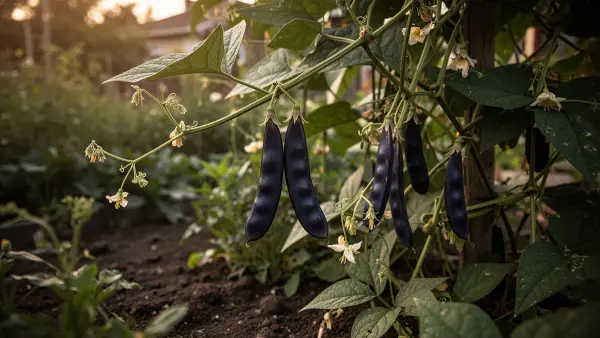
Säen Sie Navy Beans nach dem letzten Frost direkt ins Beet, wenn der Boden mindestens 16°C erreicht hat. Legen Sie die Samen 3-5 cm tief mit einem Abstand von 10-15 cm in Reihen von 45-60 cm Abstand. Die Keimung erfolgt innerhalb von 7-10 Tagen bei 18-29°C. Navy Beans sind kompakte Buschtypen, die nur 30-45 cm hoch werden.
Wählen Sie einen vollsonnigen Standort und gießen Sie mäßig. Navy Beans sind nach dem Anwachsen relativ trockenheitstolerant. Vermeiden Sie Überkopfbewässerung, um Krankheiten vorzubeugen. Als Leguminosen fixieren sie Stickstoff und benötigen keinen Stickstoffdünger. Die kompakten Pflanzen benötigen in der Regel keine Stütze oder Rankhilfe.
Navy Beans reifen für Trockenbohnen relativ schnell in 85-95 Tagen. Lassen Sie die Hülsen an der Pflanze trocknen, bis sie braun und papierartig sind. Ernten Sie alles auf einmal, wenn die meisten Hülsen trocken sind. Navy Beans sind die klassische Bohne für Baked Beans, Navy-Bohnensuppe und andere traditionelle Gerichte.
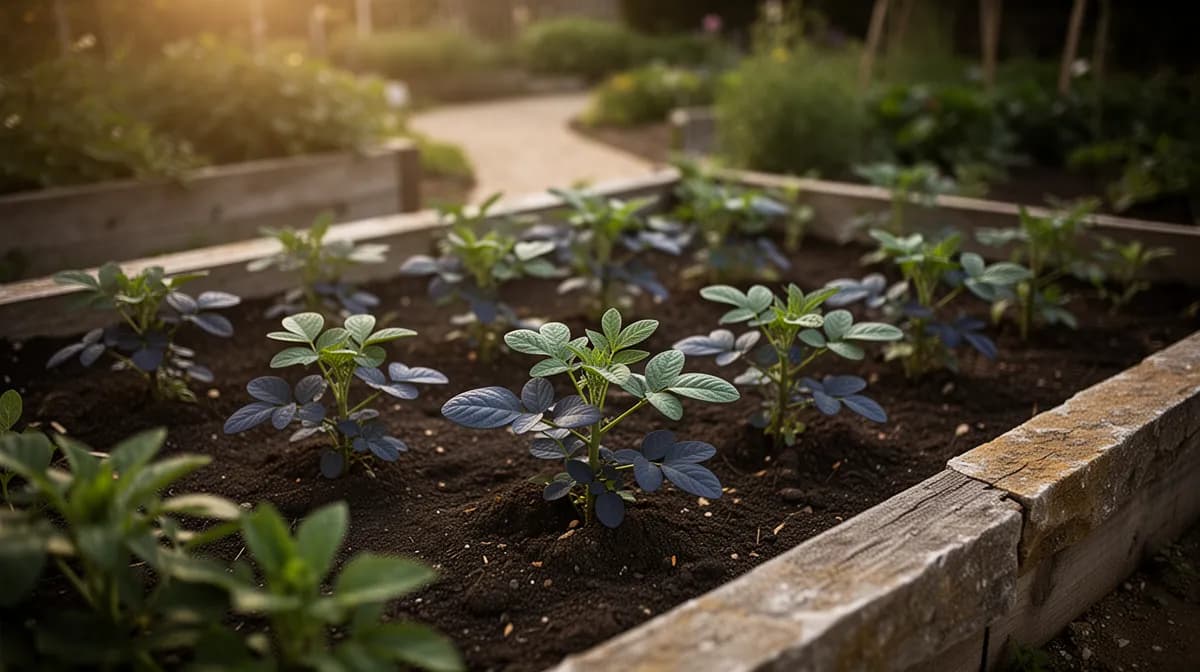
288 Pflanzen passen in ein Beet von 120 × 240 cm
Weiße Bohne (Navy Bean) braucht 10 cm Platz pro Pflanze. Der Planer hält diesen Abstand für dich ein — jede Pflanze, jedes Beet.
Die besten Nachbarn für Weiße Bohne (Navy Bean)
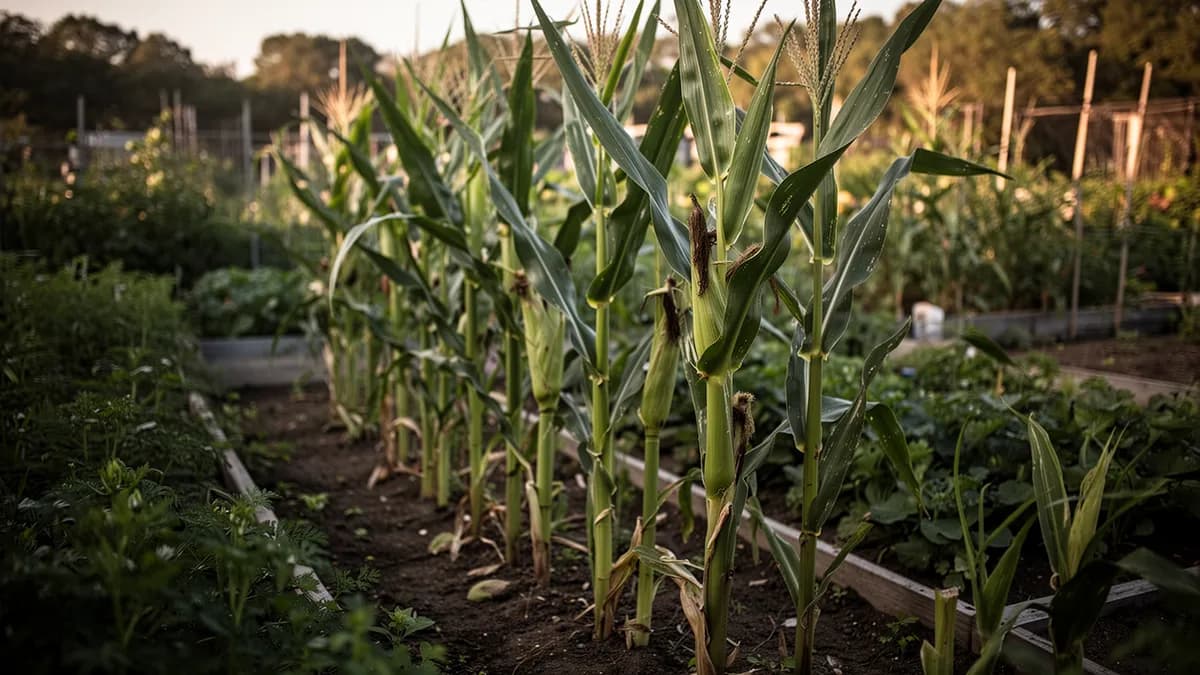
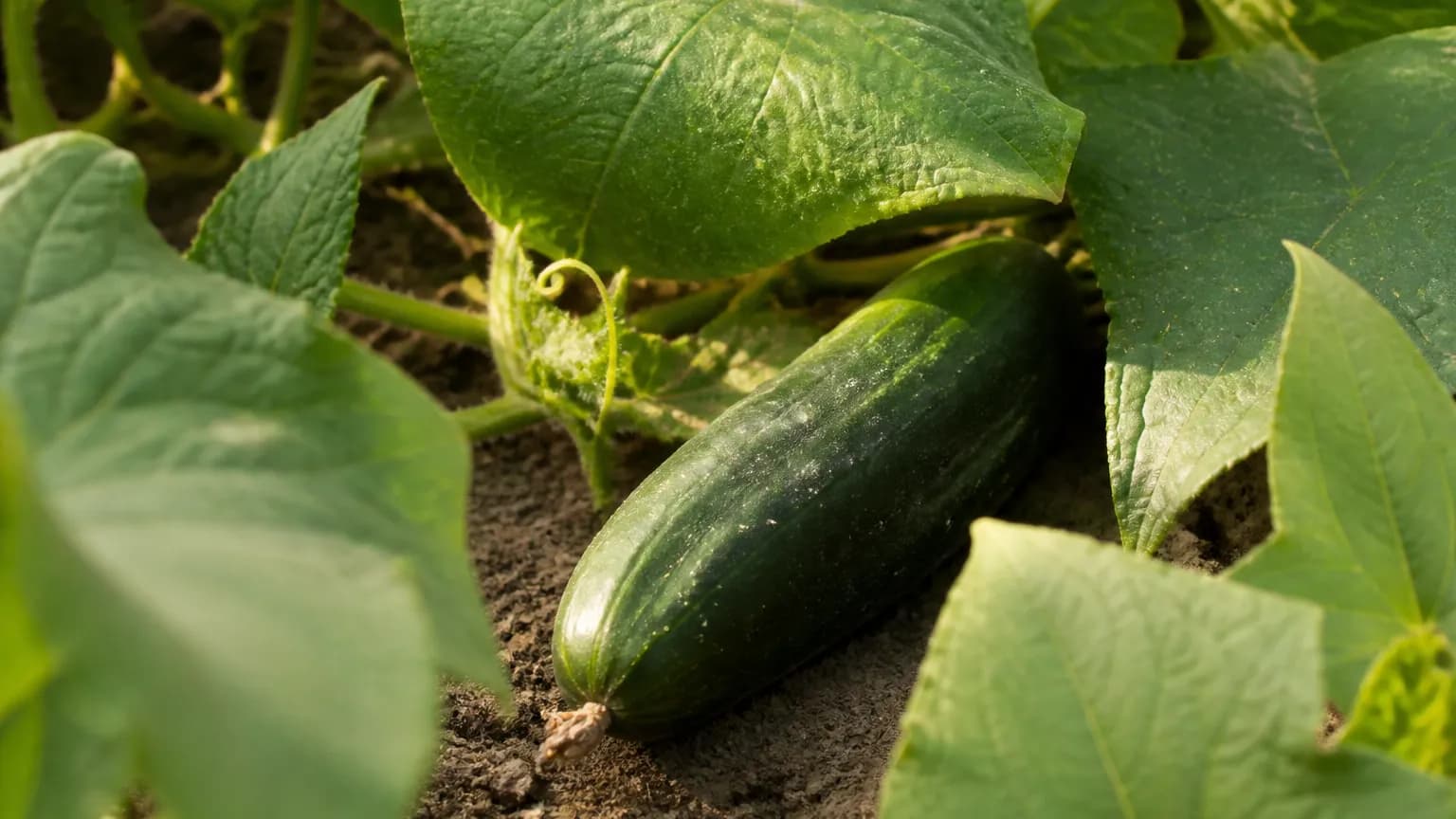
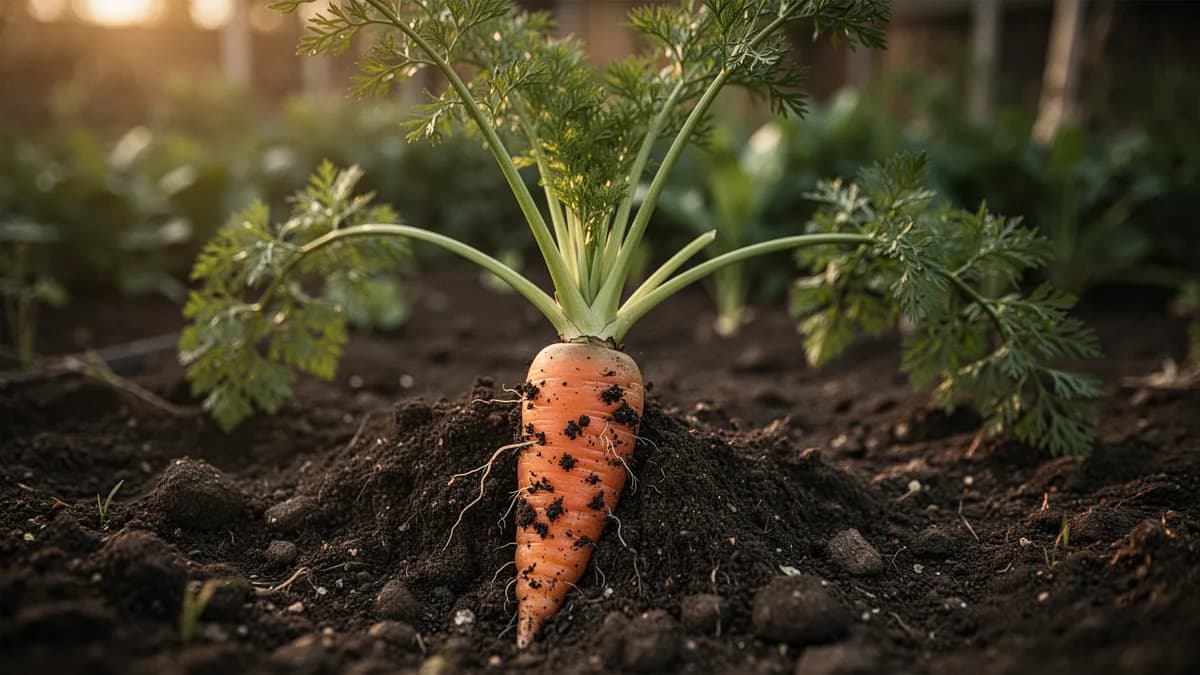
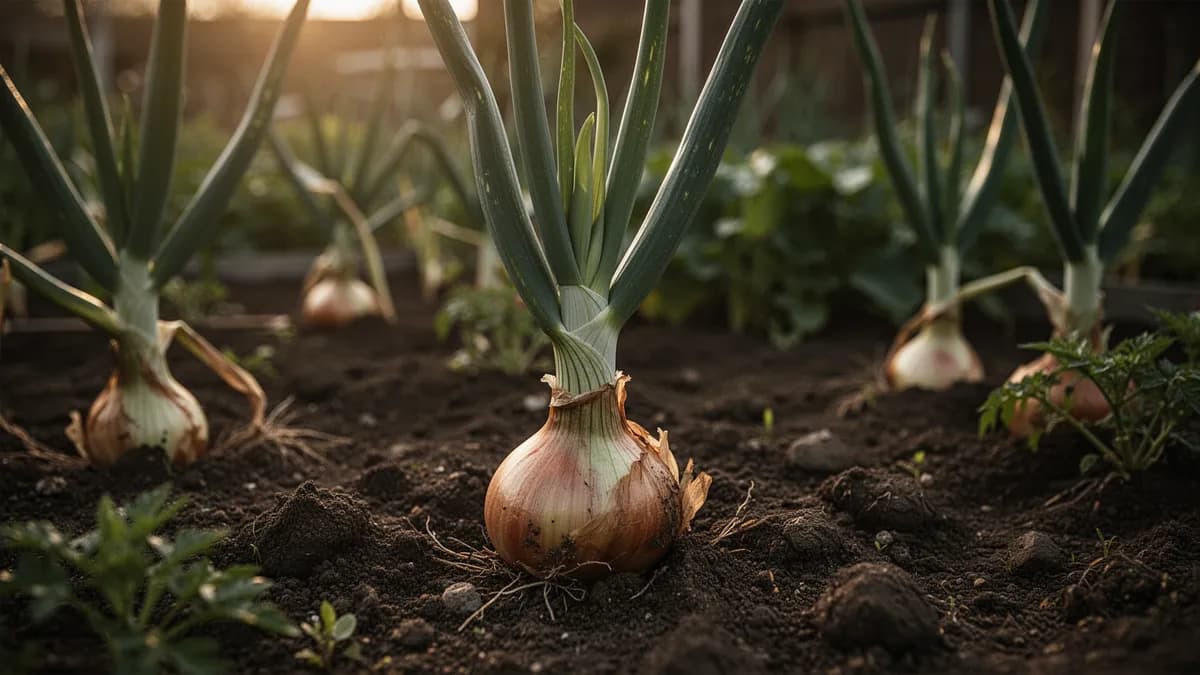
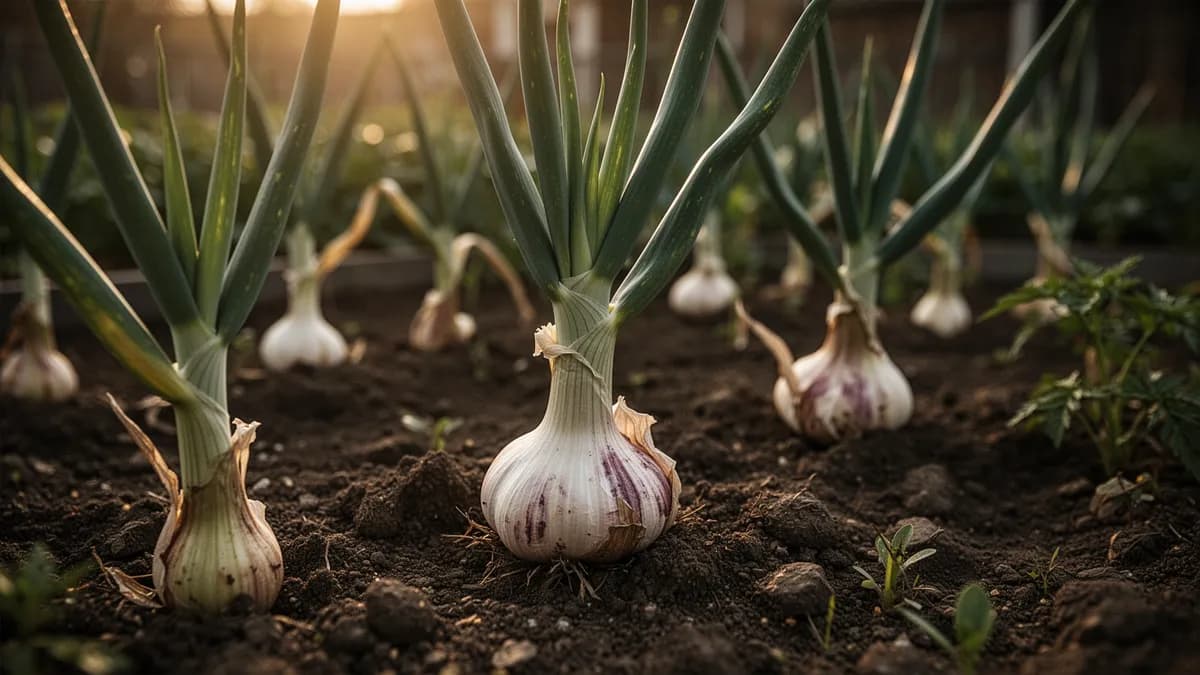
Navy Beans fixieren Stickstoff für benachbarte und nachfolgende Kulturen. Pflanzen Sie sie zusammen mit Mais, Kürbis und Karotten. Vermeiden Sie Zwiebeln, Knoblauch und Fenchel. Der kompakte Buschhabitus macht es einfach, sie in den Gartenplan einzufügen. Bauen Sie anschließend stickstoffhungrige Kulturen an. Pflanzen Sie in Blöcken für gegenseitige Stützung und einfacheres Erntemanagement.
Mais gehört daneben. Zwiebel nicht.
Altes Gärtnerwissen, geprüft an der echten Nachbartabelle von Weiße Bohne (Navy Bean) — teste jede Pflanze, die du anbaust.
Probiere Weiße Bohne (Navy Bean) direkt hier im Beet
Ein echtes Planer-Beet, Weiße Bohne (Navy Bean) steht schon drin. Tippe einen Begleiter an, platziere ihn und sieh, wie die Nachbarschaftsprüfung antwortet — grün für gute Nachbarn, rot bei Streit.


Passende Anbau-Ratgeber
Richtig düngen
Navy Beans gedeihen in gut durchlässigem Boden mit einem pH-Wert von 6,0-7,0. Impfen Sie die Samen mit Rhizobium-Bakterien für die Stickstofffixierung. Kein Stickstoffdünger erforderlich. Eine leichte Phosphorgabe bei der Pflanzung fördert die Hülsenentwicklung. Vermeiden Sie nährstoffreichen, nassen Boden. Mäßige Fruchtbarkeit ist ideal. Sandiger Lehmboden bietet eine gute Drainage. Navy Beans sind weniger anspruchsvoll als viele andere Gemüsekulturen.
Ideale Temperatur
Winterhärtezone-Kompatibilität
Von der Saat zur Ernte, Schritt für Schritt
Keimung
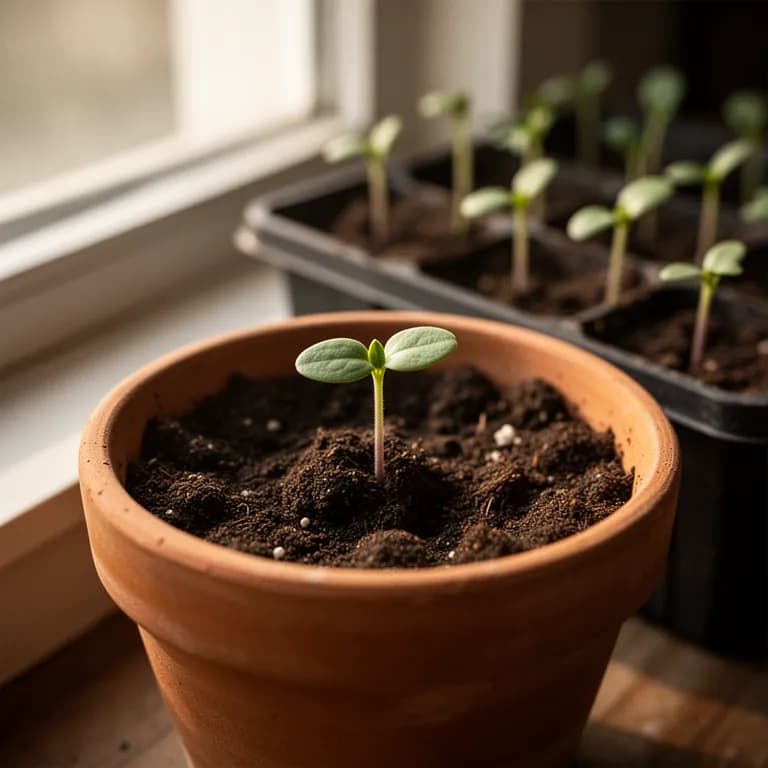
Die Samen nehmen in warmem Boden rasch Feuchtigkeit auf und quellen. Die Keimwurzel erscheint zuerst und verankert den Keimling, gefolgt vom Hypokotylbogen, der die großen Keimblätter über die Oberfläche schiebt. Navy Beans sind bei warmen Bedingungen kräftige Keimer.
Keimlingsetablierung
Das erste Paar echter Blätter entfaltet sich über den Keimblättern — dies sind einfache, herzförmige Blätter, die sich von den späteren dreiteiligen Blättern unterscheiden. Das Wurzelsystem entwickelt sich rasch, und Rhizobium-Knöllchen beginnen sich an den Wurzeln zu bilden, sofern bei der Pflanzung geimpft wurde.
Vegetatives Wachstum
Die Pflanzen entwickeln ihre charakteristische kompakte Buschform und erreichen 30-45 cm Höhe. Dreiteilige Blätter füllen sich dicht, und die stickstofffixierenden Wurzelknöllchen sind nun voll aktiv und wandeln Luftstickstoff in pflanzenverfügbare Nährstoffe um. Das Blätterdach schließt sich zwischen den Pflanzen.
Blüte
Büschel kleiner weißer bis blass-lavendelfarbener Blüten erscheinen in den Blattachseln. Jede Blüte ist selbstbestäubend, obwohl Bienenbesuche den Hülsenansatz verbessern können. Die Blüte dauert 2-3 Wochen an, wobei in dieser kritischen Phase täglich neue Blüten aufgehen.
Hülsenentwicklung
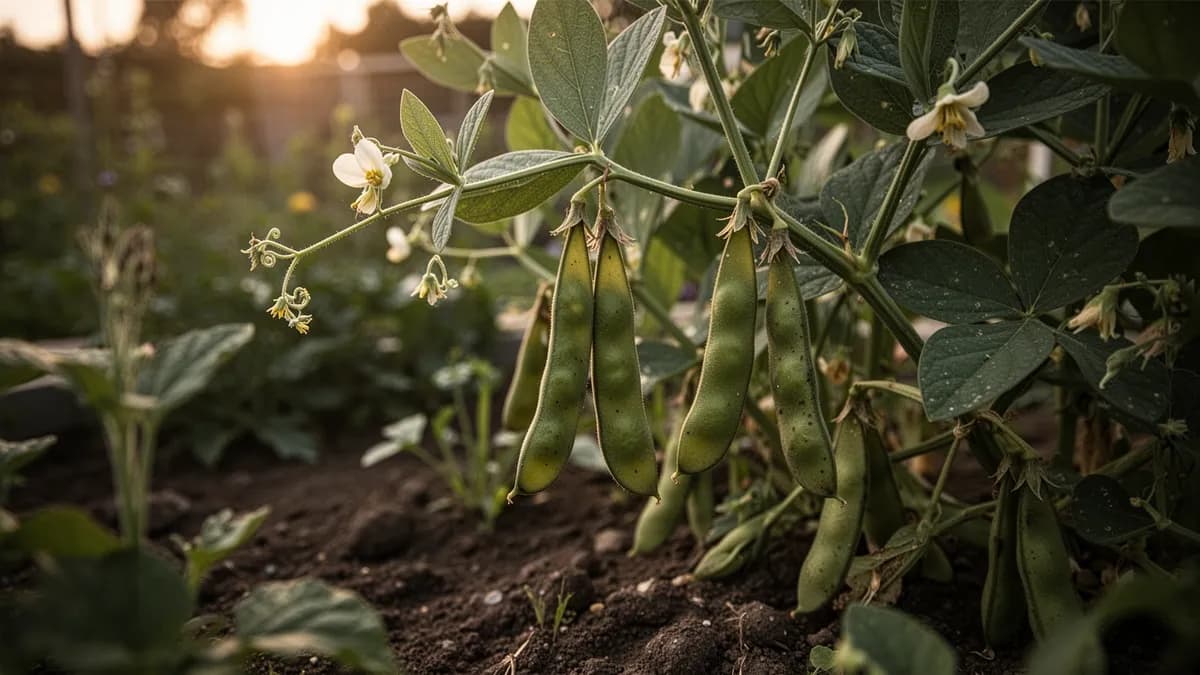
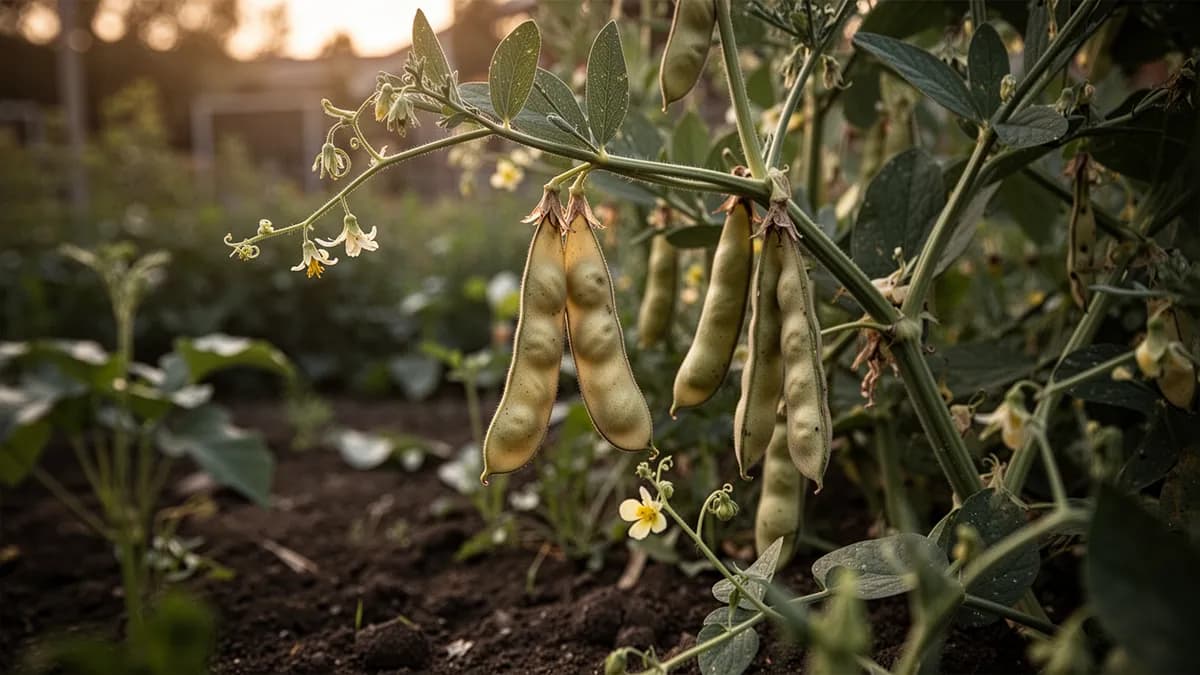
Schlanke grüne Hülsen bilden sich und füllen sich mit heranreifenden Bohnen. Die Hülsen erreichen 8-12 cm Länge und enthalten jeweils 4-6 kleine Bohnen. Die Pflanze lenkt ihre Energie vollständig vom vegetativen Wachstum in die Samenentwicklung um. Die Hülsen wechseln von hellgrün zu blassgelb, während sie reifen.
Trocknung und Ernte
Die Hülsen verfärben sich von gelb zu braun und werden papierartig und brüchig. Die Bohnen im Inneren verhärten und schrumpfen leicht, wobei sie sich von grün zu ihrer endgültigen elfenbeinweißen Farbe verfärben. Die gesamte Pflanze vergilbt und stirbt ab, da alle Ressourcen in die Samen verlagert werden.
Halten Sie den Boden gleichmäßig feucht, aber niemals staunass. Die Bodentemperatur sollte mindestens 16°C betragen — kalter, nasser Boden verursacht Fäulnis vor der Keimung. Weichen Sie die Samen nicht vor der Aussaat ein, da dies die Samenschale beschädigen kann.
Weiße Bohne (Navy Bean) Monat für Monat pflegen
Was du jeden Monat für deine Weiße Bohne (Navy Bean) tun solltest
Oktober
Aktueller MonatPalen, reinigen und lagern Sie die getrockneten Bohnen in luftdichten Behältern. Entfernen Sie die abgeernteten Bohnenpflanzen und geben Sie sie auf den Kompost. Notieren Sie, wie viel Sie geerntet haben und welche Beete am besten produziert haben. Die im Boden verbliebenen Wurzeln setzen beim Zersetzen Stickstoff frei.
Immer wissen, was jetzt im Garten zu tun ist
Eine E-Mail zum Monatsanfang: was du jetzt säen, pflanzen und anpacken solltest — für deine Weiße Bohne (Navy Bean) und alles, was drumherum wächst. Dazu ein kurzer Startkurs, der dich vor den klassischen Fehlern bewahrt.
- Was jetzt zu tun ist
- Passend zu deiner Saison
- Startkurs inklusive
Weiße Bohne (Navy Bean) ernten
Ernten Sie Navy Beans für die Trockenlagerung, wenn die Hülsen braun und papierartig geworden sind, typischerweise 85-95 Tage nach der Aussaat. Reißen Sie ganze Pflanzen heraus und hängen Sie sie unter Dach 1-2 Wochen zum Nachtrocknen auf. Dreschen und worfeln Sie zur Reinigung. Für frische Palbohnen ernten Sie, wenn die Hülsen prall, aber noch grün sind, etwa nach 70 Tagen. Die kleinen, weißen Bohnen sollten hart sein und in der Hülse rasseln, wenn sie trocken genug für die Lagerung sind.
angenommen, du pflanzt zu Beginn des Zeitraums — trage dein tatsächliches Datum ein
Ernte Weiße Bohne (Navy Bean) zügig, dann trägt die Pflanze weiter.
Lagerung & Konservierung
Trocknen Sie Navy Beans, bis sie beim Hineinbeißen splittern. Lagern Sie sie in luftdichten Behältern für 2-3 Jahre an einem kühlen, trockenen Ort. Gekochte Navy Beans lassen sich gut für 12 Monate einfrieren. Einkochen im Druckkocher ermöglicht eine lange Haltbarkeit. Navy Beans sind die klassische Wahl für industriell hergestellte Dosenbohnen. Getrocknete Bohnen können zu einem milden, weißen Bohnenmehl gemahlen werden, das sich zum Backen und Andicken eignet.
Was schiefgeht — und die Lösung
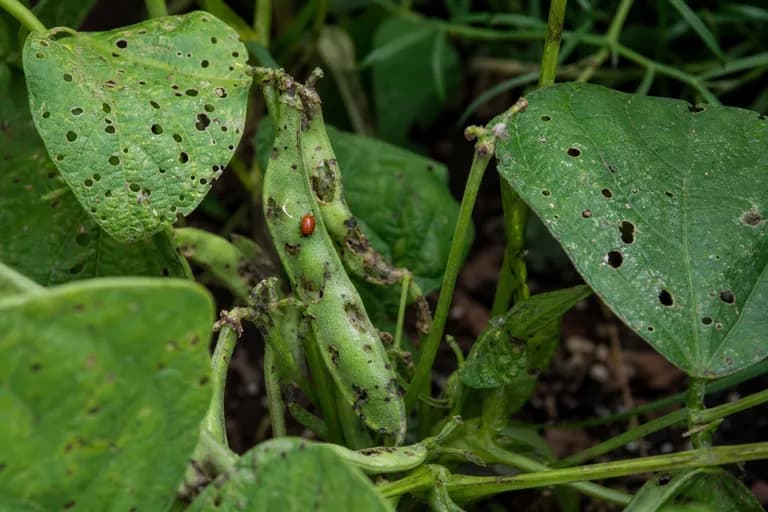
Bohnenblattkäfer
SchädlingRunde Löcher in den Blättern, Fraßschäden an den Hülsen, orange-rote Käfer sichtbar.
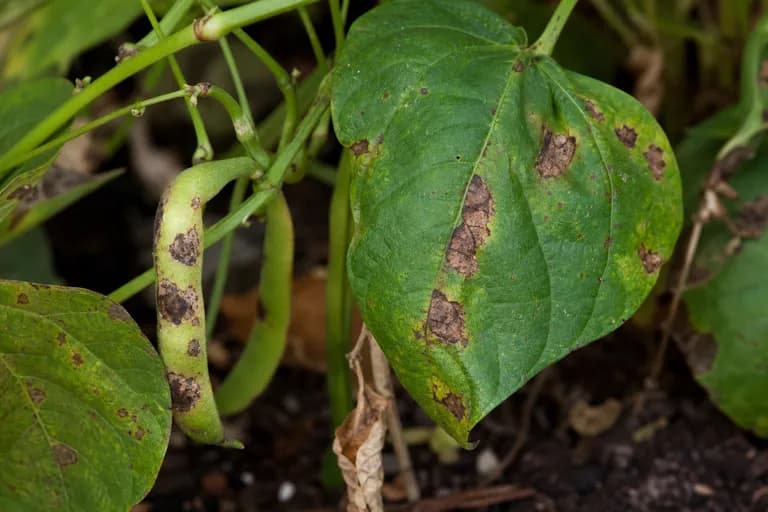
Bakterielle Brennfleckenkrankheit
KrankheitWassergetränkte Flecken auf den Blättern, die sich braun verfärben, Läsionen an den Hülsen, Absterben von Keimlingen.
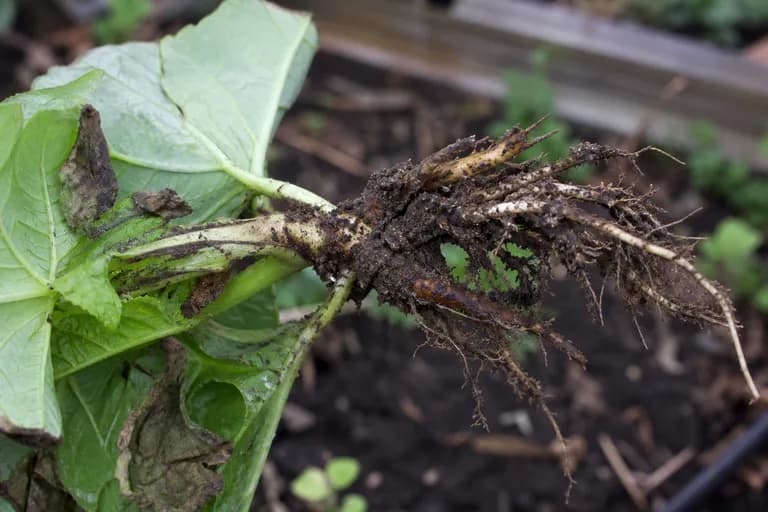
Wurzelfäule
KrankheitVergilbung, welkende Pflanzen, weiche braune Wurzeln, schlechte Keimung in kaltem, nassem Boden.
Fehlerbehebung bei häufigen Problemen
Kalter, nasser Boden führt dazu, dass die Samen vor der Keimung verfaulen; warten Sie auf warme Bedingungen. Bakterielle Brennfleckenkrankheit breitet sich bei nassen Bedingungen rasch aus; arbeiten Sie niemals bei nassen Pflanzen. Geringer Ertrag pro Pflanze aufgrund der kleinen Bohnengröße; bepflanzen Sie größere Flächen für nennenswerte Mengen. Hülsen können bei verzögerter Ernte in trockenem Wetter aufplatzen. Die kompakten Pflanzen können zwischen Unkraut schwer zu finden sein; halten Sie die Reihen gut gejätet.
Anbautipps
- Impfen Sie Navy-Bean-Samen vor der Aussaat stets mit Rhizobium-leguminosarum-Impfmittel, besonders wenn in dem Beet zuvor keine Bohnen angebaut wurden. Die Bakterien besiedeln die Wurzeln und fixieren atmosphärischen Stickstoff in pflanzenverfügbarer Form, wodurch Stickstoffdüngung überflüssig wird und der Boden für nachfolgende Kulturen angereichert wird.
- Starten Sie Navy Beans niemals in Innenräumen oder in Töpfen zum Umpflanzen — sie vertragen Wurzelstörungen sehr schlecht. Säen Sie immer direkt an den endgültigen Standort, sobald der Boden warm genug ist. Die Pfahlwurzel etabliert sich schnell und erholt sich schlecht von einem Pflanzschock.
- Die Bodentemperatur ist wichtiger als das Kalenderdatum. Verwenden Sie ein Bodenthermometer und warten Sie, bis die Messung konstant 16°C in 5 cm Tiefe anzeigt. Das Pflanzen in kaltem Boden ist die häufigste Ursache für das Scheitern von Navy Beans — die Samen verfaulen, bevor sie keimen können.
- Weichen Sie Navy-Bean-Samen nicht vor der Aussaat ein. Im Gegensatz zu einigen größeren Bohnensorten kann das Einweichen von Navy Beans dazu führen, dass die dünne Samenschale reißt, was zu schlechter Keimung und erhöhter Anfälligkeit für Bodenpathogene führt.
- Gießen Sie während der Blüte und Hülsenfüllung gleichmäßig, reduzieren Sie jedoch die Bewässerung, sobald die Hülsen beginnen sich gelb zu verfärben und zu trocknen. Navy Beans, die für die Trockenlagerung bestimmt sind, profitieren tatsächlich von trockeneren Bedingungen in den letzten 2-3 Wochen vor der Ernte.
- Vermeiden Sie es, bei nassen Pflanzen zwischen den Navy-Bean-Reihen zu arbeiten. Die Bakterielle Brennfleckenkrankheit, die zerstörerischste Navy-Bean-Krankheit, breitet sich rasch aus, wenn Wassertropfen Bakterien von Pflanze zu Pflanze über Hände, Werkzeuge und Kleidung übertragen.
- Pflanzen Sie Navy Beans in Blöcken statt in einzelnen langen Reihen. Blockpflanzung verbessert die Bestäubung, bietet gegenseitigen Windschutz für die kompakten Büsche und erleichtert die Ernte — Sie können ganze Pflanzenblöcke auf einmal herausreißen, wenn die Hülsen trocken sind.
- Bauen Sie Navy Beans als Rotationskultur zwischen Starkzehrern wie Mais, Tomaten oder Kohlgewächsen an. Der Stickstoff, den sie fixieren, reichert den Boden an, und die Krankheitszyklen von Bohnen und Nachtschattengewächsen oder Kohlgewächsen überlappen sich nicht, was den Aufbau von Schädlingen und Krankheitserregern unterbricht.
Bau deine beste Weiße Bohne (Navy Bean) an — und alles drumherum.
Starte heute kostenlos. Lege deine Beete an, setze deine Weiße Bohne (Navy Bean) ein und lass PlotMyGarden Timing, Abstände, Begleiter und Erinnerungen von der Saat bis zum Erntekorb übernehmen.
Finde deine Weiße Bohne (Navy Bean)
Navy (Perlbohne)
Die klassische kleine weiße Bohne für Baked Beans und Suppen. Kompakte Buschpflanzen. 85-90 Tage.
Snowdon
Verbesserter Navy-Typ mit aufrechtem Wuchs und guter Krankheitsresistenz. Hoher Ertrag.
Envoy
Frühreife Navy Bean, erntereif in 82 Tagen. Gut geeignet für Gebiete mit kurzer Vegetationsperiode.
Ein einzelnes Päckchen Navy-Bean-Saatgut für 3-4 € kann eine 3-Meter-Reihe bepflanzen, die 1-2 kg getrocknete Bohnen im Wert von 6-12 € im Einzelhandel produziert. Der Anbau eines bescheidenen 10-Meter-Beets ergibt 4-8 kg getrocknete Bohnen — ein Wert von 25-60 € aus einer Saatgutinvestition von 5-8 €. Über die direkten Einsparungen hinaus haben selbst angebaute Trockenbohnen einen besseren Geschmack und garen gleichmäßiger als Bohnen, die monatelang oder jahrelang im Ladenregal gelegen haben. Der Stickstoff, den sie im Boden fixieren, spart zudem 15-20 € pro Beet an Düngerkosten für die Kulturen der nächsten Saison.
Schnelle Rezepte
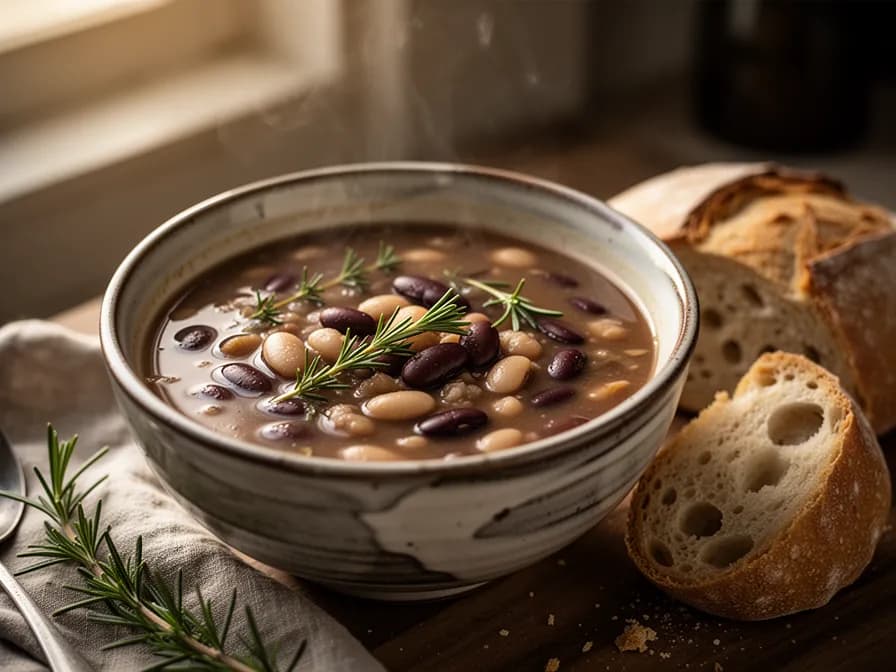
Klassische Boston Baked Beans
30 Min. + 6 Std. SchmorenDas Flaggschiff-Gericht der Navy Bean. Langsam gebacken mit Melasse, Senf und Bauchspeck, bis die Bohnen butterweich sind und in einer süßen, herzhaften, tief karamellisierten Sauce schwimmen. Jede Minute des langsamen Garens wert.
8 ZutatenSenate Bean Soup (Senatsbohnensuppe)
20 Min. + 2 Std. KöchelnDiese herzhafte weiße Bohnensuppe wird seit über einem Jahrhundert täglich im US-Senatsspeisesaal serviert. Eine einfache, sättigende Kombination aus Navy Beans, Schweinshaxe, Zwiebeln und Sellerie, zu einer dicken, wärmenden Suppe gekocht.
8 ZutatenToskanische weiße Bohnen-Bruschetta
15 Min.Eine schnelle, elegante Vorspeise, die die cremige Textur der Navy Beans zur Geltung bringt. Zerdrückte Bohnen, gewürzt mit Zitrone, Knoblauch und frischen Kräutern, auf geröstetem Brot verteilt und mit einem Schuss gutem Olivenöl und Flockensalz vollendet.
7 ZutatenKulinarische Verwendung
Navy Beans sind die klassische Bohne für Boston Baked Beans und Senate Bean Soup. Ihr milder, cremiger Geschmack nimmt Gewürze wunderbar auf. Pürieren Sie sie zu cremigen weißen Bohnensuppen und Dips. Verwenden Sie sie in Cassoulet und anderen langsam gegarten Gerichten. Fügen Sie sie zu Pasta e Fagioli hinzu. Zerdrücken Sie sie für weiße Bohnen-Crostini. Die kleine Größe bedeutet, dass sie schneller garen als größere Bohnen. Hervorragend in Bohnensalaten.
Was drinsteckt
Gesundheitsvorteile
- Navy Beans gehören zu den ballaststoffreichsten Lebensmitteln überhaupt — eine Tasse gekochter Bohnen liefert fast 80% Ihres täglichen Ballaststoffbedarfs, unterstützt eine gesunde Verdauung, senkt das LDL-Cholesterin und fördert das Sättigungsgefühl für das Gewichtsmanagement.
- Hervorragende Quelle für pflanzliches Protein mit 15 g pro Tasse gekocht. In Kombination mit einem Getreide wie Reis, Brot oder Mais liefern Navy Beans ein vollständiges Aminosäureprofil, das tierischem Eiweiß entspricht.
- Reich an Folsäure (Vitamin B9) und liefern 64% des Tageswertes pro Tasse. Folsäure ist essentiell für die DNA-Synthese, die Bildung roter Blutkörperchen und besonders wichtig in der frühen Schwangerschaft zur Vorbeugung von Neuralrohrdefekten.
- Die resistente Stärke in Navy Beans wirkt als Präbiotikum und ernährt nützliche Darmbakterien, die kurzkettige Fettsäuren produzieren, welche mit verringerter Entzündung und verbesserter Immunfunktion in Verbindung gebracht werden.
- Enthält hohe Mengen an Eisen (24% TW) und Zink (11% TW) in einer einzigen Tasse — zwei Mineralien, die bei pflanzenbasierter Ernährung häufig zu kurz kommen. Die Kombination von Bohnen mit Vitamin-C-reichen Lebensmitteln steigert die Eisenaufnahme erheblich.
- Bevölkerungsgruppen, die regelmäßig Bohnen essen — einschließlich der Bewohner der Blauen Zonen von Okinawa, Sardinien, Nicoya und Ikaria — zeigen durchweg niedrigere Raten von Herzkrankheiten, Diabetes und Krebs, wobei Bohnen als gemeinsamer Eckpfeiler der Ernährung genannt werden.
Woher Weiße Bohne (Navy Bean) stammt
Navy Beans sind eine Kulturform der Gartenbohne (Phaseolus vulgaris), die erstmals in zwei unabhängigen Zentren domestiziert wurde — im Hochland von Peru vor etwa 8.000 Jahren und in Zentralmexiko vor etwa 7.000 Jahren. Die wilden Vorfahren waren winzige, harte Samen in ungenießbaren Hülsen, aber Jahrtausende selektiver Züchtung durch indigene Völker beider Amerikas brachten die weich kochenden, prallen Sorten hervor, die wir heute kennen.
Spanische und portugiesische Entdecker brachten die Gartenbohne im 16. Jahrhundert nach Europa zurück, und sie verbreitete sich rasch über den gesamten Globus als günstige, lagerfähige Proteinquelle. Die kleine weiße Bohne, die wir heute Navy Bean nennen, wurde im 19. Jahrhundert in Nordamerika gezielt selektiert und stabilisiert, geschätzt für ihre kompakte Größe, schnelle Garzeit und ihren milden Geschmack.
Der Name 'Navy Bean' stammt aus der Mitte des 19. Jahrhunderts, als die US-Marine begann, ihre Schiffe mit getrockneten weißen Bohnen als nahrhafte, haltbare Ration auszustatten. Matrosen konnten genug Bohnen für Monate auf See mitnehmen, ohne Kühlung zu benötigen. Diese militärische Verbindung verfestigte sowohl den Namen als auch den Ruf der Bohne als zuverlässige, bodenständige Nahrung.
Heute gehören Navy Beans nach wie vor zu den am häufigsten angebauten Trockenbohnenarten in Nordamerika, wobei Michigan die Produktion anführt. Sie bilden die Grundlage für Boston Baked Beans — ein Gericht mit Wurzeln in der Küche der amerikanischen Ureinwohner, die Bohnen mit Ahornsirup und Bärenfett in Erdgruben langsam garten, lange bevor es europäischen Kontakt gab.
Weiße Bohne (Navy Bean): Schon gewusst?
Faszinierende Fakten über Weiße Bohne (Navy Bean)
Navy Beans erhielten ihren Namen, weil die US-Marine sie seit Mitte des 19. Jahrhunderts als Grundnahrungsmittel an Matrosen ausgab — sie waren günstig, nahrhaft, unbegrenzt haltbar und konnten eine ganze Schiffsbesatzung ernähren.
Weiße Bohne (Navy Bean): Fragen & Antworten
Wann sollte ich Weiße Bohne (Navy Bean) pflanzen?
Was sind gute Begleitpflanzen für Weiße Bohne (Navy Bean)?
In welchen Winterhärtezonen kann Weiße Bohne (Navy Bean) wachsen?
Wie viel Sonne braucht Weiße Bohne (Navy Bean)?
Welchen Abstand sollte ich zwischen Weiße Bohne (Navy Bean) lassen?
Welche Schädlinge und Krankheiten befallen Weiße Bohne (Navy Bean)?
Wie lagere ich Weiße Bohne (Navy Bean) nach der Ernte?
Was sind die besten Weiße Bohne (Navy Bean)-Sorten zum Anbauen?
Welchen Boden braucht Weiße Bohne (Navy Bean)?
Wie viele Navy-Bean-Pflanzen muss ich für eine sinnvolle Ernte anbauen?
Wann sind Navy Beans erntereif für die Trockenlagerung?
Brauchen Navy Beans ein Spalier oder eine Stützstruktur?
Kann ich Navy Beans frisch essen, oder müssen sie getrocknet werden?
Warum sind meine Navy-Bean-Samen verfault statt zu keimen?
Du hast die Theorie gelesen. Jetzt baue sie auf Autopilot an.
Alles, was Weiße Bohne (Navy Bean) knifflig macht — das Timing, die Abstände, die Begleiter, das Erntefenster — genau das übernimmt PlotMyGarden für dich, für jede Pflanze im Garten.
Ein Plan, der dein Wetter kennt
Standort einmal festlegen. Aussaat-, Dünge- und Erntedaten rund um deinen echten letzten Frosttermin und die Live-Vorhersage — kein Raten mehr nach Saattüte.
Aus dem Abschnitt „Pflanzzeit“Beetplaner per Drag & Drop
Beete auf einem Raster gestalten. Jede Pflanze rastet im richtigen Abstand ein, und du siehst die ganze Saison, bevor du einen Cent für Saatgut ausgibst.
Aus dem Abschnitt „Anbau“Begleiter-Konflikte früh erkannt
Über 200 gute und schlechte Kombinationen werden beim Pflanzen live geprüft — so landet ein saisonruinierender Fehler nie in der Erde.
Aus dem Abschnitt „Begleiter“Erinnerungen, nach denen du wirklich handelst
„Gieß die Bohnen.“ „Heute ernten, bevor's umschlägt.“ Pünktlich, konkret und auf deine echten Pflanzen bezogen.
Aus dem Abschnitt „Ernte“Staffel-Aussaat, geplant
Sechs Wochen ernten statt sechs Tage? Die App verteilt deine Aussaaten automatisch und erinnert dich, wenn der nächste Satz fällig ist.
Aus dem Abschnitt „Pflanzzeit“Ein Verlauf, der schlauer wird
Jede protokollierte Ernte bringt der App deinen Garten bei. Der Plan fürs nächste Jahr startet bei dem, was in deinem Boden wirklich funktioniert hat.
Aus dem Abschnitt „Überblick“Pflanze diese neben Weiße Bohne (Navy Bean)
Weitere Hülsenfrüchte
Halte Weiße Bohne (Navy Bean) von diesen fern
Bau deine beste Weiße Bohne (Navy Bean) an — und alles drumherum.
Starte heute kostenlos. Lege deine Beete an, setze deine Weiße Bohne (Navy Bean) ein und lass PlotMyGarden Timing, Abstände, Begleiter und Erinnerungen von der Saat bis zum Erntekorb übernehmen.