Acacia de Tres Espinas
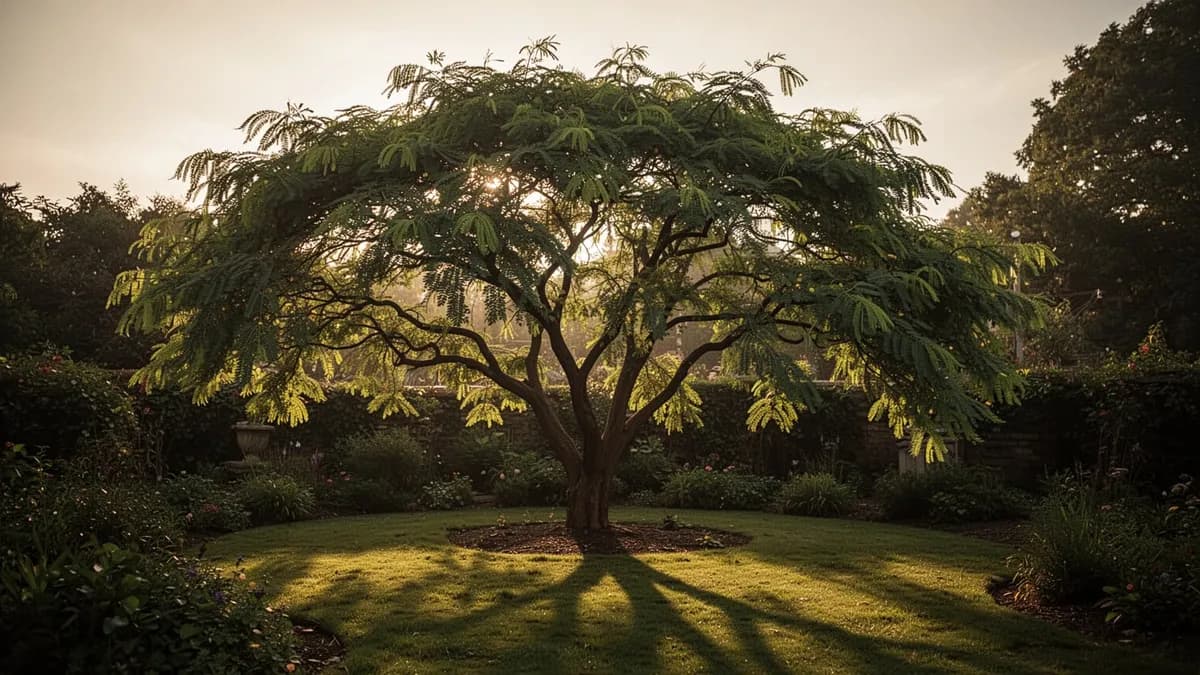
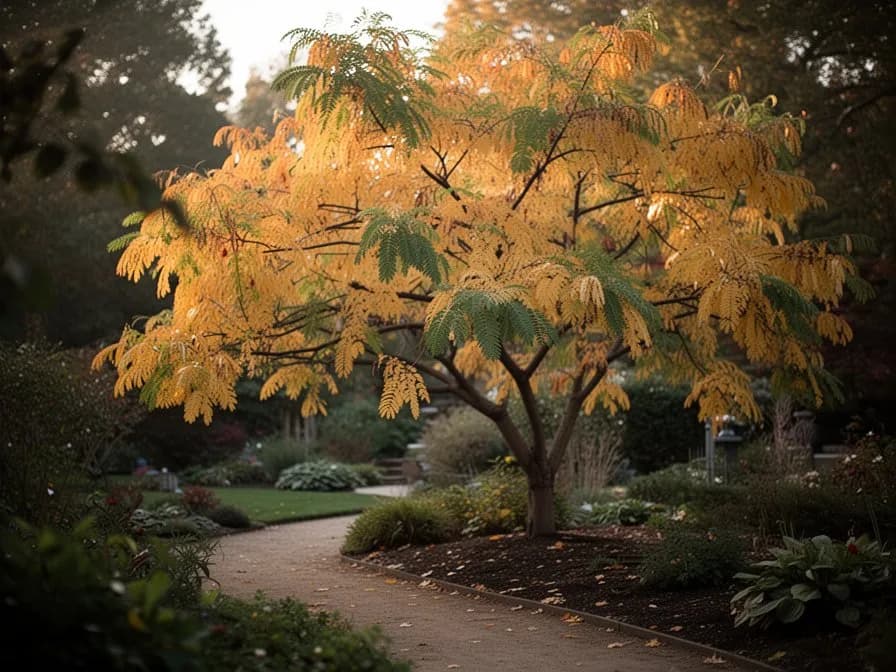
Un elegante árbol de sombra con hojas compuestas finas y plumosas que proyectan una sombra ligera y moteada, permitiendo que el césped y las flores crezcan bajo su copa.





En esta páginaResumen
Conoce Acacia de Tres Espinas
Un elegante árbol de sombra con hojas compuestas finas y plumosas que proyectan una sombra ligera y moteada, permitiendo que el césped y las flores crezcan bajo su copa. Los cultivares sin espinas y sin vainas han convertido a la acacia de tres espinas en un popular árbol de calle y jardín, eliminando las peligrosas espinas y las desordenadas vainas de semillas de los árboles silvestres. Son extremadamente tolerantes a la sequía, la sal, los suelos alcalinos y las condiciones urbanas. Las pequeñas hojuelas se descomponen rápidamente en otoño y rara vez requieren ser rastrilladas, a diferencia de la mayoría de los demás árboles de sombra.
Cuándo plantar Acacia de Tres Espinas
Las semillas de la acacia de tres espinas tienen una cubierta extremadamente dura que debe escarificarse antes de la germinación. Haga una muesca en la cubierta de la semilla con una lima o sumerja las semillas en ácido sulfúrico concentrado durante 30 minutos, luego enjuague a fondo. Alternativamente, vierta agua hirviendo sobre las semillas y déjelas en remojo durante 24 horas. Siembre las semillas escarificadas en un sustrato húmedo a una temperatura de 21 a 27 grados Celsius, donde germinan en 7 a 21 días. Los cultivares con nombre deben injertarse sobre portainjertos de semilla, ya que no se reproducen fielmente a partir de semillas.
Tu año de Acacia de Tres Espinas
Ajustado a Zona 7 · temporada típica · la helada se va hacia el 2 abr y vuelve hacia el 1 nov
Planta Acacia de Tres Espinas Mar – Abr, Oct – Nov y cosecha —. Consulta los métodos de plantación y elige tu clima para adaptar los periodos.
Cómo cultivar Acacia de Tres Espinas
Plante la acacia de tres espinas a pleno sol en prácticamente cualquier tipo de suelo, incluidos arcilla pesada, arenoso, alcalino y suelos urbanos compactados. Su excepcional adaptabilidad la convierte en una opción ideal para emplazamientos difíciles. Distancie los árboles entre 9 y 12 metros para plantaciones de sombra. Seleccione siempre cultivares sin espinas y sin vainas, como Shademaster o Sunburst, para uso paisajístico, ya que los árboles de tipo silvestre poseen espinas peligrosas y producen vainas de semillas desordenadas.
Riegue los árboles recién plantados en profundidad una vez por semana durante la primera temporada de crecimiento. La acacia de tres espinas es uno de los árboles de sombra más tolerantes a la sequía una vez establecidos y rara vez necesita riego suplementario. Aplique una capa de 5 a 8 centímetros de mantillo orgánico sobre la zona radicular. Las finas hojas compuestas proyectan una sombra ligera y moteada que permite que el césped y las plantas perennes crezcan bajo la copa.
Pode a finales del invierno para mantener un líder central fuerte y eliminar ramas cruzadas o muertas. La acacia de tres espinas desarrolla de forma natural una copa abierta y extendida que requiere relativamente poca poda correctiva. Vigile los daños por el gusano de la tela y el gusano de la tela de la mimosa durante el verano. Las diminutas hojuelas se descomponen rápidamente en otoño y rara vez necesitan ser rastrilladas, lo cual es una ventaja significativa respecto a la mayoría de los árboles de sombra.
Para Acacia de Tres Espinas un bancal de 120 × 240 cm se queda corto
Cada Acacia de Tres Espinas pide 900 cm de margen. El planificador guarda ese marco por ti — cada planta, cada bancal.
Los mejores vecinos de Acacia de Tres Espinas
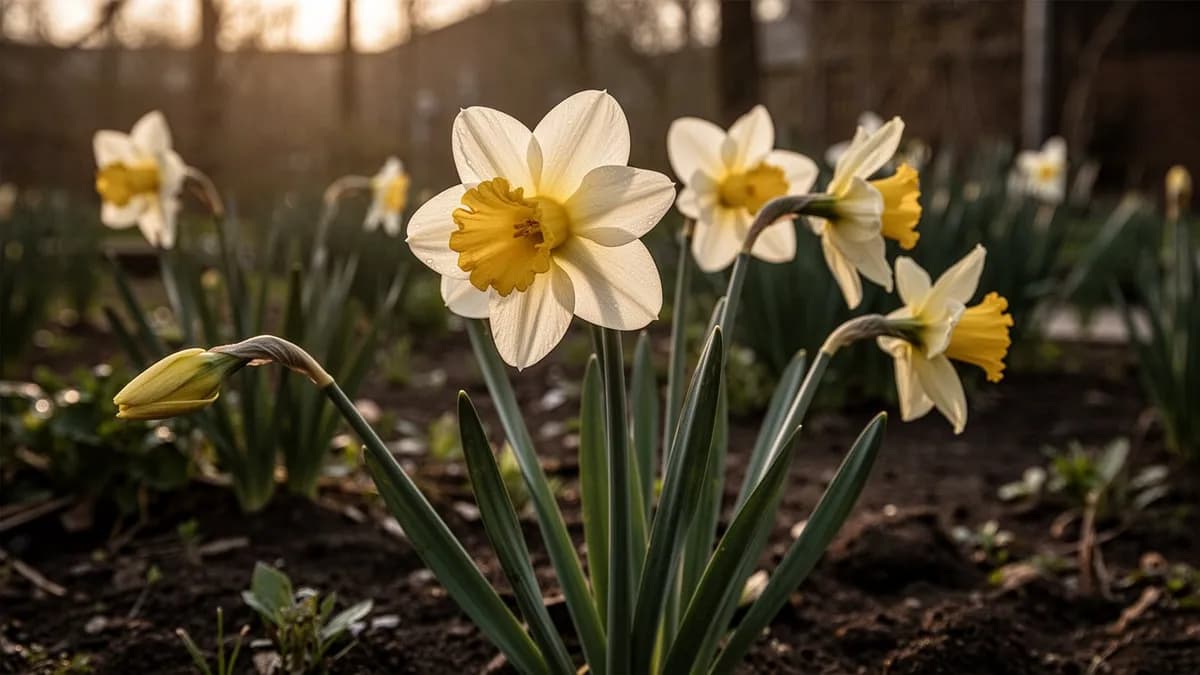
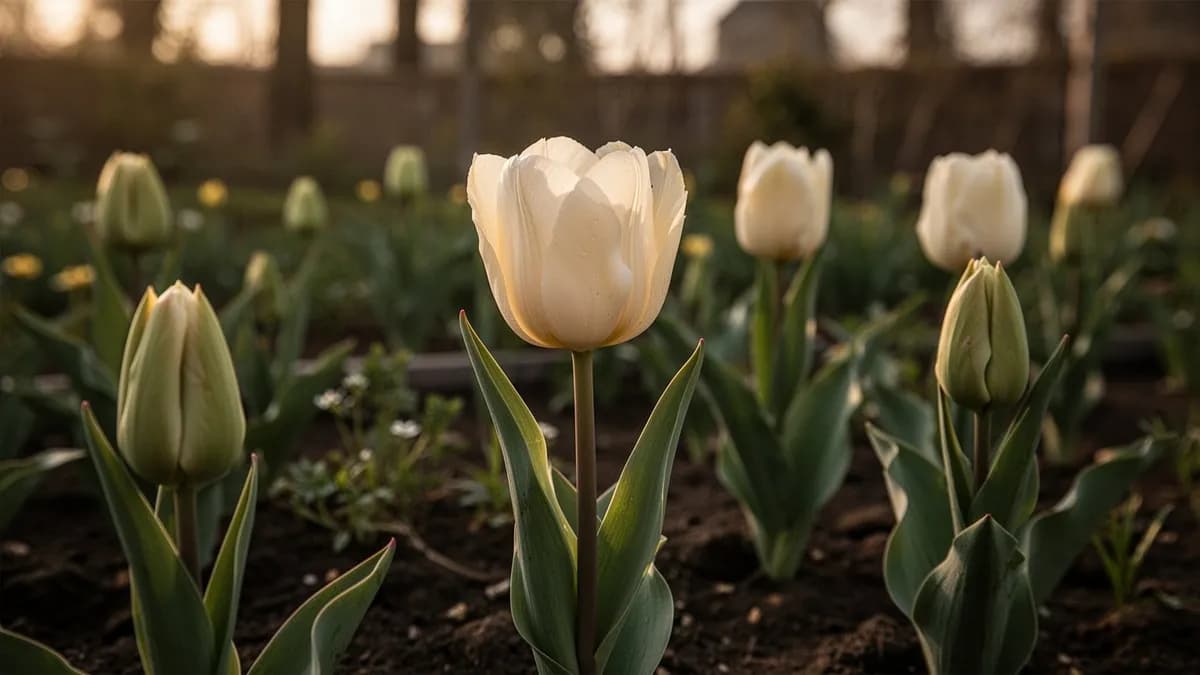
La acacia de tres espinas es uno de los mejores árboles de sombra para el cultivo asociado porque su follaje fino y compuesto proyecta una sombra ligera y filtrada que permite que el césped, las plantas perennes e incluso las hortalizas crezcan bajo ella. Las diminutas hojuelas se descomponen rápidamente, añadiendo materia orgánica rica en nitrógeno al suelo. Plante perennes amantes del sol como las equináceas, las rudbeckias y las gramíneas ornamentales bajo la copa abierta. Los bulbos de primavera, incluidos tulipanes, narcisos y azafranes, prosperan con la luz moteada. Evite las plantas sensibles a la humedad directamente sobre las raíces superficiales.
Narciso va a su lado. Nogal no.
Saber de huerto de siempre, cotejado con la tabla real de Acacia de Tres Espinas — prueba cualquier planta que cultives.
Prueba Acacia de Tres Espinas en un bancal, aquí mismo
Un bancal real del planificador con Acacia de Tres Espinas ya plantado. Toca una planta compañera para colocarla y mira cómo responde la comprobación de vecinos: verde para buenos vecinos, rojo si hay conflicto.


Guías de cultivo relacionadas

Abónalo bien
La acacia de tres espinas prospera en una gama extraordinariamente amplia de suelos, desde arcilla pesada hasta arena, y tolera niveles de pH de 5.0 a 8.5. Es uno de los pocos árboles de sombra que se desarrolla bien en suelos fuertemente alcalinos y salinos. Los árboles jóvenes se benefician de un fertilizante equilibrado 10-10-10 aplicado a principios de primavera. Los árboles maduros rara vez necesitan fertilización suplementaria gracias a sus nódulos radiculares fijadores de nitrógeno que mejoran la fertilidad del suelo. Evite la sobrefertilización, que favorece un crecimiento suculento susceptible a daños por heladas y plagas.
Temperatura ideal
Compatibilidad de zonas de rusticidad
De la semilla a la cosecha, etapa por etapa
Germinación de la Semilla
Las semillas de la acacia de tres espinas tienen una cubierta extremadamente dura que requiere escarificación antes de la germinación. Las semillas pueden muescarse con una lima o remojarse en agua caliente durante 24 horas para romper la dormancia. Una vez tratadas, la germinación suele producirse en 7 a 21 días en suelo cálido y húmedo.
Establecimiento de la Plántula
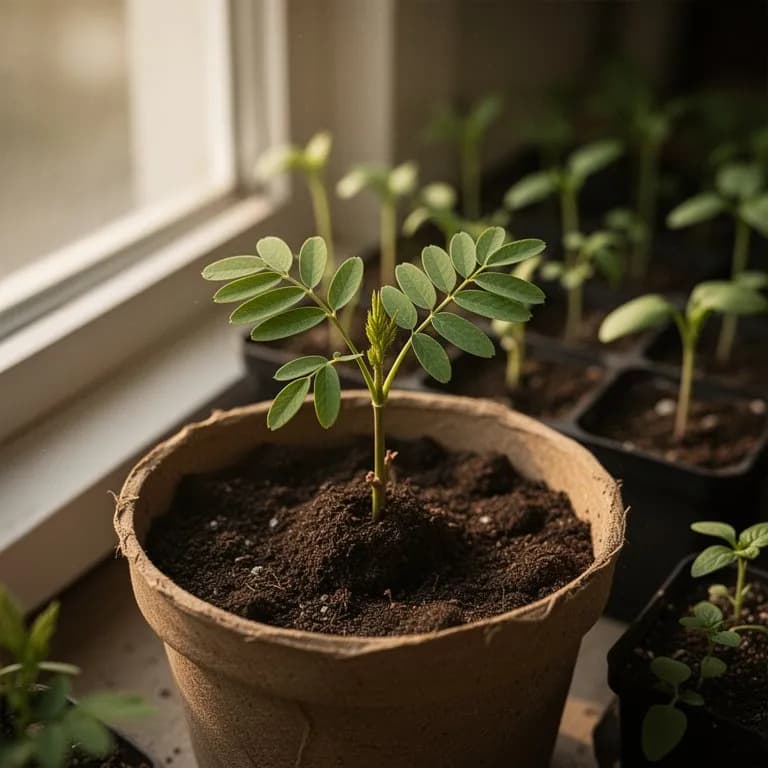
Las plántulas jóvenes desarrollan hojas compuestas y comienzan a establecer un sistema de raíz pivotante profunda. El crecimiento es rápido en condiciones favorables, y las plántulas pueden alcanzar de 30 a 45 centímetros en su primera temporada de crecimiento. Las características hojas bipinnadas compuestas se hacen evidentes tempranamente.
Crecimiento Juvenil
Durante los años uno a tres, la acacia de tres espinas crece vigorosamente, añadiendo frecuentemente de 60 a 90 centímetros de altura por año. El árbol desarrolla su patrón de ramificación abierto y extendido y el tronco comienza a engrosarse. Las formas silvestres pueden comenzar a producir espinas en el tronco y las ramas inferiores durante esta etapa.
Desarrollo del Árbol Joven
Entre los años tres y siete, el árbol desarrolla una estructura de copa más definida. La tasa de crecimiento se mantiene vigorosa, de 33 a 60 centímetros por año. El sistema radicular se expande significativamente y el árbol se vuelve cada vez más tolerante a la sequía. El distintivo patrón de sombra filtrada por el que se aprecia la acacia de tres espinas comienza a desarrollarse.
Madurez Temprana y Primera Fructificación
La acacia de tres espinas normalmente comienza a producir vainas alrededor de los 7 a 10 años de edad. El árbol alcanza un tamaño significativo, a menudo de 9 a 12 metros de altura, y la copa se extiende ampliamente. La producción de vainas aumenta cada año a medida que el árbol madura. Los árboles femeninos producen las largas vainas retorcidas de color marrón oscuro rellenas de pulpa dulce.
Plena Madurez
Una acacia de tres espinas plenamente madura alcanza de 18 a 24 metros de altura con una extensión de copa igual o mayor. El árbol produce vainas abundantes anualmente y puede vivir de 100 a 150 años. La corteza se vuelve profundamente surcada y la silueta general se torna amplia y elegante. Los árboles maduros son extremadamente resistentes a la sequía, la contaminación, la sal y una amplia gama de condiciones del suelo.
Escarifique las semillas sumergiéndolas en agua casi hirviendo y dejándolas enfriar durante la noche, o haga una muesca en la cubierta con una lima metálica. Plante las semillas a unos 2.5 centímetros de profundidad en un suelo con buen drenaje.
Cuidar Acacia de Tres Espinas mes a mes
Qué hacer cada mes para tu Acacia de Tres Espinas
Octubre
Mes actualCoseche las vainas maduras cuando se tornen marrón oscuro y se retuerzan, o recójalas del suelo Procese la pulpa de las vainas para su uso en bebidas, repostería o alimento para animales
Ten claro qué hacer en tu huerto, cada mes
Un correo al empezar cada mes: qué sembrar, plantar y hacer ahora mismo — para tu Acacia de Tres Espinas y todo lo que crece alrededor. Más un breve curso inicial para esquivar los errores clásicos.
- Qué hacer ahora mismo
- Ajustado a tu temporada
- Curso inicial incluido
Cosechar Acacia de Tres Espinas
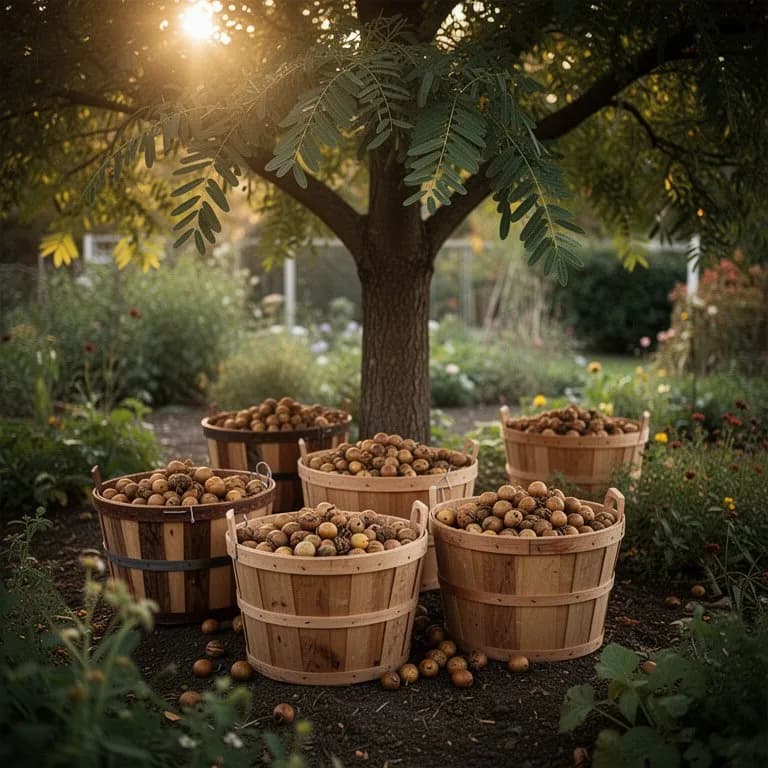
La acacia de tres espinas se cultiva principalmente como árbol ornamental de sombra, y los cultivares sin espinas y sin vainas no producen material cosechable. Los árboles silvestres de acacia de tres espinas producen vainas largas, retorcidas y marrones en otoño que contienen una pulpa dulce utilizada históricamente como alimento animal y ocasionalmente como fuente alimentaria humana. Las vainas deben recogerse después de que caigan del árbol a finales de otoño. La pulpa tiene un sabor dulce similar a la miel que puede extraerse remojando las vainas en agua.
se supone que plantas al comenzar el periodo — indica tu fecha real
Cosecha Acacia de Tres Espinas a tiempo y la planta sigue produciendo.
Almacenamiento y conservación
Las vainas de semillas de la acacia de tres espinas silvestre pueden almacenarse en sacos de arpillera en un lugar seco y fresco durante varios meses. La pulpa dulce puede separarse de las semillas y secarse o procesarse en un jarabe hirviendo las vainas en agua y colando el resultado. Las vainas secas se conservan durante más de un año en recipientes herméticos. La madera extremadamente dura y duradera es muy apreciada para postes de cerca y construcción exterior debido a su resistencia natural a la putrefacción. Las semillas permanecen viables durante años cuando se almacenan en un lugar seco y fresco.
Qué falla — y cómo solucionarlo
Gusano de la Tela de la Mimosa
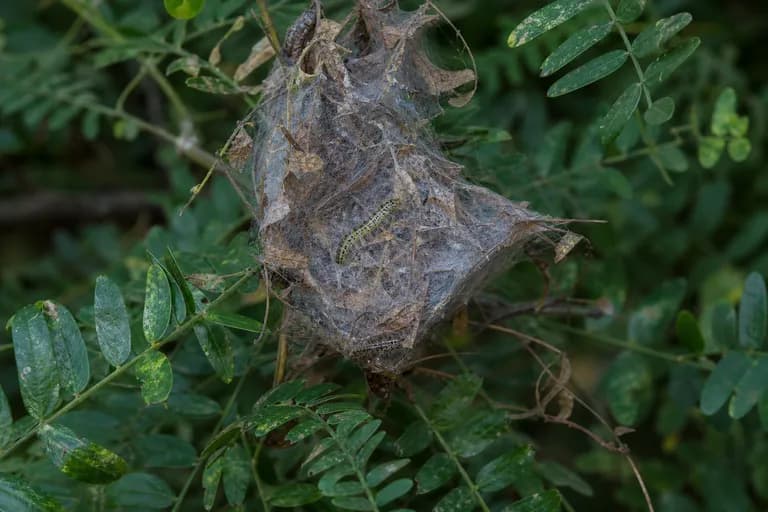
PlagaLas larvas tejen redes de seda que envuelven grupos de hojuelas, tornándolas marrones y antiestéticas. Las infestaciones severas crean grandes masas de follaje muerto y entretejido por toda la copa.
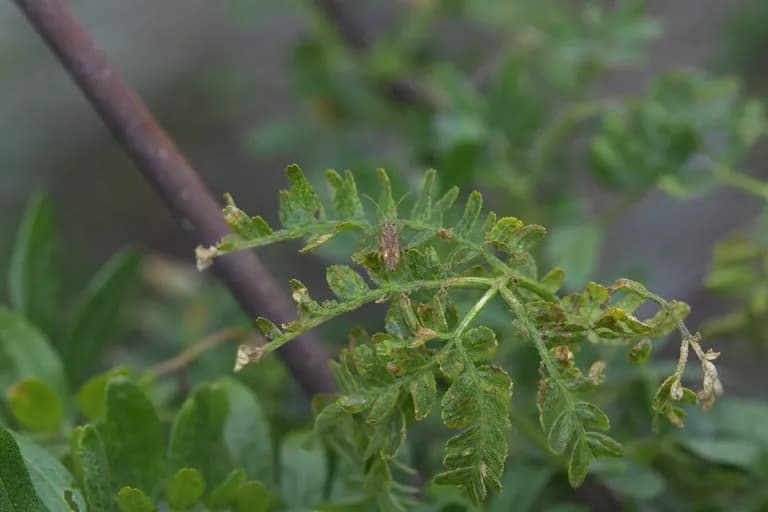
Chinche de la Acacia de Tres Espinas
PlagaPequeños insectos se alimentan de las hojas recién emergentes en primavera, provocando un follaje distorsionado, atrofiado y descolorido. Las hojas severamente dañadas pueden caer, provocando un segundo brote de crecimiento.
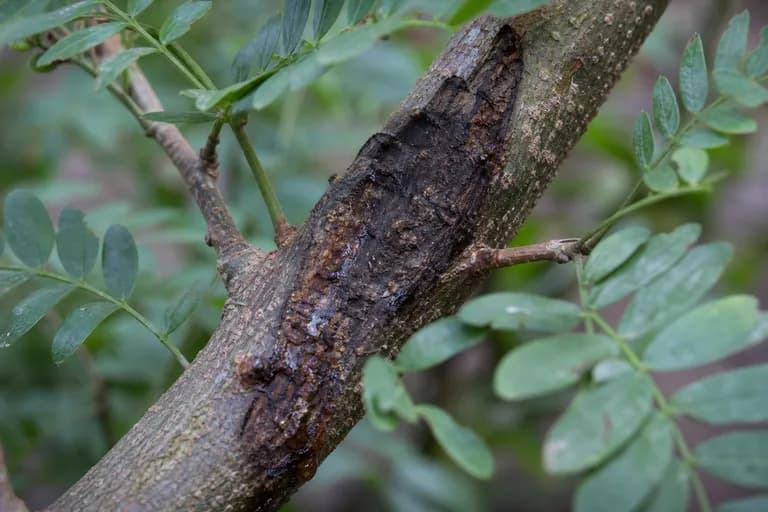
Enfermedad del Cancro
EnfermedadZonas hundidas y oscuras en la corteza que pueden anillar las ramas, provocando la muerte regresiva. La corteza puede agrietarse y exudar savia alrededor de los márgenes del cancro.
Solución de problemas comunes
El gusano de la tela de la mimosa es la plaga más significativa, creando telas antiestéticas por toda la copa en verano. La chinche de la acacia de tres espinas puede causar un crecimiento primaveral distorsionado que puede alarmar a los propietarios, aunque los árboles generalmente se recuperan. Las finas hojuelas pueden obstruir los canalones a pesar de su pequeño tamaño. Los árboles silvestres con espinas representan un peligro serio en los jardines y nunca deben plantarse cerca de zonas de paso. Pueden desarrollarse raíces superficiales en suelos poco profundos o compactados. Algunos cultivares son propensos a corteza incluida en las horquillas de las ramas que debilita la estructura.
Consejos de cultivo
- Seleccione cultivares sin espinas como 'Shademaster', 'Skyline' o 'Sunburst' para paisajes residenciales para evitar las peligrosas espinas ramificadas que se encuentran en los ejemplares de especie silvestre.
- Plante a pleno sol para obtener el mejor crecimiento y producción de vainas; la acacia de tres espinas tolera la sombra parcial pero se vuelve desgarbada y produce menos vainas con menos luz solar.
- El árbol se adapta a prácticamente cualquier tipo de suelo, desde arcilla pesada hasta franco arenoso, y tolera condiciones tanto ácidas como alcalinas con un rango de pH de 4.5 a 8.2, lo que minimiza la preparación del terreno.
- Riegue los árboles recién plantados en profundidad una vez por semana durante las dos primeras temporadas de crecimiento para establecer un sistema radicular fuerte, luego suspenda el riego regular ya que el árbol es excepcionalmente tolerante a la sequía una vez establecido.
- Si cultiva para la producción de vainas, asegúrese de plantar un árbol femenino o un ejemplar cultivado de semilla en lugar de un cultivar injertado sin vainas; los viveros pueden ayudar a identificar las selecciones productoras de vainas.
- Distancie los árboles al menos de 9 a 12 metros de estructuras, accesos y otros árboles para acomodar la altura eventual de 18 a 24 metros y la extensión de copa de 12 a 15 metros.
- Aplique mantillo en un anillo amplio alrededor de los árboles jóvenes, extendiéndolo al menos 1 metro desde el tronco, pero nunca apile mantillo contra la corteza ya que esto promueve la pudrición y el refugio de plagas.
- Pode a finales del invierno o principios de primavera mientras el árbol esté todavía en dormancia para dar forma a la copa y eliminar madera muerta; evite la poda intensa en verano ya que puede estresar al árbol y atraer insectos barrenadores.
- Recoja las vainas caídas con prontitud en otoño si desea evitar la autosiembra, ya que la acacia de tres espinas puede propagarse agresivamente en condiciones favorables cuando las vainas se dejan en el suelo.
- Vigile el gusano de la tela de la mimosa, la plaga más común de la acacia de tres espinas, que crea tiendas de seda en la copa durante el verano; retire las tiendas manualmente o trate con Bacillus thuringiensis si las infestaciones son severas.
Cultiva tu mejor Acacia de Tres Espinas — y todo lo que la rodea.
Empieza un plan gratis hoy. Diseña tus bancales, coloca tu Acacia de Tres Espinas y deja que PlotMyGarden gestione el momento, el espaciado, las asociaciones y los recordatorios de la semilla a la cesta.
Elige tu Acacia de Tres Espinas
Shademaster
El cultivar más popular, con un líder central fuerte, porte erguido y extendido, y un excelente follaje verde oscuro. Sin espinas y sin vainas, alcanza de 14 a 15 metros con una copa amplia.
Sunburst
El nuevo crecimiento emerge de un brillante color amarillo dorado, madurando a verde, creando un llamativo efecto bicolor durante toda la temporada de crecimiento. Sin espinas y sin vainas, algo más pequeño, de 9 a 12 metros.
Skyline
Forma ampliamente piramidal con un líder central fuerte y ramas ascendentes. Excelente coloración otoñal amarillo dorada y buena resistencia al gusano de la tela. Alcanza 14 metros de altura.
Imperial
Una selección compacta con copa redondeada y extendida y follaje de textura fina. Ideal para paisajes más pequeños donde una acacia de tres espinas de tamaño completo sería demasiado grande. Alcanza de 9 a 11 metros.
Un solo árbol maduro de acacia de tres espinas puede producir de 25 a 50 kilogramos de vainas anualmente, proporcionando una fuente gratuita de edulcorante natural, sustituto de harina y alimento para el ganado. Las vainas pueden reemplazar edulcorantes comprados y suplementos alimentarios para animales, mientras que el árbol en sí elimina la necesidad de costosas estructuras de sombra. El crecimiento independiente del nitrógeno de la acacia de tres espinas significa que no requiere fertilizante una vez establecida, y su tolerancia a la sequía reduce drásticamente los costes de riego. La madera durable obtenida de las podas proporciona una excelente leña, reduciendo aún más los gastos del hogar.
Recetas rápidas
Jarabe de Pulpa de Vaina de Acacia de Tres Espinas
45 minutos más remojo durante la nocheUn jarabe rico y oscuro elaborado extrayendo la pulpa dulce de las vainas maduras de la acacia de tres espinas. Esta preparación tradicional captura la dulzura característica similar a la miel del árbol y puede utilizarse como jarabe para tortitas, edulcorante para bebidas o para rociar sobre postres.
4 ingredientesPan de Harina de Vaina de Acacia de Tres Espinas
2 horas incluyendo el tiempo de fermentaciónUn pan ligeramente dulce y terroso que incorpora pulpa seca y molida de vainas de acacia de tres espinas como sustituto parcial de la harina. La harina de vaina aporta una dulzura natural y un sutil sabor a caramelo similar al algarrobo, reduciendo la necesidad de azúcar añadido.
6 ingredientesBebida Fermentada de Vainas de Acacia de Tres Espinas
20 minutos activos más 3 a 5 días de fermentaciónUna bebida tradicional fermentada de forma natural elaborada con vainas de acacia de tres espinas, similar a las bebidas producidas por los pueblos nativos americanos durante siglos. El alto contenido de azúcar de las vainas fermenta de manera natural, creando una bebida ligeramente efervescente, levemente dulce y ácida.
5 ingredientesQué contiene
Beneficios para la salud
- La pulpa de las vainas es naturalmente rica en fibra dietética, que favorece una digestión saludable, promueve la regularidad intestinal y puede ayudar a controlar los niveles de azúcar en sangre al ralentizar la absorción de glucosa.
- El extracto de vainas de la acacia de tres espinas contiene compuestos antioxidantes, incluidos flavonoides y ácidos fenólicos, que ayudan a neutralizar los radicales libres y pueden reducir el estrés oxidativo en el organismo.
- La medicina herbal tradicional ha utilizado preparados de corteza y vainas de la acacia de tres espinas como remedio antiinflamatorio para dolores de garganta, tos y molestias respiratorias leves.
- El contenido de potasio de la pulpa de las vainas contribuye a la regulación saludable de la presión arterial y a una función cardiovascular adecuada, favoreciendo la salud del corazón.
- La pulpa de las vainas proporciona una fuente natural de hierro y calcio, minerales esenciales para el transporte saludable de oxígeno en la sangre y el mantenimiento de huesos fuertes, respectivamente.
- Como edulcorante natural bajo en grasas, la pulpa de vainas de la acacia de tres espinas puede servir como una alternativa más saludable a los azúcares refinados, proporcionando dulzura junto con fibra, minerales y otros compuestos beneficiosos en lugar de calorías vacías.
De dónde viene Acacia de Tres Espinas
La acacia de tres espinas (Gleditsia triacanthos) es nativa del centro de los Estados Unidos, con su área de distribución natural extendiéndose desde Pensilvania hacia el oeste hasta Nebraska y hacia el sur hasta Texas y Misisipi. Prospera a lo largo de vegas fluviales, llanuras aluviales y bordes de bosques en todos los valles de los ríos Misisipi y Ohio, donde crece junto a robles, nogales americanos y otras maderas duras en ricos suelos aluviales. La especie fue descrita formalmente por primera vez por Carlos Linneo en 1753, con el nombre del género en honor a Johann Heinrich Gleditsch, un botánico alemán contemporáneo de Linneo. El epíteto específico triacanthos significa 'tres espinas', en referencia a las espinas frecuentemente trifurcadas que se encuentran en el tronco y las ramas más antiguas de los ejemplares silvestres. Los pueblos nativos americanos a lo largo de toda su área de distribución hicieron un amplio uso del árbol. Los cheroquis, los creek y otras naciones del sureste consumían la dulce pulpa de las vainas como alimento, la preparaban como bebida y utilizaban preparados de corteza con fines medicinales. Los primeros colonos europeos reconocieron rápidamente el valor del árbol, utilizando su madera durable para postes de cerca y sus vainas como forraje para el ganado. Las vainas contienen una pulpa dulce similar a la miel con hasta un 30 por ciento de contenido de azúcar, lo que da al árbol su nombre común en inglés. Durante el siglo XIX, la acacia de tres espinas fue ampliamente plantada fuera de su área de distribución natural como seto vivo debido a sus impenetrables espinas. El desarrollo de cultivares sin espinas y sin vainas a mediados del siglo XX la transformó en uno de los árboles urbanos de calle y sombra más populares de América del Norte. Su follaje de textura fina proyecta una sombra ligera y moteada que permite que el césped crezca bajo él, y su tolerancia a la contaminación, la sal, el suelo compactado y la sequía la hacen ideal para los exigentes entornos urbanos.
Acacia de Tres Espinas: ¿sabías que?
Datos fascinantes sobre Acacia de Tres Espinas
La pulpa dulce del interior de las vainas de la acacia de tres espinas contiene hasta un 30 por ciento de azúcar y fue una fuente alimentaria significativa para los pueblos nativos americanos, quienes consumían la pulpa cruda, la convertían en bebidas y la usaban como edulcorante mucho antes del contacto europeo.
Acacia de Tres Espinas: preguntas frecuentes
¿Cuándo debo plantar Acacia de Tres Espinas?
¿Cuáles son buenas plantas acompañantes para Acacia de Tres Espinas?
¿En qué zonas de rusticidad puede crecer Acacia de Tres Espinas?
¿Cuánto sol necesita Acacia de Tres Espinas?
¿A qué distancia debo espaciar Acacia de Tres Espinas?
¿Qué plagas y enfermedades afectan a Acacia de Tres Espinas?
¿Cómo almaceno Acacia de Tres Espinas después de la cosecha?
¿Cuáles son las mejores variedades de Acacia de Tres Espinas para cultivar?
¿Qué suelo necesita Acacia de Tres Espinas?
¿Son realmente comestibles las vainas de la acacia de tres espinas para los humanos?
¿Cuál es la diferencia entre la acacia de tres espinas y la robinia?
¿Debo preocuparme por las espinas de la acacia de tres espinas?
¿Qué tan rápido crece la acacia de tres espinas?
¿Dañará una acacia de tres espinas mi césped o jardín?
¿Se pueden usar las vainas de la acacia de tres espinas como alimento para animales?
Acabas de leer la teoría. Ahora cultívala en piloto automático.
Todo lo que hace que Acacia de Tres Espinas sea delicado — el momento, el espaciado, las asociaciones, la ventana de cosecha — es justo lo que PlotMyGarden resuelve por ti, para cada planta de tu huerto.
Un plan que conoce tu clima
Indica tu ubicación una vez. Recibe fechas de siembra, abonado y cosecha basadas en tu última helada real y el pronóstico en vivo — sin adivinar con un sobre genérico.
De la sección “Cuándo plantar”Planificador de bancales de arrastrar y soltar
Diseña bancales sobre una cuadrícula. Cada planta encaja con su espaciado correcto y ves toda la temporada antes de gastar un céntimo en semillas.
De la sección “Cultivo”Conflictos de asociación, detectados a tiempo
Más de 200 buenas y malas combinaciones comprobadas en vivo mientras plantas — para que un error que arruine la temporada nunca llegue a la tierra.
De la sección “Asociaciones”Recordatorios que sí vas a seguir
“Riega las judías.” “Recoge hoy antes de que se pase.” Oportunos, concretos y ligados a las plantas que de verdad cultivas.
De la sección “Cosecha”Escalonado, programado
¿Quieres cosechar seis semanas en vez de seis días? Reparte tus siembras automáticamente y te avisa cuando toca el siguiente lote.
De la sección “Cuándo plantar”Un registro que se vuelve más listo
Cada cosecha que registras le enseña tu huerto. El plan del año que viene parte de lo que de verdad funcionó en tu suelo, no en un manual.
De la sección “Resumen”Planta estos junto a Acacia de Tres Espinas
Más Árboles de sombra


Mantén Acacia de Tres Espinas lejos de estos
Cultiva tu mejor Acacia de Tres Espinas — y todo lo que la rodea.
Empieza un plan gratis hoy. Diseña tus bancales, coloca tu Acacia de Tres Espinas y deja que PlotMyGarden gestione el momento, el espaciado, las asociaciones y los recordatorios de la semilla a la cesta.