Tulipán
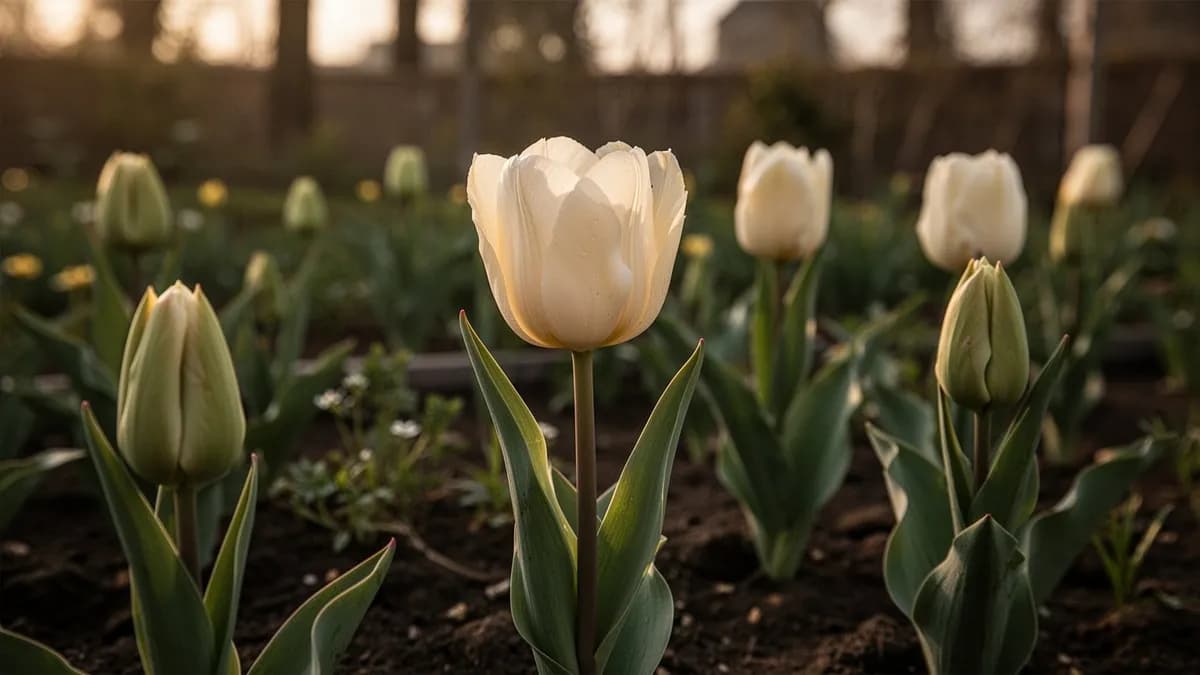
Un bulbo clásico de primavera que produce elegantes flores en forma de copa y requiere plantación otoñal y frío invernal para florecer.





En esta páginaResumen
Conoce Tulipán
Un bulbo clásico de primavera que produce elegantes flores en forma de copa y requiere plantación otoñal y frío invernal para florecer. Plante los bulbos con la punta hacia arriba a una profundidad de aproximadamente tres veces la altura del bulbo en un suelo bien drenado para obtener los mejores resultados. Los tulipanes existen en prácticamente todos los colores y formas, desde simples flores únicas hasta variedades flecadas, tipo loro y dobles para espectaculares exhibiciones de temporada. Permita que el follaje amarillee y se marchite de forma natural después de la floración para recargar el bulbo, y levante y divida los macizos congestionados cada pocos años.
Cuándo plantar Tulipán
Los tulipanes se plantan como bulbos en otoño, de seis a ocho semanas antes de que el suelo se congele. Plante los bulbos a 15 a 20 centímetros de profundidad y a 10 a 15 centímetros de distancia, con la punta hacia arriba. En climas de inviernos cálidos donde el suelo no se enfría lo suficiente, enfríe previamente los bulbos en el refrigerador durante doce a dieciséis semanas antes de plantarlos a finales de diciembre o en enero. Agrupe los bulbos en macizos de al menos siete a doce para lograr una exhibición más natural y visualmente impactante. Después de varios años, los grupos congestionados pueden desenterrarse a comienzos del verano, cuando el follaje se haya secado, dividirse y volver a plantarse en otoño.
Tu año de Tulipán
Ajustado a Zona 7 · temporada típica · la helada se va hacia el 2 abr y vuelve hacia el 1 nov
Planta Tulipán Oct – Nov y cosecha Mar – May. Consulta los métodos de plantación y elige tu clima para adaptar los periodos.
Cómo cultivar Tulipán
Plante los bulbos de tulipán en otoño, idealmente de seis a ocho semanas antes de que el suelo se congele, cuando la temperatura del suelo haya bajado a unos 13 grados Celsius. Elija un lugar con pleno sol o sombra ligera y suelo bien drenado, ya que los bulbos que permanezcan en tierra encharcada se pudrirán. Cave hoyos individuales o una zanja de 15 a 20 centímetros de profundidad para bulbos de tamaño estándar y colóquelos con la punta hacia arriba, separados entre 10 y 15 centímetros.
Rellene con tierra, riegue a fondo para asentar el suelo e iniciar el crecimiento de las raíces, y aplique una capa de mantillo de cinco centímetros después de que el suelo comience a congelarse. En zonas con inviernos suaves que no aportan suficiente frío, enfríe previamente los bulbos en el refrigerador durante doce a dieciséis semanas antes de plantarlos. Mantenga los bulbos alejados de frutas maduras durante el almacenamiento, ya que el gas etileno daña la flor en desarrollo dentro del bulbo.
Después de la floración primaveral, elimine las flores marchitas, pero deje el follaje en su sitio hasta que amarillee y muera de forma natural, normalmente unas seis semanas después de florecer. Este periodo es crucial para que el bulbo almacene energía para el año siguiente. Muchos tulipanes híbridos se debilitan después del primer año y conviene tratarlos como anuales, mientras que los tulipanes de especie y los híbridos Darwin son más fiables como perennes y vuelven año tras año.
200 plantas caben en un bancal de 120 × 240 cm
Cada Tulipán pide 12 cm de margen. El planificador guarda ese marco por ti — cada planta, cada bancal.
Los mejores vecinos de Tulipán
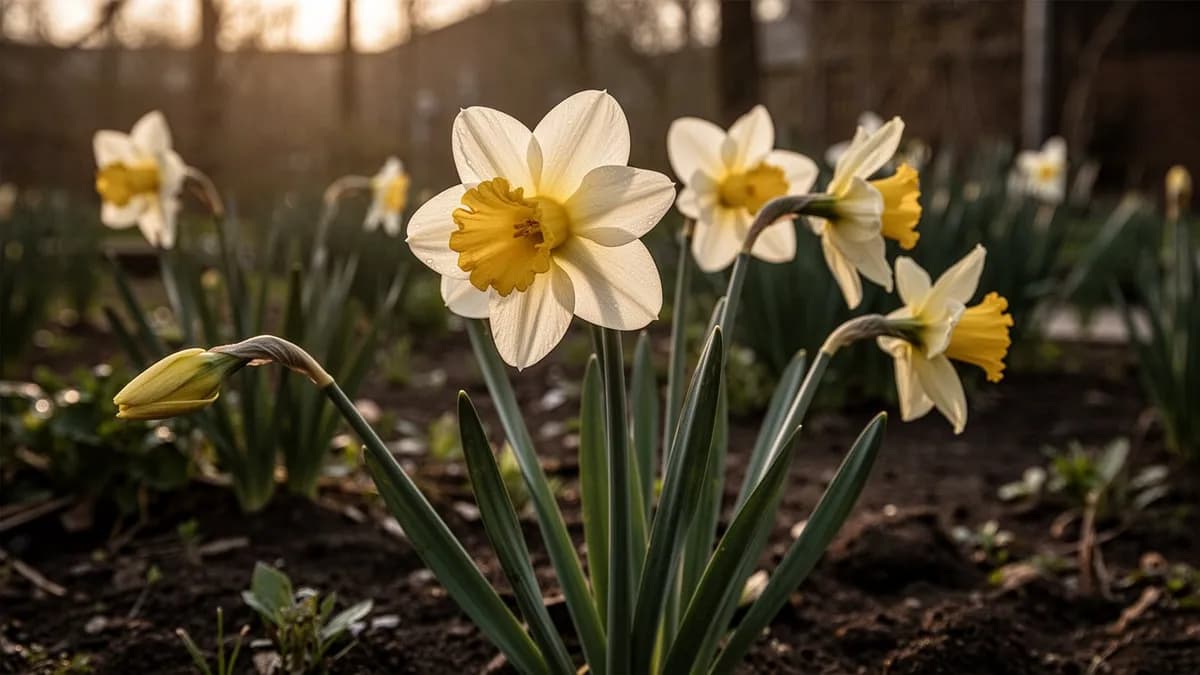
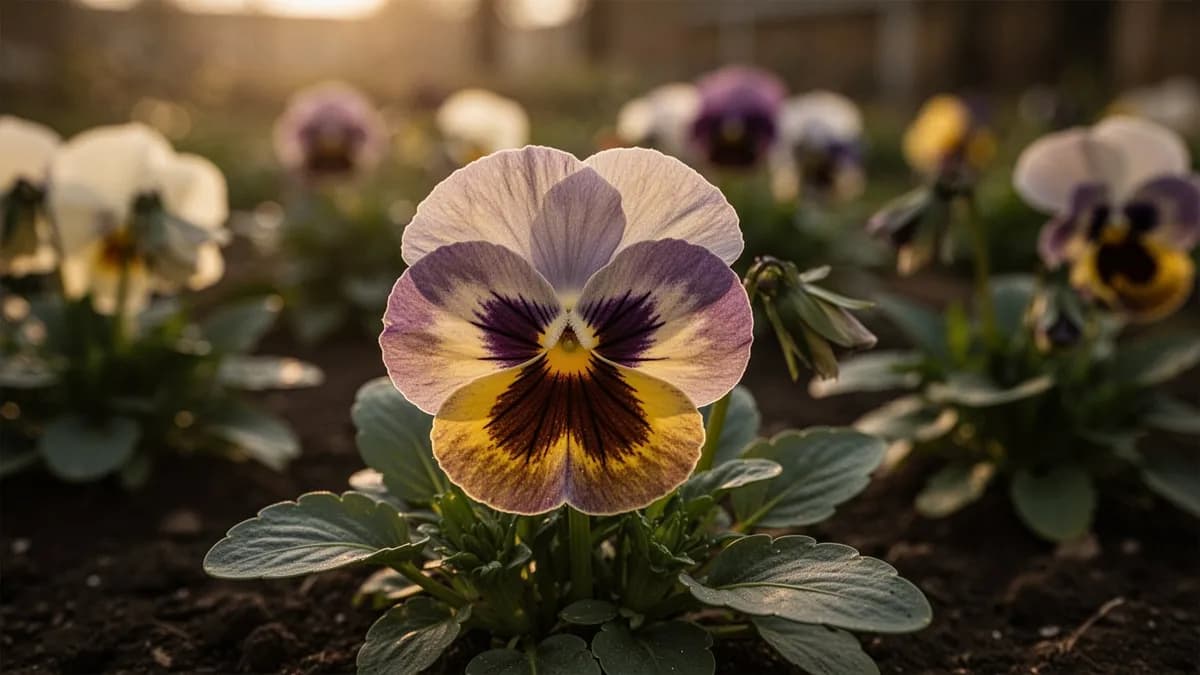
Los tulipanes combinan de forma natural con otros bulbos de primavera como narcisos, muscaris y crocus para crear una sucesión escalonada de color primaveral. Plantarlos junto a narcisos aporta protección frente a roedores, ya que los bulbos de narciso son tóxicos y disuaden a ardillas y topillos de cavar. Plante tulipanes entre vivaces como hostas, lirios de día y nepeta, cuyo follaje emergente oculta las hojas amarillentas del tulipán a medida que maduran. Las pensamientos y violas son excelentes compañeras de bajo porte para tulipanes en parterres y contenedores de primavera.
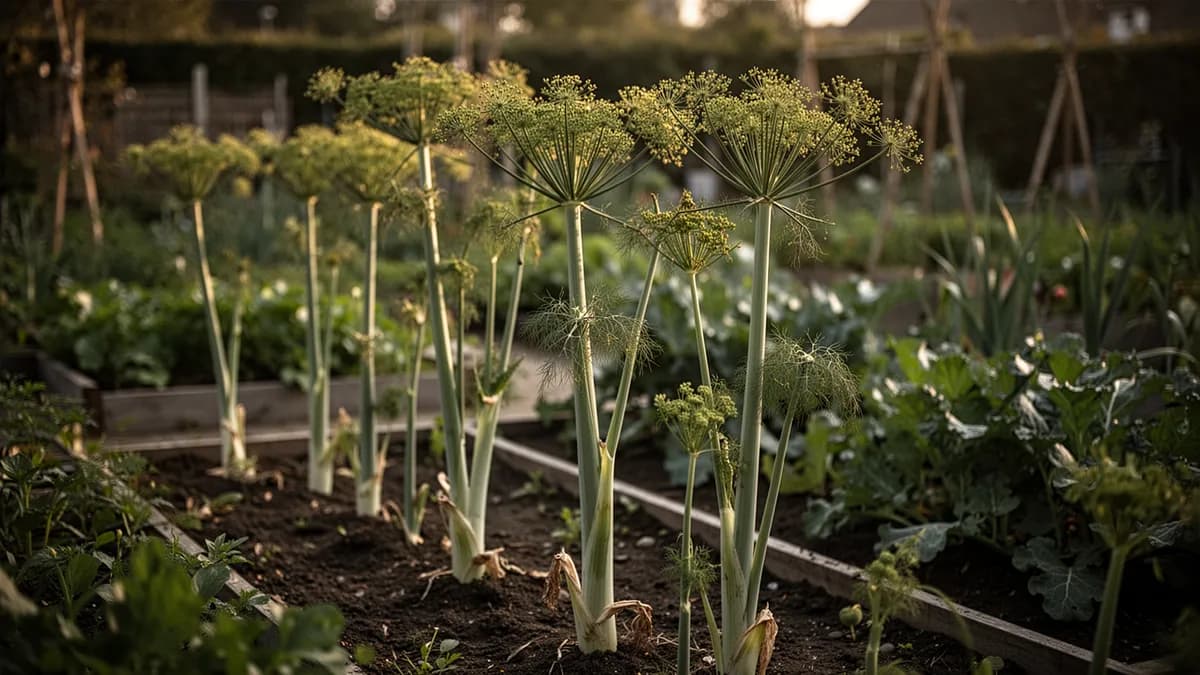
Narciso va a su lado. Hinojo no.
Saber de huerto de siempre, cotejado con la tabla real de Tulipán — prueba cualquier planta que cultives.
Prueba Tulipán en un bancal, aquí mismo
Un bancal real del planificador con Tulipán ya plantado. Toca una planta compañera para colocarla y mira cómo responde la comprobación de vecinos: verde para buenos vecinos, rojo si hay conflicto.


Guías de cultivo relacionadas
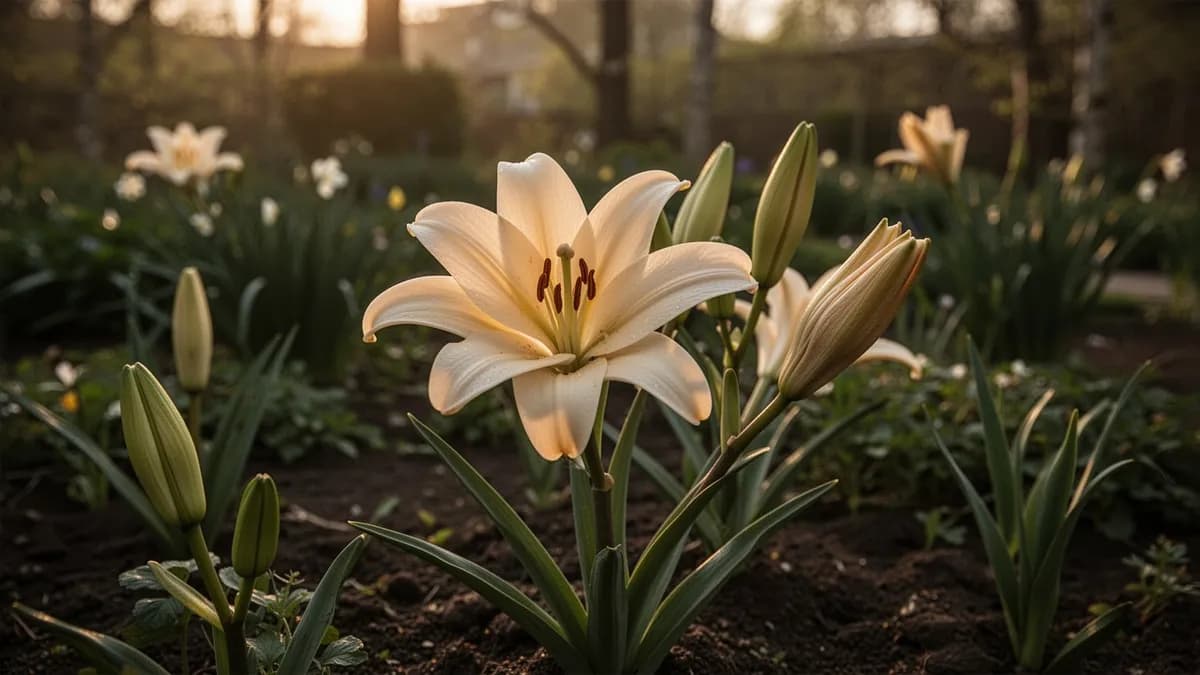
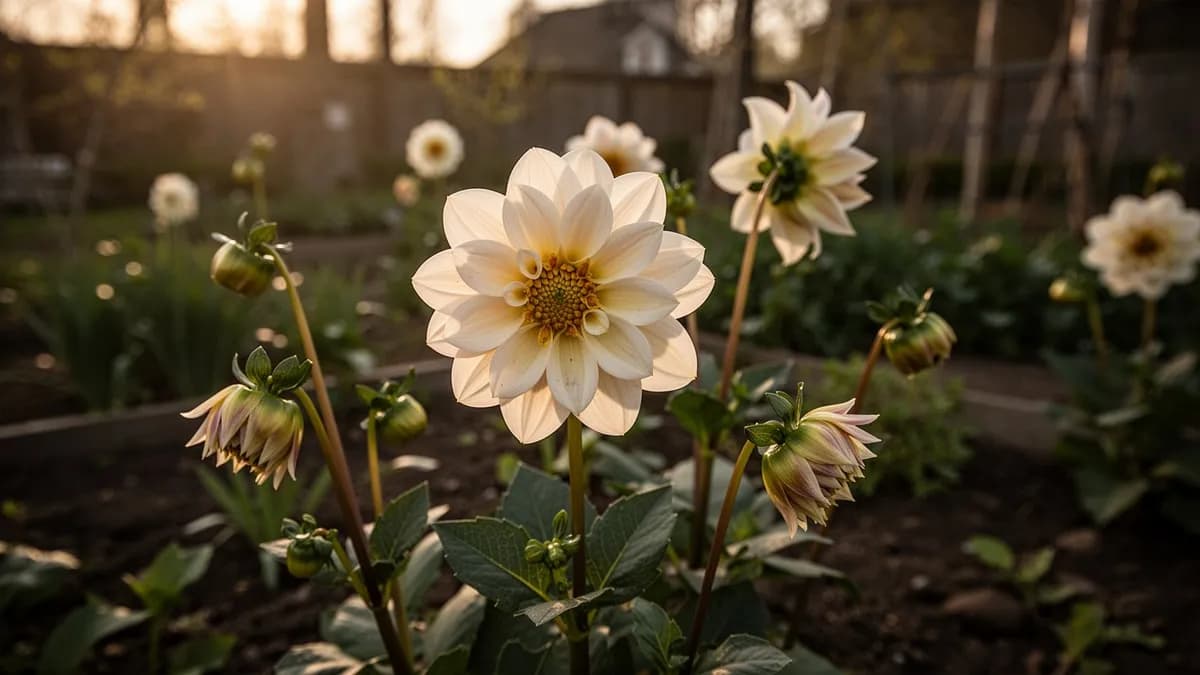
Abónalo bien
Los tulipanes requieren un suelo bien drenado con un pH de 6.0 a 7.0. El franco arenoso es ideal; en arcilla pesada, eleve los bancales o añada arena gruesa y compost para mejorar el drenaje. Incorpore harina de hueso o un fertilizante específico para bulbos en el hoyo de plantación en otoño. Aplique un fertilizante granular equilibrado cuando los brotes emerjan en primavera. Evite el estiércol fresco o los aportes altos en nitrógeno, que pueden causar podredumbre del bulbo. Una cobertura de compost en otoño aporta nutrientes de liberación lenta para el desarrollo de las raíces.
Temperatura ideal
Compatibilidad de zonas de rusticidad
De la semilla a la cosecha, etapa por etapa
Reposo del bulbo
Después de la plantación otoñal, el bulbo permanece latente en un suelo fresco. Durante este período el bulbo pasa por la vernalización, un enfriamiento necesario de 12 a 16 semanas a temperaturas entre 1 y 10 grados Celsius. El desarrollo de las raíces comienza bajo tierra aunque el bulbo parezca inactivo en la superficie.
Establecimiento de raíces
Entre dos y cuatro semanas después de plantar, el bulbo desarrolla un sistema radicular fuerte que lo ancla al suelo y comienza a absorber agua y nutrientes. Un buen establecimiento de raíces en otoño es fundamental para un crecimiento vigoroso en primavera y una buena calidad de flor.
Emergencia del brote
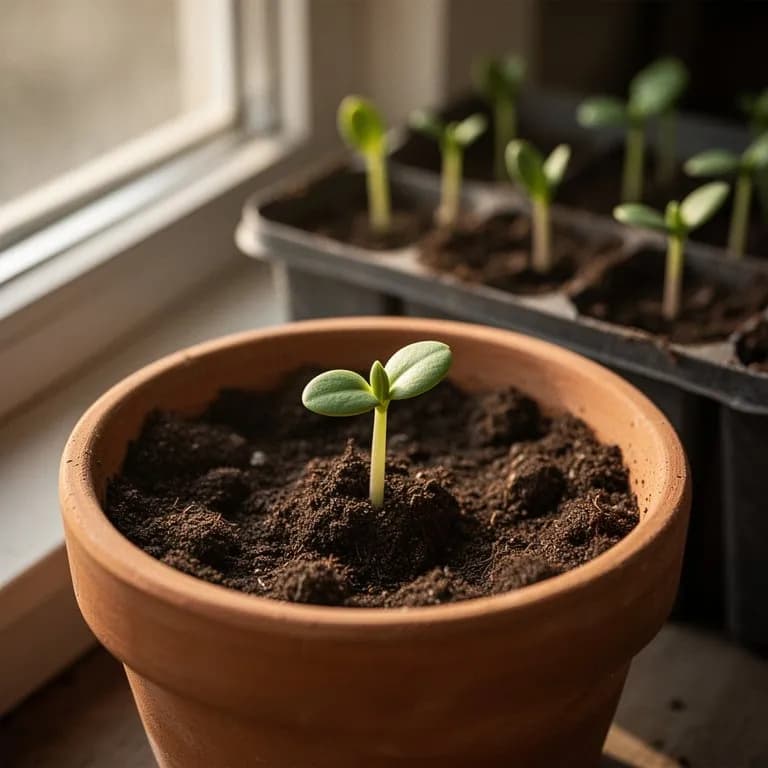
Cuando las temperaturas del suelo suben por encima de 7 grados Celsius a finales del invierno o principios de la primavera, emerge del suelo un brote verde y puntiagudo. El brote está protegido por una vaina resistente que le ayuda a abrirse paso entre el suelo compactado y el mantillo restante. Las hojas empiezan a desplegarse poco después de la emergencia.
Formación de botones
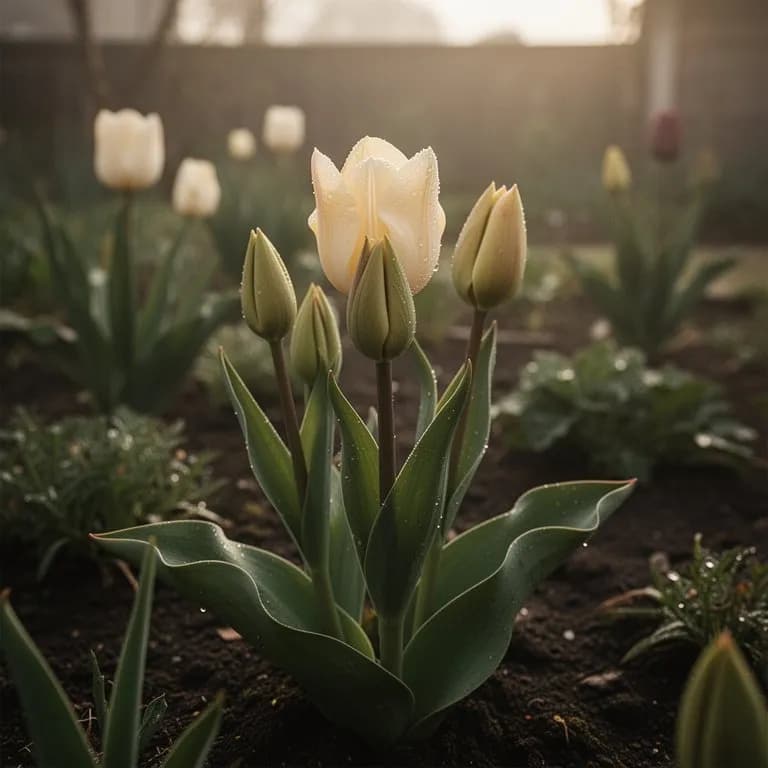
El botón floral se vuelve visible entre las hojas erectas. El tallo se alarga con rapidez durante esta fase, elevando el botón por encima del follaje. El color del botón empieza a verse a través de los sépalos verdes a medida que los pétalos se expanden en el interior.
Plena floración
La flor del tulipán se abre por completo y muestra su característica forma de copa o de cáliz. La duración de la floración depende de la temperatura y de la variedad, pero normalmente dura de siete a catorce días. Las flores se abren más con el sol cálido y se cierran parcialmente por la noche o con tiempo fresco y nublado.
Maduración del follaje
Después de florecer, las hojas continúan fotosintetizando durante cuatro a seis semanas, recargando el bulbo con energía almacenada para el año siguiente. El follaje se vuelve amarillo y se marchita gradualmente a medida que el bulbo entra en reposo estival.
Reposo estival
El bulbo descansa bajo tierra durante el calor del verano. En regiones con veranos cálidos y húmedos, los bulbos pueden deteriorarse o dividirse en bulbillos más pequeños que no florecen. Muchos jardineros en climas cálidos levantan y almacenan los bulbos en un lugar fresco y seco hasta la replantación otoñal.
Asegura un lugar con buen drenaje para evitar que el bulbo se pudra durante los meses fríos de reposo. Aplica una capa de mantillo después de que el suelo se congele para aislar los bulbos y moderar las fluctuaciones de temperatura del suelo.
Cuidar Tulipán mes a mes
Qué hacer cada mes para tu Tulipán
Octubre
Mes actualPrime planting month in most temperate regions. Plant bulbs 15 to 20 centimeters deep and 10 to 15 centimeters apart with the pointed end facing up. Water thoroughly after planting. Add bone meal to the planting hole for phosphorus.
Ten claro qué hacer en tu huerto, cada mes
Un correo al empezar cada mes: qué sembrar, plantar y hacer ahora mismo — para tu Tulipán y todo lo que crece alrededor. Más un breve curso inicial para esquivar los errores clásicos.
- Qué hacer ahora mismo
- Ajustado a tu temporada
- Curso inicial incluido
Cosechar Tulipán
Corte los tulipanes para arreglos cuando los botones estén completamente coloreados pero aún cerrados. Los tulipanes continúan abriéndose y creciendo en el jarrón, por lo que cortarlos en esta etapa ofrece la mayor duración. Corte los tallos en diagonal, dejando al menos dos hojas en la planta para alimentar el bulbo. Colóquelos en agua fresca y manténgalos alejados del calor directo y de la luz solar. Para la exhibición en el jardín, elimine las flores marchitas desprendiendo la cabeza de semilla, pero dejando intactos el tallo y el follaje para nutrir el bulbo.
se supone que plantas al comenzar el periodo — indica tu fecha real
A partir de bulbos, tubérculos o dientes
Después de la floración, cuando el follaje se haya amarilleado y se haya secado de forma natural, normalmente unas seis semanas después de florecer.
Almacenamiento y conservación
Los tulipanes frescos duran de cinco a siete días en un jarrón, creciendo y curvándose hacia la luz. Añada un centavo al agua, algo que algunos jardineros creen que ayuda a mantener los tallos rectos, y use agua fresca. Los tulipanes no se secan bien debido a sus pétalos carnosos, pero pueden prensarse con gran belleza. Para prensarlos, corte la flor por la mitad y presiónela entre papel de horno bajo libros pesados durante tres o cuatro semanas. Guarde los bulbos en reposo en bolsas de malla en un lugar fresco, seco y bien ventilado a entre 15 y 18 grados Celsius hasta la plantación otoñal.
Qué falla — y cómo solucionarlo
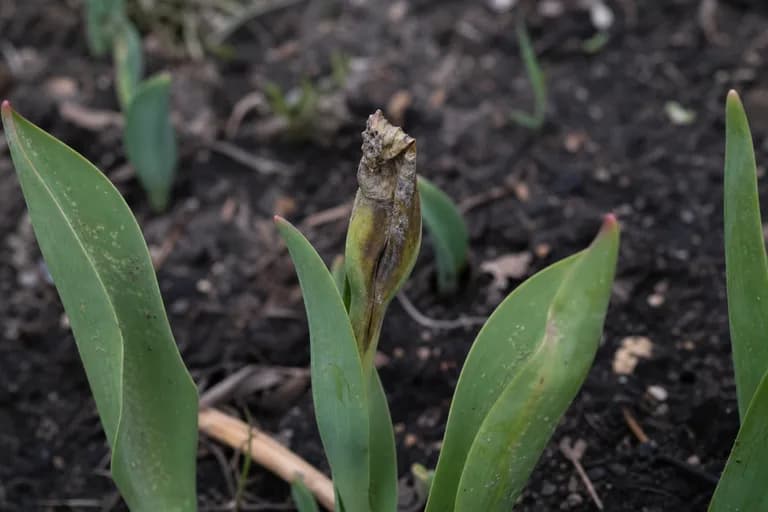
Fuego del tulipán (Botrytis tulipae)
EnfermedadBrotes emergentes quemados o retorcidos con lesiones gris parduzcas. Los botones florales pueden no abrirse o mostrar manchas marrones. En tiempo húmedo se desarrolla un moho gris y algodonoso. Se forman pequeños esclerocios negros sobre el tejido muerto.
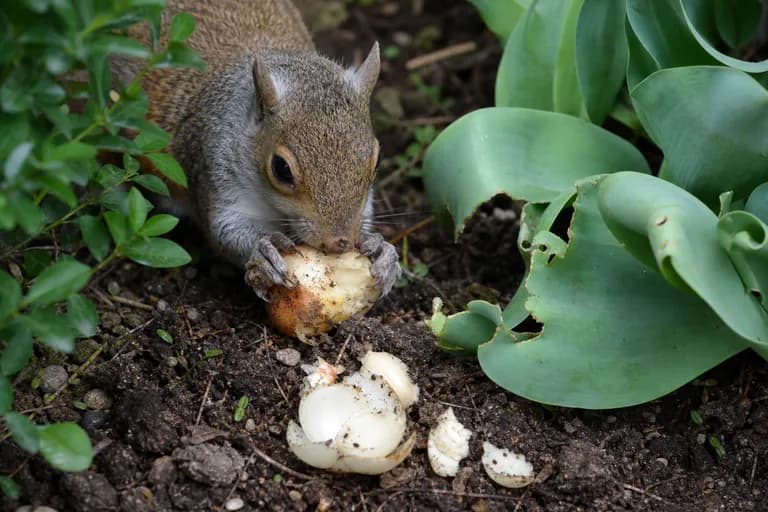
Ardillas y roedores
PlagaBulbos recién plantados desenterrados y consumidos. Los tulipanes no emergen en primavera pese a una plantación exitosa. Superficie del suelo alterada sobre las zonas de plantación.
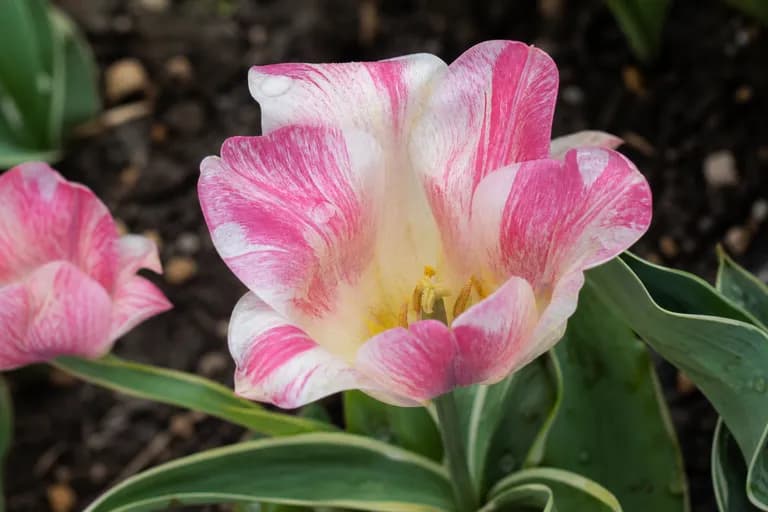
Virus del mosaico del tulipán
EnfermedadPatrones de color rayados o plumosos en los pétalos que difieren del color sólido normal. Las flores pueden ser más pequeñas de lo esperado. Las plantas se debilitan gradualmente con los años sucesivos.
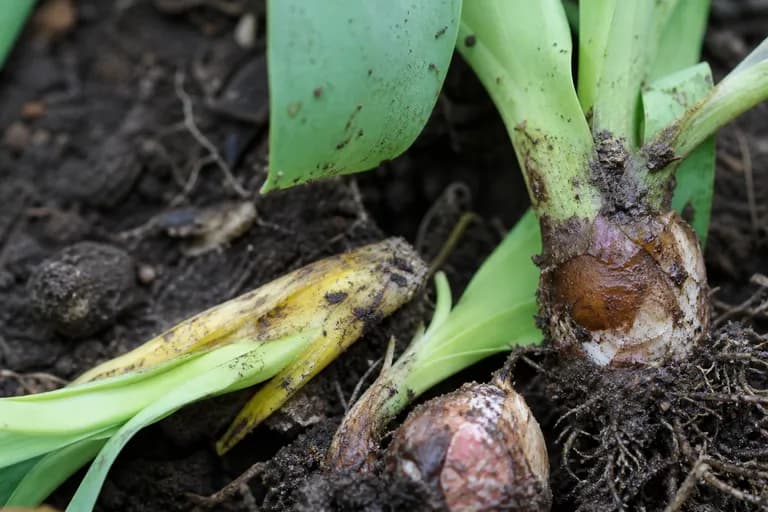
Podredumbre del bulbo (Fusarium)
EnfermedadLos bulbos no emergen o producen un crecimiento débil y amarillento. Los bulbos desenterrados muestran una podredumbre marrón y blanda, a menudo con un característico olor agrio. Puede observarse crecimiento fúngico blanco o rosado.
Solución de problemas comunes
Los tulipanes que florecen de maravilla el primer año pero decaen en las temporadas siguientes suelen ser cultivares híbridos modernos que carecen del vigor necesario para naturalizarse. Para retornos fiables, elija tulipanes de especie o híbridos Darwin. Los tulipanes ciegos, que producen follaje pero no flores, probablemente se plantaron demasiado superficiales, se almacenaron de forma incorrecta o no recibieron suficiente frío invernal. Los bulbos plantados en suelo húmedo y mal drenado son propensos a la podredumbre por Fusarium. Los ciervos y los conejos comen con gusto el follaje y las flores del tulipán, pero dejan tranquilos los narcisos.
Consejos de cultivo
- Plant tulip bulbs at a depth of three times the bulb height, typically 15 to 20 centimeters deep, to protect them from temperature swings and squirrel digging.
- Choose a site with full sun to light afternoon shade and well-drained soil. Tulips are highly susceptible to rot in heavy clay or waterlogged conditions, so amend dense soil with coarse sand or perlite before planting.
- Add a handful of bone meal or a balanced bulb fertilizer to each planting hole to provide phosphorus for strong root development during the first autumn after planting.
- Space bulbs 10 to 15 centimeters apart for a full display. For a more natural look, toss bulbs gently onto the prepared bed and plant them where they land, adjusting spacing slightly to avoid overcrowding.
- To deter squirrels and voles from digging up freshly planted bulbs, lay a piece of chicken wire flat over the planting area and cover it with a thin layer of mulch. Remove the wire in early spring before shoots emerge.
- In warm climates without reliable winter chilling, pre-chill bulbs in the refrigerator at 2 to 7 degrees Celsius for 12 to 16 weeks before planting. Keep bulbs away from ripening fruit, as ethylene gas damages the developing flower bud inside the bulb.
- Water bulbs once thoroughly after planting in autumn, then allow natural rainfall to maintain soil moisture through winter. Resume supplemental watering in spring only during dry spells, providing about 25 millimeters per week.
- After flowers fade, snap off the spent bloom just below the flower head but leave the green stem and leaves intact for at least six weeks. The foliage photosynthesizes and replenishes the bulb for the following year.
- Rotate tulip planting locations every three to four years to reduce the buildup of soilborne diseases such as tulip fire caused by the fungus Botrytis tulipae.
- For the longest vase life, cut tulip stems in the morning when buds are still closed but showing full color. Place them immediately in cool water and recut the stems at an angle every two days.
Cultiva tu mejor Tulipán — y todo lo que la rodea.
Empieza un plan gratis hoy. Diseña tus bancales, coloca tu Tulipán y deja que PlotMyGarden gestione el momento, el espaciado, las asociaciones y los recordatorios de la semilla a la cesta.
Elige tu Tulipán
Queen of Night
El tulipán más oscuro disponible, con pétalos de satén de un granate muy profundo casi negro. Una planta de contraste espectacular en borduras y arreglos. Híbrido Darwin con buen retorno perenne.
Apeldoorn
Un vigoroso híbrido Darwin con grandes flores rojo escarlata sobre tallos fuertes. Uno de los mejores tulipanes para naturalizar y establecer en borduras de jardín.
Angelique
Un tulipán doble tardío con suaves flores rosadas parecidas a peonías. Fragante y romántico, a menudo llamado tulipán peonía. Excelente para flor cortada.
Spring Green
Un tulipán viridiflora con pétalos blancos y un marcado plumaje verde. Una variedad elegante y poco común que aporta un aspecto fresco y contemporáneo al jardín.
Tulipa tarda
Un tulipán de especie con flores amarillas en forma de estrella y puntas blancas. Solo mide diez centímetros de alto y es uno de los tulipanes más fiables para naturalizar en jardines de rocas.
Tulip bulbs purchased in bulk cost between 0.15 and 0.50 USD each depending on variety, while a single stem from a florist typically costs 2 to 4 USD. A garden planting of 50 bulbs at approximately 15 USD total can produce 50 or more cut stems worth 100 to 200 USD at retail prices. Perennializing varieties such as Darwin Hybrids can return for three to five years without replanting, further reducing the annual cost per bloom. Growing your own tulips also eliminates the carbon footprint associated with commercial cut flower transport from the Netherlands or other major growing regions.
Recetas rápidas
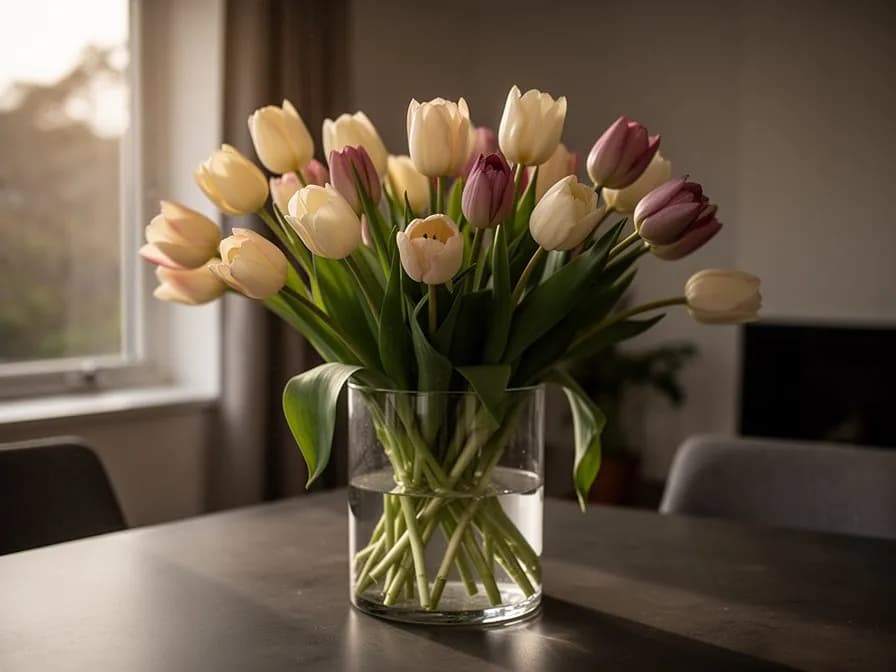
Tulip Petal Spring Salad
10 minutesA colorful spring salad featuring fresh tulip petals tossed with mixed baby greens, shaved radishes, and a light lemon vinaigrette. The petals add a mild, slightly sweet flavor and striking visual appeal to this simple seasonal dish.
8 ingredientes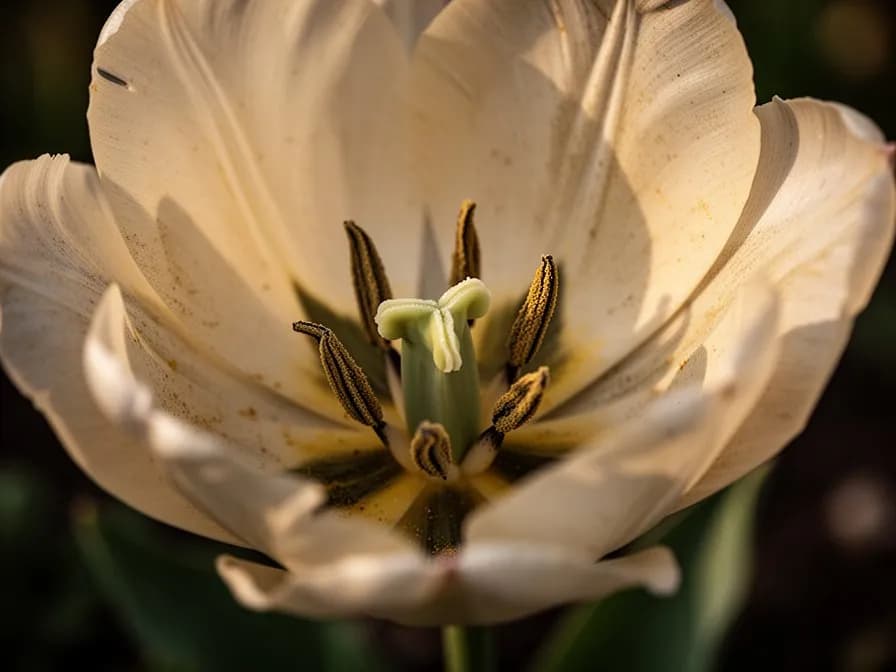
Tulip Petal Cream Cheese Appetizers
15 minutesElegant appetizer bites using tulip petals as edible cups filled with herbed cream cheese. Each petal cradles a small dollop of the creamy mixture, making a beautiful and conversation-starting spring hors d'oeuvre for garden parties.
7 ingredientes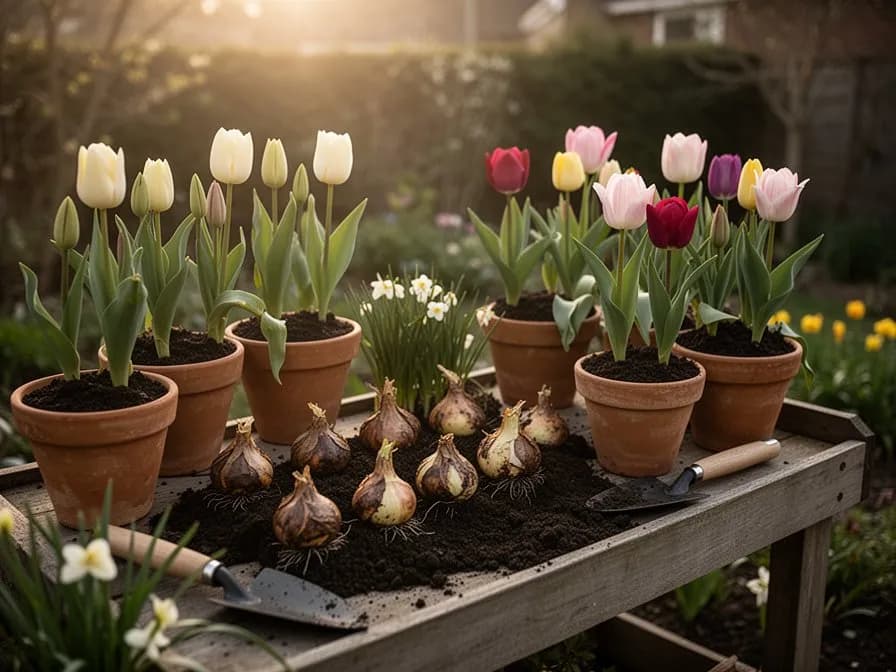
Tulip Petal Infused Syrup
20 minutes plus cooling timeA delicately floral simple syrup infused with tulip petals, perfect for drizzling over pancakes, stirring into spring cocktails, or sweetening lemonade. The petals impart a subtle fragrance and a pale tint of color to the finished syrup.
5 ingredientesQué contiene
Beneficios para la salud
- Tulip petals contain anthocyanin antioxidants, especially in red and purple varieties, which may help neutralize free radicals and support cellular health when consumed as part of a varied diet.
- The petals provide a small amount of dietary fiber that can contribute to digestive regularity when used as a garnish or salad ingredient.
- Gardening with tulips provides moderate physical activity including bending, digging, and kneeling, which supports joint flexibility, cardiovascular health, and calorie expenditure.
- The vibrant colors of tulip blooms have been shown in horticultural therapy research to elevate mood, reduce stress hormone levels, and promote feelings of well-being during the spring season.
- Working with tulip bulbs and planning seasonal displays engages cognitive functions including spatial reasoning, color coordination, and long-term planning, which may support mental sharpness.
- Spending time tending tulip gardens exposes gardeners to natural sunlight, supporting vitamin D synthesis and helping regulate circadian rhythms for improved sleep quality.
De dónde viene Tulipán
The tulip (Tulipa) traces its origins to the arid mountain ranges and steppe grasslands of Central Asia, with the greatest concentration of wild species found in the Tien Shan and Pamir-Alai mountain ranges spanning modern-day Kazakhstan, Kyrgyzstan, Uzbekistan, and Tajikistan. Wild tulips evolved to thrive in harsh continental climates with cold winters and hot dry summers, developing the bulb as a survival organ to store nutrients through extreme conditions. The earliest known cultivation of tulips began in Persia around the 10th century, where the flower was celebrated in poetry and art as a symbol of paradise. Persian gardeners selected forms with vivid colors and elegant shapes, establishing the tulip as a prized ornamental centuries before it reached Europe. The Ottoman Turks embraced the tulip with particular enthusiasm beginning in the 15th century. Sultan Suleiman the Magnificent is credited with promoting extensive tulip gardens in Constantinople, and the flower became deeply embedded in Ottoman culture, appearing in textiles, ceramics, and architectural decoration. The so-called Tulip Era of the early 1700s under Sultan Ahmed III saw elaborate nighttime tulip festivals illuminated by candles and torches in the palace gardens. Tulips arrived in Western Europe in the mid-16th century, most famously through the Flemish botanist Carolus Clusius, who received bulbs from the Ottoman ambassador to the Habsburg court. Clusius planted them at the Hortus Botanicus in Leiden in 1593, and from there the tulip captured the imagination of the Dutch. The ensuing Tulip Mania of the 1630s became one of history's earliest recorded speculative bubbles. After the crash, tulip cultivation continued steadily in the Netherlands, which today produces approximately 4.2 billion tulip bulbs annually across roughly 11,000 hectares, supplying the vast majority of the world market and cementing the tulip as an enduring symbol of Dutch horticultural excellence.
Tulipán: ¿sabías que?
Datos fascinantes sobre Tulipán
During the Dutch Golden Age in the 1630s, tulip bulb prices soared to extraordinary levels in a speculative frenzy known as Tulip Mania, with single bulbs of rare varieties reportedly trading for more than the price of a canal house in Amsterdam.
Tulipán: preguntas frecuentes
¿Cuándo debo plantar Tulipán?
¿Cuáles son buenas plantas acompañantes para Tulipán?
¿En qué zonas de rusticidad puede crecer Tulipán?
¿Cuánto sol necesita Tulipán?
¿A qué distancia debo espaciar Tulipán?
¿Qué plagas y enfermedades afectan a Tulipán?
¿Cómo almaceno Tulipán después de la cosecha?
¿Cuáles son las mejores variedades de Tulipán para cultivar?
¿Qué suelo necesita Tulipán?
Do tulips come back every year or do I need to replant them?
When is the best time to plant tulip bulbs?
Why did my tulips bloom the first year but not the second?
How do I keep squirrels from eating my tulip bulbs?
Can I grow tulips in containers or pots?
Are tulips toxic to pets?
Acabas de leer la teoría. Ahora cultívala en piloto automático.
Todo lo que hace que Tulipán sea delicado — el momento, el espaciado, las asociaciones, la ventana de cosecha — es justo lo que PlotMyGarden resuelve por ti, para cada planta de tu huerto.
Un plan que conoce tu clima
Indica tu ubicación una vez. Recibe fechas de siembra, abonado y cosecha basadas en tu última helada real y el pronóstico en vivo — sin adivinar con un sobre genérico.
De la sección “Cuándo plantar”Planificador de bancales de arrastrar y soltar
Diseña bancales sobre una cuadrícula. Cada planta encaja con su espaciado correcto y ves toda la temporada antes de gastar un céntimo en semillas.
De la sección “Cultivo”Conflictos de asociación, detectados a tiempo
Más de 200 buenas y malas combinaciones comprobadas en vivo mientras plantas — para que un error que arruine la temporada nunca llegue a la tierra.
De la sección “Asociaciones”Recordatorios que sí vas a seguir
“Riega las judías.” “Recoge hoy antes de que se pase.” Oportunos, concretos y ligados a las plantas que de verdad cultivas.
De la sección “Cosecha”Escalonado, programado
¿Quieres cosechar seis semanas en vez de seis días? Reparte tus siembras automáticamente y te avisa cuando toca el siguiente lote.
De la sección “Cuándo plantar”Un registro que se vuelve más listo
Cada cosecha que registras le enseña tu huerto. El plan del año que viene parte de lo que de verdad funcionó en tu suelo, no en un manual.
De la sección “Resumen”Planta estos junto a Tulipán
Más Bulbosas
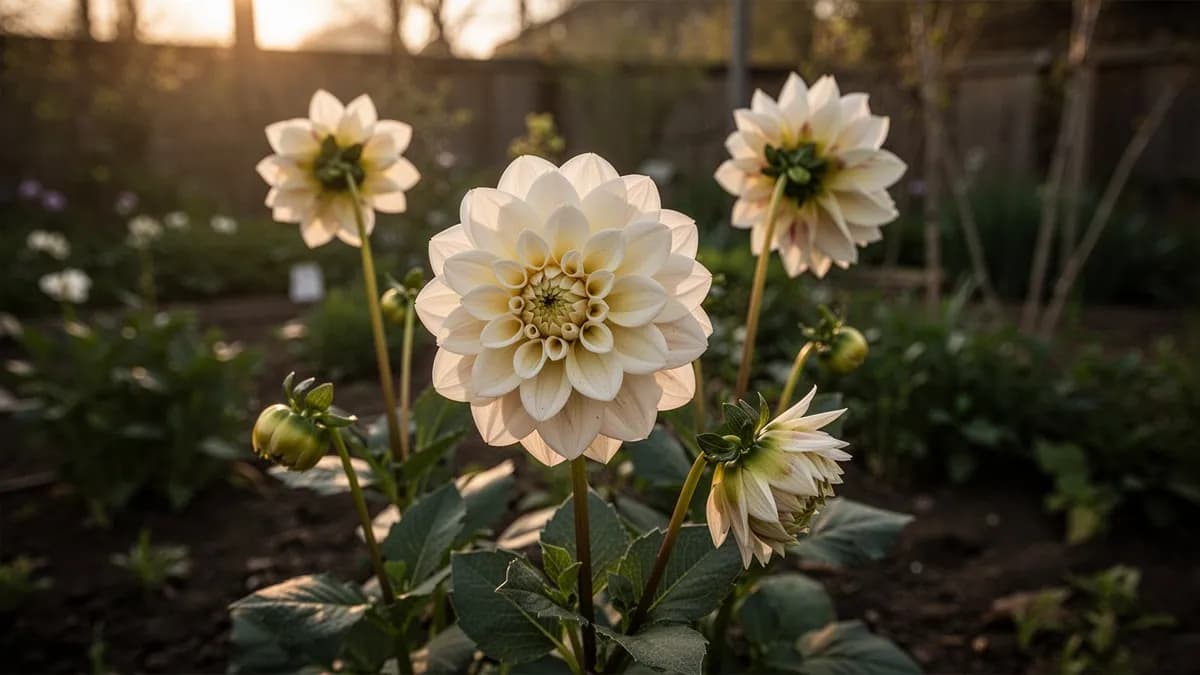
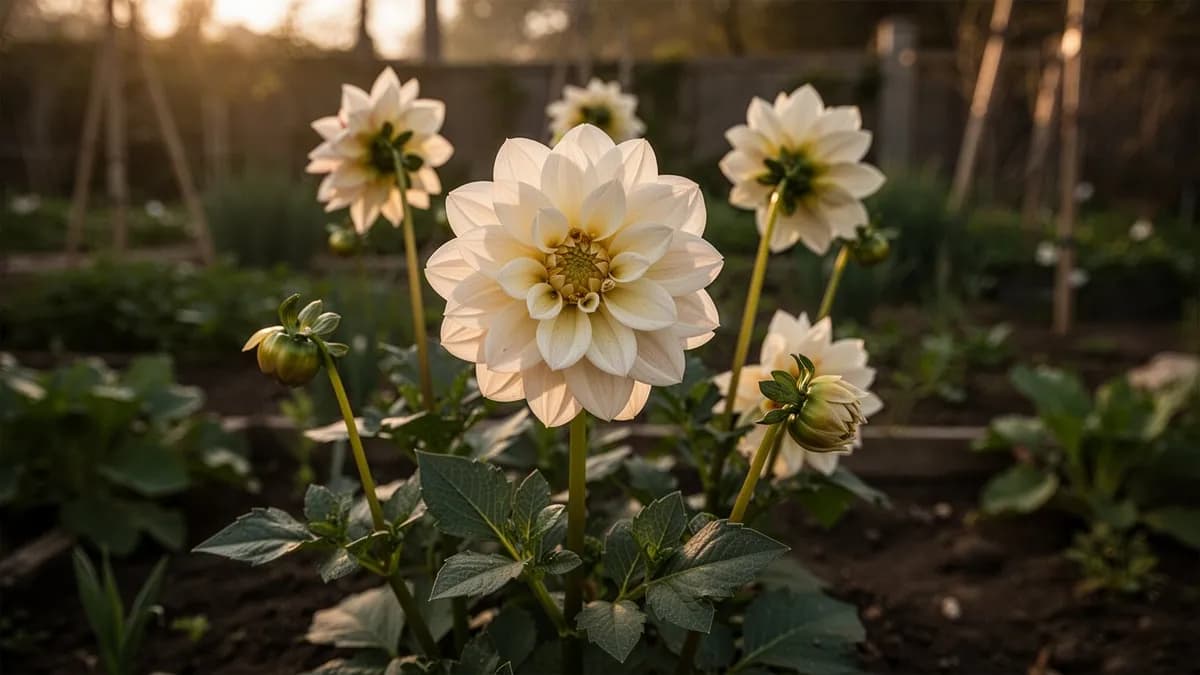
Mantén Tulipán lejos de estos
Cultiva tu mejor Tulipán — y todo lo que la rodea.
Empieza un plan gratis hoy. Diseña tus bancales, coloca tu Tulipán y deja que PlotMyGarden gestione el momento, el espaciado, las asociaciones y los recordatorios de la semilla a la cesta.