Tellerdahlie
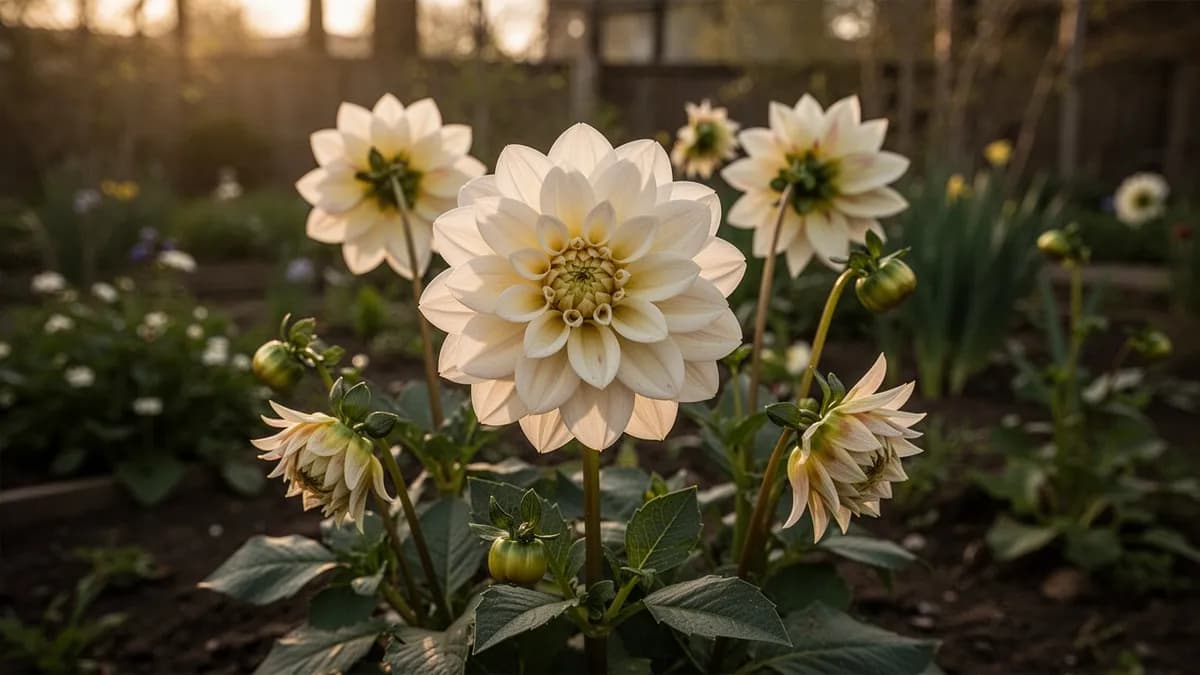
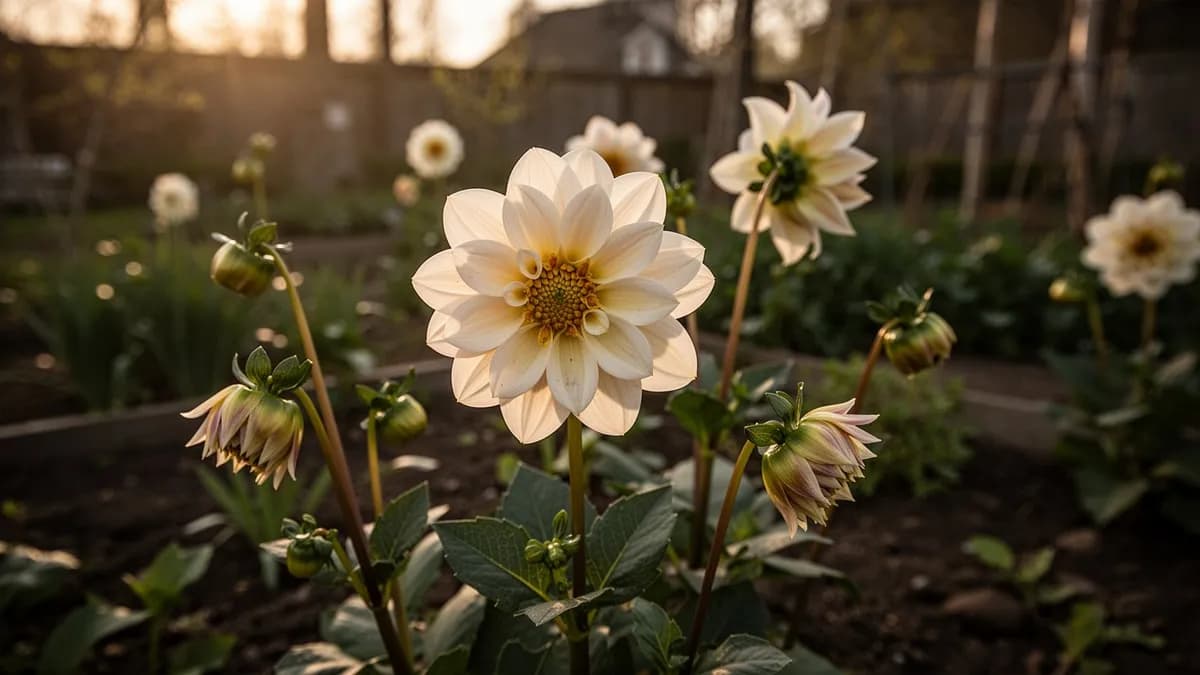
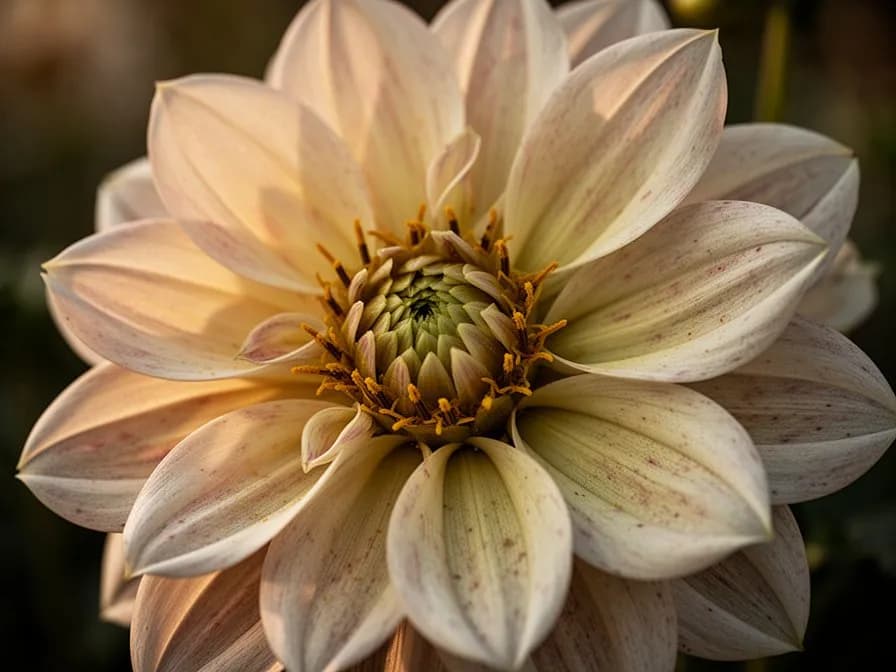
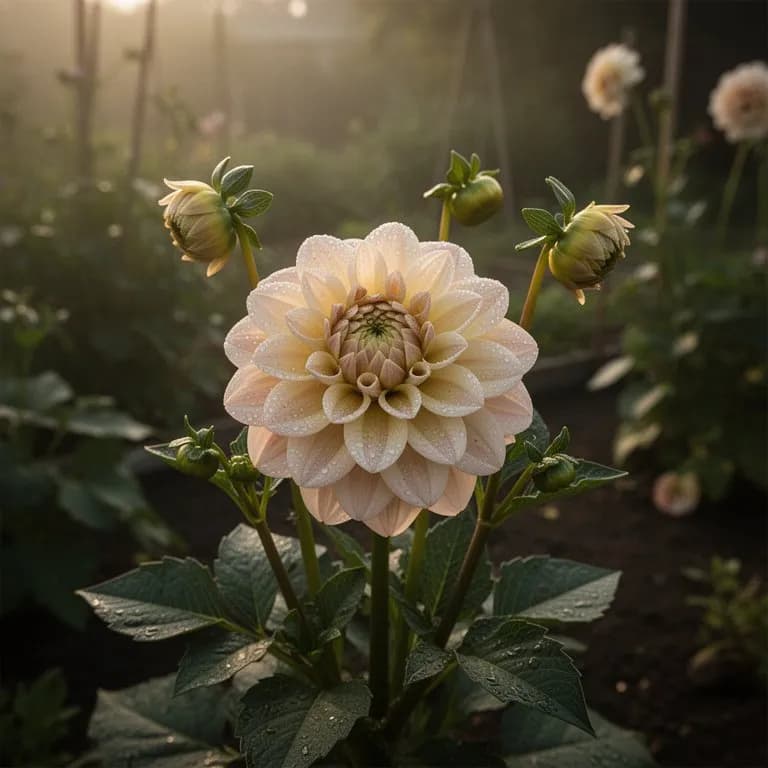
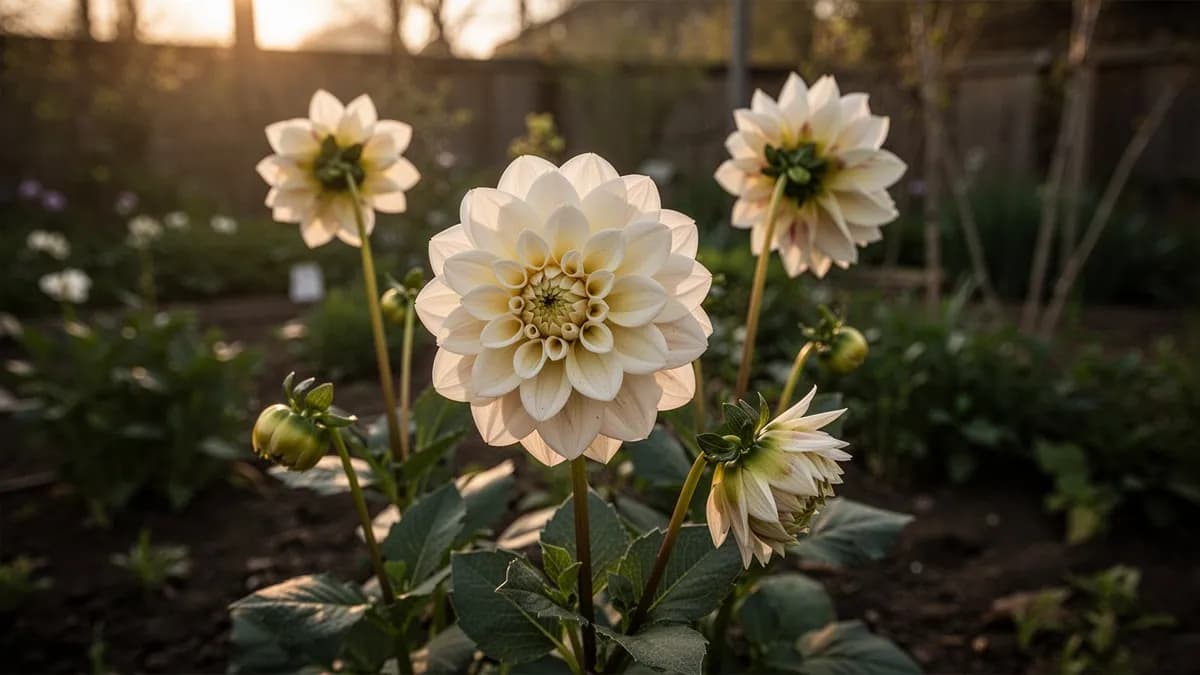
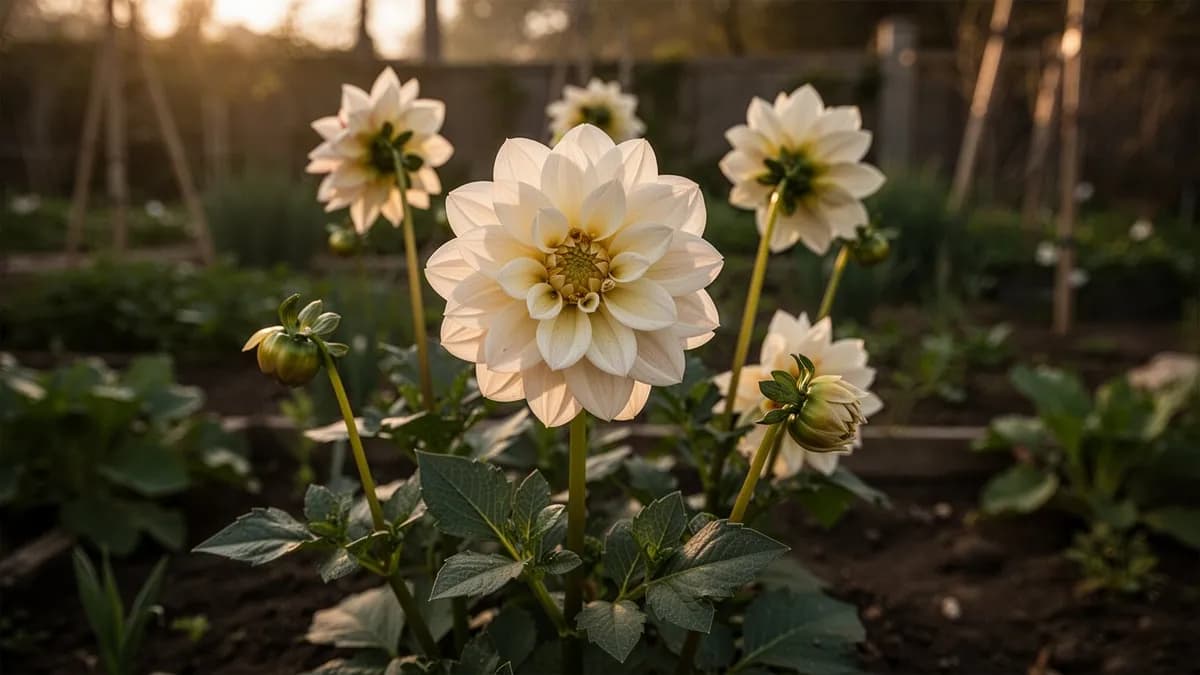
Eine atemberaubende Dahlie, die riesige Blüten von bis zu dreißig Zentimetern Durchmesser in cremig-rosé Tönen hervorbringt.





Auf dieser SeiteÜberblick
Tellerdahlie im Überblick
Eine atemberaubende Dahlie, die riesige Blüten von bis zu dreißig Zentimetern Durchmesser in cremig-rosé Tönen hervorbringt. Tellerdahlien benötigen stabile Stützen und nährstoffreichen, gut durchlässigen Boden mit regelmäßiger Düngung, um ihre massiven Blüten zu tragen. Kneifen Sie den Mitteltrieb aus und entfernen Sie Seitenknospen, um weniger, aber größere Blüten zu fördern.
Wann Tellerdahlie pflanzen
Tellerdahlien werden durch Knollenteilung oder Stecklinge vermehrt, nicht durch Samen (aus Samen gezogene Pflanzen sind sehr variabel). Teilen Sie die Knollen im Frühling – jede Teilung muss einen Abschnitt des Wurzelhalses mit mindestens einem sichtbaren Auge (Wachstumsknospe) aufweisen. Nehmen Sie im zeitigen Frühling Kopfstecklinge von austreibenden Knollen: Schneiden Sie 8 cm lange Triebe ab, entfernen Sie die unteren Blätter, tauchen Sie sie in Bewurzelungshormon und stecken Sie sie in feuchtes Perlit mit Bodenwärme. Die Stecklinge bewurzeln in 2–3 Wochen.
Dein Tellerdahlie-Jahr
Abgestimmt auf Zone 7 · typische Saison · Frost geht um den 2. Apr. und kehrt um den 1. Nov. zurück
Tellerdahlie Apr – Mai pflanzen, Jul – Okt ernten. Beachte die Pflanzmethoden unten und wähle dein Klima für passende Zeiträume.
So baust du Tellerdahlie an
Tellerdahlien sind die unbestrittenen Königinnen des Spätsommergartens und bringen atemberaubende Blüten von bis zu 30 cm Durchmesser hervor, die Besucher stets in Staunen versetzen. Mit einer Höhe von 120–150 cm benötigen diese wüchsigen Pflanzen nährstoffreichen Boden, regelmäßige Düngung und stabile Stützen, um ihre enormen Blütenköpfe zu tragen. In kalten Klimazonen müssen die Knollen nach dem ersten Frost ausgegraben und über den Winter eingelagert werden.
Pflanzen Sie die Knollen im Frühling nach dem letzten Frost 10–15 cm tief in nährstoffreichen, gut durchlässigen Boden in voller Sonne. Setzen Sie zum Pflanzzeitpunkt einen stabilen Stützpfahl, um spätere Beschädigungen der Knollen zu vermeiden. Gießen Sie sparsam, bis die Triebe erscheinen, und steigern Sie dann die Wassergabe mit fortschreitendem Wachstum. Düngen Sie alle zwei Wochen mit einem kaliumreichen Flüssigdünger, sobald sich Knospen bilden.
Kneifen Sie die zentrale Triebspitze aus, wenn die Pflanze eine Höhe von 30 cm erreicht hat, um die Verzweigung und mehr Blüten zu fördern. Für die größten Einzelblüten entfernen Sie die Seitenknospen an jedem Stiel und lenken so die gesamte Energie in die Endblüte. Entfernen Sie regelmäßig verblühte Blüten, um eine kontinuierliche Blüte vom Hochsommer bis zum ersten Frost aufrechtzuerhalten.
3 Pflanzen passen in ein Beet von 120 × 240 cm
Tellerdahlie braucht 75 cm Platz pro Pflanze. Der Planer hält diesen Abstand für dich ein — jede Pflanze, jedes Beet.
Die besten Nachbarn für Tellerdahlie
Tellerdahlien setzen dramatische Akzente in Staudenrabatten neben Zinnien, Sonnenblumen und Ziergräsern. Ihre spätblühenden Blüten füllen die Lücke zwischen Sommerstauden und Herbstchrysanthemen. Pflanzen Sie niedrig wachsende Einjährige zu ihren Füßen, um kahle Stiele zu kaschieren. Die auffälligen Blüten harmonieren eindrucksvoll mit feinstrukturierten Ziergräsern wie Miscanthus.
Dahlie gehört daneben.
Altes Gärtnerwissen, geprüft an der echten Nachbartabelle von Tellerdahlie — teste jede Pflanze, die du anbaust.
Probiere Tellerdahlie direkt hier im Beet
Ein echtes Planer-Beet, Tellerdahlie steht schon drin. Tippe einen Begleiter an, platziere ihn und sieh, wie die Nachbarschaftsprüfung antwortet — grün für gute Nachbarn, rot bei Streit.


Passende Anbau-Ratgeber
Richtig düngen
Tellerdahlien sind Starkzehrer und benötigen nährstoffreichen, fruchtbaren, gut durchlässigen Boden mit einem pH-Wert von 6,0–7,5. Arbeiten Sie großzügig Kompost und ausgewogenen Volldünger vor dem Pflanzen ein. Düngen Sie alle zwei Wochen mit kaliumreichem Flüssigdünger von der Knospenbildung bis zur Blüte. Vermeiden Sie übermäßigen Stickstoff, der Laubwachstum auf Kosten der Blüten fördert. Mulchen Sie, um Feuchtigkeit zu bewahren und die Wurzeln kühl zu halten.
Ideale Temperatur
Winterhärtezone-Kompatibilität
Von der Saat zur Ernte, Schritt für Schritt
Knollenpflanzung
Die Knollen werden horizontal 10–15 cm tief gepflanzt, nachdem alle Frostgefahr vorüber ist und die Bodentemperaturen mindestens 15 °C erreichen. Die Knolle ruht 1–3 Wochen unterirdisch, während sich Feinwurzeln am Knollenkörper entwickeln. Es wird nicht gegossen, bis Triebe erscheinen, da übermäßige Feuchtigkeit an ruhenden Knollen Fäulnis verursachen kann. Das Wachstumsauge am Wurzelhals beginnt langsam zu schwellen und nach oben zu drängen.
Triebaustrieb und frühes Wachstum
Grüne oder violett getönte Triebe durchbrechen die Bodenoberfläche und wachsen schnell, wobei sie die ersten Sätze gefiederter Blätter bilden. Die Stiele sind in diesem Stadium hohl und brüchig. Das Wurzelsystem breitet sich unterirdisch aggressiv aus, und die ursprüngliche Knolle beginnt neue Speicherwurzeln zu bilden. Das Wachstum beschleunigt sich bei warmen Bedingungen dramatisch, wobei die Triebe 5–10 cm pro Woche zulegen.
Vegetatives Wachstum und Verzweigung
Die Pflanzen wachsen kräftig und erreichen 90–150 cm Höhe mit mehreren verzweigten Stielen, die mit tief geteiltem, gefiedertem Laub bedeckt sind. Tellerdahliensorten gehören zu den höchsten Dahlien, mit dicken hohlen Stielen, die durchgehende Stützung erfordern. Die Pflanze baut beträchtliche Kohlenhydratreserven in ihrem wachsenden unterirdischen Knollenklumpen auf. Das Blätterdach wird dicht genug, um die meisten Unkräuter rund um die Basis zu beschatten.
Knospenbildung
Rundliche Knospen bilden sich an den Enden jedes verzweigten Stiels. Tellerdahlien entwickeln typischerweise eine zentrale Knospe, flankiert von zwei kleineren Seitenknospen an jeder Stielspitze. Die Knospen schwellen über 2–3 Wochen an, wobei die eng gepackten Blütenblätter in einer präzisen mathematischen Spirale nach der Fibonacci-Folge angeordnet sind. Die zuerst gebildeten Knospen werden die größten Blüten hervorbringen.
Blüte und Hauptblütezeit
Gewaltige Blüten öffnen sich über 3–5 Tage und erreichen 20–30 cm oder mehr im Durchmesser. Jede einzelne Blüte besteht aus Hunderten von Zungenblüten, die in konzentrischen Ringen angeordnet sind. Tellerdahlien erreichen ihre Hauptblütezeit im Spätsommer und bringen bis zum ersten starken Frost kontinuierlich neue Blüten hervor. Die Pflanze kann bei guter Pflege und regelmäßigem Ausputzen 10–25 große Blüten während der Saison hervorbringen.
Absterben und Knollenlagerung
Nach dem ersten tödlichen Frost, der das Laub schwärzt, stirbt der oberirdische Wuchs vollständig ab. Unterirdisch hat sich der Knollenklumpen während der Wachstumsperiode erheblich vermehrt, wobei jede ursprüngliche Knolle 5–15 neue Tochterknollen hervorgebracht hat. In den Zonen 8 und wärmer können die Knollen mit einer dicken Mulchschicht im Boden überwintern. In kälteren Zonen müssen die Knollen ausgegraben, nachgehärtet und eingelagert werden, um den Winter zu überstehen.
Gießen Sie die Knollen beim Pflanzen nicht – warten Sie, bis grüne Triebe über der Bodenoberfläche erscheinen. Verfrühtes Gießen ist die häufigste Ursache für Knollenfäule. Setzen Sie zum Pflanzzeitpunkt einen stabilen Stützpfahl, um spätere Beschädigungen der Knolle zu vermeiden.
Tellerdahlie Monat für Monat pflegen
Was du jeden Monat für deine Tellerdahlie tun solltest
Oktober
Aktueller MonatDie Blüte setzt sich bis zum ersten starken Frost fort. In Zone 7 und kälter bereiten Sie das Ausgraben der Knollen vor, nachdem der Frost das Laub geschwärzt hat. Lassen Sie die Knollen 1–2 Wochen nach dem ersten Frost im Boden nachhärten. Schneiden Sie die Stiele auf 10 cm zurück, bevor Sie die Knollenklumpen vorsichtig mit einer Grabegabel ausgraben.
Immer wissen, was jetzt im Garten zu tun ist
Eine E-Mail zum Monatsanfang: was du jetzt säen, pflanzen und anpacken solltest — für deine Tellerdahlie und alles, was drumherum wächst. Dazu ein kurzer Startkurs, der dich vor den klassischen Fehlern bewahrt.
- Was jetzt zu tun ist
- Passend zu deiner Saison
- Startkurs inklusive
Tellerdahlie ernten
Schneiden Sie Tellerdahlien, wenn die Blüten zu drei Vierteln bis vollständig geöffnet sind. Schneiden Sie am frühen Morgen mit langen Stielen und stellen Sie sie sofort in heißes Wasser (60 °C) für 30 Sekunden, dann in tiefes kühles Wasser zum Konditionieren. Diese Heißwasserbehandlung verlängert die Vasenhaltbarkeit dramatisch auf 5–7 Tage. Entfernen Sie alles Laub unterhalb der Wasserlinie.
angenommen, du pflanzt zu Beginn des Zeitraums — trage dein tatsächliches Datum ein
Aus Zwiebeln, Knollen oder Zehen
Ernte Tellerdahlie zügig, dann trägt die Pflanze weiter.
Lagerung & Konservierung
Nach dem ersten tödlichen Frost, der das Laub schwärzt, schneiden Sie die Stiele auf 15 cm über dem Boden zurück. Graben Sie die Knollen vorsichtig mit einer Grabegabel aus, schütteln Sie überschüssige Erde ab und lassen Sie sie einen Tag trocknen. Lagern Sie sie in Kisten mit leicht feuchtem Vermiculit, Torf oder Zeitungspapier an einem kühlen (5–8 °C), frostfreien Ort. Kontrollieren Sie die Knollen monatlich über den Winter und entsorgen Sie faulende Exemplare. Beschriften Sie die Sorten deutlich. Pflanzen Sie im Frühling nach dem letzten Frost wieder ein.
Was schiefgeht — und die Lösung
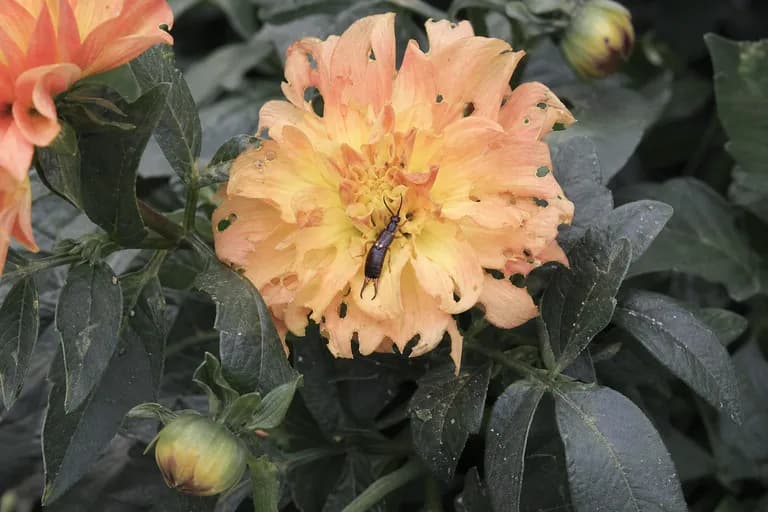
Ohrwürmer
SchädlingZerfranste Löcher in den Blütenblättern und Schäden an den Blütenzentren, besonders auffällig bei hellen Blüten.
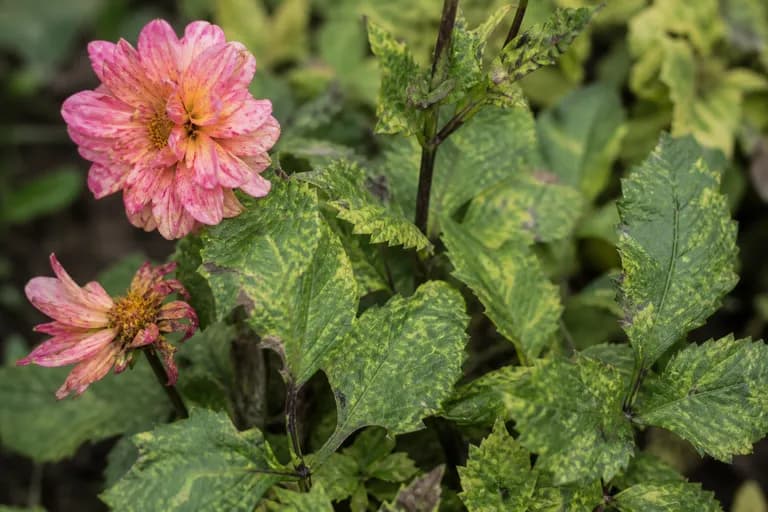
Dahlien-Mosaikvirus
KrankheitVergilbte, verformte Blätter mit Mosaikmuster. Verkümmertes Wachstum und schlechte Blüte. Wird durch Blattläuse übertragen.
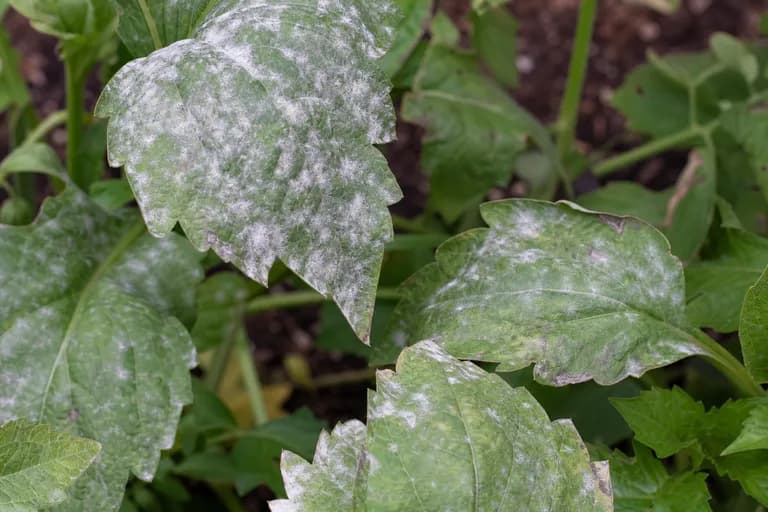
Echter Mehltau
KrankheitWeißer, pudriger Belag auf den Blättern im Spätsommer. Häufig, richtet aber bei diesen wüchsigen Pflanzen selten ernsthafte Schäden an.
Fehlerbehebung bei häufigen Problemen
Die größten Herausforderungen sind das Stützen (ungestützte Stiele knicken unter dem Blütengewicht ein) und die Knollenlagerung über den Winter. Setzen Sie stabile Stützen zum Pflanzzeitpunkt. Ohrwurmschäden an Blüten sind häufig; verwenden Sie Fallen. Ausbleibende Blüte deutet oft auf zu viel Stickstoff oder unzureichendes Sonnenlicht hin. In sehr heißen Klimazonen können Dahlien während Hitzewellen aufhören zu blühen; sie nehmen die Blüte wieder auf, wenn die Temperaturen sinken.
Anbautipps
- Gießen Sie Dahlienknollen beim Pflanzen niemals – warten Sie, bis grüne Triebe 10–15 cm über dem Boden erscheinen. Das Gießen ruhender Knollen vor der Bildung aktiver Wurzeln ist die häufigste Ursache für Knollenfäule und den Totalverlust der Pflanze im Frühling.
- Kneifen Sie die zentrale Triebspitze aus, wenn die Pflanzen 30 cm Höhe mit 3–4 Blattpaaren erreicht haben. Diese einzige Maßnahme zwingt die Pflanze, sich in mehrere Blütenstiele zu verzweigen und kann Ihre Blütenanzahl über die Saison potenziell verdoppeln oder verdreifachen.
- Setzen Sie Stützpfähle zum Pflanzzeitpunkt, nicht nachdem die Pflanze gewachsen ist. Tellerdahlien mit ihren gewaltigen Blüten sind extrem kopflastig und brechen bei Wind oder Regen ohne Stützung ab. Verwenden Sie 150–180 cm stabile Pfähle oder ein Korralsystem mit Pfählen und horizontaler Schnur.
- Düngen Sie mit einem stickstoffarmen Dünger wie 5-10-10 oder 10-20-20, sobald sich Knospen bilden. Hoher Stickstoffgehalt produziert üppiges Laub auf Kosten der Blüten. Wechseln Sie im Hochsommer zu einem blütenfördernden Dünger und düngen Sie alle zwei Wochen während der Hauptblütezeit weiter.
- Entfernen Sie für ausstellungstaugliche Blüten die beiden kleineren Seitenknospen, die sich neben der zentralen Endknospe an jeder Stielspitze bilden. Dies lenkt die gesamte Energie der Pflanze darauf, eine enorme Blüte pro Stiel hervorzubringen, statt drei kleinerer.
- Gießen Sie tiefgründig an der Pflanzenbasis, niemals über Kopf. Tellerdahlien sind anfällig für Echten Mehltau und Botrytis, die beide auf nassem Laub gedeihen. Tropfbewässerung oder Sickerrohre sind ideal. Geben Sie während des aktiven Wachstums 2,5–5 cm Wasser pro Woche.
- Mulchen Sie reichlich mit 7–10 cm organischem Material wie Stroh oder gehackter Rinde, um Feuchtigkeit zu bewahren, Unkraut zu unterdrücken und die Wurzelzontemperatur bei heißem Wetter kühl zu halten – Dahlien gedeihen schlecht, wenn die Bodentemperaturen 27 °C überschreiten.
- Entfernen Sie verblühte Blüten sofort, indem Sie den Stiel bis zu einem kräftigen Seitentrieb zurückschneiden. Dies verhindert, dass die Pflanze Energie in die Samenproduktion umleitet, und regt die kontinuierliche Bildung neuer Knospen bis zum Frostende der Saison an.
- Schützen Sie vor Schnecken und Ohrwürmern, den beiden schädlichsten Schädlingen für Dahlien. Schnecken fressen junge Triebe auf Bodenniveau ab, während Ohrwürmer sich in öffnenden Knospen verstecken und Blütenblattränder anfressen. Verwenden Sie Bio-Schneckenkorn und fangen Sie Ohrwürmer mit umgedrehten, strohgefüllten Töpfen auf Stäben.
- Graben und lagern Sie Knollen in Zone 7 und kälter, nachdem der Frost das Laub abgetötet hat. Warten Sie 1–2 Wochen nach dem ersten tödlichen Frost, bevor Sie graben, damit die Knollenschalen sich festigen können. Lagern Sie in kaum feuchtem Torfmoos oder Vermiculit bei 4–10 °C an einem dunklen Ort – eine Garage, ein Keller oder ein Erdkeller ist ideal.
Bau deine beste Tellerdahlie an — und alles drumherum.
Starte heute kostenlos. Lege deine Beete an, setze deine Tellerdahlie ein und lass PlotMyGarden Timing, Abstände, Begleiter und Erinnerungen von der Saat bis zum Erntekorb übernehmen.
Finde deine Tellerdahlie
Dahlia 'Cafe au Lait'
Die beliebteste Tellerdahlie mit enormen cremig-rosé Blüten. Ein Social-Media-Phänomen und Liebling der Hochzeitsfloristik.
Dahlia 'Emory Paul'
Gewaltige rosarosafarbene Blüten von bis zu 35 cm Durchmesser – eine der größten Dahlien überhaupt.
Dahlia 'Kelvin Floodlight'
Leuchtend goldgelbe Tellerblüten an kräftigen Stielen. Eine bewährte Ausstellungssorte mit durchgehend riesigen Blüten.
Tellerdahlienblüten werden bei Floristen und auf Wochenmärkten für 5–12 € pro einzelnem Stiel verkauft, wobei Premiumsorten wie Cafe au Lait während der Hochzeitssaison noch höhere Preise erzielen. Eine einzelne Pflanze, die 15–25 Blüten pro Saison hervorbringt, entspricht einem Schnittblumenwert von 75–250 € bei einer Knolleninvestition von 6–15 €. Da sich die Knollen jedes Jahr vermehren, kann ein kleiner Anfangskauf von 3–5 Knollen innerhalb von zwei Saisons ohne zusätzliche Kosten zu einer Sammlung von 30–50 Knollen heranwachsen und so eine im Wesentlichen sich selbst erhaltende Quelle für Premium-Schnittblumen Jahr für Jahr schaffen.
Schnelle Rezepte
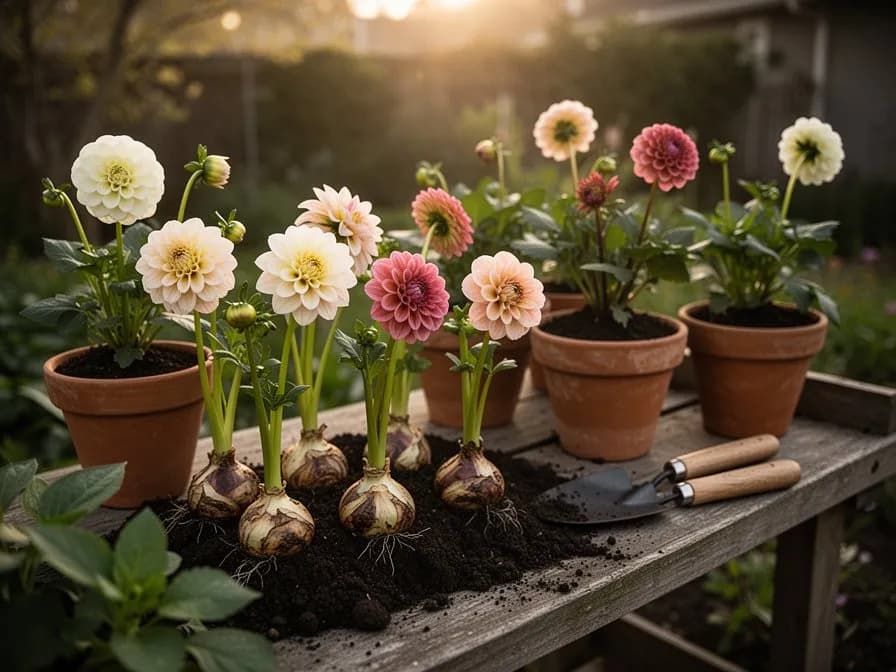
Dahlienblüten-Konfetti-Salat
15 Min.Frische Dahlienblütenblätter verleihen einem einfachen Gartensalat lebhafte Farbe und einen milden, leicht süßen Biss. Tellerdahlien liefern genug Blütenblätter von einer einzigen Blüte, um eine ganze Schüssel zu garnieren. Verwenden Sie nur Blütenblätter von unbehandelten, biologisch angebauten Pflanzen.
7 ZutatenGeröstete Dahlienknollen-Chips
15 Min. Vorbereitung + 25 Min. RöstenDünn geschnittene Dahlienknollen, goldbraun und knusprig geröstet, sind eine einzigartige Alternative zu Kartoffelchips. Die Knollen haben einen milden, leicht süßen Geschmack, der an Jicama oder Wasserkastanie mit erdigen Untertönen erinnert. Am besten aus frischen Knollen zubereitet, die im Herbst geerntet wurden.
6 ZutatenKandierte Dahlienblütenblätter
30 Min. Vorbereitung + 2 Stunden TrocknungEinzelne Dahlienblütenblätter, mit Eiweiß bestrichen und mit feinem Zucker bestäubt, ergeben funkelnde essbare Dekorationen für Kuchen, Desserts und Cocktails. Die enormen Blütenblätter der Tellerdahliensorten sind ideal für diese Technik und ergeben dramatische kristallisierte Garnierungen.
5 ZutatenWas drinsteckt
Gesundheitsvorteile
- Dahlienknollen enthalten Inulin, eine präbiotische lösliche Faser, die nützliche Bifidobakterien und Laktobazillen im Darm nährt, die Verdauungsgesundheit, regelmäßige Darmfunktion und verbesserte Mineralstoffaufnahme unterstützt – insbesondere Kalzium und Magnesium.
- Das Inulin in Dahlienknollen hat einen niedrigen glykämischen Einfluss im Vergleich zu Kartoffelstärke, was sie zu einer blutzuckerfreundlicheren Wurzelgemüseoption für Personen mit Diabetes- oder Insulinresistenz-Management macht.
- Dahlienblütenblätter enthalten Flavonoid-Antioxidantien einschließlich Anthocyane (in dunkleren Sorten) und Flavone, die freie Radikale neutralisieren und im Rahmen einer abwechslungsreichen Ernährung die Herz-Kreislauf-Gesundheit unterstützen können.
- Gärtnern mit Dahlien bietet erhebliche körperliche Bewegungsvorteile – das regelmäßige Bücken, Graben, Stützen und Pflegen verbrennt etwa 200–400 Kalorien pro Stunde und verbessert Flexibilität, Kraft und Gleichgewicht.
- Die Anwesenheit leuchtender Dahlienblüten in Wohn- und Arbeitsräumen hat in der Gartentherapieforschung gezeigt, dass sie Stress reduziert, Cortisolspiegel senkt und Stimmung sowie kognitive Funktion verbessert, was zum allgemeinen psychischen Wohlbefinden beiträgt.
- Geschnittene Dahlienblumen verbessern die Raumluftqualität, indem sie durch Transpiration die Luftfeuchtigkeit erhöhen und eine biophile Umgebung schaffen, die mit reduzierter Angst, gesteigerter Kreativität und verbesserter Konzentration in Wohn- und Büroumgebungen verbunden ist.
Woher Tellerdahlie stammt
Die Dahlie stammt aus den Hochländern Mexikos und Mittelamerikas, wo wilde Arten in den vulkanischen Gebirgsketten in Höhen zwischen 1.500 und 3.700 Metern wachsen. Die aztekische Zivilisation kultivierte Dahlien jahrhundertelang vor dem europäischen Kontakt und schätzte die knolligen Wurzeln hauptsächlich als Nahrungsquelle und die hohlen Stiele als Wasserrohre. Der aztekische Name für die Pflanze war Acocotli (bezogen auf die hohlen Stiele) oder Cocoxochitl für die Blüte selbst.
Spanische Botaniker schickten erstmals 1789 Dahliensamen und -knollen an den Königlichen Botanischen Garten von Madrid, wo die Pflanze zunächst als potenzielle Nahrungspflanze für Europa bewertet wurde. Die Knollen erwiesen sich für den europäischen Geschmack als ungenießbar, aber die Blüten faszinierten die Gartenbauer sofort. Die Gattung wurde 1791 von Antonio José Cavanilles offiziell als Dahlia benannt, zu Ehren des schwedischen Botanikers Anders Dahl. Von Madrid aus verbreiteten sich Dahlien rasch in botanische Gärten in ganz Europa und erreichten England, Frankreich und Deutschland bis zum frühen 19. Jahrhundert.
Das neunzehnte Jahrhundert erlebte eine Explosion der Dahlienzucht, insbesondere in England, Deutschland und den Niederlanden, wo Züchter Tausende neuer Sorten in jeder erdenklichen Farbe außer echtem Blau entwickelten. Die Tellerklasse – offiziell als Blüten mit über 20 cm Durchmesser klassifiziert – entstand im frühen zwanzigsten Jahrhundert, als Züchter immer größere Blüten anstrebten. Ikonische Tellerdahliensorten wie ‚Emory Paul', ‚Cafe au Lait' und ‚Kelvin Floodlight' wurden zu festen Größen der Ausstellungsszene und des Schnittblumenhandels. Heute gehören Tellerdahlien weltweit zu den beliebtesten Zierknollen, geschätzt von Hobbygärtnern, Floristen und Wettbewerbsausstellern gleichermaßen für ihre dramatische Größe, außergewöhnliche Farbvielfalt und großzügige Blütenproduktion vom Hochsommer bis zum Herbstfrost.
Tellerdahlie: Schon gewusst?
Faszinierende Fakten über Tellerdahlie
Tellerdahlien können einzelne Blüten von über 30 cm Durchmesser hervorbringen – größer als ein tatsächlicher Essteller – wobei Ausstellungszüchter durch intensives Entspitzen und Düngen manchmal Blüten von über 35 cm erreichen.
Tellerdahlie: Fragen & Antworten
Wann sollte ich Tellerdahlie pflanzen?
Was sind gute Begleitpflanzen für Tellerdahlie?
In welchen Winterhärtezonen kann Tellerdahlie wachsen?
Wie viel Sonne braucht Tellerdahlie?
Welchen Abstand sollte ich zwischen Tellerdahlie lassen?
Welche Schädlinge und Krankheiten befallen Tellerdahlie?
Wie lagere ich Tellerdahlie nach der Ernte?
Was sind die besten Tellerdahlie-Sorten zum Anbauen?
Welchen Boden braucht Tellerdahlie?
Warum sind meine Tellerdahlienblüten kleiner als erwartet?
Wie überwintere ich Dahlienknollen in kalten Klimazonen?
Wann sollte ich Tellerdahlien entspitzen, und hilft es wirklich?
Kann ich Tellerdahlien in Kübeln anbauen?
Warum fallen meine Dahlienpflanzen trotz Stützung um?
Sind Tellerdahlienblüten und -knollen wirklich essbar?
Du hast die Theorie gelesen. Jetzt baue sie auf Autopilot an.
Alles, was Tellerdahlie knifflig macht — das Timing, die Abstände, die Begleiter, das Erntefenster — genau das übernimmt PlotMyGarden für dich, für jede Pflanze im Garten.
Ein Plan, der dein Wetter kennt
Standort einmal festlegen. Aussaat-, Dünge- und Erntedaten rund um deinen echten letzten Frosttermin und die Live-Vorhersage — kein Raten mehr nach Saattüte.
Aus dem Abschnitt „Pflanzzeit“Beetplaner per Drag & Drop
Beete auf einem Raster gestalten. Jede Pflanze rastet im richtigen Abstand ein, und du siehst die ganze Saison, bevor du einen Cent für Saatgut ausgibst.
Aus dem Abschnitt „Anbau“Begleiter-Konflikte früh erkannt
Über 200 gute und schlechte Kombinationen werden beim Pflanzen live geprüft — so landet ein saisonruinierender Fehler nie in der Erde.
Aus dem Abschnitt „Begleiter“Erinnerungen, nach denen du wirklich handelst
„Gieß die Bohnen.“ „Heute ernten, bevor's umschlägt.“ Pünktlich, konkret und auf deine echten Pflanzen bezogen.
Aus dem Abschnitt „Ernte“Staffel-Aussaat, geplant
Sechs Wochen ernten statt sechs Tage? Die App verteilt deine Aussaaten automatisch und erinnert dich, wenn der nächste Satz fällig ist.
Aus dem Abschnitt „Pflanzzeit“Ein Verlauf, der schlauer wird
Jede protokollierte Ernte bringt der App deinen Garten bei. Der Plan fürs nächste Jahr startet bei dem, was in deinem Boden wirklich funktioniert hat.
Aus dem Abschnitt „Überblick“Pflanze diese neben Tellerdahlie
Weitere Zwiebelpflanzen
Bau deine beste Tellerdahlie an — und alles drumherum.
Starte heute kostenlos. Lege deine Beete an, setze deine Tellerdahlie ein und lass PlotMyGarden Timing, Abstände, Begleiter und Erinnerungen von der Saat bis zum Erntekorb übernehmen.