Barrenwort
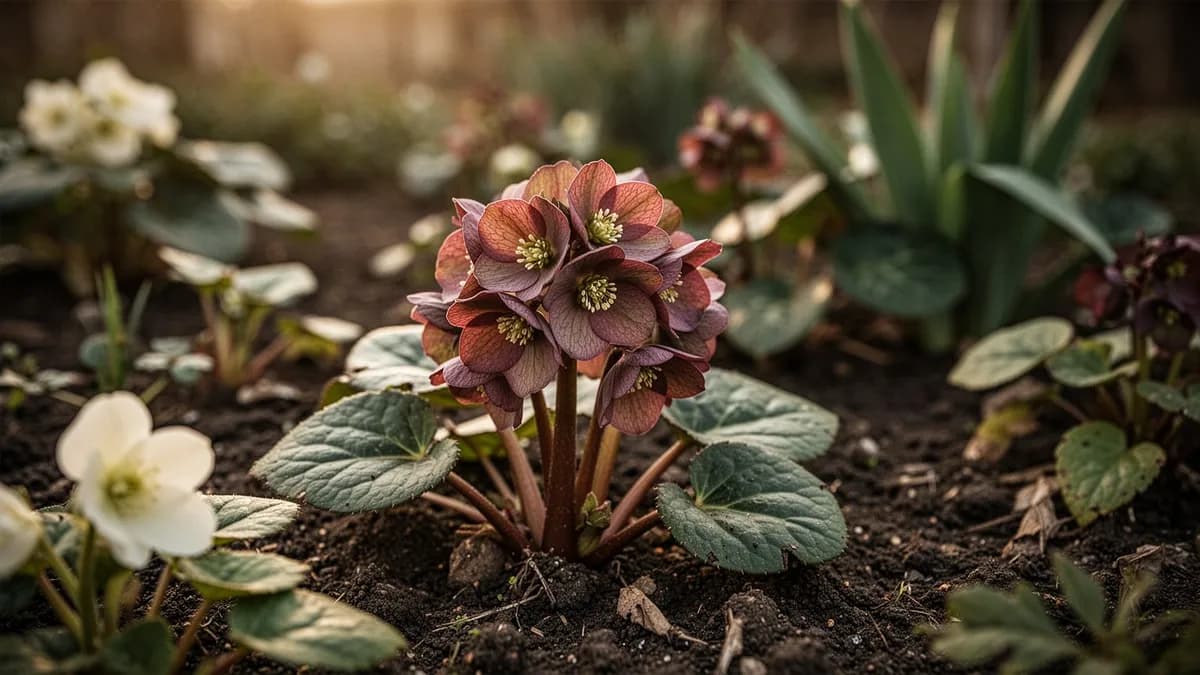
A tough, elegant groundcover with dainty spider-like flowers in red, yellow, pink, or white that dance above heart-shaped leaves in spring.





On this pageOverview
Meet Barrenwort
A tough, elegant groundcover with dainty spider-like flowers in red, yellow, pink, or white that dance above heart-shaped leaves in spring. Epimedium tolerates dry shade under trees where few other plants survive, making it invaluable for difficult spots. Cut back old foliage in late winter to reveal the delicate flower sprays.
When to plant Barrenwort
Epimedium is almost exclusively propagated by division in early autumn. Growing from seed is slow—seeds need double dormancy (warm then cold) and may take 1-2 years to germinate. Division is straightforward: lift clumps, cut into sections with a sharp knife, and replant immediately. Water well until established.
Your Barrenwort Year
Composed for Zone 7 · typical seasons · frost passes Apr 2, returns Nov 1
Plant Barrenwort Mar – Apr, pick Apr – May. Check the planting methods below and set your climate to personalize these windows.
How to grow Barrenwort
Barrenwort is one of the finest groundcovers for dry shade—the conditions most plants refuse to tolerate. Plant in spring, spacing 12-15 inches apart under trees or in other shady areas. Water regularly during the first growing season while plants establish their root systems.
Once established, epimedium is remarkably drought-tolerant in shade, thriving under trees where other plants fail due to root competition and dry soil. The dainty, spider-like flowers appear in early spring, dancing above the emerging foliage on wiry stems.
Cut back all old foliage in late winter (February) before new growth begins—this is essential to reveal the delicate spring flowers that would otherwise be hidden beneath last year's leaves. New foliage emerges with attractive bronze or copper tints before maturing to green. Many species are semi-evergreen, providing year-round cover.
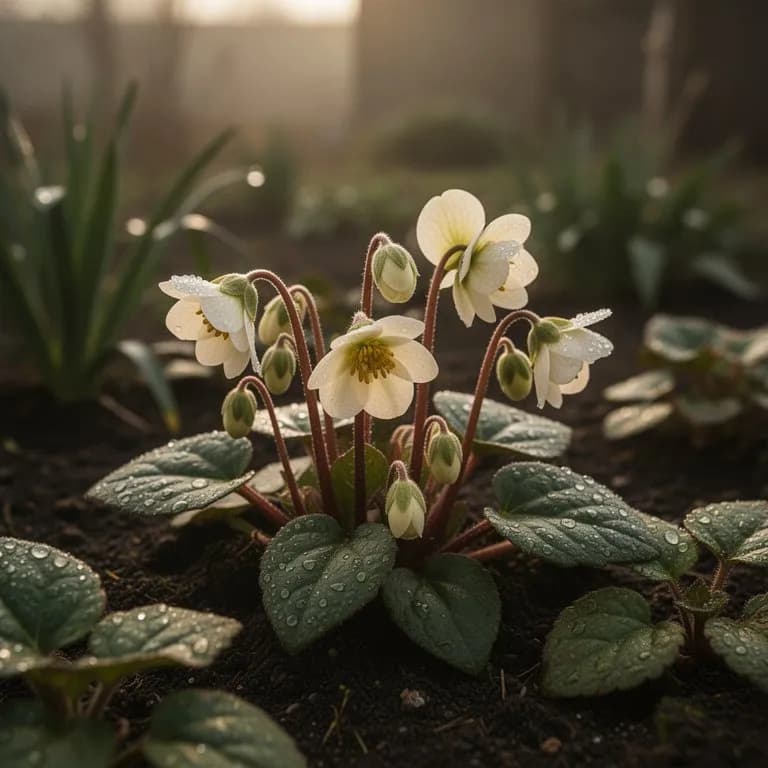
32 plants fit a 4 × 8 ft bed
Each Barrenwort wants 30 cm of elbow room. The planner keeps that spacing for you — every plant, every bed.
Barrenwort's best neighbours
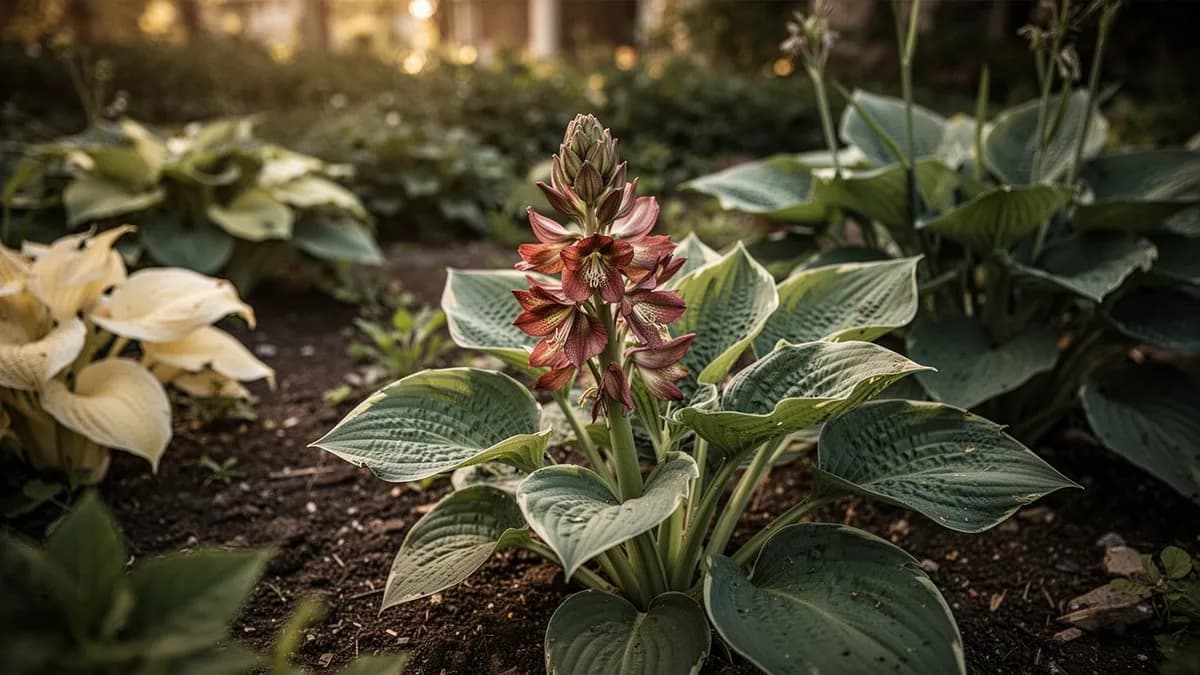
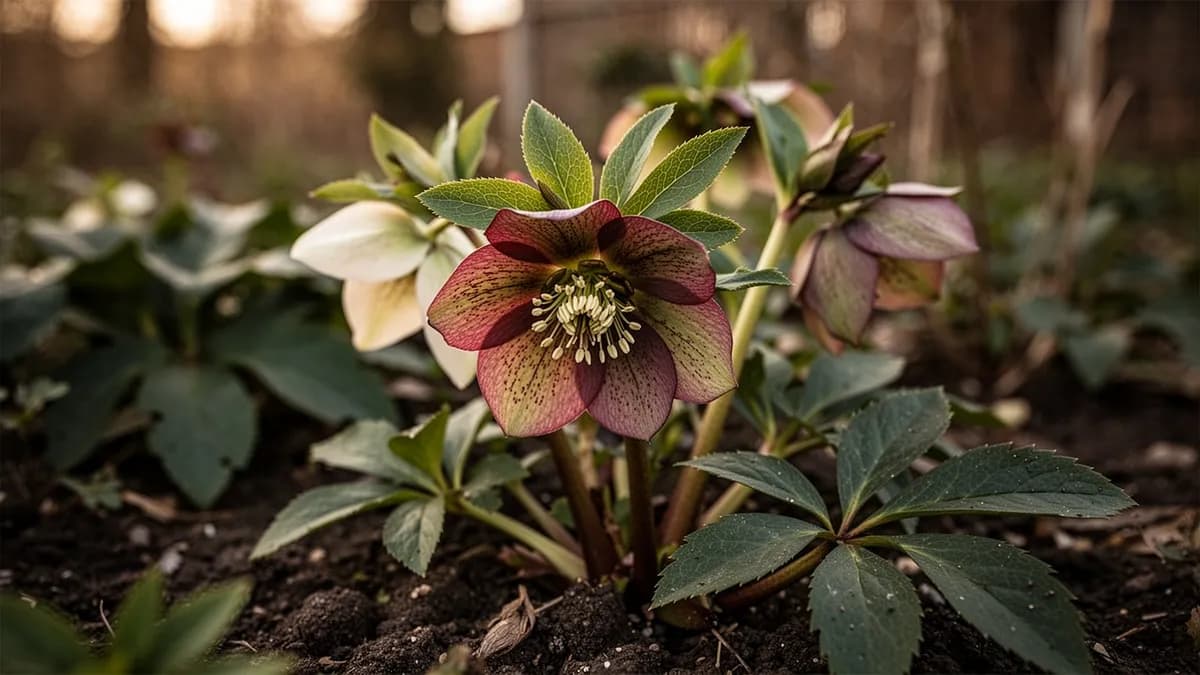
Epimedium is the perfect companion for other dry-shade plants: hostas, ferns, hellebores, and cyclamen. Use as groundcover beneath trees and shrubs where grass will not grow. The heart-shaped foliage complements the bold leaves of hostas and the lacy fronds of ferns. Plant with early bulbs like snowdrops and cyclamen for year-round interest.
Hosta belongs beside it.
Old growers' knowledge, checked against Barrenwort's real companion table below — test any plant you're growing.
Try Barrenwort in a bed — right here
A real planner bed with Barrenwort already in it. Tap a companion to place it and watch the pairing checks answer — green for good neighbours, red for a clash.


Related growing guides
Feed it well
Epimedium tolerates a wide range of soils from sandy to clay with a pH of 5.5-7.5. It prefers humus-rich soil but adapts to poor, dry conditions under trees once established. Top-dress with compost or leaf mold annually in autumn. A light application of balanced fertilizer in spring is beneficial but not essential.
Ideal Temperature
Hardiness Zone Compatibility
From seed to harvest, stage by stage
Dormancy & Early Emergence
In late winter to early spring, new growth buds begin to swell at the rhizome crown. Old foliage from the previous season should be cut back to ground level in late February or early March before the new shoots emerge, so the delicate flowers are not hidden by last year's leaves.
Spring Shoot & Flower Development
Wiry stems rise from the rhizomes bearing clusters of small, intricate flowers in shades of yellow, pink, white, red, orange, or lavender depending on species and cultivar. The flowers appear on arching racemes or panicles just above or alongside the unfurling new leaves, which often display attractive bronze or reddish tints.
Foliage Expansion & Establishment
After flowering, the heart-shaped to arrow-shaped compound leaves expand fully and transition from their youthful bronze tones to mature greens. The plant channels energy into broadening its leaf canopy, which creates a dense weed-suppressing carpet. Rhizomes begin actively spreading outward beneath the soil surface.
Summer Maturity & Rhizome Growth
The plant maintains its lush foliage canopy throughout summer while the rhizomes extend underground, gradually colonising new territory. Growth rate varies significantly by species: clump-formers like E. grandiflorum spread slowly, while runners like E. pinnatum subsp. colchicum can cover ground rapidly at 15-30 cm per year.
Autumn Colour & Pre-Dormancy
Many Epimedium species and hybrids produce spectacular autumn foliage colour, with leaves turning shades of red, bronze, copper, and burgundy. The foliage of evergreen and semi-evergreen types persists through winter, becoming leathery and often more richly coloured in cold weather.
Winter Rest & Evergreen Display
Deciduous species die back completely, while evergreen and semi-evergreen types retain their tough, leathery foliage throughout winter. The persistent leaves provide valuable ground-level interest in the dormant garden and help protect the crown from extreme cold and frost heave.
Division & Renewal Cycle
Mature clumps that have been growing for four to six years may benefit from division to maintain vigour and increase stock. Late summer to early autumn is the ideal time for dividing, allowing roots to re-establish before winter dormancy. Each division should include at least three to five growing points with healthy rhizome sections.
Trim all old foliage to within 2-3 cm of the ground before new growth appears. This is the single most important annual maintenance task for Epimedium.
Caring for Barrenwort month by month
What to do each month for your Barrenwort
October
You are hereEnjoy autumn foliage displays. Allow fallen leaves from overhead trees to provide a natural mulch layer, removing only excessively thick accumulations. Reduce watering as plants prepare for dormancy.
Know exactly what to do in your garden — every month
One email at the start of each month: what to sow, plant, and tackle right now — for your Barrenwort and everything growing around it. Plus a short starter course that helps you dodge the classic mistakes.
- What to do, right now
- Matched to your season
- Starter course included
Harvesting Barrenwort
The delicate flower sprays and heart-shaped leaves are occasionally used in miniature arrangements. Individual leaves are attractive in small posies. The flowers are best appreciated in situ, as they are too small and delicate for most cut-flower use.
assuming you plant when the window opens — set your real date
Pick Barrenwort promptly and the plant keeps producing.
Storage & Preservation
Epimedium is fully hardy and needs no special storage. Cut back old foliage in late February to reveal spring flowers. Divide established clumps in early autumn, ensuring each division has several growth points. Water divisions well until established.
What goes wrong — and the fix
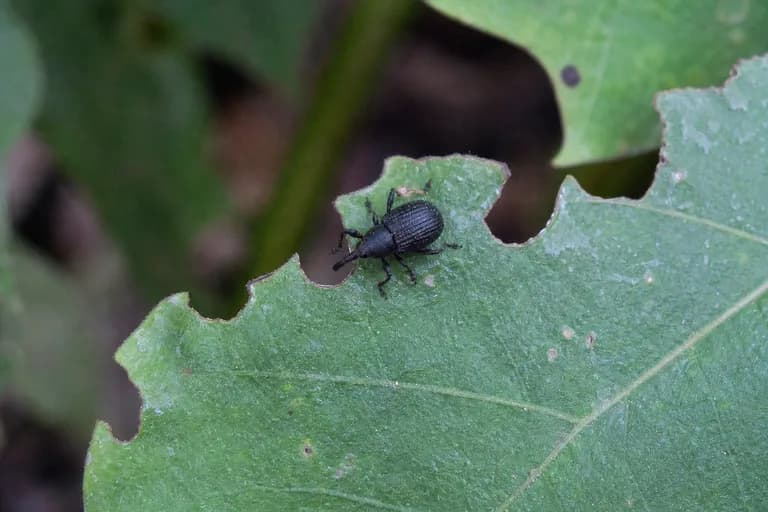
Vine Weevil
PestNotched leaf edges from adult feeding at night. Larvae feed on roots, which can be more damaging.
Troubleshooting Common Problems
The most common mistake is failing to cut back old foliage in late winter—the flowers are then hidden beneath last year's leaves and the display is missed. In very dry conditions during the first year, plants may fail to establish. Vine weevil can be problematic, especially in container-grown plants. Slow to fill in initially but excellent once established.
Growing Tips
- Cut back all old foliage in late February or early March before new growth emerges. This single annual task is the most important maintenance practice and ensures that delicate spring flowers are visible rather than hidden beneath last year's tired leaves.
- Plant in partial to full shade with humus-rich, well-drained soil. Epimedium tolerates a wide range of soil pH from slightly acidic to slightly alkaline, but consistently waterlogged soils will cause rhizome rot and plant decline.
- Water new plantings regularly for the first two growing seasons to allow the root system to establish thoroughly. Once established, most Epimedium species are remarkably drought-tolerant and can thrive in dry shade beneath mature trees.
- Space plants 30 to 40 centimetres apart for ground cover planting. Closer spacing gives faster coverage but requires more plants, while wider spacing is more economical and plants will fill in within two to three additional seasons.
- Mulch with composted leaf mould or fine bark chips to replicate the natural woodland floor conditions that Epimedium prefers. Avoid using thick layers of fresh wood chips that can temporarily deplete nitrogen from the soil surface.
- Divide congested clumps in late August or September by carefully lifting and separating rhizome sections with at least three to five growth buds each. Replant immediately at the same depth and water well until established.
- Avoid heavy foot traffic over Epimedium plantings as the rhizomes grow just below the soil surface and can be damaged by compaction. Install stepping stones through larger plantings to provide access without trampling.
- Select species appropriate for your climate and site conditions. Evergreen types like E. pinnatum subsp. colchicum suit milder winters, while deciduous species like E. grandiflorum and E. x youngianum are better choices for regions with harsh winters.
- Epimedium has very few serious pest or disease problems. Vine weevil larvae occasionally damage rhizomes in container-grown plants, so inspect roots when repotting and apply biological nematode controls if notch damage appears on leaf margins.
- Combine different Epimedium species and cultivars for a tapestry effect in woodland gardens. Pair early-flowering yellow E. x versicolor with later pink E. grandiflorum cultivars for an extended season of bloom from March through May.
Grow your best Barrenwort yet — and everything around it.
Start a free plan today. Lay out your beds, drop in your Barrenwort, and let PlotMyGarden handle the timing, spacing, companions and reminders from seed to harvest basket.
Pick your Barrenwort
Epimedium × rubrum
Red and yellow bicolor flowers above bronze-tinted new foliage. The most commonly grown and most reliable species.
Epimedium grandiflorum 'Lilafee'
Large, deep violet-purple flowers. One of the showiest species with the largest blooms.
Epimedium × versicolor 'Sulphureum'
Pale yellow flowers in abundance. Exceptionally vigorous and one of the best for ground cover.
Epimedium 'Amber Queen'
Large amber-orange flowers. A modern hybrid with some of the biggest and brightest blooms in the genus.
Growing Epimedium as a ground cover in shaded areas can save significant landscaping costs compared to alternatives like mulch or synthetic ground covers that require annual replacement. A single plant costing around 8 to 15 dollars will spread to cover approximately one square metre within three to four years, eliminating ongoing mulch expenses of 3 to 5 dollars per square metre annually. Additionally, established Epimedium requires virtually no fertiliser, minimal watering once established, and only one annual maintenance task of cutting back old foliage, making it one of the most cost-effective long-term ground cover solutions for shaded garden areas.
Quick recipes
Traditional Epimedium Herbal Tea
10 minutesA simple and traditional preparation of dried Epimedium leaves as an herbal infusion, following the method used for centuries in Chinese herbalism. The tea has a mildly bitter, earthy flavour that can be softened with honey or combined with other herbs such as goji berries or dried jujube.
5 ingredientsEpimedium and Goji Berry Tonic Soup
45 minutesA nourishing herbal soup commonly prepared in Chinese households during cooler months. The Epimedium leaves are simmered with chicken broth and other traditional tonic herbs to create a warming, restorative broth. The herb is removed before serving as it is used purely for flavouring and its herbal properties.
7 ingredientsEpimedium Herbal Tincture
15 minutes active, 4-6 weeks steepingA concentrated herbal extract made by steeping dried Epimedium leaves in high-proof alcohol over several weeks. This traditional preparation method extracts the bioactive flavonoids more efficiently than water-based infusions. The resulting tincture is taken in small measured doses diluted in water or juice.
5 ingredientsWhat's inside
Health Benefits
- Epimedium contains icariin, a prenylated flavonol glycoside that has been extensively studied for its potential effects on bone density and has shown promise in laboratory research on osteoblast proliferation and differentiation.
- Traditional Chinese medicine has used Epimedium for over two millennia as a kidney and liver tonic, prescribed to support vitality, joint health, and general well-being in aging populations.
- Research published in phytochemistry journals has identified potent antioxidant activity in Epimedium leaf extracts, attributed to the high concentration of flavonoids and polyphenolic compounds.
- Animal studies have suggested that icariin may support cardiovascular health by promoting healthy blood vessel function, though human clinical trials are still limited in scope and number.
- Epimedium extracts have demonstrated adaptogenic-like properties in some studies, potentially helping the body manage the physiological effects of stress, fatigue, and physical exertion.
- Several Epimedium species contain compounds that have shown neuroprotective potential in preclinical studies, with researchers investigating their possible role in supporting cognitive function and neural health.
Where Barrenwort comes from
Epimedium is a genus of flowering perennials in the family Berberidaceae, with a distribution spanning from the Mediterranean region through Central and East Asia to Japan. The greatest diversity of species is found in China, particularly in the mountainous provinces of Sichuan, Guizhou, Hubei, and Yunnan, where over 50 of the roughly 65 known species occur in woodland and forest-edge habitats at elevations between 200 and 3,500 metres. European species such as Epimedium alpinum have been grown in gardens since at least the sixteenth century, but the genus remained relatively obscure in Western horticulture until the late twentieth century. The modern horticultural interest in Epimedium was ignited largely through the collecting expeditions and breeding work of nurserymen and plant hunters who introduced numerous Chinese and Japanese species to Western gardens from the 1980s onward. In traditional Chinese medicine, the aerial parts of several species, collectively known as Yin Yang Huo or Xian Ling Pi, have been prescribed for over two thousand years. Historical texts from the Tang Dynasty record the use of Epimedium for various ailments, and the herb remains one of the most commonly used in the traditional Chinese pharmacopoeia today. The name Epimedium itself dates to ancient Greek references, though the plant Dioscorides described under this name was likely a different species entirely. Carl Linnaeus adopted the classical name when he formally described the genus in 1753. Throughout the nineteenth century, botanists including Morren, Franchet, and Stearn made significant contributions to the taxonomy of the genus. In recent decades, molecular phylogenetic studies have refined the classification, revealing complex evolutionary relationships and prompting the description of numerous new species from previously unexplored Chinese habitats.
Barrenwort: did you know?
Fascinating facts about Barrenwort
Epimedium has been used in traditional Chinese medicine for over 2,000 years under the name Yin Yang Huo, which translates to 'licentious goat plant' because legend says a goat herder noticed his flock became unusually energetic after grazing on the leaves.
Barrenwort questions, answered
When should I plant Barrenwort?
What are good companion plants for Barrenwort?
What hardiness zones can Barrenwort grow in?
How much sun does Barrenwort need?
How far apart should I space Barrenwort?
What pests and diseases affect Barrenwort?
How do I store Barrenwort after harvest?
What are the best Barrenwort varieties to grow?
What soil does Barrenwort need?
Why is Epimedium commonly called barrenwort?
When and how should I cut back Epimedium foliage?
Can Epimedium grow in deep shade and dry soil?
Is Epimedium safe to use as an herbal supplement?
How fast does Epimedium spread as a ground cover?
What are the best companion plants for Epimedium?
You just read the theory. Now grow it on autopilot.
Everything that makes Barrenwort fiddly — the timing, the spacing, the companions, the harvest window — is exactly what PlotMyGarden handles for you, for every plant in your garden.
A plan that knows your weather
Set your location once. Get sow, feed and harvest dates built around your real last-frost date and live forecast — no more guessing from a generic seed packet.
From the “When to plant” sectionDrag-and-drop bed planner
Design beds on a grid. Every plant snaps to its proper spacing, and you can see your whole season laid out before you spend a cent on seed.
From the “Growing guide” sectionCompanion conflicts, caught early
200+ good-and-bad pairings checked live as you plant — so a season-wrecking mistake never makes it into the ground.
From the “Companions” sectionReminders you'll actually act on
“Water the beans.” “Pick today before it turns.” Timely, specific, and tied to the plants you're really growing.
From the “Harvest” sectionSuccession, scheduled
Want a harvest for six weeks, not six days? It spaces your sowings automatically and reminds you when each new block is due.
From the “When to plant” sectionA record that gets smarter
Every harvest you log teaches it your garden. Next year's plan starts from what actually worked in your soil, not a textbook's.
From the “Overview” sectionPlant these alongside Barrenwort
More Perennials

Grow your best Barrenwort yet — and everything around it.
Start a free plan today. Lay out your beds, drop in your Barrenwort, and let PlotMyGarden handle the timing, spacing, companions and reminders from seed to harvest basket.