Frijol Cranberry
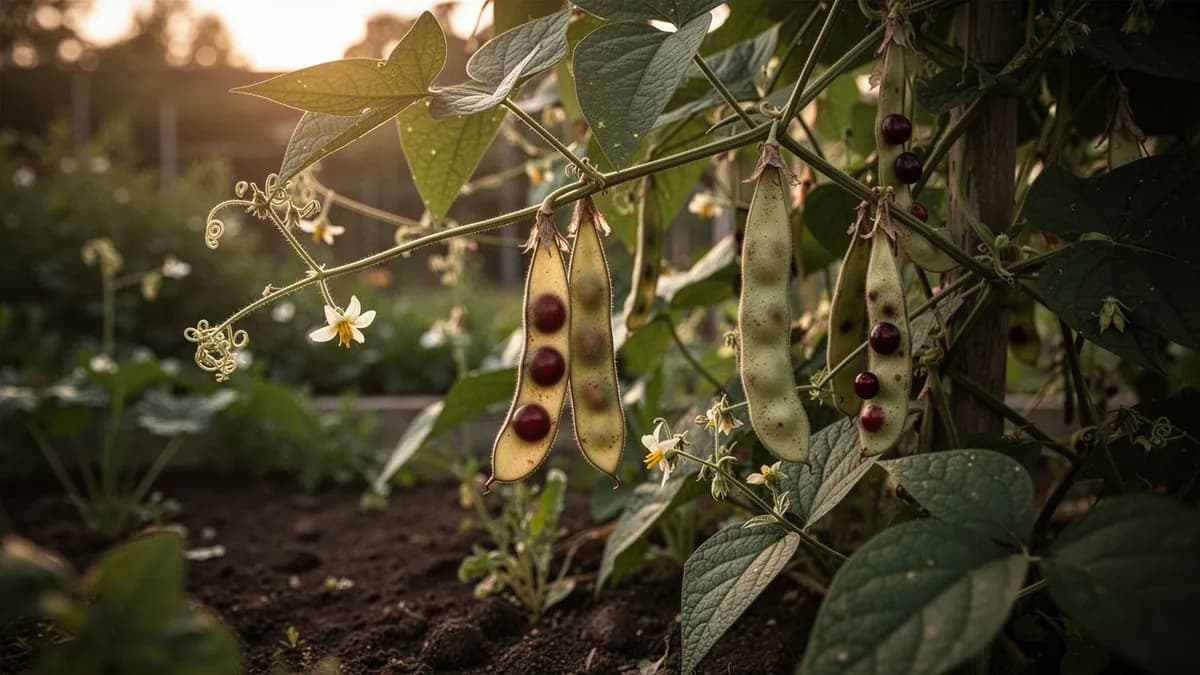
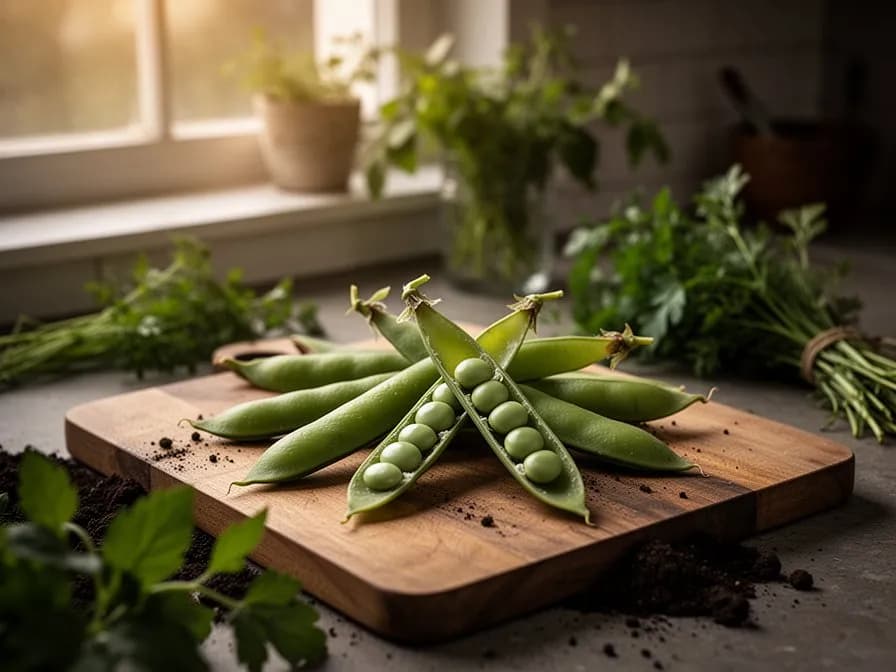
El frijol cranberry (Phaseolus vulgaris), conocido también como borlotti en Italia, es una leguminosa de gran belleza con vainas llamativamente moteadas en rojo y crema que contienen semillas con un patrón similar.





En esta páginaResumen
Conoce Frijol Cranberry
El frijol cranberry (Phaseolus vulgaris), conocido también como borlotti en Italia, es una leguminosa de gran belleza con vainas llamativamente moteadas en rojo y crema que contienen semillas con un patrón similar. Originario de América del Sur, se convirtió en un pilar de la cocina italiana, donde se utiliza en platos emblemáticos como la pasta e fagioli y el minestrone.
Cuándo plantar Frijol Cranberry
Siembre directamente al aire libre cuando la temperatura del suelo supere los 16 °C, generalmente 2 semanas después de la última helada. Plante las semillas a 3-4 cm de profundidad, espaciadas 10-15 cm. No remoje previamente ya que pueden agrietarse. La germinación ocurre en 8-14 días. Inocule con Rhizobium si es el primer cultivo de frijoles en ese suelo para optimizar la fijación de nitrógeno.
Tu año de Frijol Cranberry
Ajustado a Zona 7 · temporada típica · la helada se va hacia el 2 abr y vuelve hacia el 1 nov
Planta Frijol Cranberry May – Jun y cosecha Ago – Sep. Consulta los métodos de plantación y elige tu clima para adaptar los periodos.
Cómo cultivar Frijol Cranberry
Plante en pleno sol en un lugar cálido después de que haya pasado todo riesgo de helada y el suelo se haya calentado a al menos 16 °C. El suelo debe ser fértil, bien drenado y con pH entre 6,0 y 7,0. Incorpore compost maduro antes de la siembra para mejorar la retención de humedad y la estructura.
Siembre las semillas directamente a 3-4 cm de profundidad, espaciadas 10-15 cm en hileras separadas 45-60 cm para variedades arbustivas, o 60-90 cm para variedades trepadoras con tutores. Proporcione enrejados o cañas de 1,5-2 m para las variedades de enredadera.
Riegue regularmente, especialmente durante la floración y el llenado de vainas, proporcionando 2-3 cm de agua por semana. Evite mojar el follaje para prevenir enfermedades fúngicas. No aplique nitrógeno, ya que como leguminosa fija el suyo propio. Un aporte de fósforo y potasio favorece la producción de vainas. Aplique acolchado para conservar la humedad y suprimir malezas.
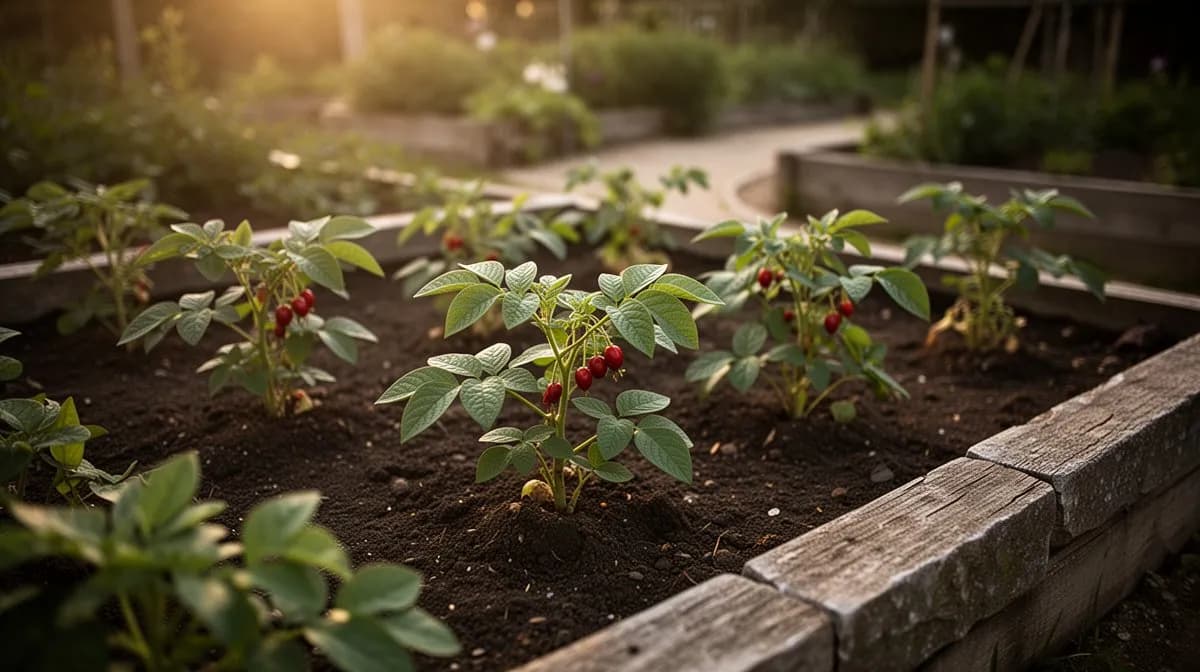
128 plantas caben en un bancal de 120 × 240 cm
Cada Frijol Cranberry pide 15 cm de margen. El planificador guarda ese marco por ti — cada planta, cada bancal.
Los mejores vecinos de Frijol Cranberry
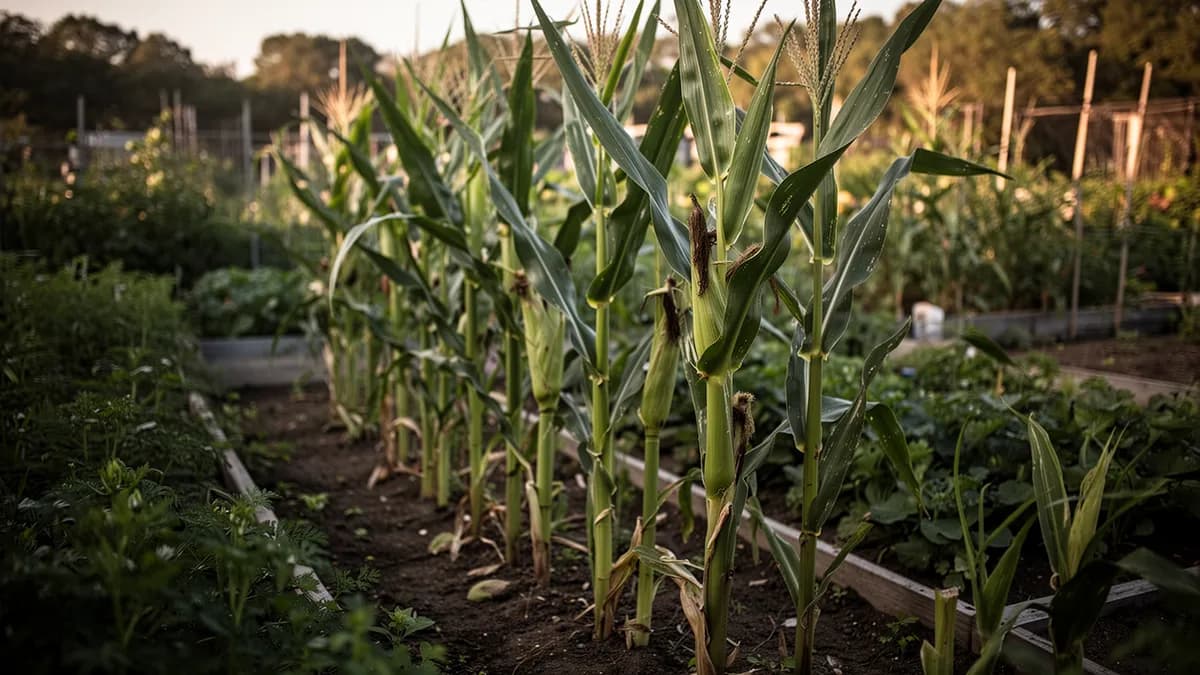
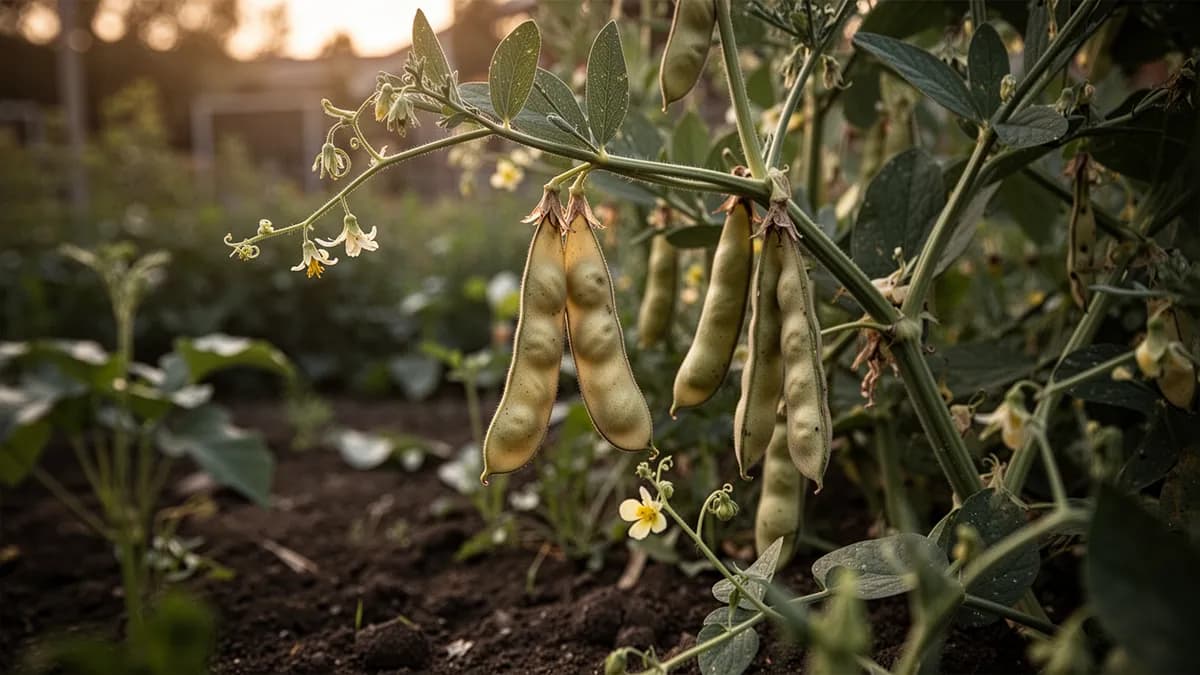
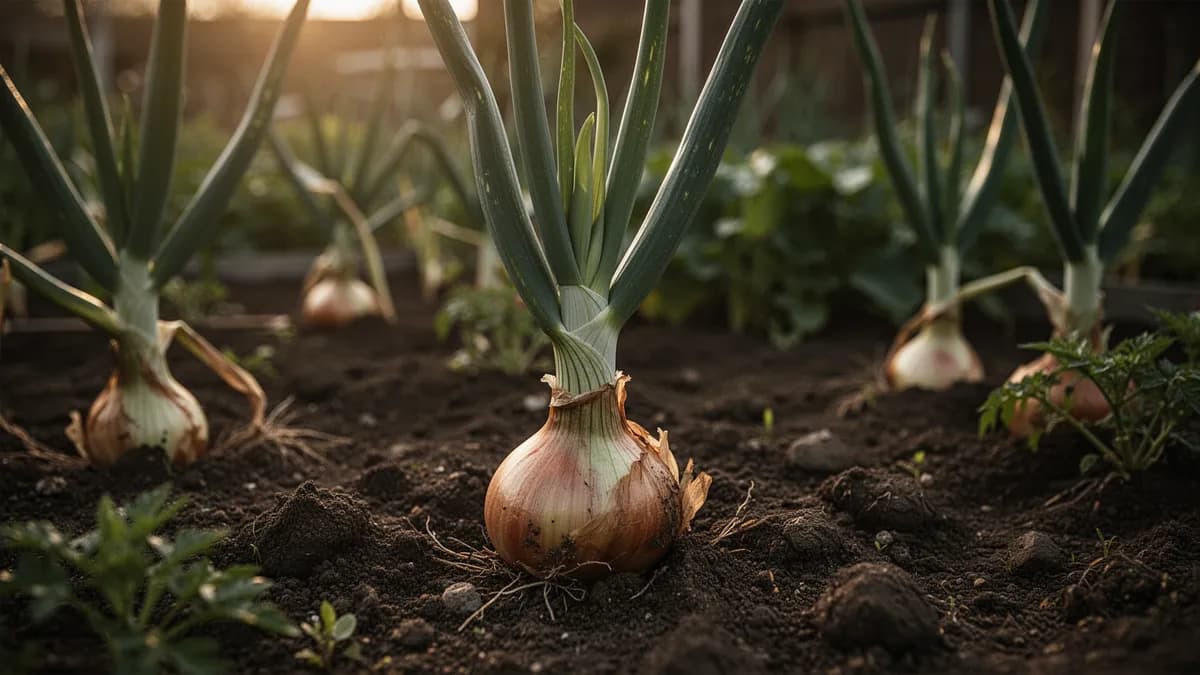
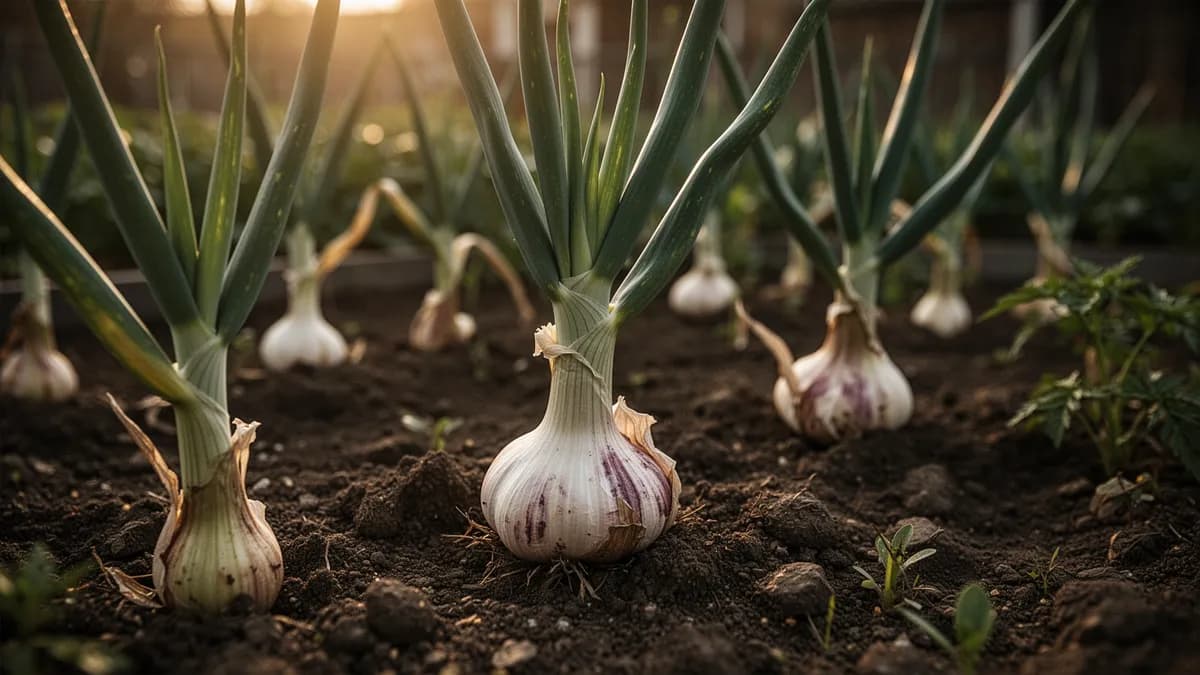
Combinación clásica con maíz y calabazas en la milpa o las Tres Hermanas: el maíz sirve de tutor para los frijoles trepadores, los frijoles fijan nitrógeno para el maíz, y las calabazas cubren el suelo suprimiendo malezas. Las caléndulas y albahaca plantadas cerca repelen plagas. Evite plantar junto a ajos, cebollas y fenojo.
Maíz va a su lado. Cebolla no.
Saber de huerto de siempre, cotejado con la tabla real de Frijol Cranberry — prueba cualquier planta que cultives.
Prueba Frijol Cranberry en un bancal, aquí mismo
Un bancal real del planificador con Frijol Cranberry ya plantado. Toca una planta compañera para colocarla y mira cómo responde la comprobación de vecinos: verde para buenos vecinos, rojo si hay conflicto.


Guías de cultivo relacionadas
Abónalo bien
Requiere suelos fértiles, bien drenados y con pH entre 6,0 y 7,0. Incorpore compost maduro o estiércol bien descompuesto antes de la siembra. Como leguminosa, fija su propio nitrógeno, por lo que no necesita abonos nitrogenados. Aplique fósforo y potasio al inicio para favorecer la floración y el desarrollo de las vainas.
Temperatura ideal
Compatibilidad de zonas de rusticidad
De la semilla a la cosecha, etapa por etapa
Siembra
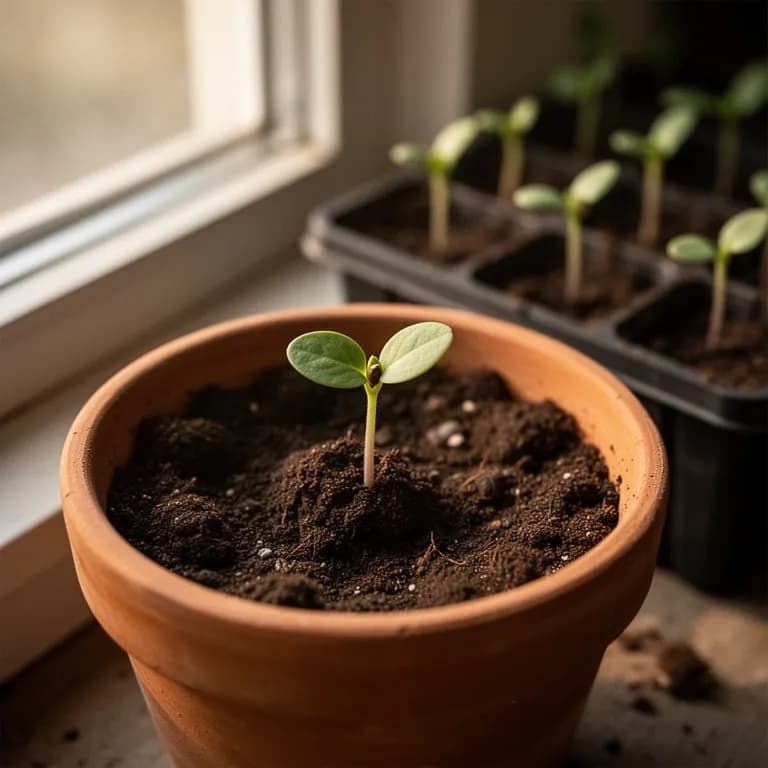
Las semillas grandes y moteadas se siembran directamente en tierra cálida del huerto a una profundidad de 3-5 cm. En un suelo templado por encima de 18 °C, la radícula emerge en 3-5 días, seguida por tallos de hipocótilo gruesos que elevan las amplias hojas cotiledonares sobre la superficie. La germinación es rápida y fiable cuando las condiciones del suelo son las adecuadas.
Establecimiento de plántulas
Las primeras hojas trifoliadas verdaderas se desarrollan rápidamente mientras el sistema radicular se establece y los nódulos fijadores de nitrógeno comienzan a formarse en las raíces en asociación con bacterias Rhizobium. Los tipos arbustivos forman una estructura compacta y resistente, mientras que las variedades de guía empiezan a extender sus primeros zarcillos en busca de apoyo.
Crecimiento vegetativo
Las plantas crecen con vigor, y las variedades arbustivas alcanzan 45-60 cm de altura mientras que las de guía trepan 150-250 cm por sus soportes. El denso follaje trifoliado crea un dosel frondoso. Los nódulos de la raíz fijan ahora activamente nitrógeno atmosférico, reduciendo la necesidad de fertilizante nitrogenado adicional.
Floración
Aparecen racimos de flores delicadas de color rosa, blanco o lavanda en las axilas de las hojas y en las puntas de las ramas. Cada flor es autopolinizante, aunque la visita de las abejas mejora el cuajado de las vainas. La floración continúa durante 2-3 semanas, con nuevas flores que se abren a diario mientras las más viejas empiezan a formar vainas pequeñas.
Desarrollo de vainas
Las vainas verdes planas se hinchan a medida que las alubias del interior se desarrollan rápidamente. En 1-2 semanas, las vainas pasan del verde liso a su espectacular patrón crema con franjas rojo arándano. En la fase de desgrane fresco, las vainas están regordetas y coriáceas, y las alubias del interior son grandes, tiernas y están en su punto óptimo de sabor para cocinar de inmediato.
Secado y cosecha final
Para las alubias secas, las vainas se dejan en la planta hasta que se vuelven papiráceas, quebradizas y de color canela, y las alubias del interior suenan al agitarlas. Toda la planta amarillea y comienza a senescer mientras redirige toda su energía a la maduración de las semillas. En climas húmedos, las plantas pueden arrancarse enteras y colgarse bajo techo para secarse.
No inicies las alubias cranberry en interior: resienten la perturbación de las raíces y se trasplantan mal. Espera hasta que el suelo esté consistentemente cálido y haya pasado todo riesgo de heladas. Inocula las semillas con inóculo de Rhizobium para alubias para potenciar la fijación de nitrógeno desde el primer día.
Cuidar Frijol Cranberry mes a mes
Qué hacer cada mes para tu Frijol Cranberry
Octubre
Mes actualComplete dry bean harvest before hard frost. Thresh dried pods and winnow to remove chaff. Spread dried beans in a single layer for 1-2 additional weeks of curing in a dry, well-ventilated area before storing.
Ten claro qué hacer en tu huerto, cada mes
Un correo al empezar cada mes: qué sembrar, plantar y hacer ahora mismo — para tu Frijol Cranberry y todo lo que crece alrededor. Más un breve curso inicial para esquivar los errores clásicos.
- Qué hacer ahora mismo
- Ajustado a tu temporada
- Curso inicial incluido
Cosechar Frijol Cranberry
Para consumo en fresco (frijol desgranado), coseche cuando las vainas estén llenas y moteadas pero antes de que se sequen completamente, a los 60-70 días. Para grano seco, deje las vainas en la planta hasta que estén completamente secas y crujientes, unos 80-95 días. Coseche antes de lluvias otoñales para evitar la germinación en la vaina o la pudrición.
se supone que plantas al comenzar el periodo — indica tu fecha real
Aproximadamente 75 días después de plantar, cuando las vainas estén completamente coloreadas, con franjas rojas intensas y aún estén regordetas pero tiernas.
Almacenamiento y conservación
Los granos completamente secos se conservan en recipientes herméticos en lugar fresco y oscuro durante 2-3 años. Congele los granos frescos desgranados tras blanquearlos 3 minutos para una conservación de hasta 12 meses. También pueden enlatarse al baño maría. Los frijoles frescos sin cáscara son un manjar de temporada que se conserva refrigerado 3-5 días.
Qué falla — y cómo solucionarlo
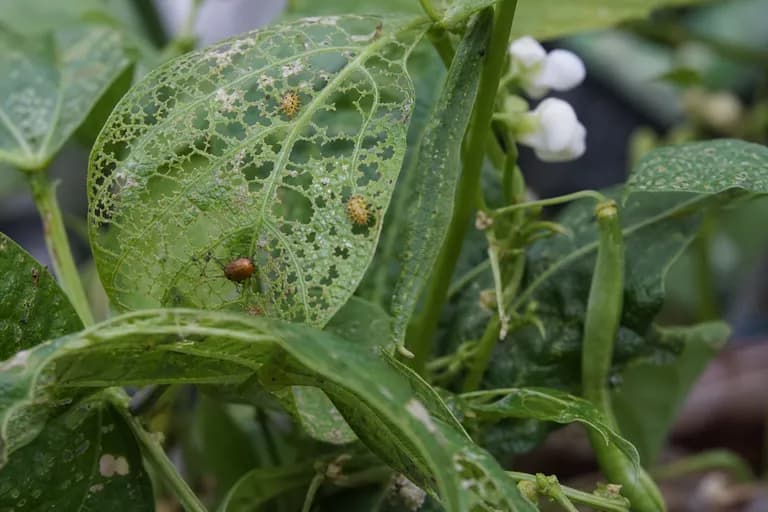
Gorgojo del frijol (Acanthoscelides obtectus)
PlagaAgujeros circulares pequeños en las semillas almacenadas con polvo fino. Las larvas se desarrollan dentro del grano, destruyendo su contenido.
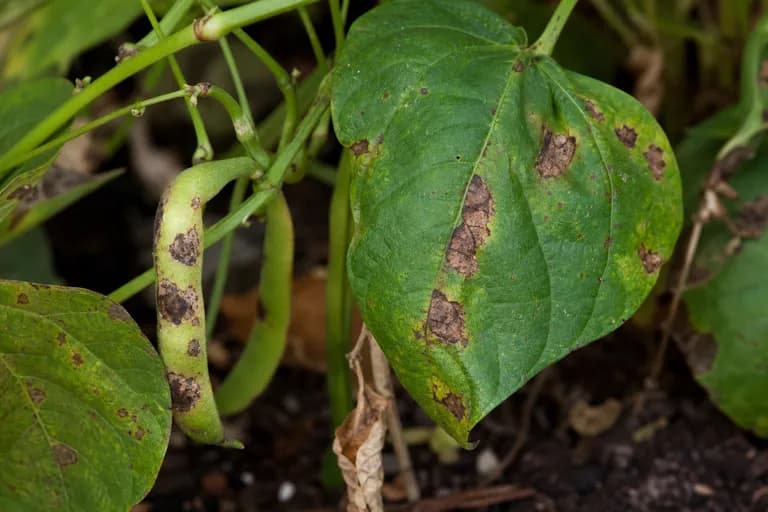
Antracnosis (Colletotrichum lindemuthianum)
EnfermedadManchas hundidas oscuras con bordes rojizos en vainas, tallos y hojas. Las manchas en las vainas pueden penetrar hasta las semillas.
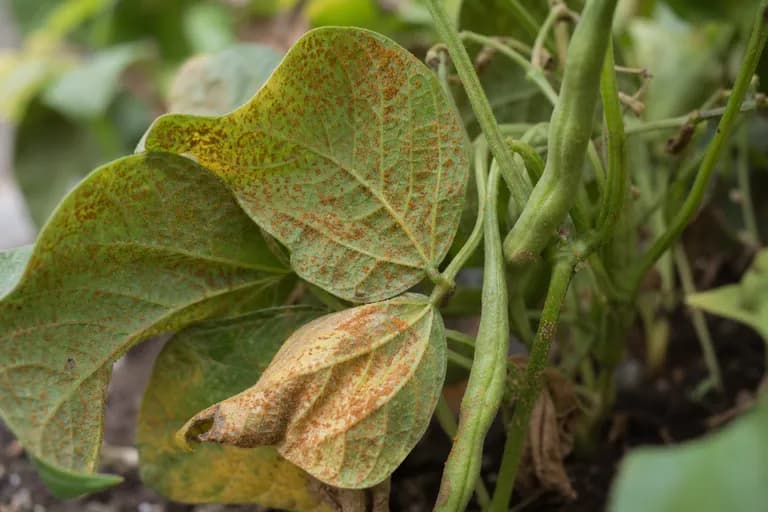
Roya del frijol (Uromyces appendiculatus)
EnfermedadPústulas pequeñas de color marrón rojizo en el envés de las hojas que liberan esporas polvorientas. Las hojas amarillean y caen prematuramente.
Solución de problemas comunes
Las lluvias durante la maduración de las vainas son el principal desafío, ya que favorecen la pudrición, la germinación prematura de las semillas y las enfermedades fúngicas. Las noches frías al inicio pueden retrasar la germinación y favorecer el damping-off. El riego por aspersión favorece enfermedades foliares; siempre riegue en la base.
Consejos de cultivo
- Direct-sow only — never transplant. Cranberry beans have sensitive taproots that do not recover well from root disturbance. Sow seeds directly into warm garden soil at 3-5 cm deep. If you must start early, use deep biodegradable peat pots that can be planted whole.
- Inoculate seeds with Rhizobium leguminosarum inoculant before planting, especially if beans have not been grown in that bed before. This ensures the nitrogen-fixing bacteria colonize the roots quickly, boosting plant health and eliminating the need for nitrogen fertilizer.
- Choose between bush and pole types based on your space and harvest preference. Bush varieties like Taylor Dwarf Horticultural produce a concentrated harvest over 2-3 weeks — ideal for batch processing. Pole types like Tongue of Fire produce steadily over 4-6 weeks but need sturdy 2-meter supports.
- Never apply nitrogen fertilizer to cranberry beans. As legumes, they manufacture their own nitrogen through bacterial root nodules. Excess nitrogen causes lush, floppy foliage with few flowers and pods. If soil is poor, a light application of phosphorus and potassium is all that is needed.
- Water consistently during flowering and pod fill — this is the critical window that determines your yield. Irregular watering causes flower drop, misshapen pods, and tough-textured beans. Aim for 2.5 cm of water per week through drip irrigation or soaker hoses, not overhead sprinklers.
- Harvest fresh shell beans at the perfect moment — when pods are plump, leathery, and vividly streaked with cranberry red, but still slightly flexible. The beans inside should be fully swollen and moist. If you miss this window by even a few days, the beans start drying and need to be treated as dry beans.
- Save the roots after harvest. When pulling spent plants at the end of the season, cut stems at ground level and leave the nitrogen-rich root nodules in the soil to decompose. This free nitrogen boost benefits whatever crop follows in the rotation.
- Rotate beans to a new bed each year on a 3-year cycle. Planting beans in the same spot year after year builds up soilborne diseases like white mold, root rot, and anthracnose. Rotate with heavy feeders like tomatoes, squash, or corn that benefit from the nitrogen left behind.
Cultiva tu mejor Frijol Cranberry — y todo lo que la rodea.
Empieza un plan gratis hoy. Diseña tus bancales, coloca tu Frijol Cranberry y deja que PlotMyGarden gestione el momento, el espaciado, las asociaciones y los recordatorios de la semilla a la cesta.
Elige tu Frijol Cranberry
Borlotti (Lamon)
La variedad italiana clásica con vainas espectacularmente moteadas en rojo y crema. Granos cremosos con sabor a nuez, ideales para minestrone y pasta e fagioli. 80-90 días.
Tongue of Fire
Variedad de origen argentino con vainas rojas flamígeras muy decorativas. Sabor más suave que el borlotti clásico. Planta arbustiva compacta. 70-80 días.
Wren's Egg
Variedad tradicional americana con semillas pequeñas moteadas en marrón y beige. Excelente sabor y textura cremosa al cocinar. Muy productiva. 85-90 días.
Taylor's Dwarf Horticultural
Variedad arbustiva compacta que no requiere tutores. Vainas moteadas de rojo con granos grandes y carnosos. Ideal para espacios pequeños. 75-85 días.
Dried cranberry beans (borlotti) sell for $6-12 per pound at specialty grocery stores and Italian markets, and fresh-shelled cranberry beans — when available at farmers markets — command $5-8 per pound. A single $3 seed packet grows 20-30 plants yielding 3-6 kg of fresh-shelled beans or 1-2 kg of dried beans per season, representing $30-60 in market value. The savings are even greater considering that truly fresh shell beans are a seasonal delicacy rarely available in stores — growing your own is the only reliable way to experience their incomparable creamy texture.
Recetas rápidas
Classic Pasta e Fagioli
45 minThe beloved Italian soup that is the definitive cranberry bean dish — tender beans in a rich tomato-vegetable broth with small pasta. Fresh-shelled cranberry beans make this dish extraordinarily creamy and flavorful compared to canned alternatives.
11 ingredientesSummer Cranberry Bean Succotash
25 minA vibrant summer side dish that pairs fresh-shelled cranberry beans with sweet corn, peppers, and herbs — the perfect showcase for garden-fresh beans at the height of their season. Quick to prepare and stunning on the plate.
8 ingredientesCranberry Bean and Sage Bruschetta
20 minA rustic Tuscan-inspired appetizer where warm, creamy cranberry beans are spooned over garlic-rubbed toast with crispy fried sage leaves. Simple ingredients elevated by the naturally buttery texture of fresh cranberry beans.
8 ingredientesUsos culinarios
Pilar de la cocina italiana, donde los frijoles borlotti frescos son un manjar veraniego en ensaladas con cebolla roja y aceite de oliva. Imprescindibles en la pasta e fagioli, el minestrone y la ribollita toscana. Los granos secos, tras remojo y cocción, tienen una textura cremosa perfecta para guisos, sopas y purés. En Portugal se usan en la feijoada y en varios guisos tradicionales.
Qué contiene
Beneficios para la salud
- Exceptional source of plant-based protein at 23g per 100g dried, containing all essential amino acids when combined with grains — making cranberry beans a cornerstone food for vegetarian and vegan diets worldwide.
- Outstanding dietary fiber content (24.7g per 100g) promotes digestive health, feeds beneficial gut bacteria, supports healthy cholesterol levels, and provides long-lasting satiety that helps with weight management.
- One of the richest plant sources of folate (vitamin B9), providing 151% of the daily value per 100g — essential for DNA synthesis, red blood cell formation, and critically important for preventing neural tube defects during pregnancy.
- Rich in iron (5mg per 100g, 28% DV) supporting oxygen transport throughout the body and preventing iron-deficiency anemia — pair with vitamin C-rich foods like tomatoes or peppers to dramatically boost absorption.
- High potassium content (1406mg per 100g, 40% DV) supports healthy blood pressure, proper heart rhythm, and muscle function — research links potassium-rich diets to significantly reduced risk of stroke and cardiovascular disease.
- Contains resistant starch that acts as a prebiotic, feeding beneficial Bifidobacteria and Lactobacilli in the colon, producing short-chain fatty acids that nourish intestinal cells and may reduce the risk of colorectal cancer.
De dónde viene Frijol Cranberry
Cranberry beans (Phaseolus vulgaris) trace their ancestry to the wild common bean populations of Central America and the Andes region of South America, where they were independently domesticated roughly 7,000-8,000 years ago. Archaeological evidence from caves in Mexico and Peru shows that early farmers selected beans for larger seed size, thinner seed coats, and reduced pod shattering — transforming wild scrambling plants into productive croplands. Cranberry beans as a distinct type likely developed in the highland regions of Colombia and Peru, where Indigenous farmers selected for the characteristic speckled pattern and creamy texture over many generations.
The bean arrived in Europe following the Columbian Exchange of the 15th and 16th centuries, and it was Italian farmers who most enthusiastically adopted and refined the cranberry bean type. In the fertile valleys of Veneto, Lombardy, and Piedmont, the bean became known as 'borlotto' and was rapidly integrated into the peasant cooking traditions of northern Italy. The cool nights and warm days of the Po Valley proved ideal for growing intensely flavored, creamy-textured beans, and borlotti became the foundation of iconic dishes like pasta e fagioli, minestrone, and fagioli all'uccelletto. Italian farmers developed many regional landraces, each adapted to specific local conditions and prized for subtle differences in flavor and texture.
Cranberry beans returned to the Americas with Italian immigrants in the late 19th and early 20th centuries, this time as the refined 'borlotti' type that had been perfected over four centuries of Italian cultivation. In North America, they earned the name 'cranberry bean' for the resemblance of their red-speckled pattern to the native cranberry fruit. Today, cranberry beans are grown worldwide — from the home gardens of New England to the commercial fields of Argentina, from the smallholder farms of East Africa to the terraced hillsides of southern China. Italy remains the cultural heartland of the cranberry bean, but the variety has found enthusiastic adoption wherever gardeners and cooks appreciate the combination of stunning beauty, exceptional flavor, and outstanding nutrition that this ancient American legume delivers.
Frijol Cranberry: ¿sabías que?
Datos fascinantes sobre Frijol Cranberry
Cranberry beans are known by many names around the world — borlotti in Italy, cargamanto in Colombia, cacahuate in parts of Mexico, and romano beans in some North American markets. In Italy, they are considered the finest bean for minestrone and pasta e fagioli.
Frijol Cranberry: preguntas frecuentes
¿Cuándo debo plantar Frijol Cranberry?
¿Cuáles son buenas plantas acompañantes para Frijol Cranberry?
¿En qué zonas de rusticidad puede crecer Frijol Cranberry?
¿Cuánto sol necesita Frijol Cranberry?
¿A qué distancia debo espaciar Frijol Cranberry?
¿Qué plagas y enfermedades afectan a Frijol Cranberry?
¿Cómo almaceno Frijol Cranberry después de la cosecha?
¿Cuáles son las mejores variedades de Frijol Cranberry para cultivar?
¿Qué suelo necesita Frijol Cranberry?
What is the difference between eating cranberry beans fresh versus dried?
Why did the beautiful red speckles on my cranberry beans disappear after cooking?
Can I grow cranberry beans in containers?
How do I store dried cranberry beans for maximum shelf life?
Are cranberry beans and borlotti beans the same thing?
Why are my cranberry bean plants flowering but not setting pods?
Acabas de leer la teoría. Ahora cultívala en piloto automático.
Todo lo que hace que Frijol Cranberry sea delicado — el momento, el espaciado, las asociaciones, la ventana de cosecha — es justo lo que PlotMyGarden resuelve por ti, para cada planta de tu huerto.
Un plan que conoce tu clima
Indica tu ubicación una vez. Recibe fechas de siembra, abonado y cosecha basadas en tu última helada real y el pronóstico en vivo — sin adivinar con un sobre genérico.
De la sección “Cuándo plantar”Planificador de bancales de arrastrar y soltar
Diseña bancales sobre una cuadrícula. Cada planta encaja con su espaciado correcto y ves toda la temporada antes de gastar un céntimo en semillas.
De la sección “Cultivo”Conflictos de asociación, detectados a tiempo
Más de 200 buenas y malas combinaciones comprobadas en vivo mientras plantas — para que un error que arruine la temporada nunca llegue a la tierra.
De la sección “Asociaciones”Recordatorios que sí vas a seguir
“Riega las judías.” “Recoge hoy antes de que se pase.” Oportunos, concretos y ligados a las plantas que de verdad cultivas.
De la sección “Cosecha”Escalonado, programado
¿Quieres cosechar seis semanas en vez de seis días? Reparte tus siembras automáticamente y te avisa cuando toca el siguiente lote.
De la sección “Cuándo plantar”Un registro que se vuelve más listo
Cada cosecha que registras le enseña tu huerto. El plan del año que viene parte de lo que de verdad funcionó en tu suelo, no en un manual.
De la sección “Resumen”Planta estos junto a Frijol Cranberry
Más Legumbres
Mantén Frijol Cranberry lejos de estos
Cultiva tu mejor Frijol Cranberry — y todo lo que la rodea.
Empieza un plan gratis hoy. Diseña tus bancales, coloca tu Frijol Cranberry y deja que PlotMyGarden gestione el momento, el espaciado, las asociaciones y los recordatorios de la semilla a la cesta.