Coffee
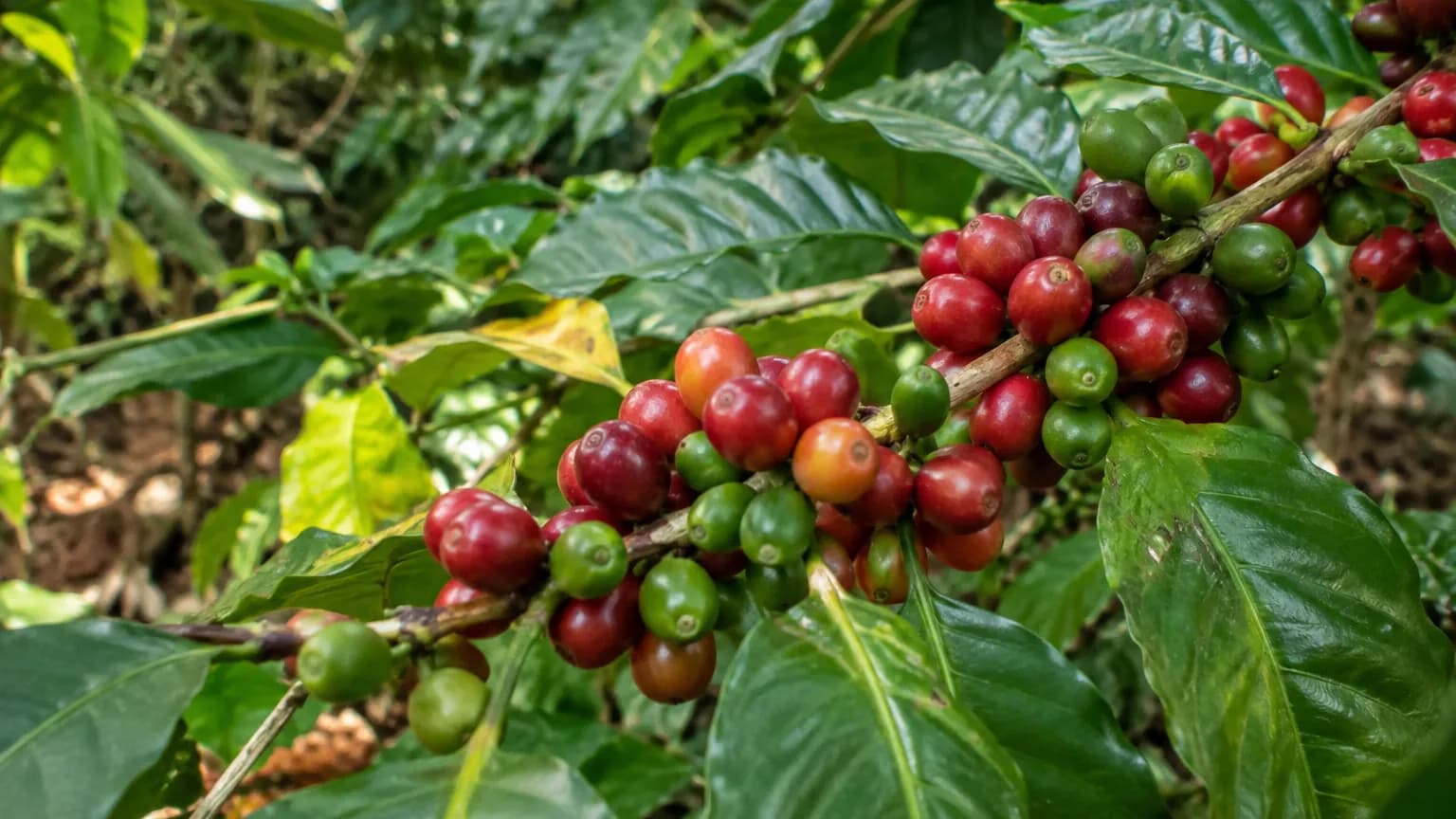
An evergreen tropical shrub whose scarlet cherries hold the paired seeds that become the world's most beloved morning beverage.





On this pageOverview
Meet Coffee
An evergreen tropical shrub whose scarlet cherries hold the paired seeds that become the world's most beloved morning beverage. Glossy dark green leaves and fragrant white, jasmine-scented flowers make coffee as ornamental as it is productive. Cherries ripen slowly over six to eight months, and plants grown from seed need three to four years before the first meaningful harvest. In frost-free zones 10-11 it grows outdoors year-round; everywhere else it thrives as a handsome container plant in bright indirect light.
When to plant Coffee
Coffee seeds lose viability within a few months, so start with the freshest green (unroasted, unhulled) seeds you can find — ideally straight from a ripe cherry or from a supplier shipping recent-crop parchment seed. Roasted beans will never germinate. Soak seeds in lukewarm water for 24 hours, then sow them about 1 to 1.5 centimeters deep, flat side down, in a moist, freely draining seed mix. Keep at 25 to 30 degrees Celsius with bottom heat if possible; germination is slow and erratic, typically four to eight weeks, sometimes longer. Maintain even moisture and bright shade throughout. When seedlings produce their first true leaf pair and stand 10 to 15 centimeters tall, pot them individually into deep containers, and grow them on for a full year before planting out in frost-free gardens.
Your Coffee Year
Composed for Zone 7 · typical seasons · frost passes Apr 2, returns Nov 1
Plant Coffee Jan – May, pick Jan, Oct – Dec. Check the planting methods below and set your climate to personalize these windows.
How to grow Coffee
Coffea arabica is an evergreen understory shrub or small tree that reaches 2 to 4 meters in cultivation, though regular pruning keeps it at a manageable 1.5 to 2 meters. It is strictly frost-tender and performs best between 15 and 28 degrees Celsius, which limits outdoor culture to zones 10-11. In all other climates, grow coffee in a container with bright, indirect light — an east-facing window or a spot a meter or two back from a south-facing window is ideal — and move it outdoors to a shaded patio only when night temperatures stay reliably above 12 degrees.
In tropical gardens, coffee appreciates the same dappled light it receives in its native Ethiopian forest understory. Plant beneath tall nurse trees such as banana or avocado that filter 30 to 50 percent of midday sun while admitting bright morning light. Keep the soil evenly moist but never waterlogged, maintain humidity above 50 percent where possible, and shelter plants from drying wind, which scorches the foliage.
Arabica coffee is self-pollinating, so a single plant will flower and fruit on its own. Flowering follows rain or a thorough deep watering after a slightly drier rest, and the green cherries that set afterward need six to eight months to ripen to deep red. Patience is essential: seed-grown plants flower in year three or four and reach full production around years five to eight. Pick cherries by hand as they ripen, and process them within a day of harvest for the best cup quality.
Coffee needs more room than a 4 × 8 ft bed gives
Each Coffee wants 150 cm of elbow room. The planner keeps that spacing for you — every plant, every bed.
Coffee's best neighbours
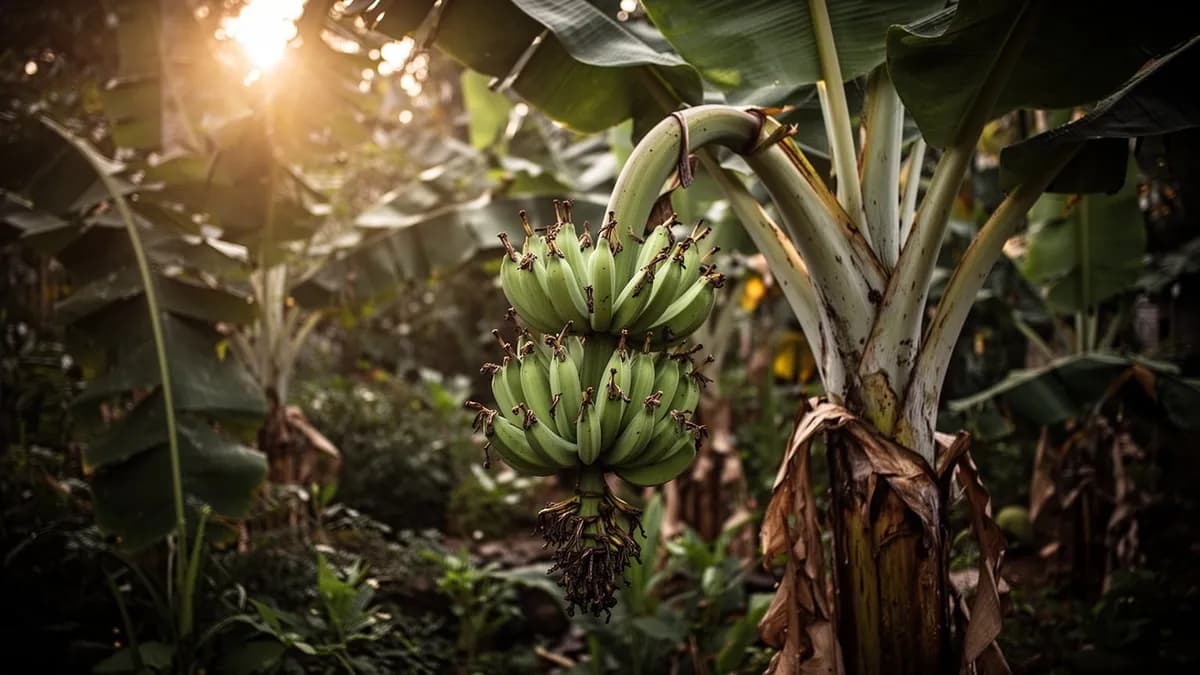
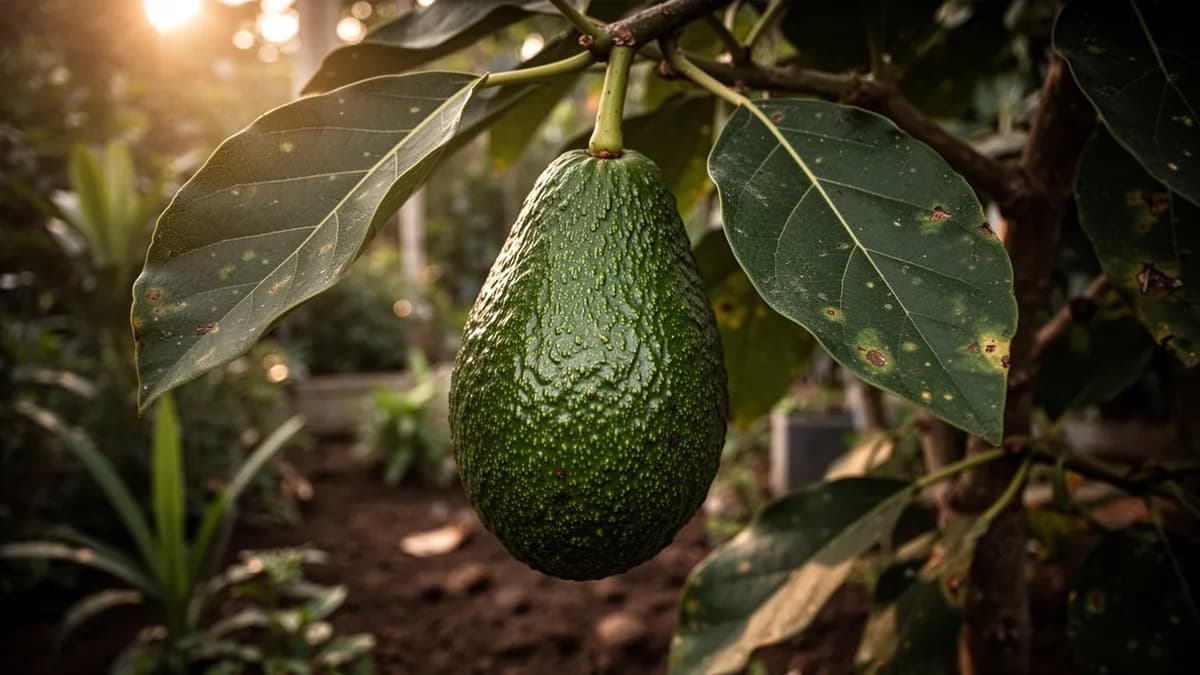
In the tropics, coffee is classically grown beneath taller nurse trees that provide the dappled shade of its forest origins. Banana is the ideal fast companion, casting quick, adjustable shade while yielding its own heavy crop; avocado serves as a longer-lived overhead canopy with complementary harvest seasons. Low ground covers such as sweet potato or tropical legumes shade the root zone, suppress weeds, and keep the soil cool and moist. Keep heavy feeders and aggressive rooters — eucalyptus, for example — well away, and do not crowd coffee with other shrubs; each plant needs about 150 centimeters of elbow room for air circulation, the first defense against leaf rust.
Banana belongs beside it.
Old growers' knowledge, checked against Coffee's real companion table below — test any plant you're growing.
Try Coffee in a bed — right here
A real planner bed with Coffee already in it. Tap a companion to place it and watch the pairing checks answer — green for good neighbours, red for a clash.


Related growing guides
Feed it well
Coffee demands slightly acidic, humus-rich, freely draining soil with a pH of 6.0 to 6.5 — the volcanic loams of its homeland are the benchmark. In containers, use an ericaceous (acid-loving) potting mix with added perlite or fine bark for aeration. Feed monthly through the growing season with a balanced fertilizer that includes micronutrients, applied at half strength; coffee is a moderately heavy feeder and responds to extra potassium and magnesium during cherry development. Yellowing between the veins on new leaves signals iron chlorosis from alkaline water or soil — correct with chelated iron and switch to rainwater or filtered water. Avoid piling fresh coffee grounds directly around the plant; compost them first.
Ideal Temperature
Hardiness Zone Compatibility
From seed to harvest, stage by stage
Seed Germination
Coffee germinates slowly. Four to eight weeks after sowing, the seed coat splits and a pale root anchors downward while the stem lifts the two halves of the seed above the surface like a tiny soldier — growers call this the matchstick or soldier stage. The papery seed coat eventually drops away to reveal the first pair of smooth, oval leaves. Freshness is everything: seeds older than a few months germinate poorly or not at all, and warmth below 20 degrees stalls the process completely.
Seedling Establishment
The young seedling slowly adds pairs of opposite leaves, each new pair larger and glossier than the last, while the taproot drives deep into the pot. Growth is unhurried in the first six months; a sturdy little plant of 15 to 25 centimeters with four to six leaf pairs is a good result. This is the most delicate phase of a coffee plant's life — cold, scorching sun, and soggy soil all claim young plants.
Juvenile Vegetative Growth
Through its first and second years the plant builds its framework: a straight central stem with whorled tiers of horizontal primary branches, clothed in deep green, wavy-edged leaves. In tropical ground a juvenile coffee shrub can add a meter of height per year; in containers growth is slower and easily controlled. No flowers appear yet — the plant is banking the wood and leaf area it will need to carry its first crop in year three or four.
First Flowering
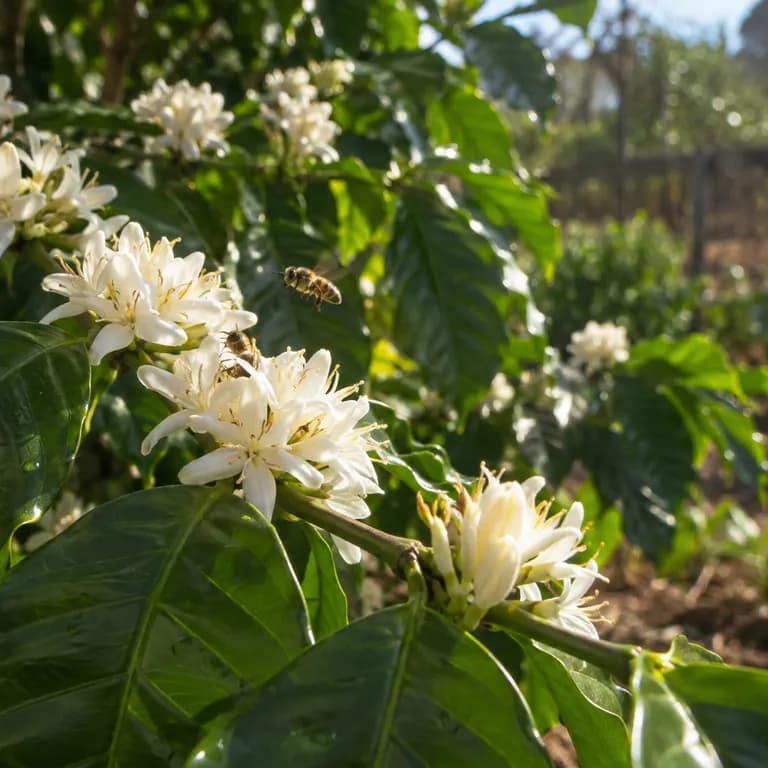
In year three or four the plant flowers for the first time. Small, starry white blossoms with an intense jasmine fragrance erupt in clusters along the previous season's wood, typically within a week or two of rain or a deep watering that follows a slightly drier rest. Indoors, flowering often follows a move outside or a deliberate change in watering rhythm. Arabica flowers are self-fertile, so one plant sets fruit alone, though gently shaking the branches during bloom improves pollination indoors.
Cherry Development and Ripening
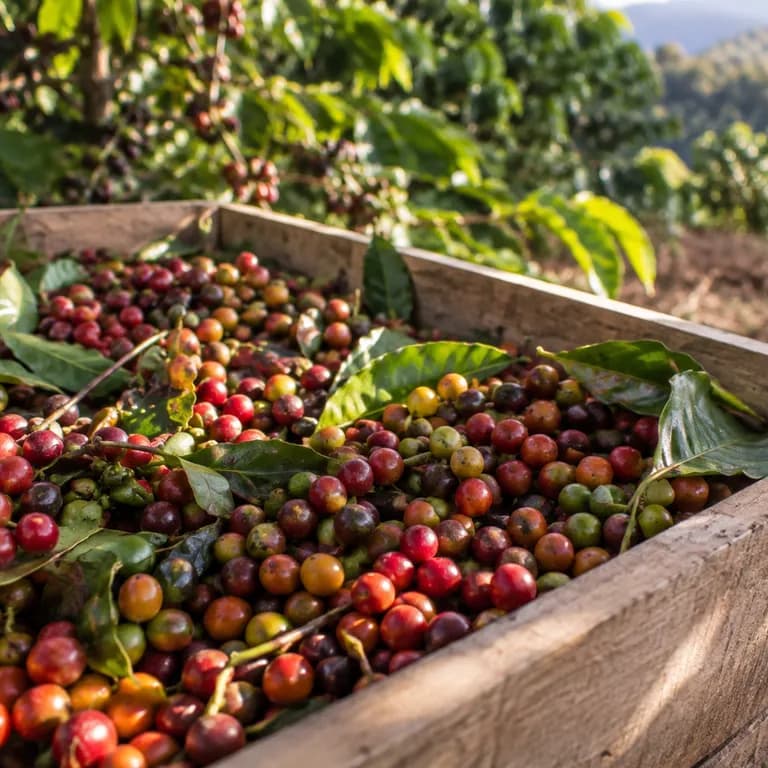
Pollinated flowers give way to small green cherries that swell slowly along the branches. For six to eight months they remain hard and green, then — seemingly all at once — begin to blush through yellow and orange to a deep, glossy red. Ripening is staggered along every branch, which is why hand-picking matters so much. Each cherry contains two seeds pressed face to face; occasionally a cherry holds a single rounded seed, the peaberry prized by roasters.
Harvest and Post-Harvest Processing
The first real harvest arrives three to four years after sowing. Ripe cherries are picked by hand in passes every week or two through the season and must be processed within a day. In the washed process, seeds are squeezed from the skins, fermented in water for 12 to 36 hours until the sticky mucilage breaks down, rinsed clean, and dried on screens for one to two weeks. What remains is parchment coffee — the pale, papery-shelled bean that rests until roasting day.
Sow pre-soaked fresh seeds 1 to 1.5 cm deep, flat side down, in moist seed compost. Hold at 25-30°C with a heat mat and cover with a clear lid or bag to trap humidity. Keep the surface just moist, never soggy, and provide bright shade — no direct sun. Do not give up before week eight.
Caring for Coffee month by month
What to do each month for your Coffee
September
You are hereThe earliest cherries begin to blush in some climates. Reduce nitrogen so the plant channels energy into ripening, and prepare drying screens, jars, and breathable storage bags for the coming harvest. Acclimatize outdoor container plants to brighter indoor light before bringing them in later this autumn.
Know exactly what to do in your garden — every month
One email at the start of each month: what to sow, plant, and tackle right now — for your Coffee and everything growing around it. Plus a short starter course that helps you dodge the classic mistakes.
- What to do, right now
- Matched to your season
- Starter course included
Harvesting Coffee
Coffee cherries ripen unevenly along each branch over several weeks, so selective hand-picking is the key to quality. Harvest only fully colored, deep red cherries that feel slightly soft and detach with a gentle twist; green cherries never ripen properly off the plant, and strip-picking sacrifices flavor. Pass over each plant every one to two weeks through the harvest season. Process cherries within 24 hours of picking. For the wet (washed) method suited to home growers, squeeze or roll the cherries to pop out the seeds, ferment the sticky seeds in a jar of water for 12 to 36 hours until the mucilage rinses away cleanly, wash thoroughly, then dry the parchment-covered seeds on screens in moving air for one to two weeks until moisture falls to about 10 to 12 percent and the beans rattle loosely inside the parchment shell.
assuming you plant when the window opens — set your real date
Pick Coffee promptly and the plant keeps producing.
Storage & Preservation
Dried seeds still inside their papery parchment keep best — store them in breathable cloth or paper bags in a cool, dry, dark place for up to a year, hulling only when you are ready to roast. Hulled green beans stay fresh for six to twelve months under the same conditions. Roast small batches as needed and keep roasted beans in an airtight container away from light, using them within two to four weeks for peak flavor; grind immediately before brewing. Dried cascara (the husks of dry-processed cherries or skins reserved from pulping) stores for months in sealed jars for brewing as tea. Fresh cherry pulp can be frozen, and green beans also freeze well in airtight bags.
What goes wrong — and the fix
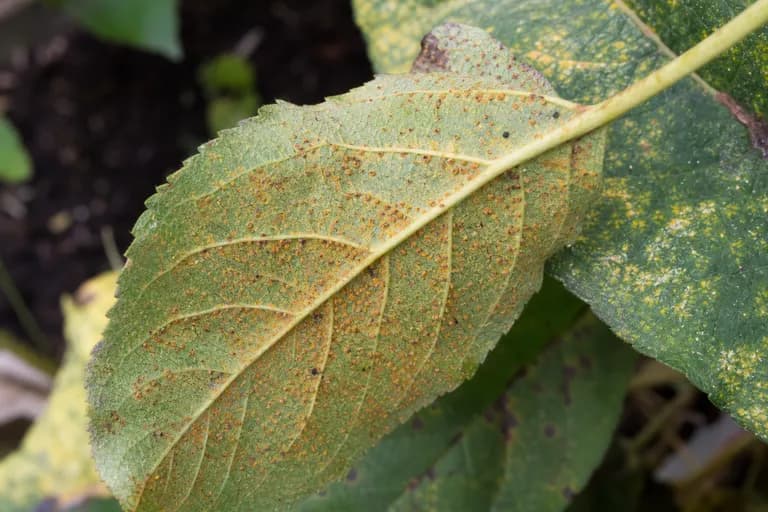
Coffee Leaf Rust (Hemileia vastatrix)
DiseasePowdery orange-yellow pustules on the undersides of leaves with corresponding pale yellow spots on the upper surface. Severely infected leaves drop prematurely, weakening the plant and reducing the following season's crop.
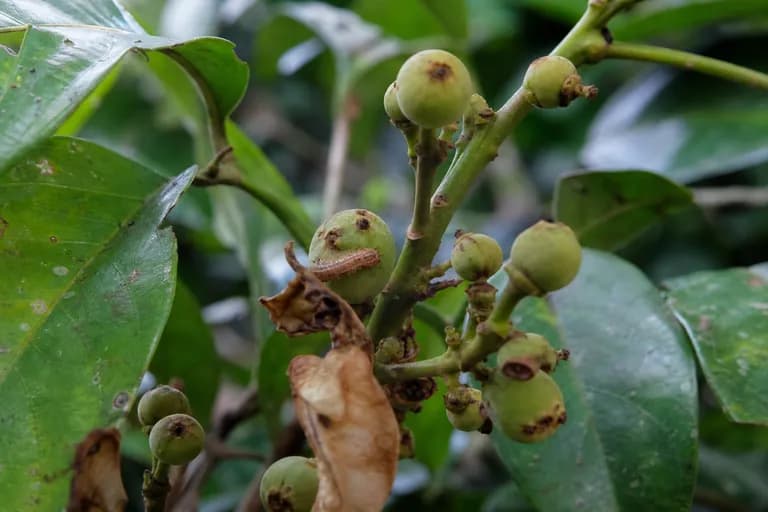
Coffee Berry Borer (Hypothenemus hampei)
PestA tiny pinhole at the blossom end of the cherry where the female beetle entered. Inside, larvae tunnel through the seed, causing premature ripening, cherry drop, and damaged beans.
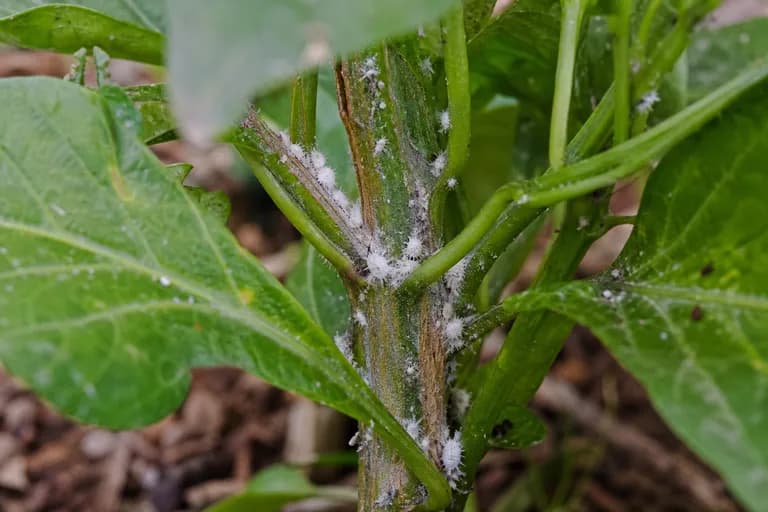
Mealybugs
PestWhite, cottony masses clustered along stems, leaf veins, and young shoots, often attended by ants. Heavily infested plants show sticky honeydew, sooty mold, and distorted new growth.
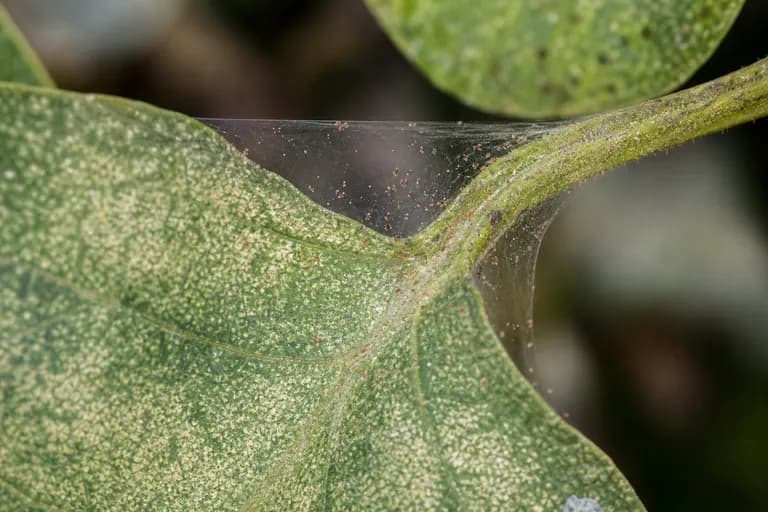
Spider Mites
PestFine stippling of yellow or bronze dots on the leaves, delicate webbing on the undersides, and a dusty, dull look to the foliage, worst in hot, dry indoor air.
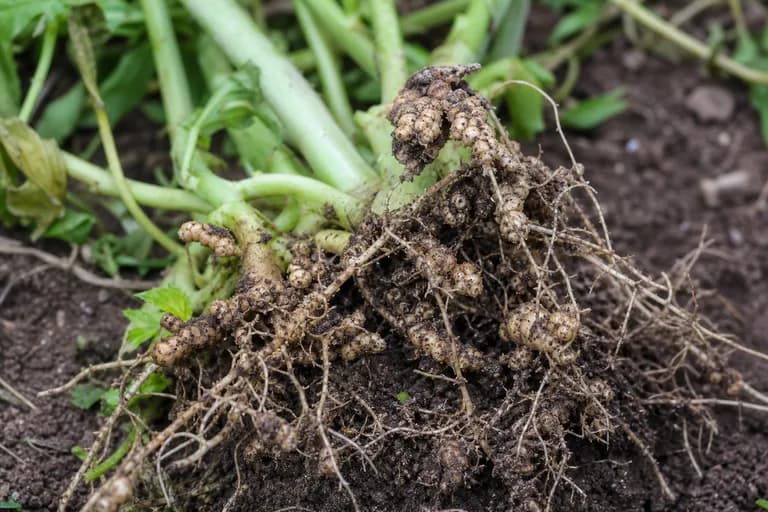
Root-Knot Nematodes
PestStunted growth, pale leaves, and wilting despite adequate water. When the plant is unpotted or dug up, the roots show the characteristic swollen galls and knots.
Troubleshooting Common Problems
Scorched, bleached, or crisped leaf patches follow exposure to harsh direct sun, especially on indoor plants moved abruptly outdoors — always acclimatize gradually and provide afternoon shade. Brown leaf tips and edges point to low humidity, inconsistent watering, or fluoride and salt buildup from tap water. Leaf drop is the classic response to cold drafts, temperatures below about 10 degrees, or sudden relocation. A plant that grows well but never flowers usually suffers from insufficient light or from being kept too uniformly wet; allow a slightly drier rest in late winter, then resume generous watering to trigger bloom. Cherries that shrivel or drop before coloring signal water stress or pot-bound roots.
Growing Tips
- Never try to grow coffee from roasted or instant coffee — the beans are dead. Source fresh green arabica seeds in parchment from a specialty supplier, and sow them within two to three months of harvest for the roughly 60 percent germination that only fresh seed delivers.
- Light makes or breaks indoor coffee: think bright shade, not darkness, not blaze. An east window or a meter back from a south window is perfect; scorched pale patches mean too much sun, while leggy reach and no flowers mean too little.
- Coffee resents hard tap water. Lime raises soil pH until the plant can no longer absorb iron, producing yellow leaves with green veins — water with rainwater or filtered water and repot into ericaceous mix at the first sign of chlorosis.
- Humidity is the difference between a surviving plant and a thriving one: aim for 50 percent or higher with daily misting, a pebble tray, or grouping plants together, especially through heated winters.
- Trigger flowering the way the tropics do — keep the plant slightly drier for four to six weeks in late winter, then resume deep, generous watering. The flush of jasmine-scented blossom usually follows within two weeks.
- Prune without fear. Coffee responds to a hard trim with vigorous branching, so pinch the leader at 60-90 centimeters and shorten side shoots after harvest to keep a container plant dense, glossy, and under a meter tall.
- Process cherries the day you pick them: squeeze out the seeds, ferment in water for 12 to 36 hours until the slime rubs off, wash, and dry on a rack for one to two weeks. Skip the fermentation and your coffee will taste flat and sour.
- Roast tiny batches in a dry cast-iron pan, shaking constantly: listen for the popcorn-like first crack around 8 to 12 minutes, stop a minute or two past it for a medium roast, and rest the beans overnight before grinding — the difference from store coffee is startling.
- Resist repotting into a huge container immediately. Coffee roots prefer a snug fit; step up one pot size each spring and you will reach a final 40-60 liter pot in four or five years without the root rot that oversized pots invite.
- Bring patio plants in early — a single night near freezing can defoliate a plant that took four years to reach fruiting size. When nights fall toward 10°C, the holiday is over.
Grow your best Coffee yet — and everything around it.
Start a free plan today. Lay out your beds, drop in your Coffee, and let PlotMyGarden handle the timing, spacing, companions and reminders from seed to harvest basket.
Pick your Coffee
Typica
The foundational arabica variety carried from Yemen to Java and the Americas, prized for its clean, sweet, balanced cup. Tall-growing with relatively low yields and susceptibility to leaf rust.
Bourbon
A natural mutation of Typica from the island of Bourbon (now Reunion), producing about 20 to 30 percent more fruit with a characteristically sweet, complex flavor. The parent of many modern cultivars.
Caturra
A compact dwarf mutation of Bourbon discovered in Brazil, ideal for home growers because its short stature suits containers and small gardens. Bright, lively cup quality.
Catuai
A Brazilian cross of Mundo Novo and Caturra combining small size with high yields and good wind resistance, widely planted across Central and South America.
Geisha (Gesha)
An Ethiopian landrace made famous in Panama, celebrated for an intensely floral, jasmine-and-bergamot cup that commands record auction prices. Tall and low-yielding but unmatched in flavor.
Specialty arabica coffee retails for $15-25 USD per pound roasted and $6-10 per pound green, so a mature outdoor shrub producing 0.4-0.8 kg of green coffee a year repays perhaps $10-20 annually — honest math says coffee is a poor money-saver. The real returns are elsewhere: a free ornamental evergreen for the patio, the unmatched experience of roasting beans you grew yourself, and cascara tea that specialty cafes sell by the cup. Container growers should grow coffee for the pleasure of the process and treat the harvest as a delicious bonus rather than a grocery strategy.
Quick recipes

Home-Roasted Pour-Over Coffee
30 minutesThe full seed-to-cup experience: hull home-dried parchment beans, roast them in a dry cast-iron pan over medium heat, shaking constantly for 10 to 15 minutes until they reach a fragrant chestnut brown with an audible first crack, cool, rest overnight, and brew as a pour-over to taste coffee you grew yourself.
4 ingredients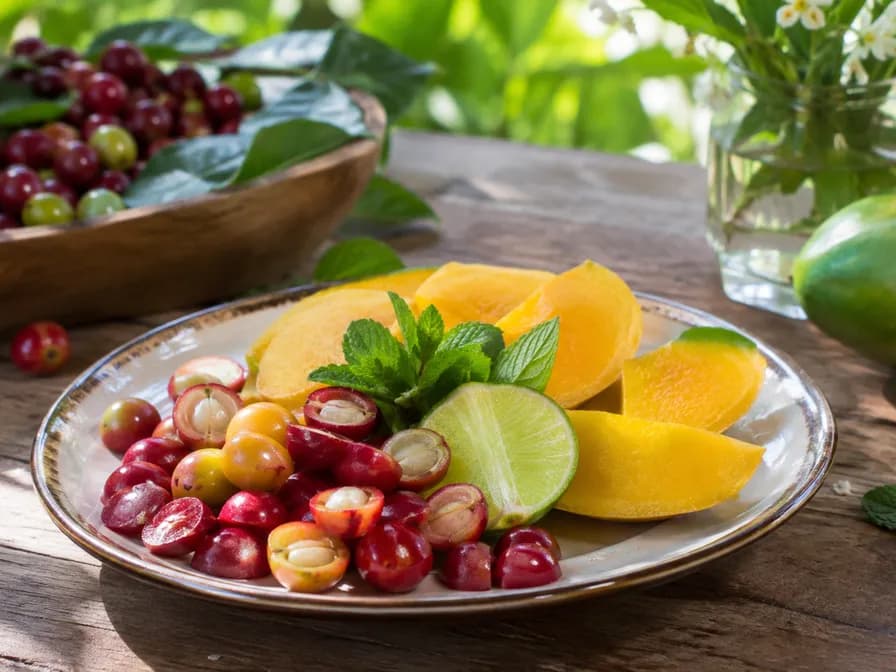
Cascara (Coffee Cherry Tea)
10 minutesA honey-amber infusion of dried coffee cherry skins — cascara means husk in Spanish — with a flavor closer to hibiscus, rose hip, and dried apricot than to coffee. Reserve the skins when pulping your cherries, dry them on a rack for a few days, and steep; it contains roughly a quarter of the caffeine of brewed coffee.
4 ingredientsCafe de Olla (Mexican Spiced Coffee)
15 minutesMexico's traditional clay-pot coffee, simmered with dark piloncillo sugar and cinnamon — a warming, gently spiced way to celebrate a home-grown harvest. Traditionally brewed in an earthenware olla, but any saucepan works; the spices should perfume the coffee, never overpower it.
6 ingredientsCulinary Uses
Home-grown coffee can be wet-processed, dried, hulled, roasted, and brewed exactly like commercial beans — pour-over, French press, espresso, and cold brew all showcase a fresh, home-roasted cup. The dried skins of the cherries brew into cascara, a delicately sweet, tea-like infusion with notes of hibiscus, raisin, and rose hip. Fresh cherry pulp is edible and sweet straight from the fruit. Finely ground coffee also works as a flavoring in baking, chocolate desserts, tiramisu, and ice cream, and coarser grounds make an excellent component of spice rubs for grilled meats.
What's inside
Health Benefits
- Large population studies consistently associate moderate coffee consumption of three to four cups per day with a lower risk of developing type 2 diabetes, an effect observed for both caffeinated and decaffeinated coffee
- Coffee drinking is linked in multiple long-term studies to a reduced risk of Parkinson's disease and appears to slow age-related cognitive decline, with caffeine and the antioxidant compound EHT both implicated in protecting neurons
- Regular coffee consumption shows a protective association with liver health — drinkers show lower rates of fatty liver disease, fibrosis, and cirrhosis across many cohort studies
- Caffeine is a proven short-term cognitive enhancer, improving alertness, reaction time, and concentration at doses of 75 to 150 mg, roughly one to two cups of home-brewed coffee
- Coffee is among the richest everyday sources of dietary polyphenols, and its chlorogenic acids have demonstrated anti-inflammatory and blood-vessel-supporting effects in clinical research
- Meta-analyses associate moderate coffee intake with a modestly lower risk of depression and of stroke, though coffee is not a treatment and effects vary between individuals
Where Coffee comes from
Coffea arabica is native to the misty montane forests of southwestern Ethiopia — a region still called Kaffa — where it grows wild as an understory shrub to this day. Local people gathered cherries from wild plants for centuries, chewing the pulp or mixing ground beans with fat for travel rations, long before anyone thought to brew them. Sometime in the fifteenth century the plant crossed the Red Sea to Yemen, where Sufi monks cultivated it on terraced hillsides and brewed the first recognizably modern coffee to stay awake through night devotions. The port of Mocha became the center of a monopoly that supplied coffeehouses from Mecca to Istanbul to Venice.
For two centuries Arabia guarded its trade fiercely, allowing only boiled or roasted — that is, sterile — beans to leave. The monopoly broke in the late 1600s when Dutch traders planted coffee in Java, and again in 1714 when the mayor of Amsterdam presented a single tree to King Louis XIV of France. In 1723 a French naval officer, Gabriel de Clieu, carried a seedling from the royal greenhouses to Martinique, nursing it through the voyage in a glass case; most of the arabica now growing across the Caribbean and Latin America descends from that one plant. Francisco de Melo Palheta introduced coffee to Brazil in 1727, setting in motion what would become the largest coffee industry on earth.
Coffeehouses spread through Europe in the seventeenth century as centers of politics, commerce, and science — Lloyd's of London began in one. The leaf rust epidemics that swept Ceylon and Java in the late nineteenth century pushed breeding toward hardier types and eventually toward the species Coffea canephora (robusta), but arabica still supplies about 60 percent of world production. Today coffee is cultivated in some seventy countries straddling the equator — the bean belt — and remains one of the most widely consumed beverages on the planet.
Coffee: did you know?
Fascinating facts about Coffee
Coffee beans are not beans at all but the paired seeds of a bright red fruit called a cherry, and the sweet pulp around them tastes faintly of watermelon and jasmine. About 5 percent of cherries contain a single rounded seed instead of a pair — the peaberry, which roasters prize for its concentrated flavor.
Coffee questions, answered
When should I plant Coffee?
What are good companion plants for Coffee?
What hardiness zones can Coffee grow in?
How much sun does Coffee need?
How far apart should I space Coffee?
What pests and diseases affect Coffee?
How do I store Coffee after harvest?
What are the best Coffee varieties to grow?
What soil does Coffee need?
Can I grow a coffee plant from beans bought at the grocery store?
How long until my coffee plant gives me actual coffee?
Will a coffee plant actually fruit indoors, or is it just a houseplant?
Is the coffee cherry itself edible?
Why are my coffee plant's leaves turning yellow?
How much coffee can one plant really produce?
You just read the theory. Now grow it on autopilot.
Everything that makes Coffee fiddly — the timing, the spacing, the companions, the harvest window — is exactly what PlotMyGarden handles for you, for every plant in your garden.
A plan that knows your weather
Set your location once. Get sow, feed and harvest dates built around your real last-frost date and live forecast — no more guessing from a generic seed packet.
From the “When to plant” sectionDrag-and-drop bed planner
Design beds on a grid. Every plant snaps to its proper spacing, and you can see your whole season laid out before you spend a cent on seed.
From the “Growing guide” sectionCompanion conflicts, caught early
200+ good-and-bad pairings checked live as you plant — so a season-wrecking mistake never makes it into the ground.
From the “Companions” sectionReminders you'll actually act on
“Water the beans.” “Pick today before it turns.” Timely, specific, and tied to the plants you're really growing.
From the “Harvest” sectionSuccession, scheduled
Want a harvest for six weeks, not six days? It spaces your sowings automatically and reminds you when each new block is due.
From the “When to plant” sectionA record that gets smarter
Every harvest you log teaches it your garden. Next year's plan starts from what actually worked in your soil, not a textbook's.
From the “Overview” sectionPlant these alongside Coffee
More Tropical Fruits
Grow your best Coffee yet — and everything around it.
Start a free plan today. Lay out your beds, drop in your Coffee, and let PlotMyGarden handle the timing, spacing, companions and reminders from seed to harvest basket.