Guave
Ein tropischer immergrüner Baum, der intensiv duftende Früchte mit rosa oder weißem Fruchtfleisch hervorbringt und reich an Vitamin C ist.





Auf dieser SeiteÜberblick
Guave im Überblick
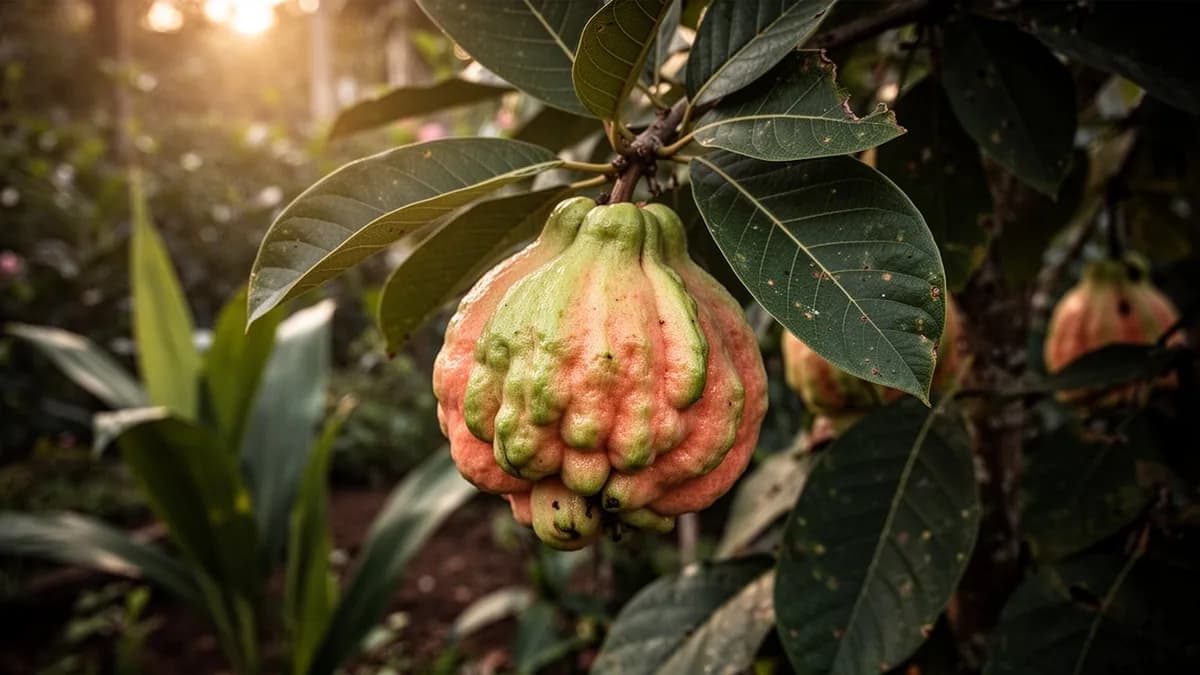
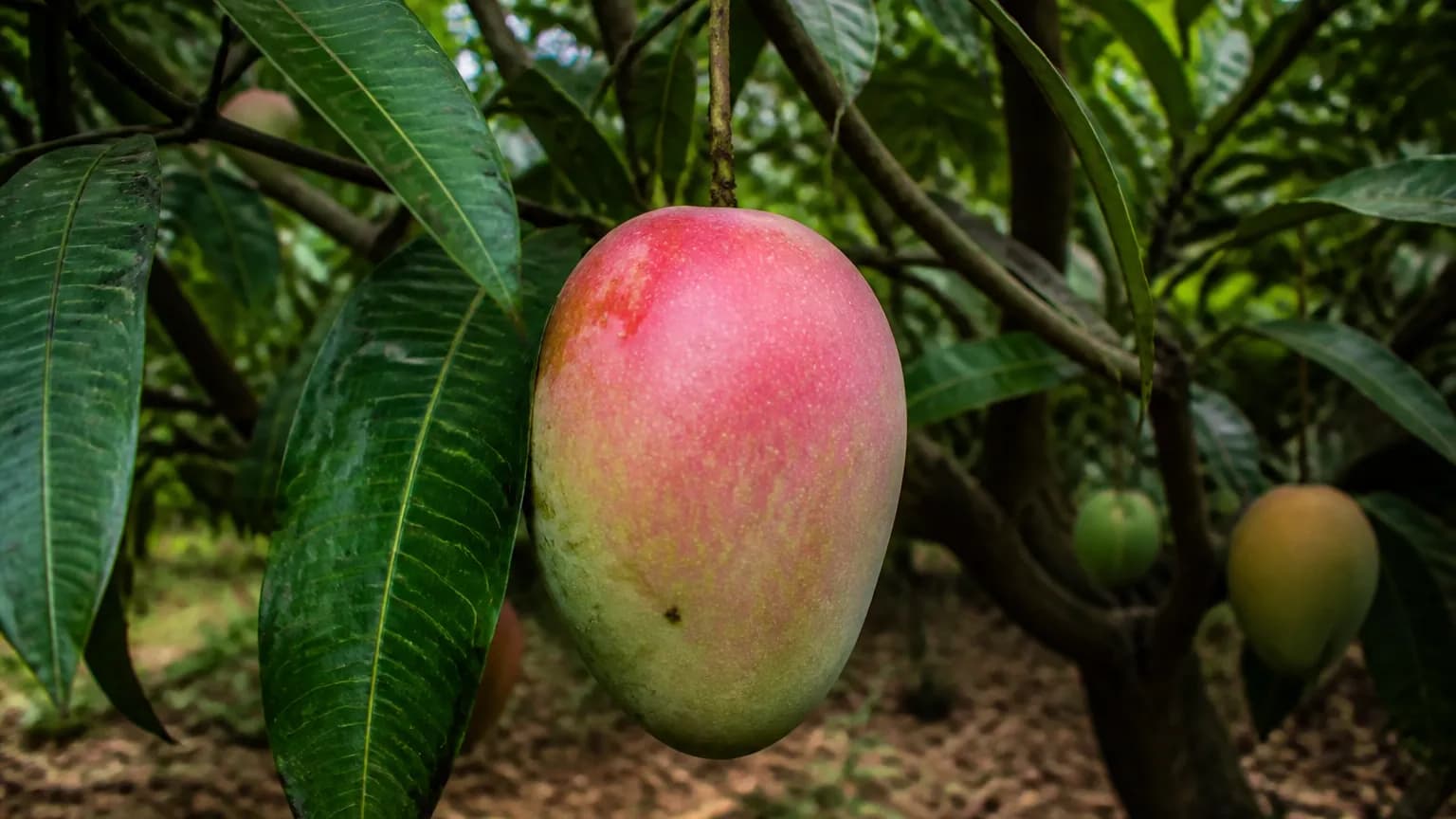
Ein tropischer immergrüner Baum, der intensiv duftende Früchte mit rosa oder weißem Fruchtfleisch hervorbringt und reich an Vitamin C ist. Guaven gehören zu den einfacher anzubauenden tropischen Früchten und können nach dem Anwachsen kurze leichte Fröste vertragen. Die Bäume tragen überreichlich Früchte und müssen möglicherweise ausgedünnt werden, um Überlastung zu vermeiden und die Fruchtgröße beizubehalten.
Wann Guave pflanzen
Guavensamen keimen leicht, bringen aber variable Nachkommen hervor, die von der Mutterpflanze abweichen können. Entnehmen Sie die Samen aus reifen Früchten, waschen Sie sie und säen Sie sie frisch in eine gut durchlässige Aussaaterde in etwa 0,5 cm Tiefe. Halten Sie Temperaturen von 24 bis 29 °C bei gleichmäßiger Feuchtigkeit. Die Keimung dauert zwei bis acht Wochen. Für sortenechte Pflanzen vermehren Sie durch Abmoosen oder Stecklinge aus weichem Holz, die mit Bewurzelungshormon behandelt werden. Veredelte Bäume werden für den kommerziellen Anbau bevorzugt. Sämlinge beginnen nach zwei bis vier Jahren zu fruchten, während veredelte Bäume bereits innerhalb von ein bis zwei Jahren Früchte tragen können.
Dein Guave-Jahr
Abgestimmt auf Zone 7 · typische Saison · Frost geht um den 2. Apr. und kehrt um den 1. Nov. zurück
Guave Mär – Mai pflanzen, Jun – Nov ernten. Beachte die Pflanzmethoden unten und wähle dein Klima für passende Zeiträume.
So baust du Guave an
Guavenbäume wachsen am besten in voller Sonne bei warmen Temperaturen und mäßiger Luftfeuchtigkeit. Pflanzen Sie im Frühling und halten Sie bei Standardsorten einen Abstand von 3,5 bis 4,5 Metern ein. Guaven passen sich an eine Vielzahl von Bodenarten an, gedeihen aber am besten in nährstoffreichem, gut durchlässigem Lehmboden. Sie können nach dem Anwachsen kurze leichte Fröste bis etwa -3 °C vertragen, was sie zu einer der widerstandsfähigeren tropischen Obstarten macht.
Gießen Sie in den ersten zwei Jahren regelmäßig, um ein tiefes Wurzelsystem zu entwickeln. Ausgewachsene Bäume sind mäßig trockenheitstolerant, bringen aber bei gleichmäßiger Feuchtigkeit bessere Früchte hervor, besonders während der Blüte und Fruchtentwicklung. Reduzieren Sie die Bewässerung im Winter leicht, um einen Blütenschub im Frühling zu fördern.
Schneiden Sie junge Bäume, um ein starkes, offenes Gerüst mit drei bis vier Hauptleitästen zu entwickeln. Entfernen Sie jährlich Wurzelausläufer und sich kreuzende Äste im Inneren der Krone. Guaven fruchten am neuen Holz, daher fördert leichter Spitzenschnitt die Bildung von mehr Blütenholz. In frostgefährdeten Gebieten kultivieren Sie die Pflanzen in Kübeln und stellen sie bei Kälteeinbrüchen geschützt auf, oder pflanzen Sie sie an eine nach Süden ausgerichtete Wand für zusätzliche Wärme.
Für Guave ist ein Beet von 120 × 240 cm zu klein
Guave braucht 360 cm Platz pro Pflanze. Der Planer hält diesen Abstand für dich ein — jede Pflanze, jedes Beet.
Die besten Nachbarn für Guave
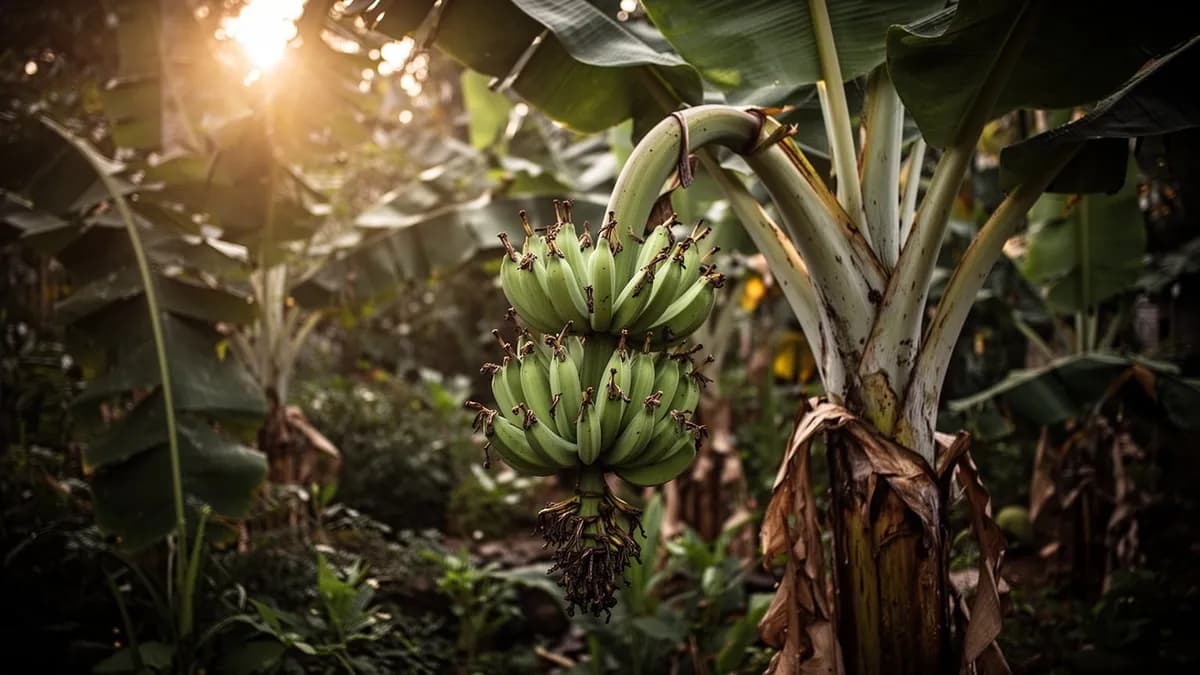
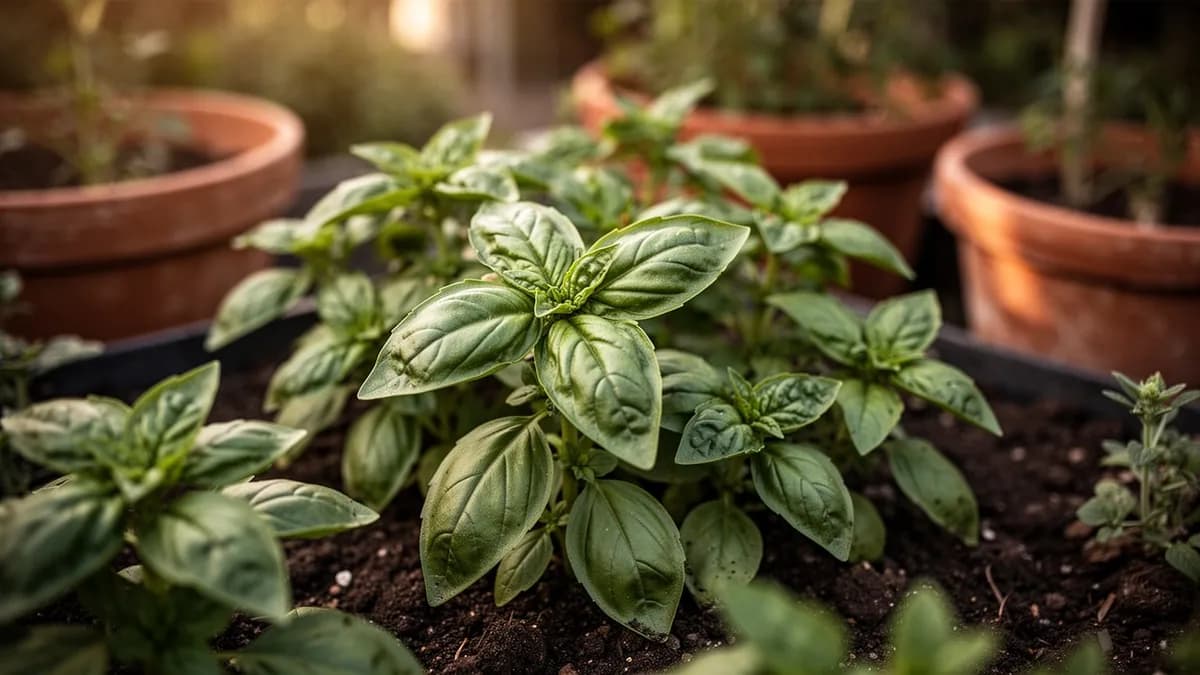
Die Guave harmoniert gut mit anderen tropischen Obstbäumen wie Banane und Papaya in gemischten tropischen Waldgärten. Basilikum und andere aromatische Kräuter in der Nähe können helfen, einige Schadinsekten abzuschrecken. Stickstofffixierende Hülsenfrüchte wie die Straucherbse sind ausgezeichnete Begleitpflanzen und verbessern die Bodenfruchtbarkeit. Tagetes helfen, Nematoden abzuwehren, die Guavenwurzeln schädigen können. Vermeiden Sie die Pflanzung in dichter Konkurrenz mit aggressiven tropischen Bäumen, da die Guave am besten bei guter Sonneneinstrahlung und Luftzirkulation gedeiht.
Banane gehört daneben.
Altes Gärtnerwissen, geprüft an der echten Nachbartabelle von Guave — teste jede Pflanze, die du anbaust.
Probiere Guave direkt hier im Beet
Ein echtes Planer-Beet, Guave steht schon drin. Tippe einen Begleiter an, platziere ihn und sieh, wie die Nachbarschaftsprüfung antwortet — grün für gute Nachbarn, rot bei Streit.


Passende Anbau-Ratgeber
Richtig düngen
Die Guave passt sich an eine Vielzahl von Böden an, darunter Ton, Sand und felsiger Kalkstein, bevorzugt aber nährstoffreichen, gut durchlässigen Lehm mit einem pH-Wert von 5,0 bis 7,0. Sie ist im Vergleich zu den meisten Obstbäumen bemerkenswert tolerant gegenüber nährstoffarmen Böden. Junge Bäume erhalten vierteljährlich einen ausgewogenen Dünger (10-10-10). Tragende Bäume profitieren von einer kaliumbetonten Formel, die dreimal jährlich ausgebracht wird. Ergänzen Sie regelmäßig mit Kompost oder gut verrottetem Mist. Eisenmangel kann in alkalischen Böden auftreten; bei Aufhellungen zwischen den Blattadern cheliertes Eisen als Blattspray oder Bodenguss ausbringen.
Ideale Temperatur
Winterhärtezone-Kompatibilität
Von der Saat zur Ernte, Schritt für Schritt
Keimung
Guavensamen keimen langsam über 2–4 Wochen in warmem, feuchtem Substrat. Die Samenschale ist hart, daher beschleunigt ein 24-stündiges Einweichen in warmem Wasser die Keimung. Die Sämlinge erscheinen mit einem Paar kleiner, ovaler Keimblätter.
Sämling
Die ersten echten Blätter erscheinen und der Sämling entwickelt ein Wurzelsystem. Das Wachstum ist anfangs langsam, beschleunigt sich aber, sobald die Pflanze mehrere Sätze echter Blätter hat. Das charakteristische Guavenaroma wird beim leichten Reiben der Blätter bemerkbar.
Vegetatives Wachstum
Die junge Guavenpflanze zeigt schnelles vegetatives Wachstum und entwickelt ihre charakteristische glatte, abblätternde Rinde und gegenständige Blätter. Äste strecken sich und die Pflanze beginnt, ihre endgültige Strauch- oder Kleinbaumform anzunehmen. Die Wurzeletablierung vertieft sich erheblich.
Erste Blüte
Veredelte oder aus Stecklingen gezogene Pflanzen können bereits im ersten Jahr blühen; samengewachsene Pflanzen blühen typischerweise erst nach 2–4 Jahren. Kleine, weiße, fünfblättrige Blüten mit auffälligen Staubblättern erscheinen in den Blattachseln. Die Blüten sind selbstfruchtbar, profitieren aber von Fremdbestäubung.
Fruchtentwicklung
Früchte entwickeln sich aus bestäubten Blüten über 3–5 Monate. Sie beginnen grün und fest, werden allmählich größer und weicher bei der Reifung. Die Schale wechselt von dunkelgrün zu gelblich-grün oder gelb. Das innere Fruchtfleisch entwickelt seine charakteristische rosa, weiße oder cremefarbene Farbe und sein süßes Aroma.
Ernte & Reife
Ausgewachsene Guavenbäume treten in einen produktiven Zyklus von Blüte und Fruchtbildung ein, der Jahrzehnte andauern kann. In tropischen Klimazonen kann die Fruchtbildung nahezu ganzjährig erfolgen; in subtropischen Gebieten gibt es typischerweise ein bis zwei Haupterntezeiten. Ein gesunder, ausgewachsener Baum kann jährlich 50–100 kg Früchte liefern.
Halten Sie die Bodentemperatur zwischen 25–30 °C und das Substrat gleichmäßig feucht, aber nicht staunass. Verwenden Sie eine Heizmatte, wenn Sie in einem kühlen Klima anbauen.
Guave Monat für Monat pflegen
Was du jeden Monat für deine Guave tun solltest
Oktober
Aktueller MonatIn tropischen Klimazonen kann ein zweiter Blütenschub auftreten. Schneiden Sie nach der Haupternte leicht zurück, um den Baum zu formen und krankes Holz zu entfernen. Bringen Sie Kompost auf, um die Bodennährstoffe aufzufüllen.
Immer wissen, was jetzt im Garten zu tun ist
Eine E-Mail zum Monatsanfang: was du jetzt säen, pflanzen und anpacken solltest — für deine Guave und alles, was drumherum wächst. Dazu ein kurzer Startkurs, der dich vor den klassischen Fehlern bewahrt.
- Was jetzt zu tun ist
- Passend zu deiner Saison
- Startkurs inklusive
Guave ernten
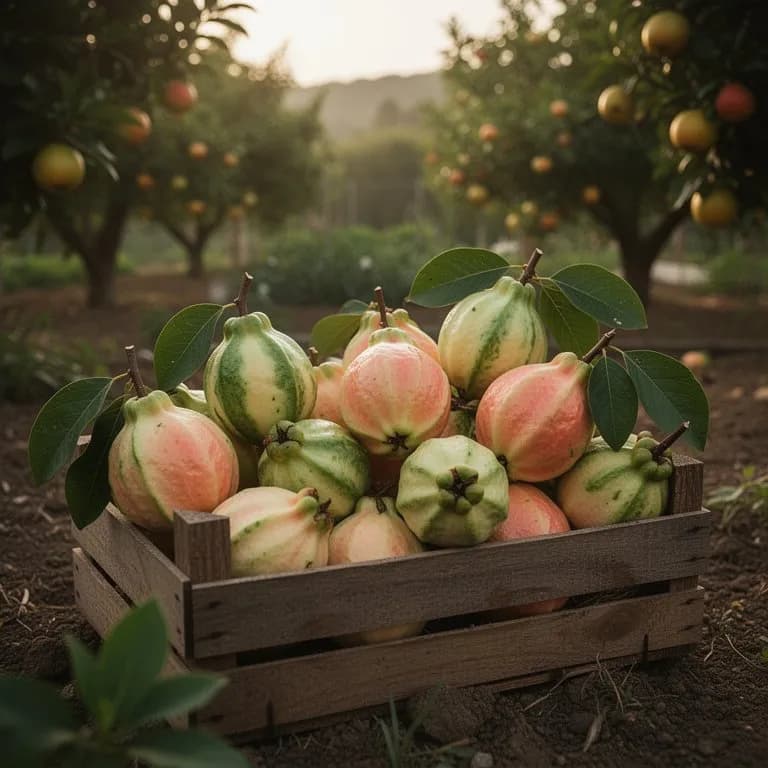
Guaven sind erntereif, wenn sie von dunkelgrün zu einem helleren gelblich-grün wechseln und bei Berührung leicht nachgeben. Die Frucht verströmt im reifen Zustand einen starken, süßen Duft. Pflücken Sie von Hand oder schneiden Sie mit einer Gartenschere ab, wobei ein kurzer Stielansatz stehen bleibt. Für den besten Geschmack lassen Sie die Früchte vollständig am Baum ausreifen. Für Versand oder Lagerung ernten Sie, wenn sie noch leicht fest sind, und lassen Sie sie bei Zimmertemperatur nachreifen. Ein ausgewachsener Guavenbaum kann 22 bis 36 Kilogramm Früchte pro Jahr hervorbringen.
angenommen, du pflanzt zu Beginn des Zeitraums — trage dein tatsächliches Datum ein
Ernte Guave zügig, dann trägt die Pflanze weiter.
Lagerung & Konservierung
Reife Guaven sind sehr empfindlich und sollten sofort gekühlt werden, wo sie sich drei bis fünf Tage halten. Leicht unreife Früchte können zwei bis drei Tage bei Zimmertemperatur gelagert werden, um nachzureifen. Für längere Haltbarkeit lässt sich Guavenpüree hervorragend einfrieren und bis zu einem Jahr aufbewahren. Guavenpaste (Goiabada) ist eine beliebte brasilianische Süßspeise, die durch Einkochen von Fruchtpüree mit Zucker hergestellt wird. Guaven eignen sich dank ihres hohen Pektingehalts auch hervorragend für Gelee, Marmelade und Saft. Getrocknete Guavenscheiben sind ein beliebter Snack in tropischen Regionen.
Was schiefgeht — und die Lösung
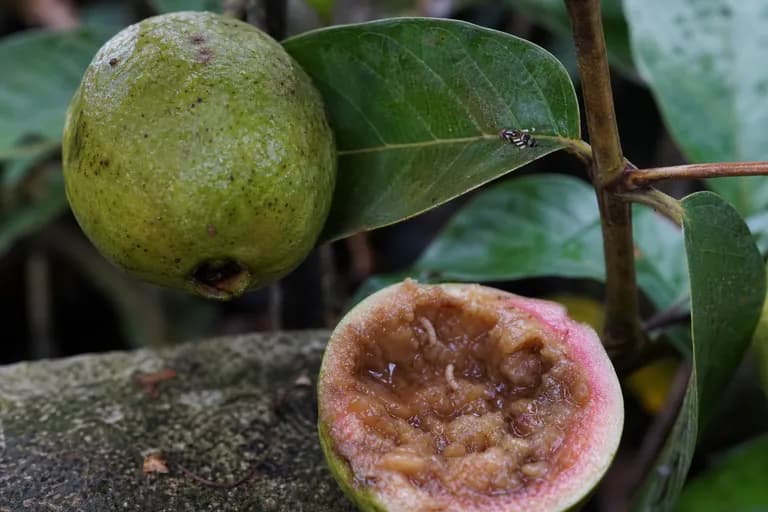
Guaven-Fruchtfliege
SchädlingWinzige Einstichstellen auf der Fruchtschale; Maden in reifenden Früchten; braune, matschige Stellen im Fruchtfleisch; vorzeitiger Fruchtfall.
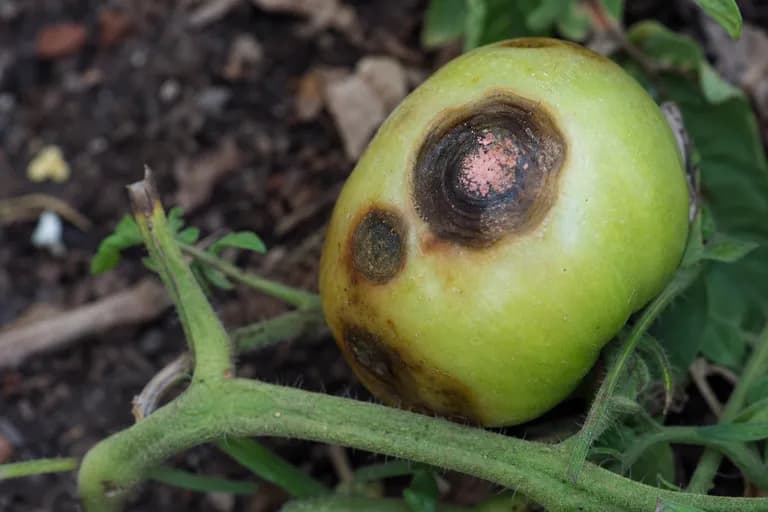
Anthraknose
KrankheitDunkle, eingesunkene Flecken auf Früchten; Bräunung der Blattspitzen; Absterben junger Triebe; Fruchtfäule bei feuchten Bedingungen.
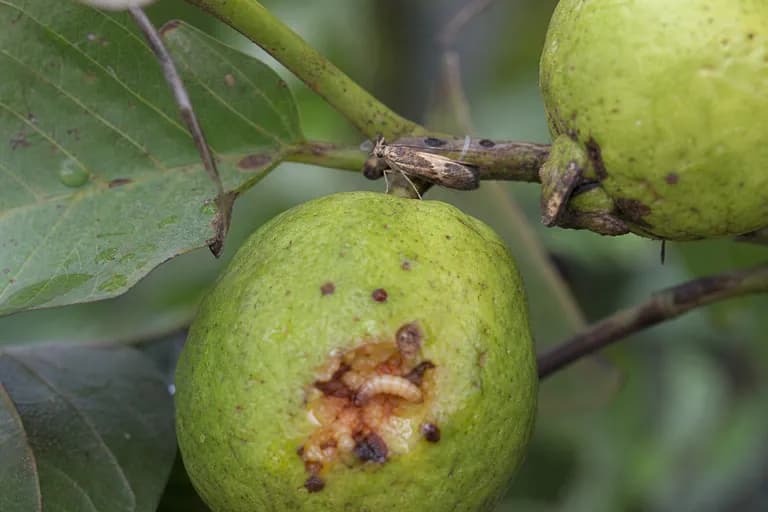
Guaven-Motte
SchädlingKleine Eintrittslöcher in Früchten; Larven, die sich durch das Fruchtfleisch fressen; Kotablagerungen nahe dem Fruchtstiel; innerer Fruchtverfall.
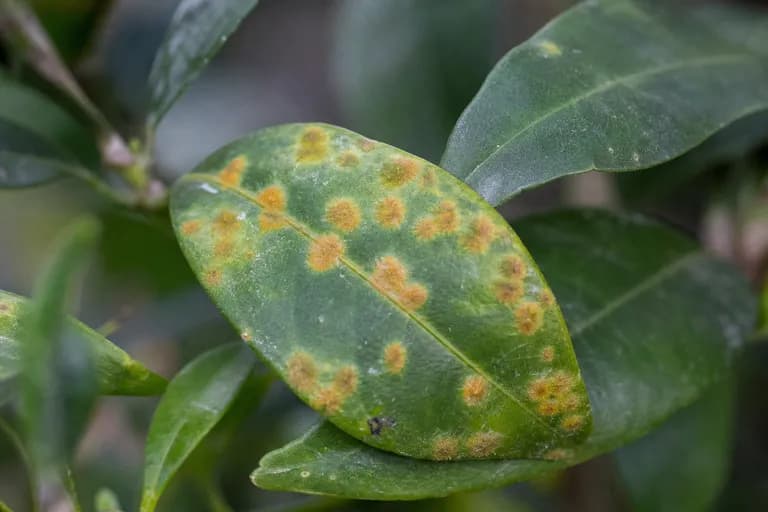
Algen-Blattfleckenkrankheit
KrankheitErhabene, orange-grüne, pelzige Flecken auf Blättern; reduzierte Photosynthese; geschwächter Baum bei starkem Befall.
Fehlerbehebung bei häufigen Problemen
Guavenbäume sind in tropischen Gebieten anfällig für Fruchtfliegenbefall, der den schwerwiegendsten kommerziellen Schädling darstellt. Die Bäume können in tropischen Regionen aufgrund der starken Fruchtproduktion und Samenverbreitung durch Vögel invasiv werden. Übermäßiger Fruchtansatz kann die Bäume erschöpfen, was zu kleinen, minderwertigen Früchten und Astbruch führt. In feuchten Klimazonen sind Pilzkrankheiten an Früchten und Laub häufig. Junge Bäume benötigen Frostschutz, bis sie gut etabliert sind. Wurzelgallennematoden können in sandigen Böden das Wurzelsystem schädigen und das Wachstum hemmen.
Anbautipps
- Wählen Sie veredelte oder aus Stecklingen gezogene Pflanzen statt samengewachsener – veredelte Bäume beginnen in 1–2 Jahren zu fruchten, während samengewachsene Bäume 4–8 Jahre brauchen können und möglicherweise keine sortenechten Früchte hervorbringen.
- Die Guave gedeiht in voller Sonne und benötigt täglich mindestens 6–8 Stunden direktes Sonnenlicht für kräftiges Wachstum und reichen Fruchtansatz; unzureichendes Licht ist der häufigste Grund für schlechte Fruchtproduktion in Hausgärten.
- Gießen Sie tief und selten statt flach und häufig – die Guave entwickelt ein ausgedehntes Wurzelsystem, das tiefe Bodenfeuchtigkeit erschließt, und diese Gießmethode fördert Trockenheitstoleranz und Wurzeltiefe.
- Bringen Sie eine dicke Schicht organischen Mulchs (10–15 cm) um die Basis des Baumes auf, wobei Sie den Stamm freihalten, um Bodenfeuchtigkeit zu bewahren, Unkraut zu unterdrücken und die Bodenfruchtbarkeit beim Zersetzen allmählich zu verbessern.
- Schneiden Sie die Guave nach jedem Erntezyklus zurück, um eine handhabbare Höhe (typischerweise 2–3 Meter für leichteres Ernten) beizubehalten, die Luftzirkulation in der Krone zu verbessern und neues Fruchtholz für die nächste Saison anzuregen.
- Düngen Sie dreimal jährlich mit einem ausgewogenen NPK-Dünger – im zeitigen Frühjahr, Frühsommer und nach der Haupternte – und wechseln Sie während der Fruchtentwicklung zu einer kaliumbetonten Formel, um Süße und Größe der Früchte zu verbessern.
- In frostgefährdeten Klimazonen pflanzen Sie die Guave an eine nach Süden ausgerichtete Wand, um von der Wärmeabstrahlung zu profitieren, oder kultivieren Sie sie in großen Kübeln (mindestens 50 Liter Fassungsvermögen), die bei Temperaturen nahe dem Gefrierpunkt ins Haus gebracht werden können.
- Die Guave ist weitgehend selbstfruchtbar, aber das Pflanzen von zwei oder mehr Bäumen in der Nähe – idealerweise verschiedener Sorten – kann die Bestäubungsrate, den Fruchtansatz und letztlich den Gesamtertrag erheblich verbessern.
- Überwachen Sie sorgfältig auf Guaven-Fruchtfliege (Bactrocera correcta) und Mittelmeerfruchtfliege; verwenden Sie Fruchtschutzhüllen an sich entwickelnden Früchten oder stellen Sie ab Blütenblattfall Proteinköderfallen auf, um einen Befall zu verhindern.
- Um in subtropischen Klimazonen einen zweiten Blüten- und Fruchtzyklus anzuregen, setzen Sie den Baum nach der Haupternte leichtem Stress aus, indem Sie 2–3 Wochen lang das Gießen einstellen, und nehmen Sie dann die regelmäßige Bewässerung wieder auf, um einen neuen Wachstums- und Blütenschub auszulösen.
Bau deine beste Guave an — und alles drumherum.
Starte heute kostenlos. Lege deine Beete an, setze deine Guave ein und lass PlotMyGarden Timing, Abstände, Begleiter und Erinnerungen von der Saat bis zum Erntekorb übernehmen.
Finde deine Guave
Ruby Supreme
Eine Sorte mit rosa Fruchtfleisch, ausgezeichneter Süße und starkem tropischem Aroma. Sehr ertragreich und gut geeignet sowohl zum Frischverzehr als auch zur Verarbeitung.
White Indian
Eine großfrüchtige Sorte mit weißem Fruchtfleisch, mild-süßem Geschmack und weniger Kernen als rosa Sorten. Beliebt in subtropischen Hausgärten.
Red Malaysian
Eine Zier- und Fruchtsorte mit auffällig rot getönten Blättern, rosa Blüten und tiefrosafarbenem Fruchtfleisch.
Barbie Pink
Eine kompakte Sorte, die reichlich trägt, mit leuchtend rosa Fruchtfleisch und ausgezeichnetem süß-saurem Geschmack. Gut geeignet für die Kübelkultur.
Der Anbau von Guaven im eigenen Garten kann 50–100 kg Früchte pro ausgewachsenem Baum jährlich liefern. Bei typischen Supermarktpreisen von 3–6 € pro kg für frische Guaven (sofern erhältlich) kann ein einzelner ertragreicher Baum einen Wert von 150–600 € an Früchten pro Jahr darstellen. In vielen Regionen erzielen tropische Spezialfrüchte wie die Guave Premiumpreise oder sind schlicht nicht erhältlich, sodass der Eigenanbau der einzige praktikable Weg ist, diese nährstoffreiche Frucht frisch zu genießen. Über den Frischverzehr hinaus können überschüssige Früchte zu hochwertigen Produkten wie Marmelade, Saft und getrockneten Guavenscheiben verarbeitet werden, was den wirtschaftlichen Nutzen weiter steigert. Der Baum ist langlebig (20–40 Jahre), benötigt nach der Etablierung nur minimale Pflege und trägt mit wenig Aufwand reichlich Früchte, was ihn zu einem der kosteneffektivsten Obstbäume für tropische und subtropische Hausgärtner macht.
Schnelle Rezepte
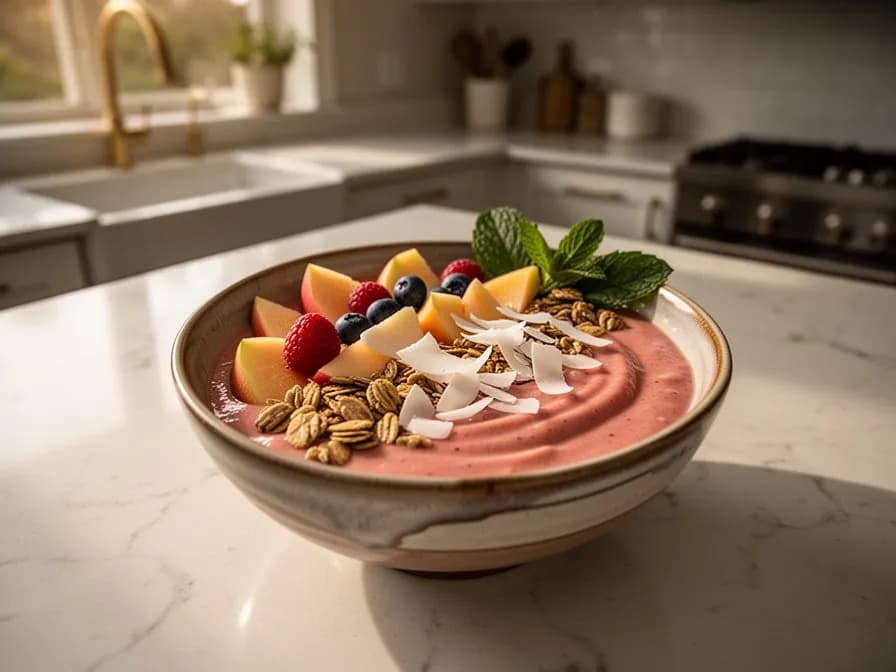
Guavenmarmelade
45 Min.Eine klassische tropische Marmelade, die den süßen, blumigen Geschmack der Guave einfängt. Dank ihres natürlich hohen Pektingehalts geliert diese Marmelade wunderbar ohne zusätzliches Pektin, und die tiefe rosa-orange Farbe ist auf Toast, Gebäck oder Käseplatten optisch beeindruckend.
5 Zutaten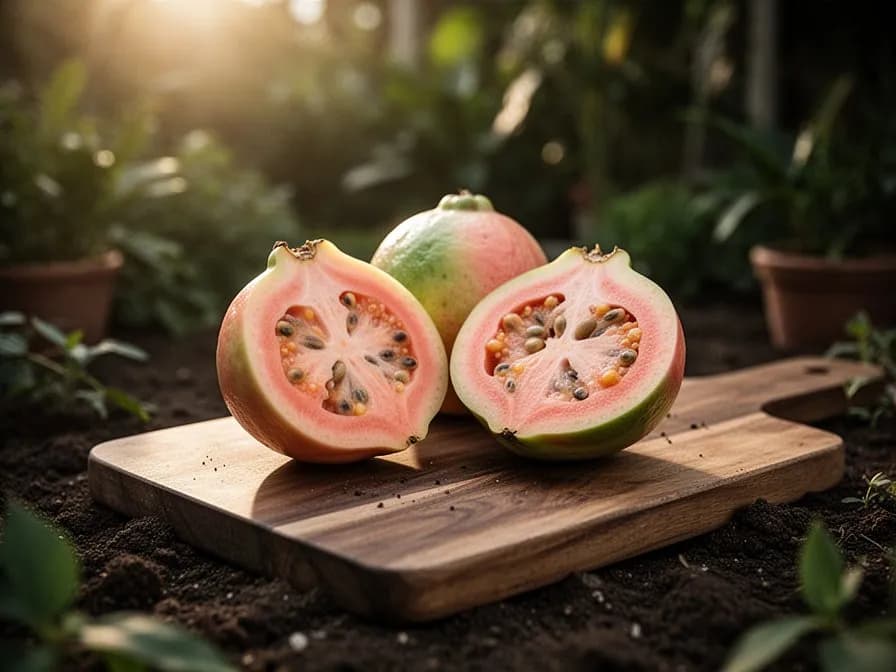
Guaven-Agua-Fresca
15 Min.Ein erfrischendes mexikanisches Fruchtwasser, das die aromatische Süße der Guave zur Geltung bringt. Dieses leichte, dezent gesüßte Getränk ist perfekt für heiße Sommertage und kann sowohl mit frischem als auch mit gefrorenem Guavenpüree zubereitet werden.
5 ZutatenGebackene Guaven-Frischkäse-Blätterteigtasche
30 Min.Inspiriert von der klassischen kubanischen Pastelito de Guayaba ist dieses blättrige Gebäck, gefüllt mit Guavenpaste und Frischkäse, eine unwiderstehliche Kombination aus süßen, säuerlichen und cremigen Aromen. Verwenden Sie selbstgemachte Guavenmarmelade oder gekaufte Guavenpaste.
5 ZutatenKulinarische Verwendung
Frische Guaven werden aus der Hand gegessen, in Obstsalaten geschnitten oder zu Smoothies und Säften verarbeitet. Guavenpaste kombiniert mit Käse ist ein klassisches lateinamerikanisches Dessert. Der hohe Pektingehalt macht die Guave ideal für Gelees, Marmeladen und Fruchtleder. In tropischen Küchen wird die Guave in Saucen, Glasuren für Fleisch und Backwaren verwendet. Guavensaft und -nektar sind weltweit beliebte Getränke.
Was drinsteckt
Gesundheitsvorteile
- Außergewöhnlich reich an Vitamin C – eine einzelne mittelgroße Guave liefert mehr als das Doppelte der empfohlenen Tageszufuhr und unterstützt wirkungsvoll die Immunfunktion, Kollagensynthese und Wundheilung.
- Reich an Lycopin und anderen Carotinoiden, die als Antioxidantien wirken und helfen, freie Radikale zu neutralisieren, was das Risiko bestimmter Krebsarten und Herz-Kreislauf-Erkrankungen potenziell senken kann.
- Der hohe Gehalt an löslichen und unlöslichen Ballaststoffen fördert eine gesunde Verdauung, nährt nützliche Darmbakterien und hilft, den Stuhlgang zu regulieren, wodurch das Risiko von Verstopfung und Verdauungsstörungen verringert wird.
- Guavenblattextrakt hat in klinischen Studien gezeigt, dass er den Blutzuckerspiegel nach Mahlzeiten senken kann, was die Guave zu einem wertvollen Lebensmittel für Menschen mit Typ-2-Diabetes oder Prädiabetes macht.
- Der regelmäßige Verzehr von Guave kann helfen, LDL-Cholesterin und Triglyceridwerte zu senken und gleichzeitig die Herzgesundheit durch ihren Kaliumgehalt zu unterstützen, der zur Regulierung des Blutdrucks beiträgt.
- Die Folsäure in der Guave ist essenziell für die DNA-Synthese und Zellteilung und daher besonders wichtig während der Schwangerschaft zur Vorbeugung von Neuralrohrdefekten und zur Unterstützung einer gesunden fetalen Entwicklung.
Woher Guave stammt
Die Guave (Psidium guajava) ist ein tropischer Obstbaum, der in der Karibik, Mittelamerika und dem nördlichen Südamerika beheimatet ist, wo sie seit Tausenden von Jahren von indigenen Völkern kultiviert und geschätzt wird. Archäologische Funde aus Peru deuten darauf hin, dass die Guave bereits um 800 v. Chr. verzehrt wurde, was sie zu einer der ältesten kultivierten Früchte Amerikas macht. Die Frucht hatte für viele präkolumbianische Zivilisationen eine große kulturelle Bedeutung, die sie nicht nur als Nahrungsquelle, sondern auch wegen ihrer medizinischen Eigenschaften schätzten.
Spanische und portugiesische Entdecker und Kolonisatoren trugen im 16. und 17. Jahrhundert maßgeblich zur Verbreitung der Guave weit über ihr natürliches Verbreitungsgebiet hinaus bei. Als europäische Schiffe im Zeitalter der Entdeckungen den Globus bereisten, wurden Guavensamen und -pflanzen nach Afrika, Asien und auf die pazifischen Inseln gebracht. Die Frucht passte sich außergewöhnlich gut an tropische und subtropische Klimazonen rund um die Welt an und verwilderte in vielen Regionen rasch. Bis zum 18. Jahrhundert war die Guave in ganz Tropenafrika, Indien, Südostasien und im Pazifik zu einem Grundnahrungsmittel geworden.
In Indien integrierte sich die Guave so gründlich in die landwirtschaftliche und kulinarische Landschaft, dass viele Menschen fälschlicherweise glauben, sie sei eine einheimische Frucht. Indien ist heute der weltweit größte Guavenproduzent und trägt etwa 40 % zur globalen Produktion bei. Die Frucht wird in der indischen Küche als Amrood oder Peru gefeiert, je nach Region, und ist ein fester Bestandteil von Straßenessen, Getränken und Süßigkeiten.
Die außergewöhnliche Anpassungsfähigkeit der Guave – sie gedeiht auf kargen Böden, toleriert Trockenheit und trägt mit minimalem Pflegeaufwand reichlich Früchte – machte sie für Subsistenzbauern und Hobbygärtner in den Tropen unschätzbar wertvoll. Heute bleibt sie eine der wirtschaftlich bedeutendsten Früchte in Entwicklungsländern und liefert Millionen von Kleinbauern Nahrung und Einkommen. Die moderne Züchtung hat Hunderte verbesserter Sorten mit vielfältigen Fruchtfleischfarben, Aromen und Größen hervorgebracht, von zierlichen Perlguaven bis hin zu großen tropisch-weißen Sorten, die für ihre milde Süße geschätzt werden.
Guave: Schon gewusst?
Faszinierende Fakten über Guave
Die Guave hat eine der höchsten Vitamin-C-Konzentrationen aller Früchte – eine einzige Guave kann bis zu viermal mehr Vitamin C enthalten als eine Orange und ist damit ein wahres Nährstoffkraftwerk in kleiner Verpackung.
Guave: Fragen & Antworten
Wann sollte ich Guave pflanzen?
Was sind gute Begleitpflanzen für Guave?
In welchen Winterhärtezonen kann Guave wachsen?
Wie viel Sonne braucht Guave?
Welchen Abstand sollte ich zwischen Guave lassen?
Welche Schädlinge und Krankheiten befallen Guave?
Wie lagere ich Guave nach der Ernte?
Was sind die besten Guave-Sorten zum Anbauen?
Welchen Boden braucht Guave?
Wie lange dauert es, bis ein Guavenbaum Früchte trägt?
Kann die Guave im Kübel angebaut werden, und welche Topfgröße wird benötigt?
Warum fallen meine Guavenfrüchte ab, bevor sie reif sind?
Woran erkenne ich, dass die Guave erntereif ist?
Ist die Guave frosthart, und wie schütze ich sie in kalten Klimazonen?
Welche Guavensorten eignen sich am besten für den Hausgarten?
Du hast die Theorie gelesen. Jetzt baue sie auf Autopilot an.
Alles, was Guave knifflig macht — das Timing, die Abstände, die Begleiter, das Erntefenster — genau das übernimmt PlotMyGarden für dich, für jede Pflanze im Garten.
Ein Plan, der dein Wetter kennt
Standort einmal festlegen. Aussaat-, Dünge- und Erntedaten rund um deinen echten letzten Frosttermin und die Live-Vorhersage — kein Raten mehr nach Saattüte.
Aus dem Abschnitt „Pflanzzeit“Beetplaner per Drag & Drop
Beete auf einem Raster gestalten. Jede Pflanze rastet im richtigen Abstand ein, und du siehst die ganze Saison, bevor du einen Cent für Saatgut ausgibst.
Aus dem Abschnitt „Anbau“Begleiter-Konflikte früh erkannt
Über 200 gute und schlechte Kombinationen werden beim Pflanzen live geprüft — so landet ein saisonruinierender Fehler nie in der Erde.
Aus dem Abschnitt „Begleiter“Erinnerungen, nach denen du wirklich handelst
„Gieß die Bohnen.“ „Heute ernten, bevor's umschlägt.“ Pünktlich, konkret und auf deine echten Pflanzen bezogen.
Aus dem Abschnitt „Ernte“Staffel-Aussaat, geplant
Sechs Wochen ernten statt sechs Tage? Die App verteilt deine Aussaaten automatisch und erinnert dich, wenn der nächste Satz fällig ist.
Aus dem Abschnitt „Pflanzzeit“Ein Verlauf, der schlauer wird
Jede protokollierte Ernte bringt der App deinen Garten bei. Der Plan fürs nächste Jahr startet bei dem, was in deinem Boden wirklich funktioniert hat.
Aus dem Abschnitt „Überblick“Pflanze diese neben Guave
Weitere Tropische Früchte
Bau deine beste Guave an — und alles drumherum.
Starte heute kostenlos. Lege deine Beete an, setze deine Guave ein und lass PlotMyGarden Timing, Abstände, Begleiter und Erinnerungen von der Saat bis zum Erntekorb übernehmen.