Banana
A giant herbaceous plant, not a true tree, producing familiar curved yellow fruits from a single massive flower stalk.





On this pageOverview
Meet Banana
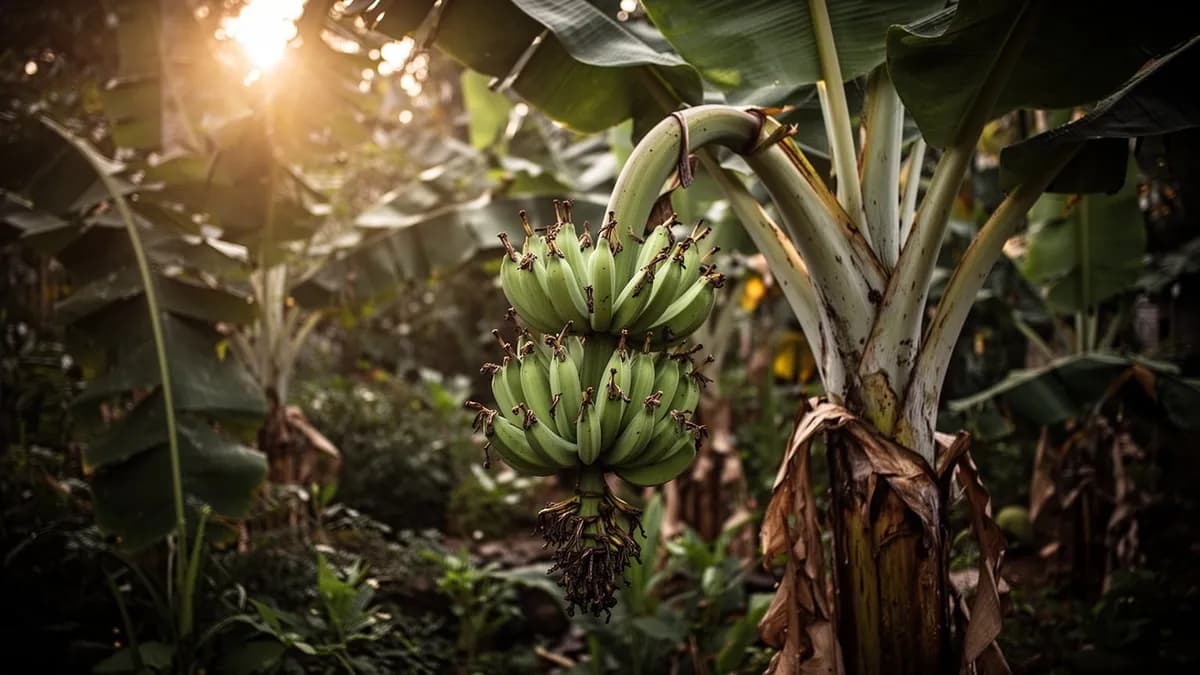
A giant herbaceous plant, not a true tree, producing familiar curved yellow fruits from a single massive flower stalk. Each banana plant fruits only once, then dies back while producing pups that become the next generation. Feed heavily with potassium-rich fertilizer and provide wind protection for the broad, easily shredded leaves.
When to plant Banana
Commercial bananas are sterile and propagated vegetatively by separating pups from established plants at 12 to 18 inches tall. Use a sharp spade with attached corm tissue. Plant immediately. Tissue-cultured plants provide disease-free starts. Some wild species produce seeds requiring scarification and warm temperatures for germination.
Your Banana Year
Composed for Zone 7 · typical seasons · frost passes Apr 2, returns Nov 1
Plant Banana Mar – May, pick Jan – Dec. Check the planting methods below and set your climate to personalize these windows.
How to grow Banana
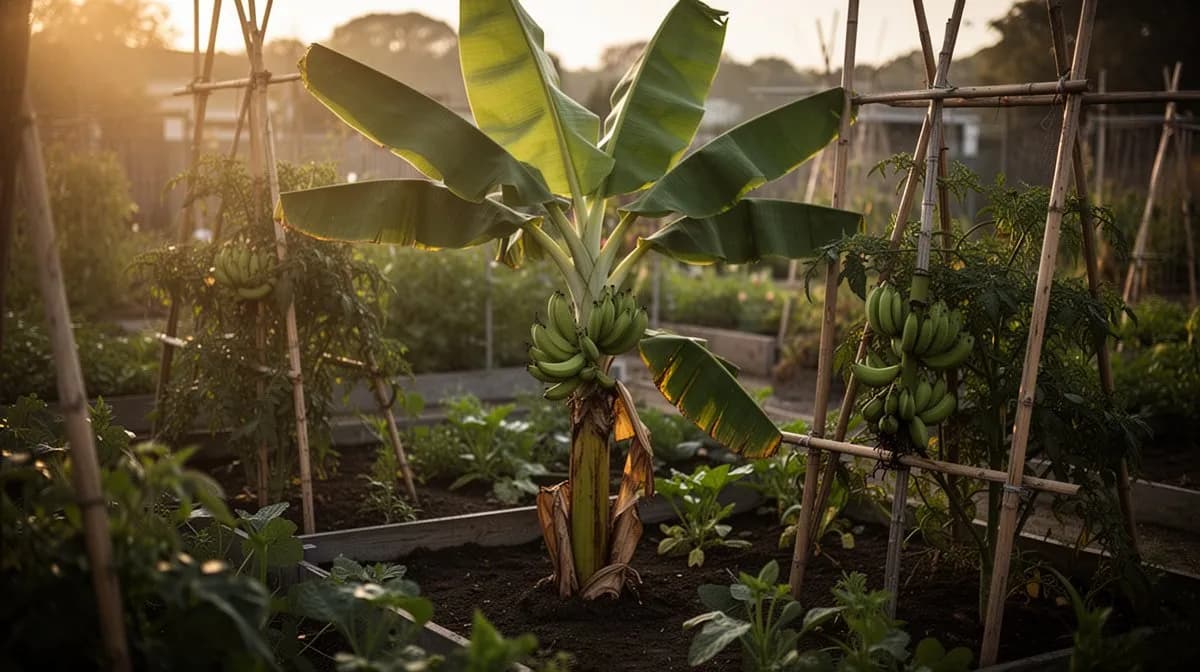
Bananas are fast-growing herbaceous perennials requiring full sun, rich soil, and abundant water. Plant pups in spring after frost danger passes, in a sheltered location. Space 8 to 10 feet apart for spreading clumps.
Water heavily and consistently, providing one to two inches per week minimum. Mulch thickly to conserve moisture. The shallow root system benefits from frequent irrigation rather than deep, infrequent soaking.
Feed aggressively with high-potassium fertilizer every two to four weeks. Allow three to four pseudostems per clump. Remove excess suckers for better fruit production. After harvesting, cut the fruited pseudostem to the ground.
Banana needs more room than a 4 × 8 ft bed gives
Each Banana wants 300 cm of elbow room. The planner keeps that spacing for you — every plant, every bed.
Banana's best neighbours
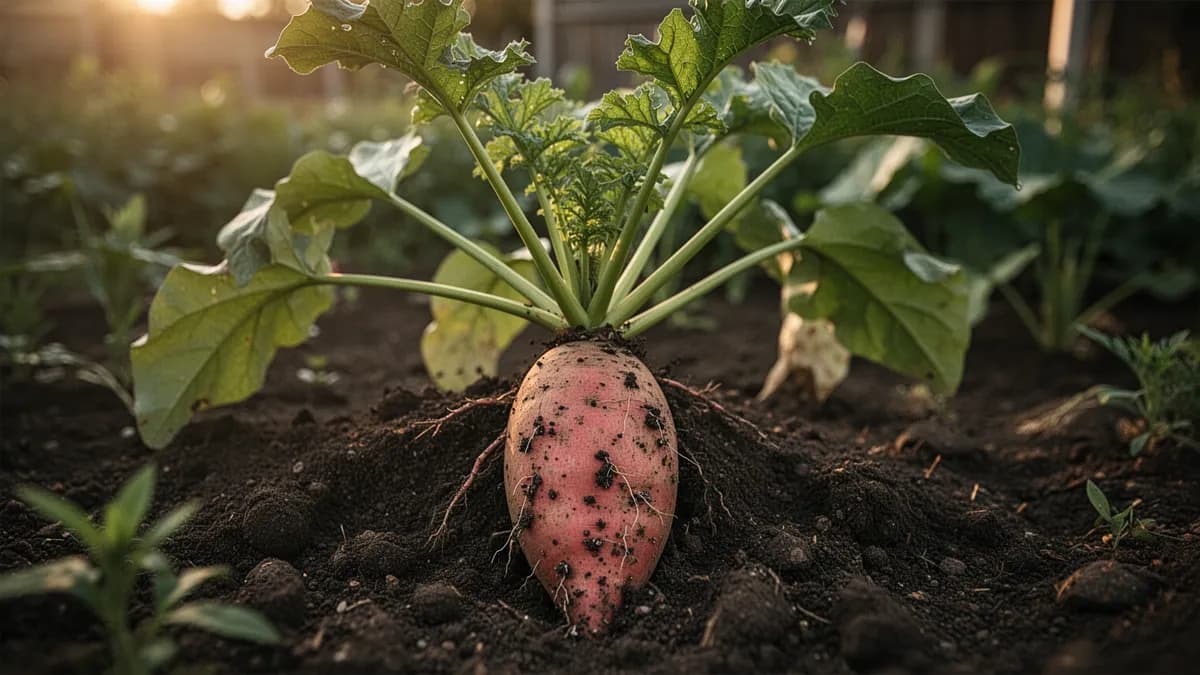
Bananas serve as windbreaks and shade for smaller tropical plants like coffee and cacao. Sweet potatoes make ideal ground cover companions. Lemongrass can repel some pests. Nitrogen-fixing legumes improve soil fertility when intercropped. Avoid planting near drought-preferring plants.
Sweet Potato belongs beside it.
Old growers' knowledge, checked against Banana's real companion table below — test any plant you're growing.
Try Banana in a bed — right here
A real planner bed with Banana already in it. Tap a companion to place it and watch the pairing checks answer — green for good neighbours, red for a clash.


Related growing guides
Feed it well
Bananas require rich, deep, well-drained soil with high organic matter and a pH of 5.5 to 7.0. Amend planting holes with compost and aged manure. Feed every two to four weeks with high-potassium fertilizer. Supplement with nitrogen and phosphorus. Apply magnesium sulfate if leaves show interveinal yellowing.
Ideal Temperature
Hardiness Zone Compatibility
From seed to harvest, stage by stage
Planting & Establishment
The sucker or rhizome is planted and begins establishing its root system. Little visible top growth occurs as energy is directed underground. Keep soil consistently moist and protect from strong winds.
Vegetative Growth
Rapid leaf production begins as the pseudostem (the trunk-like structure formed by tightly packed leaf bases) grows taller. Each new leaf unfurls from the center. The plant focuses entirely on building structural mass during this phase.
Full Canopy
The plant reaches near-mature height with a full canopy of large, sweeping leaves. Suckers (pups) begin emerging from the base. The pseudostem thickens and the plant is preparing internally for flowering.
Flowering
A flower spike (inflorescence) emerges from the top of the pseudostem and arches downward under its own weight. The purple-red blossom opens to reveal hands of tiny developing bananas. This is one of the most dramatic stages in the garden.
Fruit Development
Individual bananas (fingers) swell and fill out on each hand. The bunch slowly gains weight and the individual fruits change from angled to rounder in cross-section as they mature. Green color is maintained until very close to harvest.
Harvest
Fruit is ready when fingers are plump and rounded, the skin is fully green but starting to lighten, and the flower end of each finger dries out. Cut the entire bunch from the plant and hang to ripen at room temperature.
Ratoon Cycle
After harvest, the fruiting pseudostem is cut back to the ground. A chosen sucker (ratoon) takes over and will fruit in its own cycle, typically faster than the original plant. This cycle can repeat indefinitely in suitable climates.
Plant in a hole twice the width of the root ball and enrich with compost. Water every 2-3 days and mulch heavily to retain moisture.
Caring for Banana month by month
What to do each month for your Banana
October
You are hereFinal harvests of the season in temperate climates. Cut back spent pseudostems to ground level after harvest. Apply a generous layer of compost or well-rotted manure around the base as a soil conditioner.
Know exactly what to do in your garden — every month
One email at the start of each month: what to sow, plant, and tackle right now — for your Banana and everything growing around it. Plus a short starter course that helps you dodge the classic mistakes.
- What to do, right now
- Matched to your season
- Starter course included
Harvesting Banana
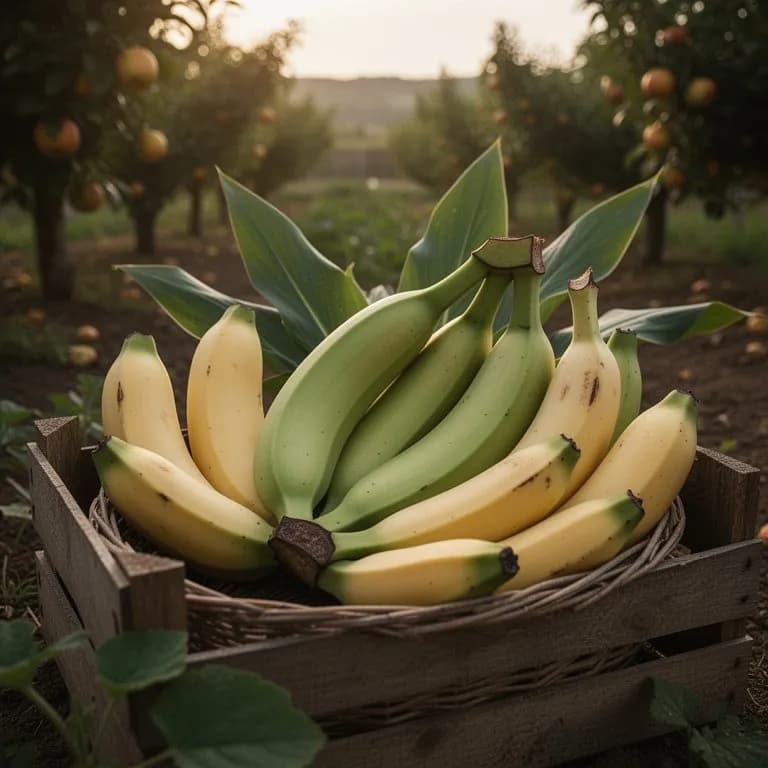
Banana bunches are ready when fingers become plump and rounded, losing their angular cross-section. Cut the bunch stalk while still green, supporting to prevent bruising. Hang in a cool, shaded area to ripen over one to two weeks. For faster ripening, enclose with a ripe apple to concentrate ethylene gas. Each pseudostem produces one bunch before dying back.
assuming you plant when the window opens — set your real date
Pick Banana promptly and the plant keeps producing.
Storage & Preservation
Green bananas ripen at room temperature over five to ten days. Refrigerating ripe bananas darkens the peel but slows ripening. Overripe bananas are perfect for banana bread. For freezing, peel and wrap individually or mash for freezer storage up to six months. Bananas can be dehydrated into chips, made into flour, or preserved as jam.
What goes wrong — and the fix
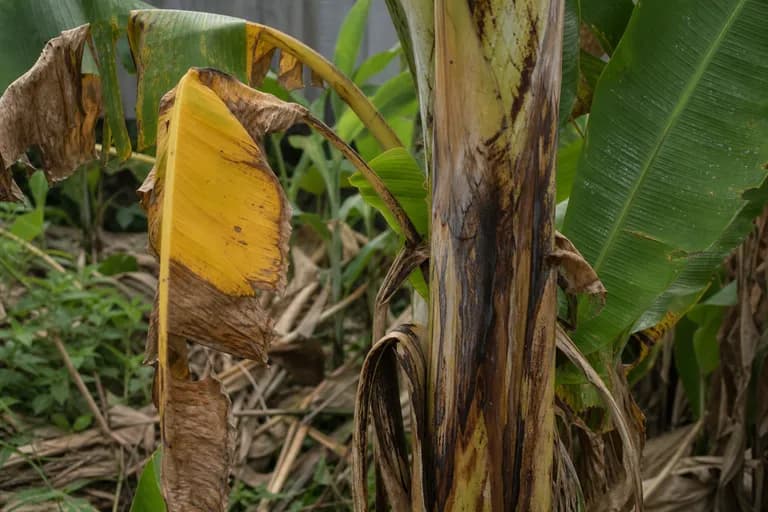
Panama Disease (Fusarium Wilt)
DiseaseYellowing and wilting of older leaves; brown discoloration of pseudostem tissue; plant death.
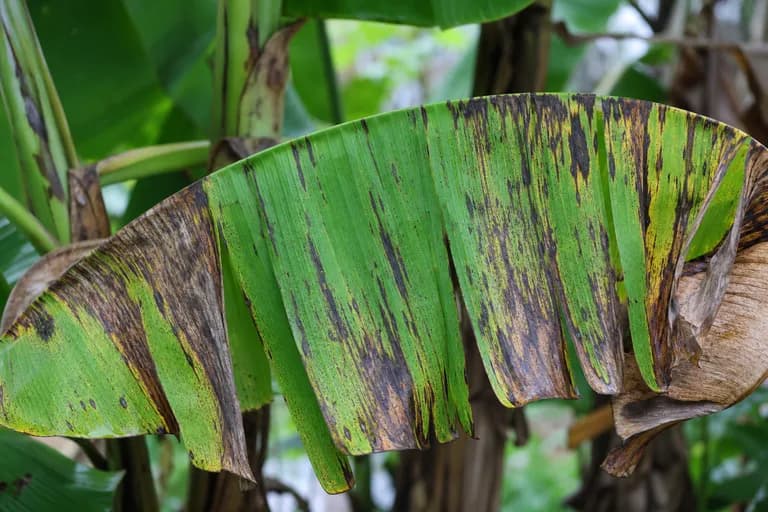
Black Sigatoka
DiseaseDark streaks on leaves expanding into necrotic areas; premature leaf death; reduced fruit quality.
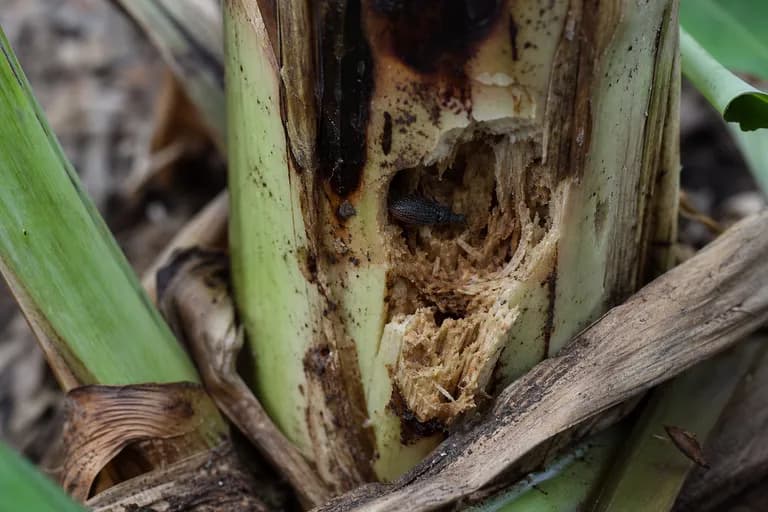
Banana Weevil Borer
PestTunnels in corm and pseudostem base; plants topple in wind; reduced sucker production.
Troubleshooting Common Problems
Wind damage is the most visible problem as large leaves shred easily. Panama disease is a devastating incurable soil-borne fungus. Cold damage occurs below 50 degrees Fahrenheit. The pseudostem can topple under heavy fruit. Irregular watering causes poor fruit fill. Excess suckers compete for resources if not managed.
Growing Tips
- Bananas need a sheltered position — their large leaves act like sails in the wind, and even moderate gusts can tear leaves to shreds or topple the entire plant. Plant near a wall, fence, or windbreak of other large shrubs for natural protection.
- The underground rhizome (corm) is the true perennial part of the banana plant. Even if frost kills the above-ground pseudostem, mulching heavily over the root zone in winter can allow the plant to resprout from the corm in spring in marginal climates such as USDA zones 7b-9.
- Select suckers that have narrow, sword-shaped leaves rather than broad fan-shaped leaves for propagation — sword-leafed suckers have a stronger root system and will produce better fruit than weak fan-leafed suckers.
- Bananas are exceptionally hungry plants. They respond dramatically to generous feeding. Use a complete fertilizer high in potassium and magnesium, as deficiencies in these minerals cause yellowing leaves and reduce fruit quality significantly.
- Water is critical to banana production — the pseudostem is approximately 93% water. During hot growing months, a mature plant may need 30-50 liters of water per week. Drip irrigation or soaker hoses are highly effective and conserve water compared to overhead watering.
- In cooler climates, growing bananas against a south-facing wall (in the Northern Hemisphere) maximizes heat absorption. The thermal mass of the wall retains daytime warmth into cool nights, extending the effective growing season by several weeks.
- After the main bunch is harvested, cut the spent pseudostem down to about 1 meter, then to the ground a week later. This two-stage cutting reduces the shock to the root system and allows nutrients in the pseudostem to drain back into the corm before final removal.
- If your plant produces a large number of suckers, remove all but 1-2 per season. Allowing too many suckers to grow simultaneously divides the plant's resources, resulting in smaller bunches on all plants rather than one large productive bunch.
- To speed up ripening of a harvested green bunch, place it in a warm room (around 18-22°C) with ripe fruit such as apples or other bananas. These fruits release ethylene gas which accelerates banana ripening naturally.
- For container growing, choose a pot no smaller than 50 liters for dwarf varieties. Use a free-draining potting mix enriched with compost and perlite. Feed every 3 weeks with a liquid fertilizer during the growing season and repot or refresh the top layer of compost annually.
Grow your best Banana yet — and everything around it.
Start a free plan today. Lay out your beds, drop in your Banana, and let PlotMyGarden handle the timing, spacing, companions and reminders from seed to harvest basket.
Pick your Banana
Cavendish
The standard commercial banana with reliable production and good sweetness, but susceptible to Panama disease TR4.
Lady Finger
Smaller and sweeter with thin skin and creamy texture. More cold-tolerant and excellent for home gardens.
Blue Java
A cold-tolerant variety with vanilla-ice-cream-flavored flesh. Hardy to about 20 degrees Fahrenheit.
Gros Michel
The original commercial banana with superior flavor, now available for home growing.
Growing your own bananas can deliver substantial economic value in suitable climates. A single established banana plant produces one bunch per growing cycle, typically containing 100 to 200 individual bananas depending on the variety. At average retail prices of $0.20–$0.50 per banana, a single bunch can represent $20–$100 worth of fruit. Because banana plants reproduce via suckers (producing multiple new plants each year at no cost), an initial investment of one sucker can grow into a self-sustaining grove over several seasons, providing a continuous, virtually free supply of fruit for years. For families that eat bananas regularly, growing even 2-3 plants can eliminate banana purchases entirely and produce surplus fruit for preserves, dried banana chips, or banana flour — all high-value products that would otherwise require significant grocery spending.
Quick recipes
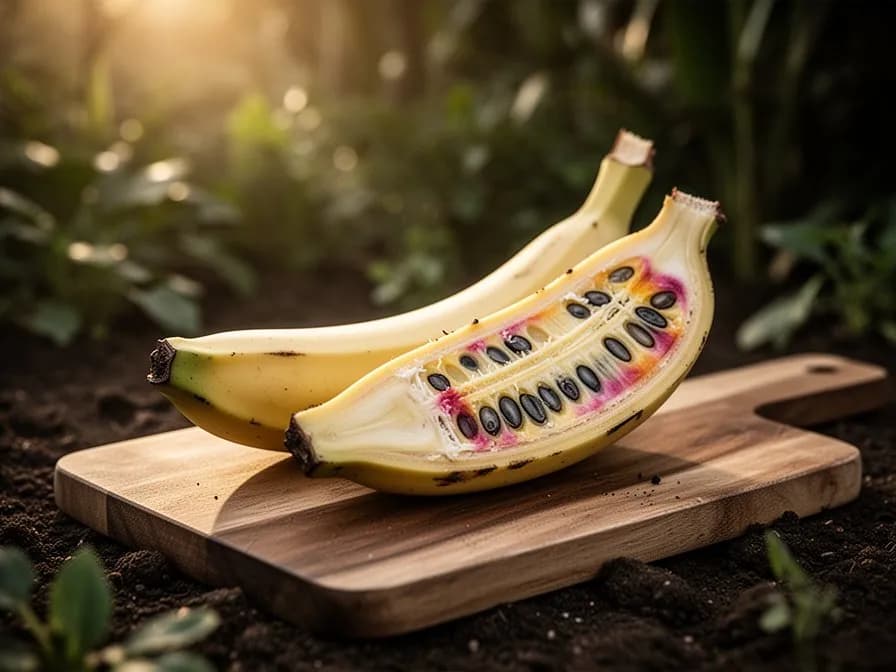
Classic Banana Bread
15 minutes prep, 60 minutes bakeThe ultimate use for very ripe homegrown bananas. Moist, fragrant, and deeply flavorful, this banana bread showcases the superior sweetness of freshly ripened garden bananas far better than any store-bought variety could.
9 ingredients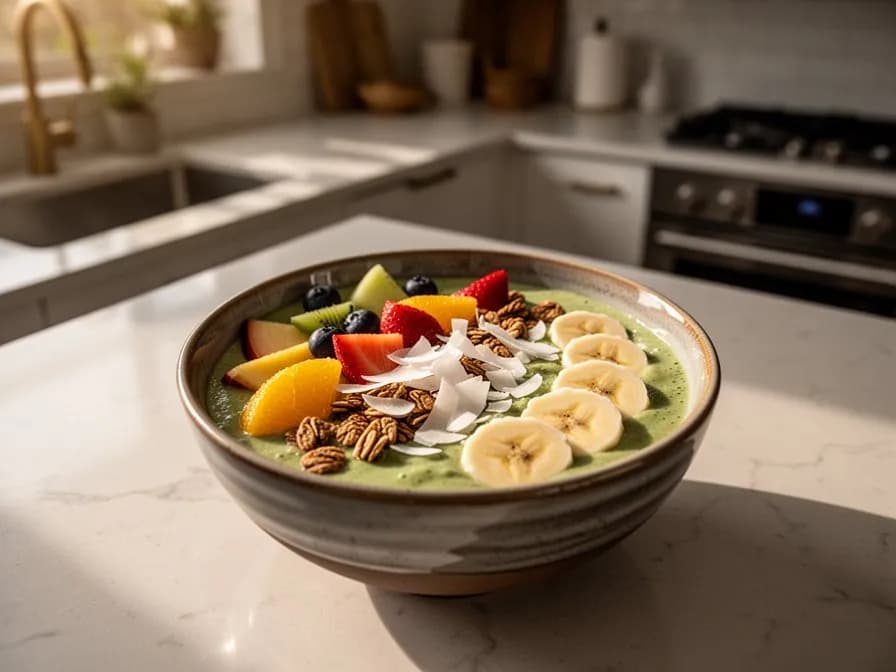
Frozen Banana Nice Cream
5 minutes (plus 4 hours freezing)A simple, one-ingredient frozen dessert that tastes remarkably like ice cream. Frozen ripe bananas blend into a creamy, sweet soft-serve texture with no dairy required. The riper and sweeter your homegrown bananas, the better this recipe becomes.
5 ingredientsCaramelized Banana Pancake Topping
10 minutesA quick and indulgent topping that transforms simple pancakes or waffles into something special. The natural sugars in ripe homegrown bananas caramelize beautifully in butter, creating a rich, golden sauce with very little effort.
7 ingredientsCulinary Uses
Ripe bananas are eaten fresh, used in smoothies, cereal, and fruit salads. They are essential in banana bread, pudding, and splits. Green bananas are boiled, fried as chips, mashed into fufu, or used in curries. Banana is used in baby food, ice cream, and dairy-free desserts.
What's inside
Health Benefits
- Bananas are one of the best natural sources of potassium, a mineral critical for maintaining healthy blood pressure, supporting proper muscle contraction, and reducing the risk of cardiovascular disease.
- The high vitamin B6 content in bananas supports the production of serotonin and norepinephrine, neurotransmitters that influence mood, sleep, and stress response — making bananas a genuinely mood-supporting food.
- Unripe (green) bananas are particularly rich in resistant starch, a type of prebiotic fiber that feeds beneficial gut bacteria, improves insulin sensitivity, and promotes a feeling of fullness after eating.
- Bananas provide a rapid, easily digestible source of carbohydrate energy, making them a popular pre-workout snack among athletes. The combination of natural sugars and potassium also helps prevent muscle cramps during exercise.
- The antioxidant compounds in bananas — including dopamine and catechins — are linked to reduced risk of degenerative diseases and heart disease, despite these antioxidants not crossing the blood-brain barrier to act as mood-altering substances.
- Ripe bananas contain pectin and resistant starch that help moderate the rate of stomach emptying, which can reduce appetite and improve blood sugar control after meals, beneficial for those managing type 2 diabetes.
Where Banana comes from
The banana is one of humanity's oldest cultivated crops, with origins tracing back at least 8,000 to 10,000 years to the rainforests of Papua New Guinea and Southeast Asia — making it one of the very first plants ever deliberately farmed by people. Archaeological evidence from the Kuk Swamp site in the highlands of Papua New Guinea indicates that bananas were being cultivated there as far back as 8000 BCE, predating many other staple crops by millennia.
From its origins in Oceania and Southeast Asia, the banana spread rapidly across human trade and migration routes. By around 6000 BCE, cultivation had spread through India, and from there Arab traders carried banana plants westward into the Middle East and Africa. The crop reached Madagascar and the East African coast by approximately 650 CE, brought by Indonesian seafarers who colonized Madagascar. From East Africa, banana cultivation spread inland across the continent and became a foundational food crop in many sub-Saharan African cultures.
European contact with the banana came through Arab traders in North Africa. Portuguese sailors encountered the fruit during their explorations of West Africa in the early 15th century and are credited with introducing it to the Americas around 1516, planting the first banana plants in the Caribbean island of Hispaniola. From there, cultivation spread rapidly across the tropical Americas.
The commercial banana trade as we know it today emerged in the late 19th century. The United Fruit Company (now Chiquita) and similar corporations developed vast plantation systems across Central America, the Caribbean, and South America, fundamentally shaping the economies and politics of the region — giving rise to the term 'banana republic.' The variety primarily exported at the time was the Gros Michel, prized for its rich flavor and thick peel. However, a devastating outbreak of Fusarium wilt (Panama disease) caused by the fungal pathogen Fusarium oxysporum virtually wiped out commercial Gros Michel production by the 1950s, forcing a complete industry transition to the more disease-resistant Cavendish variety that dominates global markets today.
Today, banana cultivation is a cornerstone of food security and agricultural economies across the tropical world, with India, China, Indonesia, and Brazil among the largest producers.
Banana: did you know?
Fascinating facts about Banana
Bananas are technically berries from a botanical standpoint, while strawberries are not — the banana fruit develops from a single flower with a superior ovary, fitting the botanical definition of a berry.
Banana questions, answered
When should I plant Banana?
What are good companion plants for Banana?
What hardiness zones can Banana grow in?
How much sun does Banana need?
How far apart should I space Banana?
What pests and diseases affect Banana?
How do I store Banana after harvest?
What are the best Banana varieties to grow?
What soil does Banana need?
Can I grow bananas in a cold climate or temperate region?
How long does it take a banana plant to produce fruit from a sucker?
Why are the leaves on my banana plant turning yellow?
Do I need more than one banana plant to get fruit?
When and how should I harvest my banana bunch?
What is the difference between a banana sucker and a rhizome division, and which should I plant?
You just read the theory. Now grow it on autopilot.
Everything that makes Banana fiddly — the timing, the spacing, the companions, the harvest window — is exactly what PlotMyGarden handles for you, for every plant in your garden.
A plan that knows your weather
Set your location once. Get sow, feed and harvest dates built around your real last-frost date and live forecast — no more guessing from a generic seed packet.
From the “When to plant” sectionDrag-and-drop bed planner
Design beds on a grid. Every plant snaps to its proper spacing, and you can see your whole season laid out before you spend a cent on seed.
From the “Growing guide” sectionCompanion conflicts, caught early
200+ good-and-bad pairings checked live as you plant — so a season-wrecking mistake never makes it into the ground.
From the “Companions” sectionReminders you'll actually act on
“Water the beans.” “Pick today before it turns.” Timely, specific, and tied to the plants you're really growing.
From the “Harvest” sectionSuccession, scheduled
Want a harvest for six weeks, not six days? It spaces your sowings automatically and reminds you when each new block is due.
From the “When to plant” sectionA record that gets smarter
Every harvest you log teaches it your garden. Next year's plan starts from what actually worked in your soil, not a textbook's.
From the “Overview” sectionPlant these alongside Banana
More Tropical Fruits
Grow your best Banana yet — and everything around it.
Start a free plan today. Lay out your beds, drop in your Banana, and let PlotMyGarden handle the timing, spacing, companions and reminders from seed to harvest basket.