Cantaloupe
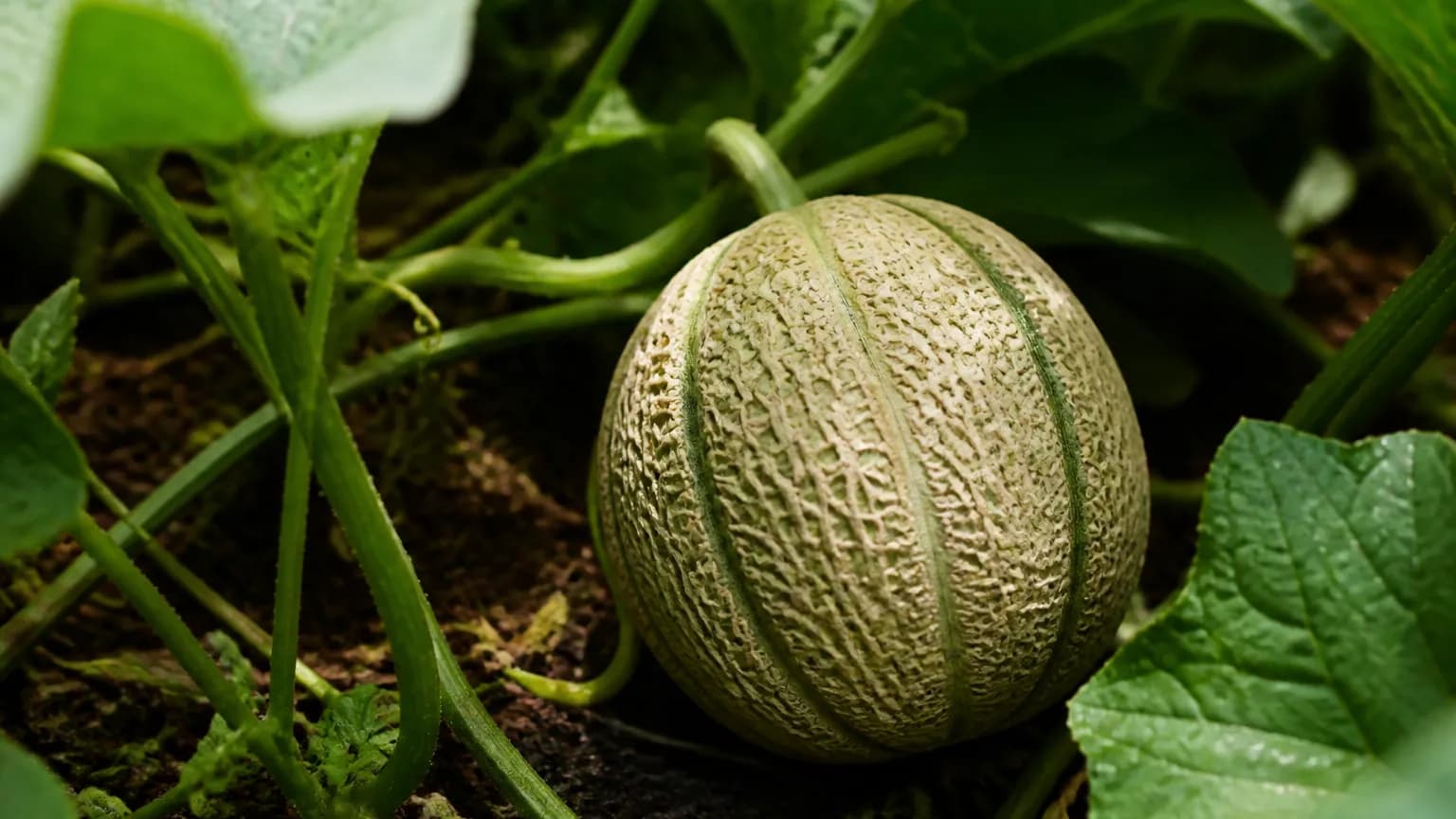
Eine wärmeliebende Melone mit genetzter Schale und duftendem orangefarbenem Fruchtfleisch, die geerntet werden kann, wenn der Stiel leicht vom Frucht löst.





Auf dieser SeiteÜberblick
Cantaloupe im Überblick
Eine wärmeliebende Melone mit genetzter Schale und duftendem orangefarbenem Fruchtfleisch, die geerntet werden kann, wenn der Stiel leicht vom Frucht löst. Auf schwarzer Kunststoffmulchfolie oder in Hochbeeten anbauen, um den Boden aufzuwärmen und die Drainage zu verbessern, die Melonen für eine gesunde Wurzelentwicklung benötigen. Jede Ranke auf drei bis vier Früchte begrenzen und bis zum Beginn der Reife gleichmäßig wässern, dann die Bewässerung reduzieren, um die Süße zu intensivieren. Ein kräftiger, süßer Duft am Blütenende sowie ein leichtes Nachgeben der Schale sind weitere Anzeichen für die optimale Reife.
Wann Cantaloupe pflanzen
Cantaloupesamen zwei bis drei Wochen vor dem letzten erwarteten Frosttermin im Haus vorziehen. Samen 2,5 cm tief in einzelne Torfpötte mit warmem Aussaatsubstrat säen, um Wurzelstörungen beim Umptlanzen zu vermeiden. Bodentemperatur von 27 bis 32 Grad Celsius auf einer Heizmatte halten, um eine schnelle Keimung in drei bis fünf Tagen zu erreichen. Sämlinge über eine Woche abhärten, bevor sie ins Freie umgepflanzt werden, wenn die Bodentemperatur 18 Grad übersteigt. In Klimazonen mit langer Saison wird die Direktaussaat bevorzugt: Samen 2,5 cm tief in Hügeln pflanzen, nachdem alle Frostgefahr vorüber ist.
Dein Cantaloupe-Jahr
Abgestimmt auf Zone 7 · typische Saison · Frost geht um den 2. Apr. und kehrt um den 1. Nov. zurück
Cantaloupe Mai – Jun pflanzen, Aug – Sep ernten. Beachte die Pflanzmethoden unten und wähle dein Klima für passende Zeiträume.
So baust du Cantaloupe an
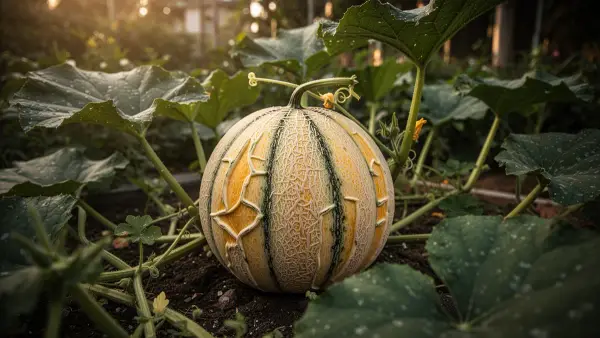
Erhöhte Hügel oder Erdhaufen mit gut gereiftem Kompost und Mist vorbereiten, um den warmen, fruchtbaren und gut durchlässigen Boden zu gewährleisten, den Cantaloupes benötigen. Die Bodentemperatur muss mindestens 18 Grad Celsius erreichen, bevor gepflanzt wird, da Cantaloupes äußerst kälteempfindlich sind. In kühleren Regionen Samen zwei bis drei Wochen vor dem letzten Frost in Torfpötten im Haus vorziehen, um die Wurzelstörung beim Umptlanzen zu minimieren.
Drei Samen pro Hügel pflanzen oder zwei Jungpflanzen pro Hügel setzen, mit einem Abstand von 1,2 bis 1,8 Metern zwischen den Hügeln. Schwarze Kunststoffmulchfolie verbessert die Leistung deutlich, indem sie den Boden erwärmt und Feuchtigkeit hält. Vliesabdeckungen verwenden, um junge Pflanzen vor Gurkenkäfern und kalten Nächten zu schützen, und diese entfernen, wenn die Blüten erscheinen, damit Bienen für die Bestäubung Zugang haben.
Während des Rankenwachstums und der Fruchtentwicklung tief und gleichmäßig wässern, dabei wöchentlich 2,5 bis 5 cm Wasser per Tropfbewässerung geben, um das Laub trocken zu halten. Die Bewässerung reduzieren, wenn die Früchte ihre volle Größe erreichen, um natürliche Zucker zu konzentrieren und den Geschmack zu verbessern. Auf zwei bis drei Früchte pro Ranke ausdünnen, um größere, süßere Melonen zu erhalten. Ein Brett, Stroh oder einen umgedrehten Topf unter die sich entwickelnden Früchte legen, um Bodenfäule zu verhindern und eine gleichmäßige Reife zu fördern.
2 Pflanzen passen in ein Beet von 120 × 240 cm
Cantaloupe braucht 90 cm Platz pro Pflanze. Der Planer hält diesen Abstand für dich ein — jede Pflanze, jedes Beet.
Die besten Nachbarn für Cantaloupe
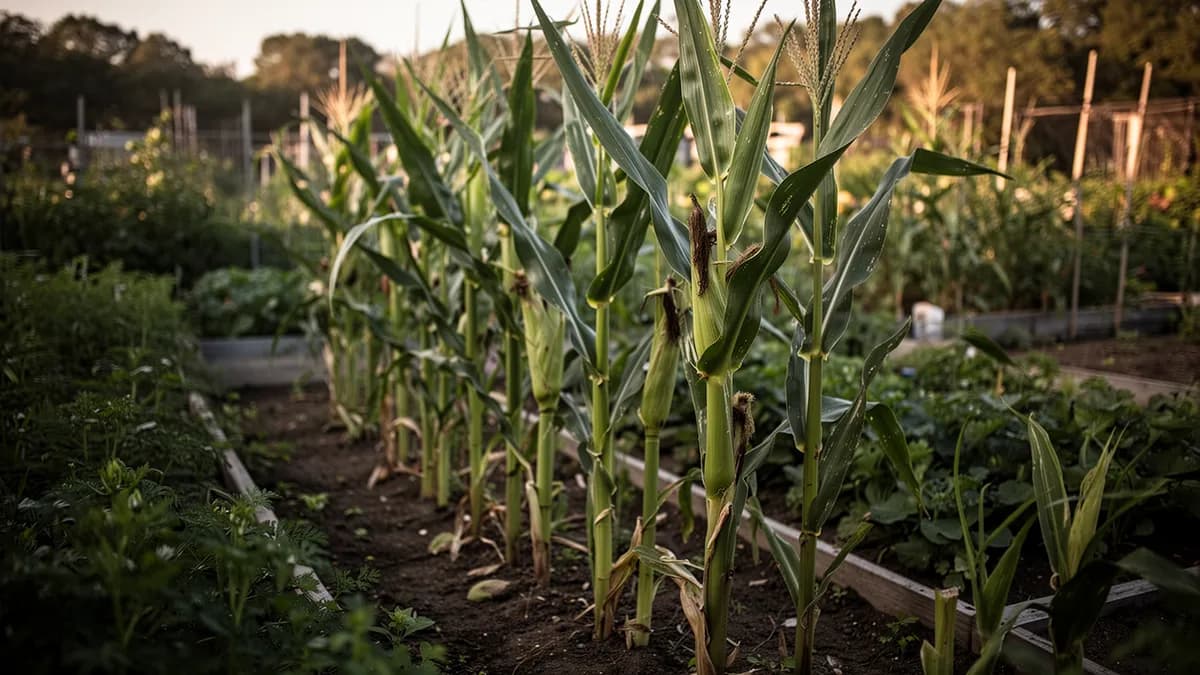
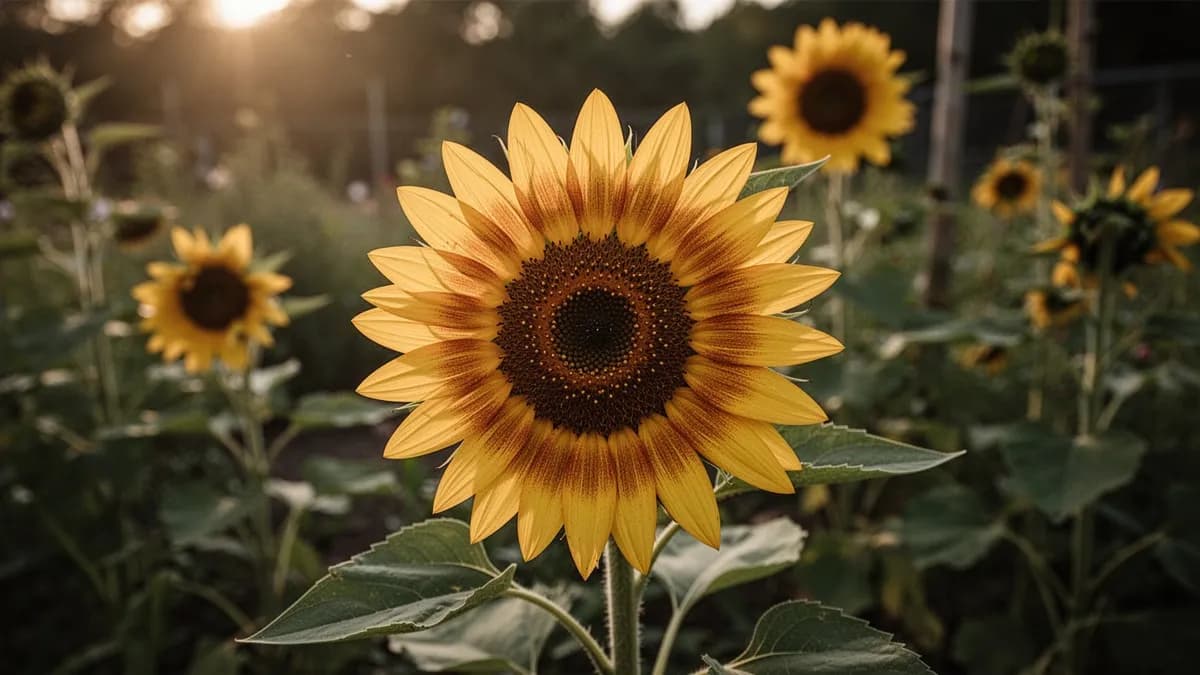
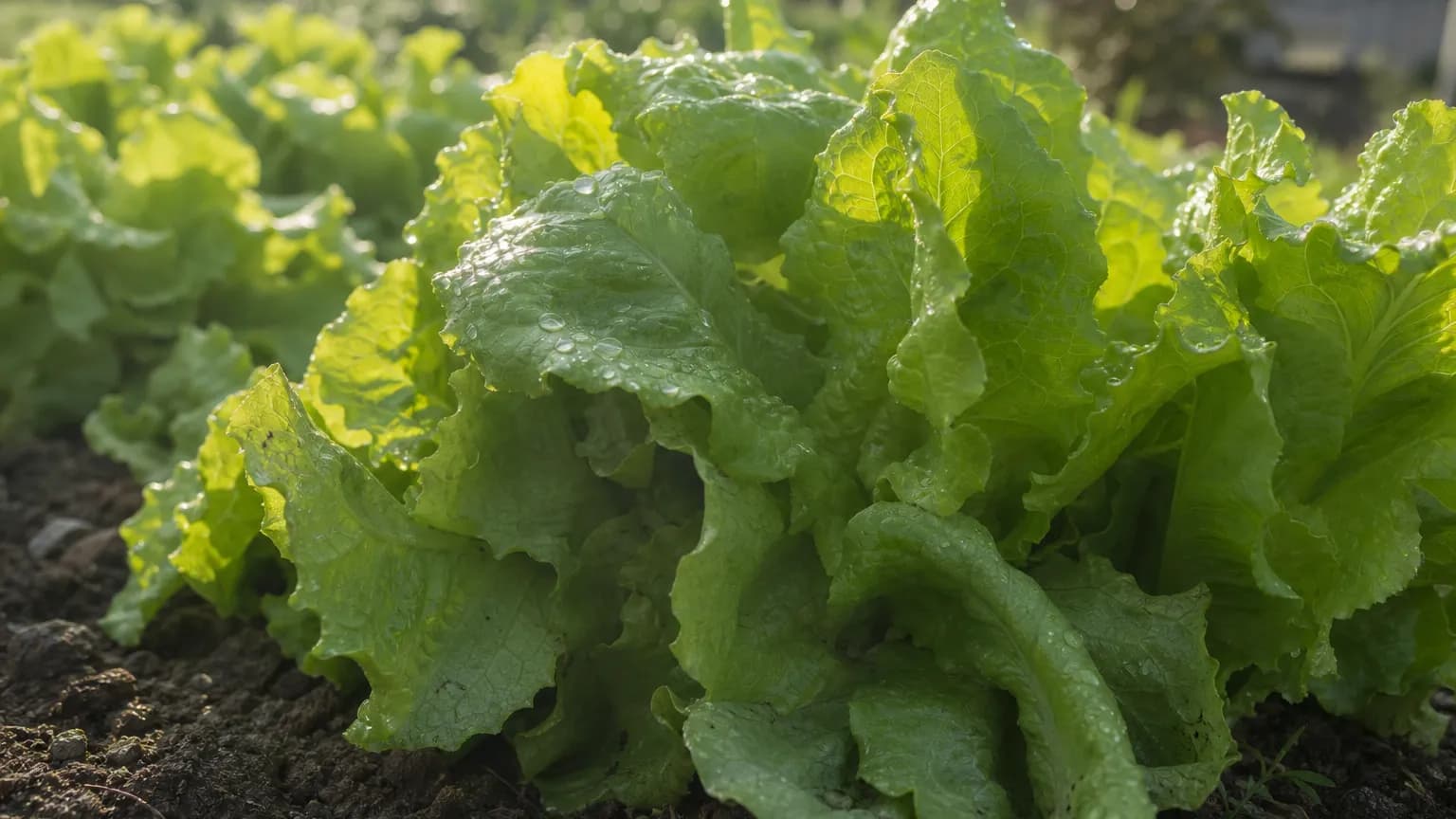
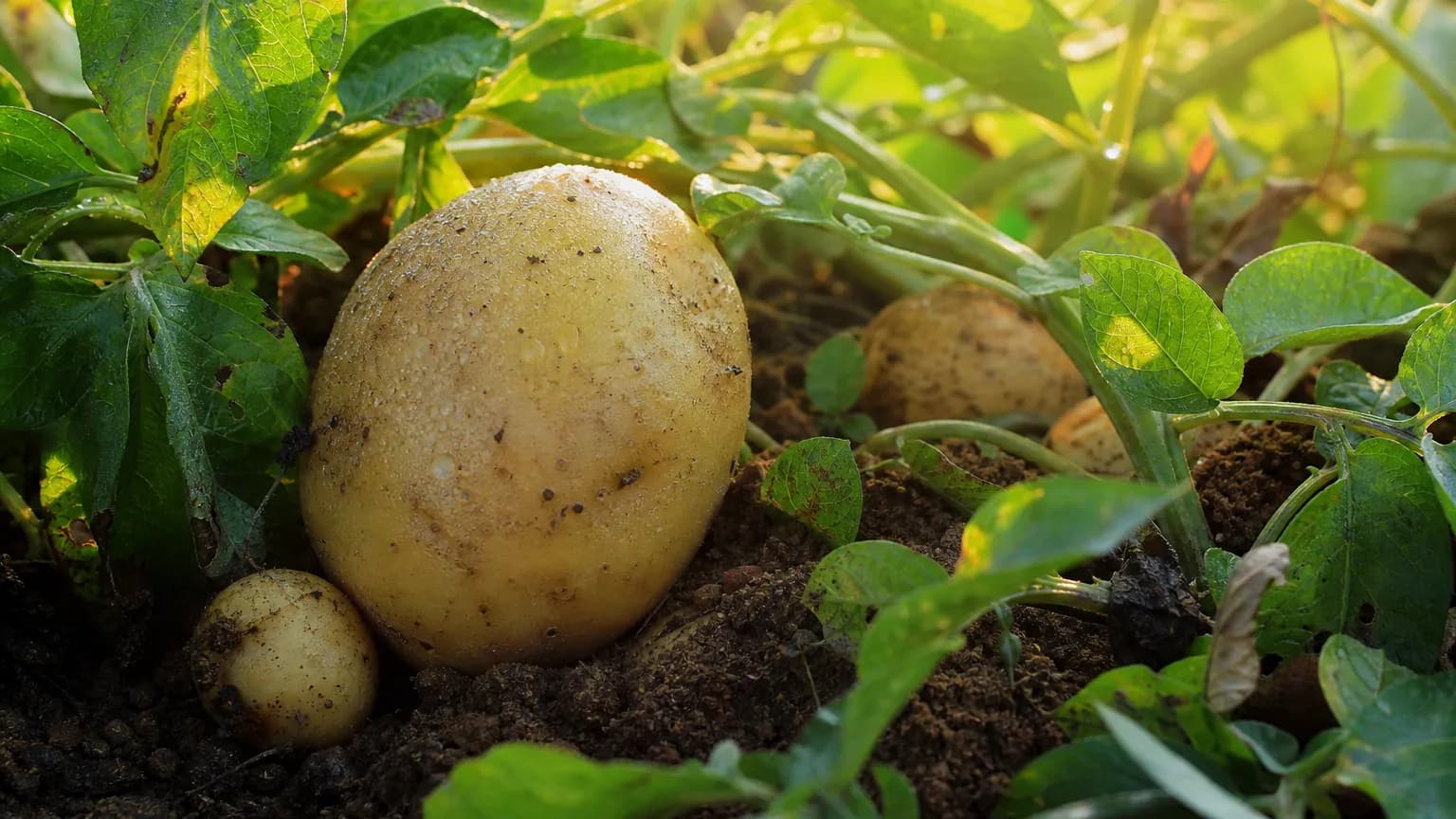
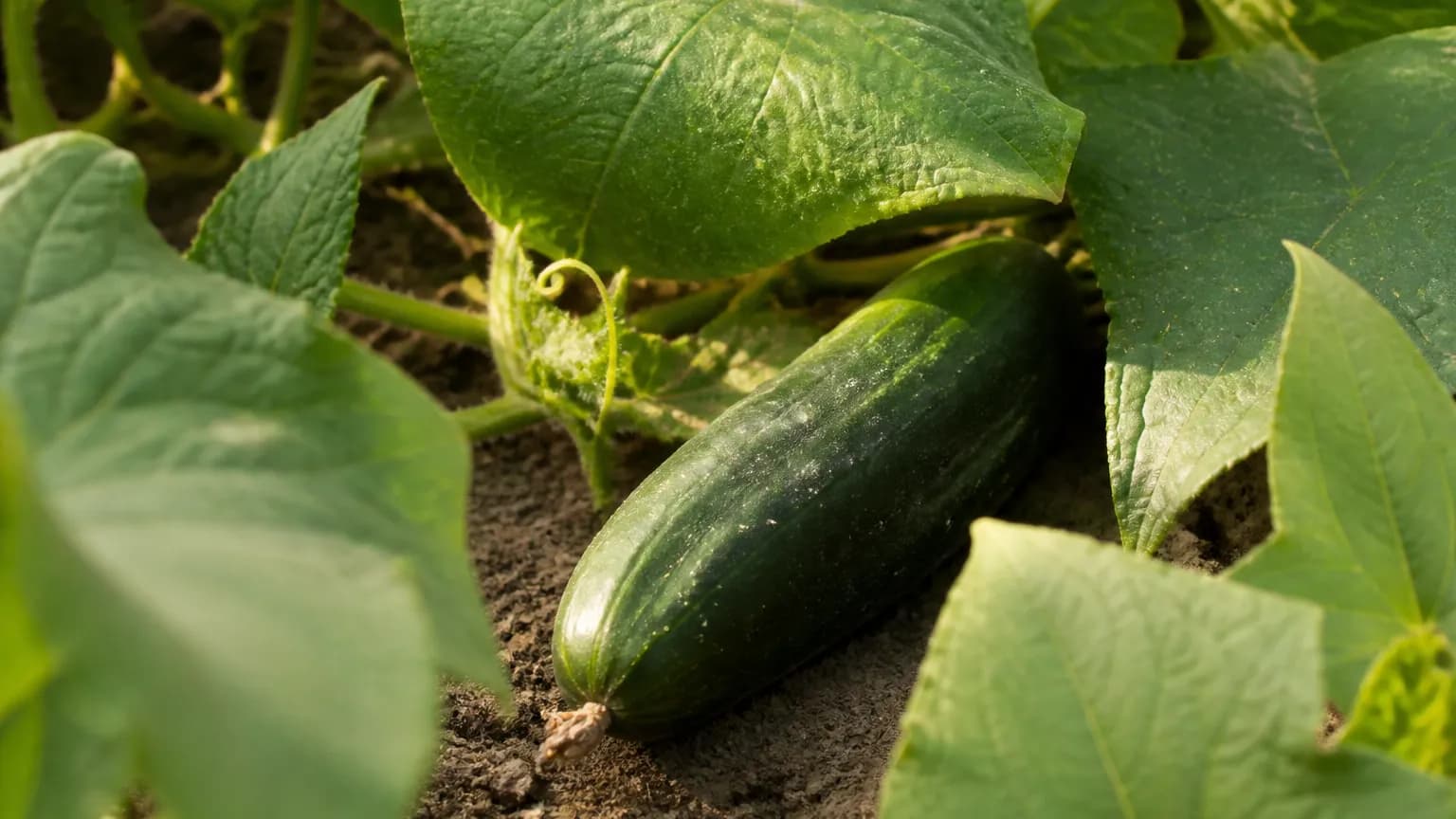
Mais bietet einen natürlichen Windschutz, und seine hohen Stängel helfen, Cantaloupelanken vor austrocknenden Winden zu schützen. Sonnenblumen ziehen Bestäuber an, die für den Fruchtansatz von Melonen unerlässlich sind, und spenden in den heißesten Klimazonen leichten Nachmittagsschatten. Kopfsalat und andere niedrig wachsende Grüns können als Bodendecker zwischen die Melonen gepflanzt werden, solange diese noch klein sind. Nicht in der Nähe von Gurken pflanzen, die eine Fremdbestäubung verursachen können, was die Samenqualität beeinträchtigt, aber nicht den Geschmack der aktuellen Früchte, sowie Kartoffeln, die um Nährstoffe konkurrieren.
Mais gehört daneben. Kartoffel nicht.
Altes Gärtnerwissen, geprüft an der echten Nachbartabelle von Cantaloupe — teste jede Pflanze, die du anbaust.
Probiere Cantaloupe direkt hier im Beet
Ein echtes Planer-Beet, Cantaloupe steht schon drin. Tippe einen Begleiter an, platziere ihn und sieh, wie die Nachbarschaftsprüfung antwortet — grün für gute Nachbarn, rot bei Streit.


Passende Anbau-Ratgeber
Richtig düngen
Cantaloupes bevorzugen sandigen Lehmboden mit einem pH-Wert von 6,0 bis 6,8, reich an organischer Substanz und mit ausgezeichneter Drainage. Tonböden stark mit Kompost verbessern und Hochbeete in Betracht ziehen. Beim Pflanzen einen ausgewogenen Dünger ausbringen und beim Beginn der Rankenblüte mit einem stickstoffarmen, phosphor- und kaliumreichen Gemisch nachdüngen. Übermäßiger Stickstoff fördert das Rankenwachstum auf Kosten der Fruchtproduktion. Kalziumreiche Zusätze helfen, Blütenendenfäule an sich entwickelnden Früchten zu verhindern.
Ideale Temperatur
Winterhärtezone-Kompatibilität
Von der Saat zur Ernte, Schritt für Schritt
Samenkeimung
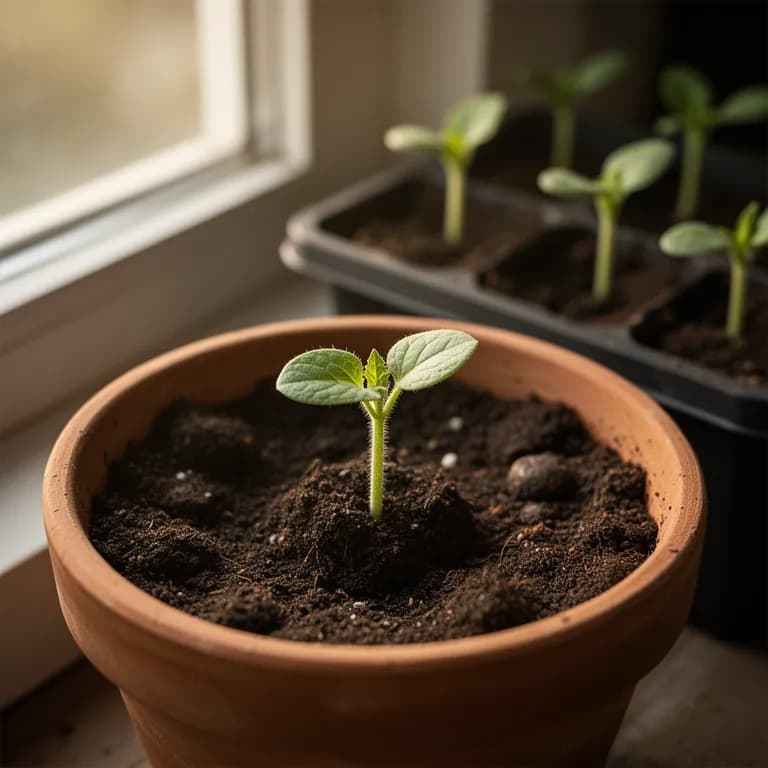
Cantaloupesamen benötigen warmen Boden, um erfolgreich zu keimen. Wenn die Bodentemperatur mindestens 21 °C (70 °F) erreicht, erweicht die Samenschale und die Radicula-Wurzel tritt innerhalb von 3–5 Tagen aus. Das Hypokotyl schiebt bis Tag 7–10 zwei dicke, runde Keimblätter über die Bodenoberfläche. In kaltem Boden gepflanzte Samen faulen statt zu keimen.
Sämlingsentwicklung
Echte Blätter entstehen mit der charakteristischen gelappten, leicht flaumigen Form von Kürbisgewächsen. Der Sämling baut sein Wurzelsystem schnell auf, indem er eine Pfahlwurzel tief in den Boden schickt, während sich seitliche Feinwurzeln nach außen ausbreiten. Der Stängel verdickt sich und die ersten Ranken können erscheinen, wenn sich die Pflanze auf ihre kletternde Wuchsform vorbereitet.
Rankenwachstum
Kräftige Ranken wachsen bei warmen Bedingungen schnell und täglich 15–30 cm. Große, tief gelappte Blätter entfalten sich entlang der sich ausdehnenden Triebe, und sich kräuselnde Ranken greifen nach jeder verfügbaren Stütze. Die Ranke kann sich 1,5–2,5 Meter von der Mittelkrone ausbreiten. Das Wurzelsystem erweitert sich in dieser Phase erheblich, um den Anforderungen der zukünftigen Fruchtproduktion gerecht zu werden.
Blüte und Bestäubung
Kleine gelbe Blüten öffnen sich in einer vorhersehbaren Reihenfolge an der Ranke. Männliche Staubblattblüten erscheinen zuerst in Büscheln, gefolgt 7–10 Tage später von weiblichen Stempelblüten, erkennbar an der kleinen geschwollenen Keimanlage an ihrer Basis, die zur Frucht wird. Jede Blüte öffnet sich nur für einen Tag und muss während dieses kurzen Zeitfensters durch Bienen oder von Hand bestäubt werden.
Fruchtentwicklung
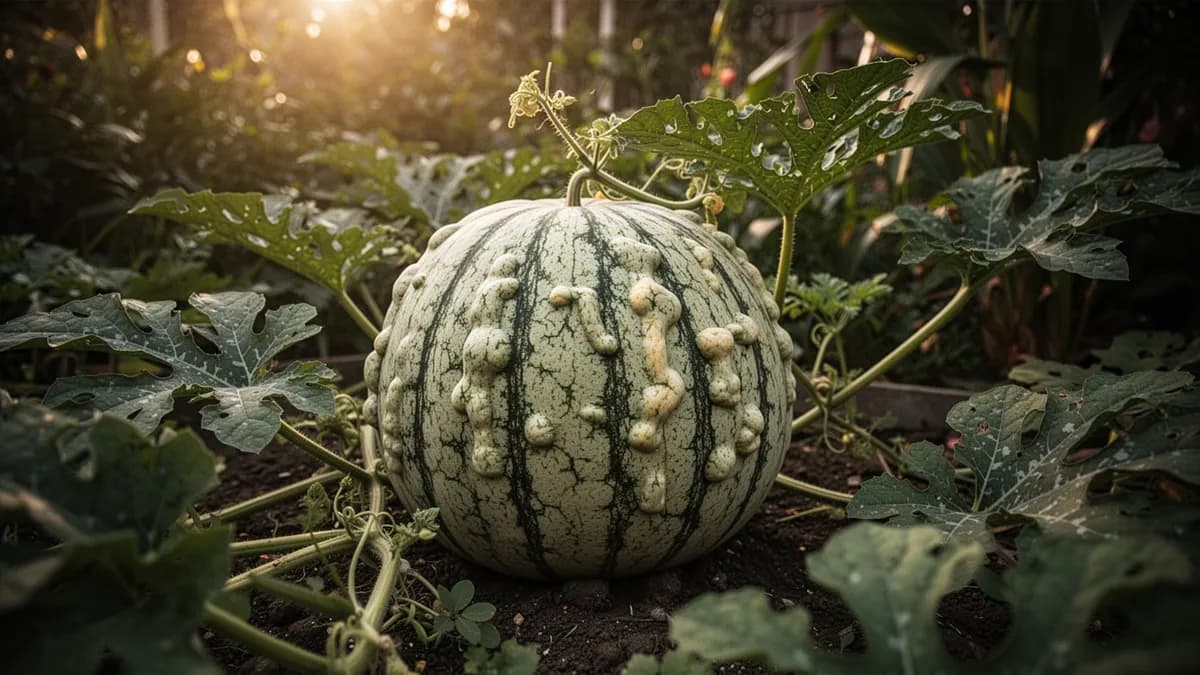
Bestäubte weibliche Blüten schwellen schnell zu sich entwickelnden Früchten an. Die kleinen grünen Kugeln wachsen innerhalb von 3–4 Wochen schnell in Größe und Gewicht. Das charakteristische erhabene Netzmuster beginnt sich auf der Schalenoberfläche zu bilden, wenn korkiges Gewebe kleine Risse füllt, die durch die Ausdehnung der Frucht entstehen. Das innere Fruchtfleisch wechselt von blassgrün zu dem tiefen Lachs-Orange, das Reife signalisiert.
Reifung und Ernte
Die Schale unter dem Netz wechselt von grün zu goldgelbem Beige, und am Blütenende entwickelt sich ein süßer, moschusartiger Duft. Die Stielansatzstelle bildet einen sichtbaren Riss und die Frucht beginnt sich zu lösen – eine Phase, die als Full Slip bezeichnet wird. Eine perfekt reife Cantaloupe löst sich mit dem leichtesten Daumendruck von der Ranke und hinterlässt eine saubere, konkave Stielnarbe.
Samen 2 cm tief in warmem, gut drainiertem Boden pflanzen oder 3–4 Wochen vor dem letzten Frost in biologisch abbaubaren Töpfen im Haus vorziehen. Bodenheizmatten, die auf 26–29 °C (80–85 °F) eingestellt sind, verbessern die Keimgeschwindigkeit und Gleichmäßigkeit erheblich. Boden feucht, aber nie nass halten.
Cantaloupe Monat für Monat pflegen
Was du jeden Monat für deine Cantaloupe tun solltest
Oktober
Aktueller MonatVerbleibende Früchte vor dem ersten Frost ernten. Grüne, unreife Cantaloupes reifen nicht nach der Ernte, daher Früchte priorisieren, die Anzeichen von Farbveränderung zeigen. Abgestorbene Ranken entfernen und Ablagerungen beseitigen, um überwinternde Schädlinge und Krankheiten zu reduzieren. Pflanzenmaterial dem Komposthaufen hinzufügen.
Immer wissen, was jetzt im Garten zu tun ist
Eine E-Mail zum Monatsanfang: was du jetzt säen, pflanzen und anpacken solltest — für deine Cantaloupe und alles, was drumherum wächst. Dazu ein kurzer Startkurs, der dich vor den klassischen Fehlern bewahrt.
- Was jetzt zu tun ist
- Passend zu deiner Saison
- Startkurs inklusive
Cantaloupe ernten
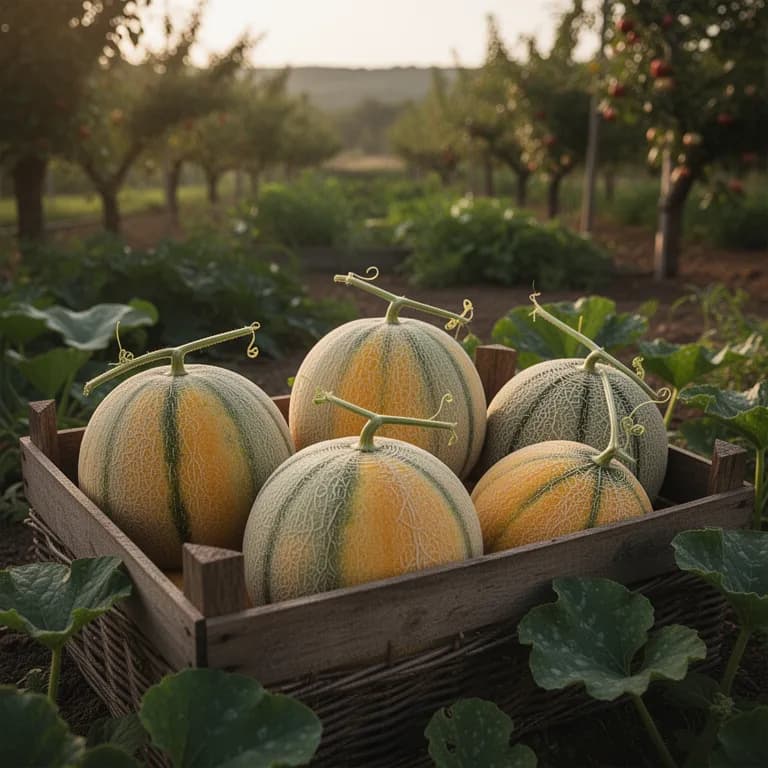
Cantaloupes sind reif, wenn sich der Stiel bei leichtem Druck sauber von der Frucht trennt – eine Phase, die als Full Slip bezeichnet wird. Die Schale unter dem Netz wechselt von grün zu goldgelbem Beige, und am Blütenende entwickelt sich ein süßes Aroma. Das Blütenende sanft drücken; bei Reife sollte es leicht nachgeben. Morgens ernten, um den besten Zuckergehalt zu erzielen. Wenn die Melone gezogen oder geschnitten werden muss, um sie zu lösen, ist sie noch nicht reif und wird nach der Ernte nicht mehr süßer.
angenommen, du pflanzt zu Beginn des Zeitraums — trage dein tatsächliches Datum ein
Im Full-Slip-Stadium ernten — die Schale unter dem Netz wechselt von grün zu goldgelbem Beige, am Blütenende entsteht ein süß-moschusartiger Duft, und der Stiel reißt mit sanftem Daumendruck von der Frucht ab. Sobald diese Zeichen auftreten, täglich kontrollieren, denn Cantaloupes reifen schnell und werden überreif schnell weich.
Lagerung & Konservierung
Ungesnittene reife Cantaloupes bis zu zwei Tage bei Raumtemperatur lagern oder bis zu fünf Tage im Kühlschrank aufbewahren. Einmal aufgeschnitten, fest einwickeln und bis zu drei Tage im Kühlschrank lagern. Cantaloupewürfel lassen sich gut für Smoothies und Sorbets einfrieren, wenn sie zunächst auf einem Backblech einzeln eingefroren und dann in Beutel abgefüllt werden. Cantaloupe kann zu zähen Streifen zum Snacken getrocknet werden. Melonenkugeln in leichtem Sirup eingelegt oder Cantaloupe-Sorbet sind ausgezeichnete Möglichkeiten, die Ernte über die Saison hinaus zu genießen.
Was schiefgeht — und die Lösung
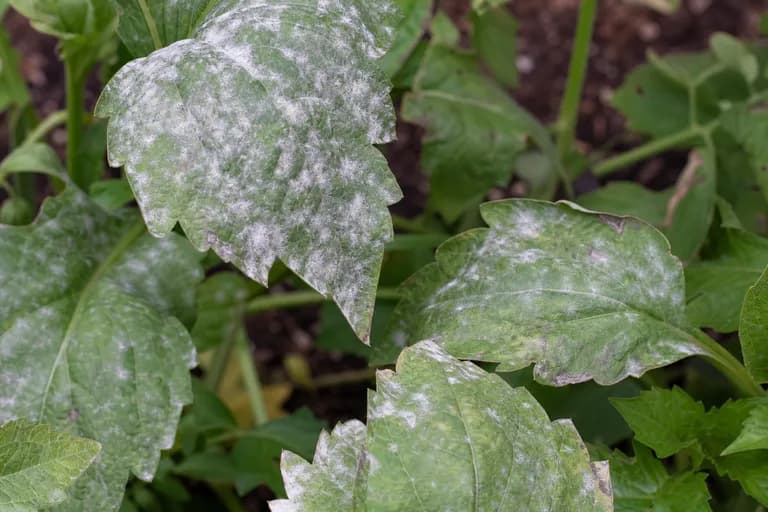
Echter Mehltau
KrankheitWeißer, puddriger Belag auf Blättern und Stielen, der sich bei warmem, trockenem Wetter schnell ausbreitet und schließlich zum Vergilben und Absterben der Blätter führt.
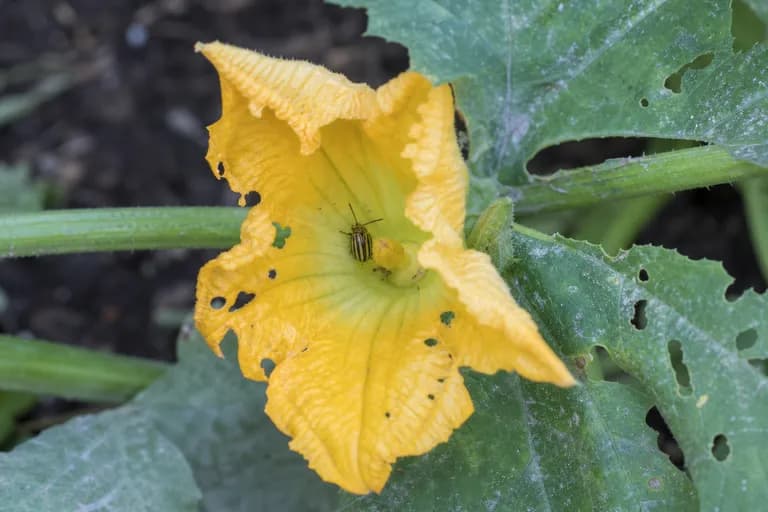
Gurkenkäfer
SchädlingGefressene Löcher in Blättern, Blüten und Fruchtschale durch gestreifte oder gefleckte Käfer; Käfer übertragen auch den Bakterienwelke, die zu plötzlichem Rankenzusammenbruch führt.
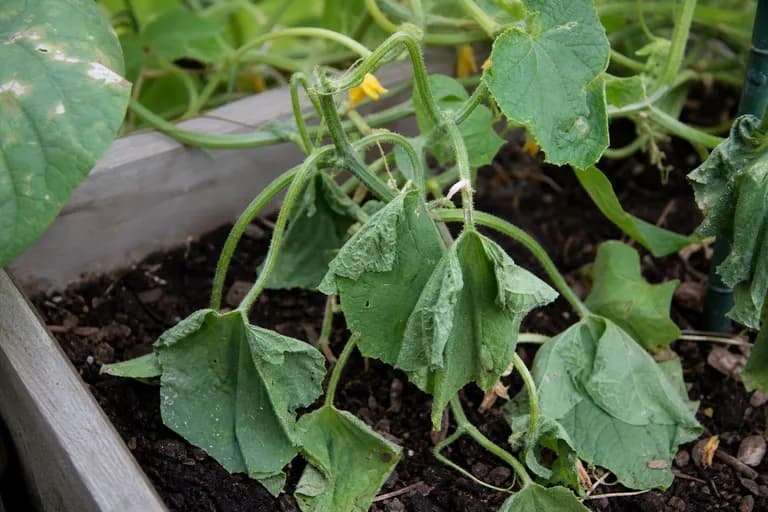
Bakterienwelke
KrankheitPlötzliches Welken einzelner Ranken, das sich über Nacht nicht erholt; das Abschneiden eines welken Stiels und das Zusammendrücken der Enden zeigt klebrige Bakterienfäden.
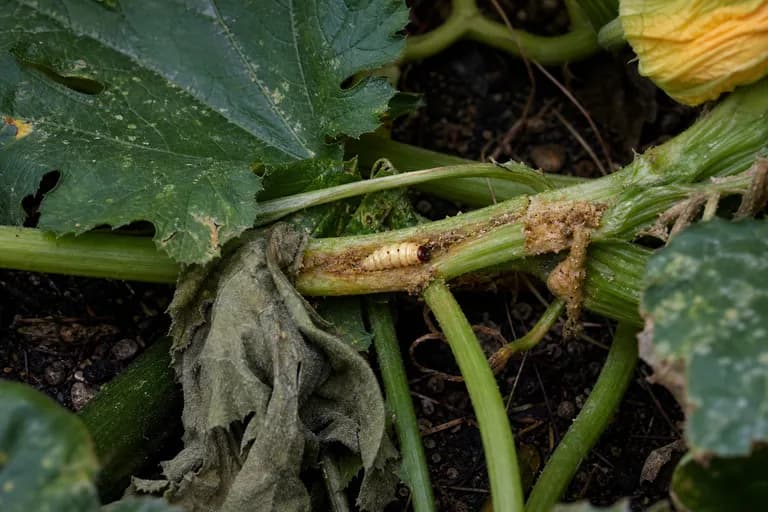
Kürbisrankenbohrer
SchädlingPlötzliches Welken von Rankenabschnitten; sägemehlartiger Kot sichtbar an der Stängelbasis, wo sich die Larven in das hohle Innere gebohrt haben.
Fehlerbehebung bei häufigen Problemen
Fade oder wässrige Melonen entstehen typischerweise durch zu viel Bewässerung während der Reife, kühles Wetter oder zu frühe Ernte. Schlechter Fruchtansatz wird häufig durch unzureichende Bienenaktivität während des kurzen Blütefensters verursacht. Sonnenbrand erzeugt blasse, ledrige Flecken auf exponierten Früchten in extrem heißen Klimazonen. Risse am Stielende weisen auf unregelmäßige Bewässerungsmuster hin. Missgebildete Früchte entstehen durch unvollständige Bestäubung, die mehrere Bienenbesuche erfordert, um genügend Pollen auf alle Blütenteile zu übertragen.
Anbautipps
- Mit warmem Boden beginnen – Cantaloupesamen faulen in kaltem Boden. Warten bis die Bodentemperatur mindestens 21 °C (70 °F) beträgt, bevor direkt gesät wird, oder Samen 3–4 Wochen früh in biologisch abbaubaren Töpfen vorziehen, um empfindliche Wurzeln beim Umpflanzen nicht zu stören.
- Erhöhte Hügel oder Erdhaufen 30–45 cm breit und 10–15 cm hoch zum Pflanzen bauen. Aufgehügelter Boden erwärmt sich im Frühling schneller, drainiert bei Sommerregen besser und konzentriert die Wurzelzone, wo Bewässerung und Dünger am effizientesten eingesetzt werden können.
- Schwarze Kunststoffmulchfolie verwenden, um den Boden im Frühling 3–5 °C über der Umgebungstemperatur zu erwärmen. Pflanzlöcher durch die Folie schneiden und Sämlinge oder Samen direkt in den erwärmten Boden pflanzen. Die Folie unterdrückt auch Unkraut und hält die Bodenfeuchtigkeit während der gesamten Saison.
- Junge Pflanzen mit Vliesabdeckung vom Umpflanzen bis zum Beginn der Blüte schützen. Vliesabdeckung erhöht die Lufttemperatur um 2–4 °C, blockiert Gurkenkäfer, die Bakterienwelke übertragen, und schützt Sämlinge vor Windschäden – beim Öffnen der Blüten entfernen, um Bestäuberzugang zu ermöglichen.
- Tief und gleichmäßig wässern, wöchentlich 2,5–5 cm am Pflanzengrund geben. Overhead-Bewässerung vermeiden, die Echten Mehltau und Blatterkrankungen fördert. Tropfbewässerung oder Sickersc hläuche sind ideal. Bewässerung in den letzten 7–10 Tagen vor der Ernte reduzieren, um Zucker zu konzentrieren.
- Alle 2–3 Wochen mit einem ausgewogenen Dünger während des Rankenwachstums düngen, dann auf eine stickstoffarme, kaliumreiche Formel umsteigen, sobald Früchte angesetzt werden. Übermäßiger Stickstoff produziert üppige Ranken, verzögert aber die Fruchtbildung und verringert die Süße.
- Jede Ranke auf 3–4 Früchte begrenzen, um beste Größe und Geschmack zu erzielen. Zusätzliche weibliche Blüten oder sehr kleine sich entwickelnde Früchte abzwicken, nachdem die Zielanzahl erreicht ist. Dadurch wird die Pflanze gezwungen, all ihre Energie in weniger, größere, süßere Melonen zu lenken.
- Vertikal an einem stabilen Rankgitter anbauen, um in kleinen Gärten Platz zu sparen. Stoffschlingen (aus alten T-Shirts oder Strumpfhosen hergestellt) verwenden, um jede sich entwickelnde Frucht zu stützen und ihr Gewicht beim Wachsen zu tragen. Vertikaler Anbau verbessert auch die Luftzirkulation und reduziert Krankheitsdruck.
- Auf Echten Mehltau achten, die häufigste Cantaloupekrankheit, die sich als weiße pudrige Flecken auf älteren Blättern zeigt. Luftzirkulation verbessern, Overhead-Bewässerung vermeiden und frühzeitig mit Neem-Öl, Kaliumbicarbonatspray oder Schwefelfungizid behandeln, bevor sie sich auf die gesamte Pflanze ausbreitet.
- Die Reifezeichen erlernen – die Schale unter dem Netz wechselt von grün zu goldgelbem Beige, das Blütenende entwickelt ein süßes moschusartiges Aroma, und der Stiel beginnt sich mit leichtem Daumendruck zu reißen und von der Frucht zu lösen. Eine reife Cantaloupe beim Full Slip löst sich sauber von der Ranke.
Bau deine beste Cantaloupe an — und alles drumherum.
Starte heute kostenlos. Lege deine Beete an, setze deine Cantaloupe ein und lass PlotMyGarden Timing, Abstände, Begleiter und Erinnerungen von der Saat bis zum Erntekorb übernehmen.
Finde deine Cantaloupe
Hale's Best
Ein klassischer Erbsorten-Sorte mit tief gerippter, stark genetzter Frucht und außergewöhnlich süßem, dickem orangefarbenem Fruchtfleisch, der in etwa 85 Tagen reift.
Ambrosia
Ein Hybrid mit besonders süßem, saftigem Fruchtfleisch und kleiner Samenhöhle, bekannt für seinen ambrosischen Geschmack und seine zuverlässige Leistung.
Sugar Cube
Eine Melone in Personengröße mit nur 0,9 bis 1,8 kg, perfekt für kleine Familien, mit hohem Zuckergehalt und Krankheitsresistenz.
Athena
Ein weit verbreiteter Hybrid, der bei kommerziellen Anbauern wegen seines festen Fruchtfleisches, langen Haltbarkeit und gleichbleibender Qualität beliebt ist.
Sarah's Choice
Eine früh reifende Sorte, die für nördliche Gärten geeignet ist und süße, aromatische Melonen mit guter Kältetoleranz für eine Cantaloupe produziert.
Ganze Cantaloupes werden in Supermärkten für 3–6 € pro Stück verkauft, wobei Bio- und regional angebaute Melonen auf Bauernmärkten 5–10 € kosten. Ein einzelnes Samenpaket (2–4 €) produziert 4–8 Pflanzen, die jeweils 2–5 Melonen ergeben – das sind 8–40 Melonen im Wert von 24–240 € im Einzelhandel. Vorgeschnittene Cantaloupe ist mit 5–8 € pro Behälter noch teurer. Das Eigenanbau garantiert auch rankengereifte Süße, die bei kommerziell versandten Melonen unmöglich zu finden ist, da diese für die Haltbarkeit statt für den Geschmack früh geerntet werden.
Schnelle Rezepte
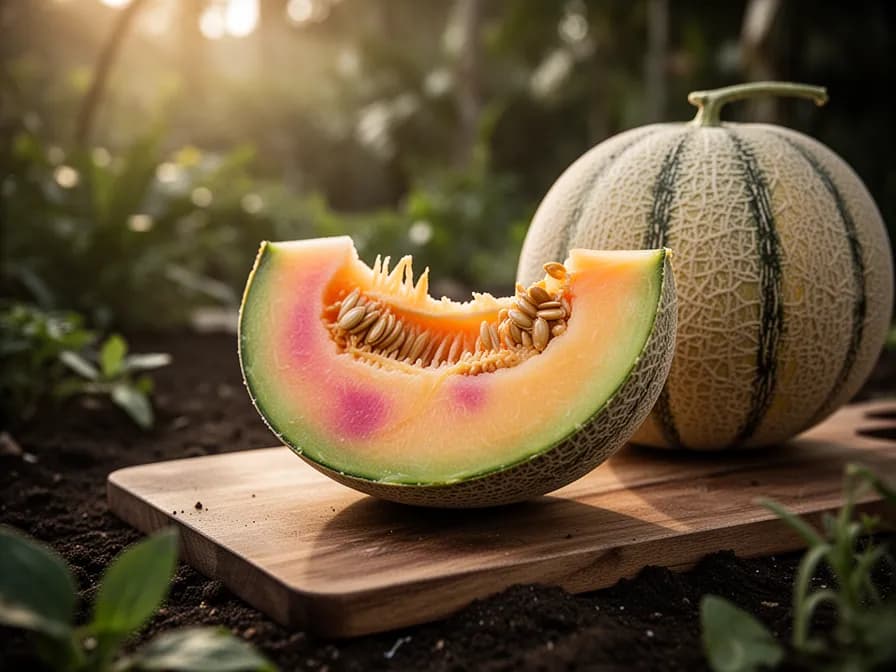
Cantaloupe-Prosciutto-Häppchen
10 Min.Der quintessenzielle italienische Sommeraperitif – süße, saftige Cantaloupespalten in hauchdünnen, salzigen Prosciutto gewickelt. Der Kontrast aus kühler Melonensüße und herzhaftem Schinken schafft eine unwiderstehliche Geschmackskombination, die seit Jahrhunderten auf italienischen Tischen zu finden ist.
5 Zutaten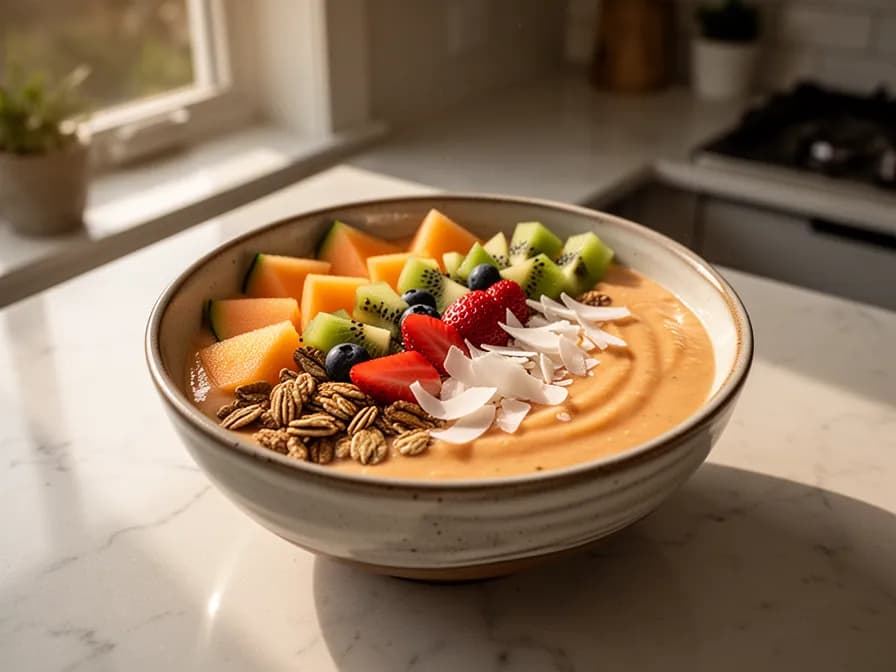
Cremiger Cantaloupe-Smoothie
5 Min.Ein natürlich süßer und seidiger Smoothie, der dank der konzentrierten Süße reifer Cantaloupe keinen zugesetzten Zucker benötigt. Die gefrorene Melone erzeugt eine dicke, cremige Textur und liefert bei jedem Schluck eine Dosis Beta-Carotin und Vitamin C.
7 ZutatenGekühlte Cantaloupe-Gazpacho
15 Min.Eine erfrischende kalte Suppe, die Cantaloupe in einem herzhaften Kontext zeigt. Mit Gurke, Limette und einem Hauch Chili gemixt, macht diese elegante Gazpacho einen beeindruckenden Sommervorspeise, der bei jedem Löffel überrascht und begeistert.
8 ZutatenKulinarische Verwendung
Cantaloupe wird am häufigsten frisch und gekühlt, in Scheiben oder Würfeln genossen. Sie passt klassisch zu Prosciutto, Minze, Limette und Ingwer. Cantaloupe eignet sich hervorragend für Smoothies, Sorbets und kalte Suppen. Sie ist eine ausgezeichnete Quelle für Vitamin A und C, Kalium und Beta-Carotin. Gegrillte Cantaloupespalten mit Honig und Chili sind eine überraschende und würzige Zubereitung für Sommerveranstaltungen.
Was drinsteckt
Gesundheitsvorteile
- Eine der reichsten Fruchtquellen für Beta-Carotin, das der Körper in Vitamin A umwandelt – eine einzelne Tasse Cantaloupe liefert über 100 % des Tageswertes und unterstützt gesundes Sehen, starke Immunfunktion und Hautzellreparatur.
- Ausgezeichnete Vitamin-C-Quelle, die über 60 % des Tageswertes pro 100 g liefert, unterstützt die Kollagensynthese für gesunde Haut und Gelenke und stärkt die Immunabwehr gegen häufige Infektionen.
- Hoher Wassergehalt von etwa 90 % kombiniert mit natürlichen Elektrolyten (Kalium und Natrium) macht Cantaloupe zu einer der besten Vollwertnahrungsoptionen zur Rehydrierung bei heißem Wetter oder nach dem Sport.
- Enthält signifikante Mengen der antioxidativen Verbindung Superoxiddismutase (SOD), von der Forschungen nahelegen, dass sie freie Radikale neutralisiert, Entzündungen reduziert und möglicherweise zelluläre Alterungsprozesse verlangsamt.
- Geringe Kaloriendichte (nur 34 Kalorien pro 100 g) kombiniert mit natürlicher Süße und hohem Wassergehalt macht Cantaloupe zu einer ausgezeichneten Wahl für das Gewichtsmanagement – Süßhunger stillen ohne übermäßige Kalorienzufuhr.
- Liefert Folat (21 mcg pro 100 g), wichtig für die DNA-Synthese und Zellteilung, sowie B-Vitamine Niacin und B6, die den Energiestoffwechsel und die Nervensystemfunktion unterstützen.
Woher Cantaloupe stammt
Die Cantaloupe (Cucumis melo var. cantalupensis) hat ihre Wurzeln in den heißen, trockenen Regionen Afrikas und Südwestasiens, wobei wilde Vorfahren noch in Teilen des heutigen Iran, Indiens und Ostafrikas zu finden sind. Archäologische Belege für den Melonenanbau reichen über 4.000 Jahre zurück in das alte Ägypten und Mesopotamien, wo frühe Landwirte aus wilden Populationen, die kleine, bittere, gurkenartige Früchte produzierten, süßere, größerfruchtige Sorten auswählten. Samen und Darstellungen von Melonen wurden in ägyptischen Gräbern aus dem Jahr 2400 v. Chr. gefunden, was darauf hindeutet, dass die Frucht sowohl ernährungsmäßige als auch kulturelle Bedeutung in der antiken Welt hatte.
Der Weg der Melone nach Europa folgte antiken Handelsrouten durch Persien, die arabische Welt und in das Mittelmeer. Der Name 'Cantaloupe' stammt vom italienischen päpstlichen Gut Cantalupo bei Rom, wo armenische Melonensamen angeblich erstmals während der Renaissance für den päpstlichen Hof angebaut wurden. Italienische und französische Gärtner entwickelten die glattschalige, tief gerippte europäische Cantaloupe, während eine andere Linie von netzschaligen Zuckermelonen sich separat entwickelte. Als europäische Kolonisten im 16. und 17. Jahrhundert Melonensamen nach Amerika brachten, war es der Typ mit genetzter Schale, der in den wärmeren Klimazonen der Neuen Welt gedieh – und die Amerikaner übernahmen den Namen 'Cantaloupe' für diese andere Sorte und schufen damit die Namensverwirrung, die bis heute anhält.
Spanische Entdecker führten Melonen in Mittel- und Südamerika ein, während englische und französische Siedler sie im östlichen Nordamerika etablierten. Im 19. Jahrhundert war die kommerzielle Cantaloupe-Produktion in den Vereinigten Staaten gut etabliert, und Kaliforniens warmes Central Valley entwickelte sich zur dominierenden Anbauregion. Die Entwicklung krankheitsresistenter Hybridsorten im 20. Jahrhundert verwandelte Cantaloupe von einem empfindlichen Gartenluxus in eine der meistkonsumierten Früchte Nordamerikas. Heute ist China der weltgrößte Melonenerzeuger, gefolgt von der Türkei, dem Iran, Ägypten und Indien, während die Vereinigten Staaten ein bedeutender Erzeuger und Verbraucher bleiben, wobei Amerikaner durchschnittlich 3,5 kg Cantaloupe pro Person und Jahr essen.
Cantaloupe: Schon gewusst?
Faszinierende Fakten über Cantaloupe
Echte Cantaloupes sind eigentlich nach dem päpstlichen Gut Cantalupo bei Tivoli, Italien, benannt, wo Samen aus Armenien erstmals im 15. Jahrhundert für europäische Päpste angebaut wurden – die rau genetzten Melonen, die in Nordamerika als 'Cantaloupe' verkauft werden, sind technisch gesehen Zuckermelonen, während europäische Cantaloupes glatte, gerippte Schalen haben.
Cantaloupe: Fragen & Antworten
Wann sollte ich Cantaloupe pflanzen?
Was sind gute Begleitpflanzen für Cantaloupe?
In welchen Winterhärtezonen kann Cantaloupe wachsen?
Wie viel Sonne braucht Cantaloupe?
Welchen Abstand sollte ich zwischen Cantaloupe lassen?
Welche Schädlinge und Krankheiten befallen Cantaloupe?
Wie lagere ich Cantaloupe nach der Ernte?
Was sind die besten Cantaloupe-Sorten zum Anbauen?
Welchen Boden braucht Cantaloupe?
Warum fallen meine Cantaloupeblüten ohne Fruchtbildung ab?
Woran erkenne ich, dass meine Cantaloupe reif und erntereif ist?
Kann ich Cantaloupe in einem kleinen Garten oder in Behältern anbauen?
Warum schmecken meine Cantaloupes fade und wässrig?
Was ist der Unterschied zwischen einer Cantaloupe und einer Zuckermelone?
Wie verhindere ich Schädlinge und Krankheiten an meinen Cantaloupepflanzen?
Du hast die Theorie gelesen. Jetzt baue sie auf Autopilot an.
Alles, was Cantaloupe knifflig macht — das Timing, die Abstände, die Begleiter, das Erntefenster — genau das übernimmt PlotMyGarden für dich, für jede Pflanze im Garten.
Ein Plan, der dein Wetter kennt
Standort einmal festlegen. Aussaat-, Dünge- und Erntedaten rund um deinen echten letzten Frosttermin und die Live-Vorhersage — kein Raten mehr nach Saattüte.
Aus dem Abschnitt „Pflanzzeit“Beetplaner per Drag & Drop
Beete auf einem Raster gestalten. Jede Pflanze rastet im richtigen Abstand ein, und du siehst die ganze Saison, bevor du einen Cent für Saatgut ausgibst.
Aus dem Abschnitt „Anbau“Begleiter-Konflikte früh erkannt
Über 200 gute und schlechte Kombinationen werden beim Pflanzen live geprüft — so landet ein saisonruinierender Fehler nie in der Erde.
Aus dem Abschnitt „Begleiter“Erinnerungen, nach denen du wirklich handelst
„Gieß die Bohnen.“ „Heute ernten, bevor's umschlägt.“ Pünktlich, konkret und auf deine echten Pflanzen bezogen.
Aus dem Abschnitt „Ernte“Staffel-Aussaat, geplant
Sechs Wochen ernten statt sechs Tage? Die App verteilt deine Aussaaten automatisch und erinnert dich, wenn der nächste Satz fällig ist.
Aus dem Abschnitt „Pflanzzeit“Ein Verlauf, der schlauer wird
Jede protokollierte Ernte bringt der App deinen Garten bei. Der Plan fürs nächste Jahr startet bei dem, was in deinem Boden wirklich funktioniert hat.
Aus dem Abschnitt „Überblick“Pflanze diese neben Cantaloupe
Weitere Tropische Früchte
Halte Cantaloupe von diesen fern
Gartenpläne mit Cantaloupe
Bau deine beste Cantaloupe an — und alles drumherum.
Starte heute kostenlos. Lege deine Beete an, setze deine Cantaloupe ein und lass PlotMyGarden Timing, Abstände, Begleiter und Erinnerungen von der Saat bis zum Erntekorb übernehmen.