Summersweet
A native North American deciduous shrub prized for intensely clove-scented white flower spikes that open in mid to late summer, when few other shrubs are in bloom.





On this pageOverview
Meet Summersweet
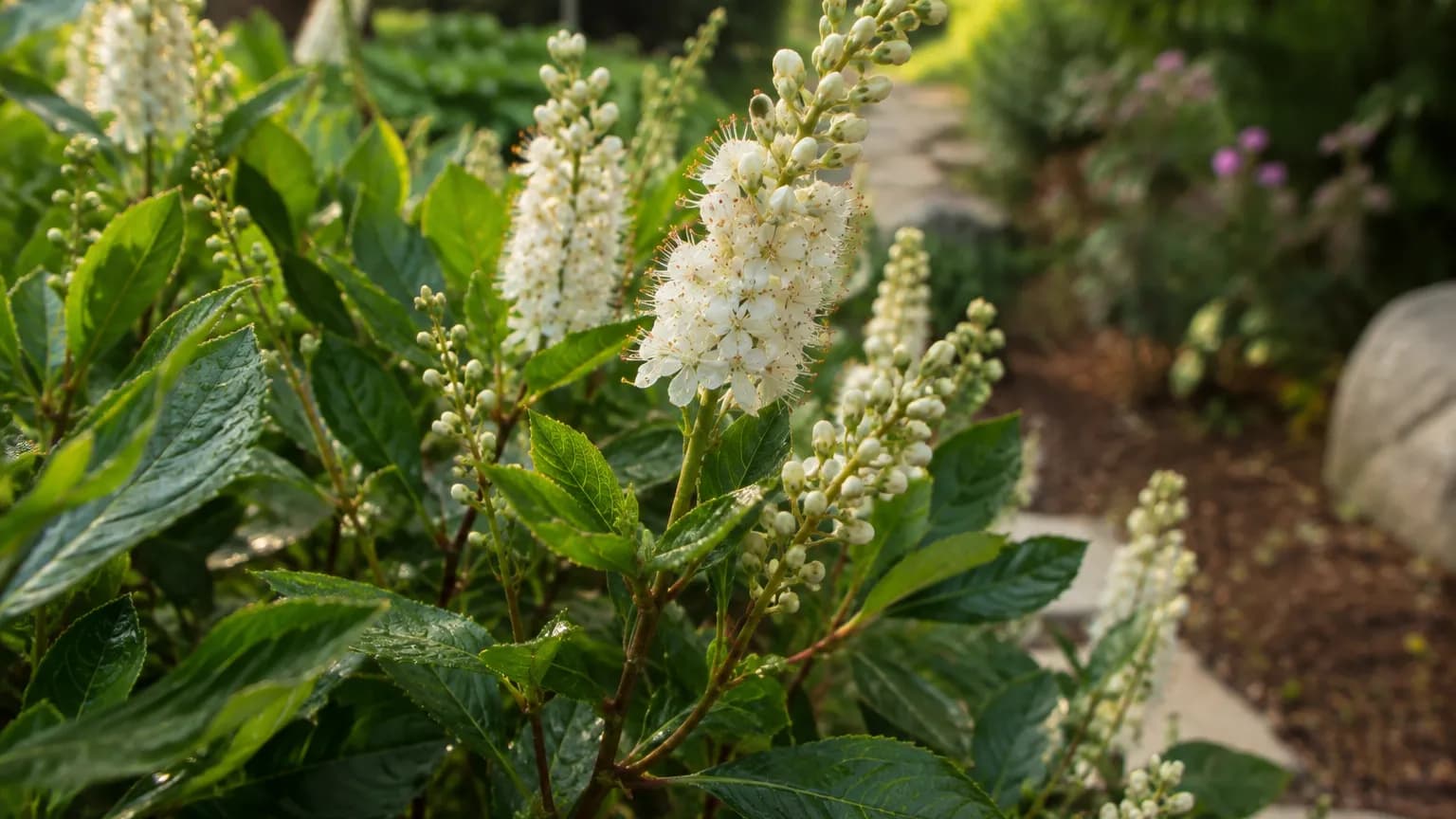
A native North American deciduous shrub prized for intensely clove-scented white flower spikes that open in mid to late summer, when few other shrubs are in bloom. Summersweet is one of the very few flowering shrubs that blooms reliably in shade, and it thrives in moist to wet, acidic soils where many ornamentals fail. Bees, butterflies, and hummingbirds mob the fragrant blossoms, and the foliage turns clear golden yellow in autumn. Compact cultivars such as Hummingbird bring this pollinator magnet within reach of small gardens and foundation plantings.
When to plant Summersweet
Summersweet can be raised from seed, but most gardeners will find cuttings or division far easier. The dust-fine seeds need light to germinate, so surface-sow them on a moist, acidic seed mix without covering. First give the sown trays 90 days of cold, moist stratification at 1-4°C — either in a refrigerator or outdoors over winter. After stratification, move trays to bright, indirect light at 18-21°C; germination is erratic and typically takes 2-6 weeks. Keep the medium constantly moist with a fine mist. Seedlings grow slowly and need two seasons before they are sturdy enough to plant out. Softwood cuttings taken in early summer root readily in a peat-and-perlite mix under mist, and suckers detached from established clumps in spring transplant well — both are the standard nursery methods and preserve cultivar traits.
Your Summersweet Year
Composed for Zone 7 · typical seasons · frost passes Apr 2, returns Nov 1
Plant Summersweet Mar – Apr, Oct, pick Jul – Aug. Check the planting methods below and set your climate to personalize these windows.
How to grow Summersweet
Summersweet is one of the easiest native shrubs to grow and one of the most rewarding for late-summer fragrance. It performs best in partial shade but tolerates anything from full sun to full shade, making it one of the few shrubs that flower dependably in low light. Choose a site with moist, acidic soil (pH 4.5-6.5) rich in organic matter. Summersweet is outstanding in rain gardens, along stream banks and pond edges, in low spots that stay damp, and in coastal plantings thanks to its salt tolerance. Avoid hot, dry, alkaline sites, which cause stress, leaf scorch, and spider mite problems.
Plant container-grown or balled-and-burlapped shrubs in spring or early autumn, setting the root ball at the same depth it grew in the nursery and watering deeply at planting. Space the species about 120 cm apart and compact cultivars such as Hummingbird 90-100 cm apart. Keep the root zone consistently moist during the first two growing seasons — summersweet is not drought tolerant until well established. A 5-8 cm layer of acidic mulch such as shredded pine bark, pine needles, or composted oak leaves conserves moisture, cools the roots, and slowly acidifies the soil.
Pruning is minimal because summersweet flowers on new wood. In late winter or very early spring, before growth begins, remove dead, damaged, or crossing branches and thin out the oldest stems at ground level every few years to encourage vigorous young shoots. Spent flower spikes can be trimmed off for tidiness, but leaving them lets the ornamental seed capsules develop and feed birds in winter. The species spreads slowly by suckers to form colonies; remove unwanted suckers with a sharp spade, or use them to propagate new plants. Compact cultivars rarely need more than an occasional shaping.
2 plants fit a 4 × 8 ft bed
Each Summersweet wants 120 cm of elbow room. The planner keeps that spacing for you — every plant, every bed.
Summersweet's best neighbours
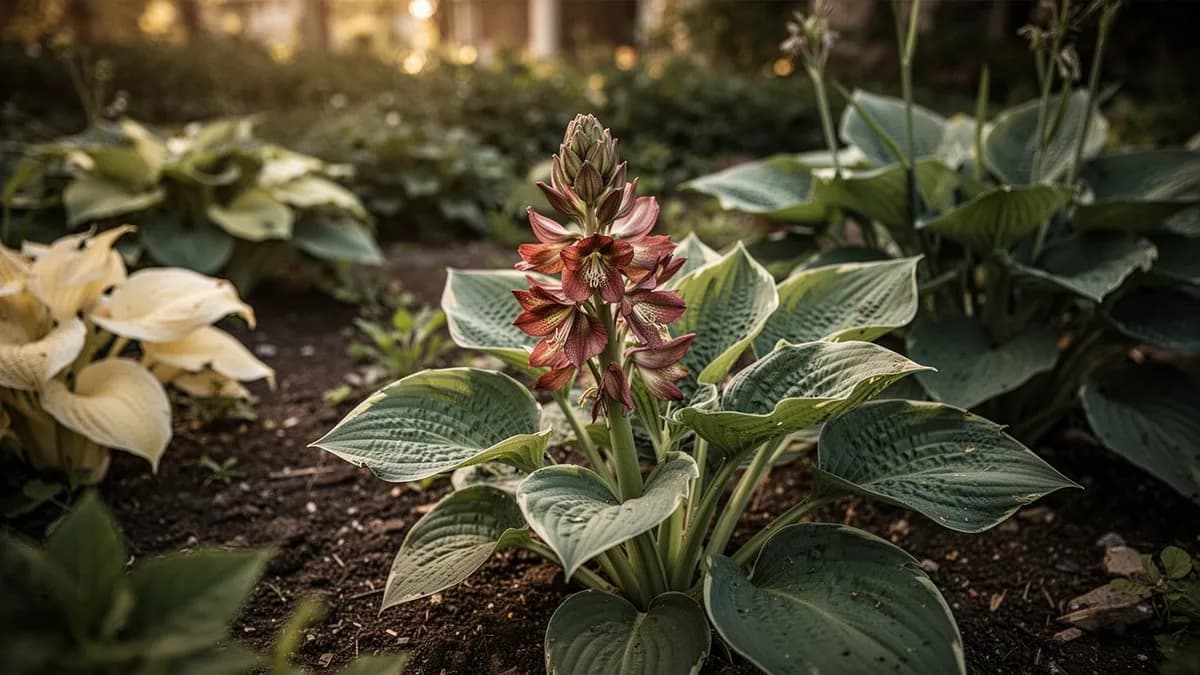
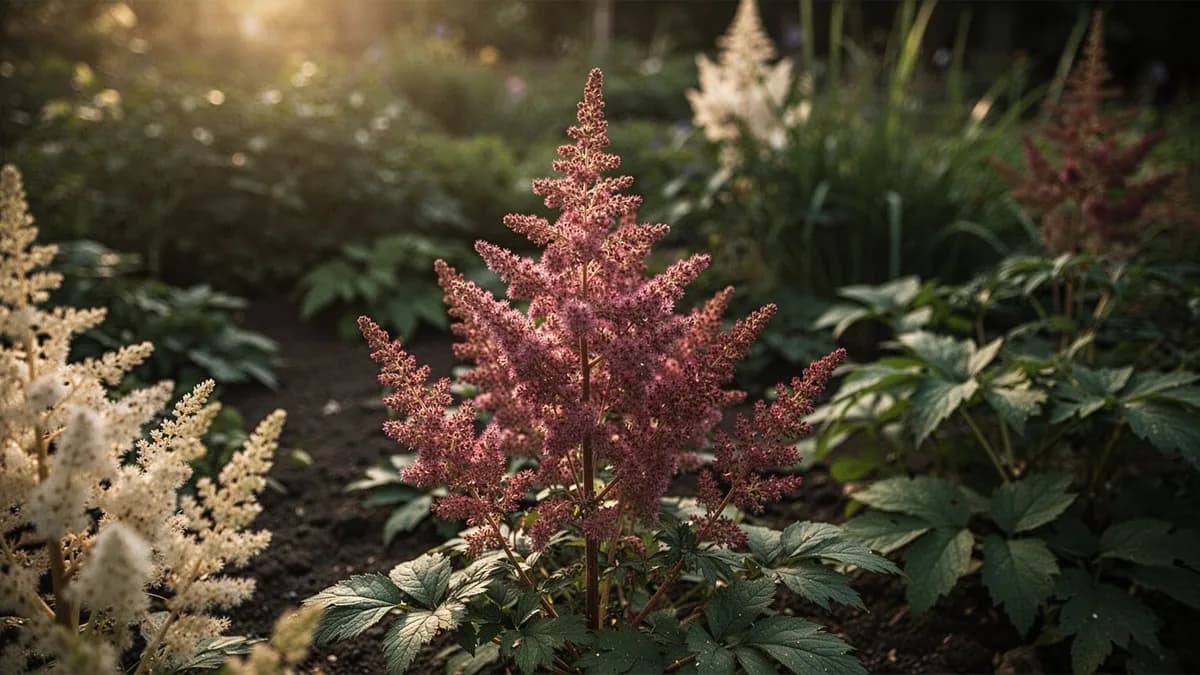
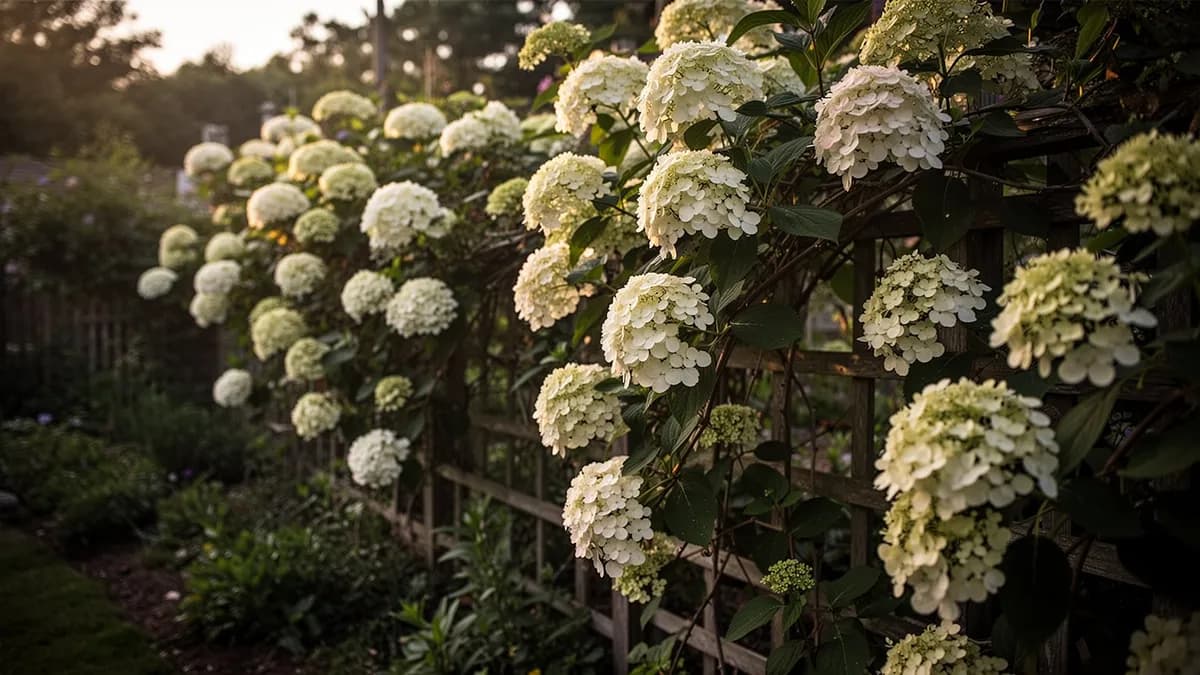
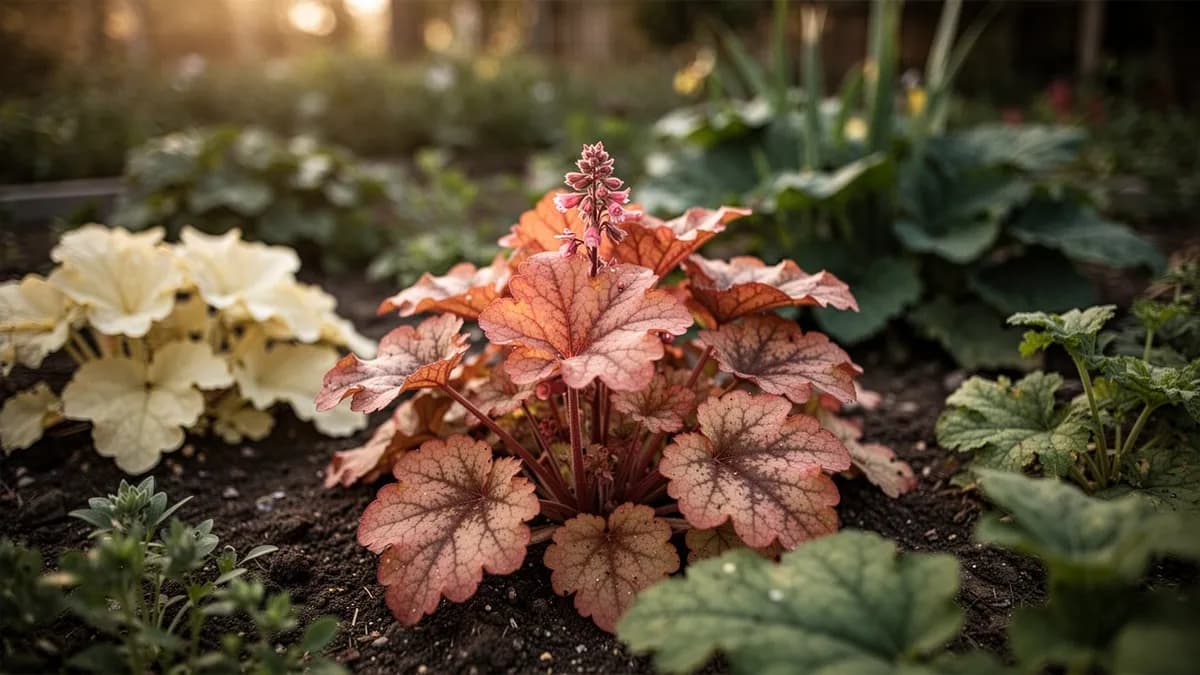
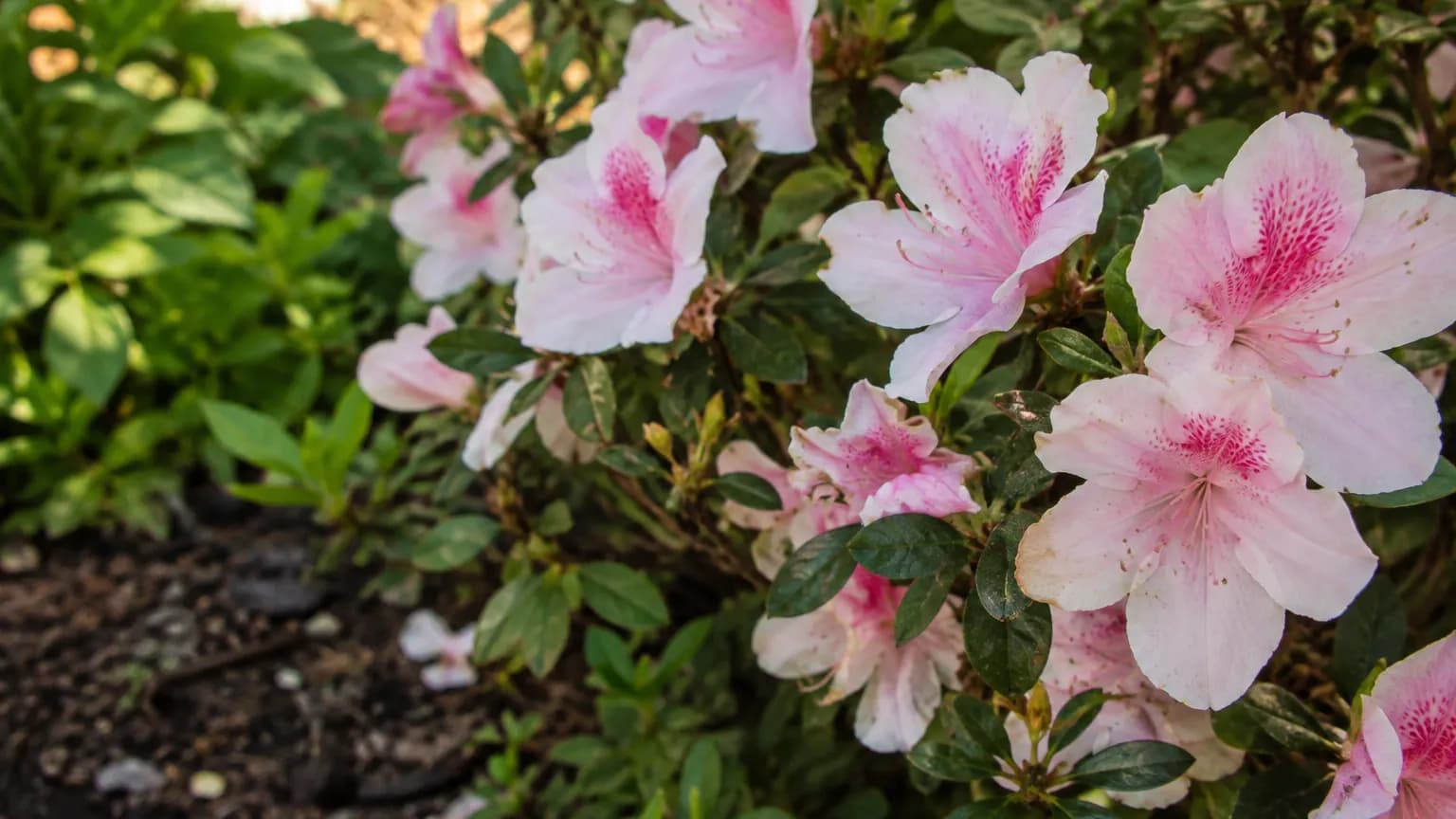
Summersweet anchors the moist, shady border, where it shares conditions with azaleas, rhododendrons, mountain laurel, and fothergilla — fellow acid lovers that flower in spring and hand the season over to summersweet in high summer. Underplant with hosta and astilbe, which relish the same humus-rich, moist soil and partial shade, and thread in heuchera for contrasting foliage at ground level. Climbing hydrangea on a nearby wall or tree trunk pairs beautifully, echoing the white summer bloom theme. In rain gardens and wet meadow edges, combine it with swamp milkweed, Joe Pye weed, and cardinal flower for a native pollinator powerhouse.
Hosta belongs beside it.
Old growers' knowledge, checked against Summersweet's real companion table below — test any plant you're growing.
Try Summersweet in a bed — right here
A real planner bed with Summersweet already in it. Tap a companion to place it and watch the pairing checks answer — green for good neighbours, red for a clash.


Related growing guides
Feed it well
Summersweet insists on acidic soil in the pH 4.5-6.5 range and revels in humus-rich, moist to wet ground — sandy loam or peaty soil amended with composted leaves or pine bark is ideal. It tolerates clay as long as the site is not stagnant, and benefits from generous organic matter worked into the top 20-30 cm at planting. Feed in early spring with a slow-release fertilizer formulated for acid-loving plants (azalea/rhododendron type) at label rate; shrubs in rich, mulched soil often need nothing more than an annual top-dressing of compost. Yellowing leaves with green veins signal that the soil is too alkaline — apply chelated iron and elemental sulfur, and mulch with pine bark. Keep a 5-8 cm organic mulch over the root zone year-round.
Ideal Temperature
Hardiness Zone Compatibility
From seed to harvest, stage by stage
Stratification and Germination
Clethra seeds are dust-fine and carry a physiological dormancy. After harvest from the peppercorn-like capsules, they need about 90 days of cold, moist stratification at 1-4°C before they will sprout. Sown on the surface of a moist, acidic seed mix — light is required for germination — seedlings emerge erratically over 2-6 weeks once temperatures rise to 18-21°C.
Seedling Development
Young clethra seedlings are delicate and slow, producing small, serrated, alder-like leaves and reaching only 10-15 cm in their first season. The fibrous root system stays shallow, so seedlings are vulnerable to drying out. Most nursery production bypasses this stage entirely by rooting softwood cuttings or dividing suckers from established plants.
Juvenile Growth
Planted out into the garden, the young shrub builds a dense, multi-stemmed framework of upright shoots clothed in fresh green, serrated foliage. Growth is moderate — 20-40 cm per year in good conditions — and the first suckers appear around the base of the species form, beginning the slow formation of a colony.
First Flowering
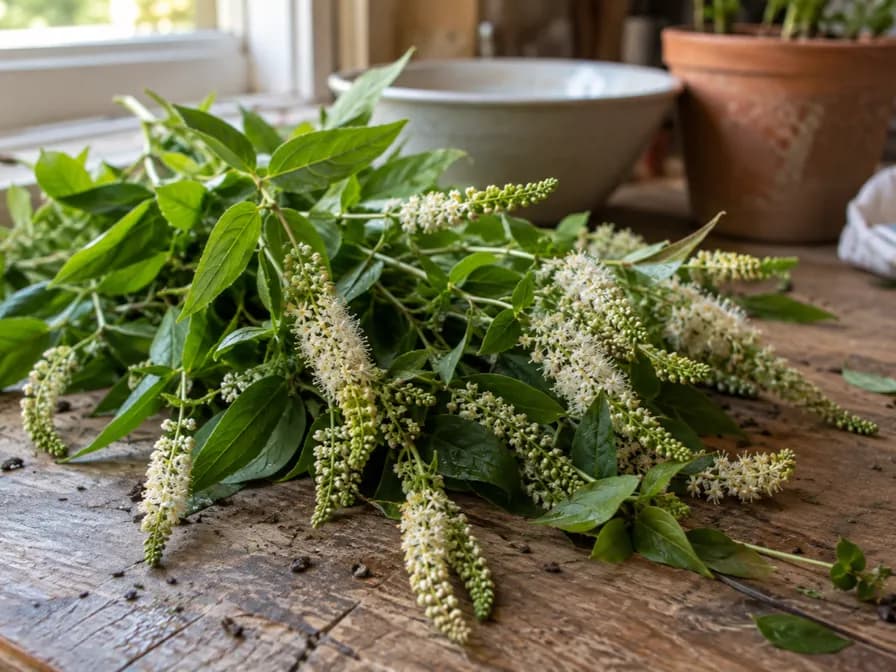
In its second or third summer the shrub opens its first white, bottlebrush spikes — 10-15 cm candles of tiny florets that release an intense clove-and-honey fragrance on warm air. Bloom runs from July into August, precisely when little else is flowering, and every spike hums with bees, butterflies, and hummingbirds.
Mature Shrub
At maturity the species forms a rounded, densely twiggy shrub 1.5-2.4 m tall — compact cultivars such as Hummingbird hold at 1-1.2 m — blooming heavily every July and August, then turning clear golden yellow in autumn. Peppercorn-like seed capsules ripen after flowering and persist into winter, feeding small birds. Established shrubs sucker gently into colonies and live for decades with almost no attention.
Sow on the surface and do not cover; press the seeds gently into the medium and mist to settle them. Keep trays in bright, indirect light and never allow the surface to dry out. Steady warmth speeds emergence.
Caring for Summersweet month by month
What to do each month for your Summersweet
September
You are hereThe foliage begins turning golden yellow. This is an excellent month to plant new shrubs while the soil is still warm. Reduce feeding and let growth harden off for winter.
Know exactly what to do in your garden — every month
One email at the start of each month: what to sow, plant, and tackle right now — for your Summersweet and everything growing around it. Plus a short starter course that helps you dodge the classic mistakes.
- What to do, right now
- Matched to your season
- Starter course included
Harvesting Summersweet
Summersweet's harvest is ornamental and sensory: the fragrant flower spikes. Cut spikes for bouquets in the cool of early morning when the lower third of the florets has just opened — they hold for 5 to 7 days in water and perfume an entire room. Re-cut stems under water and strip foliage below the waterline. The dried, peppercorn-like seed capsules can be gathered in autumn for dried arrangements and for seed propagation. The greatest reward, however, is left standing on the shrub: leave most spikes in place so bees, butterflies, and hummingbirds can work them through July and August.
assuming you plant when the window opens — set your real date
Pick Summersweet promptly and the plant keeps producing.
What goes wrong — and the fix
Spider Mites
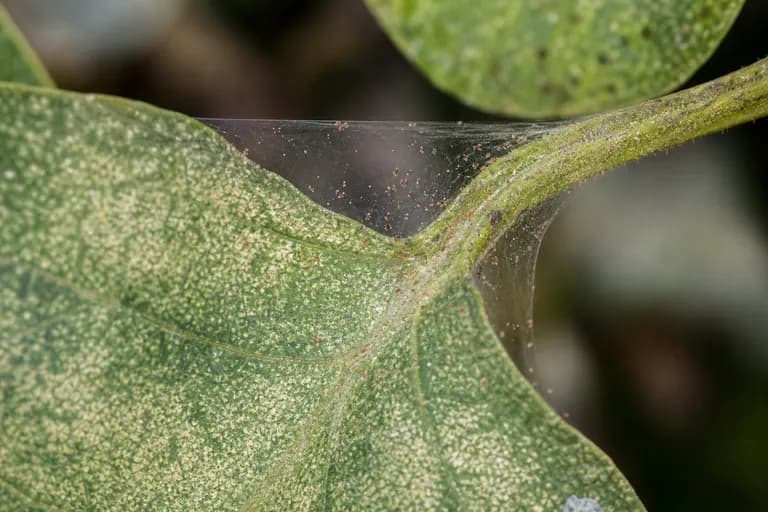
PestFine stippling and bronzing of leaves, delicate webbing on the undersides, and premature leaf drop during hot, dry weather. Summersweet planted in dry, exposed, sunny sites is most vulnerable.
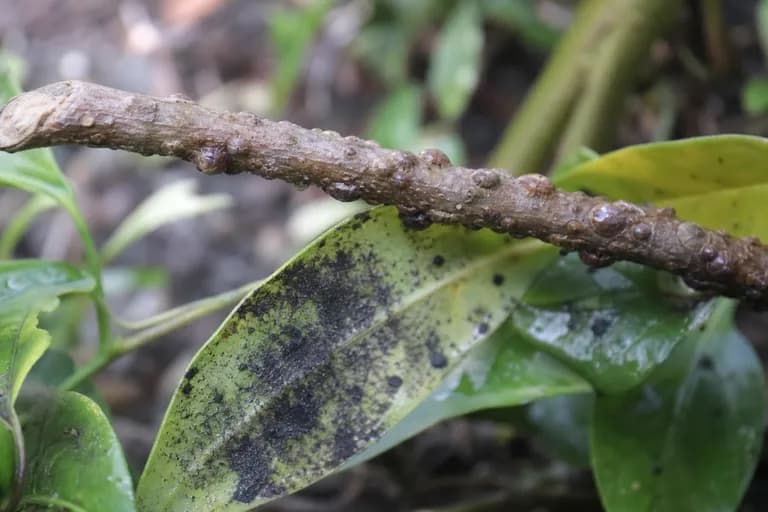
Scale Insects
PestSmall, immobile brown or gray bumps on stems and leaf undersides. Heavy infestations cause yellowing leaves, reduced vigor, and sticky honeydew that fosters sooty mold.

Leaf Spot
DiseaseSmall brown to purple spots on the foliage that may merge into blotches during prolonged humid, wet weather. On this tough shrub the problem is primarily cosmetic.
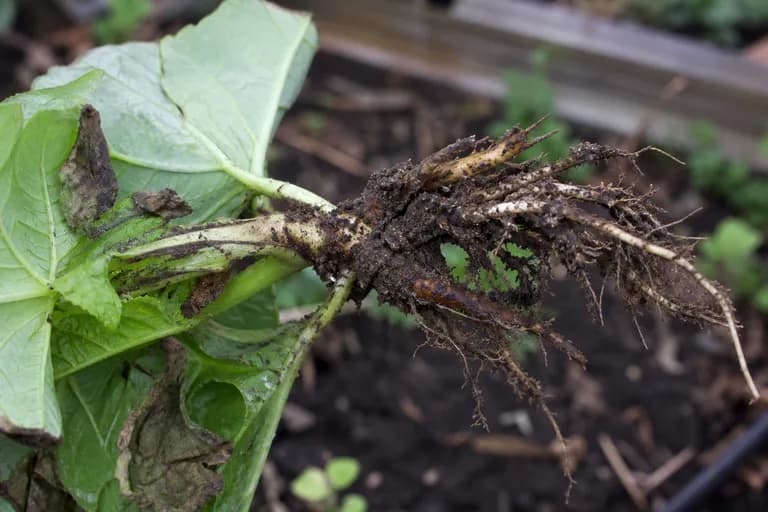
Root Rot
DiseaseWilting and yellowing despite wet soil, stunted growth, and dark, mushy roots. Occurs only where drainage is truly stagnant and oxygen-starved, not merely moist.
Troubleshooting Common Problems
The most frequent complaint is a summersweet that blooms poorly or not at all — almost always caused by drought stress on a site that is too dry and hot, not by shade. Leaf edges browning in summer signal scorch from hot afternoon sun combined with dry soil. Chlorotic, yellowing foliage points to alkaline soil. The species suckers freely, which delights naturalistic gardeners but annoys tidy ones; compact cultivars such as Hummingbird sucker far less. Flower buds on exposed plants can occasionally be nipped by late spring frosts in the coldest zones. Otherwise summersweet is notably trouble-free: no serious pests, no serious diseases, and it is browsed only lightly by deer.
Growing Tips
- Plant in partial shade for the best balance of bloom and compact growth — but if your site is shady and damp, this is one of the very few flowering shrubs that will still perform beautifully.
- Never let summersweet dry out. It is a wetland shrub by nature; a 5-8 cm mulch of pine bark or leaf mold and a deep weekly watering in summer are the secrets to heavy bloom.
- Keep the soil acidic, between pH 4.5 and 6.5. If leaves yellow between green veins, top-dress with elemental sulfur and feed with an ericaceous fertilizer.
- Prune only in late winter, before growth starts — flowers form on new wood, so a late-spring trim sacrifices the season's bloom.
- Site it where the fragrance can be enjoyed: beside a patio, along a path, or beneath a window. The clove scent carries remarkably far on warm evening air.
- For small gardens choose Hummingbird or Sixteen Candles, which stay around 1-1.2 m; the species itself suckers into a colony 2 m wide or more and needs room or annual sucker removal.
- Leave the faded spikes standing in autumn if you can — the peppercorn-like capsules give subtle winter interest and feed small birds.
- Summersweet is an outstanding rain-garden and pond-edge shrub: it thrives in ground too wet for lilac, hydrangea, or viburnum.
- It shrugs off salt spray and light road salt, making it one of the best scented shrubs for coastal gardens and exposed front-yard plantings.
Grow your best Summersweet yet — and everything around it.
Start a free plan today. Lay out your beds, drop in your Summersweet, and let PlotMyGarden handle the timing, spacing, companions and reminders from seed to harvest basket.
Pick your Summersweet
Hummingbird
The outstanding dwarf selection, discovered at Callaway Gardens in Georgia, forming a spreading mound just 1-1.2 m tall and wide. Densely set with fragrant white spikes in July and August and superb golden-yellow fall color. The best choice for small gardens, foundations, and containers.
Ruby Spice
The finest pink cultivar, with rich rose-pink buds opening to deep pink spikes that hold their color without fading. Slightly larger than Hummingbird at 1.2-1.8 m, with the same heavy clove fragrance and yellow autumn foliage.
Sixteen Candles
A compact, upright selection raised by Dr. Michael Dirr from Hummingbird seed, topped with remarkably large, erect white panicles held like candles above the foliage. Stays around 0.9-1.2 m tall — excellent in pots and at the front of borders.
Pink Spires
A vigorous older pink selection growing 1.5-2 m tall with rose-pink buds and soft pink, fragrant spikes. Reliable and free-flowering, with a more open, natural habit suited to informal plantings.
September Beauty
Valued for extending the season, this white-flowered selection comes into bloom later than the species and often flowers into September. Reaches about 1.5-1.8 m with a sturdy, upright habit.
Where Summersweet comes from
Summersweet is native to the eastern United States, where it colonizes swamps, wet woodlands, stream banks, and coastal plains from southern Maine south to Florida and west to Texas. In the wild it forms dense, suckering thickets in soggy, acidic soils, often in the company of inkberry, swamp azalea, and sweetbay magnolia. The shrub's honey-scented midsummer bloom made it a landmark of the native flora, and it reached English gardens as early as 1731, where it was prized for flowering in shade at a season when few shrubs do.
For two centuries summersweet remained a plant of connoisseurs and native-plant gardens — admired, but not widely planted. That changed in the late twentieth century, when the rise of native-plant gardening and the selection of superior cultivars transformed its fortunes. Hummingbird, a compact seedling found at Callaway Gardens in Georgia, made the species practical for small suburban gardens; Ruby Spice brought a fade-proof pink; and Sixteen Candles, selected by Dr. Michael Dirr at the University of Georgia, offered candle-straight flower spikes on a plant small enough for a patio pot.
Today Clethra alnifolia is celebrated as a flagship native shrub of the ecological gardening movement: a pollinator plant of the first rank, a solution for wet and shady problem sites, and one of the very few shrubs to bloom in the heat of late summer. It is widely planted across its hardiness range in North America and is increasingly appreciated in European gardens, where it is known as Zimterle or Silberkerzenstrauch.
Summersweet: did you know?
Fascinating facts about Summersweet
Summersweet is one of the only shrubs that flowers reliably in shade — it will bloom beneath open tree canopies where even hydrangeas refuse to perform.
Summersweet questions, answered
When should I plant Summersweet?
What are good companion plants for Summersweet?
What hardiness zones can Summersweet grow in?
How much sun does Summersweet need?
How far apart should I space Summersweet?
What pests and diseases affect Summersweet?
What are the best Summersweet varieties to grow?
What soil does Summersweet need?
Will summersweet really bloom in shade?
Why is my summersweet not flowering?
Can summersweet grow in wet or boggy soil?
How big does summersweet get, and how do I keep it small?
Is summersweet deer resistant?
When should I prune summersweet?
You just read the theory. Now grow it on autopilot.
Everything that makes Summersweet fiddly — the timing, the spacing, the companions, the harvest window — is exactly what PlotMyGarden handles for you, for every plant in your garden.
A plan that knows your weather
Set your location once. Get sow, feed and harvest dates built around your real last-frost date and live forecast — no more guessing from a generic seed packet.
From the “When to plant” sectionDrag-and-drop bed planner
Design beds on a grid. Every plant snaps to its proper spacing, and you can see your whole season laid out before you spend a cent on seed.
From the “Growing guide” sectionCompanion conflicts, caught early
200+ good-and-bad pairings checked live as you plant — so a season-wrecking mistake never makes it into the ground.
From the “Companions” sectionReminders you'll actually act on
“Water the beans.” “Pick today before it turns.” Timely, specific, and tied to the plants you're really growing.
From the “Harvest” sectionSuccession, scheduled
Want a harvest for six weeks, not six days? It spaces your sowings automatically and reminds you when each new block is due.
From the “When to plant” sectionA record that gets smarter
Every harvest you log teaches it your garden. Next year's plan starts from what actually worked in your soil, not a textbook's.
From the “Overview” sectionPlant these alongside Summersweet
More Flowering
Grow your best Summersweet yet — and everything around it.
Start a free plan today. Lay out your beds, drop in your Summersweet, and let PlotMyGarden handle the timing, spacing, companions and reminders from seed to harvest basket.