Chantenay Carrot
A short, stout carrot with broad shoulders and a blunt tip that performs well in shallow or heavy clay soils.





On this pageOverview
Meet Chantenay Carrot
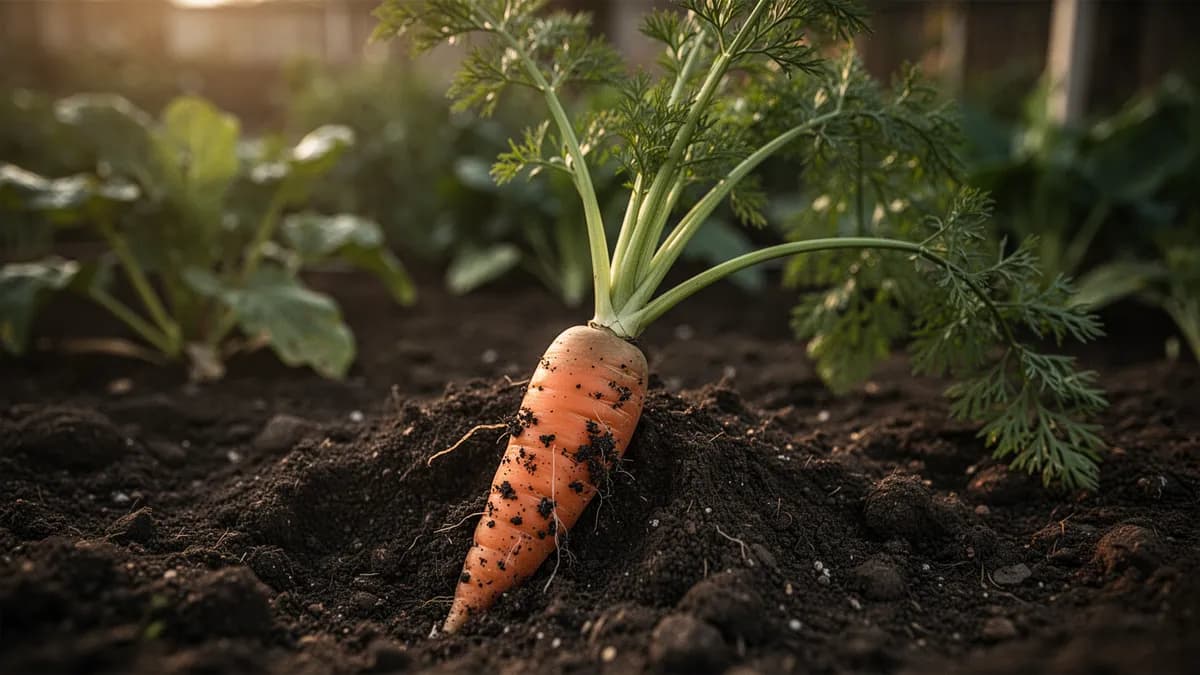
A short, stout carrot with broad shoulders and a blunt tip that performs well in shallow or heavy clay soils. Chantenay carrots are ideal for container growing due to their compact size, reaching only five to six inches in length. The wide core and dense flesh make them excellent for cooking and juicing, with a deep orange color indicating high beta-carotene content. These reliable producers are a good choice for gardens with less-than-perfect soil conditions.
When to plant Chantenay Carrot
Direct sow only; never transplant. Sow 1/4 inch deep 2-4 weeks before last frost. Mix small seeds with sand for even distribution. Maintain soil moisture for 10-21 day germination. Thin to 2-3 inches apart. Pelleted seeds simplify spacing. Succession sow every 3-4 weeks. Seeds remain viable for 3 years.
Your Chantenay Carrot Year
Composed for Zone 7 · typical seasons · frost passes Apr 2, returns Nov 1
Plant Chantenay Carrot Mar – May, Aug – Sep, pick Jun – Aug, Oct – Nov. Check the planting methods below and set your climate to personalize these windows.
How to grow Chantenay Carrot
Direct sow Chantenay seeds 1/4 inch deep, 2-4 weeks before last frost. Seeds germinate in 10-21 days at 55-75°F. Thin to 2-3 inches apart. Chantenay carrots need only 6-8 inches of soil depth, making them the best choice for heavy clay, containers, or shallow raised beds.
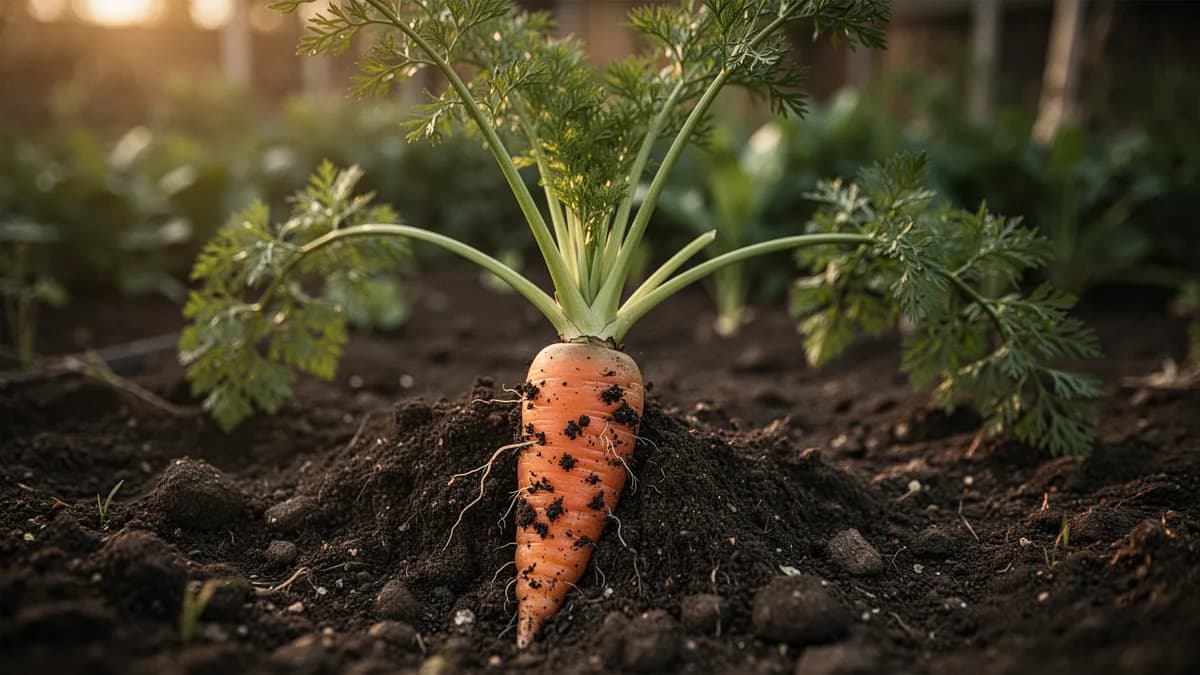
Prepare soil by working the top 8 inches, incorporating compost for drainage. The short, conical shape pushes through difficult soil better than any other carrot type. Provide consistent moisture and light feeding with low-nitrogen fertilizer. Chantenay roots mature in 65-75 days.
The broad shoulders often push above the soil surface. Hill soil over exposed shoulders to prevent greening and bitterness. These carrots develop exceptional sweetness, especially after frost. Succession plant every 3-4 weeks. Chantenay types store very well due to dense, thick flesh.
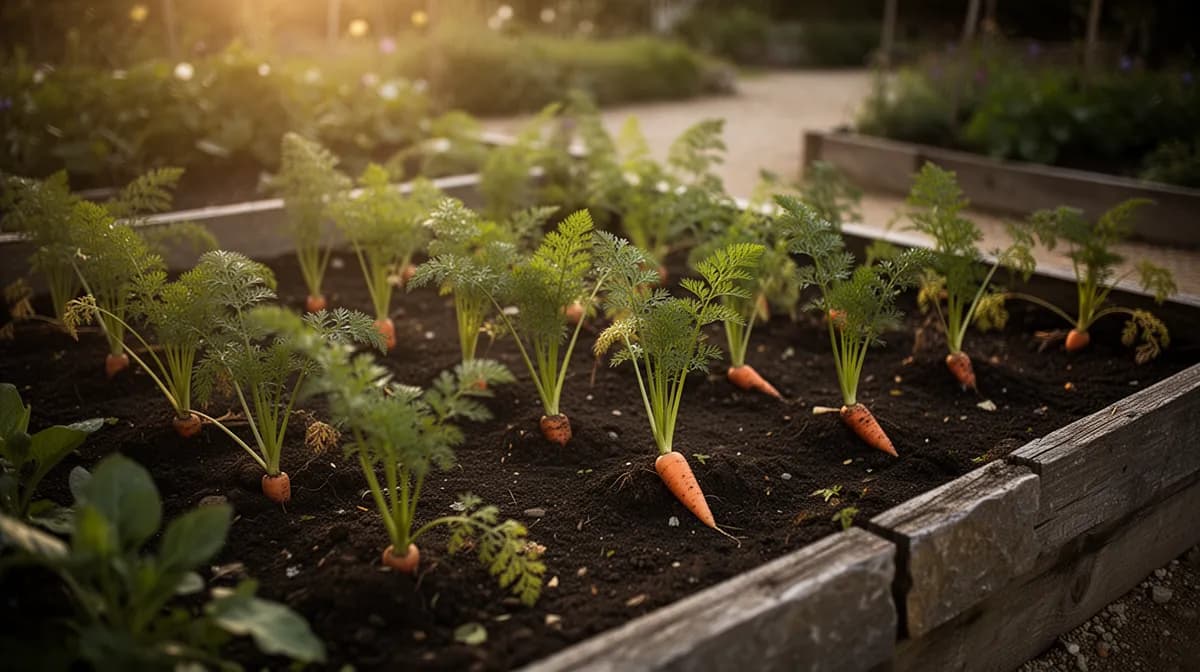
450 plants fit a 4 × 8 ft bed
Each Chantenay Carrot wants 8 cm of elbow room. The planner keeps that spacing for you — every plant, every bed.
Chantenay Carrot's best neighbours
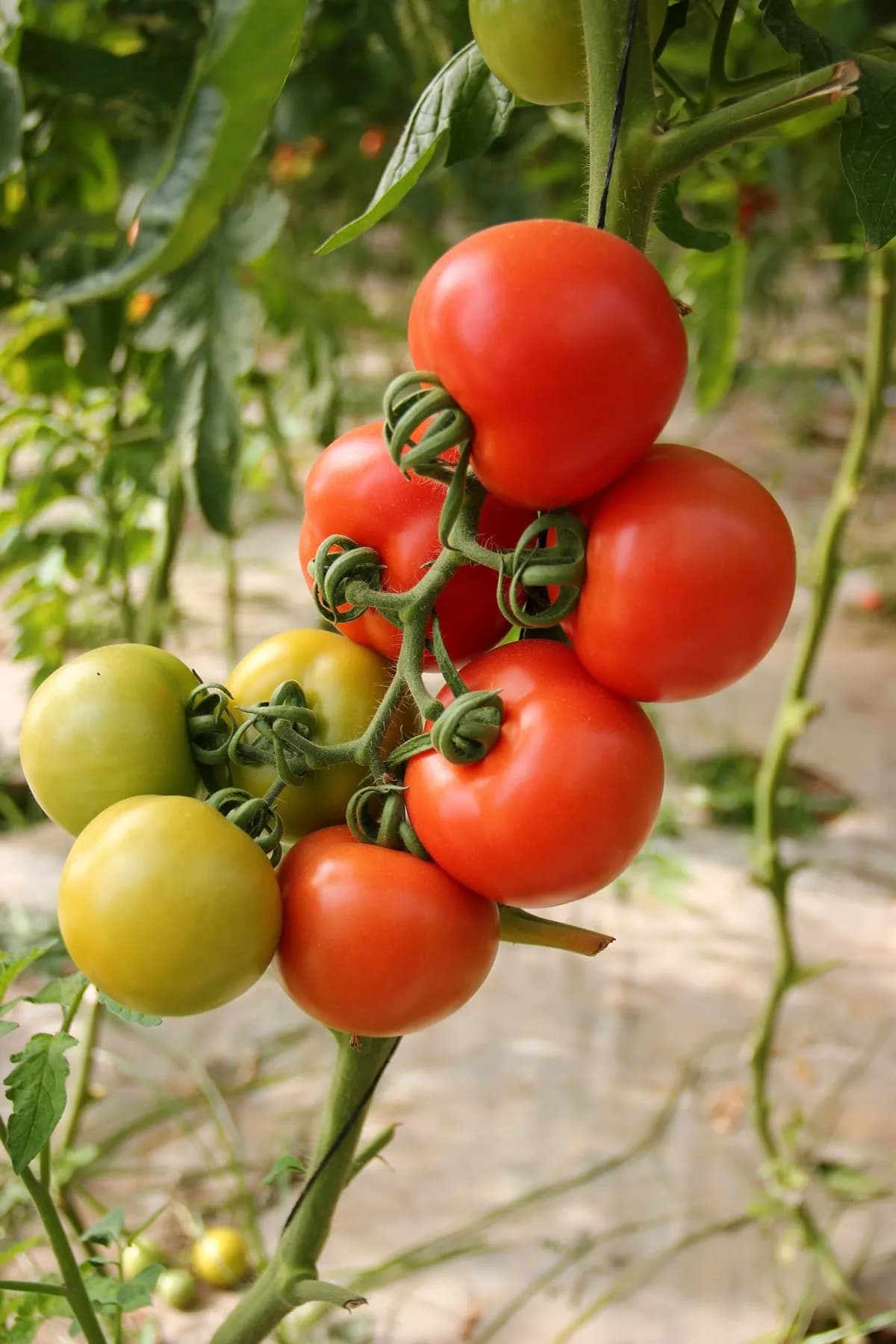
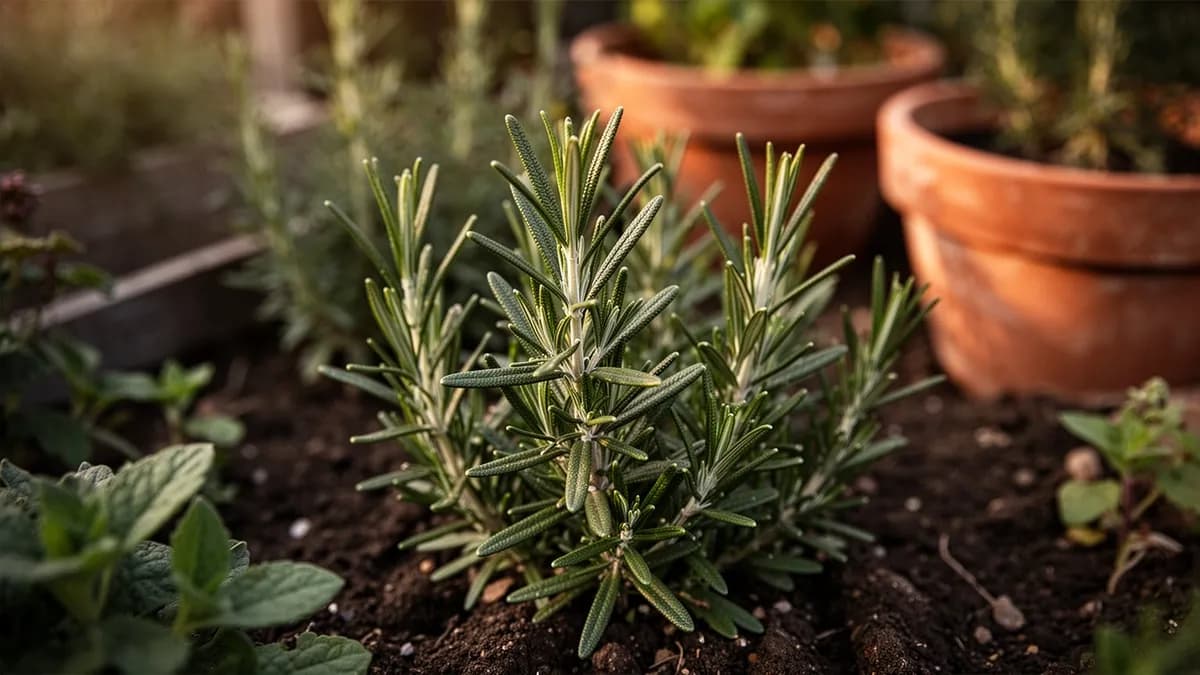
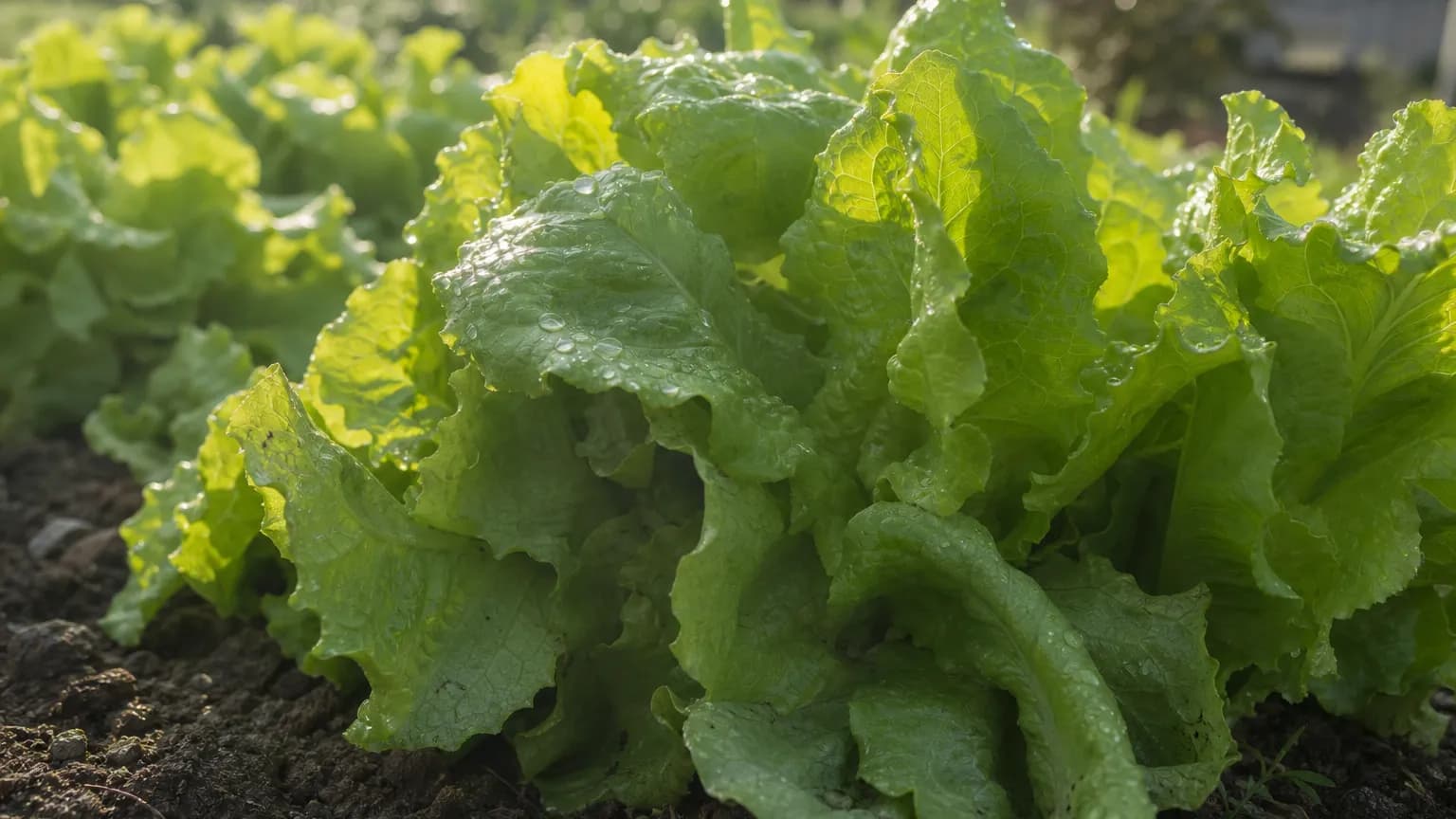
Chantenay carrots grow well with onions, leeks, chives, tomatoes, and rosemary. Their compact size makes them excellent for interplanting between larger crops. The short roots do not compete deeply with neighboring plants. Ideal for container companion plantings with herbs and salad greens.
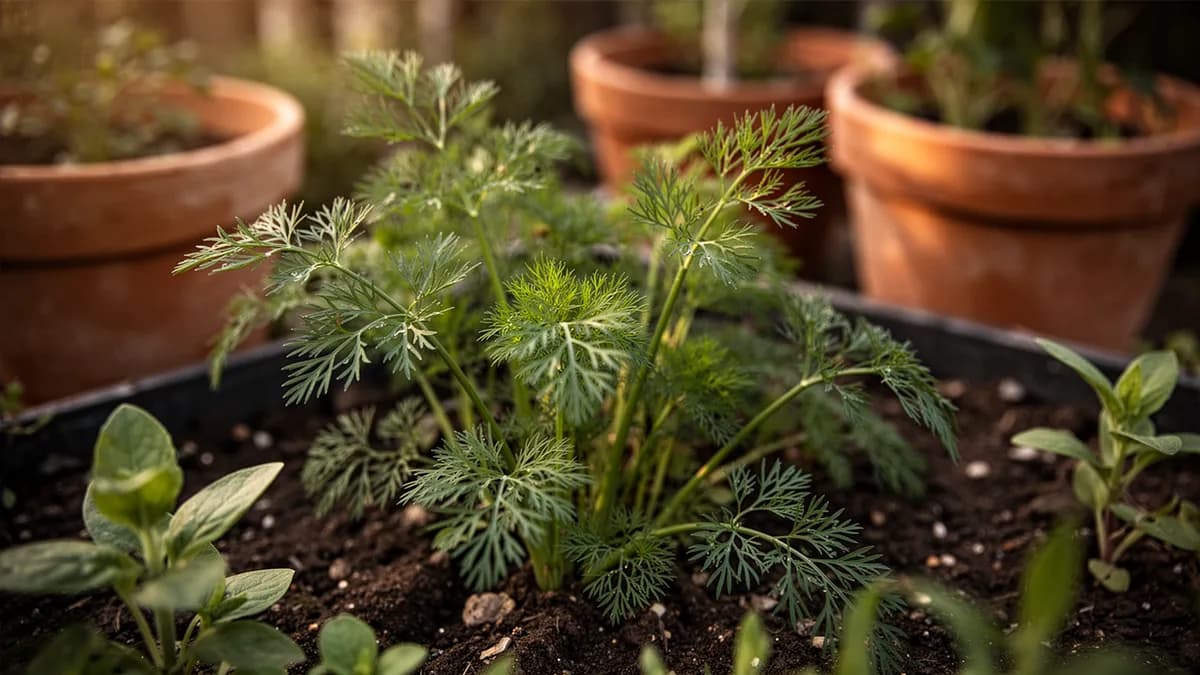
Tomato belongs beside it. Dill doesn't.
Old growers' knowledge, checked against Chantenay Carrot's real companion table below — test any plant you're growing.
Try Chantenay Carrot in a bed — right here
A real planner bed with Chantenay Carrot already in it. Tap a companion to place it and watch the pairing checks answer — green for good neighbours, red for a clash.


Related growing guides
Feed it well
Chantenay carrots are the most soil-tolerant carrot type, performing well in heavy clay, rocky ground, and shallow soils. Work soil to just 8 inches deep. Amend heavy soil with compost for improved drainage. Apply low-nitrogen fertilizer at planting. The short roots require less soil preparation than any other carrot type.
Ideal Temperature
Hardiness Zone Compatibility
From seed to harvest, stage by stage
Germination
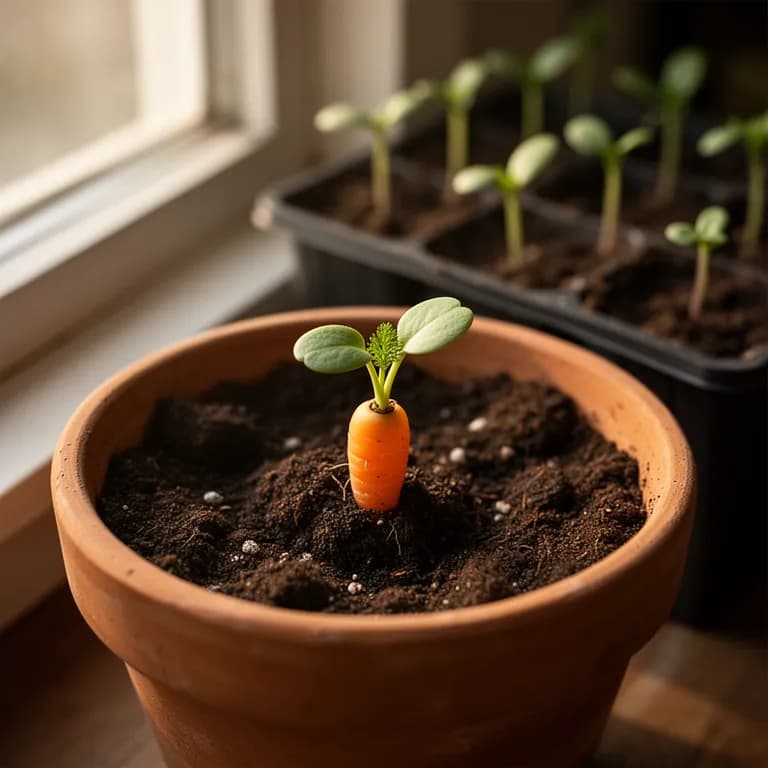
Chantenay carrot seeds are tiny and slow to germinate, requiring 10-21 days at soil temperatures of 13-24°C (55-75°F). The first sign of life is a thin, grass-like seed leaf (cotyledon) that looks nothing like the eventual feathery foliage. Germination is notoriously patchy if the soil surface crusts over.
Seedling Establishment
True leaves emerge with the distinctive finely divided, ferny appearance of carrot foliage. Seedlings are fragile and grow slowly during this phase. The taproot begins to elongate downward, and this is the time to thin plants to proper spacing.
Vegetative Growth
The ferny foliage expands rapidly, reaching 20-30 cm tall. The taproot thickens and begins developing its characteristic conical shape. The broad Chantenay shoulders start to form, and the root takes on its deep orange color as beta-carotene accumulates.
Root Bulking
The Chantenay root rapidly expands in diameter, developing its distinctive broad-shouldered, stout profile. The shoulders may push 1-2 cm above the soil surface. The core shrinks proportionally as the outer cortex thickens with sugars and beta-carotene. Flavor sweetens noticeably during this phase.
Maturity and Harvest
Roots reach full size at 12-15 cm long with 4-5 cm wide shoulders. The foliage may begin to yellow slightly at the outer edges. Chantenay carrots hold well in the ground at this stage and actually improve in sweetness after light frost, which triggers starch-to-sugar conversion.
Keep the seed bed consistently moist — water lightly with a fine mist twice daily if needed. Cover with a thin layer of vermiculite or burlap to retain moisture and prevent crusting. Never let the surface dry out during this critical period.
Caring for Chantenay Carrot month by month
What to do each month for your Chantenay Carrot
October
You are hereHarvest fall-sown Chantenay carrots after the first light frost, which converts starches to sugars and dramatically improves sweetness. In mild zones, leave carrots in the ground under a thick layer of straw mulch for harvesting through winter. Cure harvested roots briefly before storage.
Know exactly what to do in your garden — every month
One email at the start of each month: what to sow, plant, and tackle right now — for your Chantenay Carrot and everything growing around it. Plus a short starter course that helps you dodge the classic mistakes.
- What to do, right now
- Matched to your season
- Starter course included
Harvesting Chantenay Carrot
Harvest Chantenay carrots when shoulders are 1.5-2 inches wide and roots are 5-6 inches long, typically 65-75 days from sowing. The broad tops push up visibly when nearing maturity. Pull or loosen with a fork. Chantenay hold well in the ground and tolerate slight overmaturity without becoming as woody as longer types. Harvest after frost for sweetest flavor.
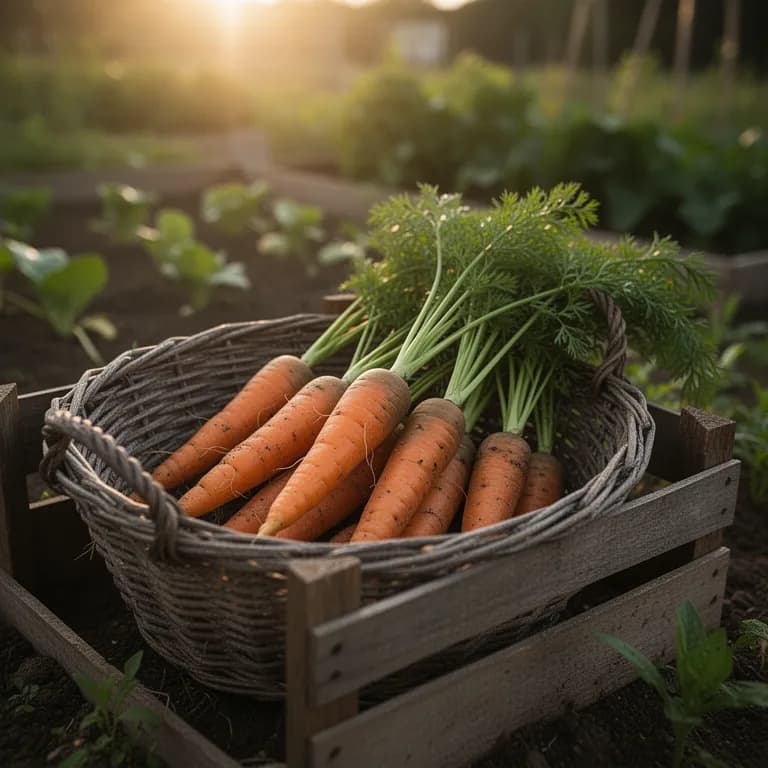
assuming you plant when the window opens — set your real date
Pick Chantenay Carrot promptly and the plant keeps producing.
Storage & Preservation
Chantenay carrots are excellent keepers. Store in the refrigerator for 6-8 weeks or in a root cellar in damp sand at 32-40°F for 5-6 months. The thick, dense flesh resists dehydration. Ideal for canning, freezing, and dehydrating due to firm texture that holds shape. Make excellent carrot coins and chunks for soups. Pickle with spices for a crunchy preserved snack.
What goes wrong — and the fix
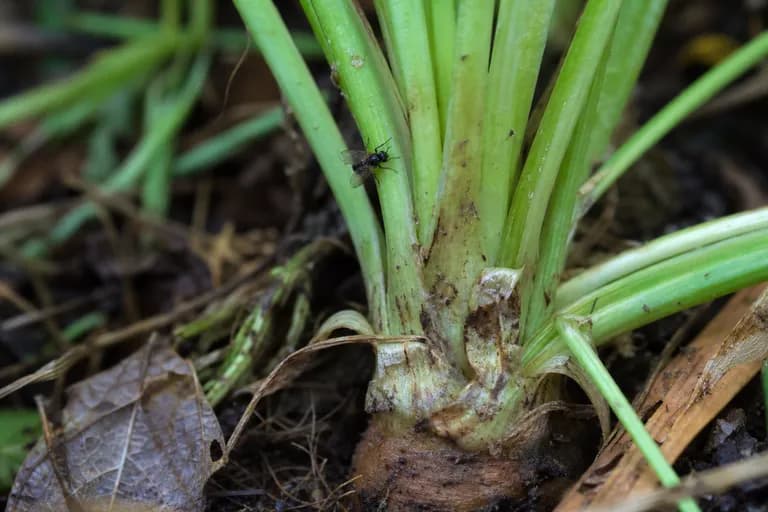
Carrot Rust Fly
PestRusty tunnels in roots, dark scarring, wilting foliage.
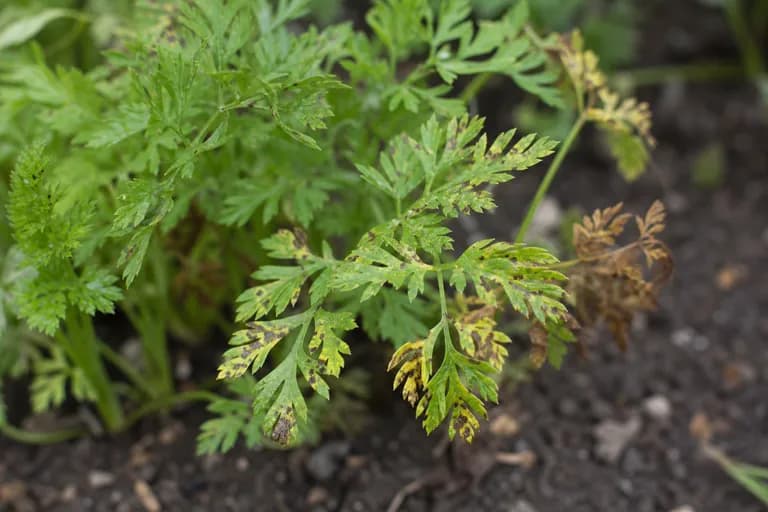
Leaf Blight
DiseaseBrown spots on leaves with yellow halos, foliage dies back prematurely.
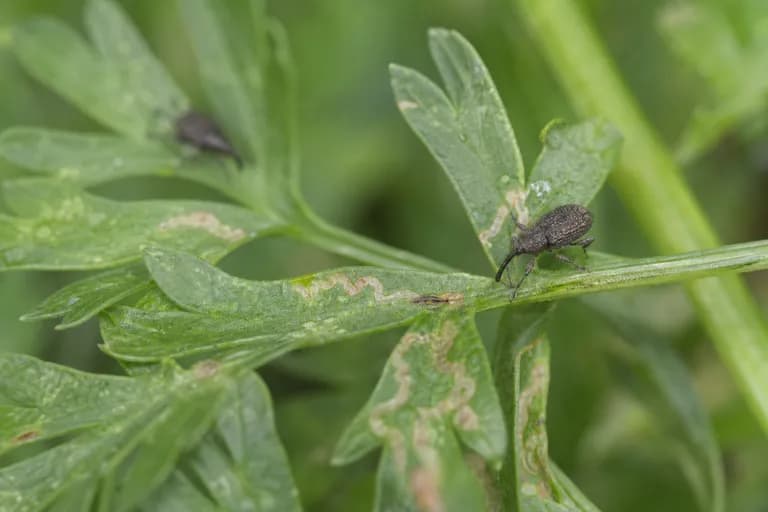
Carrot Weevil
PestZigzag tunnels in root tops, small dark beetles, larvae feeding in crown area.
Troubleshooting Common Problems
Green shoulders are common due to broad tops pushing above soil; hill earth over exposed roots. The shorter size means lower yield per row foot compared to longer varieties. Dense flesh can become woody if roots grow too large; harvest at recommended size. Cracking is less common than in thinner types. The strong flavor may be too robust for some fresh-eating preferences.
Growing Tips
- Choose Chantenay varieties specifically for difficult soils. If your garden has heavy clay, rocky ground, or shallow topsoil, Chantenay types will outperform Nantes, Imperator, and Danvers varieties every time — their short, stout roots push through obstacles that cause longer carrots to fork.
- Never add fresh manure or high-nitrogen fertilizer to carrot beds. Excess nitrogen causes hairy, forked roots with lush tops and poor-quality roots. Prepare beds with well-aged compost worked into the top 20 cm and use a low-nitrogen fertilizer like 5-10-10.
- Mix tiny carrot seeds with fine sand or radish seeds before sowing for more even distribution. Radish seeds germinate in 4-5 days and mark the row, while also breaking the soil surface crust that can prevent delicate carrot seedlings from emerging.
- Keep the seed bed religiously moist during the 10-21 day germination period. This is the single most common point of failure for carrot growers. Use a fine mist sprayer and cover the bed with burlap, vermiculite, or lightweight row cover to prevent crusting.
- Hill soil over exposed Chantenay shoulders as roots mature. The broad tops of Chantenay carrots commonly push 1-2 cm above the soil surface, and any portion exposed to sunlight turns green and develops a bitter, unpleasant taste from chlorogenic acid compounds.
- Harvest after the first autumn frost if possible. Cold exposure triggers a survival response in the carrot root, converting stored starches to sugars that act as a natural antifreeze — this dramatically improves sweetness and is why fall-harvested carrots taste noticeably better than summer ones.
- For container growing, Chantenay is the best carrot type available. Use containers at least 20 cm deep with good drainage. Fill with a loose, sandy potting mix — never use garden soil in containers as it compacts and prevents root development. Water consistently as containers dry quickly.
- Practice crop rotation and never plant carrots in the same bed more than once every 3-4 years. Carrot rust fly larvae overwinter in the soil near previous carrot plantings, and soil-borne diseases like cavity spot and black rot accumulate with repeated carrot cultivation.
Grow your best Chantenay Carrot yet — and everything around it.
Start a free plan today. Lay out your beds, drop in your Chantenay Carrot, and let PlotMyGarden handle the timing, spacing, companions and reminders from seed to harvest basket.
Pick your Chantenay Carrot
Red Cored Chantenay
Classic heirloom with deep orange, nearly coreless flesh. Outstanding sweetness and rich flavor.
Royal Chantenay
Improved selection with smoother skin and more uniform shape. Reliable in a wide range of soils.
Hercules
Large Chantenay hybrid with 3-inch shoulders. Very productive and excellent for storage.
A packet of Chantenay carrot seeds costs $2-4 and contains 500-1,000 seeds — enough for 15-30 meters of row. At store prices of $2-4 per pound for conventional carrots and $4-7 per pound for organic, a single $3 seed packet can produce $30-80 worth of carrots. The savings are even greater compared to specialty baby or Chantenay-type carrots sold at farmers markets for $5-8 per bunch. Homegrown Chantenay carrots also store for 5-6 months in a root cellar, eliminating the need to purchase carrots through winter.
Quick recipes
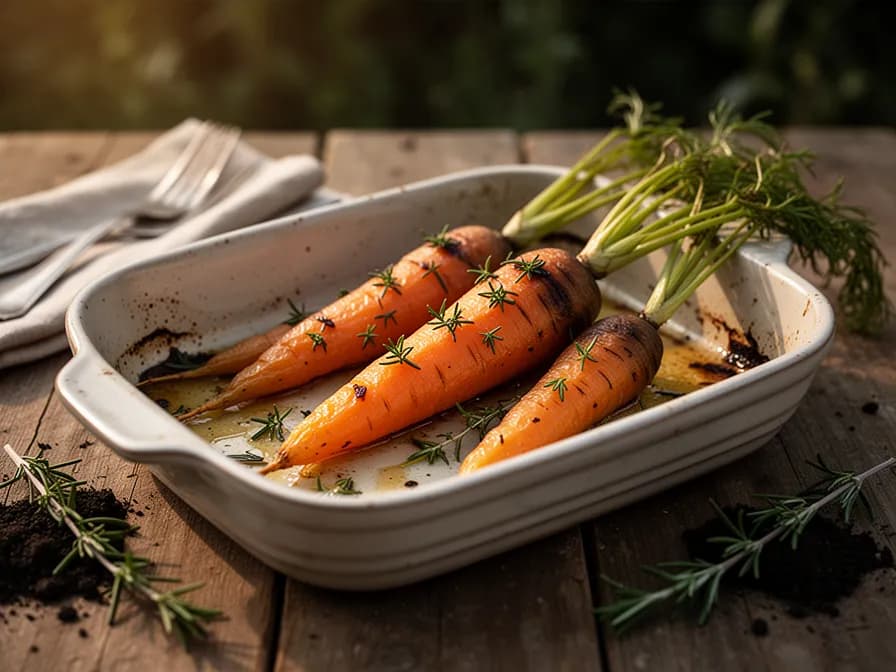
Honey-Roasted Whole Chantenay Carrots
35 minThe dense, sweet flesh of Chantenay carrots caramelizes beautifully when roasted whole at high heat. A glaze of honey, butter, and fresh thyme transforms these stout roots into an elegant side dish with rich, concentrated flavor.
7 ingredientsCreamy Chantenay Carrot Soup
40 minThe thick, nearly coreless flesh of Chantenay carrots produces an exceptionally smooth and velvety soup without the need for straining. A touch of fresh ginger and a swirl of cream elevate this simple soup into something memorable.
8 ingredientsQuick-Pickled Chantenay Carrot Coins
15 min plus 1 hour restingThick Chantenay carrot coins hold up perfectly to pickling, retaining a satisfying crunch that thinner carrot varieties lose. These tangy, slightly sweet pickled rounds are an addictive snack and a vibrant addition to sandwiches, grain bowls, and cheese boards.
8 ingredientsCulinary Uses
Chantenay carrots excel in cooking with their rich, sweet flavor that intensifies when roasted, braised, or simmered. The dense flesh holds shape beautifully in long-cooked dishes. Ideal for canning whole or as coins. Puree for rich carrot soups. The thick roots make excellent carrot sticks. Grate into baked goods for moisture and sweetness.
What's inside
Health Benefits
- Chantenay carrots are one of the richest vegetable sources of beta-carotene, which the body converts to vitamin A — essential for maintaining healthy vision, particularly night vision, and supporting immune cell production and function.
- The soluble fiber (pectin) in carrots helps lower LDL cholesterol by binding bile acids in the digestive tract, supporting cardiovascular health when consumed regularly as part of a balanced diet.
- Contains luteolin and other flavonoids that have demonstrated anti-inflammatory effects in studies, potentially reducing the risk of chronic inflammatory conditions including cardiovascular disease.
- Rich in polyacetylenes, particularly falcarinol, a natural compound unique to carrots and related plants that has shown promising anticancer activity in laboratory research, especially against colon cancer cells.
- The high fiber content (2.8g per 100g) promotes healthy digestion and feeds beneficial gut bacteria, supporting a balanced microbiome that plays a role in immune function, mood regulation, and nutrient absorption.
- Provides vitamin K1 (13.2 mcg per 100g) that is essential for proper blood clotting and works synergistically with calcium and vitamin D to maintain bone mineral density.
Where Chantenay Carrot comes from
The carrot (Daucus carota subsp. sativus) originated as a wild plant in Persia (modern-day Iran and Afghanistan) around the 10th century, where it was first cultivated not for its root but for its aromatic leaves and seeds. Early cultivated carrots were purple and yellow, with thin, bitter, branching roots quite unlike the sweet, fleshy roots we know today. Arab traders spread the plant westward through North Africa and into Moorish Spain by the 11th century, and eastward into India and China.
The transformation from a medicinal herb to a sweet root vegetable occurred gradually across centuries of selection in the Mediterranean region and Northern Europe. By the 14th century, purple and yellow carrots were common in European gardens, and the familiar orange carrot emerged in the Netherlands during the 16th and 17th centuries through careful selective breeding. Dutch growers developed sweeter, less bitter varieties with smoother, less branching roots that became the ancestors of all modern orange carrots.
The Chantenay type was developed in the 1830s in the Chantenay-sur-Loire district near Nantes, France, where local market gardeners bred a short, stout carrot specifically adapted to the region's heavy alluvial clay soils. The broad, conical shape allowed the root to push through dense soil that would cause longer varieties like Nantes or Imperator to fork and deform. The Chantenay quickly became popular throughout France and was introduced to American gardens by the 1880s. Today, Chantenay remains one of the most widely grown carrot types worldwide, valued for its soil adaptability, dense flesh ideal for cooking and processing, and exceptional storage qualities. The Red Cored Chantenay, introduced in the early 1900s, remains one of the best-selling heirloom carrot varieties more than a century after its development.
Chantenay Carrot: did you know?
Fascinating facts about Chantenay Carrot
The Chantenay carrot was developed in the Chantenay-sur-Loire region near Nantes, France in the 1830s, specifically bred by French market gardeners for the heavy clay soils of the Loire Valley where longer carrot varieties consistently failed.
Chantenay Carrot questions, answered
When should I plant Chantenay Carrot?
What are good companion plants for Chantenay Carrot?
What hardiness zones can Chantenay Carrot grow in?
How much sun does Chantenay Carrot need?
How far apart should I space Chantenay Carrot?
What pests and diseases affect Chantenay Carrot?
How do I store Chantenay Carrot after harvest?
What are the best Chantenay Carrot varieties to grow?
What soil does Chantenay Carrot need?
Why are my Chantenay carrots forked or misshapen?
Can I grow Chantenay carrots in containers?
Why are the tops of my Chantenay carrots green and bitter?
When should I harvest Chantenay carrots — how do I know they are ready?
How do Chantenay carrots compare to other carrot types?
You just read the theory. Now grow it on autopilot.
Everything that makes Chantenay Carrot fiddly — the timing, the spacing, the companions, the harvest window — is exactly what PlotMyGarden handles for you, for every plant in your garden.
A plan that knows your weather
Set your location once. Get sow, feed and harvest dates built around your real last-frost date and live forecast — no more guessing from a generic seed packet.
From the “When to plant” sectionDrag-and-drop bed planner
Design beds on a grid. Every plant snaps to its proper spacing, and you can see your whole season laid out before you spend a cent on seed.
From the “Growing guide” sectionCompanion conflicts, caught early
200+ good-and-bad pairings checked live as you plant — so a season-wrecking mistake never makes it into the ground.
From the “Companions” sectionReminders you'll actually act on
“Water the beans.” “Pick today before it turns.” Timely, specific, and tied to the plants you're really growing.
From the “Harvest” sectionSuccession, scheduled
Want a harvest for six weeks, not six days? It spaces your sowings automatically and reminds you when each new block is due.
From the “When to plant” sectionA record that gets smarter
Every harvest you log teaches it your garden. Next year's plan starts from what actually worked in your soil, not a textbook's.
From the “Overview” sectionPlant these alongside Chantenay Carrot
More Root Vegetables
Keep Chantenay Carrot away from these
Grow your best Chantenay Carrot yet — and everything around it.
Start a free plan today. Lay out your beds, drop in your Chantenay Carrot, and let PlotMyGarden handle the timing, spacing, companions and reminders from seed to harvest basket.