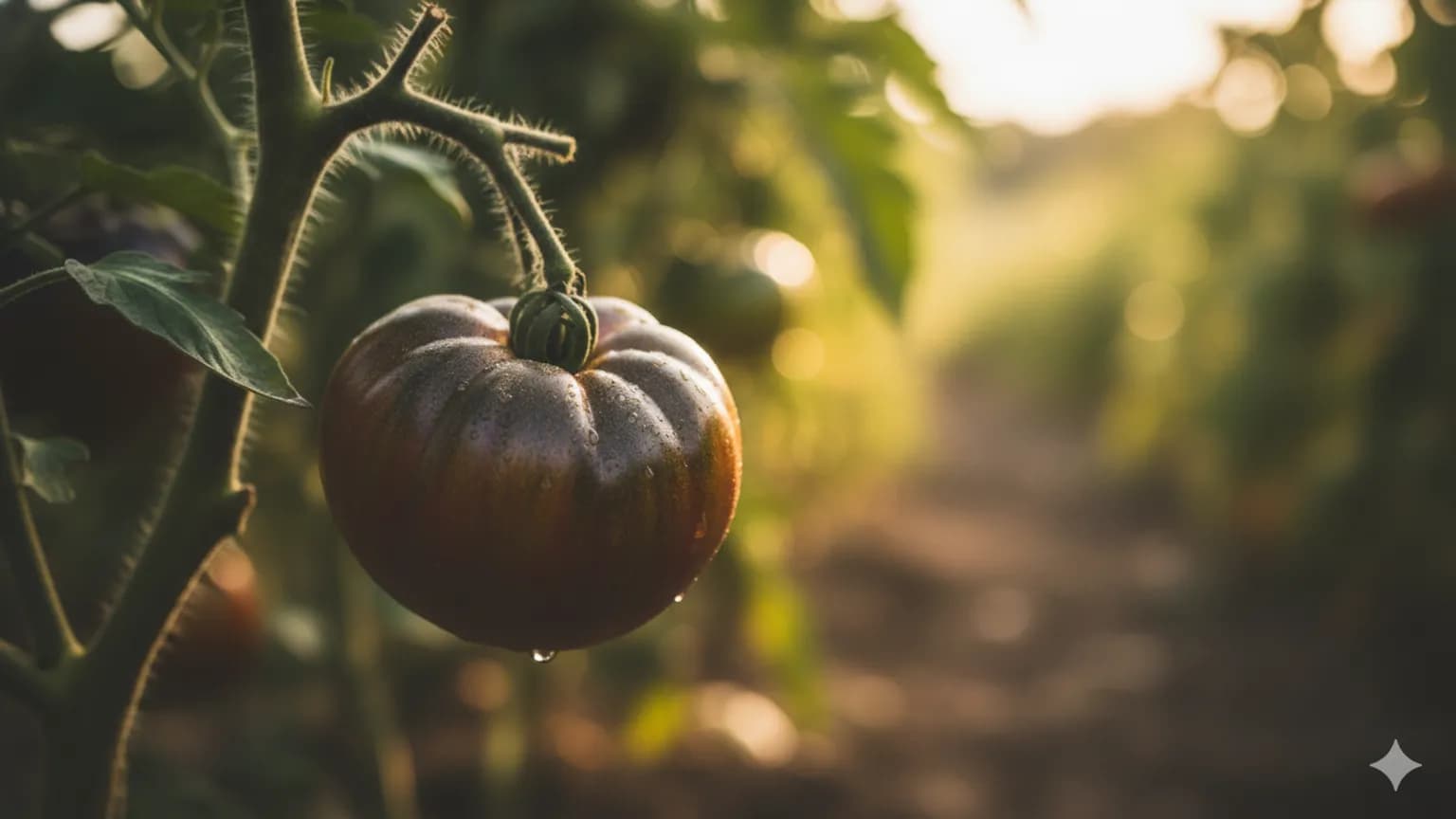
Black Krim Tomato
Solanum lycopersicum
At a Glance
It's planting season for Black Krim Tomato! Start planning your garden now.
A dark heirloom from the Black Sea region prized for flattened mahogany-purple fruits with a salty-sweet, slightly smoky flavor. Black Krim is not a generic novelty tomato: it is one of the signature flavor varieties for gardeners who want a slicer with real depth, umami, and personality. When grown well, the fruits feel luxurious and slightly wild at the same time. They are often irregular, often green-shouldered, and rarely perfect-looking, but that rough beauty is part of the point. This is a tomato chosen for the plate, not for cosmetic uniformity. It excels in warm summers where steady moisture and good airflow let the fruit ripen slowly and concentrate flavor. Gardeners who enjoy learning the subtle cues of heirloom ripeness often end up treating Black Krim as one of the indispensable varieties in the entire tomato patch.
Planting & Harvest Calendar
Growth Stages
From Seed to Harvest
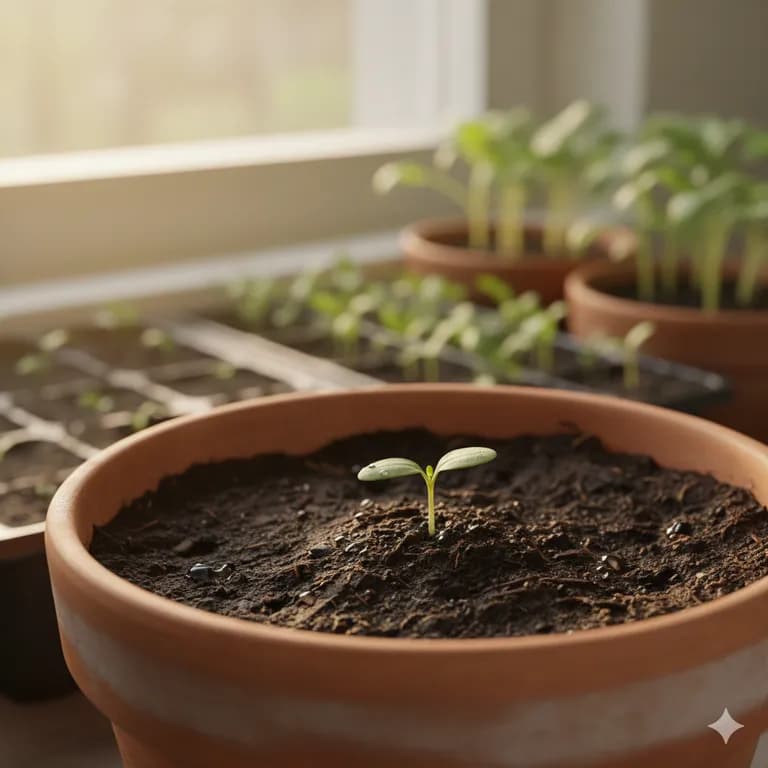
Seed Starting
Days 0–12
Seeds germinate quickly in warm mix and produce rounded cotyledons followed by the first serrated true leaves.
💡 Care Tip
Maintain 21-27°C (70-80°F) for fast germination and give bright light immediately to prevent weak, stretched seedlings.
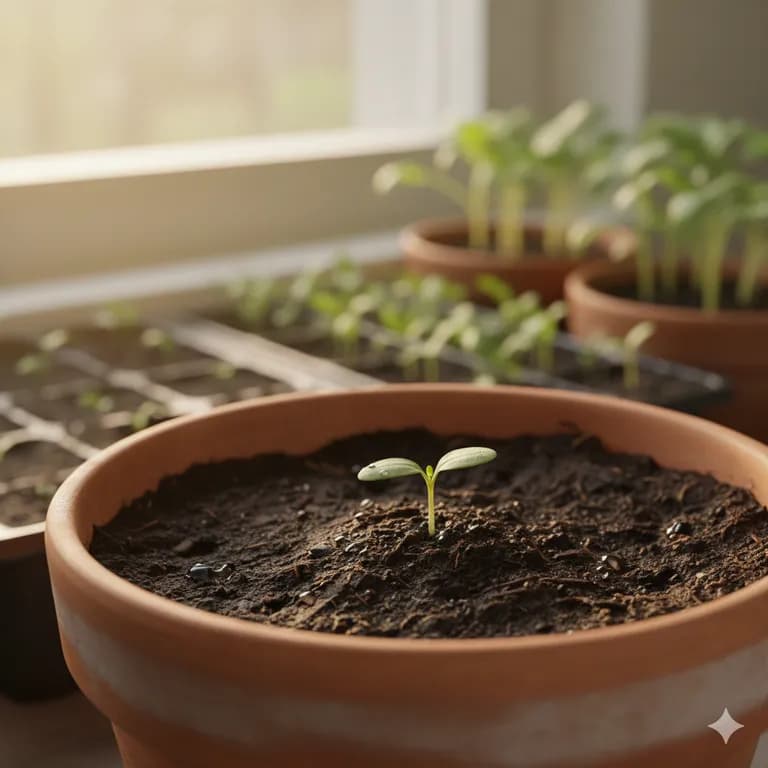
Black Krim seedlings benefit from warmth, strong light, and early potting on.
Monthly Care Calendar
What to do each month for your Black Krim Tomato
May
You are hereTransplant after frost danger passes and nights stay reliably above 10°C (50°F). Mulch, water deeply, and install support immediately.
Did You Know?
Fascinating facts about Black Krim Tomato
Black Krim is one of the most famous dark-fruited tomatoes in the world.
Start Black Krim indoors 6-8 weeks before the last frost and transplant into rich, warm soil only after nights stay above 10°C (50°F). This indeterminate heirloom needs a tall stake or cage from the start and enough spacing that foliage dries quickly after rain or dew.
Black Krim performs best when heat, moisture, and support all stay consistent. Mulch heavily, water deeply, and prune lightly to one or two leaders for airflow. The variety often keeps green shoulders at maturity, so ripeness is judged by feel, aroma, and the dusky mahogany body color rather than by a totally uniform finish.
This is not the tomato to grow carelessly in a cold, crowded, or erratically watered patch and still expect legendary results. Black Krim’s famous flavor develops when the plant moves steadily through warm weather without repeated stress checks. Rich soil, a deeply mulched root zone, and regular tying matter because they keep the plant investing in broad healthy leaves and slow even ripening rather than in emergency recovery.
Treat it like a premium slicer rather than like a bulk cropper. A little discipline goes a long way: remove only the lower leaves that threaten disease, avoid overfeeding with nitrogen, and watch fruits closely once they begin to darken. If you manage the plant for flavor instead of cosmetic perfection, Black Krim will reward you with one of the deepest, most savory-tasting tomatoes you can grow at home.
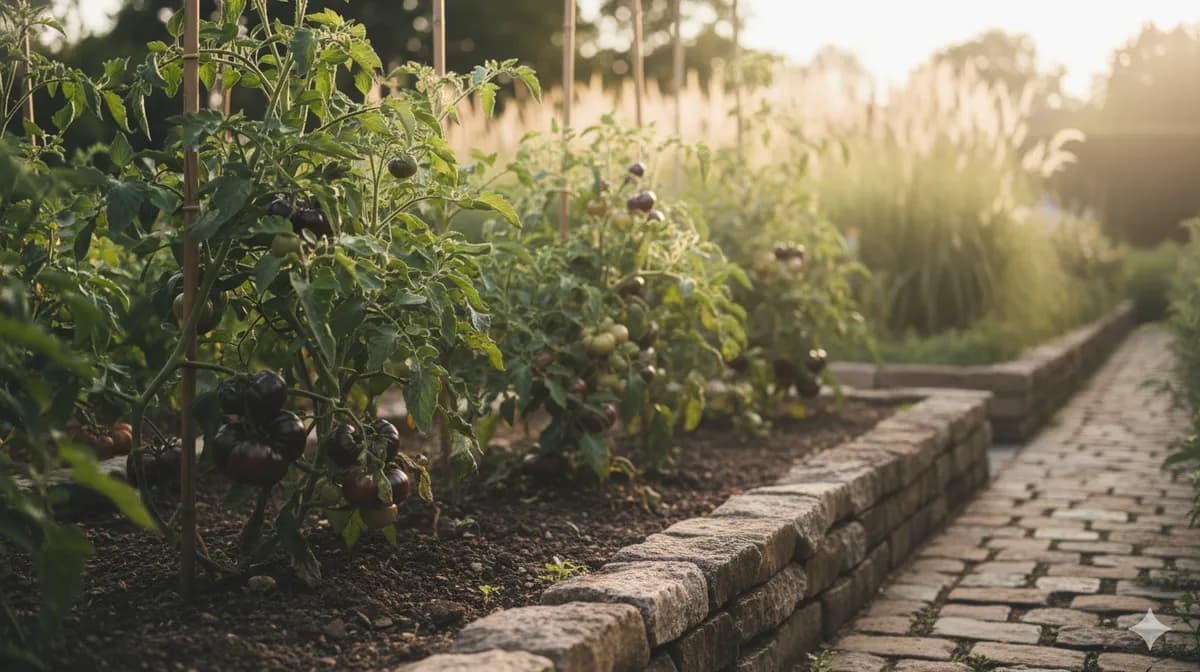
Black Krim performs best with strong support, full sun, and an evenly mulched root zone.
Black Krim is associated with the Crimean Peninsula on the Black Sea, where warm coastal conditions helped shape dark-fruited tomatoes with complex savory flavor. It became internationally famous through seed savers and specialty growers who prized taste over visual perfection. Today it remains one of the defining 'black' heirloom tomatoes in home gardens.
Its modern reputation grew alongside the heirloom revival, when gardeners started actively seeking tomatoes bred for flavor instead of transport. Black Krim stood out immediately because it looked unusual, ripened with green shoulders, and tasted unlike the standard bright-acid red slicers most people knew.
Even now, with many dark heirlooms available, it remains one of the benchmark names in the category. For a lot of growers, Black Krim is the tomato that first proved a fruit could look rugged, odd, and slightly confusing on the vine and still be completely unforgettable on the plate.
Sow 6 mm deep in sterile seed-starting mix at 21-27°C (70-80°F). Germination is usually straightforward if bottom warmth is steady and the mix never crusts over or dries out completely.
Give strong light immediately after emergence and keep it close enough that seedlings stay stocky. Black Krim, like many heirloom beefsteak types, loses quality quickly if it spends too long stretched, chilled, or root-bound on a windowsill. Pot up early and bury part of the stem to encourage stronger root development.
During hardening off, move gradually. Do not rush a tender heirloom into cold wind and bright sun all at once. The best transplants are short, dark-leaved, and still actively growing when they go into warm soil, because that smooth start shows up later in fruit size and flavor.
Grow in fertile, compost-rich, well-drained soil with a pH of 6.0-6.8. Black Krim performs best in a bed that holds moisture evenly without staying waterlogged, because the variety’s large heirloom fruits react quickly to repeated wet-dry swings.
At planting time, work in mature compost and a moderate all-purpose organic fertilizer rather than building a rich high-nitrogen bed. Too much nitrogen gives you dramatic foliage but a less disciplined plant, softer growth, and fruit flavor that can feel washed out.
Once the first clusters set, shift toward potassium- and phosphorus-supporting fertility. Side-dressing with compost, a low-nitrogen tomato feed, or gentle liquid feeding through peak fruiting usually gives better results than heavy feeding all at once. The target is not maximum vegetation; it is a steady vine carrying concentrated flavorful slicers.
Check Your Zone
See if Black Krim Tomato is suitable for your location.
18°C – 29°C
64°F – 84°F
Tomato plants thrive in warm conditions. Growth slows below 10°C (50°F), while pollen fertility drops in prolonged heat above 35°C (95°F). The ideal range is warm days and mild nights with consistently warm soil.
Common issues affecting Black Krim Tomato and how to prevent and treat them organically.
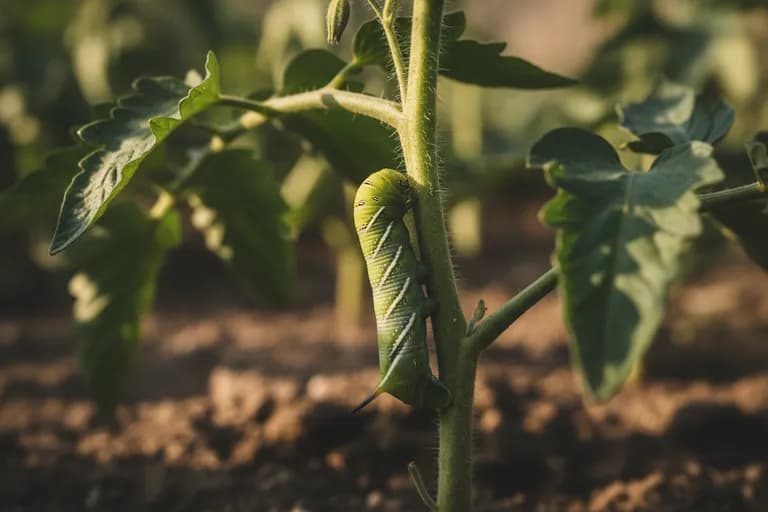
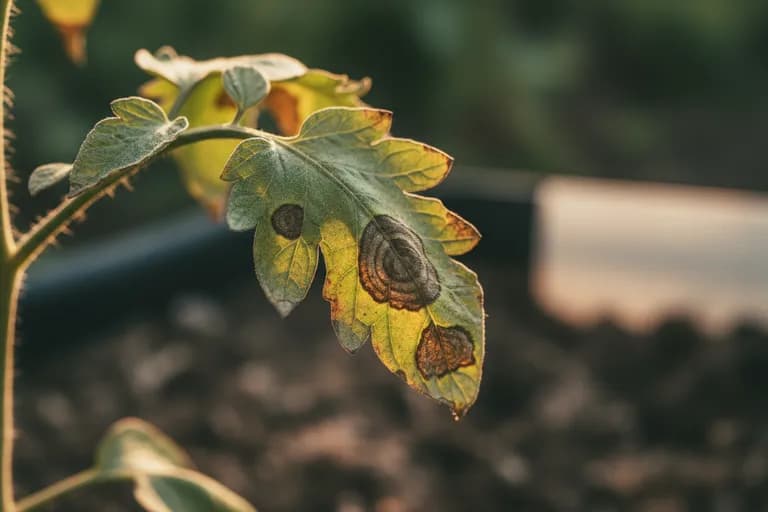
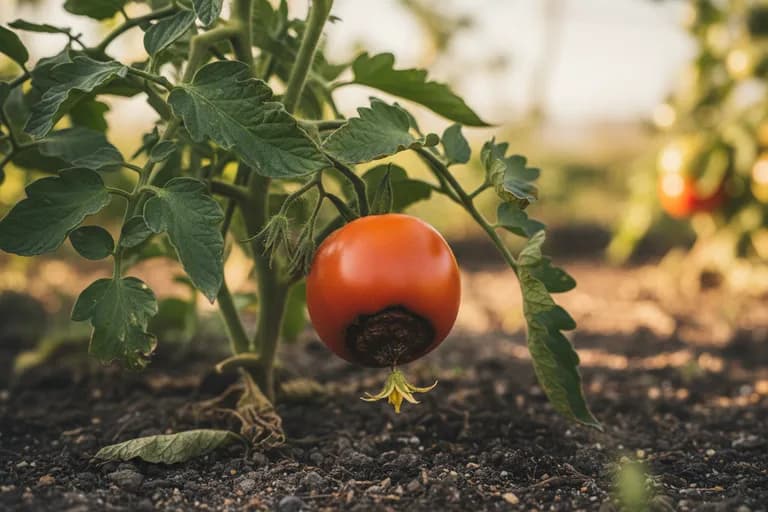
The main issues are cracking after rain and uncertainty about ripeness because the shoulders often stay green. In cool summers the flavor can skew sharper, while in humid climates foliage needs airflow to avoid fungal decline.
Another common disappointment is fruit that looks dramatic but tastes flatter than expected. That usually comes from one of three things: not enough sustained warmth, too much nitrogen, or harvesting early because the color still seems confusing. Black Krim often needs more confidence from the grower than standard red slicers do.
In wet spells, the plant also shows its heirloom temperament quickly. Broad fruits split at the shoulders, skins roughen, and dense foliage can move toward fungal trouble in a short time. The cure is steady, boring discipline: mulch, airflow, even watering, and close observation as fruits approach maturity.
Plant with basil, parsley, marigolds, and carrots. These companions help diversify the bed, attract beneficial insects, and keep the root zone lively without competing too aggressively. Basil is especially useful because it fits the same warm, sunny irrigation rhythm without shading the base too heavily. Marigolds add pollinator and predator interest around the bed, while parsley and carrots make good lower-layer companions that do not demand the same heavy vertical space. Give Black Krim slightly more breathing room than you might give a tidy hybrid slicer. The foliage can get dense, and the broad heirloom fruit benefits from airflow and easy visual access. Avoid fennel and crowded brassicas, which compete awkwardly and can turn the planting into a humid, hard-to-manage block.
- 1Wait until the soil is genuinely warm before transplanting. Tomatoes that sit in cold spring ground often lose weeks of momentum.
- 2Plant deeply so buried stem sections root along their length, giving better drought resilience and nutrient uptake.
- 3Use strong support from day one. Tomatoes are easier to manage when they are trained early rather than rescued later.
- 4Mulch heavily to stabilize soil moisture, reduce splash-borne disease, and protect flavor by preventing hard wet-dry swings.
- 5Water deeply rather than constantly sprinkling. Consistency matters far more than sheer volume.
- 6Do not overfeed with nitrogen once flowering begins, or you will get foliage at the expense of fruit.
- 7Harvest promptly in hot or wet weather, because quality can decline very quickly once fruit reaches peak ripeness.
- 8Learn ripeness by touch and aroma, not by waiting for the shoulders to lose all green.
- 9Pick before major rain events whenever possible because this heirloom can crack suddenly once nearly ripe.
Harvest when fruits are fully sized, heavy, and just slightly soft, with rich red-brown color deepening beneath olive shoulders. Use pruners and handle carefully because ripe heirloom flesh bruises easily.
The common mistake is waiting for the shoulders to lose all green. On Black Krim that usually means you are harvesting too late. A truly ready fruit smells strongly at the stem end, feels dense and heavy in the hand, and gives slightly near the blossom end even if the upper shoulders still show olive or bronzed coloring.
Morning harvest is ideal, especially in hot weather. If storms are coming, pick fruits that are nearly ready rather than gambling on another day of vine time. A single hard rain can split the shoulders, flood the flesh with extra water, and flatten the very concentration that makes the variety worth growing.
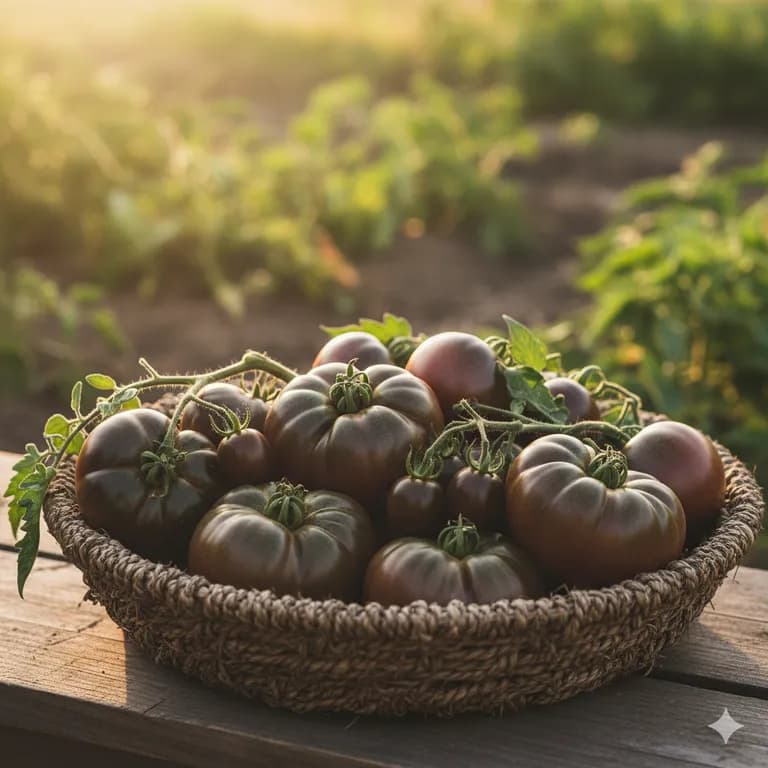
Black Krim should be harvested at full flavor, before weather or over-softening reduces quality.
Best kept at room temperature for only a few days and eaten fresh. Extra fruit can be roasted into smoky sauce, blended into dark gazpacho, or frozen after cooking for later soups and pasta dishes.
Do not refrigerate prime Black Krim fruit unless there is no alternative. Cold temperatures dull the layered savory notes and muddy the texture. If a fruit is at peak quality, the best use is almost always immediate fresh eating: thick slices with good olive oil, torn basil, soft cheese, and bread.
For preservation, think small-batch and flavor-first. Roasting concentrates the dark umami beautifully, and cooked puree freezes far better than raw slices. Slightly cracked but still sound fruits are perfect for same-day gazpacho, roasted tomato pans, tart filling, or a quick smoky salsa.
Plan your garden with ease
Love growing Black Krim Tomato? Use our free garden planner to design your beds, track planting dates, and get personalized care reminders.
Nutritional Info
Per 100g serving
18
Calories
Health Benefits
- Tomatoes are rich in antioxidants including lycopene and beta-carotene, compounds associated with cardiovascular and cellular protection.
- They provide vitamin C for immune support and collagen production while staying very low in calories.
- Tomatoes contribute potassium, helping support normal fluid balance and healthy muscle function.
- Colored specialty tomatoes also offer a wider mix of pigments such as anthocyanins or carotenoids depending on the variety.
- Cooking tomatoes can increase the availability of some beneficial compounds, especially when paired with olive oil.
- Fresh tomatoes add flavor density and nutrition without much energy load, making them one of the most useful vegetables for everyday healthy cooking.
💰 Why Grow Your Own?
Because specialty dark heirlooms sell at premium farmers market prices, a single healthy Black Krim plant can easily produce the equivalent of $25-50 worth of fresh slicing tomatoes in one season.
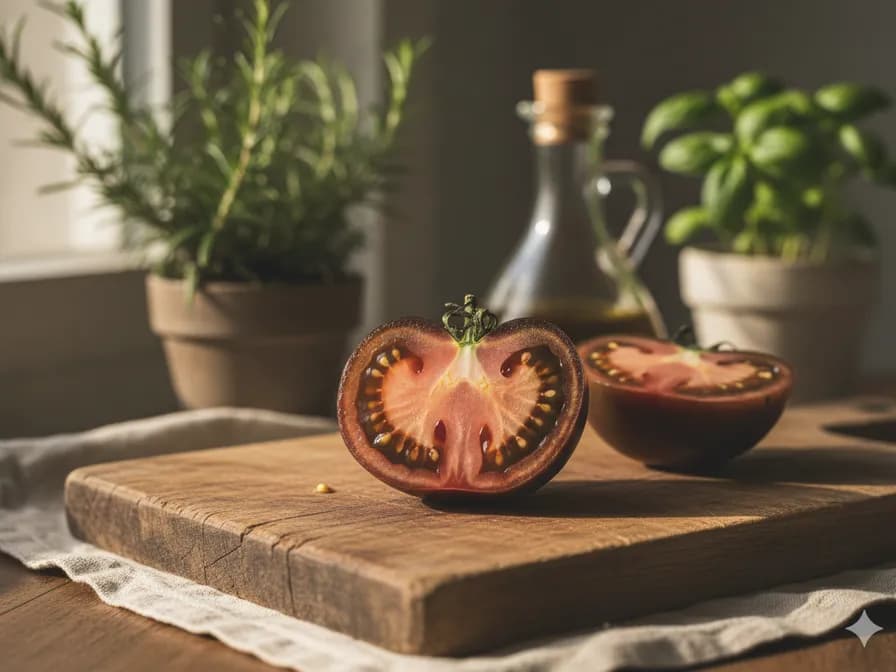
Black Krim is at its best when the interior texture and color can really be appreciated fresh.
Quick Recipes
Simple recipes using fresh Black Krim Tomato
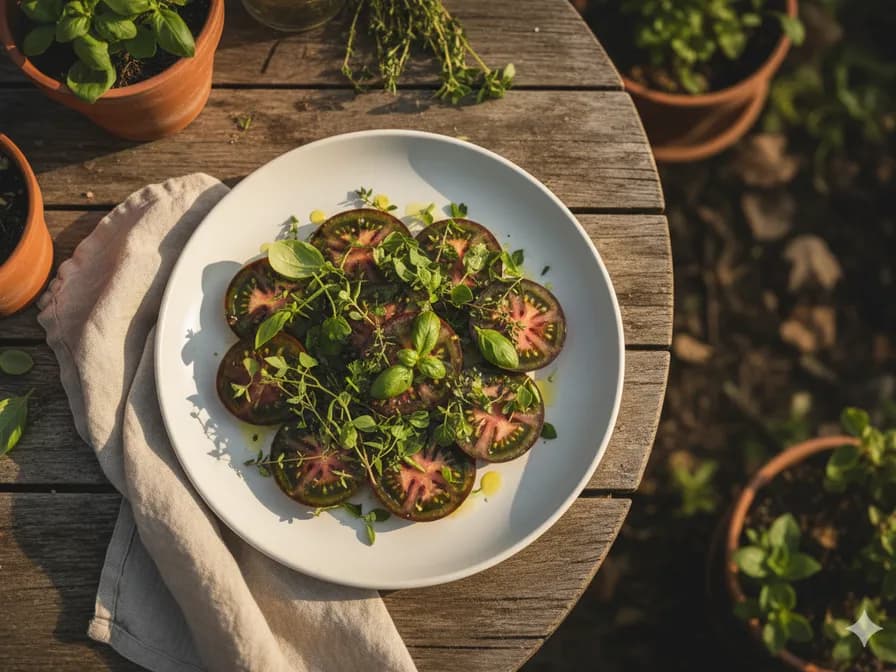
Black Krim Caprese
10 minThick slices of Black Krim layered with mozzarella, basil, olive oil, and flaky salt to showcase the variety’s dark savory depth.
Smoky Heirloom Tomato Toast
15 minA simple open-faced toast that lets the salty-sweet character of Black Krim dominate the plate.
Dark Tomato Gazpacho
20 minA cool blended soup where Black Krim’s savory complexity creates a deeper, moodier gazpacho than standard red tomatoes.
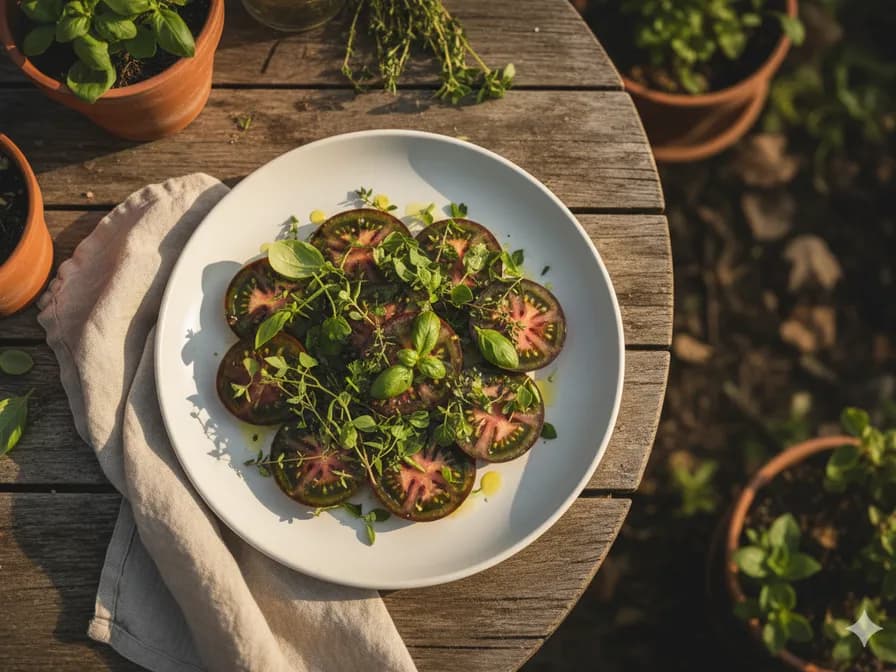
Black Krim shines in straightforward recipes that let the variety’s natural character lead.
Yield & Spacing Calculator
See how many Black Krim Tomato plants fit in your garden bed based on the recommended 60cm spacing.
4
Black Krim Tomato plants in a 4×4 ft bed
2 columns × 2 rows at 60cm spacing
Popular Varieties
Some of the most popular black krim tomato varieties for home gardeners, each with unique characteristics.
Black Krim
The classic Crimean strain with savory sweetness, dark shoulders, and broad flattened fruit.
Black Prince
A somewhat smaller dark tomato with a similarly rich sweet-savory profile.
Paul Robeson
Another dark heirloom known for deep umami flavor and beautiful red-brown flesh.
Outstanding for thick slices, caprese, tomato sandwiches, heirloom platters, and burrata. Its savory depth also makes excellent dark salsa, tomato tart filling, and richly flavored gazpacho.
Black Krim is one of those tomatoes that proves how good simplicity can be. Thick slices with flaky salt, pepper, mayonnaise, olive oil, mozzarella, or burrata are often more impressive than any complicated recipe because they let the fruit’s salty-sweet, almost smoky depth speak clearly.
Once you have more ripe fruit than you can use raw, it also cooks with unusual seriousness. Roasted Black Krim develops a darker, richer profile than many ordinary red tomatoes and works beautifully in tarts, chilled soups, short slow-cooked pasta sauces, and savory jams where you want real depth rather than just generic sweetness.
When should I plant Black Krim Tomato?
Plant Black Krim Tomato in March, April, May. It takes approximately 80 days to reach maturity, with harvest typically in July, August, September.
What are good companion plants for Black Krim Tomato?
Black Krim Tomato grows well alongside Basil, Carrot, Marigold, Parsley. Companion planting can improve growth, flavor, and natural pest control.
What hardiness zones can Black Krim Tomato grow in?
Black Krim Tomato thrives in USDA hardiness zones 3 through 11. With greenhouse protection, it may be grown in zones 1 through 12.
How much sun does Black Krim Tomato need?
Black Krim Tomato requires Full Sun (6-8h+). This means at least 6-8 hours of direct sunlight daily.
How far apart should I space Black Krim Tomato?
Space Black Krim Tomato plants 60cm (24 inches) apart for optimal growth and air circulation.
What pests and diseases affect Black Krim Tomato?
Common issues include Tomato Hornworm, Early Blight, Blossom End Rot. Prevention through good garden practices like crop rotation, proper spacing, and companion planting is the best approach. See the detailed pests and diseases section above for symptoms, prevention, and treatment for each.
How do I store Black Krim Tomato after harvest?
Best kept at room temperature for only a few days and eaten fresh. Extra fruit can be roasted into smoky sauce, blended into dark gazpacho, or frozen after cooking for later soups and pasta dishes. Do not refrigerate prime Black Krim fruit unless there is no alternative. Cold temperatures dull the ...
What are the best Black Krim Tomato varieties to grow?
Popular varieties include Black Krim, Black Prince, Paul Robeson. Each has unique characteristics suited to different growing conditions and culinary preferences. See the varieties section above for detailed descriptions.
What soil does Black Krim Tomato need?
Grow in fertile, compost-rich, well-drained soil with a pH of 6.0-6.8. Black Krim performs best in a bed that holds moisture evenly without staying waterlogged, because the variety’s large heirloom fruits react quickly to repeated wet-dry swings. At planting time, work in mature compost and a moder...
Why are the shoulders still green on my Black Krim tomatoes?
That is normal for the variety. Black Krim often keeps olive-green shoulders even when fully ripe. Look for a softened blossom end, richer overall body color, and a strong tomato aroma rather than waiting for completely uniform color.
Is Black Krim mainly a cooking tomato or a fresh-eating tomato?
It is primarily a fresh-eating tomato. The variety is grown for its layered savory flavor and striking dark slices, though overripe fruit also makes excellent roasted sauce and gazpacho.
Does Black Krim need hotter weather than standard tomatoes?
It does best with steady summer warmth, but it does not need extreme heat. What matters most is warm soil, strong sun, and consistent moisture so the fruit can develop color and flavor without cracking.
Ready to Grow Black Krim Tomato?
Add Black Krim Tomato to your garden plan and start designing your perfect layout.

Vladimir Kusnezow
Gardener and Software Developer
Zone 6b gardener. Growing vegetables and fruits in soil and hydroponics for 6 years. I built PlotMyGarden to plan my own gardens.
Jump to Section