Potato Vine
typical season: sow Apr – May · blooms May – Oct · set your climate
A fast-growing, semi-evergreen vine with abundant clusters of starry white flowers that bloom profusely from spring through fall.
On this pageOverview
Meet Potato Vine
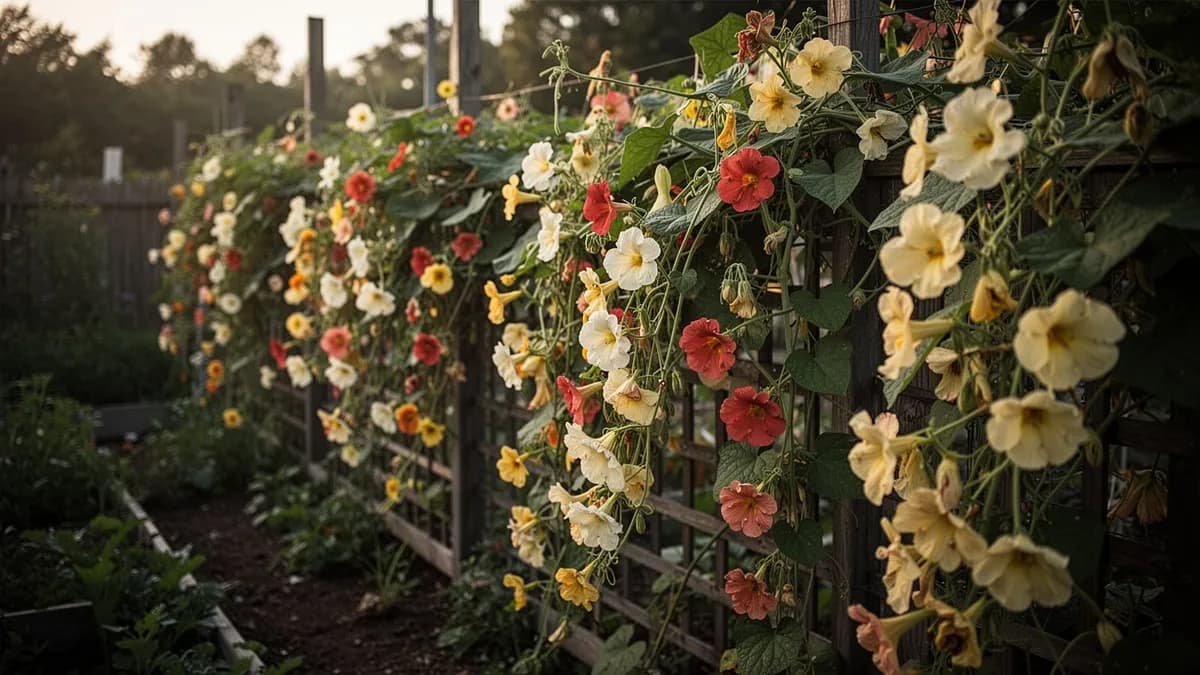
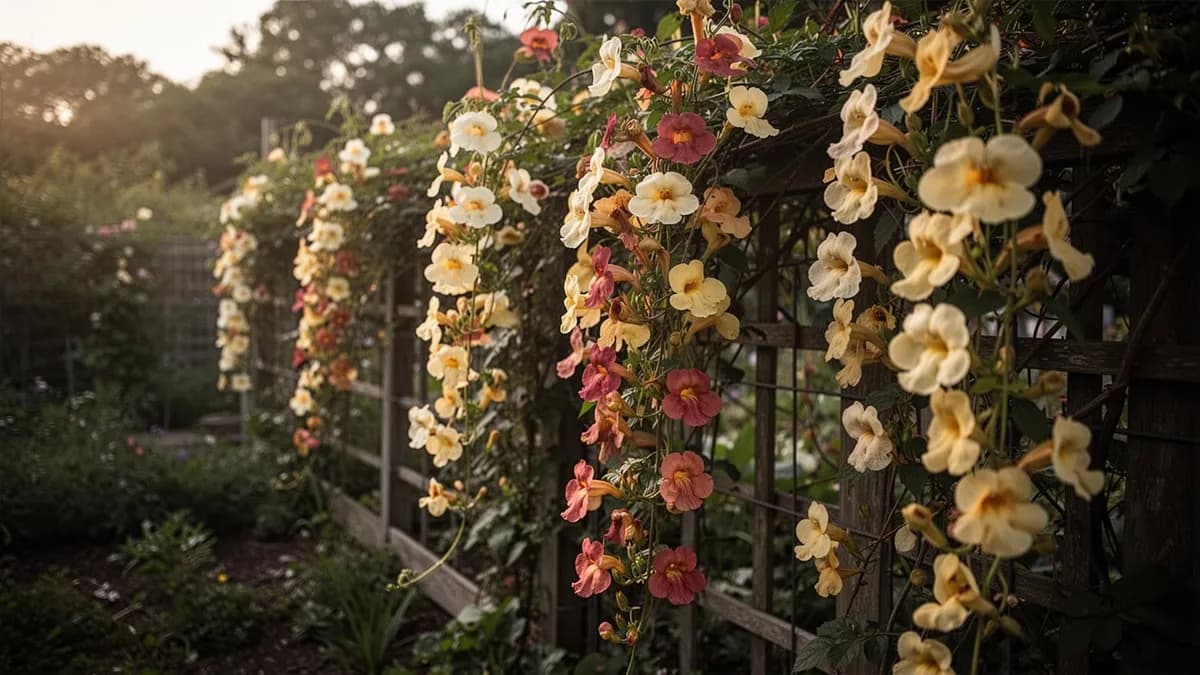
A fast-growing, semi-evergreen vine with abundant clusters of starry white flowers that bloom profusely from spring through fall. Potato vine is not frost hardy but recovers quickly from light freezes and grows rapidly in warm climates. It is excellent for quickly covering trellises, arbors, and fences with a cloud of delicate bloom.
When to plant Potato Vine
Potato vine is most commonly propagated by semi-ripe cuttings taken in midsummer, which root readily in three to four weeks. Take four-inch tip cuttings, remove lower leaves, dip in rooting hormone, and insert in moist perlite or vermiculite. Bottom heat speeds rooting. Seeds can be extracted from ripe berries but germination is slow and erratic. Sow in warm conditions at 70 degrees Fahrenheit after soaking overnight. Seedlings grow quickly once established.
Your Potato Vine Year
Composed for Zone 7 · typical seasons · frost passes Apr 2, returns Nov 1
Plant Potato Vine Apr – May, in bloom May – Oct. Check the planting methods below and set your climate to personalize these windows.
Potato Vine in bloom this season? Get next year's dates
One email when the next sowing window opens where you garden, and one before the first autumn frost.
Set your climate above so the dates are yours, not the typical-season default.
One email per milestone, never more than one a week. Unsubscribe with one tap. No account needed.
How to grow Potato Vine
Plant potato vine in spring after the last frost in fertile, well-drained soil in full sun. This fast-growing, semi-evergreen vine produces masses of starry white flower clusters from late spring through autumn, creating a cloud-like effect on trellises, arbors, and fences. It grows rapidly, reaching fifteen to twenty feet in a single season, making it excellent for quick coverage of bare structures.
Water regularly during the growing season, as potato vine performs best with consistent moisture. Feed monthly with a balanced liquid fertilizer to sustain the prolific flowering. In zones 8 and 9, the top growth may be killed by frost but the roots usually survive and regenerate vigorously in spring. In zone 10 and warmer, it remains semi-evergreen and flowers nearly year-round.
Prune in late winter or early spring, cutting back frost-damaged growth and shaping the vine as desired. Potato vine flowers on new growth, so even hard pruning will not sacrifice the current season's display. Train young shoots onto the support structure and tie in as needed, as the vine is a scrambling rather than self-clinging climber. In warm climates, it can become quite vigorous and may need trimming several times through the growing season.
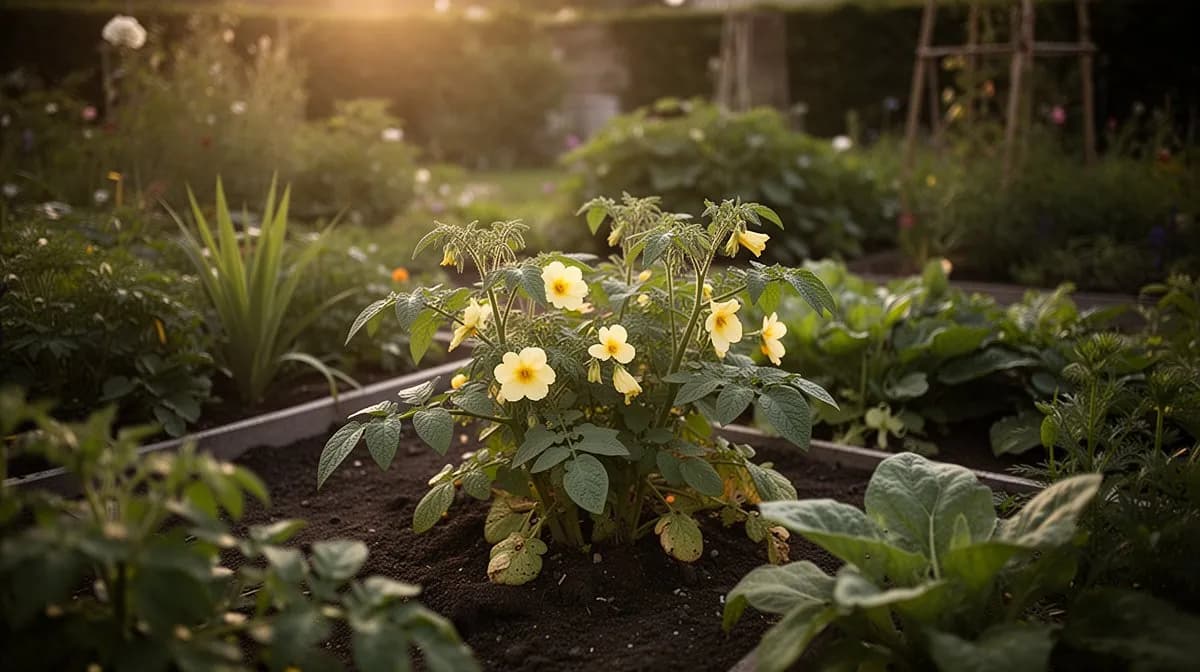
Potato Vine needs more room than a 4 × 8 ft bed gives
Each Potato Vine wants 200 cm of elbow room. The planner keeps that spacing for you — every plant, every bed.
Potato Vine's best neighbours
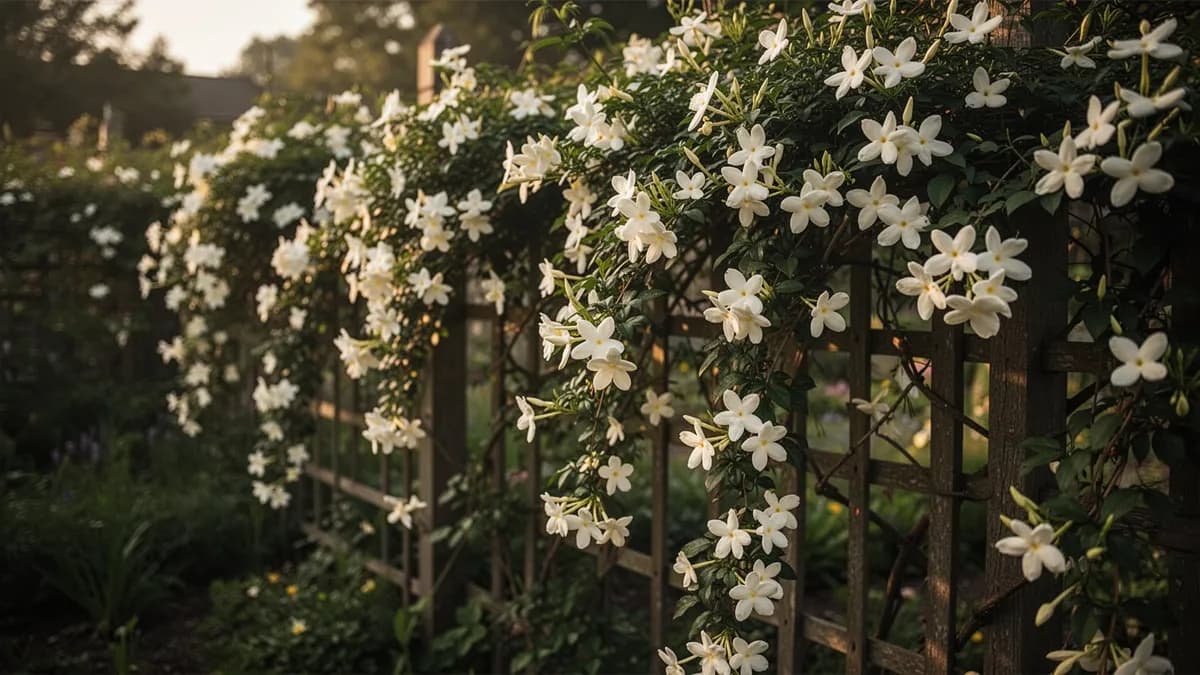
Potato vine creates a beautiful backdrop for summer perennials and roses. Train alongside star jasmine for a fragrant, white-flowered combination. The rapid growth makes it excellent for quickly screening unsightly views. Underplant with lavender, agapanthus, and other Mediterranean plants that share its preference for well-drained soil and warm conditions. In containers, pair with trailing annuals for a lush summer display.
Star Jasmine belongs beside it.
Old growers' knowledge, checked against Potato Vine's real companion table below — test any plant you're growing.
Related growing guides
Feed it well
Potato vine thrives in fertile, well-drained soil with a pH of 6.0 to 7.5. Amend the planting area with compost and ensure good drainage. Feed monthly with a balanced liquid fertilizer during the growing season to sustain continuous flowering. Alternatively, apply a slow-release granular fertilizer in spring. Mulch around the base to conserve moisture and protect roots from winter cold in marginal zones.
Ideal Temperature
Hardiness Zone Compatibility
From seed to harvest, stage by stage
Propagation and Establishment
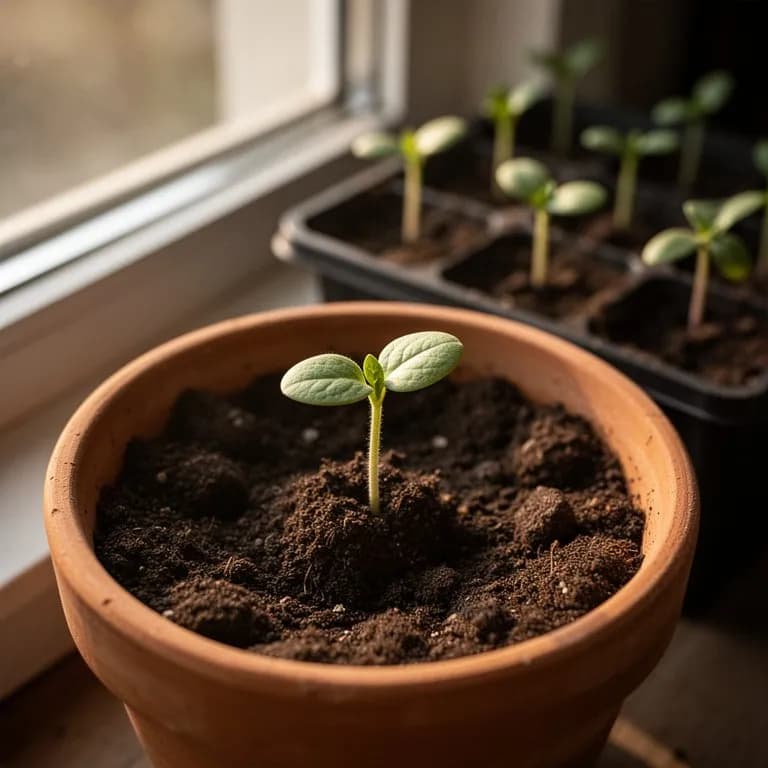
Potato vine is most commonly propagated from semi-ripe cuttings taken in late summer, though it can also be grown from seed. Cuttings root readily in a gritty, free-draining propagation mix within 2-4 weeks when provided with bottom heat. Seeds require a temperature of 18-21°C (64-70°F) and germinate in 14-21 days, though seedling growth is slower than cutting-grown plants.
Early Vine Development
Rooted cuttings or young transplants begin producing vigorous, flexible stems that actively seek support through twining. The glossy, dark green leaves are semi-evergreen and may be simple or pinnately lobed, often on the same plant. Root establishment occurs rapidly in well-drained soil, and new growth can reach 30-60 cm per month in warm conditions.
Rapid Vegetative Growth
The vine enters a phase of explosive growth, extending its scrambling, semi-twining stems up to 3-5 meters in a single season. The foliage thickens to create a dense screen of attractive dark green leaves. Stems are slender and flexible but become semi-woody at the base over time. The plant may need regular tying-in to its support structure as it cannot grip smooth surfaces on its own.
First Flowering
Typically in the second year from cuttings (or the first year from nursery plants), the vine begins producing its stunning clusters of star-shaped white flowers with prominent yellow anthers. Each inflorescence is a loose cyme carrying 8-20 individual flowers, and the blooming period extends from early summer through late autumn in mild climates. The flowers emit a light, sweet fragrance, especially in the evening, attracting pollinators.
Fruiting and Berry Development
After successful pollination, small green berries develop in clusters where flowers once appeared. The berries ripen from green to dark purple-black over several weeks and are approximately 8-12 mm in diameter. IMPORTANT: All parts of Solanum laxum, including the berries, leaves, and stems, contain solanine and other toxic glycoalkaloids. The berries are poisonous to humans and most animals and must never be consumed.
Winter Dormancy and Renewal
In mild, frost-free climates (USDA zones 9-11), the potato vine is semi-evergreen and may continue producing sporadic flowers through winter. In cooler zones, the plant drops most or all of its leaves and the top growth may die back to the woody base. Established plants with well-mulched roots can survive temperatures down to about -5°C (23°F) for brief periods, resprouting vigorously from the base in spring.
Take 10-15 cm semi-ripe cuttings from healthy, non-flowering shoots in mid- to late summer. Remove the lower leaves, dip the cut end in hormone rooting powder, and insert into a 50:50 mix of perlite and peat-free compost. Place in a warm, bright position out of direct sun and keep the medium consistently moist. A clear plastic bag over the pot creates the humid environment that speeds rooting.
Caring for Potato Vine month by month
What to do each month for your Potato Vine
October
You are hereStop feeding to allow growth to harden off before winter. Apply an extra layer of mulch around the base of the plant to insulate roots against coming frosts. Move container-grown plants to a sheltered position against a warm wall or into an unheated greenhouse. Remove any remaining berries.
Harvesting Potato Vine
Cut potato vine flower clusters for informal summer arrangements when most flowers in the cluster have opened. The delicate white stars are charming in mixed bouquets with roses and other summer flowers. Stems last about five days in water. Note that all parts of the plant are mildly toxic if ingested, including any small fruits that may form after flowering. The berry-like fruits should never be eaten, as they contain solanine.
assuming you plant when the window opens — set your real date
Deadhead Potato Vine regularly and it keeps flowering.
Storage & Preservation
In zones 8 and 9, potato vine may die back to the ground in winter but regenerates from the roots in spring. No special winter storage is needed in its hardiness range. In colder zones, it can be grown as an annual or container plant that is overwintered in a frost-free greenhouse. Propagation is easy from semi-ripe cuttings taken in summer, which root within three to four weeks in moist perlite.
What goes wrong — and the fix
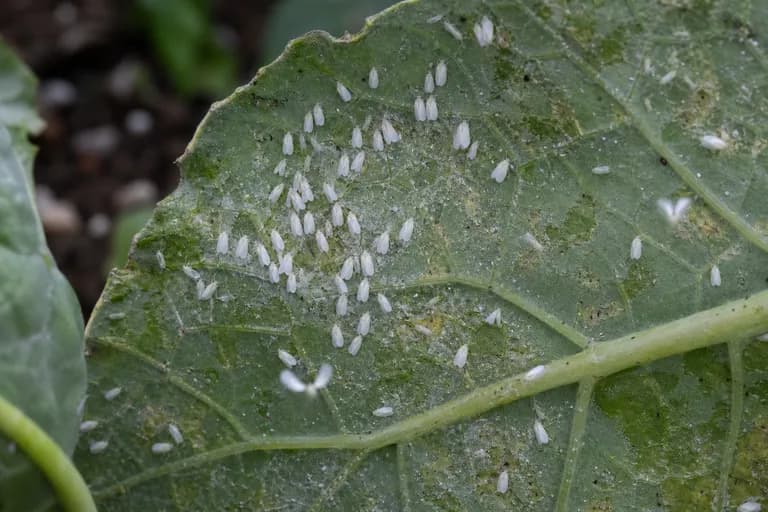
Whiteflies
PestTiny white flying insects on leaf undersides. Sticky honeydew and sooty mold. Yellowing foliage and reduced vigor.
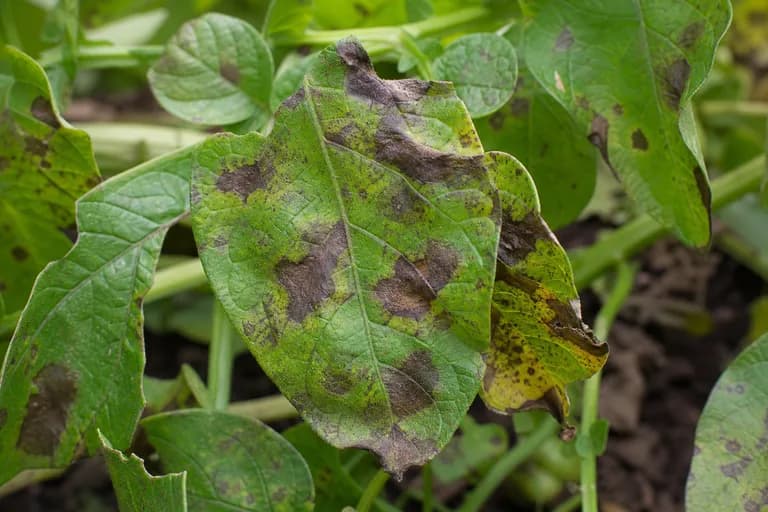
Potato Blight
DiseaseBrown blotches on leaves that spread rapidly during cool, wet weather. Foliage may collapse and die back extensively.
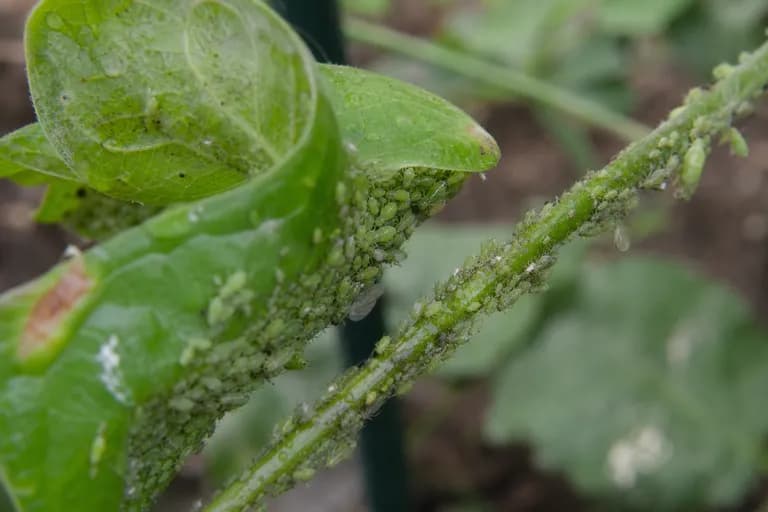
Aphids
PestClusters of green or black insects on new growth and flower buds. Distorted shoots, sticky honeydew deposits.
Troubleshooting Common Problems
The main limitation is frost tenderness, with top growth killed at around 28 degrees Fahrenheit. In zones 8 and 9, this means the vine must regrow each spring, which delays flowering. In wet, cold springs, root rot can occur in poorly drained soils. The vine can become invasive in frost-free climates, seeding itself into wild areas. The berries are toxic and should be removed if children or pets frequent the garden.
Growing Tips
- Choose a warm, sheltered planting position — ideally against a wall facing the midday or afternoon sun that absorbs heat during the day and radiates it back at night. This microclimate can make the difference between survival and loss in borderline-hardy zones. Avoid frost pockets, exposed hilltops, and aspects facing away from the midday sun.
- Provide a sturdy support structure from the outset. Potato vine is a scrambling climber rather than a true twiner or self-clinger, so it needs horizontal wires, trellis panels, or mesh to weave through. Space horizontal wires 30-45 cm apart on vine eyes attached to the wall or fence.
- Plant in well-drained soil — this is critical. Solanum laxum tolerates a wide range of soil types but will not survive in waterlogged ground, especially over winter. If your soil is heavy clay, add generous amounts of grit and organic matter at planting, or grow in a large container with loam-based compost.
- Water regularly during the first growing season to establish a deep, resilient root system. Once established (after the second year), the potato vine is moderately drought-tolerant and requires supplemental watering only during prolonged dry spells. Overwatering established plants promotes soft growth that is more vulnerable to frost.
- Prune in mid to late spring once you can identify which stems have survived winter. Cut out all dead, damaged, or frost-blackened growth back to healthy green wood. Thin congested growth to improve air circulation and light penetration. The vine flowers on current season's growth, so spring pruning does not reduce the flowering display.
- Feed with a high-potassium fertilizer (such as liquid tomato food) every two weeks from late spring through summer to promote maximum flower production. Avoid high-nitrogen feeds which produce lush foliage at the expense of blooms. A single application of slow-release balanced fertilizer in mid-spring provides a good nutritional foundation.
- Always wear gloves when pruning, taking cuttings, or handling any part of this plant. The sap contains irritant glycoalkaloids that can cause contact dermatitis in sensitive individuals. Wash hands and tools thoroughly after working with the plant, and keep cut material away from food preparation areas.
- Remove berry clusters promptly if children, pets, or livestock have access to the garden. The small dark purple-black berries are attractive but highly toxic due to concentrated solanine and solamargine content. Birds may eat the berries and spread seed, so removing them also prevents unwanted self-sowing.
- In zones colder than USDA 9, apply a thick 10-15 cm mulch layer of bark chips or straw around the root zone in late autumn to insulate against frost. Wrap the lower 60-90 cm of the main stems with horticultural fleece for added protection. Even if top growth dies back, well-mulched roots will often resprout vigorously in spring.
- Consider growing potato vine in a large container (minimum 40 liters) if you live in a cold-winter area. Container-grown plants can be moved into a frost-free greenhouse, conservatory, or unheated garage for winter, then brought back outside in spring. This approach virtually eliminates winter loss risk in marginal climates.
Pick your Potato Vine
Album
The classic white-flowered form with pure white starry blooms and golden stamens, the most widely planted selection.
Aureovariegatum
A variegated form with cream and green foliage that adds ornamental interest even between flowering flushes.
Chilean Potato Vine
The species type with slightly blue-tinged white flowers, vigorous and reliable in mild coastal climates.
Mature Solanum laxum plants are sold at garden centers for $15-35 depending on size, but the vine is extremely easy to propagate from cuttings at zero cost. A single established plant can provide dozens of cuttings each summer. As an ornamental climber, the potato vine offers significant value by covering walls, fences, and pergolas with attractive foliage and flowers far more affordably than constructed screening alternatives. A living green wall of potato vine provides natural insulation and cooling that can reduce energy costs, and the dense growth creates an effective privacy screen that would cost hundreds of dollars to replicate with fencing or artificial screening materials.
Quick recipes
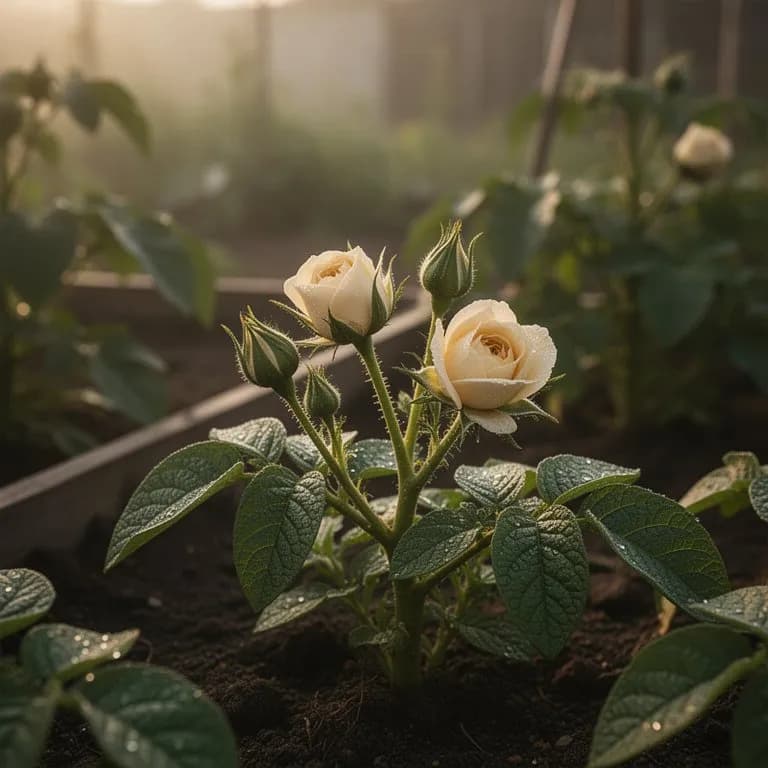
Potato Vine Flower Arrangement
15 minThe elegant white flower clusters of Solanum laxum make beautiful cut-flower additions to summer arrangements. The sprays of star-shaped blooms last well in water and add a delicate, cottage-garden charm. NOTE: This is a decorative use only — no part of this plant is edible.
5 ingredients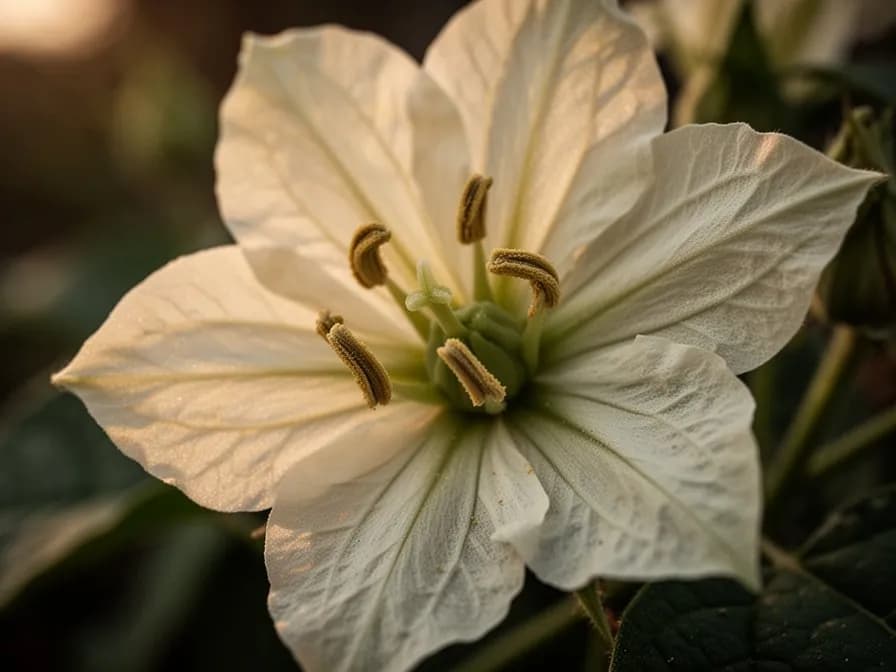
Dried Potato Vine Wreath Base
45 minThe long, flexible stems of potato vine are excellent for weaving into a natural wreath base. Harvest stems in late autumn when the vine is being pruned back, and weave them fresh while still pliable into a circular form that dries into a sturdy decorative base. Handle with gloves as the sap may irritate skin.
5 ingredientsPressed Potato Vine Flower Art
10 min active + 2 weeks pressingThe flat, star-shaped flowers of Solanum laxum press beautifully and retain their white color with subtle blue-lavender aging tones. Pressed flowers can be used for greeting cards, framed botanical art, or bookmarks. This craft project showcases the ornamental beauty of the plant safely.
5 ingredientsWhat's inside
Health Benefits
- IMPORTANT SAFETY NOTE: Solanum laxum is a toxic ornamental plant with no edible or medicinal uses. All parts contain harmful glycoalkaloids including solanine and solamargine. The following points relate to general gardening wellness benefits only.
- Growing vigorous climbing plants like potato vine provides moderate physical exercise through regular pruning, tying-in, and training activities — contributing to improved cardiovascular health and muscle tone over the growing season.
- The abundant white flowers attract beneficial pollinators including bees, hoverflies, and butterflies to the garden, supporting local biodiversity and improving pollination of nearby fruit and vegetable crops.
- A well-established potato vine covering a wall, fence, or pergola provides natural shade and cooling in summer, reducing ambient temperature on patios and against sunny walls by several degrees — lowering household cooling costs.
- Dense climbing foliage on walls and fences acts as a natural sound barrier, dampening traffic and neighborhood noise. Studies suggest dense vegetation screens can reduce perceived noise levels by 3-5 decibels.
- Caring for ornamental climbing plants provides documented mental health benefits through stress reduction, mindfulness during repetitive gardening tasks, and the aesthetic satisfaction of maintaining a beautiful living garden feature.
Where Potato Vine comes from
Solanum laxum, commonly known as the potato vine or jasmine nightshade, is native to the subtropical regions of southern Brazil, Paraguay, Uruguay, and northern Argentina, where it grows naturally as a scrambling climber in forest margins, woodland edges, and along riverbanks at elevations from sea level to approximately 1,500 meters. In its native habitat, the plant uses its flexible, semi-twining stems to climb through the canopy of supporting trees and large shrubs, reaching heights of 6-8 meters in favorable conditions.
The species was first described scientifically as Solanum jasminoides by the Italian botanist Giuseppe Moretti in 1834, who noted the resemblance of its clustered white flowers to jasmine. Taxonomic revisions later reclassified the species as Solanum laxum, reflecting a more precise botanical understanding, though the older name jasminoides persists widely in the nursery trade and horticultural literature. The plant was introduced to European horticulture in the mid-19th century, arriving first in the conservatories and orangeries of botanical gardens in England, France, and Italy, where its vigorous growth and abundant white flowers made it an instant favorite for covering walls and pillars in heated glasshouses.
By the late 19th century, gardeners in the milder regions of western Europe, particularly along the coasts of Cornwall, southern France, and the Italian Riviera, discovered that the potato vine could survive outdoors year-round in sheltered positions with well-drained soil. This adaptability led to its widespread adoption as an ornamental climber in Mediterranean, subtropical, and warm-temperate gardens around the world. Today Solanum laxum is cultivated on every inhabited continent and has naturalized in coastal California, southeastern Australia, New Zealand, and parts of South Africa, where it occasionally escapes cultivation and colonizes disturbed habitats.
Potato Vine: did you know?
Fascinating facts about Potato Vine
Despite its common name 'potato vine,' Solanum laxum produces no edible tubers or fruit — the name simply reflects its membership in the same family (Solanaceae) as the potato. All parts of the plant, including the attractive dark berries, are toxic to humans and most animals due to the presence of solanine and other glycoalkaloids.
Potato Vine questions, answered
When should I plant Potato Vine?
What are good companion plants for Potato Vine?
What hardiness zones can Potato Vine grow in?
How much sun does Potato Vine need?
How far apart should I space Potato Vine?
What pests and diseases affect Potato Vine?
How do I store Potato Vine after harvest?
What are the best Potato Vine varieties to grow?
What soil does Potato Vine need?
Is potato vine (Solanum laxum) poisonous?
How hardy is potato vine and will it survive winter in my climate?
How do I prune potato vine and when is the best time?
Why is my potato vine not flowering?
Is potato vine invasive and will it damage walls or structures?
Can I grow potato vine in a container on a balcony or patio?
Plant these alongside Potato Vine
More Climbing Flowers
Grow your best Potato Vine yet — and everything around it.
Start a free plan today. Lay out your beds, drop in your Potato Vine, and let PlotMyGarden handle the timing, spacing, companions and reminders from seed to harvest basket.
