Akebia de tres hojas
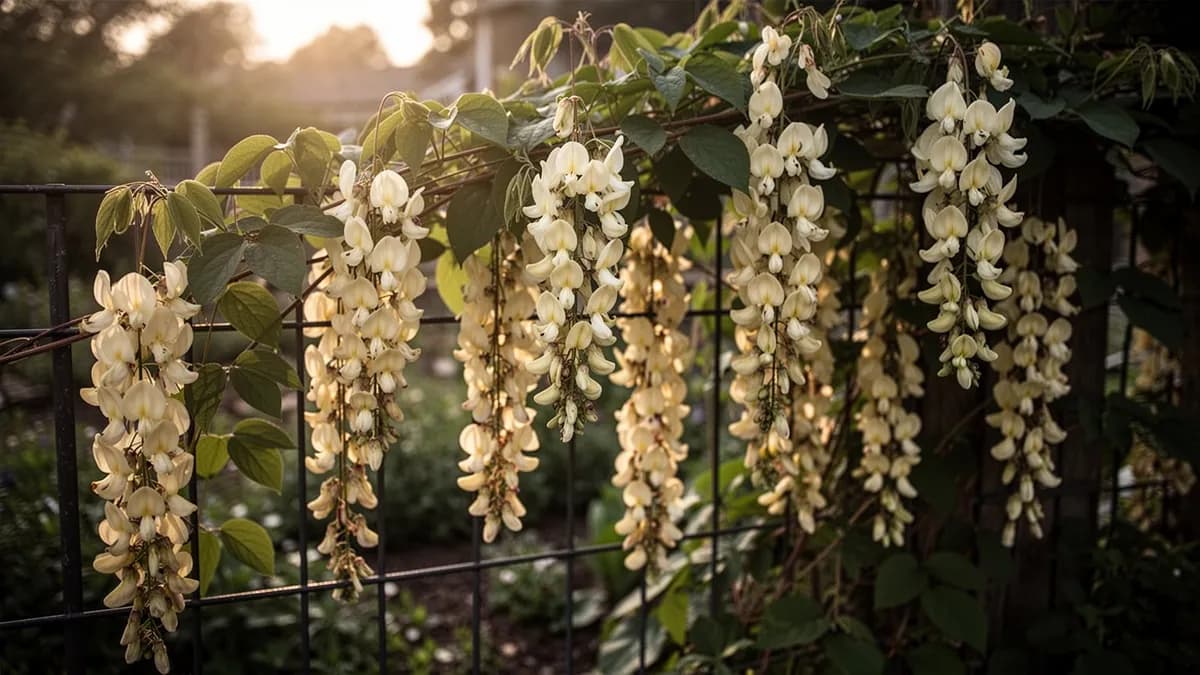
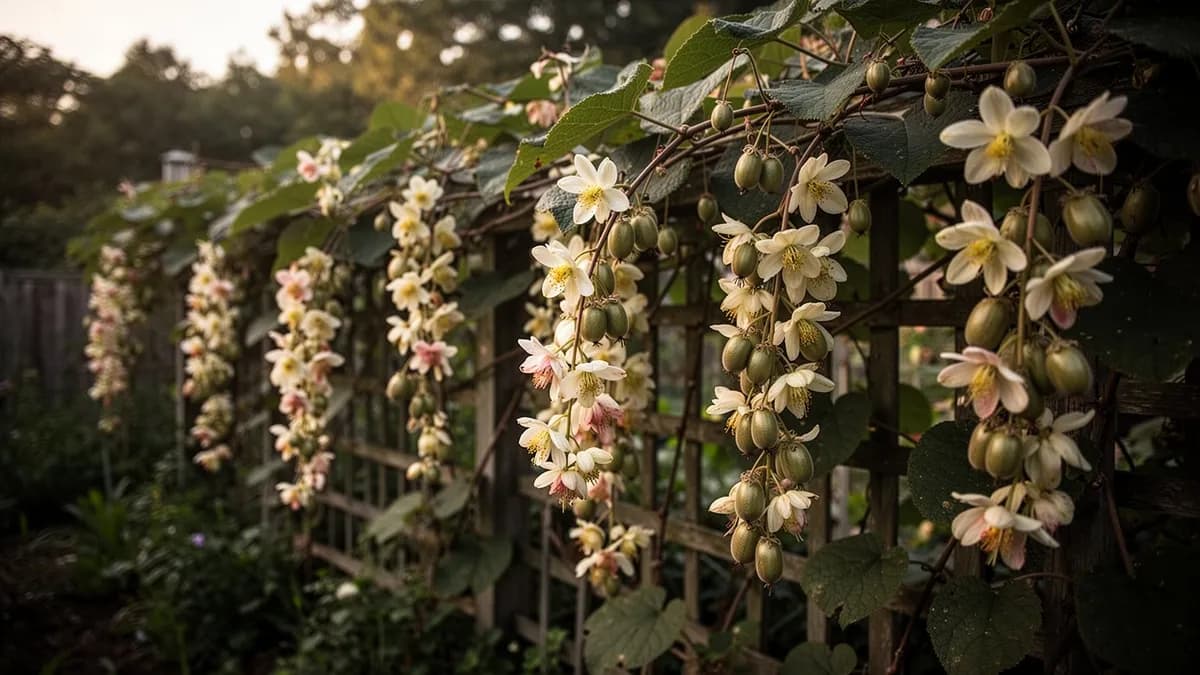
Trepadora caducifolia de tallos volubles con hojas trilobuladas y racimos colgantes de flores purpura oscuro con fragancia a chocolate durante la primavera.





En esta páginaResumen
Conoce Akebia de tres hojas
Trepadora caducifolia de tallos volubles con hojas trilobuladas y racimos colgantes de flores purpura oscuro con fragancia a chocolate durante la primavera. La akebia de tres hojas es menos vigorosa que su pariente de cinco hojas y mas facil de manejar en jardines pequenos. Prefiere un suelo humedo y bien drenado en semisombra, y resulta muy atractiva como pantalla vegetal sobre enrejados y vallas.
Cuándo plantar Akebia de tres hojas
La akebia de tres hojas puede cultivarse a partir de semillas extraidas de frutos maduros en otono. Limpie las semillas de la pulpa y estratifiquelas en frio en arena humeda en el frigorifico durante dos o tres meses. Siembre en primavera en macetas de compost humedo y la germinacion deberia producirse en cuatro a seis semanas. Las plantulas crecen a un ritmo moderado y pueden trasplantarse al exterior tras una temporada de crecimiento. Los esquejes semileñosos en verano y el acodo son metodos mas rapidos que producen clones exactos de la planta madre.
Tu año de Akebia de tres hojas
Ajustado a Zona 7 · temporada típica · la helada se va hacia el 2 abr y vuelve hacia el 1 nov
Planta Akebia de tres hojas Mar – May y cosecha Abr – May. Consulta los métodos de plantación y elige tu clima para adaptar los periodos.
Cómo cultivar Akebia de tres hojas
Plante la akebia de tres hojas en primavera u otono en un suelo humedo y bien drenado, en semisombra o pleno sol. Esta trepadora caducifolia de tallos volubles es menos vigorosa que su pariente de cinco hojas Akebia quinata, alcanzando entre cuatro y seis metros de longitud, lo que la hace mas manejable para jardines pequenos y entornos residenciales. Proporcione un enrejado, una valla o un emparrado como soporte y deje que la planta se enrolle de forma natural.
Riegue con regularidad durante la primera temporada de crecimiento para establecer un sistema radicular robusto. Una vez establecida, la akebia de tres hojas tolera moderadamente la sequia, aunque da mejores resultados con una humedad constante. Los racimos colgantes de flores purpura oscuro con fragancia a chocolate aparecen a mediados de primavera sobre la madera del ano anterior, por lo que conviene programar cualquier poda importante justo despues de la floracion.
Pode tras la floracion para controlar la forma y eliminar el crecimiento excesivo. A diferencia de A. quinata, la especie de tres hojas tiene menor tendencia a volverse invasora y rara vez produce renuevos radiculares, lo que la convierte en una planta de jardin mas civilizada. Las hojas trifoliadas son mas abiertas y gráciles que las de cinco foliolos de su pariente. Si se desean frutos, plante junto a A. quinata como compañera de polinizacion.
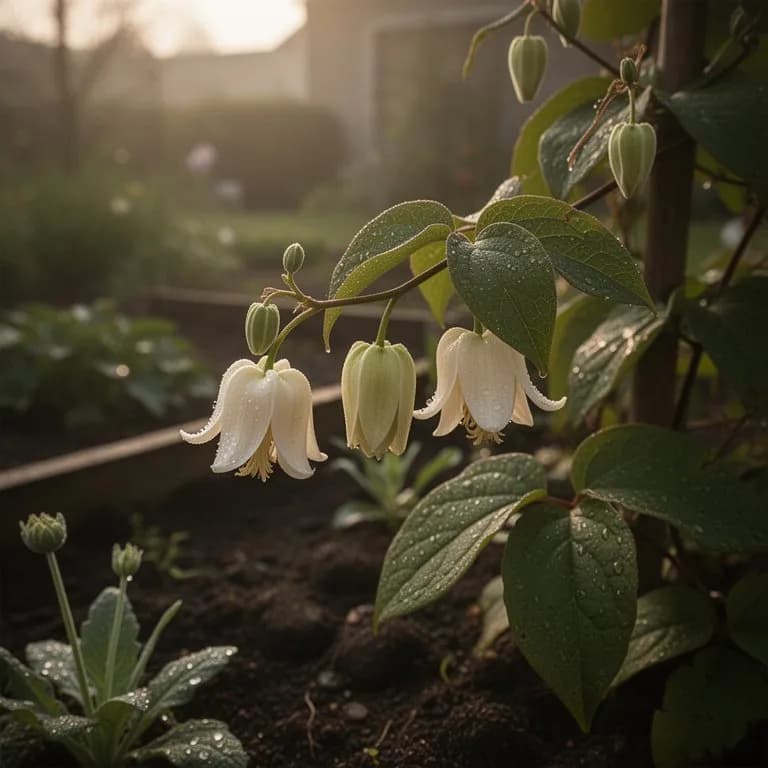
Para Akebia de tres hojas un bancal de 120 × 240 cm se queda corto
Cada Akebia de tres hojas pide 250 cm de margen. El planificador guarda ese marco por ti — cada planta, cada bancal.
Los mejores vecinos de Akebia de tres hojas
La akebia de tres hojas funciona bien entrenada junto a variedades de clematis para ampliar la temporada de floracion. Plante A. quinata cerca como compañera de polinizacion cruzada si desea obtener frutos. Subraye la planta con vivaces tolerantes a la sombra como hostas, epimedios y helechos. Su ritmo de crecimiento moderado la hace apta para vallas y enrejados compartidos con otras trepadoras de comportamiento controlado.
Enredadera de Chocolate va a su lado.
Saber de huerto de siempre, cotejado con la tabla real de Akebia de tres hojas — prueba cualquier planta que cultives.
Prueba Akebia de tres hojas en un bancal, aquí mismo
Un bancal real del planificador con Akebia de tres hojas ya plantado. Toca una planta compañera para colocarla y mira cómo responde la comprobación de vecinos: verde para buenos vecinos, rojo si hay conflicto.


Guías de cultivo relacionadas
Abónalo bien
La akebia de tres hojas crece bien en suelos medios, humedos y bien drenados con un pH de 5.5 a 7.0. Se adapta a la mayoria de los suelos de jardin razonables, salvo la arena completamente seca o la arcilla encharcada. Aplique un fertilizante granular equilibrado a comienzos de la primavera cuando se inicie el crecimiento. Mulche con material organico alrededor de la base para conservar la humedad y mejorar la estructura del suelo con el tiempo. Evite la fertilizacion excesiva, que favorece un crecimiento descontrolado a expensas de la floracion.
Temperatura ideal
Compatibilidad de zonas de rusticidad
De la semilla a la cosecha, etapa por etapa
Dormicion invernal y establecimiento radicular
Las akebias recien plantadas dirigen su energia bajo tierra, construyendo una robusta red radicular antes de que comience el crecimiento aereo visible. En climas suaves la trepadora conserva parte de su follaje semipersistente; en zonas mas frias es completamente caducifolia durante esta fase.
Brotacion primaveral y crecimiento inicial
Cuando las temperaturas del suelo superan los 8-10 °C, las yemas se hinchan y emergen nuevos brotes con un llamativo tinte bronce-cobrizo. El crecimiento se acelera rapidamente y la trepadora comienza a enrollarse sobre cualquier soporte disponible, extendiendose varios centimetros al dia en condiciones calidas.
Floracion y polinizacion
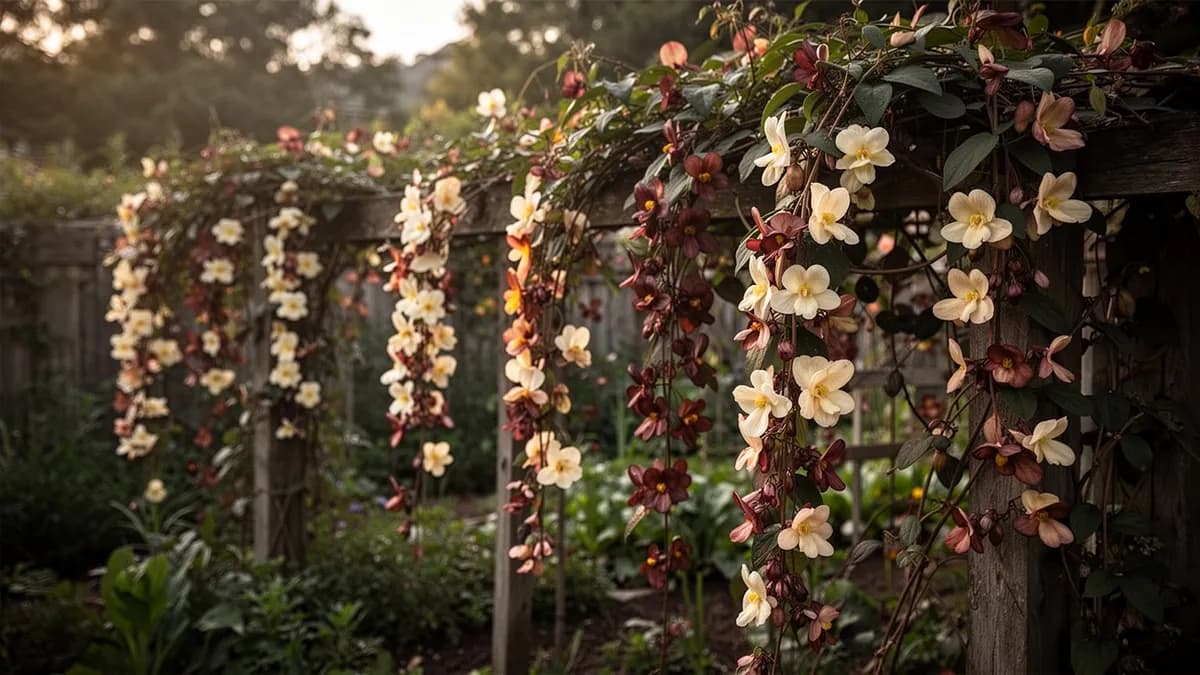
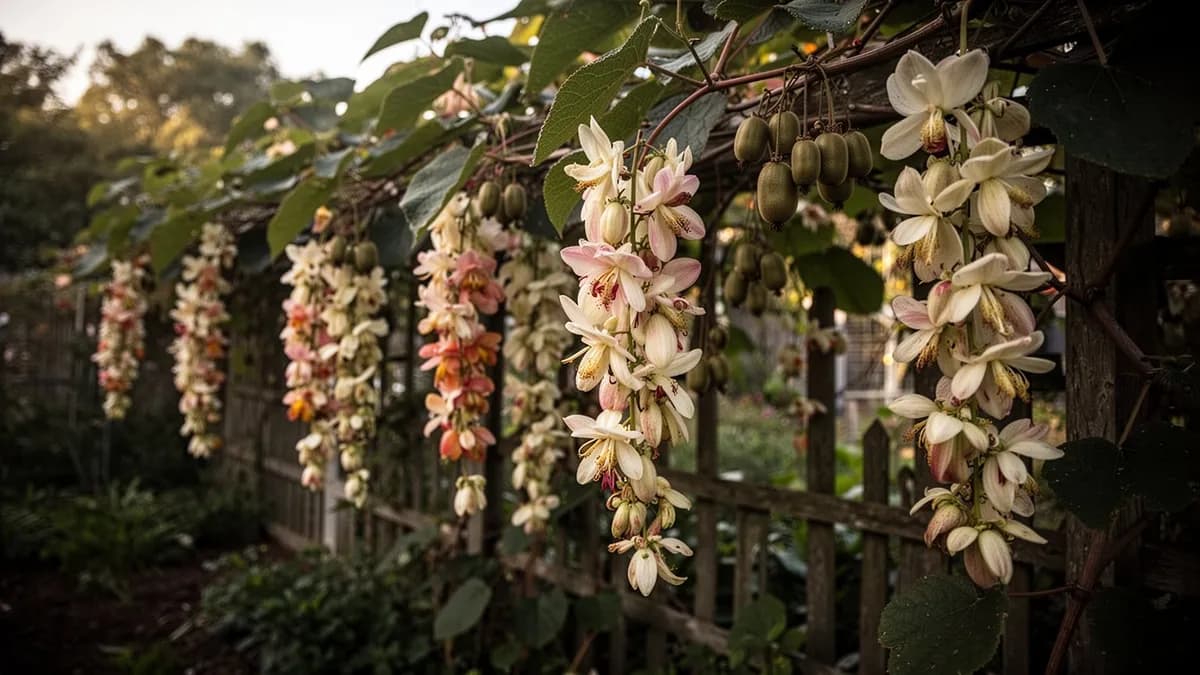
Los racimos colgantes de flores fragantes aparecen de abril a mayo. Las flores femeninas, mas grandes y oscuras, son de un purpura-chocolate con tres petalos carnosos; las flores masculinas mas pequenas son de un malva rosado palido. La rica fragancia a chocolate-vainilla es mas intensa en los dias calidos y tranquilos, y atrae a los polinizadores de primera temporada.
Crecimiento vegetativo vigoroso en verano
La trepadora entra en su fase vegetativa mas activa, produciendo un denso follaje que puede extenderse 2-3 metros de nuevo crecimiento durante el verano. Si la polinizacion fue exitosa, entre las hojas se desarrollan pequeños frutos verdes que pasan casi inadvertidos hasta finales del verano.
Desarrollo y engrosamiento de los frutos
Los frutos se agrandan de forma notable desde finales del verano hasta comienzos del otono, cambiando su color del verde palido al purpura-azulado oscuro. Cada fruto alcanza entre 5 y 12 cm de longitud y adquiere su caracteristica forma de salchicha. La pulpa interior se vuelve cada vez mas dulce y translucida a medida que se acumulan los azucares.
Cosecha y apertura de los frutos
Los frutos maduros se abren a lo largo para revelar la brillante pulpa blanca repleta de semillas en su interior. Esta apertura natural es la señal principal de la cosecha. Segun el clima, la recoleccion puede extenderse de septiembre a noviembre, ya que los frutos de distintas partes de la trepadora maduran en momentos ligeramente diferentes.
Declive otoñal y caida de la hoja
El follaje de las formas caducifolias adquiere suaves tonos amarillos y bronceados antes de caer. Las variedades semipersistentes retienen aproximadamente la mitad de sus hojas durante los inviernos suaves. La trepadora entra en un periodo de reposo a medida que las hormonas de crecimiento responden al acortamiento del dia y al descenso de las temperaturas.
Mantenga el suelo uniformemente humedo pero sin encharcamiento. Evite fertilizar durante este periodo: deje que las raices se anclen de forma natural sin forzar un crecimiento tierno y vulnerable a las heladas.
Cuidar Akebia de tres hojas mes a mes
Qué hacer cada mes para tu Akebia de tres hojas
Octubre
Mes actualComplete la cosecha y elimine los tallos dañados o enfermos. Comience la poda estructural post-cosecha para aclarar las zonas congestionadas y mejorar la penetracion de la luz para la temporada siguiente.
Ten claro qué hacer en tu huerto, cada mes
Un correo al empezar cada mes: qué sembrar, plantar y hacer ahora mismo — para tu Akebia de tres hojas y todo lo que crece alrededor. Más un breve curso inicial para esquivar los errores clásicos.
- Qué hacer ahora mismo
- Ajustado a tu temporada
- Curso inicial incluido
Cosechar Akebia de tres hojas
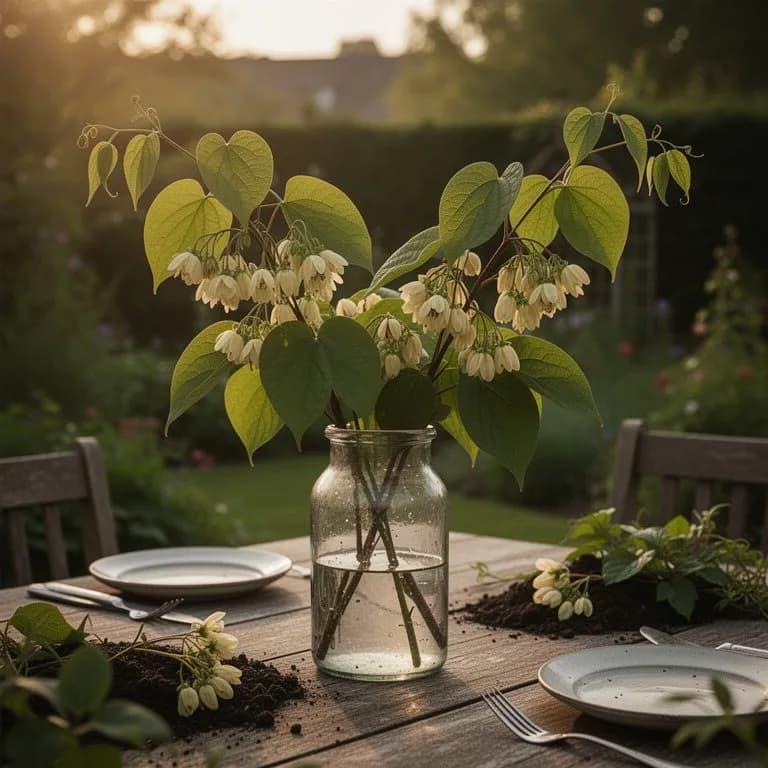
Las fragantes flores purpuras primaverales pueden cortarse para pequenos arreglos interiores donde su aroma a chocolate se apreciara mejor. Corte los tallos con varios racimos de flores y coloquelos en agua fria. Las flores cortadas duran unos cinco dias en el florero. Si la planta es polinizada de forma cruzada por A. quinata, la akebia de tres hojas produce frutos otoñales con forma de salchicha cuya pulpa dulce es comestible. Recolecte los frutos cuando la piel purpura se ablande y comience a abrirse de forma natural.
se supone que plantas al comenzar el periodo — indica tu fecha real
Cosecha Akebia de tres hojas a tiempo y la planta sigue produciendo.
Almacenamiento y conservación
Los frutos frescos de akebia son muy perecederos y deben consumirse o procesarse en el plazo de uno o dos dias tras la recoleccion. La pulpa dulce puede congelarse para su uso posterior. Para la propagacion de la trepadora, los esquejes semileñosos tomados a mediados del verano arraigan bien bajo nebulizacion o en una bandeja de propagacion cubierta. Los esquejes de madera dura pueden tomarse a finales del otono y enraizarse en arena humeda durante el invierno. El acodo tambien resulta efectivo: basta con fijar al suelo las ramas bajas y esperar a que arraiguen.
Qué falla — y cómo solucionarlo
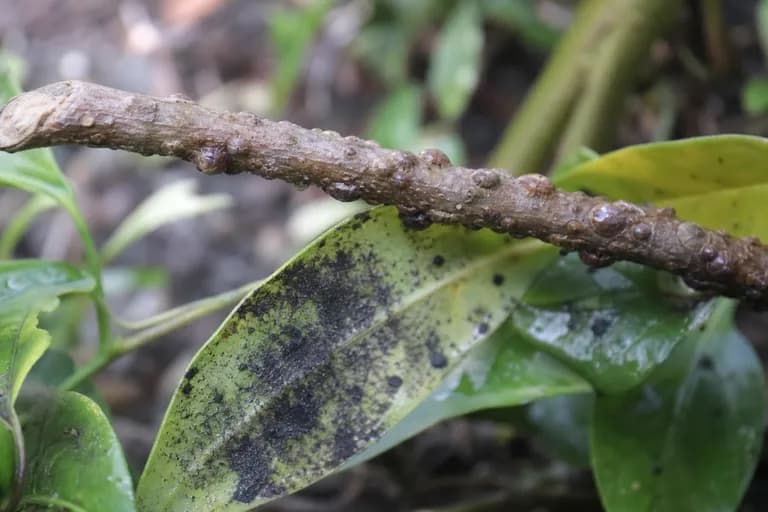
Cochinillas escama
PlagaBultos marrones con aspecto de concha en los tallos mas viejos. Depositos pegajosos de melaza bajo la trepadora. Puede desarrollarse negrilla sobre la melaza.
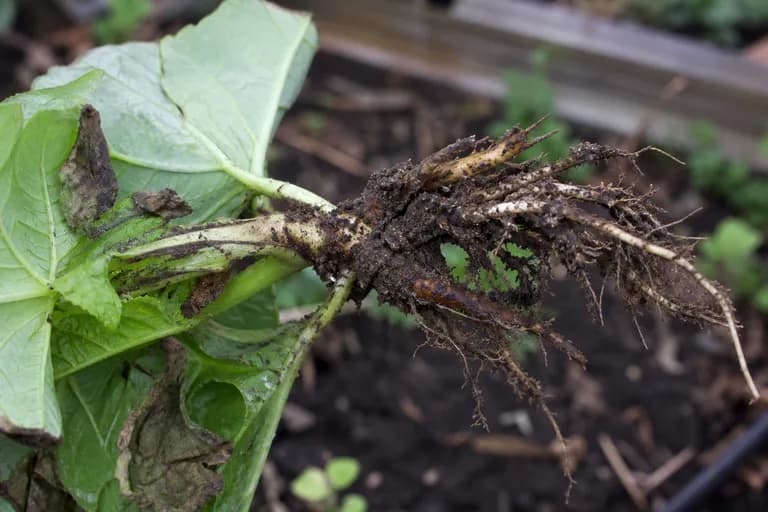
Pudricion de raices
EnfermedadFollaje marchito a pesar del riego adecuado, hojas amarillentas y reduccion del vigor. Las raices presentan un aspecto oscuro y blando al examinarlas.
Solución de problemas comunes
La akebia de tres hojas es generalmente poco problematica y mucho menos agresiva que su pariente de cinco hojas. El principal inconveniente es el breve periodo de floracion de solo dos o tres semanas en primavera, con la fragancia a chocolate perceptible unicamente en los dias calidos. Sin una compañera de polinizacion de otra especie de Akebia, no se produciran frutos. La trepadora puede parecer desnuda en invierno al ser caducifolia, por lo que conviene tener en cuenta su aspecto invernal al elegir el lugar de plantacion.
Consejos de cultivo
- Plante siempre al menos dos variedades de akebia geneticamente distintas a menos de 5-10 metros entre si para garantizar la polinizacion cruzada: sin una compañera polinizadora, el cuajado de frutos es poco fiable y a menudo inexistente.
- Instale una estructura de soporte solida y permanente antes de plantar. La akebia crece vigorosamente y un ejemplar maduro puede alcanzar entre 8 y 12 metros de longitud, superando facilmente los enrejados ligeros o temporales en un par de temporadas.
- Durante la primera temporada de crecimiento, dé prioridad a un riego profundo y regular en lugar de un riego frecuente y superficial para que el sistema radicular se establezca en profundidad en vez de quedarse cerca de la superficie.
- Situe la trepadora donde reciba al menos 4-6 horas de luz solar directa al dia para obtener la mejor floracion y fructificacion: una pared, valla o pergola orientada al sur o al oeste es ideal en jardines del hemisferio norte.
- Pode principalmente a finales de la primavera, justo despues de la floracion, para dar forma a la trepadora y aclarar el crecimiento congestionado, en lugar de hacerlo en otono o invierno, ya que las yemas florales se forman sobre la madera de la temporada anterior y una poda intensa en final de temporada elimina las flores del año siguiente.
- En las zonas USDA 4 y 5, aplique una generosa capa de mantillo organico de 8-10 cm — humus de hojas, paja o corteza compostada — sobre la zona radicular cada otono para aislar las raices de las heladas invernales severas, especialmente durante los dos primeros inviernos de la trepadora.
- Polinice las flores a mano con un pequeño y suave pincel de artista, transfiriendo el polen de las flores masculinas mas pequenas y palidas a las flores femeninas mas grandes y oscuras: esto mejora drasticamente el cuajado de frutos durante las primaveras frias, humedas o ventosas cuando los polinizadores insectos estan inactivos.
- Controle la dispersion de la trepadora con cuidado en climas suaves (zonas USDA 7-9) donde la akebia puede autosembrarse de forma agresiva. Recoja los frutos caidos antes de que las semillas se dispersen, o elimine rapidamente las plantulas no deseadas para evitar que la trepadora se naturalice mas alla de su jardin.
- Para el cultivo en maceta, elija un tiesto de al menos 50-60 litros de capacidad con buenos orificios de drenaje y use una mezcla de plantacion con base de limo y buen drenaje. Los ejemplares en contenedor necesitan un riego mas frecuente y se benefician de un aporte anual de compost fresco en superficie cada primavera.
- Recolecte los brotes tiernos y jovenes a comienzos de la primavera cuando midan entre 10 y 15 cm de longitud: son comestibles y muy apreciados en la cocina japonesa como verdura de temporada, ofreciendo una cosecha extra temprana mucho antes de la fructificacion otoñal.
Cultiva tu mejor Akebia de tres hojas — y todo lo que la rodea.
Empieza un plan gratis hoy. Diseña tus bancales, coloca tu Akebia de tres hojas y deja que PlotMyGarden gestione el momento, el espaciado, las asociaciones y los recordatorios de la semilla a la cesta.
Elige tu Akebia de tres hojas
Trifoliata
La especie tipica con flores purpura profundo y fragancia a chocolate, y hojas trilobuladas; mas compacta y manejable que A. quinata.
Variegata
Una seleccion poco frecuente con follaje ribeteado en crema que aporta interes ornamental durante toda la temporada de crecimiento.
Una sola akebia establecida puede producir entre 8 y 25 frutos por temporada a partir del tercer año de madurez, con frutos individuales que pesan entre 60 y 150 g cada uno. En Japon, donde el akebi se vende como una delicatessen de temporada, un solo fruto se comercializa por entre 5 y 10 dolares en tiendas especializadas, lo que significa que una trepadora productiva en casa podria generar el equivalente a entre 40 y 250 dolares de frutos al año segun los precios de venta japoneses. Mas alla de la cosecha, la akebia actua como una rapida pantalla vegetal viva o cobertura de pergola: una trepadora madura puede tapizar entre 20 y 40 metros cuadrados de valla, enrejado o emparrado con denso follaje, eliminando la necesidad de setos de privacidad costosos o de multiples plantaciones de arbustos. La planta es ademas excepcionalmente longeva, manteniendose productiva durante decadas con solo una poda anual basica, lo que hace que la inversion inicial en una planta de vivero resulte muy rentable a largo plazo.
Recetas rápidas
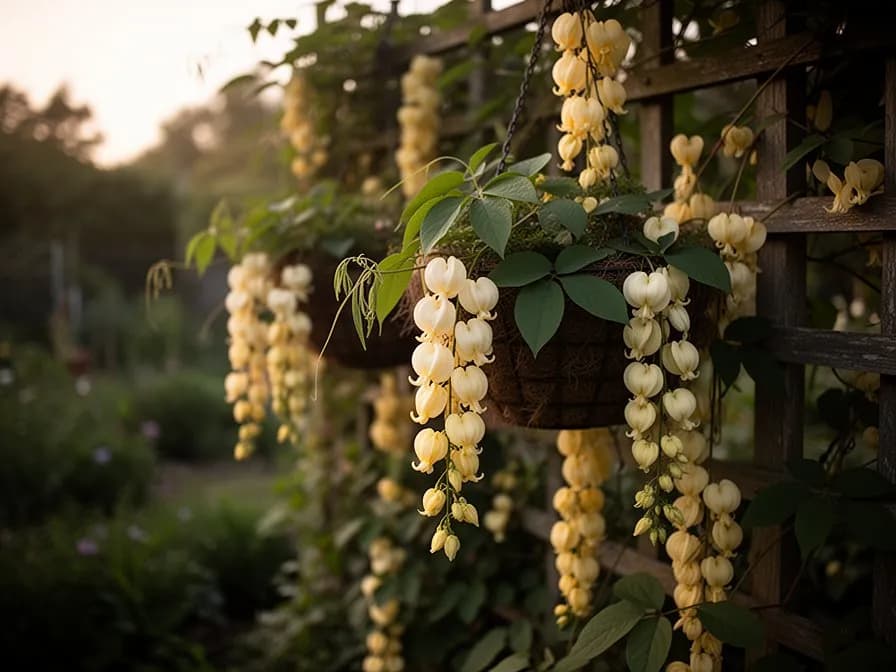
Piel de akebia rellena de miso
25 minutosUna preparacion japonesa tradicional en la que la piel ligeramente amarga y vaciada del fruto de akebia se rellena con una mezcla sabrosa de carne de cerdo picada, miso blanco, jengibre y cebolleta, y se frie en la sarten hasta dorarla. El suave amargor de la piel crea un contraste satisfactorio con el relleno umami y salado: un celebrado plato otoñal de la region de Tohoku en Japon.
8 ingredientesSorbete de pulpa de akebia y lima
15 minutos (mas 3-4 horas de congelacion)La pulpa naturalmente dulce y aromática de los frutos maduros de akebia, similar al lichi, se tritura y combina con un chorrito de zumo de lima fresca y un hilo de miel para crear un sorbete delicado y fragante. El caracter floral y tropical de la pulpa resalta con una elaboracion minima, lo que hace de este postre un final refinado e inusual.
6 ingredientesCobertura de pavlova con fruto de akebia
10 minutosLa translucida y joyesca pulpa del fruto de akebia se vierte sobre una pavlova de merengue crujiente junto con nata montada y fruta de la pasion espolvoreada, creando un espectacular postre otoñal. La suave y floral dulzura de la pulpa de akebia combina a la perfeccion con el acido contraste de la fruta de la pasion y el esponjoso merengue.
7 ingredientesQué contiene
Beneficios para la salud
- La translucida pulpa del fruto de akebia contiene flavonoides y compuestos polifenolicos que actuan como antioxidantes, ayudando a neutralizar los radicales libres daños y a reducir el estres oxidativo a nivel celular.
- La medicina tradicional de Asia Oriental ha empleado durante siglos preparaciones del tallo de especies de Akebia (conocido como mu tong) como diuretico natural y tonico de las vias urinarias, con uso documentado en farmacopeas clasicas chinas.
- El fruto ofrece un tentempie naturalmente dulce y bajo en calorias con aproximadamente 55 calorias por 100 g de pulpa, lo que lo hace adecuado para quienes desean satisfacer el apetito dulce sin una ingesta calorica elevada.
- El potasio presente en la pulpa del fruto favorece la salud cardiovascular al contribuir a la regulacion de la presion arterial y al mantenimiento del equilibrio electrolitico adecuado para el corazon y la funcion muscular.
- La fibra dietetica del fruto y la piel contribuye a la regularidad digestiva, favorece la diversidad del microbioma intestinal saludable y puede ayudar a moderar las respuestas glucemicas postprandiales.
- Investigaciones preliminares de laboratorio han identificado saponinas triterpenoideas en la piel del fruto y en los extractos de la trepadora que demuestran propiedades antiinflamatorias en estudios de cultivo celular, lo que sugiere vias para futuras investigaciones farmacologicas.
De dónde viene Akebia de tres hojas
Akebia quinata, conocida popularmente como chocolate vine o akebia, es originaria de los bosques caducifolios y margenes forestales de Japon, China y la peninsula coreana, donde ha formado parte del paisaje natural y de la cultura humana durante bien mas de un milenio. En su habitat natural, la trepadora se entrelaza entre arboles caducifolios a lo largo de laderas y riberas, sus tallos volubles ascendiendo hacia el dosel para capturar la luz solar tamizada. Los recolectores japoneses han cosechado los frutos, conocidos localmente como akebi, cada otono como una preciada delicatessen de temporada durante generaciones. La experiencia de encontrar y comer akebi silvestre esta profundamente arraigada en la cultura alimentaria rural japonesa y se asocia a la nostalgia de la temporada de cosecha otoñal. En zonas montañosas como las prefecturas de Yamagata y Akita, en el norte de Honshu, los frutos se siguen recogiendo de trepadoras silvestres y se venden en mercados de carretera y tiendas especializadas.
En la medicina tradicional china, partes de especies relacionadas de Akebia —en particular el tallo seco, llamado mu tong— han sido recogidas en farmacopeas clasicas por sus supuestas propiedades diureticas, antiinflamatorias y promotoras de la circulacion. El uso medicinal del mu tong se remonta a muchos siglos atras y refleja la importancia de la planta mas alla de su uso alimentario y ornamental en la cultura de Asia Oriental. Los herboristas modernos actuan con cautela respecto a los preparados de mu tong por la historica confusion con especies nefrotoxicas de la familia Aristolochiaceae, aunque Akebia quinata en si (familia Lardizabalaceae) no contiene acidos aristoloquicos.
La akebia fue introducida en la horticultura occidental en la decada de 1840, siendo el explorador de plantas escoces Robert Fortune ampliamente acreditado por llevar ejemplares a Gran Bretaña hacia 1845 tras sus expediciones a Asia Oriental. Los jardineros victorianos adoptaron la trepadora por sus inusuales flores, su elegante follaje palmeado y su vigoroso habito trepador, y fue destacada en las publicaciones de jardineria de la epoca. En Estados Unidos fue promovida inicialmente como una rapida pantalla ornamental, aunque en algunos estados del sureste se ha naturalizado posteriormente y se considera invasora. Hoy en dia la akebia esta experimentando un renovado interes entre los practicantes del paisajismo comestible y los disenadores de permacultura que valoran su naturaleza de doble proposito: una sola trepadora bien situada ofrece tanto belleza ornamental como una cosecha comestible verdaderamente inusual.
Akebia de tres hojas: ¿sabías que?
Datos fascinantes sobre Akebia de tres hojas
El nombre comun 'chocolate vine' (trepadora de chocolate) proviene de la rica fragancia a chocolate-vainilla de las flores primaverales, y no de ningun sabor achocolatado del fruto: la pulpa en realidad sabe mas a una dulce mezcla de lichi, melon y pera.
Akebia de tres hojas: preguntas frecuentes
¿Cuándo debo plantar Akebia de tres hojas?
¿Cuáles son buenas plantas acompañantes para Akebia de tres hojas?
¿En qué zonas de rusticidad puede crecer Akebia de tres hojas?
¿Cuánto sol necesita Akebia de tres hojas?
¿A qué distancia debo espaciar Akebia de tres hojas?
¿Qué plagas y enfermedades afectan a Akebia de tres hojas?
¿Cómo almaceno Akebia de tres hojas después de la cosecha?
¿Cuáles son las mejores variedades de Akebia de tres hojas para cultivar?
¿Qué suelo necesita Akebia de tres hojas?
¿Necesito mas de una planta de akebia para producir frutos?
¿Es la akebia invasora y como puedo evitar que se extienda sin control?
¿Como se cuando el fruto de la akebia esta maduro y listo para recolectar?
¿A que sabe el fruto de la akebia y como se come?
¿Que resistencia al frio tiene la akebia y sobrevivira en climas norteños?
¿Con que rapidez crece la akebia y cuanto espacio necesita?
Acabas de leer la teoría. Ahora cultívala en piloto automático.
Todo lo que hace que Akebia de tres hojas sea delicado — el momento, el espaciado, las asociaciones, la ventana de cosecha — es justo lo que PlotMyGarden resuelve por ti, para cada planta de tu huerto.
Un plan que conoce tu clima
Indica tu ubicación una vez. Recibe fechas de siembra, abonado y cosecha basadas en tu última helada real y el pronóstico en vivo — sin adivinar con un sobre genérico.
De la sección “Cuándo plantar”Planificador de bancales de arrastrar y soltar
Diseña bancales sobre una cuadrícula. Cada planta encaja con su espaciado correcto y ves toda la temporada antes de gastar un céntimo en semillas.
De la sección “Cultivo”Conflictos de asociación, detectados a tiempo
Más de 200 buenas y malas combinaciones comprobadas en vivo mientras plantas — para que un error que arruine la temporada nunca llegue a la tierra.
De la sección “Asociaciones”Recordatorios que sí vas a seguir
“Riega las judías.” “Recoge hoy antes de que se pase.” Oportunos, concretos y ligados a las plantas que de verdad cultivas.
De la sección “Cosecha”Escalonado, programado
¿Quieres cosechar seis semanas en vez de seis días? Reparte tus siembras automáticamente y te avisa cuando toca el siguiente lote.
De la sección “Cuándo plantar”Un registro que se vuelve más listo
Cada cosecha que registras le enseña tu huerto. El plan del año que viene parte de lo que de verdad funcionó en tu suelo, no en un manual.
De la sección “Resumen”Planta estos junto a Akebia de tres hojas
Más Trepadoras
Cultiva tu mejor Akebia de tres hojas — y todo lo que la rodea.
Empieza un plan gratis hoy. Diseña tus bancales, coloca tu Akebia de tres hojas y deja que PlotMyGarden gestione el momento, el espaciado, las asociaciones y los recordatorios de la semilla a la cesta.