Black-Eyed Susan Vine
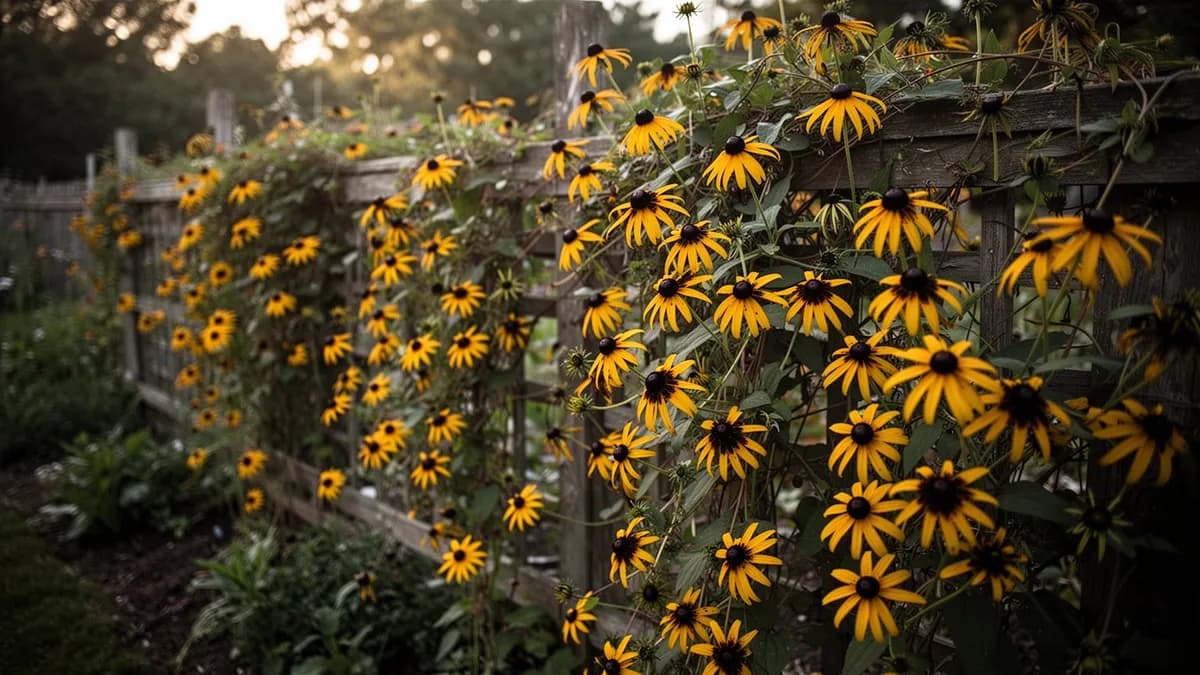
A cheerful annual vine with bright orange, yellow, or white flowers featuring distinctive dark chocolate centers that twine happily up trellises and spill from containers.





On this pageOverview
Meet Black-Eyed Susan Vine
A cheerful annual vine with bright orange, yellow, or white flowers featuring distinctive dark chocolate centers that twine happily up trellises and spill from containers. Black-eyed Susan vine blooms continuously in warm weather and is perfect for adding vertical interest to patios and balconies. Start seeds indoors early for the longest bloom season.
When to plant Black-Eyed Susan Vine
Start seeds indoors six to eight weeks before the last frost date for the longest bloom season. Nick or soak seeds overnight in warm water before sowing to speed germination. Sow a quarter-inch deep in warm, moist seed-starting mix and maintain temperatures of 70 to 75 degrees Fahrenheit. Cover the tray with plastic to maintain humidity. Seeds germinate in ten to twenty-one days. Transplant seedlings into individual pots once they have two sets of true leaves. Harden off for a week before planting outdoors.
Your Black-Eyed Susan Vine Year
Composed for Zone 7 · typical seasons · frost passes Apr 2, returns Nov 1
Plant Black-Eyed Susan Vine Apr – May, pick Jun – Oct. Check the planting methods below and set your climate to personalize these windows.
How to grow Black-Eyed Susan Vine
Start black-eyed Susan vine seeds indoors six to eight weeks before the last frost date, as this tropical annual needs a long growing season to bloom prolifically. Sow seeds a quarter-inch deep in warm, moist seed-starting mix at 70 to 75 degrees Fahrenheit. Seeds germinate in ten to twenty-one days. Harden off seedlings gradually and transplant outdoors after all danger of frost has passed.
Plant in rich, well-drained soil in full sun to light afternoon shade. Provide a trellis, obelisk, or strings for the twining vine to climb. Black-eyed Susan vine also performs superbly in hanging baskets and window boxes where it cascades gracefully. Space plants twelve to eighteen inches apart and pinch growing tips early to encourage branching and more flowers.
Water regularly throughout the growing season, keeping the soil consistently moist but not waterlogged. Feed every two weeks with a balanced liquid fertilizer or apply slow-release granules at planting time. Deadhead spent flowers to encourage continuous blooming. In its perennial range of zones 10 to 11, the vine can become a short-lived perennial. In colder climates, it is grown as a vigorous annual that blooms from midsummer through frost.
10 plants fit a 4 × 8 ft bed
Each Black-Eyed Susan Vine wants 45 cm of elbow room. The planner keeps that spacing for you — every plant, every bed.
Black-Eyed Susan Vine's best neighbours
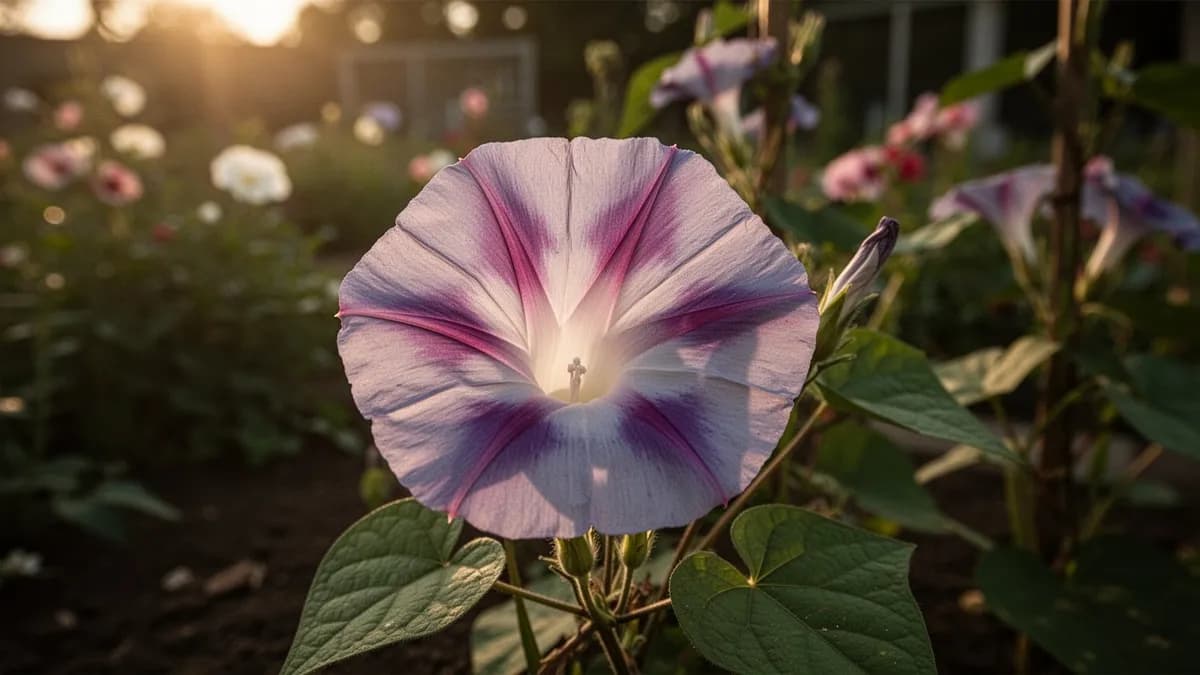
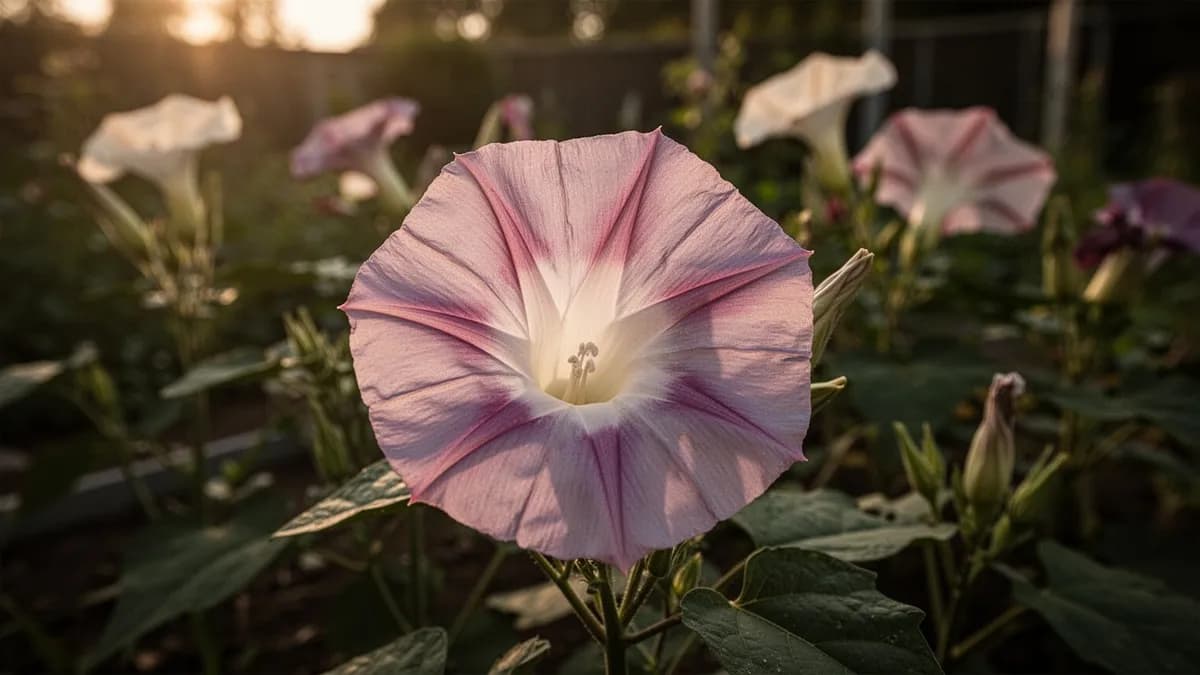
Black-eyed Susan vine looks charming climbing through mixed container plantings with petunias, calibrachoa, and trailing verbena. On small obelisks and trellises in borders, pair with other annual climbers like morning glories and sweet peas for a vertical display. The warm flower colors complement purple and blue flowers beautifully. Use in hanging baskets mixed with trailing calibrachoa for a stunning cascading display.
Morning Glory (Annual) belongs beside it.
Old growers' knowledge, checked against Black-Eyed Susan Vine's real companion table below — test any plant you're growing.
Try Black-Eyed Susan Vine in a bed — right here
A real planner bed with Black-Eyed Susan Vine already in it. Tap a companion to place it and watch the pairing checks answer — green for good neighbours, red for a clash.


Related growing guides
Feed it well
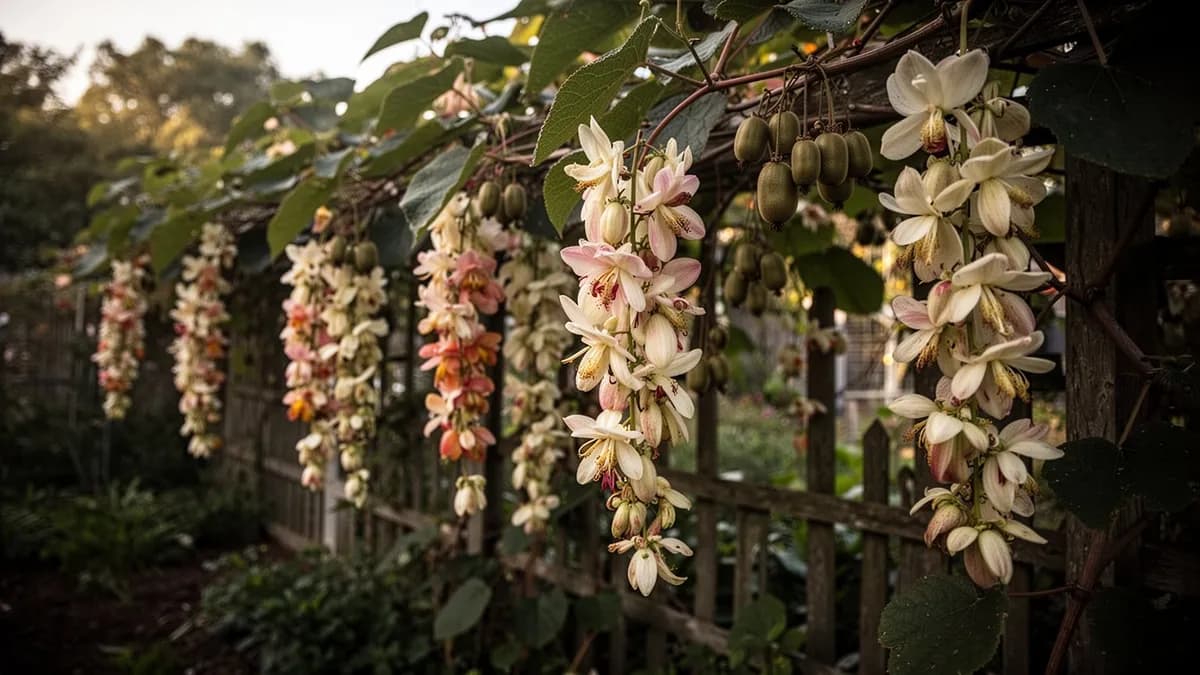
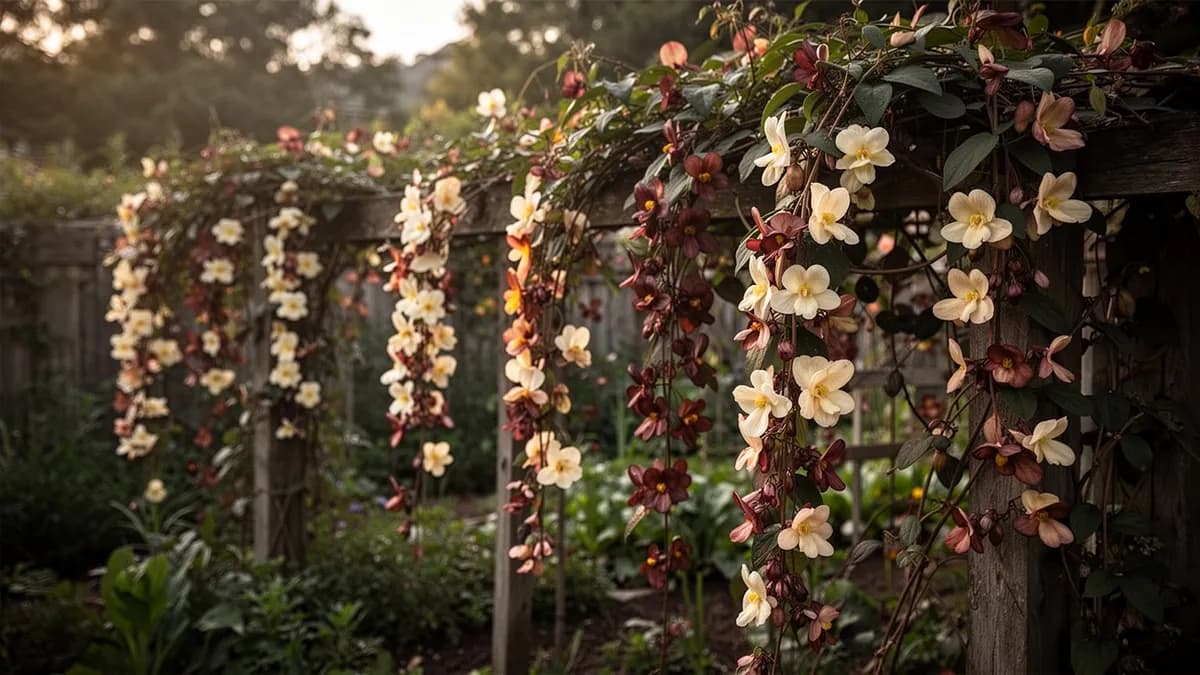
Black-eyed Susan vine thrives in rich, well-drained potting mix or garden soil with a pH of 6.0 to 7.0. In containers, use a premium potting mix with added perlite for drainage. Feed every two weeks with a balanced liquid fertilizer during the growing season, or use slow-release granules at planting time. Adequate nutrition is essential for continuous flowering throughout the summer season. Avoid very heavy clay soils.
Ideal Temperature
Hardiness Zone Compatibility
From seed to harvest, stage by stage
Seed Germination
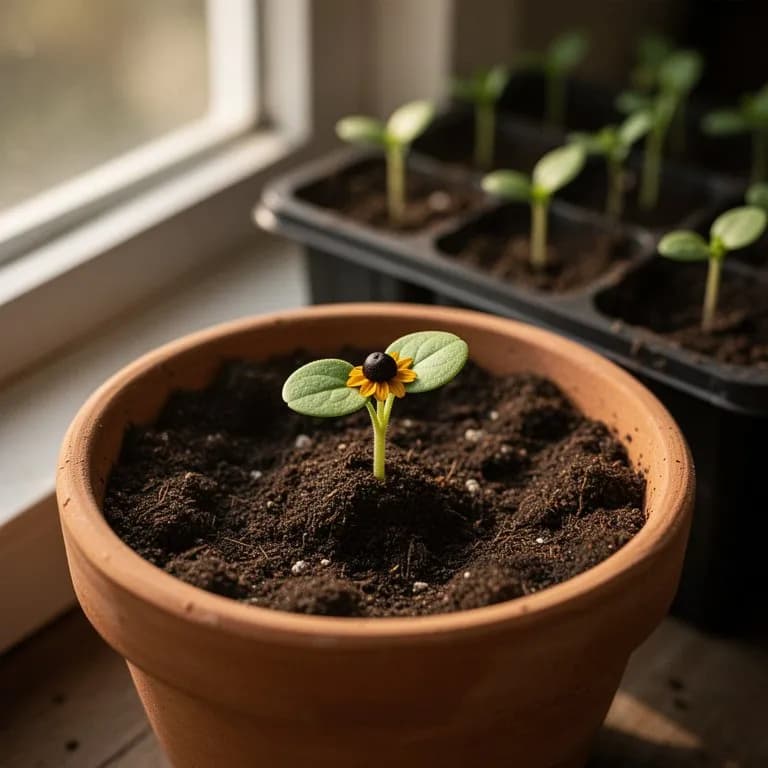
Seeds are soaked overnight before planting to soften the hard seed coat. Sow seeds 1/4 inch deep in warm, moist seed-starting mix. Germination occurs in 10-14 days at temperatures between 70-75°F (21-24°C). Keep the medium consistently moist but not waterlogged.
Seedling Development
Seedlings develop their first true leaves, which are heart-shaped with slightly toothed margins. Stems begin to show their characteristic twining habit. At this stage, seedlings should be grown in bright indirect light and gradually hardened off if started indoors.
Vegetative Growth
Rapid vine elongation occurs as the plant establishes itself on its support structure. Stems twine counterclockwise and can grow several inches per week in warm conditions. Foliage becomes dense, and winged petioles become more prominent. The plant builds the framework needed for prolific flowering.
Flowering Phase
Flower buds appear in leaf axils along the entire length of the vine. Each bloom is tubular, about 1.5 inches across, with five overlapping petals and the distinctive dark purple-brown center. Flowering is continuous from early summer until frost in most climates, with peak bloom in midsummer.
Seed Set and Maturity
After pollination, distinctive beak-shaped seed capsules form. Each capsule contains two round seeds. As the season winds down and temperatures drop, the vine slows its growth. In frost-free zones the vine may become semi-perennial, while in temperate climates it completes its life cycle with the first hard frost.
Dormancy or End of Season
In USDA zones 10-11, the vine may enter a brief dormancy period during the coolest months and regrow in spring. In all other zones, the vine is killed by frost and must be replanted annually. Remove dead vine material from supports and compost it. Prepare the planting site for the following season.
Soak seeds in warm water for 24 hours before planting to dramatically improve germination rates. Use a heat mat to maintain consistent soil temperature.
Caring for Black-Eyed Susan Vine month by month
What to do each month for your Black-Eyed Susan Vine
October
You are hereHarvest mature seed pods before the first frost. In zones 10-11, begin reducing water to prepare the vine for its winter rest period. In colder zones, enjoy the last blooms before frost arrives.
Know exactly what to do in your garden — every month
One email at the start of each month: what to sow, plant, and tackle right now — for your Black-Eyed Susan Vine and everything growing around it. Plus a short starter course that helps you dodge the classic mistakes.
- What to do, right now
- Matched to your season
- Starter course included
Harvesting Black-Eyed Susan Vine
Black-eyed Susan vine flowers are too small for cutting individually but short, flowering vine sections can be incorporated into informal summer arrangements. The cheerful orange, yellow, and white flowers with their distinctive dark centers add a whimsical cottage-garden feel to small bouquets. In hanging baskets and containers, no harvesting is needed as the flowers are best appreciated on the living plant where they bloom continuously from midsummer to frost.
assuming you plant when the window opens — set your real date
Pick Black-Eyed Susan Vine promptly and the plant keeps producing.
Storage & Preservation
As a tender annual in most climates, black-eyed Susan vine cannot be stored over winter outdoors. In frost-free zones, it may persist as a short-lived perennial. Plants can be brought indoors to a sunny window before the first frost to extend bloom into winter, though they tend to attract whiteflies indoors. Save seeds by allowing a few flowers to mature and dry on the vine. Store seeds in paper envelopes in a cool, dry location for spring sowing.
What goes wrong — and the fix
Spider Mites
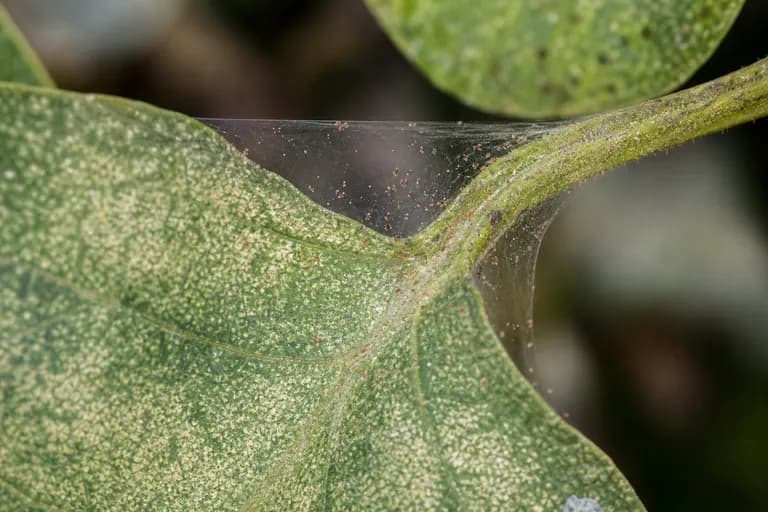
PestFine stippling on leaves, yellowing foliage, tiny webs visible on leaf undersides. Most common during hot, dry weather.
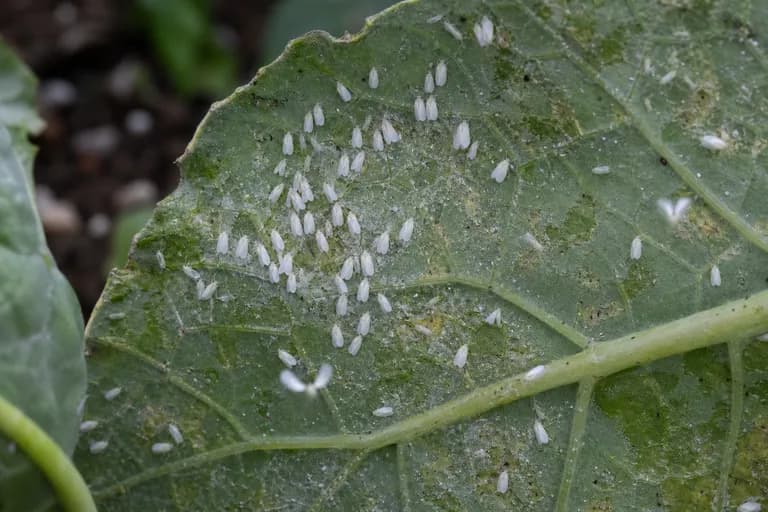
Whiteflies
PestTiny white insects on leaf undersides that fly up in clouds when the plant is disturbed. Sticky honeydew and yellowing leaves.
Troubleshooting Common Problems
The most common issue is slow establishment from seed, as the seeds can be slow and uneven in germination. Starting early indoors and providing consistent warmth improves results. Spider mites are a persistent problem in hot, dry weather and can quickly defoliate plants if not controlled early. In too much shade, flowering is significantly reduced. The vine does not tolerate any frost and must be protected or treated as an annual in zones below 10.
Growing Tips
- Soak seeds in lukewarm water for 24 hours before planting to soften the hard seed coat and improve germination rates from around 50% to over 80%.
- Start seeds indoors 6-8 weeks before the last frost date, as Thunbergia needs a long growing season to reach full flowering potential in temperate climates.
- Plant in a location that receives full sun for at least 6 hours per day, though in hot climates afternoon partial shade helps prevent flower drop and leaf scorch.
- Provide a sturdy support structure at planting time since the vine begins twining almost immediately and grows several inches per week during peak season.
- Water deeply once or twice per week rather than frequent shallow watering, as consistent deep moisture encourages strong root development and sustained blooming.
- Pinch the growing tip of young plants when they reach 12 inches tall to encourage branching, which results in a fuller, bushier vine with more flowering stems.
- Deadhead spent flowers every 3-4 days to redirect the plant's energy from seed production into producing more blooms throughout the season.
- Apply a balanced liquid fertilizer every two weeks during the growing season, switching to a high-phosphorus formula once flower buds begin to appear.
- Monitor for aphids and spider mites regularly, especially during hot dry weather, and treat early with a strong spray of water or insecticidal soap before infestations spread.
- In zones 9 and below, treat Thunbergia as an annual and collect seeds before the first frost; in zones 10-11, cut back to 12 inches in late fall and mulch roots for overwintering.
Grow your best Black-Eyed Susan Vine yet — and everything around it.
Start a free plan today. Lay out your beds, drop in your Black-Eyed Susan Vine, and let PlotMyGarden handle the timing, spacing, companions and reminders from seed to harvest basket.
Pick your Black-Eyed Susan Vine
Susie Mix
A popular blend of orange, yellow, and white flowers all with dark chocolate centers, the classic cottage garden mix.
African Sunset
A striking mix featuring unusual apricot, terracotta, and brick-red flowers with dark centers, adding warm autumn tones.
Superstar Orange
Large, vivid orange flowers with prominent dark eyes, more vigorous and floriferous than standard selections.
Blushing Susie
Unique salmon-pink and apricot bicolor flowers, a sophisticated color addition to container plantings.
A single packet of Thunbergia alata seeds costs $3-5 and yields 15-25 plants, each of which can cover 6-8 feet of fence or trellis. Compared to purchasing mature nursery plants at $5-8 each, growing from seed saves $75-175 per planting area. Once established, you can collect hundreds of seeds from mature plants each fall, eliminating seed costs for future seasons entirely. A Thunbergia privacy screen grown from saved seed costs virtually nothing compared to $200-500 for commercial lattice panels or $50-100 per season for large potted annuals from a garden center.
Quick recipes

Living Privacy Screen Trellis
45 minutesCreate a lush, flower-covered privacy screen using Thunbergia vines trained on a simple trellis. This living wall provides seasonal screening on patios, decks, or along property lines while attracting pollinators to your garden.
6 ingredients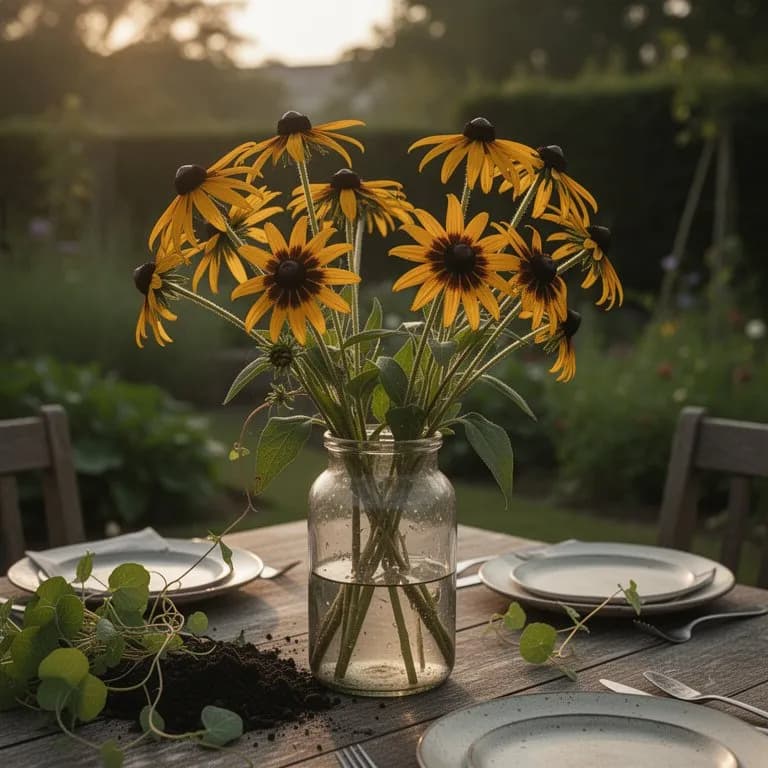
Cascading Hanging Basket Display
30 minutesPlant a stunning hanging basket that showcases Thunbergia's natural trailing habit. The vines cascade over the edges of the basket, creating a waterfall of colorful blooms that is perfect for porches, pergolas, and balconies throughout the summer months.
6 ingredientsFlowering Mailbox Wrap
25 minutesTransform an ordinary mailbox post into a charming focal point by training Thunbergia vines to climb and encircle the post. This simple project adds curb appeal and provides a welcoming burst of color at the entrance to your property from early summer through fall.
6 ingredientsWhat's inside
Health Benefits
- Thunbergia alata is a prolific nectar producer that supports populations of bees, butterflies, and hummingbirds, contributing to local pollinator health and biodiversity in home gardens.
- Growing flowering vines like Thunbergia has been linked to improved mental well-being, as the act of tending and observing blooming plants can reduce stress and promote relaxation.
- As a vigorous climbing vine, Thunbergia provides natural shade on pergolas and arbors, helping to cool outdoor living spaces and reduce ambient temperatures during hot summer months.
- The dense foliage of Thunbergia vines acts as a natural green screen that can soften noise from nearby roads or neighbors, creating a more peaceful outdoor environment.
- Tending Thunbergia vines involves regular physical activities such as training, deadheading, watering, and harvesting seeds, which provide gentle low-impact exercise throughout the growing season.
- Growing ornamental vines like Thunbergia on balconies and patios can improve local air quality by absorbing carbon dioxide and releasing oxygen, while also trapping airborne particulates on leaf surfaces.
Where Black-Eyed Susan Vine comes from
Thunbergia alata, commonly known as the black-eyed Susan vine, is native to tropical East Africa, with its natural range stretching from Kenya and Tanzania south through Mozambique and into the eastern regions of South Africa. The species thrives in the margins of tropical forests, scrambling over shrubs and rocks in its native habitat at elevations from sea level to approximately 2,000 meters.
The plant was first formally described in 1823 by the Swiss botanist Augustin Pyramus de Candolle, who named the genus Thunbergia in honor of Carl Peter Thunberg, the renowned Swedish naturalist and explorer. Thunberg had traveled extensively through southern Africa and Japan in the 1770s, making significant contributions to the botanical knowledge of both regions.
European plant collectors brought Thunbergia alata to botanical gardens in the early 19th century, and by the 1840s it had become a popular ornamental vine in English and Continental European greenhouses. Its cheerful flowers, easy cultivation, and rapid growth made it an instant favorite among Victorian gardeners, who grew it on parlor trellises and in conservatories.
By the late 19th century, the vine had been introduced to tropical regions around the world, including India, Southeast Asia, Central America, and the Caribbean islands. In several of these locations, particularly in Hawaii and parts of Queensland, Australia, the vine escaped cultivation and naturalized aggressively. Today it is listed as an invasive species in multiple Pacific Island nations.
Modern breeding programs have expanded the color palette beyond the traditional orange with a dark eye, producing cultivars in shades of white, lemon yellow, apricot, and salmon. The Susie Series, Arizona Series, and Sunny Susy Series are among the most popular cultivar groups available to home gardeners today, offering compact growth habits and abundant flowering suitable for containers and small garden spaces.
Black-Eyed Susan Vine: did you know?
Fascinating facts about Black-Eyed Susan Vine
Thunbergia alata is named after Swedish botanist Carl Peter Thunberg, a student of Carl Linnaeus who collected plants extensively in Japan and South Africa during the 18th century.
Black-Eyed Susan Vine questions, answered
When should I plant Black-Eyed Susan Vine?
What are good companion plants for Black-Eyed Susan Vine?
What hardiness zones can Black-Eyed Susan Vine grow in?
How much sun does Black-Eyed Susan Vine need?
How far apart should I space Black-Eyed Susan Vine?
What pests and diseases affect Black-Eyed Susan Vine?
How do I store Black-Eyed Susan Vine after harvest?
What are the best Black-Eyed Susan Vine varieties to grow?
What soil does Black-Eyed Susan Vine need?
Is Thunbergia alata an annual or a perennial?
Why are my Thunbergia flowers dropping before they fully open?
Can I grow Thunbergia alata in containers or hanging baskets?
Is Thunbergia alata invasive, and should I be concerned about it spreading?
How do I save seeds from my Thunbergia plants for next year?
What companion plants work well with Thunbergia alata?
You just read the theory. Now grow it on autopilot.
Everything that makes Black-Eyed Susan Vine fiddly — the timing, the spacing, the companions, the harvest window — is exactly what PlotMyGarden handles for you, for every plant in your garden.
A plan that knows your weather
Set your location once. Get sow, feed and harvest dates built around your real last-frost date and live forecast — no more guessing from a generic seed packet.
From the “When to plant” sectionDrag-and-drop bed planner
Design beds on a grid. Every plant snaps to its proper spacing, and you can see your whole season laid out before you spend a cent on seed.
From the “Growing guide” sectionCompanion conflicts, caught early
200+ good-and-bad pairings checked live as you plant — so a season-wrecking mistake never makes it into the ground.
From the “Companions” sectionReminders you'll actually act on
“Water the beans.” “Pick today before it turns.” Timely, specific, and tied to the plants you're really growing.
From the “Harvest” sectionSuccession, scheduled
Want a harvest for six weeks, not six days? It spaces your sowings automatically and reminds you when each new block is due.
From the “When to plant” sectionA record that gets smarter
Every harvest you log teaches it your garden. Next year's plan starts from what actually worked in your soil, not a textbook's.
From the “Overview” sectionPlant these alongside Black-Eyed Susan Vine
More Climbing Flowers
Grow your best Black-Eyed Susan Vine yet — and everything around it.
Start a free plan today. Lay out your beds, drop in your Black-Eyed Susan Vine, and let PlotMyGarden handle the timing, spacing, companions and reminders from seed to harvest basket.