Bignonia Trepadora
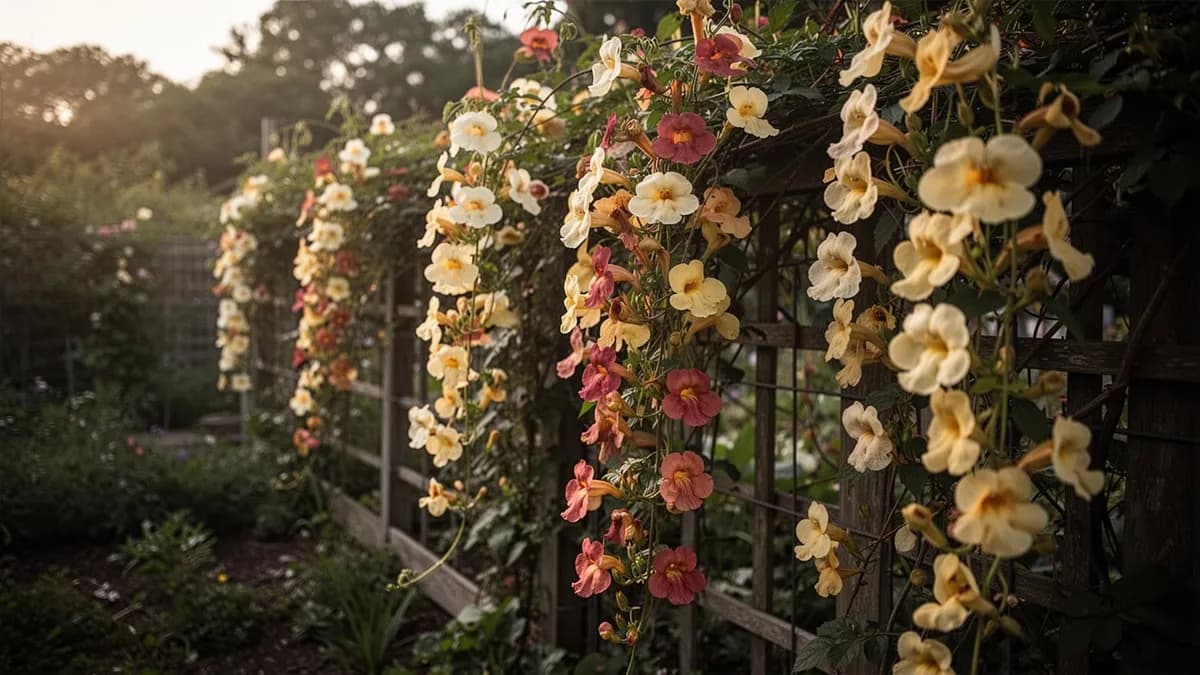
Una enredadera perennifolia nativa con racimos de flores acampanadas en tonos anaranjado-rojizo que atraen colibríes y mariposas en primavera.





En esta páginaResumen
Conoce Bignonia Trepadora
Una enredadera perennifolia nativa con racimos de flores acampanadas en tonos anaranjado-rojizo que atraen colibríes y mariposas en primavera. La bignonia trepadora debe su nombre al patrón en forma de cruz visible al cortar los tallos en sección transversal. Trepa mediante zarcillos y es menos agresiva que la trompeta silvestre, lo que la convierte en una mejor opción para jardines residenciales.
Cuándo plantar Bignonia Trepadora
La bignonia trepadora puede cultivarse a partir de semillas recolectadas de las vainas estrechas en otoño. Estratifique las semillas en frío en arena húmeda durante dos a tres meses antes de sembrarlas en primavera. Las semillas germinan en tres a seis semanas. Las plántulas crecen a un ritmo moderado y deben trasplantarse al exterior tras una temporada de crecimiento completa. Las plantas de semilla pueden tardar tres o cuatro años en florecer. Los esquejes y el acodo son métodos de propagación más rápidos y producen plantas con flor en dos o tres años.
Tu año de Bignonia Trepadora
Ajustado a Zona 7 · temporada típica · la helada se va hacia el 2 abr y vuelve hacia el 1 nov
Planta Bignonia Trepadora Mar – May y cosecha Abr – Jun. Consulta los métodos de plantación y elige tu clima para adaptar los periodos.
Cómo cultivar Bignonia Trepadora
Plante la bignonia trepadora en primavera u otoño en suelo bien drenado, a pleno sol o semisombra. Esta enredadera perennifolia nativa trepa mediante zarcillos con discos adhesivos y es menos agresiva que su pariente la campsis, lo que la hace más adecuada para jardines residenciales. Alcanza entre seis y nueve metros y puede cubrir muros, vallas y pérgolas con un atractivo follaje que adquiere tonos bronce-púrpura en invierno.
Riegue con regularidad durante las dos primeras temporadas de crecimiento para establecer un sistema radicular profundo. Una vez afianzada, la bignonia tolera la sequía moderada y se desenvuelve bien con un riego suplementario mínimo. Los racimos de flores acampanadas aparecen a mediados y finales de primavera sobre la madera del año anterior y constituyen una importante fuente de néctar para colibríes y mariposas.
Pode inmediatamente después de la floración para controlar la forma y el tamaño sin sacrificar la floración del año siguiente. La bignonia trepadora florece principalmente sobre la madera vieja, por lo que una poda tardía reducirá el espectáculo de flores primaveral. En inviernos fríos, en el límite de su zona de rusticidad, el follaje puede dañarse, pero las raíces suelen sobrevivir y rebrotar. El nombre común proviene del característico patrón en forma de cruz visible al cortar el tallo en sección transversal.
Para Bignonia Trepadora un bancal de 120 × 240 cm se queda corto
Cada Bignonia Trepadora pide 250 cm de margen. El planificador guarda ese marco por ti — cada planta, cada bancal.
Los mejores vecinos de Bignonia Trepadora
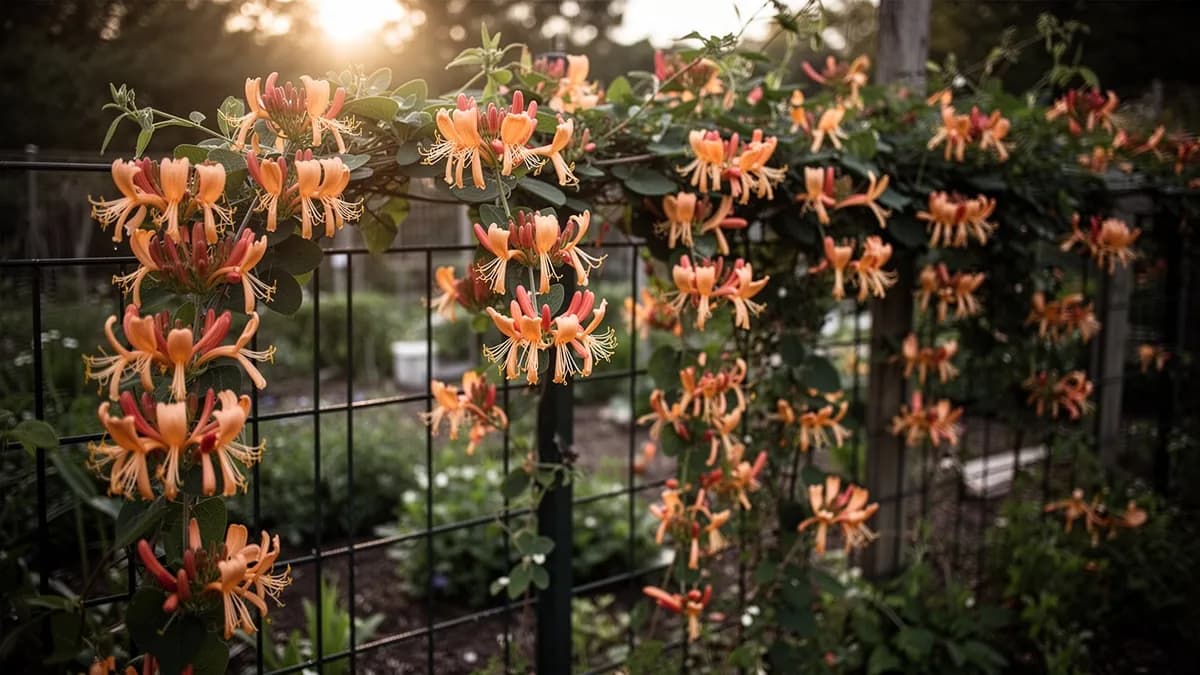
La bignonia trepadora es una excelente compañera de la madreselva coral y la campsis en un jardín para colibríes, aportando floración primaveral mientras las otras florecen más tarde en verano. Combínela en muros con la hortensia trepadora para conseguir color primaveral y flores en forma de encaje en verano. Plante a sus pies helechos nativos, flores silvestres de bosque y bulbos primaverales que agradecen la sombra moteada bajo el dosel de la enredadera.
Trompeta Trepadora va a su lado.
Saber de huerto de siempre, cotejado con la tabla real de Bignonia Trepadora — prueba cualquier planta que cultives.
Prueba Bignonia Trepadora en un bancal, aquí mismo
Un bancal real del planificador con Bignonia Trepadora ya plantado. Toca una planta compañera para colocarla y mira cómo responde la comprobación de vecinos: verde para buenos vecinos, rojo si hay conflicto.


Guías de cultivo relacionadas
Abónalo bien
La bignonia trepadora se adapta a una amplia gama de suelos, desde franco-arenosos hasta arcillosos, con un pH de 5.5 a 7.0. Rinde mejor en suelo húmedo, fértil y bien drenado, pero tolera condiciones medias una vez establecida. Aplique un fertilizante equilibrado de liberación lenta a principios de primavera. Acolche alrededor de la base con material orgánico para conservar la humedad y suprimir las malas hierbas. Evite el exceso de nitrógeno, que favorece el crecimiento vegetativo a expensas de las flores.
Temperatura ideal
Compatibilidad de zonas de rusticidad
De la semilla a la cosecha, etapa por etapa
Germinación de Semillas y Propagación
La bignonia trepadora puede iniciarse a partir de semillas, aunque la germinación es irregular y puede tardar varias semanas. Las semillas se benefician de 60 días de estratificación fría y húmeda a 4°C antes de la siembra. Como alternativa, los esquejes semileñosos tomados en verano o el acodo en primavera son métodos de propagación más fiables y producen plantas con flor antes.
Establecimiento de Plántulas
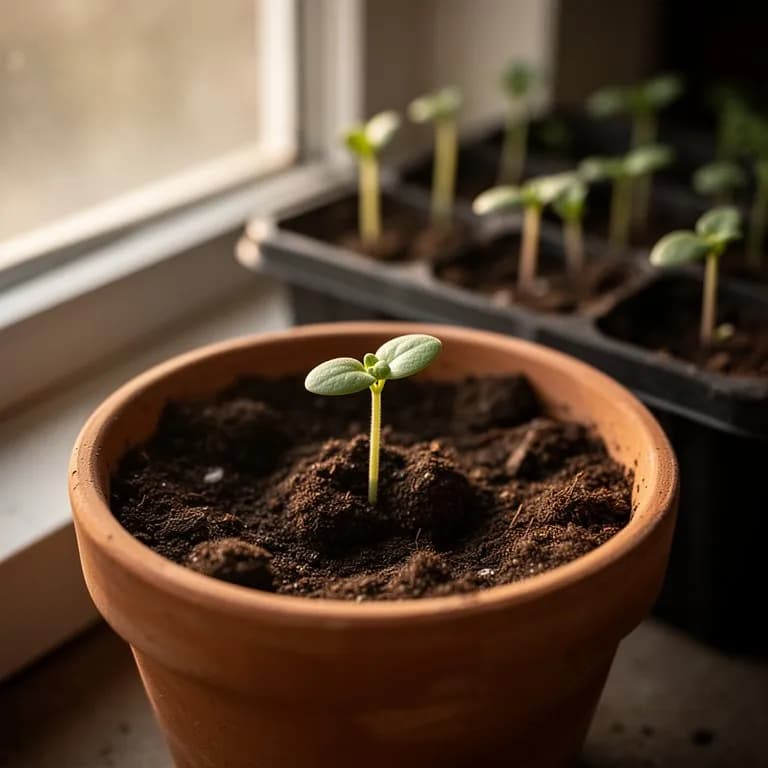
Las plantas jóvenes desarrollan sus primeras hojas compuestas, cada una formada por dos folíolos lanceolados y un zarcillo central que más adelante se ramificará y desarrollará discos adhesivos. El crecimiento radicular es vigoroso en esta etapa, ya que la planta construye la base para su rápido crecimiento futuro. Los tallos son verdes y flexibles.
Crecimiento Juvenil de la Enredadera
La enredadera comienza a trepar mediante sus zarcillos con discos en el extremo, adhiriéndose firmemente a cualquier soporte disponible. En la primera temporada de crecimiento completa y bajo buenas condiciones, puede alcanzar de 3 a 5 metros. Las hojas son de un verde oscuro brillante por el haz y más pálidas por el envés. La planta concentra la energía en el crecimiento vegetativo y en establecer un sistema radicular fuerte, más que en florecer.
Enredadera Madura y Primera Floración
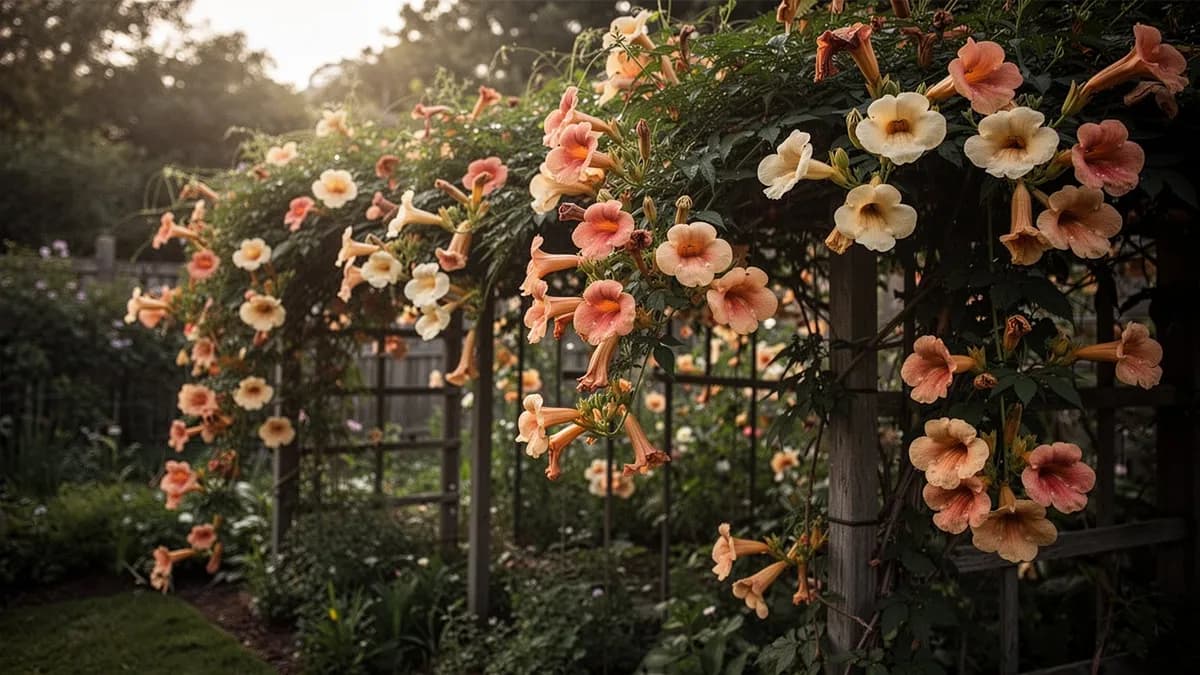
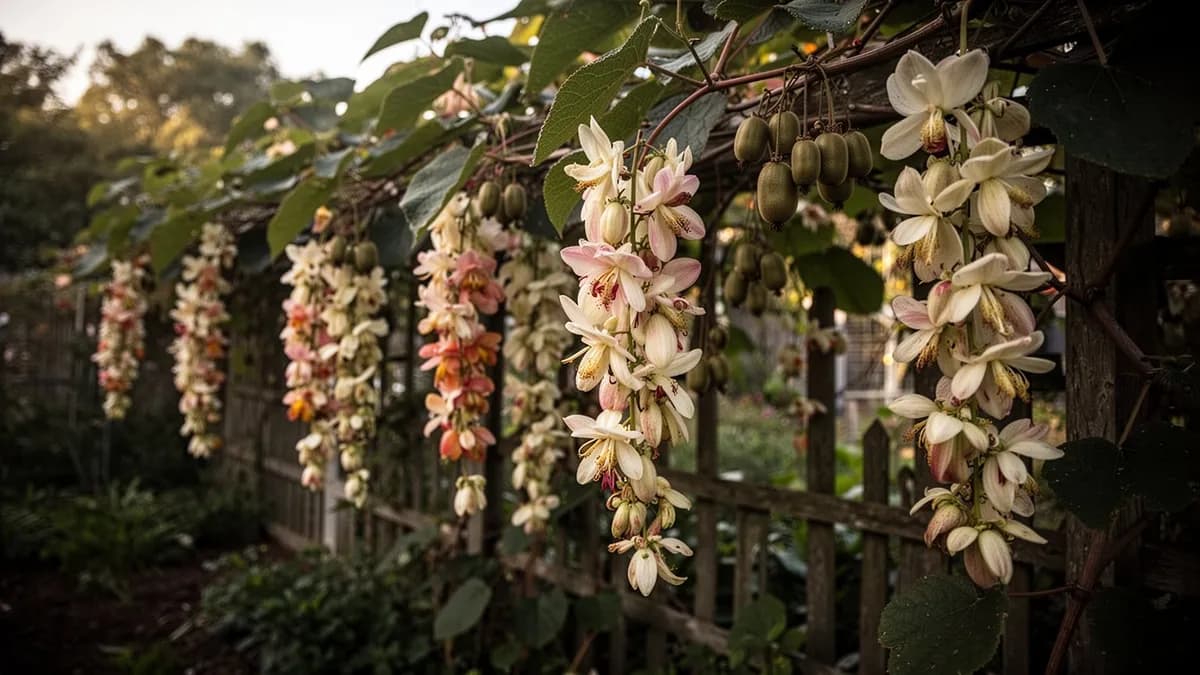
En el segundo o tercer año, la enredadera ha desarrollado tallos leñosos en la base y un dosel denso de follaje semi-perennifolio. Los primeros capullos florales aparecen a finales del invierno o principios de primavera sobre la madera vieja. Racimos de 2 a 5 flores acampanadas emergen en las axilas de las hojas y en los extremos de los tallos, mostrando el característico exterior anaranjado-rojizo con gargantas amarillas.
Plena Floración
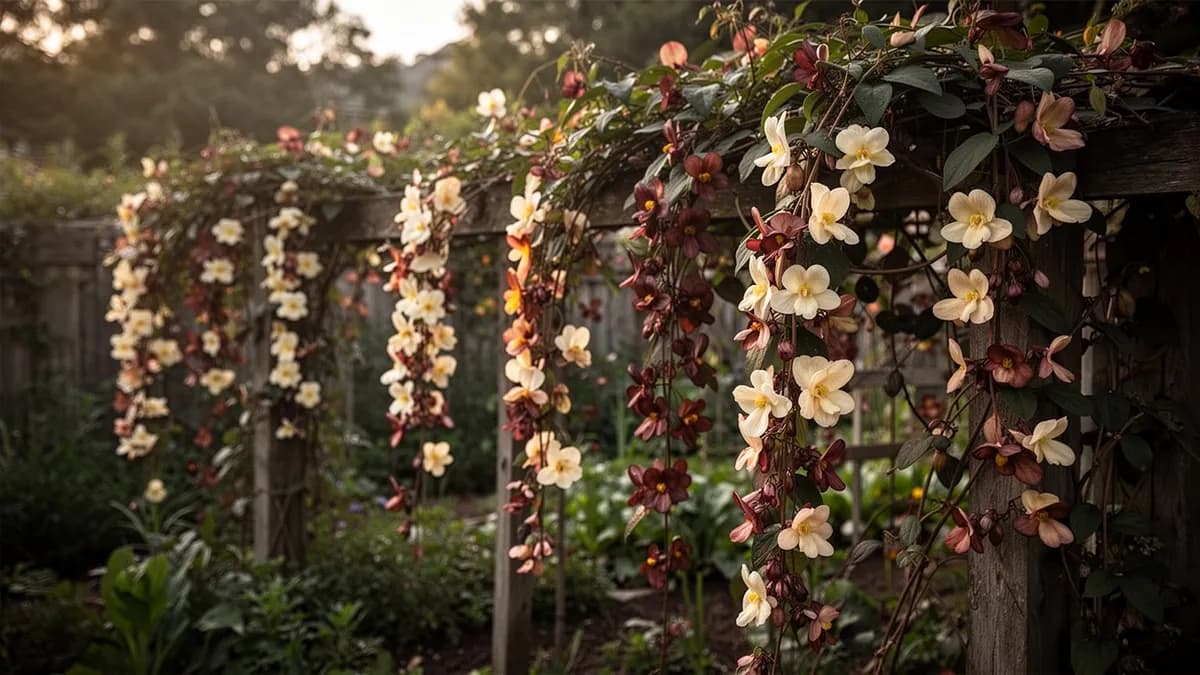
A mediados y finales de primavera, la enredadera madura estalla en una profusa exhibición de flores tubulares que pueden llegar a ocultar casi por completo el follaje. Cada flor mide 4-5 cm de largo y es ligeramente fragante, atrayendo colibríes, mariposas y abejas nativas. La floración máxima suele durar 3-4 semanas. Algunos cultivares como 'Tangerine Beauty' producen flores de un naranja especialmente vivo, mientras que 'Dragon Lady' ofrece tonos rojo más intenso.
Crecimiento Post-Floración y Desarrollo de Vainas
Tras la floración, la enredadera produce vainas alargadas y aplanadas de 10-18 cm de largo. Estas maduran de verde a marrón durante el verano y el otoño, y finalmente se abren para liberar semillas aladas que se dispersan con el viento. La enredadera continúa un vigoroso crecimiento vegetativo durante todo el verano, pudiendo añadir de 3 a 6 metros de nuevo crecimiento por temporada en plantas establecidas.
Semi-Reposo Invernal
La bignonia trepadora es semi-perennifolia en las zonas USDA 7-9, conservando gran parte de su follaje durante los inviernos suaves, con hojas que adquieren atractivos tonos rojo-púrpura. En la zona 6 y en regiones más frías, la enredadera puede perder la mayor parte o la totalidad de las hojas, pero generalmente rebrota vigorosamente desde las raíces en primavera. Las plantas establecidas son resistentes hasta aproximadamente -18°C.
Siembre las semillas estratificadas en una mezcla de buen drenaje y manténgalas consistentemente húmedas a 18-24°C. Proporcione luz indirecta intensa y espere una germinación esporádica durante 2-6 semanas.
Cuidar Bignonia Trepadora mes a mes
Qué hacer cada mes para tu Bignonia Trepadora
Octubre
Mes actualEl follaje comienza su transición de color hacia tonos rojo-púrpura en las regiones más frías. Aplique una capa de 5-8 cm de mantillo orgánico alrededor de la zona de las raíces para aislarlas durante el invierno. Reduzca el riego a medida que la planta se prepara para el reposo. Finalice cualquier reparación de los soportes estructurales antes de que llegue el clima invernal.
Ten claro qué hacer en tu huerto, cada mes
Un correo al empezar cada mes: qué sembrar, plantar y hacer ahora mismo — para tu Bignonia Trepadora y todo lo que crece alrededor. Más un breve curso inicial para esquivar los errores clásicos.
- Qué hacer ahora mismo
- Ajustado a tu temporada
- Curso inicial incluido
Cosechar Bignonia Trepadora
Corte los racimos de flores de bignonia para arreglos primaverales cuando las primeras trompetas se hayan abierto y los capullos sigan desarrollándose. Las flores anaranjado-rojizas crean ramos llamativos combinados con follaje primaveral y otras flores. Los tallos duran unos cinco días en agua. El follaje perennifolio puede cortarse durante todo el año para aportar verdor a los arreglos, siendo el color bronce-púrpura invernal especialmente atractivo para decoraciones navideñas.
se supone que plantas al comenzar el periodo — indica tu fecha real
Cosecha Bignonia Trepadora a tiempo y la planta sigue produciendo.
Almacenamiento y conservación
La bignonia trepadora es una enredadera vivaz resistente que no requiere almacenamiento especial. Propague mediante esquejes semileñosos a mediados del verano, que enraízan de forma fiable en cuatro a seis semanas con hormona de enraizamiento y calor basal. El acodo también es eficaz: ancle un tallo bajo y cúbralo con tierra. Las semillas pueden recolectarse de las vainas largas y estrechas en otoño y sembrarse en primavera tras una estratificación en frío. Los esquejes de raíz tomados a finales del otoño también funcionan bien.
Qué falla — y cómo solucionarlo
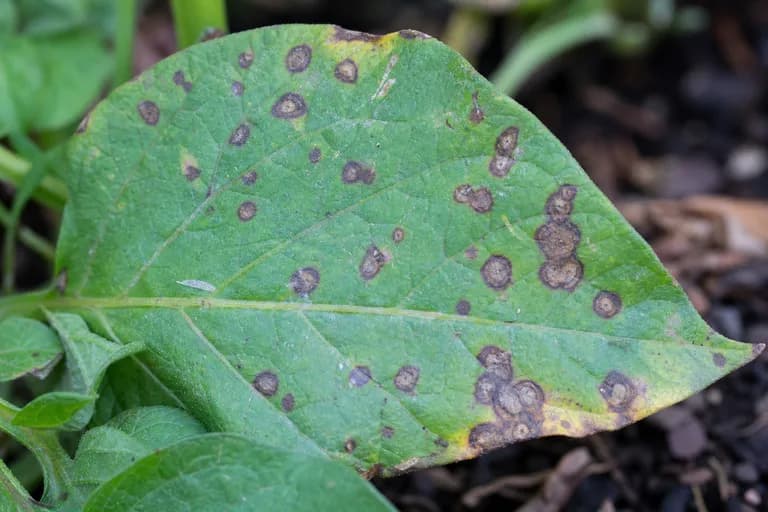
Mancha Foliar
EnfermedadManchas marrones u oscuras en las hojas, que ocasionalmente provocan caída prematura del follaje en temporadas húmedas. Generalmente es más estética que perjudicial.
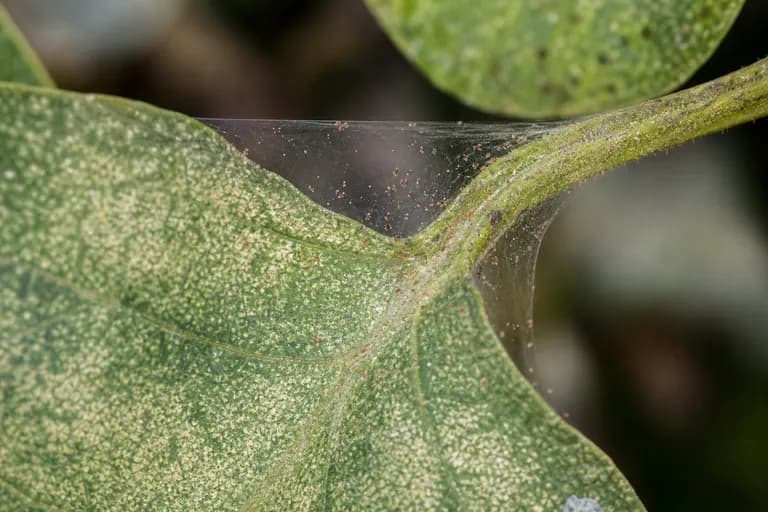
Ácaros Araña
PlagaPunteado fino en las hojas, bronceado del follaje y telarañas diminutas en el envés de las hojas durante condiciones de verano calurosas y secas.
Solución de problemas comunes
El problema más frecuente es la reducción de la floración causada por demasiada sombra o una poda intensa en el momento equivocado. Como la bignonia florece sobre la madera vieja, pode únicamente justo después del período de floración primaveral. En inviernos fríos, el follaje perennifolio puede ennegrecerse y tener mal aspecto, pero es rápidamente sustituido por nuevo crecimiento en primavera. Los discos adhesivos pueden dejar marcas en superficies pintadas, así que téngalo en cuenta al elegir un muro para la plantación.
Consejos de cultivo
- Plante la bignonia trepadora en pleno sol o semisombra. La enredadera florece con más profusión con al menos 4-6 horas de luz solar directa, pero tolera una sombra considerable en su hábitat forestal nativo con una floración reducida.
- Proporcione una estructura de soporte permanente y robusta desde el principio. La bignonia trepadora se vuelve pesada y leñosa con la edad y puede superar a las espalderas ligeras. Los cables de acero, los muros de mampostería, las pérgolas de madera sólida y las vallas de eslabones de cadena son los soportes ideales.
- La bignonia trepadora tolera una amplia gama de tipos de suelo, incluyendo arcilla, franca y arenosa, pero rinde mejor en suelo húmedo, bien drenado, ligeramente ácido a neutro con un pH de 5.5-7.0.
- Riegue las plantas nuevas en profundidad una vez por semana durante las dos primeras temporadas de crecimiento para establecer un sistema radicular fuerte. Una vez establecida, la bignonia trepadora tolera moderadamente la sequía y necesita riego suplementario solo durante períodos secos prolongados.
- Pode inmediatamente después de que termine la floración primaveral, típicamente a finales de mayo o principios de junio. Las flores se forman sobre la madera vieja, por lo que la poda tardía o invernal elimina los capullos de la primavera siguiente.
- Para controlar la expansión de una enredadera agresiva, retire los retoños radiculares a medida que aparezcan y recorte los tallos que crezcan más allá del área deseada. La bignonia trepadora puede mantenerse en un tamaño manejable con una poda anual posterior a la floración.
- Fertilice con moderación. Una ligera aplicación de fertilizante equilibrado de liberación lenta a principios de primavera es suficiente para la mayoría de las situaciones. La sobreferilización promueve un crecimiento vegetativo excesivo a expensas de las flores.
- Elija los cultivares adecuados a sus objetivos: 'Tangerine Beauty' ofrece las flores naranja más vívidas y mayor resistencia, 'Atrosanguinea' proporciona flores rojo-púrpura más intensas, y 'Dragon Lady' tiene flores rojizas con un porte más compacto.
- Propague mediante esquejes semileñosos a mediados del verano para obtener los resultados más fiables. Seleccione secciones de tallo de 10-15 cm del crecimiento de la temporada actual, quite las hojas inferiores, aplique hormona de enraizamiento y colóquelos en una mezcla de perlita y turba bajo alta humedad.
- En las zonas más frías de la zona 6, plante la bignonia trepadora contra un muro orientado al sur para obtener la máxima protección invernal y el calor reflejado. La masa térmica de los muros de mampostería puede elevar el microclima en una zona de rusticidad completa.
Cultiva tu mejor Bignonia Trepadora — y todo lo que la rodea.
Empieza un plan gratis hoy. Diseña tus bancales, coloca tu Bignonia Trepadora y deja que PlotMyGarden gestione el momento, el espaciado, las asociaciones y los recordatorios de la semilla a la cesta.
Elige tu Bignonia Trepadora
Tangerine Beauty
El cultivar más disponible en el mercado, con abundantes flores de color naranja tangerina y un porte compacto; excelente para jardines residenciales.
Atrosanguinea
Flores rojo-púrpura intenso, más oscuras y ricas en color que la especie tipo; llamativas contra muros de colores claros.
Dragon Lady
Una selección vigorosa con flores anaranjado-rojizas intensas y mayor resistencia al frío; fiable en la zona 5.
Una sola planta de bignonia trepadora suele costar entre 10 y 20 euros en un vivero de plantas nativas y puede cubrir una valla o muro de 6 a 10 metros en 3 o 4 años, sustituyendo la necesidad de costosas pantallas de privacidad, estructuras de sombra artificiales o varios arbustos ornamentales que podrían costar entre 200 y 500 euros para conseguir una cobertura similar. La longevidad de la enredadera, superior a 20 años, sus mínimas necesidades de fertilización y su capacidad para atraer polinizadores que benefician a los huertos cercanos la convierten en una inversión paisajística excepcionalmente rentable. Además, la sombra fresca pasiva que proporciona en muros orientados al sur puede reducir notablemente los costes de aire acondicionado en verano.
Recetas rápidas
Agua para Colibríes con Néctar de Bignonia
10 minutosAunque la bignonia trepadora en sí misma no es comestible, su presencia en el jardín elimina la necesidad de comederos artificiales para colibríes. Para complementar el néctar natural durante los períodos sin floración, prepare esta sencilla solución para el comedero y atraiga a los mismos colibríes que la bignonia atrae.
4 ingredientes
Ramillete de Hierbas Compañeras de Bignonia
15 minutosLa bignonia trepadora combina maravillosamente en el jardín con hierbas culinarias. Cree un ramillete de hierbas frescas de las plantas compañeras cultivadas junto a la bignonia para obtener un fragante bouquet garni de cocina.
5 ingredientes
Crema de Miel Silvestre para el Jardín de Polinizadores
5 minutosCelebre el jardín amigable con los polinizadores que ancla su bignonia combinando miel local de flores silvestres —posiblemente producida por las mismas abejas que visitan su enredadera— con hierbas frescas para una sencilla crema para aperitivo.
5 ingredientesQué contiene
Beneficios para la salud
- Las flores de la bignonia trepadora proporcionan néctar crítico de inicio de temporada para los colibríes de garganta rubí y las especies de abejas nativas, apoyando directamente la salud de los polinizadores y la biodiversidad del jardín.
- El denso follaje semi-perennifolio crea pantallas verdes naturales que reducen la contaminación acústica, amortiguan el viento y filtran las partículas en suspensión en los paisajes residenciales.
- Cultivar bignonia trepadora sobre muros, pérgolas y emparrados proporciona sombra fresca pasiva que puede reducir las temperaturas superficiales de verano entre 10 y 15°C, reduciendo los costes energéticos y el estrés por calor.
- El extenso sistema radicular de la enredadera estabiliza el suelo en taludes y márgenes de arroyos, previniendo la erosión y mejorando la salud de las cuencas hidrográficas en paisajes residenciales y naturalistas.
- Como planta nativa de bajo mantenimiento, la bignonia trepadora elimina la necesidad de herbicidas e insecticidas químicos habitualmente empleados en las zonas de césped tradicional, reduciendo la exposición doméstica a productos químicos.
- Pasar tiempo en jardines con enredaderas nativas en flor como la bignonia se ha asociado con la reducción del estrés, la mejora del estado de ánimo y el aumento del bienestar a través de la interacción biofílica con los ecosistemas locales.
De dónde viene Bignonia Trepadora
La bignonia trepadora (Bignonia capreolata) es una vigorosa enredadera leñosa nativa del sureste y centro-sur de los Estados Unidos, cuyo rango se extiende desde Maryland y Virginia hacia el sur hasta Florida y al oeste hasta Texas y Missouri. Prospera en los ricos suelos aluviales de las llanuras fluviales, los bosques húmedos y los márgenes forestales, donde puede encontrarse trepando hasta las copas de los árboles de madera dura mediante sus distintivos zarcillos con discos adhesivos. La especie fue descrita formalmente por primera vez por Linneo en 1753, ubicada en el género Bignonia, que honra al abate Jean-Paul Bignon, bibliotecario francés del siglo XVIII y mecenas de la botánica. Durante muchas décadas, la bignonia trepadora fue el único representante norteamericano que permanecía en el género Bignonia, ya que otras especies fueron reclasificadas en géneros separados. Los pueblos indígenas de los bosques del sureste conocían bien esta enredadera mucho antes de que llegaran los botánicos europeos. Los cherokee y otros grupos utilizaban preparaciones de la corteza y las raíces como remedios tradicionales, y los tallos resistentes y flexibles se empleaban en tejido y cordelería. Los colonos europeos y los primeros horticultores americanos reconocieron el potencial ornamental de la bignonia trepadora a mediados del siglo XIX, especialmente para cubrir pérgolas, vallas y muros. Sin embargo, no fue hasta finales del siglo XX cuando la selección dirigida de cultivares elevó la popularidad de la planta en el comercio de viveros. Selecciones notables como 'Tangerine Beauty', desarrollada por el reconocido horticultor Michael Dirr en la Universidad de Georgia, aportaron al mercado un color de flor mejorado y un mejor rendimiento en el jardín. Hoy en día, la bignonia trepadora se valora tanto como planta para la fauna silvestre como por ser una enredadera ornamental de bajo mantenimiento, bien adaptada a diseños de jardines naturalistas y amigables con los polinizadores en las zonas de rusticidad USDA 6 a 9.
Bignonia Trepadora: ¿sabías que?
Datos fascinantes sobre Bignonia Trepadora
El nombre común 'bignonia trepadora de cruz' proviene del característico patrón en forma de cruz o signo más visible al cortar el tallo, causado por la disposición de los haces vasculares en el tejido leñoso.
Bignonia Trepadora: preguntas frecuentes
¿Cuándo debo plantar Bignonia Trepadora?
¿Cuáles son buenas plantas acompañantes para Bignonia Trepadora?
¿En qué zonas de rusticidad puede crecer Bignonia Trepadora?
¿Cuánto sol necesita Bignonia Trepadora?
¿A qué distancia debo espaciar Bignonia Trepadora?
¿Qué plagas y enfermedades afectan a Bignonia Trepadora?
¿Cómo almaceno Bignonia Trepadora después de la cosecha?
¿Cuáles son las mejores variedades de Bignonia Trepadora para cultivar?
¿Qué suelo necesita Bignonia Trepadora?
¿Dañará la bignonia trepadora mis muros de ladrillo o piedra?
¿Cómo distingo la bignonia trepadora de la trompeta silvestre (Campsis radicans)?
¿Es la bignonia trepadora invasora?
¿Por qué mi bignonia trepadora no florece?
¿Puede cultivarse la bignonia trepadora en un contenedor?
¿Qué fauna silvestre apoya la bignonia trepadora?
Acabas de leer la teoría. Ahora cultívala en piloto automático.
Todo lo que hace que Bignonia Trepadora sea delicado — el momento, el espaciado, las asociaciones, la ventana de cosecha — es justo lo que PlotMyGarden resuelve por ti, para cada planta de tu huerto.
Un plan que conoce tu clima
Indica tu ubicación una vez. Recibe fechas de siembra, abonado y cosecha basadas en tu última helada real y el pronóstico en vivo — sin adivinar con un sobre genérico.
De la sección “Cuándo plantar”Planificador de bancales de arrastrar y soltar
Diseña bancales sobre una cuadrícula. Cada planta encaja con su espaciado correcto y ves toda la temporada antes de gastar un céntimo en semillas.
De la sección “Cultivo”Conflictos de asociación, detectados a tiempo
Más de 200 buenas y malas combinaciones comprobadas en vivo mientras plantas — para que un error que arruine la temporada nunca llegue a la tierra.
De la sección “Asociaciones”Recordatorios que sí vas a seguir
“Riega las judías.” “Recoge hoy antes de que se pase.” Oportunos, concretos y ligados a las plantas que de verdad cultivas.
De la sección “Cosecha”Escalonado, programado
¿Quieres cosechar seis semanas en vez de seis días? Reparte tus siembras automáticamente y te avisa cuando toca el siguiente lote.
De la sección “Cuándo plantar”Un registro que se vuelve más listo
Cada cosecha que registras le enseña tu huerto. El plan del año que viene parte de lo que de verdad funcionó en tu suelo, no en un manual.
De la sección “Resumen”Planta estos junto a Bignonia Trepadora
Más Trepadoras
Cultiva tu mejor Bignonia Trepadora — y todo lo que la rodea.
Empieza un plan gratis hoy. Diseña tus bancales, coloca tu Bignonia Trepadora y deja que PlotMyGarden gestione el momento, el espaciado, las asociaciones y los recordatorios de la semilla a la cesta.