Hardy Kiwi
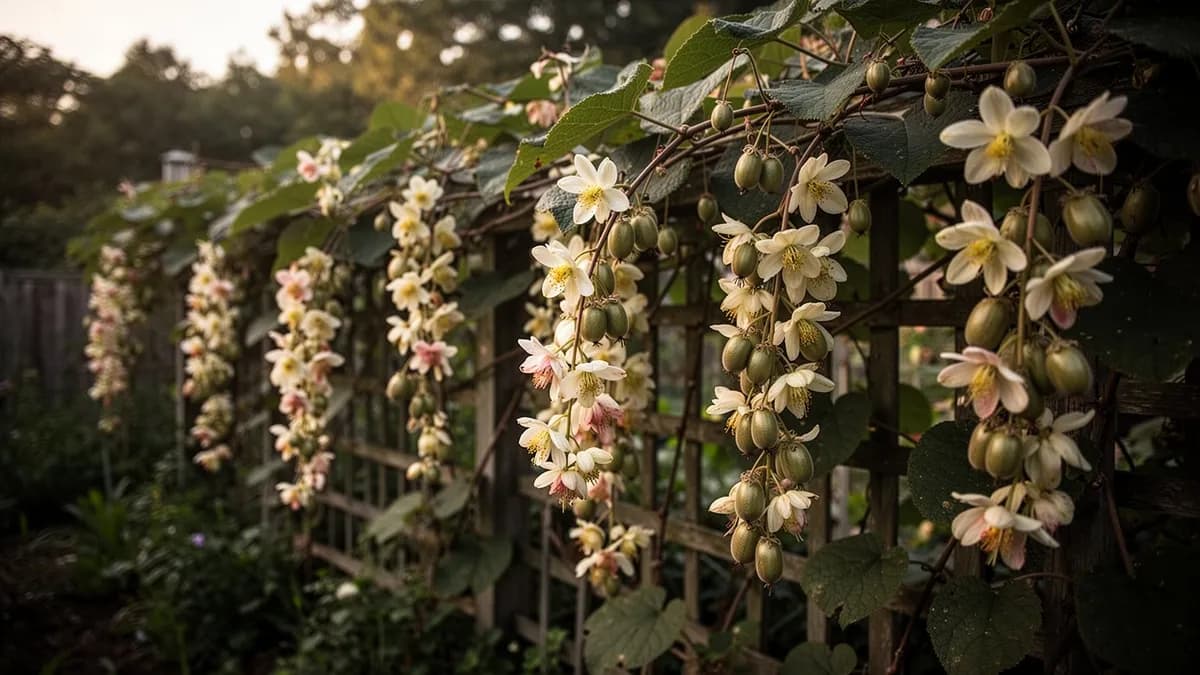
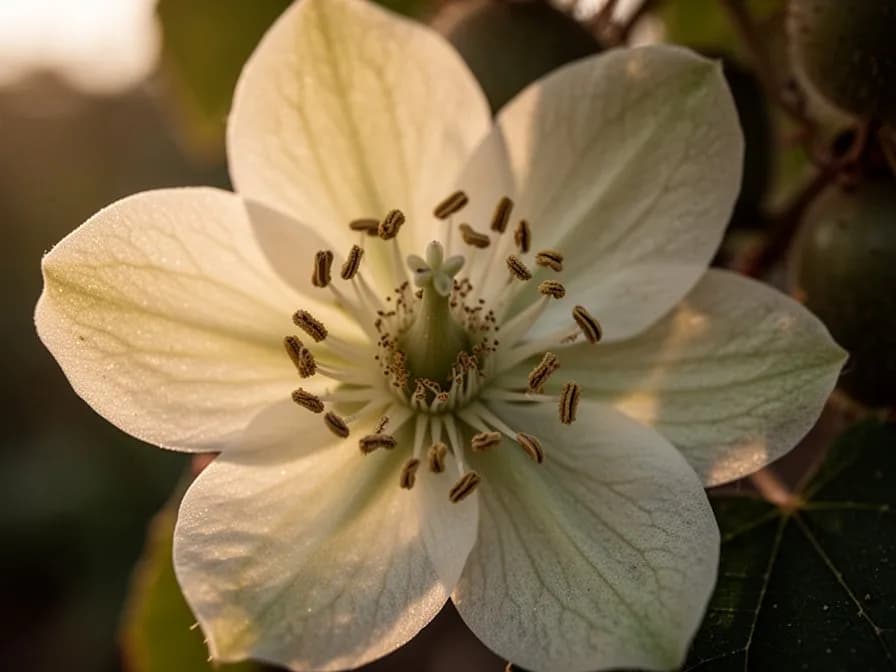
A vigorous deciduous climber with small, fragrant white flowers followed by smooth, grape-sized sweet fruits if both male and female plants are grown.





On this pageOverview
Meet Hardy Kiwi
A vigorous deciduous climber with small, fragrant white flowers followed by smooth, grape-sized sweet fruits if both male and female plants are grown. Hardy kiwi requires a very sturdy arbor or pergola as mature vines become extremely heavy. It needs several years to begin fruiting but is worth the wait for its delicious harvest.
When to plant Hardy Kiwi
Hardy kiwi can be grown from seed, but seedlings will not produce true-to-type fruit and sex cannot be determined until flowering years later. Extract seeds from ripe fruit, clean and dry them, then cold-stratify in moist sand for three months. Sow in spring in moist potting mix at 70 degrees Fahrenheit. Seeds germinate in two to four weeks. Named cultivars are propagated by grafting or softwood cuttings taken in early summer and rooted under mist.
Your Hardy Kiwi Year
Composed for Zone 7 · typical seasons · frost passes Apr 2, returns Nov 1
Plant Hardy Kiwi Mar – May, pick May – Jun. Check the planting methods below and set your climate to personalize these windows.
How to grow Hardy Kiwi
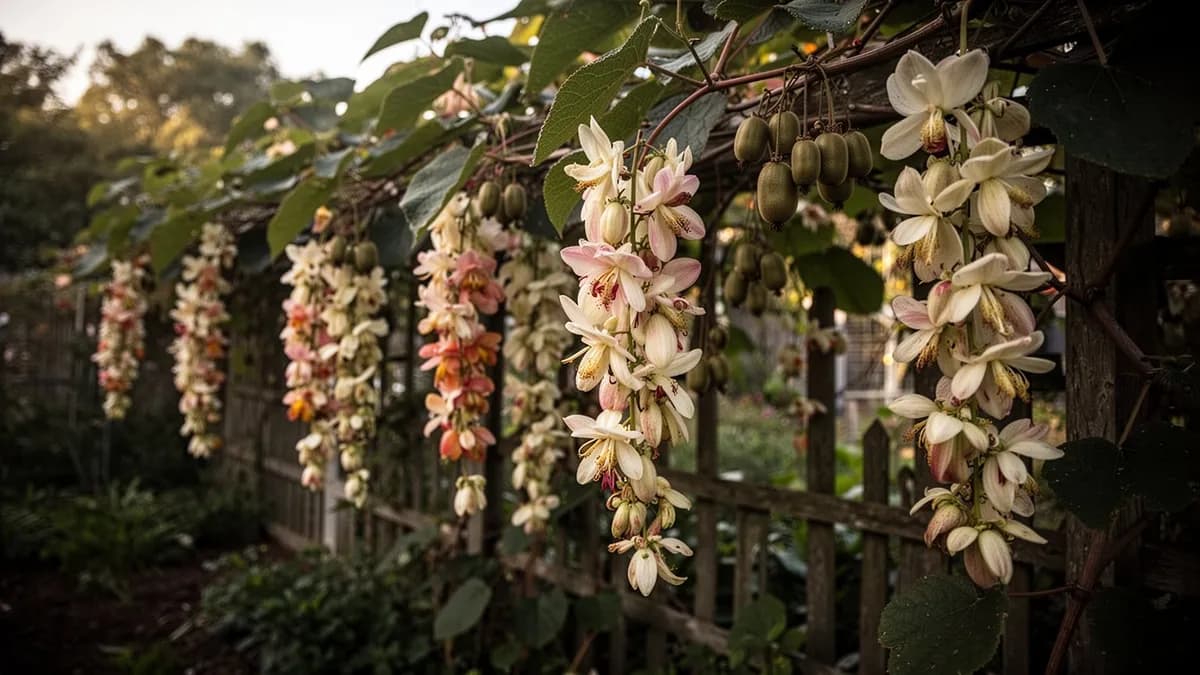
Plant hardy kiwi in spring in rich, well-drained soil in full sun. Both male and female plants are required for fruit production, typically in a ratio of one male per six to eight female plants. Provide an extremely sturdy pergola, arbor, or T-bar trellis system designed to support heavy loads, as mature hardy kiwi vines become very dense and can weigh hundreds of pounds.
Water deeply and regularly throughout the growing season, especially during fruit development. Hardy kiwi has high water needs and will drop fruit in drought conditions. Mulch heavily to conserve moisture and maintain cool root temperatures. Feed with a balanced fertilizer in early spring and again after fruit set, avoiding high nitrogen which promotes excessive vegetative growth.
Prune twice yearly for best fruit production. In winter, remove dead wood and thin the canopy, shortening fruiting laterals to eight to ten buds. In summer, trim back long, whippy vegetative growth that shades the fruiting wood. Hardy kiwi typically begins producing fruit three to five years after planting. Be patient during the establishment years and focus on building a strong vine framework for future crops.
Hardy Kiwi needs more room than a 4 × 8 ft bed gives
Each Hardy Kiwi wants 300 cm of elbow room. The planner keeps that spacing for you — every plant, every bed.
Hardy Kiwi's best neighbours
Hardy kiwi should be planted where its massive vine does not shade out or compete with other crops. The heavy pergola required for support can have shade-tolerant plants grown beneath, such as lettuce, spinach, and herbs during the summer months. Comfrey planted nearby as a dynamic accumulator provides mulch material when cut. Avoid planting near walnut trees which produce juglone toxic to kiwi vines.
Ornamental Kiwi Vine belongs beside it.
Old growers' knowledge, checked against Hardy Kiwi's real companion table below — test any plant you're growing.
Try Hardy Kiwi in a bed — right here
A real planner bed with Hardy Kiwi already in it. Tap a companion to place it and watch the pairing checks answer — green for good neighbours, red for a clash.


Related growing guides
Feed it well
Hardy kiwi prefers rich, deep, well-drained soil with a pH of 5.5 to 7.0. Amend the planting area with generous compost and ensure the soil remains consistently moist but never waterlogged. Apply a balanced fertilizer such as 10-10-10 in early spring at a rate of one pound per year of vine age, up to five pounds. Side-dress with compost annually. Potassium-rich feeds after fruit set improve fruit quality and sweetness.
Ideal Temperature
Hardiness Zone Compatibility
From seed to harvest, stage by stage
Transplanting & Root Development
After planting in early spring, the hardy kiwi vine focuses nearly all its energy underground. The root system expands rapidly through loose, well-drained soil while above-ground growth may appear disappointingly slow. This is entirely normal for Actinidia arguta — the extensive root network being established during this stage will ultimately sustain a vine capable of producing fruit for 50 years or longer. Container-grown plants adjust more quickly than bare-root stock, but both require consistent moisture during establishment.
Vigorous Shoot Extension
With roots established, the vine enters a phase of explosive vegetative growth. Individual shoots can extend two to four metres in a single growing season, twining rapidly around any available support. This is the most labour-intensive training period — without consistent guidance, the vine will form an impenetrable tangle within weeks. The primary goal is to establish one strong central leader to the top of the trellis and begin developing the permanent horizontal arms that will form the productive framework.
Structural Framework Development
During years two and three, the vine thickens its permanent woody framework and begins to develop the short lateral spurs along the main arms where fruit will eventually be produced. The central leader and horizontal arms become progressively woodier and more rigid. Sub-lateral branches emerge at regular intervals along the permanent arms, and the earliest fruiting buds may begin to differentiate at the base of these shoots during late summer.
Initial Cropping
From roughly year three to year five, the vine transitions from purely vegetative growth to its first meaningful fruit production. Small clusters of fragrant white flowers appear in late spring on short spurs formed on the previous season's wood. Provided a compatible male pollinator is growing nearby and bee activity is sufficient, these flowers set into grape-sized fruits that develop through summer and ripen between late August and October depending on variety and climate.
Peak Production Maturity
From year five or six onward, a well-managed hardy kiwi vine reaches peak production capacity and can sustain heavy crops annually for decades. Yields stabilise between 10 and 30 kilograms per female vine per season. The vine's permanent framework is now fully established, and annual winter pruning focuses on renewing the short fruiting spurs and removing spent three-year-old wood to maintain a productive cycle of new fruiting wood.
Ripening & Harvest Window
Hardy kiwi fruits ripen over a three- to four-week window from late August through October, significantly earlier than common fuzzy kiwi. Unlike Actinidia deliciosa, the fruits of Actinidia arguta can reach full eating ripeness on the vine and are best consumed fresh immediately after picking. Ripe fruits yield to gentle thumb pressure and develop an unmistakable sweet, tropical fragrance. Fruits across the vine ripen unevenly, requiring multiple harvest sessions.
Winter Dormancy & Renewal
After the final harvest and the arrival of autumn frosts, the vine drops its foliage and enters a deep winter dormancy lasting several months. This rest period is essential for the vine's health and future productivity. Actinidia arguta requires between 400 and 800 chilling hours below 7 degrees Celsius to break dormancy reliably the following spring. The bare dormant structure reveals the vine's architecture clearly, making this the ideal time for the primary annual pruning.
Water deeply twice per week during dry spells to encourage roots to grow downward rather than staying shallow. Spread a 10 to 12 centimetre layer of composted bark mulch in a one-metre circle around the stem, keeping it 15 centimetres clear of the trunk to prevent collar rot. Do not apply any fertiliser until new shoots are actively growing. Remove any flower buds that appear in the first two years to direct all energy into root and framework establishment.
Caring for Hardy Kiwi month by month
What to do each month for your Hardy Kiwi
October
You are hereComplete the final harvest before the first hard frost. Remove all remaining fruit, fallen leaves, and plant debris from the area beneath the vine to reduce overwintering populations of fungal spores and pest larvae. Apply a fresh layer of organic mulch over the root zone for winter insulation, particularly around young vines in exposed or very cold sites.
Know exactly what to do in your garden — every month
One email at the start of each month: what to sow, plant, and tackle right now — for your Hardy Kiwi and everything growing around it. Plus a short starter course that helps you dodge the classic mistakes.
- What to do, right now
- Matched to your season
- Starter course included
Harvesting Hardy Kiwi
Hardy kiwi fruits ripen in late summer to early autumn and are ready to pick when they yield slightly to gentle pressure, similar to a ripe grape. Unlike fuzzy kiwis, hardy kiwis have smooth, edible skin and can be eaten whole. Harvest all fruit before the first hard frost. Fruits picked slightly firm will continue to ripen off the vine at room temperature. Taste a few fruits regularly as ripening time approaches to determine optimal harvest timing for your vines.
assuming you plant when the window opens — set your real date
Pick Hardy Kiwi promptly and the plant keeps producing.
Storage & Preservation
Firm, freshly harvested hardy kiwis store for four to six weeks in the refrigerator at 32 to 35 degrees Fahrenheit. Ripe fruit is very perishable and should be eaten within a few days. For longer preservation, slice and dehydrate for a sweet, chewy snack, or freeze whole on a baking sheet before transferring to freezer bags. Hardy kiwis also make excellent jams, preserves, and wine. The high vitamin C content makes them a nutritious addition to smoothies.
What goes wrong — and the fix
Japanese Beetles
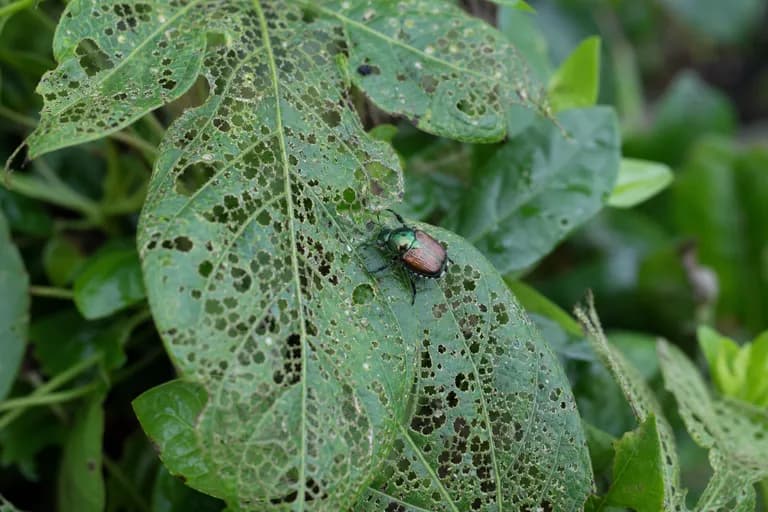
PestSkeletonized leaves with only the veins remaining, concentrated feeding damage during midsummer. Can defoliate young vines.
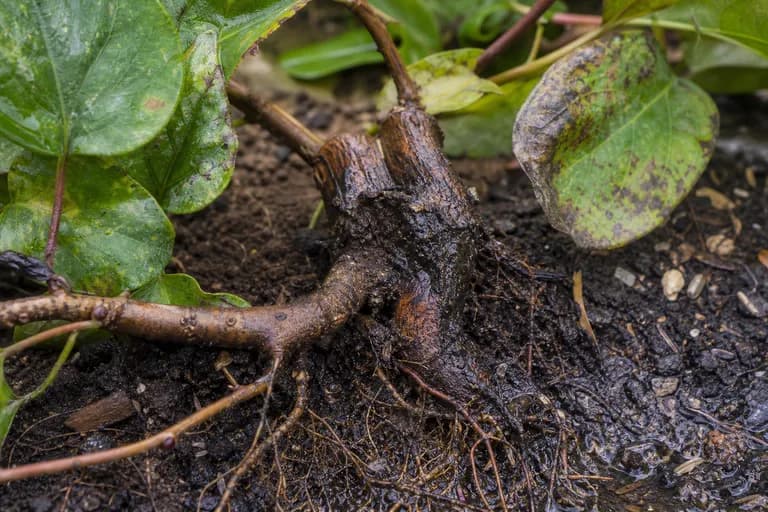
Phytophthora Crown Rot
DiseaseWilting foliage, reduced vigor, dark discoloration at the base of the vine. Root system appears brown and water-soaked.
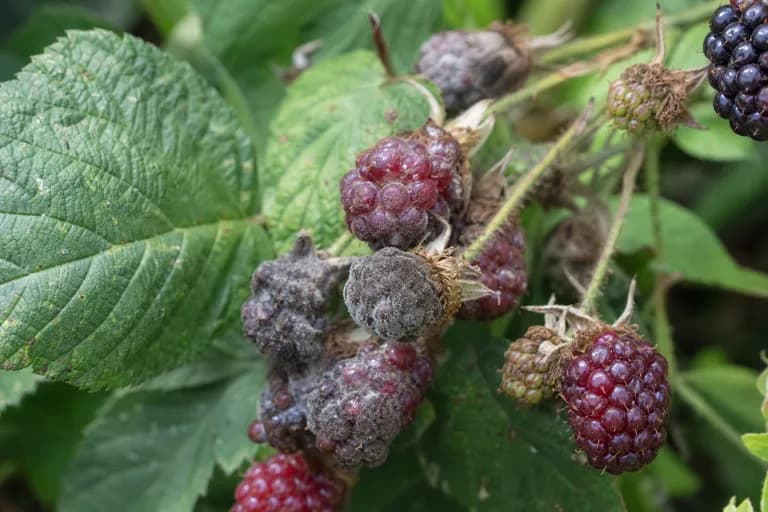
Botrytis Fruit Rot
DiseaseGray, fuzzy mold on ripening fruit, especially in cool, wet autumn weather. Fruit becomes soft and unmarketable.
Troubleshooting Common Problems
The biggest frustration is the long wait to first fruit, typically three to five years, during which the vine grows vigorously without reward. Late spring frosts can damage emerging buds and eliminate the entire year's crop, so choose a frost-free site. The vine's extreme vigor demands heavy pruning and a very strong support structure. Cats are attracted to the roots and may dig around young plants, requiring protection.
Growing Tips
- Install a robust trellis system before planting, not after. Mature hardy kiwi vines generate enormous weight and lateral force that will collapse lightweight garden structures. Use pressure-treated timber posts at least 10 centimetres in diameter or galvanised steel posts, set 60 centimetres deep in concrete, spaced no more than 3 metres apart, with tensioned heavy-gauge galvanised wires at 50 centimetre intervals.
- Most named cultivars of Actinidia arguta are dioecious, meaning separate male and female plants are required for pollination and fruit production. One male vine can pollinate up to six or eight female vines provided they flower simultaneously. Always confirm cultivar compatibility with your nursery supplier before purchasing, as mismatched flowering times are a common cause of crop failure.
- Choose a planting site that is naturally sheltered from late spring frosts. While the dormant vine survives extreme cold, the tender new shoots and flower buds emerging in April and May are killed by brief dips below minus 2 degrees Celsius. A south or west-facing wall, a position on elevated ground above a frost pocket, or a location sheltered by buildings or hedging are all ideal.
- Protect newly planted vines from cat damage. Hardy kiwi stems and roots contain compounds closely related to nepetalactone in catnip, and cats will enthusiastically dig up, chew, and roll on freshly planted vines. Surround young plants with a sturdy chicken wire cage for the first two to three years until the woody stem becomes too thick and tough to damage.
- Maintain an annual winter pruning routine without fail. Unlike fruit trees that tolerate occasional neglect, unpruned hardy kiwi vines rapidly become impenetrable tangles of unproductive growth. The goal each winter is to cut all lateral growth back to two or three bud spurs on the permanent framework, remove any spur wood older than three seasons, and maintain an open airy structure.
- Provide consistent deep watering throughout the fruit development and ripening period from June through September. Hardy kiwi is not drought-tolerant when carrying a crop, and water stress during this critical window directly reduces fruit size, sugar content, and overall yield. Drip irrigation on a timer is the most efficient approach for established vines.
- Switch fertiliser formulations through the growing season to match the vine's changing nutritional needs. Apply a nitrogen-rich feed in early spring to fuel shoot growth, transition to a balanced formulation during flowering and early fruit set, then move to a high-potassium feed from midsummer onward to maximise fruit sweetness and flavour development.
- Harvest in multiple rounds over the two- to four-week ripening window rather than attempting to pick the entire crop at once. Hardy kiwi fruits ripen unevenly across the vine, and fruits left to reach full vine-ripened sweetness are dramatically superior in flavour to those picked prematurely. A ripe fruit yields gently to thumb pressure and emits a distinctive sweet tropical fragrance.
- Mulch heavily every spring with a 10 to 15 centimetre layer of composted bark, wood chip, or straw to conserve soil moisture, suppress competing weeds, moderate root zone temperature, and gradually build soil organic matter. Hardy kiwi has a relatively shallow and fibrous root system that benefits enormously from the buffered growing environment a deep mulch layer provides.
- In regions with short growing seasons or late springs, select early-ripening cultivars such as Issai, Geneva, or Dumbarton Oaks rather than later-maturing varieties that may not ripen fully before the first autumn frosts terminate the season. Matching your cultivar choice to your specific climate and frost-free window is one of the most important decisions for reliable annual production.
Grow your best Hardy Kiwi yet — and everything around it.
Start a free plan today. Lay out your beds, drop in your Hardy Kiwi, and let PlotMyGarden handle the timing, spacing, companions and reminders from seed to harvest basket.
Pick your Hardy Kiwi
Issai
A self-fertile variety that does not require a male pollinator, producing small but abundant fruit. Less vigorous than other cultivars, suitable for smaller spaces.
Anna
A vigorous female cultivar with large, sweet fruit, one of the most productive and widely planted varieties. Requires a male pollinator.
Geneva
An early-ripening female selection with honey-sweet fruit that turns reddish when fully ripe, excellent flavor.
Meader Male
The most commonly used male pollinator, vigorous and reliable with a long pollen season that covers most female varieties.
Hardy kiwi fruits are a genuine specialty product that rarely appears in mainstream supermarkets. When available through farmers markets, specialty grocers, or online retailers, they typically command premium prices of four to eight dollars per small punnet in North America and three to six pounds per 100 grams in the United Kingdom. A single mature female Actinidia arguta vine in full production yields 10 to 30 kilograms of fruit annually, representing a retail equivalent value of approximately 200 to 1500 dollars per vine per season at specialty market prices. The initial investment — typically 15 to 35 dollars per named cultivar plant plus 100 to 300 dollars for a robust trellis system — is comfortably recovered within the first two or three productive harvests after the three- to five-year establishment period. Given the vine's potential productive lifespan of 50 years or more, the cumulative lifetime value of home-grown hardy kiwi fruit from a single planting is remarkable.
Quick recipes
Hardy Kiwi Vine Fresh Salsa Verde
12 minutesA vibrant, tangy-sweet salsa that pairs beautifully with grilled fish, chicken, or pork. The hardy kiwi fruits are simply chopped whole — no peeling needed — and combined with fresh herbs and a squeeze of lime for a bright, unconventional condiment that showcases the fruit's tropical-sweet flavour alongside savoury aromatics.
7 ingredients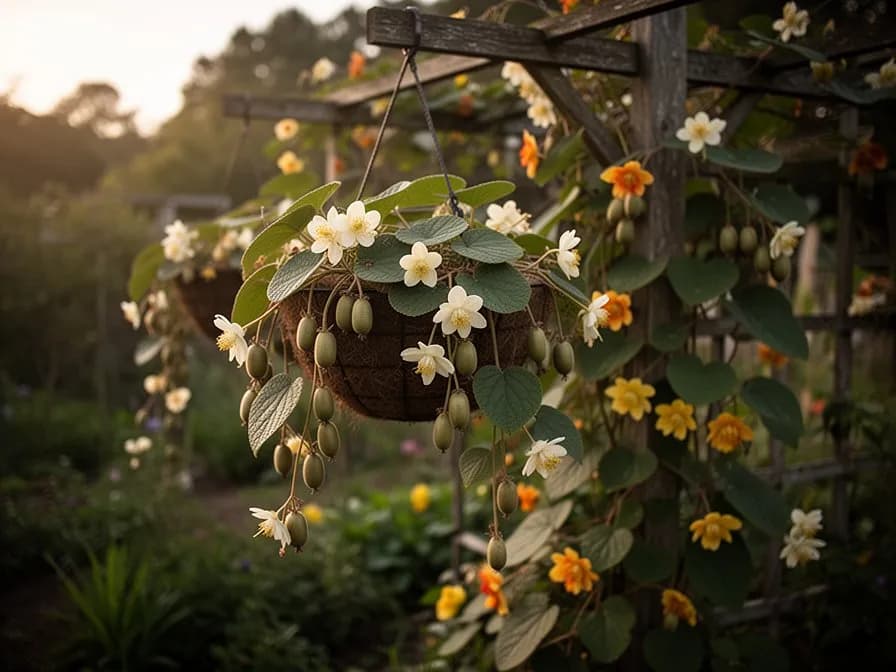
Hardy Kiwi Vine Smoothie Bowl
10 minutesA thick, vivid green smoothie bowl that turns a handful of hardy kiwi into a visually stunning and nutritionally dense breakfast. The whole fruits blend seamlessly with banana and spinach into a creamy base, topped with granola, seeds, and extra sliced kiwi for texture. The naturally high vitamin C content makes this an immune-boosting way to start the day.
6 ingredientsHardy Kiwi Vine Chutney with Ginger
15 minutes active, 25 minutes cookingA warmly spiced, jewel-green chutney that preserves the autumn harvest beautifully and complements roasted meats, sharp cheeses, and crusty bread. The whole fruits cook down into a thick, glossy conserve with complex sweet-tart flavour. This recipe makes two to three jars and keeps for several months when properly sealed and stored in a cool place.
7 ingredientsCulinary Uses
Hardy kiwi fruits are sweet and tangy with smooth, edible skin, eaten whole like grapes. They contain more vitamin C per ounce than oranges. Use fresh in fruit salads, smoothies, and as a topping for yogurt or cereal. They make excellent jam, chutney, and fruit leather. The fruits can be used in baking, added to pies and tarts, or used to make a distinctive pale green wine. Slightly underripe fruit adds a pleasant tang to green salads.
What's inside
Health Benefits
- Outstanding vitamin C density — hardy kiwi fruit eaten whole with its thin edible skin provides over 90 milligrams of vitamin C per 100 grams, supporting robust immune function, efficient collagen synthesis for skin and joint health, and significantly improved absorption of iron from plant-based foods
- Contains actinidin, a cysteine protease enzyme found exclusively in the Actinidia genus, which substantially improves the digestion and bioavailability of dietary proteins from meat, fish, dairy, and legume sources when consumed alongside protein-rich meals
- Rich in polyphenolic antioxidants concentrated in the edible skin, including chlorogenic acid, quercetin, and epicatechin, which have been associated in peer-reviewed research with reduced oxidative stress, lower inflammation markers, and decreased risk of cardiovascular disease
- Provides high levels of vitamin K1, a fat-soluble vitamin critical for healthy blood coagulation, optimal bone mineral density, and the prevention of vascular calcification — regular consumption contributes meaningfully to daily requirements
- Excellent source of both soluble and insoluble dietary fibre, supporting a diverse and healthy gut microbiome, promoting regular digestive function, and contributing to prolonged satiety that assists with healthy weight management
- Supplies meaningful amounts of potassium and magnesium, two essential minerals that work together to support healthy blood pressure regulation, proper muscle and nerve function, and balanced electrolyte levels — especially beneficial for active individuals
Where Hardy Kiwi comes from
Actinidia arguta, commonly known as the hardy kiwi, tara vine, or bower actinidia, is a vigorous deciduous climbing vine native to the cool-temperate forests of East Asia. Its natural range extends from northeastern China through the Korean Peninsula, across the Japanese archipelago, and into the Russian Far East including Primorsky Krai and Sakhalin Island. In these native habitats, the vine grows as an understory or canopy-climbing liana in mixed deciduous and coniferous forests, often reaching remarkable lengths of 20 to 30 metres as it ascends through the tree canopy toward sunlight. The small, smooth-skinned fruits have been gathered from the wild by local populations for centuries, eaten fresh, dried for winter storage, or used in traditional herbal preparations.
The species was first formally described for Western science by the German physician and botanist Philipp Franz von Siebold and the Austrian botanist Joseph Gerhard Zuccarini in 1843, based on plant material collected during Siebold's extended residence in Japan. European plant collectors and botanical gardens began cultivating specimens from the mid-nineteenth century onward, initially valuing the vine primarily for its ornamental vigour and attractive foliage rather than its edible fruit. The renowned English plant hunter Ernest Henry Wilson encountered Actinidia arguta during his botanical expeditions in China between 1899 and 1911 and noted its potential as both an ornamental and a fruiting plant for Western gardens.
For most of the twentieth century, however, Actinidia arguta remained a botanical curiosity in the West, completely overshadowed by the commercial rise of its larger-fruited relative Actinidia deliciosa — the fuzzy kiwi that became a global supermarket staple after New Zealand growers transformed it into a major export crop from the 1960s onward. Interest in the hardy kiwi as a serious food crop did not gain real momentum until the 1980s and 1990s, when cold-climate gardeners in northern North America, Scandinavia, and Central Europe began actively seeking perennial fruiting plants capable of withstanding harsh continental winters that made growing common kiwi impossible.
Breeding programmes in Poland, Belgium, the United States, and New Zealand developed improved named cultivars selected for larger fruit size, superior flavour, reliable cold hardiness, and earlier ripening. Varieties such as Ananasnaya, Geneva, Ken's Red, Jumbo, and the self-fertile Issai became widely available in the nursery trade and attracted a growing community of enthusiastic home growers and small-scale commercial orchardists. Today, hardy kiwi is increasingly recognised as one of the most promising perennial fruit crops for sustainable home food production in temperate climates worldwide.
Hardy Kiwi: did you know?
Fascinating facts about Hardy Kiwi
Actinidia arguta is one of the most cold-tolerant fruiting vines in the world, surviving dormant winter temperatures as low as minus 34 degrees Celsius — cold enough to thrive in climates where peaches, figs, and even many apple varieties cannot survive outdoors.
Hardy Kiwi questions, answered
When should I plant Hardy Kiwi?
What are good companion plants for Hardy Kiwi?
What hardiness zones can Hardy Kiwi grow in?
How much sun does Hardy Kiwi need?
How far apart should I space Hardy Kiwi?
What pests and diseases affect Hardy Kiwi?
How do I store Hardy Kiwi after harvest?
What are the best Hardy Kiwi varieties to grow?
What soil does Hardy Kiwi need?
What is the difference between hardy kiwi vine and the regular kiwi from the supermarket?
Can I grow a single hardy kiwi vine or do I need multiple plants for fruit?
Why does my hardy kiwi vine grow vigorously but never produce any fruit?
How long does it take for a hardy kiwi vine to start producing fruit?
Is hardy kiwi vine suitable for growing in containers on a patio or balcony?
How do I know when the hardy kiwi fruits are ripe and ready to pick?
You just read the theory. Now grow it on autopilot.
Everything that makes Hardy Kiwi fiddly — the timing, the spacing, the companions, the harvest window — is exactly what PlotMyGarden handles for you, for every plant in your garden.
A plan that knows your weather
Set your location once. Get sow, feed and harvest dates built around your real last-frost date and live forecast — no more guessing from a generic seed packet.
From the “When to plant” sectionDrag-and-drop bed planner
Design beds on a grid. Every plant snaps to its proper spacing, and you can see your whole season laid out before you spend a cent on seed.
From the “Growing guide” sectionCompanion conflicts, caught early
200+ good-and-bad pairings checked live as you plant — so a season-wrecking mistake never makes it into the ground.
From the “Companions” sectionReminders you'll actually act on
“Water the beans.” “Pick today before it turns.” Timely, specific, and tied to the plants you're really growing.
From the “Harvest” sectionSuccession, scheduled
Want a harvest for six weeks, not six days? It spaces your sowings automatically and reminds you when each new block is due.
From the “When to plant” sectionA record that gets smarter
Every harvest you log teaches it your garden. Next year's plan starts from what actually worked in your soil, not a textbook's.
From the “Overview” sectionPlant these alongside Hardy Kiwi
More Climbing Flowers
Grow your best Hardy Kiwi yet — and everything around it.
Start a free plan today. Lay out your beds, drop in your Hardy Kiwi, and let PlotMyGarden handle the timing, spacing, companions and reminders from seed to harvest basket.