Enredadera de Chocolate
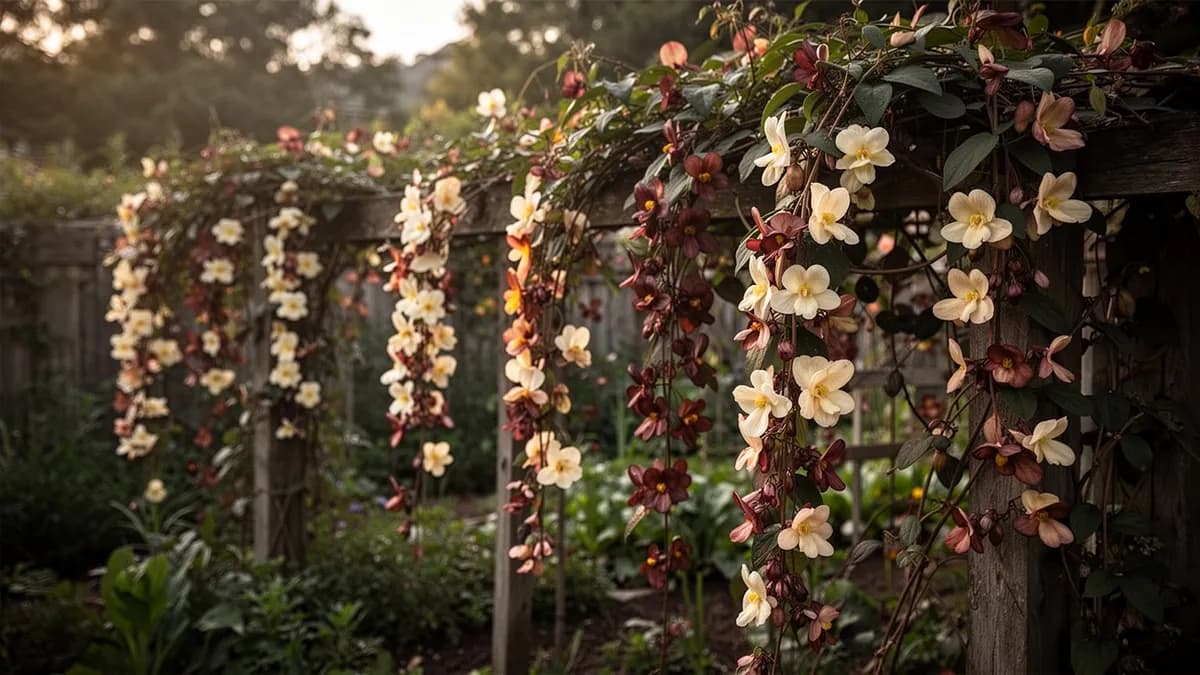
Una enredadera trepadora semicaducifolia con racimos de flores de color púrpura oscuro con aroma a chocolate en primavera, sobre un atractivo follaje de cinco lóbulos.





En esta páginaResumen
Conoce Enredadera de Chocolate
Una enredadera trepadora semicaducifolia con racimos de flores de color púrpura oscuro con aroma a chocolate en primavera, sobre un atractivo follaje de cinco lóbulos. La enredadera de chocolate puede crecer de forma vigorosa a agresiva en climas templados y se beneficia de una poda regular para mantenerla controlada. Produce frutos inusuales en forma de salchicha cuando se poliniza de forma cruzada con una segunda planta.
Cuándo plantar Enredadera de Chocolate
Las semillas de akebia germinan mejor después de una estratificación en frío. Limpie las semillas de la pulpa del fruto maduro y siémbrelas en sustrato húmedo en otoño, colocando las macetas al exterior para la exposición al frío invernal. Alternativamente, estratifique en frío en arena húmeda en el refrigerador durante dos a tres meses antes de la siembra de primavera. Las semillas normalmente germinan dentro de cuatro a ocho semanas después de la estratificación. Las plántulas crecen rápidamente y se pueden trasplantar al exterior después de la primera temporada de crecimiento. Los esquejes semileñosos tomados en verano son un método de propagación más rápido.
Tu año de Enredadera de Chocolate
Ajustado a Zona 7 · temporada típica · la helada se va hacia el 2 abr y vuelve hacia el 1 nov
Planta Enredadera de Chocolate Mar – May y cosecha Abr – May. Consulta los métodos de plantación y elige tu clima para adaptar los periodos.
Cómo cultivar Enredadera de Chocolate
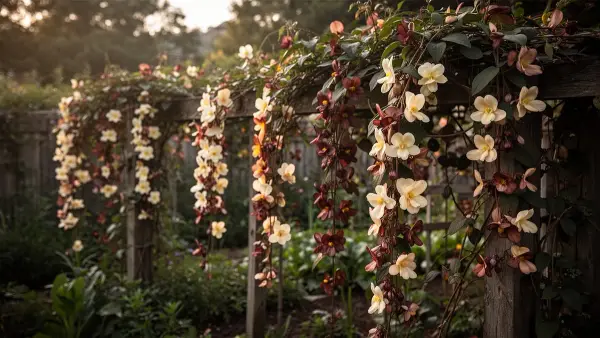
Plante la enredadera de chocolate en primavera u otoño en un suelo húmedo y bien drenado, en un lugar de semisombra a pleno sol. Proporcione un cenador, pérgola o enrejado resistente como soporte, ya que esta enredadera trepadora puede alcanzar hasta nueve metros en condiciones favorables. La akebia crece rápidamente una vez establecida y puede volverse invasiva en climas templados, por lo que es necesario planificar una poda regular para mantenerla dentro de sus límites.
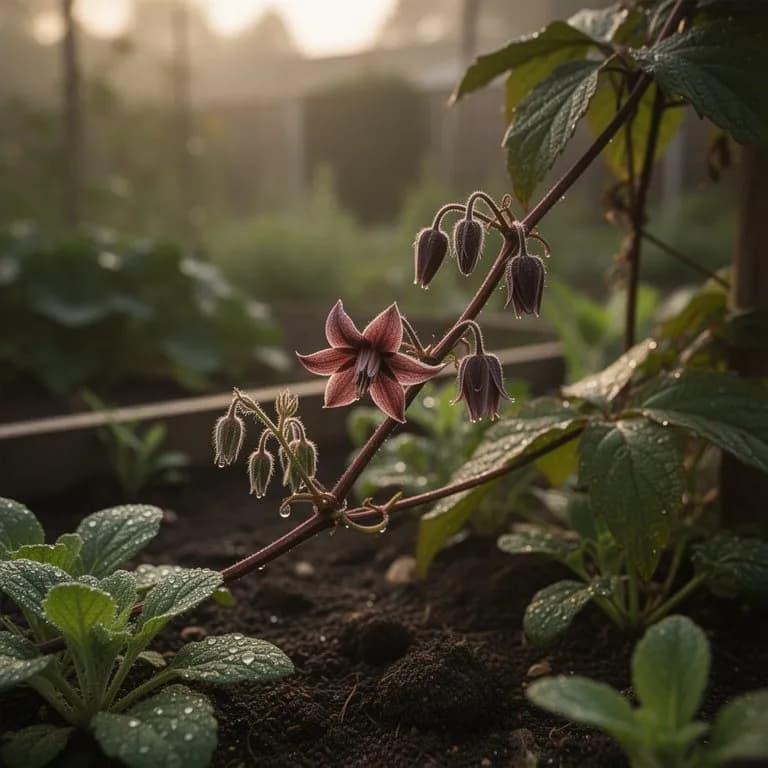
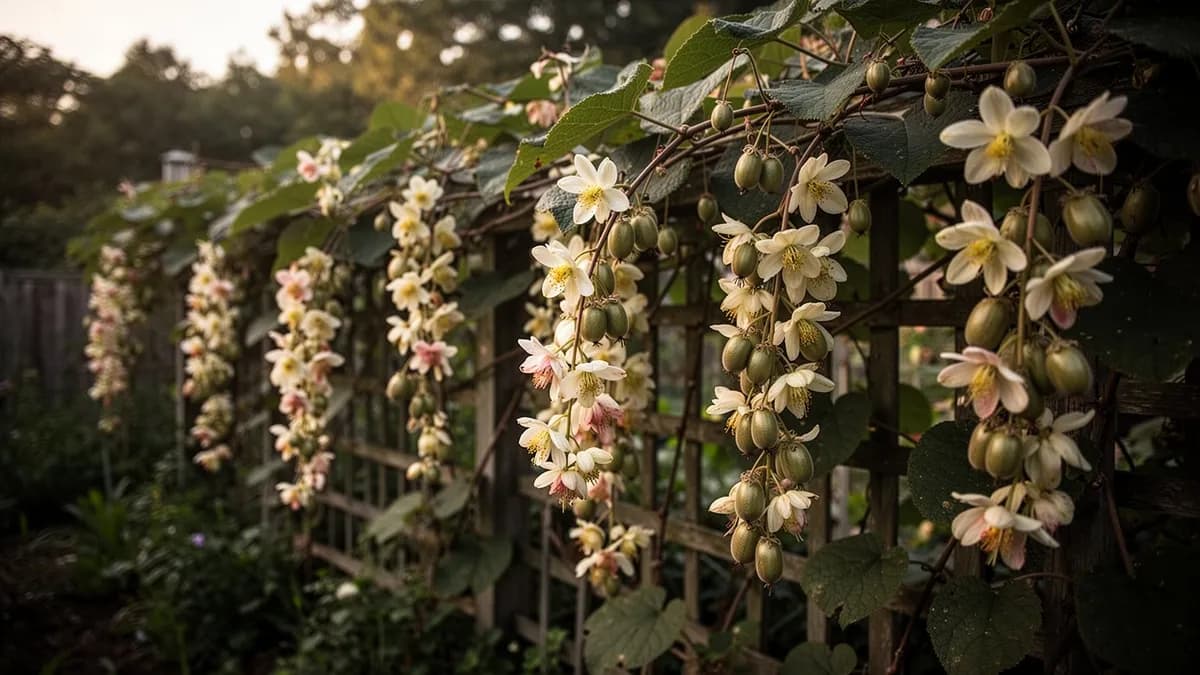
Riegue de forma constante durante el primer año para establecer un sistema de raíces fuerte. Una vez madura, la enredadera de chocolate es moderadamente tolerante a la sequía, pero florece mejor con humedad regular. Los característicos racimos de flores púrpura oscuro con aroma a chocolate aparecen a mediados de la primavera, con flores femeninas más grandes en la base y flores masculinas más pequeñas en las puntas de cada racimo.
Pode después de la floración para controlar el tamaño y fomentar un crecimiento compacto. Elimine cualquier crecimiento descontrolado o excesivo durante toda la temporada de crecimiento. En climas templados donde conserva sus hojas, la enredadera de chocolate puede volverse extremadamente agresiva, produciendo chupones desde la base y enraizando por acodo donde los tallos tocan el suelo. En climas fríos es caducifolia y mucho más fácil de manejar. Se necesita una segunda planta de un clon diferente para la polinización cruzada y la formación de los inusuales frutos púrpura en forma de salchicha.
Para Enredadera de Chocolate un bancal de 120 × 240 cm se queda corto
Cada Enredadera de Chocolate pide 250 cm de margen. El planificador guarda ese marco por ti — cada planta, cada bancal.
Los mejores vecinos de Enredadera de Chocolate
La enredadera de chocolate se puede guiar junto a la clemátide para obtener una temporada de floración prolongada, con la akebia floreciendo primero en primavera y la clemátide siguiendo en verano. Plante debajo bulbos de primavera, hostas y coberturas de suelo tolerantes a la sombra. La enredadera funciona bien como planta de cribado en vallas y cenadores, proporcionando privacidad con su denso follaje. Evite combinarla con otras trepadoras agresivas que crearían una maraña incontrolable.
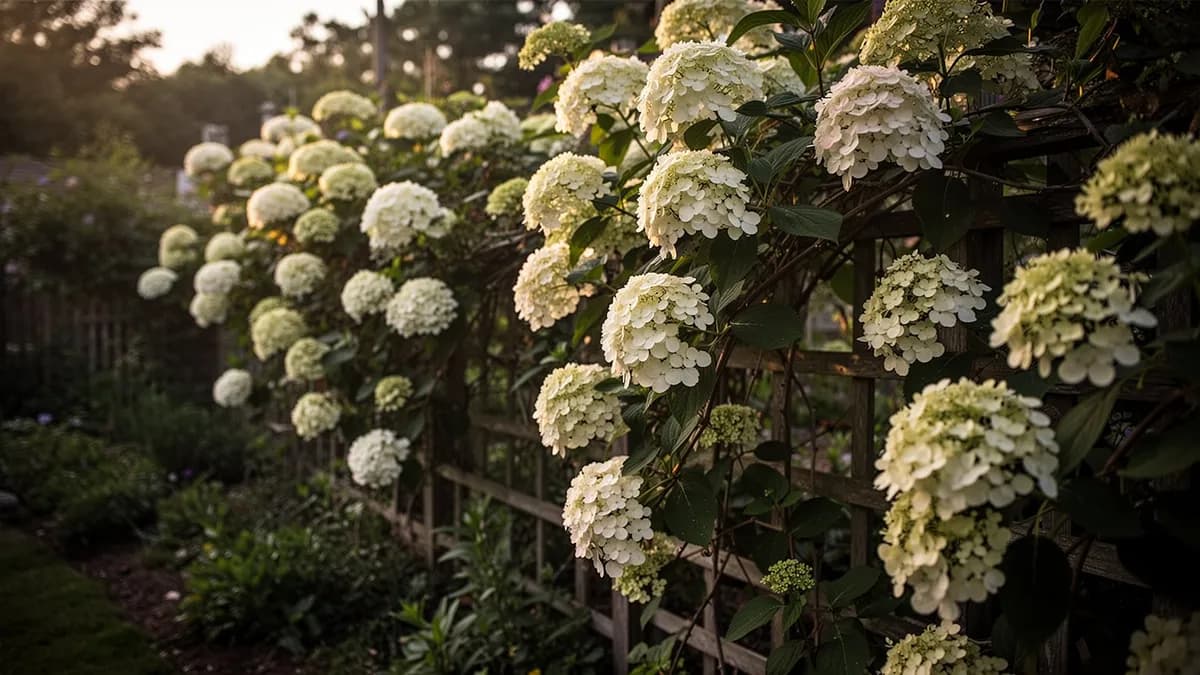
Hortensia Trepadora va a su lado.
Saber de huerto de siempre, cotejado con la tabla real de Enredadera de Chocolate — prueba cualquier planta que cultives.
Prueba Enredadera de Chocolate en un bancal, aquí mismo
Un bancal real del planificador con Enredadera de Chocolate ya plantado. Toca una planta compañera para colocarla y mira cómo responde la comprobación de vecinos: verde para buenos vecinos, rojo si hay conflicto.


Guías de cultivo relacionadas
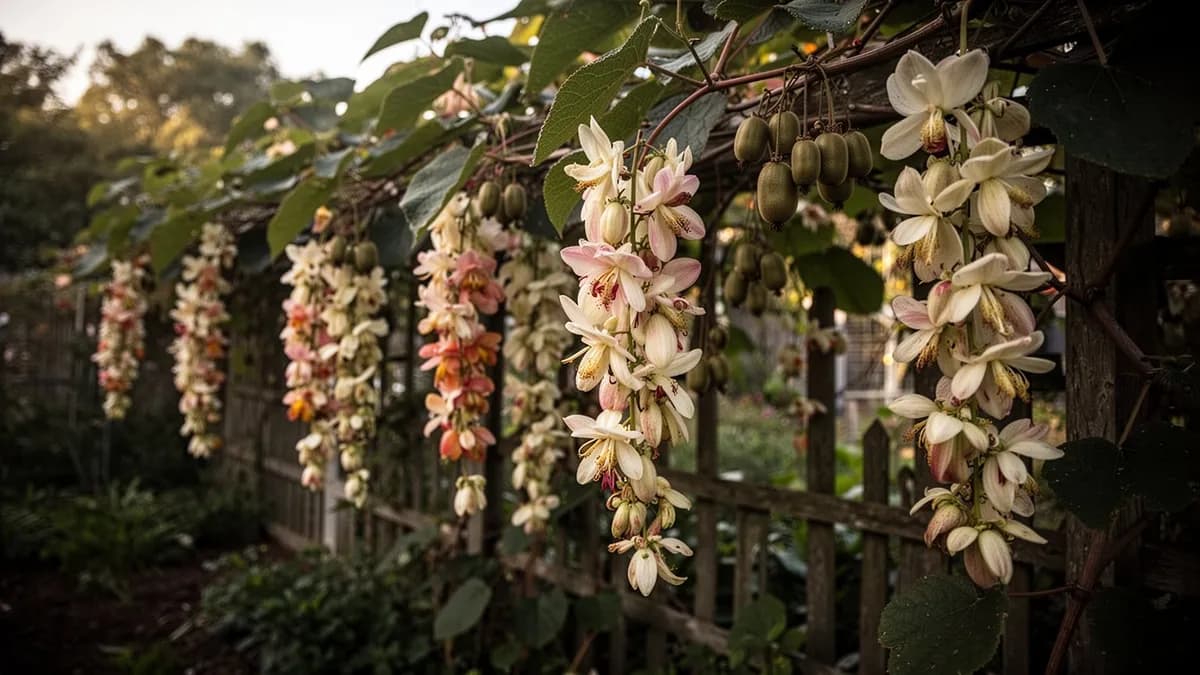
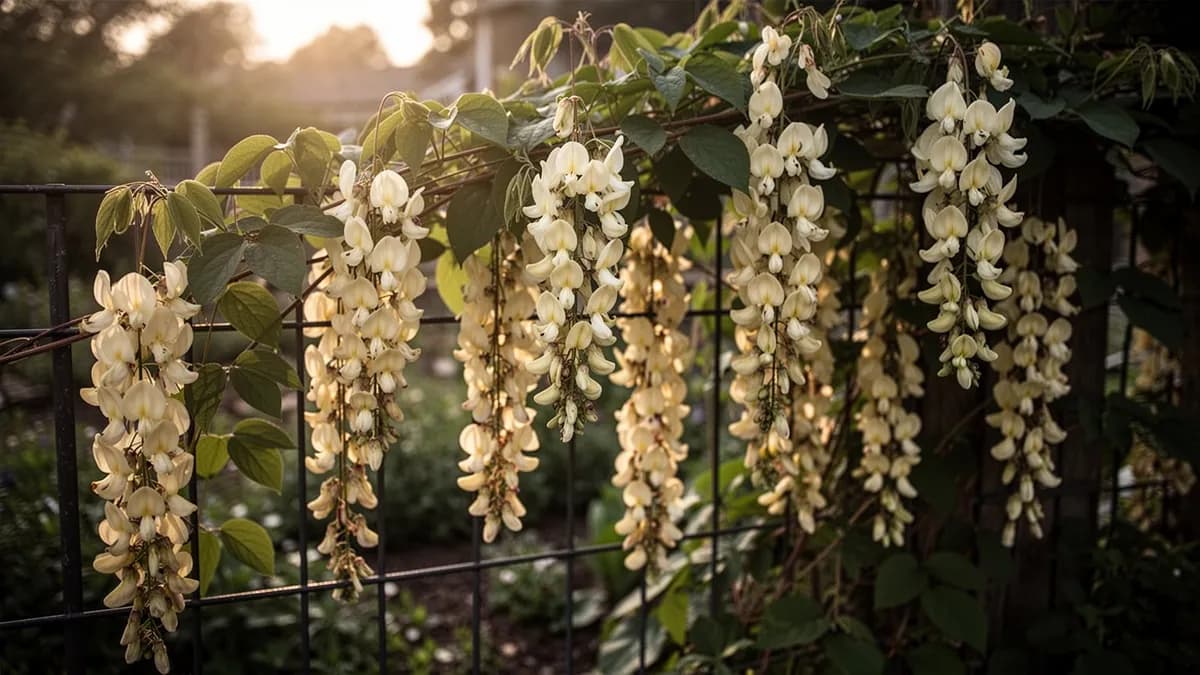
Abónalo bien
La enredadera de chocolate prospera en suelos de fertilidad media a alta, bien drenados, con un pH de 5.5 a 7.0. Se adapta a la mayoría de los tipos de suelo excepto arena extremadamente seca o arcilla encharcada. Aplique un fertilizante granulado equilibrado a principios de primavera. Evite la fertilización excesiva con nitrógeno, que promueve un crecimiento vegetativo desmesurado en detrimento de la floración. Cubra la base con mantillo orgánico para conservar la humedad y suprimir las malas hierbas.
Temperatura ideal
Compatibilidad de zonas de rusticidad
De la semilla a la cosecha, etapa por etapa
Establecimiento de raíces
Después de la plantación, la enredadera de chocolate canaliza su energía hacia el desarrollo de una red de raíces robusta. El crecimiento aéreo es limitado durante esta fase y la enredadera puede parecer inactiva. El follaje semicaducifolio de la temporada anterior puede persistir en climas más templados.
Brotación primaveral y extensión vigorosa de brotes
Cuando las temperaturas del suelo superan los 10 °C, las yemas se hinchan y los nuevos brotes emergen rápidamente. La enredadera entra en su fase vegetativa más activa, extendiendo tallos trepadores que buscan estructuras de soporte. El crecimiento joven suele teñirse de bronce o cobre antes de oscurecerse hacia el verde.
Floración y ventana de polinización
Los racimos colgantes de flores fragantes aparecen desde mediados hasta finales de la primavera. Cada racimo porta flores femeninas más grandes de color púrpura intenso y flores masculinas más pequeñas de color rosa pálido. Las flores emiten un distintivo aroma a chocolate y vainilla que atrae a las abejas nativas y otros polinizadores. Se requiere polinización cruzada entre plantas genéticamente distintas para una fructificación fiable.
Desarrollo del dosel y formación de frutos
A lo largo del verano, la enredadera completa su dosel con follaje denso y superpuesto. Los ovarios polinizados con éxito se hinchan lentamente hasta convertirse en frutos verdes alargados ocultos bajo la cubierta de hojas. La enredadera puede extenderse de 2 a 3 metros de nuevo crecimiento durante esta fase.
Maduración del fruto y cosecha
Los frutos pasan de verde a un púrpura grisáceo mate mientras maduran durante septiembre y octubre. La costura característica del fruto se hincha y finalmente se abre, exponiendo la dulce pulpa blanca interior. Esta es la señal de que ha llegado el momento de la cosecha.
Cambio de color otoñal y transición
El follaje desarrolla tonos cálidos amarillos y bronceados antes de que comience la caída de las hojas. En regiones con inviernos suaves (zona USDA 7 y más cálidas), la enredadera puede retener una parte de sus hojas durante los meses fríos, proporcionando un valor continuo como pantalla vegetal.
Dormancia invernal
La enredadera entra en dormancia total en climas fríos, descansando hasta que el aumento de las temperaturas primaverales desencadene el siguiente ciclo de crecimiento. La estructura leñosa persiste en su soporte, y en zonas templadas puede quedar algo de follaje semicaducifolio. La actividad de las raíces se ralentiza pero no cesa por completo en suelos no congelados.
Mantenga el suelo constantemente húmedo pero nunca encharcado. Evite fertilizar durante las primeras cuatro a seis semanas para prevenir quemaduras en las raíces tiernas y animar a la planta a explorar el suelo circundante de forma natural.
Cuidar Enredadera de Chocolate mes a mes
Qué hacer cada mes para tu Enredadera de Chocolate
Octubre
Mes actualComplete la cosecha de frutos y realice la poda inicial de otoño. Elimine los tallos amontonados, enredados o cruzados para abrir la estructura de la enredadera. Composte el material podado sano; deseche todo lo que muestre signos de enfermedad.
Ten claro qué hacer en tu huerto, cada mes
Un correo al empezar cada mes: qué sembrar, plantar y hacer ahora mismo — para tu Enredadera de Chocolate y todo lo que crece alrededor. Más un breve curso inicial para esquivar los errores clásicos.
- Qué hacer ahora mismo
- Ajustado a tu temporada
- Curso inicial incluido
Cosechar Enredadera de Chocolate
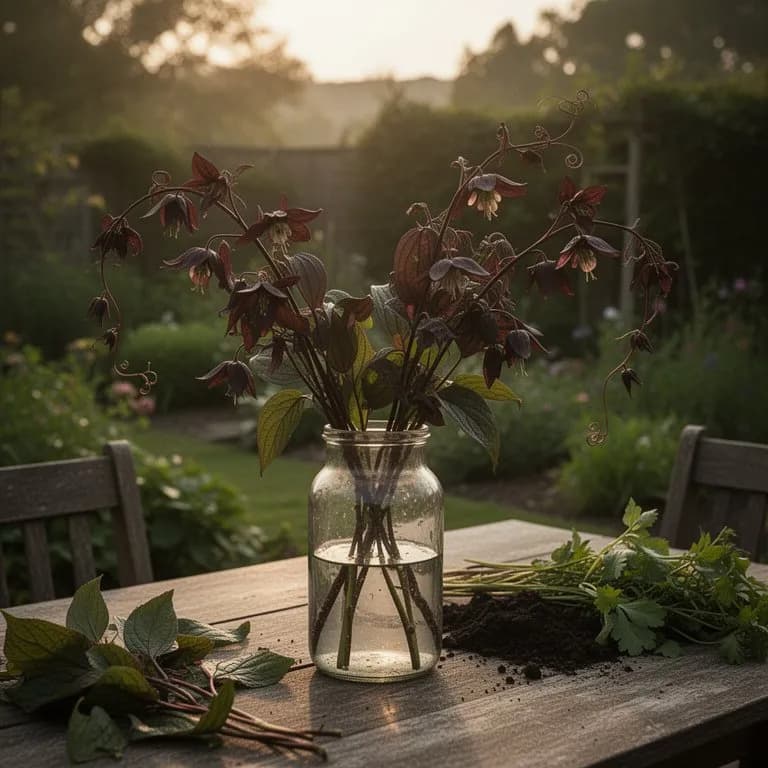
Los inusuales frutos en forma de salchicha, producidos cuando dos clones diferentes se polinizan mutuamente, maduran en otoño y se abren para revelar una pulpa blanca y dulce salpicada de semillas negras. La pulpa es comestible con un sabor suave y dulce, y se puede comer fresca o utilizar en postres. Coseche cuando la piel púrpura comience a ablandarse y abrirse. Las fragantes flores primaverales se pueden cortar para pequeños arreglos de interior donde se puede apreciar su aroma a chocolate. Los tallos con flores duran aproximadamente cinco días en agua.
se supone que plantas al comenzar el periodo — indica tu fecha real
Cosecha Enredadera de Chocolate a tiempo y la planta sigue produciendo.
Almacenamiento y conservación
Los frutos frescos de akebia deben consumirse rápidamente, ya que no se conservan bien. La pulpa se puede extraer y congelar para su uso posterior en batidos o postres. Para la propagación de la enredadera, tome esquejes semileñosos a mediados del verano o esquejes de madera dura a finales del otoño. Los esquejes enraízan fácilmente en sustrato húmedo. Las semillas se pueden limpiar de la pulpa y sembrar inmediatamente o estratificar en frío para la siembra de primavera.
Qué falla — y cómo solucionarlo
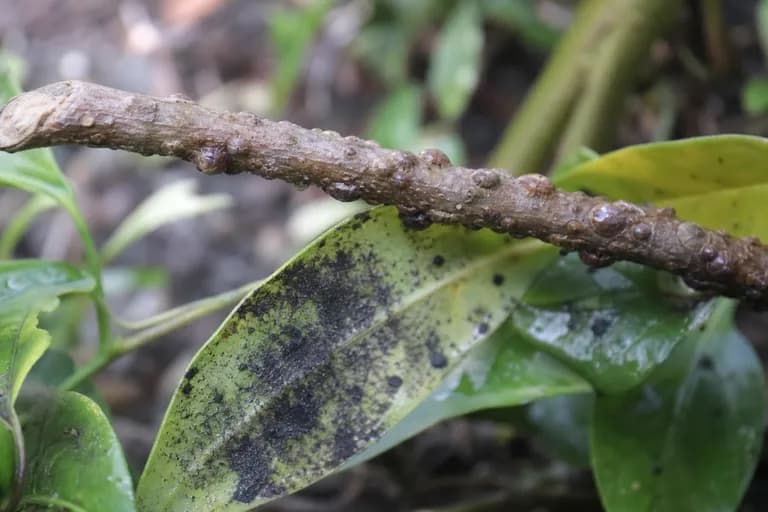
Cochinillas
PlagaPequeñas protuberancias marrones en forma de escudo en los tallos y el envés de las hojas. Melaza pegajosa y negrilla en el follaje inferior.
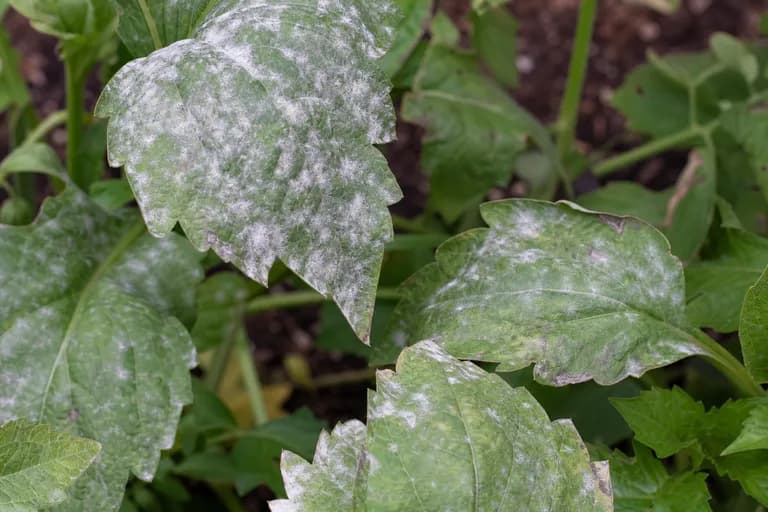
Oídio
EnfermedadCapa blanca y polvorienta sobre las hojas, especialmente a finales del verano durante condiciones cálidas y húmedas. Las hojas afectadas pueden enrollarse y caer prematuramente.
Solución de problemas comunes
La principal preocupación con la enredadera de chocolate es su naturaleza potencialmente invasiva en climas templados, donde puede propagarse mediante chupones, acodo natural y semillas. Vigile el crecimiento cuidadosamente y elimine los brotes no deseados de inmediato. Las flores con aroma a chocolate son encantadoras pero breves, y el principal valor ornamental de la enredadera proviene de su atractivo follaje de cinco lóbulos. Sin un segundo clon para la polinización cruzada, no se formarán frutos.
Consejos de cultivo
- Plante siempre al menos dos variedades de akebia genéticamente distintas a una distancia de 5 a 10 metros entre sí (por ejemplo, combine Akebia quinata con Akebia trifoliata, o plante dos cultivares diferentes con nombre) para asegurar una polinización cruzada eficaz y una producción de frutos constante.
- Instale una estructura de soporte sólida y permanente antes de plantar. Una enredadera de chocolate madura puede alcanzar de 10 a 12 metros de longitud y desarrollar un peso considerable; los enrejados temporales ligeros se deformarán en dos o tres temporadas bajo la masa del follaje.
- Sitúe la enredadera donde reciba al menos de 4 a 6 horas de luz solar directa diaria para una mejor floración y fructificación. Los muros y vallas orientados al este o al sur son ideales en el hemisferio norte, ofreciendo sol matutino y algo de protección por la tarde en climas muy calurosos.
- Durante la primera temporada de crecimiento, concéntrese en establecer un sistema de raíces profundo y sano manteniendo una humedad del suelo constante, en lugar de forzar un rápido crecimiento aéreo con fertilización abundante. Riegue en profundidad dos veces por semana durante los períodos secos.
- Realice la poda formativa inmediatamente después de que termine la floración primaveral. Este es el momento más seguro, ya que le permite dar forma a la enredadera sin eliminar las yemas florales del año siguiente, que se forman en la madera producida durante la temporada actual.
- En climas fríos (zonas USDA 4 y 5), proteja la zona de las raíces con una capa de 10 a 15 cm de mantillo orgánico (paja, virutas de madera o compost de hojas) antes de la primera helada fuerte, especialmente durante los dos o tres primeros inviernos después de la plantación.
- Polinice a mano las flores durante el clima primaveral frío, lluvioso o ventoso, cuando los polinizadores naturales están inactivos. Use un pequeño pincel de cerdas suaves para recoger polen de las flores masculinas más pequeñas y transferirlo suavemente al estigma de las flores femeninas más grandes.
- Vigile la enredadera para detectar auto-siembra no deseada, especialmente en climas templados y húmedos donde la akebia puede naturalizarse de forma agresiva. Retire los frutos caídos antes de que las semillas se dispersen y arranque las plántulas voluntarias rápidamente si aparecen fuera del área de cultivo prevista.
- Para el cultivo en contenedor, seleccione una maceta de al menos 50 litros de capacidad con excelente drenaje. Utilice un sustrato a base de arcilla mezclado con perlita, y planifique trasplantar o renovar los 10 cm superiores del sustrato anualmente para mantener la fertilidad y estructura del suelo.
- Coseche los brotes primaverales jóvenes comestibles como cultivo extra antes de que la enredadera se llene completamente de hojas: blanquéelos durante 30 segundos en agua hirviendo y sírvalos con un ligero aderezo de vinagre y miso para un auténtico plato de verdura de montaña japonesa.
Cultiva tu mejor Enredadera de Chocolate — y todo lo que la rodea.
Empieza un plan gratis hoy. Diseña tus bancales, coloca tu Enredadera de Chocolate y deja que PlotMyGarden gestione el momento, el espaciado, las asociaciones y los recordatorios de la semilla a la cesta.
Elige tu Enredadera de Chocolate
Quinata
La enredadera de chocolate estándar de cinco hojas con flores perfumadas de color chocolate-púrpura, vigorosa y ampliamente disponible. Semicaducifolia en zonas templadas.
Silver Bells
Una selección con flores de color blanco a lavanda pálido que son más visibles contra el follaje que las de la especie de color más oscuro.
Variegata
Una forma rara con follaje jaspeado de crema que añade interés ornamental durante toda la temporada de crecimiento, más allá del breve período de floración.
Una sola enredadera de chocolate bien establecida puede producir de 8 a 25 frutos por temporada en su madurez, con cada fruto pesando entre 60 g y 150 g. Los frutos de akebia son prácticamente imposibles de conseguir en los supermercados occidentales, y en los mercados especializados japoneses alcanzan precios de 3 a 8 USD por fruto debido a su corta temporada, naturaleza frágil y requisitos de cosecha manual. Cultivar su propia enredadera proporciona acceso exclusivo a una fruta gourmet verdaderamente rara a un coste continuo prácticamente nulo más allá del agua y la fertilización ocasional. Además, una enredadera de chocolate madura proporciona una cobertura viva eficaz para pérgolas, vallas y pantallas de privacidad, sustituyendo la necesidad de costosas soluciones de cribado estructural o múltiples arbustos que costarían varios cientos de euros comprar e instalar. Las enredaderas de akebia son perennes de larga vida que habitualmente permanecen productivas y vigorosas durante 20 a 30 años o más con un mantenimiento mínimo, ofreciendo un valor acumulativo año tras año.
Recetas rápidas
Salteado tradicional de akebi con miso (Akebi no Nikumiso Itame)
25 minutosUn plato clásico del norte de Japón donde las pieles naturalmente amargas de la akebia se cortan por la mitad, se rellenan con una mezcla rica de miso y cerdo, y se fríen en sartén hasta caramelizar. El amargor de la piel crea un sofisticado contraste con el relleno salado rico en umami.
8 ingredientesGranita de pulpa de akebia y lima
15 minutos (más 4 horas de congelación)La dulzura perfumada y similar al lichi de la pulpa fresca de akebia produce una impresionante granita helada con un esfuerzo mínimo. El jugo de lima realza las delicadas notas tropicales, y raspar la mezcla con un tenedor produce ligeros copos de hielo cristalinos.
6 ingredientesCompota de fruto de akebia con yogur
10 minutosUna preparación sencilla para el desayuno o el postre en la que la pulpa fresca de akebia se calienta suavemente con un toque de miel y vainilla, y luego se vierte sobre yogur griego espeso. El calor libera maravillosamente los aromas florales de la fruta.
6 ingredientesUsos culinarios
Los frutos abiertos contienen una pulpa blanca, translúcida y dulce con un sabor sutil que recuerda a la tapioca o el coco. La pulpa se come fresca, sacándola de la corteza con una cuchara, y las numerosas semillas negras se escupen normalmente. En Japón, la corteza del fruto se rellena a veces con carne y se fríe como verdura. Los brotes jóvenes se pueden blanquear brevemente y comer como verdura de primavera.
Qué contiene
Beneficios para la salud
- La pulpa del fruto de akebia es rica en compuestos polifenólicos y flavonoides que funcionan como antioxidantes dietéticos, ayudando a combatir el estrés oxidativo y a mantener la salud celular en todo el cuerpo.
- El contenido de potasio del fruto de akebia contribuye al bienestar cardiovascular al asistir en la regulación de la presión arterial y mantener un equilibrio electrolítico adecuado para la función del corazón y los músculos.
- Como fruta naturalmente baja en calorías con dulzor suave, la akebia ofrece una alternativa satisfactoria a los aperitivos más azucarados, apoyando los objetivos de control de peso sin sacrificar el sabor.
- La fibra dietética presente tanto en la pulpa como en la piel comestible de la akebia promueve una digestión saludable, apoya la función intestinal regular y contribuye a un microbioma intestinal próspero.
- La medicina tradicional china y japonesa ha documentado el uso de extractos de tallos de akebia como diurético natural y agente antiinflamatorio durante siglos, con preparaciones utilizadas para apoyar la salud renal y del tracto urinario.
- Investigaciones preliminares de laboratorio han identificado saponinas triterpenoides y derivados del ácido oleanólico en los tejidos del fruto de akebia que exhiben propiedades antiinflamatorias y potencialmente hepatoprotectoras, aunque aún se necesitan estudios clínicos en humanos para confirmar estos efectos.
De dónde viene Enredadera de Chocolate
Akebia quinata, comúnmente conocida como enredadera de chocolate o akebia de cinco hojas, es originaria de los bosques caducifolios templados y mixtos de Japón, China y la península de Corea, donde crece de forma natural como trepadora del sotobosque a lo largo de los bordes de los bosques, riberas de ríos y laderas montañosas. La planta ha sido reconocida y utilizada en el este de Asia durante más de mil años, ocupando una intersección única entre belleza ornamental, valor culinario y medicina tradicional.
En Japón, el fruto, llamado akebi, se ha recolectado de poblaciones silvestres desde la antigüedad y sigue siendo un manjar de temporada esperado en las regiones montañosas de Tohoku, particularmente en las prefecturas de Yamagata y Akita. La pulpa translúcida y dulce se consume fresca como delicia cruda, mientras que la piel ligeramente amarga de color púrpura se reutiliza en platos regionales: rellena con preparaciones saborizadas con miso y frita en sartén, representa una de las preparaciones más distintivas de la cocina de montaña japonesa. Los brotes primaverales jóvenes también se consumen como verdura de temporada, blanqueados y aderezados con vinagre de miso.
En la medicina tradicional china, los tallos leñosos de la akebia, conocidos históricamente como mu tong, se utilizaron durante siglos como diurético, antiinflamatorio y tónico circulatorio. Las referencias a sus aplicaciones medicinales aparecen en farmacopeas clásicas chinas, incluido el Shennong Ben Cao Jing. Es importante señalar que Akebia quinata pertenece a la familia Lardizabalaceae y no contiene los ácidos aristolóquicos nefrotóxicos que se encuentran en algunas especies no relacionadas cuyos tallos se sustituyeron ocasionalmente bajo el mismo nombre comercial.
La enredadera de chocolate llegó a los jardines europeos en la década de 1840, introducida por el cazador de plantas escocés Robert Fortune durante sus expediciones botánicas a China y Japón. Fue cultivada inicialmente en Gran Bretaña como planta ornamental exótica, admirada por sus flores fragantes, su elegante follaje palmado y su vigoroso hábito trepador. Los horticultores victorianos la promovieron en publicaciones de jardinería como una trepadora novedosa y útil, aunque sus frutos comestibles permanecieron en gran medida como una curiosidad fuera del este de Asia. Hoy en día, el renovado interés en los paisajes comestibles, el diseño en permacultura y el cultivo de frutas inusuales ha vuelto a colocar a la akebia en el centro de atención entre jardineros aventureros de todo el mundo.
Enredadera de Chocolate: ¿sabías que?
Datos fascinantes sobre Enredadera de Chocolate
A pesar de su nombre occidental de 'enredadera de chocolate', el fruto de Akebia quinata no sabe a chocolate; el nombre se refiere al intenso color marrón chocolate y a la dulce fragancia a vainilla y chocolate de las flores primaverales.
Enredadera de Chocolate: preguntas frecuentes
¿Cuándo debo plantar Enredadera de Chocolate?
¿Cuáles son buenas plantas acompañantes para Enredadera de Chocolate?
¿En qué zonas de rusticidad puede crecer Enredadera de Chocolate?
¿Cuánto sol necesita Enredadera de Chocolate?
¿A qué distancia debo espaciar Enredadera de Chocolate?
¿Qué plagas y enfermedades afectan a Enredadera de Chocolate?
¿Cómo almaceno Enredadera de Chocolate después de la cosecha?
¿Cuáles son las mejores variedades de Enredadera de Chocolate para cultivar?
¿Qué suelo necesita Enredadera de Chocolate?
¿Necesito más de una planta de akebia para producir frutos?
¿Es invasiva la enredadera de chocolate y cómo puedo mantenerla bajo control?
¿Cómo puedo saber cuándo el fruto de akebia está maduro y listo para cosechar?
¿A qué sabe el fruto de akebia y cómo se come?
¿Qué tan resistente al frío es la akebia y puede sobrevivir a inviernos severos?
¿Qué tan rápido crece la enredadera de chocolate y cuánto espacio debo reservar?
Acabas de leer la teoría. Ahora cultívala en piloto automático.
Todo lo que hace que Enredadera de Chocolate sea delicado — el momento, el espaciado, las asociaciones, la ventana de cosecha — es justo lo que PlotMyGarden resuelve por ti, para cada planta de tu huerto.
Un plan que conoce tu clima
Indica tu ubicación una vez. Recibe fechas de siembra, abonado y cosecha basadas en tu última helada real y el pronóstico en vivo — sin adivinar con un sobre genérico.
De la sección “Cuándo plantar”Planificador de bancales de arrastrar y soltar
Diseña bancales sobre una cuadrícula. Cada planta encaja con su espaciado correcto y ves toda la temporada antes de gastar un céntimo en semillas.
De la sección “Cultivo”Conflictos de asociación, detectados a tiempo
Más de 200 buenas y malas combinaciones comprobadas en vivo mientras plantas — para que un error que arruine la temporada nunca llegue a la tierra.
De la sección “Asociaciones”Recordatorios que sí vas a seguir
“Riega las judías.” “Recoge hoy antes de que se pase.” Oportunos, concretos y ligados a las plantas que de verdad cultivas.
De la sección “Cosecha”Escalonado, programado
¿Quieres cosechar seis semanas en vez de seis días? Reparte tus siembras automáticamente y te avisa cuando toca el siguiente lote.
De la sección “Cuándo plantar”Un registro que se vuelve más listo
Cada cosecha que registras le enseña tu huerto. El plan del año que viene parte de lo que de verdad funcionó en tu suelo, no en un manual.
De la sección “Resumen”Planta estos junto a Enredadera de Chocolate
Más Trepadoras
Cultiva tu mejor Enredadera de Chocolate — y todo lo que la rodea.
Empieza un plan gratis hoy. Diseña tus bancales, coloca tu Enredadera de Chocolate y deja que PlotMyGarden gestione el momento, el espaciado, las asociaciones y los recordatorios de la semilla a la cesta.