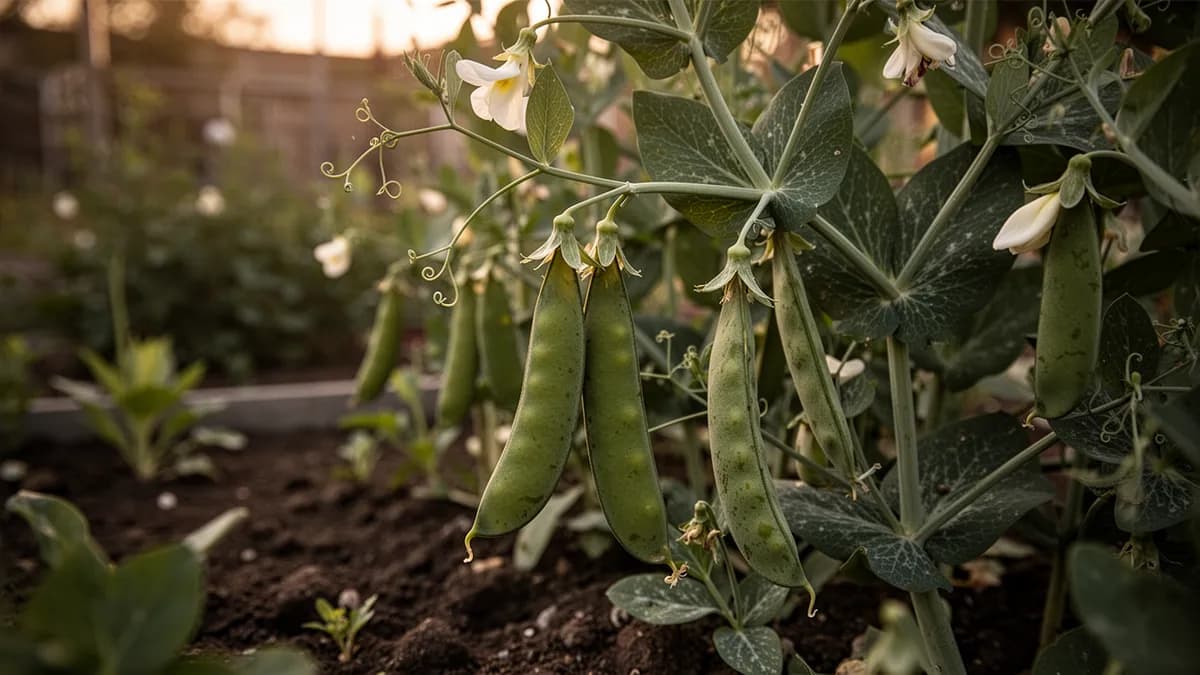
Snow Peas
Pisum sativum var. saccharatum
At a Glance
A flat-podded pea variety eaten whole, pod and all, before the peas inside develop fully. Snow peas are a staple in Asian stir-fries and have a delicate, sweet crunch when harvested young and tender. Like other peas, they prefer cool weather and should be sown as early as soil can be worked in spring. Provide a trellis for climbing varieties and pick pods frequently when they are flat and translucent to encourage continued production.
Planting & Harvest Calendar
Growth Stages
From Seed to Harvest
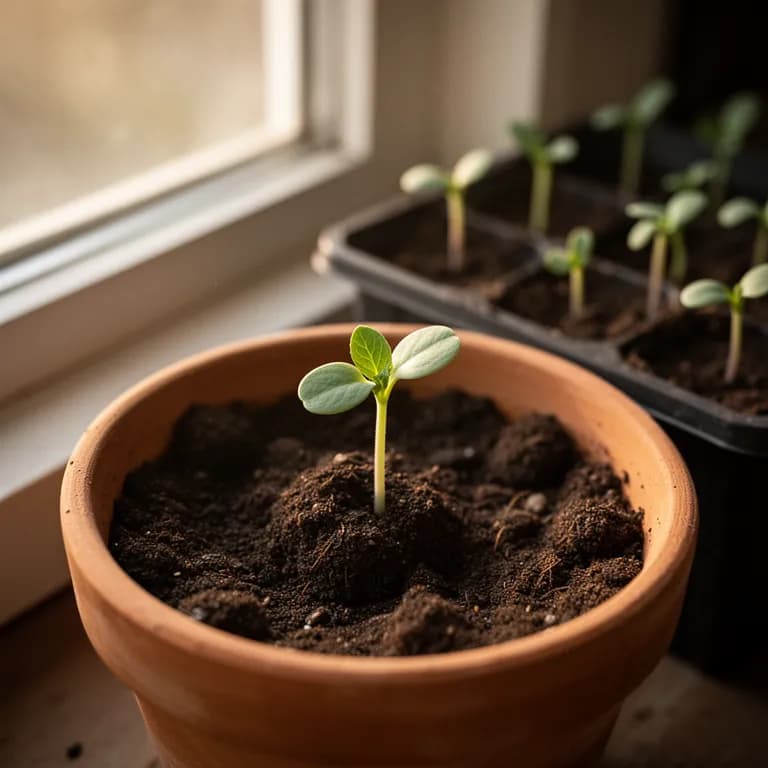
Germination
Days 0–10
Seeds swell and split as the radicle root pushes downward into cool spring soil. The arched hypocotyl emerges, pulling two fleshy rounded cotyledons above the surface. Snow peas germinate reliably at soil temperatures as low as 4°C (40°F), though warmer soil speeds the process significantly.
💡 Care Tip
Keep soil evenly moist but not waterlogged during germination. Pre-soaking seeds overnight can shave 2-3 days off germination time. Protect from birds and mice with row cover or netting until seedlings are established.
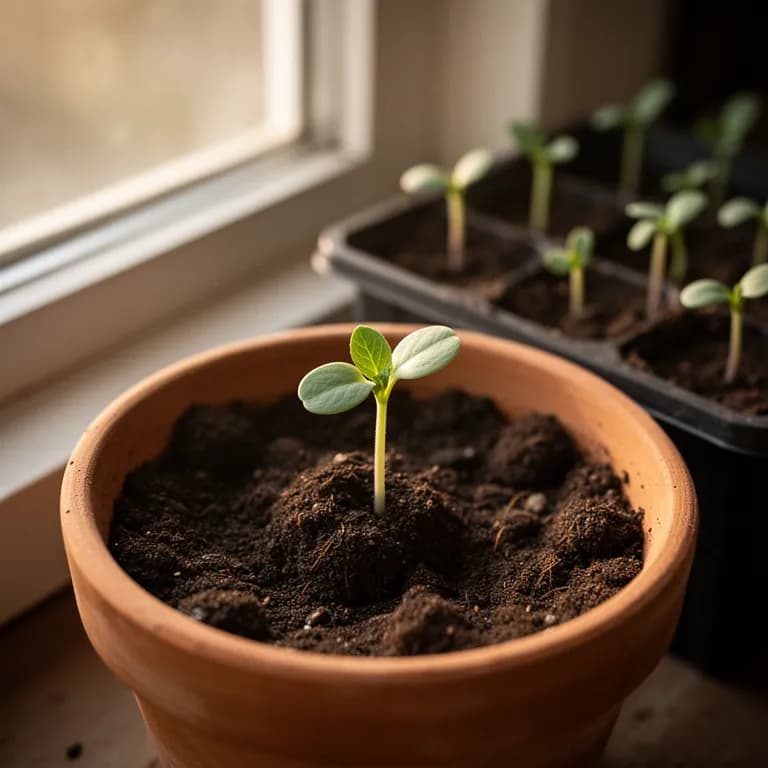
Snow pea seedlings developing their first tendrils, ready to climb
Monthly Care Calendar
What to do each month for your Snow Peas
May
You are hereEarly plantings enter peak harvest in most zones. Pick pods every 1-2 days when flat, bright green, and translucent. Late sowings are climbing and flowering. Monitor for powdery mildew as humidity increases — improve air circulation around vines.
Did You Know?
Fascinating facts about Snow Peas
Snow peas are one of the oldest cultivated vegetables — archaeological evidence from the Spirit Cave in Thailand dates pea cultivation to roughly 9,750 BCE, making them among humanity's earliest crops.
Snow peas are cool-season crops that thrive in temperatures of 55-65°F and can tolerate light frosts down to 28°F. Direct sow seeds 1 inch deep and 2-3 inches apart in early spring as soon as the ground can be worked, typically 4-6 weeks before the last frost date. For fall harvests, sow 8-10 weeks before the first expected frost.
Most snow pea varieties are climbing types that benefit from a trellis, netting, or pea fence 4-6 feet tall. Even dwarf varieties produce better with some support. Install supports at planting time to avoid disturbing roots later. Water consistently, providing about 1 inch per week, as irregular moisture leads to tough, fibrous pods. Mulch to keep roots cool as temperatures rise.
Snow peas perform poorly in hot weather, with production declining sharply when temperatures exceed 80°F. In warm climates, grow as a fall, winter, or early spring crop. Succession plantings every 2 weeks extend the harvest period. As nitrogen-fixing legumes, snow peas improve soil for subsequent plantings. Inoculate seeds with pea-specific Rhizobium inoculant if growing in soil that has not previously supported peas or other legumes.
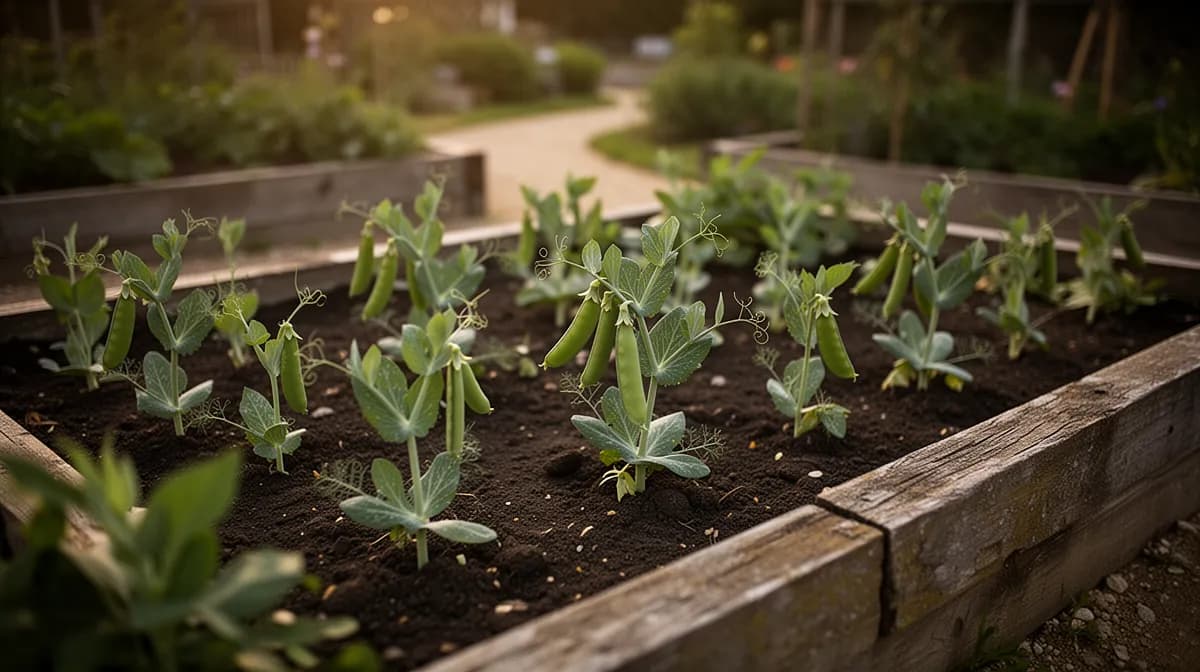
Snow peas trained on a trellis for easy picking and better air circulation
Snow peas trace their ancestry to the wild pea Pisum sativum subsp. elatius, native to the Mediterranean basin and the Near East. Peas are among the oldest domesticated crops, with archaeological evidence dating cultivation to roughly 10,000 years ago in the Fertile Crescent. Early cultivated peas were dried for storage and eaten as a staple protein source long before fresh green peas became fashionable.
The flat-podded, edible-pod mutation that defines snow peas likely arose multiple times in different regions. While shelling peas became dominant in European agriculture, flat-podded varieties found their greatest cultural home in East and Southeast Asia, where they have been a culinary staple for centuries. Chinese, Thai, and Vietnamese cuisines elevated the snow pea to an essential stir-fry ingredient, prized for its sweet crunch and ability to absorb flavors while retaining texture.
The variety name 'saccharatum' (from Latin for sugar) reflects the sweetness of the edible pod. By the 17th century, snow peas were cultivated in European kitchen gardens as a spring delicacy, and Thomas Jefferson grew several pea varieties at Monticello, including flat-podded types. Today, China is the world's largest producer and consumer of snow peas, while Guatemala is the primary export grower supplying North American and European markets year-round.
Direct sowing is preferred as peas resent root disturbance during transplanting. Sow seeds 1 inch deep and 2-3 inches apart as early as 4-6 weeks before the last frost when soil temperature is at least 40°F. Germination is slow in cold soil, taking 7-14 days at 40-50°F but just 5-7 days at 60-70°F. Pre-soaking seeds overnight speeds germination slightly. Inoculate with pea-specific Rhizobium before planting. For fall crops, sow in late summer when soil is still warm for quick germination.
Snow peas prefer well-drained, fertile soil with a pH of 6.0-7.5. Work in compost before planting but avoid high-nitrogen fertilizers which promote foliage at the expense of pods. As nitrogen-fixing legumes, peas benefit from phosphorus and potassium rather than nitrogen. Apply bone meal or a 5-10-10 fertilizer at planting. Inoculate seeds with pea/vetch Rhizobium for optimal nitrogen fixation, especially in soils that have not previously grown legumes. Avoid heavy clay soils that remain cold and wet in spring.
Check Your Zone
See if Snow Peas is suitable for your location.
7°C – 24°C
45°F – 75°F
Snow peas thrive in cool conditions. The ideal growing range is 13-18°C (55-65°F). They tolerate light frosts down to -3°C (27°F) once established, making them excellent early spring and fall crops. Growth slows below 7°C (45°F) and production ceases above 27°C (80°F) as flowers drop and pods become tough and fibrous.
Common issues affecting Snow Peas and how to prevent and treat them organically.
Heat stress is the primary issue, causing flowers to drop and production to cease when temperatures exceed 80°F. Plant early and use shade cloth if warm weather arrives unexpectedly. Powdery mildew is nearly universal in warm, dry conditions; choose resistant varieties. Root rot occurs in waterlogged soils; ensure good drainage and avoid overwatering. Birds may eat newly planted seeds; cover beds with netting until seedlings emerge. Peas planted too deeply in cold soil often rot before germinating.
Snow peas grow well alongside carrots, radishes, turnips, and spinach which share cool-season preferences. The nitrogen they fix benefits neighboring and subsequent crops. Plant near corn which benefits from the nitrogen but avoid shading the peas. Mint and other aromatic herbs planted nearby help deter pea moths. Avoid planting near alliums like onions and garlic which inhibit pea growth. Lettuce and other salad greens appreciate the light shade from pea vines on trellises.
- 1Sow snow peas as early as 4-6 weeks before your last frost date — they are one of the first crops you can plant in spring. Seeds germinate in soil as cool as 4°C (40°F), and established seedlings tolerate frosts down to -3°C (27°F).
- 2Install trellis or netting supports at planting time, not after vines are growing. Even dwarf varieties produce more pods and are easier to harvest with some support. String netting between two posts is the simplest effective system.
- 3Inoculate seeds with pea-specific Rhizobium bacteria before planting, especially if the bed has not grown peas or beans in the last 3 years. This ensures optimal nitrogen fixation, boosting plant health and enriching the soil for subsequent crops.
- 4Water consistently at about 1 inch per week, but never let the soil become waterlogged. Snow peas are susceptible to root rot in soggy conditions. Mulch with straw or shredded leaves to maintain even soil moisture and keep roots cool.
- 5Harvest pods when they are flat, bright green, and you can just barely see the outline of tiny peas inside. Overripe pods with bulging peas are tough and starchy. Check plants daily during peak production — the window between perfect and overripe is only 2-3 days.
- 6Use two hands when picking: hold the vine with one hand and snap the pod with the other. Snow pea stems are brittle and easily broken, which can sever the vine above the break and end production on that branch.
- 7Succession plant every 2 weeks for an extended harvest. Since each planting produces for only 3-4 weeks, staggering sowings ensures a continuous supply. Plan a fall crop too — sow 8-10 weeks before first frost for a second season of pods.
- 8After the last harvest, cut vines at soil level rather than pulling them up. The root nodules contain fixed nitrogen that benefits the next crop planted in that space. Follow snow peas with nitrogen-hungry crops like tomatoes, squash, or corn.
Harvest snow peas when pods are full-sized but still flat, before peas inside begin to swell. The pods should be bright green, crisp, and translucent enough that you can barely see the outline of tiny developing peas. Pick every 1-2 days during peak production to encourage continued flowering. Snap or cut pods from the vine carefully to avoid damaging the plant. Morning harvest produces the crispest pods. Overripe snow peas with visible bulging peas can still be shelled and used as regular peas.
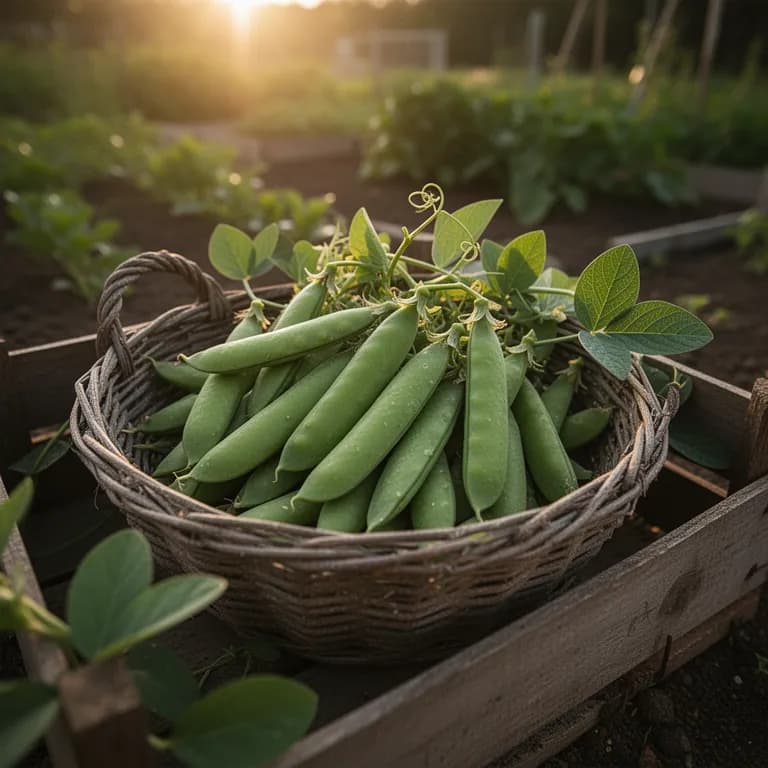
Morning harvest yields the crispest, sweetest snow peas
Fresh snow peas keep in the refrigerator for 5-7 days in a perforated plastic bag. For best quality, use within 2-3 days of harvest. To freeze, remove strings if present, blanch whole pods for 1-2 minutes, cool in ice water, and freeze flat on trays before bagging. Frozen snow peas keep for up to 12 months but are best used in cooked dishes rather than raw applications after freezing. Snow peas can also be pickled lightly for a crisp, tangy snack.
Plan your garden with ease
Love growing Snow Peas? Use our free garden planner to design your beds, track planting dates, and get personalized care reminders.
Nutritional Info
Per 100g serving
42
Calories
Health Benefits
- Exceptionally rich in Vitamin C — 100g of raw snow peas provides two-thirds of the daily recommended intake, more than many citrus fruits per serving
- High in Vitamin K, essential for blood clotting and bone mineralization, with 100g providing roughly 25% of daily needs
- Good source of folate (B9), critical for cell division and especially important during pregnancy
- Contains iron in a form enhanced by their own high Vitamin C content, improving absorption compared to most plant sources
- Very low calorie at only 42 kcal per 100g while providing meaningful fiber and protein for a vegetable
- Rich in beta-carotene and lutein, carotenoid antioxidants that support eye health and may reduce age-related macular degeneration risk
💰 Why Grow Your Own?
Fresh snow peas are one of the most expensive vegetables at the grocery store, typically $6-10 per pound for organic. A single $2-3 seed packet plants a 3-meter row yielding 4-6 kg of pods worth $50-130 at retail prices. Snow peas are also one of the fastest crops from seed to harvest (55 days), delivering exceptional value per square foot of garden space. Growing your own means harvesting at peak sweetness — store-bought snow peas are often 5-7 days old and noticeably less crisp.
Quick Recipes
Simple recipes using fresh Snow Peas
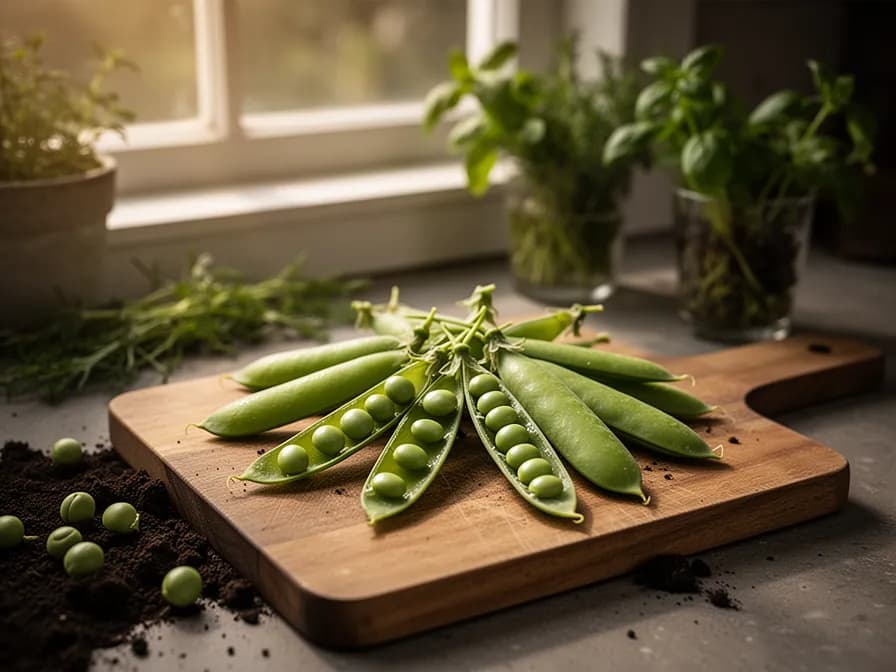
Garlic Ginger Snow Pea Stir-Fry
10 minThe quintessential snow pea dish — blistering-hot wok cooking preserves their signature crunch while infusing them with aromatic garlic and fresh ginger. Ready in minutes and a perfect side for any Asian-inspired meal.
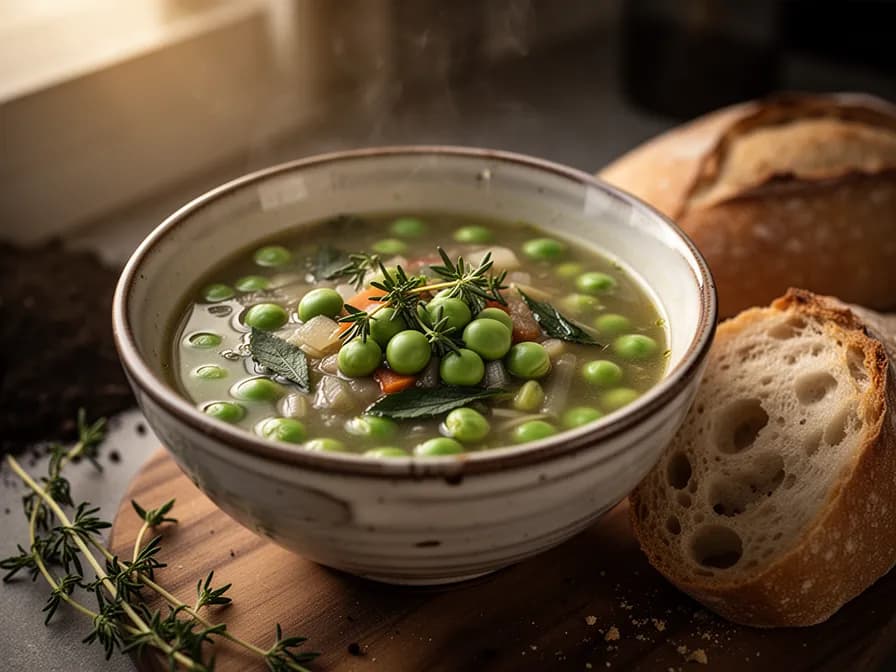
Snow Pea & Radish Spring Salad
10 minA bright, crunchy salad celebrating spring's first harvests. Raw snow peas sliced on the diagonal pair beautifully with peppery radishes and a light citrus dressing — no cooking required.
Sesame Snow Peas with Shiitake Mushrooms
15 minAn umami-rich side dish pairing crisp snow peas with meaty shiitake mushrooms. The mushrooms add depth while the snow peas bring freshness and crunch — a balance of textures and flavors.
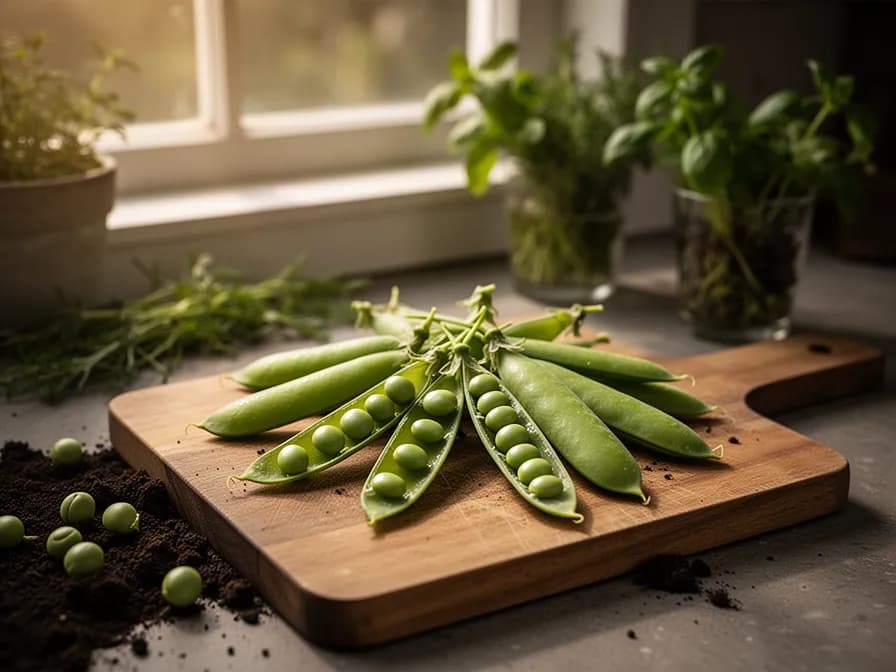
Garden-fresh snow peas in a classic Asian stir-fry
Yield & Spacing Calculator
See how many Snow Peas plants fit in your garden bed based on the recommended 8cm spacing.
225
Snow Peas plants in a 4×4 ft bed
15 columns × 15 rows at 8cm spacing
Popular Varieties
Some of the most popular snow peas varieties for home gardeners, each with unique characteristics.
Oregon Sugar Pod II
The standard for snow peas with thick, sweet, stringless pods on 4-foot vines. Excellent powdery mildew resistance and heavy yields.
Mammoth Melting Sugar
Heirloom variety with extra-large pods up to 5 inches on tall 4-5 foot vines. Sweet, tender, and very productive.
Dwarf Grey Sugar
Compact 2-3 foot plants with beautiful purple flowers and sweet, tender pods. Good for containers and small spaces.
Oregon Giant
Large, flat pods on vigorous vines with excellent cold tolerance. Good for northern gardens and early spring planting.
Snow peas are prized for their crisp, sweet, entirely edible pods. They are a staple in Chinese and Thai stir-fries, often paired with garlic, ginger, and soy sauce. Serve raw with dips or in salads for maximum crunch. Add to pasta dishes, rice bowls, and spring vegetable medleys in the last minute of cooking. Snow peas are essential in moo goo gai pan and many other Cantonese dishes. Lightly sauteed with sesame oil and toasted sesame seeds makes an elegant side dish.
When should I plant Snow Peas?
Plant Snow Peas in February, March, April. It takes approximately 55 days to reach maturity, with harvest typically in May, June, July.
What are good companion plants for Snow Peas?
Snow Peas grows well alongside Carrot, Cucumber, Radish. Companion planting can improve growth, flavor, and natural pest control.
What hardiness zones can Snow Peas grow in?
Snow Peas thrives in USDA hardiness zones 2 through 11. With greenhouse protection, it may be grown in zones 1 through 12.
How much sun does Snow Peas need?
Snow Peas requires Full Sun (6-8h+). This means at least 6-8 hours of direct sunlight daily.
How far apart should I space Snow Peas?
Space Snow Peas plants 8cm (3 inches) apart for optimal growth and air circulation.
What pests and diseases affect Snow Peas?
Common issues include Pea Aphid, Powdery Mildew, Pea Leaf Weevil. Prevention through good garden practices like crop rotation, proper spacing, and companion planting is the best approach. See the detailed pests and diseases section above for symptoms, prevention, and treatment for each.
How do I store Snow Peas after harvest?
Fresh snow peas keep in the refrigerator for 5-7 days in a perforated plastic bag. For best quality, use within 2-3 days of harvest. To freeze, remove strings if present, blanch whole pods for 1-2 minutes, cool in ice water, and freeze flat on trays before bagging. Frozen snow peas keep for up to 12...
What are the best Snow Peas varieties to grow?
Popular varieties include Oregon Sugar Pod II, Mammoth Melting Sugar, Dwarf Grey Sugar, Oregon Giant. Each has unique characteristics suited to different growing conditions and culinary preferences. See the varieties section above for detailed descriptions.
What soil does Snow Peas need?
Snow peas prefer well-drained, fertile soil with a pH of 6.0-7.5. Work in compost before planting but avoid high-nitrogen fertilizers which promote foliage at the expense of pods. As nitrogen-fixing legumes, peas benefit from phosphorus and potassium rather than nitrogen. Apply bone meal or a 5-10-1...
What is the difference between snow peas and sugar snap peas?
Snow peas have flat, thin pods harvested before the peas inside develop — the entire flat pod is eaten. Sugar snap peas have plump, rounded pods with fully developed peas inside, and the whole pod is also eaten. Snow peas are best for stir-fries and salads where you want a flat, delicate crunch. Sugar snaps are sweeter and rounder, ideal for snacking raw. Both belong to Pisum sativum but are different botanical varieties.
Why are my snow pea pods tough and stringy?
Tough pods are almost always caused by harvesting too late — even 2-3 days past prime can make a difference. Pods should be flat, bright green, and translucent with only the faintest outline of tiny peas. If peas are visibly bulging, the pod is past its prime. Heat stress above 27°C (80°F) also causes pods to become fibrous. Harvest early in the morning for the crispest texture, and check plants daily during peak production.
Can I grow snow peas in containers?
Yes, snow peas grow well in containers. Choose dwarf varieties like 'Dwarf Grey Sugar' (60-90 cm) for pots. Use at least a 20-liter container with drainage holes and quality potting mix. Insert a small trellis, bamboo teepee, or netting for the vines to climb. Place in full sun and water consistently — containers dry out faster than garden beds. A single large pot can produce a surprising amount of pods over 3-4 weeks.
Do snow peas need a trellis or support?
Climbing varieties (most snow peas) absolutely benefit from support, reaching 120-180 cm (4-6 feet) tall. Without support, vines sprawl on the ground where pods contact soil, increasing rot and making harvest difficult. String netting stretched between two stakes is the simplest solution. Even dwarf varieties (60-90 cm) produce better and are easier to pick with a short support. Install supports at planting time to avoid disturbing roots later.
Can I grow snow peas in hot climates?
Snow peas are cool-season crops that struggle above 27°C (80°F), but you can grow them in warm zones by timing your planting for fall, winter, or very early spring. In zones 9-11, plant from October through February when temperatures are mild. Shade cloth can extend the season slightly, but once daytime highs regularly exceed 30°C, production will cease. Focus on fast-maturing varieties like 'Oregon Sugar Pod II' (60 days) to beat the heat.
How do I prevent powdery mildew on snow peas?
Powdery mildew is the most common snow pea disease, appearing as white powder on leaves in warm, dry weather with cool nights. Choose resistant varieties like 'Oregon Sugar Pod II'. Space plants adequately and provide trellis support for good air circulation. Avoid overhead watering. At the first sign of white patches, spray with a potassium bicarbonate solution (1 tbsp per liter of water) or neem oil. Remove severely affected lower leaves to slow spread.
Ready to Grow Snow Peas?
Add Snow Peas to your garden plan and start designing your perfect layout.

Vladimir Kusnezow
Gardener and Software Developer
Zone 6b gardener. Growing vegetables and fruits in soil and hydroponics for 6 years. I built PlotMyGarden to plan my own gardens.
Jump to Section