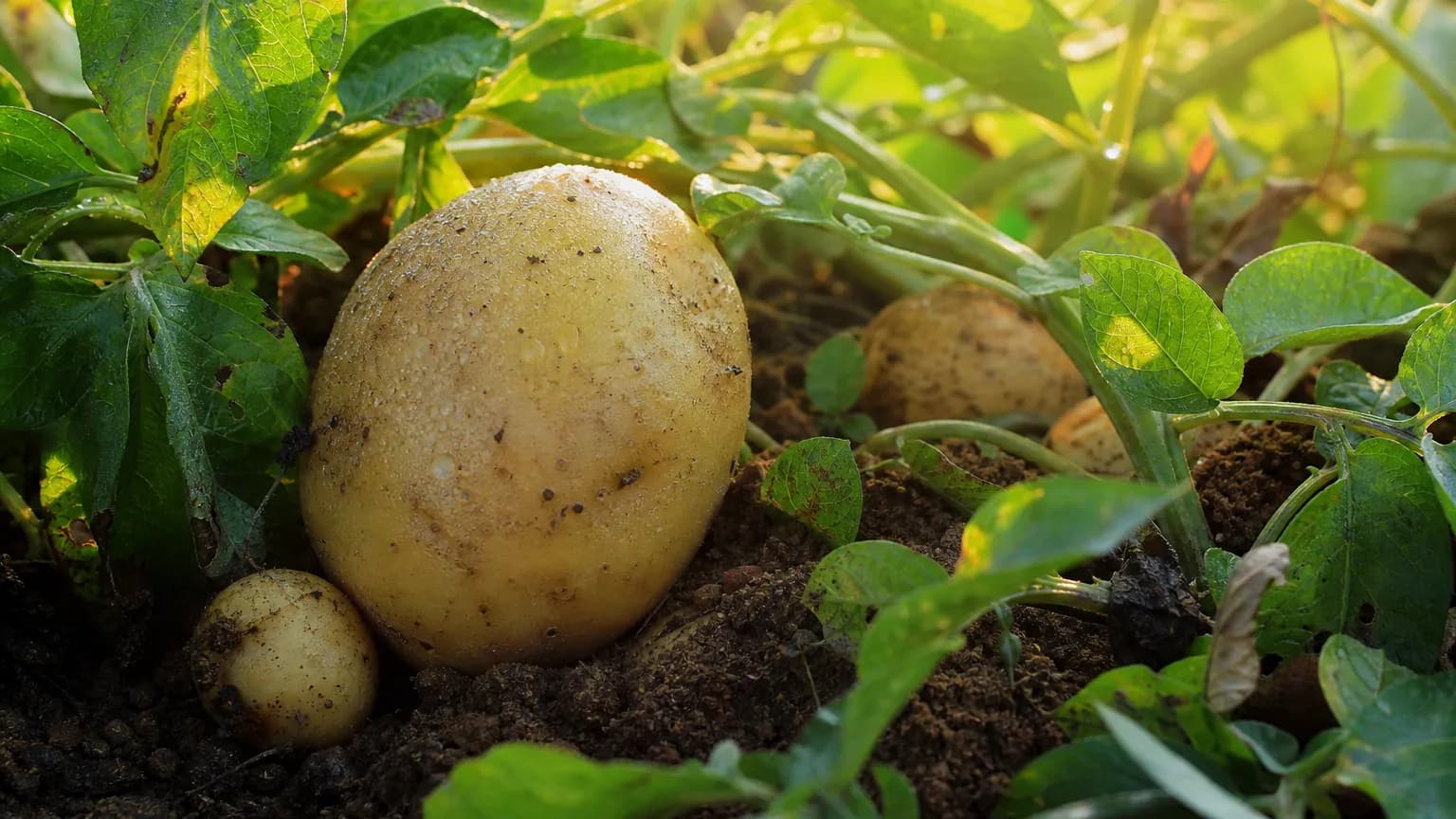
Potato
Solanum tuberosum
At a Glance
It's planting season for Potato! Start planning your garden now.
A versatile tuber crop grown by hilling soil around the stems to encourage more tuber formation underground. Plant certified seed potatoes in trenches and mound soil progressively as shoots emerge to keep developing tubers shielded from light. Green-skinned tubers contain solanine and should not be eaten, so consistent hilling is essential throughout the season. Harvest new potatoes early for thin-skinned delicacies or wait until foliage dies back for mature storage potatoes.
Planting & Harvest Calendar
Growth Stages
From Seed to Harvest
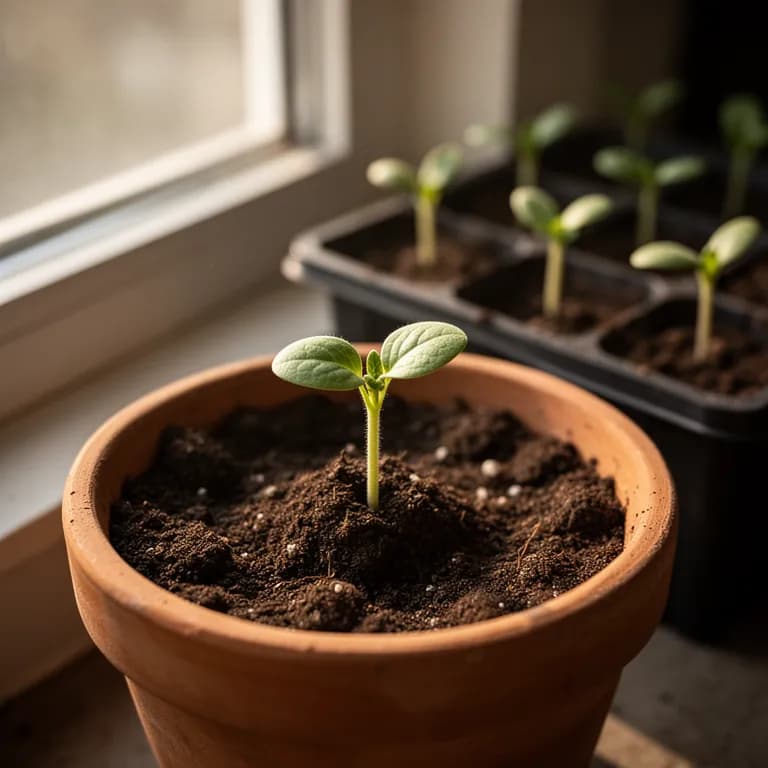
Sprout Development
Days 0–14
Planted seed potato pieces activate dormant eyes, which elongate into pale shoots that push upward through the soil. Underground, a network of roots and stolons (horizontal stems) begins to spread outward from the seed piece. The seed piece provides all the energy during this phase.
💡 Care Tip
Keep soil moist but not waterlogged — seed pieces rot in saturated soil. If shoots are nipped by frost, they'll regrow from below-ground nodes. Watch for gaps in emergence and replant bare spots within the first 2 weeks.
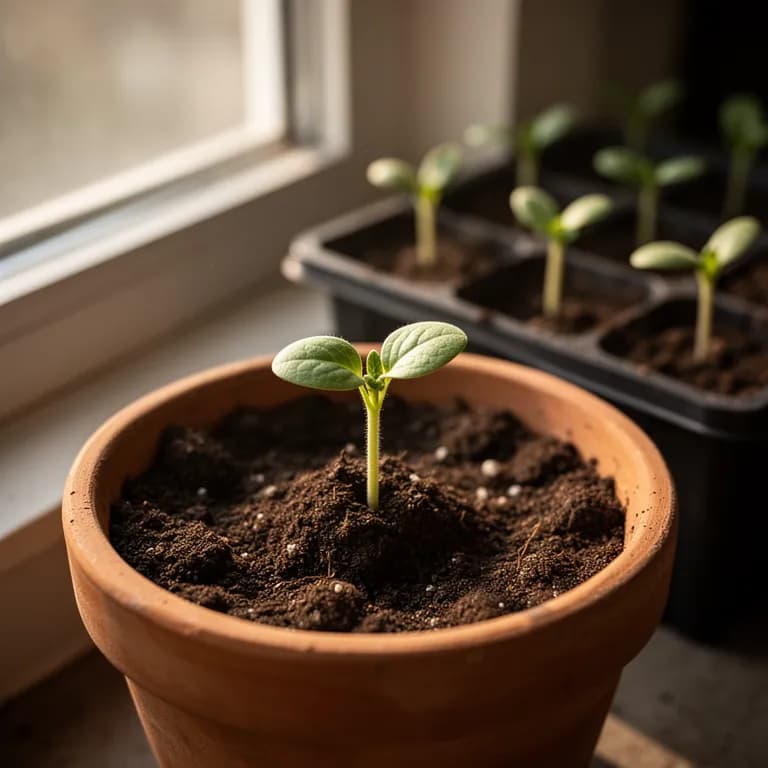
Sturdy shoots pushing through hilled soil
Monthly Care Calendar
What to do each month for your Potato
May
You are hereContinue hilling aggressively — this is the most important maintenance task. Mulch between rows with straw. Water consistently. Second side-dressing of nitrogen. Watch for late blight during wet weather.
Did You Know?
Fascinating facts about Potato
Potatoes were the first food grown in space — NASA and the University of Wisconsin created the technology in 1995 to grow potatoes aboard the Space Shuttle Columbia, paving the way for future space agriculture.
Potatoes thrive in cool weather and are among the first crops planted in spring, as soon as soil is workable and temperatures reach 7-10°C (45-50°F). Begin by purchasing certified disease-free seed potatoes rather than grocery store tubers, which may carry viruses or have been treated with sprout inhibitors. Cut larger seed potatoes into pieces with 2-3 eyes each, allowing cut surfaces to dry and callus for 1-2 days before planting to prevent rotting. Plant pieces 10-15 cm (4-6 inches) deep and 30 cm apart in trenches or individual holes with eyes facing upward.
The key technique for growing potatoes is hilling — as shoots emerge and grow to 15-20 cm tall, mound soil, straw, or compost around the stems, leaving only the top few leaves exposed. This encourages more tubers to form along the buried stem and prevents tubers near the surface from turning green with toxic solanine. Repeat hilling 2-3 times during the growing season, eventually creating mounds 30-40 cm tall. Alternatively, grow potatoes in straw mulch, grow bags, or towers for easy harvesting.
Water consistently with 2.5-5 cm per week, especially during flowering when tuber formation is most active. Irregular watering causes knobby, cracked, or hollow tubers. Mulch between rows with straw to keep soil cool, retain moisture, and suppress weeds. Stop watering when foliage begins to yellow and die back naturally — this signals tubers are maturing and curing their skins for storage.
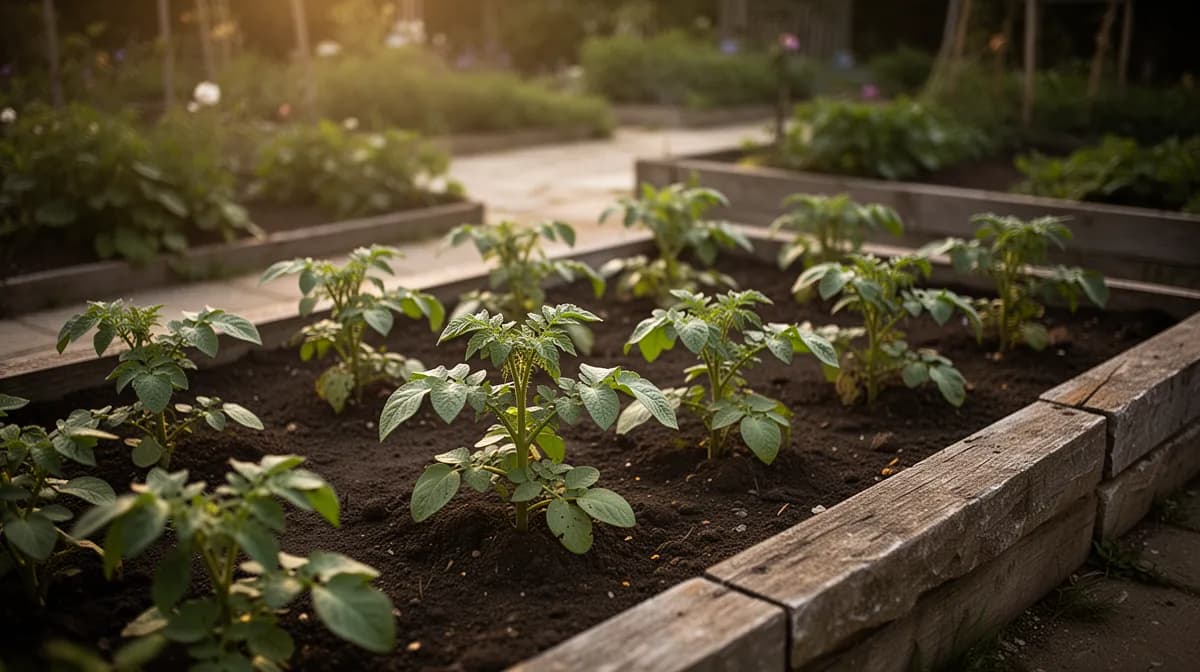
Well-hilled potato rows in a productive garden
The potato is one of humanity's most important food crops, with a history stretching back at least 10,000 years to the high Andes of Peru and Bolivia. Wild potato species (there are over 200) grew at elevations above 3,500 meters where few other crops could survive, making them essential for Andean civilizations. The Inca Empire cultivated hundreds of potato varieties adapted to different altitudes, soils, and climates, and developed chuño — a freeze-dried preservation technique using the extreme temperature swings of high altitude — that allowed potatoes to be stored for years.
Spanish conquistadors brought potatoes to Europe in the 1570s, but the crop faced enormous resistance. Europeans viewed this strange underground vegetable with suspicion — some claimed it caused leprosy, others considered it food fit only for animals. It took over 200 years and several devastating famines before potatoes gained acceptance, largely through the efforts of champions like Antoine-Augustin Parmentier in France and Frederick the Great in Prussia, who recognized the potato's unmatched ability to produce more calories per acre than any grain crop.
The potato's dark chapter came in 1845 when late blight swept through Ireland, destroying the crop that over 3 million people depended upon for the majority of their calories. The resulting famine killed over a million people and drove another million to emigrate, forever changing the demographics of Ireland and America. Today, the potato is the world's fourth-largest food crop (after rice, wheat, and corn), with over 370 million tonnes produced annually. China and India are now the largest producers, but potatoes are grown in over 125 countries from sea level to 4,700 meters elevation.
Potatoes are grown from seed potatoes — tuber pieces with growth buds called 'eyes' — not from true botanical seed. Always purchase certified disease-free seed potatoes from a reputable garden supplier. Never plant grocery store potatoes: they may carry viruses, bacterial diseases, or have been treated with sprout inhibitors that prevent growth. Order seed potatoes 2-4 weeks before your intended planting date to allow time for chitting.
Chitting (pre-sprouting) gives potatoes a significant head start, especially in short-season climates. Place seed potatoes in a single layer in a bright, cool (10-15°C / 50-60°F) location with the end containing the most eyes facing upward. Over 2-4 weeks, sturdy 1-2 cm green or purple sprouts will develop. These sprouted potatoes establish faster and produce earlier harvests — particularly valuable in zones 3-5 where the growing season is limited.
Cut larger seed potatoes into pieces weighing at least 40-50g with 2-3 eyes each. Allow cut surfaces to dry and callus for 24-48 hours in a warm, dry place before planting — this creates a protective barrier against soil-borne rot organisms. Small seed potatoes (egg-sized, approximately 50g) should be planted whole. Plant pieces 10-15 cm (4-6 inches) deep and 30 cm apart in trenches, with eyes and sprouts facing upward, as soon as soil reaches 7°C (45°F). In most temperate climates, this means planting 2-4 weeks before the last frost date — potato shoots tolerate light frost and will regrow if nipped. For the longest harvest window, plant early, mid-season, and late varieties together.
Potatoes thrive in loose, well-drained, slightly acidic soil with a pH of 5.0-6.0 — maintaining acidity is important because the common scab pathogen (Streptomyces scabies) thrives in alkaline conditions above pH 5.5. If your soil is above 6.0, avoid adding lime to potato beds and consider amending with sulfur to lower pH. Work 8-10 cm of aged compost or well-rotted manure into beds several weeks before planting. Avoid fresh manure, which can burn seed pieces, introduce pathogens, and promote scab.
Apply a balanced fertilizer (10-10-10 or 5-10-10) at planting time, placing it in the trench bottom below the seed piece to avoid direct contact. Side-dress with a nitrogen source (blood meal, fish emulsion, or ammonium sulfate) when plants reach 15 cm tall and again during hilling. Potassium is especially critical for potato quality — it improves tuber size, skin quality, storage life, and resistance to bruising. Incorporate greensand, sulfate of potash, or wood ash (sparingly, as ash raises pH) into beds before planting.
Avoid excessive nitrogen in the second half of the growing season — it promotes lush foliage at the expense of tuber bulking, delays maturity, and can reduce storage quality. Once flowering begins, stop nitrogen applications entirely and let the plant focus on tuber development. In heavy clay soils, grow potatoes in raised beds, grow bags, or thick straw mulch (the Ruth Stout method) for better drainage, easier hilling, and cleaner harvest. After harvest, plant a nitrogen-fixing cover crop (crimson clover, winter peas) to replenish the soil for next year's rotation.
Check Your Zone
See if Potato is suitable for your location.
7°C – 24°C
45°F – 75°F
Potatoes are cool-season crops that perform best in moderate temperatures. Tuber formation is optimal between 15-20°C (59-68°F) — above 25°C (77°F), tuber growth slows dramatically and above 30°C (86°F) it virtually stops. Foliage tolerates light frost but is killed by hard freezes below -2°C (28°F). Underground tubers survive brief soil temperatures down to -1°C.
Common issues affecting Potato and how to prevent and treat them organically.
Green-skinned potatoes are the most common issue and result from tubers being exposed to light — solanine, the toxic compound responsible for the green color, develops rapidly in sunlight. Prevent greening by hilling soil around plants consistently as they grow and mulching heavily with straw. If you find green-skinned tubers at harvest, the green portions (and about 1 cm below) should be cut away before eating; lightly greened potatoes are safe once trimmed. Deeply green potatoes should be discarded entirely.
Hollow heart — a star-shaped cavity inside otherwise normal-looking large tubers — results from rapid, uneven growth caused by inconsistent watering or a sudden flush of nitrogen after a dry period. Prevention is straightforward: maintain consistent, moderate moisture and avoid heavy fertilizer applications after tuber initiation begins. Cracked or knobby, misshapen tubers also indicate irregular watering during the critical tuber development phase.
If plants grow tall with abundant dark-green foliage but produce few or small tubers, excessive nitrogen is almost certainly the cause — the plant is investing in leaves instead of tubers. Reduce nitrogen and ensure adequate potassium, which directs energy toward tuber formation. Poor yields with small tubers can also result from overcrowding (plant 30 cm apart minimum), insufficient hilling, or growing in compacted soil that physically restricts tuber expansion. Internal black spot — dark bruise marks inside the flesh — is caused by rough handling during and after harvest; always handle potatoes as gently as eggs.
Beans fix nitrogen that potatoes can use, and their root structures don't compete. Marigolds deter Colorado potato beetles through their pungent volatile oils. Garlic and horseradish planted nearby repel many potato pests with their strong sulfur compounds. Avoid planting near tomatoes, peppers, and eggplant — all are nightshades sharing diseases like late blight and pests like Colorado potato beetle, so proximity concentrates pest and disease pressure. Cucumbers and squash also make poor neighbors as they compete aggressively for soil nutrients.
- 1Always buy certified disease-free seed potatoes — never plant grocery store potatoes, which carry diseases and may have been treated with sprout inhibitors.
- 2Chit (pre-sprout) seed potatoes for 2-4 weeks in bright, cool conditions before planting. This gives a 2-3 week head start and is essential in short-season climates.
- 3Hill aggressively and often — mound soil around stems when shoots reach 15-20 cm, leaving only the top leaves exposed. Repeat 2-3 times during the season. More hilling = more tubers.
- 4Maintain soil acidity below pH 5.5 to suppress common scab — avoid liming potato beds. Use sulfur amendments if your soil is too alkaline.
- 5Water consistently during tuber bulking (flowering onward) — this is when tuber size is determined. Irregular watering causes hollow heart, cracking, and knobby tubers.
- 6Stop watering and stop fertilizing when foliage begins to yellow. Leave tubers in ground for 2 weeks after foliage dies to cure skins — this dramatically improves storage life.
- 7Rotate potatoes on a strict 3-year cycle and never follow other nightshades (tomatoes, peppers, eggplant). Late blight, Verticillium wilt, and Colorado potato beetle all build up in soil.
- 8Grow in bags, towers, or straw mulch if your soil is heavy clay — this makes hilling easy and harvest effortless. Simply pull back the straw or dump the bag to collect clean tubers.
Potatoes offer two distinct harvest opportunities: new potatoes and mature storage potatoes. For new potatoes — small, thin-skinned baby tubers with delicate, creamy flesh — harvest 2-3 weeks after flowering begins. Carefully reach into the soil near the plant base and feel for egg-sized tubers, removing only a few without disturbing the main root system. New potatoes don't store well but their fresh, sweet flavor is a garden luxury unavailable in stores.
For mature storage potatoes, patience pays off. Wait until the foliage has completely yellowed and died back naturally — this signals that the plant has stopped growing and is redirecting energy into tuber maturation. After foliage death, wait an additional 2 weeks with tubers still in the ground for the skins to thicken and cure, which dramatically improves storage life. If late blight threatens, cut all foliage to ground level and wait 2 weeks before digging to prevent spores from infecting tubers.
Harvest on a dry day using a garden fork inserted at least 30 cm from the plant stem to avoid spearing tubers — speared potatoes must be eaten immediately as they won't store. Work carefully through the hill, lifting and sifting soil to find all tubers, including those that have wandered. Let freshly dug tubers air-dry on the soil surface for 1-2 hours (avoid direct sun, which causes greening), then brush off loose soil without washing. Cure storage potatoes in a dark, well-ventilated space at 10-15°C (50-60°F) and 85-90% humidity for 10-14 days — this heals skin wounds and converts sugars back to starch for optimal flavor. Handle gently throughout — bruised potatoes develop black spots internally and rot quickly in storage.
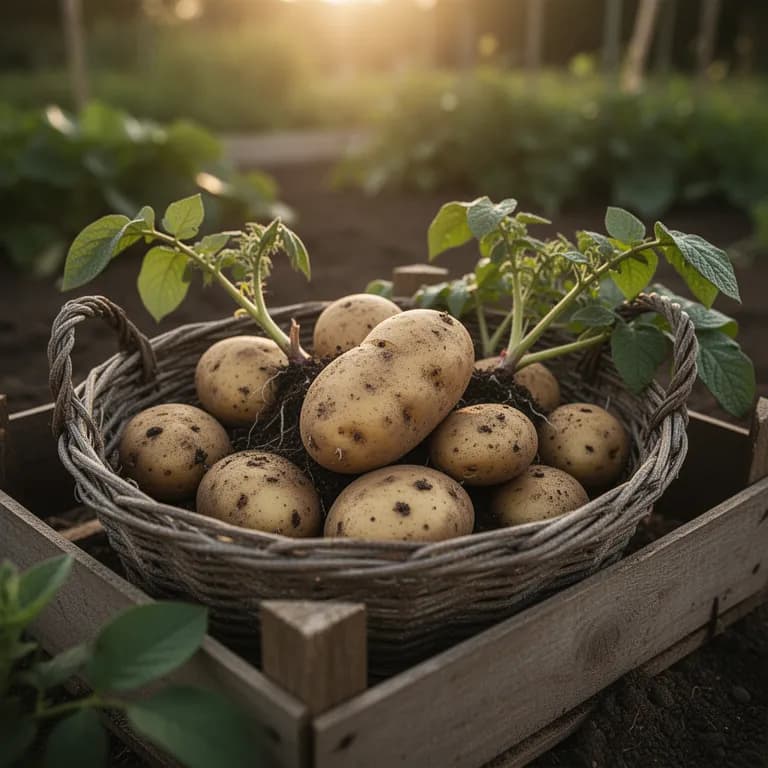
A bountiful potato harvest after months of patient hilling
Properly cured potatoes are among the longest-storing garden vegetables — under ideal conditions they'll keep 4-6 months or even longer. The perfect storage environment is dark, cool (4-7°C / 40-45°F), humid (85-90%), and well-ventilated. A root cellar is traditional; an unheated garage, cool basement, or insulated outdoor pit also works. Store in burlap sacks, paper bags, or ventilated crates — never sealed plastic, which traps moisture and promotes rot. Keep potatoes away from apples, which emit ethylene gas that causes premature sprouting.
Never refrigerate raw potatoes — temperatures below 4°C (39°F) convert starch to sugar, causing an unpleasant sweet taste and dark discoloration when fried or roasted. If sprouts develop on stored potatoes, simply break them off — the potato is still fine to eat as long as the flesh is firm. Check stored potatoes monthly and immediately remove any showing soft spots, mold, or strong odor before they affect their neighbors.
For freezing, potatoes must be cooked first — raw frozen potatoes turn gray and grainy. Blanch cubes or slices for 3-5 minutes, cool, and freeze on sheet pans before bagging. Mashed potatoes freeze beautifully in portion-sized containers with a bit of butter and cream mixed in. French fries can be par-fried, frozen on trays, and finished later. Pressure canning (not water-bath — potatoes are low-acid) preserves cubed potatoes at 10 PSI for 35 minutes (pint jars) or 40 minutes (quarts). Dehydrating is excellent for long-term storage: blanch thin slices and dry at 52°C (125°F) for 8-12 hours until brittle — they rehydrate well for hash browns, gratins, and soups.
Plan your garden with ease
Love growing Potato? Use our free garden planner to design your beds, track planting dates, and get personalized care reminders.
Nutritional Info
Per 100g serving
77
Calories
Health Benefits
- Excellent source of potassium (425mg per 100g) — more per serving than bananas, supporting healthy blood pressure and heart function
- Rich in Vitamin C, providing about 22% of daily needs per medium potato — important for immune function and collagen production
- Good source of Vitamin B6, essential for brain development, neurotransmitter synthesis, and protein metabolism
- The skin contains most of the fiber and iron — eating potatoes with skin on doubles fiber intake and provides 10% of daily iron
- Contains resistant starch (especially when cooled after cooking) that feeds beneficial gut bacteria and improves blood sugar response
- One of the most satiating foods tested — potatoes rank #1 on the satiety index, keeping you fuller longer per calorie than any other food
💰 Why Grow Your Own?
A 2 kg bag of certified seed potatoes ($8-12) plants a 6-meter row and can yield 20-40 kg of potatoes worth $40-80+ at organic grocery prices. Potatoes offer some of the best dollar-per-calorie returns in the garden. Growing your own also gives access to extraordinary varieties — Purple Majesty, Russian Banana fingerlings, Rose Finn Apple — that rarely appear in stores and command premium prices at farmers' markets.
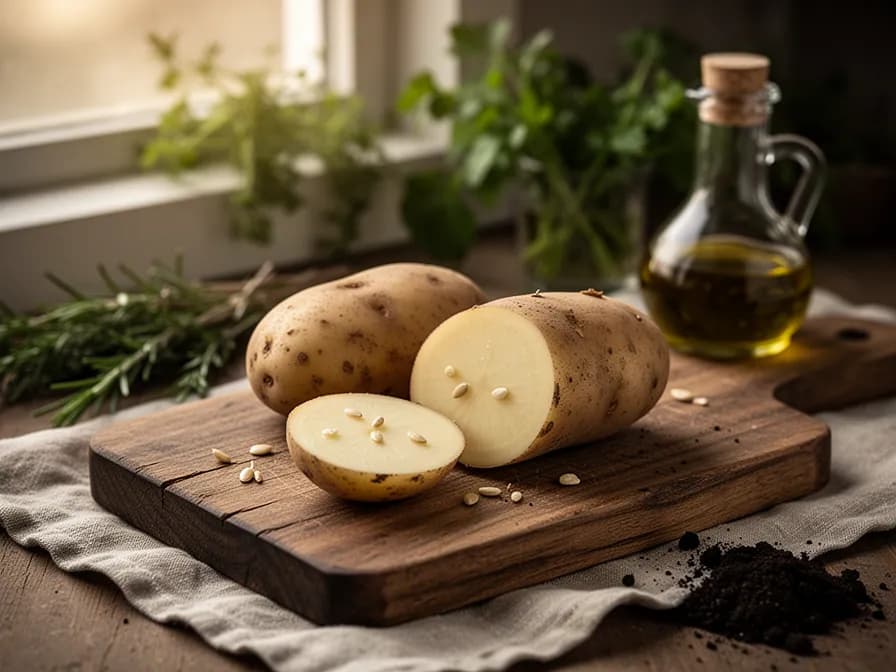
Potatoes provide more potassium than bananas
Quick Recipes
Simple recipes using fresh Potato
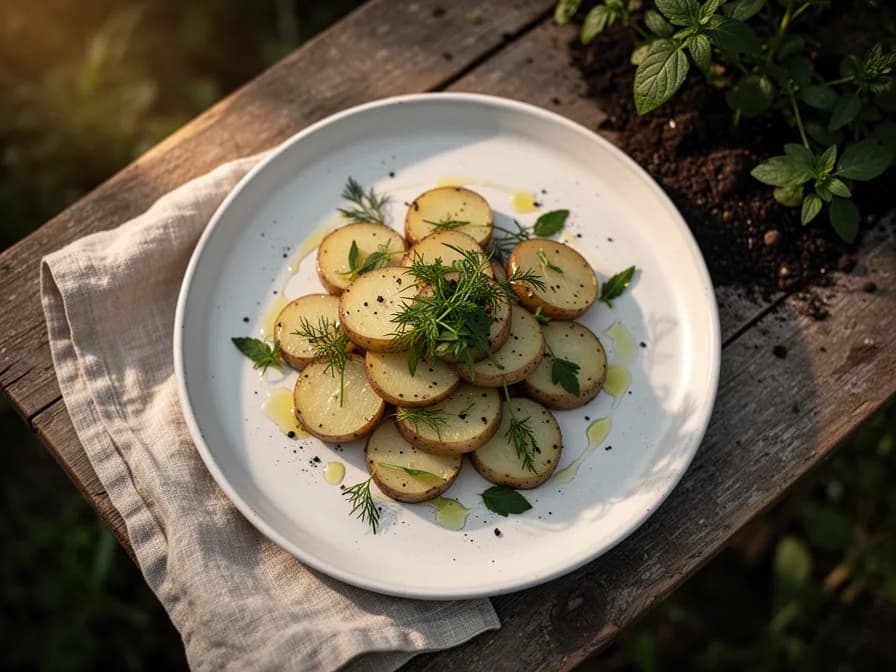
Perfect Crispy Roasted Potatoes
50 minThe British Sunday roast secret: par-boil, rough up the surfaces, and blast in hot fat for potatoes with a golden, shatteringly crispy exterior and fluffy interior. Once you master this technique, you'll never go back to plain roasted potatoes.
Classic Creamy Mashed Potatoes
30 minThe key to silky, lump-free mashed potatoes: use starchy Russets, rice them while hot, and fold in warm (never cold) butter and cream. The result is impossibly smooth and rich — restaurant-quality comfort food at home.
Loaded Baked Potato
60 minA hearty, satisfying meal built on a perfectly baked Russet potato with a crispy salted skin and fluffy interior, piled with classic toppings. Simple enough for a weeknight, impressive enough for guests.
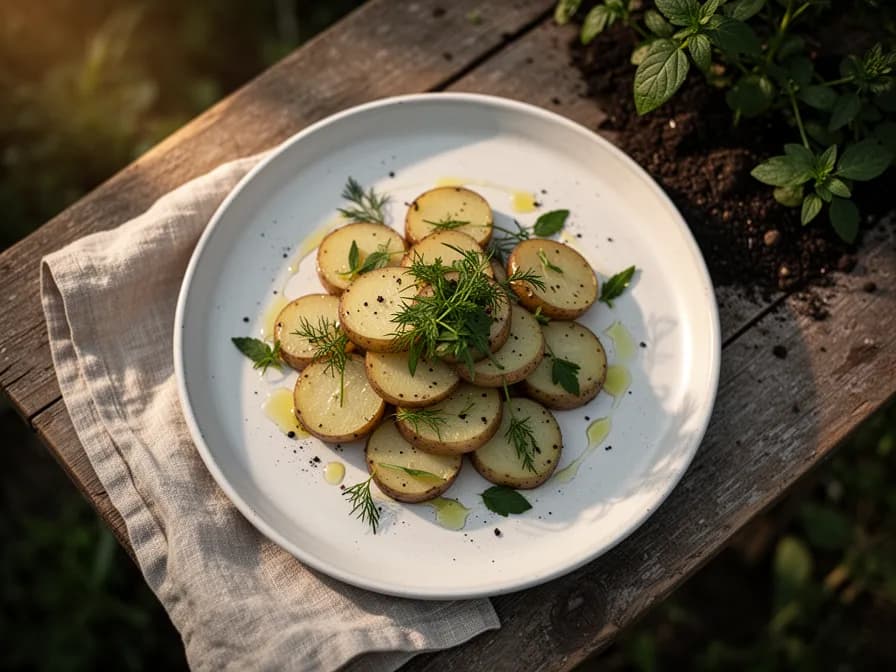
Crispy roasted potatoes with rosemary and garlic
Yield & Spacing Calculator
See how many Potato plants fit in your garden bed based on the recommended 30cm spacing.
16
Potato plants in a 4×4 ft bed
4 columns × 4 rows at 30cm spacing
Popular Varieties
Some of the most popular potato varieties for home gardeners, each with unique characteristics.
Yukon Gold
A popular all-purpose potato with yellow flesh, buttery flavor, and smooth texture. Moist enough for mashing yet holds together when roasted. 80-90 days. Good disease resistance and moderate storage life.
Russet Burbank
The classic baking potato with high starch content producing fluffy, dry flesh ideal for baking, mashing, and french fries. 95-110 days. Excellent long-term storage variety. Requires consistent watering to prevent hollow heart.
Red Pontiac
A high-yielding red-skinned, white-fleshed potato with waxy texture that holds shape well in boiling. Excellent for roasting, salads, and soups. 80 days. Adapts to many soil types and tolerates heat.
Kennebec
A versatile white potato with outstanding yields and disease resistance, particularly against late blight. Excellent all-purpose variety for baking, frying, and boiling. 80-90 days. Stores well.
Purple Majesty
A striking deep-purple potato with high antioxidant content that retains its vivid color when cooked. Moist, nutty flesh ideal for roasting and salads. 85 days. Adds visual drama to any dish.
Potatoes are arguably the world's most versatile food, prepared in hundreds of ways across every cuisine on Earth. The key to great potato cooking is matching variety to preparation: starchy types (Russet, Idaho) produce the fluffiest baked potatoes and crispiest french fries because their low moisture and high starch create that signature light, dry interior. Waxy varieties (Red Bliss, fingerlings, new potatoes) hold their shape beautifully in potato salads, gratins, and soups. All-purpose varieties (Yukon Gold) bridge both worlds with their buttery flavor and moderate starch content.
Classic preparations span the globe: French fries and pommes frites, British fish and chips, Italian gnocchi, Indian aloo gobi, Spanish patatas bravas, German kartoffelsalat, Peruvian causa, and American loaded baked potatoes are just a sampling. Mashed potatoes — the ultimate comfort food — benefit from warming the milk and butter before adding, and using a ricer rather than a masher for the smoothest texture. Roasted potatoes achieve their best crispness when par-boiled first, then roughed up in a colander before roasting at 220°C (425°F) in hot fat.
Nutritionally, potatoes are more impressive than their 'empty starch' reputation suggests. A medium potato with skin provides 27% of daily Vitamin C, 25% of potassium (more than a banana), 18% of Vitamin B6, and 3g of fiber. They're naturally fat-free, gluten-free, and one of the most affordable sources of energy and nutrients available. The skins are particularly nutritious — that's where most of the fiber, iron, and B vitamins concentrate.
When should I plant Potato?
Plant Potato in March, April, May. It takes approximately 90 days to reach maturity, with harvest typically in July, August, September.
What are good companion plants for Potato?
Potato grows well alongside Green Beans, Corn, Marigold, Garlic. Companion planting can improve growth, flavor, and natural pest control.
What hardiness zones can Potato grow in?
Potato thrives in USDA hardiness zones 3 through 10. With greenhouse protection, it may be grown in zones 1 through 11.
How much sun does Potato need?
Potato requires Full Sun (6-8h+). This means at least 6-8 hours of direct sunlight daily.
How far apart should I space Potato?
Space Potato plants 30cm (12 inches) apart for optimal growth and air circulation.
What pests and diseases affect Potato?
Common issues include Colorado Potato Beetle, Late Blight, Wireworm, Scab. Prevention through good garden practices like crop rotation, proper spacing, and companion planting is the best approach. See the detailed pests and diseases section above for symptoms, prevention, and treatment for each.
How do I store Potato after harvest?
Properly cured potatoes are among the longest-storing garden vegetables — under ideal conditions they'll keep 4-6 months or even longer. The perfect storage environment is dark, cool (4-7°C / 40-45°F), humid (85-90%), and well-ventilated. A root cellar is traditional; an unheated garage, cool baseme...
What are the best Potato varieties to grow?
Popular varieties include Yukon Gold, Russet Burbank, Red Pontiac, Kennebec, Purple Majesty. Each has unique characteristics suited to different growing conditions and culinary preferences. See the varieties section above for detailed descriptions.
What soil does Potato need?
Potatoes thrive in loose, well-drained, slightly acidic soil with a pH of 5.0-6.0 — maintaining acidity is important because the common scab pathogen (Streptomyces scabies) thrives in alkaline conditions above pH 5.5. If your soil is above 6.0, avoid adding lime to potato beds and consider amending ...
Can I plant potatoes from the grocery store?
It's strongly discouraged. Grocery store potatoes may carry viral diseases (like potato virus Y or leafroll virus) that will infect your soil and reduce yields for years. They're also often treated with sprout inhibitors like chlorpropham that prevent growth. Always buy certified disease-free seed potatoes from a reputable garden supplier — the small investment protects your entire garden.
What does 'chitting' mean and is it necessary?
Chitting is pre-sprouting seed potatoes by placing them in a bright, cool spot for 2-4 weeks before planting. It gives plants a 2-3 week head start and produces earlier harvests. It's highly recommended in zones 3-5 where the growing season is short, and beneficial everywhere. Place potatoes in egg cartons with the end that has the most eyes (the rose end) facing up.
Why are my potatoes green and are they safe to eat?
Greening occurs when tubers are exposed to light, triggering chlorophyll and solanine production. Solanine is toxic in large quantities, causing nausea and digestive upset. Lightly green potatoes are safe after cutting away the green portion and about 1 cm below it. Deeply green potatoes should be discarded. Prevent greening by hilling soil consistently and storing harvested potatoes in complete darkness.
How many potatoes will one seed potato produce?
One seed potato piece (with 2-3 eyes) typically produces 5-10 tubers weighing 1-2 kg total, depending on variety and growing conditions. The number of tubers is largely determined during the tuber initiation phase — consistent watering and proper hilling during this period maximize tuber count. Early varieties tend to produce fewer but larger tubers; late varieties may produce more numerous smaller ones.
When should I harvest potatoes?
For new potatoes: harvest 2-3 weeks after flowering begins — gently dig around the base and take a few small tubers. For storage potatoes: wait until all foliage has yellowed and died back, then wait 2 more weeks for skins to cure in the ground. Dig on a dry day using a fork inserted 30 cm from the stem. Cure harvested tubers for 10-14 days in a dark, 10-15°C space before moving to cool storage.
Can I grow potatoes in containers?
Absolutely — potatoes are one of the best container vegetables. Use at least a 40-liter (10-gallon) container per plant with drainage holes. Start with 15 cm of potting mix, place 2-3 seed potato pieces, and cover with 10 cm of mix. As shoots grow, continue adding mix until the container is full — this is hilling in miniature. Keep soil consistently moist (containers dry out faster than ground). Grow bags are excellent because you can simply roll down the sides to harvest.
Ready to Grow Potato?
Add Potato to your garden plan and start designing your perfect layout.

Vladimir Kusnezow
Gardener and Software Developer
Zone 6b gardener. Growing vegetables and fruits in soil and hydroponics for 6 years. I built PlotMyGarden to plan my own gardens.
Jump to Section