Little Gem Lettuce
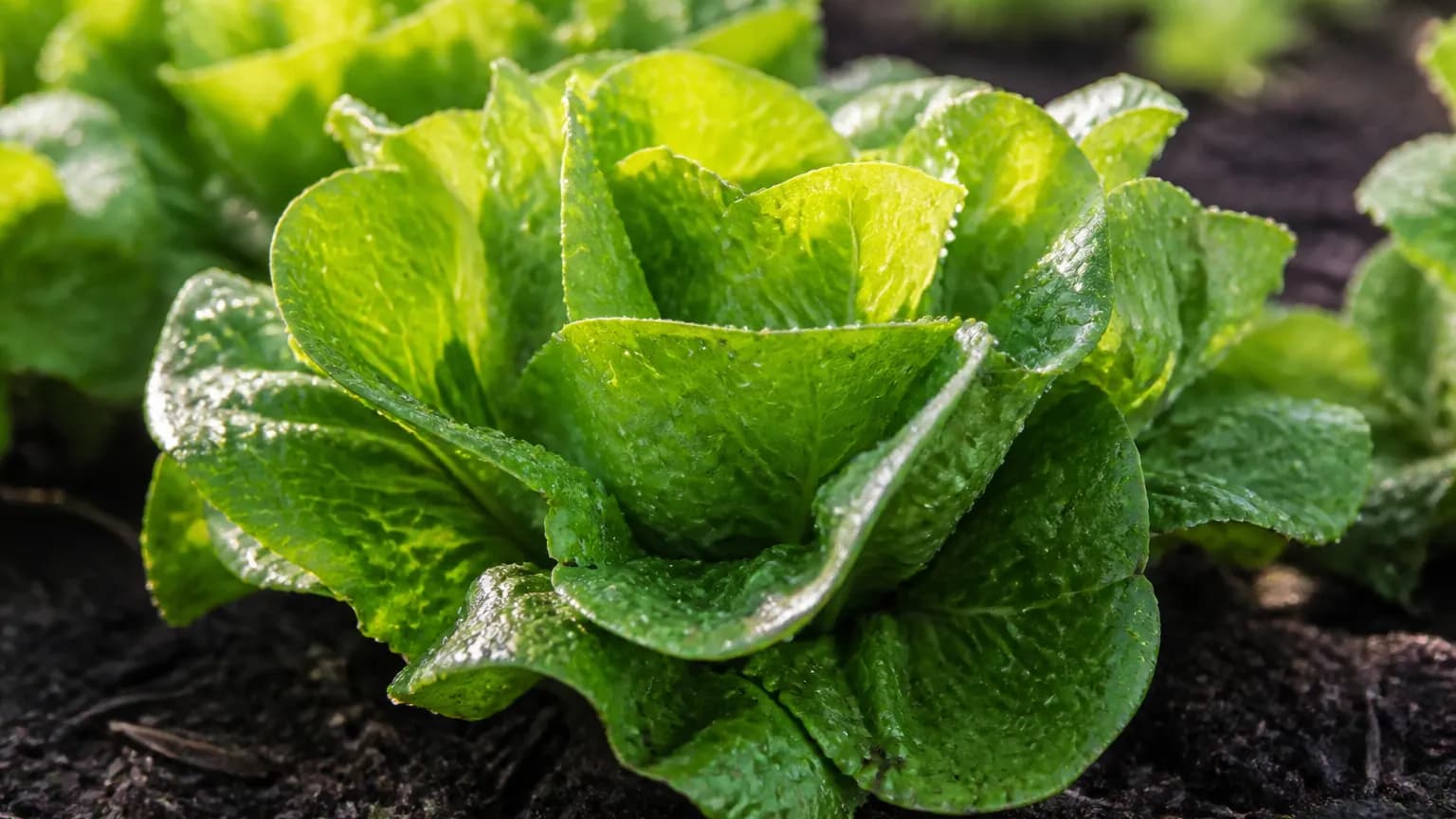
A compact miniature romaine forming tight, sweet heads about six inches tall, perfect for individual serving-sized salads.





On this pageOverview
Meet Little Gem Lettuce
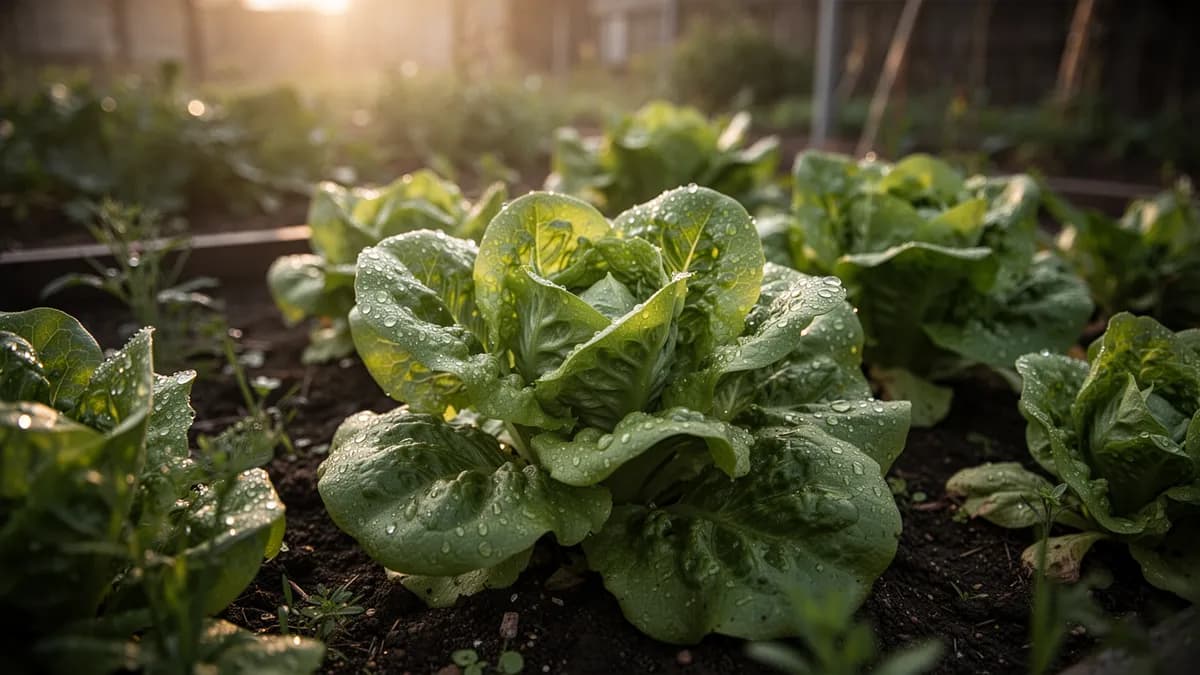
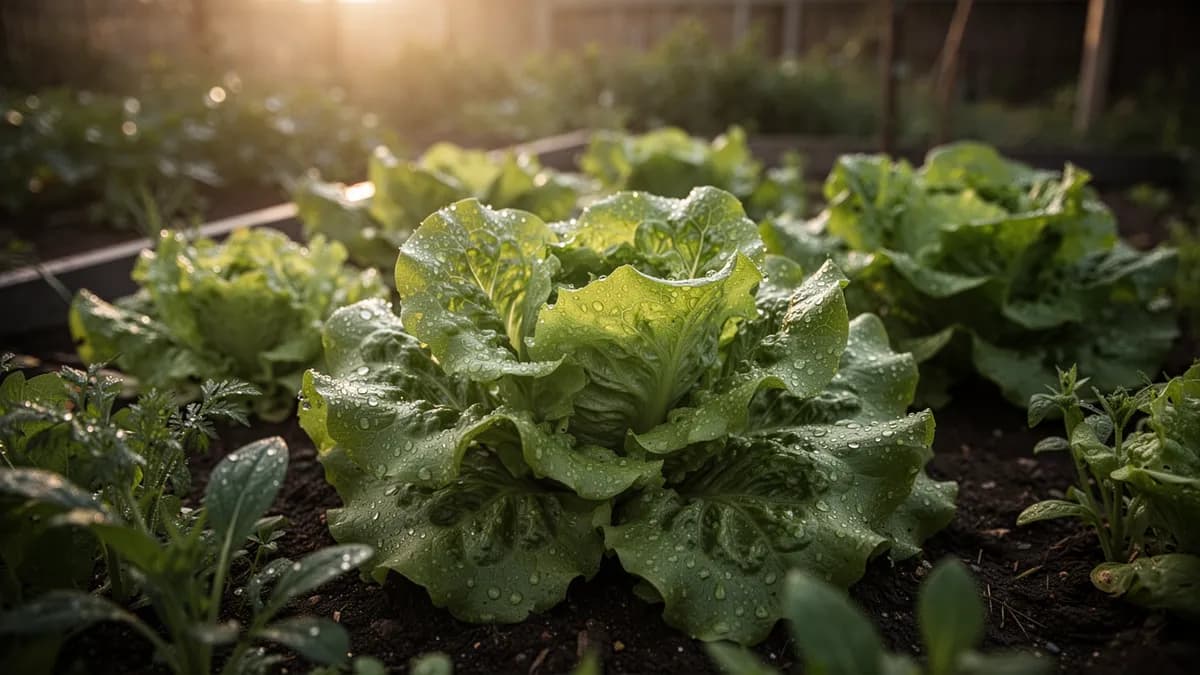
A compact miniature romaine forming tight, sweet heads about six inches tall, perfect for individual serving-sized salads. Combines the crunch of romaine with a sweeter, more buttery flavor in a space-efficient package. Excellent for container gardening and close-spaced intensive beds. More bolt-resistant than standard romaine, extending the harvest season into warmer weather.
When to plant Little Gem Lettuce
Sow seeds one-eighth inch deep in moist seed-starting mix at 60 to 68 degrees Fahrenheit. Do not cover heavily as lettuce needs light for germination. Germination takes 5 to 8 days. Grow seedlings at cool temperatures of 55 to 65 degrees under bright light. Transplant with 4 true leaves after 5 to 7 days of hardening off. Direct sowing in garden beds also works well from spring through fall.
Your Little Gem Lettuce Year
Composed for Zone 7 · typical seasons · frost passes Apr 2, returns Nov 1
Plant Little Gem Lettuce Mar – Apr, Sep – Oct, pick May – Jun, Oct – Nov. Check the planting methods below and set your climate to personalize these windows.
How to grow Little Gem Lettuce
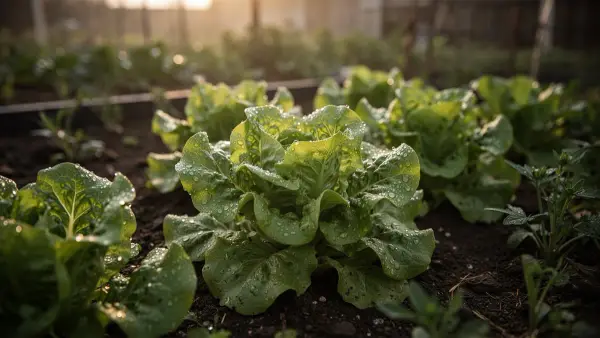
Little Gem is a miniature romaine-butterhead cross producing compact, sweet, crunchy heads about 6 inches tall. Start seeds indoors 4 to 6 weeks before the last frost or direct sow in early spring. Sow seeds one-eighth inch deep, barely covering them as lettuce needs light for germination. Space plants 6 to 8 inches apart in rows 10 inches apart.
Little Gem thrives in cool weather between 55 and 70 degrees Fahrenheit. It is more heat-tolerant than many lettuces but will bolt when temperatures consistently exceed 80 degrees. Succession sow every 2 weeks from early spring through fall for continuous harvest.
Keep soil consistently moist with light, frequent watering. Mulch around plants to keep roots cool and retain moisture. Little Gem matures quickly in 50 to 60 days, making it ideal for intensive gardening. Its compact size makes it perfect for containers, raised beds, and small spaces. Apply dilute liquid fertilizer every 2 weeks for the best head development.
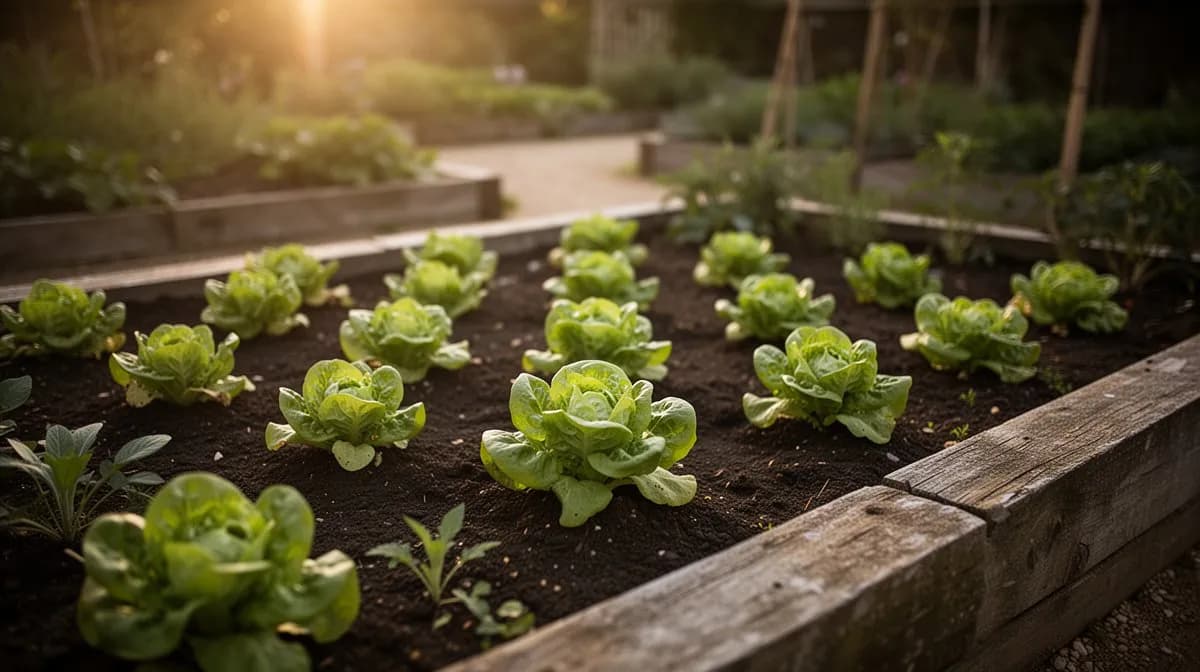
72 plants fit a 4 × 8 ft bed
Each Little Gem Lettuce wants 20 cm of elbow room. The planner keeps that spacing for you — every plant, every bed.
Little Gem Lettuce's best neighbours
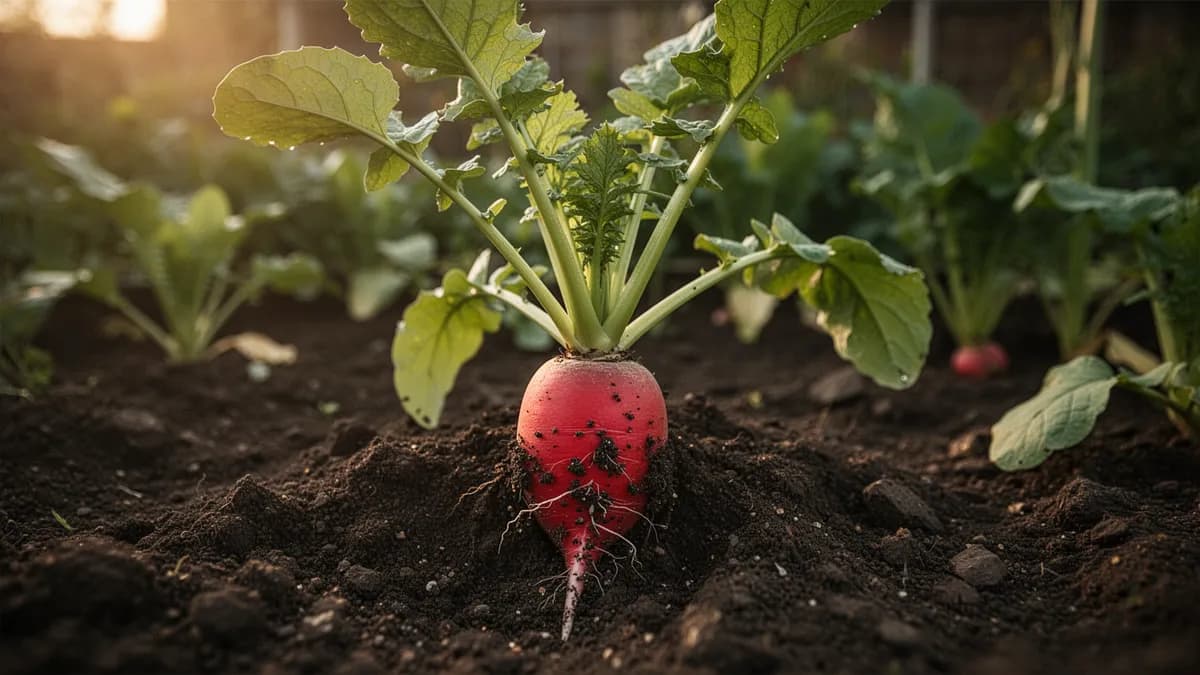
Plant Little Gem alongside carrots, radishes, and strawberries. Taller crops like peas and beans provide beneficial afternoon shade. Chives and garlic help deter aphids. The compact size of Little Gem makes it an excellent interplanting companion between slower-growing crops like brassicas and tomatoes.
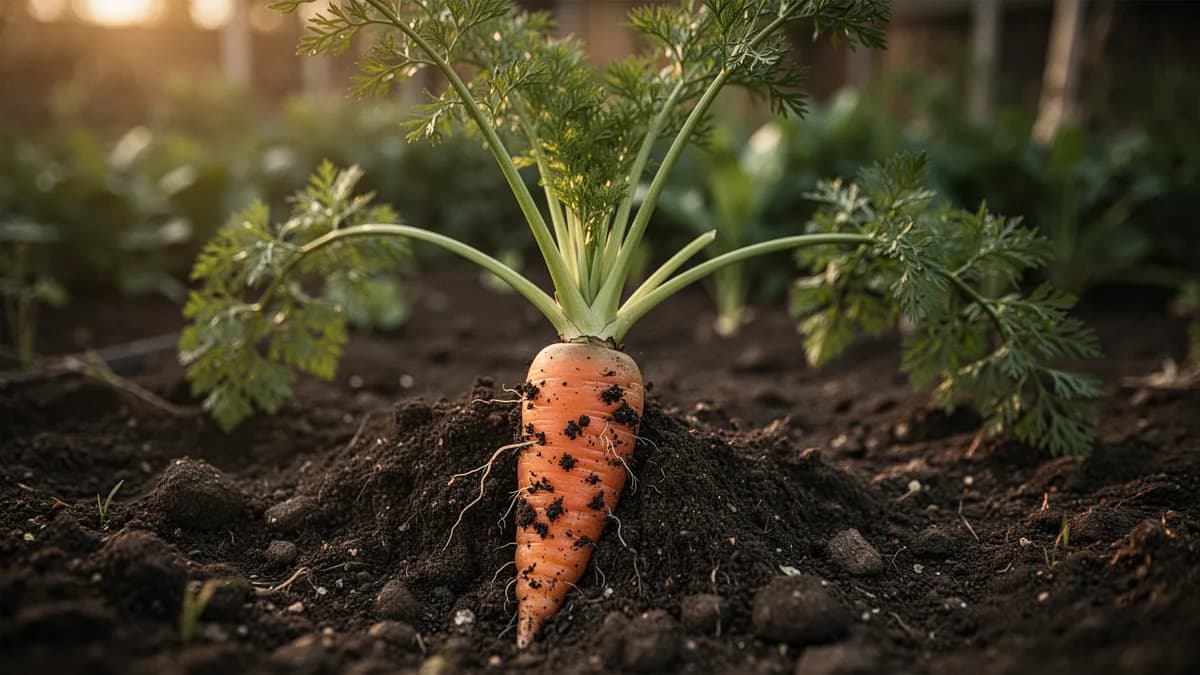
Carrot belongs beside it.
Old growers' knowledge, checked against Little Gem Lettuce's real companion table below — test any plant you're growing.
Try Little Gem Lettuce in a bed — right here
A real planner bed with Little Gem Lettuce already in it. Tap a companion to place it and watch the pairing checks answer — green for good neighbours, red for a clash.


Related growing guides
Feed it well
Little Gem grows best in rich, well-drained soil with a pH between 6.0 and 7.0. Work in 2 inches of compost before planting. Apply dilute liquid fertilizer every 2 weeks for steady head development. Adequate calcium prevents tip burn on inner leaves. Avoid excessive nitrogen which produces loose, floppy heads rather than the desired tight, compact form.
Ideal Temperature
Hardiness Zone Compatibility
From seed to harvest, stage by stage
Germination
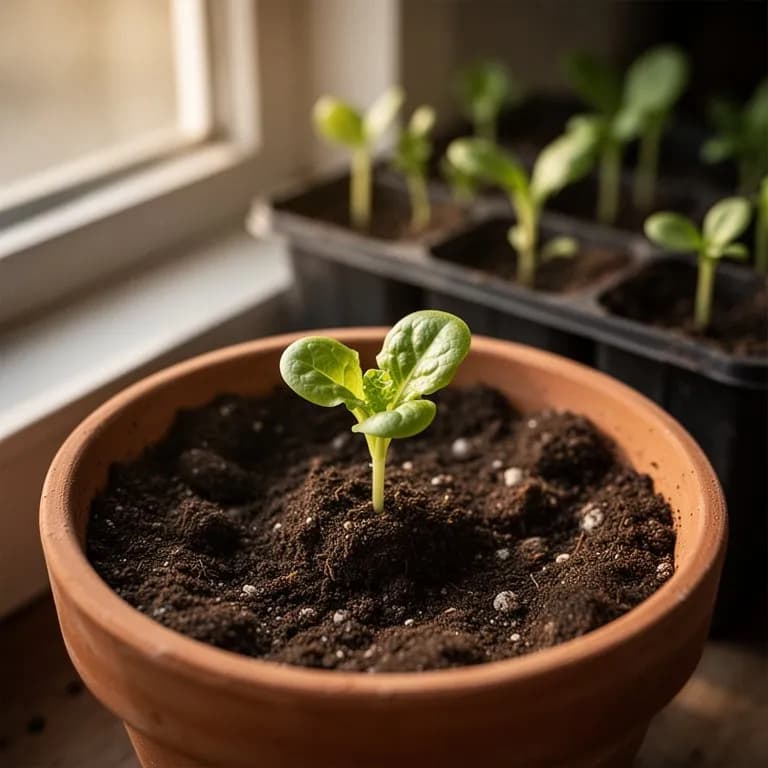
Seeds germinate rapidly in cool, moist conditions, often within 2-5 days. The tiny white radicle emerges first, anchoring into the soil, followed by delicate cotyledon leaves that unfold to begin photosynthesizing. Lettuce seeds require light to germinate and should be sown on the surface or barely covered with a fine dusting of soil or vermiculite.
Seedling Development
True leaves emerge with the characteristic smooth, slightly cupped shape of romaine-type lettuce. Seedlings develop a shallow but fibrous root system. Growth is steady in cool conditions and the first hints of the upright growth habit appear as leaves begin to orient vertically rather than flat.
Rosette Formation
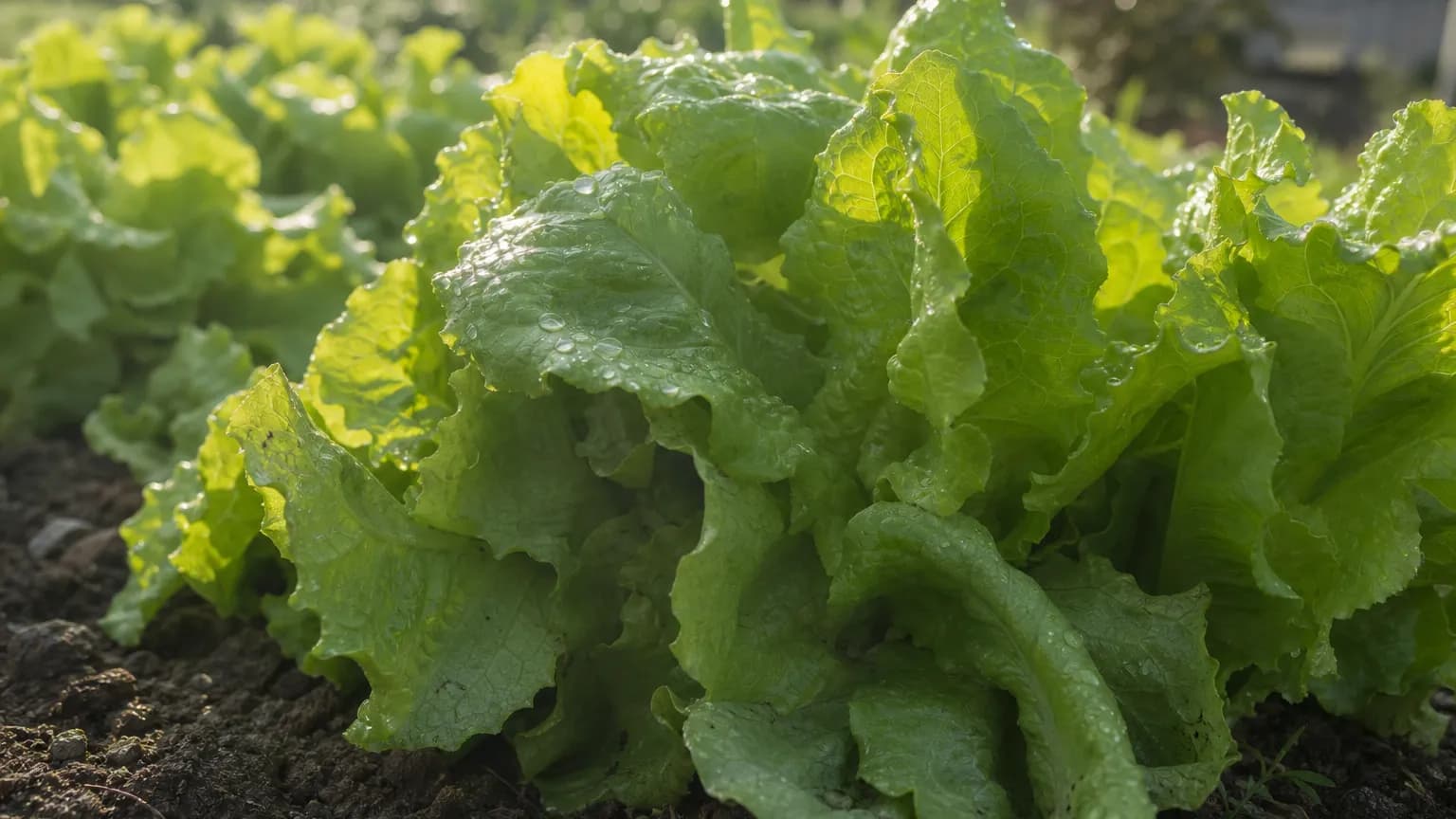
The plant rapidly produces new leaves from the central growing point, forming a tight upright rosette that is distinctly more compact than a standard romaine. Outer leaves darken to medium green while inner leaves remain lighter. The characteristic sweet crunch of Little Gem begins to develop as leaves thicken.
Heart Formation
The innermost leaves begin to fold tightly inward, forming the dense, blanched heart that makes Little Gem so prized. The outer wrapper leaves protect the heart from sun, creating a natural blanching effect that produces the pale, sweet, and exceptionally crunchy interior. The head firms noticeably when gently squeezed.
Harvest Window
Heads reach their ideal harvest size of 12-15 cm tall and 8-10 cm wide, weighing 150-200g each. The head should feel firm and dense when gently squeezed from the sides. Little Gem holds well in the garden for 7-10 days after reaching maturity before showing signs of bolting, giving a generous harvest window compared to many lettuce varieties.
Bolting
If not harvested, the central stem elongates rapidly as the plant transitions to flowering. The head loosens and opens, leaves become increasingly bitter, and a tall flower stalk emerges bearing small yellow daisy-like flowers. While the lettuce is no longer good for eating, the flowers attract beneficial insects and seeds can be saved for future planting.
Sow seeds no deeper than 3mm — lettuce is a light-dependent germinator and burying seeds too deep is the most common cause of poor germination. Keep soil consistently moist with a fine mist sprayer to avoid displacing tiny seeds.
Caring for Little Gem Lettuce month by month
What to do each month for your Little Gem Lettuce
October
You are hereHarvest autumn-maturing heads at their peak — cool-grown Little Gem is often the best of the entire year. In mild climates (zones 7-10), continue sowing for late autumn and early winter harvest under protection. Apply row covers or cloches to extend the season.
Know exactly what to do in your garden — every month
One email at the start of each month: what to sow, plant, and tackle right now — for your Little Gem Lettuce and everything growing around it. Plus a short starter course that helps you dodge the classic mistakes.
- What to do, right now
- Matched to your season
- Starter course included
Harvesting Little Gem Lettuce
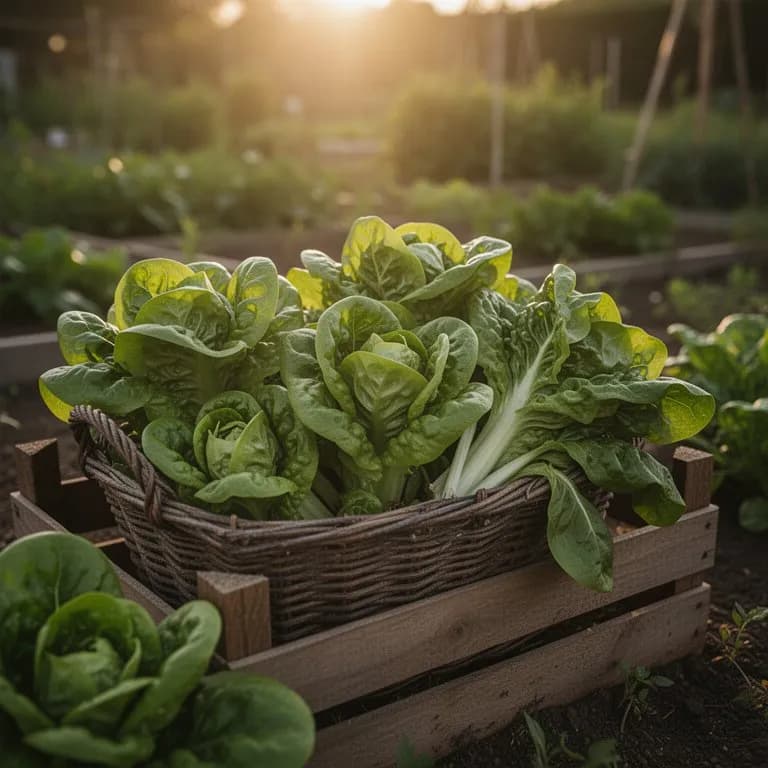
Harvest Little Gem when heads are firm and compact, about 50 to 60 days after sowing. Cut the entire head at the base with a sharp knife in the morning. Each head is a perfect single serving size. Alternatively, harvest outer leaves individually starting at 30 days for a longer picking window. Do not wait until the center begins to elongate, which signals bolting.
assuming you plant when the window opens — set your real date
Pick Little Gem Lettuce promptly and the plant keeps producing.
Storage & Preservation
Little Gem heads store exceptionally well for lettuce, lasting 1 to 2 weeks in the refrigerator in a perforated plastic bag. Their compact structure helps them stay crisp longer than loose-leaf varieties. Do not wash before storage. Little Gem does not freeze or dry well. For the freshest supply, succession plant for continuous harvest throughout the growing season.
What goes wrong — and the fix
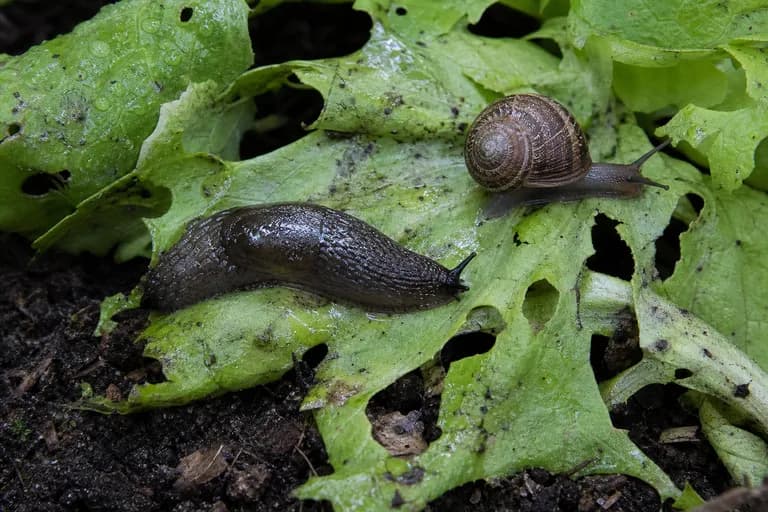
Slugs and Snails
PestHoles in outer leaves, slimy trails, and damage to the heart of the developing head.
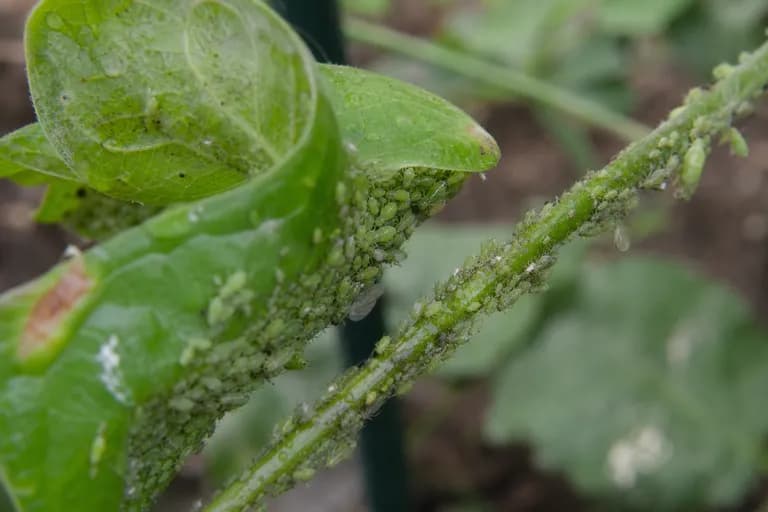
Aphids
PestSmall green insects hiding in leaf folds, causing curled and distorted inner leaves.
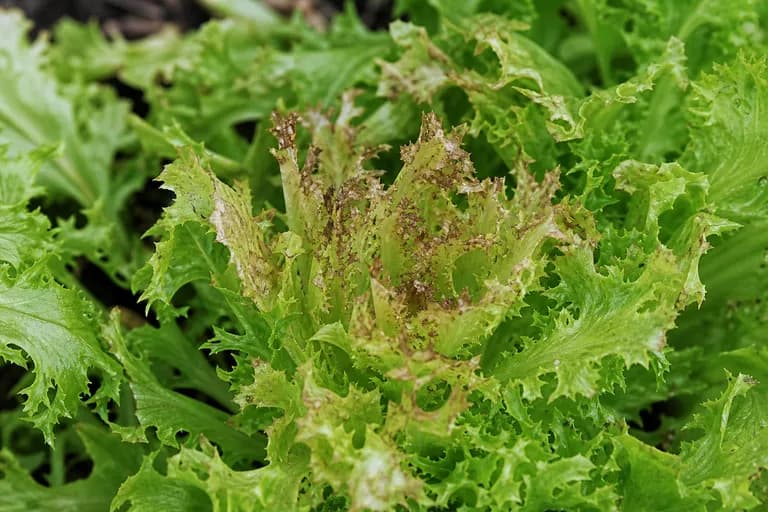
Tip Burn
DiseaseBrown, papery edges on inner leaves, caused by calcium deficiency or uneven watering.
Troubleshooting Common Problems
Bolting from heat or long days causes bitter, elongated heads. Tip burn on inner leaves results from inconsistent watering or calcium deficiency. Slugs damage developing heads by hiding in the tight leaf folds. Aphids can be difficult to remove from the compact heart. Loose heads result from insufficient light or excessive nitrogen fertilization.
Growing Tips
- Succession sow every 2-3 weeks from early spring to late summer for a continuous harvest. A single sowing produces heads that all mature within the same narrow window, so staggering plantings is essential to avoid a feast-or-famine cycle.
- Sow seeds on the surface and press gently into the soil — never bury them. Lettuce is a light-dependent germinator and seeds covered by more than 3-5mm of soil will have dramatically reduced germination rates.
- If sowing in summer when soil temperatures exceed 25°C (77°F), pre-chill seeds in the refrigerator for 24-48 hours before sowing and sow in the late afternoon when soil is cooling. This breaks heat-induced dormancy that prevents germination.
- Space plants 15-20 cm apart in all directions for the most efficient use of space. Little Gem's compact upright habit means it needs significantly less room than a standard romaine, making it ideal for intensive raised bed planting and square-foot gardening.
- Maintain even soil moisture throughout the growing period — lettuce has a shallow root system and cannot draw water from deep soil layers. Irregular watering causes bitter flavor, tip burn on inner leaves, and premature bolting.
- Apply a thin layer of organic mulch (straw, grass clippings, or compost) around plants after transplanting to keep roots cool, retain moisture, and suppress weeds. In hot weather, mulch can reduce soil temperature by 3-5°C, significantly delaying bolting.
- Provide 30-50% shade cloth in summer heat to extend the growing season into warmer months. Little Gem is more heat-tolerant than most lettuces, but shade keeps roots cool and flavor sweet when temperatures exceed 24°C (75°F).
- Harvest the whole head by cutting at the base with a sharp knife, leaving a 2 cm stump. Little Gem can sometimes regenerate a smaller second head from the stump within 3-4 weeks, giving you a bonus harvest from the same planting.
Grow your best Little Gem Lettuce yet — and everything around it.
Start a free plan today. Lay out your beds, drop in your Little Gem Lettuce, and let PlotMyGarden handle the timing, spacing, companions and reminders from seed to harvest basket.
Pick your Little Gem Lettuce
Little Gem
The classic miniature romaine with dense, sweet, crunchy heads and excellent flavor.
Winter Gem
A cold-hardy selection for overwintering under cover, producing tight heads in early spring.
Little Gem Red
A red-tinged version with burgundy outer leaves and sweet green hearts.
Sucrine
A French variety very similar to Little Gem with a slightly more buttery texture.
Little Gem lettuce heads retail for $2-4 each or $5-8 per bag of two at grocery stores, and premium organic heads fetch even more at farmers markets. A single $3 packet of seeds contains 500-1000 seeds — enough to grow an entire season of lettuce from spring to autumn. Growing 10-15 plants in succession throughout the season can save $80-150 on fresh lettuce, and the flavor of garden-fresh Little Gem harvested minutes before serving is incomparably superior to anything available in stores, where heads are typically 3-7 days old by the time they reach the shelf.
Quick recipes
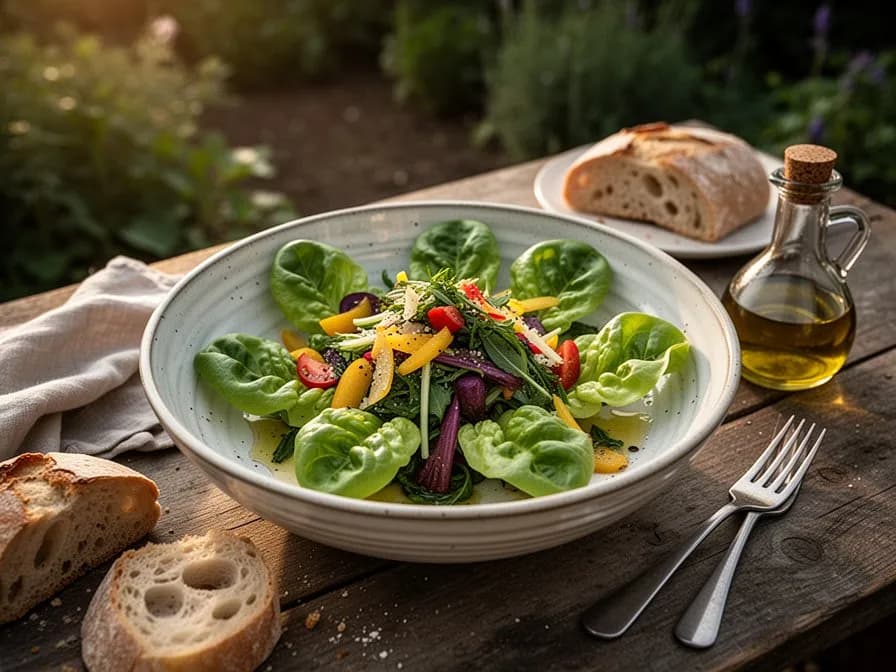
Grilled Little Gem with Anchovy Dressing
15 minLittle Gem's sturdy leaves hold up brilliantly on a hot grill — charring the cut surface caramelizes the natural sugars while the dense heart stays cool and crunchy. A punchy anchovy-lemon dressing and shaved Parmesan make this a showstopping side dish or light main.
8 ingredientsLittle Gem Lettuce Cups with Asian Chicken
20 minThe cupped leaves of Little Gem make them nature's perfect edible bowls. Filled with savory minced chicken in a sweet-salty sauce, they deliver a satisfying crunch in every bite with no utensils required — perfect as a light dinner or party appetizer.
9 ingredientsClassic Little Gem Caesar Salad
15 minLittle Gem was practically made for Caesar salad — the compact hearts can be halved or quartered and dressed without wilting, and their natural sweetness pairs beautifully with the bold, garlicky dressing. A modern bistro staple that elevates this classic.
8 ingredientsCulinary Uses
Little Gem is prized for its sweet crunch and perfect single-serving size. Halve lengthwise and grill with olive oil for a popular restaurant preparation. Use as boats for composed salads and appetizer fillings. The sweet, crunchy leaves are ideal for Caesar salad. Quarter and serve with blue cheese dressing as a classic wedge salad.
What's inside
Health Benefits
- Extremely rich in vitamin A and beta-carotene — the darker outer leaves provide up to 120% of the daily value per 100g, supporting healthy vision, immune function, and skin cell renewal.
- Good source of vitamin K (approximately 85% DV per 100g), which plays a critical role in blood clotting and calcium regulation for maintaining strong bones.
- Contains lutein and zeaxanthin, two carotenoid antioxidants concentrated in the retina that are strongly linked to reduced risk of age-related macular degeneration and cataracts.
- Provides folate (vitamin B9) important for DNA synthesis and cell division, making lettuce a valuable dietary component during pregnancy and for cardiovascular health.
- Very high water content (approximately 95%) combined with dietary fiber makes Little Gem an excellent food for hydration, satiety, and digestive regularity while contributing virtually no calories.
- Contains small amounts of the natural compound lactucarium in the milky stem sap, which has been traditionally associated with mild calming and sleep-promoting properties — ancient Egyptians and Romans used lettuce as a mild sedative.
Where Little Gem Lettuce comes from
Little Gem lettuce is a heritage variety that originated in England during the mid-1800s, where it was first cataloged as a compact, sweet-hearted lettuce ideal for small kitchen gardens. It is classified as a semi-cos (romaine) type, sitting uniquely between the butterhead and romaine categories with characteristics of both — the tender sweetness of a butterhead and the crisp, upright structure of a romaine. The variety quickly became a staple in British and French market gardens, where its compact size, reliable performance, and exceptional flavor earned it lasting popularity among both amateur gardeners and professional growers.
In France, where it is known as Sucrine, Little Gem became deeply embedded in bistro and home cooking traditions. French chefs prized it for its dense, naturally blanched hearts that could be halved and served as an elegant single portion — a presentation that remains a hallmark of French and Mediterranean salad courses to this day. The variety spread throughout Europe and eventually to North America, Australia, and beyond, though it remained relatively obscure in the United States until the farm-to-table restaurant movement of the early 2000s introduced it to American diners and home cooks.
Today, Little Gem enjoys worldwide popularity and is grown commercially across Europe, North America, and parts of Asia and Australia. In the United Kingdom, it consistently ranks as one of the top-selling lettuce varieties, outselling iceberg in many supermarket chains. Modern plant breeders have developed improved strains with enhanced disease resistance and even greater bolt tolerance, but the essential character of Little Gem — compact, sweet, crunchy, and perfectly portioned — remains true to the original Victorian-era variety that charmed English gardeners more than 150 years ago.
Little Gem Lettuce: did you know?
Fascinating facts about Little Gem Lettuce
Little Gem is a true miniature romaine that was developed in England in the mid-19th century, and despite the rise and fall of countless lettuce varieties over the decades, it has remained continuously popular for over 150 years — a remarkable testament to its exceptional flavor and adaptability.
Little Gem Lettuce questions, answered
When should I plant Little Gem Lettuce?
What are good companion plants for Little Gem Lettuce?
What hardiness zones can Little Gem Lettuce grow in?
How much sun does Little Gem Lettuce need?
How far apart should I space Little Gem Lettuce?
What pests and diseases affect Little Gem Lettuce?
How do I store Little Gem Lettuce after harvest?
What are the best Little Gem Lettuce varieties to grow?
What soil does Little Gem Lettuce need?
Why are my Little Gem lettuce seeds not germinating?
Why is my Little Gem lettuce bitter?
Can I grow Little Gem lettuce in containers?
How long does Little Gem lettuce last after harvesting?
What is the difference between Little Gem and romaine lettuce?
Can I grow Little Gem lettuce year-round?
You just read the theory. Now grow it on autopilot.
Everything that makes Little Gem Lettuce fiddly — the timing, the spacing, the companions, the harvest window — is exactly what PlotMyGarden handles for you, for every plant in your garden.
A plan that knows your weather
Set your location once. Get sow, feed and harvest dates built around your real last-frost date and live forecast — no more guessing from a generic seed packet.
From the “When to plant” sectionDrag-and-drop bed planner
Design beds on a grid. Every plant snaps to its proper spacing, and you can see your whole season laid out before you spend a cent on seed.
From the “Growing guide” sectionCompanion conflicts, caught early
200+ good-and-bad pairings checked live as you plant — so a season-wrecking mistake never makes it into the ground.
From the “Companions” sectionReminders you'll actually act on
“Water the beans.” “Pick today before it turns.” Timely, specific, and tied to the plants you're really growing.
From the “Harvest” sectionSuccession, scheduled
Want a harvest for six weeks, not six days? It spaces your sowings automatically and reminds you when each new block is due.
From the “When to plant” sectionA record that gets smarter
Every harvest you log teaches it your garden. Next year's plan starts from what actually worked in your soil, not a textbook's.
From the “Overview” sectionPlant these alongside Little Gem Lettuce
More Leafy Greens
Garden plans featuring Little Gem Lettuce
Grow your best Little Gem Lettuce yet — and everything around it.
Start a free plan today. Lay out your beds, drop in your Little Gem Lettuce, and let PlotMyGarden handle the timing, spacing, companions and reminders from seed to harvest basket.