Winterportulak
Ein winterhartes Blattgemüse, das die Lücke füllt, wenn die Sommersalate abgeerntet sind, und den ganzen Winter über saftige, scheibenförmige Blätter bildet.





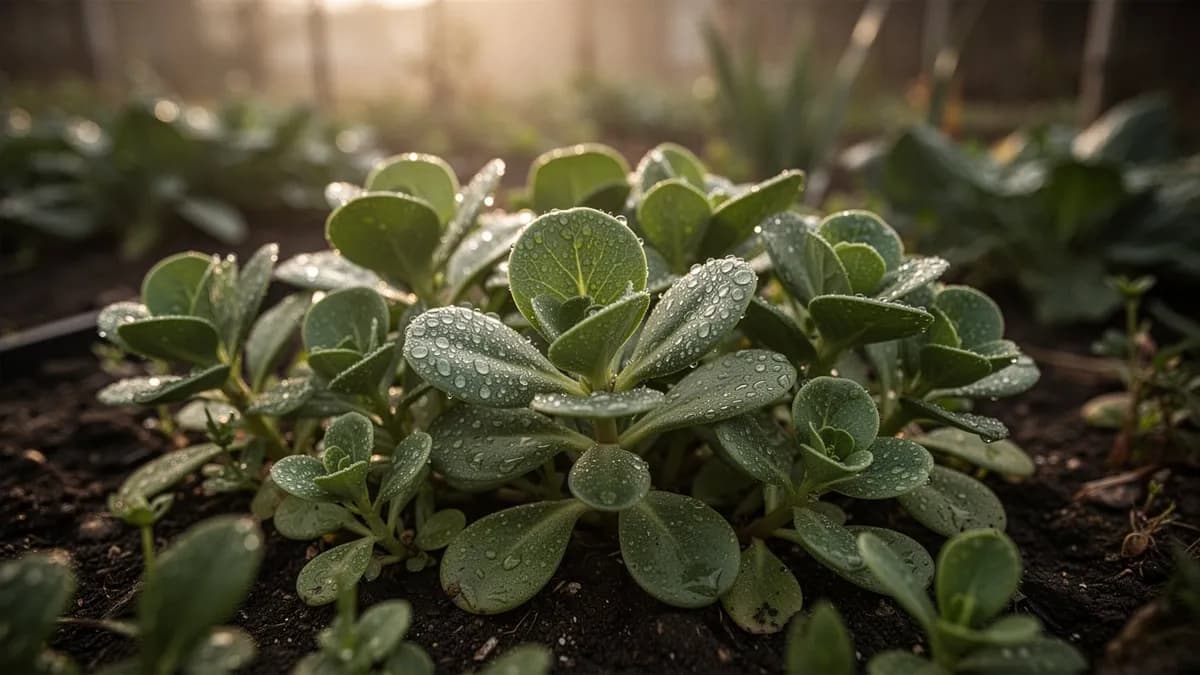
Auf dieser SeiteÜberblick
Winterportulak im Überblick
Ein winterhartes Blattgemüse, das die Lücke füllt, wenn die Sommersalate abgeerntet sind, und den ganzen Winter über saftige, scheibenförmige Blätter bildet. Die Pflanzen vertragen Temperaturen bis minus 12 °C und bleiben unter Vlieshauben oder in Frühbeeten den gesamten Winter über produktiv. Der milde, leicht süße Geschmack harmoniert hervorragend mit Winterzitrusfrüchten und Nüssen in saisonalen Salaten. Sät sich zuverlässig selbst aus und erscheint häufig jeden Herbst erneut, ohne dass nachgesät werden muss.
Wann Winterportulak pflanzen
Säen Sie die Samen von August bis November, wenn die Bodentemperaturen unter 12 °C liegen. Verteilen Sie die Samen auf der Oberfläche feuchter Erde oder Aussaaterde und drücken Sie sie leicht an, ohne sie zu bedecken, da sie Licht zum Keimen benötigen. Die Keimung dauert unter kühlen Bedingungen 10–14 Tage. Die Samen keimen in warmem Boden nicht zuverlässig, versuchen Sie daher keine Frühjahrsaussaat. Für einen Vorsprung säen Sie im August in Anzuchttöpfe in einem Frühbeet und pflanzen im September um. Selbst ausgesäte Keimlinge von etablierten Pflanzen sind oft der einfachste Weg, einen Bestand Jahr für Jahr zu erhalten.
Dein Winterportulak-Jahr
Abgestimmt auf Zone 7 · typische Saison · Frost geht um den 2. Apr. und kehrt um den 1. Nov. zurück
Winterportulak Sep – Nov pflanzen, Jan – Mär, Nov – Dez ernten. Beachte die Pflanzmethoden unten und wähle dein Klima für passende Zeiträume.

So baust du Winterportulak an
Winterportulak, auch bekannt als Tellerkraut oder Claytonia, ist eine wertvolle Kälte-Salatpflanze, die ursprünglich aus dem westlichen Nordamerika stammt. Säen Sie die Samen von August bis November direkt ins Beet oder in Gefäße, verteilen Sie sie dünn auf der Oberfläche feuchter Erde und drücken Sie sie leicht an. Die Samen benötigen kühle Temperaturen zum Keimen und können in warmem Boden über 12 °C versagen. Die Keimung dauert unter kühlen Bedingungen 10–14 Tage.
Die Pflanzen bilden flache Rosetten aus herzförmigen Blättern, gefolgt von den charakteristischen scheibenförmigen Blättern, aus deren Mitte zarte weiße Blüten hervortreten. Winterportulak gedeiht in den kühlen, kurzen Tagen des Herbstes und Winters, wenn die meisten anderen Salatkulturen Schwierigkeiten haben. Er verträgt starken Frost bis minus 12 °C und wächst in den kältesten Monaten langsam weiter, was ihn für Wintersalate unverzichtbar macht.
Kultivieren Sie ihn im Halbschatten bis zur vollen Sonne in gut durchlässigem Boden. Die Pflanzen sind bemerkenswert pflegeleicht und benötigen nach der Etablierung kaum Aufmerksamkeit. Gießen Sie mäßig und vermeiden Sie Staunässe. Winterportulak sät sich reichlich selbst aus, wenn die Blüten zur Samenbildung kommen, und etablierte Bestände erscheinen jeden Herbst zuverlässig ohne jegliches Zutun. Für die ordentlichsten Pflanzungen säen Sie in Reihen mit 15 cm Abstand und vereinzeln auf 15 cm zwischen den Pflanzen.
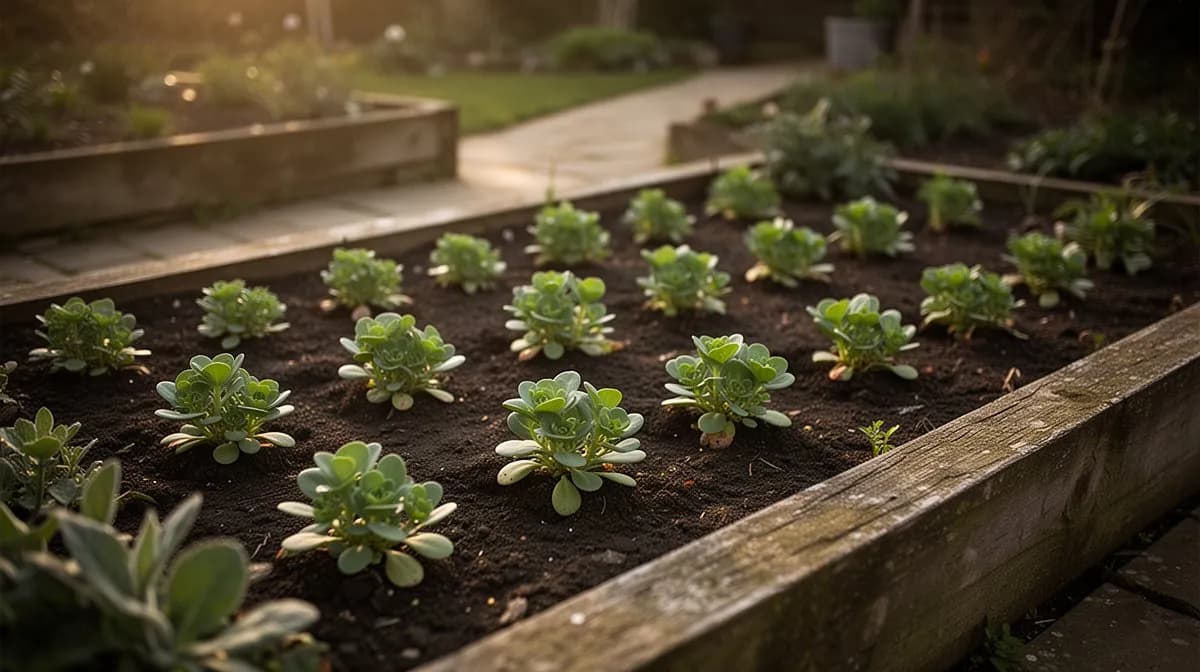
128 Pflanzen passen in ein Beet von 120 × 240 cm
Winterportulak braucht 15 cm Platz pro Pflanze. Der Planer hält diesen Abstand für dich ein — jede Pflanze, jedes Beet.
Die besten Nachbarn für Winterportulak
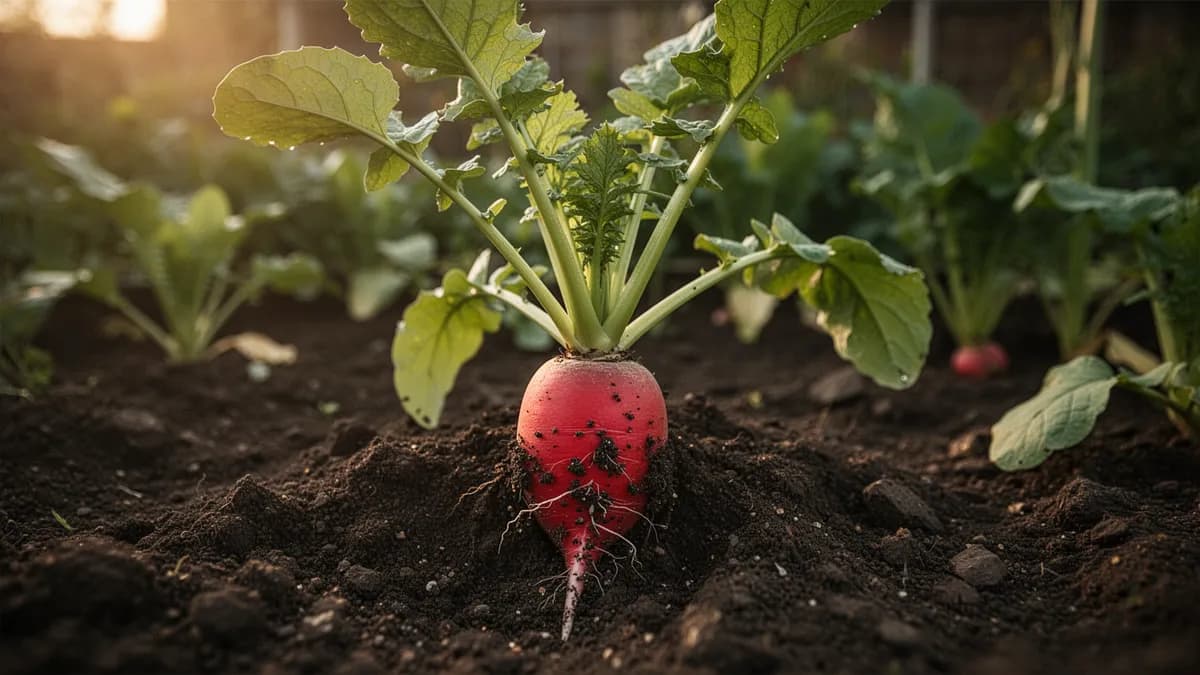
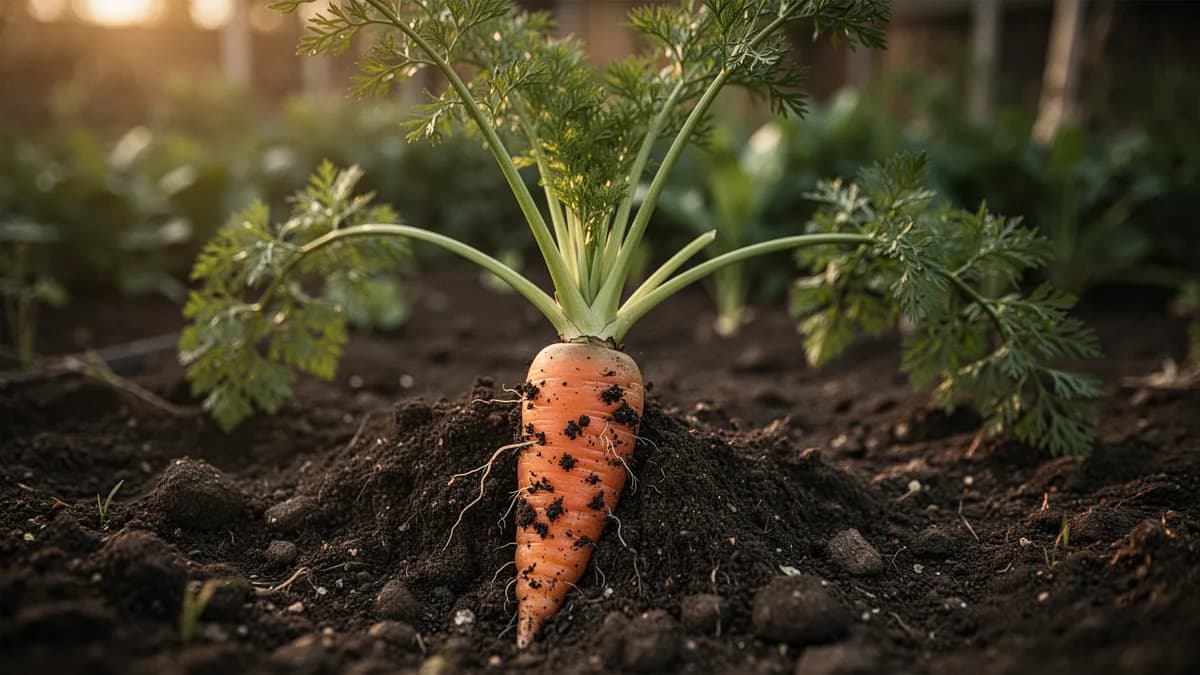
Winterportulak wächst gut neben anderen Kälte-Kulturen wie Radieschen und Möhren, die ähnliche Herbst-Aussaattermine haben. Er eignet sich hervorragend als lebende Bodendecke unter höheren Kohlgewächsen wie Grünkohl und Rosenkohl und hilft, Unkraut zu unterdrücken und die Bodenfeuchtigkeit zu erhalten. Das flache Wurzelsystem konkurriert nicht nennenswert mit tieferwurzelnden Nachbarn. Pflanzen Sie ihn in der Nähe von Frühlingsblumenzwiebeln für bodennahes Grün, solange die Zwiebeln ruhen. Vermeiden Sie das Pflanzen in Beeten, die für frühe Frühjahrsaussaaten vorgesehen sind, da sich selbst ausgesäter Portulak als hartnäckiger Dauergast etablieren kann.
Radieschen gehört daneben.
Altes Gärtnerwissen, geprüft an der echten Nachbartabelle von Winterportulak — teste jede Pflanze, die du anbaust.
Probiere Winterportulak direkt hier im Beet
Ein echtes Planer-Beet, Winterportulak steht schon drin. Tippe einen Begleiter an, platziere ihn und sieh, wie die Nachbarschaftsprüfung antwortet — grün für gute Nachbarn, rot bei Streit.


Passende Anbau-Ratgeber
Richtig düngen
Winterportulak ist anspruchslos und wächst in den meisten Bodenarten von sandig bis lehmig, mit einer Vorliebe für leicht saure bis neutrale pH-Werte von 5,5–7,0. Nährstoffreicher Boden ist nicht notwendig und kann zu übermäßig üppigem, krankheitsanfälligem Wachstum führen. Arbeiten Sie vor der Aussaat eine leichte Kompostgabe ein. Zusätzliche Düngung ist nicht erforderlich, da die Pflanzen von Natur aus an nährstoffarme Bedingungen angepasst sind. Gute Drainage ist unerlässlich, um Staunässe zu vermeiden, besonders während der feuchten Wintermonate. Für Kübel verwenden Sie handelsübliche Blumenerde, gemischt mit Perlite für die Drainage.
Ideale Temperatur
Winterhärtezone-Kompatibilität
Von der Saat zur Ernte, Schritt für Schritt
Keimung
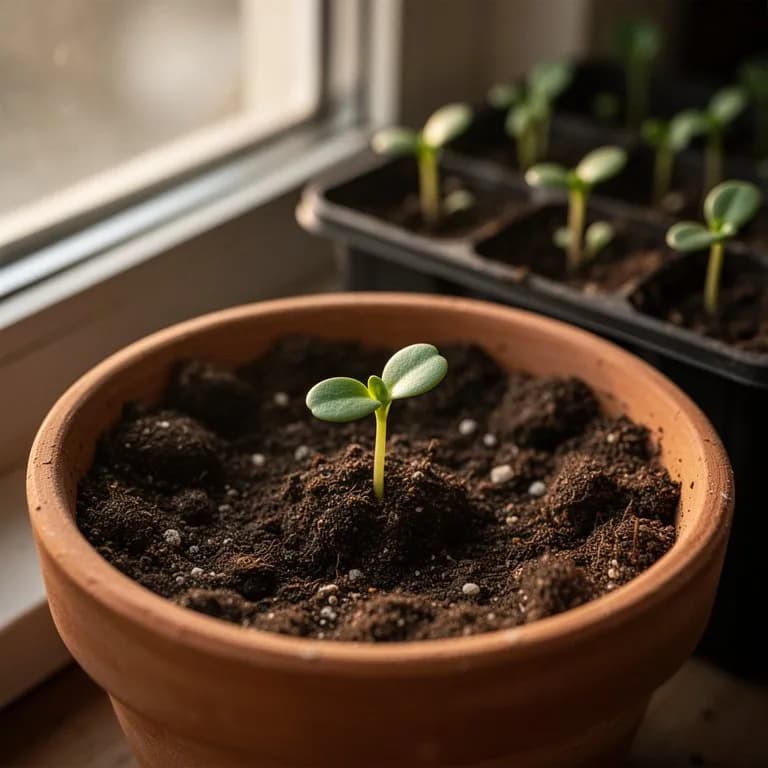
Die Samen keimen am besten unter kühlen Bedingungen zwischen 5–12 °C, was unter Gartenkulturen ungewöhnlich ist. Die winzigen schwarzen Samen bilden zarte, herzförmige und leicht fleischige Keimblätter. Die Keimung kann in warmem Boden über 20 °C unregelmäßig sein, da die Pflanze einen eingebauten Ruhemechanismus besitzt, der durch Wärme ausgelöst wird.
Rosettenbildung
Die Keimlinge entwickeln eine flache Rosette aus gerundeten, löffelförmigen Blättern, die dick, sukkulent und leuchtend grün sind. Die Blätter wachsen von einem zentralen Punkt nahe am Boden und bilden ein kompaktes Bündel von 10–15 cm Durchmesser. Das Wachstum ist selbst bei Temperaturen nahe dem Gefrierpunkt gleichmäßig.
Blattproduktion
Die Rosette vergrößert sich und die Blattproduktion beschleunigt sich. Die Blätter werden größer und sukkulenter mit einer charakteristischen gerundeten bis dreieckigen Form. Die Pflanze bleibt an den kurzen Wintertagen niedrig und kompakt und konzentriert ihre Energie in zartes, erntefähiges Laub.
Stängelstreckung
Wenn die Tage im Spätwinter und Frühling länger werden, beginnen die Pflanzen, Blütenstängel aus der Mitte der Rosette zu treiben. Die Stängel tragen die charakteristischen stängelumfassenden Blätter — Blattpaare, die den Stängel vollständig umschließen und becherartige Strukturen bilden, die Regenwasser auffangen. Die Pflanzen können 30–40 cm hoch werden.
Blüte und Samenbildung
Winzige weiße, sternförmige Blüten öffnen sich über den stängelumfassenden Blättern — jede Blüte hat fünf Blütenblätter und ist nur etwa 5 mm breit. Die Blüten sind selbstbestäubend und entwickeln schnell kleine, runde Samenkapseln. Jede Kapsel enthält 1–3 glänzende schwarze Samen, die bei Reife abfallen und sich bereitwillig für die nächste Saison selbst aussäen.
Säen Sie die Samen sehr flach — drücken Sie sie nur leicht in die Erdoberfläche, da sie Licht zum Keimen benötigen. Halten Sie den Boden mit einem feinen Sprühnebel gleichmäßig feucht. Wenn die Keimung langsam ist, versuchen Sie, die Samen vor der Aussaat eine Woche lang im Kühlschrank zu lagern, um die Keimruhe zu brechen.
Winterportulak Monat für Monat pflegen
Was du jeden Monat für deine Winterportulak tun solltest
Oktober
Aktueller MonatKeimlinge der September-Aussaat entwickeln Rosetten. Vereinzeln Sie auf 15–20 cm Abstand. Installieren Sie Frühbeete oder Vlieshauben über den Freilandbeeten in kälteren Zonen. Beginnen Sie mit einer leichten Ernte der äußeren Blätter, sobald die Rosetten 8–10 Blätter haben. Achten Sie auf Schneckenschäden.
Immer wissen, was jetzt im Garten zu tun ist
Eine E-Mail zum Monatsanfang: was du jetzt säen, pflanzen und anpacken solltest — für deine Winterportulak und alles, was drumherum wächst. Dazu ein kurzer Startkurs, der dich vor den klassischen Fehlern bewahrt.
- Was jetzt zu tun ist
- Passend zu deiner Saison
- Startkurs inklusive
Winterportulak ernten
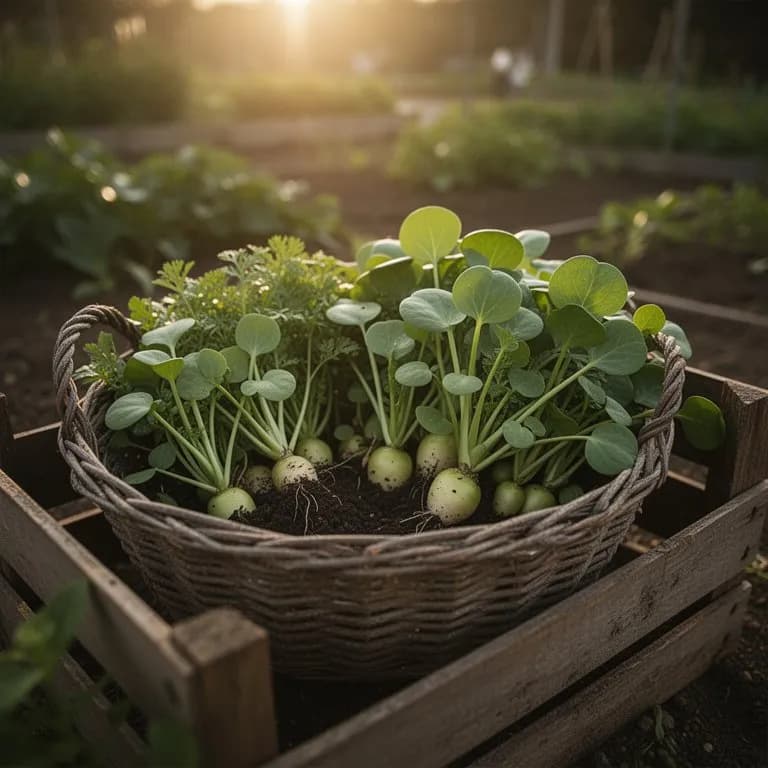
Beginnen Sie mit der Ernte von Winterportulak, wenn die Pflanzen ihre charakteristischen scheibenförmigen Blätter entwickelt haben, üblicherweise 40–50 Tage nach der Aussaat. Pflücken Sie einzelne Blätter nach Bedarf oder schneiden Sie die gesamte Rosette etwa 2 cm über dem Boden ab, um die Schnitt-und-Nachwuchs-Methode anzuwenden. Die Pflanzen treiben aus dem Stumpf bereitwillig wieder nach. Ernten Sie den gesamten Winter und das zeitige Frühjahr hindurch, bis die Pflanzen im Spätfrühling zu blühen beginnen, an welchem Punkt die Blätter kleiner und weniger saftig werden. Sowohl die Blätter als auch die kleinen weißen Blüten sind essbar.
angenommen, du pflanzt zu Beginn des Zeitraums — trage dein tatsächliches Datum ein
Ernte Winterportulak zügig, dann trägt die Pflanze weiter.
Lagerung & Konservierung
Winterportulak wird am besten frisch verzehrt, da die sukkulenten Blätter nach dem Pflücken schnell welken. Lagern Sie ihn ungewaschen in einem verschlossenen Beutel im Kühlschrank bis zu vier Tage. Waschen Sie ihn erst kurz vor der Verwendung. Die zarte Textur übersteht weder Einfrieren noch Trocknen, verlassen Sie sich daher auf frische Ernten während der gesamten Anbausaison statt auf Konservierung. Da die Pflanzen den ganzen Winter über verfügbar sind, ist ein Mangel an frischem Nachschub selten ein Problem. Die Blätter können im letzten Moment kurz in warme Gerichte eingerührt werden, um sie als gekochte Beilage zu verwenden.
Was schiefgeht — und die Lösung
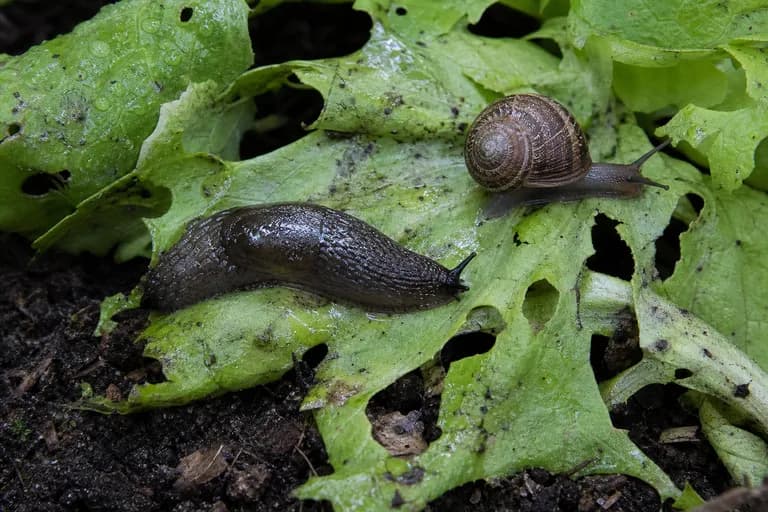
Schnecken und Nacktschnecken
SchädlingUnregelmäßige Löcher in den sukkulenten Blättern, besonders bei mildem, feuchtem Herbstwetter. Schleimspuren auf und um die Pflanzen.
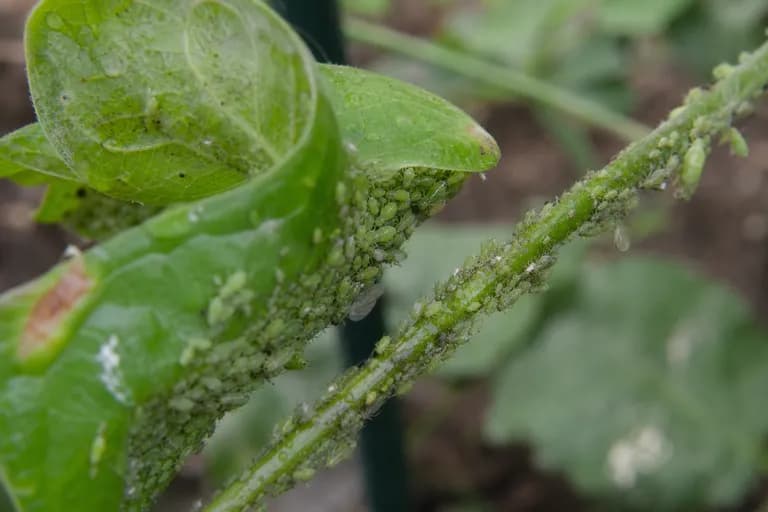
Blattläuse
SchädlingKleine grüne oder schwarze Insekten, die sich an Blütenstielen und Blattunterseiten ansammeln. Verformtes Wachstum an den Blütenstielen.
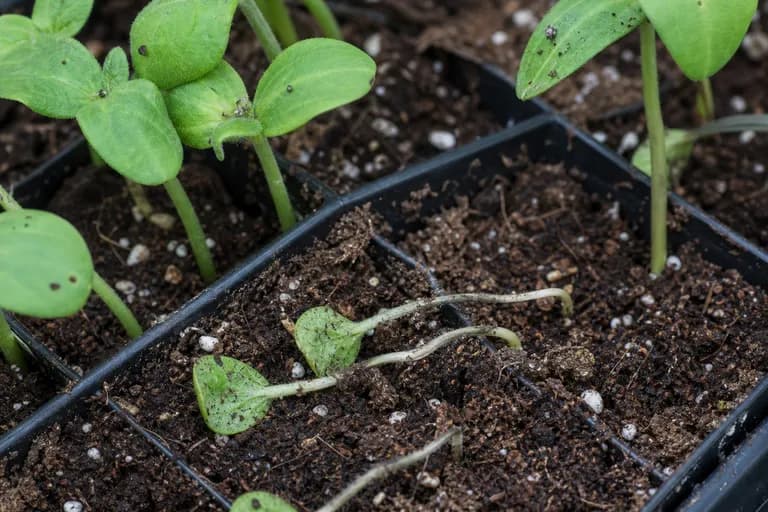
Umfallkrankheit (Damping-off)
KrankheitKeimlinge fallen kurz nach der Keimung auf Bodenhöhe um. Bei feuchten Bedingungen kann sich weißer Schimmel auf der Erdoberfläche zeigen.
Fehlerbehebung bei häufigen Problemen
Die größte Herausforderung besteht darin, die Samen zum Keimen zu bringen, da sie kühle Bodentemperaturen unter 12 °C benötigen. Zu frühe Aussaat bei warmem Herbstwetter führt zu schlechter Keimung. In milden Wintern können die Pflanzen vorzeitig schossen und Blüten bilden, bevor eine gute Blatternte möglich war. Selbstaussaat kann unter günstigen Bedingungen invasiv werden, daher sollten Sie die Pflanzen vor der Samenreife entfernen, wenn Sie die Ausbreitung kontrollieren möchten. Schnecken können junge Keimlinge bei nassem Herbstwetter schädigen. An sehr nassen Standorten kann ohne ausreichende Drainage Wurzelfäule auftreten.
Anbautipps
- Begrüßen Sie die Kälte — Winterportulak gedeiht wirklich unter Bedingungen, die die meisten Kulturen abtöten oder zum Stillstand bringen. Verwöhnen Sie ihn nicht mit beheizten Gewächshäusern oder warmer Vorkultur im Haus. Die Samen keimen am besten bei 5–12 °C, und die Pflanzen produzieren ihre besten Blätter bei fast frostigen Temperaturen.
- Säen Sie flach und lassen Sie Licht hinein. Die Samen benötigen Licht zum Keimen, drücken Sie sie daher nur sanft auf die Erdoberfläche oder bedecken Sie sie mit einer hauchdünnen Schicht feinem Vermiculit. Bereits 1 cm tiefes Vergraben der Samen reduziert die Keimrate drastisch.
- Nutzen Sie die Schnitt-und-Nachwuchs-Methode, um den Ertrag zu maximieren. Schneiden Sie äußere Blätter an der Basis der Rosette ab und lassen Sie den zentralen Vegetationspunkt intakt. Jede Pflanze treibt nach und liefert 3–5 Ernten über die Saison, was Ihren Gesamtertrag erheblich steigert.
- Ein einfaches Frühbeet verwandelt Winterportulak von einer guten Kultur in eine großartige. Selbst ein unbeheizter Rahmen verlängert das Erntefenster um Wochen, schützt die Blätter vor Regenschäden und produziert saubereres, zarteres Grün als Freilandpflanzen.
- Lassen Sie ihn sich selbst aussäen, und Sie werden nie wieder Saatgut kaufen müssen. Erlauben Sie 3–4 Pflanzen, zu blühen und Samen zu bilden — jede Pflanze lässt über 1.000 Samen fallen, die im folgenden Herbst natürlich keimen und einen dauerhaften, sich selbst erneuernden Salatbestand schaffen.
- Vermeiden Sie heiße, sonnige Standorte in milden Klimazonen. Winterportulak wächst natürlich im Halbschatten und hat Schwierigkeiten bei voller Sonne in Wärmeperioden. Unter Laubbäumen oder an der Nordseite einer Mauer herrschen ideale Bedingungen mit gefiltertem Licht im Winter.
- Gießen Sie sparsam, aber gleichmäßig. Die sukkulenten Blätter speichern Wasser effizient, aber das flache Wurzelsystem trocknet schnell aus. Streben Sie gleichmäßig feuchten Boden ohne Staunässe an — nasse Bedingungen begünstigen Wurzelfäule und Grauschimmel, die schlimmsten Feinde der Pflanze.
- Säen Sie alle 3–4 Wochen von Ende August bis Oktober für eine kontinuierliche Versorgung mit Baby-Blättern. Dies staffelt die Reife, sodass Sie immer junge, zarte Rosetten zur Ernte bereit haben, anstatt sich auf eine einzige alternde Pflanzung zu verlassen.
Bau deine beste Winterportulak an — und alles drumherum.
Starte heute kostenlos. Lege deine Beete an, setze deine Winterportulak ein und lass PlotMyGarden Timing, Abstände, Begleiter und Erinnerungen von der Saat bis zum Erntekorb übernehmen.
Finde deine Winterportulak
Claytonia perfoliata
Die Standardart mit den charakteristischen scheibenförmigen oberen Blättern und mildem, süßem Geschmack. Winterhart und selbstaussäend.
Claytonia sibirica
Rosarot blühender Sibirischer Portulak mit etwas größeren Pflanzen, breiteren Blättern und ähnlich mildem Geschmack.
Alba
Eine weißblühende Auslese des Tellerkrauts mit besonders sukkulenten Blättern und kompaktem Wuchs.
Winterportulak-Saatgut kostet nur 2–4 € pro Tüte (mit 500–1.000 Samen), und die Pflanze sät sich zuverlässig selbst aus, wodurch kostenloses Saatgut für zukünftige Saisons entsteht. Eine einzige Aussaat kann einen sich selbst erneuernden Bestand begründen, der über Jahre frisches Wintergrün liefert. Da spezielle Wintersalat-Mischungen im Einzelhandel und auf Wochenmärkten 4–8 € pro kleiner Packung kosten, spart der eigene Anbau von Winterportulak 30–60 € pro Winter allein an frischem Grünzeug — und liefert es zum Zeitpunkt höchster Frische, direkt vor Ihrer Tür, wenn gekauftes Grün am teuersten und am wenigsten frisch ist.
Schnelle Rezepte
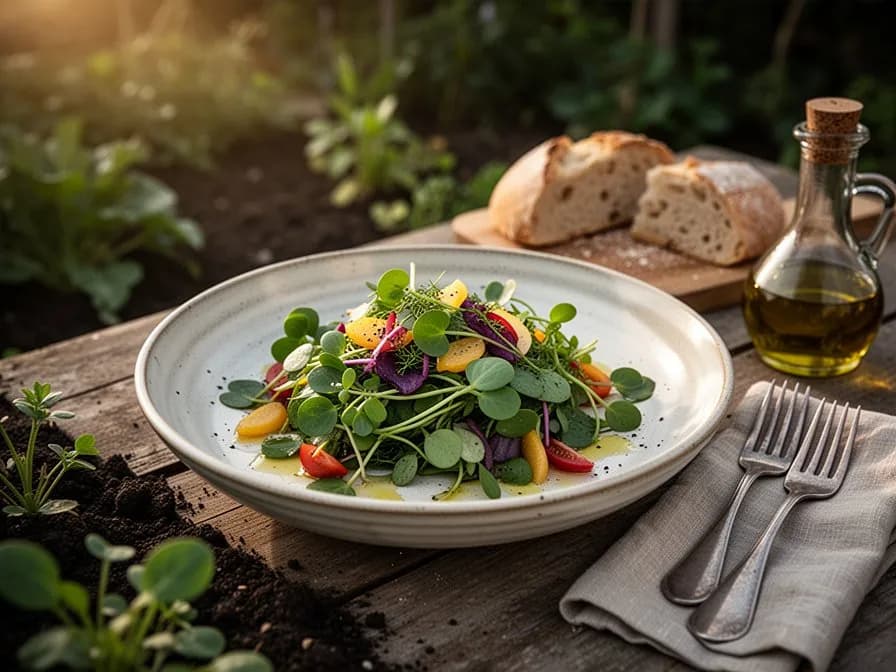
Winterportulak-Rote-Bete-Salat
15 Min.Ein farbenfroher Wintersalat, der den milden, leicht nussigen Biss von frischem Winterportulak mit erdiger gerösteter Roter Bete, würzigem Ziegenkäse und gerösteten Walnüssen kombiniert. Eine einfache Honig-Senf-Vinaigrette verbindet die Aromen zu einem sättigenden Gericht für die kalte Jahreszeit.
9 ZutatenGeschmorter Winterportulak mit Knoblauch und Zitrone
10 Min.Eine schnelle und einfache Beilage, bei der Winterportulak in Olivenöl mit Knoblauch leicht angeschmort und mit einem frischen Spritzer Zitrone vollendet wird. Die sukkulenten Blätter behalten ihre Textur wunderbar und ergeben eine Beilage, die perfekt zu gebratenem Fleisch oder Fisch passt.
6 ZutatenWinterportulak-Pesto
10 Min.Eine saisonale Variante des klassischen Pestos mit Winterportulak statt Basilikum — der milde, leicht mineralische Geschmack der Blätter ergibt eine zarte, leuchtend grüne Sauce, die sich perfekt für Pasta, Bruschetta oder zum Beträufeln von geröstetem Wintergemüse eignet.
7 ZutatenKulinarische Verwendung
Winterportulak hat einen milden, süßen, leicht sukkulenten Geschmack, der ihn zu einem ausgezeichneten Wintersalatgrün macht. Die scheibenförmigen Blätter erzeugen ein interessantes visuelles Element in gemischten Salaten. Kombinieren Sie ihn mit saisonalen Zutaten wie Winterzitrusfrüchten, Granatapfel, Walnüssen und Blauschimmelkäse. Die Blätter eignen sich auch hervorragend für Sandwiches und Wraps. Rühren Sie sie kurz in Suppen oder Risottos als abschließendes Grün ein. Die kleinen weißen Blüten sind eine zarte essbare Garnitur. Verwenden Sie ihn als Ersatz für Kopfsalat in den Wintermonaten.
Was drinsteckt
Gesundheitsvorteile
- Außergewöhnlich hoher Vitamin-C-Gehalt für ein im Winter verfügbares Grüngemüse mit etwa 24 % des Tageswerts pro 100 g — historisch zur Vorbeugung und Behandlung von Skorbut verwendet, bleibt es ein wirkungsvolles immunstärkendes Lebensmittel während der Erkältungs- und Grippesaison.
- Eine der reichsten pflanzlichen Quellen von Alpha-Linolensäure (einer Omega-3-Fettsäure), die die Herz-Kreislauf-Gesundheit unterstützt, Entzündungen reduziert und Gehirnfunktion sowie Stimmung in den dunklen Wintermonaten verbessern kann.
- Reich an Vitamin A und Beta-Carotin, die gesunde Sehkraft, Hautbarrierefunktion und Immunzellproduktion unterstützen — besonders wertvoll im Winter, wenn Sonneneinstrahlung und Nahrungsvielfalt eingeschränkt sind.
- Enthält beachtliche Mengen an Eisen und Kalzium für ein Blattgemüse und unterstützt den Sauerstofftransport im Blut und die Knochendichte — wichtige Mineralstoffe, die in der Winterernährung bei fehlender Vielfalt an frischem Gemüse oft defizitär sind.
- Der hohe Wassergehalt und die sanften Ballaststoffe fördern Hydration und Verdauungsregelmäßigkeit im Winter, wenn Menschen tendenziell weniger Wasser trinken und weniger frische, wasserreiche Lebensmittel zu sich nehmen.
- Die Kombination aus Antioxidantien einschließlich Vitamin C, Beta-Carotin und verschiedenen Polyphenolen hilft, oxidativen Stress zu bekämpfen, und unterstützt die natürlichen Abwehrsysteme des Körpers während der physiologisch anspruchsvollen Winterzeit.
Woher Winterportulak stammt
Winterportulak (Claytonia perfoliata) stammt aus den westlichen Regionen Nordamerikas und reicht von Südalaska über British Columbia und den pazifischen Nordwesten bis nach Kalifornien und Mittelamerika. Er wächst natürlich in feuchten, schattigen Lebensräumen — an Waldrändern, Ufern, Felshängen und gestörten Böden — vom Meeresspiegel bis in Höhenlagen über 2.500 Meter. Die Pflanze war eine wichtige Nahrungsquelle für zahlreiche indigene Völker in ihrem natürlichen Verbreitungsgebiet, darunter die Coast Salish, Ohlone, Miwok und viele andere Nationen, die die zarten Rosetten und sukkulenten Stängel als eines der frühesten Frühlingsgrüns sammelten.
Die Pflanze erhielt ihren bekanntesten englischen Volksnamen "Miner's Lettuce" (Bergmannssalat) während des Kalifornischen Goldrauschs von 1848–1855. Tausende von Goldgräbern, die in abgelegenen Lagern lebten, litten unter Skorbut und anderen Mangelerscheinungen aufgrund einer Ernährung, die fast ausschließlich aus Pökelfleisch, Bohnen und Schiffszwieback bestand. Sie lernten schnell aus dem Wissen der Indigenen, dass dieses reichlich vorhandene Wildgrün Skorbut vorbeugen und heilen konnte — sein hoher Vitamin-C-Gehalt machte es zu einem wahrhaft lebensrettenden Nahrungsmittel. Die Bergleute aßen es roh in enormen Mengen, und der Name blieb für immer bestehen.
Claytonia perfoliata wurde Ende des 18. Jahrhunderts in Europa eingeführt, wo sie zunächst als botanische Kuriosität kultiviert wurde. Sie entkam schnell der Kultur und bürgerte sich auf den Britischen Inseln, in Frankreich und anderen Teilen Westeuropas mit milden, maritimen Wintern ein. Im 19. Jahrhundert erkannten europäische Marktgärtner ihren Wert als Winter-Salatkulturs — sie konnte in den kältesten Monaten frisches, zartes Grün produzieren, wenn praktisch nichts anderes im Freiland wuchs. Heute wird sie in ganz Europa angebaut, insbesondere in Großbritannien, Frankreich und den Niederlanden, als Kälte-Salatgrün. In ihrem Herkunftsgebiet Nordamerika bleibt sie hauptsächlich eine wild gesammelte Pflanze, obwohl Spezialanbauer und Hobbygärtner sie zunehmend für die winterliche Salatproduktion kultivieren.
Winterportulak: Schon gewusst?
Faszinierende Fakten über Winterportulak
Winterportulak (Claytonia perfoliata) stammt aus dem westlichen Nordamerika, von Alaska bis Mittelamerika — er war ein Grundnahrungsmittel vieler indigener Völker und wurde roh, gedämpft oder gekocht als eines der ersten frischen Grüngemüse nach langen Wintern verzehrt.
Winterportulak: Fragen & Antworten
Wann sollte ich Winterportulak pflanzen?
Was sind gute Begleitpflanzen für Winterportulak?
In welchen Winterhärtezonen kann Winterportulak wachsen?
Wie viel Sonne braucht Winterportulak?
Welchen Abstand sollte ich zwischen Winterportulak lassen?
Welche Schädlinge und Krankheiten befallen Winterportulak?
Wie lagere ich Winterportulak nach der Ernte?
Was sind die besten Winterportulak-Sorten zum Anbauen?
Welchen Boden braucht Winterportulak?
Warum keimen meine Winterportulak-Samen nicht?
Ist Winterportulak dasselbe wie normaler Portulak?
Kann ich Winterportulak drinnen anbauen?
Mein Winterportulak schosst — was kann ich tun?
Übersteht Winterportulak starken Frost?
Wie ernte ich Winterportulak, ohne die Pflanze abzutöten?
Du hast die Theorie gelesen. Jetzt baue sie auf Autopilot an.
Alles, was Winterportulak knifflig macht — das Timing, die Abstände, die Begleiter, das Erntefenster — genau das übernimmt PlotMyGarden für dich, für jede Pflanze im Garten.
Ein Plan, der dein Wetter kennt
Standort einmal festlegen. Aussaat-, Dünge- und Erntedaten rund um deinen echten letzten Frosttermin und die Live-Vorhersage — kein Raten mehr nach Saattüte.
Aus dem Abschnitt „Pflanzzeit“Beetplaner per Drag & Drop
Beete auf einem Raster gestalten. Jede Pflanze rastet im richtigen Abstand ein, und du siehst die ganze Saison, bevor du einen Cent für Saatgut ausgibst.
Aus dem Abschnitt „Anbau“Begleiter-Konflikte früh erkannt
Über 200 gute und schlechte Kombinationen werden beim Pflanzen live geprüft — so landet ein saisonruinierender Fehler nie in der Erde.
Aus dem Abschnitt „Begleiter“Erinnerungen, nach denen du wirklich handelst
„Gieß die Bohnen.“ „Heute ernten, bevor's umschlägt.“ Pünktlich, konkret und auf deine echten Pflanzen bezogen.
Aus dem Abschnitt „Ernte“Staffel-Aussaat, geplant
Sechs Wochen ernten statt sechs Tage? Die App verteilt deine Aussaaten automatisch und erinnert dich, wenn der nächste Satz fällig ist.
Aus dem Abschnitt „Pflanzzeit“Ein Verlauf, der schlauer wird
Jede protokollierte Ernte bringt der App deinen Garten bei. Der Plan fürs nächste Jahr startet bei dem, was in deinem Boden wirklich funktioniert hat.
Aus dem Abschnitt „Überblick“Pflanze diese neben Winterportulak
Weitere Blattgemüse
Gartenpläne mit Winterportulak
Bau deine beste Winterportulak an — und alles drumherum.
Starte heute kostenlos. Lege deine Beete an, setze deine Winterportulak ein und lass PlotMyGarden Timing, Abstände, Begleiter und Erinnerungen von der Saat bis zum Erntekorb übernehmen.