Tulip Tree
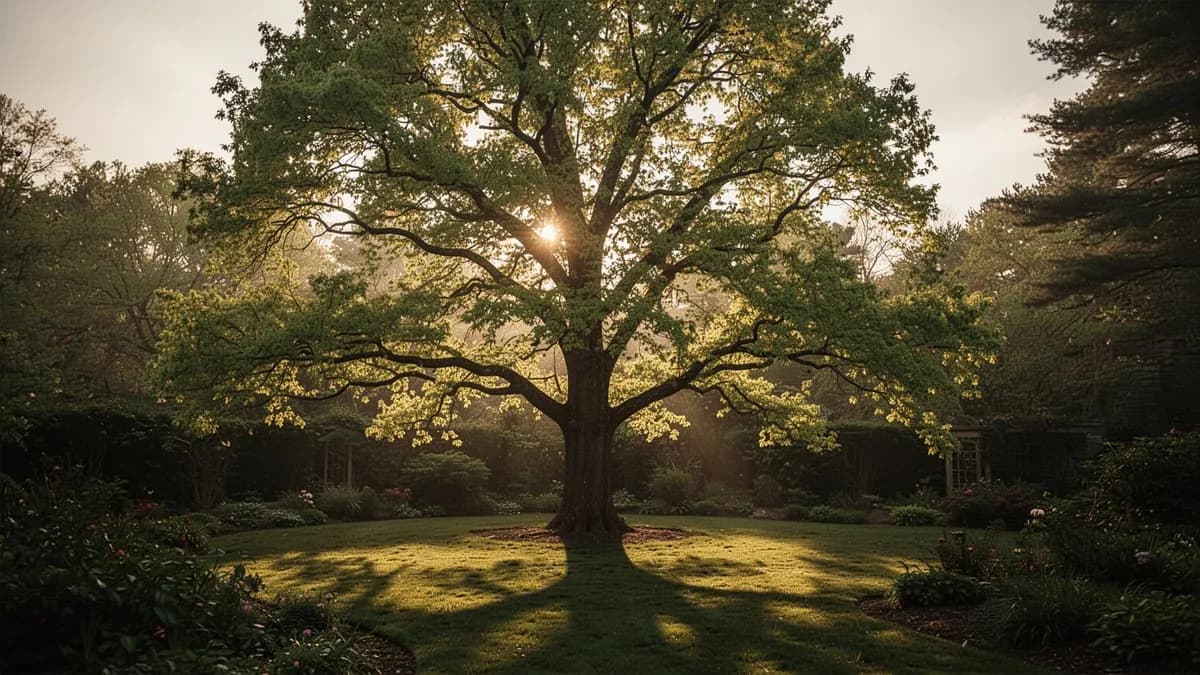
One of the tallest and most stately eastern North American native trees, producing distinctive tulip-shaped flowers high in the canopy in late spring.





On this pageOverview
Meet Tulip Tree
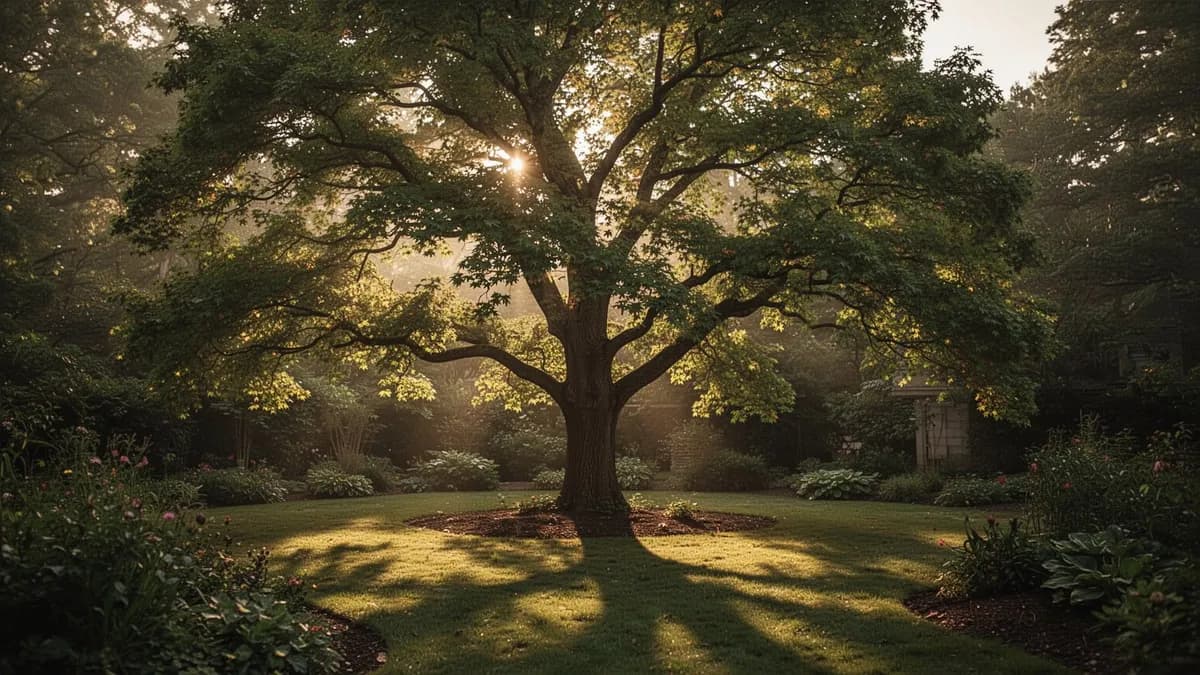
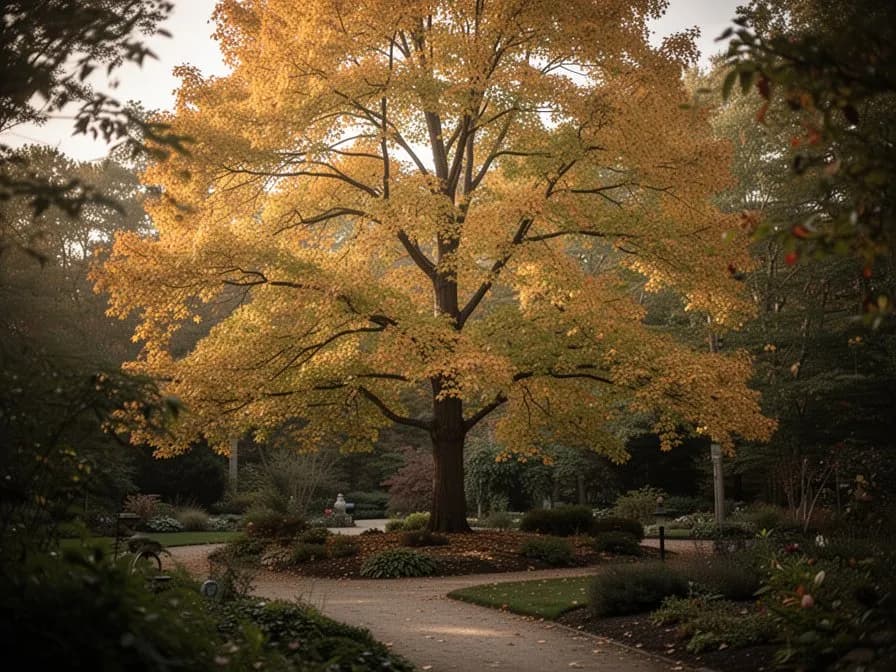
One of the tallest and most stately eastern North American native trees, producing distinctive tulip-shaped flowers high in the canopy in late spring. Tulip trees grow remarkably fast for a hardwood and develop a straight, tall trunk ideal for lumber production. They prefer deep, moist, well-drained soil and struggle in drought conditions, often dropping leaves early in dry summers. The unique leaf shape and golden-yellow fall color make them outstanding specimen trees for large properties.
When to plant Tulip Tree
Collect tulip tree seed cones in October when they turn brown. Allow cones to dry and break apart, releasing the winged seeds. Cold-stratify seeds for 60 to 90 days in moist peat in the refrigerator. Sow stratified seeds a quarter inch deep in deep containers of moist, acidic potting mix in late winter. Germination is often sporadic, taking 2 to 8 weeks. The fleshy roots are easily damaged during transplanting, so use deep containers and handle seedlings carefully. Named cultivars must be grafted.
Your Tulip Tree Year
Composed for Zone 7 · typical seasons · frost passes Apr 2, returns Nov 1
Plant Tulip Tree Mar – Apr, Oct – Nov, pick —. Check the planting methods below and set your climate to personalize these windows.

How to grow Tulip Tree
Plant tulip trees in full sun in deep, moist, well-drained, slightly acidic soil with a pH of 5.5 to 7.0. They need consistent moisture and perform poorly in drought-prone sites or thin, rocky soils. Space trees 40 to 50 feet apart to accommodate their tall, columnar growth habit. Plant balled-and-burlapped or container-grown trees in spring, handling carefully as tulip trees have fleshy roots that are sensitive to damage.
Water newly planted tulip trees deeply and consistently during the first several years. They are less drought-tolerant than oaks or maples and will drop leaves prematurely during dry summers. Apply 3 to 4 inches of organic mulch over the root zone to maintain consistent moisture levels. Tulip trees grow remarkably fast for a hardwood, adding 2 to 3 feet per year and eventually reaching 70 to 100 feet tall.
Minimal pruning is needed as tulip trees develop a naturally strong central leader. Remove only dead, damaged, or crossing branches in late winter. The tulip-shaped flowers appear high in the canopy of mature trees, often 30 feet or more above ground, so they may be difficult to appreciate from below. Golden-yellow fall color is reliable and attractive. The straight trunk and clear grain make tulip tree lumber commercially valuable for cabinets and furniture.
Tulip Tree needs more room than a 4 × 8 ft bed gives
Each Tulip Tree wants 1000 cm of elbow room. The planner keeps that spacing for you — every plant, every bed.
Tulip Tree's best neighbours
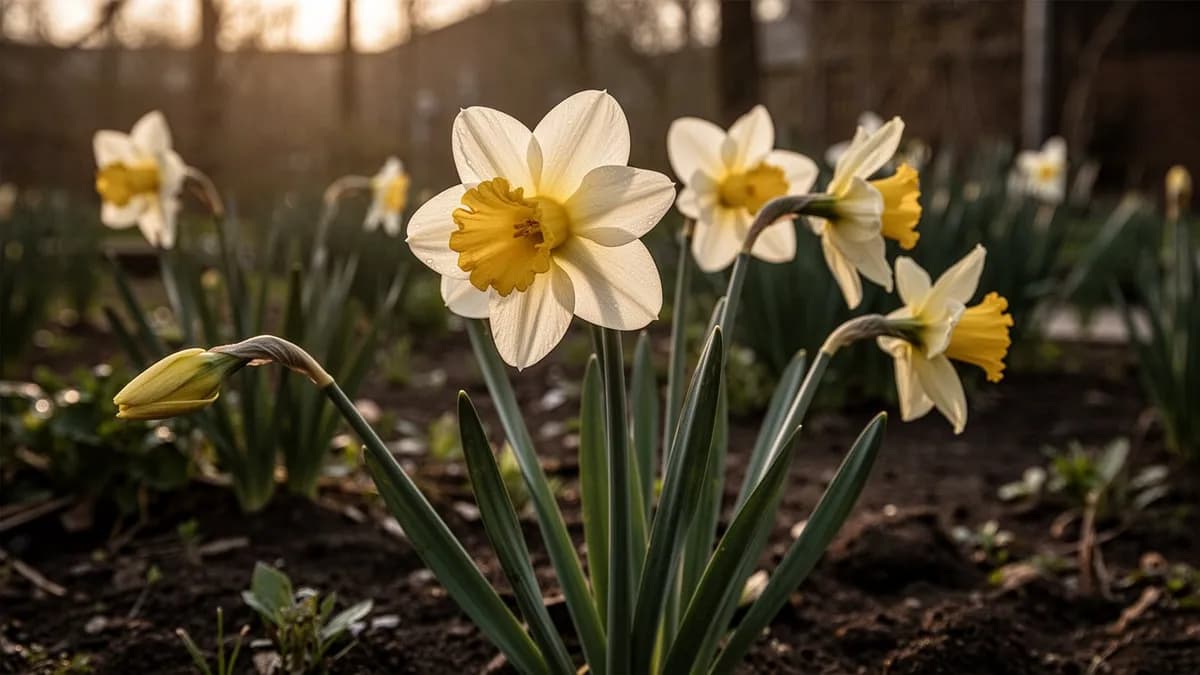
Plant shade-tolerant native understory species beneath tulip trees including dogwood, redbud, and mountain laurel. Woodland perennials like ferns, trillium, bloodroot, and Solomon seal thrive in the dappled shade. Spring bulbs including daffodils and Virginia bluebells bloom before the canopy leafs out. Azaleas and rhododendrons complement tulip trees, sharing the preference for acidic, moist soil. Avoid planting drought-sensitive annuals near established trees where root competition for moisture is intense.
Daffodil belongs beside it. Walnut Tree doesn't.
Old growers' knowledge, checked against Tulip Tree's real companion table below — test any plant you're growing.
Try Tulip Tree in a bed — right here
A real planner bed with Tulip Tree already in it. Tap a companion to place it and watch the pairing checks answer — green for good neighbours, red for a clash.


Related growing guides
Feed it well
Tulip trees require deep, moist, well-drained, fertile soil with a pH of 5.5 to 7.0 for best performance. They are less tolerant of poor soil conditions than oaks or maples. Amend planting sites with compost to improve moisture retention. Young trees benefit from balanced fertilizer in early spring. Maintain thick organic mulch over the root zone year-round to buffer moisture fluctuations. Avoid alkaline soils and sites with shallow bedrock where roots cannot penetrate deeply.
Ideal Temperature
Hardiness Zone Compatibility
From seed to harvest, stage by stage
Seed Stratification and Germination
Tulip tree seeds require 60 to 90 days of cold moist stratification at 34 to 40 degrees Fahrenheit before germination. Seeds are sown in early spring after stratification. Germination rates are naturally low, typically around 5 to 10 percent, so sow seeds generously.
Seedling Establishment
Seedlings emerge with two cotyledon leaves followed by the first true leaves showing the characteristic four-lobed shape. First-year growth is typically 12 to 18 inches. The taproot develops quickly during this stage, making transplanting easier while the tree is still young.
Juvenile Sapling Growth
During years two through five the tulip tree grows rapidly at 2 to 3 feet per year under good conditions. The trunk begins to straighten and the pyramidal crown shape becomes apparent. Root systems expand significantly during this phase, establishing the deep taproot structure.
Adolescent Canopy Development
From years five through fifteen the tree accelerates its height growth and begins forming the broad oval canopy. Growth rates of 3 to 5 feet per year are common in well-sited trees. The bark transitions from smooth green-gray to the characteristic furrowed pattern. First flowers may appear around years 15 to 20.
Early Maturity and First Flowering
Between years 15 and 30 the tulip tree reaches reproductive maturity and produces its first tulip-shaped flowers high in the canopy. Trees at this stage are typically 40 to 60 feet tall. The crown broadens and the trunk diameter increases substantially, often reaching 2 to 3 feet in diameter.
Full Maturity
Fully mature tulip trees reach 70 to 100 feet tall with trunk diameters of 3 to 5 feet. The crown becomes broad and oval. Annual flower production is prolific, supporting pollinators and producing significant quantities of tulip poplar honey. Seeds are produced abundantly and dispersed by wind.
Legacy and Old Growth
Tulip trees can live 200 to 300 years or more, reaching exceptional heights of over 150 feet in old-growth forests. Historic specimens in the Appalachian Mountains have reached nearly 200 feet. Older trees develop massive trunks and become important wildlife habitat, with cavities providing nesting sites for birds and mammals.
Collect seeds in autumn from mature cone-like fruits. Soak seeds in water for 24 hours, then mix with moist peat moss and refrigerate in a sealed bag for at least 60 days before spring sowing.
Caring for Tulip Tree month by month
What to do each month for your Tulip Tree
October
You are hereAppreciate the brilliant golden-yellow fall foliage display.. Rake and compost fallen leaves, which decompose quickly and make excellent mulch material.. Apply a final deep watering before the ground freezes to help the tree enter dormancy well-hydrated.
Know exactly what to do in your garden — every month
One email at the start of each month: what to sow, plant, and tackle right now — for your Tulip Tree and everything growing around it. Plus a short starter course that helps you dodge the classic mistakes.
- What to do, right now
- Matched to your season
- Starter course included
Harvesting Tulip Tree
Tulip trees are not grown for edible harvest. The cone-shaped aggregate fruit ripens in autumn, releasing winged seeds that spin as they fall. Tulip tree lumber is one of the most commercially valuable native American hardwoods. The wood is light, straight-grained, and easy to work, valued for cabinets, furniture interiors, siding, and musical instruments. The flowers produce abundant nectar that honeybees convert into a distinctively flavored dark amber honey prized by beekeepers in the Appalachian region.
assuming you plant when the window opens — set your real date
Pick Tulip Tree promptly and the plant keeps producing.
Storage & Preservation
Tulip tree lumber is light and easy to process. It should be sawn and stacked with stickers for air drying promptly after felling. The wood dries quickly with minimal checking or warping. It takes paint and stain beautifully, making it a preferred species for interior millwork, cabinets, and painted furniture. Tulip poplar honey should be stored in sealed jars at room temperature, where it keeps indefinitely. The unique, slightly spicy dark amber honey crystallizes slowly.
What goes wrong — and the fix
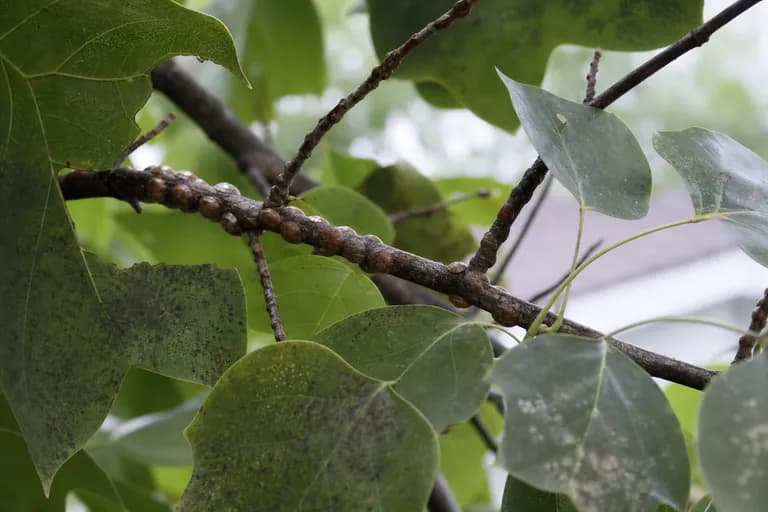
Tulip Tree Scale
PestLarge, round, brown soft scale insects on twigs and branches. Heavy infestations weaken trees and produce copious honeydew that coats surfaces beneath the tree with sticky residue and sooty mold.
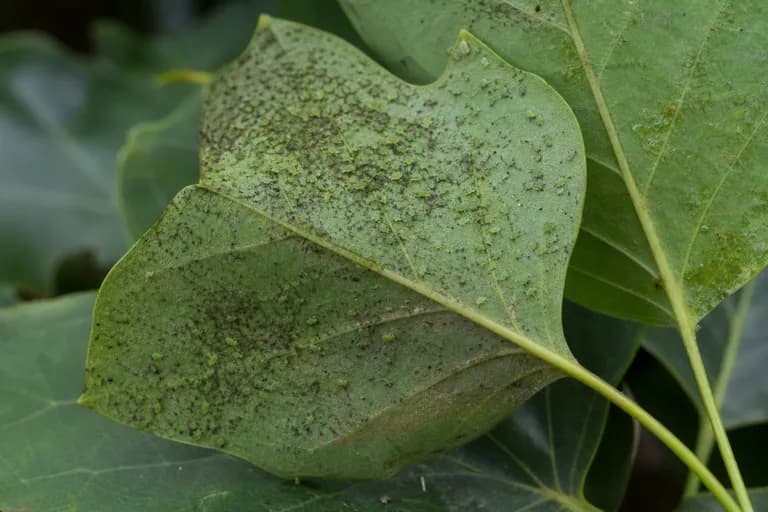
Tulip Tree Aphid
PestColonies of small green aphids on leaf undersides. Honeydew excretion causes sticky residue on cars, sidewalks, and anything beneath the tree. Black sooty mold grows on honeydew.
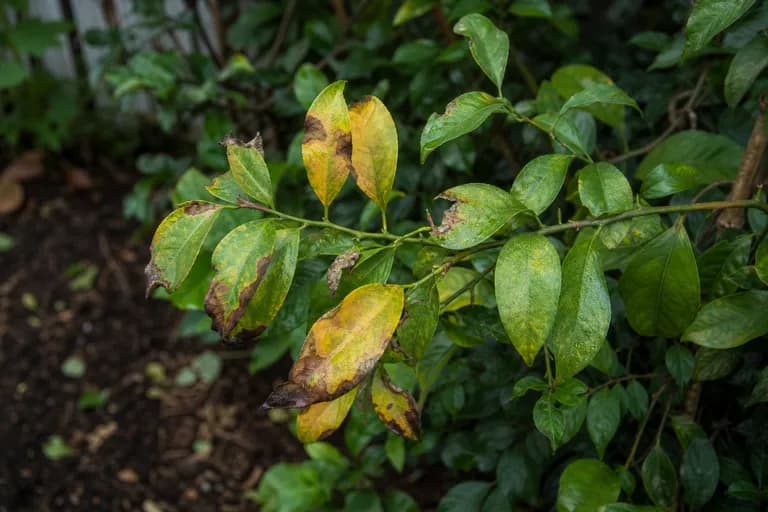
Verticillium Wilt
DiseaseLeaves on one side or section of the canopy wilt, yellow, and brown. Olive-green to brown streaking in sapwood of affected branches.
Troubleshooting Common Problems
Drought sensitivity is the biggest limitation, as tulip trees drop leaves prematurely and decline in dry conditions. The tulip-shaped flowers are borne high in the canopy and often go unnoticed from ground level. Aphid-produced honeydew creates a sticky, messy coating on cars, patios, and walkways beneath the tree. The large size makes tulip trees unsuitable for small properties. Shallow-rooted on wet sites, they can be toppled by high winds. Autumn leaf drop is heavy and rapid.
Growing Tips
- Plant tulip trees in deep, moist, well-drained soil with a slightly acidic to neutral pH between 5.5 and 7.0 for the best growth and health.
- Choose a planting site with full sun exposure, as tulip trees require at least six hours of direct sunlight daily and do not tolerate heavy shade.
- Water young trees deeply and consistently, providing 1 to 1.5 inches of water per week, as tulip poplars are notably sensitive to drought stress.
- Avoid planting near sidewalks, foundations, or septic systems because the extensive root system can cause damage to hardscaping and underground infrastructure.
- Maintain a central leader when the tree is young by pruning competing vertical branches in late winter to develop a strong, structurally sound trunk.
- Apply 3 to 4 inches of organic mulch such as wood chips or shredded bark over the root zone, keeping it at least 6 inches away from the trunk to prevent rot.
- Monitor regularly for tulip tree scale and aphids, which are the two most common pest problems, and treat early with horticultural oil or insecticidal soap.
- Allow ample space for the mature size of the tree, planting at least 30 to 40 feet from structures and other large trees to accommodate the broad canopy.
- Protect young trees from deer browsing and rodent damage with tree guards or fencing during the first several years of establishment.
- Avoid heavy soil compaction over the root zone from construction equipment, vehicles, or heavy foot traffic, as this restricts root growth and can lead to decline.
Grow your best Tulip Tree yet — and everything around it.
Start a free plan today. Lay out your beds, drop in your Tulip Tree, and let PlotMyGarden handle the timing, spacing, companions and reminders from seed to harvest basket.
Pick your Tulip Tree
Tulip Tree (Liriodendron tulipifera)
The native species reaching 80 to 100 feet tall with distinctive four-lobed leaves and tulip-shaped flowers. Outstanding specimen tree for large properties.
Arnold (Liriodendron tulipifera Arnold)
Narrow columnar form ideal for restricted spaces. Same beautiful leaves and flowers on a more compact, upright framework.
Aureomarginatum
Variegated cultivar with bold yellow leaf margins that brighten the canopy. Slower growing than the species but very ornamental.
Chinese Tulip Tree (Liriodendron chinense)
Asian counterpart with slightly larger, showier flowers. Less cold-hardy than the American species but excellent for milder zones 6 to 9.
A well-placed mature tulip tree can reduce summer cooling costs by 15 to 35 percent through shade and evapotranspiration, translating to annual energy savings of 150 to 400 dollars for a typical home. The high-quality hardwood timber of a mature tulip poplar can be worth 500 to 2000 dollars or more depending on size and quality. Additionally, beekeepers with access to tulip poplar stands can harvest a premium honey crop worth 12 to 18 dollars per pound, with a single mature tree supporting enough nectar for 4 to 5 pounds of honey per season.
Quick recipes
Tulip Poplar Honey Butter
5 minutesA simple compound butter featuring the distinctive dark amber tulip poplar honey, perfect for spreading on warm biscuits, cornbread, or toast. The smoky-sweet flavor of tulip poplar honey pairs beautifully with salted butter.
4 ingredients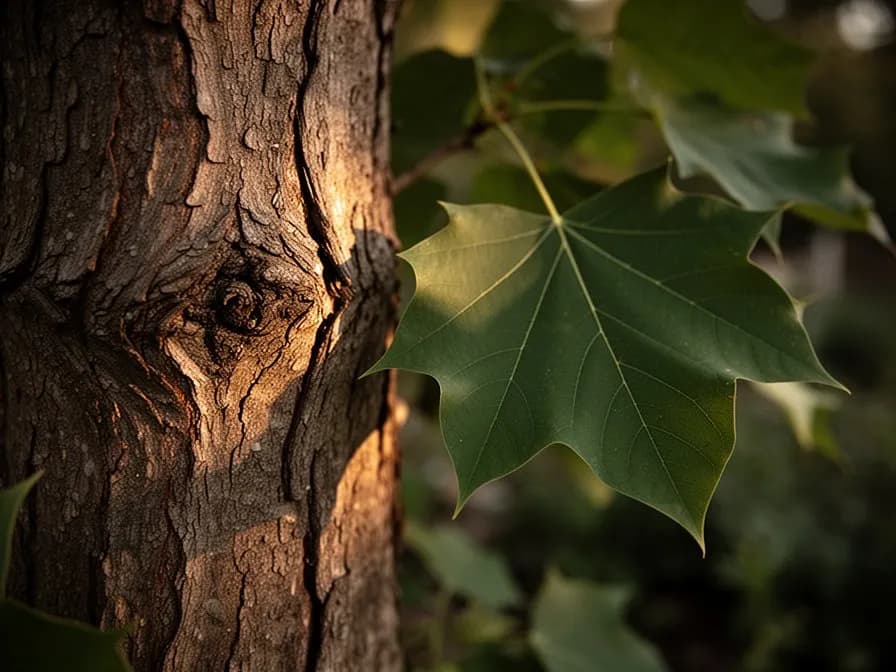
Tulip Poplar Honey Glazed Carrots
25 minutesRoasted carrots finished with a glaze of tulip poplar honey and thyme, bringing out the rich amber sweetness unique to this varietal honey. The deep caramel notes complement the natural sweetness of roasted carrots.
5 ingredientsTulip Poplar Honey Vinaigrette
5 minutesA bold salad dressing showcasing the smoky depth of tulip poplar honey balanced with apple cider vinegar and Dijon mustard. Excellent on autumn salads with pears, walnuts, and blue cheese.
5 ingredientsWhat's inside
Health Benefits
- Tulip poplar honey contains natural antioxidants including flavonoids and phenolic acids that may help reduce oxidative stress and support overall cellular health.
- The inner bark of Liriodendron tulipifera was traditionally used by indigenous peoples as a bitter tonic believed to support digestive health and reduce occasional fevers.
- Mature tulip trees significantly improve local air quality by absorbing carbon dioxide, sulfur dioxide, and ozone while releasing oxygen, with large specimens processing hundreds of pounds of carbon annually.
- Studies have shown that spending time near large shade trees like tulip poplars can reduce stress hormones, lower blood pressure, and improve mental well-being through the psychological benefits of green space.
- The dense canopy of tulip trees provides substantial shade that reduces ambient temperatures by 10 to 15 degrees Fahrenheit, decreasing heat-related health risks in urban and suburban environments.
- Tulip poplar pollen is relatively heavy and not a major contributor to seasonal allergies compared to wind-pollinated trees like oaks and birches, making it a better choice for allergy-sensitive landscapes.
Where Tulip Tree comes from
Liriodendron tulipifera, commonly known as the tulip tree, tulip poplar, or yellow poplar, is native to eastern North America, ranging from southern Ontario and New England south to central Florida and west to the Mississippi River basin. The species has an ancient lineage within the magnolia family, with fossil evidence showing that the genus Liriodendron was widespread across the Northern Hemisphere more than 100 million years ago during the Cretaceous period. After the last Ice Age, the genus was reduced to just two surviving species: the American tulip tree and its Asian counterpart Liriodendron chinense, found in central China and Vietnam. Indigenous peoples of eastern North America used tulip poplar extensively for dugout canoes due to its tall, straight trunk and relatively lightweight, easily worked wood. The Cherokee used the inner bark as a traditional remedy for various ailments. European colonists quickly recognized the timber value of the species, and tulip poplar became one of the most commercially important hardwoods in colonial America. Its wood was used for everything from furniture and siding to paper pulp and plywood. The tree was introduced to European gardens in the mid-1600s, where it became a popular ornamental specimen prized for its unusual flowers and stately form. Today the tulip tree remains one of the most important commercial hardwood species in the southeastern United States and is widely planted as a shade and ornamental tree across temperate regions of the world. It serves as the state tree of Indiana, Kentucky, and Tennessee.
Tulip Tree: did you know?
Fascinating facts about Tulip Tree
The tulip tree is the tallest eastern hardwood in North America, with some specimens in the Smoky Mountains reaching nearly 200 feet tall, rivaling many western conifers in height.
Tulip Tree questions, answered
When should I plant Tulip Tree?
What are good companion plants for Tulip Tree?
What hardiness zones can Tulip Tree grow in?
How much sun does Tulip Tree need?
How far apart should I space Tulip Tree?
What pests and diseases affect Tulip Tree?
How do I store Tulip Tree after harvest?
What are the best Tulip Tree varieties to grow?
What soil does Tulip Tree need?
Why is my tulip tree dropping leaves in the middle of summer?
How long does it take for a tulip tree to bloom for the first time?
Is the tulip tree actually related to tulips or poplars?
What is the black sooty coating on my tulip tree leaves?
Can I grow a tulip tree in a small yard?
How do I propagate a tulip tree from seed?
You just read the theory. Now grow it on autopilot.
Everything that makes Tulip Tree fiddly — the timing, the spacing, the companions, the harvest window — is exactly what PlotMyGarden handles for you, for every plant in your garden.
A plan that knows your weather
Set your location once. Get sow, feed and harvest dates built around your real last-frost date and live forecast — no more guessing from a generic seed packet.
From the “When to plant” sectionDrag-and-drop bed planner
Design beds on a grid. Every plant snaps to its proper spacing, and you can see your whole season laid out before you spend a cent on seed.
From the “Growing guide” sectionCompanion conflicts, caught early
200+ good-and-bad pairings checked live as you plant — so a season-wrecking mistake never makes it into the ground.
From the “Companions” sectionReminders you'll actually act on
“Water the beans.” “Pick today before it turns.” Timely, specific, and tied to the plants you're really growing.
From the “Harvest” sectionSuccession, scheduled
Want a harvest for six weeks, not six days? It spaces your sowings automatically and reminds you when each new block is due.
From the “When to plant” sectionA record that gets smarter
Every harvest you log teaches it your garden. Next year's plan starts from what actually worked in your soil, not a textbook's.
From the “Overview” sectionPlant these alongside Tulip Tree
More Shade Trees

Keep Tulip Tree away from these
Grow your best Tulip Tree yet — and everything around it.
Start a free plan today. Lay out your beds, drop in your Tulip Tree, and let PlotMyGarden handle the timing, spacing, companions and reminders from seed to harvest basket.