Pine Tree
A versatile evergreen conifer group offering year-round screening, windbreak protection, and wildlife habitat.





On this pageOverview
Meet Pine Tree
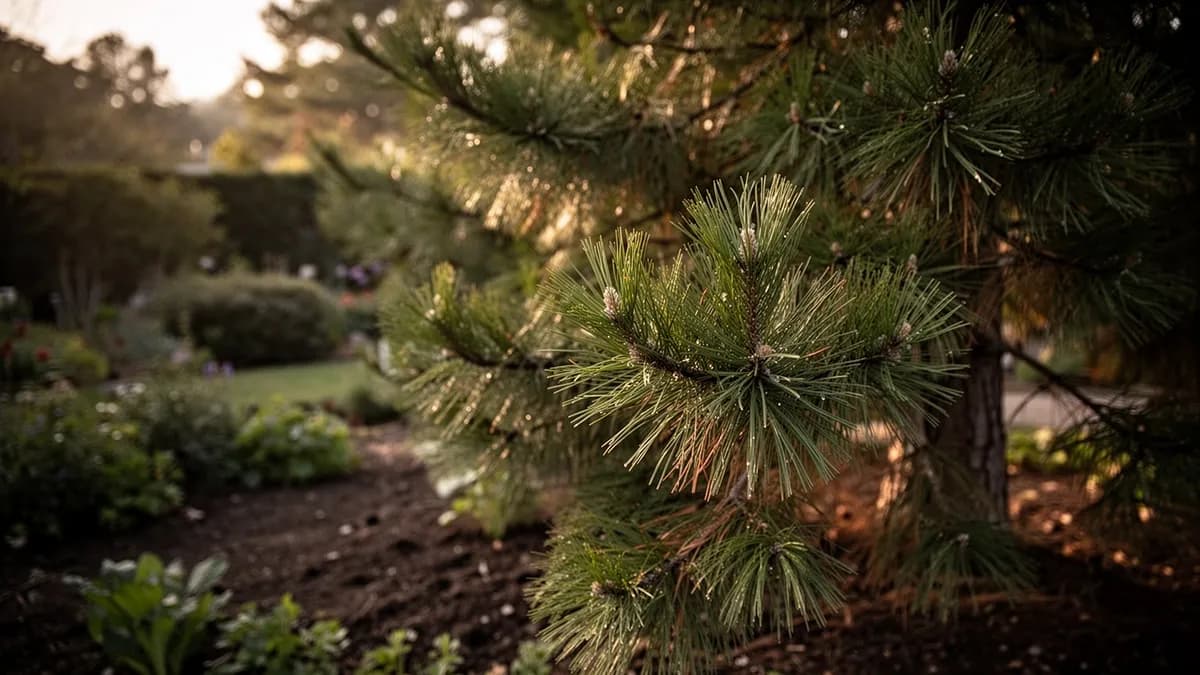
A versatile evergreen conifer group offering year-round screening, windbreak protection, and wildlife habitat. Pines prefer well-drained, acidic soil and full sun and are generally drought-tolerant once established. Their fallen needles create an acidic mulch layer that suppresses weeds and benefits acid-loving companion plants. Most pines grow rapidly when young and can provide a functional privacy screen within five to ten years of planting.
When to plant Pine Tree
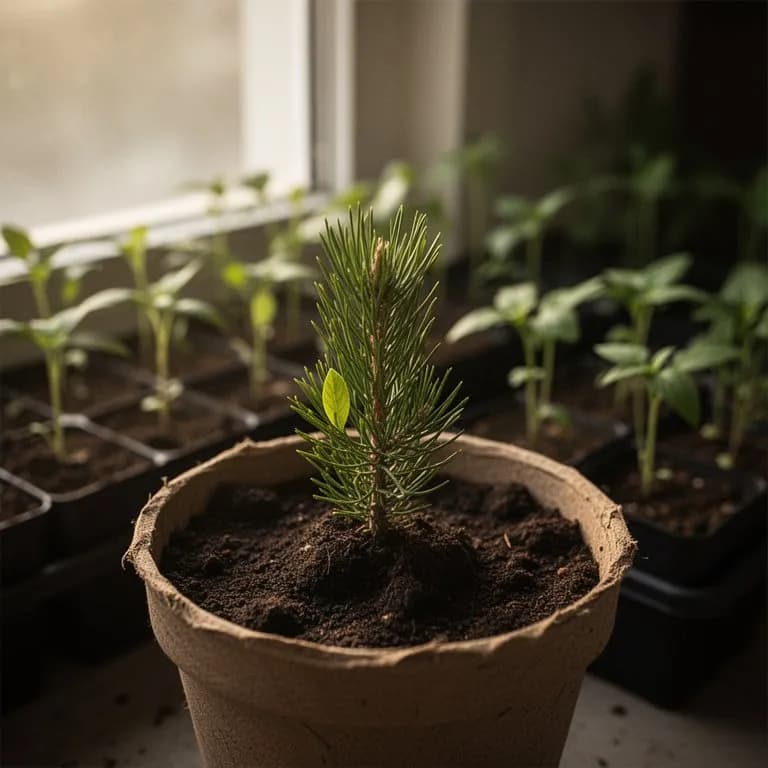
Collect pine cones in fall before they fully open. Dry cones indoors until scales open and seeds release. Most species require 30 to 90 days of cold stratification in moist sand in the refrigerator. Sow seeds a quarter inch deep in acidic seed-starting mix. Germination takes 2 to 6 weeks depending on species. Grow seedlings in deep containers to accommodate the developing taproot. Transplant to permanent locations within the first two years while still manageable.
Your Pine Tree Year
Composed for Zone 7 · typical seasons · frost passes Apr 2, returns Nov 1
Plant Pine Tree Mar – Apr, Oct – Nov, pick —. Check the planting methods below and set your climate to personalize these windows.
How to grow Pine Tree
Pines are among the most adaptable and widely planted evergreen trees, thriving from subarctic regions to subtropical zones depending on species. Plant balled-and-burlapped or container-grown trees in spring or fall in a location with full sun and well-drained soil. Pines absolutely cannot tolerate wet feet — heavy clay or poorly drained sites will kill them.
Most pines prefer acidic soil with a pH of 5.0 to 6.5. Water deeply during the first two growing seasons, then pines are remarkably drought-tolerant once established. Their deep taproot system makes them wind-resistant but difficult to transplant when large. Avoid pruning the central leader, which ruins the natural form. To create denser growth, pinch new candles in half in spring before needles fully elongate.
Pine Tree needs more room than a 4 × 8 ft bed gives
Each Pine Tree wants 800 cm of elbow room. The planner keeps that spacing for you — every plant, every bed.
Pine Tree's best neighbours
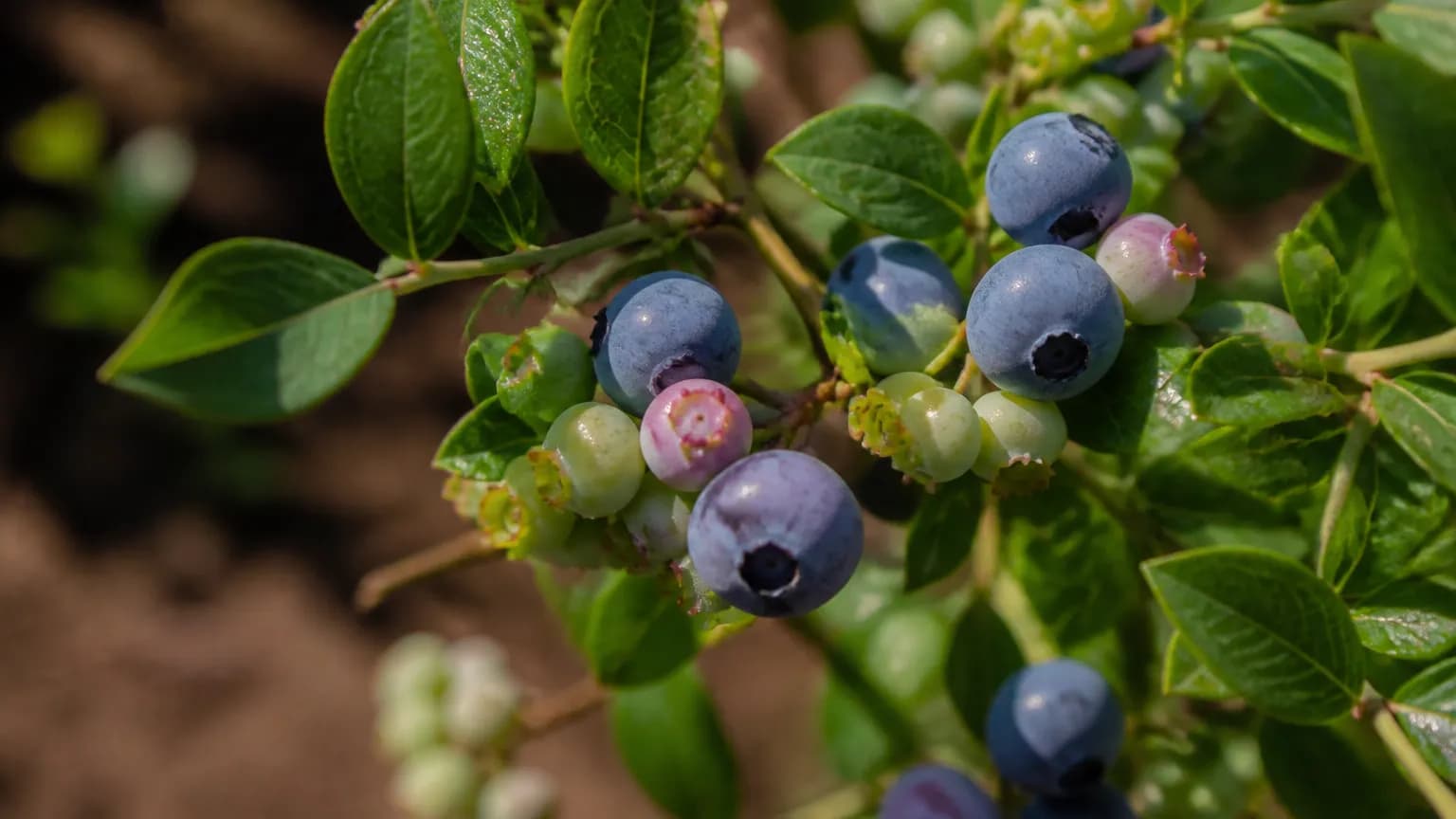
Acid-loving plants thrive under pines: blueberries, azaleas, rhododendrons, and heathers all benefit from the acidic needle mulch. Ferns, hostas, and woodland wildflowers grow well in the dappled shade. Avoid planting grass directly under pines as the acidic conditions and root competition make lawn establishment nearly impossible. Mycorrhizal mushrooms like chanterelles and boletes naturally associate with pine roots.
Blueberry belongs beside it.
Old growers' knowledge, checked against Pine Tree's real companion table below — test any plant you're growing.
Try Pine Tree in a bed — right here
A real planner bed with Pine Tree already in it. Tap a companion to place it and watch the pairing checks answer — green for good neighbours, red for a clash.


Related growing guides
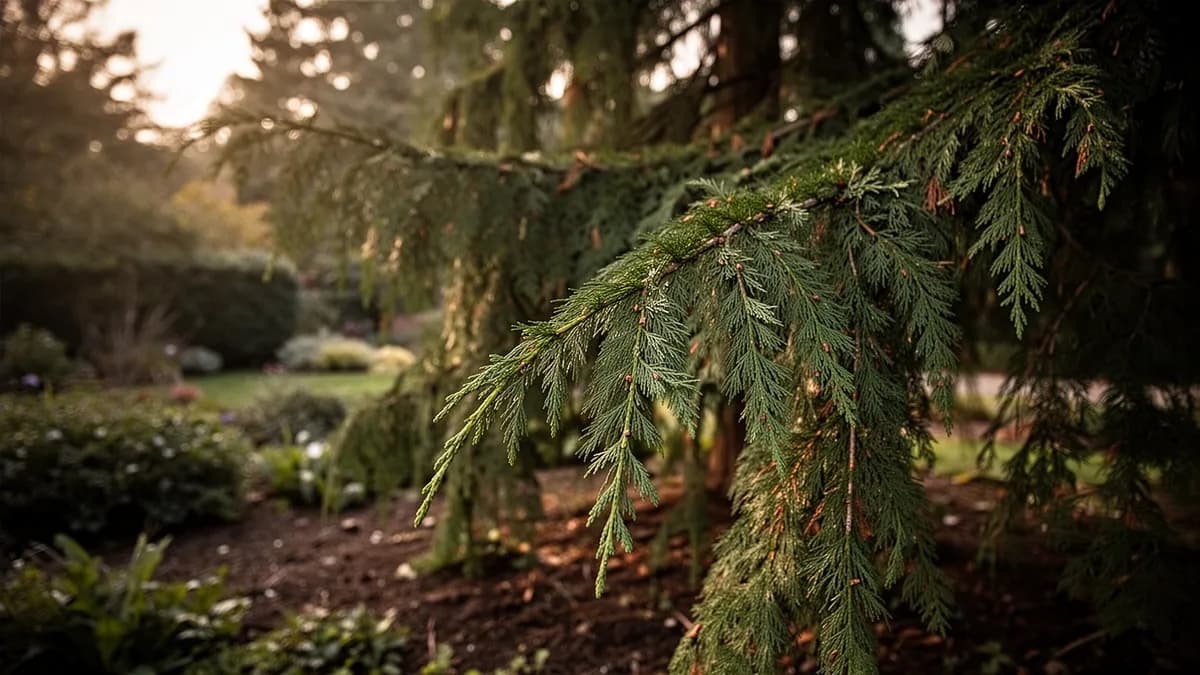
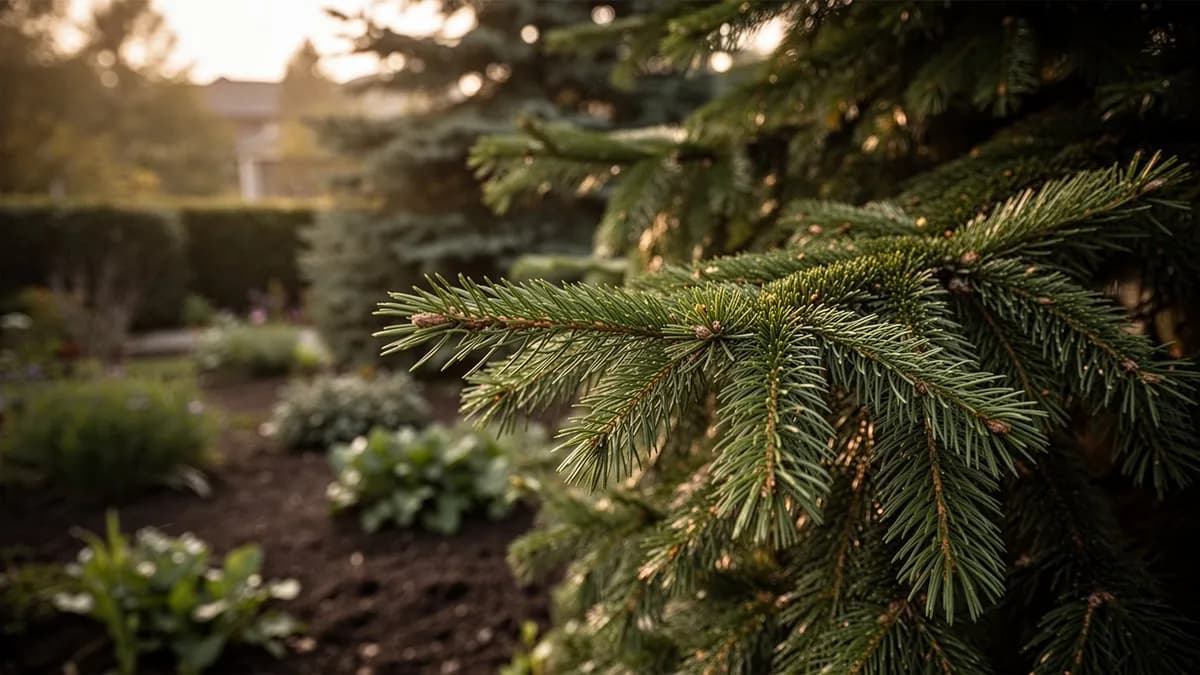
Feed it well
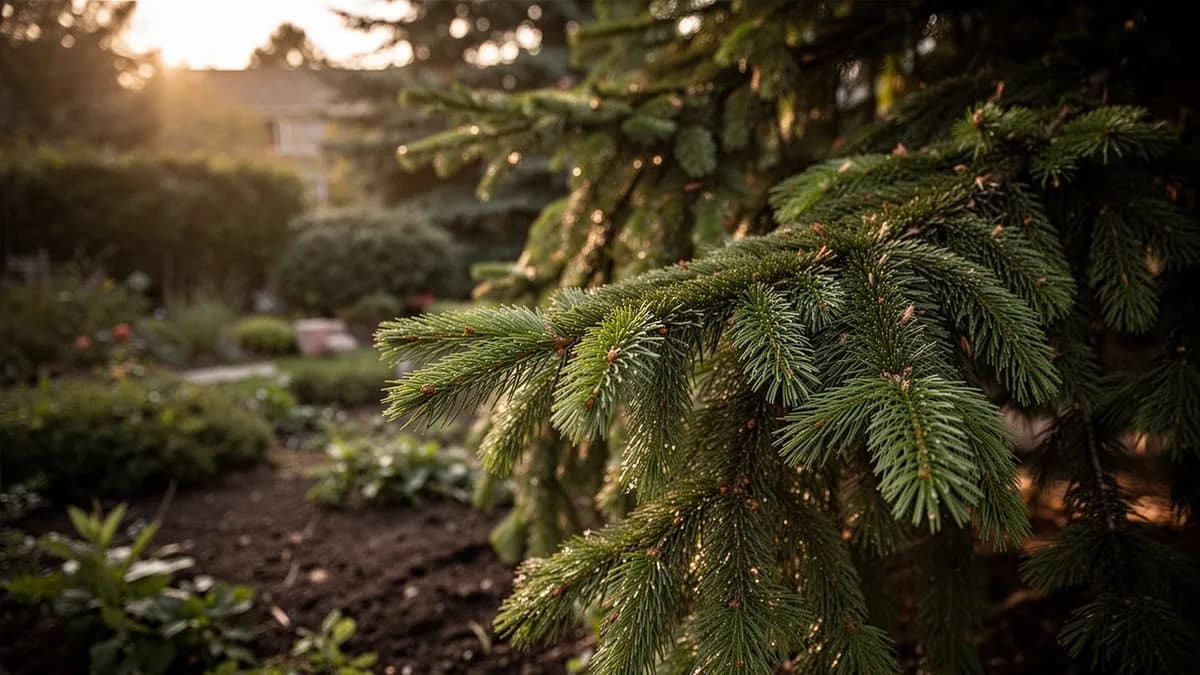
Pines thrive in well-drained, acidic soil with pH 5.0 to 6.5. They tolerate poor, sandy, and rocky soils better than most trees. Avoid heavy clay and waterlogged conditions. Most pines need minimal fertilization — excessive nitrogen promotes soft growth susceptible to disease. For young trees, apply a slow-release acidifying fertilizer in early spring. Established pines in forest settings need no supplemental feeding. Their fallen needles create a natural acidic mulch layer.
Ideal Temperature
Hardiness Zone Compatibility
From seed to harvest, stage by stage
Seed Germination
Pine seeds require specific conditions to break dormancy and germinate. Most species benefit from cold stratification — a period of 30 to 90 days at 1–5°C in moist sand or peat — which mimics the natural winter conditions the seed would experience on the forest floor. After stratification, seeds are sown 1–2 cm deep in a well-drained sandy loam and kept consistently moist at 15–22°C. The radicle emerges first, anchoring the seedling, followed by the hypocotyl which pushes the seed coat above the soil surface. The cotyledon needles unfurl in a distinctive whorl, typically numbering 5 to 12 depending on species, and begin photosynthesizing immediately.
Seedling Establishment
During the first year, the seedling develops its initial set of true needles along the central leader stem. These juvenile needles are typically shorter and softer than mature foliage. The taproot elongates rapidly, often growing faster than the above-ground portion of the plant, establishing the deep anchorage that will support the tree for decades. By the end of the first year, seedlings are typically 10–25 cm tall depending on species and growing conditions. The root system is already disproportionately large relative to the visible plant, with the taproot often extending 30 cm or more into the soil.
Juvenile Growth
Between years one and five, the pine establishes its characteristic conical growth form. Each year, a new flush of vertical growth produces a whorl of lateral branches at its base, creating the tiered appearance typical of young conifers. Growth rates vary significantly by species — fast-growing species like Pinus radiata or Pinus taeda can add 60–90 cm of height per year under good conditions, while slower species like Pinus aristata may add only 10–15 cm annually. The bark remains thin and smooth during this stage, and the tree is most vulnerable to fire, mechanical damage, and drought stress.
Intermediate Maturation
Between roughly five and fifteen years, the pine transitions from a juvenile conical form toward its mature shape. The lower branches may begin to self-prune as the canopy rises and upper branches shade them out. The bark thickens substantially, developing the characteristic furrowed plate pattern that provides significant fire and pest resistance. The root system expands laterally with an extensive network of shallow feeder roots radiating outward, often extending well beyond the drip line of the canopy. Many species begin producing their first cones during this stage, typically starting between 5 and 15 years of age depending on species.
Cone Production and Seed Dispersal
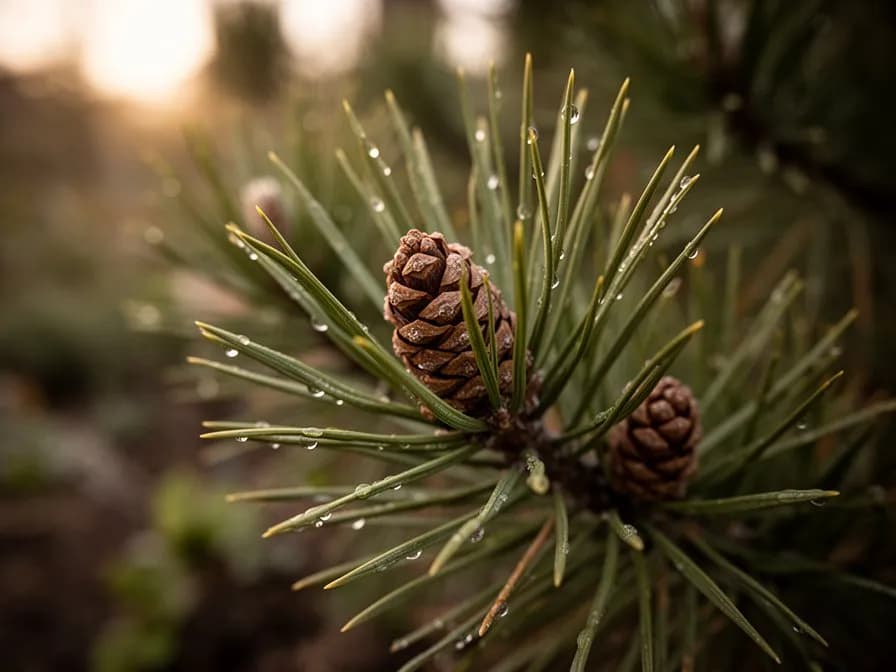
Mature pines produce both male and female cones. Male pollen cones are small, soft, and ephemeral, appearing in spring clusters at branch tips and releasing clouds of yellow pollen carried by wind. Female seed cones are the familiar woody structures that develop over 18 to 24 months from pollination to seed maturity. After fertilization in the first spring, the green cone slowly enlarges over the following summer and winter, lignifying and maturing by the second autumn. When conditions are dry, the cone scales open and release winged seeds that can be dispersed by wind over considerable distances. A single mature tree can produce hundreds of cones annually.
Full Maturity
Fully mature pines are magnificent long-lived trees that can persist for centuries depending on species. Pinus longaeva (Great Basin bristlecone pine) holds the record for the oldest known non-clonal organism on Earth, with individual specimens exceeding 5,000 years of age. At maturity, the canopy typically broadens and flattens from the conical juvenile form into a more spreading, irregular crown. The trunk can reach substantial diameter — old-growth Pinus ponderosa and Pinus sylvestris commonly exceed 60–100 cm in diameter. Mature pines are ecologically critical, providing nesting habitat for birds, food for squirrels and crossbills, and mycorrhizal partnerships with hundreds of fungal species.
Cold-stratify seeds for 60 to 90 days in the refrigerator before sowing. Use a free-draining seed mix of equal parts perlite, coarse sand, and peat. Keep the medium evenly moist but never waterlogged, as pine seeds are highly susceptible to damping-off fungal disease in saturated conditions.
Caring for Pine Tree month by month
What to do each month for your Pine Tree
October
You are hereFall is an excellent time to plant container-grown or balled-and-burlapped pines, as cool temperatures and autumn rains allow roots to establish before winter dormancy. Water newly planted trees well at planting and weekly through autumn until the ground freezes. Apply a thick mulch layer around the root zone of newly planted specimens for winter insulation.
Know exactly what to do in your garden — every month
One email at the start of each month: what to sow, plant, and tackle right now — for your Pine Tree and everything growing around it. Plus a short starter course that helps you dodge the classic mistakes.
- What to do, right now
- Matched to your season
- Starter course included
Harvesting Pine Tree
Pine nuts are harvested from certain species including stone pine, Korean pine, and pinyon pine. Cones are collected in fall when scales begin to open, then dried in the sun until seeds release. Pine needle tea can be made year-round from fresh green needles — harvest young, light-green tips in spring for the mildest flavor. Pine pollen is collected in spring by shaking male catkins into bags.
assuming you plant when the window opens — set your real date
Pick Pine Tree promptly and the plant keeps producing.
Storage & Preservation
Pine nuts are highly perishable due to their oil content. Store shelled nuts in the refrigerator for up to 3 months or freeze for up to a year. Unshelled nuts keep longer at room temperature. Toast pine nuts in a dry skillet to enhance flavor before use. Dried pine needles can be stored in airtight containers for tea. Pine resin can be collected and stored indefinitely for traditional uses.
What goes wrong — and the fix
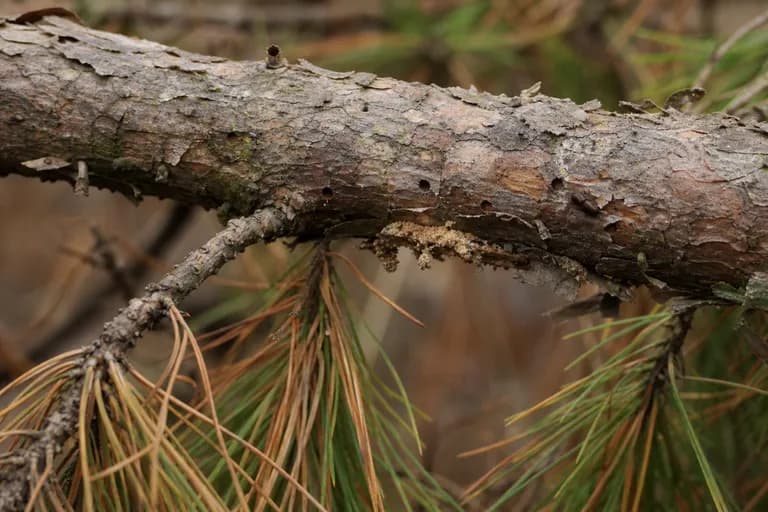
Pine Bark Beetle
PestBoring dust in bark crevices, pitch tubes on trunk, yellowing needles progressing from top down. Stressed or drought-weakened trees are most vulnerable.
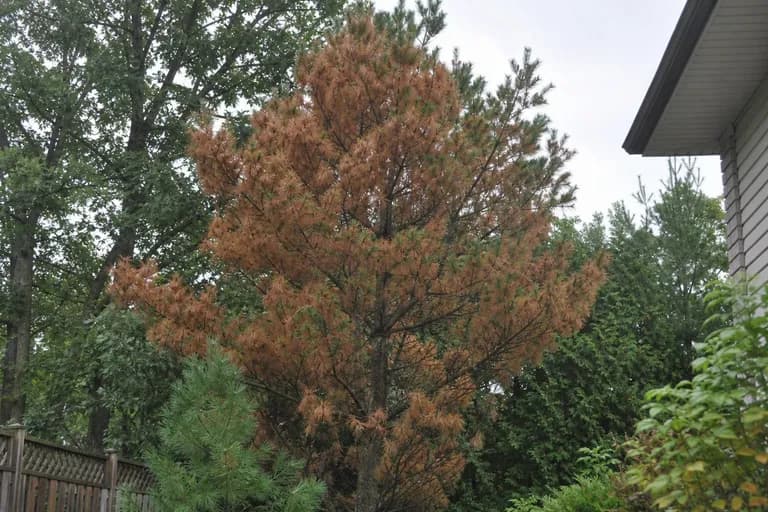
Pine Wilt Disease
DiseaseRapid browning and death of entire tree within weeks to months. Needles turn gray-green then brown but remain attached. Caused by pinewood nematode spread by sawyer beetles.
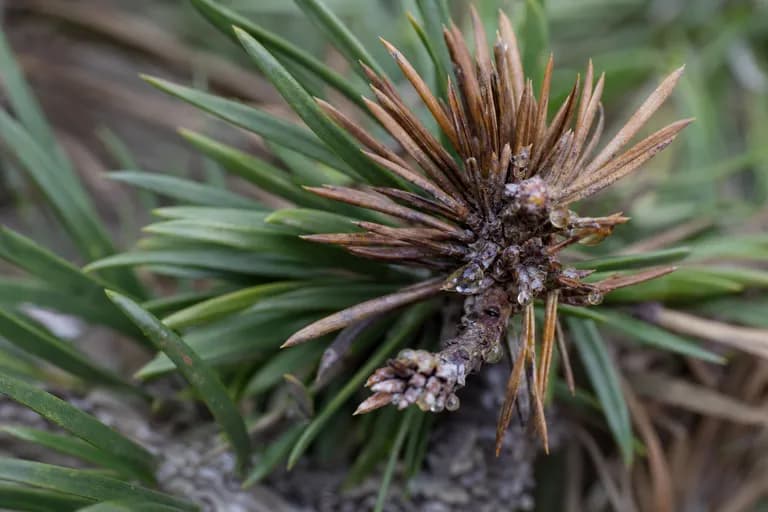
Diplodia Tip Blight
DiseaseNew shoots stunted with short, brown needles. Black fruiting bodies visible at base of needles. Austrian and Scots pines most susceptible.
Troubleshooting Common Problems
Drought stress is the primary trigger for bark beetle attack and subsequent tree death. White pine blister rust affects five-needle pines and can be fatal. Needle cast diseases cause inner needle browning and premature drop. Salt spray damage occurs on roadside pines. Transplant shock is common with larger specimens due to the deep taproot. Pine processionary moth caterpillars are a hazard in Mediterranean regions.
Growing Tips
- Select a pine species appropriate to your climate zone and soil conditions. Pines are remarkably diverse — there is a species suited to nearly every temperate and boreal environment, but planting the wrong species for your conditions will result in poor growth or failure. Research your USDA hardiness zone and soil type before purchasing.
- Plant pines in full sun. Nearly all pine species are intolerant of shade, particularly during establishment. Even light canopy shade from neighboring trees will cause a pine to grow leggy, sparse, and weak. Choose the sunniest available site for new plantings.
- Ensure excellent soil drainage. Pines evolved in sandy, rocky, and well-drained soils and are highly susceptible to root rot in heavy clay or waterlogged conditions. If your native soil is heavy clay, consider planting on a raised mound or berm to improve drainage around the root zone.
- Plant pine trees at the correct depth — the root flare (where the trunk widens at the base) must be at or slightly above the surrounding soil grade. Burying the root flare is the single most common planting error with pines and leads to bark rot, girdling roots, and slow decline over several years.
- Water deeply but infrequently during establishment. For the first two to three years after planting, water once per week during dry periods, applying 20 to 40 liters slowly at the drip line to encourage deep root development. Avoid frequent light watering, which promotes shallow roots vulnerable to drought.
- Do not fertilize pines heavily. Pines are adapted to nutrient-poor soils and excessive nitrogen fertilization produces soft, rapid growth that is highly attractive to bark beetles and tip moths. If fertilization is needed, use a slow-release acid-forming formulation applied once in early spring at conservative rates.
- Avoid pruning pines heavily or cutting back into old wood. Unlike deciduous trees and some other conifers, pines cannot regenerate new growth from old, needleless wood. Pruning cuts into bare wood will create permanent dead stubs. The only effective method for managing pine shape is candle pinching in spring, cutting the elongating new shoot by one-third to one-half before needles expand.
- Use fallen pine needles as a natural acidifying mulch for acid-loving plants such as blueberries, azaleas, rhododendrons, and camellias. Pine straw is an excellent mulch material that decomposes slowly, suppresses weeds, and gradually lowers soil pH — and it is freely and abundantly available beneath any established pine tree.
- Monitor for pine bark beetles, which are the most destructive pest of pines worldwide. Signs include small pitch tubes (resin-coated holes) on the trunk, fine boring dust in bark crevices, and sections of the canopy fading from green to yellow to red. Healthy, well-watered trees are significantly more resistant to beetle attack than stressed trees.
- Be aware that pine roots form obligate partnerships with ectomycorrhizal fungi. When planting pines in soil that has not previously supported conifers, consider inoculating the planting hole with mycorrhizal fungi (available commercially as granular or powder inoculants) to establish these critical symbiotic relationships from the start.
Grow your best Pine Tree yet — and everything around it.
Start a free plan today. Lay out your beds, drop in your Pine Tree, and let PlotMyGarden handle the timing, spacing, companions and reminders from seed to harvest basket.
Pick your Pine Tree
Eastern White Pine (Pinus strobus)
Fast-growing native with soft, flexible blue-green needles in bundles of five. Graceful, pyramidal form reaching 80 feet. Excellent for screening.
Scots Pine (Pinus sylvestris)
Distinctive orange-red bark on upper trunk with blue-green twisted needles. Extremely cold-hardy and wind-resistant. Classic Christmas tree species.
Austrian Pine (Pinus nigra)
Dense, dark green needles on a broadly pyramidal tree. Excellent urban and coastal tolerance. Good windbreak species reaching 60 feet.
Stone Pine (Pinus pinea)
The classic Mediterranean umbrella pine producing the prized pine nuts used in pesto and Mediterranean cuisine. Broad spreading crown at maturity.
Pine trees provide exceptional long-term value in a home landscape far beyond direct food production. A single mature pine can produce 5 to 15 kg of pine nuts annually (from nut-producing species like Pinus pinea or Pinus edulis), and pine nuts retail for $25 to $60 per kilogram — making a productive tree worth $125 to $900 in annual nut harvest alone. Beyond nuts, pine needles make excellent free mulch and compost acidifier, pine needle tea provides a no-cost vitamin C source, and fallen cones serve as free kindling and craft material. As a windbreak, a row of pines can reduce home heating costs by 10 to 30 percent according to USDA studies, and mature pines add measurably to property values. A pine tree planted today is a decades-long investment that pays increasing returns over time.
Quick recipes
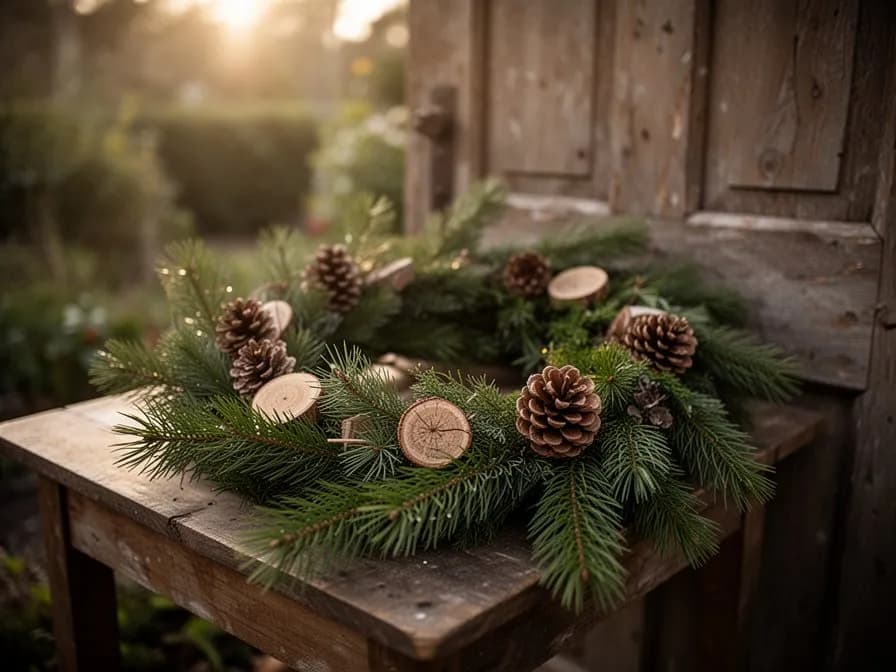
Pine Needle Tea
10 minutesA traditional vitamin C-rich herbal tea made from fresh pine needles, consumed for centuries by Indigenous peoples across North America, Scandinavia, and East Asia. The tea has a mild, refreshing flavor with light citrus and resinous notes. Use needles from known safe species such as eastern white pine (Pinus strobus), Scots pine (Pinus sylvestris), or Korean pine (Pinus koraiensis). Avoid yew, Norfolk Island pine, and Ponderosa pine needles, which can be toxic.
5 ingredientsClassic Basil Pine Nut Pesto
10 minutesThe traditional Ligurian pesto alla genovese in which pine nuts are the canonical nut ingredient, providing a creamy, slightly sweet richness that distinguishes authentic pesto from versions made with cheaper walnuts or cashews. Toasting the pine nuts lightly before blending deepens their flavor considerably. This recipe makes enough for approximately 400g of pasta.
7 ingredientsToasted Pine Nut and Lemon Salad
15 minutesA bright, simple salad that showcases the buttery richness of toasted pine nuts against peppery arugula and sharp lemon dressing. The pine nuts are toasted until golden to bring out their natural sweetness and nutty depth. This works beautifully as a side dish or as a light lunch with crusty bread.
7 ingredientsCulinary Uses
Pine nuts from stone pine and pinyon pine are essential in Mediterranean cuisine, particularly Italian pesto. Toast them for salads, grain dishes, and baked goods. Pine needle tea is rich in vitamin C and has a pleasant citrusy flavor. Young male catkins can be used as a flour supplement. Pine pollen is used as a nutritional supplement in some traditions.
What's inside
Health Benefits
- Pine needle tea is a traditional source of vitamin C, containing an estimated 25 to 30 milligrams per cup — roughly one-third of the daily recommended intake — and has been used historically to prevent scurvy during long winters, ocean voyages, and in remote northern communities where fresh fruit was unavailable.
- Pine nuts contain high levels of magnesium (251mg per 100g, approximately 60% of the daily value), a mineral critical for over 300 enzymatic reactions in the body including energy production, muscle function, and nervous system regulation, and which a significant portion of Western populations are deficient in.
- The terpene compounds released by pine forests — particularly alpha-pinene — have been studied in the context of Japanese shinrin-yoku (forest bathing) and shown in multiple controlled studies to reduce cortisol levels, lower blood pressure, and increase natural killer cell activity, suggesting measurable immune and stress-reduction benefits from spending time in pine-rich environments.
- Pinolenic acid, a fatty acid unique to pine seed oil, has demonstrated appetite-suppressing effects in clinical studies by stimulating the release of the satiety hormones cholecystokinin (CCK) and glucagon-like peptide 1 (GLP-1), potentially supporting healthy weight management as part of a balanced diet.
- Pine bark extract (marketed commercially as Pycnogenol) is derived from the bark of Pinus pinaster and has been the subject of over 400 published studies investigating its potent antioxidant, anti-inflammatory, and circulation-improving properties, with evidence supporting benefits for cardiovascular health, skin aging, and joint comfort.
- Pine pollen has been used in traditional Chinese medicine for over 2,000 years and contains a broad spectrum of vitamins, minerals, amino acids, and antioxidants. Modern analysis confirms it is one of the rare plant sources of DHEA precursors and plant-derived androgens, though human clinical evidence for hormonal effects remains limited.
Where Pine Tree comes from
The genus Pinus is ancient, with fossil evidence dating the earliest recognizable pine ancestors to the Cretaceous period roughly 130 to 140 million years ago, making pines contemporaries of the dinosaurs. Today the genus comprises approximately 120 recognized species distributed across the Northern Hemisphere, from the subarctic treeline of Scandinavia and Siberia south through the temperate and subtropical forests of North America, Europe, and Asia, extending into the montane tropics of Central America, the Caribbean, and Southeast Asia. Pines are the most species-rich genus of conifers and among the most ecologically and economically significant tree genera on Earth. Human use of pines stretches deep into prehistory. Archaeological sites across Europe, Asia, and the Americas contain evidence of pine nut consumption, resin use, and wood utilization dating back tens of thousands of years. The stone pine (Pinus pinea) was cultivated by the Romans for its large edible seeds, and pine nut harvesting by Indigenous peoples of the Great Basin region of North America — particularly from the pinyon pines Pinus edulis and Pinus monophylla — was a central element of subsistence economies for millennia. In East Asia, the Korean pine (Pinus koraiensis) has been harvested for its nuts for thousands of years, and pine forests hold deep cultural and spiritual significance in Korean, Japanese, and Chinese traditions. The Scots pine (Pinus sylvestris), the most widely distributed pine species on Earth, stretching from Scotland to eastern Siberia, has been a cornerstone of European forestry since at least the medieval period. Managed pine plantations have supplied timber, fuel, and naval stores (turpentine, rosin, pitch, and tar) for centuries. During the age of European colonial expansion, control of pine forests was a strategic military priority — the tall, straight trunks of white pine (Pinus strobus) in New England were so valued as ship masts by the British Royal Navy that the Crown reserved the largest specimens with the Broad Arrow policy, a source of significant colonial resentment. In the modern era, pine plantations cover tens of millions of hectares globally, with Pinus radiata, Pinus taeda, and Pinus elliottii among the most widely planted timber species worldwide. Beyond commercial forestry, pines serve critical ecological roles as keystone species in fire-adapted ecosystems, as primary habitat for endangered species such as the red-cockaded woodpecker, and as pioneer colonizers of disturbed landscapes.
Pine Tree: did you know?
Fascinating facts about Pine Tree
The Great Basin bristlecone pine (Pinus longaeva) includes the oldest known individual non-clonal trees on Earth — a specimen named Methuselah in California's White Mountains has been verified at over 4,850 years old, meaning it germinated before the construction of the Egyptian pyramids at Giza.
Pine Tree questions, answered
When should I plant Pine Tree?
What are good companion plants for Pine Tree?
What hardiness zones can Pine Tree grow in?
How much sun does Pine Tree need?
How far apart should I space Pine Tree?
What pests and diseases affect Pine Tree?
How do I store Pine Tree after harvest?
What are the best Pine Tree varieties to grow?
What soil does Pine Tree need?
Is pine needle tea safe to drink, and which species should I use?
How long does it take for a pine tree to reach maturity?
Why are the needles on my pine tree turning yellow and dropping?
Can I grow a pine tree in a container or as a bonsai?
What is the best pine species for edible pine nuts?
Do pine trees make the soil too acidic for other plants to grow nearby?
You just read the theory. Now grow it on autopilot.
Everything that makes Pine Tree fiddly — the timing, the spacing, the companions, the harvest window — is exactly what PlotMyGarden handles for you, for every plant in your garden.
A plan that knows your weather
Set your location once. Get sow, feed and harvest dates built around your real last-frost date and live forecast — no more guessing from a generic seed packet.
From the “When to plant” sectionDrag-and-drop bed planner
Design beds on a grid. Every plant snaps to its proper spacing, and you can see your whole season laid out before you spend a cent on seed.
From the “Growing guide” sectionCompanion conflicts, caught early
200+ good-and-bad pairings checked live as you plant — so a season-wrecking mistake never makes it into the ground.
From the “Companions” sectionReminders you'll actually act on
“Water the beans.” “Pick today before it turns.” Timely, specific, and tied to the plants you're really growing.
From the “Harvest” sectionSuccession, scheduled
Want a harvest for six weeks, not six days? It spaces your sowings automatically and reminds you when each new block is due.
From the “When to plant” sectionA record that gets smarter
Every harvest you log teaches it your garden. Next year's plan starts from what actually worked in your soil, not a textbook's.
From the “Overview” sectionPlant these alongside Pine Tree
More Evergreens
Grow your best Pine Tree yet — and everything around it.
Start a free plan today. Lay out your beds, drop in your Pine Tree, and let PlotMyGarden handle the timing, spacing, companions and reminders from seed to harvest basket.