Spruce Tree
A classic pyramidal evergreen with dense branching that provides excellent wind protection and year-round visual screening.





On this pageOverview
Meet Spruce Tree
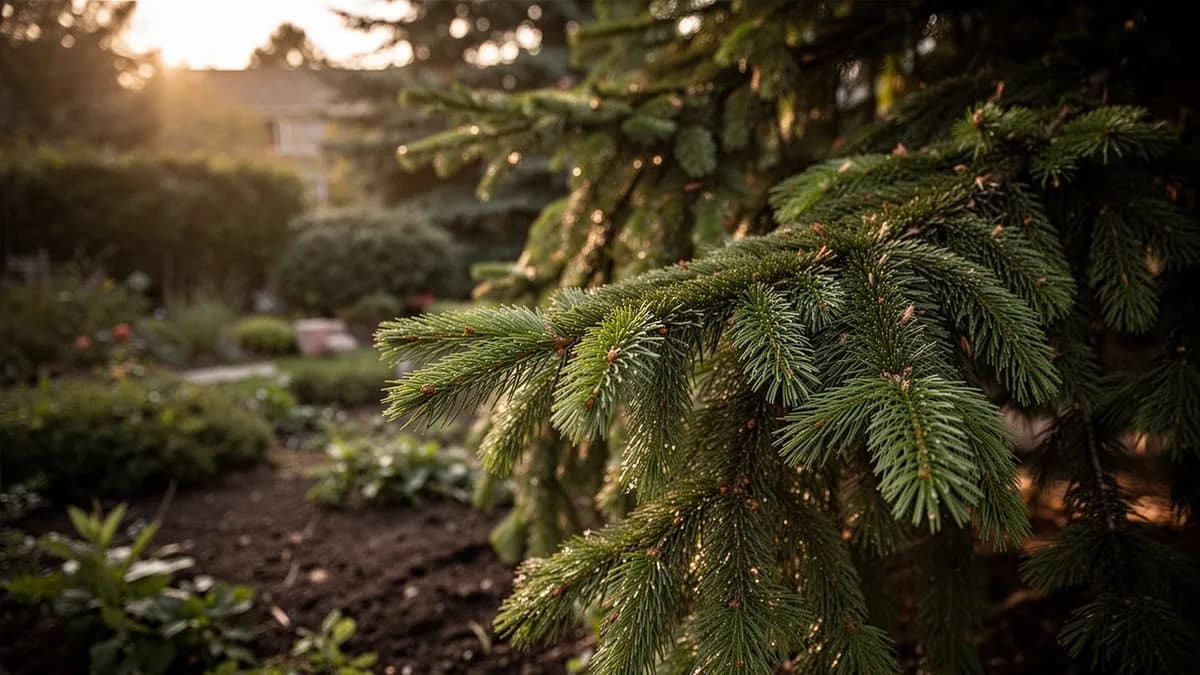
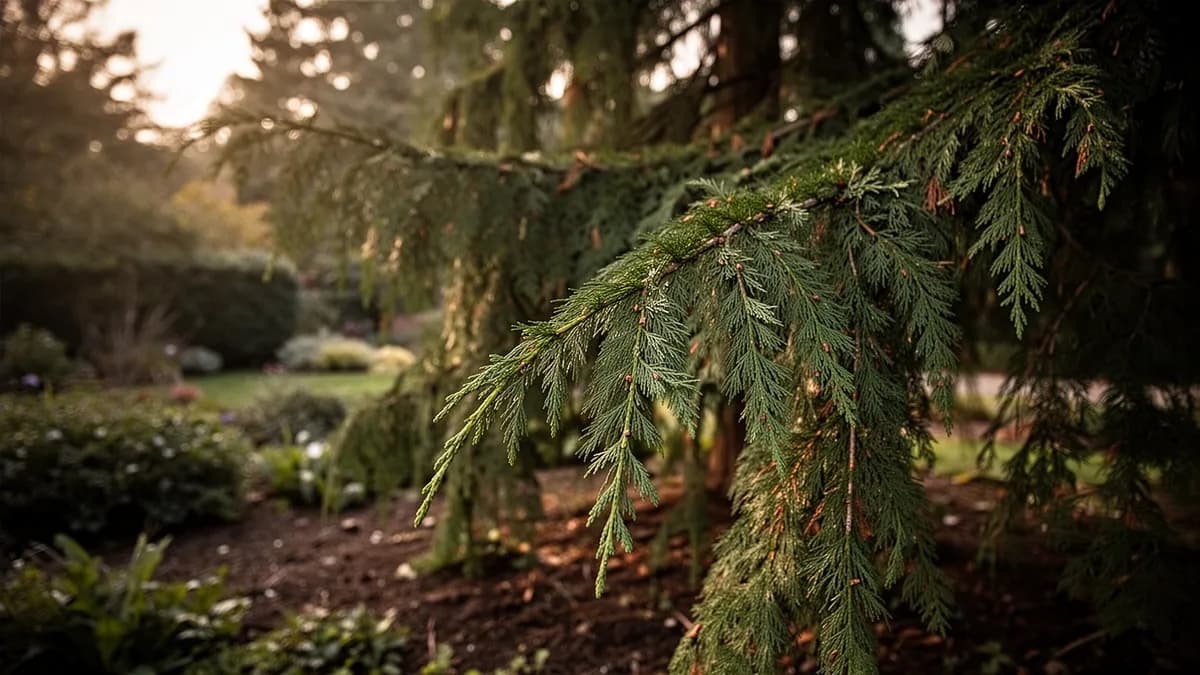
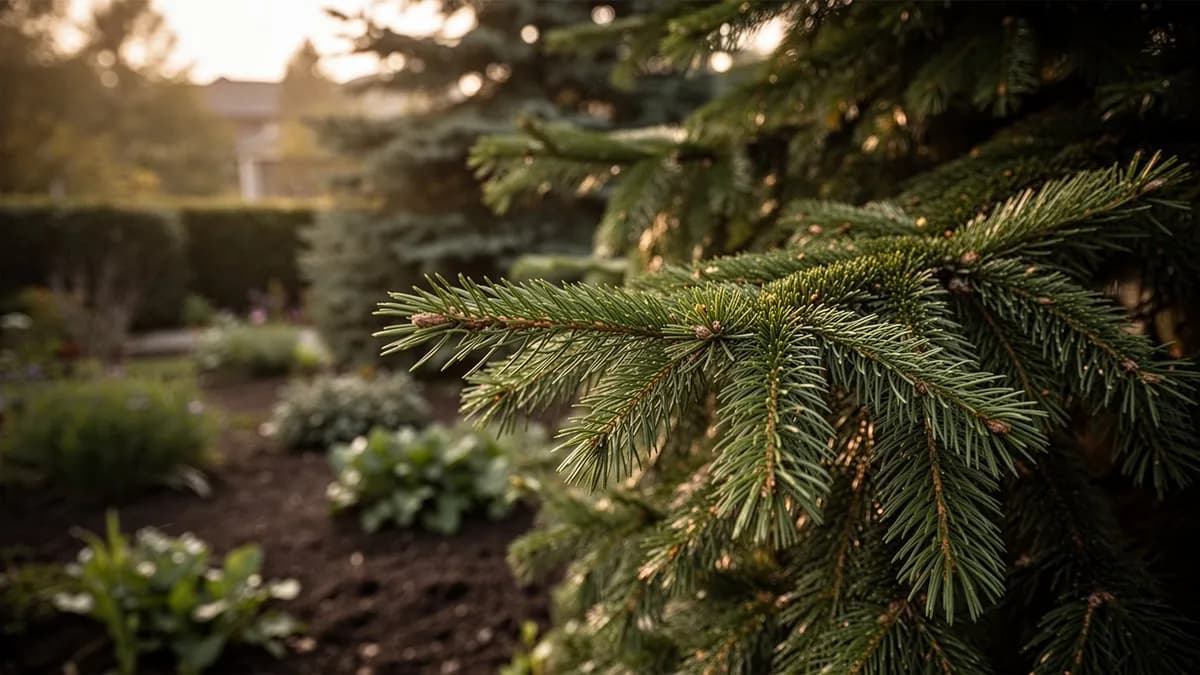
A classic pyramidal evergreen with dense branching that provides excellent wind protection and year-round visual screening. Spruces prefer cool, moist climates and struggle in hot, dry conditions where spider mites become a persistent problem. Norway spruce is the fastest-growing species, while Colorado blue spruce offers striking silvery-blue foliage. Plant in well-drained soil and avoid low spots where cold air and standing water collect around the root zone.
When to plant Spruce Tree
Collect spruce cones in fall when they begin to turn brown. Dry indoors until scales open and winged seeds release. Cold-stratify seeds for 30 to 60 days in moist peat in the refrigerator. Sow on the surface of moist acidic seed mix and barely cover. Germination occurs in 2 to 4 weeks at 60 to 70°F. Seedlings are slow-growing in the first years. Named cultivars must be propagated by grafting onto seedling rootstock.
Your Spruce Tree Year
Composed for Zone 7 · typical seasons · frost passes Apr 2, returns Nov 1
Plant Spruce Tree Mar – Apr, Oct – Nov, pick —. Check the planting methods below and set your climate to personalize these windows.
How to grow Spruce Tree
Spruces are cool-climate evergreens that perform best in USDA zones 2 to 7, struggling in hot, humid summers. Plant balled-and-burlapped trees in spring or early fall in full sun with moist, well-drained, slightly acidic soil. Space large species 20 to 30 feet apart for screening.
Water deeply during establishment and in dry periods — spruces have shallow root systems that suffer quickly in drought. Maintain 3 to 4 inches of organic mulch over the root zone. Avoid pruning into old wood as spruces cannot regenerate from bare branches. Shape by trimming new growth in spring if needed.
Spruce Tree needs more room than a 4 × 8 ft bed gives
Each Spruce Tree wants 800 cm of elbow room. The planner keeps that spacing for you — every plant, every bed.
Spruce Tree's best neighbours
Acid-loving shrubs like azaleas, rhododendrons, and mountain laurel thrive in the acidic conditions created by spruce needle drop. Ferns, hostas, and shade-tolerant groundcovers grow well beneath the canopy. Spring bulbs like daffodils and snowdrops naturalize under spruces. Avoid planting sun-loving perennials near spruces as the dense shade is too deep for most flowering plants.
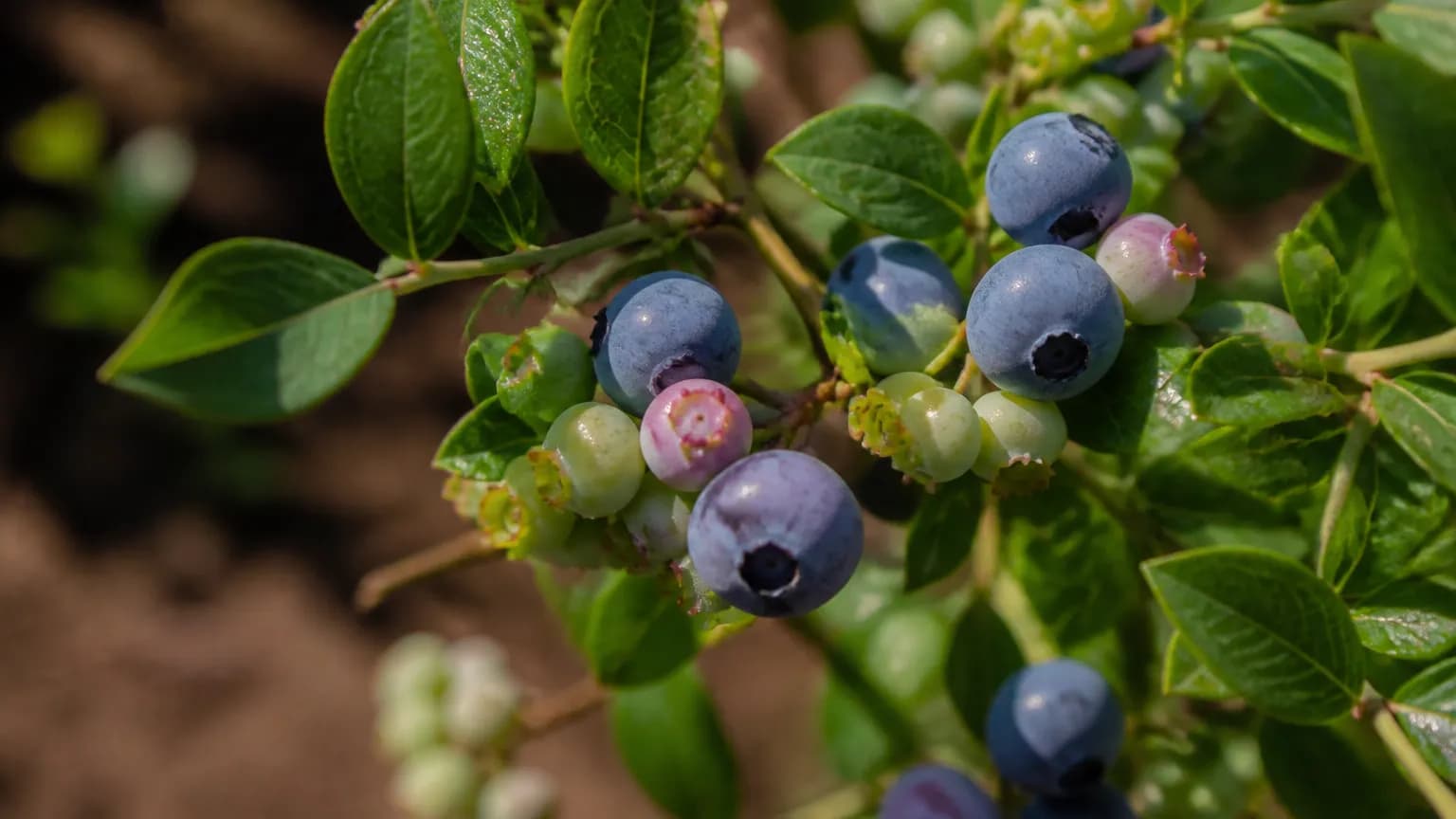
Blueberry belongs beside it.
Old growers' knowledge, checked against Spruce Tree's real companion table below — test any plant you're growing.
Try Spruce Tree in a bed — right here
A real planner bed with Spruce Tree already in it. Tap a companion to place it and watch the pairing checks answer — green for good neighbours, red for a clash.


Related growing guides
Feed it well
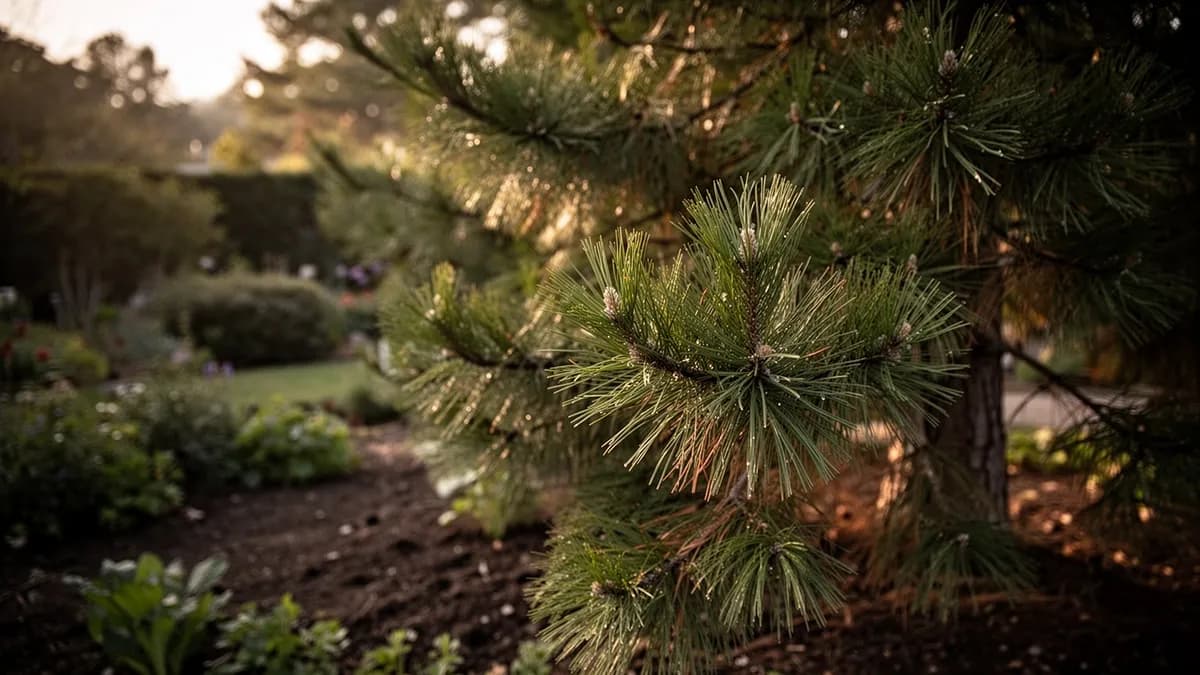
Spruces prefer moist, well-drained, slightly acidic soil with pH 5.5 to 6.5. They tolerate a range of soil types but cannot handle waterlogged or highly alkaline conditions. Colorado blue spruce develops iron chlorosis in high-pH soils. Apply acidifying fertilizer to young trees in spring. Established spruces rarely need feeding. Mulch with acidic organic material like pine bark or wood chips.
Ideal Temperature
Hardiness Zone Compatibility
From seed to harvest, stage by stage
Seed Germination and Seedling Emergence
Spruce seeds require a period of cold stratification lasting 30-60 days at 1-5°C to break dormancy and trigger germination. Once sown in moist, well-drained acidic soil, seeds germinate within 14-21 days at soil temperatures of 15-20°C. Seedlings emerge with a whorl of cotyledon needles and a slender stem, extremely delicate during this early phase.
Juvenile Seedling Growth
During the first year, spruce seedlings develop their initial true needles and begin establishing a taproot system. Growth is slow, typically reaching only 5-15 cm in height by the end of the first year. The seedling develops its first lateral branches and begins to take on the characteristic conical shape, though it remains very small and vulnerable to environmental stress.
Establishment Phase
Over years two through five, the spruce tree accelerates its growth rate and develops a strong central leader with symmetrical whorls of lateral branches. Height gains increase to 15-30 cm per year as the root system expands and the tree becomes more self-sufficient. The canopy fills in with dense needle coverage, and the tree begins producing its own microclimate beneath the branches.
Active Vertical Growth
From year five through approximately year twenty, spruce trees enter their most vigorous growth phase, adding 30-60 cm of height annually depending on species and growing conditions. The tree develops a dense, pyramidal crown with branches extending nearly to the ground. Annual growth flushes in spring produce the bright green spruce tips that are prized for culinary and medicinal use.
Mature Cone Production
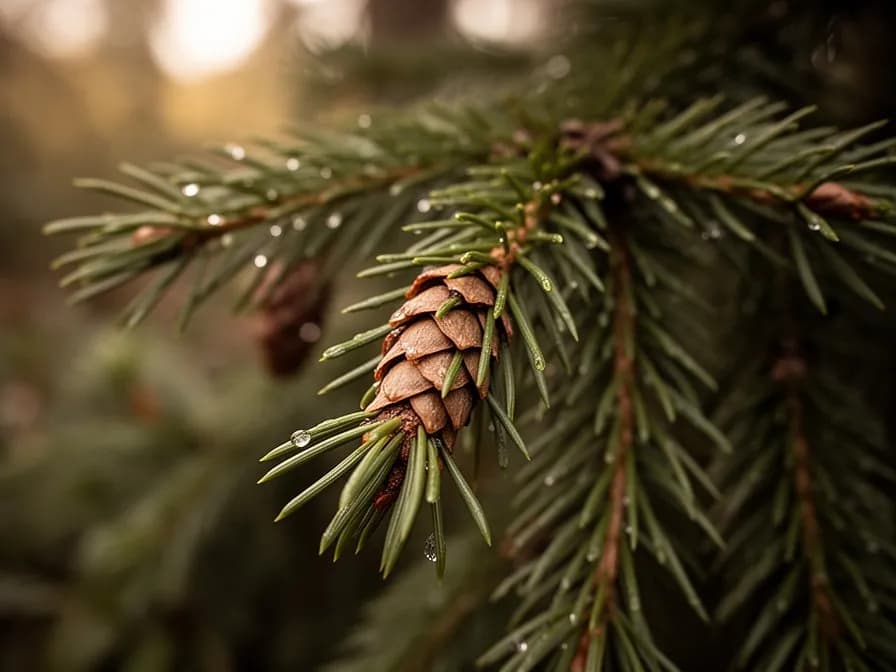
Spruce trees begin producing cones reliably between 20 and 40 years of age, though some may produce small quantities earlier. Male cones release pollen in spring, while female cones develop on upper branches, maturing over a single growing season. Mature cones are pendulous and woody, with thin papery scales that open in dry weather to release winged seeds carried by wind.
Full Maturity and Legacy Growth
A fully mature spruce tree can reach heights of 20-60 meters depending on species, with Norway spruce and Sitka spruce among the tallest. Growth rate slows considerably but continues throughout the tree's life, which can span 200-600 years in the wild. The tree becomes a significant ecological fixture, providing year-round shelter for birds and wildlife, windbreak protection, and contributing to soil acidification beneath its canopy.
Sow stratified seeds in a fine-textured, acidic seed-starting mix at a depth of 3-6 mm. Keep the medium consistently moist but not waterlogged, and provide bright indirect light. Protect seedlings from damping-off fungus by ensuring good air circulation and avoiding overhead watering. A light misting is preferable during the first weeks.
Caring for Spruce Tree month by month
What to do each month for your Spruce Tree
October
You are hereApply a final deep watering before the ground freezes, as well-hydrated trees resist winter desiccation far better than dry ones. Wrap newly planted or exposed small spruce trees with burlap windscreens on the windward side to protect against winter wind and sun damage. Apply anti-desiccant spray to young trees in exposed locations.
Know exactly what to do in your garden — every month
One email at the start of each month: what to sow, plant, and tackle right now — for your Spruce Tree and everything growing around it. Plus a short starter course that helps you dodge the classic mistakes.
- What to do, right now
- Matched to your season
- Starter course included
Harvesting Spruce Tree
Spruces are not typically harvested for food. Young spruce tips collected in spring have a bright, citrusy flavor and are used for spruce tip syrup, tea, and beer. Harvest the light-green new growth when tips are about 1 inch long and still soft. Take only a few tips per branch to avoid disfiguring the tree. Spruce gum can be collected from resin blisters on the bark.
assuming you plant when the window opens — set your real date
Pick Spruce Tree promptly and the plant keeps producing.
Storage & Preservation
Fresh spruce tips should be used within a few days or frozen immediately for later use. To make spruce tip syrup, layer tips with sugar and let sit for several weeks. Dried spruce tips can be stored in airtight containers for tea. Spruce tip vinegar and spruce tip salt are popular preservation methods in Nordic cuisine.
What goes wrong — and the fix
Spider Mites
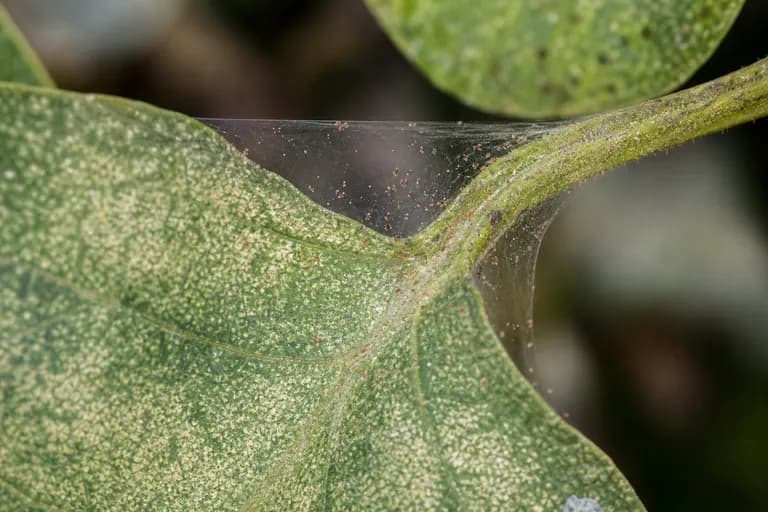
PestNeedles develop yellow stippling, then turn bronze and drop. Fine webbing visible between needles. Worst in hot, dry weather on stressed trees.
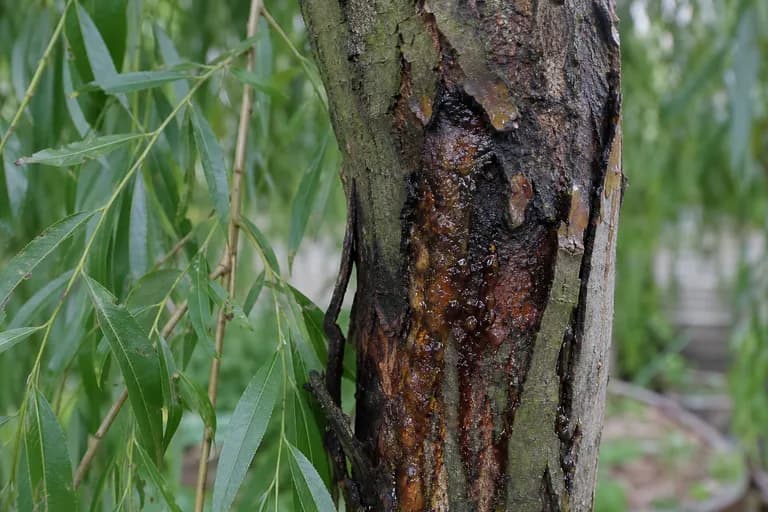
Cytospora Canker
DiseaseWhite resin patches oozing from bark on lower branches. Affected branches turn brown and die progressively from the bottom up.
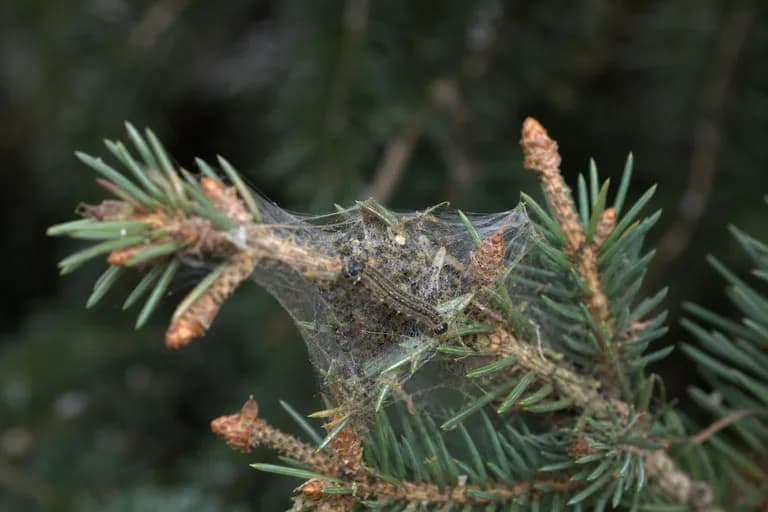
Spruce Budworm
PestLarvae feed on new shoots and buds in spring, creating webbed masses of chewed needles and frass. Repeated defoliation can kill trees.
Troubleshooting Common Problems
Spider mites are the most persistent problem, especially on Colorado blue spruce in warm climates. Cytospora canker progressively kills lower branches of stressed trees. Needle cast diseases cause inner needle drop creating a thin, bare-branched appearance. Heat stress in zones 7 and above makes spruces poor choices for southern gardens. Shallow roots make them susceptible to windthrow in saturated soils.
Growing Tips
- Select a spruce species appropriate for your climate and garden size. Colorado blue spruce and white spruce tolerate dry conditions better than Norway spruce, while dwarf Alberta spruce (Picea glauca 'Conica') stays compact at 2-4 meters for smaller gardens and containers.
- Plant spruce trees in full sun to partial shade in acidic, well-drained soil with a pH between 5.0 and 6.5. Avoid heavy clay soils that retain water around the roots, as spruce trees are susceptible to root rot in waterlogged conditions.
- Dig a planting hole twice the width of the root ball but no deeper than the root ball height. Set the tree so the root flare sits at or slightly above the surrounding soil level, as planting too deeply is a leading cause of spruce tree decline.
- Water newly planted spruce trees deeply once per week during the first two growing seasons, providing 25-40 mm of water each time. Once established, spruce trees are moderately drought-tolerant but perform best with supplemental watering during extended dry periods, especially in summer heat.
- Apply a 7-10 cm layer of acidic organic mulch such as pine bark, pine needles, or wood chips in a wide ring extending to the drip line. Keep mulch 15 cm away from the trunk to prevent moisture buildup that encourages bark diseases and rodent damage.
- Avoid heavy pruning of spruce trees, as they do not regenerate growth from old wood that has been cut back to bare branches. Limit pruning to removing dead, damaged, or diseased branches and to shortening new growth candles in spring by up to half if you want to create a denser, more compact form.
- Harvest spruce tips for culinary use in spring when the new growth is 2-5 cm long, bright green, and still tender enough to pinch off easily with your fingers. Remove the papery brown sheaths before use. Tips are best used fresh but can be frozen or dried for later use.
- Monitor for spruce spider mites, the most common pest of ornamental spruce trees, by tapping branches over a sheet of white paper in spring and autumn. Tiny moving specks indicate an infestation. Treat early with horticultural oil or strong water sprays to the undersides of branches before populations explode.
- Protect young spruce trees from deer browsing with fencing or repellent sprays, especially in winter when other food sources are scarce. Deer can severely damage the form of young spruce trees by browsing on terminal leaders and lateral branch tips.
- Site spruce trees where they will have adequate space to reach mature size without crowding structures or other plantings. Most standard spruce species need a minimum of 4-6 meters of clearance from buildings and at least 3-5 meters between individual trees for proper air circulation and canopy development.
Grow your best Spruce Tree yet — and everything around it.
Start a free plan today. Lay out your beds, drop in your Spruce Tree, and let PlotMyGarden handle the timing, spacing, companions and reminders from seed to harvest basket.
Pick your Spruce Tree
Norway Spruce (Picea abies)
Fastest-growing spruce reaching 80+ feet with distinctive drooping branchlets. Excellent windbreak and specimen tree. Classic European Christmas tree.
Colorado Blue Spruce (Picea pungens)
Prized for striking silvery-blue needles. Stiff, pyramidal form to 60 feet. The cultivar Fat Albert is a popular compact selection.
Serbian Spruce (Picea omorika)
Graceful narrow form with arching branches showing silver undersides. More heat-tolerant than most spruces. Excellent for tight spaces.
Dwarf Alberta Spruce (Picea glauca Conica)
Dense, perfectly conical dwarf reaching only 10-12 feet over many decades. Classic foundation and container plant.
A single spruce tree provides decades of free, renewable harvests of spruce tips each spring, with a mature tree producing far more tips than any household could use. Specialty spruce tip products such as syrups, jellies, and infused salts sell for $12-$25 per small jar at farmers markets and artisan shops. By harvesting your own tips and making these products at home, you can save significantly while producing gourmet-quality preserves. Beyond the edible harvest, a well-placed spruce tree serves as a year-round windbreak that can reduce home heating costs by 10-30% by blocking prevailing winter winds, adding substantial long-term energy savings to its value.
Quick recipes
Spruce Tip Syrup
20 minutes active (3 days infusion)A traditional Scandinavian syrup that captures the bright, citrusy, resinous flavor of fresh spring spruce tips in a versatile golden syrup. Use it to drizzle over pancakes, sweeten cocktails, glaze roasted meats, or stir into sparkling water for a refreshing forest-flavored drink. The syrup keeps for months refrigerated and makes an exceptional homemade gift.
5 ingredientsSpruce Tip Pesto
15 minutesAn aromatic, forest-inspired twist on classic pesto that pairs the bright citrusy notes of fresh spruce tips with toasted pine nuts and sharp Parmesan cheese. This vivid green pesto is outstanding tossed with pasta, spread on grilled fish, or used as a dip for crusty bread. The resinous complexity of the spruce tips adds a unique depth that basil pesto cannot match.
7 ingredientsSpruce Tip Tea
10 minutesA simple, vitamin-C-rich herbal tea made from fresh or dried spruce tips that has been enjoyed for centuries by Indigenous peoples and northern European communities. The tea has a mild, pleasant flavor with notes of citrus, pine, and gentle resinous warmth. It can be enjoyed hot or chilled, sweetened with honey, and is traditionally valued as a winter wellness drink.
5 ingredientsWhat's inside
Health Benefits
- Exceptionally high in vitamin C, with fresh spruce tips containing several times more per gram than citrus fruits, making them a potent natural immune system support and historically the primary remedy against scurvy among northern populations and maritime explorers
- Contains alpha-pinene and other terpene compounds that have demonstrated anti-inflammatory and bronchodilatory properties in studies, supporting respiratory health and traditionally used in steam inhalations and chest rubs for congestion relief
- Rich in antioxidant polyphenols including gallic acid, catechins, and flavonoids that help neutralize free radicals and may reduce oxidative stress markers associated with chronic inflammation and cellular aging
- Provides shikimic acid, a bioactive compound with studied antiviral properties that serves as the precursor molecule for oseltamivir production, suggesting potential immune-supporting benefits from regular consumption of spruce tip preparations
- Contains natural expectorant compounds in the resin and essential oils that help thin and loosen mucus in the respiratory tract, supporting traditional use of spruce needle tea and steam inhalations during upper respiratory infections
- The essential oils released by spruce trees, particularly alpha-pinene and limonene, have been associated in forest bathing research with reduced cortisol levels, lower blood pressure, and improved mood, supporting the stress-reducing benefits of spending time near coniferous trees
Where Spruce Tree comes from
The genus Picea encompasses approximately 35 species of evergreen coniferous trees distributed across the cooler regions of the Northern Hemisphere, from the subarctic taiga forests to mountainous regions at lower latitudes. Fossil records place the origin of the genus in the late Cretaceous period, roughly 100 million years ago, with the earliest recognizable spruce fossils found in North America and northeastern Asia. During the ice ages, spruce forests retreated southward and then recolonized vast areas of the Northern Hemisphere as glaciers receded, forming the immense boreal forests that encircle the globe today. Norway spruce (Picea abies), native to Northern and Central Europe, has been cultivated since medieval times and was among the first conifers planted deliberately for timber, windbreaks, and ornamental purposes. In North America, Indigenous peoples made extensive use of native spruce species including white spruce (Picea glauca), black spruce (Picea mariana), and Sitka spruce (Picea sitchensis) for construction, waterproof canoe caulking from the resin, medicinal teas from the needles, and food from the edible inner bark and spring tips. European settlers adopted many of these uses and developed the spruce beer tradition, which became a standard shipboard beverage for preventing scurvy on long voyages. Colorado blue spruce (Picea pungens) became one of the most widely planted ornamental conifers in North America after its discovery during western expeditions in the 1860s, prized for its striking silvery-blue foliage. The timber industry has relied heavily on spruce species, particularly Sitka spruce and Norway spruce, for construction lumber, paper pulp, and musical instrument wood. Today, spruce trees remain among the most ecologically and commercially important tree genera in the Northern Hemisphere, with renewed interest in their edible spring tips driving a culinary revival in foraging and New Nordic cuisine movements worldwide.
Spruce Tree: did you know?
Fascinating facts about Spruce Tree
Spruce tips, the tender new growth that emerges in spring, are edible and have a bright, citrusy flavor with notes of resin and forest. They have been used for centuries in Scandinavian, Indigenous North American, and Northern European cuisines to make syrups, teas, beers, and even ice cream.
Spruce Tree questions, answered
When should I plant Spruce Tree?
What are good companion plants for Spruce Tree?
What hardiness zones can Spruce Tree grow in?
How much sun does Spruce Tree need?
How far apart should I space Spruce Tree?
What pests and diseases affect Spruce Tree?
How do I store Spruce Tree after harvest?
What are the best Spruce Tree varieties to grow?
What soil does Spruce Tree need?
Are spruce tips really edible, and how do I identify them?
When is the best time to harvest spruce tips, and how do I do it sustainably?
Why are the needles on my spruce tree turning brown or dropping?
How fast do spruce trees grow, and how large will they get?
Can I grow a spruce tree in a container or small garden?
How do I use spruce tips in cooking and preservation?
You just read the theory. Now grow it on autopilot.
Everything that makes Spruce Tree fiddly — the timing, the spacing, the companions, the harvest window — is exactly what PlotMyGarden handles for you, for every plant in your garden.
A plan that knows your weather
Set your location once. Get sow, feed and harvest dates built around your real last-frost date and live forecast — no more guessing from a generic seed packet.
From the “When to plant” sectionDrag-and-drop bed planner
Design beds on a grid. Every plant snaps to its proper spacing, and you can see your whole season laid out before you spend a cent on seed.
From the “Growing guide” sectionCompanion conflicts, caught early
200+ good-and-bad pairings checked live as you plant — so a season-wrecking mistake never makes it into the ground.
From the “Companions” sectionReminders you'll actually act on
“Water the beans.” “Pick today before it turns.” Timely, specific, and tied to the plants you're really growing.
From the “Harvest” sectionSuccession, scheduled
Want a harvest for six weeks, not six days? It spaces your sowings automatically and reminds you when each new block is due.
From the “When to plant” sectionA record that gets smarter
Every harvest you log teaches it your garden. Next year's plan starts from what actually worked in your soil, not a textbook's.
From the “Overview” sectionPlant these alongside Spruce Tree
More Evergreens
Grow your best Spruce Tree yet — and everything around it.
Start a free plan today. Lay out your beds, drop in your Spruce Tree, and let PlotMyGarden handle the timing, spacing, companions and reminders from seed to harvest basket.