Clavel de moro enano
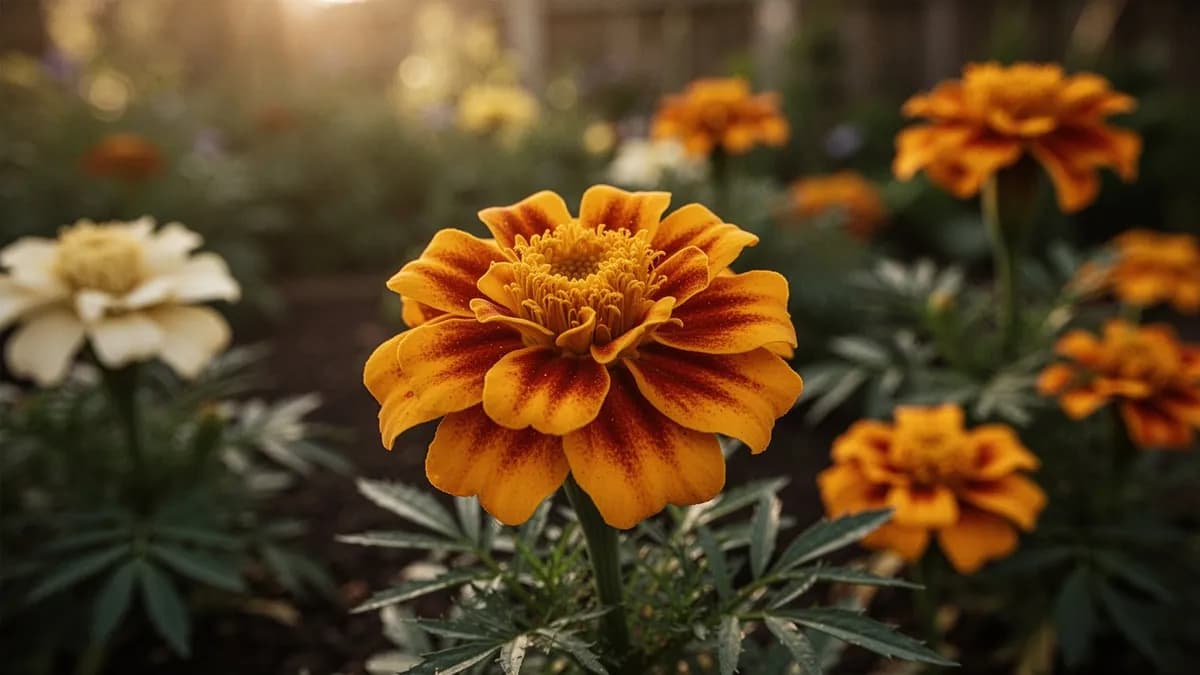
Un alegre tagete de porte delicado, con follaje calado y pequeñas flores comestibles amarillas y naranjas.





En esta páginaResumen
Conoce Clavel de moro enano
Un alegre tagete de porte delicado, con follaje calado y pequeñas flores comestibles amarillas y naranjas. Los claveles de moro enanos tienen un sabor cítrico que los hace muy populares para decorar ensaladas y postres. Forman matas compactas ideales para borduras y macetas y apenas requieren mantenimiento, más allá de algún riego ocasional.
Cuándo plantar Clavel de moro enano
Las semillas de clavel de moro enano son algo más pequeñas que las de los tagetes francés o africano, pero siguen siendo fáciles de manejar. Siembre directamente después de la última helada, presionando las semillas un centímetro en la superficie del suelo, o empiece en interior con cuatro a seis semanas de antelación. Las semillas germinan en cinco a siete días a 21 °C. Aclare o trasplante dejando entre 20 y 25 cm de separación. Los claveles de moro enanos se auto siembran con facilidad en climas suaves, así que es de esperar que aparezcan plántulas espontáneas la primavera siguiente procedentes de las flores que llegaron a semilla.
Tu año de Clavel de moro enano
Ajustado a Zona 7 · temporada típica · la helada se va hacia el 2 abr y vuelve hacia el 1 nov
Planta Clavel de moro enano Abr – Jun y cosecha Jun – Oct. Consulta los métodos de plantación y elige tu clima para adaptar los periodos.
Cómo cultivar Clavel de moro enano
Siembre las semillas de clavel de moro enano directamente al aire libre después de la última helada, o empiece a cultivarlas en interior cuatro a seis semanas antes para adelantar la temporada. Las semillas germinan con rapidez, en cinco a siete días, a 21 a 24 °C. Trasplante los plantones o aclare las plántulas dejando entre 20 y 25 cm de separación a pleno sol. Los claveles de moro enanos forman montículos compactos y ordenados de follaje fino y muy dividido que rara vez superan los 30 cm de altura.
Estos pequeños tagetes son extraordinariamente fáciles de cultivar y toleran una amplia gama de condiciones, incluido el calor, la sequía y los suelos pobres. Riegue con moderación al plantar y, después, solo durante periodos de sequía prolongada, ya que son bastante tolerantes a la falta de agua. Rara vez necesitan eliminar flores marchitas, porque las pequeñas flores simples caen limpiamente y los nuevos botones siguen apareciendo sin intervención.
Los claveles de moro enanos están prácticamente libres de plagas y son resistentes a las enfermedades, por lo que son ideales para huertos ecológicos y plantaciones comestibles. Su tamaño compacto los hace perfectos para bordear bancales de verduras, acompañar senderos y llenar macetas. El follaje calado desprende un agradable aroma cítrico al rozarlo, y toda la planta se mantiene limpia y atractiva desde la plantación hasta la primera helada, sin necesidad de poda ni formación.
72 plantas caben en un bancal de 120 × 240 cm
Cada Clavel de moro enano pide 20 cm de margen. El planificador guarda ese marco por ti — cada planta, cada bancal.
Los mejores vecinos de Clavel de moro enano
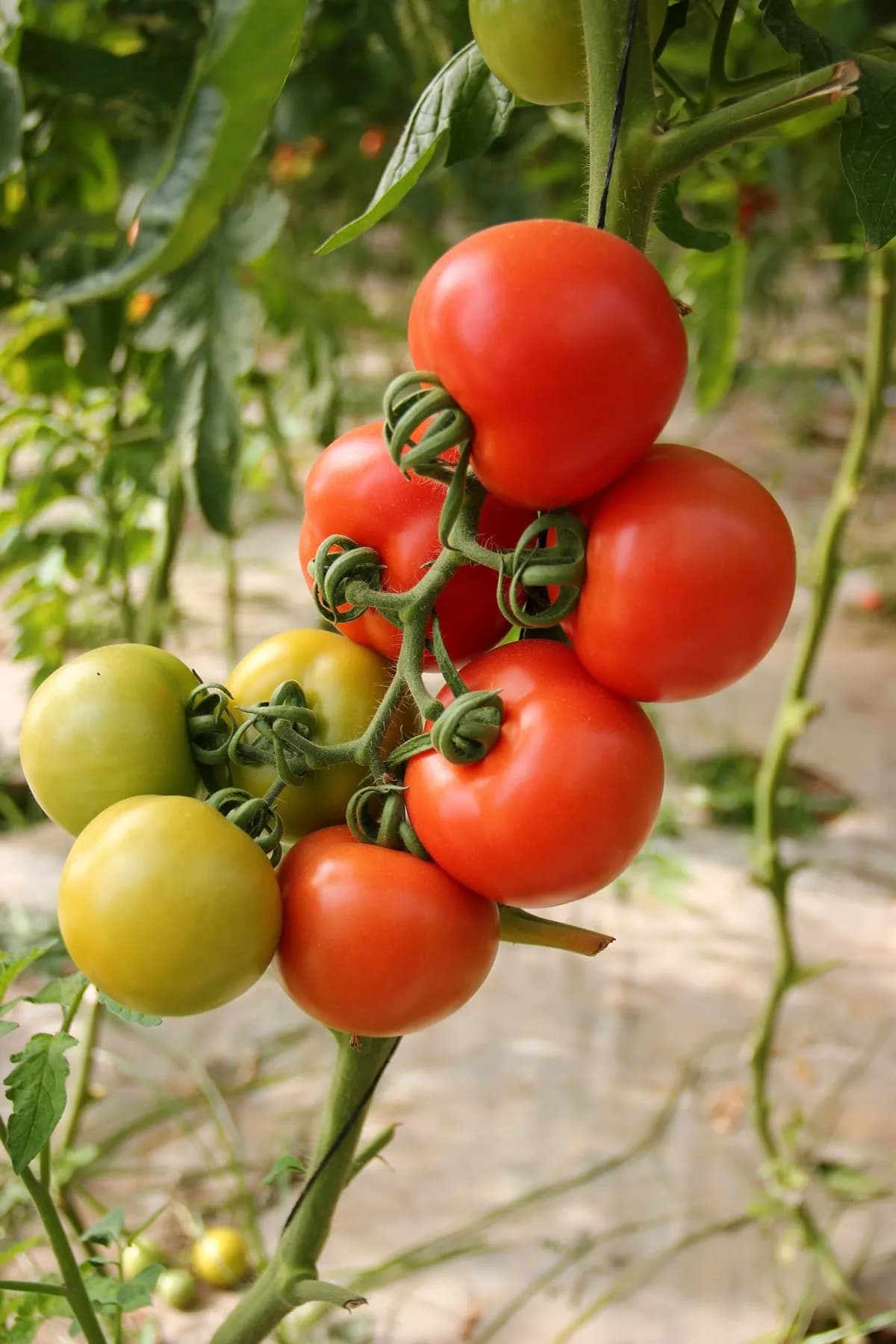
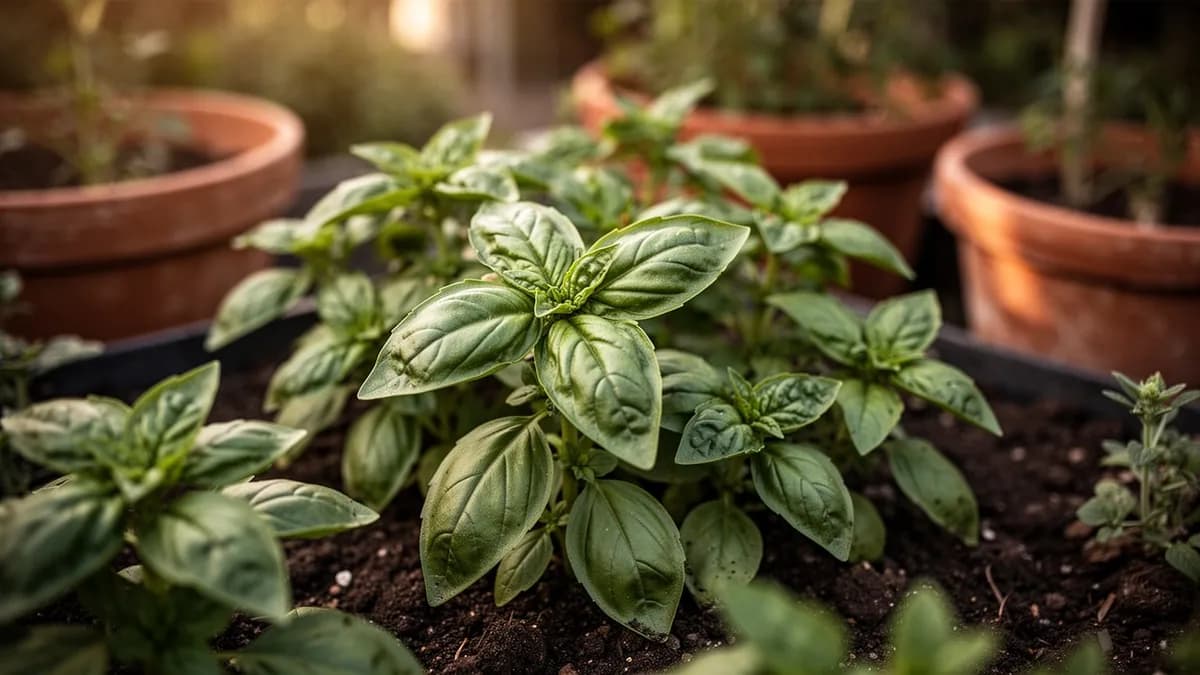
Los claveles de moro enanos son excelentes plantas de borde para huertos, donde sus exudados radiculares ayudan a suprimir nematodos mientras sus abundantes flores pequeñas atraen sírfidos y avispas parasitoides que controlan pulgones y orugas. Plántelos junto a tomates, pimientos y hierbas para obtener tanto control de plagas como uso culinario. Su porte compacto los convierte en compañeros ideales para albahaca, perejil y otras hierbas en macetas y jardineras.
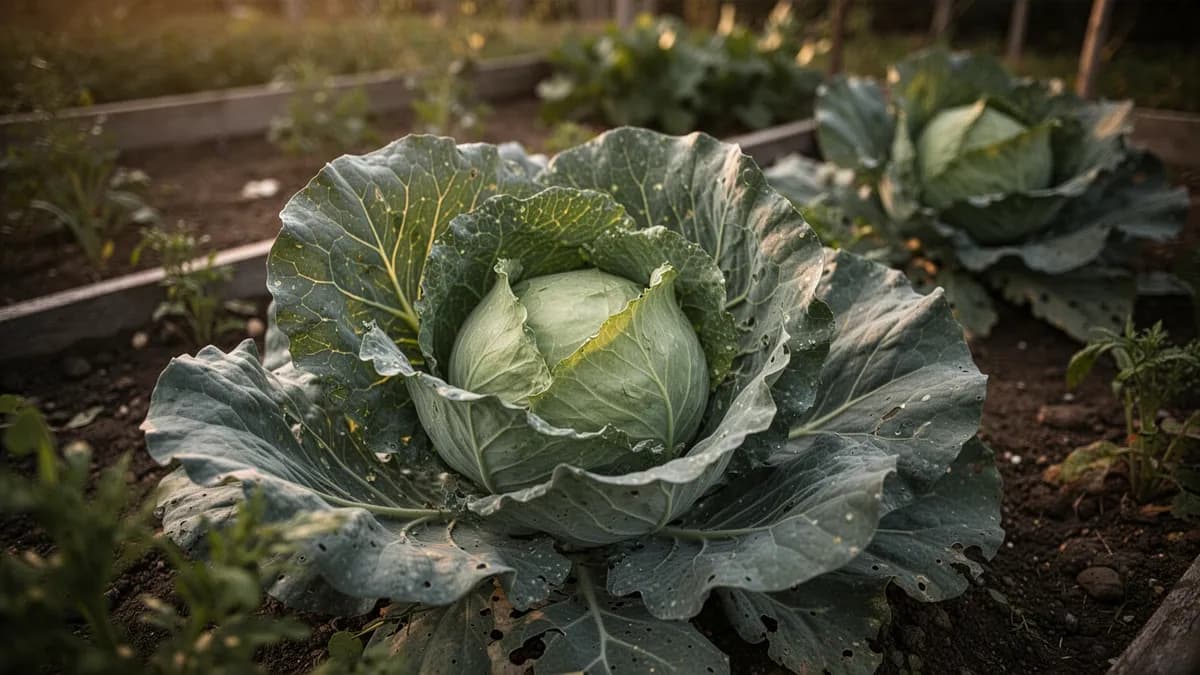
Tomate va a su lado. Repollo no.
Saber de huerto de siempre, cotejado con la tabla real de Clavel de moro enano — prueba cualquier planta que cultives.
Prueba Clavel de moro enano en un bancal, aquí mismo
Un bancal real del planificador con Clavel de moro enano ya plantado. Toca una planta compañera para colocarla y mira cómo responde la comprobación de vecinos: verde para buenos vecinos, rojo si hay conflicto.


Guías de cultivo relacionadas

Abónalo bien
Los claveles de moro enanos prosperan en suelos de medios a pobres, bien drenados, con un pH de 6.0 a 7.0. De hecho, rinden mejor en suelos pobres, ya que las condiciones ricas pueden provocar un exceso de follaje. Si su suelo es muy pobre, basta con una sola aplicación ligera de fertilizante equilibrado al plantar. Las plantas en maceta se benefician de un fertilizante líquido diluido cada tres o cuatro semanas. Evite el abonado fuerte, que reduce el contenido de aceites esenciales que da a estas plantas su agradable aroma y sabor.
Temperatura ideal
Compatibilidad de zonas de rusticidad
De la semilla a la cosecha, etapa por etapa
Germinación de las semillas
Las semillas de caléndula signet germinan rápidamente en suelo cálido. Siembra las semillas a 0,5 cm de profundidad en un sustrato húmedo para semilleros a temperatura cálida. Las semillas son pequeñas y alargadas, por lo que solo necesitan una cobertura ligera y no una siembra profunda.
Desarrollo de las plántulas
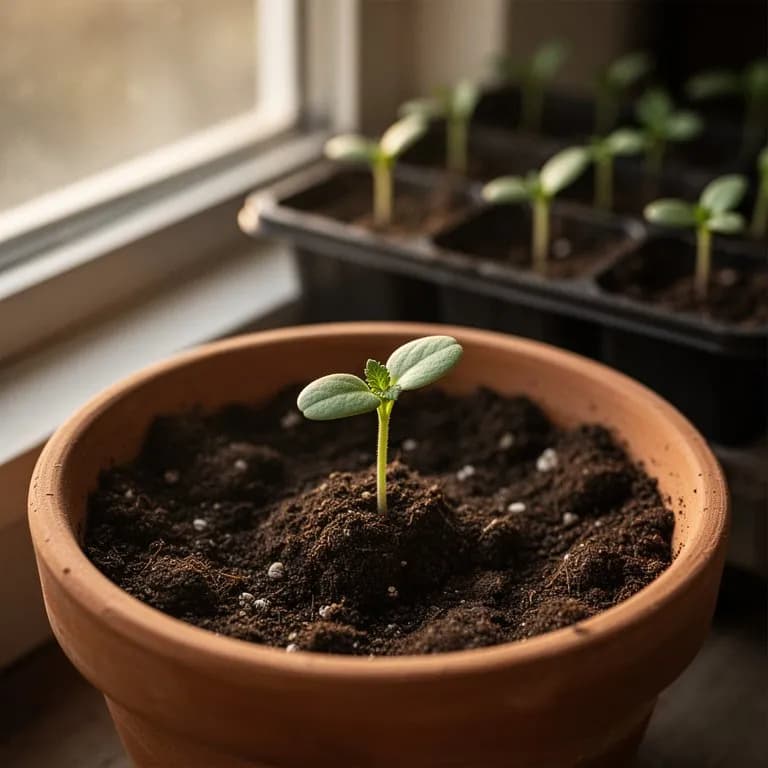
Las plántulas desarrollan su primer conjunto de hojas verdaderas, que ya muestran el aspecto finamente dividido y laciniado típico de la caléndula signet. Los tallos son delgados pero firmes, y el aroma cítrico se percibe al tocar el follaje.
Crecimiento vegetativo
Las plantas desarrollan un porte compacto y redondeado con ramificación densa. Las caléndulas signet forman de manera natural una mata ordenada que alcanza 10-30 cm de altura y 25-35 cm de ancho. El follaje similar al helecho se rellena con rapidez durante el tiempo cálido.
Fase de floración
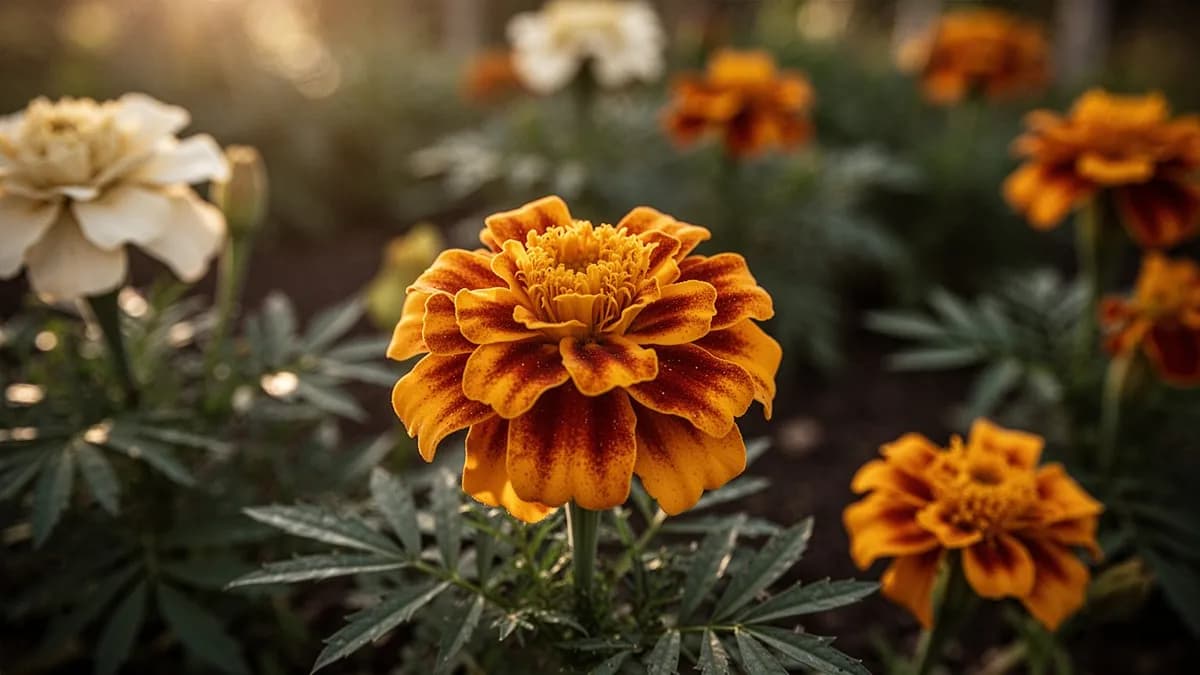
Las plantas se cubren de cientos de flores pequeñas y simples de unos 2,5 cm de diámetro. A diferencia de las caléndulas africanas o francesas, las flores signet tienen cinco pétalos bien definidos dispuestos en una forma sencilla parecida a la margarita. La floración es continua y autolimpiable en la mayoría de los cultivares.
Producción máxima y formación de semillas
Las plantas alcanzan su máxima producción de flores a finales del verano y principios del otoño. A medida que las temperaturas comienzan a bajar, algunas flores empezarán a formar semillas. Las cabezas florales secas contienen semillas negras y delgadas con una base pálida, fáciles de recoger para la siguiente temporada.
Declive al final de la temporada
Después de la primera helada fuerte, las plantas decaen rápidamente. El follaje se vuelve marrón y los tallos se vuelven quebradizos. Es una especie anual y no volverá al año siguiente, aunque en climas suaves suelen aparecer plántulas autosiembradas.
Mantén el sustrato constantemente húmedo, pero no encharcado. Usa un pulverizador para no desplazar las semillas diminutas. El calor de fondo de una alfombra de germinación puede acelerar la germinación hasta en 4 días.
Cuidar Clavel de moro enano mes a mes
Qué hacer cada mes para tu Clavel de moro enano
Octubre
Mes actualCollect dried seed heads and store seeds in labeled paper envelopes in a cool, dry location. Plants will continue blooming until the first hard frost. In mild climates, flowering may persist through the month.
Ten claro qué hacer en tu huerto, cada mes
Un correo al empezar cada mes: qué sembrar, plantar y hacer ahora mismo — para tu Clavel de moro enano y todo lo que crece alrededor. Más un breve curso inicial para esquivar los errores clásicos.
- Qué hacer ahora mismo
- Ajustado a tu temporada
- Curso inicial incluido
Cosechar Clavel de moro enano
Recoja las flores de clavel de moro enano para uso culinario cuando estén completamente abiertas, preferiblemente por la mañana, después de que el rocío se haya secado. Pellizque las flores individuales de la planta según las necesite. Para guardar semilla, deje que algunas flores se sequen en la planta hasta que los capítulos se vuelvan papiráceos y luego recoja las semillas oscuras y delgadas. Por lo general no necesitan desmochado por estética, ya que las flores marchitas caen limpias, aunque retirarlas puede aumentar un poco la producción floral.
se supone que plantas al comenzar el periodo — indica tu fecha real
Deja que algunas cabezas florales se sequen en la planta hasta que las cabezas de semillas se vuelvan papiráceas.
Almacenamiento y conservación
Los pétalos frescos de clavel de moro enano pueden conservarse en un recipiente cerrado en el refrigerador durante dos o tres días. Para una conservación más larga, seque los pétalos extendiéndolos en una sola capa sobre una rejilla en un lugar cálido y aireado, fuera de la luz solar directa, durante varios días. Los pétalos secos conservan bien su color y pueden guardarse durante meses en frascos herméticos. También pueden congelarse en cubitos de hielo para decorar bebidas o prensarse para manualidades.
Qué falla — y cómo solucionarlo
Pulgones
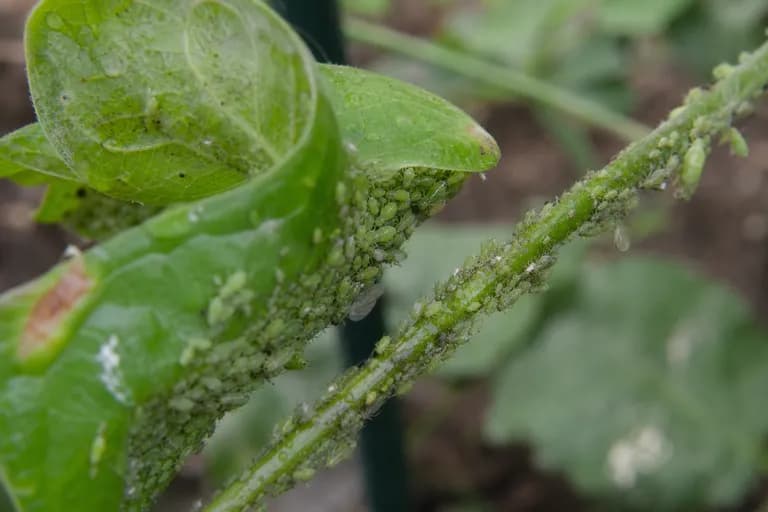
PlagaPequeños grupos de insectos verdes o negros en las puntas de los tallos, aunque los claveles de moro enanos atraen menos pulgones que otros tipos de tagete gracias a su fuerte follaje con aroma cítrico.
Podredumbre de raíces
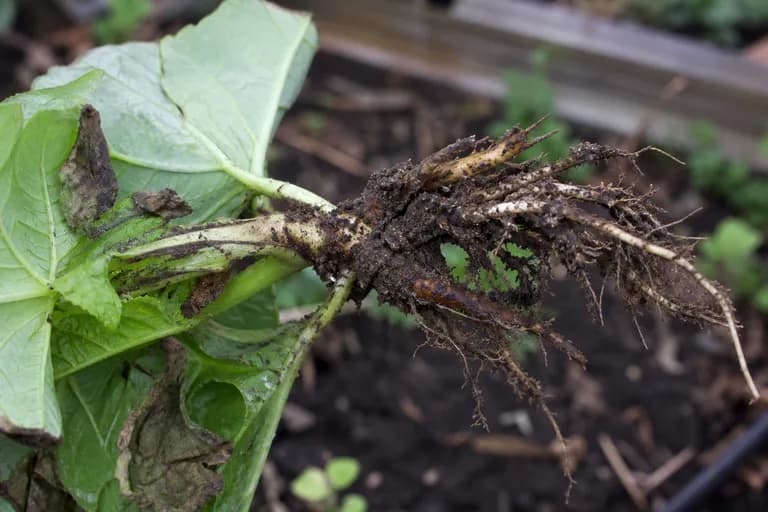
EnfermedadLas plantas se marchitan pese a tener la tierra húmeda, los tallos se vuelven blandos y marrones en la base, y las raíces son oscuras y blandas. Ocurre en suelos encharcados o con mal drenaje.
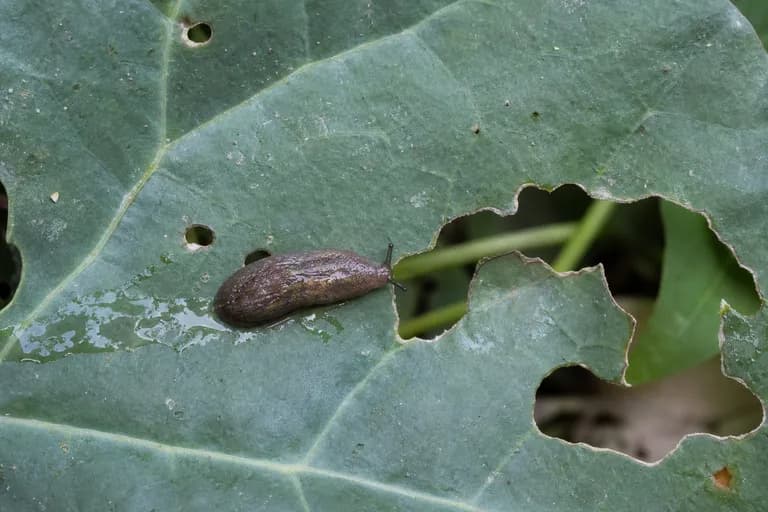
Babosas
PlagaAgujeros irregulares en el follaje y las flores, con rastros viscosos visibles en la superficie del suelo. El problema es mayor en tiempo fresco y húmedo sobre plantones jóvenes.
Solución de problemas comunes
Los claveles de moro enanos son de las anuales más fáciles del jardín. El problema más común es el exceso de riego en suelos pesados, que puede causar podredumbre de raíces. También pueden decaer en condiciones extremadamente cálidas y húmedas, aunque toleran mejor el calor que la mayoría de las flores de estación fresca. Como las flores diminutas son autolimpiantes, no hace falta retirar las flores marchitas. El único problema estético importante es que las plantas pueden abrirse un poco por el centro a finales del verano, algo que se corrige con una poda ligera.
Consejos de cultivo
- Start seeds indoors 6-8 weeks before your last frost date for the earliest flowers, or direct sow outdoors after all danger of frost has passed. Seeds germinate in 4-7 days at 70-75°F soil temperature.
- Space plants 8-10 inches apart in full sun for the best flower production. Signet marigolds tolerate partial shade but will produce significantly fewer blooms and may develop a leggy, open growth habit.
- Avoid over-fertilizing with nitrogen-rich products, which promote excessive leaf growth at the expense of flowers. A balanced slow-release fertilizer applied at planting time, supplemented with liquid feeding every 3-4 weeks, is sufficient.
- Water at the base of the plant rather than overhead to prevent foliar diseases. Signet marigolds are moderately drought-tolerant once established but produce the most flowers with consistent moisture of about 1 inch per week.
- Pinch the central growing tip when seedlings reach 4-5 inches tall to encourage lateral branching and a fuller, more compact plant shape with more flowering stems.
- Harvest edible flowers in the morning after dew has evaporated but before the heat of midday for the best flavor and longest vase life. Pull petals from the base to remove the slightly bitter green calyx.
- Plant signet marigolds around the borders of vegetable beds to take advantage of their nematode-suppressing root compounds and their ability to attract beneficial predatory insects like hoverflies and parasitic wasps.
- Grow in containers using a well-draining potting mix. A 10-12 inch pot can support 2-3 plants and will create a stunning cascade of flowers on patios, balconies, or windowsills throughout the summer.
- Allow a few flower heads to dry completely on the plant at the end of the season for easy seed saving. Store dried seeds in a labeled paper envelope in a cool, dry place for up to 3 years of viable germination.
- In regions with mild winters (zones 9-11), signet marigolds may self-sow and return the following spring. In cooler zones, treat them as tender annuals and replant each year after the frost-free date.
Cultiva tu mejor Clavel de moro enano — y todo lo que la rodea.
Empieza un plan gratis hoy. Diseña tus bancales, coloca tu Clavel de moro enano y deja que PlotMyGarden gestione el momento, el espaciado, las asociaciones y los recordatorios de la semilla a la cesta.
Elige tu Clavel de moro enano
Lemon Gem
Flores amarillas claras y simples, con un delicioso sabor cítrico, sobre montículos de 30 cm de follaje finamente recortado; la variedad de clavel de moro enano más popular para jardines comestibles.
Tangerine Gem
Flores simples de color naranja cálido con el mismo sabor cítrico que Lemon Gem, igual de compactas y floríferas, preciosas junto a su hermana amarilla.
Red Gem
Flores de tono rojo-anaranjado intenso en plantas compactas, que añaden una nota cálida y más profunda a la paleta de colores de los claveles de moro enanos.
Starfire Mix
Una mezcla de claveles de moro enanos amarillos, naranjas y rojos que crea una bordura o un recipiente multicolor con un porte compacto uniforme.
A single packet of signet marigold seeds costs $2-4 and contains 200-300 seeds, enough to grow dozens of plants. Each plant produces hundreds of edible flowers over the season, equivalent in value to several containers of specialty edible flowers sold at farmers markets for $4-6 per small clamshell. Additionally, signet marigolds self-seed readily and seeds are easy to save, meaning a one-time purchase can supply your garden for years. Their pest-repellent properties can also reduce spending on organic pest control products when interplanted with vegetables.
Recetas rápidas
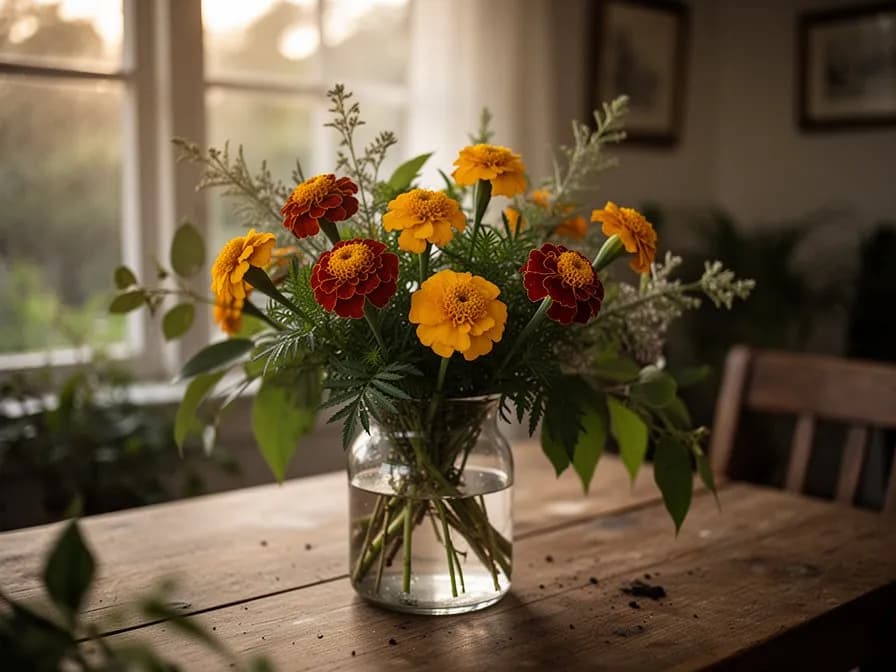
Signet Marigold Citrus Butter
10 minutesA vibrant compound butter infused with the citrus-tarragon flavor of fresh signet marigold petals. Perfect for melting over grilled fish, steamed vegetables, or warm crusty bread. The golden petals give the butter a beautiful natural color.
6 ingredientes
Marigold Petal and Herb Garden Salad
15 minutesA colorful summer salad featuring whole signet marigold flowers scattered over mixed greens with a light lemon vinaigrette. The flowers add peppery-citrus notes that complement fresh herbs and garden vegetables beautifully.
7 ingredientesSignet Marigold Infused Honey
5 minutes active, 2 weeks infusionA fragrant infused honey that captures the citrusy, slightly spicy essence of signet marigold petals. Drizzle over yogurt, cheese boards, or use in tea for a floral sweetness that is entirely unique.
4 ingredientesUsos culinarios
Los pétalos de clavel de moro enano tienen un agradable sabor cítrico, ligeramente parecido al estragón, que los convierte en una de las flores comestibles más populares. Use los pétalos frescos para decorar ensaladas, sopas, platos de arroz y postres. Aportan color a la mantequilla, el queso y los productos de repostería. Pueden infusionarse en vinagre o aceite para crear aliños aromatizados. Utilice solo flores cultivadas de forma orgánica y arranque pétalos individuales del capítulo para obtener el sabor más suave.
Qué contiene
Beneficios para la salud
- Rich in lutein and zeaxanthin, two carotenoid pigments concentrated in the retina that support long-term eye health and may help reduce the risk of cataracts and age-related macular degeneration.
- Contains flavonoid antioxidants including patuletin and quercetagetin that help protect cells from oxidative stress and may support cardiovascular health when consumed as part of a varied diet.
- The essential oils in signet marigold flowers, particularly limonene and ocimene, have demonstrated mild antimicrobial and anti-inflammatory properties in laboratory studies.
- Traditional herbal medicine systems in Mexico and Central America have used Tagetes tenuifolia tea to ease digestive discomfort, reduce mild nausea, and support appetite.
- The anti-nematodal compounds (thiophenes) produced by marigold roots contribute to healthier garden soil, indirectly supporting human health by enabling more productive organic food growing without synthetic pesticides.
- Incorporating edible flowers like signet marigolds into meals has been associated with increased dietary diversity and higher intake of phytonutrients that are not commonly found in standard vegetable and fruit consumption.
De dónde viene Clavel de moro enano
Signet marigold (Tagetes tenuifolia) is native to the mountainous regions of Mexico and Central America, where it grows as a wildflower in dry, rocky soils at elevations between 3,000 and 7,000 feet. The genus Tagetes belongs to the Asteraceae family and comprises approximately 50 species, all originating in the Americas. Archaeological evidence suggests that indigenous Aztec and Maya peoples cultivated various Tagetes species for ceremonial, medicinal, and culinary purposes for over 2,000 years before European contact. The Aztecs called marigolds 'cempasuchil' and used them extensively in rituals honoring the dead, a tradition that persists today in the Mexican Dia de los Muertos celebrations. Spanish explorers brought marigold seeds to Europe in the sixteenth century, where the plants were initially grown in monastery gardens for medicinal use and as a saffron substitute for coloring food. Signet marigolds were formally described by the French botanist Joseph Pitton de Tournefort in the early eighteenth century, and the species name tenuifolia was later established by the Swedish taxonomist Carl Linnaeus in 1753. By the nineteenth century, signet marigolds had spread throughout European and Asian gardens, prized for their compact growth habit and edible flowers. In the twentieth century, plant breeders developed improved cultivars including the widely popular Gem series, introduced by the PanAmerican Seed company, which offered vibrant lemon yellow, tangerine orange, and deep red-gold color options. Today, signet marigolds are grown on every inhabited continent and are especially valued in organic and permaculture gardens for their pest-repellent properties, pollinator attraction, and culinary versatility.
Clavel de moro enano: ¿sabías que?
Datos fascinantes sobre Clavel de moro enano
Signet marigolds (Tagetes tenuifolia) have a distinctly different flavor from other marigold species, often described as a blend of citrus and tarragon with subtle spicy notes, making them one of the most popular edible flowers worldwide.
Clavel de moro enano: preguntas frecuentes
¿Cuándo debo plantar Clavel de moro enano?
¿Cuáles son buenas plantas acompañantes para Clavel de moro enano?
¿En qué zonas de rusticidad puede crecer Clavel de moro enano?
¿Cuánto sol necesita Clavel de moro enano?
¿A qué distancia debo espaciar Clavel de moro enano?
¿Qué plagas y enfermedades afectan a Clavel de moro enano?
¿Cómo almaceno Clavel de moro enano después de la cosecha?
¿Cuáles son las mejores variedades de Clavel de moro enano para cultivar?
¿Qué suelo necesita Clavel de moro enano?
Are signet marigold flowers really edible, and what do they taste like?
What is the difference between signet marigolds and French or African marigolds?
Do signet marigolds really repel garden pests?
Can I grow signet marigolds in containers or window boxes?
How do I save seeds from signet marigolds?
When is the best time to plant signet marigolds outdoors?
Acabas de leer la teoría. Ahora cultívala en piloto automático.
Todo lo que hace que Clavel de moro enano sea delicado — el momento, el espaciado, las asociaciones, la ventana de cosecha — es justo lo que PlotMyGarden resuelve por ti, para cada planta de tu huerto.
Un plan que conoce tu clima
Indica tu ubicación una vez. Recibe fechas de siembra, abonado y cosecha basadas en tu última helada real y el pronóstico en vivo — sin adivinar con un sobre genérico.
De la sección “Cuándo plantar”Planificador de bancales de arrastrar y soltar
Diseña bancales sobre una cuadrícula. Cada planta encaja con su espaciado correcto y ves toda la temporada antes de gastar un céntimo en semillas.
De la sección “Cultivo”Conflictos de asociación, detectados a tiempo
Más de 200 buenas y malas combinaciones comprobadas en vivo mientras plantas — para que un error que arruine la temporada nunca llegue a la tierra.
De la sección “Asociaciones”Recordatorios que sí vas a seguir
“Riega las judías.” “Recoge hoy antes de que se pase.” Oportunos, concretos y ligados a las plantas que de verdad cultivas.
De la sección “Cosecha”Escalonado, programado
¿Quieres cosechar seis semanas en vez de seis días? Reparte tus siembras automáticamente y te avisa cuando toca el siguiente lote.
De la sección “Cuándo plantar”Un registro que se vuelve más listo
Cada cosecha que registras le enseña tu huerto. El plan del año que viene parte de lo que de verdad funcionó en tu suelo, no en un manual.
De la sección “Resumen”Planta estos junto a Clavel de moro enano
Más Anuales
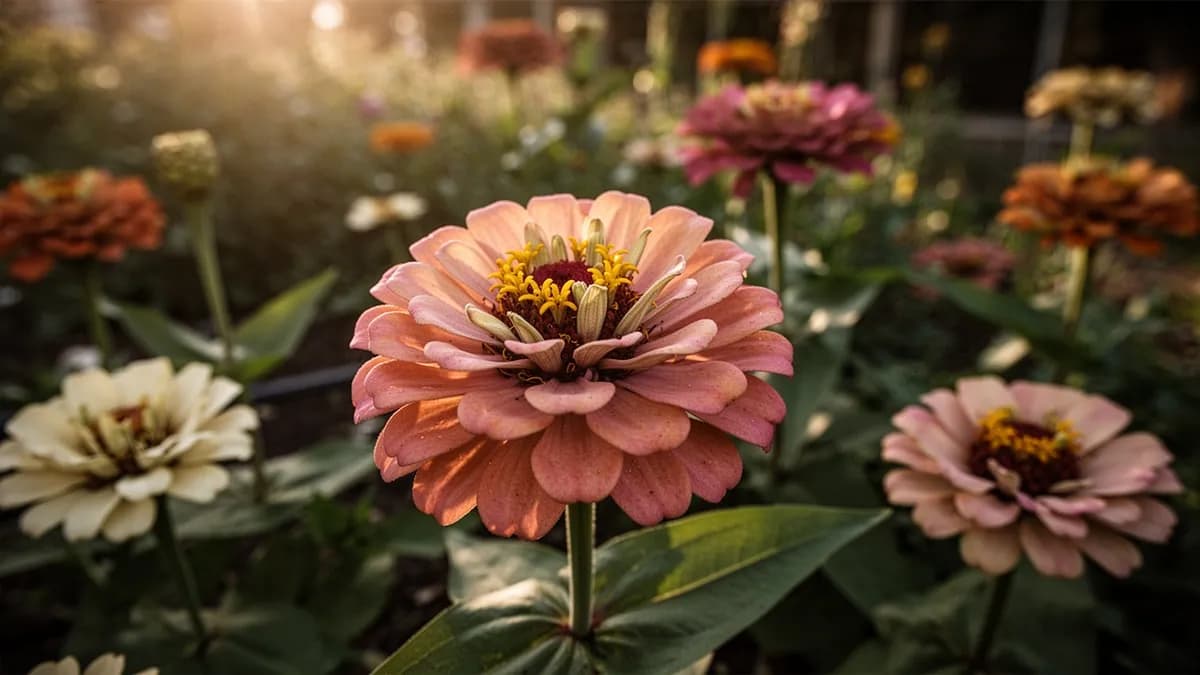
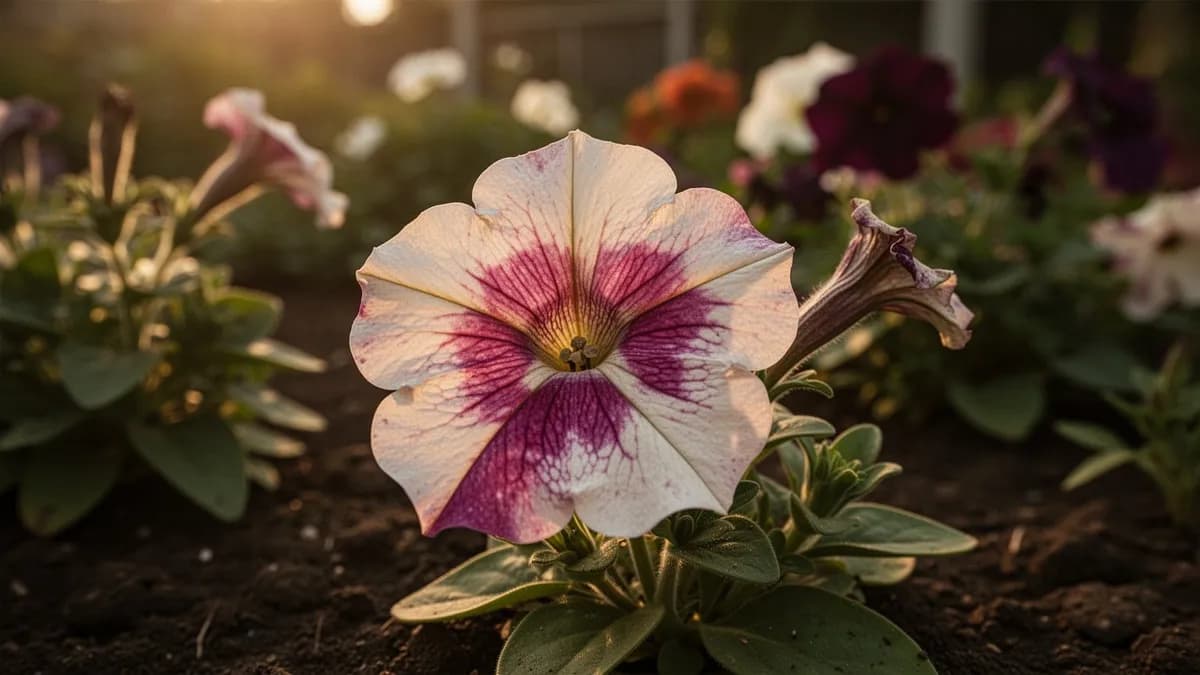
Mantén Clavel de moro enano lejos de estos
Diseños de jardín con Clavel de moro enano
Cultiva tu mejor Clavel de moro enano — y todo lo que la rodea.
Empieza un plan gratis hoy. Diseña tus bancales, coloca tu Clavel de moro enano y deja que PlotMyGarden gestione el momento, el espaciado, las asociaciones y los recordatorios de la semilla a la cesta.