Malope
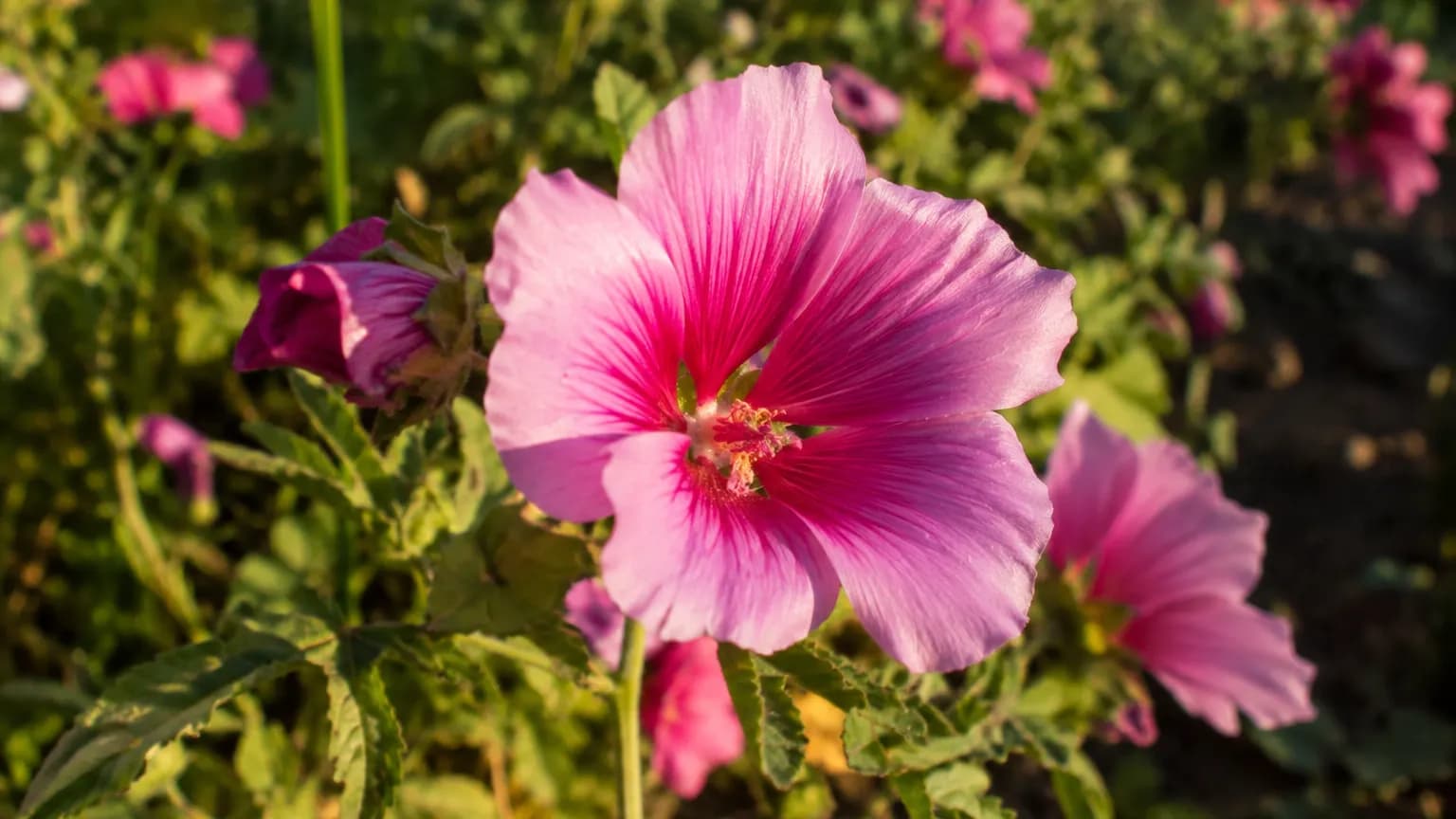
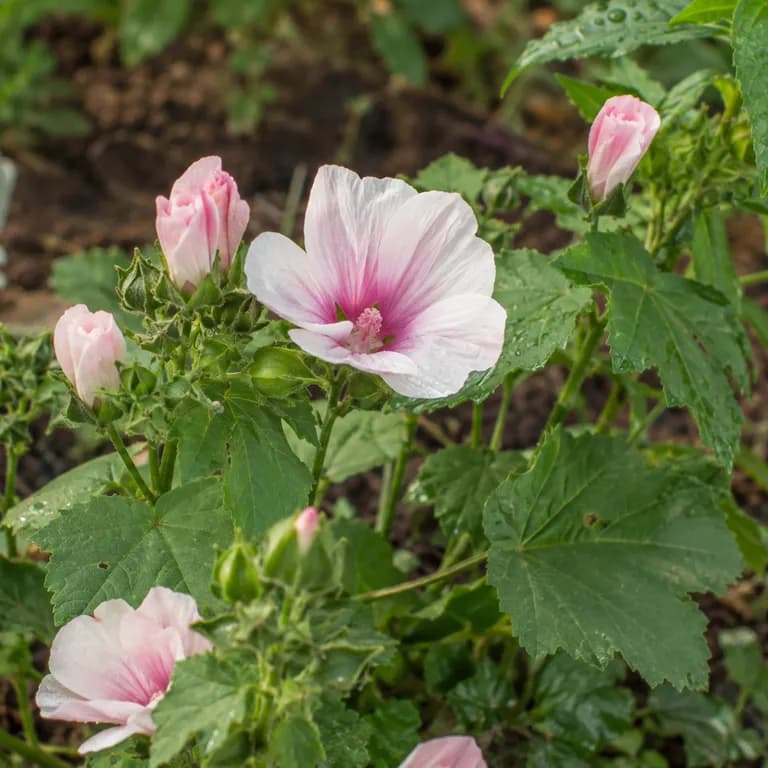
An old-fashioned mallow-family annual bearing satin, chalice-shaped blooms in glowing magenta-pink, each with a vivid green star at the center where the petals part to reveal the calyx.





On this pageOverview
Meet Malope
An old-fashioned mallow-family annual bearing satin, chalice-shaped blooms in glowing magenta-pink, each with a vivid green star at the center where the petals part to reveal the calyx. A beloved classic of German cottage gardens, where it is known as Bechermalve, malope is undemanding, fast-growing, and flowers about three months after sowing from midsummer into fall. It performs best when direct sown where it is to flower, because the young plants resent transplanting. Stems of 90 to 120 cm make long-lasting cut flowers, and the decorative green lantern-like seedpods that follow the blooms add interest to the autumn border. Give it full sun, average well-drained soil, and light support in windy or very fertile sites.
When to plant Malope
Direct sowing is strongly recommended, as malope seedlings dislike root disturbance. Sow from two to three weeks before the last frost through late spring, barely covering the seed with about five millimeters of fine soil, and keep the bed moist until germination, which takes ten days to three weeks at soil temperatures of 10 to 21 degrees Celsius. Germination can be erratic; chilling the seed packet in the refrigerator for three weeks before sowing is reported to even it out. For an earlier start, sow indoors six to eight weeks before the last frost in individual pots at 18 to 21 degrees Celsius, then plant out the whole pot with minimal disturbance once seedlings have two or three true leaves and are hardened off. Succession sow every two to three weeks until early summer for bloom right up to frost.
Your Malope Year
Composed for Zone 7 · typical seasons · frost passes Apr 2, returns Nov 1
Plant Malope Feb – May, pick Jul – Sep. Check the planting methods below and set your climate to personalize these windows.
How to grow Malope
Choose a sunny, open position with average, well-drained soil. Malope actually dislikes rich, freshly manured ground, which pushes soft leafy growth at the expense of flowers and makes the tall stems prone to flopping. Direct sow from two to three weeks before the last expected frost through late spring, scattering the seed thinly and covering with barely five millimeters of fine soil, since the seeds germinate best in cool conditions with some light. Germination is slow and sometimes erratic, taking ten days to three weeks, so mark the rows and be patient.
Thin the seedlings in stages to a final spacing of about 45 cm, keeping the strongest young plants. Each plant develops a stout, upright stem of 90 to 120 cm with lobed leaves and buds wrapped in decorative green bracts. In exposed gardens or on fertile soil, push in a pea stick or short cane early, before the plants need it, and tie stems loosely as they rise. Pinching the growing tip when plants reach about 30 cm produces bushier plants with more, slightly smaller blooms; unpinched plants carry fewer but larger flowers.
During summer, water deeply but infrequently, letting the top few centimeters of soil dry between waterings, and always water at the base to keep foliage dry. Deadhead spent blooms or cut flowering stems regularly; malope is cut-and-come-again and responds with fresh side shoots well into autumn. Watch the lower leaves for the orange pustules of mallow rust and remove them promptly. After the first hard frost blackens the plants, pull them up and compost only healthy, rust-free material.
10 plants fit a 4 × 8 ft bed
Each Malope wants 45 cm of elbow room. The planner keeps that spacing for you — every plant, every bed.
Malope's best neighbours
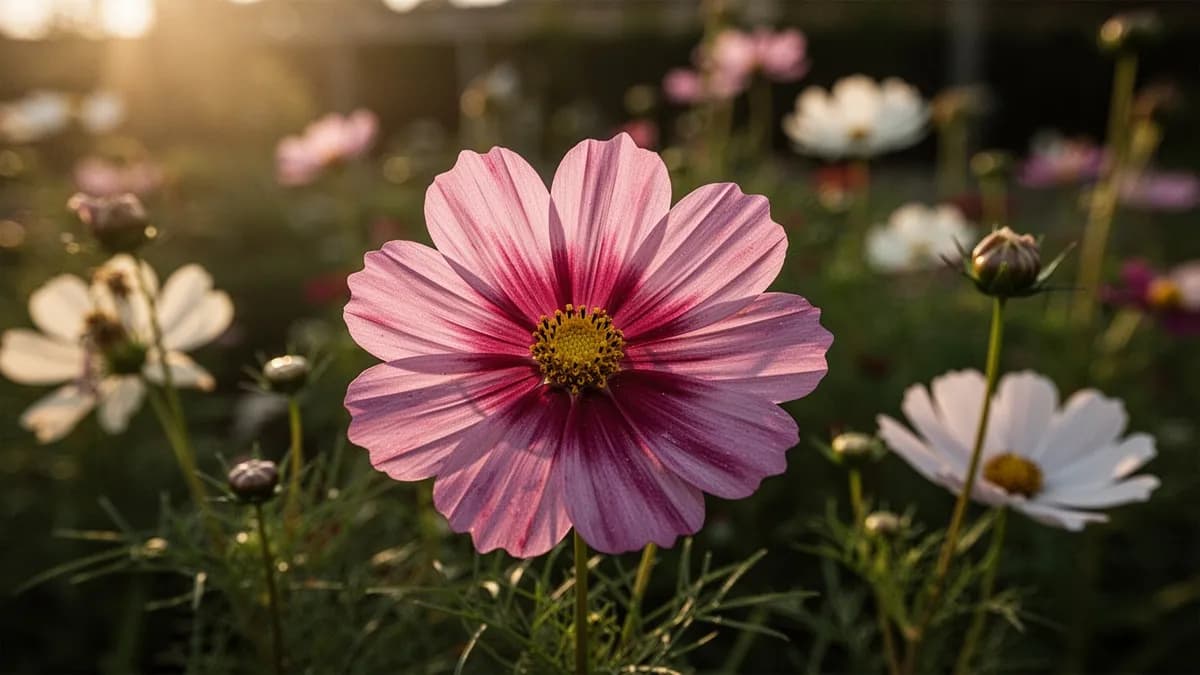
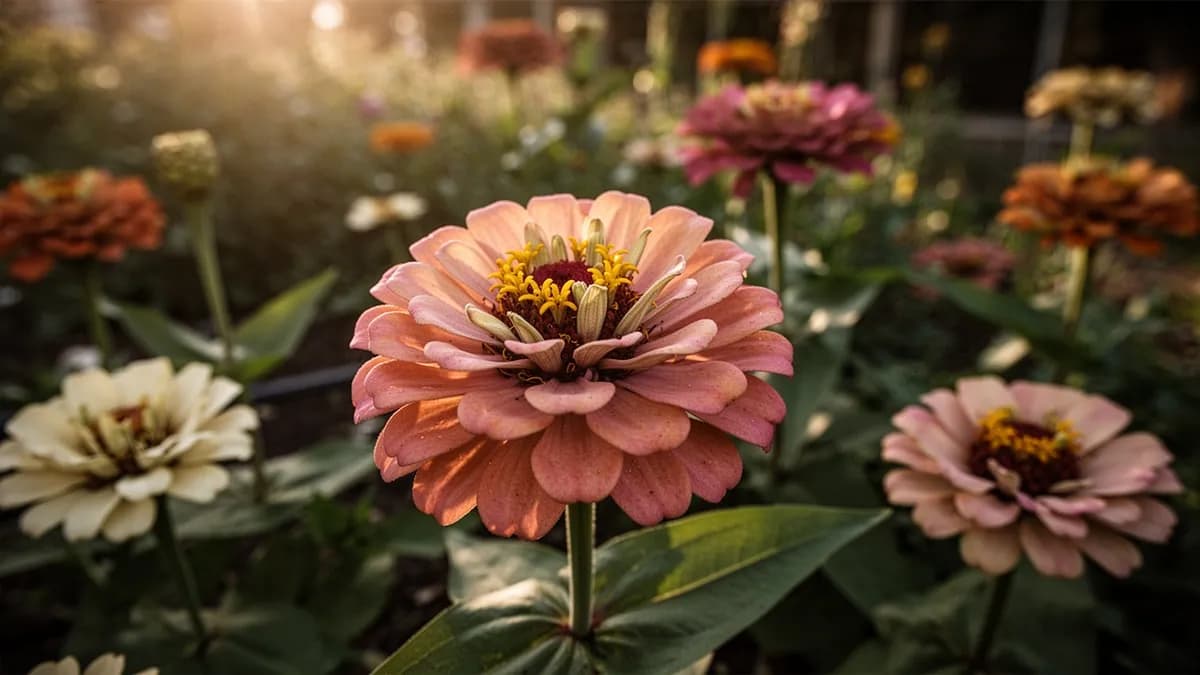
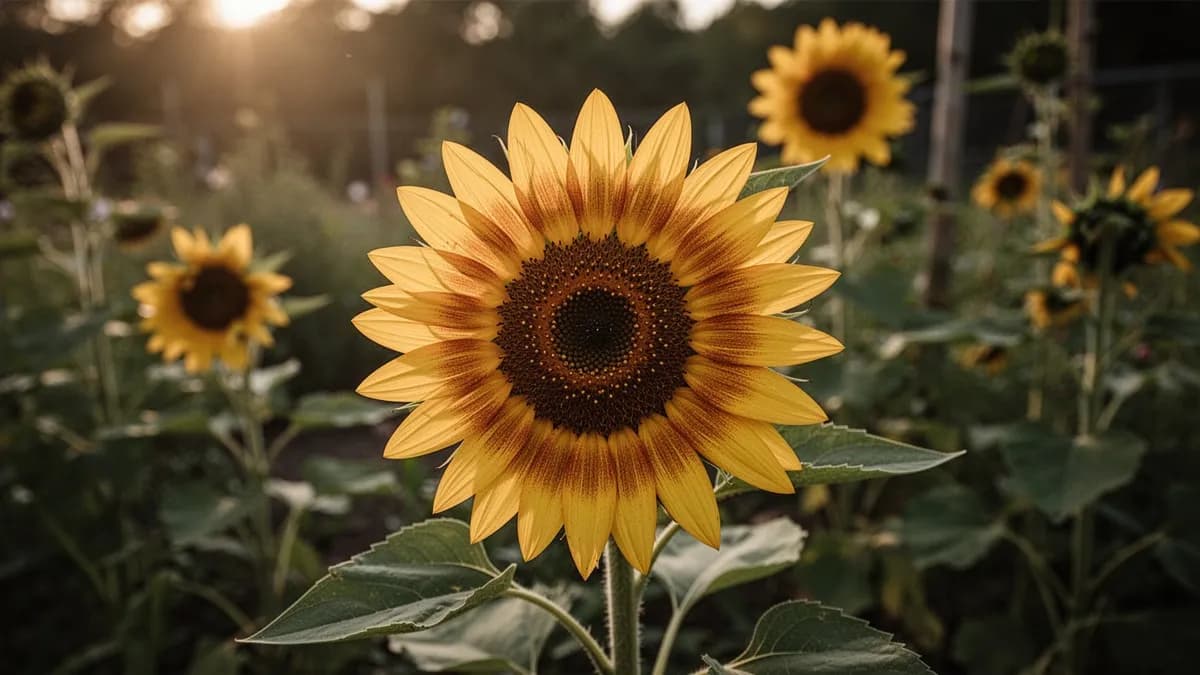
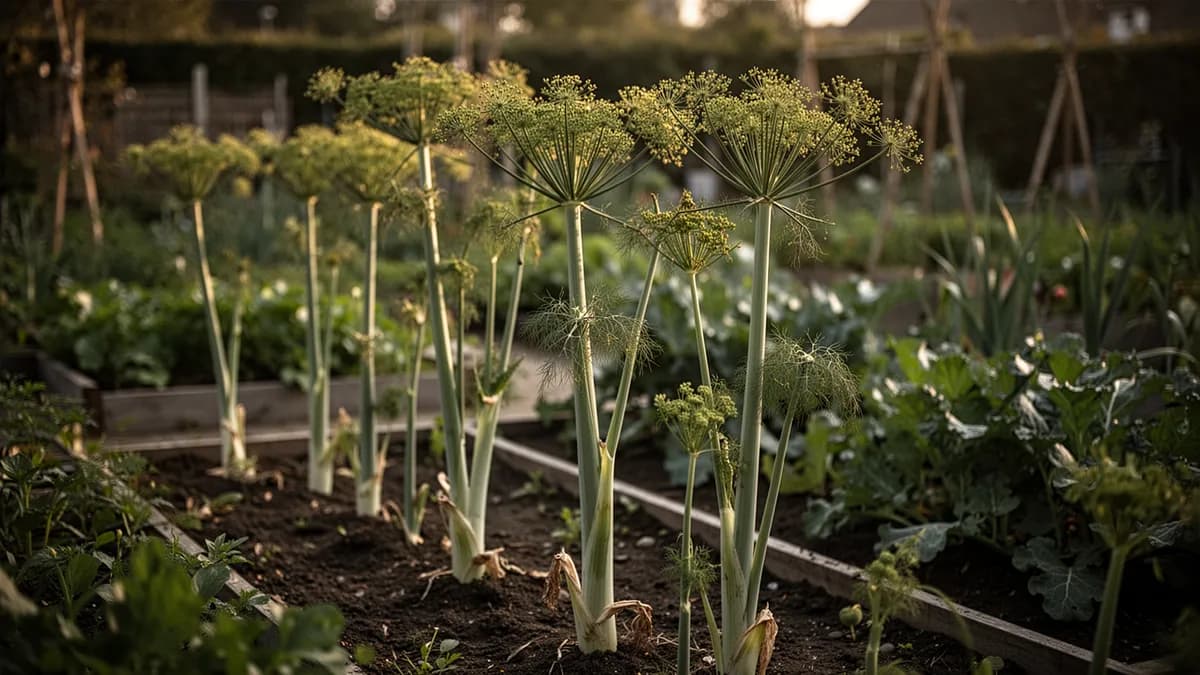
Malope pairs naturally with cosmos, zinnia, and sunflower, the classic summer-annual companions that share its love of full sun, lean-to-average soil, and moderate water. Together they form a long-season pollinator border: malope's open chalices are worked by bees and butterflies from midsummer on. Tuck it between vegetable rows to draw pollinators to squash, cucumbers, and beans, or sow it behind low edging plants so its tall stems rise above them. Keep it away from fennel, which is widely reported to inhibit the growth of neighboring plants.
Cosmos belongs beside it. Fennel doesn't.
Old growers' knowledge, checked against Malope's real companion table below — test any plant you're growing.
Try Malope in a bed — right here
A real planner bed with Malope already in it. Tap a companion to place it and watch the pairing checks answer — green for good neighbours, red for a clash.


Related growing guides
Feed it well
Malope thrives in average, well-drained loamy soil with a pH between 6.0 and 7.5 and tolerates lean or sandy ground better than most annuals. Avoid freshly manured or heavily fertilized beds, which cause lush foliage, weak stems, and few flowers. If your soil is very poor, work in a thin layer of compost before sowing and give one light feed of balanced liquid fertilizer when buds first appear; otherwise no feeding is needed. A thin mulch of compost or fine bark conserves moisture and keeps the root zone cool, but keep it a few centimeters away from the stems of young seedlings to discourage slugs.
Ideal Temperature
Hardiness Zone Compatibility
From seed to harvest, stage by stage
Seed Germination
Malope seeds germinate slowly compared with most annuals, taking ten days to three weeks in cool soil of 10-21°C (50-70°F). Sow shallowly, covering with no more than 5 mm of fine soil, since the seeds benefit from light. Emergence is often staggered rather than uniform.
Seedling Development
Seedlings establish a strong taproot and put out their first lobed true leaves, reaching 5-10 cm tall. Growth looks modest above ground while the root system is being laid down. Young plants tolerate light frost but resent root disturbance.
Vegetative Growth
The main stem elongates rapidly into a stout, upright plant 60-100 cm tall, clothed with three- to five-lobed leaves. Flower buds wrapped in their characteristic green bracts begin to form in the upper leaf axils.
Bud Formation
Rounded buds wrapped in three heart-shaped green bracts swell at the stem tips and upper leaf axils, showing magenta color before they open. These decorative buds, likened to little green lanterns, are ornamental in their own right.
Full Bloom
The satin chalices open in succession from midsummer, each about 5-8 cm across in shades from white through pink to deep magenta depending on the cultivar, always with the green star showing at the center. Bees and butterflies visit the open flowers constantly.
Seed Production and Decline
Unpicked flowers give way to globular seed heads enclosed in the papery, lantern-like green bracts, which dry to straw color on the plant. Flowering slows as nights cool, and the first hard frost ends the season outright.
Keep the seedbed consistently moist but never waterlogged, and mark the row so the slow seedlings are not mistaken for weeds. Do not give up before three full weeks have passed.
Caring for Malope month by month
What to do each month for your Malope
September
You are hereEnjoy the late flush and keep deadheading for bloom until frost. Let the chosen seed heads ripen into dry, papery lanterns, and shell out seed on a dry day for next spring.
Know exactly what to do in your garden — every month
One email at the start of each month: what to sow, plant, and tackle right now — for your Malope and everything growing around it. Plus a short starter course that helps you dodge the classic mistakes.
- What to do, right now
- Matched to your season
- Starter course included
Harvesting Malope
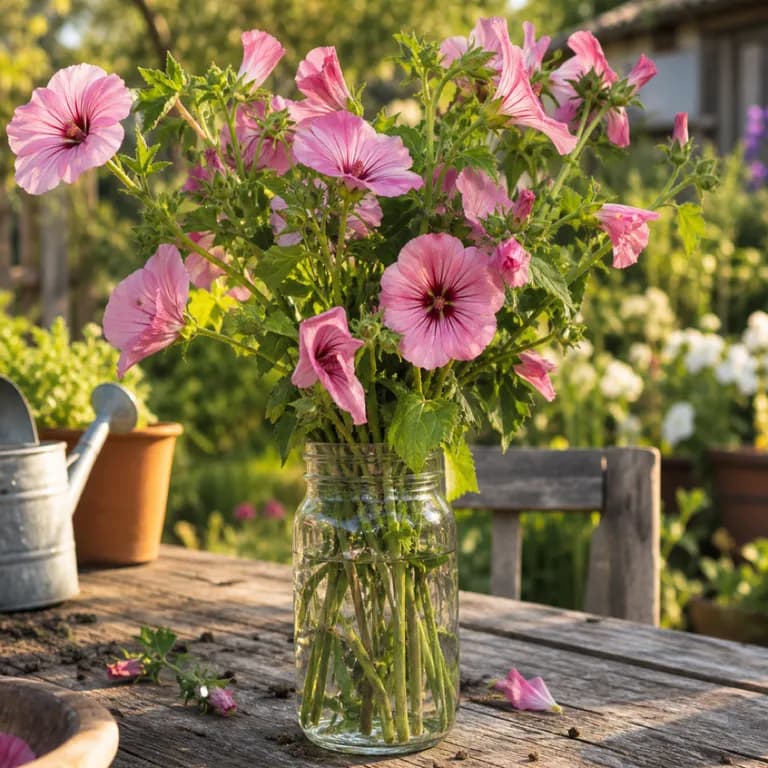
Cut malope stems for the vase when the outer petals of the first flower on the stem have just opened and the remaining buds are well colored. Harvest in the cool of early morning, make a clean diagonal cut, strip any leaves that would sit below the waterline, and place stems immediately in deep, clean water. Regular cutting doubles as deadheading and keeps new flowering shoots coming. For seed saving, leave a few stems uncut so the papery green lanterns can ripen and dry on the plant, then shell out the small round seeds on a dry day.
assuming you plant when the window opens — set your real date
Cut stems when the outer petals of the first flower on the stem have just opened and the side buds show full color; buds cut too tight rarely open in the vase.
What goes wrong — and the fix
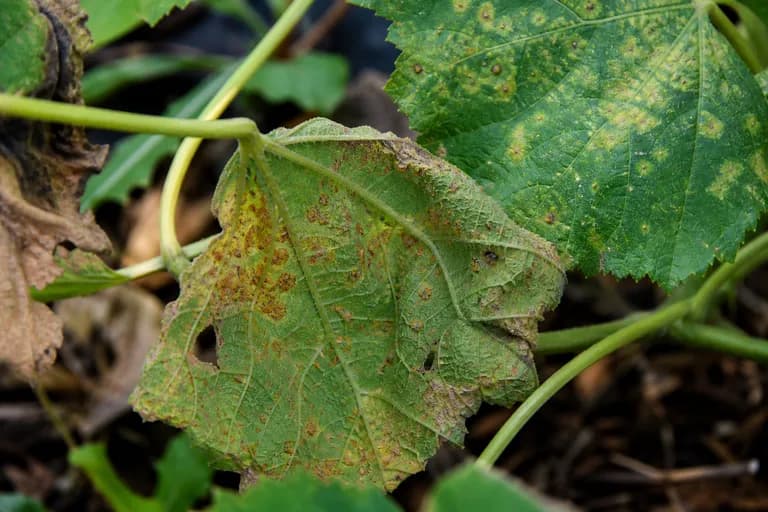
Mallow Rust
DiseaseRaised orange-brown pustules on leaf undersides with corresponding yellow spots on the upper surface, starting on the oldest, lowest leaves. Severe infections cause leaves to wither and drop and can disfigure stems and buds.
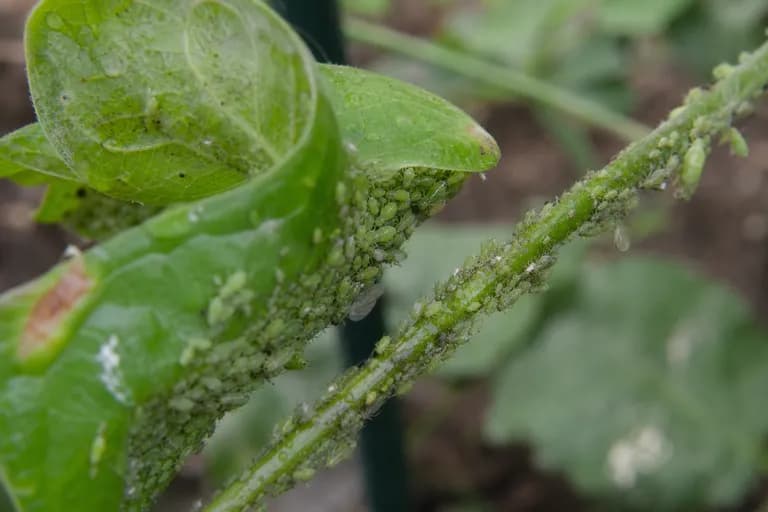
Aphids
PestClusters of small soft-bodied insects on growing tips, buds, and leaf undersides. Sticky honeydew on foliage, sometimes followed by black sooty mold, and curled or distorted young growth.
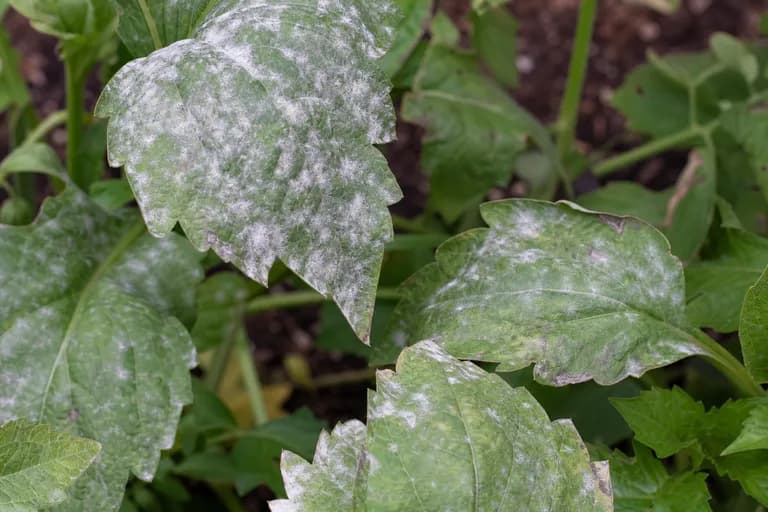
Powdery Mildew
DiseaseWhite or gray powdery patches on leaves and stems, usually beginning on shaded lower foliage late in the season. Leaves may yellow, curl, and drop early in heavy cases.
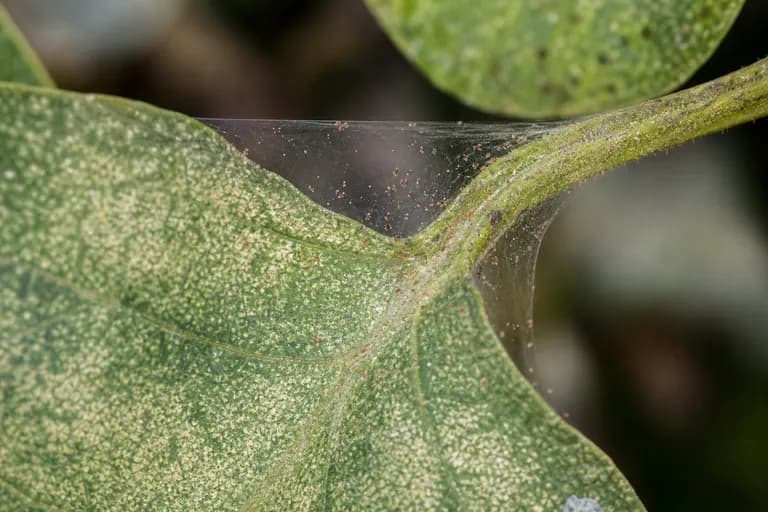
Spider Mites
PestFine stippling or bronzing on leaves, faint webbing on the undersides, and a generally dusty, faded look during hot, dry spells. Leaves may dry and fall prematurely.
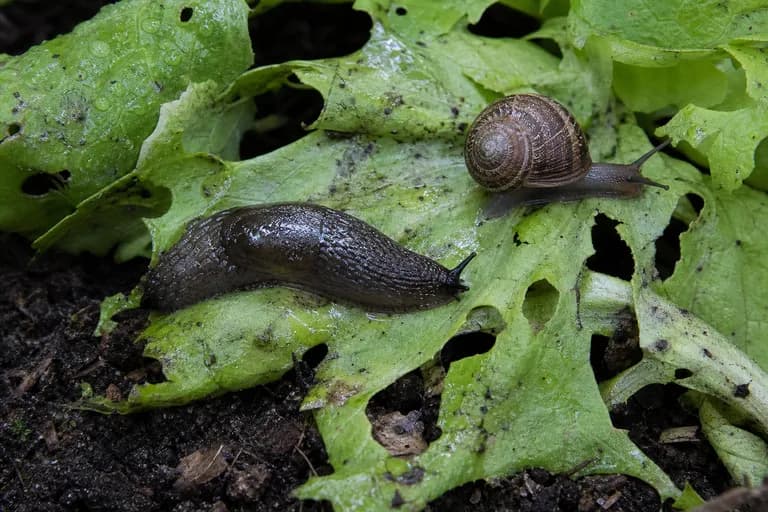
Slugs and Snails
PestIrregular holes in young leaves, seedlings grazed down to stubs overnight, and telltale silvery slime trails around the seedbed in spring.
Troubleshooting Common Problems
Mallow rust is the most serious issue, showing as orange pustules on leaf undersides in damp or crowded conditions; remove infected leaves early and never replant malope or hollyhocks in the same spot the following year. Flopping stems result from rich soil, overcrowding, shade, or wind exposure without support. Poor or patchy germination usually means the seed was sown too deep or into cold, waterlogged soil. Too much nitrogen produces tall, leafy plants with few blooms. In hot, dry spells, watch for spider mite stippling on the foliage.
Growing Tips
- Direct sow where the plants are to flower. Malope builds a taproot quickly and sulks after transplanting; if you must start indoors, use individual pots and plant the whole root ball without teasing it apart.
- Cover the seed with no more than 5 mm of fine soil. Malope seed germinates best with some light, and the number one cause of failure is sowing too deep.
- Expect uneven germination over ten days to three weeks, and do not resow in panic. For old or stubborn seed, chill the packet in the refrigerator for three weeks before sowing to even out emergence.
- Thin honestly to 45 cm between plants. Crowded malope grows leggy, flowers poorly, and gives mallow rust and powdery mildew exactly the still, damp conditions they need.
- Keep the soil lean. Rich, freshly manured ground gives you tall, soft, leafy plants with few chalices and stems that flop at the first summer storm.
- Stake tall cultivars such as 'Vulcan' early with a pea stick or short cane; once a 90 cm stem loaded with wet flowers kinks in the wind, it never straightens again.
- Treat malope as cut-and-come-again: every stem you cut for the vase or every spent bloom you snip back to a leaf node is repaid with fresh flowering side shoots.
- Sow a short row every two to three weeks until early summer. Later sowings bridge the gap when the earliest plants begin to tire in late summer.
- Scout the undersides of the lowest leaves for orange rust pustules from midsummer on, remove them immediately, and never compost rusted foliage or replant mallow relatives in that spot the following year.
Grow your best Malope yet — and everything around it.
Start a free plan today. Lay out your beds, drop in your Malope, and let PlotMyGarden handle the timing, spacing, companions and reminders from seed to harvest basket.
Pick your Malope
Vulcan
The standard cultivar and the one most seed catalogs carry: a tetraploid strain with extra-large, glowing magenta-red chalices and a vivid green eye on stems of about 90 cm. Needs staking in rich soil or windy sites.
Red Queen
Bright purplish-red flowers with deeper, darker veining, slightly smaller than 'Vulcan' but produced very freely on branching plants.
Pink Queen
Soft pale-pink chalices with contrasting rose-red centers and veining; a gentler look that mixes beautifully with white cosmos in cottage borders.
White Queen
Silky pure-white blooms with the characteristic green star at the center. Elegant for moon gardens and white-themed borders, and superb with deep magenta 'Vulcan'.
White For Windows
A semi-dwarf white selection reaching only about 60 cm, better suited to containers, window boxes, and the front of the border than the tall types.
Glacier Fruits
A seed mixture blending white, pink, and red forms for a ready-made cottage-garden drift of harmonizing colors from a single packet.
Where Malope comes from
Malope trifida is native to northwest Africa, chiefly Morocco and Algeria, with a long-established, possibly naturalized presence in southwestern Spain and southern Portugal. The genus Malope was erected by Carl Linnaeus in 1753, and the species itself was formally described by Antonio Jose Cavanilles, the director of the Royal Botanical Garden of Madrid, toward the end of the eighteenth century, working from plants cultivated in the garden's collections.
By the nineteenth century the plant had spread through European gardens as a hardy border annual. Victorian flower-garden manuals list it simply as Malope, praising its showy mallow-like blooms and very simple culture, and it became a fixture of German cottage gardens under names like Bechermalve and Sommermalve, chalice mallow and summer mallow. Its tall magenta chalices, green-eyed centers, and curious lantern-like seedpods made it a favorite for informal borders and for cutting.
Twentieth-century seed houses refined the species into named strains. The tetraploid 'Vulcan', with its oversized glowing chalices, became the standard form offered in catalogs, while Danish breeders at the Royal Horticultural Garden in Copenhagen selected the red 'KVL Red' strain and named colors such as 'Pink Queen', 'White Queen', and 'Red Queen' followed. Today malope is enjoying a quiet revival among cut-flower growers and cottage-garden enthusiasts, championed by specialist seed merchants as an easy, pollinator-friendly annual that asks for little more than sun and an unenriched patch of soil.
Malope: did you know?
Fascinating facts about Malope
The species name trifida means three-cleft and refers to the three broad, heart-shaped bracts that clasp each bud; after flowering they swell into the papery green lanterns that make the seed heads so ornamental.
Malope questions, answered
When should I plant Malope?
What are good companion plants for Malope?
What hardiness zones can Malope grow in?
How much sun does Malope need?
How far apart should I space Malope?
What pests and diseases affect Malope?
What are the best Malope varieties to grow?
What soil does Malope need?
Why did my malope seeds fail to germinate?
Can I start malope indoors and transplant it?
Is malope a good cut flower?
What are the orange spots on the undersides of my malope leaves?
Does malope self-seed in the garden?
Is malope perennial, and will it survive winter?
You just read the theory. Now grow it on autopilot.
Everything that makes Malope fiddly — the timing, the spacing, the companions, the harvest window — is exactly what PlotMyGarden handles for you, for every plant in your garden.
A plan that knows your weather
Set your location once. Get sow, feed and harvest dates built around your real last-frost date and live forecast — no more guessing from a generic seed packet.
From the “When to plant” sectionDrag-and-drop bed planner
Design beds on a grid. Every plant snaps to its proper spacing, and you can see your whole season laid out before you spend a cent on seed.
From the “Growing guide” sectionCompanion conflicts, caught early
200+ good-and-bad pairings checked live as you plant — so a season-wrecking mistake never makes it into the ground.
From the “Companions” sectionReminders you'll actually act on
“Water the beans.” “Pick today before it turns.” Timely, specific, and tied to the plants you're really growing.
From the “Harvest” sectionSuccession, scheduled
Want a harvest for six weeks, not six days? It spaces your sowings automatically and reminds you when each new block is due.
From the “When to plant” sectionA record that gets smarter
Every harvest you log teaches it your garden. Next year's plan starts from what actually worked in your soil, not a textbook's.
From the “Overview” sectionPlant these alongside Malope
More Annuals
Keep Malope away from these
Grow your best Malope yet — and everything around it.
Start a free plan today. Lay out your beds, drop in your Malope, and let PlotMyGarden handle the timing, spacing, companions and reminders from seed to harvest basket.