Land Cress
typical season: sow Aug – Oct · harvest Oct – Apr · set your climate
A peppery, watercress-flavored green that grows in regular garden soil without the running water that true watercress requires.
On this pageOverview
Meet Land Cress
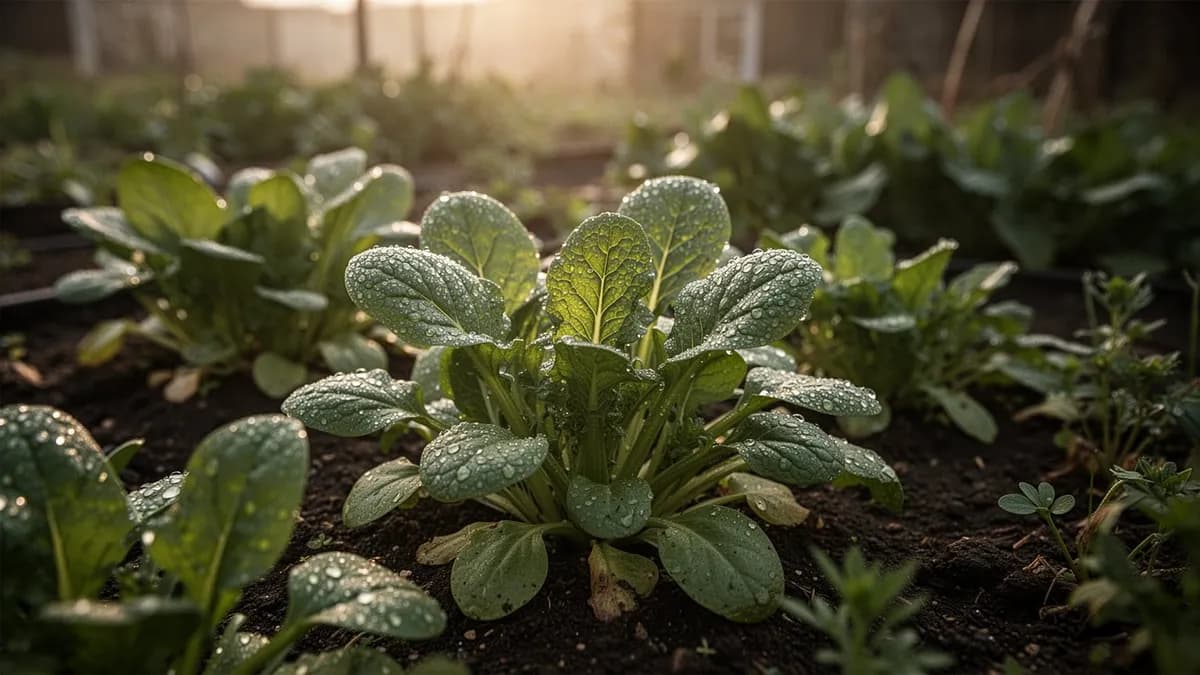
A peppery, watercress-flavored green that grows in regular garden soil without the running water that true watercress requires. The sharp, spicy bite is similar to watercress but slightly more intense, excellent in sandwiches and salads. Extremely cold-hardy plants produce through winter and are among the first greens to regrow in early spring. An easy-to-grow substitute for gardeners who want watercress flavor without a water feature.
When to plant Land Cress
Direct sowing is the easiest and most reliable method for land cress. Sow seeds 0.5 cm deep in rows or broadcast over a prepared bed from March through September. Seeds germinate in seven to ten days at soil temperatures above 10 degrees Celsius. No pre-treatment is needed. For indoor starting, sow in cell trays filled with moist seed compost and transplant carefully when seedlings have three to four true leaves, handling the root ball gently. Autumn sowings for winter harvest should be made by mid-September to allow plants to establish before cold weather arrives.
Your Land Cress Year
Composed for Zone 7 · typical seasons · frost passes Apr 2, returns Nov 1
Plant Land Cress Aug – Oct, pick Jan – Apr, Oct – Dec. Check the planting methods below and set your climate to personalize these windows.
Remind me when it's time to sow Land Cress
The window opens Aug 1 where you garden. One email a few days before and one two weeks before it closes — then one when the first pick is due.
One email per milestone, never more than one a week. Unsubscribe with one tap. No account needed.
How to grow Land Cress
Land cress is a robust, easy-to-grow alternative to watercress that thrives in ordinary garden soil. Sow seeds directly outdoors from early spring through autumn, scattering thinly in drills 0.5 cm deep and 15 cm apart. Seeds germinate quickly in seven to ten days at temperatures between 10 and 20 degrees Celsius. Thin seedlings to 15 cm apart once they develop their first true leaves. For a continuous supply, succession sow every three weeks from early spring through early autumn.
Land cress prefers partial shade, especially during summer, as hot sun and dry conditions cause rapid bolting and bitter, tough leaves. Keep the soil consistently moist to produce the best-flavored, most tender growth. A site near a water source or in a naturally damp part of the garden is ideal. Mulch around plants to retain moisture and keep roots cool. In containers, use a moisture-retentive compost and water daily during warm weather.
This biennial plant overwinters well in most climates, producing fresh leaves through the coldest months with minimal protection. A simple cloche or fleece cover extends the harvest season and improves leaf quality in severe weather. Plants bolt in their second spring, producing yellow flowers attractive to pollinators. Allow a few plants to set seed for self-sowing, as volunteer seedlings establish easily and provide ongoing harvests with no additional effort.
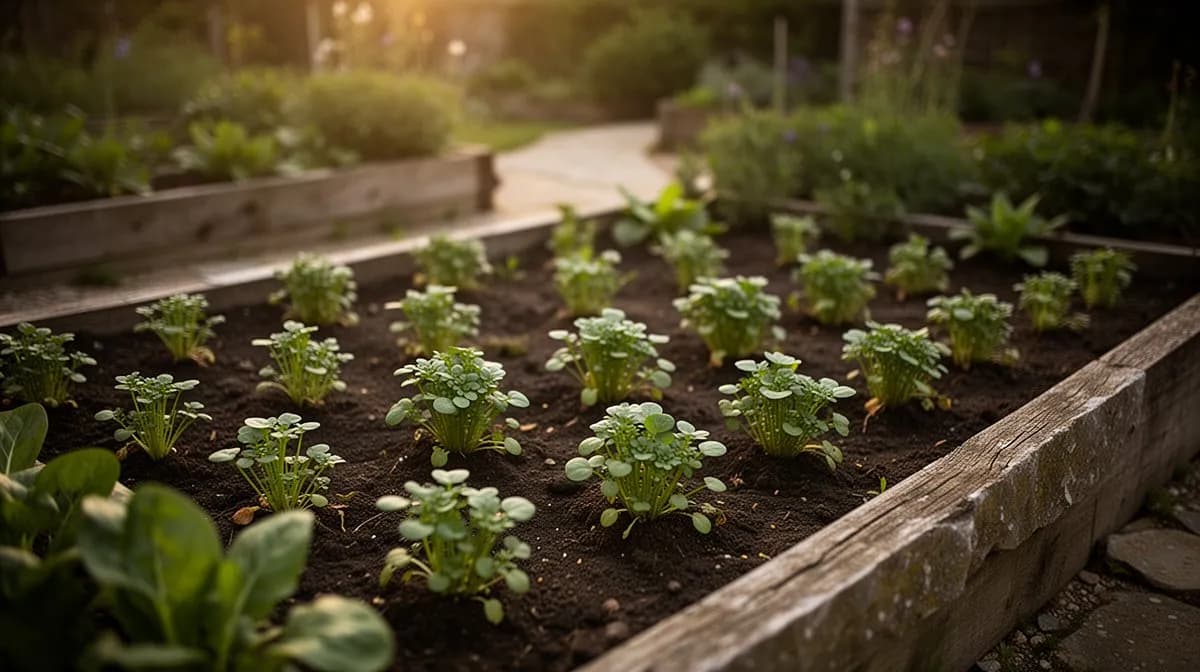
128 plants fit a 4 × 8 ft bed
Each Land Cress wants 15 cm of elbow room. The planner keeps that spacing for you — every plant, every bed.
Land Cress's best neighbours
Land cress works well as a trap crop for flea beetles, drawing them away from more valuable brassicas like cabbage, kale, and broccoli. Plant it near radishes and lettuce, which share similar growing conditions. Its low-growing habit makes it a good ground cover beneath taller crops like tomatoes and beans, where it benefits from shade and keeps soil moist. Avoid planting near other brassica family members in large quantities to reduce shared pest and disease pressure. Land cress grows well alongside herbs like chervil and parsley.
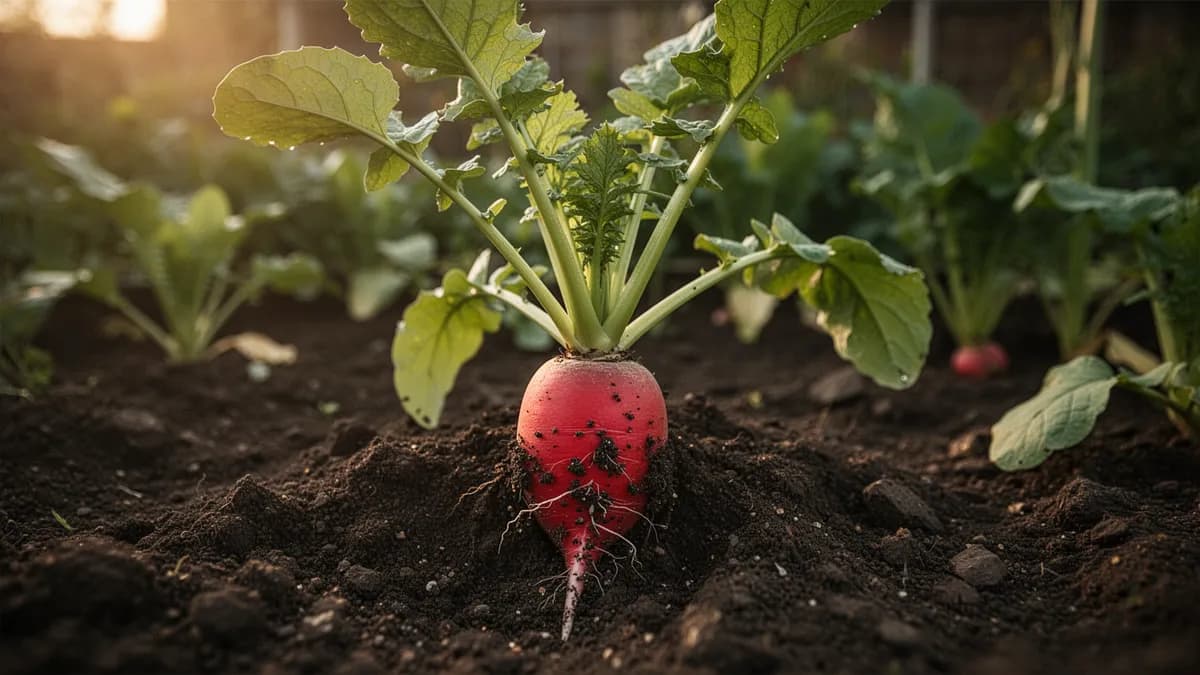
Radish belongs beside it.
Old growers' knowledge, checked against Land Cress's real companion table below — test any plant you're growing.
Related growing guides
Feed it well
Land cress grows in most garden soils but performs best in moisture-retentive, humus-rich ground with a pH of 6.0 to 7.0. Incorporate compost or well-rotted manure before sowing to improve water retention, which is key to producing tender, mild-flavored leaves. Avoid overly fertile soil, which encourages fast, leggy growth at the expense of flavor. A light application of balanced fertilizer at sowing time is sufficient for the growing season. Side-dress overwintering plants with a nitrogen-rich feed in early spring to boost new growth. Keep soil consistently moist but not waterlogged.
Ideal Temperature
Hardiness Zone Compatibility
From seed to harvest, stage by stage
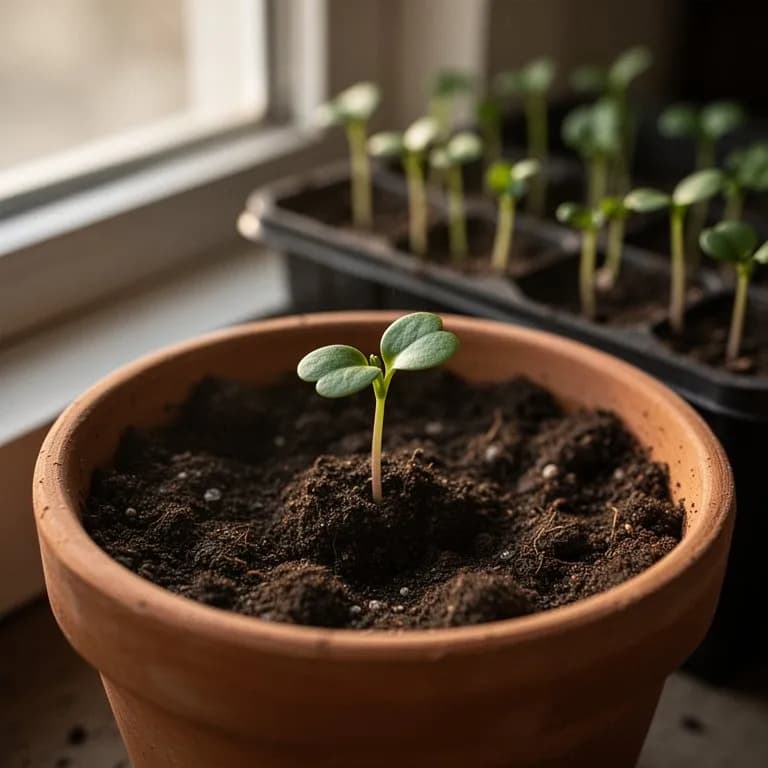
Seed Germination
Tiny seeds are sown on the surface of moist soil and lightly pressed in or barely covered. Land cress germinates reliably in cool conditions, with seedlings emerging in 7-10 days. The first visible structures are a pair of small, rounded cotyledon leaves on slender stems.
Seedling Development
True leaves appear with their characteristic pinnate (feathered) shape, each leaf composed of several pairs of rounded leaflets and a larger terminal lobe. The seedling forms a low, compact rosette close to the soil surface. Leaves are glossy dark green and begin to develop the peppery flavour land cress is known for.
Rosette Growth
The plant builds a dense, spreading rosette of dark green pinnate leaves that can reach 15-20 cm across. New leaves emerge continuously from the central crown. This is the primary harvest stage — leaves are at their peak flavour with a rich, peppery taste comparable to watercress but slightly more intense.
Mature Harvest
Plants reach full maturity with lush rosettes of deeply lobed leaves. In cool weather, land cress holds at this productive stage for many weeks, generating a steady supply of peppery greens. The leaves become slightly thicker and the flavour deepens in cold conditions, often improving after a light frost.
Bolting and Flowering
As day length increases in spring, the central stem elongates rapidly and produces clusters of small, bright yellow four-petalled flowers typical of the Brassicaceae family. Leaves become increasingly bitter and tough once the flower stalk appears. The cheerful yellow flowers are valuable for early-season pollinators including bees and hoverflies.
Seed Set
Slender seed pods (siliques) develop along the flower stalks, each containing numerous tiny seeds. Pods turn from green to brown as they ripen and eventually split open to scatter seeds. Land cress self-sows readily in favourable conditions, often establishing semi-permanent patches in moist, shady garden spots.
Sow seeds no more than 3mm deep — they need some light to germinate well. Keep soil consistently moist with gentle misting. Germination is best at 10-18°C (50-65°F); avoid sowing in hot weather as germination drops sharply above 25°C.
Caring for Land Cress month by month
What to do each month for your Land Cress
October
You are hereBegin harvesting outer leaves from plants sown in late summer once rosettes have 8-10 leaves. Growth slows as days shorten and temperatures cool, but flavour improves markedly. No pest or disease problems are typical at this time of year — cool weather keeps land cress healthy.
Harvesting Land Cress
Begin harvesting land cress leaves as soon as plants have developed a rosette of six to eight leaves, typically 40 to 50 days after sowing. Pick individual outer leaves regularly to encourage continued production from the growing center. Alternatively, cut entire rosettes at soil level for a one-time harvest. Leaves are most peppery and flavorful during cool weather; summer growth tends to be hotter and more bitter. Harvest before flower stalks appear, as flowering makes leaves tough and unpleasant. Winter-harvested leaves are sweeter and more tender than those grown in warmer months.
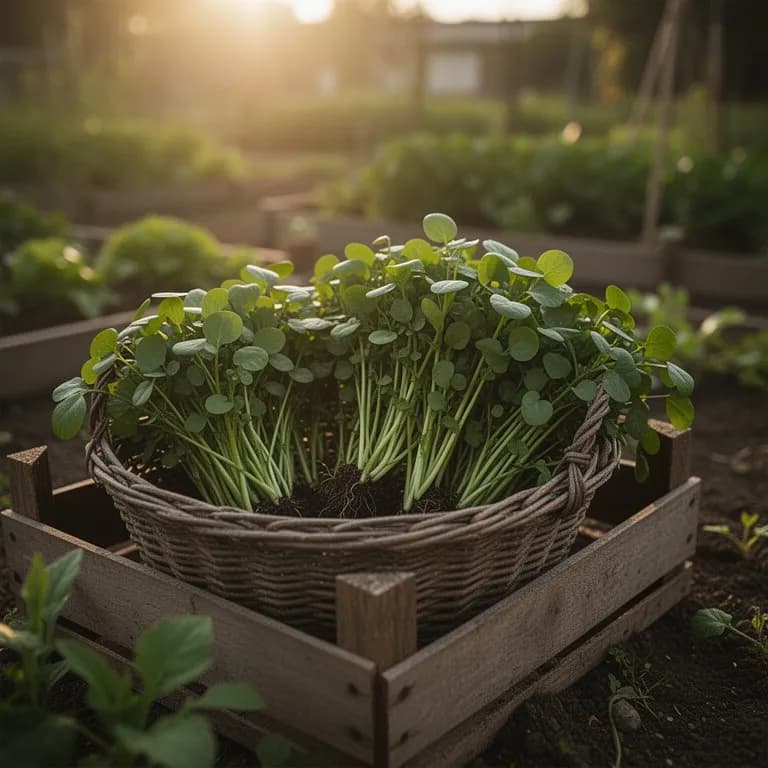
assuming you plant when the window opens — set your real date
Pick Land Cress promptly and the plant keeps producing.
Storage & Preservation
Freshly picked land cress keeps for three to five days in the refrigerator when stored in a sealed bag or container with a damp paper towel. Wash leaves just before use to maintain freshness. Land cress does not freeze or dry well, as the delicate leaves lose their texture and peppery bite. The best preservation strategy is to grow plants year-round and harvest as needed. For a concentrated flavor, blend fresh leaves into a pesto with garlic, Parmesan, and olive oil, which can be frozen in ice cube trays for use throughout the year.
What goes wrong — and the fix
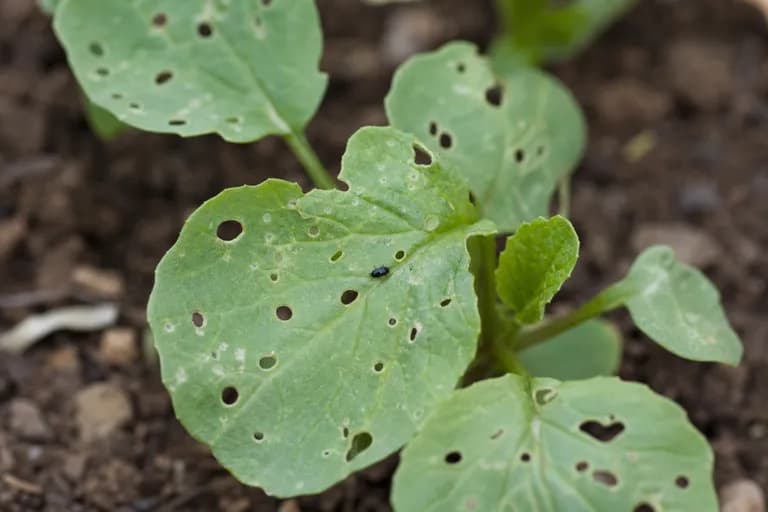
Flea Beetle
PestTiny round holes peppered across leaves giving a shothole appearance, particularly on young seedlings.
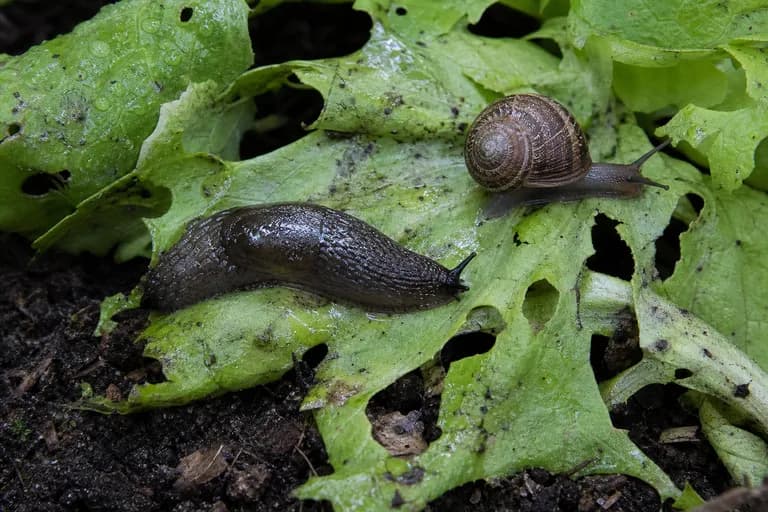
Slugs and Snails
PestLarge irregular holes in leaves and slimy trails, especially on young plants during damp weather.
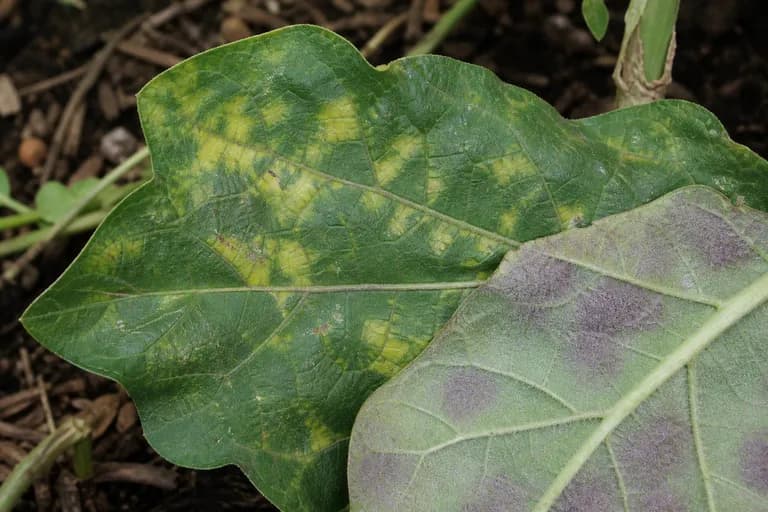
Downy Mildew
DiseaseYellow patches on upper leaf surfaces with white or gray fuzzy growth underneath. Leaves become limp and discolored.
Troubleshooting Common Problems
Premature bolting is the primary frustration, usually triggered by heat, drought, or long day length. Grow in partial shade and keep soil moist to delay flowering. Bitter, tough leaves indicate plants are too dry or too hot; improve growing conditions or switch to autumn and winter production. Flea beetle damage on seedlings can stunt growth; cover young plants with fleece until established. Self-sowing can become aggressive if plants are allowed to set seed freely; remove flower stalks before seeds scatter if this is a concern. Yellow leaves usually indicate waterlogging or nutrient deficiency.
Growing Tips
- Sow in late summer for the best results. Late-summer and early-autumn sowings produce the highest-quality land cress, giving plants time to establish strong rosettes before winter. Spring sowings bolt quickly in warming weather and rarely produce as well as autumn-sown plants.
- Choose a moist, partly shaded spot. Unlike most salad greens, land cress actually prefers partial shade and consistently damp soil — it is ideal for planting under taller crops, along shady walls, or in the shade of fruit trees where other vegetables might struggle.
- Keep the soil consistently moist at all times. Land cress is a moisture-loving plant that wilts and turns bitter if allowed to dry out. Mulch around plants with compost to retain moisture and water regularly during dry spells. Drip irrigation works well for larger plantings.
- Harvest outer leaves first, leaving the growing centre intact. This cut-and-come-again approach keeps the plant producing new leaves for months. Pick leaves regularly even if you have more than you need — regular harvesting delays bolting and extends the productive life of each plant.
- Grow as a watercress substitute without any water features. Land cress delivers 90% of the watercress flavour experience in ordinary garden soil with no streams, ponds, or aquatic setups required. It is the practical choice for gardeners who love watercress but lack the growing conditions for the real thing.
- Use land cress as a winter gap filler. Its extreme cold-hardiness (surviving to -10°C) means it produces fresh salad greens during the months when most other crops have long since finished. Sow in autumn to fill the otherwise empty winter salad gap between the last summer crops and the first spring harvests.
- Allow some plants to self-sow for a permanent patch. Land cress drops viable seed readily in spring and, if given a moist, shady spot, will establish a self-sustaining colony that returns year after year with no replanting effort — essentially a perennial salad green on autopilot.
- Try growing land cress in containers on a shaded balcony or patio. Use a pot at least 20 cm deep, keep it in partial shade, and water daily. Container-grown land cress produces well from autumn through spring and brings fresh peppery greens within reach of gardeners with no ground-level growing space.
Pick your Land Cress
American Land Cress
The standard variety with dark green, glossy leaves and a strong peppery flavor. Very cold-hardy and easy to grow.
Upland Cress
A slightly milder selection sometimes sold under this name, with broader leaves suitable for salad mixes.
Cresson de Jardin
French garden cress selection with fine-textured leaves and intense watercress-like flavor. Quick to mature.
A packet of land cress seeds costs $2-4 and contains enough seed for several sowings. Fresh watercress (land cress's closest flavour equivalent) sells for $3-6 per small bunch at supermarkets and farmers markets. A single autumn sowing of 10-15 plants can produce the equivalent of 15-30 store-bought bunches of watercress over the winter months, representing $45-180 in savings from a single seed packet. Because land cress thrives in the cold months when most other salad greens require expensive heated greenhouses, the savings are especially significant during winter when fresh local greens are at their scarcest and most expensive.
Quick recipes
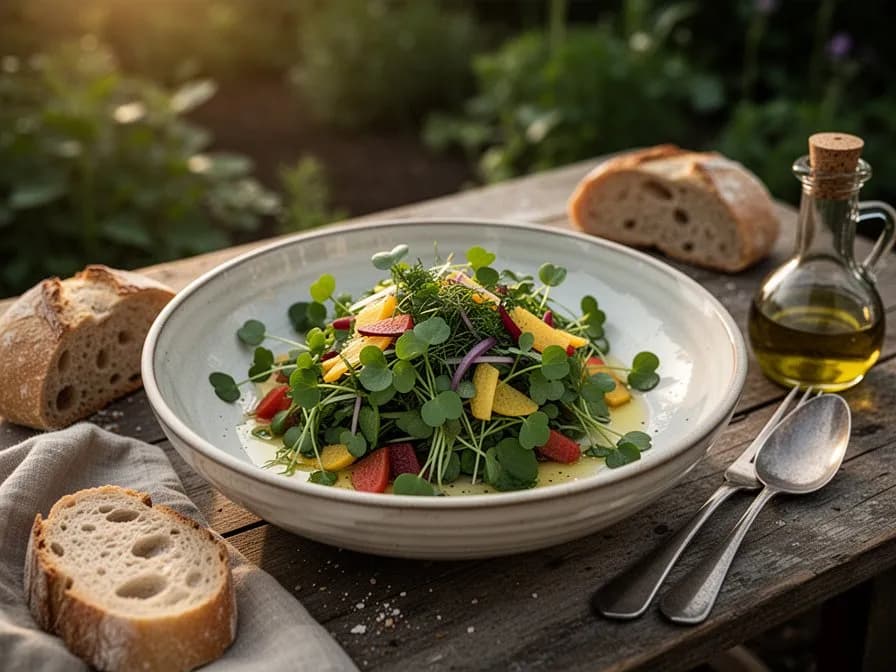
Land Cress and Blue Cheese Winter Salad
10 minA bold winter salad that pairs the peppery intensity of fresh land cress with creamy blue cheese, toasted walnuts, and sliced pears. The sharp bite of the cress cuts beautifully through the richness of the cheese for a salad that feels both hearty and refreshing.
8 ingredientsPeppery Land Cress Soup
30 minA vibrant, emerald-green soup with a warming peppery kick that showcases land cress at its best. The cress is added at the very end and barely cooked to preserve its brilliant colour and bold watercress-like flavour. Serve with crusty bread for a satisfying winter lunch.
8 ingredientsLand Cress and Smoked Salmon Tartines
15 minOpen-faced sandwiches layering peppery land cress over silky smoked salmon and tangy cream cheese on toasted sourdough. The bold mustard notes of the cress complement the richness of the salmon perfectly — an elegant starter or weekend brunch dish.
7 ingredientsCulinary Uses
Land cress brings a bold, peppery kick similar to watercress to sandwiches, salads, and garnishes. It pairs exceptionally well with smoked fish, eggs, and cheese. Blend into soups for a vibrant green potage, or stir into mashed potatoes for a peppery twist. The leaves make an excellent pesto when combined with pine nuts and Parmesan. Use raw for maximum flavor, as cooking mellows the spicy bite. Young flower buds are also edible and add a mild mustard note to dishes.
What's inside
Health Benefits
- Land cress is exceptionally rich in vitamin C, providing 76% of the daily value per 100g — roughly equivalent to oranges by weight. This supports immune function, collagen production for healthy skin and joints, and enhances absorption of iron from plant-based foods.
- Outstanding source of vitamin A as beta-carotene (129% DV per 100g), essential for maintaining healthy vision, supporting immune cell production, and promoting skin cell renewal. The dark green colour indicates high carotenoid concentration.
- Contains very high levels of vitamin K (over 400% DV per 100g), which is essential for blood clotting and plays a critical role in directing calcium into bones rather than arteries, supporting both skeletal and cardiovascular health.
- Rich in glucosinolates, the same sulphur compounds found in broccoli and other cruciferous vegetables that are extensively studied for their role in supporting the body's natural detoxification enzymes and cellular defence mechanisms.
- Provides significant calcium (120mg per 100g) with lower oxalate levels than spinach, meaning a greater proportion of the calcium is actually available for absorption — making land cress a valuable plant-based calcium source for bone health.
- The combination of high folate, iron, and vitamin C in land cress makes it particularly valuable for supporting healthy red blood cell production — the vitamin C dramatically improves absorption of the plant-based iron, an effect enhanced when the leaves are eaten raw.
Where Land Cress comes from
Land cress (Barbarea verna), also known as upland cress, American cress, or early winter cress, is native to southwestern Europe, likely originating in the Iberian Peninsula and Mediterranean France. It has been gathered from the wild and cultivated as a potherb and salad green for centuries across southern and western Europe, particularly in regions where its cousin watercress grew in streams but was not always accessible or available year-round.
The genus Barbarea takes its name from Saint Barbara, traditionally celebrated on December 4th, because the plant was one of the few leafy greens still producing fresh growth in early winter. Medieval monastery gardens across Europe cultivated land cress as a reliable source of fresh greens during the cold months when most other salad plants had long since gone dormant. Monks valued it both as a culinary green and as a medicinal herb, prescribing it for respiratory complaints and as a general vitamin-rich tonic during winter.
Land cress was brought to North America by early European colonists, who planted it alongside other familiar kitchen garden herbs and greens. It naturalised readily across the eastern United States and Canada, thriving in moist roadside ditches, stream banks, and woodland edges. In Appalachian folk tradition, wild land cress was gathered as one of the first spring greens — a welcome source of fresh nutrition after months of preserved foods. The common name 'American cress' reflects this deep naturalisation in North American landscapes.
Today, land cress is grown worldwide by gardeners who want the peppery flavour of watercress without the need for an aquatic growing environment. It is particularly popular in the United Kingdom, France, and the northeastern United States, where its extreme cold-hardiness and shade tolerance make it one of the most reliable winter salad greens available. The modern interest in season extension, winter gardening, and cold-hardy greens has brought renewed attention to this underappreciated plant, and it is increasingly found at farmers markets and in seed catalogues as gardeners rediscover its outstanding flavour and resilience.
Land Cress: did you know?
Fascinating facts about Land Cress
Land cress (Barbarea verna) is often called 'upland cress' or 'American cress' because it delivers watercress-like flavour without any need for running water or an aquatic growing setup — it grows happily in ordinary garden soil, making it the easiest watercress substitute for home gardeners.
Land Cress questions, answered
When should I plant Land Cress?
What are good companion plants for Land Cress?
What hardiness zones can Land Cress grow in?
How much sun does Land Cress need?
How far apart should I space Land Cress?
What pests and diseases affect Land Cress?
How do I store Land Cress after harvest?
What are the best Land Cress varieties to grow?
What soil does Land Cress need?
Is land cress the same as watercress?
When is the best time to sow land cress?
Why does my land cress taste bitter?
Can land cress survive winter outdoors?
Does land cress grow well in shade?
Will land cress self-sow and come back every year?
Plant these alongside Land Cress
More Leafy Greens
Grow your best Land Cress yet — and everything around it.
Start a free plan today. Lay out your beds, drop in your Land Cress, and let PlotMyGarden handle the timing, spacing, companions and reminders from seed to harvest basket.
