Golden Kiwi
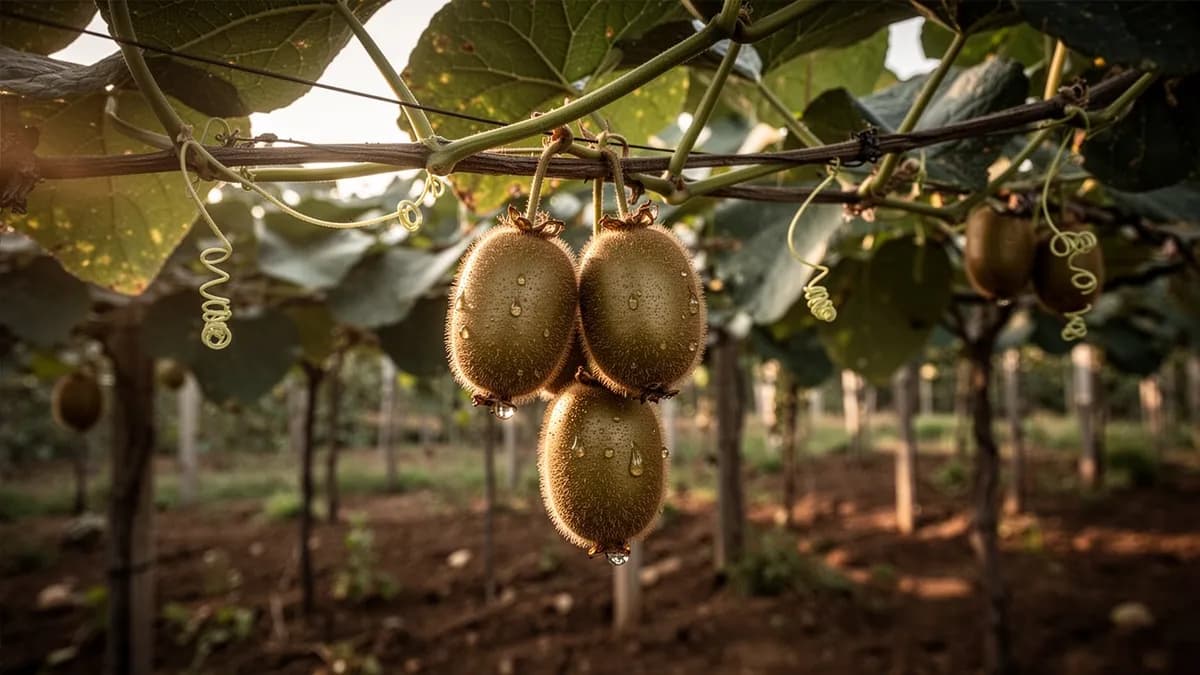
A smooth-skinned kiwi variety with golden-yellow flesh that is sweeter and less tangy than the common green kiwi, with a tropical flavor reminiscent of mango.





On this pageOverview
Meet Golden Kiwi
A smooth-skinned kiwi variety with golden-yellow flesh that is sweeter and less tangy than the common green kiwi, with a tropical flavor reminiscent of mango. Golden kiwis require a male pollinizer vine and a sturdy T-bar or pergola trellis system. They are slightly less cold-hardy than green kiwi and need protection from late spring frosts.
When to plant Golden Kiwi
Golden kiwi is propagated commercially by grafting onto seedling rootstocks of Actinidia chinensis or Actinidia deliciosa. Seeds require cold stratification for four to six weeks at 4 degrees Celsius before sowing in a warm propagator at 20 to 25 degrees Celsius. Seedling rootstocks are grown for one year before grafting. Whip-and-tongue grafting in late winter or T-budding in summer are the standard techniques. Softwood cuttings taken in early summer can also root under mist with bottom heat, though grafted plants on known rootstocks are preferred for consistency and vigor control.
Your Golden Kiwi Year
Composed for Zone 7 · typical seasons · frost passes Apr 2, returns Nov 1
Plant Golden Kiwi Mar – Apr, pick Oct – Nov. Check the planting methods below and set your climate to personalize these windows.
How to grow Golden Kiwi
Golden kiwi vines require a robust support structure, typically a T-bar trellis system with overhead wires or a sturdy pergola capable of supporting the substantial weight of mature vines and fruit. Erect the trellis before planting, using posts at least 2 meters tall with cross-arms of 1.5 to 2 meters supporting five to six horizontal wires. Plant one male pollinizer vine for every six to eight female vines, spacing all plants 3 to 5 meters apart along the row. Plant in spring after the last frost date.
Train the main leader up the post to the overhead wire system, then allow it to branch into two permanent cordons running in opposite directions along the main wire. Fruiting laterals hang down from these cordons and are replaced annually after harvest. Golden kiwi vines are extremely vigorous and require regular summer pruning to prevent the canopy from becoming an impenetrable tangle that shades out fruiting wood and promotes disease. Thin excess shoots in early summer, leaving laterals spaced 20 to 30 cm apart.
Golden kiwis are more sensitive to late spring frosts than green kiwi varieties, as they break bud earlier and the emerging shoots are very frost-tender. Protect with frost cloth or overhead sprinklers when temperatures threaten to drop below minus 1 degree Celsius in spring. Water regularly throughout the growing season, providing 25 to 50 mm per week during summer, as the large leaf area transpires heavily. Reduce watering in autumn as fruit approaches maturity to concentrate sugars and improve storage quality.
Golden Kiwi needs more room than a 4 × 8 ft bed gives
Each Golden Kiwi wants 300 cm of elbow room. The planner keeps that spacing for you — every plant, every bed.
Golden Kiwi's best neighbours
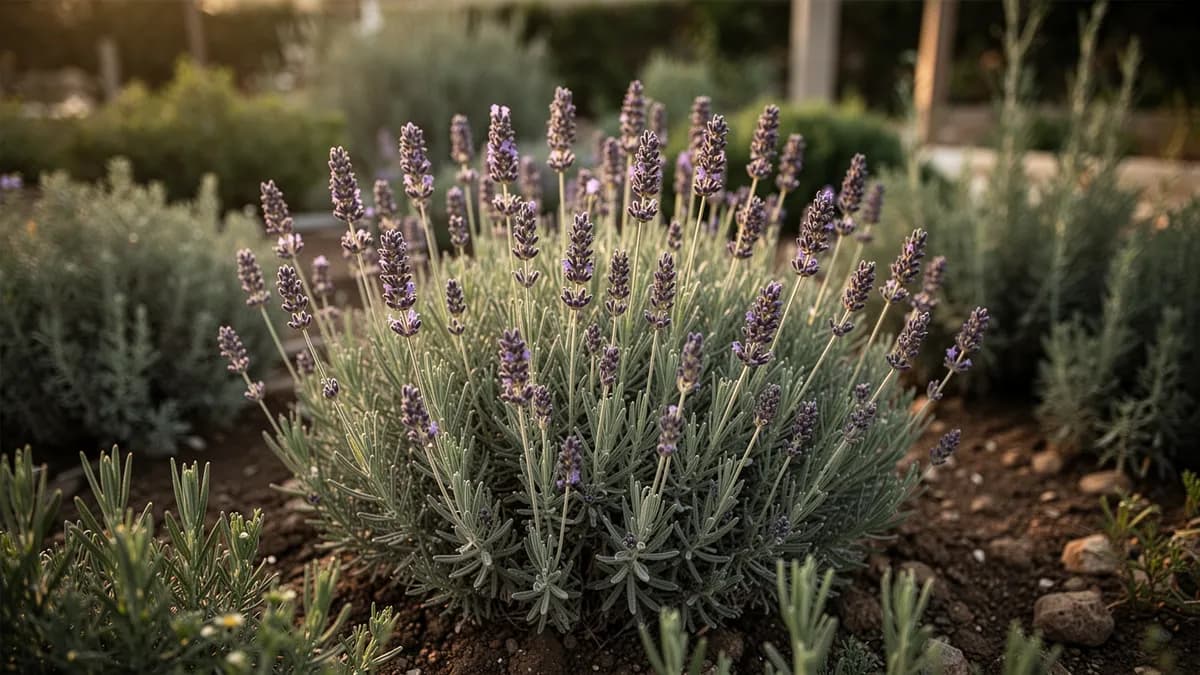
Lavender and comfrey planted around kiwi vines provide multiple benefits. Comfrey serves as a dynamic accumulator, drawing potassium and other minerals from deep soil layers and making them available as mulch when the leaves are cut and laid around the vine base. Lavender attracts pollinators essential during the brief kiwi flowering period and helps deter pest insects. Nitrogen-fixing clovers grown beneath the trellis provide a living mulch and gentle nitrogen supply. Avoid planting other vigorous climbers near kiwi vines, as they will compete for trellis space and light.
Lavender belongs beside it.
Old growers' knowledge, checked against Golden Kiwi's real companion table below — test any plant you're growing.
Try Golden Kiwi in a bed — right here
A real planner bed with Golden Kiwi already in it. Tap a companion to place it and watch the pairing checks answer — green for good neighbours, red for a clash.


Related growing guides
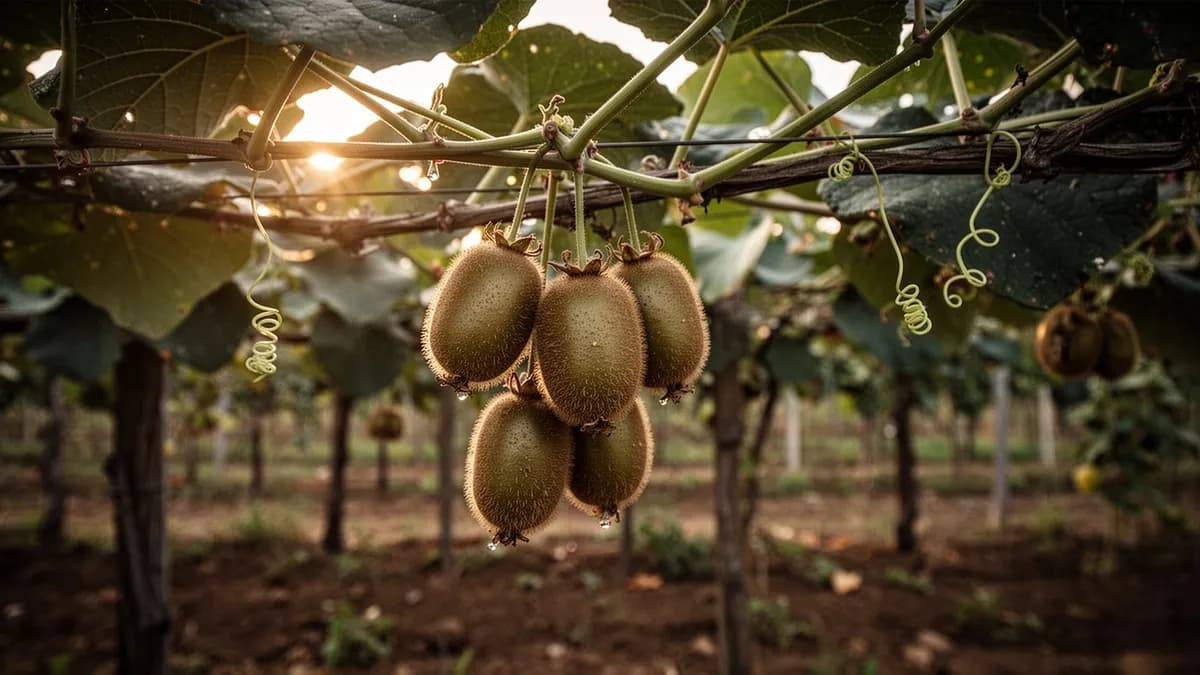
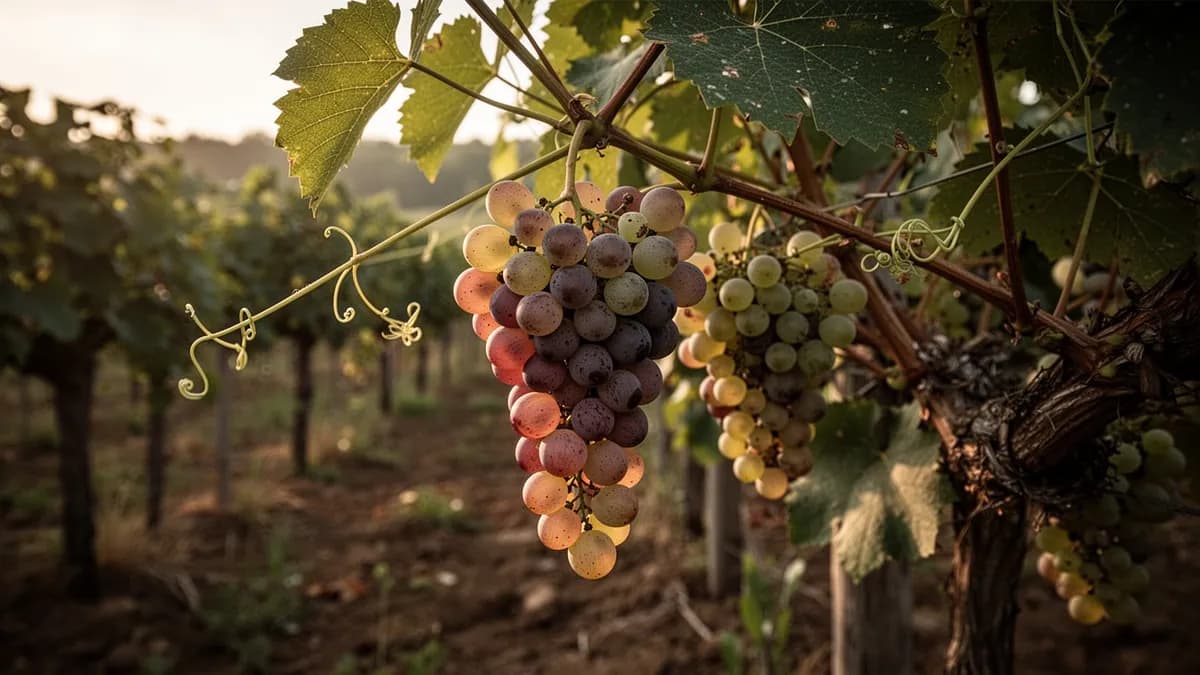
Feed it well
Golden kiwi vines prefer deep, well-drained, slightly acidic soil with a pH of 5.5 to 6.5. They will not tolerate waterlogged conditions or heavy clay soils without amendment. Incorporate generous amounts of compost and aged manure before planting. Kiwi vines are heavy feeders and require regular fertilization throughout the growing season. Apply a balanced fertilizer in early spring as growth begins, followed by nitrogen-rich feeds every four to six weeks through midsummer. Apply potassium-rich fertilizer in late summer to support fruit development and improve storage quality.
Ideal Temperature
Hardiness Zone Compatibility
From seed to harvest, stage by stage
Dormancy and Root Establishment
Newly planted golden kiwi vines direct all energy below ground during the first growing season, building the extensive root system needed to support future vigorous growth. Visible top growth is minimal and slow at this stage. Plants should be established in late winter to early spring to give roots the maximum growing season before summer heat.
Rapid Vegetative Growth
Once the root system is established, the vine begins producing fast-growing shoots that must be actively trained onto a support structure. Actinidia chinensis is an even more vigorous grower than the common kiwi, and shoots can extend several metres in a single season. This stage is focused entirely on building the permanent woody framework of the vine.
Framework Development
In the second and third years the vine continues expanding its permanent framework of lateral arms along the trellis wires. Secondary side shoots emerge from the main laterals and begin to form the basis of the fruiting spur system. The vine is building the woody architecture from which it will fruit for decades.
First Flowering
From the third or fourth year the vine typically flowers for the first time in late spring. Golden kiwi is dioecious in its wild form, though some improved cultivars including the widely grown 'Hort16A' (Zespri SunGold) require a compatible male pollinator. Flowers appear on short spurs that develop on the previous year's wood, reinforcing why summer pruning must be avoided.
Active Fruit Development
Pollinated fruits develop rapidly through summer, swelling from the size of a pea to full maturity. Golden kiwi fruits are generally larger than common kiwi and have a distinctive pointed tip and smooth, hairless bronze skin. The fruits do not change dramatically in external appearance as they ripen, making seed colour the most reliable ripeness indicator.
Full Production Maturity
From year five onwards a well-managed golden kiwi vine enters peak production, capable of yielding 50 to 80 kilograms of fruit per year. The vine will continue producing at this level for 30 to 50 years with appropriate annual pruning and feeding. Fruit quality and yield tend to improve progressively over the first ten years as the fruiting spur system becomes more fully developed.
Autumn Harvest
Golden kiwi fruits are harvested firm in mid to late autumn, before the first hard frosts, and ripened off the vine. The fruits do not soften or change colour noticeably on the vine. Seed colour turning black and a brix reading above 6.5 are the most reliable harvest indicators. Once harvested, golden kiwis ripen faster than green kiwis at room temperature, developing their characteristic buttery yellow flesh and intense tropical sweetness.
Water regularly but avoid waterlogging the root zone. Apply a balanced slow-release granular fertiliser at planting. Remove any flower buds that appear in the first two years to prevent premature fruiting, which would weaken the vine's structural development. Stake the main leader firmly to protect it from wind rock.
Caring for Golden Kiwi month by month
What to do each month for your Golden Kiwi
October
You are hereHarvest the entire crop once seeds are consistently black and a brix measurement exceeds 6.5. Aim to complete the harvest before the first forecast frost of the season. Clear fallen leaves and fruit debris from beneath the vine and add to a hot compost heap rather than leaving it on the ground, where it can harbour fungal spores.
Know exactly what to do in your garden — every month
One email at the start of each month: what to sow, plant, and tackle right now — for your Golden Kiwi and everything growing around it. Plus a short starter course that helps you dodge the classic mistakes.
- What to do, right now
- Matched to your season
- Starter course included
Harvesting Golden Kiwi
Golden kiwis are ready for harvest in October to November when the flesh firmness decreases and sugar content rises above 6.2 percent Brix as measured at the vine. Unlike green kiwi, golden varieties have a smoother, thinner skin that is more prone to handling damage, so pick with extra care. Test maturity by cutting a few fruit and checking that the flesh is uniformly golden-yellow without a green tinge near the core. Harvest all fruit before the first frost, as frozen fruit deteriorates rapidly. Use clippers to cut the fruit from the vine rather than pulling, which can tear the skin.
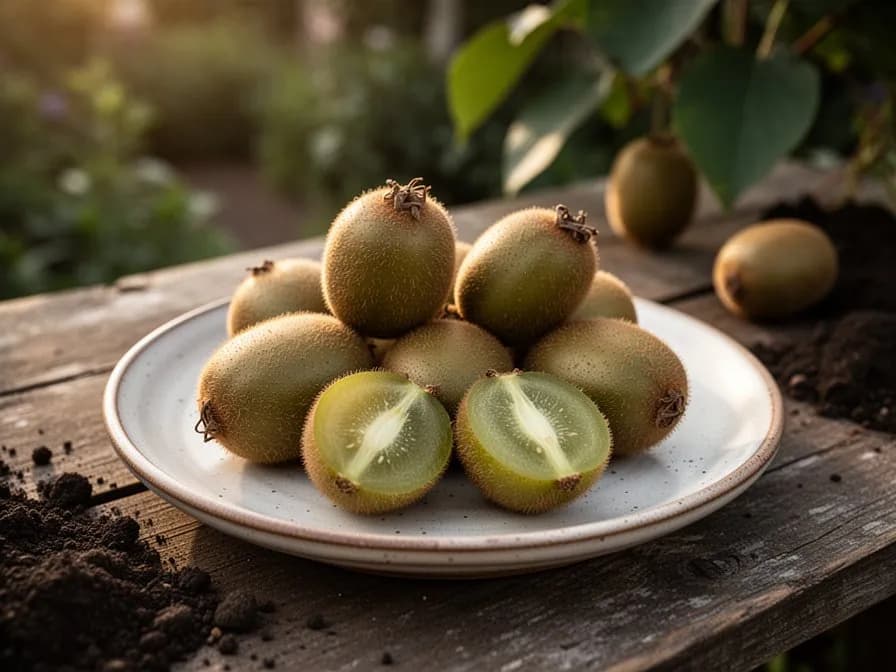
assuming you plant when the window opens — set your real date
Pick Golden Kiwi promptly and the plant keeps producing.
Storage & Preservation
Golden kiwis store for a shorter period than green kiwis due to their thinner skin and higher sugar content. Under proper cold storage at 0 degrees Celsius and 95 percent humidity, they keep for 8 to 12 weeks. Ripen at room temperature for two to four days until the fruit yields to gentle pressure. Golden kiwis freeze well when peeled and sliced, retaining their flavor for up to twelve months. They make an excellent dried fruit with an intensely sweet, tropical flavor. The fruit can also be made into jam, chutney, or a distinctive golden kiwi wine.
What goes wrong — and the fix
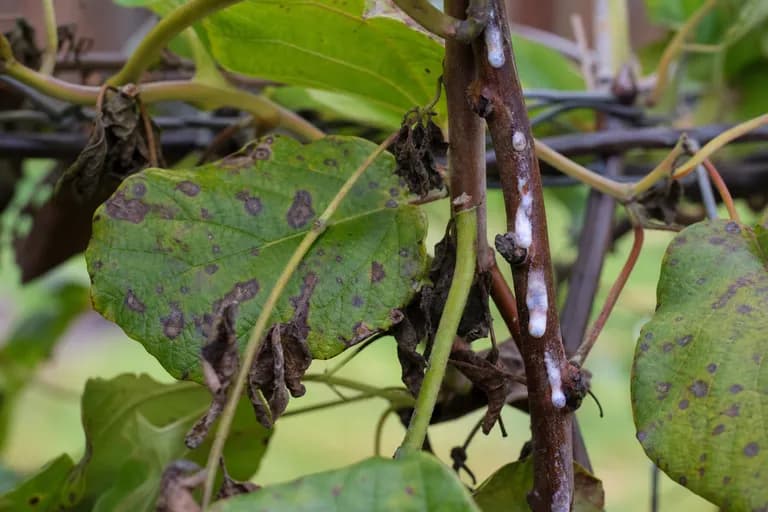
Pseudomonas Syringae pv. Actinidiae (Psa)
DiseaseReddish-brown leaf spots, white or reddish ooze from canes and trunks in spring, cane dieback, and wilting of shoots. Can kill entire vines within a season.
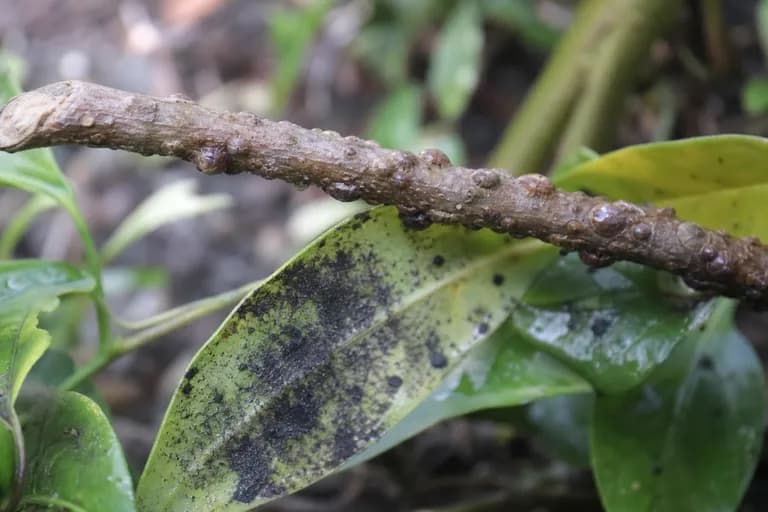
Scale Insects
PestBrown or white armored scales on bark and leaves, producing honeydew that attracts sooty mold. Heavy infestations weaken vines and reduce fruit quality.
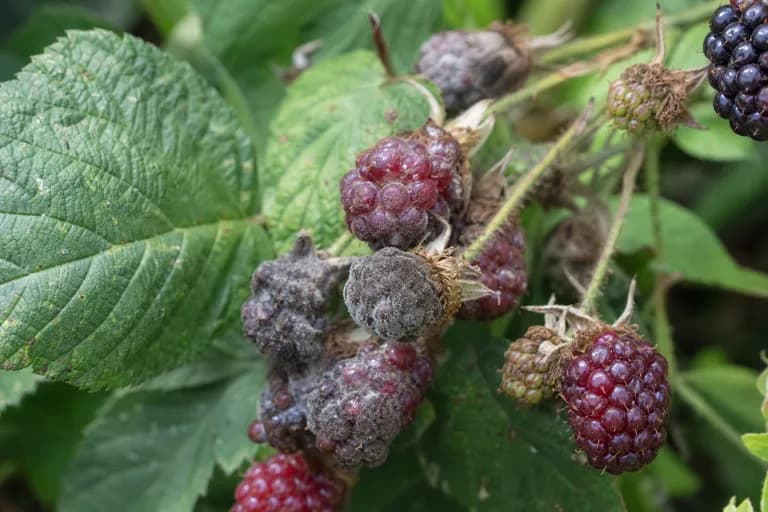
Botrytis Fruit Rot
DiseaseGray mold develops on fruit at the stem end, particularly in storage. Infected fruit softens rapidly and develops a musty smell.
Troubleshooting Common Problems
Psa bacterial canker is the most serious threat to golden kiwi production worldwide, having devastated plantings of the original Gold cultivar in New Zealand and Italy. Late spring frosts frequently damage the frost-tender new growth, potentially eliminating the entire season's crop in exposed locations. The vines are extremely vigorous and can become unmanageable without diligent summer pruning, shading out fruiting wood and reducing crop quality. Inadequate pollination results in small, misshapen fruit, so ensuring healthy male vines and pollinator activity during the short flowering window is critical.
Growing Tips
- Most golden kiwi varieties, including the widely grown Hort16A-type selections, are dioecious and require a compatible male pollinator to set fruit. Purchase a named male cultivar specifically recommended for Actinidia chinensis from your plant supplier. Verify that the male and female vines flower at the same time — mismatch in flowering period is one of the most common causes of poor or absent fruit set in home gardens.
- Build a trellis system that is far more robust than you think you will need. Mature golden kiwi vines are extraordinarily heavy and produce enormous volumes of leafy growth each season. T-bar posts set in concrete at a minimum height of 2.2 metres, with high-tensile galvanised wires capable of bearing at least 200kg, are the minimum standard for a long-term planting. A vine that outgrows its support is extremely difficult to retrofit without significant crop disruption.
- Golden kiwi is marginally more cold-sensitive than the common fuzzy kiwi. In regions that experience late frosts after mid-April, choose a planting position against a south- or west-facing wall that provides both reflected heat and physical shelter from frost-laden air draining downhill. Avoid frost pockets, low-lying ground, and any position where cold air accumulates on still spring nights, as a single frost event during flowering can destroy the entire season's crop.
- Feed strategically throughout the season rather than applying a single annual dose. Use a high-nitrogen fertiliser from bud break through to midsummer to fuel the vine's rapid vegetative growth, then switch sharply to a high-potassium formula from late June or July onward. This switch signals the vine to direct energy from leaf production into fruit sizing, sugar accumulation, and the hardening of new wood before winter.
- Consistent irrigation is non-negotiable once the vine is carrying fruit. Golden kiwi vines have a relatively shallow, fibrous root system that is highly sensitive to moisture fluctuations. Water stress between fruit set and harvest causes premature fruit drop, reduced fruit size, and poor sugar development. Install a drip irrigation system at planting and apply a deep organic mulch each spring to reduce evaporation from the root zone.
- Annual dormant-season pruning is the most important single management practice for sustained high yields. The golden kiwi produces fruit only on short spurs that develop on wood from the previous year. Without pruning, the vine produces an ever-increasing volume of unproductive old wood that shades out fruiting zones and reduces yields dramatically. In late winter, cut all summer lateral growth back hard to two- to three-bud spurs spaced at 50-centimetre intervals on the permanent framework.
- Do not judge harvest readiness by fruit firmness or skin colour. Golden kiwi fruits look and feel almost identical whether ready to pick or not. The only reliable indicators are seed colour (seeds should be fully black when cut open) and brix reading (above 6.5 on a refractometer). Fruits picked too early will soften but never develop full sweetness in storage. Begin weekly test cuts from early October in northern hemisphere gardens.
- Golden kiwi is more susceptible to the bacterial canker disease Pseudomonas syringae pv. actinidiae (PSA) than the common green kiwi. Purchase only certified PSA-free plant material from reputable nurseries. Avoid wounding the vine during wet weather, as the bacteria enter through pruning cuts. Always sterilise pruning tools between vines with a 10% bleach solution or surgical spirit when working in areas where PSA is known to be present.
- Apply supplementary magnesium if interveinal yellowing (chlorosis) develops on mature leaves during the growing season — this is a common deficiency on light, sandy, or acidic soils. A foliar spray of Epsom salts at 20g per litre, applied twice at two-week intervals, typically resolves the deficiency rapidly. A soil application of dolomitic limestone can address magnesium deficiency long-term while also adjusting soil pH toward the preferred range of 6.0–6.5.
- Protect newly planted vines from cats during the first two growing seasons. Kiwi stems and roots contain nepetalactone compounds similar to those in catnip, which can strongly attract cats that may dig up, chew, or damage recently planted vines before they are established. A simple cylinder of wire mesh surrounding the base of the plant provides effective protection until the trunk has hardened.
Grow your best Golden Kiwi yet — and everything around it.
Start a free plan today. Lay out your beds, drop in your Golden Kiwi, and let PlotMyGarden handle the timing, spacing, companions and reminders from seed to harvest basket.
Pick your Golden Kiwi
Zespri SunGold (G3)
The current industry standard gold kiwi with improved Psa tolerance, sweeter flavor, and better storage life. The dominant commercial cultivar worldwide.
Jintao
A Chinese golden kiwi selection with elongated fruit, very sweet flesh, and good cold hardiness. Popular for home garden growing in temperate climates.
Soreli
An Italian-bred gold kiwi with excellent flavor and good disease resistance. Performs well in Mediterranean climates with mild winters.
Hort16A
The original gold kiwi cultivar with smooth bronze skin and intensely sweet golden flesh. Highly susceptible to Psa disease, now largely replaced by newer cultivars.
Premium golden kiwi fruits retail for approximately £1.00–£1.80 per fruit in UK supermarkets and $1.20–$2.00 per fruit in the United States, reflecting the Zespri SunGold brand premium. A mature, well-managed home-grown golden kiwi vine can yield 50–80kg of fruit per year from year five onwards, representing a potential retail-equivalent value of £3,000–£8,000 per productive vine annually at premium supermarket prices. While the vine requires a 3–5 year establishment period and an initial investment in trellis infrastructure, the extraordinarily long productive lifespan of a well-managed kiwi vine (often 40 years or more) means the cumulative economic value of a single planting is substantial. Home growers also gain access to fruit at peak ripeness, which is rarely available in retail, where fruits are typically sold under-ripe for shelf life reasons.
Quick recipes
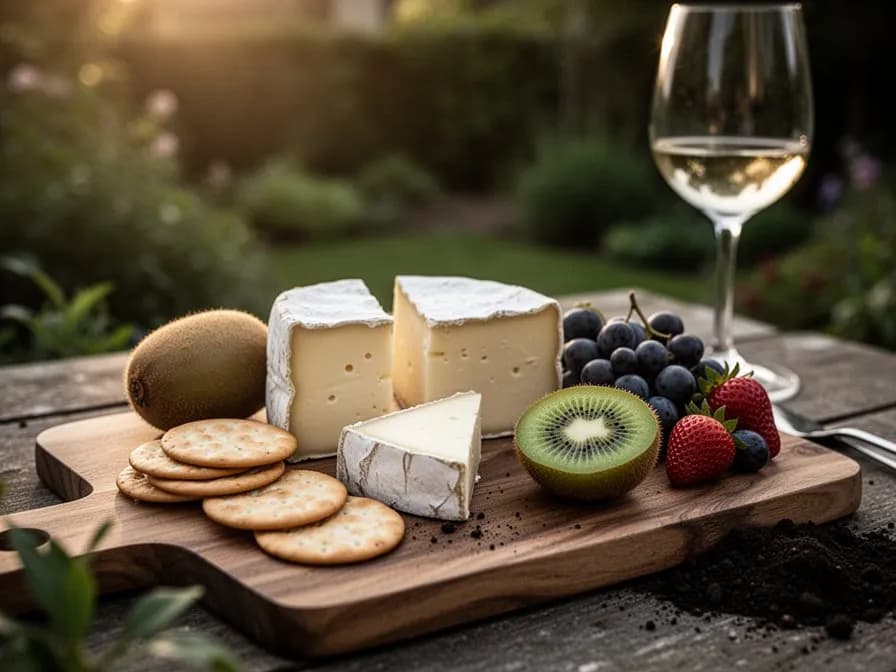
Golden Kiwi and Mango Tropical Salad
10 minutesA vibrant, refreshing fruit salad that combines the buttery sweetness of golden kiwi with the floral intensity of ripe mango. A light lime and mint dressing lifts the natural fruit sugars without masking them. Serve immediately as a light dessert, a breakfast bowl topping, or alongside grilled fish or prawns for a tropical main course accompaniment.
6 ingredientsGolden Kiwi Tart with Vanilla Cream
25 minutes (plus chilling time)An elegant no-bake tart that showcases the jewel-like appearance of golden kiwi slices arranged over a smooth vanilla cream filling. The tartness of the fruit contrasts beautifully with the rich cream and the buttery biscuit base. This tart is a showstopping dessert that can be assembled in under 30 minutes and refrigerated until ready to serve.
8 ingredientsGolden Kiwi and Ginger Chia Overnight Oats
5 minutes (plus overnight)A nutritionally complete, make-ahead breakfast that pairs the tropical sweetness of golden kiwi with the warming depth of fresh ginger and the sustained energy of rolled oats and chia seeds. Prepare the oat base the night before and simply top with freshly sliced kiwi in the morning for a breakfast rich in vitamin C, fibre, and plant-based protein.
8 ingredientsCulinary Uses
Golden kiwi is prized as a fresh eating fruit, enjoyed by scooping the sweet, smooth flesh directly from the halved skin. The tropical flavor pairs beautifully with yogurt, pavlova, and tropical fruit salads. Golden kiwi makes an excellent sorbet and smoothie ingredient. The fruit contains actinidin, a natural meat tenderizer useful in marinades. Sliced golden kiwi is a striking garnish for cocktails and desserts, and the juice makes a refreshing cordial.
What's inside
Health Benefits
- Exceptional vitamin C density — a single medium golden kiwi provides approximately 161mg of vitamin C, nearly double the recommended daily intake for most adults, supporting immune function, collagen synthesis, and enhanced iron absorption from plant-based foods
- Uniquely contains both vitamin C and vitamin E in nutritionally meaningful quantities, providing simultaneous water-soluble and fat-soluble antioxidant protection that helps neutralise free radicals and reduce oxidative stress in cells and tissues
- Clinical trials have demonstrated that consuming two golden kiwi fruits in the hour before bed significantly reduces sleep onset time and improves sleep continuity, likely due to the fruit's serotonin content and high antioxidant activity which supports neurological relaxation
- The proteolytic enzyme actinidin improves the digestion and absorption of dietary proteins from a wide range of food sources including meat, fish, dairy, and legumes, reducing the digestive burden after protein-rich meals and improving overall amino acid bioavailability
- Provides folate and B-vitamins that support healthy DNA synthesis, red blood cell formation, and cellular repair, with particular importance for women of reproductive age and individuals managing cardiovascular risk
- Contains lutein and zeaxanthin, which accumulate in the macula of the retina and have robust clinical evidence for reducing the long-term risk of age-related macular degeneration, the leading cause of irreversible vision loss in adults over 50
Where Golden Kiwi comes from
The golden kiwi (Actinidia chinensis) originates from the same mountainous river valleys of central and eastern China as its close relative, the common fuzzy kiwi (Actinidia deliciosa). The two species share the same native range across the Yangtze River basin and surrounding provinces of Hubei, Hunan, and Sichuan, where both were foraged from wild forest margins for centuries. In China, the fruit of Actinidia chinensis was known as 'Mi Hou Tao' — the macaque peach — a reference to wild monkeys consuming the fruit in the canopy of forest margins. References to the plant and its culinary and medicinal uses appear in ancient Chinese texts dating to the Tang dynasty, where it was prized for treating bladder complaints, digestive weakness, and general debility.
Western botanical attention to Actinidia chinensis came later than it did to Actinidia deliciosa. While the fuzzy kiwi was being introduced to New Zealand gardeners in the early 1900s, the yellow-fleshed species remained relatively obscure in Western horticulture until the latter half of the twentieth century. Plant breeders began investigating yellow-fleshed Actinidia selections with commercial interest from the 1980s onwards, drawn by the species' characteristically sweeter, less acidic flavour and the visual appeal of its golden flesh.
The breakthrough cultivar that transformed golden kiwi into a global commercial phenomenon was 'Hort16A', developed by New Zealand's HortResearch institute (now Plant & Food Research) through a systematic selection programme that crossed Chinese wild germplasm with improved New Zealand selections. 'Hort16A' was released commercially in the late 1990s and licensed to Zespri International, who marketed it worldwide under the SunGold brand. Its combination of exceptional sweetness, smooth edible skin, striking yellow flesh, and excellent shelf life made it an immediate commercial success.
The commercial success of SunGold kiwi was severely disrupted in 2010 when New Zealand orchards were struck by a devastating outbreak of Pseudomonas syringae pv. actinidiae (PSA), a bacterial canker that proved particularly virulent on Actinidia chinensis cultivars. The outbreak destroyed a significant proportion of New Zealand's golden kiwi orchards and prompted an emergency replanting programme using the PSA-tolerant replacement cultivar 'Zesy002', subsequently branded as Zespri SunGold Kiwi G3.
Today, golden kiwi is grown commercially across New Zealand, Italy, Greece, France, Japan, and China, with home cultivation spreading rapidly across temperate regions worldwide as gardeners discover the fruit's exceptional eating quality and the vine's impressive productivity.
Golden Kiwi: did you know?
Fascinating facts about Golden Kiwi
Golden kiwi (Actinidia chinensis) and the common fuzzy kiwi (Actinidia deliciosa) are two distinct species, not simply colour variants of the same fruit. Golden kiwi has smoother skin, yellow flesh, a sweeter and less acidic flavour profile, and a pointed tip that makes it visually distinctive from the rounded green variety.
Golden Kiwi questions, answered
When should I plant Golden Kiwi?
What are good companion plants for Golden Kiwi?
What hardiness zones can Golden Kiwi grow in?
How much sun does Golden Kiwi need?
How far apart should I space Golden Kiwi?
What pests and diseases affect Golden Kiwi?
How do I store Golden Kiwi after harvest?
What are the best Golden Kiwi varieties to grow?
What soil does Golden Kiwi need?
What is the difference between golden kiwi and regular green kiwi, and is one easier to grow?
Do I need two golden kiwi plants, or can one plant produce fruit on its own?
How long will I have to wait before my golden kiwi vine produces fruit?
My golden kiwi vine produces plenty of growth every year but has never flowered. What should I do?
Can golden kiwi be grown successfully in a pot or against a wall in a small garden?
How should I store golden kiwi fruits after harvesting, and how long will they keep?
You just read the theory. Now grow it on autopilot.
Everything that makes Golden Kiwi fiddly — the timing, the spacing, the companions, the harvest window — is exactly what PlotMyGarden handles for you, for every plant in your garden.
A plan that knows your weather
Set your location once. Get sow, feed and harvest dates built around your real last-frost date and live forecast — no more guessing from a generic seed packet.
From the “When to plant” sectionDrag-and-drop bed planner
Design beds on a grid. Every plant snaps to its proper spacing, and you can see your whole season laid out before you spend a cent on seed.
From the “Growing guide” sectionCompanion conflicts, caught early
200+ good-and-bad pairings checked live as you plant — so a season-wrecking mistake never makes it into the ground.
From the “Companions” sectionReminders you'll actually act on
“Water the beans.” “Pick today before it turns.” Timely, specific, and tied to the plants you're really growing.
From the “Harvest” sectionSuccession, scheduled
Want a harvest for six weeks, not six days? It spaces your sowings automatically and reminds you when each new block is due.
From the “When to plant” sectionA record that gets smarter
Every harvest you log teaches it your garden. Next year's plan starts from what actually worked in your soil, not a textbook's.
From the “Overview” sectionPlant these alongside Golden Kiwi
More Vine Fruits
Grow your best Golden Kiwi yet — and everything around it.
Start a free plan today. Lay out your beds, drop in your Golden Kiwi, and let PlotMyGarden handle the timing, spacing, companions and reminders from seed to harvest basket.