Hops
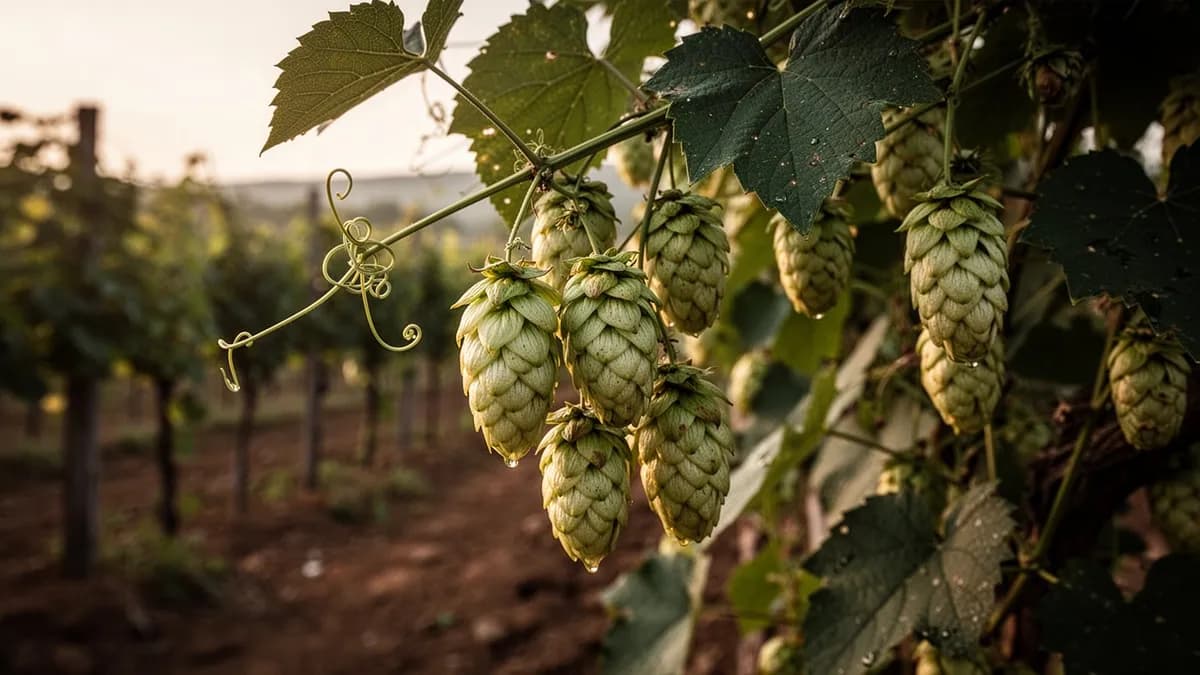
A vigorous perennial vine growing up to 25 feet per season, producing the cone-shaped flowers essential for brewing beer.





On this pageOverview
Meet Hops
A vigorous perennial vine growing up to 25 feet per season, producing the cone-shaped flowers essential for brewing beer. Hops require tall, strong support structures and full sun to produce well. Only female plants produce the aromatic cones; remove any male plants that appear to prevent seeded, less aromatic cones.
When to plant Hops
Propagated from rhizome cuttings rather than seed. Purchase rhizomes from hop suppliers in early spring. Cut into 4 to 6 inch pieces with at least two nodes. Plant horizontally 2 inches deep with buds up, water well, and mulch. Shoots emerge in two to three weeks. Established plants divide by digging and cutting the crown in early spring.
Your Hops Year
Composed for Zone 7 · typical seasons · frost passes Apr 2, returns Nov 1
Plant Hops Mar – Apr, pick Aug – Sep. Check the planting methods below and set your climate to personalize these windows.
How to grow Hops
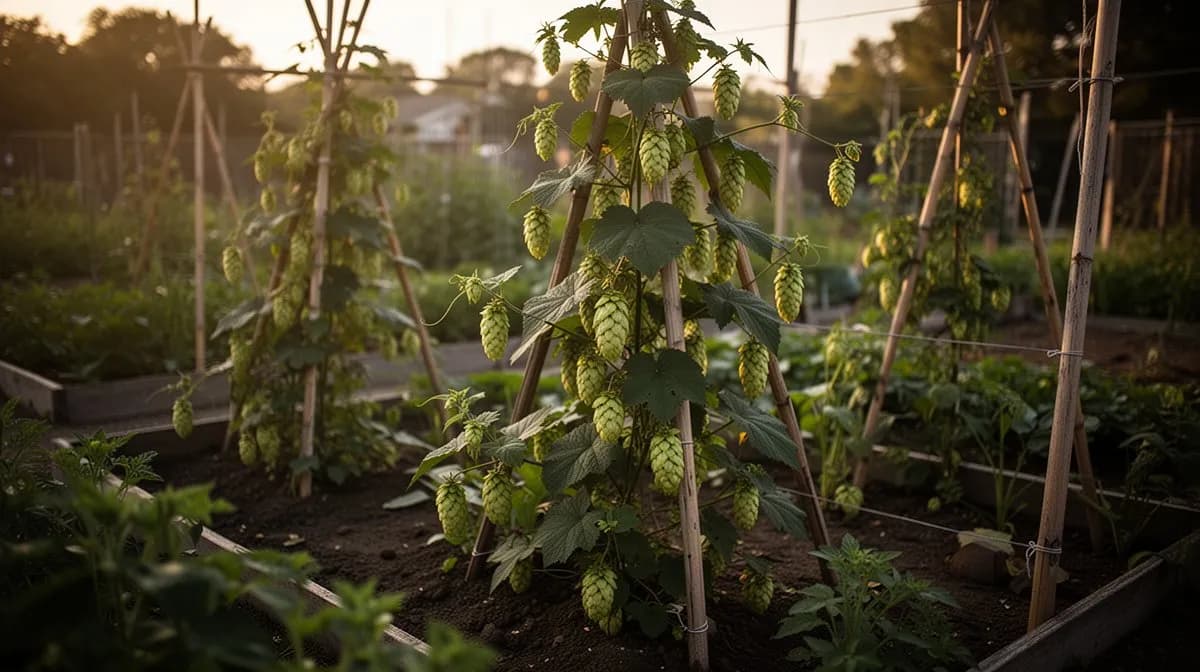
Hops are vigorous perennial bines growing up to 25 feet per season from a persistent crown. Plant rhizomes in early spring in full sun with well-drained, fertile soil. Space 3 feet apart within rows. Provide 15 to 20 foot tall vertical support with coir or twine strings for climbing.
Select only female plants as males produce no cones. Train two to three strongest bines clockwise up each string in spring. Remove lower leaves and lateral shoots up to 3 feet to improve air circulation and reduce disease pressure.
Water consistently one to two inches per week during active growth. Reduce as cones mature. Apply nitrogen-rich fertilizer in spring and early summer. After first hard frost, cut bines back to 2 feet. First-year yields are minimal; full production comes by year three.
2 plants fit a 4 × 8 ft bed
Each Hops wants 90 cm of elbow room. The planner keeps that spacing for you — every plant, every bed.
Hops's best neighbours
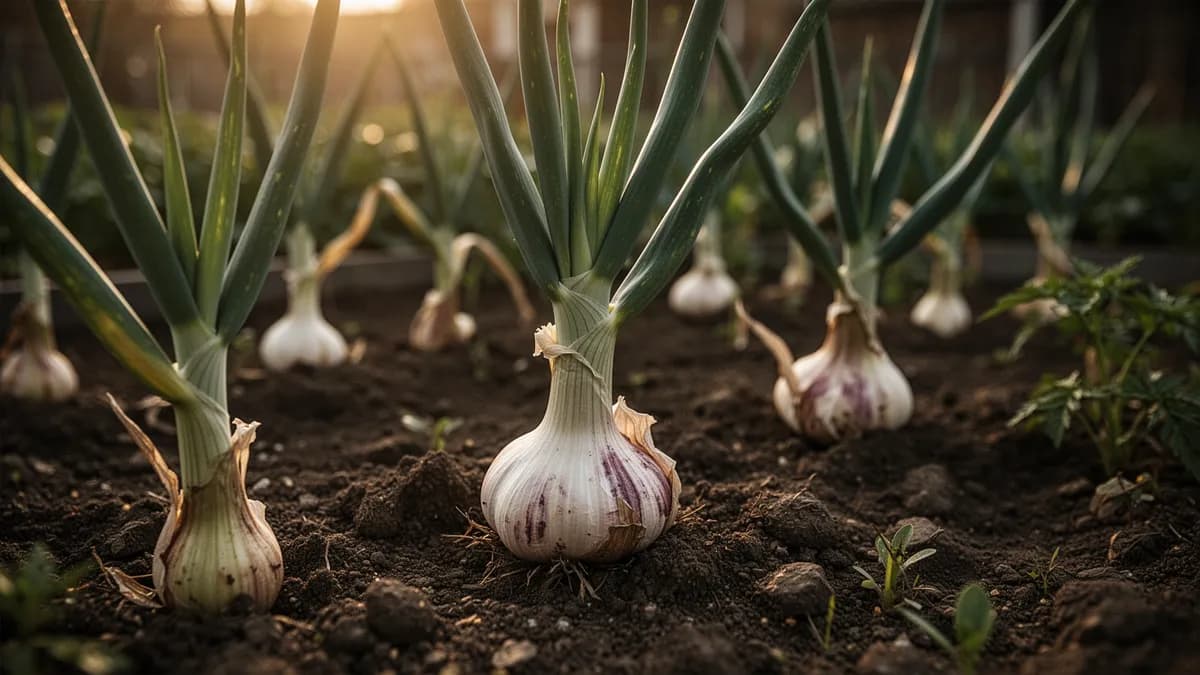
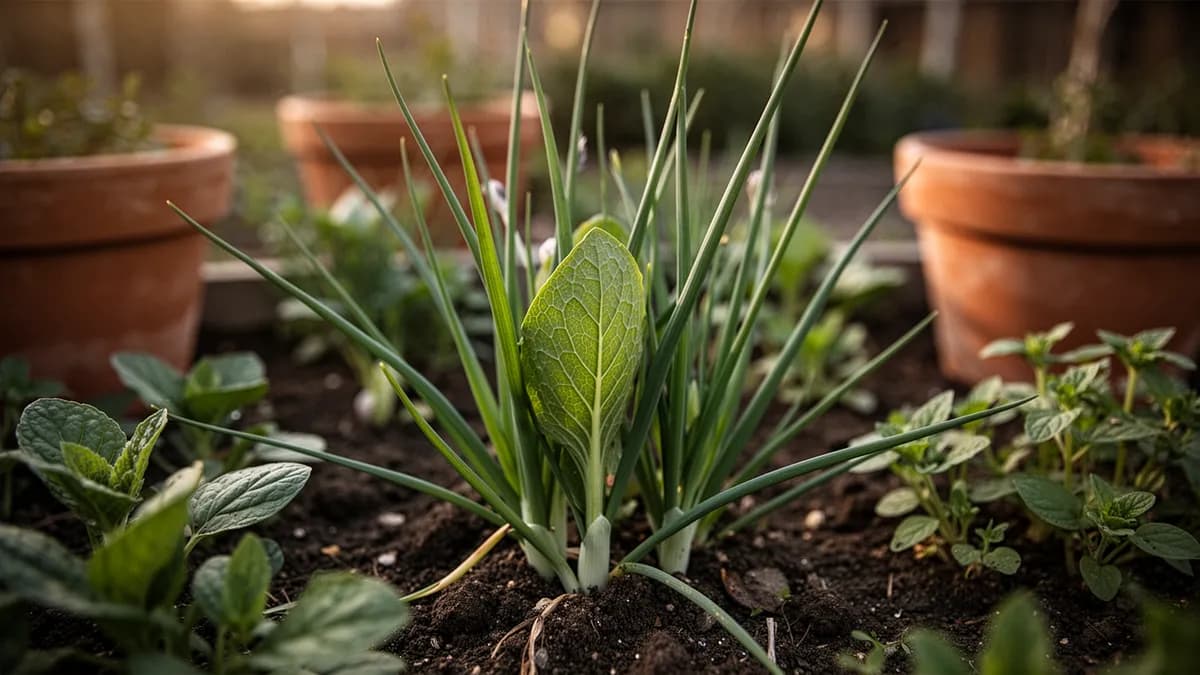
Plant garlic and chives near hops to repel aphids and spider mites. White clover between rows fixes nitrogen for the heavy-feeding bines. Avoid other vigorous climbers competing for vertical space. Hops make excellent living privacy screens. Keep away from vegetable gardens as dense canopy casts heavy shade.
Garlic belongs beside it.
Old growers' knowledge, checked against Hops's real companion table below — test any plant you're growing.
Try Hops in a bed — right here
A real planner bed with Hops already in it. Tap a companion to place it and watch the pairing checks answer — green for good neighbours, red for a clash.


Related growing guides
Feed it well
Hops prefer deep, well-drained loamy soil with pH 6.0 to 7.5. Heavy feeders needing significant nitrogen. Apply 10-10-10 at bud break and again mid-June. Side-dress with compost in spring. Potassium supports cone quality. Avoid fertilizing after July as late nitrogen promotes disease-susceptible soft growth.
Ideal Temperature
Hardiness Zone Compatibility
From seed to harvest, stage by stage
Dormancy and Rhizome Establishment
Planted rhizomes remain dormant underground while developing new root systems. No visible growth above soil. The plant is building its energy reserves for the explosive spring surge ahead.
Shoot Emergence
Small green shoots called 'bines' push through the soil. Growth accelerates rapidly with warming temperatures. Multiple shoots may emerge from a single rhizome — select the two or three strongest and remove the rest.
Rapid Vertical Growth
Bines grow aggressively upward, sometimes gaining a foot or more per day under ideal conditions. Lateral branches begin to form. The plant demands significant water and nutrient inputs during this phase.
Burr Formation
Small, spiky burrs appear on the lateral branches — these are the precursors to hop cones. Burr formation signals the transition from vegetative growth to reproductive growth. This stage is triggered by day length shortening.
Cone Development
Burrs swell and develop into recognizable hop cones (strobiles). The cones fill with lupulin glands — the yellow, resinous powder that contains the essential oils and alpha acids prized by brewers. Aroma becomes very strong near harvest.
Harvest
Cones are ripe when they feel dry and papery, spring back when squeezed, and have a strong, pungent aroma. The lupulin inside should be bright yellow-gold. Harvest the entire bine by cutting it from the trellis and stripping cones by hand.
Post-Harvest Dormancy
After harvest, bines yellow and die back naturally. The perennial root system stores energy for the following year. Cut bines back to the ground after the first frost and mulch heavily to protect the crowns through winter.
Keep soil consistently moist but not waterlogged. Mulch over the planting site to retain moisture and regulate soil temperature.
Caring for Hops month by month
What to do each month for your Hops
October
You are hereAfter first frost, cut bines to the ground. Remove and compost spent bines. Apply a thick layer of mulch over the crown. Consider a final compost top-dressing to enrich soil for next year.
Know exactly what to do in your garden — every month
One email at the start of each month: what to sow, plant, and tackle right now — for your Hops and everything growing around it. Plus a short starter course that helps you dodge the classic mistakes.
- What to do, right now
- Matched to your season
- Starter course included
Harvesting Hops
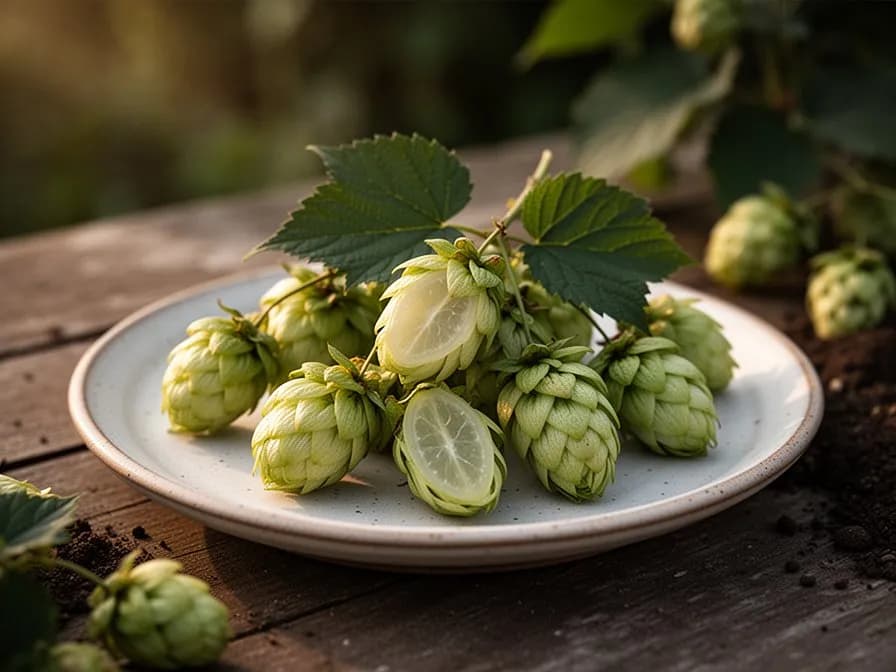
Hop cones are ready in late August through September when they feel dry and papery, spring back when squeezed, and have strong lupulin aroma. Yellow lupulin glands inside should be abundant and sticky. Cut entire bines at the base for picking or harvest cones individually. Timing is critical as overripe cones lose aroma and develop harsh flavors.
assuming you plant when the window opens — set your real date
Pick Hops promptly and the plant keeps producing.
Storage & Preservation
Dry fresh hops immediately using a dehydrator at 140 degrees or by spreading on screens in a warm ventilated area for two to three days. Dried cones should feel papery with snapping stems. Vacuum-seal and freeze for up to two years. Fresh wet hops can be used immediately in brewing for distinctive green, grassy character in wet-hop ales.
What goes wrong — and the fix
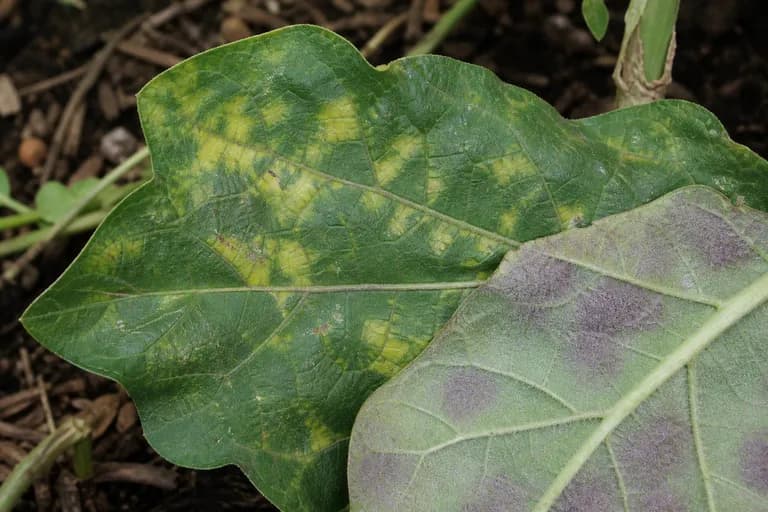
Downy Mildew
DiseaseDark angular spots on leaves with gray-purple fungal growth underneath. Infected shoots become spiky and stunted.
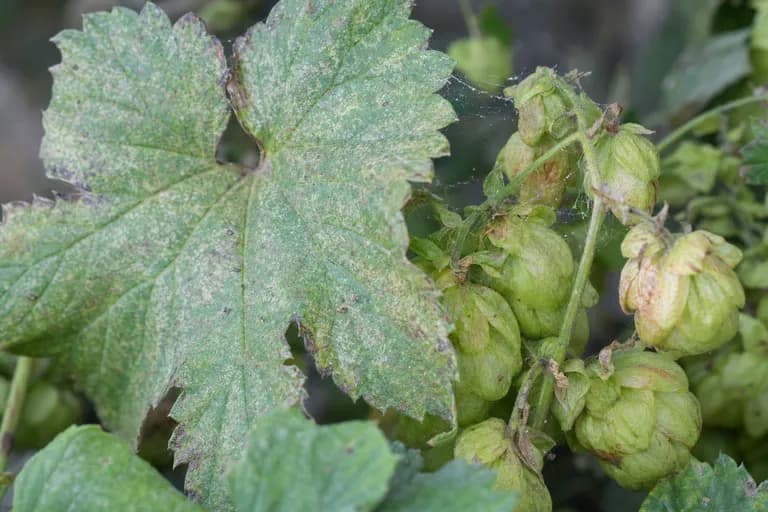
Spider Mite
PestFine stippling and bronzing of leaves, tiny webbing on undersides, reduced cone quality.
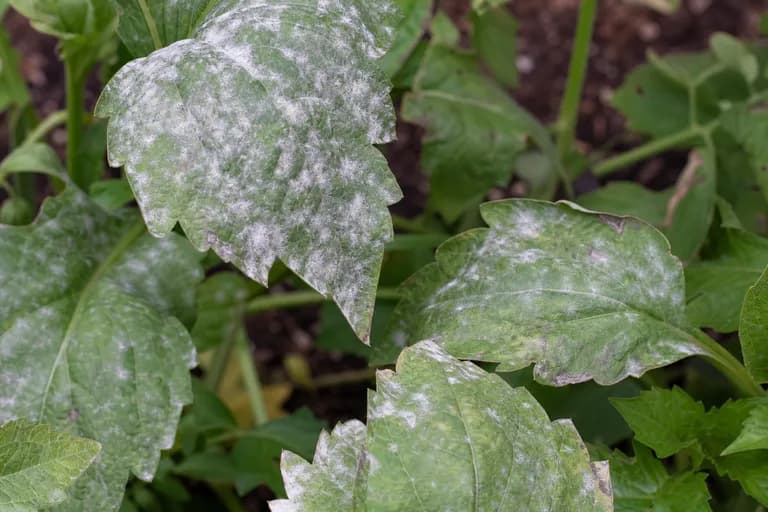
Powdery Mildew
DiseaseWhite powdery coating on leaves and cones rendering them unusable for brewing with off-flavors.
Troubleshooting Common Problems
Downy and powdery mildew are most destructive, especially in humid climates. Inadequate supports collapse under mature bines. Spider mites thrive in hot dry conditions. Japanese beetles feed on foliage. Underground rhizomes spread aggressively and can become invasive. First-year plants produce few cones; patience is essential.
Growing Tips
- Hops are day-length sensitive and require long summer days to initiate cone formation — they perform best between latitudes 35° and 55° N or S, which corresponds roughly to the growing zones of central California to southern Canada.
- Always train bines clockwise around their support strings — hops have a genetic preference for clockwise twining and will resist or struggle if forced counterclockwise.
- Install your trellis before planting, ideally reaching 15–20 feet. A common system uses tall wooden or steel posts with horizontal wires at the top and biodegradable coir twine running down at an angle to anchor points near each plant.
- In the first year, resist the temptation to harvest heavily — let the plant focus energy on crown development. A light first harvest and a robust second-year plant will outperform an early-stressed one.
- Hops are heavy feeders and benefit from a soil rich in organic matter. Incorporate several inches of compost into the planting bed before establishing new rhizomes, and side-dress with compost tea or balanced fertilizer monthly through the growing season.
- Downy mildew is the most serious disease threat to hops. It thrives in wet, humid conditions and appears as yellowish lesions on upper leaf surfaces with gray fuzz beneath. Prevent it with good airflow, avoiding overhead irrigation, and removing the bottom 2–3 feet of leaves from established bines.
- Harvest timing is critical for brewing quality — cones that are even slightly overripe lose significant alpha acid content and aroma. Learn your variety's typical harvest window and check cones daily once they begin papering up. The lupulin inside should be bright yellow and intensely fragrant, not brown or musty.
- After harvesting, dry cones as quickly as possible at temperatures below 60°C (140°F) to preserve volatile aromatic oils. A food dehydrator on its lowest setting is ideal. Cones are sufficiently dry when the central stem (strig) snaps rather than bends.
- Store dried hops by vacuum-sealing in airtight bags with the air removed and freezing at -18°C (0°F) or below. Hops stored this way retain brewing quality for 1–2 years. Exposure to air, heat, or light rapidly degrades alpha acid content.
- Hops spread aggressively via underground rhizomes and can escape garden beds over time. Plant in a dedicated bed with root barriers, or in a location where spreading is acceptable — or plan to divide and share rhizomes with neighboring gardeners each spring.
Grow your best Hops yet — and everything around it.
Start a free plan today. Lay out your beds, drop in your Hops, and let PlotMyGarden handle the timing, spacing, companions and reminders from seed to harvest basket.
Pick your Hops
Cascade
The iconic American hop with floral citrus character. Very vigorous and reliable in home gardens.
Centennial
A super-Cascade with intense citrus and floral aroma, dual-purpose for bittering and aroma.
Chinook
A high-alpha bittering hop with piney spicy character and good disease resistance.
Fuggle
A classic English hop with earthy, woody, mild floral character essential for British ales.
Homebrewing with homegrown hops offers substantial savings for craft beer enthusiasts. Commercial hops typically retail for $2–4 per ounce (dried), and a typical 5-gallon homebrew batch uses 2–6 ounces depending on the style. A mature hop plant in its second or third year can yield 1–2 pounds (16–32 oz) of dried cones per season — enough to brew 5–15 batches of beer and representing $30–$120 in annual hop savings per plant. Beyond brewing, homegrown hops eliminate the cost of herbal sleep supplements and add significant ornamental value as a fast-growing privacy screen or decorative trellis plant.
Quick recipes
Hop Shoot Frittata
25 minutesYoung hop shoots harvested in early spring have a pleasantly bitter, asparagus-like flavor that pairs beautifully with eggs and aged cheese in this simple Italian-style frittata.
7 ingredients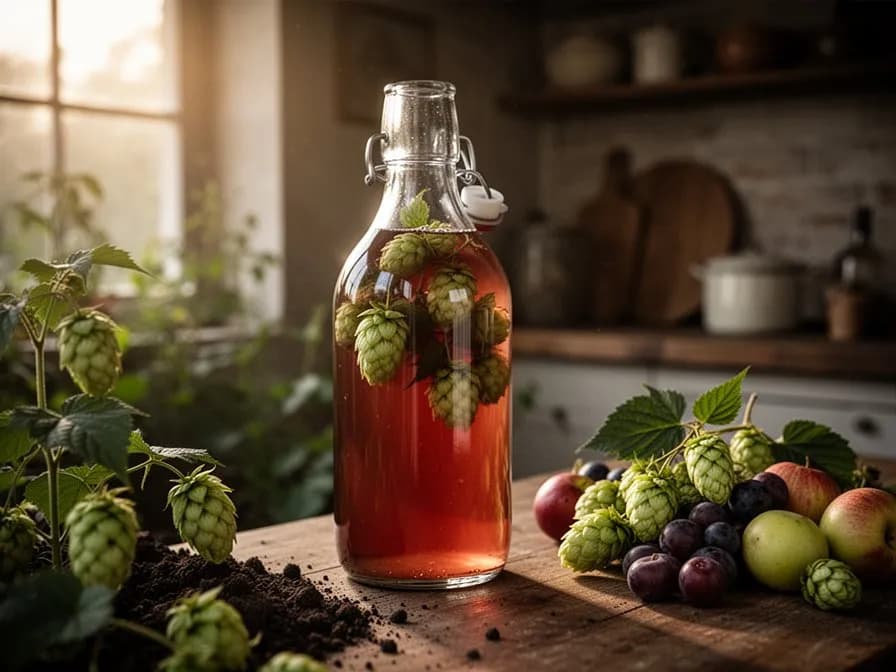
Dry-Hop Infused Simple Syrup
15 minutes plus 1 hour steepA surprisingly versatile syrup made by steeping dried aromatic hop cones in warm sugar syrup. Use it in cocktails, lemonades, or drizzled over vanilla ice cream for a floral, citrusy bitterness.
4 ingredients
Hop Cone Herbal Sleep Tea
10 minutesA classic herbal infusion combining dried hops with valerian root and chamomile for a calming bedtime drink. The hops contribute a gentle bitterness and earthy, floral aroma that makes this blend deeply relaxing.
6 ingredientsCulinary Uses
Primarily used in homebrewing beer for bitterness, flavor, and aroma. Young spring hop shoots are a gourmet vegetable similar to asparagus, sauteed in butter. Hop flowers make calming herbal tea for sleep. Dried cones are used in decorative wreaths. Hop-infused oils and vinegars are specialty culinary products.
What's inside
Health Benefits
- The compound xanthohumol found in hops has been studied for antioxidant properties and potential to neutralize free radicals that contribute to cellular aging.
- Hops have a long history as a natural sleep aid — compounds including 2-methyl-3-buten-2-ol (produced during hop drying) have demonstrated sedative effects in clinical studies.
- Alpha acids in hops exhibit antimicrobial properties, inhibiting the growth of gram-positive bacteria, which historically contributed to beer's preservation and safety as a beverage.
- The phytoestrogen 8-prenylnaringenin found in hop cones is among the most potent plant-derived estrogens known and is being researched for potential benefits in managing menopausal symptoms.
- Hop extracts have demonstrated anti-inflammatory activity in several laboratory and animal studies, with potential implications for conditions driven by chronic low-grade inflammation.
- Young hop shoots consumed as a spring vegetable provide folate, riboflavin, and dietary fiber, supporting cardiovascular health, energy metabolism, and digestive regularity.
Where Hops comes from
Hops (Humulus lupulus) are native to temperate regions of Europe, western Asia, and North America, where wild plants still grow along forest edges and riverbanks. While the use of hops in brewing is commonly associated with medieval Europe, the plant has a far older relationship with humans. Archaeological evidence suggests hop cultivation in central Europe as early as the 8th century AD, and written records from Bavarian monasteries in the 9th century document hops as a prized ingredient in ale-making.
Before hops became standard, European brewers flavored and preserved their beer with a mixture of herbs called 'gruit,' which included yarrow, sweet gale, and other botanicals. The transition from gruit to hops-based brewing was gradual and sometimes contentious — gruit production was controlled by the Catholic Church as a taxable commodity, so the adoption of hops (which could be grown freely) was partly an economic and political act as much as a culinary one.
Germany and the Netherlands led the hops revolution in brewing. The famous Reinheitsgebot — the Bavarian beer purity law of 1516 — mandated that beer be made only from water, barley, and hops, cementing hops' central role in European brewing tradition. English brewers initially resisted hops, preferring traditional ale made without them, but by the 16th and 17th centuries, hopped beer had largely displaced older styles across Britain as well.
Hops were brought to North America by English colonists in the 17th century, and by the 19th century, New York State had become the world's leading hop-producing region. A combination of disease outbreaks and Prohibition devastated the eastern US hop industry in the early 20th century, shifting production to the Pacific Northwest, where the volcanic soils and dry summers of Oregon, Washington, and Idaho proved ideal.
The craft beer renaissance of the late 20th and early 21st centuries ignited a global enthusiasm for hop flavor and aroma unlike anything seen before, spawning hundreds of new aromatic varieties and a thriving homebrewing culture that has made backyard hop growing more popular than at any point in modern history.
Hops: did you know?
Fascinating facts about Hops
Hops are botanically classified as a cousin of cannabis — both belong to the family Cannabaceae, though hops produce no psychoactive compounds.
Hops questions, answered
When should I plant Hops?
What are good companion plants for Hops?
What hardiness zones can Hops grow in?
How much sun does Hops need?
How far apart should I space Hops?
What pests and diseases affect Hops?
How do I store Hops after harvest?
What are the best Hops varieties to grow?
What soil does Hops need?
How long does it take for hops to produce a significant yield?
Can I grow hops in a container or small space?
What is the difference between hop varieties, and which is best for beginners?
Do hops need a male and female plant to produce cones?
How do I know when my hop cones are ready to harvest?
Are hops invasive, and how do I manage their spread?
You just read the theory. Now grow it on autopilot.
Everything that makes Hops fiddly — the timing, the spacing, the companions, the harvest window — is exactly what PlotMyGarden handles for you, for every plant in your garden.
A plan that knows your weather
Set your location once. Get sow, feed and harvest dates built around your real last-frost date and live forecast — no more guessing from a generic seed packet.
From the “When to plant” sectionDrag-and-drop bed planner
Design beds on a grid. Every plant snaps to its proper spacing, and you can see your whole season laid out before you spend a cent on seed.
From the “Growing guide” sectionCompanion conflicts, caught early
200+ good-and-bad pairings checked live as you plant — so a season-wrecking mistake never makes it into the ground.
From the “Companions” sectionReminders you'll actually act on
“Water the beans.” “Pick today before it turns.” Timely, specific, and tied to the plants you're really growing.
From the “Harvest” sectionSuccession, scheduled
Want a harvest for six weeks, not six days? It spaces your sowings automatically and reminds you when each new block is due.
From the “When to plant” sectionA record that gets smarter
Every harvest you log teaches it your garden. Next year's plan starts from what actually worked in your soil, not a textbook's.
From the “Overview” sectionPlant these alongside Hops
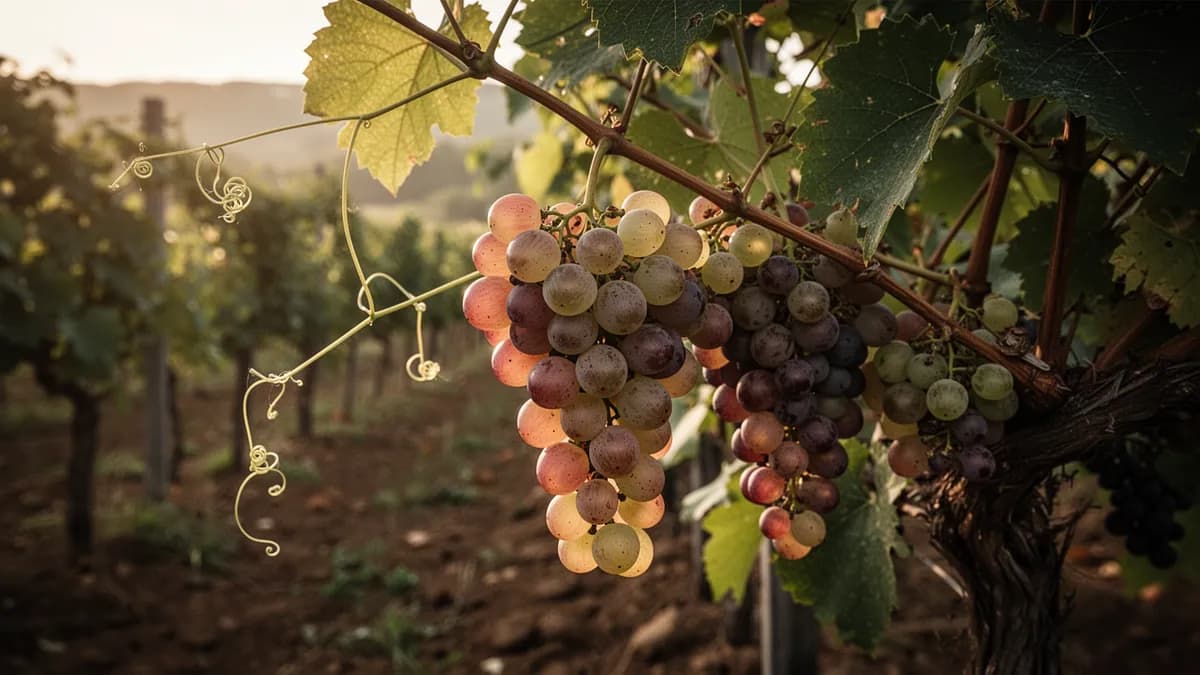
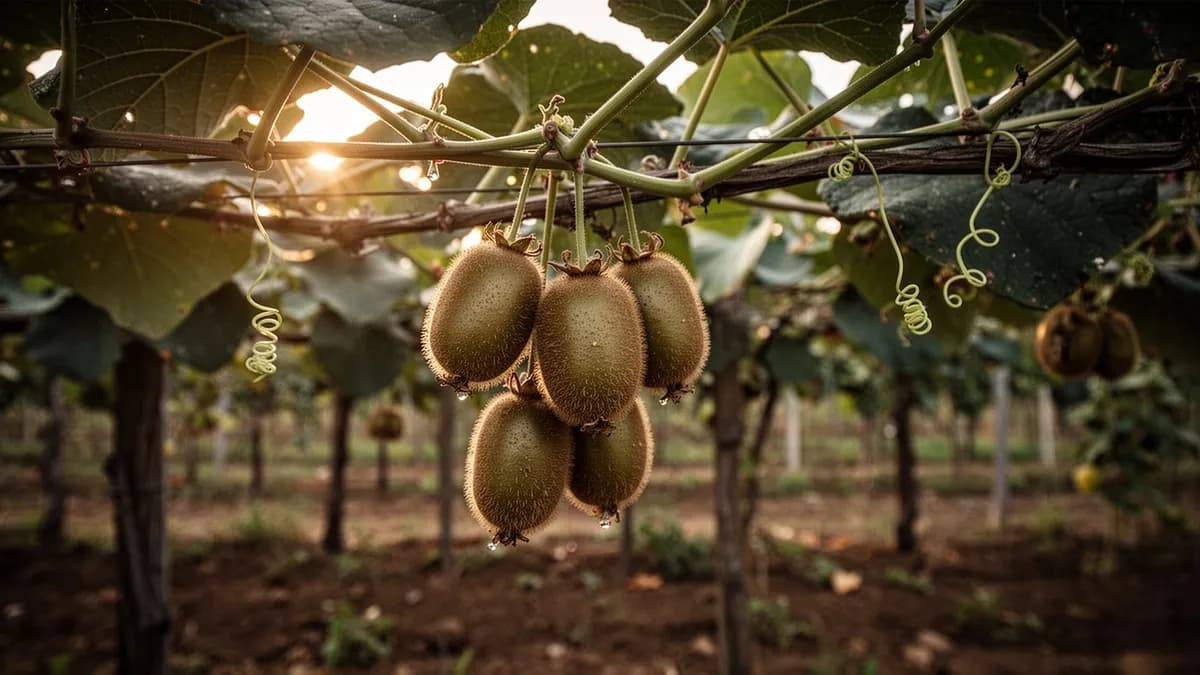
More Vine Fruits
Grow your best Hops yet — and everything around it.
Start a free plan today. Lay out your beds, drop in your Hops, and let PlotMyGarden handle the timing, spacing, companions and reminders from seed to harvest basket.