Weißdornbeere
Ein dorniger, einheimischer Baum, der Büschel kleiner roter Beeren hervorbringt, die in der Kräutermedizin für die Herzgesundheit und zur Geleeherstellung verwendet werden.





Auf dieser SeiteÜberblick
Weißdornbeere im Überblick
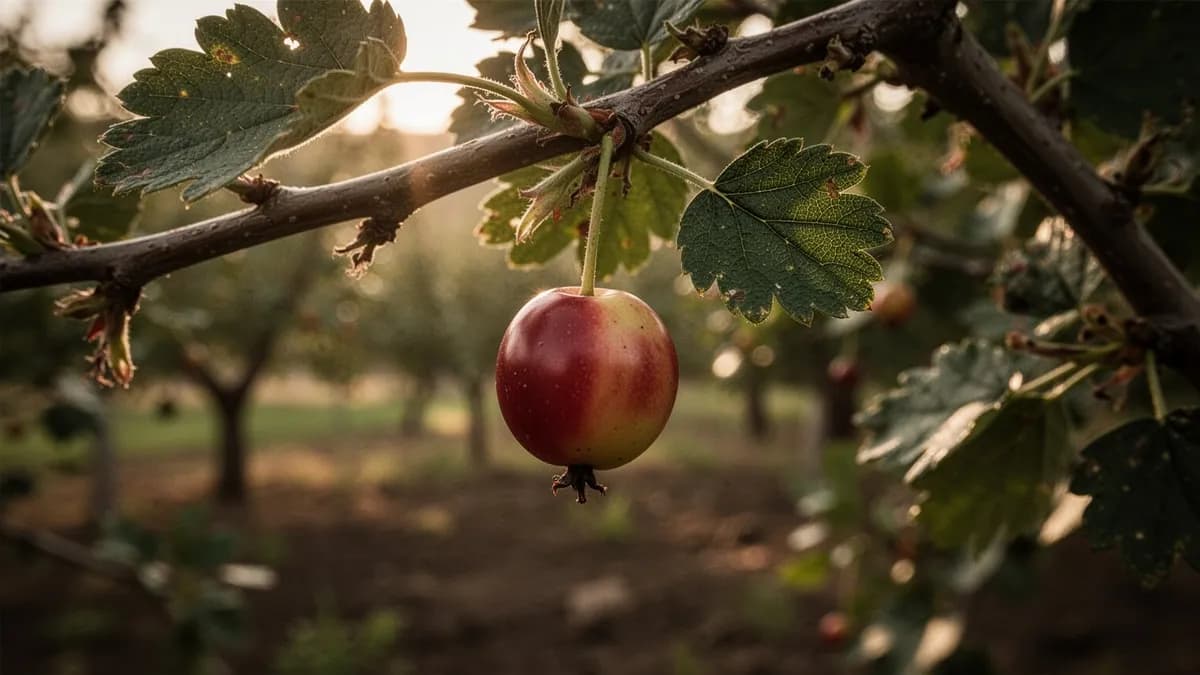
Ein dorniger, einheimischer Baum, der Büschel kleiner roter Beeren hervorbringt, die in der Kräutermedizin für die Herzgesundheit und zur Geleeherstellung verwendet werden. Weißdorn ist äußerst winterhart und anpassungsfähig und gedeiht auf kargen Böden und exponierten Standorten, an denen andere Obstbäume versagen. Der dichte, dornige Wuchs macht ihn zu einer ausgezeichneten Heckenpflanze und einem wertvollen Wildlebensraum.
Wann Weißdornbeere pflanzen
Weißdornsamen haben eine sehr harte Schale und benötigen eine langwierige Stratifizierung zum Keimen. Skarifizieren Sie die Samen durch Einweichen in Schwefelsäure oder Anritzen mit einer Feile, dann warm-stratifizieren Sie bei 20 °C für 16 Wochen, gefolgt von einer Kälte-Stratifizierung bei 1 °C für 16 Wochen. Dies ahmt den natürlichen zweijährigen Keimzyklus nach. Alternativ säen Sie frische Beeren im Herbst im Freien aus und erwarten Sie die Keimung im zweiten Frühjahr. Sämlinge sind nach dem Anwachsen kräftig. Benannte Sorten werden auf Weißdorn-Sämlings-Unterlagen veredelt.
Dein Weißdornbeere-Jahr
Abgestimmt auf Zone 7 · typische Saison · Frost geht um den 2. Apr. und kehrt um den 1. Nov. zurück
Weißdornbeere Mär – Apr pflanzen, Sep – Okt ernten. Beachte die Pflanzmethoden unten und wähle dein Klima für passende Zeiträume.
So baust du Weißdornbeere an
Weißdorn gehört zu den widerstandsfähigsten und anpassungsfähigsten Obstbäumen und gedeiht in voller Sonne bis Halbschatten in praktisch jedem Bodentyp. Er verträgt Lehm, Kreide, Sand, schlechte Drainage und exponierte, windige Standorte. Pflanzen Sie wurzelnackte Bäume im Herbst oder zeitigen Frühjahr mit einem Abstand von 3 bis 4,5 Metern für Einzelexemplare oder 0,9 bis 1,5 Metern für Hecken. Setzen Sie sie in der gleichen Tiefe wie in der Baumschule und wässern Sie gründlich nach dem Pflanzen.
Für Hecken pflanzen Sie in einer versetzten Doppelreihe und schneiden nach dem Pflanzen kräftig auf 30 cm zurück, um eine dichte Verzweigung von der Basis zu fördern. Schneiden Sie Hecken im Spätsommer, nachdem sich die Beeren gebildet haben. Einzelbäume benötigen nur minimalen Schnitt – entfernen Sie im Winter lediglich totes oder sich kreuzendes Holz. Die Bäume entwickeln mit dem Alter eine natürlich attraktive, abgerundete Krone.
Weißdorn ist nach dem Anwachsen äußerst pflegeleicht und benötigt keine zusätzliche Bewässerung, außer bei extremer Trockenheit. Er verträgt städtische Luftverschmutzung, Salzgischt und verdichteten Boden. Der dichte, dornige Wuchs bietet hervorragenden Schutz für nistende Vögel und Wildtiere. Die meisten Weißdorne sind selbstfruchtbar, tragen aber stärkere Ernten bei Fremdbestäubung durch nahegelegene Weißdornbäume oder -hecken. Beeren werden am zweijährigen Holz gebildet, daher sollte bei Einzelbäumen ein starker jährlicher Rückschnitt vermieden werden.
Für Weißdornbeere ist ein Beet von 120 × 240 cm zu klein
Weißdornbeere braucht 300 cm Platz pro Pflanze. Der Planer hält diesen Abstand für dich ein — jede Pflanze, jedes Beet.
Passende Anbau-Ratgeber
Richtig düngen
Weißdorn gedeiht in nahezu jedem Bodentyp, einschließlich schwerem Lehm, Kreide, Sandboden und verdichtetem Stadtboden. Er verträgt sowohl saure als auch alkalische Bedingungen mit einem optimalen pH-Wert von 6,0 bis 7,5. Düngung ist selten nötig, da Weißdorn auf kargen Böden kräftig wächst. Bei Einzelbäumen, bei denen die Beerenproduktion wichtig ist, bringen Sie im zeitigen Frühjahr eine leichte Gabe ausgewogenen Dünger aus. Übermäßige Nährstoffzufuhr kann die Winterhärte und Krankheitsresistenz tatsächlich verringern. Das Mulchen mit organischem Material nützt jungen Bäumen, ist aber bei etablierten Exemplaren nicht notwendig.
Ideale Temperatur
Winterhärtezone-Kompatibilität
Von der Saat zur Ernte, Schritt für Schritt
Winterruhe & Knospenschwellung
Im Spätwinter ruht der Baum noch, doch Ende Februar signalisieren anschwellende Knospen die ersten Lebenszeichen. Das Wurzelsystem entwickelt sich unterirdisch weiter, auch wenn oberirdisch noch kein Wachstum sichtbar ist.
Blattaustrieb & Vegetatives Wachstum
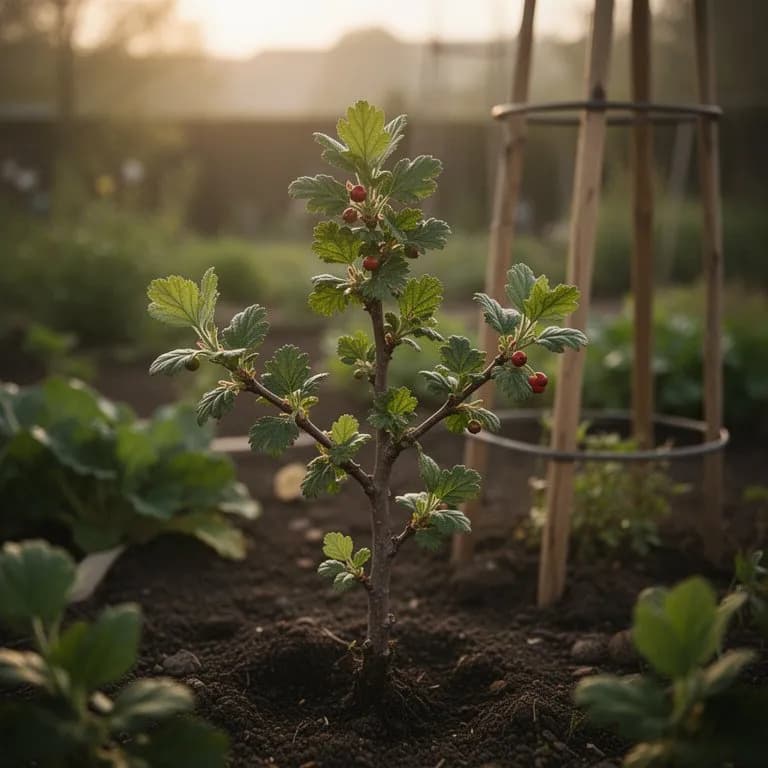
Frische, hellgrüne Blätter entfalten sich im März und April und bedecken rasch die Krone. Kräftige neue Triebe erweitern das Gerüst der Pflanze. Dies ist die schnellste Phase des oberirdischen Wachstums.
Blüte
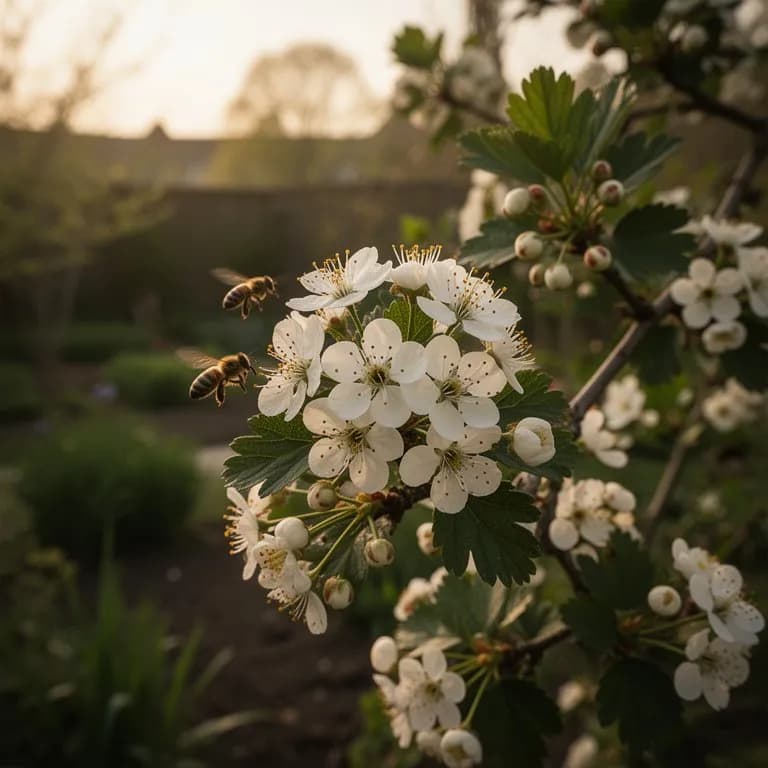
Dichte Büschel weißer oder rosafarbener, fünfblättriger Blüten überziehen den Baum von Mitte April bis Mai. Jede einzelne Blüte ist klein, doch in ihrer Gesamtheit sind sie atemberaubend. Kreuzbestäubung durch Bienen ist für einen guten Beerenansatz unerlässlich.
Fruchtentwicklung
Nach der Bestäubung bilden sich kleine grüne Früchte, die im Laufe des Sommers langsam anschwellen. Ab August beginnen sie sich rosa zu verfärben und werden im September tiefrot. Das Fruchtfleisch festigt sich um die großen zentralen Kerne, die als Nüsschen bekannt sind.
Erntereife
Die Beeren erreichen von Ende September bis November ihre volle Reife und entwickeln ihre charakteristische tief burgunderrote Farbe sowie ein mild süßes, mehliges Fruchtfleisch. Ein leichter Frost verbessert tatsächlich den Geschmack, indem er Stärke in Zucker umwandelt.
Nachernte-Winterruhe
Nach dem Blattfall geht der Baum in die vollständige Winterruhe über. Dies ist das ideale Zeitfenster für den Formschnitt zur Gestaltung der Pflanze oder Heckenpflege. Das Wurzelsystem setzt seine Stoffwechselaktivität den ganzen Winter über auf niedrigem Niveau fort.
Bringen Sie Ende Februar einen ausgewogenen Langzeitdünger im Bereich der Kronentraufe aus, um die Wurzeln vor dem Frühjahrsaustrieb zu versorgen.
Weißdornbeere Monat für Monat pflegen
Was du jeden Monat für deine Weißdornbeere tun solltest
Oktober
Aktueller MonatHaupterntemonat. Ernten Sie bei trockenen Bedingungen und verarbeiten Sie schnell oder trocknen Sie die Beeren innerhalb von 48 Stunden, um Gärung zu verhindern. Sammeln Sie abgefallenes Laub zum Kompostieren.
Immer wissen, was jetzt im Garten zu tun ist
Eine E-Mail zum Monatsanfang: was du jetzt säen, pflanzen und anpacken solltest — für deine Weißdornbeere und alles, was drumherum wächst. Dazu ein kurzer Startkurs, der dich vor den klassischen Fehlern bewahrt.
- Was jetzt zu tun ist
- Passend zu deiner Saison
- Startkurs inklusive
Weißdornbeere ernten
Weißdornbeeren reifen von September bis Oktober und verfärben sich je nach Art von grün zu tiefrot oder burgunderrot. Die Beeren werden am besten nach dem ersten leichten Frost geerntet, der sie süßer macht und die Herbheit reduziert. Pflücken Sie die Büschel, indem Sie die gesamte Beerentraube mit einer Gartenschere vom Zweig schneiden und dabei dicke Handschuhe zum Schutz vor Dornen tragen. Die Beeren sind klein und haben relativ große Kerne, sodass für Gelee oder Sirup große Mengen benötigt werden. Am Baum verbliebene Beeren bieten Vögeln im Winter eine ausgezeichnete Nahrungsquelle.
angenommen, du pflanzt zu Beginn des Zeitraums — trage dein tatsächliches Datum ein
Ernte Weißdornbeere zügig, dann trägt die Pflanze weiter.
Lagerung & Konservierung
Frische Weißdornbeeren halten sich gekühlt ein bis zwei Wochen. Die gängigste Konservierungsmethode ist die Herstellung von Weißdorngelee, das einen herben, apfelähnlichen Geschmack hat und dank des moderaten Pektingehalts gut geliert. Fügen Sie bei Bedarf Zieräpfel hinzu, um den Pektingehalt zu erhöhen. Weißdornbeerensirup und -ketchup sind traditionelle britische Konserven. Die Beeren können für Kräutertee oder Tinkturen getrocknet werden, die für ihre kardiovaskuläre Unterstützung geschätzt werden. Frieren Sie die Beeren auf Blechen vor, bevor Sie sie in Beutel umfüllen, für eine langfristige Lagerung und spätere Verarbeitung.
Was schiefgeht — und die Lösung
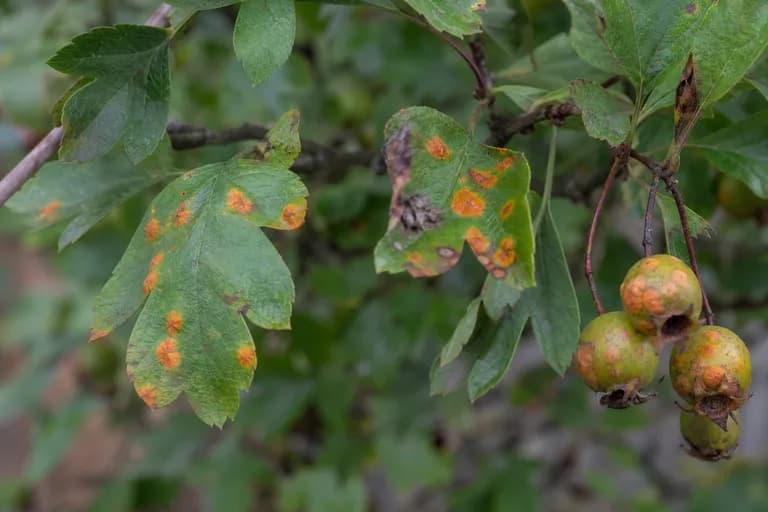
Zedern-Weißdorn-Rost
KrankheitLeuchtend orange Flecken auf den Blättern im Frühling; gelb-orange Läsionen an den Früchten; vorzeitiger Blattfall in schweren Fällen.
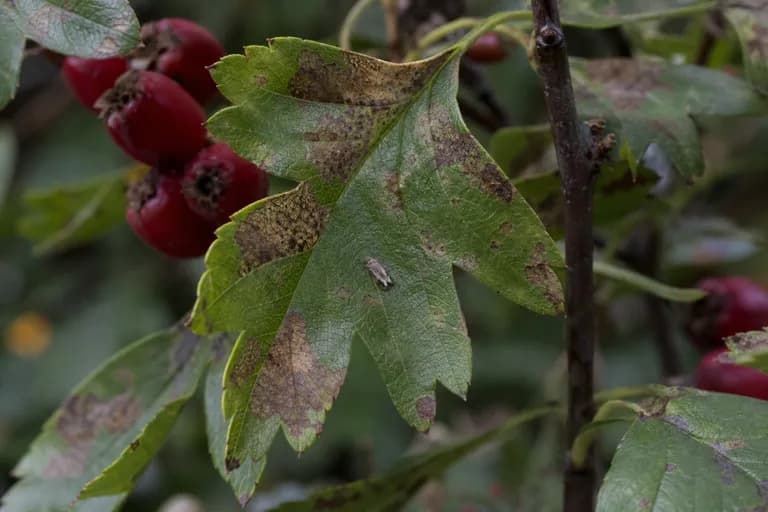
Weißdorn-Miniermotte
SchädlingBraune Fleckenminen auf den Blättern, verursacht durch kleine Mottenlarven, die zwischen den Blattoberflächen fressen; die Blätter erscheinen versengt.
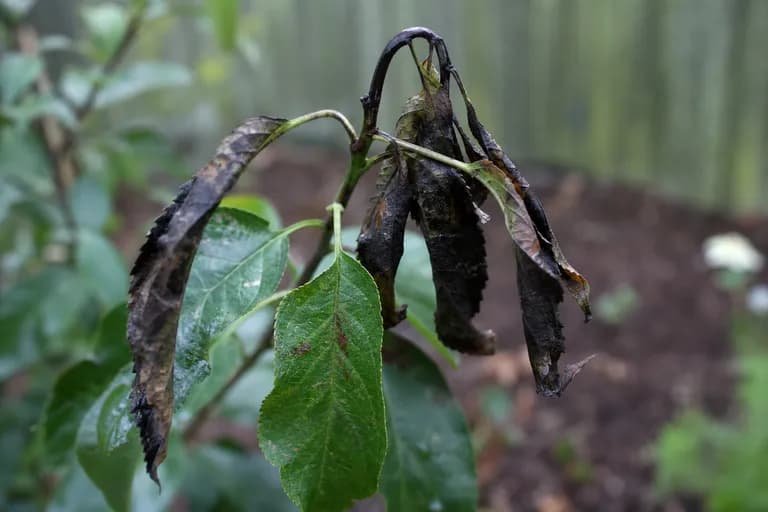
Feuerbrand
KrankheitGeschwärzte Triebspitzen und welke Blütenbüschel; Astkanker mit bakteriellem Ausfluss; verbranntes Erscheinungsbild.
Fehlerbehebung bei häufigen Problemen
Das Hauptpflegeproblem beim Weißdorn sind die scharfen Dornen, die beim Schneiden und Ernten schmerzhafte Verletzungen verursachen können. Die Beeren haben im Verhältnis zu ihrer Größe große Kerne, was die Verarbeitung arbeitsintensiv macht. Zedernrostkrankheiten können in Gebieten mit vielen Wacholderbäumen unansehnlich sein, gefährden aber selten die Gesundheit des Baumes. Manche Weißdornarten bilden Wurzelausläufer und können sich in unerwünschte Bereiche ausbreiten. Die Blüten haben einen unangenehmen, fischigen Geruch, der manchen Menschen missfällt. Blattläuse und Miniermotten verursachen kosmetische Schäden, erfordern aber selten ein Eingreifen.
Anbautipps
- Weißdorn gedeiht in praktisch jedem gut durchlässigen Boden, einschließlich schwerem Lehm, dünnem Kalkboden und sandigem Lehm – er ist eine der bodentolerantesten Fruchtpflanzen, die europäischen Gärtnern zur Verfügung stehen.
- Volle Sonne maximiert die Beerenproduktion, aber Weißdorn ist eine der wenigen Fruchtpflanzen, die auch im Halbschatten eine angemessene Ernte liefert (mindestens 4 Stunden direkte Sonne täglich), was ihn für nach Norden ausgerichtete Grundstücksgrenzen geeignet macht.
- Wurzelnackte Pflanzen, die zwischen November und März gekauft und gepflanzt werden, sind deutlich günstiger als Container-Exemplare und wachsen ebenso gut an – oft sogar besser, da die Wurzelstörung minimal ist.
- Wenn Sie Weißdorn als produktive Hecke statt als Einzelbaum anbauen, pflanzen Sie in einer versetzten Doppelreihe mit 45 cm Abstand innerhalb der Reihen und 60 cm zwischen den Reihen für eine dichte, undurchdringliche, viehsichere Barriere.
- Weißdornsamen benötigen eine doppelte Ruheperiode (warme Feucht-Stratifizierung gefolgt von Kälte-Stratifizierung) von insgesamt 12–18 Monaten vor der Keimung – Vermehrung durch Stecklinge oder der Kauf von Baumschulware spart erheblich Zeit.
- Tragen Sie beim Schneiden oder Ernten stets dicke Lederhandschuhe mit Stulpe – die Dornen an reifen Weißdornzweigen sind extrem scharf und lang genug, um durch normale Gartenhandschuhe hindurch ernsthafte Stichwunden zu verursachen.
- Verarbeiten Sie Weißdornbeeren niemals, ohne vorher die harten Kerne (Nüsschen) auszusieben – sie enthalten in geringen Mengen Amygdalin und sollten nicht verzehrt werden; passieren Sie das gekochte Fruchtfleisch stets durch ein feines Sieb oder eine Flotte Lotte.
- Weißdorn ist eine hervorragende Begleitpflanze für produktive Obstgärten: Er bietet Windschutz für empfindlichere Obstbäume, fördert Nützlingspopulationen und nutzt den Grenzbereich optimal aus.
- Um Weißdornbeeren zu Hause zu trocknen, verteilen Sie sie in einer einzigen Schicht auf Backblechen und trocknen sie im Ofen bei der niedrigsten Temperatur (50–60 °C) mit leicht geöffneter Tür für 6–8 Stunden, oder verwenden Sie einen Dörrautomaten bei 55 °C für 8–10 Stunden.
- In exponierten Küsten- oder Höhengärten macht die außergewöhnliche Windresistenz des Weißdorns ihn ideal als erste Windschutzlinie – er übertrifft fast alle anderen einheimischen Sträucher und Kleinbäume bei anhaltendem, salzhaltigen oder kalten Sturm.
Bau deine beste Weißdornbeere an — und alles drumherum.
Starte heute kostenlos. Lege deine Beete an, setze deine Weißdornbeere ein und lass PlotMyGarden Timing, Abstände, Begleiter und Erinnerungen von der Saat bis zum Erntekorb übernehmen.
Finde deine Weißdornbeere
Crataegus monogyna
Eingriffeliger Weißdorn, die am häufigsten gepflanzte Art mit kleinen roten Beeren und dichtem, dornigem Wuchs, ideal für Hecken.
Crataegus laevigata
Zweigriffeliger Weißdorn mit größeren Beeren und dekorativen, gefüllt blühenden Sorten; etwas weniger dornig als der Eingriffelige Weißdorn.
Crataegus pinnatifida
Chinesischer Weißdorn mit deutlich größeren Früchten bis zu 2,5 cm Durchmesser, verwendet für traditionelle kandierte Weißdornsnacks.
Crataegus azarolus
Mediterraner Azaroldorn mit größeren, süßeren Früchten, die frisch gegessen werden können; beliebt in der südeuropäischen Küche.
Ein einzelner ausgewachsener Weißdornbaum, der als Einzelexemplar oder als Teil einer produktiven Hecke gepflanzt wird, kann nach vollständiger Etablierung jährlich zwischen 3 und 15 Kilogramm Beeren liefern. Hochwertige getrocknete Weißdornbeeren für den Kräutergebrauch kosten im Reformhaus und bei Online-Kräuterhändlern 15–30 € pro Kilogramm, während standardisierte Weißdornkapseln und -tinkturen (die Sie zu Hause aus getrockneten Beeren und Lebensmittel-Alkohol herstellen können) 12–25 € pro Monat für therapeutische Dosierungen kosten. Ein gut positionierter Weißdornbaum amortisiert seine bescheidenen Anschaffungskosten (8–25 € für ein wurzelnacktes Exemplar) innerhalb von zwei bis drei produktiven Erntezeiten und trägt über Jahrzehnte hinweg weiter.
Schnelle Rezepte
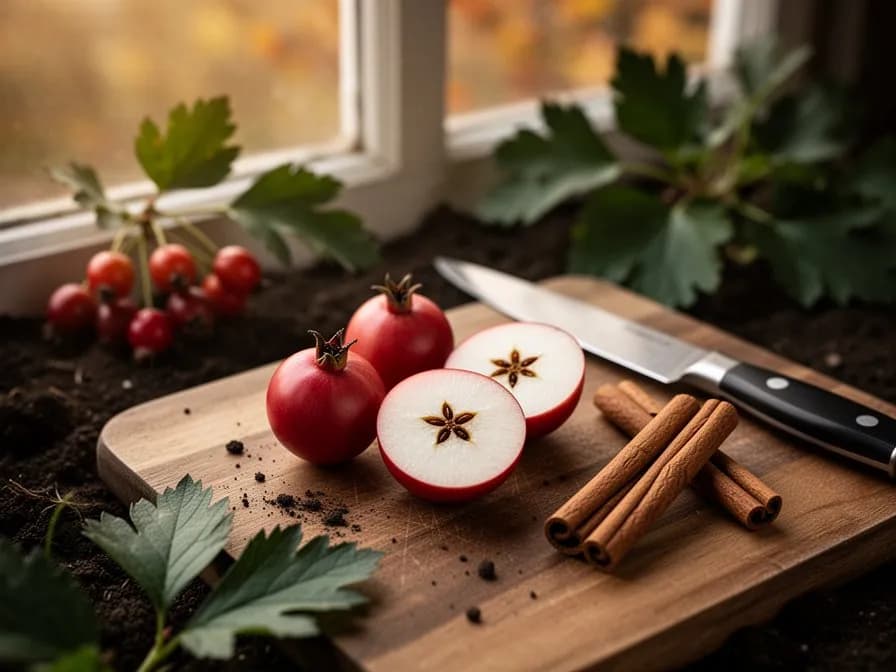
Weißdornbeeren-Ketchup
45 Min.Ein würziges, herzhaftes Würzmittel, das eine reichliche Weißdornernte optimal verwertet. Das natürliche Pektin im Weißdorn verleiht diesem Ketchup eine seidige Konsistenz ohne Verdickungsmittel, und der komplexe herb-süße Geschmack passt wunderbar zu Wildfleisch, kräftigem Käse und geröstetem Wurzelgemüse.
10 Zutaten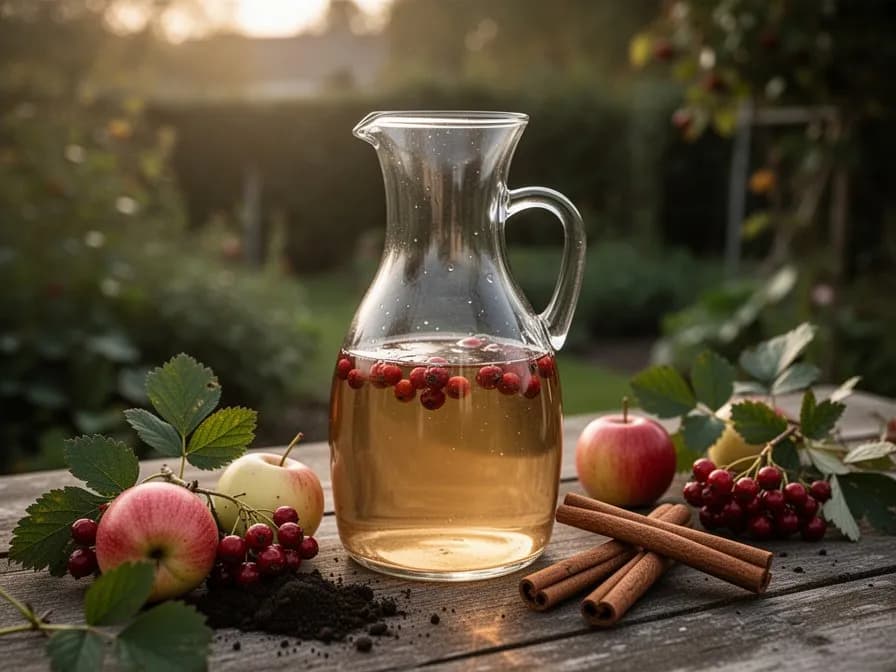
Weißdorn-Hagebutten-Sirup
30 Min. plus Abtropfen über NachtEin leuchtender, juwelenartiger Sirup, der die kardiovaskulären Vorteile des Weißdorns mit dem Vitamin-C-Reichtum der Hagebutten verbindet. Mit Sprudelwasser verdünnt ergibt er ein raffiniertes alkoholfreies Getränk, und er kann auch als Basis für Cocktails verwendet oder in Naturjoghurt eingerührt werden.
7 ZutatenLangsam gekochte Weißdornbeeren-Paste (Weißdornkäse)
1 Stunde 20 Min.Inspiriert vom traditionellen spanischen Membrillo, zeigt diese feste, schneidbare Fruchtpaste den Weißdorn von seiner elegantesten Seite. Die tiefkarminrote Paste lässt sich im kalten Zustand sauber schneiden und wird traditionell mit Hartkäse, kaltem Aufschnitt und Haferkeksen serviert. Sie hält sich bis zu drei Monate im Kühlschrank.
6 ZutatenKulinarische Verwendung
Weißdornbeerengelee hat einen feinen, herben, apfelähnlichen Geschmack und eine wunderschöne rubinrote Farbe. Die Beeren ergeben in Kombination mit Zucker und Apfel ausgezeichnetes Fruchtleder. In der chinesischen Küche sind kandierte Weißdornbeeren am Stiel (Tanghulu) ein beliebter Straßensnack. Weißdornketchup ist ein traditionelles englisches Würzmittel für Wildfleisch. Die Beeren können getrocknet und zum Backen gemahlen werden. Junge Weißdornblätter und Blütenknospen im Frühling sind essbar und wurden traditionell in Salaten gegessen, in der englischen Folklore als - Brot und Käse - bekannt.
Was drinsteckt
Gesundheitsvorteile
- Kardiovaskuläre Unterstützung: Weißdorn-Flavonoide, insbesondere oligomere Proanthocyanidine und Vitexin, haben in mehreren klinischen Studien gezeigt, dass sie die Herzfunktion verbessern, den koronaren Blutfluss steigern und leichten Bluthochdruck durch Entspannung der Gefäßwände senken.
- Antioxidativer Schutz: Der hohe Polyphenolgehalt der Weißdornbeeren neutralisiert freie Radikale, die zu oxidativem Stress, Zellalterung und der Entstehung chronischer Krankheiten beitragen.
- Verdauungsgesundheit: Die traditionelle chinesische Medizin verwendet Weißdorn seit Langem zur Verbesserung der Verdauung von fett- und fleischreichen Speisen, und moderne Forschung legt nahe, dass Weißdorn die Produktion von Verdauungsenzymen und Gallensäuren anregt.
- Entzündungshemmende Wirkung: Ursolsäure und mehrere andere Triterpene im Weißdorn zeigen in Laborstudien eine bedeutsame entzündungshemmende Wirkung, die möglicherweise bei Erkrankungen wie Arthritis und metabolischem Syndrom relevant ist.
- Angst und Schlafqualität: Historisch in der europäischen Kräutermedizin als mildes Anxiolytikum verwendet, stützt erste Forschung die Rolle des Weißdorns bei der Linderung leichter Angstsymptome, möglicherweise durch Wechselwirkung mit GABA-Rezeptoren.
- Immunsystem-Modulation: Der Vitamin-C-Gehalt in Kombination mit dem Polyphenolspektrum der Pflanze unterstützt die angeborene Immunfunktion und kann die Dauer und Schwere saisonaler Atemwegsinfekte verringern.
Woher Weißdornbeere stammt
Weißdorn umfasst ungefähr 200–300 Arten innerhalb der Gattung Crataegus, die über die gemäßigten Regionen Europas, Asiens und Nordamerikas verbreitet sind. Die europäischen Gärtnern am besten vertrauten Arten, Crataegus monogyna (Eingriffeliger Weißdorn) und Crataegus laevigata (Zweigriffeliger Weißdorn), sind auf den Britischen Inseln und in Europa heimisch, wo sie seit Jahrtausenden Landschaft und Kultur geprägt haben.
Archäologische Funde deuten darauf hin, dass Weißdornbeeren bereits von mesolithischen und neolithischen Völkern in ganz Europa als Nahrungsquelle gesammelt wurden. Samen und getrocknete Beerenreste wurden in bronze- und eisenzeitlichen Siedlungen gefunden, was darauf hindeutet, dass die Pflanze lange vor der Entstehung schriftlicher Überlieferungen sowohl eine ernährungsmäßige als auch eine rituelle Bedeutung hatte. Die alten Griechen assoziierten Weißdorn mit Hymenaios, dem Gott der Hochzeit, und Bräute trugen Weißdornblüten als Symbol der Hoffnung und des Glücks – eine Tradition, die bis ins Mittelalter fortbestand.
In Großbritannien wurde der Weißdorn während der großen Einhegungsbewegungen des 17. und 18. Jahrhunderts zur prägenden Heckenpflanze, als Millionen Kilometer Weißdornhecke gepflanzt wurden, um Allmendeland in private landwirtschaftliche Felder aufzuteilen. Diese Heckenlandschaften verwandelten die englische Landschaft in das noch heute sichtbare Flickwerk kleiner Felder und schufen unbeabsichtigt einen der ökologisch produktivsten halbnatürlichen Lebensräume Europas.
In der traditionellen Kräutermedizin ganz Europas wurden Weißdornbeeren, Blüten und Blätter bei Herzklopfen, Atemnot und Arterienverhärtung verschrieben – Beschwerden, die die moderne Medizin als Symptome von Herz-Kreislauf-Erkrankungen erkennt. Deutsche Kräuterkundige des 19. Jahrhunderts begannen, diese traditionellen Anwendungen zu formalisieren, und bis zum frühen 20. Jahrhundert wurden standardisierte Weißdornextrakte in ganz Mitteleuropa hergestellt und von Ärzten verschrieben.
In Nordamerika nutzten indigene Völker vieler Nationen einheimische Crataegus-Arten – insbesondere C. douglasii und C. chrysocarpa – als Nahrung und Medizin. Die Beeren wurden frisch gegessen, für den Wintervorrat getrocknet oder in Pemmikan eingearbeitet. Mehrere Völker verwendeten auch Weißdornholz für Werkzeuge und Weißdorndornen als Nadeln oder Angelhaken.
Heute nimmt der Weißdorn eine einzigartige Position zwischen den Welten der traditionellen Kräutermedizin und der evidenzbasierten Medizin ein, mit über 900 veröffentlichten wissenschaftlichen Arbeiten, die seine pharmakologische Wirkung untersuchen, was ihn zu einer der am besten erforschten Heilpflanzen der Welt macht.
Weißdornbeere: Schon gewusst?
Faszinierende Fakten über Weißdornbeere
Weißdorn (Crataegus monogyna) wird seit über 2.000 Jahren in der europäischen Volksmedizin verwendet, hauptsächlich als Herztonikum, und Hinweise auf seine Verwendung finden sich in den Schriften des antiken griechischen Arztes Dioskurides.
Weißdornbeere: Fragen & Antworten
Wann sollte ich Weißdornbeere pflanzen?
In welchen Winterhärtezonen kann Weißdornbeere wachsen?
Wie viel Sonne braucht Weißdornbeere?
Welchen Abstand sollte ich zwischen Weißdornbeere lassen?
Welche Schädlinge und Krankheiten befallen Weißdornbeere?
Wie lagere ich Weißdornbeere nach der Ernte?
Was sind die besten Weißdornbeere-Sorten zum Anbauen?
Welchen Boden braucht Weißdornbeere?
Kann man Weißdornbeeren roh essen?
Wie lange dauert es, bis ein Weißdornbaum Beeren trägt?
Kann ich Weißdornbeeren-Präparate zusammen mit verschreibungspflichtigen Herzmedikamenten einnehmen?
Was ist der Unterschied zwischen Eingriffeligem Weißdorn (Crataegus monogyna) und Zweigriffeligem Weißdorn (Crataegus laevigata), und spielt das für die Beerenproduktion eine Rolle?
Mein Weißdorn hat üppig geblüht, aber sehr wenige Beeren produziert. Was ist schiefgelaufen?
Kann Weißdorn im Kübel oder in einem kleinen Garten angebaut werden?
Du hast die Theorie gelesen. Jetzt baue sie auf Autopilot an.
Alles, was Weißdornbeere knifflig macht — das Timing, die Abstände, die Begleiter, das Erntefenster — genau das übernimmt PlotMyGarden für dich, für jede Pflanze im Garten.
Ein Plan, der dein Wetter kennt
Standort einmal festlegen. Aussaat-, Dünge- und Erntedaten rund um deinen echten letzten Frosttermin und die Live-Vorhersage — kein Raten mehr nach Saattüte.
Aus dem Abschnitt „Pflanzzeit“Beetplaner per Drag & Drop
Beete auf einem Raster gestalten. Jede Pflanze rastet im richtigen Abstand ein, und du siehst die ganze Saison, bevor du einen Cent für Saatgut ausgibst.
Aus dem Abschnitt „Anbau“Begleiter-Konflikte früh erkannt
Über 200 gute und schlechte Kombinationen werden beim Pflanzen live geprüft — so landet ein saisonruinierender Fehler nie in der Erde.
Aus dem Abschnitt „Begleiter“Erinnerungen, nach denen du wirklich handelst
„Gieß die Bohnen.“ „Heute ernten, bevor's umschlägt.“ Pünktlich, konkret und auf deine echten Pflanzen bezogen.
Aus dem Abschnitt „Ernte“Staffel-Aussaat, geplant
Sechs Wochen ernten statt sechs Tage? Die App verteilt deine Aussaaten automatisch und erinnert dich, wenn der nächste Satz fällig ist.
Aus dem Abschnitt „Pflanzzeit“Ein Verlauf, der schlauer wird
Jede protokollierte Ernte bringt der App deinen Garten bei. Der Plan fürs nächste Jahr startet bei dem, was in deinem Boden wirklich funktioniert hat.
Aus dem Abschnitt „Überblick“Weitere Kernobst
Bau deine beste Weißdornbeere an — und alles drumherum.
Starte heute kostenlos. Lege deine Beete an, setze deine Weißdornbeere ein und lass PlotMyGarden Timing, Abstände, Begleiter und Erinnerungen von der Saat bis zum Erntekorb übernehmen.