White Currant
A translucent, golden-white variant of the red currant with a sweeter, milder flavor suitable for fresh eating.





On this pageOverview
Meet White Currant
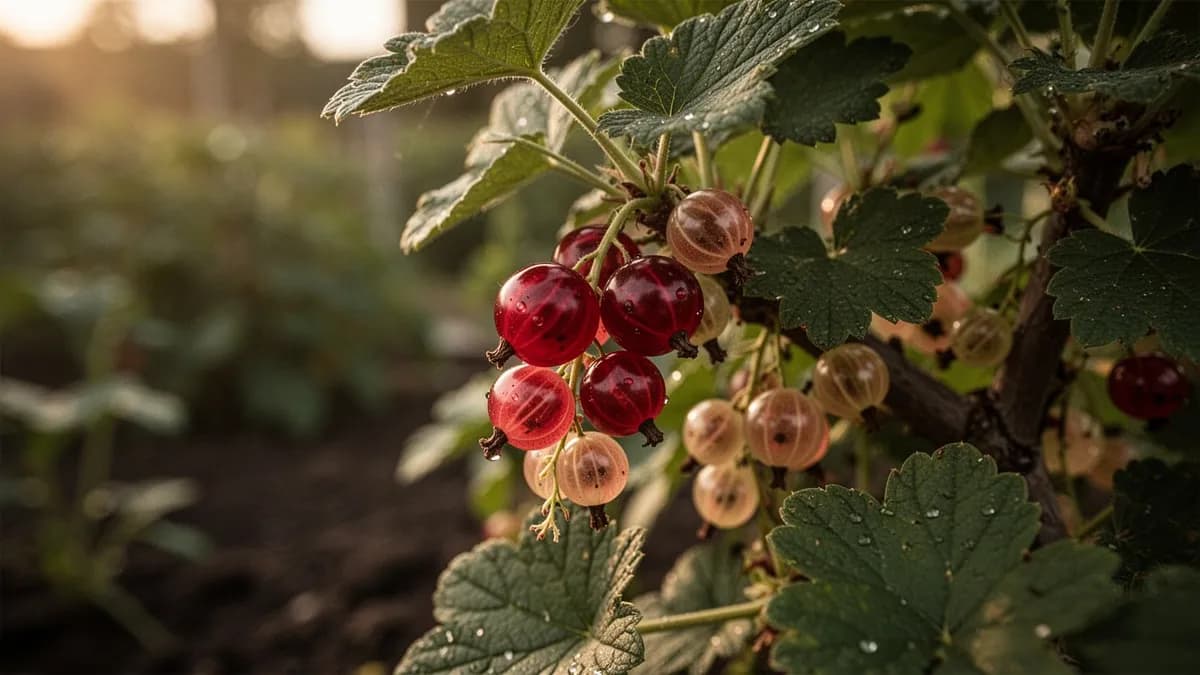
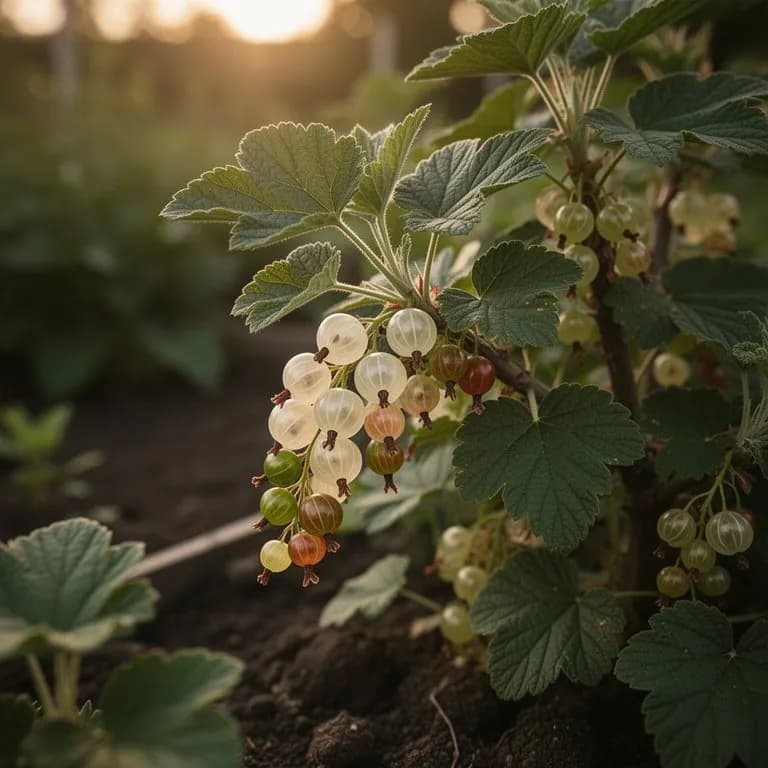
A translucent, golden-white variant of the red currant with a sweeter, milder flavor suitable for fresh eating. White currants are the least acidic of all currant types and make beautiful garnishes and elegant preserves. They require the same care as red currants and are equally cold-hardy and productive.
When to plant White Currant
White currants are almost exclusively propagated from hardwood cuttings rather than seed, as seed-grown plants do not come true to type. Take eight-to-twelve-inch cuttings from healthy one-year-old wood in late autumn after leaf drop. Remove the top few buds to encourage bushy growth and insert cuttings into well-prepared soil with only the top two buds above the surface. Cuttings will root over winter and can be transplanted the following autumn. Alternatively, purchase certified bare-root plants from a reputable nursery.
Your White Currant Year
Composed for Zone 7 · typical seasons · frost passes Apr 2, returns Nov 1
Plant White Currant Mar – Apr, pick Jun – Jul. Check the planting methods below and set your climate to personalize these windows.
How to grow White Currant
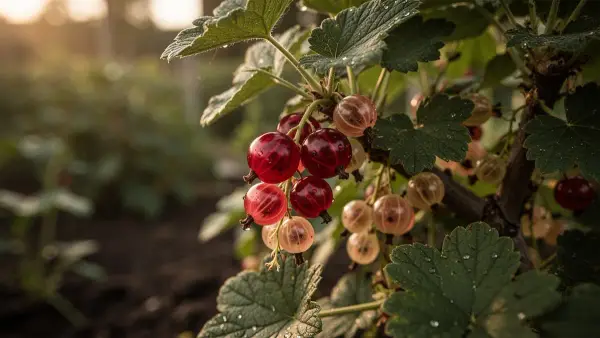
White currants thrive in cool climates and prefer a sheltered position with morning sun and afternoon shade, especially in warmer regions. Prepare the planting site by incorporating generous amounts of well-rotted compost or aged manure into moisture-retentive but well-drained soil. Plant bare-root bushes in late autumn or early winter, spacing them four feet apart to allow good air circulation.
White currants fruit on one-, two-, and three-year-old wood, so pruning should aim to maintain a balanced framework of mixed-age branches. In late winter, remove any wood older than three years at the base, along with weak, crossing, or damaged shoots. Keep the center of the bush open to promote airflow and even ripening.
Apply a balanced organic fertilizer in early spring and mulch with compost or bark chips to suppress weeds and conserve moisture. Water regularly during fruit development and in dry spells, but avoid waterlogging. Net bushes as fruit begins to ripen, since birds find the translucent berries irresistible.
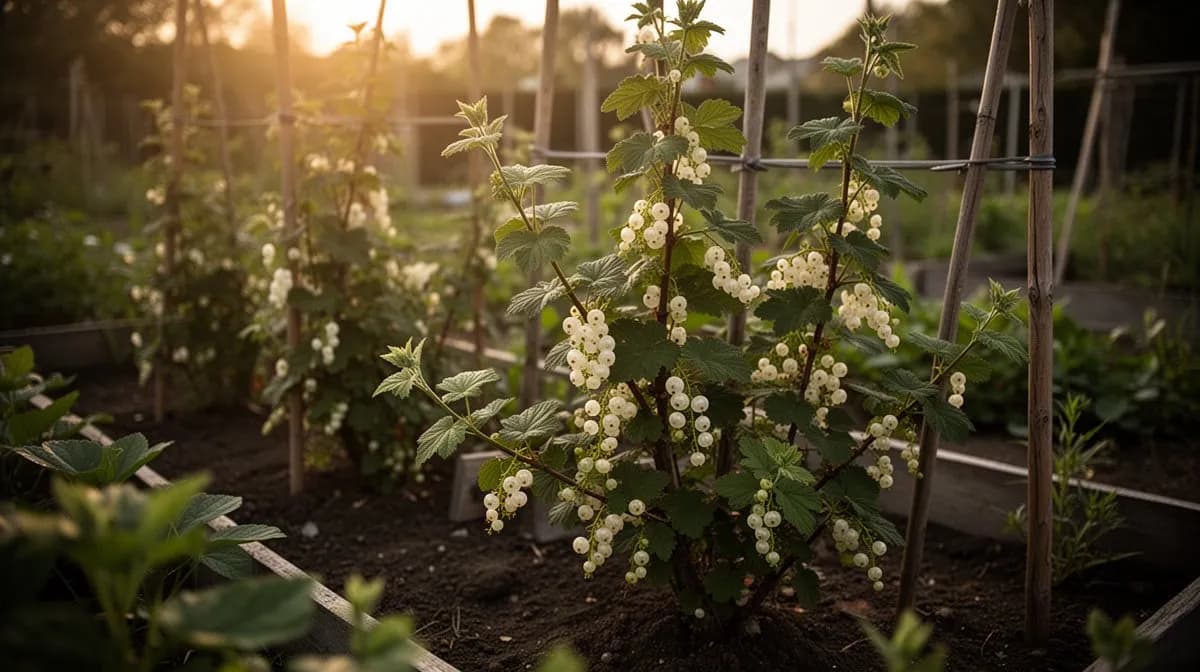
2 plants fit a 4 × 8 ft bed
Each White Currant wants 120 cm of elbow room. The planner keeps that spacing for you — every plant, every bed.
White Currant's best neighbours
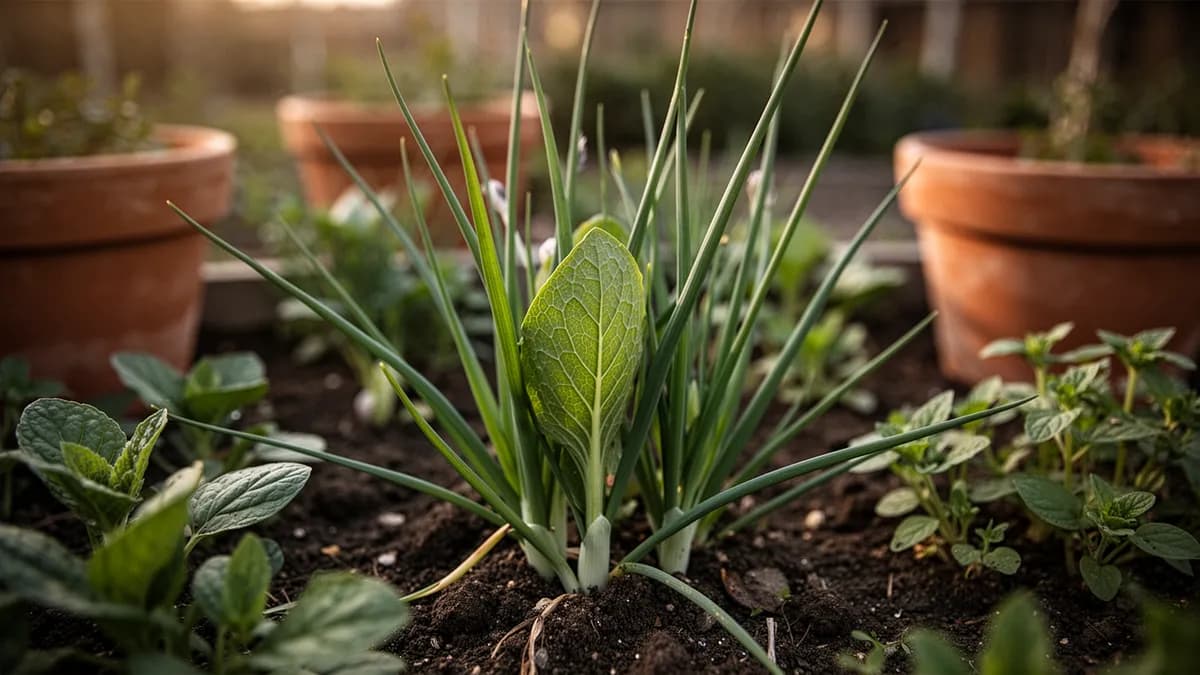
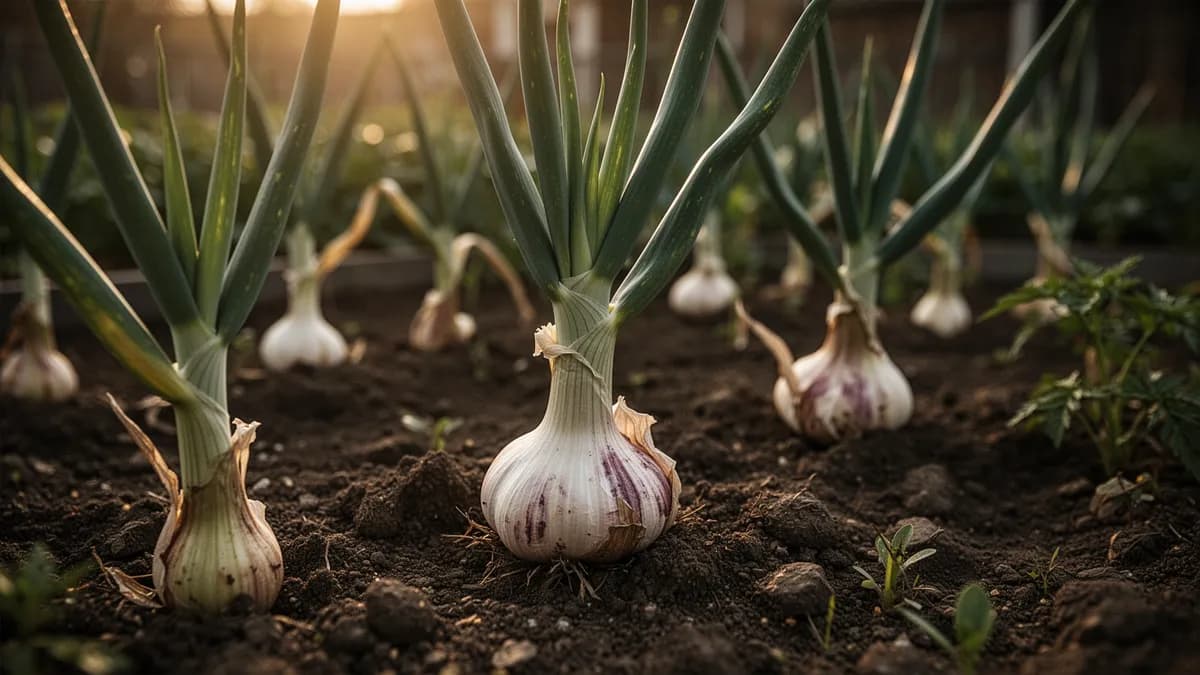
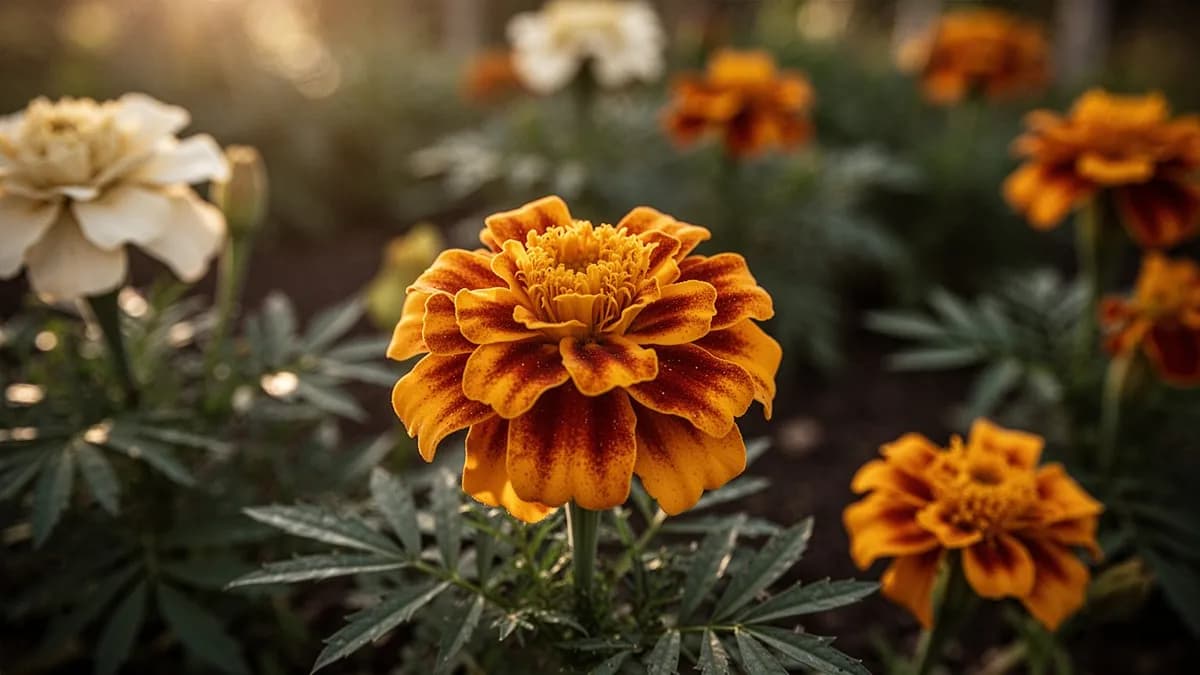
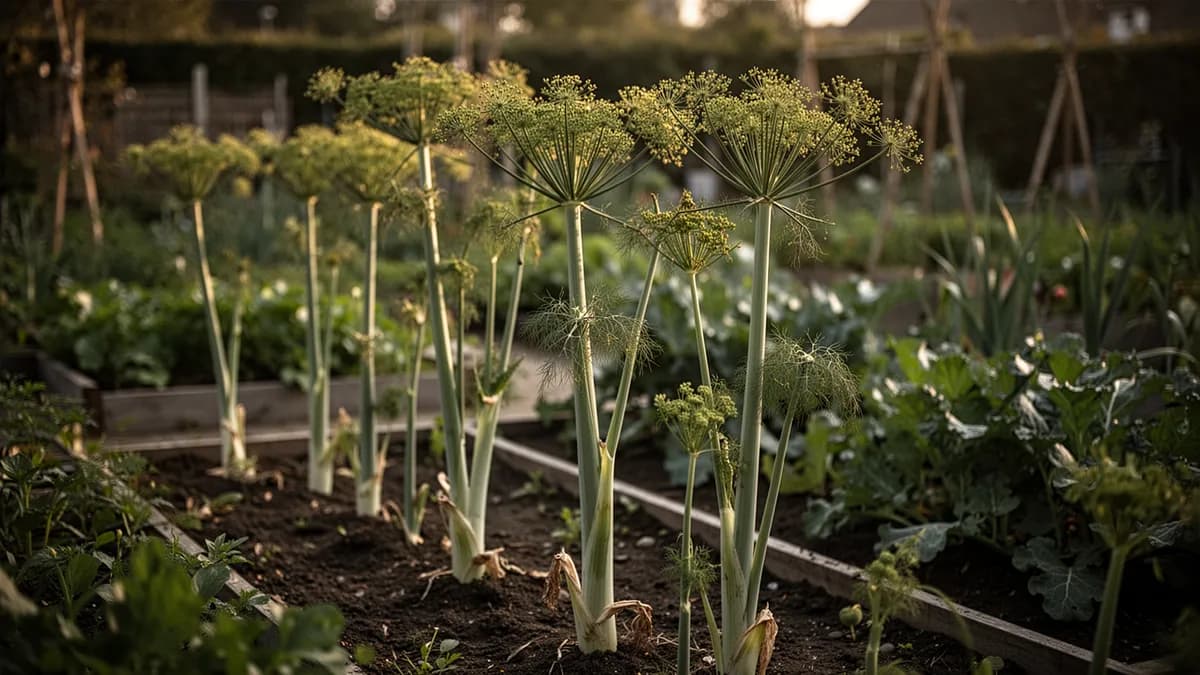
Plant white currants near chives and garlic, which help deter aphids and other insect pests with their pungent aroma. Marigolds planted at the base attract beneficial insects and may repel nematodes. Legumes such as beans and peas fix nitrogen in the soil and benefit currants when planted nearby. Avoid planting near fennel, which releases compounds that inhibit growth of many plants. Tansy and wormwood planted nearby may help repel currant sawfly.
Chives belongs beside it. Fennel doesn't.
Old growers' knowledge, checked against White Currant's real companion table below — test any plant you're growing.
Try White Currant in a bed — right here
A real planner bed with White Currant already in it. Tap a companion to place it and watch the pairing checks answer — green for good neighbours, red for a clash.


Related growing guides
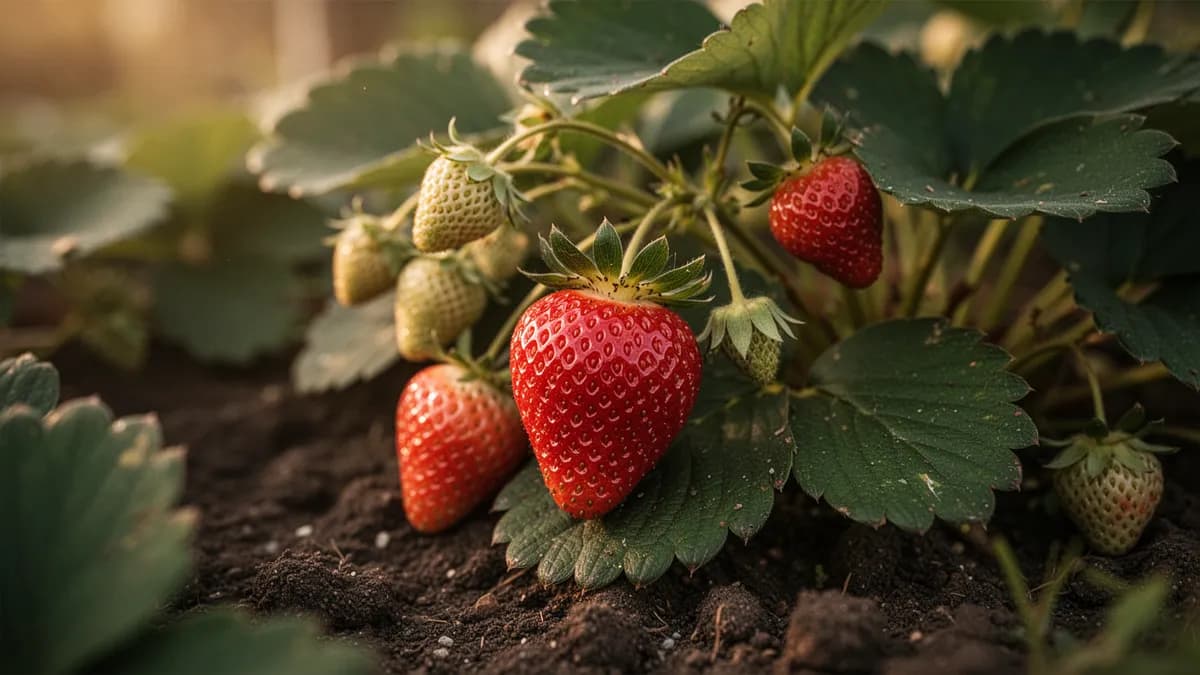
Feed it well
White currants prefer a slightly acidic to neutral soil pH of 6.0 to 6.8 enriched with organic matter. Work in compost or well-rotted manure before planting and top-dress annually. Apply a balanced organic fertilizer such as 5-5-5 in early spring before bud break. Avoid excessive nitrogen which promotes lush leaf growth at the expense of fruit production. Mulch with organic material to maintain consistent soil moisture and suppress weeds throughout the growing season.
Ideal Temperature
Hardiness Zone Compatibility
From seed to harvest, stage by stage
Dormancy and Winter Rest
White currants are deciduous shrubs that enter a full dormant period each winter, dropping all leaves and conserving energy in their root system and woody canes. During this period the plant is fully cold-hardy and requires little to no attention. Dormancy is essential for fruiting — white currants need a minimum of 800-1,200 chilling hours (temperatures at or below 7°C / 45°F) to break dormancy correctly and flower reliably the following spring.
Bud Break and Leaf Emergence
As temperatures rise in early spring, white currant buds swell and burst open, revealing bright lime-green leaves and tight clusters of flower buds. This stage is frost-sensitive — late frosts after bud break can damage young growth and emerging flower buds, potentially reducing the crop. Leaves expand rapidly to form the typical three to five-lobed currant leaf shape.
Flowering
White currants flower in mid to late spring, producing long, drooping racemes (strigs) of small, bell-shaped, pale greenish-yellow flowers. Each strig carries 8-20 individual flowers. White currants are largely self-fertile, though pollination by bees significantly increases fruit set and berry size. Flowers appear before or alongside the emerging foliage, giving the bush a delicate, ornamental appearance.
Fruit Development
After successful pollination, small green berries develop rapidly along each strig. The clusters fill out over 6-8 weeks, with berries transitioning from hard and green to plump and increasingly translucent as they approach ripeness. The strigs elongate as berries enlarge. Consistent watering is critical during this phase to ensure even, full-sized berries.
Ripening and Harvest
Ripe white currants turn a distinctive translucent ivory to pale golden color, almost luminous in direct sunlight. They become noticeably softer and slightly sweet-tart with a subtle muscat or vanilla note that distinguishes them from red currants. The entire strig ripens together and can be harvested whole by pulling the complete cluster free from the branch.
Post-Harvest and Late Season Growth
After harvest, the bush enters a period of vegetative recovery, sending out new lateral shoots that will become next year's fruiting wood. Leaves remain healthy through summer and into autumn, turning yellow before dropping with the first frosts. This post-harvest period is important for building up the plant's reserves for next season's crop.
Winter is the best time to prune white currants. Remove wood that is more than three to four years old, weak crossing branches, and any shoots growing into the center of the bush. Aim for an open goblet shape with 8-12 well-spaced healthy canes. Mulch around the root zone with well-rotted compost or bark chips, keeping mulch away from the main stems.
Caring for White Currant month by month
What to do each month for your White Currant
October
You are hereLeaves begin to yellow and drop. Rake up fallen leaves and dispose of them in the general waste rather than composting — this removes overwintering disease spores including those of currant leaf spot. Apply a fresh layer of bark mulch or compost around the base of each bush.
Know exactly what to do in your garden — every month
One email at the start of each month: what to sow, plant, and tackle right now — for your White Currant and everything growing around it. Plus a short starter course that helps you dodge the classic mistakes.
- What to do, right now
- Matched to your season
- Starter course included
Harvesting White Currant
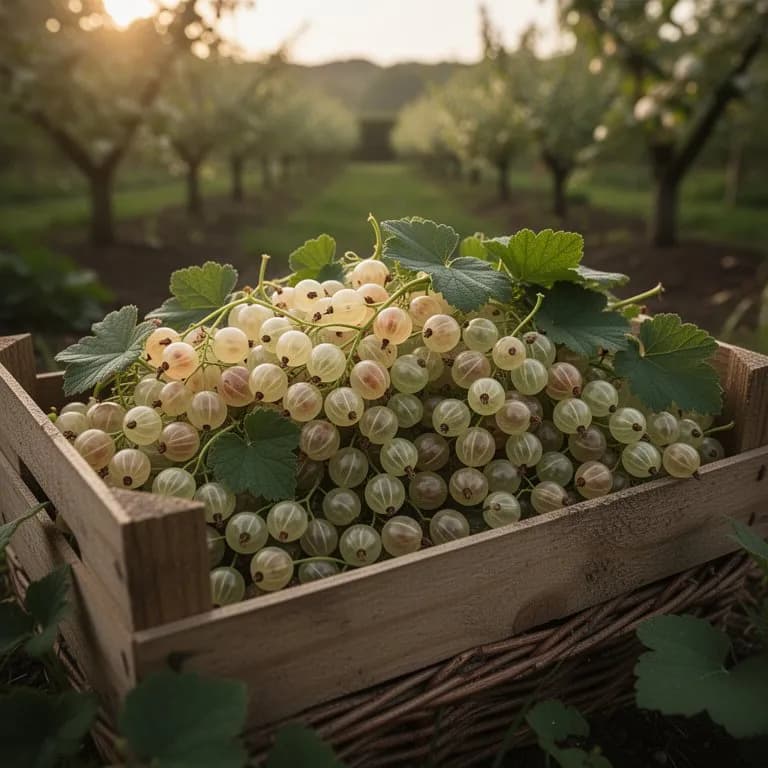
Harvest white currants when the berries turn from green to a translucent golden-white and feel slightly soft to the touch. Unlike red currants, white currants can be left on the bush a bit longer to develop maximum sweetness without becoming overly tart. Pick entire strigs rather than individual berries to reduce handling damage. Use scissors or gentle hand-stripping to detach clusters. Harvest in the cool of the morning for best keeping quality and refrigerate promptly.
assuming you plant when the window opens — set your real date
Pick White Currant promptly and the plant keeps producing.
Storage & Preservation
Fresh white currants keep in the refrigerator for up to one week when stored in a single layer on paper towels. For longer storage, freeze berries on a tray before transferring to freezer bags, where they will keep for up to twelve months. White currants make exquisitely delicate jelly and preserves due to their mild flavor and high pectin content. They can also be dried, though this is less common due to their small size.
What goes wrong — and the fix
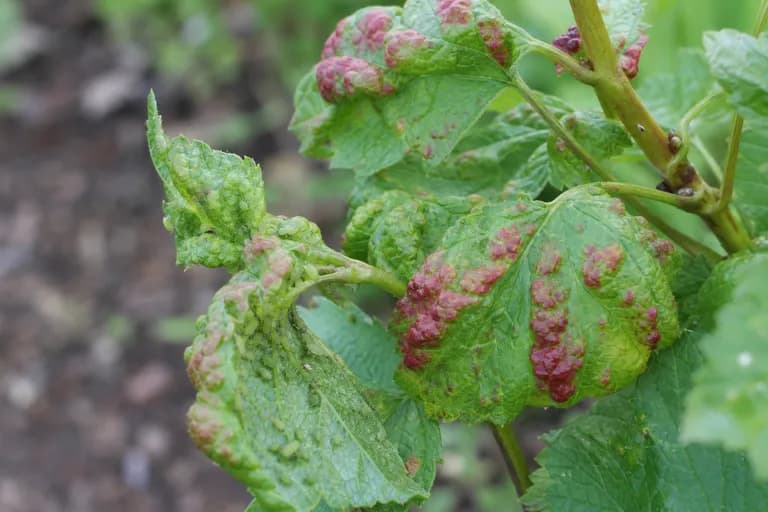
Currant Blister Aphid
PestPuckered, blistered red or yellow patches on leaves in spring; curled leaf edges with colonies of small aphids on the underside.
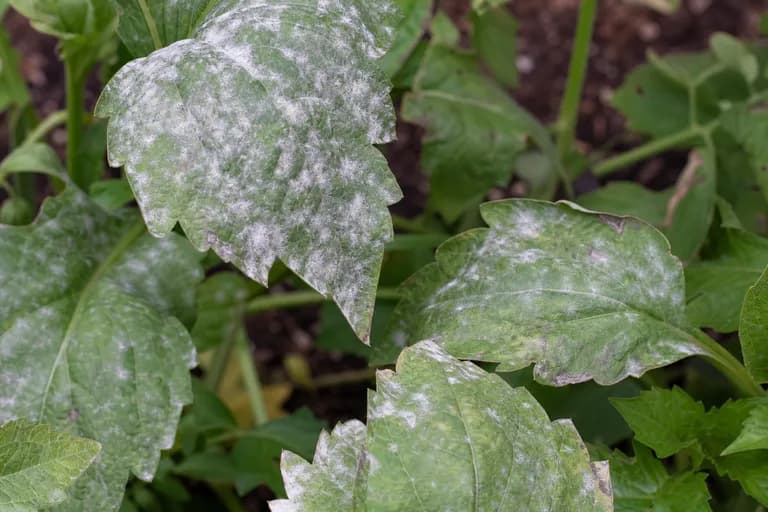
Powdery Mildew
DiseaseWhite powdery coating on young leaves and shoot tips; affected leaves may curl, distort, and drop prematurely.
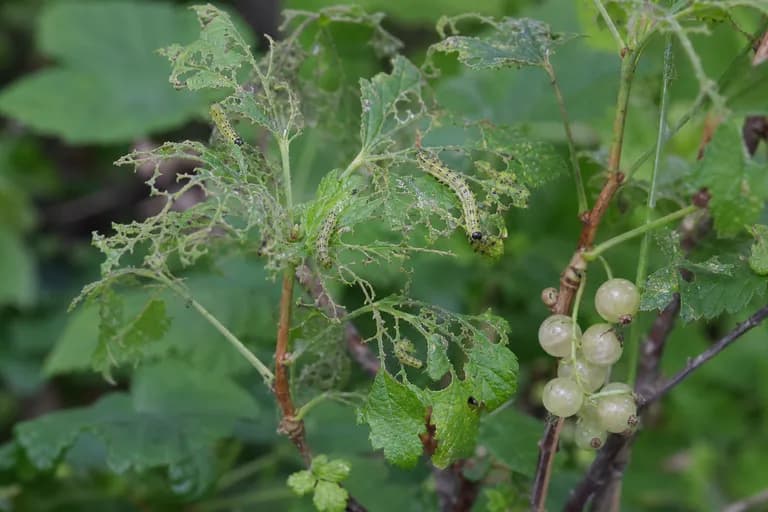
Currant Sawfly
PestRapid defoliation as pale green caterpillar-like larvae consume leaves from the interior of the bush outward.
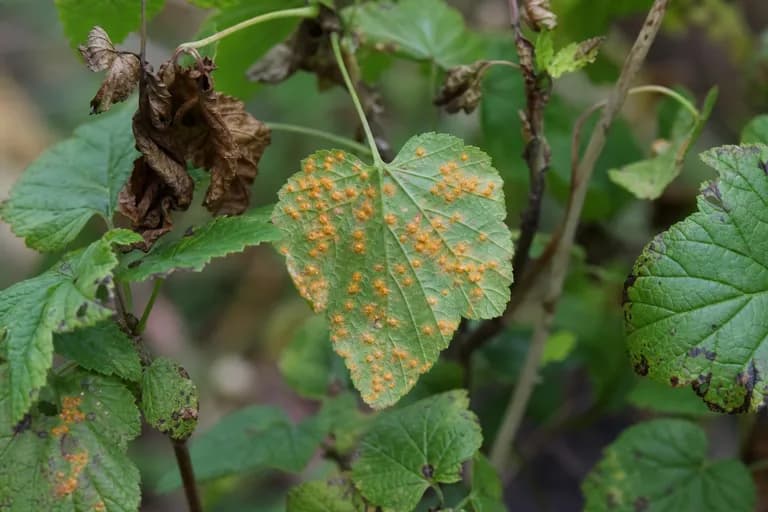
White Pine Blister Rust
DiseaseSmall yellow-orange spots on leaf undersides; can serve as an alternate host for the rust that devastates white pines.
Troubleshooting Common Problems
Bird damage is the most common issue with white currants, as the pale berries are highly visible and attractive to birds. Net bushes before fruit begins to ripen. Leaf drop in midsummer often indicates currant sawfly damage; check the bush interior for larvae. Poor fruit set may result from late frosts damaging blossoms or insufficient pollination. White currants are less vigorous than red types, so ensure adequate nutrition and moisture for consistent yields.
Growing Tips
- Plant bare-root white currant bushes between late autumn and early spring while fully dormant. Bare-root plants are significantly cheaper than container-grown specimens, establish extremely well, and are available from specialist fruit nurseries in a wider range of named varieties than garden centers typically stock.
- White currants fruit on spurs on wood that is two to three years old, as well as at the base of year-old shoots. Understand this pruning principle before cutting: always retain a supply of young two-to-three-year-old canes while removing old, exhausted wood that is four or more years old and producing diminishing returns.
- Take hardwood cuttings in autumn to multiply your stock for free. Cut 20-25 cm lengths of healthy current season's growth (pencil thickness), remove the lower leaves leaving only the top two or three buds, and insert them 15 cm deep into a prepared bed of sandy compost. Most cuttings will be rooted and ready to transplant within twelve months.
- Train white currants as a cordon (single vertical stem) against a wall or fence to maximize productivity in small gardens. A cordon takes up only 30-40 cm of horizontal space and can be planted as little as 30 cm apart. Even a north-facing wall suits white currants — unlike most fruit, they tolerate partial shade and still crop reliably.
- Net the bushes before the first berries begin to color. Birds, particularly blackbirds and starlings, will strip a white currant bush bare within hours of the fruit ripening. A simple net draped over the bush and pegged at ground level is the single most effective protective measure for a good harvest.
- Avoid waterlogged soil above all other considerations. White currants are susceptible to root rot in poorly drained conditions. If your soil is heavy clay, plant in raised beds or mound the soil to improve drainage. On well-drained soils, white currants are remarkably drought-tolerant once established.
- Feed twice per year: once in late winter with a balanced granular fertilizer, and again immediately after harvest with a balanced or slightly high-potassium feed to support the development of next year's fruiting wood. Avoid overfeeding with nitrogen, which produces excessive leafy growth at the expense of fruiting.
- Strip harvested currants from their stalks using a fork — hold the strig over a bowl and run a dinner fork down the length of the strig to flick the berries free cleanly and quickly. This technique, known as stripping, is far faster than picking individual berries and minimizes bruising.
- Freeze white currants on a single layer on a baking tray before transferring to freezer bags. This prevents the berries from clumping together and allows you to pour out exactly the quantity needed for a recipe. Frozen white currants retain their flavor and high pectin content for up to twelve months.
- To test if white currants are at peak ripeness, gently squeeze a berry between your fingers — it should give slightly but not feel mushy. Taste a few from different parts of the bush; fully ripe white currants are noticeably sweet with only mild sharpness, unlike the pronounced tartness of under-ripe fruit.
Grow your best White Currant yet — and everything around it.
Start a free plan today. Lay out your beds, drop in your White Currant, and let PlotMyGarden handle the timing, spacing, companions and reminders from seed to harvest basket.
Pick your White Currant
White Versailles
The most widely grown white currant, producing large clusters of sweet, translucent berries on vigorous, upright bushes.
Blanka
A heavy-yielding Czech variety with very large, sweet berries and excellent disease resistance, ripening in mid-season.
White Pearl
Compact growth habit with sweet, mild-flavored berries that are excellent for fresh eating and ornamental value.
White Imperial
An heirloom variety prized for its balanced sweet-tart flavor and reliable production in northern climates.
Fresh white currants are a rare specialty crop, typically retailing at $8-18 per 125g punnet at farmers markets and premium grocers when available at all — making them among the most expensive fresh berries by weight. A mature, well-managed bush producing 3-5 kg per season represents $200-700 worth of fruit at retail prices. Initial planting cost is modest: a bare-root bush costs $5-12 and begins producing a meaningful crop in its second year, reaching full production by year three. With a productive lifespan of 20+ years, the lifetime value of a single white currant bush in a home garden is extraordinary. Processing the surplus into white currant jelly, shrubs, or cordial extends value further — a single jar of artisan white currant jelly retails for $8-15 at specialty food stores.
Quick recipes
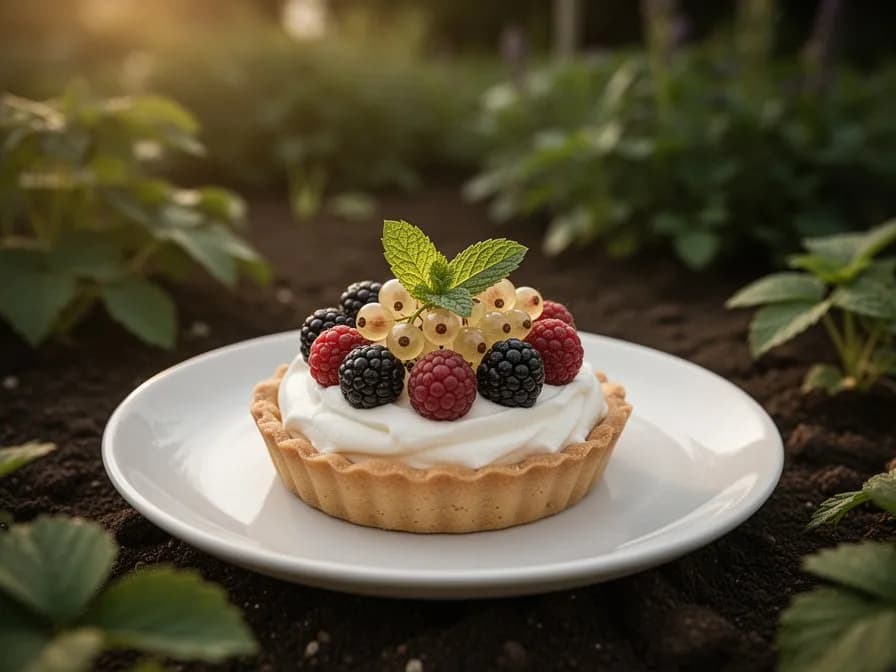
White Currant and Elderflower Jelly
1 hourA delicate, pale gold jelly that showcases the subtle muscat sweetness of white currants, lifted by the floral fragrance of elderflower. Beautiful as a breakfast preserve, a glaze for cold poultry, or served alongside aged cheese. The natural high-pectin content of currants means this jelly sets reliably without added pectin.
5 ingredientsWhite Currant Pavlova Topping
15 minA simple, elegant dessert topping that lets the luminous beauty of white currants shine. The berries need no cooking — just a brief maceration in a little elderflower cordial and sugar transforms them into a fresh, glossy topping for meringue, panna cotta, or vanilla ice cream. The translucent berries look spectacular against white cream.
5 ingredientsWhite Currant Shrub (Drinking Vinegar)
15 min active, 48 hours infusingA versatile fruit shrub that captures the bright, clean flavor of white currants in a concentrated syrup that can be mixed with sparkling water for a sophisticated soft drink or used as a base for cocktails. The apple cider vinegar adds complexity and acts as a natural preservative. Makes approximately 500ml.
5 ingredientsCulinary Uses
White currants are the sweetest and least acidic of all currants, making them ideal for fresh eating, elegant garnishes, and delicate fruit salads. They produce a beautiful pale golden jelly with a refined flavor. Use them in tarts, pavlovas, and cream-based desserts where their mild sweetness complements without overpowering. They also make an exceptional white currant wine.
What's inside
Health Benefits
- Outstanding source of vitamin C, with 100g providing nearly half the recommended daily intake — supporting the immune system, promoting collagen production for healthy skin and joints, and acting as a potent water-soluble antioxidant.
- High fiber content at 4.3g per 100g supports digestive regularity, feeds beneficial gut microbiota, and contributes to a feeling of fullness that may help with healthy weight management.
- Naturally rich in anthocyanin-adjacent flavonoid compounds (despite the lack of visible pigment) and quercetin, which have anti-inflammatory properties and are associated with reduced risk of chronic cardiovascular disease.
- Good source of vitamin K1, which plays an essential role in activating clotting proteins for wound healing and in directing calcium into bones rather than arteries, supporting both bone health and cardiovascular function.
- Provides a meaningful amount of potassium, an electrolyte that counterbalances the effect of sodium and helps maintain healthy blood pressure, proper heart rhythm, and muscle contraction.
- Contains pectin and organic acids including citric and malic acid that support healthy liver function, aid in the digestive breakdown of fats, and contribute to the detoxifying capacity of the body.
Where White Currant comes from
The white currant is a color mutation of the red currant (Ribes rubrum), a species native to western Europe and parts of northern Asia, particularly the mountainous regions of France, Belgium, the Netherlands, Scandinavia, and western Russia. Wild red currants have been gathered from temperate forests for food and medicine since prehistoric times, with archaeological evidence of their use at sites across northern and central Europe. The transition from wild collection to deliberate cultivation began in the Low Countries and northern France during the 15th century, and by the 16th century currants were well-established garden plants throughout northern Europe.
White currants appear in historical horticultural records from the late 16th and early 17th centuries, with early references in French and Dutch gardening literature describing 'white' or 'pale' currant variants grown alongside the more common red varieties. Because the white form is simply a pigmentation variant of the same species, it would have arisen naturally through mutation and been selected and propagated by observant gardeners who valued its milder flavor and striking translucent appearance. By the 18th century, named white currant varieties were being traded by nurserymen throughout Britain, France, and the Netherlands.
The fruit reached its peak of culinary prestige in 19th-century European cooking, particularly in French haute cuisine, where white currant jelly became a refined alternative to red currant jelly for glazing cold meats and garnishing elaborate desserts. The British kitchen garden tradition, which flourished on large country estates during the Victorian era, incorporated white currants alongside red, black, and pink varieties as a standard component of the productive garden.
Today, white currants remain less commercially cultivated than black or red currants, largely because their delicate appearance and flavor are not well-suited to industrial harvesting and transport. This scarcity has made fresh white currants a specialty crop commanding premium prices at farmers markets and fine food retailers. They are increasingly popular among artisan growers and home gardeners who value their unique flavor, ornamental beauty, and remarkable longevity as productive garden plants.
White Currant: did you know?
Fascinating facts about White Currant
White currants are not a separate species from red currants — they are simply a color variant of Ribes rubrum in which the genes controlling red pigmentation (anthocyanins) are absent or suppressed. This makes white currants genetically and botanically identical to red currants, differing only in the lack of pigment in their berries.
White Currant questions, answered
When should I plant White Currant?
What are good companion plants for White Currant?
What hardiness zones can White Currant grow in?
How much sun does White Currant need?
How far apart should I space White Currant?
What pests and diseases affect White Currant?
How do I store White Currant after harvest?
What are the best White Currant varieties to grow?
What soil does White Currant need?
Are white currants the same as red currants?
When is the right time to harvest white currants?
How do I prevent birds from eating all my white currants?
Why are my white currants small and sparse even though the plant looks healthy?
Can white currants be grown in a container or pot?
How long before my new white currant bush starts producing a useful harvest?
You just read the theory. Now grow it on autopilot.
Everything that makes White Currant fiddly — the timing, the spacing, the companions, the harvest window — is exactly what PlotMyGarden handles for you, for every plant in your garden.
A plan that knows your weather
Set your location once. Get sow, feed and harvest dates built around your real last-frost date and live forecast — no more guessing from a generic seed packet.
From the “When to plant” sectionDrag-and-drop bed planner
Design beds on a grid. Every plant snaps to its proper spacing, and you can see your whole season laid out before you spend a cent on seed.
From the “Growing guide” sectionCompanion conflicts, caught early
200+ good-and-bad pairings checked live as you plant — so a season-wrecking mistake never makes it into the ground.
From the “Companions” sectionReminders you'll actually act on
“Water the beans.” “Pick today before it turns.” Timely, specific, and tied to the plants you're really growing.
From the “Harvest” sectionSuccession, scheduled
Want a harvest for six weeks, not six days? It spaces your sowings automatically and reminds you when each new block is due.
From the “When to plant” sectionA record that gets smarter
Every harvest you log teaches it your garden. Next year's plan starts from what actually worked in your soil, not a textbook's.
From the “Overview” sectionPlant these alongside White Currant
More Berries
Keep White Currant away from these
Grow your best White Currant yet — and everything around it.
Start a free plan today. Lay out your beds, drop in your White Currant, and let PlotMyGarden handle the timing, spacing, companions and reminders from seed to harvest basket.