Zanahoria Corazón de Buey
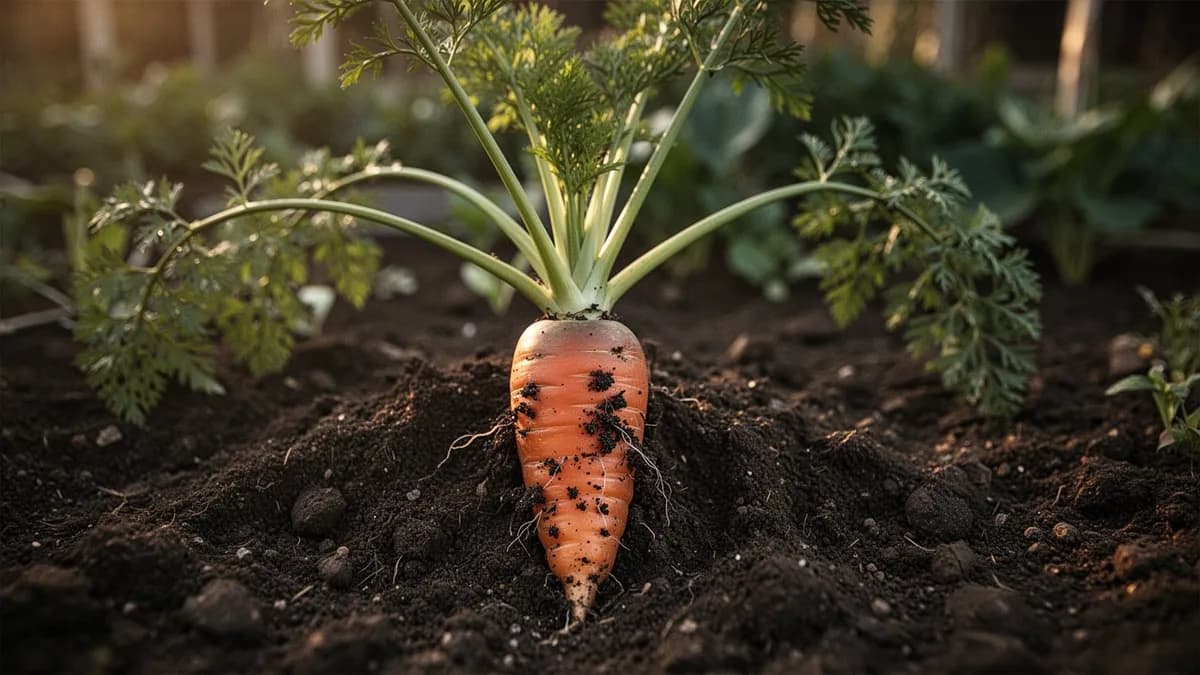
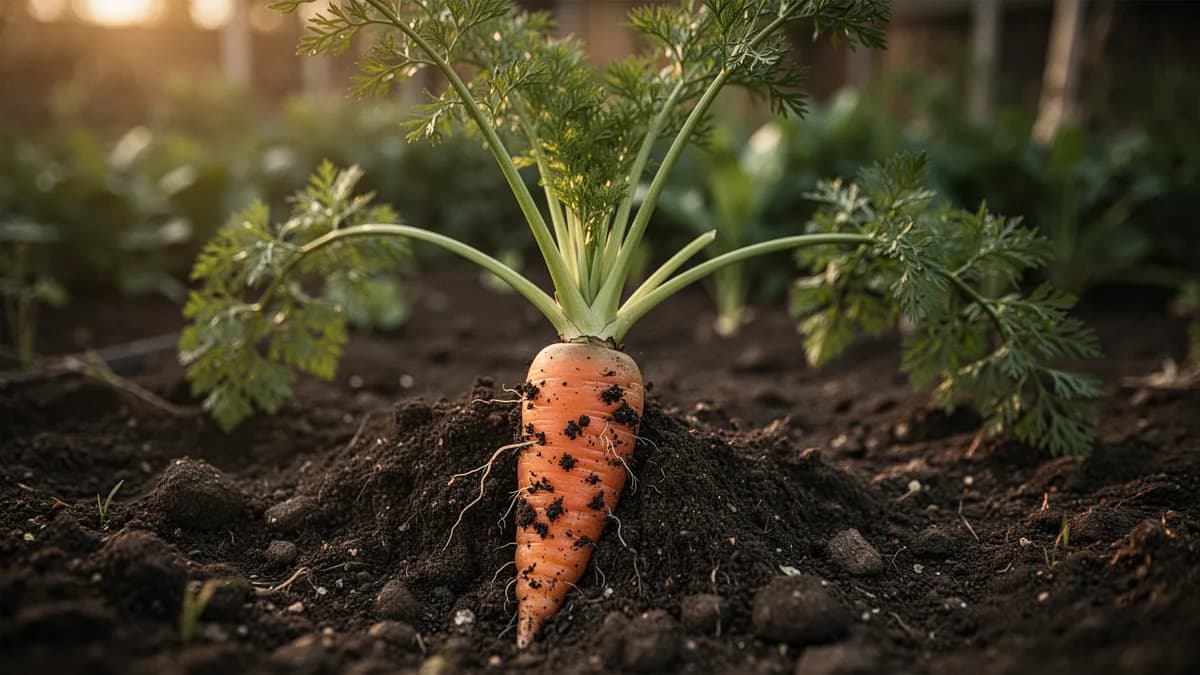
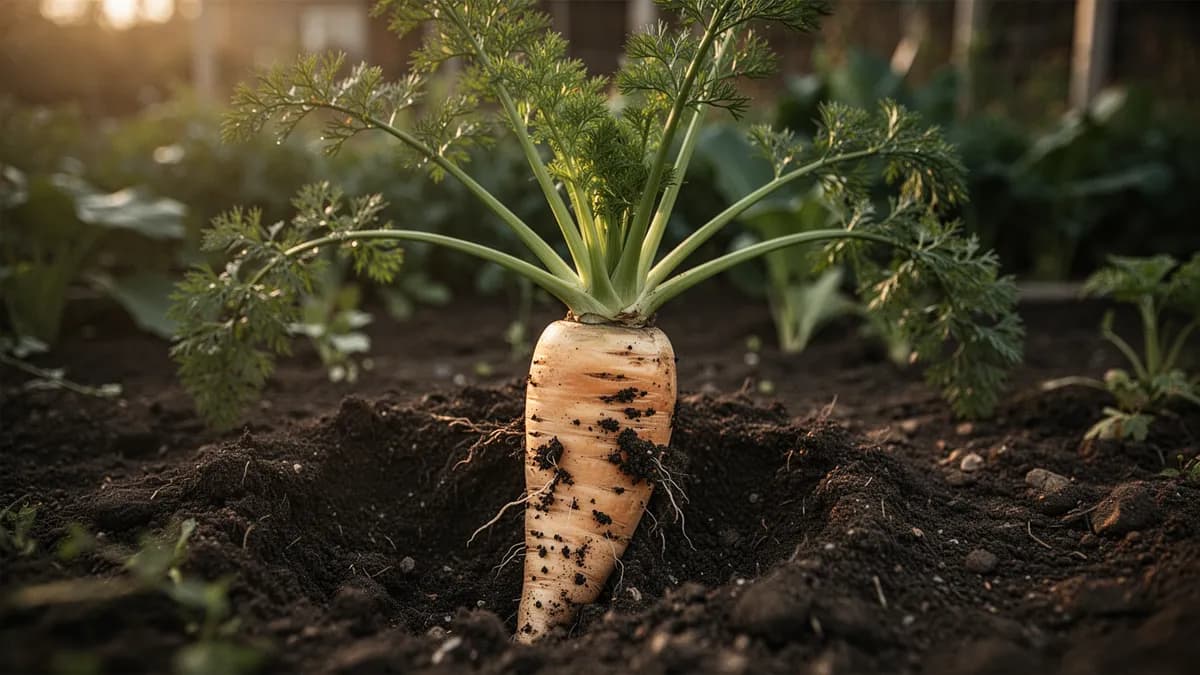
La zanahoria Corazón de Buey (Daucus carota) es una variedad heritage francesa con raíces cortas, anchas y cónicas de 10-15 cm que se ensanchan hasta 8-10 cm de diámetro, con forma que recuerda a un corazón de buey.





En esta páginaResumen
Conoce Zanahoria Corazón de Buey
La zanahoria Corazón de Buey (Daucus carota) es una variedad heritage francesa con raíces cortas, anchas y cónicas de 10-15 cm que se ensanchan hasta 8-10 cm de diámetro, con forma que recuerda a un corazón de buey. Es ideal para suelos pesados y arcillosos donde las zanahorias largas no pueden crecer, y su pulpa es excepcionalmente dulce, tierna y prácticamente sin corazón fibroso.
Cuándo plantar Zanahoria Corazón de Buey
Siembre directamente a 0,5-1 cm de profundidad. No trasplanta. Mezcle semillas con arena fina. Germinación en 14-21 días. Mantenga suelo constantemente húmedo durante germinación.
Tu año de Zanahoria Corazón de Buey
Ajustado a Zona 7 · temporada típica · la helada se va hacia el 2 abr y vuelve hacia el 1 nov
Planta Zanahoria Corazón de Buey Mar – Abr, Jul – Ago y cosecha Jun – Jul, Oct – Nov. Consulta los métodos de plantación y elige tu clima para adaptar los periodos.
Cómo cultivar Zanahoria Corazón de Buey
Siembre directamente a 0,5-1 cm de profundidad en surcos separados 20-30 cm. Germinación en 14-21 días. Mezcle semillas con arena para distribución uniforme. Las semillas son diminutas y necesitan suelo constantemente húmedo para germinar.
Aclare a 8-10 cm (más espacio que las zanahorias normales) cuando las plántulas tengan 5 cm, ya que las raíces se ensanchan mucho. Riegue regularmente con 2,5 cm semanales. La Corazón de Buey es especialmente adecuada para suelos pesados, arcillosos o poco profundos.
Fertilice con abono bajo en nitrógeno y rico en fósforo y potasio. Evite estiércol fresco que causa raíces deformes. Las zanahorias Corazón de Buey maduran más rápido que las variedades largas, en 65-75 días.
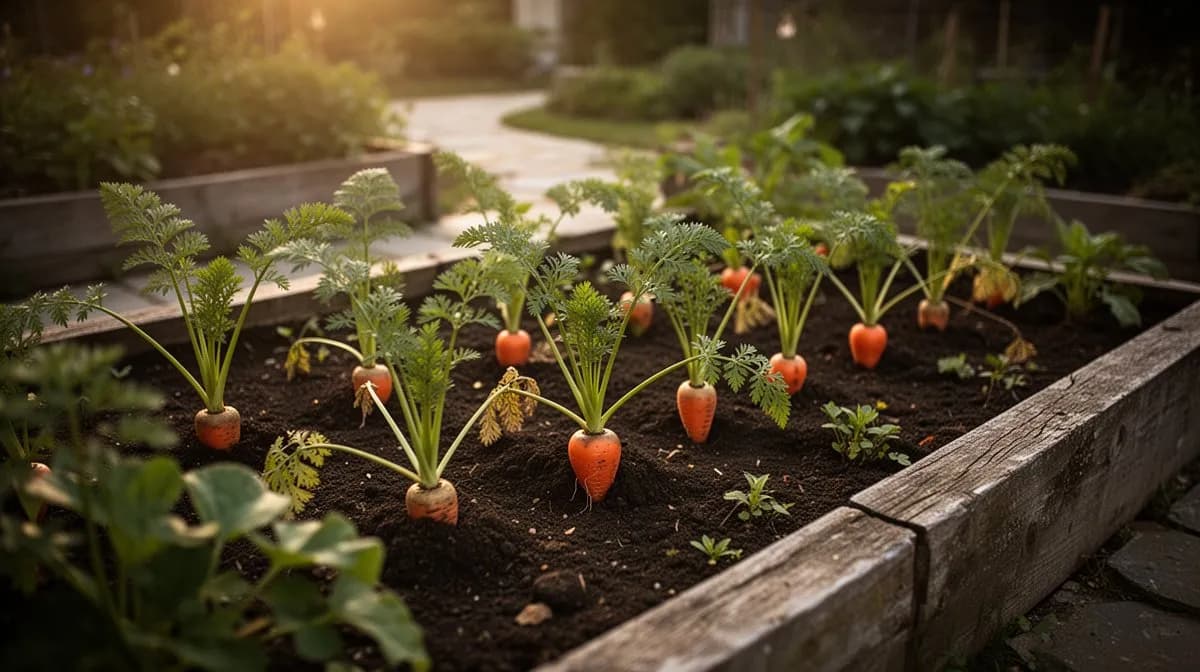
288 plantas caben en un bancal de 120 × 240 cm
Cada Zanahoria Corazón de Buey pide 10 cm de margen. El planificador guarda ese marco por ti — cada planta, cada bancal.
Los mejores vecinos de Zanahoria Corazón de Buey
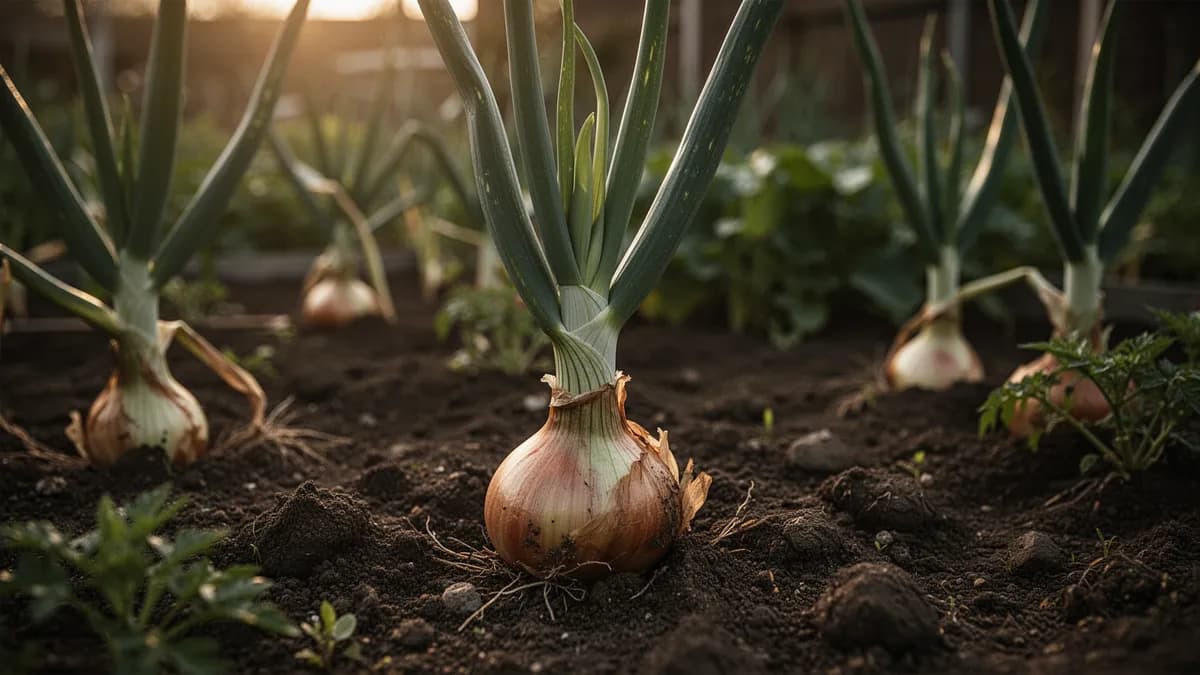
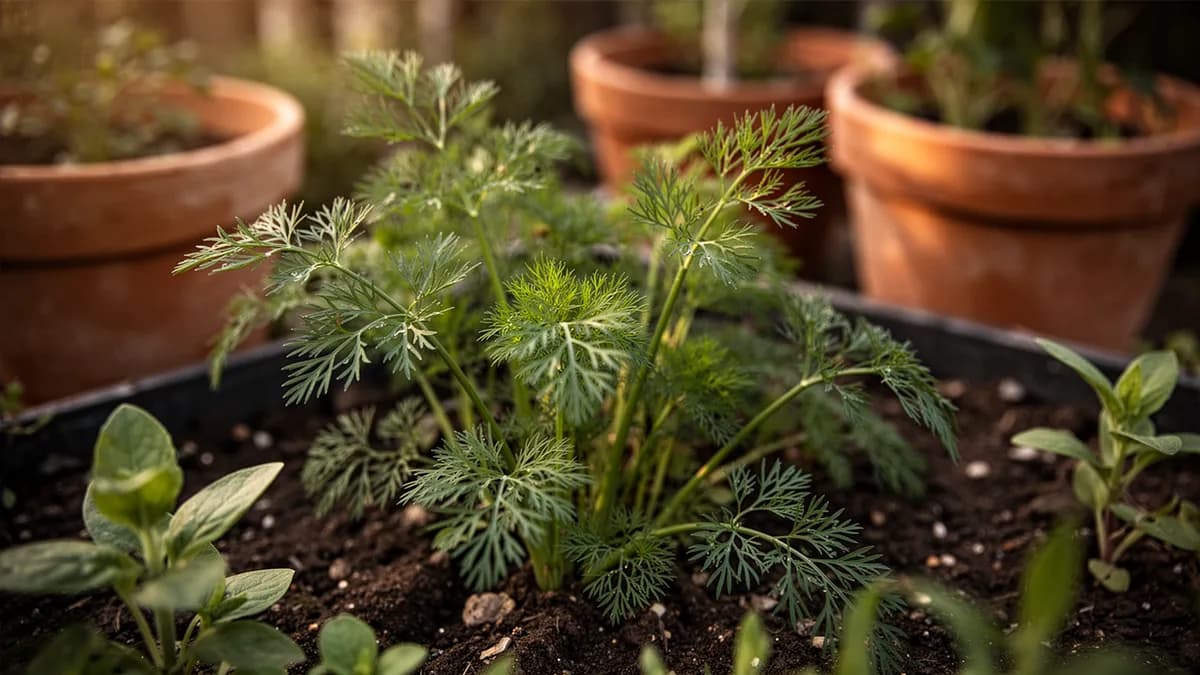
Plante junto a cebollas y puerros que repelen la mosca de la zanahoria. Los rábanos marcan las hileras y se cosechan antes. Los guisantes fijan nitrógeno. Evite eneldo maduro e hinojo.
Guisantes va a su lado. Eneldo no.
Saber de huerto de siempre, cotejado con la tabla real de Zanahoria Corazón de Buey — prueba cualquier planta que cultives.
Prueba Zanahoria Corazón de Buey en un bancal, aquí mismo
Un bancal real del planificador con Zanahoria Corazón de Buey ya plantado. Toca una planta compañera para colocarla y mira cómo responde la comprobación de vecinos: verde para buenos vecinos, rojo si hay conflicto.


Guías de cultivo relacionadas

Abónalo bien
La gran ventaja de la Corazón de Buey es su adaptabilidad a suelos pesados, arcillosos y poco profundos donde otras zanahorias no crecen bien. pH 6,0-7,0. Fertilice con fósforo y potasio, sin nitrógeno excesivo.
Temperatura ideal
Compatibilidad de zonas de rusticidad
De la semilla a la cosecha, etapa por etapa
Germinación
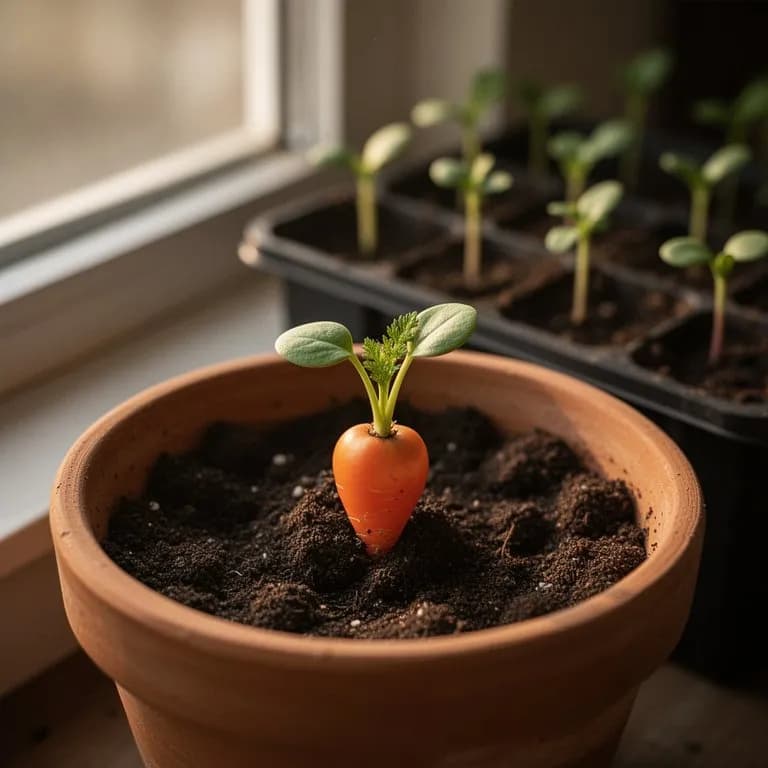
Las semillas de zanahoria Oxheart son diminutas y germinan despacio; normalmente tardan 14-21 días en suelos con temperaturas de 10-25 °C. Primero emerge la radícula fina y filamentosa, seguida de cotiledones delgados, parecidos a hierba, que no se parecen en nada a las hojas verdaderas, más plumosas, que vendrán después. La germinación es irregular si la superficie del suelo forma costra o se seca.
Establecimiento de plántulas
Aparecen las hojas verdaderas con el característico follaje de zanahoria, fino y muy dividido. El crecimiento aéreo es lento mientras la joven raíz pivotante comienza a establecerse bajo la superficie. Las plántulas son delicadas y pueden ser fácilmente superadas por las malas hierbas en esta etapa.
Desarrollo del follaje
Las partes aéreas tipo helecho crecen con vigor hasta alcanzar 30-40 cm de altura, formando una cubierta densa que finalmente ahoga las malas hierbas. Bajo el suelo, la raíz pivotante se engrosa rápidamente y empieza a desarrollar la característica forma ancha y roma de Oxheart en lugar de crecer larga y afilada.
Engrosamiento de la raíz
La raíz se ensancha de forma espectacular y adopta la silueta ancha y en forma de corazón que da nombre a esta variedad. Los hombros pueden alcanzar 8-12 cm de ancho mientras la raíz se mantiene en 10-15 cm de largo. El contenido de azúcar aumenta de forma constante, especialmente cuando las noches se vuelven más frescas a finales del verano y en otoño.
Madurez y cosecha
Las raíces alcanzan su tamaño completo a los 80-100 días, con un peso de 300-500 gramos cada una. El follaje puede empezar a amarillear ligeramente en las puntas. A diferencia de las variedades delgadas, Oxheart puede permanecer en el suelo mucho más allá de la madurez sin volverse leñosa: la pulpa densa sigue siendo dulce y tierna incluso en raíces muy grandes.
Mantén el semillero constantemente húmedo — cúbrelo con una capa fina de vermiculita o arpillera hasta que aparezcan los brotes. Siembra las semillas solo a 6 mm de profundidad. Mezclarlas con semillas de rábano ayuda a marcar las filas y a romper la costra del suelo para las zanahorias más lentas.
Cuidar Zanahoria Corazón de Buey mes a mes
Qué hacer cada mes para tu Zanahoria Corazón de Buey
Octubre
Mes actualHarvest remaining main crop before heavy freezes in zones 5-7. In milder zones (8-10), Oxheart can overwinter in the ground under 15-20 cm of straw mulch and be pulled fresh throughout winter. Clean and store carrots in damp sand in a cool root cellar at 0-4°C.
Ten claro qué hacer en tu huerto, cada mes
Un correo al empezar cada mes: qué sembrar, plantar y hacer ahora mismo — para tu Zanahoria Corazón de Buey y todo lo que crece alrededor. Más un breve curso inicial para esquivar los errores clásicos.
- Qué hacer ahora mismo
- Ajustado a tu temporada
- Curso inicial incluido
Cosechar Zanahoria Corazón de Buey
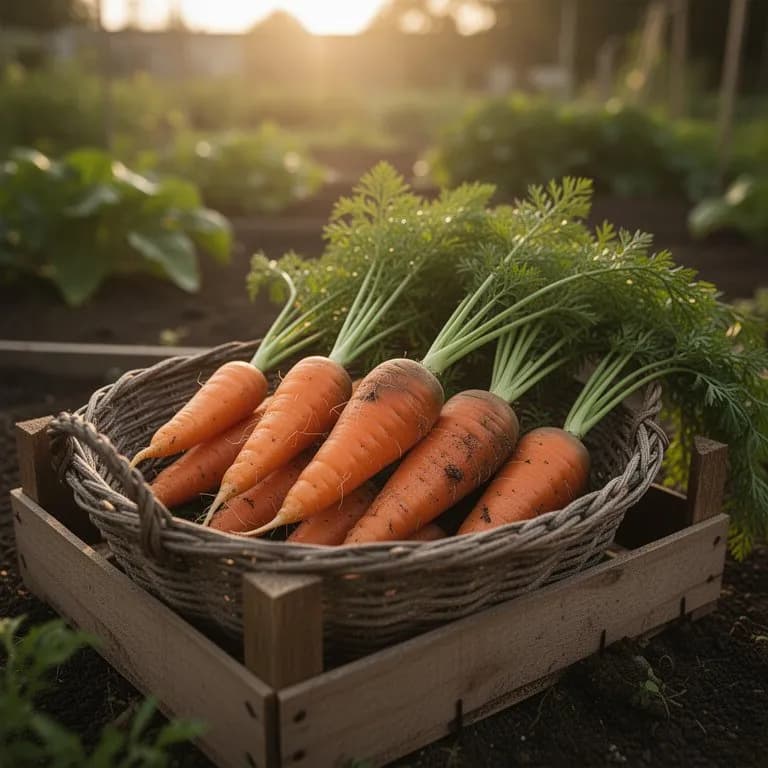
Coseche cuando las raíces tengan 10-15 cm de largo y 7-10 cm de diámetro, unos 65-75 días tras la siembra. Las raíces cortas y anchas son fáciles de extraer del suelo sin dañarlas. Tire del follaje o use una horquilla ligera.
se supone que plantas al comenzar el periodo — indica tu fecha real
Cuando los hombros anchos midan 8-10 cm de ancho, normalmente 75-90 días después de la siembra; las raíces jóvenes pueden arrancarse a los 50-60 días.
Almacenamiento y conservación
Se conservan en refrigerador 3-4 semanas sin lavar. En arena húmeda en bodega fría durante meses. Su forma compacta las hace ideales para almacenamiento. Congele en cubos o rodajas escaldadas.
Qué falla — y cómo solucionarlo
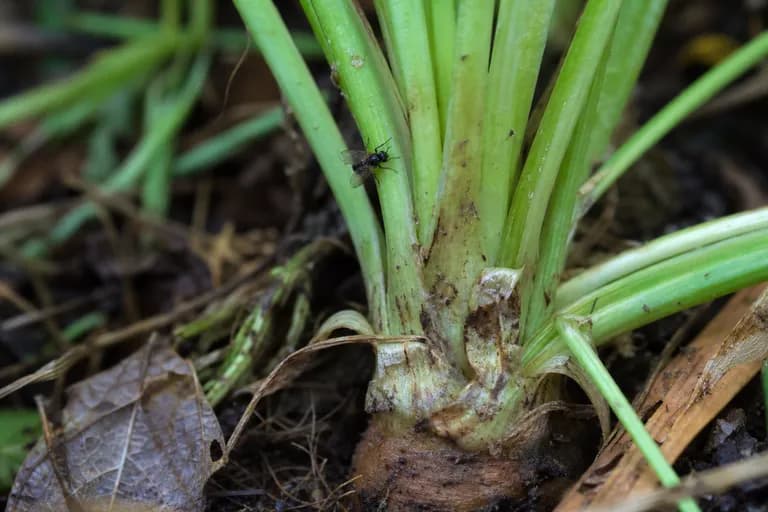
Mosca de la zanahoria (Psila rosae)
PlagaGalerías marrones en la superficie de la raíz.
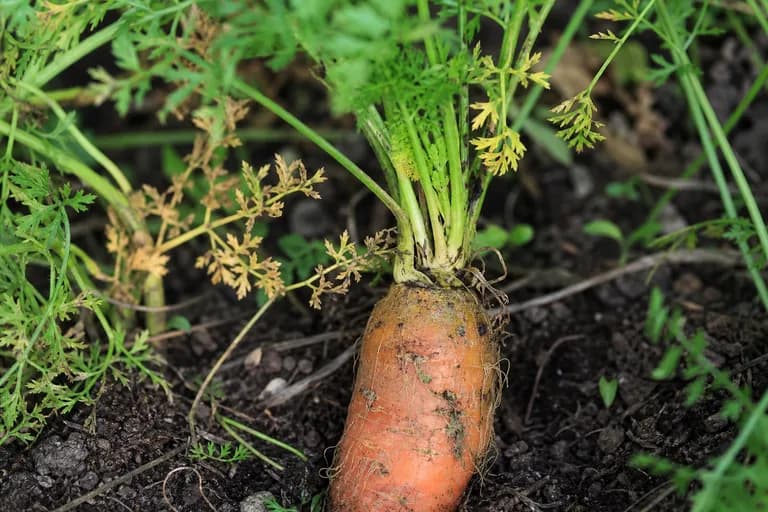
Tizón foliar (Alternaria dauci)
EnfermedadManchas marrones en hojas, necrosis progresiva.
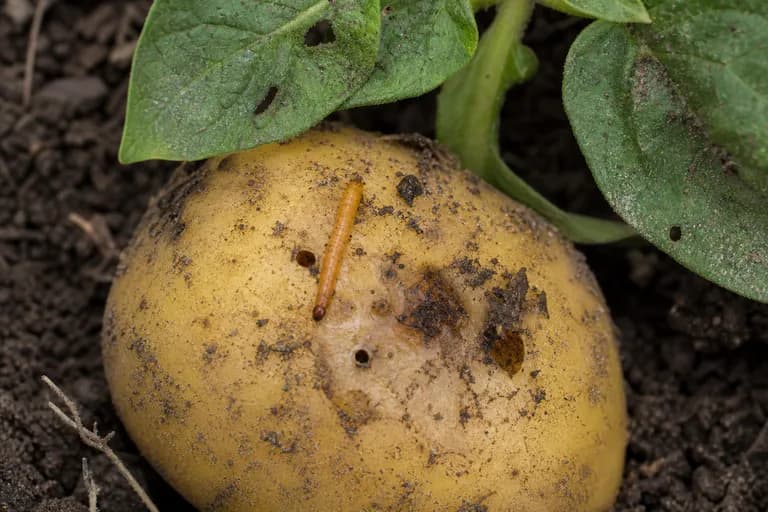
Pudrición de la raíz (Pythium spp.)
EnfermedadPudrición blanda de raíces, especialmente en suelos encharcados.
Solución de problemas comunes
En suelos sueltos y profundos las raíces pueden crecer irregularmente. El aclareo insuficiente produce raíces pequeñas y deformes. La germinación es lenta e irregular como todas las zanahorias.
Consejos de cultivo
- Do not amend Oxheart beds with fresh manure or nitrogen-rich compost — excess nitrogen produces lush, ferny tops with forked, hairy, bitter roots. Use aged compost or a low-nitrogen fertilizer (5-10-10) applied at planting time only.
- Oxheart is the ideal carrot for clay and heavy soils. Where Nantes and Imperator types fork and deform, Oxheart pushes its broad, blunt root straight down through dense ground. If your soil is truly heavy clay, grow Oxheart in raised beds with 20 cm of loosened soil and you will be rewarded.
- Thin early and thin aggressively. Oxheart needs 8-10 cm between plants — more than standard varieties — because the roots expand sideways to 8-12 cm across at the shoulder. Crowded Oxheart carrots produce stunted, misshapen roots.
- Water deeply and consistently, but avoid waterlogging. Irregular moisture causes the dense roots to crack and split as they expand. A soaker hose delivering 2.5 cm of water weekly is ideal. Mulch with straw to maintain even soil moisture.
- Sow in succession every 3 weeks from early spring through midsummer for continuous harvest. The final sowing, timed to mature during cool autumn weather, will produce the sweetest carrots of the season as cold temperatures convert root starches to sugars.
- Harvest Oxheart with a garden fork, never by pulling the tops. The wide shoulders grip the soil tightly and the tops will snap off, leaving the root stuck underground. Loosen soil on both sides of the row, then gently lever the roots upward.
- For winter storage, leave autumn-sown Oxheart in the ground and cover with 15-20 cm of straw mulch. In zones 6-9, carrots stored this way remain crisp and sweet through January or February and taste better than anything you could buy.
- Interplant Oxheart with onions, leeks, or chives — the allium scent confuses and repels carrot rust fly, the most damaging carrot pest. Alternatively, cover rows with fine insect netting from sowing time through harvest.
Cultiva tu mejor Zanahoria Corazón de Buey — y todo lo que la rodea.
Empieza un plan gratis hoy. Diseña tus bancales, coloca tu Zanahoria Corazón de Buey y deja que PlotMyGarden gestione el momento, el espaciado, las asociaciones y los recordatorios de la semilla a la cesta.
Elige tu Zanahoria Corazón de Buey
Oxheart (Guerande)
La variedad heritage francesa original con raíces de 10-12 cm en forma de corazón. Muy dulce y tierna. 65-75 días.
Short 'n Sweet
Selección moderna más uniforme con raíces de 10 cm, perfecta para suelos difíciles y contenedores. 68 días.
Danvers Half Long
Variedad americana similar pero ligeramente más alargada. Muy adaptable a diferentes suelos. 70 días.
Chantenay Red Core
Emparentada con forma cónica similar, corazón rojo y sabor dulce. Excelente almacenamiento. 70 días.
A packet of Oxheart carrot seeds ($2-4) contains 500-1000 seeds — enough to grow 50-100 kg of carrots worth $150-400 at grocery store prices of $3-4 per kg for organic carrots. Even accounting for thinning losses and imperfect germination, a single 3-meter row produces 10-15 kg of carrots worth $30-60. The massive individual root size of Oxheart means less prep work per kilogram compared to standard varieties. Carrots stored properly in sand or refrigeration last 3-6 months, reducing winter grocery bills substantially.
Recetas rápidas
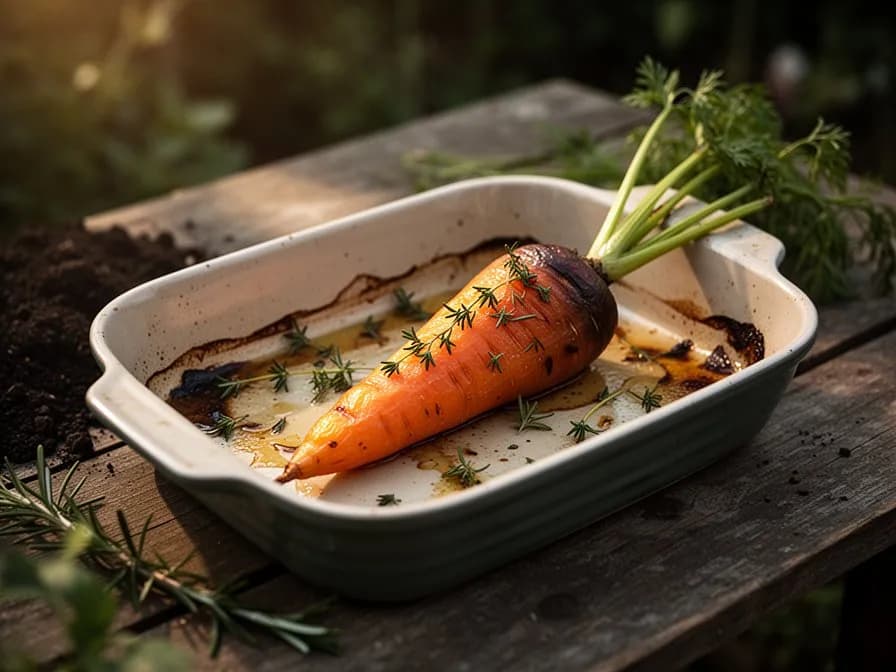
Honey-Glazed Roasted Oxheart Carrots
35 minThick Oxheart halves roasted at high heat until deeply caramelized, then finished with a honey-thyme glaze. The dense flesh of Oxheart holds its shape beautifully and develops an almost creamy interior while the edges crisp and caramelize.
7 ingredientesCreamy Oxheart Carrot Soup
40 minA velvety, naturally sweet soup that showcases the intense flavor of Oxheart carrots. The dense, low-moisture flesh produces a remarkably thick and creamy soup without needing cream or potato as a thickener.
8 ingredientesOxheart Carrot and Ginger Slaw
15 minA bright, crunchy raw slaw that highlights the natural sweetness and firm texture of freshly grated Oxheart carrot. The wide, dense roots produce thick, satisfying shreds that hold their crunch far longer than standard carrot varieties.
8 ingredientesUsos culinarios
La Corazón de Buey es excepcional asada entera por su forma compacta, donde se carameliza bellamente. Es perfecta para sopas cremosas, purés sedosos por su falta de corazón fibroso, y en guisos donde mantiene su forma. Rallada cruda es dulce y tierna.
Qué contiene
Beneficios para la salud
- One of the richest food sources of beta-carotene, which the body converts to vitamin A — essential for vision health, immune function, and skin cell renewal. A single Oxheart carrot provides several days' worth of vitamin A.
- Contains lutein and zeaxanthin, two carotenoids that accumulate in the macula of the eye and provide protection against age-related macular degeneration, the leading cause of vision loss in older adults.
- Rich in soluble fiber that binds to bile acids in the gut, helping to lower LDL cholesterol levels and supporting cardiovascular health over time.
- Provides polyacetylenes (falcarinol and falcarindiol), unique bioactive compounds with demonstrated anti-inflammatory properties that may help reduce the risk of certain cancers according to preliminary research.
- The antioxidant combination of beta-carotene, alpha-carotene, and lutein in carrots has been associated with reduced risk of cardiovascular disease in large population studies — the deeper the orange color, the higher the concentration.
- Contains natural prebiotic fiber that feeds beneficial Bifidobacterium and Lactobacillus species in the gut, supporting a healthy microbiome and improved nutrient absorption.
De dónde viene Zanahoria Corazón de Buey
The Oxheart carrot (also known as Guerande) traces its origins to the market gardens of Guerande in the Loire-Atlantique region of western France, where it was developed in the 1840s-1850s. French market gardeners bred this distinctively short, wide variety specifically for the heavy clay soils common in the region — soils where the long, tapered carrots popular at the time would fork, twist, and break during harvest. The Oxheart's blunt, heart-shaped root could be grown successfully in shallow or rocky ground, making it invaluable to farmers with less-than-ideal soil conditions.
The variety quickly spread across Europe and arrived in North America by the 1880s, where it appeared in the seed catalogs of major companies like Vilmorin in France and W. Atlee Burpee in the United States. Victorian-era gardeners prized Oxheart for its exceptional storage qualities and its unusually sweet, dense flesh that made superior soups and stews. By the early 1900s, Oxheart was one of the most widely grown carrot varieties in home gardens on both sides of the Atlantic, valued for its reliability in difficult soils and its resistance to cracking and splitting.
The rise of commercial agriculture in the mid-20th century pushed Oxheart out of the mainstream in favor of uniform, long, slender varieties like Imperator that could be machine-harvested and packed efficiently. However, Oxheart was preserved by heirloom seed savers and has experienced a strong revival among home gardeners and specialty farmers since the 1990s. Its forgiving nature in clay and rocky soils, its exceptional flavor when roasted or pureed, and its impressive yields by weight make it increasingly popular in the modern kitchen garden. Today, Oxheart is recognized as one of the classic heirloom carrot varieties and remains a testament to the practical wisdom of 19th-century French market gardeners.
Zanahoria Corazón de Buey: ¿sabías que?
Datos fascinantes sobre Zanahoria Corazón de Buey
Oxheart carrots were developed in France in the mid-1800s under the name 'Guerande' and quickly became the carrot of choice for heavy clay soils across Europe — their short, stout shape pushes through dense ground that would deform or fork a longer variety.
Zanahoria Corazón de Buey: preguntas frecuentes
¿Cuándo debo plantar Zanahoria Corazón de Buey?
¿Cuáles son buenas plantas acompañantes para Zanahoria Corazón de Buey?
¿En qué zonas de rusticidad puede crecer Zanahoria Corazón de Buey?
¿Cuánto sol necesita Zanahoria Corazón de Buey?
¿A qué distancia debo espaciar Zanahoria Corazón de Buey?
¿Qué plagas y enfermedades afectan a Zanahoria Corazón de Buey?
¿Cómo almaceno Zanahoria Corazón de Buey después de la cosecha?
¿Cuáles son las mejores variedades de Zanahoria Corazón de Buey para cultivar?
¿Qué suelo necesita Zanahoria Corazón de Buey?
Why are my Oxheart carrots forked or misshapen?
How big should Oxheart carrots be before harvesting?
Can I grow Oxheart carrots in containers?
Why are my Oxheart carrots green at the top?
How long can I store Oxheart carrots after harvest?
What is the difference between Oxheart and other short carrot varieties like Chantenay?
Acabas de leer la teoría. Ahora cultívala en piloto automático.
Todo lo que hace que Zanahoria Corazón de Buey sea delicado — el momento, el espaciado, las asociaciones, la ventana de cosecha — es justo lo que PlotMyGarden resuelve por ti, para cada planta de tu huerto.
Un plan que conoce tu clima
Indica tu ubicación una vez. Recibe fechas de siembra, abonado y cosecha basadas en tu última helada real y el pronóstico en vivo — sin adivinar con un sobre genérico.
De la sección “Cuándo plantar”Planificador de bancales de arrastrar y soltar
Diseña bancales sobre una cuadrícula. Cada planta encaja con su espaciado correcto y ves toda la temporada antes de gastar un céntimo en semillas.
De la sección “Cultivo”Conflictos de asociación, detectados a tiempo
Más de 200 buenas y malas combinaciones comprobadas en vivo mientras plantas — para que un error que arruine la temporada nunca llegue a la tierra.
De la sección “Asociaciones”Recordatorios que sí vas a seguir
“Riega las judías.” “Recoge hoy antes de que se pase.” Oportunos, concretos y ligados a las plantas que de verdad cultivas.
De la sección “Cosecha”Escalonado, programado
¿Quieres cosechar seis semanas en vez de seis días? Reparte tus siembras automáticamente y te avisa cuando toca el siguiente lote.
De la sección “Cuándo plantar”Un registro que se vuelve más listo
Cada cosecha que registras le enseña tu huerto. El plan del año que viene parte de lo que de verdad funcionó en tu suelo, no en un manual.
De la sección “Resumen”Planta estos junto a Zanahoria Corazón de Buey
Más Hortalizas de raíz
Mantén Zanahoria Corazón de Buey lejos de estos
Cultiva tu mejor Zanahoria Corazón de Buey — y todo lo que la rodea.
Empieza un plan gratis hoy. Diseña tus bancales, coloca tu Zanahoria Corazón de Buey y deja que PlotMyGarden gestione el momento, el espaciado, las asociaciones y los recordatorios de la semilla a la cesta.