False Indigo
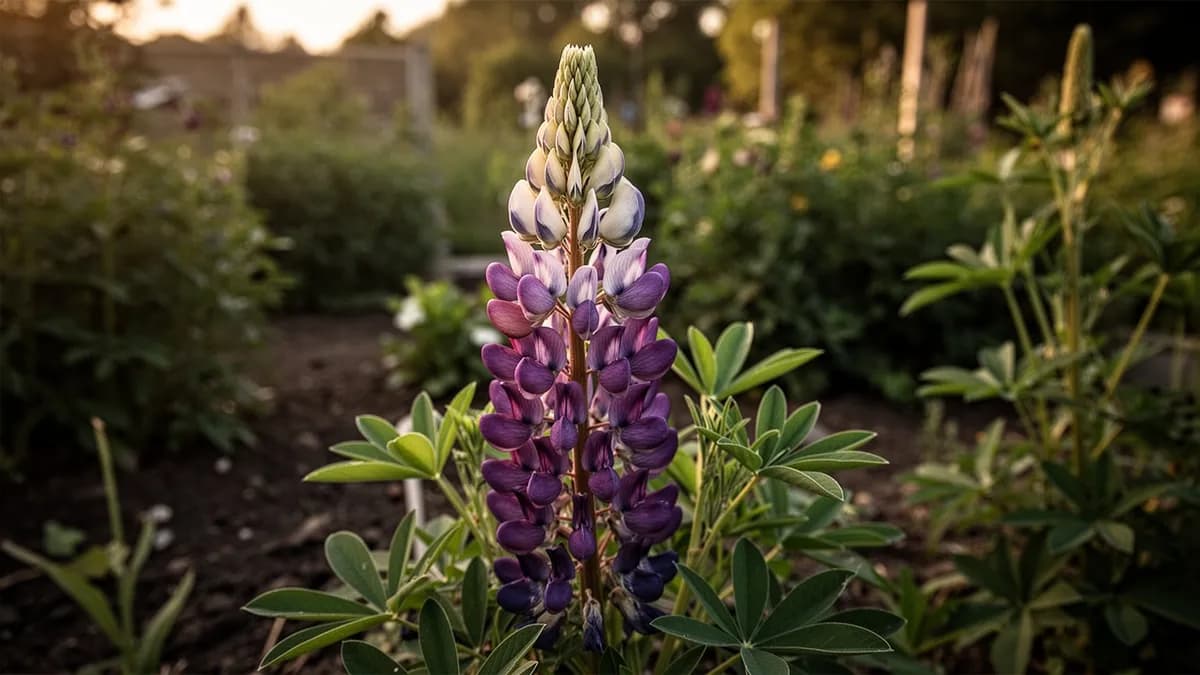
A stately native perennial with tall spikes of indigo-blue pea flowers followed by ornamental dark seed pods that rattle in the wind.





On this pageOverview
Meet False Indigo
A stately native perennial with tall spikes of indigo-blue pea flowers followed by ornamental dark seed pods that rattle in the wind. Baptisia is deep-rooted and extremely long-lived once established, but slow to reach maturity over its first two to three years. It fixes nitrogen in the soil and requires no fertilizer, staking, or division.
When to plant False Indigo
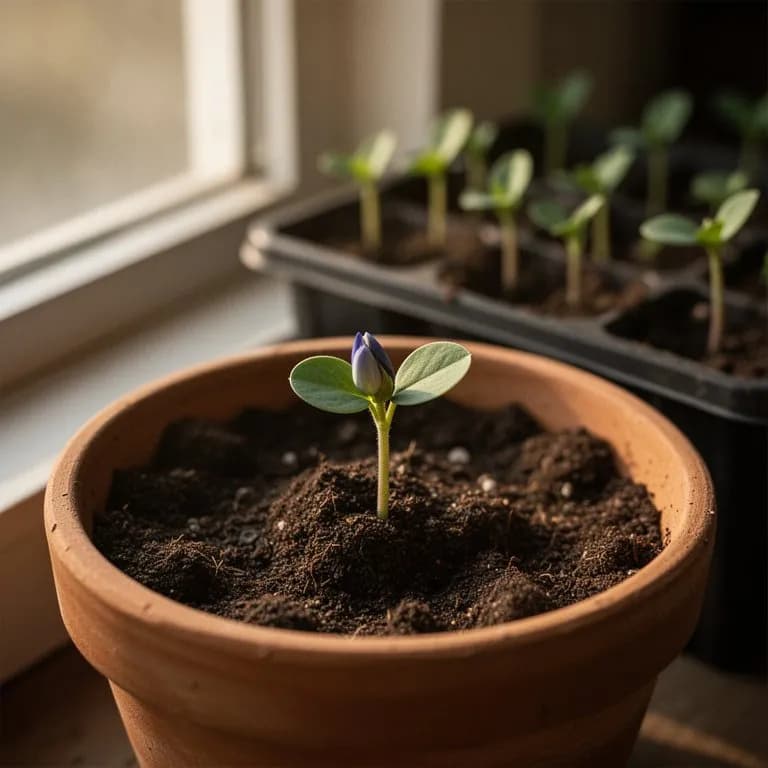
Scarify seeds with sandpaper and soak overnight in warm water before sowing. Sow 1/4 inch deep in spring, either directly outdoors or in deep pots. Germination takes 2-4 weeks at 65-70°F (18-21°C). Transplant seedlings to permanent positions while still young, before the taproot develops. Expect first flowers in the second or third year from seed.
Your False Indigo Year
Composed for Zone 7 · typical seasons · frost passes Apr 2, returns Nov 1
Plant False Indigo Mar – May, pick May – Jun. Check the planting methods below and set your climate to personalize these windows.
How to grow False Indigo
False indigo is a long-lived, deep-rooted native perennial that improves year after year once established. Plant in spring or early fall, spacing 3-4 feet apart—mature plants form substantial clumps. Choose a permanent location, as baptisia develops a deep taproot and resents transplanting.
Plant in full sun for the sturdiest growth and most prolific flowering, though it tolerates light shade. Average to poor, well-drained soil is ideal—like other legumes, baptisia fixes its own nitrogen and needs no fertilizer. Once established after 2-3 years, it is remarkably drought-tolerant.
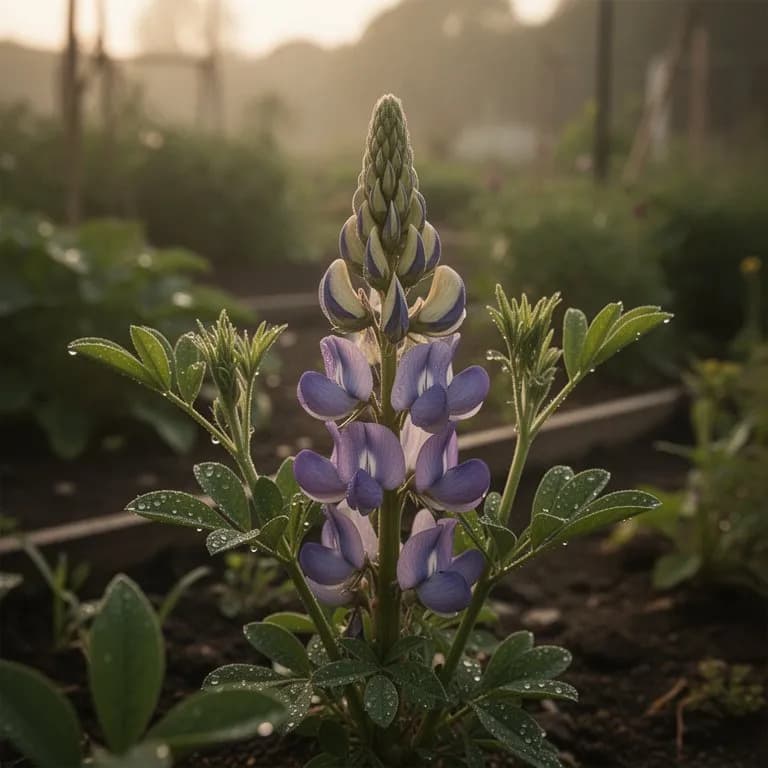
The spikes of indigo-blue pea flowers appear in late spring, followed by ornamental dark seed pods that rattle in the wind and add winter interest. The bushy, blue-green foliage is attractive all season. Baptisia rarely needs staking, division, or any maintenance beyond removing the seed pods if you prefer a tidier appearance.
2 plants fit a 4 × 8 ft bed
Each False Indigo wants 90 cm of elbow room. The planner keeps that spacing for you — every plant, every bed.
False Indigo's best neighbours
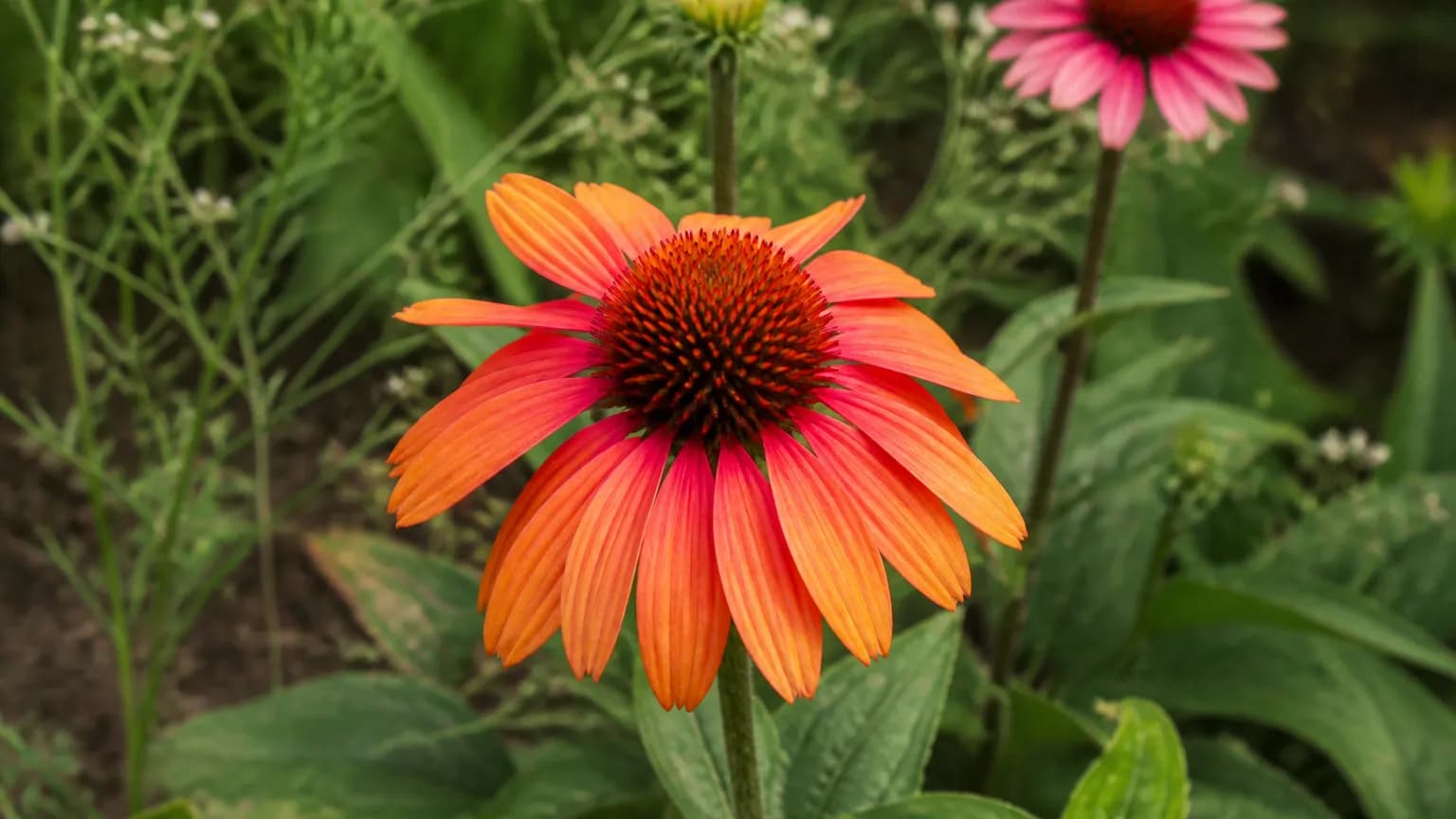
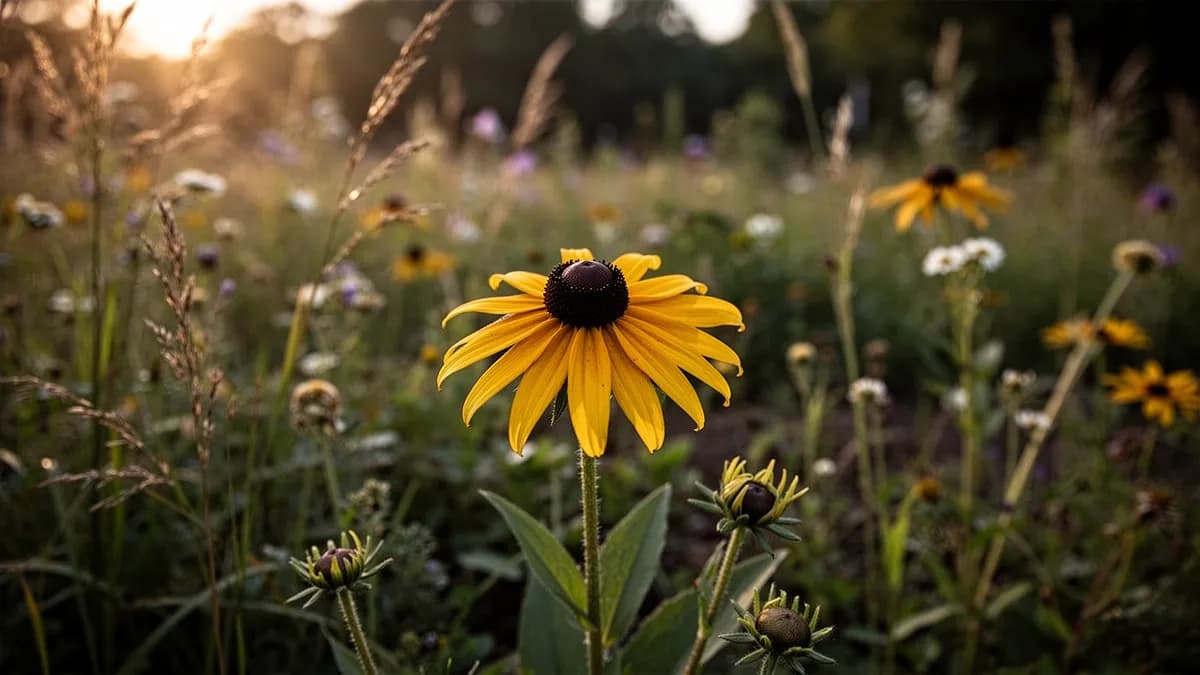
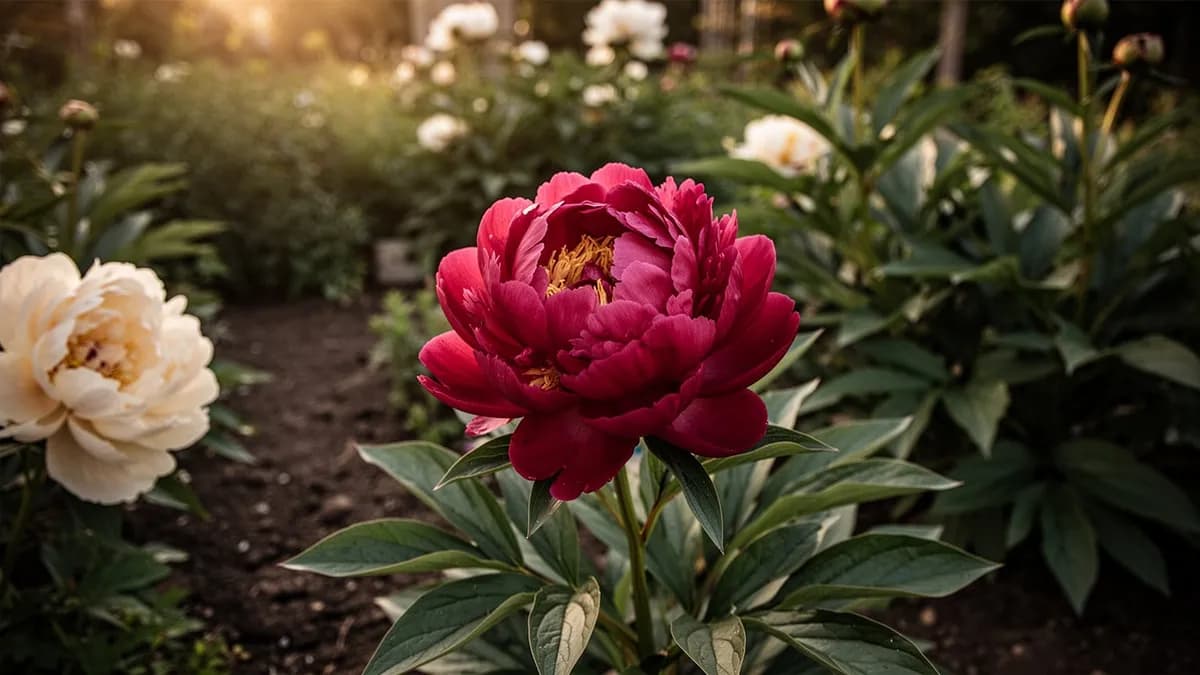
Baptisia is a classic prairie companion for coneflowers, black-eyed Susans, and ornamental grasses. The blue-green foliage provides a handsome backdrop all season. Plant with peonies and irises for a spectacular late-spring combination. The seed pods add winter interest alongside dried grass plumes and standing coneflower seed heads.
Coneflower belongs beside it.
Old growers' knowledge, checked against False Indigo's real companion table below — test any plant you're growing.
Try False Indigo in a bed — right here
A real planner bed with False Indigo already in it. Tap a companion to place it and watch the pairing checks answer — green for good neighbours, red for a clash.


Related growing guides
Feed it well
Baptisia thrives in average to poor, well-drained soil with a pH of 6.0-7.0. As a nitrogen-fixing legume, it never needs nitrogen fertilizer. Rich soil produces floppy growth. Sandy, gravelly, and clay soils are all acceptable as long as drainage is adequate. No amendments are needed beyond initial planting.
Ideal Temperature
Hardiness Zone Compatibility
From seed to harvest, stage by stage
Seed Germination
Baptisia seeds have extremely hard seed coats that are virtually impermeable to water without scarification. Under ideal conditions after proper pretreatment, seeds germinate in 10-28 days. The seedlings emerge with small rounded cotyledons that give way to the first trifoliate true leaves. Germination rates without scarification can be as low as 5-10%, but proper treatment raises this to 70-80%.
First-Year Establishment
During the first growing season, baptisia seedlings remain small above ground, typically producing only 3-5 stems reaching 15-30 cm in height. The plant devotes the vast majority of its energy to building a massive taproot and extensive root system that can extend over 1 meter deep. This deep root infrastructure is the key to the plant's extraordinary longevity and drought tolerance in future years.
Vegetative Growth (Years 2-3)
In the second and third years, baptisia plants expand noticeably, producing increasingly more stems and forming the characteristic rounded bushy habit. The blue-green trifoliate foliage becomes denser and more attractive each season. Some plants may produce their first modest flower spikes in the second year, but most reach full flowering potential in the third or fourth year. The root system continues to deepen and expand, storing reserves for decades of future growth.
Flowering and Peak Display
From the third year onward, baptisia produces its spectacular display of indigo-blue, pea-shaped flowers on erect spikes reaching 30-45 cm above the foliage. Flowering occurs over 3-4 weeks in late spring to early summer, with each spike bearing 20-40 individual blossoms that open sequentially from the bottom upward. Established clumps can produce 20-50 flower spikes, creating a breathtaking display that rivals delphiniums and lupines. Bumblebees are the primary pollinators, their weight necessary to open the specialized pea-flower structure.
Seed Pod Development
After pollination, the flowers develop into inflated pea-like seed pods that start green and gradually darken to charcoal black as they mature. Each pod contains several hard, bean-like seeds that rattle inside the dried pod when shaken by wind. The pods persist on sturdy stems through autumn and into winter, providing distinctive textural interest and a characteristic rattling sound in winter breezes.
Summer Foliage and Structure
After flowering concludes, baptisia continues to provide outstanding garden value through its attractive mound of blue-green foliage that remains clean and pest-free throughout summer. The bushy, rounded habit resembles a small shrub and serves as an excellent structural element in the perennial border. Unlike many perennials, baptisia foliage does not decline or become ratty in late summer heat.
Dormancy and Overwintering
In late autumn, baptisia foliage turns an attractive charcoal to dark brown before the stems become fully dormant. The dried stems with attached seed pods create striking winter silhouettes, especially when dusted with frost or snow. Below ground, the massive root system — which can weigh over 5 kg in mature plants — lies dormant but alive, storing the carbohydrate reserves needed to fuel the following spring's explosive growth. Baptisia roots can survive temperatures below -35°C without damage.
Scarify seeds before planting by nicking the hard seed coat with a file or nail clippers, or soak in near-boiling water for 12-24 hours until seeds visibly swell. Start seeds indoors in deep pots (at least 15 cm) 6-8 weeks before the last frost date, as baptisia develops a taproot early. Maintain soil temperature of 18-24°C (65-75°F) for best results.
Caring for False Indigo month by month
What to do each month for your False Indigo
October
You are hereFoliage turns dark charcoal-brown as the plant prepares for dormancy. Leave the entire structure standing — the dark stems and rattling pods are architecturally striking through winter. Do not cut back stems. Mark the location of young plants that may be difficult to spot in spring. In zones 3-4, apply a light protective mulch around (not on) the crown.
Know exactly what to do in your garden — every month
One email at the start of each month: what to sow, plant, and tackle right now — for your False Indigo and everything growing around it. Plus a short starter course that helps you dodge the classic mistakes.
- What to do, right now
- Matched to your season
- Starter course included
Harvesting False Indigo
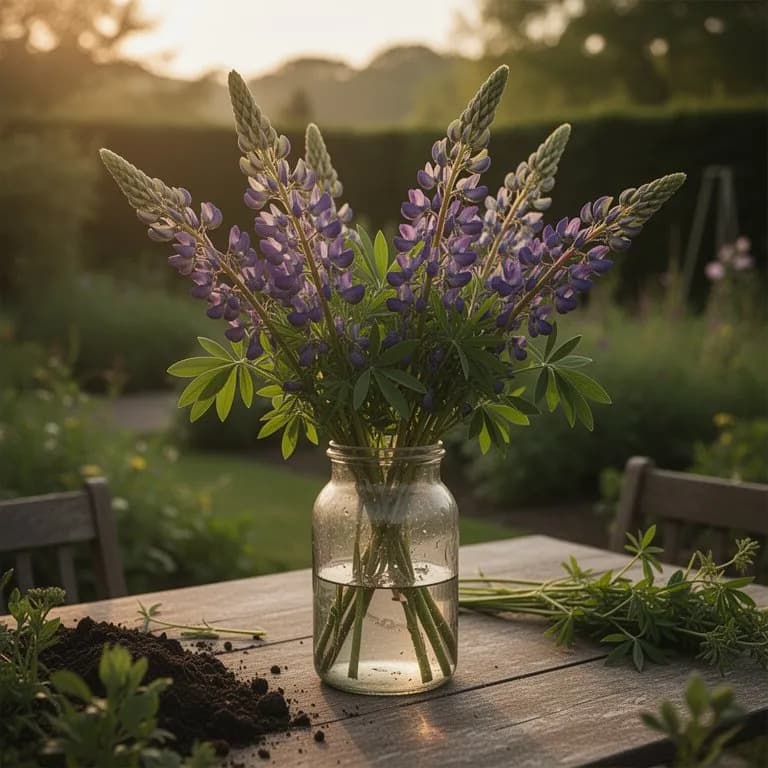
The indigo-blue flower spikes can be cut when about half the florets have opened—they make striking additions to early summer arrangements. The dark, inflated seed pods are even more popular for arrangements, both fresh and dried. Cut pods when they have turned from green to dark brown-black for dried displays. Both flowers and pods last well in the vase.
assuming you plant when the window opens — set your real date
Pick False Indigo promptly and the plant keeps producing.
Storage & Preservation
Baptisia is a fully hardy perennial needing no special storage. The dried seed pods are excellent in winter arrangements—cut stems with mature pods and stand them in a dry vase or use in wreaths. The rattling seeds inside the pods add an auditory element to dried displays. Save seed by collecting pods in autumn before they split completely.
What goes wrong — and the fix
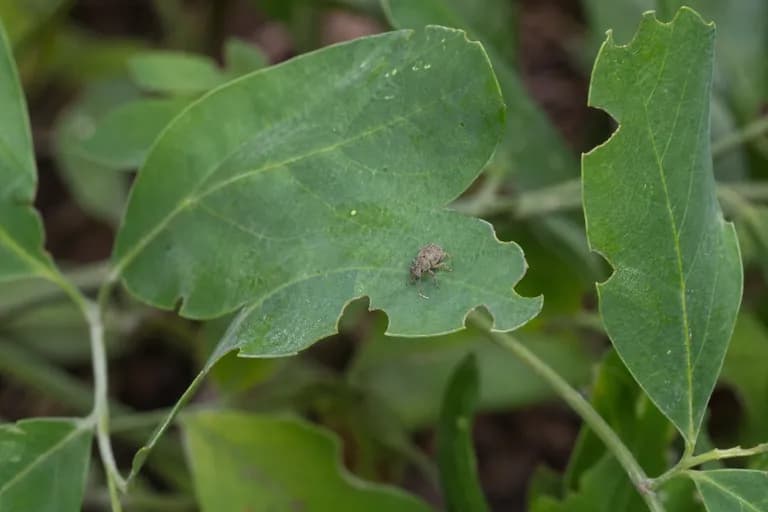
Weevils
PestNotched edges on leaves where adults have fed. Larvae may feed on roots but rarely cause significant damage.
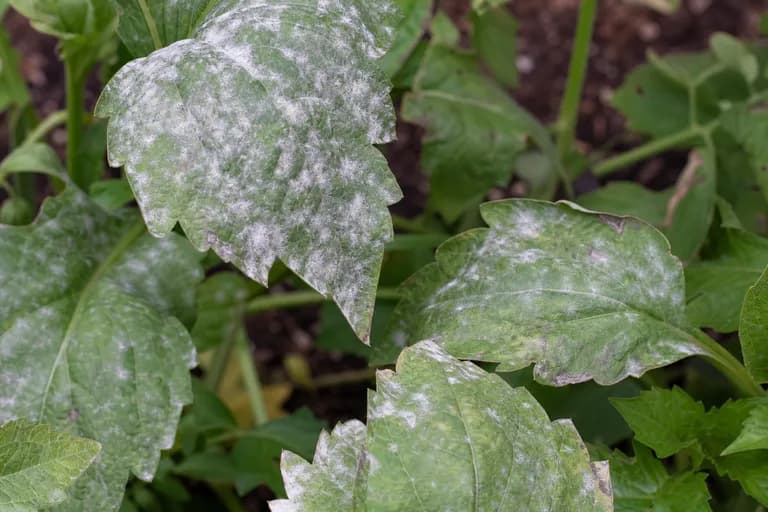
Powdery Mildew
DiseaseWhite coating on lower leaves late in the season. Primarily cosmetic.
Troubleshooting Common Problems
The biggest frustration is the 2-3 year establishment period—baptisia is slow to develop but extraordinarily long-lived once settled (50+ years). Plants that flop are getting too much shade or rich soil. Mature clumps are nearly impossible to move due to deep taproots. Self-sowing may occur but seedlings are easy to manage.
Growing Tips
- Scarify seeds before sowing to overcome the extremely hard seed coat that prevents water absorption. Nick each seed with a small file, nail clippers, or sandpaper, or soak seeds in near-boiling water and let them cool overnight. Without scarification, germination rates drop to as low as 5-10%, while properly treated seeds achieve 70-80% germination.
- Choose the planting location carefully and permanently — baptisia develops a massive taproot system extending over 1.5 meters deep within a few years, making transplanting established plants virtually impossible without severe setback or plant death. Consider the mature size of 90-120 cm tall and wide when spacing.
- Do not fertilize baptisia with nitrogen-rich products. As a legume with nitrogen-fixing root nodules, the plant manufactures its own nitrogen supply. Adding supplemental nitrogen promotes excessive foliage growth at the expense of flowers and can actually reduce the plant's natural nitrogen-fixing activity.
- Full sun is essential for compact, self-supporting growth and maximum flower production. Plants grown in partial shade become leggy, flop open in the center, and produce significantly fewer flower spikes. Aim for a minimum of 6 hours of direct sunlight daily, with 8 or more hours being ideal.
- Be patient through the first three years — baptisia follows the classic perennial pattern of 'sleep, creep, leap.' Year one, the plant seems to barely grow. Year two, it expands modestly. Year three and beyond, it takes off dramatically and begins flowering prolifically. This investment in root development pays dividends for decades.
- Excellent soil drainage is critical, especially during winter dormancy when soggy conditions can rot the crown. Amend heavy clay soils with coarse sand, gravel, and compost before planting. Baptisia thrives in average to lean soils and actually performs poorly in overly rich, moisture-retentive beds.
- Leave the entire plant structure standing through winter rather than cutting it back in autumn. The dark stems and rattling seed pods provide valuable winter garden interest, serve as overwintering habitat for beneficial insects, and the seeds feed birds. Cut back old stems only in late winter before new purple shoots emerge from the crown.
- If plants flop or split open in midsummer, install a grow-through support ring around the clump in early spring before growth reaches full height. However, flopping usually indicates insufficient sunlight — moving to a sunnier location or removing competing shade is the better long-term solution.
- Propagate by division only when absolutely necessary and only on well-established clumps at least 8-10 years old. Dig in early spring as new growth emerges, using a sharp spade to cut through the woody crown. Each division needs multiple growing points and substantial root mass. Water deeply and expect the divisions to take 2-3 years to fully reestablish.
- Combine baptisia with complementary native perennials for a low-maintenance, ecologically valuable planting. Excellent companions include Echinacea purpurea, Rudbeckia fulgida, Asclepias tuberosa, Schizachyrium scoparium, and Penstemon digitalis — all share baptisia's preference for full sun and well-drained soil.
Grow your best False Indigo yet — and everything around it.
Start a free plan today. Lay out your beds, drop in your False Indigo, and let PlotMyGarden handle the timing, spacing, companions and reminders from seed to harvest basket.
Pick your False Indigo
Baptisia australis (standard)
Classic indigo-blue flowers on 3-4 foot plants. The most widely grown and reliable species.
Baptisia 'Twilite Prairieblues'
Bicolor violet and yellow flowers on 4-5 foot plants. A stunning hybrid with extended bloom period.
Baptisia 'Solar Flare Prairieblues'
Yellow buds open to golden flowers that mature to plum-purple on the same stem. Multicolored and dramatic.
Baptisia 'Lemon Meringue'
Clear lemon-yellow flower spikes on compact 3-foot plants. A welcome alternative to the typical blue.
Baptisia australis is one of the most cost-effective perennials you can add to a garden when measured over its extraordinary lifespan. A single plant purchased from a nursery for $12-18 will live for 50 years or more without division, replacement, or significant inputs — that works out to less than 30 cents per year of garden beauty. Growing from seed is even more economical: a $4 packet yields 20-30 plants that collectively provide centuries of combined ornamental value. Because baptisia fixes its own nitrogen, it requires no fertilizer purchases. Its deep taproot eliminates the need for supplemental watering once established, saving on water bills. The plant never needs pest or disease treatments, staking, or winter protection in most zones. Compare this to annual bedding plants that cost $3-5 each and must be repurchased every single year, or to shorter-lived perennials that need division and replacement every 3-5 years. Additionally, mature baptisia clumps can be carefully divided to produce new plants worth $12-18 each at retail, and collected seeds have market value to native plant enthusiasts.
Quick recipes
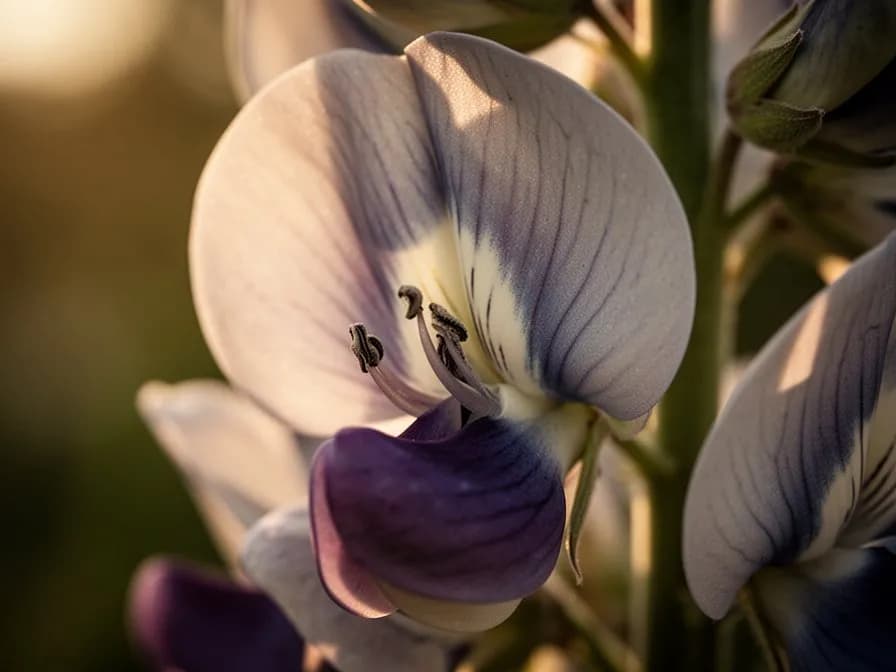
Baptisia Natural Blue Dye Bath
2 hours (plus overnight soaking)A traditional dye preparation using baptisia leaves and stems to create a soft blue-gray color on natural fibers. This historic technique was used by early American settlers as a substitute for imported indigo dye. The resulting color is more subtle than true indigo but has a beautiful, muted character all its own. Works best on wool, silk, and cotton that has been pre-mordanted with alum.
6 ingredientsBaptisia Dried Seed Pod Wreath
45 minA striking autumn and winter wreath crafted from baptisia's distinctive dark seed pod stems combined with other dried garden materials. The charcoal-black pods create dramatic contrast against lighter elements, and the natural rattling sound adds a whimsical auditory touch when the wreath catches a breeze on the door.
6 ingredientsBaptisia Pressed Flower Botanical Art
30 min (plus 2-3 weeks pressing)Preserve baptisia's beautiful indigo-blue flower spikes and elegant trifoliate leaves through traditional pressing techniques to create botanical artwork. The pressed specimens retain much of their blue-purple color and make lovely framed displays, greeting cards, or nature journal entries that celebrate this native wildflower's beauty.
6 ingredientsWhat's inside
Health Benefits
- Baptisia root extracts have been used in traditional Western herbalism and homeopathic medicine for their immunostimulant properties — modern research confirms that baptisia alkaloids can activate macrophages and stimulate white blood cell production, making it a component of some European phytotherapeutic formulations for upper respiratory infections.
- The plant contains quinolizidine alkaloids with demonstrated antimicrobial activity against certain bacteria and fungi in laboratory studies. Historically, Native American healers used carefully prepared root decoctions to treat infections, though these preparations require expert knowledge due to the plant's toxicity.
- Baptisia is included in several commercial European herbal immune-support products, most notably in combination with echinacea and thuja in the proprietary formula Esberitox, which has been the subject of multiple clinical studies showing reduced duration and severity of upper respiratory tract infections.
- Growing baptisia in the garden provides significant ecological health benefits — the plant's nitrogen-fixing roots improve soil biology, its flowers support pollinator populations essential for food crop production, and its role as a host plant for declining butterfly species contributes to biodiversity conservation.
- The presence of baptisia in garden landscapes has been associated with the broader wellness benefits of native plant gardening, including increased exposure to diverse soil microbiomes, enhanced connection with local ecology, and the stress-reducing effects of tending long-lived, low-maintenance perennial plantings.
- As a nitrogen-fixing legume, baptisia contributes to cleaner groundwater by reducing the need for synthetic nitrogen fertilizers in garden settings. Its deep root system also helps prevent soil erosion and improves soil structure over time, contributing to the environmental health of the surrounding landscape.
Where False Indigo comes from
Baptisia australis, commonly known as blue false indigo, is a stately perennial wildflower native to the eastern and central regions of North America. Its natural range extends from the Appalachian Mountains westward through the tallgrass prairies of the Midwest, and from the Great Lakes region south to Texas and Georgia. The plant thrived in open meadows, prairies, stream banks, and woodland edges, growing in the same rich grassland ecosystems as big bluestem grass, coneflowers, and blazing stars.
Native American peoples were the first to discover baptisia's practical uses. The Cherokee, Osage, and other tribes used various parts of the plant for medicinal purposes, preparing root decoctions to treat dental ailments, fevers, and infections. They also recognized the plant's dye-producing properties, using the leaves and stems to create blue pigments for decorating skin, textiles, and ceremonial objects. Some tribes used the plant as a ceremonial emetic, though they understood that large doses could be toxic and treated it with appropriate caution.
When European settlers arrived and expanded across the continent, they quickly adopted baptisia as a dye plant. True indigo (Indigofera tinctoria), imported from Asia and the tropics, was expensive and supply was unreliable in frontier communities far from coastal ports. Settlers discovered that baptisia leaves, when fermented and processed similarly to true indigo, yielded a serviceable blue dye — not as vivid as the tropical original, but adequate for everyday cloth. This practical substitution gave rise to the common names blue false indigo and wild indigo, which persist to this day.
The plant gained renewed attention during the American Civil War when Union naval blockades severed Confederate access to imported dyes. Southern dyers turned to baptisia as one of several native dye plants to color military uniforms and civilian clothing. After the war, synthetic aniline dyes rapidly replaced natural dye sources, and baptisia's utilitarian role faded into history.
In the twentieth century, baptisia found a new identity as an outstanding ornamental garden plant. Plant breeders began selecting for flower color, plant habit, and vigor, creating hybrids with flowers in shades of yellow, cream, chocolate, lavender, and bicolor combinations beyond the original species' deep indigo blue. Today, baptisia is celebrated as one of the finest native perennials for sustainable, low-maintenance landscaping, valued for its extraordinary longevity, drought tolerance, nitrogen-fixing ability, and four-season garden interest.
False Indigo: did you know?
Fascinating facts about False Indigo
Baptisia australis can live for 50 years or more in the same spot without division or replanting, making it one of the longest-lived perennials in the garden. Some documented specimens in botanical gardens have been growing in the same location for over a century, forming massive clumps with root systems weighing more than 10 kilograms.
False Indigo questions, answered
When should I plant False Indigo?
What are good companion plants for False Indigo?
What hardiness zones can False Indigo grow in?
How much sun does False Indigo need?
How far apart should I space False Indigo?
What pests and diseases affect False Indigo?
How do I store False Indigo after harvest?
What are the best False Indigo varieties to grow?
What soil does False Indigo need?
Why is my baptisia not flowering even after several years?
Can I move or transplant an established baptisia plant?
Is baptisia poisonous to children, pets, or livestock?
How do I prevent baptisia from flopping open and losing its shape?
How long does it take for baptisia to reach full size from seed?
What are the best companion plants to grow alongside baptisia?
You just read the theory. Now grow it on autopilot.
Everything that makes False Indigo fiddly — the timing, the spacing, the companions, the harvest window — is exactly what PlotMyGarden handles for you, for every plant in your garden.
A plan that knows your weather
Set your location once. Get sow, feed and harvest dates built around your real last-frost date and live forecast — no more guessing from a generic seed packet.
From the “When to plant” sectionDrag-and-drop bed planner
Design beds on a grid. Every plant snaps to its proper spacing, and you can see your whole season laid out before you spend a cent on seed.
From the “Growing guide” sectionCompanion conflicts, caught early
200+ good-and-bad pairings checked live as you plant — so a season-wrecking mistake never makes it into the ground.
From the “Companions” sectionReminders you'll actually act on
“Water the beans.” “Pick today before it turns.” Timely, specific, and tied to the plants you're really growing.
From the “Harvest” sectionSuccession, scheduled
Want a harvest for six weeks, not six days? It spaces your sowings automatically and reminds you when each new block is due.
From the “When to plant” sectionA record that gets smarter
Every harvest you log teaches it your garden. Next year's plan starts from what actually worked in your soil, not a textbook's.
From the “Overview” sectionPlant these alongside False Indigo
More Perennials
Grow your best False Indigo yet — and everything around it.
Start a free plan today. Lay out your beds, drop in your False Indigo, and let PlotMyGarden handle the timing, spacing, companions and reminders from seed to harvest basket.