Tomate Cherry
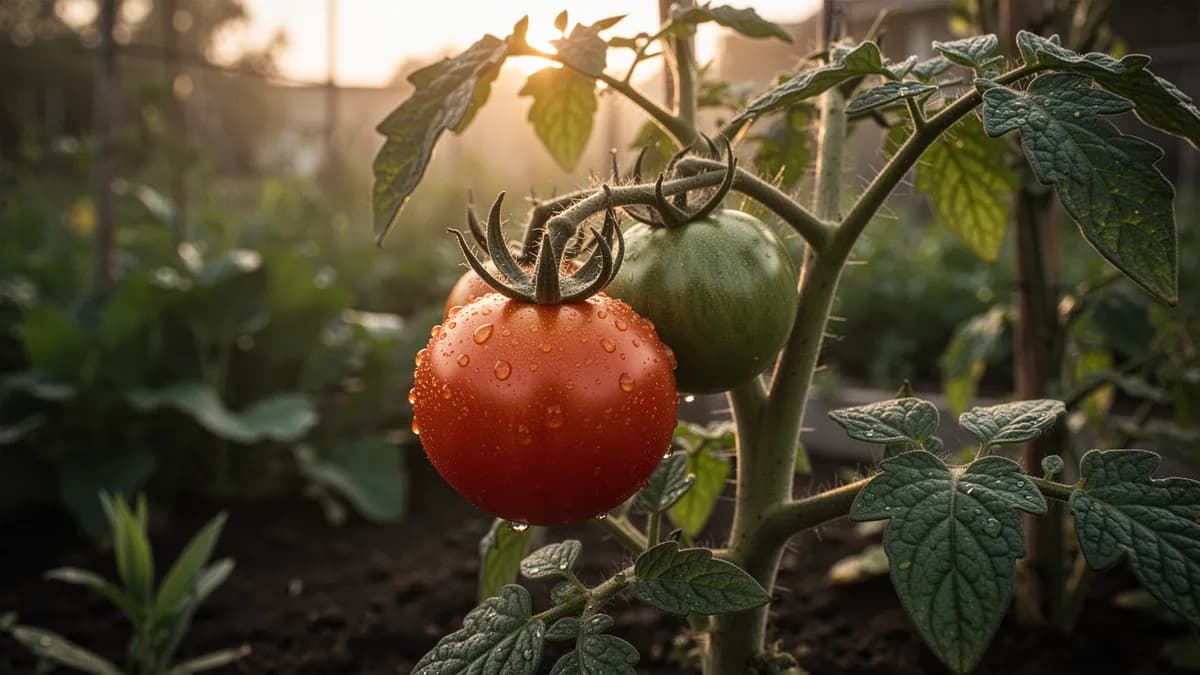
Tomates pequeños y dulces, ideales para snacks y ensaladas.





En esta páginaResumen
Conoce Tomate Cherry
Tomates pequeños y dulces, ideales para snacks y ensaladas. Muy productivos.
Cuándo plantar Tomate Cherry
Siembre en alvéolos o macetas pequeñas en interior con luz artificial 6-8 semanas antes del trasplante. Endurezca las plántulas al exterior durante 7-10 días antes de plantar definitivamente.
Tu año de Tomate Cherry
Ajustado a Zona 7 · temporada típica · la helada se va hacia el 2 abr y vuelve hacia el 1 nov
Planta Tomate Cherry Feb – May y cosecha Jul – Oct. Consulta los métodos de plantación y elige tu clima para adaptar los periodos.
Cómo cultivar Tomate Cherry
Elija un lugar con pleno sol (mínimo 8 horas) y suelo bien drenado, fértil y profundo con pH 6,0-6,8. Enmiende con compost y un poco de cal si el suelo es ácido.
Siembre en interior 6-8 semanas antes de la última helada. Trasplante al exterior cuando las noches superen los 10°C, con 50-60 cm entre plantas. Instale tutores o jaulas desde el inicio.
Riegue de forma profunda y regular, evitando mojar el follaje. Abone con fertilizante rico en fósforo y potasio. Despunte los brotes laterales para concentrar la energía en los frutos.
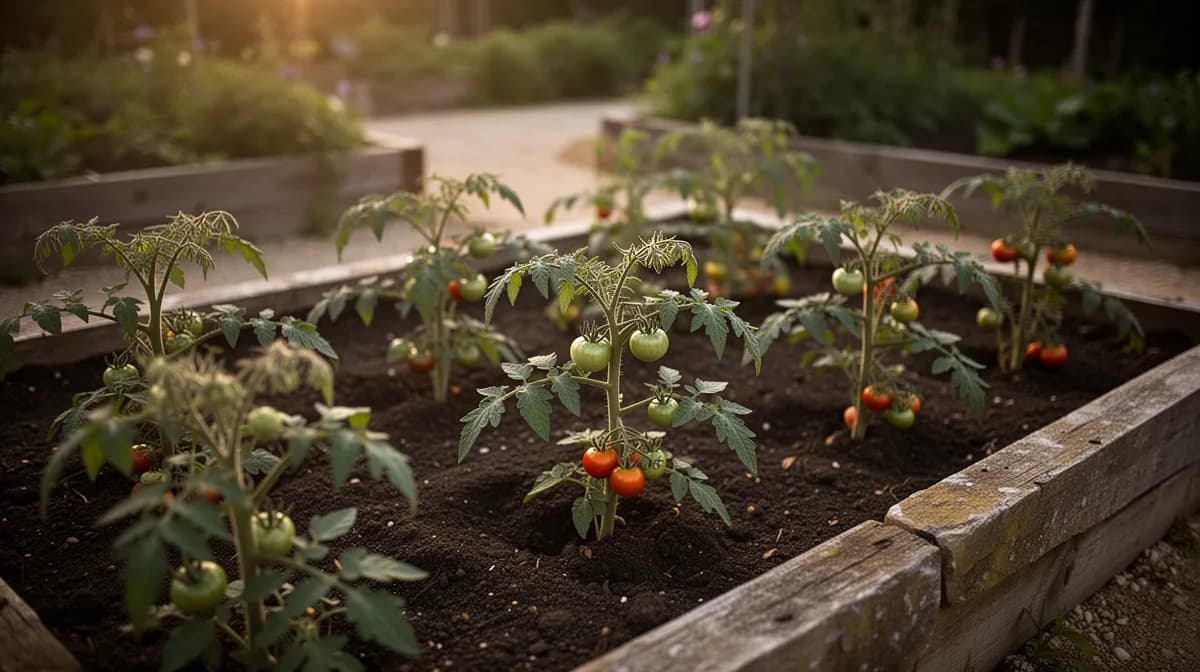
10 plantas caben en un bancal de 120 × 240 cm
Cada Tomate Cherry pide 45 cm de margen. El planificador guarda ese marco por ti — cada planta, cada bancal.
Los mejores vecinos de Tomate Cherry
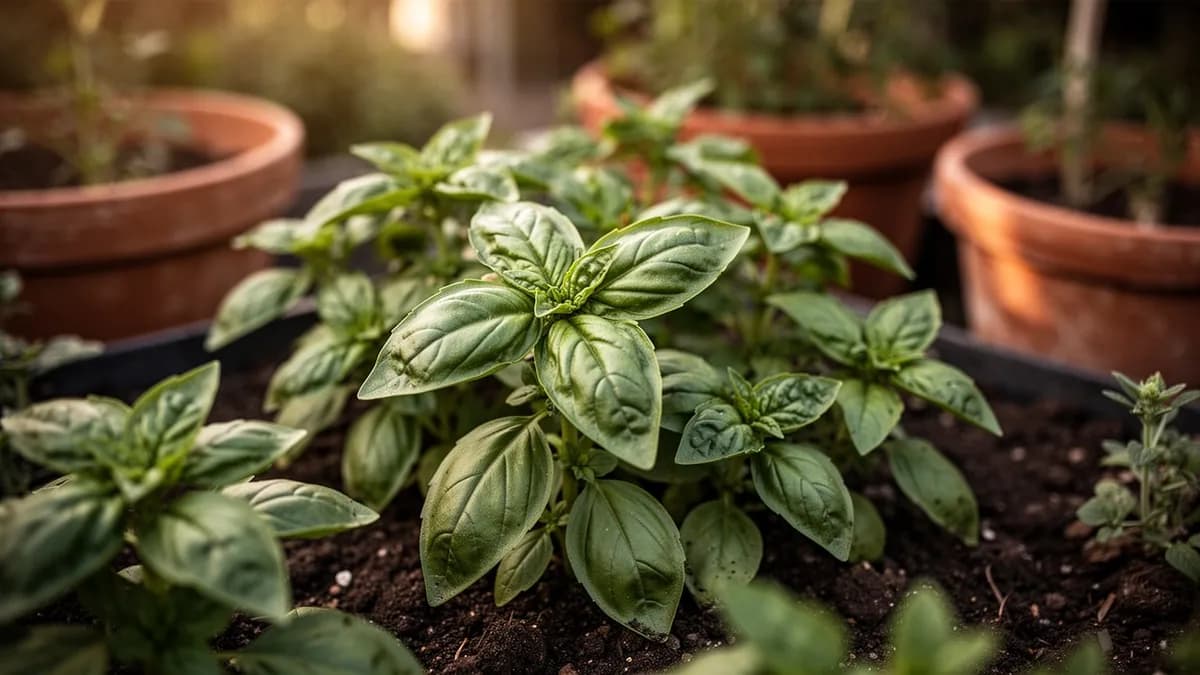
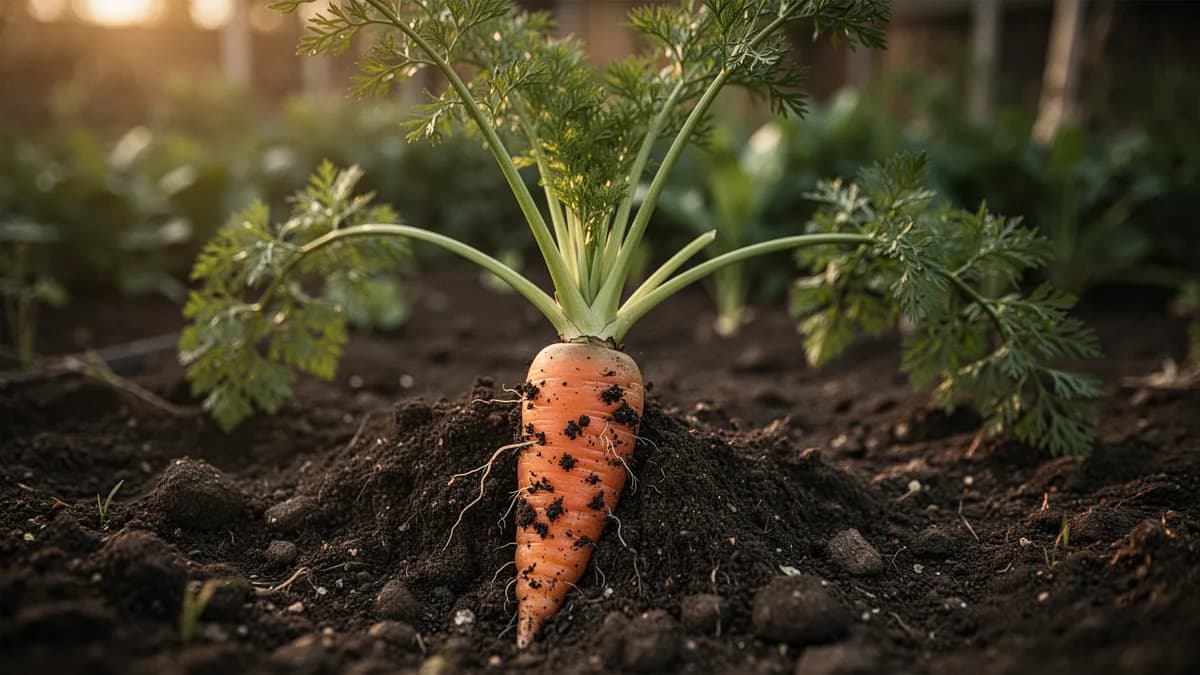
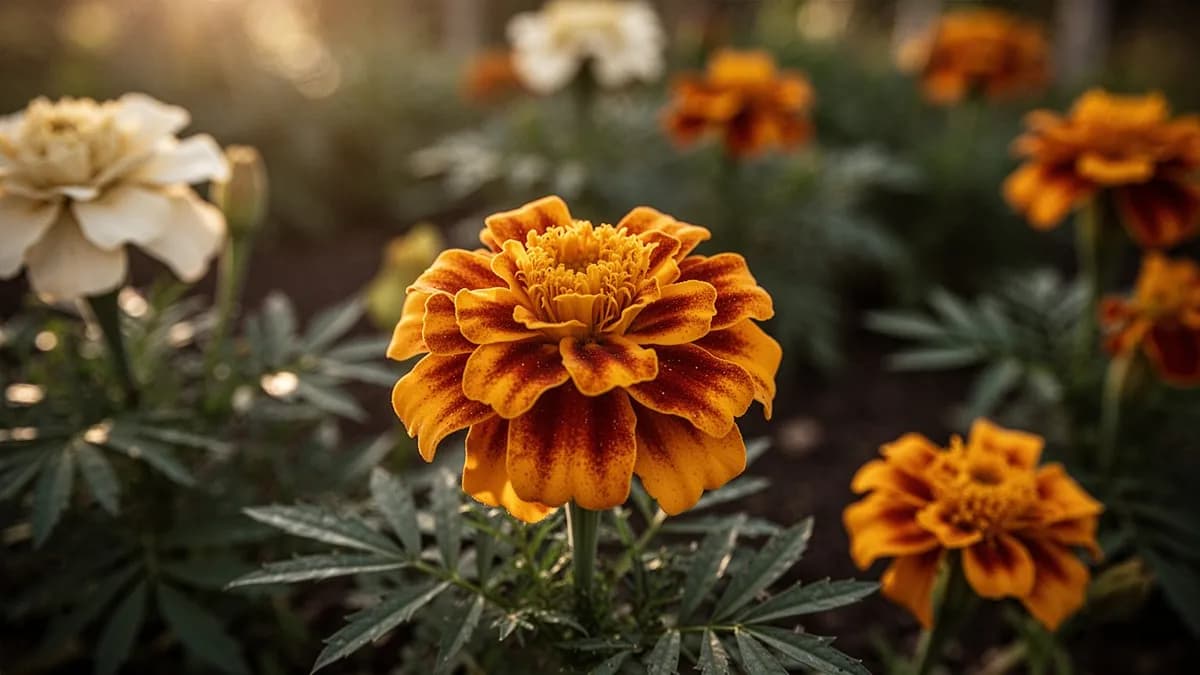
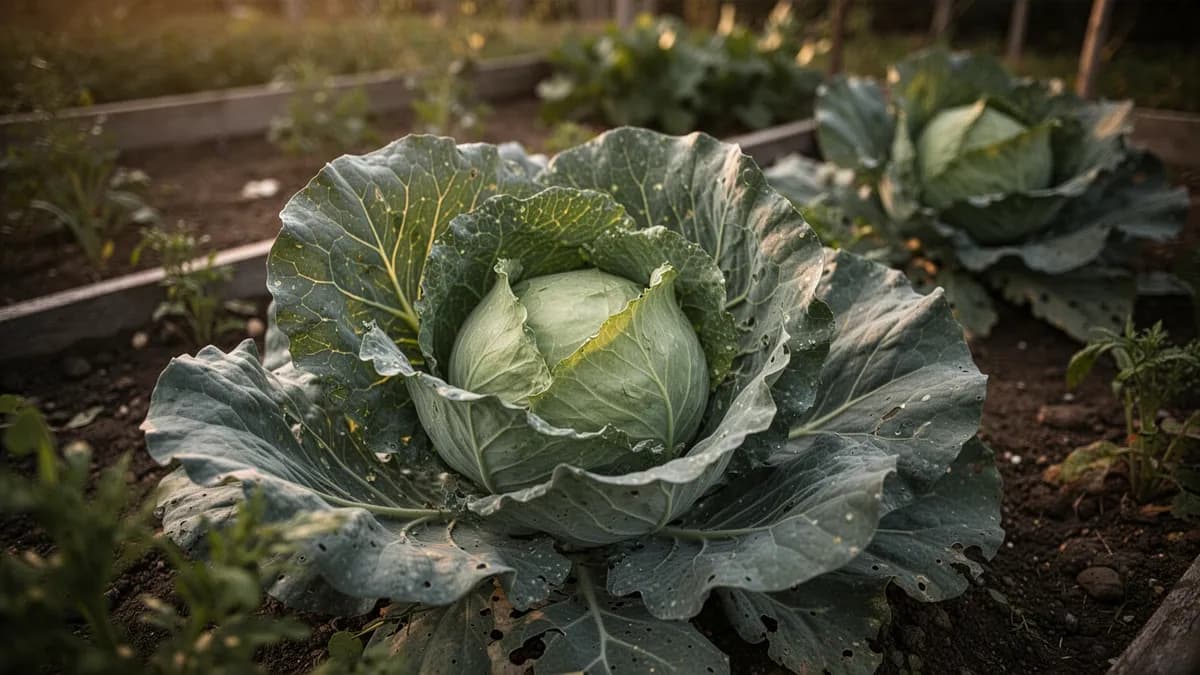
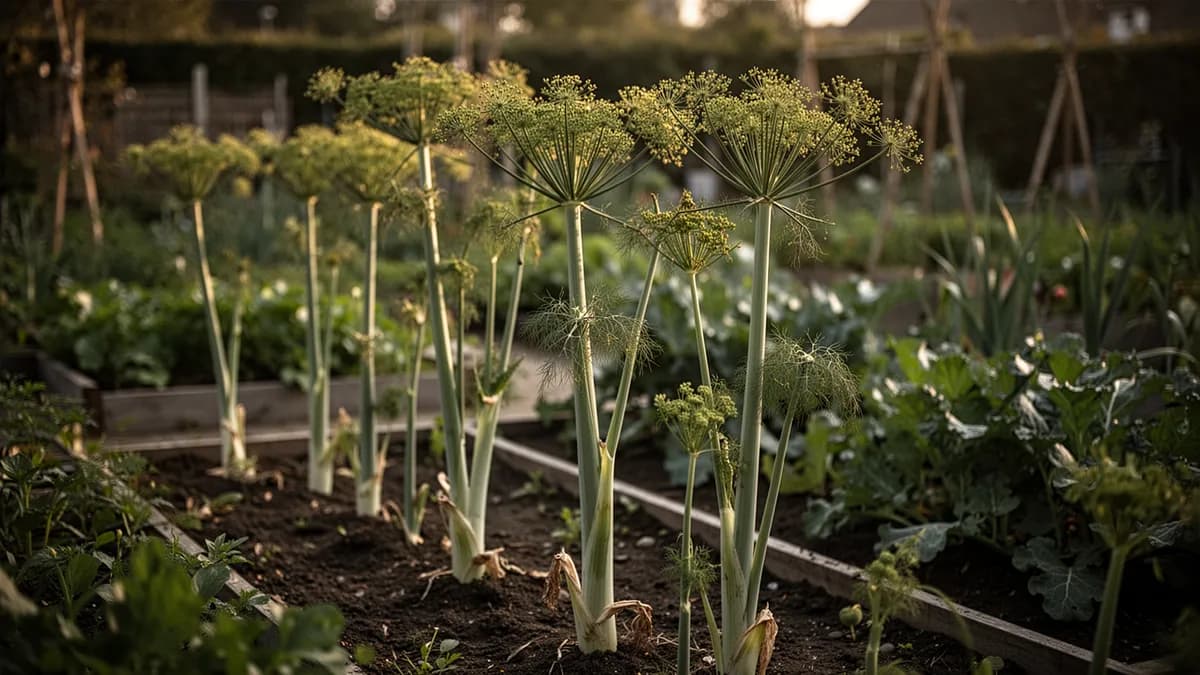
La albahaca mejora el sabor y repele plagas. Se asocia bien con zanahorias, pepinos y perejil. Evite plantar junto a hinojo y coles.
Albahaca va a su lado. Repollo no.
Saber de huerto de siempre, cotejado con la tabla real de Tomate Cherry — prueba cualquier planta que cultives.
Prueba Tomate Cherry en un bancal, aquí mismo
Un bancal real del planificador con Tomate Cherry ya plantado. Toca una planta compañera para colocarla y mira cómo responde la comprobación de vecinos: verde para buenos vecinos, rojo si hay conflicto.


Guías de cultivo relacionadas
Abónalo bien
Requiere suelo profundo y bien drenado con pH 6,0-6,8, enriquecido con compost. Abone con fertilizante balanceado al trasplantar y cambie a uno bajo en nitrógeno cuando florezca.
Temperatura ideal
Compatibilidad de zonas de rusticidad
De la semilla a la cosecha, etapa por etapa
Germinación
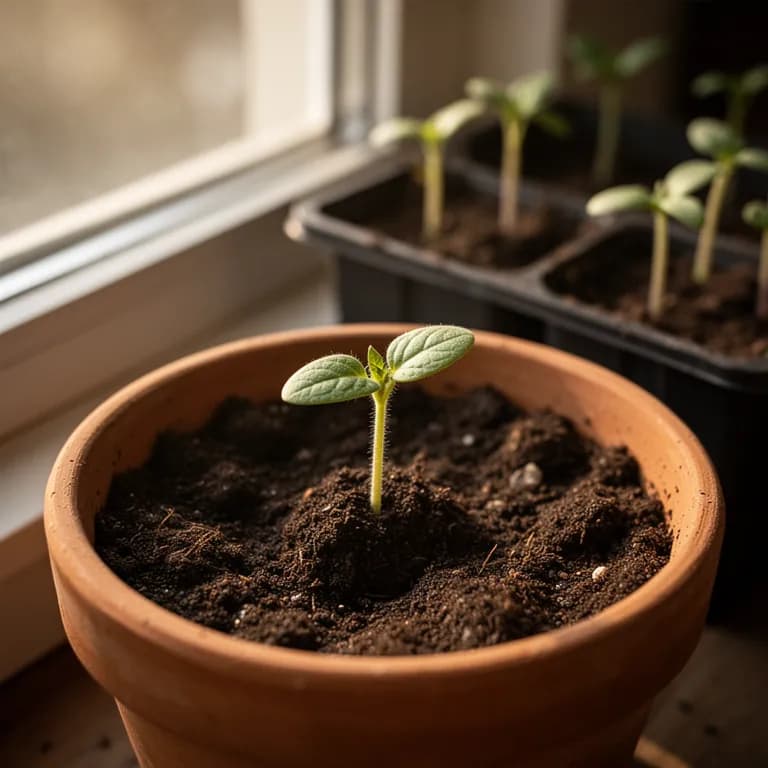
Las semillas germinan en condiciones cálidas y húmedas, formando primero una radícula blanca y luego el hipocótilo que empuja dos cotiledones redondeados por encima de la superficie del suelo. La germinación es más rápida a 24-29 °C y suele tardar 5-10 días. La luz no es necesaria para germinar, pero debe proporcionarse en cuanto emerjan las plántulas.
Desarrollo de plántula
Las hojas verdaderas con bordes serrados característicos se desarrollan por encima de los cotiledones lisos. El tallo se engrosa y aparecen pequeños pelos (tricomas) en su superficie. Las plántulas crecen de forma constante bajo luz intensa y desarrollan sus primeros grupos de hojas compuestas. Los sistemas radiculares se expanden rápidamente en esta etapa.
Crecimiento vegetativo
Después del trasplante al exterior, la planta entra en un crecimiento vegetativo rápido. Las variedades indeterminadas desarrollan un tallo principal y múltiples ramas laterales (chupones) en cada axila de la hoja. El follaje se vuelve denso y frondoso, y el sistema radicular se expande con rapidez en el suelo circundante. Las plantas pueden crecer 10-15 cm por semana cuando hace calor.
Floración y cuajado
A lo largo de los tallos aparecen pequeñas flores amarillas brillantes en forma de estrella, agrupadas en racimos. Cada racimo suele tener 6-12 flores que se abren durante varios días. Las flores se autofecundan, pero se benefician del viento suave o de la visita de insectos, que hacen vibrar el polen sobre el estigma. Los pequeños frutos verdes comienzan a formarse a los pocos días de una polinización exitosa.
Desarrollo y maduración del fruto
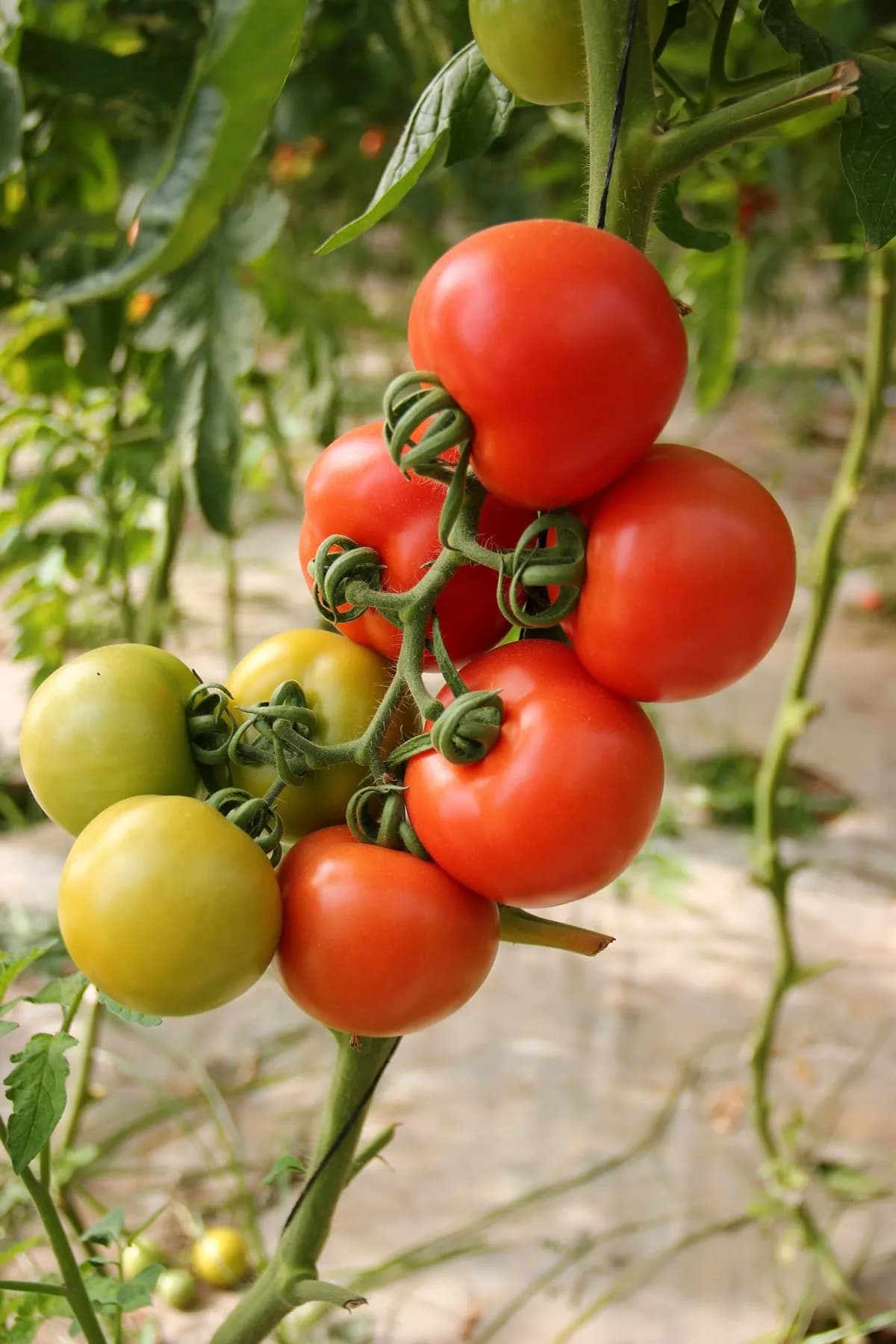
Los frutos verdes engordan durante 3-4 semanas y luego comienzan el proceso de maduración llamado etapa quebrada: aparece un rubor de color en el extremo de la flor y se extiende hacia arriba en 5-7 días. Los tomates cherry maduros se desprenden fácilmente del cáliz con un suave giro. La planta florece, cuaja frutos nuevos y madura los más viejos en diferentes racimos al mismo tiempo.
Cosecha extendida
Los tomates cherry indeterminados continúan produciendo nuevos racimos de flores y frutos al mismo tiempo durante 8-12 semanas hasta que la primera helada fuerte los mata. Una sola planta sana puede producir 200-500 frutos en la temporada. La producción alcanza su pico a mediados del verano y sigue a buen ritmo hasta principios de otoño a medida que bajan las temperaturas.
Usa una manta térmica para mantener una temperatura constante del sustrato de 24-27 °C. Mantén el sustrato de siembra uniformemente húmedo, pero no encharcado. Retira las campanas de humedad en cuanto emerjan las plántulas para evitar el mal del almácigo.
Cuidar Tomate Cherry mes a mes
Qué hacer cada mes para tu Tomate Cherry
Octubre
Mes actualFinal harvests in most zones before frost. Pick all remaining fruits, including green ones — they ripen indoors on a countertop or in a paper bag with a banana. Pull spent vines and compost disease-free material only.
Ten claro qué hacer en tu huerto, cada mes
Un correo al empezar cada mes: qué sembrar, plantar y hacer ahora mismo — para tu Tomate Cherry y todo lo que crece alrededor. Más un breve curso inicial para esquivar los errores clásicos.
- Qué hacer ahora mismo
- Ajustado a tu temporada
- Curso inicial incluido
Cosechar Tomate Cherry
Coseche cuando los frutos estén completamente coloreados y ligeramente blandos al tacto. Los tomates cherry se pueden dejar en la planta varios días sin perder calidad.
se supone que plantas al comenzar el periodo — indica tu fecha real
Cosecha cuando los frutos alcancen su color completo y se desprendan fácilmente con un tirón o giro suave.
Almacenamiento y conservación
Almacene a temperatura ambiente alejado del sol directo. Nunca refrigere tomates frescos, ya que pierde su sabor. Se pueden secar al sol o conservar en aceite.
Qué falla — y cómo solucionarlo
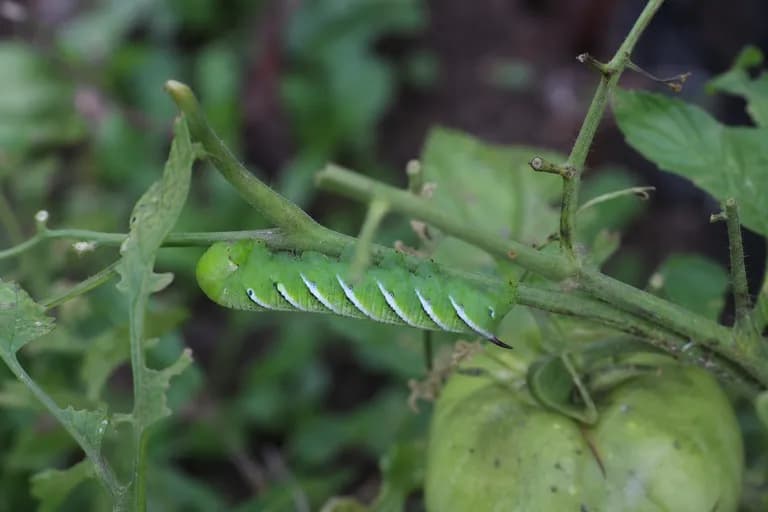
Gusano del tomate
PlagaOrugas grandes que devoran hojas y tallos, dejando excrementos negros.
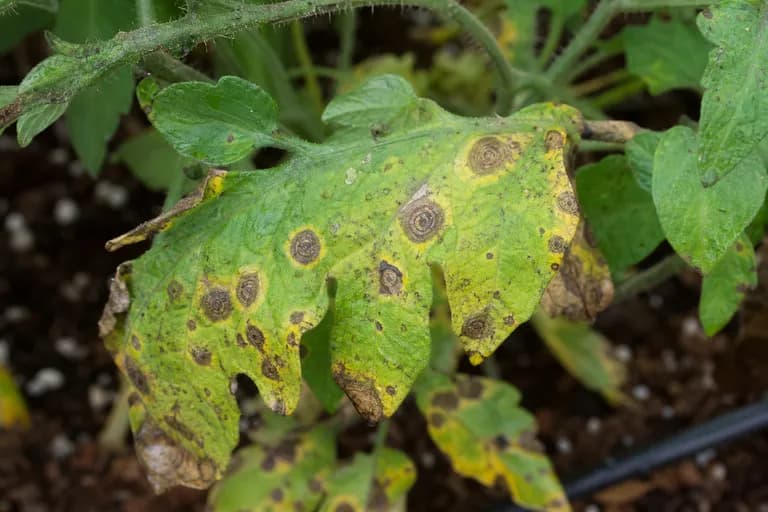
Mosca blanca
PlagaInsectos blancos diminutos que vuelan al agitar la planta, debilitando el cultivo.
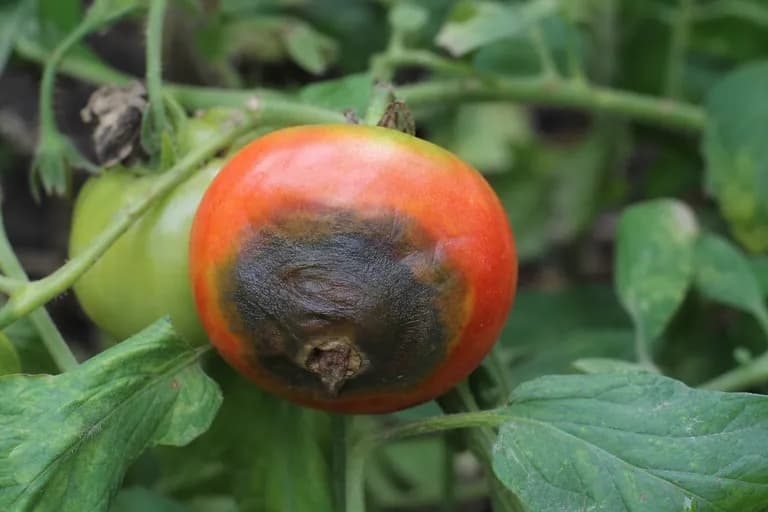
Tizón tardío
EnfermedadManchas acuosas gris-marrones en hojas y frutos que se expanden rápidamente.
Solución de problemas comunes
El riego irregular provoca el agrietamiento de los frutos. La podredumbre apical se debe a la falta de calcio o riego irregular. El exceso de nitrógeno favorece el follaje en lugar de los frutos.
Consejos de cultivo
- Bury transplants deep — remove the lowest leaves and plant the stem up to the remaining foliage. Every buried node will sprout adventitious roots, creating a far stronger root system than surface planting provides.
- Prune indeterminate varieties to 2-3 main stems by removing suckers when they are small. This improves air circulation, reduces disease pressure, and channels energy into larger, sweeter fruit rather than excessive foliage.
- Water deeply at the base rather than overhead — wet foliage dramatically increases the risk of early blight, septoria leaf spot, and other fungal diseases. Drip irrigation or soaker hoses are ideal for tomatoes.
- Install support structures at transplanting time, not after plants are large and difficult to manage. Cherry tomato vines become extremely heavy with hundreds of fruits and will collapse inadequate supports by midsummer.
- Harvest daily during peak production without fail. Ripe cherry tomatoes left on the vine for even a day or two attract fruit flies, split after rain, and fall to the ground where they attract slugs and rodents.
- Grow at least two different varieties for a mix of flavors, colors, and ripening times. Sun Gold (orange, intensely sweet), Sweet 100 (red, prolific), and Black Cherry (complex, wine-like) make an excellent trio.
- Pinch off all new flower clusters 30 days before your expected first frost. This forces the plant to ripen existing green tomatoes rather than wasting energy on fruits that will never mature before the season ends.
- Save seeds from your best open-pollinated (non-hybrid) cherry tomatoes by fermenting the gel from ripe fruits in water for 3 days, rinsing clean, and drying thoroughly. Stored seeds remain viable for 4-6 years.
Cultiva tu mejor Tomate Cherry — y todo lo que la rodea.
Empieza un plan gratis hoy. Diseña tus bancales, coloca tu Tomate Cherry y deja que PlotMyGarden gestione el momento, el espaciado, las asociaciones y los recordatorios de la semilla a la cesta.
Elige tu Tomate Cherry
Sun Gold
Frutos anaranjados extraordinariamente dulces y afrutados. Muy productiva. Madura en 57 días.
Sweet 100
Frutos rojos en racimos abundantes, producción continua toda la temporada. 65 días.
Black Cherry
Frutos de color oscuro con sabor complejo y ligeramente ahumado. Muy apreciada por gourmets.
A single cherry tomato plant costing $3-5 (or pennies from seed) can produce 4-8 kg of fruit per season, while organic cherry tomatoes sell for $6-10 per pint (roughly 300g) at grocery stores and farmers markets. Growing just 2-3 plants easily saves $80-150 per season on fresh cherry tomatoes alone. The savings are even more significant considering that homegrown vine-ripened cherry tomatoes are vastly superior in flavor to store-bought varieties bred for shipping durability rather than taste.
Recetas rápidas
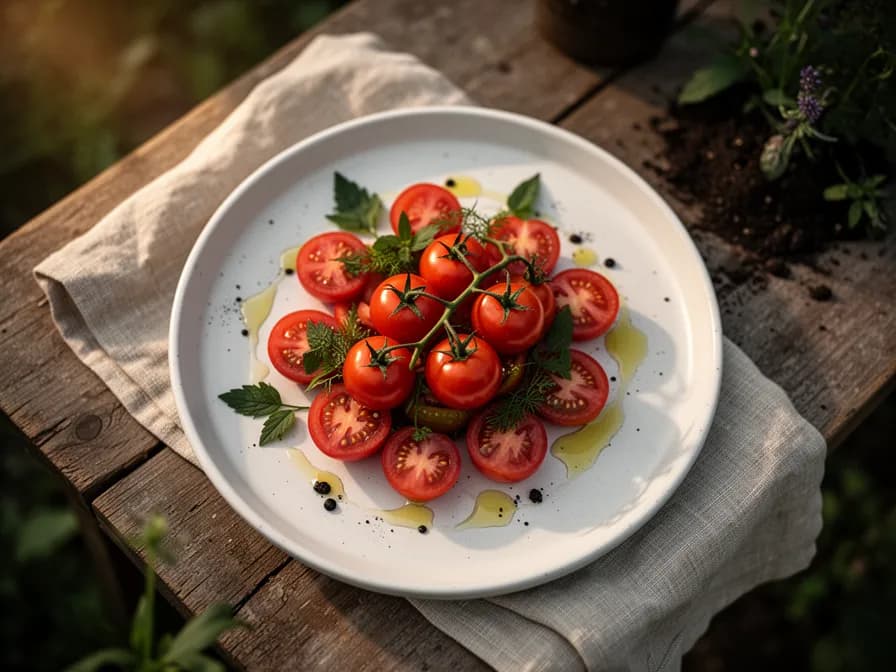
Blistered Cherry Tomatoes with Garlic and Basil
10 minA lightning-fast side dish or pasta sauce where cherry tomatoes are seared in a hot skillet until their skins blister and burst, releasing concentrated sweet juices that mingle with garlic and fresh basil into an instant sauce.
7 ingredientesCaprese Skewers with Cherry Tomatoes
15 minAn elegant no-cook appetizer threading cherry tomatoes, fresh mozzarella pearls, and basil leaves onto short skewers, finished with a drizzle of aged balsamic and the best olive oil you have. Perfect for summer entertaining.
6 ingredientesSlow-Roasted Cherry Tomato Confit
15 min prep + 2 hours roastingCherry tomatoes roasted low and slow with olive oil, garlic, and thyme until they collapse into intensely sweet, jammy morsels. Keeps refrigerated for a week and transforms pasta, toast, eggs, and grilled meats.
7 ingredientesUsos culinarios
Ideales para comer frescos como aperitivo, en ensaladas caprese, brochetas, salsas crudas y asados al horno. Su dulzura los hace perfectos para niños.
Qué contiene
Beneficios para la salud
- Cherry tomatoes are among the richest dietary sources of lycopene, a potent carotenoid antioxidant associated with reduced risk of heart disease, prostate cancer, and UV-induced skin damage — cooking with olive oil dramatically increases lycopene bioavailability.
- High in vitamin C, a single cup of cherry tomatoes provides about 20% of the daily value, supporting immune function, collagen synthesis, and iron absorption from plant-based foods.
- Contain significant amounts of beta-carotene (especially yellow and orange varieties), which the body converts to vitamin A for healthy vision, immune regulation, and skin cell turnover.
- The combination of potassium (237mg per 100g) and low sodium content supports healthy blood pressure regulation and cardiovascular function.
- Rich in polyphenol antioxidants including naringenin and chlorogenic acid, which have anti-inflammatory properties and may help protect against chronic inflammatory conditions.
- Provide vitamin K and folate, supporting blood clotting, bone health, and DNA synthesis — important nutrients for pregnancy and overall cellular maintenance.
De dónde viene Tomate Cherry
Cherry tomatoes trace their ancestry to wild Solanum pimpinellifolium, a species bearing tiny, currant-sized red fruits that still grows wild along the western coast of South America from Ecuador to northern Chile. These wild ancestors were likely first domesticated by indigenous peoples in Mesoamerica, where selection over centuries gradually increased fruit size from pea-sized to the cherry-sized forms we recognize today. The cherry tomato represents an intermediate step in the domestication journey from wild species to the large-fruited beefsteak and slicing tomatoes.
When Spanish conquistadors brought tomatoes to Europe in the early 16th century, many of the earliest cultivated forms were cherry-sized. The Italian name 'pomodoro' (golden apple) suggests that early European tomatoes may have been small yellow cherry types rather than the large red fruits we associate with Italian cuisine today. For centuries, tomatoes of all sizes were viewed with suspicion in much of Europe — they belong to the nightshade family, and their leaves are indeed toxic — though they were embraced earlier in Mediterranean cooking than in northern Europe.
The modern commercial cherry tomato industry took shape in the 1970s and 1980s, driven by Israeli agricultural innovation. Professors Nahum Kedar and Haim Rabinowitch at the Hebrew University of Jerusalem developed long shelf-life cherry tomato varieties that could withstand shipping and storage, transforming cherry tomatoes from a garden curiosity into a supermarket staple sold year-round worldwide. Today, cherry tomatoes are one of the most popular home garden crops globally, valued for their ease of cultivation, prolific yields, and superior flavor compared to store-bought varieties. Hundreds of heirloom and hybrid cultivars now exist in every color from deep indigo-black to golden yellow, green-striped, and pure white.
Tomate Cherry: ¿sabías que?
Datos fascinantes sobre Tomate Cherry
Cherry tomatoes are believed to be the closest cultivated relatives of the wild ancestor of all modern tomatoes — tiny, pea-sized Solanum pimpinellifolium fruits that still grow wild in coastal Peru and Ecuador.
Tomate Cherry: preguntas frecuentes
¿Cuándo debo plantar Tomate Cherry?
¿Cuáles son buenas plantas acompañantes para Tomate Cherry?
¿En qué zonas de rusticidad puede crecer Tomate Cherry?
¿Cuánto sol necesita Tomate Cherry?
¿A qué distancia debo espaciar Tomate Cherry?
¿Qué plagas y enfermedades afectan a Tomate Cherry?
¿Cómo almaceno Tomate Cherry después de la cosecha?
¿Cuáles son las mejores variedades de Tomate Cherry para cultivar?
¿Qué suelo necesita Tomate Cherry?
Why are my cherry tomatoes splitting and cracking?
How do I keep cherry tomato plants from becoming an unruly jungle?
Can I grow cherry tomatoes in containers on a balcony?
Why do my cherry tomato flowers fall off without setting fruit?
What is the sweetest cherry tomato variety to grow?
How do I ripen green cherry tomatoes picked before frost?
Acabas de leer la teoría. Ahora cultívala en piloto automático.
Todo lo que hace que Tomate Cherry sea delicado — el momento, el espaciado, las asociaciones, la ventana de cosecha — es justo lo que PlotMyGarden resuelve por ti, para cada planta de tu huerto.
Un plan que conoce tu clima
Indica tu ubicación una vez. Recibe fechas de siembra, abonado y cosecha basadas en tu última helada real y el pronóstico en vivo — sin adivinar con un sobre genérico.
De la sección “Cuándo plantar”Planificador de bancales de arrastrar y soltar
Diseña bancales sobre una cuadrícula. Cada planta encaja con su espaciado correcto y ves toda la temporada antes de gastar un céntimo en semillas.
De la sección “Cultivo”Conflictos de asociación, detectados a tiempo
Más de 200 buenas y malas combinaciones comprobadas en vivo mientras plantas — para que un error que arruine la temporada nunca llegue a la tierra.
De la sección “Asociaciones”Recordatorios que sí vas a seguir
“Riega las judías.” “Recoge hoy antes de que se pase.” Oportunos, concretos y ligados a las plantas que de verdad cultivas.
De la sección “Cosecha”Escalonado, programado
¿Quieres cosechar seis semanas en vez de seis días? Reparte tus siembras automáticamente y te avisa cuando toca el siguiente lote.
De la sección “Cuándo plantar”Un registro que se vuelve más listo
Cada cosecha que registras le enseña tu huerto. El plan del año que viene parte de lo que de verdad funcionó en tu suelo, no en un manual.
De la sección “Resumen”Planta estos junto a Tomate Cherry
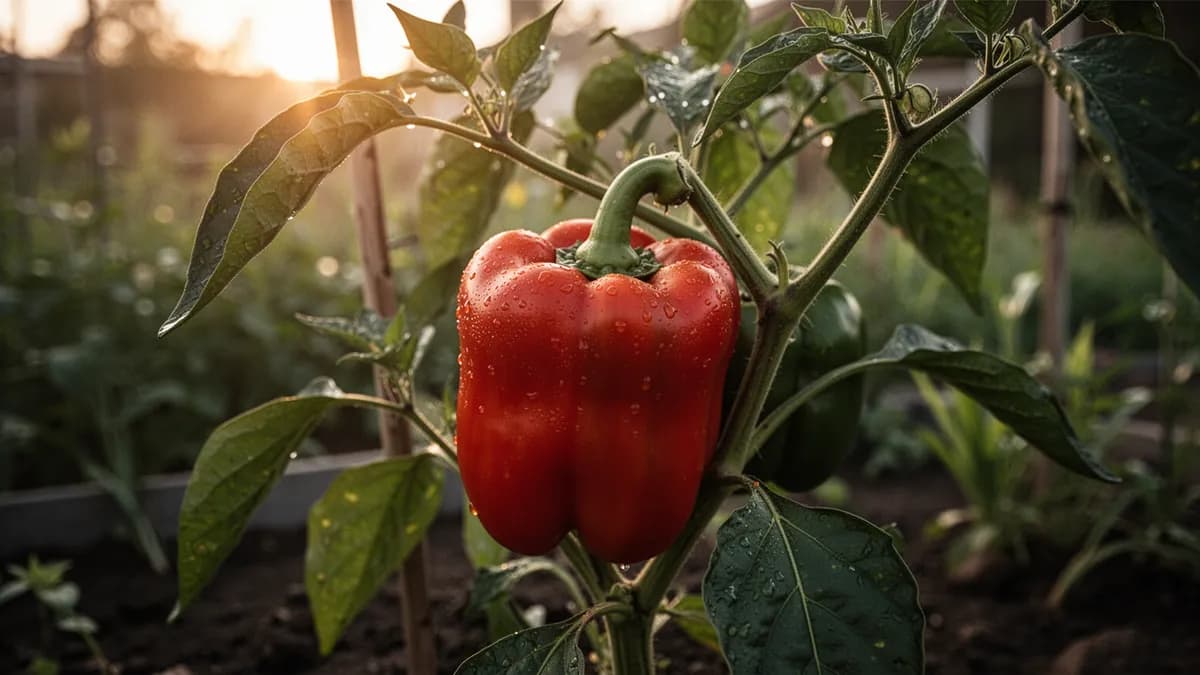
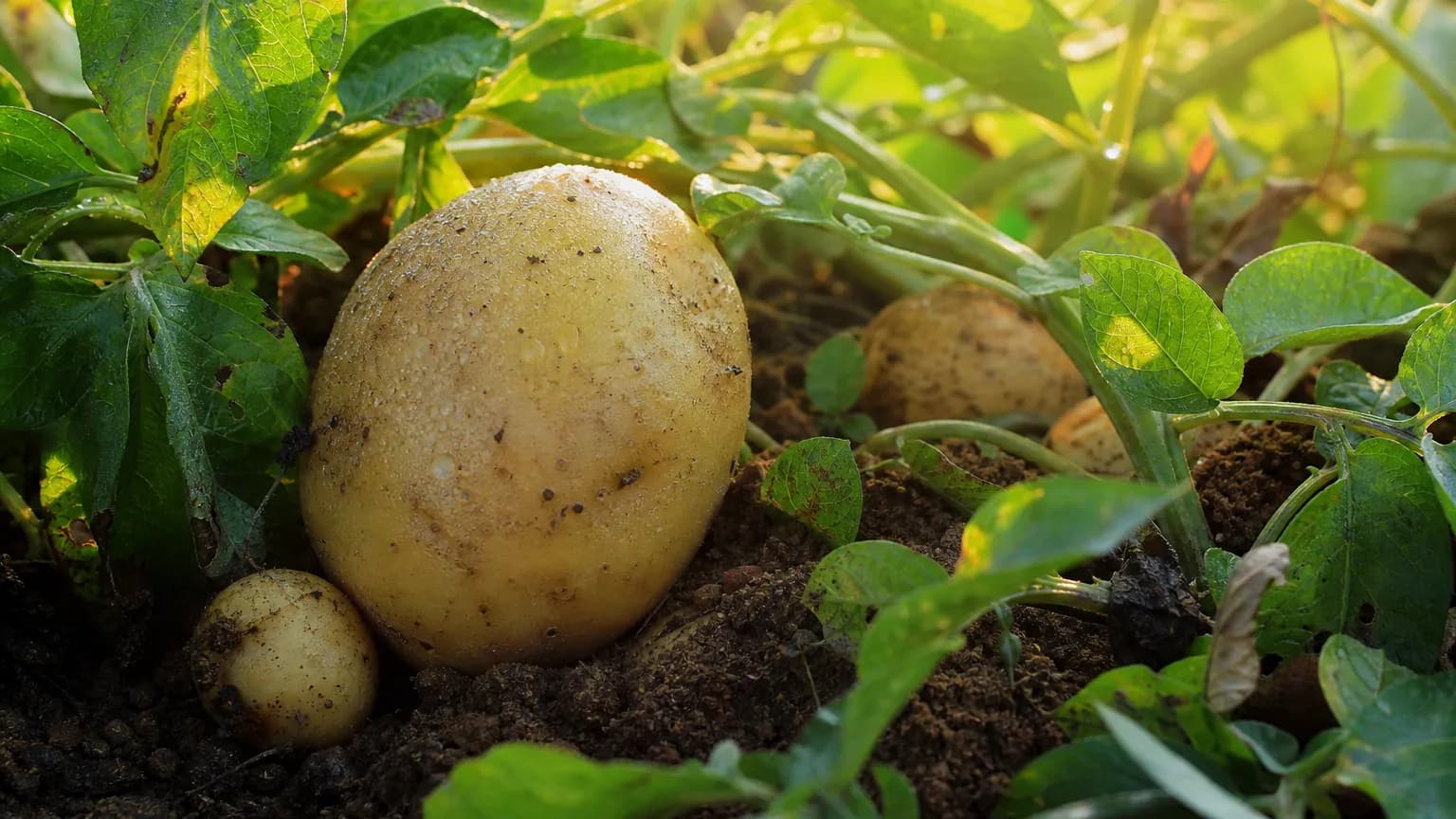
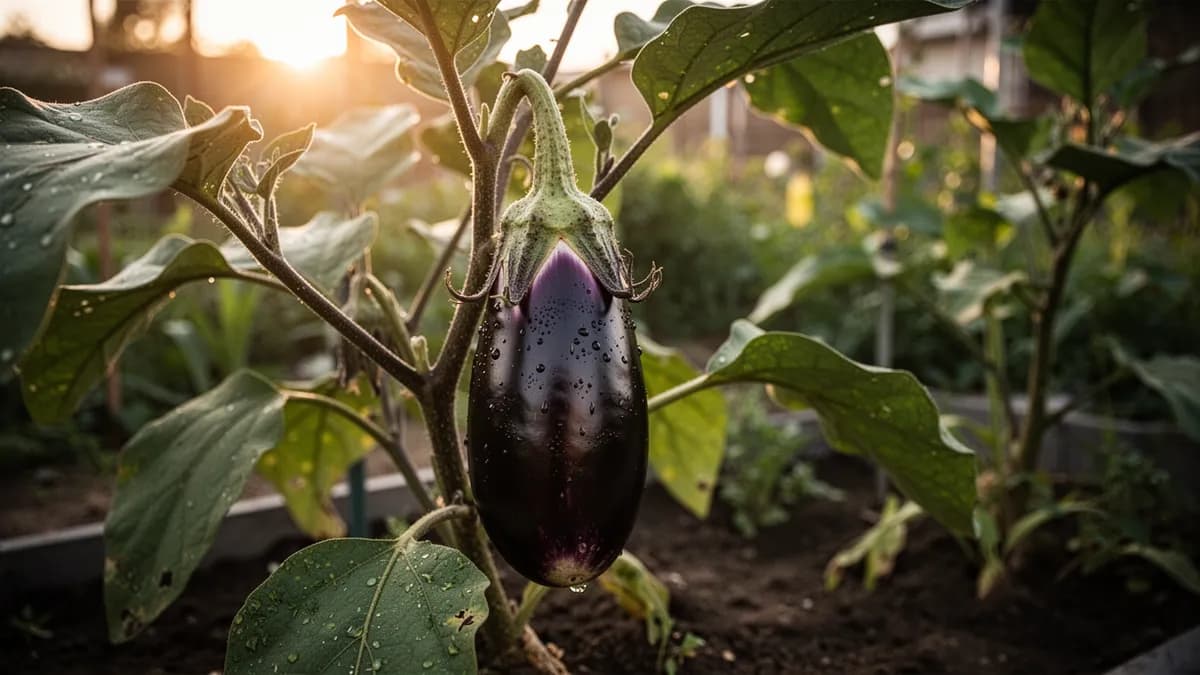
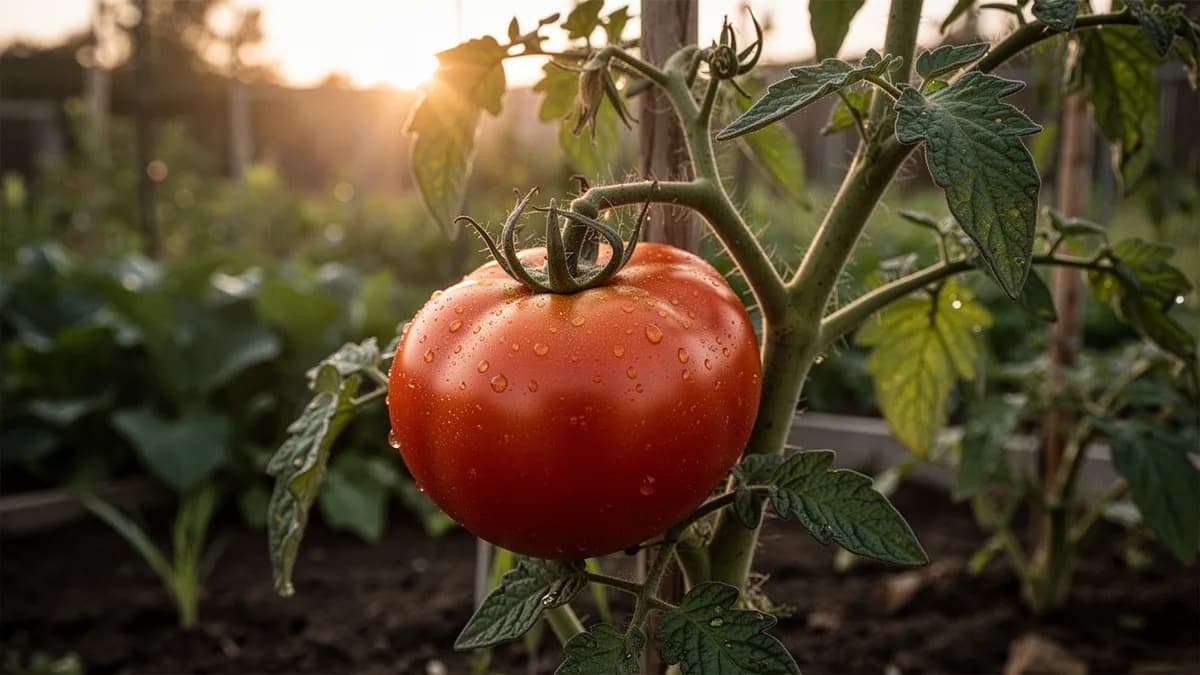
Más Solanáceas
Mantén Tomate Cherry lejos de estos
Diseños de jardín con Tomate Cherry
Cultiva tu mejor Tomate Cherry — y todo lo que la rodea.
Empieza un plan gratis hoy. Diseña tus bancales, coloca tu Tomate Cherry y deja que PlotMyGarden gestione el momento, el espaciado, las asociaciones y los recordatorios de la semilla a la cesta.