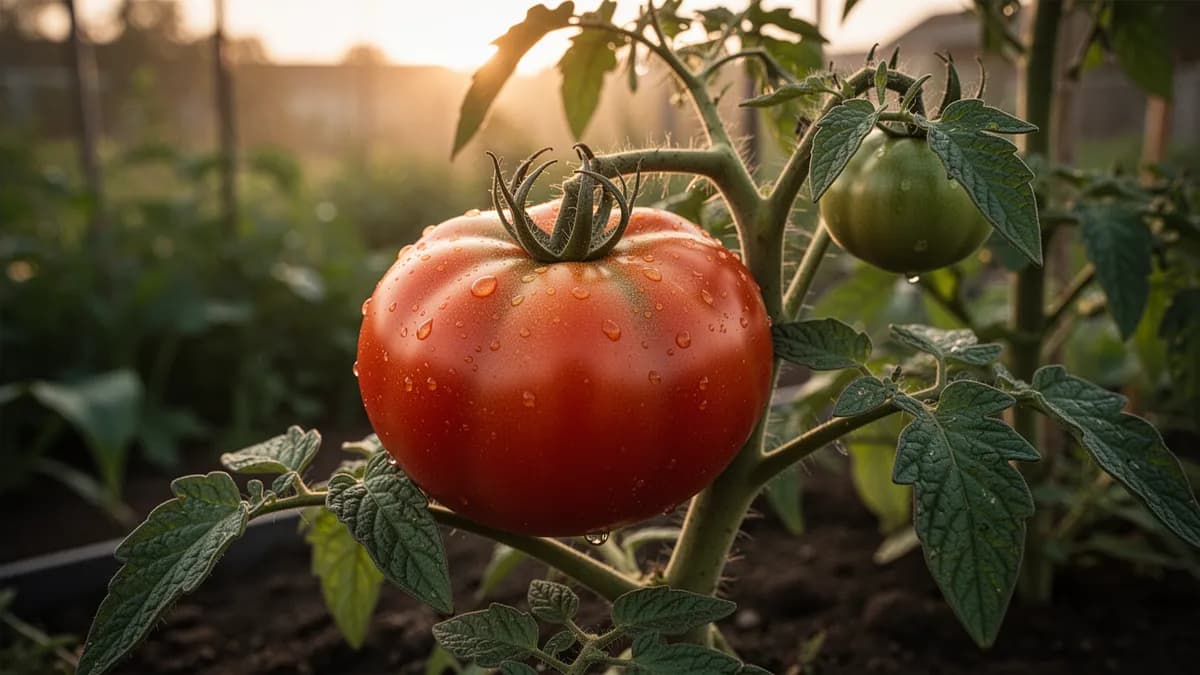
Brandywine Tomato
Solanum lycopersicum
At a Glance
It's planting season for Brandywine Tomato! Start planning your garden now.
An Amish heirloom prized for its rich, complex flavor often considered the benchmark for tomato taste. Plants produce large, pinkish-red beefsteak fruits with potato-leaf foliage and indeterminate growth habit. Requires sturdy staking or caging as vines can reach six feet or more and fruits can weigh over a pound. Yields are moderate but the exceptional flavor makes every harvest worthwhile.
Planting & Harvest Calendar
Growth Stages
From Seed to Harvest
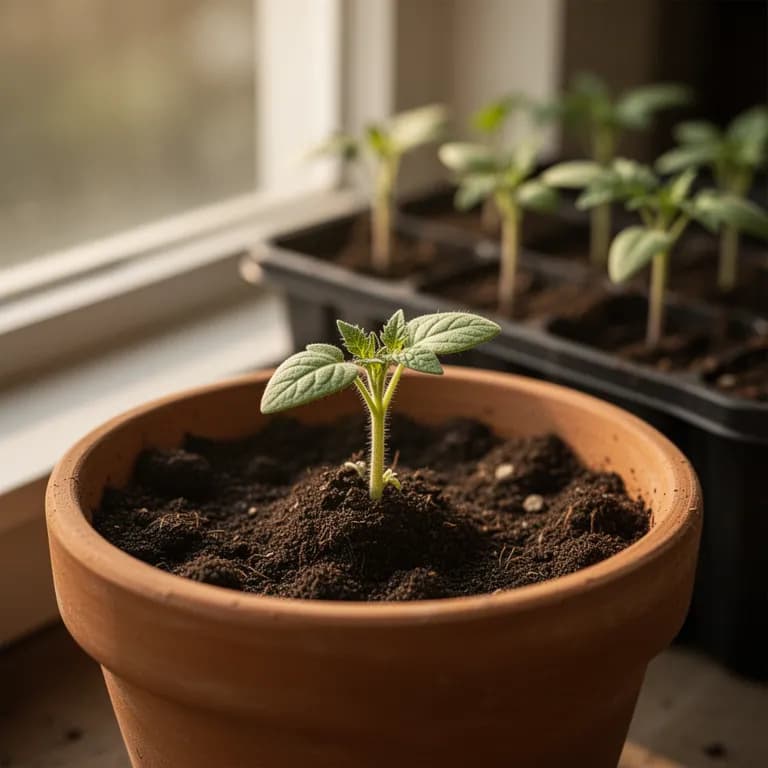
Seed Starting
Days 0–14
Brandywine seeds germinate in warm conditions, producing the first rounded cotyledon leaves within 7-14 days. As an heirloom variety, germination can be slightly less uniform than modern hybrids. Seeds require consistent warmth of 21-27°C (70-80°F) and even moisture for reliable emergence.
💡 Care Tip
Start seeds indoors 8-10 weeks before your last frost date — Brandywine needs a longer head start than most tomatoes due to its extended days-to-maturity. Use a heat mat to maintain 24°C (75°F) soil temperature for optimal germination.
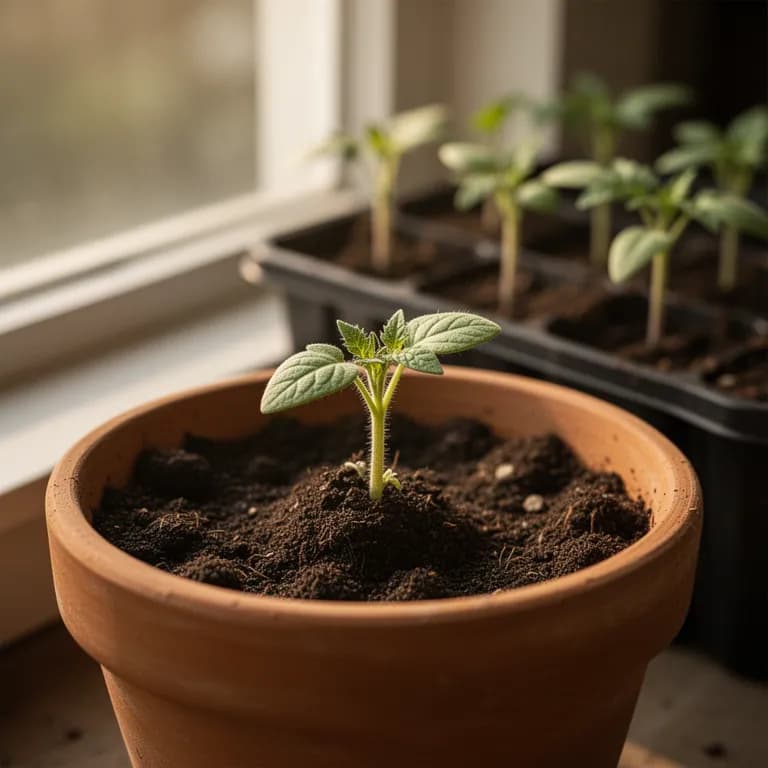
Brandywine seedlings are identifiable early by their large, smooth-edged potato-leaf foliage
Monthly Care Calendar
What to do each month for your Brandywine Tomato
April
You are hereContinue potting up seedlings as they grow. Begin hardening off by placing outdoors in a sheltered spot for increasing periods over 7-10 days. Prepare garden beds with generous compost and install staking systems. Transplant in warmest zones after frost danger passes.
Did You Know?
Fascinating facts about Brandywine Tomato
Brandywine is widely considered the gold standard of heirloom tomato flavor — in blind taste tests it consistently ranks among the top varieties, prized for its perfect balance of sweetness, acidity, and complex fruity undertones that no modern hybrid has been able to replicate.
Brandywine is a legendary Amish heirloom tomato prized for what many consider the finest tomato flavor ever developed, with a rich, complex taste that balances sweetness and acidity perfectly. These indeterminate plants grow 6-9 feet tall and produce large, pink, beefsteak-type fruits weighing 1-2 pounds. Start seeds indoors 6-8 weeks before the last frost. Transplant after soil reaches 60°F.
Space plants 36 inches apart with strong staking or caging as the vigorous vines produce heavy fruits that need support. Brandywine has distinctive potato-leaf foliage rather than the standard tomato leaf shape. Water deeply with 1-1.5 inches per week, maintaining consistent moisture to prevent cracking and blossom end rot. Mulch to stabilize soil moisture and temperature.
Brandywine takes 80-100 days to first harvest, making it one of the later-maturing tomatoes. The large, somewhat misshapen fruits are thin-skinned and prone to cracking but the extraordinary flavor makes them worth every effort. For best production, prune to 1-2 main stems and remove suckers regularly. In hot climates, provide afternoon shade as fruit set declines above 90°F. The potato-leaf foliage provides less disease resistance than standard leaves, making good cultural practices essential.
The Brandywine tomato is an American heirloom variety with roots in the Amish farming communities of southeastern Pennsylvania, dating to at least 1885. The variety takes its name from Brandywine Creek, which flows through Chester County in the heart of Pennsylvania Dutch country. For nearly a century, Brandywine was passed from generation to generation through informal seed-saving networks within Amish and Mennonite communities, who valued its exceptional flavor and large fruit size despite its low yields and susceptibility to cracking.
The modern rediscovery of Brandywine is largely credited to Ben Quisenberry of Syracuse, Ohio, a dedicated seed saver who received seeds in 1982 from Dorris Sudduth Hill, an elderly Amish woman who had maintained the variety for decades. Quisenberry distributed seeds through his small mail-order seed company and through Seed Savers Exchange, the nonprofit organization that became the backbone of the American heirloom seed movement. By the early 1990s, Brandywine had become the signature variety of the heirloom tomato renaissance, appearing at farmers markets, in food magazines, and on restaurant menus as chefs and consumers discovered its extraordinary flavor.
Brandywine's impact on American gardening and food culture has been profound. It demonstrated that industrial agriculture's focus on yield, uniformity, and shelf life had come at a devastating cost to flavor. The variety's success inspired a generation of gardeners and farmers to seek out forgotten heirloom cultivars of all kinds, and it remains the single most recognized heirloom tomato name worldwide. Today, multiple Brandywine sub-strains exist — including Yellow Brandywine, Black Brandywine, and Brandywine OTV — but the original pink Brandywine from the Sudduth strain remains the benchmark against which all other heirloom tomatoes are measured.
Start Brandywine seeds indoors 6-8 weeks before the last frost. Plant one-quarter inch deep at 75-85°F for germination in 7-14 days. Provide strong light for 14-16 hours daily. Pot up to 4-inch pots when seedlings have true leaves. Bury stems deeply at each potting to develop strong root systems. Harden off for 10-14 days before transplanting when nighttime temperatures stay above 50°F. Plant deeply, burying two-thirds of the stem. As an open-pollinated heirloom, Brandywine produces true-to-type seeds that can be saved from ripe fruits.
Brandywine tomatoes need rich, well-drained soil with a pH of 6.2-6.8. Work in generous compost and aged manure before planting. Apply balanced fertilizer at transplanting and switch to a calcium and phosphorus-rich formula when flowering begins. Consistent calcium prevents the blossom end rot that Brandywine is prone to. Side-dress with compost every 3-4 weeks during the growing season. Avoid excessive nitrogen which produces huge vines but delays and reduces fruit production. Deep, fertile soil supports the extensive root system.
Check Your Zone
See if Brandywine Tomato is suitable for your location.
21°C – 29°C
70°F – 84°F
Brandywine performs best in warm but not extreme conditions. Daytime temperatures of 21-29°C (70-85°F) with nighttime temperatures of 15-20°C (59-68°F) produce the best fruit set and flavor development. Above 32°C (90°F), pollen viability drops sharply and blossom drop increases — Brandywine is more heat-sensitive than many modern hybrids. Below 13°C (55°F) at night, fruit set is poor and growth slows dramatically. Frost kills the plant instantly. The ideal climate provides warm, consistent temperatures with moderate humidity.
Common issues affecting Brandywine Tomato and how to prevent and treat them organically.
Brandywine is susceptible to most tomato diseases due to limited disease resistance breeding in this heirloom. Practice strict crop rotation and provide excellent air circulation. Cracking is common due to the thin skin; maintain consistent moisture and harvest before full ripeness. Late maturity means shorter harvest windows in northern climates. Low yields compared to hybrids may disappoint gardeners accustomed to modern varieties. Cat-facing and misshapen fruits are normal for Brandywine and do not affect the superb flavor.
Brandywine tomatoes benefit from basil planted nearby, which may improve flavor and repel certain pests. Marigolds deter nematodes and attract beneficial insects. Carrots and parsley are good ground-level companions that do not compete for space. Borage attracts pollinators and is said to improve tomato flavor. Avoid planting near brassicas, fennel, or dill which may inhibit tomato growth. As tall, indeterminate plants, Brandywine needs careful placement to avoid shading shorter neighbors.
- 1Start seeds indoors 8-10 weeks before last frost — this is 2-3 weeks earlier than most tomato varieties. Brandywine's long days-to-maturity (80-100 days from transplant) means a late start can result in green fruits still on the vine when frost arrives.
- 2Prune to 2-3 main stems by removing suckers when they are small. Brandywine produces excessive vegetative growth as an indeterminate variety, and unpruned plants waste energy on foliage instead of sizing up their famously large fruits.
- 3Install serious support structures at transplanting time. Standard wire tomato cages will collapse under a mature Brandywine — use 180-240 cm wooden stakes, heavy-duty steel cages, or a string trellis system anchored to overhead support.
- 4Water deeply and consistently — 2.5-5 cm per week delivered at the soil line, never overhead. Brandywine is highly susceptible to both blossom-end rot (from inconsistent calcium uptake) and fruit cracking (from sudden water surges after dry periods). Drip irrigation on a timer is ideal.
- 5Accept and embrace lower yields. Brandywine produces fewer but far larger and more flavorful fruits than hybrid varieties. Expecting hybrid-level production leads to frustration — instead, appreciate that each massive, complex-flavored fruit is worth several bland supermarket tomatoes.
- 6Protect against late blight proactively, as Brandywine has no bred-in disease resistance. Space plants widely (60-90 cm), remove lower leaves up to the first fruit cluster for air circulation, mulch to prevent soil splash, and apply preventive copper fungicide in humid climates.
- 7Do not refrigerate harvested Brandywine tomatoes under any circumstances. Cold temperatures below 13°C (55°F) permanently destroy the volatile flavor compounds that make this variety legendary. Store at room temperature and eat within 3-5 days of picking for peak flavor.
- 8Save seeds from your best fruits to build a locally adapted Brandywine strain over time. As an open-pollinated heirloom, Brandywine breeds true from saved seed. Choose the largest, most flavorful, crack-free fruits from the healthiest plants for seed saving.
Harvest Brandywine tomatoes when fruits are fully pink with a slight give when gently squeezed. The shoulder area may remain green, which is normal for this variety. Pick slightly before full ripeness and finish ripening indoors to reduce cracking and bird damage. The thin skin bruises easily so handle with great care. Each plant produces 10-20 large fruits depending on growing conditions. Flavor is best when fruits ripen on the vine in warm weather. Cool temperatures below 55°F reduce the complex flavor that makes Brandywine famous.
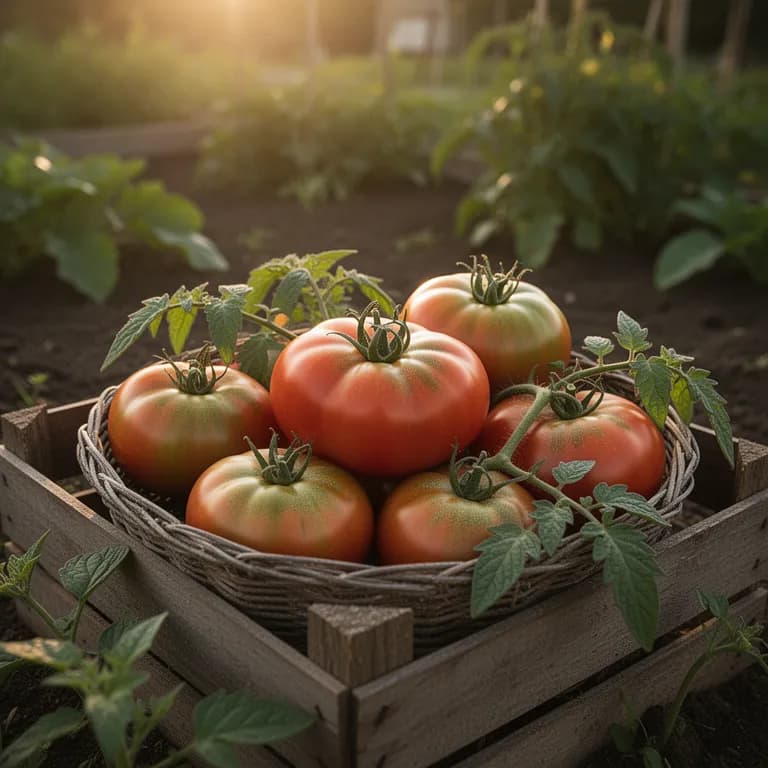
A ripe Brandywine at its peak — deep pinkish-red with shoulders that may stay green, often exceeding 450g
Brandywine tomatoes are best enjoyed fresh at the peak of ripeness for their extraordinary flavor. Store at room temperature, never in the refrigerator which destroys the delicate flavor compounds. Use within 3-5 days of harvest. For preservation, make into sauce, paste, or whole canned tomatoes using tested canning recipes. The intense flavor makes Brandywine ideal for sun-drying. Freeze whole on trays for later sauce making. Roasted Brandywine tomatoes freeze beautifully and make superb winter sauces.
Plan your garden with ease
Love growing Brandywine Tomato? Use our free garden planner to design your beds, track planting dates, and get personalized care reminders.
Nutritional Info
Per 100g serving
18
Calories
Health Benefits
- Rich in lycopene, a powerful carotenoid antioxidant that gives Brandywine its deep pink-red color — lycopene is better absorbed when tomatoes are cooked with a small amount of healthy fat
- Good source of vitamin C, providing 16% of the daily value per 100g, supporting immune health, collagen synthesis, and enhanced iron absorption from plant foods
- Contains significant vitamin A as beta-carotene, supporting vision health, immune function, and skin integrity — heirloom varieties often contain higher levels than commercial types
- Provides potassium essential for heart health and blood pressure regulation — a single large Brandywine can deliver over 15% of the daily value
- Contains vitamin K, B vitamins (especially folate and B6), and the antioxidant flavonoid naringenin, which has anti-inflammatory properties
- Low calorie density at only 18 calories per 100g combined with high water content (about 95%) makes tomatoes excellent for hydration and weight management
💰 Why Grow Your Own?
Heirloom Brandywine tomatoes command premium prices at farmers markets and specialty grocers — typically $6-12 per pound compared to $2-4 for standard tomatoes. A single productive Brandywine plant yielding 4-7 kg can replace $50-150 worth of market-bought heirloom tomatoes over a season. Growing 3-4 plants provides enough for fresh eating, sauce making, and sharing — all from a $3 seed packet or $5 transplant. As an open-pollinated heirloom, you can save seeds from your best fruits year after year, eliminating even the small annual seed cost entirely.
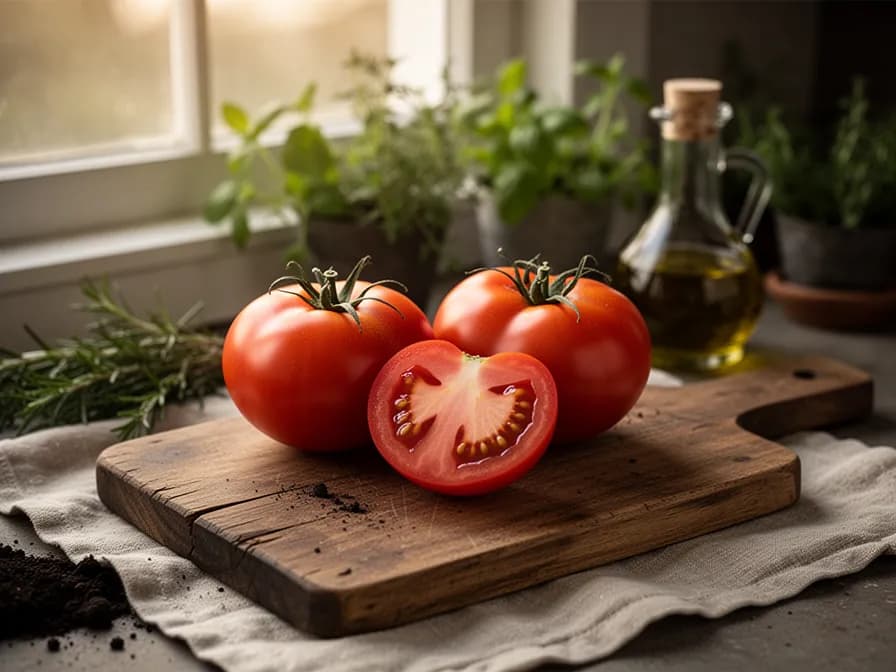
The legendary Brandywine interior — dense, meaty flesh with small seed cavities and intense flavor
Quick Recipes
Simple recipes using fresh Brandywine Tomato
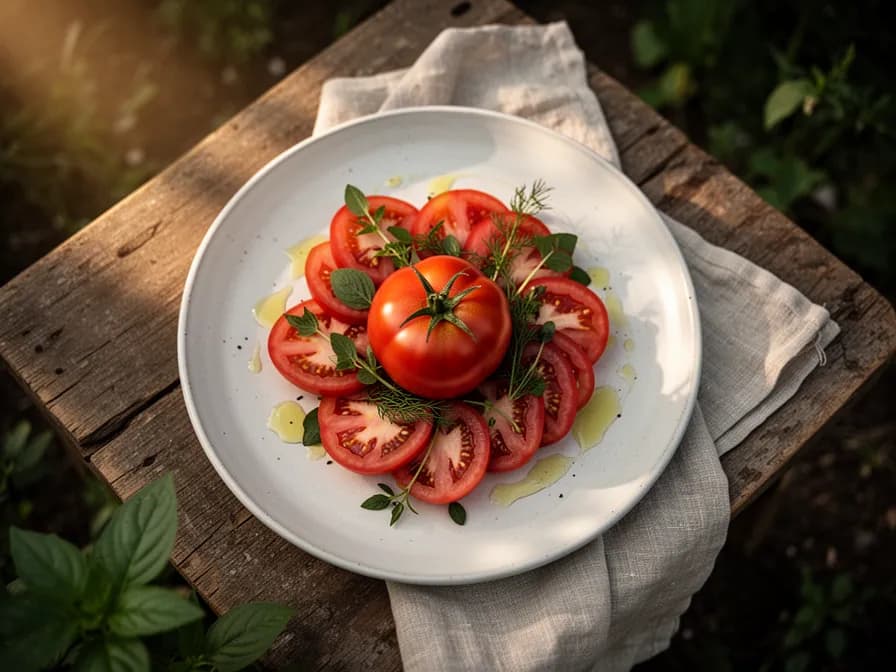
Classic Brandywine Caprese Salad
10 minThe simplest and best way to showcase the legendary Brandywine flavor — thick slices of peak-season tomato layered with fresh mozzarella, torn basil, and a drizzle of the finest olive oil. No cooking required, no distractions from the tomato itself.
Slow-Roasted Brandywine Tomato Sauce
15 min prep + 90 min roastHalved Brandywine tomatoes roasted low and slow until deeply caramelized and intensely concentrated. The dense, meaty flesh of Brandywine breaks down into a thick, rich sauce with minimal effort — no peeling, straining, or long stovetop simmering required.
Heirloom Tomato Galette
30 min prep + 35 min bakeA rustic free-form tart that celebrates the beauty and flavor of Brandywine tomatoes on a flaky butter crust spread with herbed ricotta. The irregular shape of this galette matches the gloriously imperfect shapes of heirloom tomatoes.
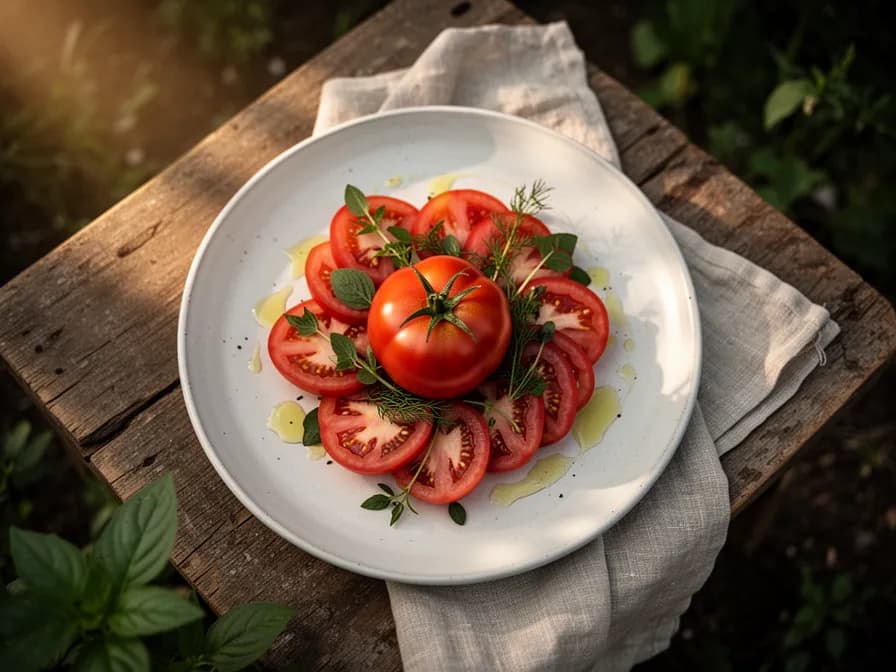
The classic caprese — thick Brandywine slices with fresh mozzarella let this tomato's legendary flavor shine
Yield & Spacing Calculator
See how many Brandywine Tomato plants fit in your garden bed based on the recommended 75cm spacing.
1
Brandywine Tomato plants in a 4×4 ft bed
1 columns × 1 rows at 75cm spacing
Popular Varieties
Some of the most popular brandywine tomato varieties for home gardeners, each with unique characteristics.
Brandywine Pink
The original Amish heirloom with pink skin, potato-leaf foliage, and legendary rich, complex flavor. The gold standard.
Brandywine Red
Red-skinned variant with regular foliage and slightly more acidic flavor. Earlier maturing than the pink original.
Brandywine Yellow
Golden-yellow fruits with a milder, sweeter flavor than the pink. Beautiful in sliced tomato platters with pink variety.
Brandywine Black
Dark mahogany-skinned variant with complex, wine-like flavor notes. Smoky undertones complement the classic Brandywine sweetness.
Brandywine tomatoes deserve to be the star of any dish they appear in. Slice thickly for caprese salad with fresh mozzarella and basil. Eat on toast with nothing but salt and good olive oil. Their intense, complex flavor makes BLT sandwiches transcendent. Use for fresh tomato sauce where the rich flavor truly shines. Brandywine tomato soup is a revelation. For a simple appetizer, thick slices on crusty bread with sea salt showcase the legendary flavor. Reserve the best specimens for fresh eating; use seconds for cooking.
When should I plant Brandywine Tomato?
Plant Brandywine Tomato in March, April, May. It takes approximately 90 days to reach maturity, with harvest typically in July, August, September.
What are good companion plants for Brandywine Tomato?
Brandywine Tomato grows well alongside Basil, Carrot, Marigold. Companion planting can improve growth, flavor, and natural pest control.
What hardiness zones can Brandywine Tomato grow in?
Brandywine Tomato thrives in USDA hardiness zones 3 through 11. With greenhouse protection, it may be grown in zones 1 through 12.
How much sun does Brandywine Tomato need?
Brandywine Tomato requires Full Sun (6-8h+). This means at least 6-8 hours of direct sunlight daily.
How far apart should I space Brandywine Tomato?
Space Brandywine Tomato plants 75cm (30 inches) apart for optimal growth and air circulation.
What pests and diseases affect Brandywine Tomato?
Common issues include Late Blight, Tomato Hornworm, Blossom End Rot, Early Blight. Prevention through good garden practices like crop rotation, proper spacing, and companion planting is the best approach. See the detailed pests and diseases section above for symptoms, prevention, and treatment for each.
How do I store Brandywine Tomato after harvest?
Brandywine tomatoes are best enjoyed fresh at the peak of ripeness for their extraordinary flavor. Store at room temperature, never in the refrigerator which destroys the delicate flavor compounds. Use within 3-5 days of harvest. For preservation, make into sauce, paste, or whole canned tomatoes usi...
What are the best Brandywine Tomato varieties to grow?
Popular varieties include Brandywine Pink, Brandywine Red, Brandywine Yellow, Brandywine Black. Each has unique characteristics suited to different growing conditions and culinary preferences. See the varieties section above for detailed descriptions.
What soil does Brandywine Tomato need?
Brandywine tomatoes need rich, well-drained soil with a pH of 6.2-6.8. Work in generous compost and aged manure before planting. Apply balanced fertilizer at transplanting and switch to a calcium and phosphorus-rich formula when flowering begins. Consistent calcium prevents the blossom end rot that ...
Why does my Brandywine tomato crack and split so easily?
Brandywine is inherently prone to cracking due to its thin skin and large fruit size — this is a known trade-off for its exceptional flavor. The primary cause is uneven watering: heavy rain or deep watering after a dry spell causes the fruit interior to expand faster than the skin can stretch. Prevent cracking by maintaining consistent soil moisture with drip irrigation and heavy mulch, harvesting just before full ripeness, and picking fruits before predicted heavy rain. Some splitting is unavoidable with Brandywine and is simply the price of growing an heirloom optimized for flavor, not appearance.
Why are the tops of my Brandywine tomatoes still green when the rest is ripe?
Green shoulders are a completely normal and characteristic trait of Brandywine and many heirloom varieties. This is caused by the natural distribution of chlorophyll in the fruit, which persists longer near the stem end. The green-shouldered area is fully ripe and edible — in fact, many heirloom enthusiasts believe the shoulders have a slightly different, more complex flavor than the rest of the fruit. Modern hybrid tomatoes were bred to eliminate green shoulders for uniform appearance, but this came at the cost of flavor compounds associated with the responsible gene.
Why does my Brandywine produce fewer tomatoes than my hybrid varieties?
Brandywine was never bred for high yield — it was selected over generations purely for exceptional flavor and large fruit size. Its indeterminate growth habit, long days to maturity (80-100 days), and sensitivity to temperature extremes all contribute to lower total production compared to modern hybrids. To maximize yield, prune to 2-3 main stems, provide absolutely consistent moisture, protect against temperature stress, and ensure excellent soil fertility. Even then, expect roughly half the total weight of a comparable hybrid — but the flavor per gram is incomparably superior.
What's the difference between the various Brandywine strains?
The original and most widely grown is the pink Brandywine (Sudduth Strain), which produces large pink-red beefsteak fruits with potato-leaf foliage. Yellow Brandywine produces golden-orange fruits with a milder, sweeter flavor and regular-leaf foliage. Black Brandywine has dusky reddish-brown fruits with particularly rich, complex flavor. Brandywine OTV (Off The Vine) is a stabilized cross with improved disease resistance but slightly different flavor. Red Brandywine has regular leaves and true red fruit. For the classic Brandywine experience, choose the Sudduth Strain pink with potato-leaf foliage.
Can I grow Brandywine in containers?
It is possible but challenging due to Brandywine's vigorous indeterminate growth habit. Use a container of at least 75 liters (20 gallons) — anything smaller severely limits root development and fruit production. Provide a very sturdy 180 cm support structure. Water frequently (possibly twice daily in hot weather) since containers dry out fast, and feed weekly with liquid fertilizer. Expect significantly lower yields than in-ground plants. If container growing is your only option, consider a determinate heirloom like Mortgage Lifter instead, which is better suited to restricted root zones.
How do I save seeds from Brandywine tomatoes?
Select your best, healthiest, most flavorful fruits from the most productive plants. Cut the tomato horizontally and squeeze the seed gel into a jar with a small amount of water. Let this mixture ferment at room temperature for 2-3 days until a mold layer forms on top — this fermentation removes the germination-inhibiting gel coat and kills many seed-borne diseases. Rinse seeds in a strainer, spread on a paper plate, and dry completely for 5-7 days. Store in a labeled envelope in a cool, dry place. Properly saved Brandywine seeds remain viable for 4-6 years.
Ready to Grow Brandywine Tomato?
Add Brandywine Tomato to your garden plan and start designing your perfect layout.

Vladimir Kusnezow
Gardener and Software Developer
Zone 6b gardener. Growing vegetables and fruits in soil and hydroponics for 6 years. I built PlotMyGarden to plan my own gardens.
Jump to Section