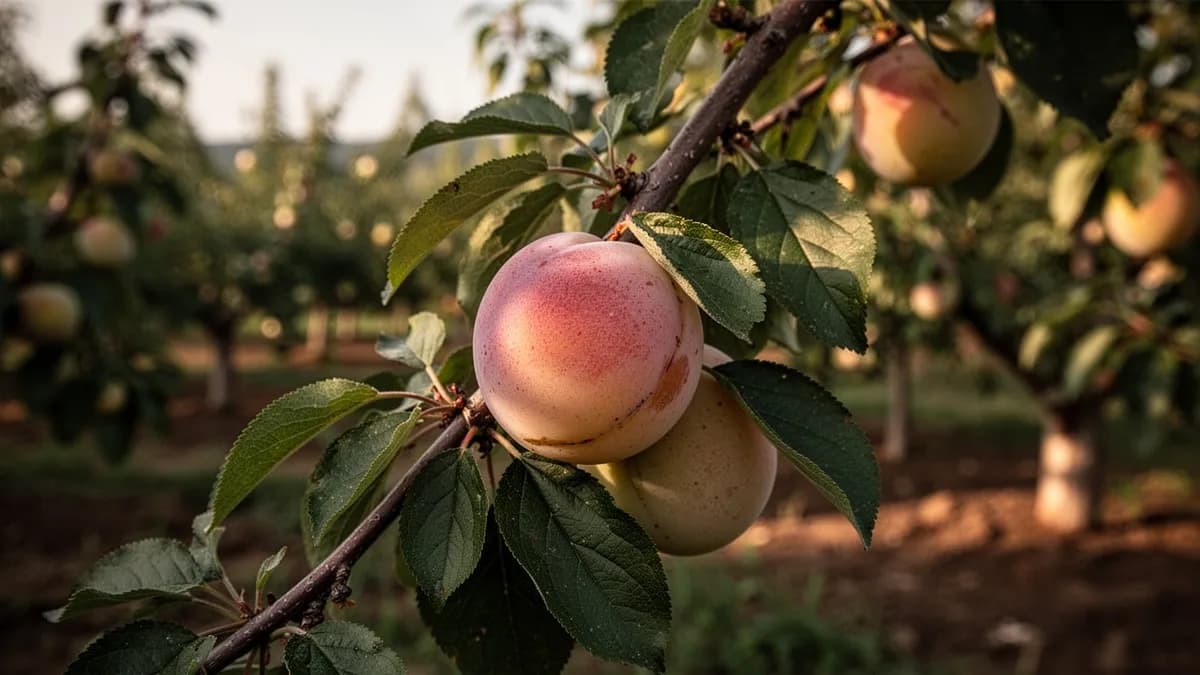
Japanese Plum
Prunus salicina
At a Glance
A round, juicy plum type that blooms earlier than European varieties and requires a compatible Japanese plum for cross-pollination. Japanese plums are larger and juicier than European types, with a sweeter flavor ideal for fresh eating. They need fewer chill hours but are more susceptible to late frost damage due to early blooming.
Planting & Harvest Calendar
Growth Stages
From Seed to Harvest
Dormancy and Bud Swell
Days 0–50
Japanese plum trees enter full dormancy after leaf fall, with compact, reddish-brown buds held tightly against the bare grey branches. Unlike European plums, Japanese plums have relatively low chilling requirements of 500-900 hours below 7°C (45°F), meaning they break dormancy early in late winter when temperatures begin to rise. Buds swell visibly and become plumper as the chilling requirement is satisfied, signalling the approach of bloom.
💡 Care Tip
Apply a dormant copper spray while buds are still closed to suppress bacterial canker and brown rot pathogens that overwinter on bark and old fruit spurs. This is also the ideal time for any structural pruning needed to maintain the open-vase form, before new growth begins.
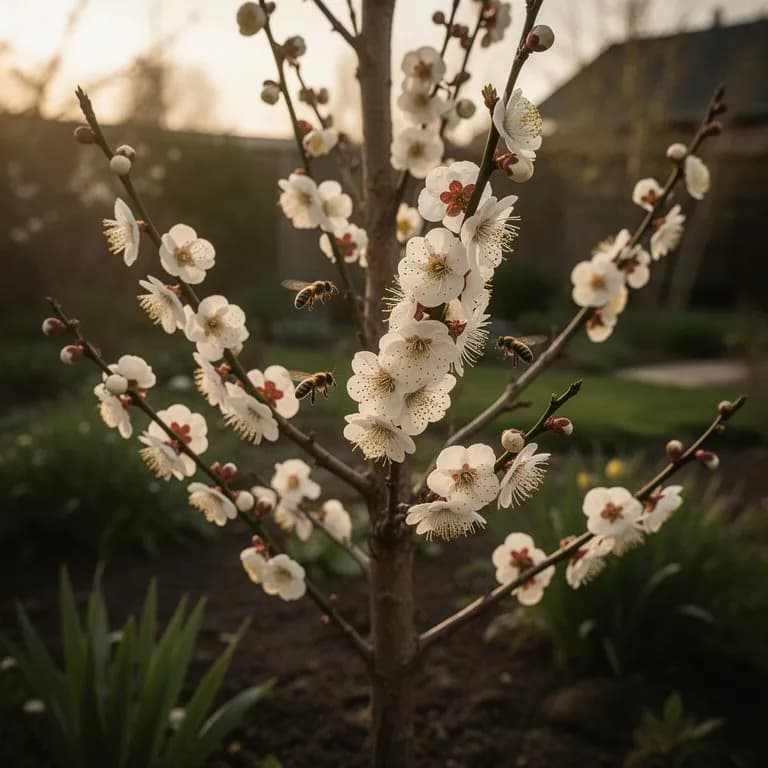
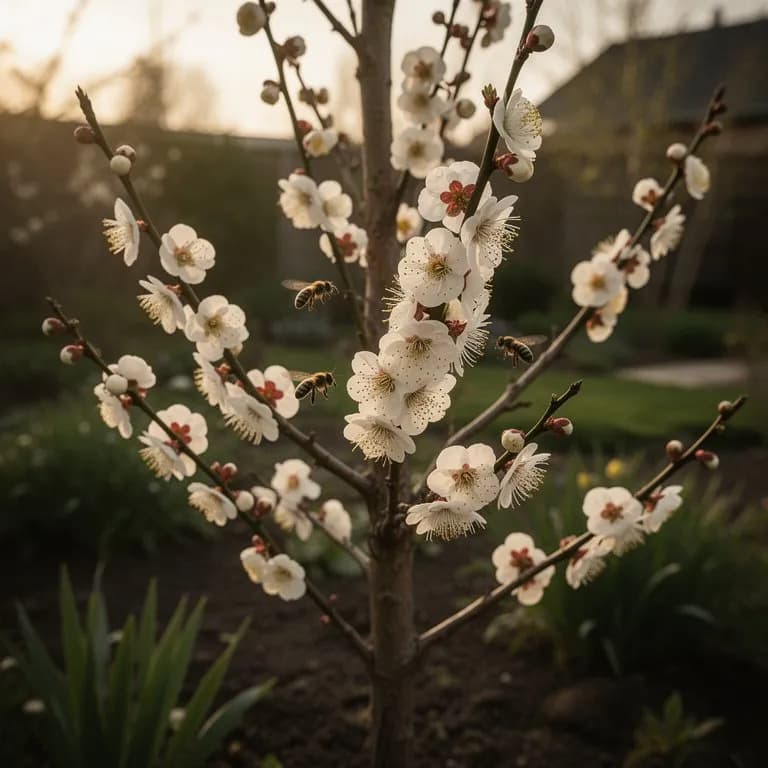
Japanese plum trees bloom prolifically in early spring, often weeks before leaves emerge, creating a spectacular display and attracting early pollinators
Monthly Care Calendar
What to do each month for your Japanese Plum
June
You are hereNo specific care tasks for this month.
Training Japanese plum trees into an open-vase form in their early years creates a strong, productive framework and improves light distribution through the canopy
Did You Know?
Fascinating facts about Japanese Plum
Japanese plums (Prunus salicina) are not actually Japanese in origin — they were developed over two millennia in China before being refined and named in Japan, where they became known as 'sumomo', meaning sour peach.
Japanese plums thrive in USDA zones 5 through 9 with 500 to 900 chill hours. Plant bare-root trees in late winter, spacing 15 to 20 feet apart in full sun. Most Japanese plums require cross-pollination from a different Japanese plum variety, so plant at least two compatible cultivars. Santa Rosa is one of the few partially self-fertile exceptions but still produces better with a pollinator.
Japanese plums bloom very early in spring, making them vulnerable to late frosts. Site trees on slopes where cold air drains away rather than in frost pockets. The trees are vigorous growers requiring annual pruning to an open vase shape. Remove about one-quarter of the previous year's growth each winter and thin interior branches for air circulation.
Thin fruit aggressively in early summer to four to six inches apart, as Japanese plums set enormously heavy crops that can break branches and produce small, tasteless fruit without thinning. Fertilize in early spring with a balanced fruit tree formula. Water deeply every seven to ten days during the growing season. Japanese plums typically begin bearing in three to four years after planting.
The Japanese plum, Prunus salicina, has its true origins not in Japan but in China, where it has been cultivated for over 3,000 years. Ancient Chinese texts and botanical records document plum cultivation dating back to the Zhou Dynasty (1046–256 BCE), where the fruit held significant cultural importance as a symbol of hope, resilience, and the arrival of spring. Over centuries of selection by Chinese farmers and horticulturists, hundreds of distinct cultivated forms were developed, varying in skin colour, flesh colour, flavour, and harvest time. The plum eventually made its way to Japan, likely between the 3rd and 7th centuries CE, possibly introduced through Korea along with rice cultivation techniques and Buddhist culture. In Japan, the plum — known as 'sumomo' to distinguish it from the decorative Japanese apricot, 'ume' — was further refined, with Japanese breeders selecting for larger fruit size, higher sugar content, and distinctive flavour profiles. The plum became deeply embedded in Japanese agricultural and cultural life, appearing in poetry, painting, and seasonal festivals. The transformation of the Japanese plum from an Asian regional crop into a globally significant commercial fruit was largely the work of one man: the American plant breeder Luther Burbank. Working at his experimental farm in Santa Rosa, California, from the 1880s onward, Burbank obtained plum trees directly from Japan and crossed them with American native species such as Prunus americana and Prunus munsoniana. This work produced dozens of new hybrid varieties combining the large size and flavour of Japanese plums with the cold hardiness and adaptability of American species. His most famous introduction, the Santa Rosa plum, released in 1906, remains one of the most planted commercial varieties in the world. California quickly became the global centre of Japanese plum production, and the fruit spread from there to South Africa, Chile, Australia, and New Zealand through the 20th century. Today, Japanese plums are grown commercially on every continent with a suitable climate and are widely regarded as superior to European plums for fresh eating, owing to their larger size, higher juice content, and more intense sweet-tart flavour.
Japanese plum pits require 90 to 120 days of cold stratification. Seedling trees produce variable fruit that rarely matches the parent in quality. For reliable fruit, purchase grafted trees on Myrobalan, Marianna, or Citation rootstock. Grafted trees begin fruiting in three to four years. When selecting varieties, ensure you have at least two compatible cultivars for cross-pollination unless choosing a self-fertile variety like Methley or Santa Rosa.
Japanese plums prefer well-drained loam with a pH of 5.5 to 6.5. They tolerate heavier soils better than peaches but still require adequate drainage. Apply a balanced 10-10-10 fertilizer in early spring at one pound per year of tree age. Avoid excess nitrogen that promotes soft, disease-prone growth. Potassium supports fruit quality. Maintain two to three inches of organic mulch around the drip line. Japanese plums are moderate feeders that do not require heavy fertilization.
Check Your Zone
See if Japanese Plum is suitable for your location.
-15°C – 38°C
5°F – 100°F
Japanese plum trees are moderately cold-hardy during dormancy, tolerating temperatures as low as -15°C (5°F) once fully dormant, though open blossoms are damaged at -1°C (30°F) or below. They perform best in USDA Hardiness Zones 5-9. Unlike European plums, Japanese plums have relatively low chilling requirements of 500-900 hours below 7°C (45°F), making them well suited to mild-winter climates. Optimal growing-season temperatures for fruit development range from 20-32°C (68-90°F), and they tolerate summer heat better than most other stone fruits.
Common issues affecting Japanese Plum and how to prevent and treat them organically.
The earliest blooming of all stone fruits makes Japanese plums the most vulnerable to late frost damage. A single hard freeze during bloom can destroy the entire crop for the year. Heavy fruit set requiring aggressive thinning is both a blessing and a challenge. Black knot disease is persistent and requires diligent pruning to manage. Most varieties require cross-pollination, so isolated single trees produce little fruit. Birds and squirrels compete aggressively for the sweet fruit.
Plant a compatible pollinator variety nearby, as most Japanese plums require cross-pollination. Santa Rosa and Methley are good universal pollinators. Underplant with garlic and chives to deter borers. Nitrogen-fixing cover crops like crimson clover benefit soil health. Marigolds and nasturtiums deter pests. Avoid planting near walnut trees. Japanese plums can be interplanted with other Japanese plum varieties for mutual pollination benefit.
- 1Plant Japanese plums in full sun with at least 6-8 hours of direct light daily. They tolerate partial shade but fruit production drops sharply and disease pressure increases significantly in shadier conditions.
- 2Always plant two compatible Japanese plum varieties for cross-pollination, as the vast majority of cultivars are self-unfruitful or only partially self-fertile. Santa Rosa is one of the few reliable self-pollinators and also pollinates most other varieties effectively.
- 3Japanese plums prefer well-drained loamy soil with a pH between 6.0 and 6.5. They are more tolerant of heavy clay and wet conditions than peaches but will develop crown rot and perform poorly in sites with standing water after rain.
- 4Train young trees into an open-vase or modified central-leader form during the first three years to create a strong framework of four to six well-spaced scaffold branches. A good structure established early determines the tree's productivity and ease of management for decades.
- 5Unlike European plums, Japanese plums can be pruned in late winter just before bud swell with lower risk of silver leaf disease, making dormant structural pruning more practical. Summer pruning after harvest is still recommended for established trees to control vigour.
- 6Thin fruit heavily and early — Japanese plums are notorious over-producers and the single greatest yield quality improvement comes from removing 60-70% of the developing fruitlets when they reach marble size. Space remaining fruit 8-10 cm apart along each branch.
- 7Fertilise conservatively with a balanced fertiliser in early spring. Japanese plums are more vigorous than European species and excessive nitrogen produces abundant lush growth at the expense of fruit set and increases susceptibility to aphid infestations and bacterial canker.
- 8In cool or humid climates, apply a preventive copper fungicide spray at dormant, pink-bud, and post-harvest stages to protect against bacterial canker and brown rot, which can rapidly defoliate and kill branches of Japanese plums if left unmanaged.
- 9Provide reliable irrigation from fruit set until two weeks before harvest, aiming for consistent soil moisture rather than alternating wet and dry cycles, which causes cell damage inside the developing fruit leading to cracking and internal browning.
- 10Japanese plums are far more heat-tolerant than other stone fruits and perform excellently in warm Mediterranean, subtropical, and inland continental climates where the combination of hot summers and cool winters with sufficient chill hours allows the tree to complete its full annual cycle.
Japanese plums ripen from June through August depending on cultivar. They are ready when the skin reaches full color and the fruit gives slightly to gentle pressure. Unlike European plums, Japanese plums are best picked slightly firm and allowed to soften at room temperature for a day or two. Taste-test to confirm sweetness before harvesting the full crop. Twist fruit gently to detach. Japanese plums bruise relatively easily, so handle carefully.
Ripe Japanese plums keep three to five days at room temperature or up to two weeks refrigerated. Slightly underripe fruit can be stored longer and allowed to soften at room temperature when ready to eat. Freeze halved, pitted plums for smoothies and baking. Japanese plums make excellent jams and fruit leather. The juicy flesh is outstanding in chutneys and sauces. Can in light syrup for year-round enjoyment. Plum wine and brandy are traditional fermented products.
Plan your garden with ease
Love growing Japanese Plum? Use our free garden planner to design your beds, track planting dates, and get personalized care reminders.
Nutritional Info
Per 100g serving
46
Calories
Health Benefits
- Japanese plums provide a rich source of anthocyanins — the red and purple pigments in the skin — which are among the most potent antioxidants found in any fresh fruit
- Each plum contains only 30-46 calories while delivering meaningful amounts of vitamins C, A, and K, making them an excellent nutrient-dense low-calorie snack
- The high potassium content at 157 mg per 100g supports healthy blood pressure regulation and proper muscle and nerve function
- Japanese plums contain significant amounts of chlorogenic acid, a polyphenol linked to improved insulin sensitivity and reduced risk of type 2 diabetes in population studies
- Natural sorbitol content supports gentle digestive regularity and healthy gut motility without the harsh effects associated with synthetic laxatives
- Vitamin K at approximately 6 mcg per 100g contributes to normal blood coagulation and plays an important role in long-term bone mineralisation and strength
💰 Why Grow Your Own?
A Japanese plum tree on semi-dwarfing rootstock typically costs $30-60 at a specialist nursery and begins producing meaningful quantities of fruit within 3-4 years of planting. A mature tree yields 25-60 kg of fruit annually, equivalent to $80-250 worth of fresh organic Japanese plums at farmers market prices, or significantly more if converted into preserves and sauces. Over a 25-year productive lifespan, a single well-managed tree can yield fruit with a retail value exceeding $2,000-6,000 in total. Home-grown Japanese plums are harvested at peak ripeness, delivering a flavour intensity impossible to replicate in commercially grown fruit picked early for transport.
Quick Recipes
Simple recipes using fresh Japanese Plum
Japanese Plum Sauce
15 minutes plus 30 minutes simmeringA versatile savoury-sweet sauce inspired by traditional East Asian plum sauces, perfect for pairing with roasted duck, pork belly, grilled chicken, or crispy spring rolls. The natural tartness of Japanese plums balances beautifully with ginger, garlic, and a touch of rice vinegar to create a glossy, deeply flavoured condiment that keeps for two weeks in the refrigerator and freezes well for longer storage.
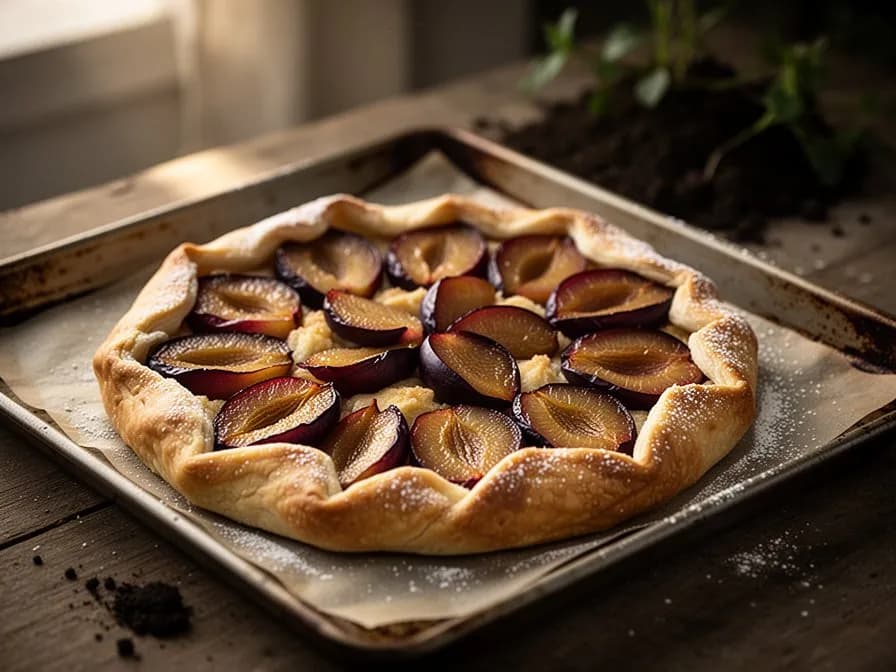
Japanese Plum and Almond Cake
20 minutes plus 45 minutes bakingA moist, tender cake with a rich almond crumb and jammy plum halves pressed into the top, which sink and caramelise as the batter rises around them during baking. The combination of ground almonds and fresh plums is a classic pairing that showcases the fruit's sweet-tart character beautifully. Serve warm as a dessert with crème fraîche or at room temperature as an afternoon tea cake.
Japanese Plum Jam with Vanilla
30 minutes plus 25 minutes settingA jewel-bright preserve that captures the intense flavour and gorgeous colour of homegrown Japanese plums. The addition of vanilla softens the natural tartness and adds a floral depth that makes this jam exceptional on sourdough toast, in pastries, or spooned over yoghurt. Japanese plums are naturally high in pectin, so this recipe sets reliably without commercial pectin. Makes approximately six to eight standard jars.
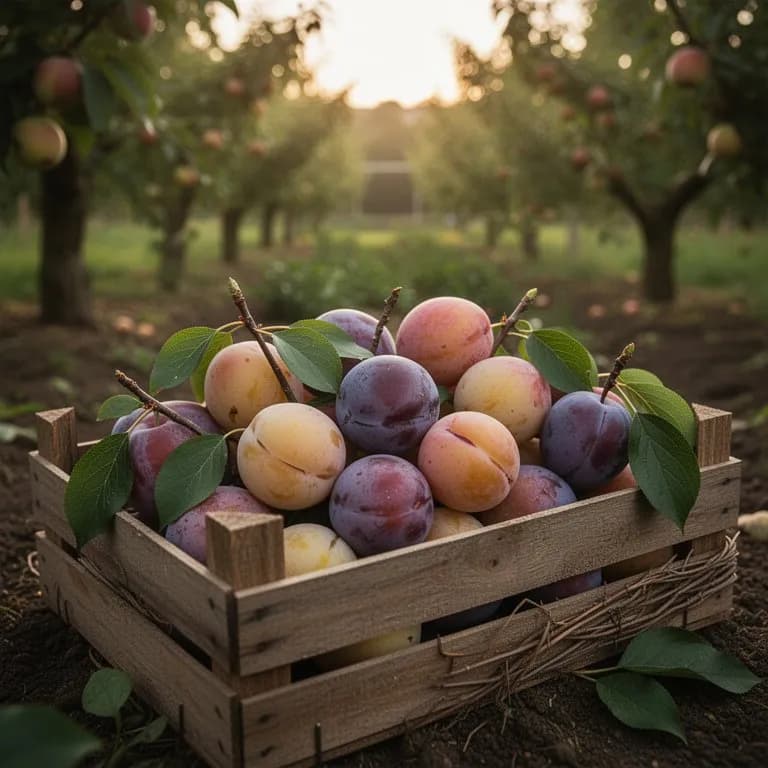
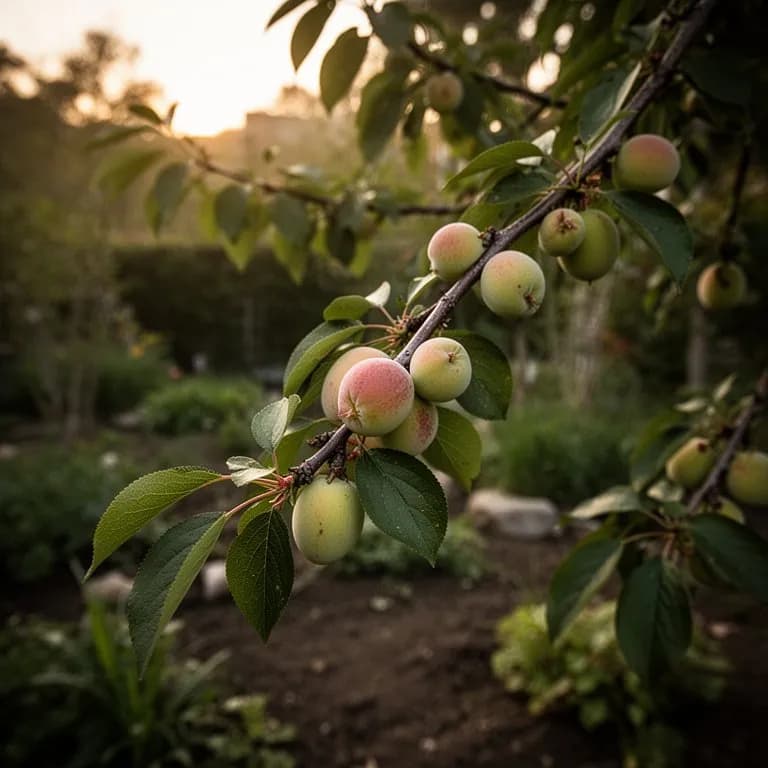
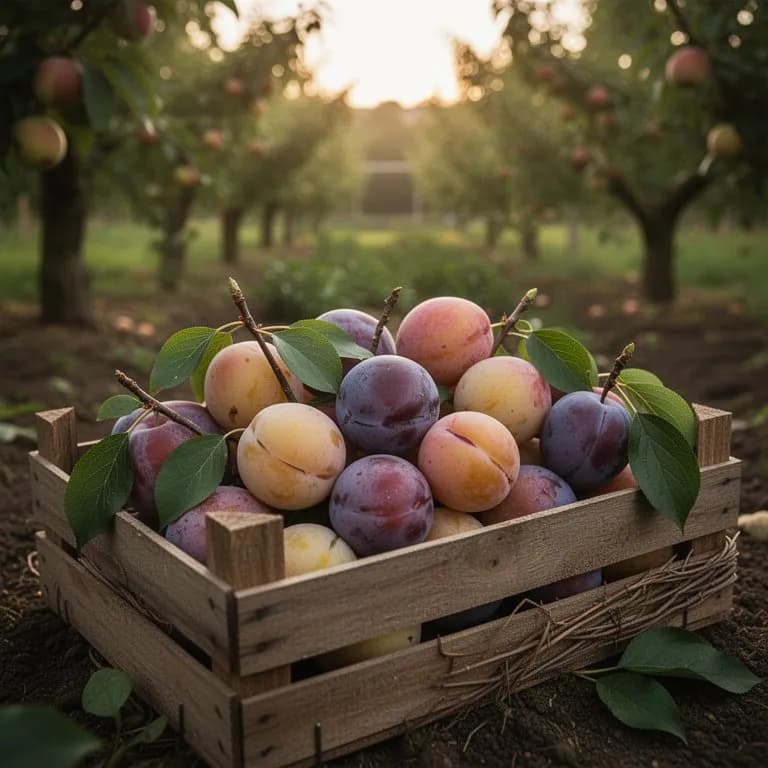
A well-timed harvest of Japanese plums yields heavy crops of juicy, richly flavoured fruit ideal for fresh eating, jams, and sauces
Yield & Spacing Calculator
See how many Japanese Plum plants fit in your garden bed based on the recommended 300cm spacing.
0
Japanese Plum plants in a 4×4 ft bed
0 columns × 0 rows at 300cm spacing
Popular Varieties
Some of the most popular japanese plum varieties for home gardeners, each with unique characteristics.
Santa Rosa
The classic California Japanese plum with reddish-purple skin and amber flesh. Partially self-fertile. Rich, aromatic flavor. Ripens early July.
Methley
An extremely reliable, self-fertile Japanese plum with dark purple skin and red flesh. Sweet, mild flavor. Ripens early June. Excellent for beginners.
Shiro
A beautiful yellow Japanese plum with mild, sweet flavor and heavy production. Excellent pollinator for other varieties. Ripens late June.
Satsuma
A Japanese plum with deep red flesh, small pit, and rich flavor ideal for preserves and canning. Requires a pollinator. Ripens mid-July.
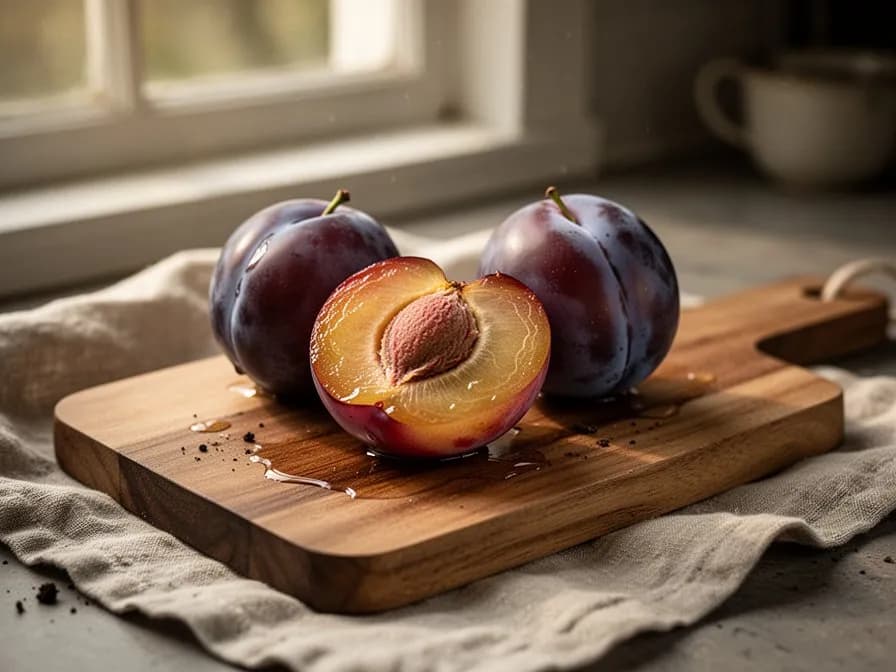
Japanese plum varieties vary widely in skin colour, flesh colour, and flavour — from the sweet-spicy Santa Rosa to the deep blood-red Satsuma
Japanese plums are outstanding fresh eating fruits with juicy, sweet flesh. They make beautiful fruit tarts and galettes when sliced. The juice creates refreshing summer drinks and cocktails. Japanese plum jam and preserves are excellent due to the fruit's natural sweetness. Use in Asian-inspired sauces for duck and pork. Plum chutneys complement cheese boards. The fruit also makes exceptional sorbet and ice cream.
When should I plant Japanese Plum?
Plant Japanese Plum in March, April. It takes approximately 730 days to reach maturity, with harvest typically in June, July, August.
What are good companion plants for Japanese Plum?
Japanese Plum grows well alongside Garlic, Marigold. Companion planting can improve growth, flavor, and natural pest control.
What hardiness zones can Japanese Plum grow in?
Japanese Plum thrives in USDA hardiness zones 5 through 9. With greenhouse protection, it may be grown in zones 3 through 10.
How much sun does Japanese Plum need?
Japanese Plum requires Full Sun (6-8h+). This means at least 6-8 hours of direct sunlight daily.
How far apart should I space Japanese Plum?
Space Japanese Plum plants 300cm (118 inches) apart for optimal growth and air circulation.
What pests and diseases affect Japanese Plum?
Common issues include Plum Curculio, Black Knot, Brown Rot. Prevention through good garden practices like crop rotation, proper spacing, and companion planting is the best approach. See the detailed pests and diseases section above for symptoms, prevention, and treatment for each.
How do I store Japanese Plum after harvest?
Ripe Japanese plums keep three to five days at room temperature or up to two weeks refrigerated. Slightly underripe fruit can be stored longer and allowed to soften at room temperature when ready to eat. Freeze halved, pitted plums for smoothies and baking. Japanese plums make excellent jams and fru...
What are the best Japanese Plum varieties to grow?
Popular varieties include Santa Rosa, Methley, Shiro, Satsuma. Each has unique characteristics suited to different growing conditions and culinary preferences. See the varieties section above for detailed descriptions.
What soil does Japanese Plum need?
Japanese plums prefer well-drained loam with a pH of 5.5 to 6.5. They tolerate heavier soils better than peaches but still require adequate drainage. Apply a balanced 10-10-10 fertilizer in early spring at one pound per year of tree age. Avoid excess nitrogen that promotes soft, disease-prone growth...
Do Japanese plums need a pollination partner?
Yes, in almost all cases. The majority of Japanese plum varieties are self-unfruitful, meaning they produce little to no fruit when their own pollen is used for fertilisation. You need at least two different varieties that bloom at the same time planted within 15 metres of each other for effective cross-pollination. Santa Rosa is the most widely recommended pollinator as it overlaps in bloom time with most other varieties and is also partially self-fertile. Popular pairs include Santa Rosa with Methley, Beauty with Santa Rosa, and Satsuma with Laroda. Check bloom-time compatibility when purchasing, as early and late-flowering varieties will not overlap effectively.
Why do my Japanese plums crack before they are ripe?
Fruit cracking is almost always caused by irregular watering during the rapid fruit-growth phase. When the tree experiences drought stress followed by heavy rain or deep irrigation, the cells inside the fruit expand rapidly and unevenly, causing the skin to split. Preventing cracking requires consistent soil moisture from fruit set until two weeks before harvest — deep, regular watering combined with a thick organic mulch over the root zone to buffer moisture fluctuations. Avoid overhead irrigation once fruit begins to colour. Some varieties are inherently more crack-prone than others, so selecting crack-resistant cultivars like Methley or Elephant Heart can also help in climates with unpredictable rainfall.
When is the best time to thin Japanese plums and how much should I remove?
Thinning should be done when fruitlets are roughly the size of a marble, typically four to six weeks after petal fall. This is before the stone hardens, making removal easier and minimising the energy already invested by the tree in each fruitlet. Remove enough fruit so that remaining plums are spaced 8-10 cm apart along each branch, leaving only the largest and most perfectly positioned fruitlet in each cluster. On a heavily laden tree, you may need to remove 60-70% of the total set — this feels drastic but is essential. Under-thinned trees produce dozens of small, flavourless plums, experience severe branch breakage, and tend toward biennial bearing, fruiting heavily one year and producing little the next.
What is the difference between Japanese plums and European plums?
Japanese plums (Prunus salicina) and European plums (Prunus domestica) are distinct species that differ in several important ways. Japanese plums are typically larger, rounder, and juicier with a sweet-tart flavour and higher juice content, making them superior for fresh eating. They ripen in early to midsummer, several weeks ahead of European varieties. Japanese plums require lower winter chilling hours (500-900 hours), making them better adapted to mild-winter climates. They are also more vigorous and heat-tolerant but less cold-hardy than European plums during dormancy. European plums including damsons and greengages have a more complex, sometimes richer flavour and are generally considered superior for cooking, drying into prunes, and making preserves. The two species cannot cross-pollinate each other.
How do I know when Japanese plums are ready to pick?
Japanese plums ripen from the inside out, which means external colour change alone is not a reliable indicator of internal ripeness. The best test is gentle thumb pressure near the stem end — a ripe plum will give slightly but still hold its shape. The fruit should also release a sweet, floral aroma. A ripe plum separates cleanly from the fruiting spur with a gentle quarter-turn twist; if you need to pull hard, the fruit needs more time. For fresh eating, harvest when the flesh yields gently but is not yet soft. For jam and cooking, wait until fully soft and very aromatic. Check the tree every two to three days as fruit on the same tree ripens unevenly, with sun-exposed fruit maturing several days ahead of shaded fruit.
Can Japanese plums grow in containers?
Yes, Japanese plums grafted onto dwarfing rootstock such as Colt or Citation can be grown successfully in large containers of at least 50-60 litres capacity. Use a rich loam-based compost such as John Innes No. 3 blended with coarse perlite for drainage. Container trees require more frequent watering than their in-ground counterparts, particularly during fruit development when the demand for water is very high. Feed with a balanced fertiliser in early spring and switch to a high-potassium liquid feed every two weeks from fruit set until harvest. Move pots under cover or to a sheltered wall during frost to protect early blossoms. Repot into fresh compost every two to three years, trimming roots if necessary, to prevent the tree from becoming potbound.
Ready to Grow Japanese Plum?
Add Japanese Plum to your garden plan and start designing your perfect layout.

Vladimir Kusnezow
Gardener and Software Developer
Zone 6b gardener. Growing vegetables and fruits in soil and hydroponics for 6 years. I built PlotMyGarden to plan my own gardens.
Jump to Section