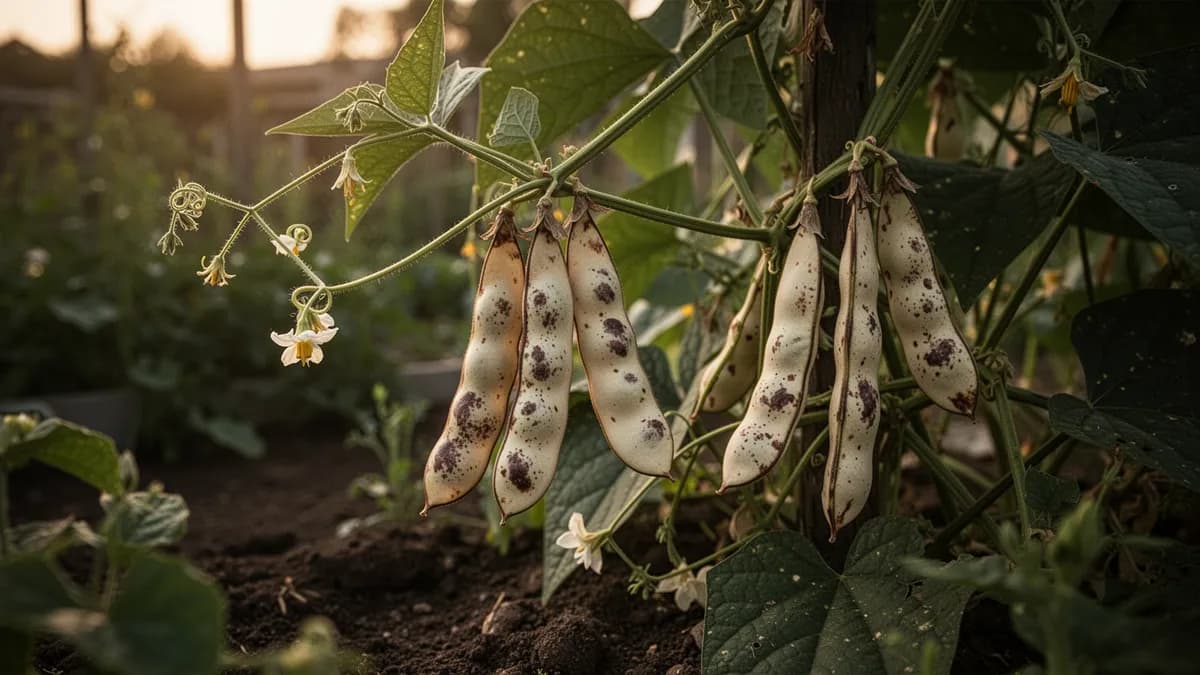
Pinto Bean
Phaseolus vulgaris
At a Glance
It's planting season for Pinto Bean! Start planning your garden now.
The most popular bean in the United States, with speckled brown and beige markings that disappear into a uniform pink-brown when cooked. Pinto beans are the essential ingredient in refried beans and are delicious in burritos, chili, and as a simple side dish. Bush varieties are straightforward to grow and produce a heavy crop for drying and winter storage. Sow directly after the last frost in warm soil and keep well watered during flowering for maximum yields.
Planting & Harvest Calendar
Growth Stages
From Seed to Harvest
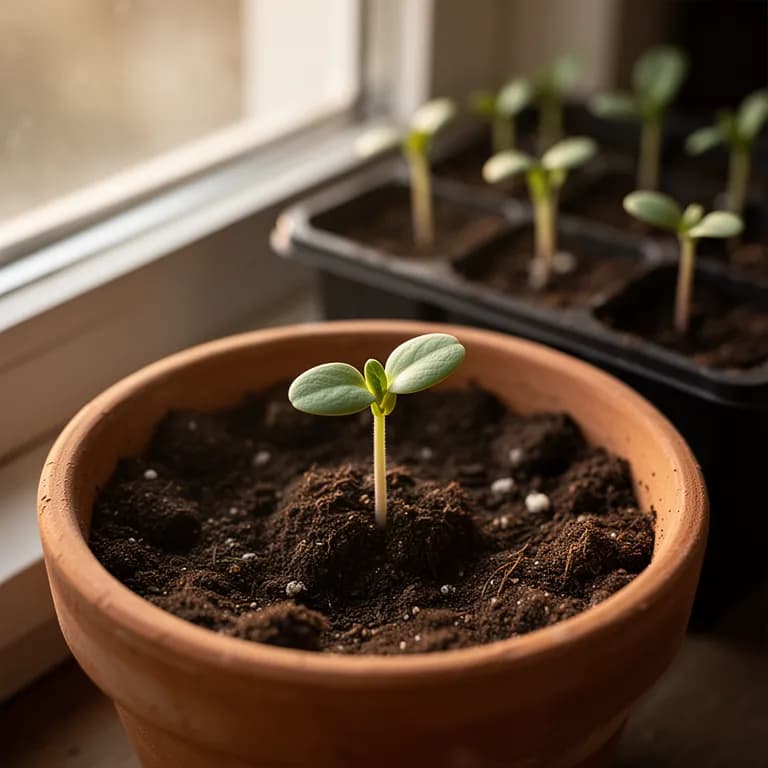
Seed Germination
Days 0–10
Seeds swell rapidly in warm, moist soil and send out a thick white radicle root within 3-5 days. The hypocotyl arch pushes through the soil surface, lifting the large cotyledon leaves. Germination requires soil temperatures of at least 16°C (60°F) and is fastest at 24-27°C (75-80°F).
💡 Care Tip
Do not soak pinto bean seeds before planting — unlike many beans, pintos have thin seed coats that absorb water quickly and can split or rot if pre-soaked. Plant 2.5-5 cm deep in warm, well-drained soil.
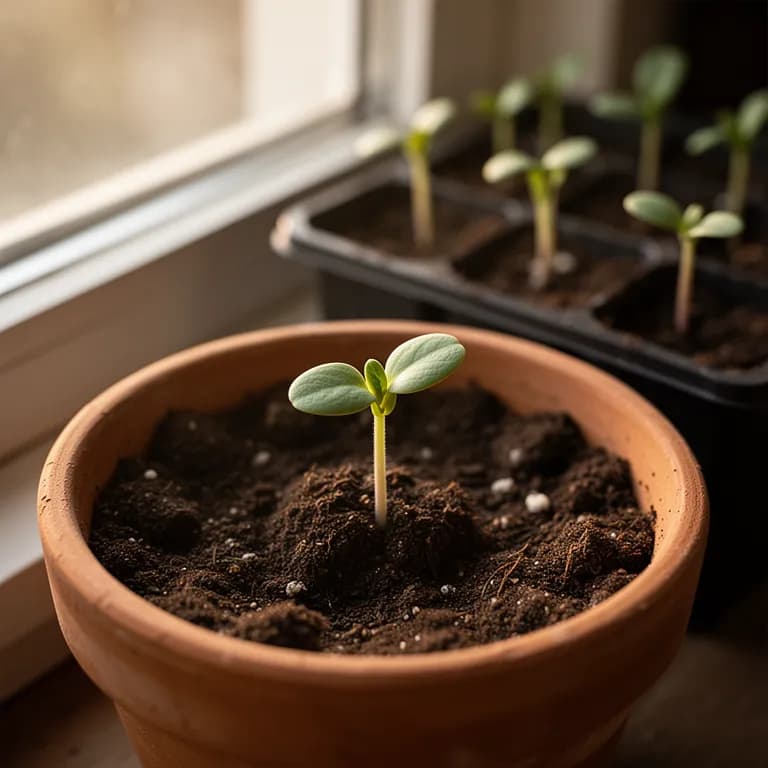
Pinto bean seedlings emerge quickly in warm soil, lifting their heavy cotyledons above the surface
Monthly Care Calendar
What to do each month for your Pinto Bean
May
You are herePrimary planting month for zones 4-8. Direct-sow in warm, well-drained soil after all frost danger has passed. Do not soak seeds — pinto beans have thin seed coats that split easily. Water gently after planting.
Did You Know?
Fascinating facts about Pinto Bean
Pinto beans are the single most consumed bean in the United States and Mexico combined, accounting for roughly 40% of all dry beans eaten in the US — their name comes from the Spanish word 'pintado' meaning 'painted,' referring to their distinctive speckled appearance.
Direct sow pinto bean seeds 1-2 inches deep after all frost danger and soil reaches 60°F. Space 4-6 inches apart in rows 24-30 inches apart. Seeds germinate in 7-14 days at 65-85°F. Pinto beans are bush types growing 18-24 inches tall that do not require support.
Provide full sun and moderate water. Pinto beans are fairly drought-tolerant and actually produce better in drier conditions. Avoid overhead watering to prevent disease. As nitrogen-fixing legumes, no nitrogen fertilizer is needed. Apply phosphorus if soil is deficient.
Pinto beans require 85-100 days for dry bean harvest. Allow pods to dry on plants until brown and papery. In wet climates, pull plants before rains and finish drying under cover. Pinto beans are the most widely grown dry bean in the United States and are the classic bean for Mexican refried beans and many Southwestern dishes.
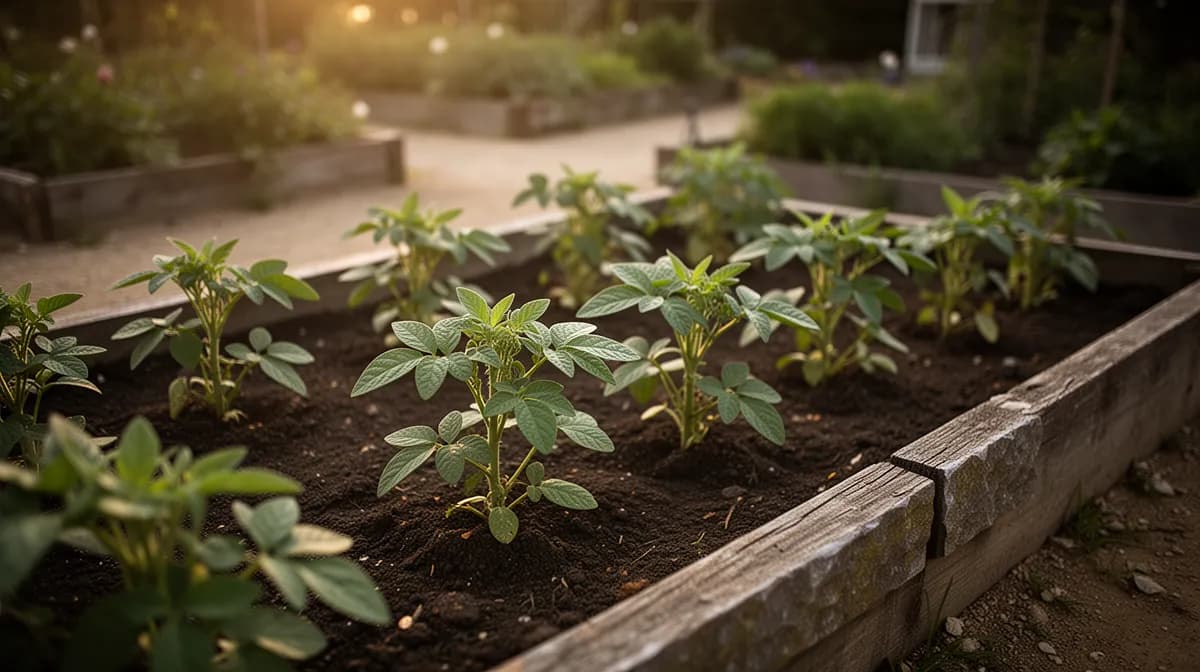
Compact bush plants grow 18-24 inches tall and need no staking or trellising
Pinto beans (Phaseolus vulgaris) trace their origins to the highlands of central Mexico and Guatemala, where the common bean was first domesticated approximately 7,000-8,000 years ago. Archaeological evidence from caves in the Tehuacan Valley and the Ocampo region of Mexico shows that ancient Mesoamerican peoples were cultivating beans alongside corn and squash — the foundational Three Sisters that sustained civilizations across the Americas. Pinto beans specifically evolved as a dry-adapted variety suited to the arid conditions of what is now the American Southwest and northern Mexico.
Spanish colonizers encountered pinto beans throughout Mexico and the American Southwest in the 16th century and quickly adopted them as a staple food. The beans spread along colonial trade routes and became deeply embedded in the cuisines of the borderlands region. For centuries, pinto beans served as a primary protein source for ranchers, miners, and settlers throughout the arid West, earning nicknames like 'cowboy beans' and 'prairie strawberries.' The combination of pinto beans with corn tortillas creates a complete protein, and this nutritional partnership has sustained communities across Mexico and the American Southwest for millennia.
Today, pinto beans are the most widely produced dry bean in the United States, with North Dakota, Nebraska, Colorado, Idaho, and New Mexico as the leading producing states. The US produces approximately 400,000-500,000 metric tonnes of pinto beans annually. Mexico remains both a major producer and the largest export market for US pintos. Modern varieties like Burke, Othello, and Lariat have been developed for disease resistance and uniform maturity, but the fundamental character of this ancient crop — drought tolerance, nitrogen fixation, high protein content, and exceptional storability — remains unchanged from its Mesoamerican origins.
Direct sow only after last frost when soil reaches 60°F. Plant 1-2 inches deep. Inoculate with Rhizobium before planting. Seeds germinate in 7-14 days. Do not soak before planting as this can cause splitting. Space 4-6 inches apart. Seeds remain viable for 3-4 years. Plant in warm, dry conditions for best germination. Avoid cold, wet soil which causes seed rot.
Pinto beans grow in well-drained soil with a pH of 6.0-7.0. Inoculate with Rhizobium for nitrogen fixation. No nitrogen fertilizer needed. Light phosphorus at planting supports pod development. Pinto beans prefer drier conditions and good drainage. Avoid heavy, wet soil. Moderate fertility produces the best bean-to-foliage ratio. Sandy loam is ideal.
Check Your Zone
See if Pinto Bean is suitable for your location.
18°C – 30°C
64°F – 86°F
Pinto beans grow best in warm, relatively dry conditions between 18-30°C (65-85°F). Seeds will not germinate in soil below 16°C (60°F) and rot quickly in cold, wet conditions. Growth slows significantly above 35°C (95°F), and temperatures above 38°C (100°F) during flowering can cause blossom drop and poor pod set. Pinto beans prefer warm days and cool nights — the diurnal temperature swing of the arid Southwest (hot days, cool nights) produces the highest quality beans with the best flavor development.
Common issues affecting Pinto Bean and how to prevent and treat them organically.
Wet, humid conditions promote disease; pinto beans prefer dry climates similar to their native Southwest. Provide excellent air circulation and avoid overhead watering. Cold, wet soil causes poor germination; plant in warm soil. Mexican bean beetles can cause rapid defoliation; scout regularly. Uneven pod maturity means harvest timing is a balance. Pod shattering in very dry conditions.
Pinto beans fix nitrogen in the soil for neighboring and subsequent crops. Plant with corn and squash in the Three Sisters method. Good companions include carrots, cucumbers, and eggplant. Avoid onions, garlic, and fennel. Follow pinto beans with nitrogen-hungry crops like corn or brassicas. Bush plants do not shade neighbors significantly.
- 1Do not soak pinto bean seeds before planting. Unlike many larger-seeded beans, pintos have relatively thin seed coats that absorb water quickly and are prone to splitting and rotting when pre-soaked. Plant directly into warm, moist soil for the best germination rates.
- 2Inoculate seeds with Rhizobium leguminosarum inoculant at planting time, especially if the bed has not grown beans in the past 3-4 years. The nitrogen-fixing bacteria dramatically improve plant vigor and yield while enriching the soil for future crops.
- 3Pinto beans are dryland crops that actually prefer drier conditions than most garden vegetables. Overwatering promotes lush foliage, root rot, and foliar diseases. Water deeply but infrequently, and withhold water entirely during the dry-down phase as pods mature.
- 4Avoid all nitrogen fertilizer — the Rhizobium nodules provide all the nitrogen pinto beans need, and additional nitrogen causes excessive leaf growth at the expense of pod production. A light application of phosphorus (bone meal or rock phosphate) at planting supports flowering and pod fill.
- 5Cultivate weeds early and shallowly, as pinto beans have a relatively shallow root system that is easily damaged by deep hoeing. Once plants are 15 cm tall, apply a light organic mulch to suppress weeds and conserve soil moisture.
- 6For the highest-quality dried beans, time your harvest carefully. Pull entire plants when 90% of pods are dry and brown but before heavy rains can cause sprouting or mold. In humid climates, harvest slightly early and finish drying under cover.
- 7Practice strict 3-year crop rotation with pinto beans to prevent the buildup of bean rust, bacterial blight, and root rot pathogens in the soil. Follow beans with heavy nitrogen feeders like corn, squash, or brassicas that benefit from the residual fixed nitrogen.
- 8Save seeds from your healthiest, most productive plants for next year. Pinto bean seeds remain viable for 3-4 years when stored in a cool, dry place. Select pods from the most uniform, disease-free plants to gradually improve your adapted strain.
For dry pinto beans, leave pods on plants until brown and papery, 85-100 days from sowing. Pull entire plants when most pods are dry. Hang upside down under cover for 1-2 weeks to finish curing. Thresh by beating in a bag and winnow to clean. For fresh shelling beans, harvest when pods are plump but still moist. The speckled pattern appears as beans dry; fresh beans are solid pink.
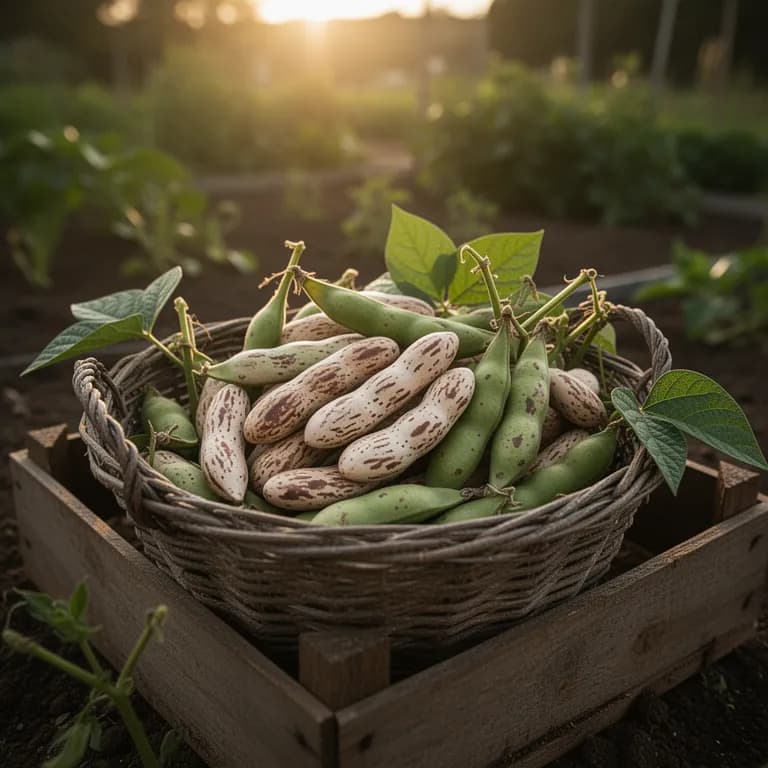
Pods drying naturally on the plant — harvest when they rattle when shaken
Dry pinto beans until they shatter when bitten. Store in airtight containers for 2-3 years in a cool, dry location. Cooked pinto beans freeze well for 12 months. Pressure can for shelf-stable storage. Refried beans freeze excellently. Dried beans can be ground into flour for baking. Pinto beans are one of the best drying beans for long-term food storage.
Plan your garden with ease
Love growing Pinto Bean? Use our free garden planner to design your beds, track planting dates, and get personalized care reminders.
Nutritional Info
Per 100g serving
143
Calories
Health Benefits
- Outstanding source of plant-based protein at 9g per 100g cooked serving, providing essential amino acids when combined with grains like rice or corn tortillas
- Exceptionally high in dietary fiber at 9g per 100g cooked — 36% of the daily value — supporting digestive health, cholesterol reduction, and blood sugar regulation
- Rich in folate (B9), providing 37% of the daily value per 100g cooked, critical for DNA synthesis and especially important during pregnancy
- Excellent source of iron at 2.1mg per 100g cooked (12% DV), an important mineral for oxygen transport — pair with vitamin C-rich foods to enhance absorption
- High in magnesium (50mg, 12% DV) and phosphorus (147mg, 12% DV), both essential for bone health, energy metabolism, and muscle function
- Contains significant thiamine (B1), providing 17% of the daily value per 100g cooked, supporting carbohydrate metabolism and nervous system function
💰 Why Grow Your Own?
A single packet of pinto bean seeds costing $3-5 can plant a 6-meter row that produces 2-4 kg of dried beans — equivalent to $8-20 worth of organic dried pintos or $15-30 worth of canned beans at the grocery store. Growing your own also eliminates the BPA-lined cans and excess sodium found in commercial products. Since dried pinto beans store for 2-3 years, a single productive harvest provides shelf-stable protein for extended periods. The real savings multiply when you consider that homegrown pintos also improve your soil by fixing nitrogen, reducing fertilizer costs for the next crop in the rotation.
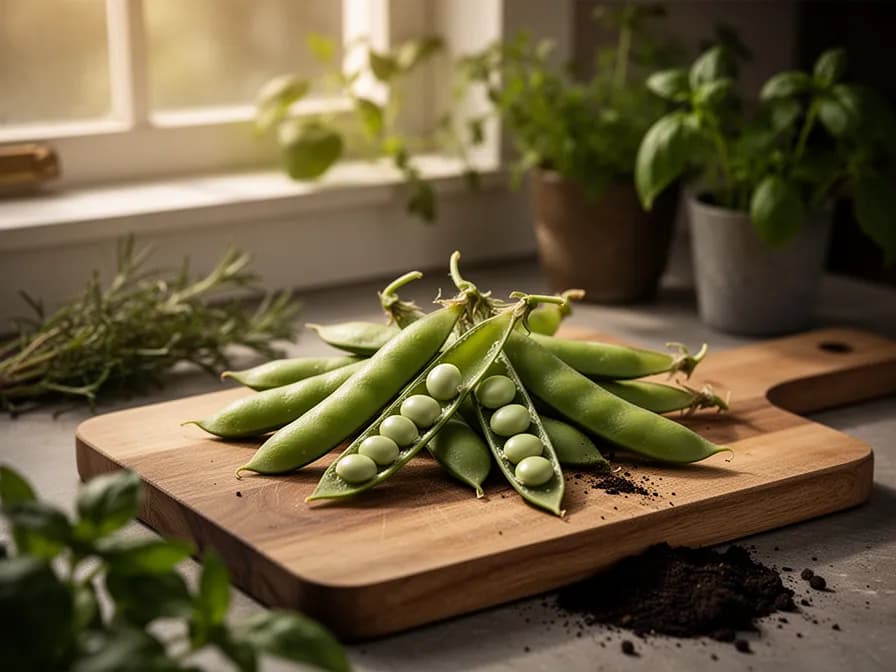
The iconic speckled pattern of dried pinto beans — America's most popular bean variety
Quick Recipes
Simple recipes using fresh Pinto Bean
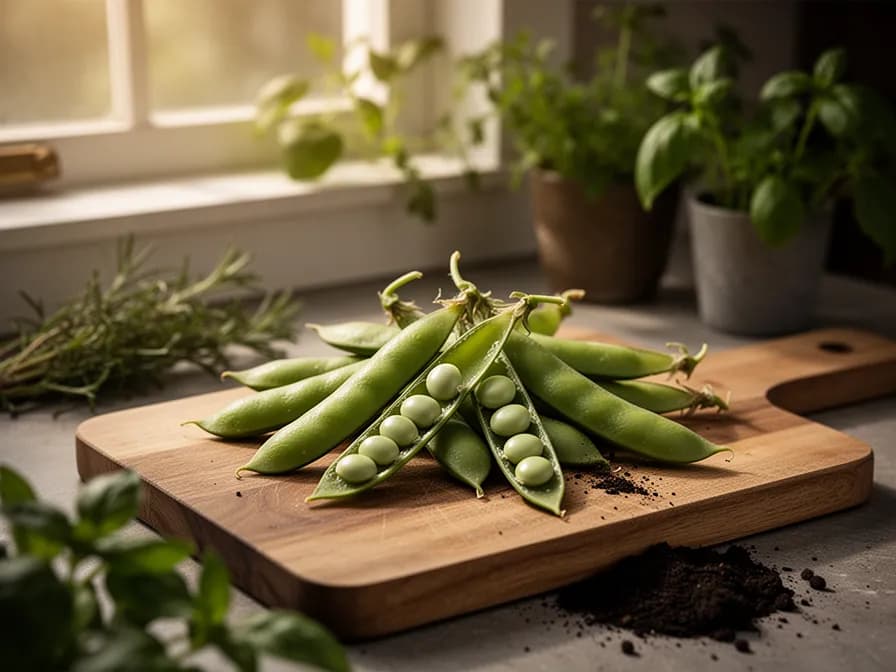
Classic Refried Beans (Frijoles Refritos)
30 min (plus overnight soak)The quintessential Mexican side dish — tender pinto beans mashed and fried with aromatic onion, garlic, and cumin until creamy and rich. Homemade refried beans are incomparably better than canned and freeze beautifully for quick meals.
Slow-Cooker Charro Beans (Frijoles Charros)
15 min prep, 8 hrs slow cookA hearty, brothy Mexican bean dish loaded with smoky bacon, tomatoes, chili peppers, and herbs. Charro beans are a beloved side for grilled meats and tacos, and they only get better the next day as the flavors meld.
Pinto Bean and Roasted Vegetable Burrito Bowl
35 minA colorful, protein-packed bowl layering seasoned pinto beans over cilantro-lime rice with roasted vegetables, fresh salsa, and creamy avocado. A wholesome weeknight dinner that showcases homegrown pintos at their best.
Classic refried beans — the most iconic use of pinto beans in Mexican cuisine
Yield & Spacing Calculator
See how many Pinto Bean plants fit in your garden bed based on the recommended 10cm spacing.
144
Pinto Bean plants in a 4×4 ft bed
12 columns × 12 rows at 10cm spacing
Popular Varieties
Some of the most popular pinto bean varieties for home gardeners, each with unique characteristics.
Pinto
The standard mottled brown-and-beige dry bean. Rich, earthy flavor. The most popular bean in the US. 90 days.
Othello
Improved pinto with upright habit and good disease resistance. High yields and uniform beans.
Burke
Early-maturing pinto ready in 85 days. Good for short-season areas. Consistent performance.
Pinto beans are the backbone of Mexican and Southwestern cuisine. Make classic refried beans by mashing cooked pintos with lard or oil. Simmer into charro beans with bacon and chili. Use in burritos, nachos, and tostadas. Cook low and slow for cowboy beans. Add to chili and hearty soups. Mash for bean dip. The creamy, earthy flavor pairs with cumin, chili, garlic, and lime.
When should I plant Pinto Bean?
Plant Pinto Bean in May, June. It takes approximately 90 days to reach maturity, with harvest typically in August, September, October.
What are good companion plants for Pinto Bean?
Pinto Bean grows well alongside Corn, Cucumber, Potato. Companion planting can improve growth, flavor, and natural pest control.
What hardiness zones can Pinto Bean grow in?
Pinto Bean thrives in USDA hardiness zones 4 through 11. With greenhouse protection, it may be grown in zones 2 through 12.
How much sun does Pinto Bean need?
Pinto Bean requires Full Sun (6-8h+). This means at least 6-8 hours of direct sunlight daily.
How far apart should I space Pinto Bean?
Space Pinto Bean plants 10cm (4 inches) apart for optimal growth and air circulation.
What pests and diseases affect Pinto Bean?
Common issues include Mexican Bean Beetle, Bean Rust, Cutworms. Prevention through good garden practices like crop rotation, proper spacing, and companion planting is the best approach. See the detailed pests and diseases section above for symptoms, prevention, and treatment for each.
How do I store Pinto Bean after harvest?
Dry pinto beans until they shatter when bitten. Store in airtight containers for 2-3 years in a cool, dry location. Cooked pinto beans freeze well for 12 months. Pressure can for shelf-stable storage. Refried beans freeze excellently. Dried beans can be ground into flour for baking. Pinto beans are ...
What are the best Pinto Bean varieties to grow?
Popular varieties include Pinto, Othello, Burke. Each has unique characteristics suited to different growing conditions and culinary preferences. See the varieties section above for detailed descriptions.
What soil does Pinto Bean need?
Pinto beans grow in well-drained soil with a pH of 6.0-7.0. Inoculate with Rhizobium for nitrogen fixation. No nitrogen fertilizer needed. Light phosphorus at planting supports pod development. Pinto beans prefer drier conditions and good drainage. Avoid heavy, wet soil. Moderate fertility produces ...
What is the difference between fresh shelling pinto beans and dried pinto beans?
Fresh shelling pintos are harvested when pods are plump but still green and moist, about 70-80 days after planting. At this stage, the beans are solid pink without their characteristic speckles, have a creamy texture, and cook in just 30-45 minutes without soaking. Dried pintos are left on the plant until pods are brown and papery at 85-100 days, developing their famous mottled pattern and storing for years. Dried beans require overnight soaking and 1.5-2 hours of cooking. Both stages are delicious but offer different textures and convenience.
Why did my pinto bean plants produce lots of leaves but very few pods?
Excessive nitrogen is the most common cause — either from fertilizer application or from very rich soil. Pinto beans fix their own nitrogen through root nodules and do not need nitrogen fertilizer; adding more pushes the plant into vegetative growth at the expense of flowering and pod set. Other causes include insufficient sunlight (beans need 6-8 hours of full sun), drought stress during flowering which causes blossom drop, or excessive heat above 35°C (95°F) during the flowering period.
How do I store dried pinto beans for the longest shelf life?
Ensure beans are thoroughly dried first — they should shatter cleanly when bitten, not dent. Store in airtight glass jars, food-grade plastic containers, or sealed Mylar bags in a cool, dry location away from light. Properly dried pinto beans stored at room temperature keep for 2-3 years. For even longer storage (5-10 years), add oxygen absorbers to sealed containers and store below 21°C (70°F). Older beans are safe to eat but take progressively longer to cook and may never fully soften, so rotate your stock.
Can I grow pinto beans in a short-season northern climate?
Yes, but choose an early-maturing variety like Burke (85 days) rather than standard pintos (90-100 days). Start as soon as soil reaches 16°C (60°F) after last frost, and use black plastic mulch to warm the soil a few weeks earlier. In zones 3-4 with fewer than 100 frost-free days, the margin is tight — consider growing pintos as fresh shelling beans harvested at 70-80 days rather than waiting for full dry-down. You can also pull plants before frost and finish drying under cover indoors.
Are pinto beans safe to eat raw or undercooked?
No — raw and undercooked pinto beans contain phytohaemagglutinin (a type of lectin) that causes severe nausea, vomiting, and diarrhea. As few as 4-5 raw beans can trigger symptoms. Always cook pinto beans at a full rolling boil for at least 10 minutes before reducing heat to simmer. Slow cookers that do not reach boiling temperature are particularly risky — always boil beans on the stovetop first before transferring to a slow cooker. Properly cooked beans are completely safe and highly nutritious.
Do pinto beans really improve soil fertility for the next crop?
Yes, significantly. Pinto beans form a symbiotic relationship with Rhizobium bacteria that colonize their root nodules and convert atmospheric nitrogen into plant-available ammonium. A pinto bean crop can fix 40-70 kg of nitrogen per hectare into the soil. When the plants are turned under or their roots decompose after harvest, this nitrogen becomes available for subsequent crops. This is why the traditional practice of rotating beans with heavy nitrogen feeders like corn is so effective — the beans fertilize the soil naturally, reducing or eliminating the need for synthetic nitrogen in the following season.
Ready to Grow Pinto Bean?
Add Pinto Bean to your garden plan and start designing your perfect layout.

Vladimir Kusnezow
Gardener and Software Developer
Zone 6b gardener. Growing vegetables and fruits in soil and hydroponics for 6 years. I built PlotMyGarden to plan my own gardens.
Jump to Section