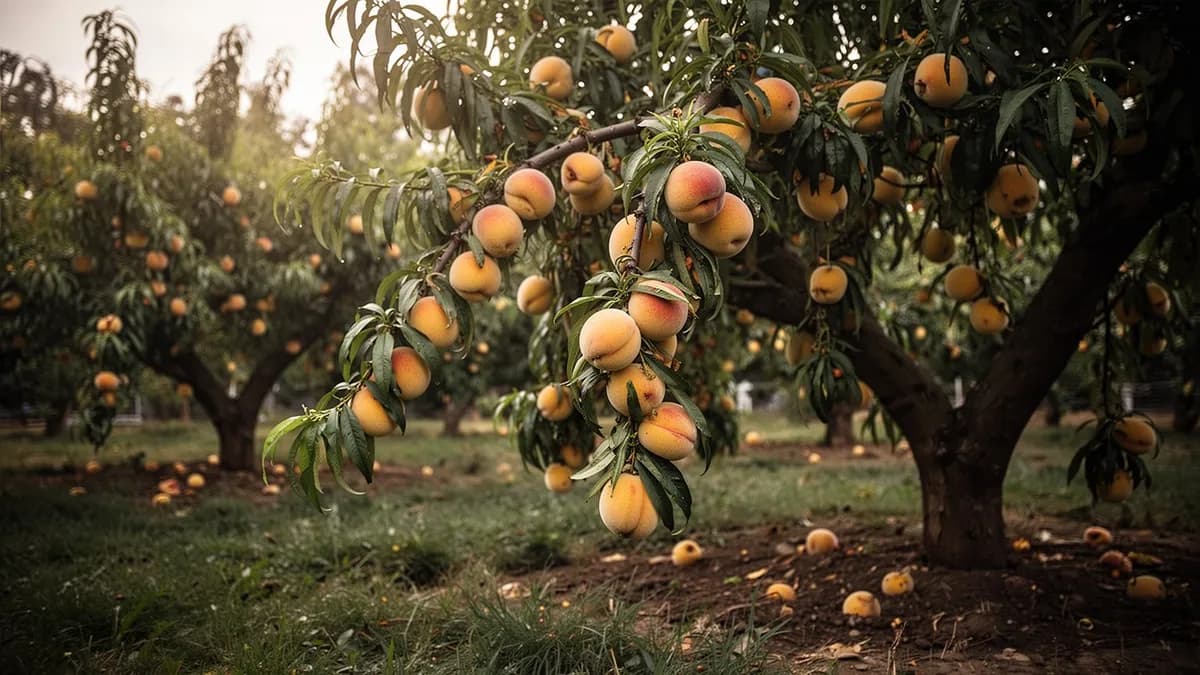
Peach Tree
Prunus persica
At a Glance
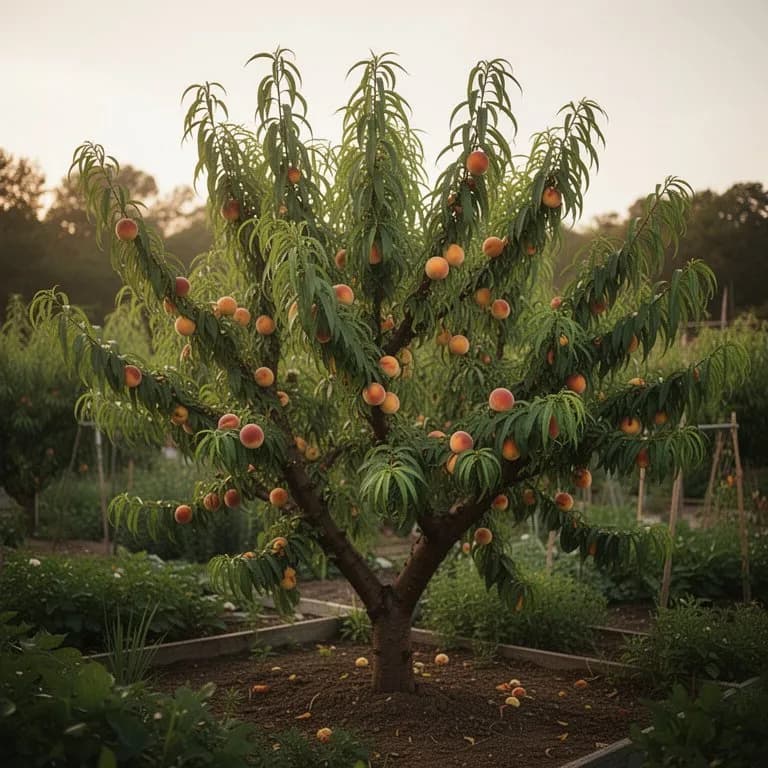
A self-fertile stone fruit tree that produces juicy, fragrant fruits in summer. Peach trees require heavy annual pruning to an open vase shape for good air circulation and sunlight penetration. They need adequate winter chill hours to break dormancy and set fruit properly. Watch for peach leaf curl, which can be prevented with a dormant copper spray applied before bud swell in late winter.
Planting & Harvest Calendar
Growth Stages
From Seed to Harvest
Dormancy
Days 0–90
The peach tree enters dormancy in late fall after leaf drop. During this period the tree accumulates chill hours, which are essential for breaking bud dormancy and producing a healthy crop the following season. Most peach varieties require between 400 and 1000 chill hours below 7°C (45°F).
💡 Care Tip
Apply dormant oil spray in late winter to control overwintering scale insects and mite eggs. Prune to an open-center shape while the tree is fully dormant.
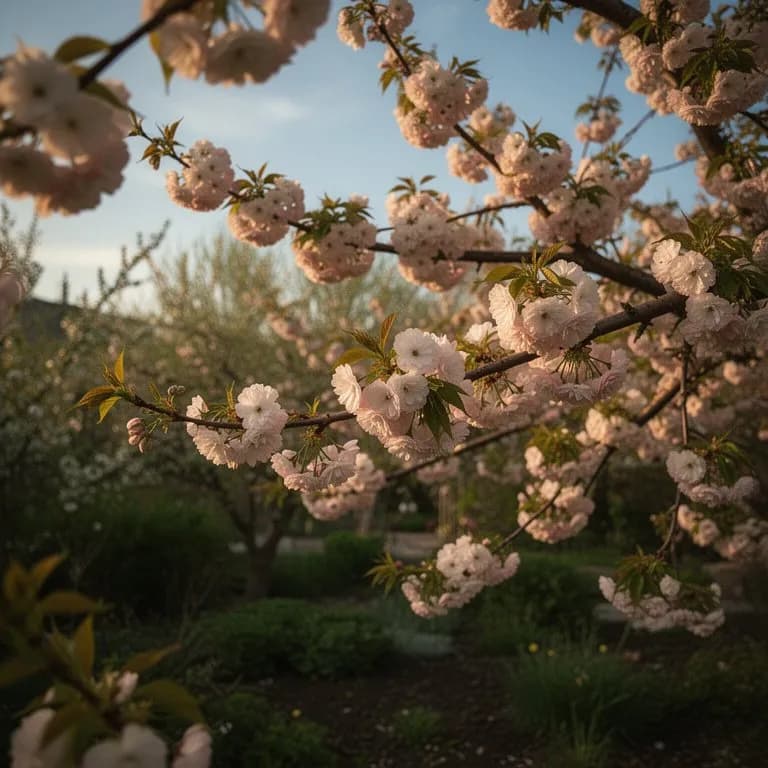
Peach trees produce stunning pink blossoms before leafing out in spring.
Monthly Care Calendar
What to do each month for your Peach Tree
May
You are hereComplete fruit thinning, leaving one peach every 15 to 20 cm along each branch. Maintain consistent irrigation as fruit sizing begins. Apply a nitrogen fertilizer if leaf color appears pale.
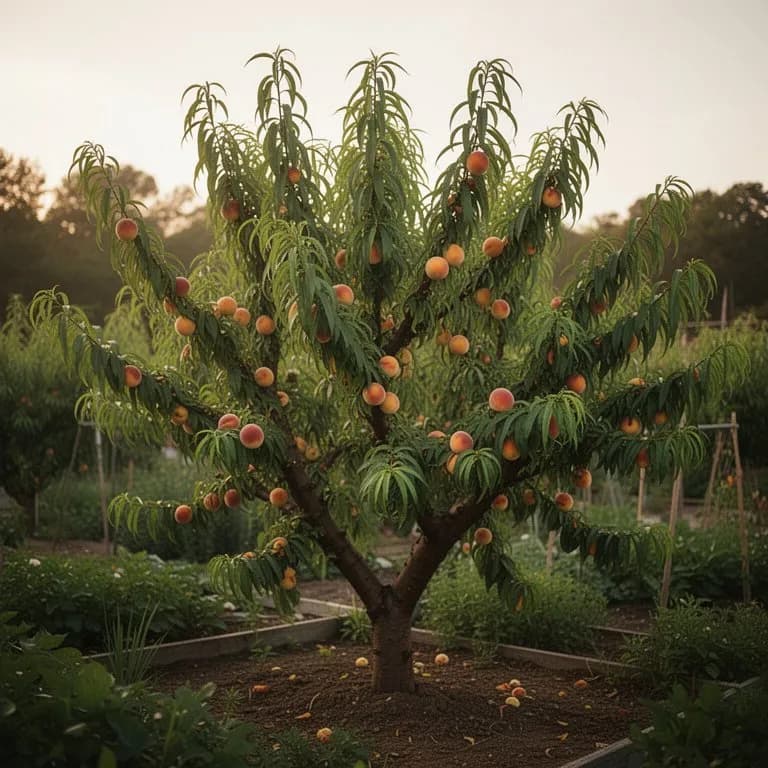
An open-center (vase) shape allows sunlight to reach all branches.
Did You Know?
Fascinating facts about Peach Tree
Peaches originated in northwest China over 4,000 years ago and were domesticated along the Yangtze River valley before spreading along the Silk Road to Persia, which gave the fruit its scientific name Prunus persica.
Choose a site with full sun, excellent air circulation, and well-drained soil. Peach trees bloom early in spring, so avoid frost pockets where cold air settles. A south-facing slope or location near a building that radiates heat is ideal. Soil pH should be between 6.0 and 6.5. Space standard trees 18 to 20 feet apart and dwarf varieties 10 to 12 feet apart.
Plant bare-root peach trees in late winter while still fully dormant. Set the graft union 2 to 3 inches above soil level and spread roots outward in the planting hole. Water deeply at planting and apply a thick mulch layer, keeping it several inches from the trunk. Water regularly during the first growing season, providing 1 to 2 inches per week. Peach trees are relatively short-lived, producing their best crops between ages 4 and 15.
Peach trees require the most aggressive pruning of any fruit tree. Prune annually in late winter to an open vase shape with 3 to 4 main scaffold branches radiating outward. Remove 40 to 50 percent of the previous year's growth to encourage vigorous new fruiting wood. Thin fruit when fruitlets are marble-sized, spacing them 6 to 8 inches apart on each branch. Apply dormant copper spray before bud swell to prevent peach leaf curl.
The peach (Prunus persica) is native to the region of northwest China between the Tarim Basin and the northern slopes of the Kunlun Mountains, where it was first domesticated and cultivated as early as 6000 BCE. Archaeological evidence from the Yangtze River valley, including fossilized peach pits dating back to the Neolithic period, confirms China as the center of origin. From China, the peach traveled westward along the Silk Road trade routes, reaching Persia (modern-day Iran) by around 2000 BCE. Persian merchants then introduced the fruit to the Mediterranean world, and the Romans encountered it as a 'Persian apple,' which ultimately gave rise to the Latin name Prunus persica. The Greeks and Romans cultivated peaches throughout their empires, spreading the fruit across southern Europe and North Africa. Spanish explorers brought peaches to the Americas in the 16th century, where they were quickly adopted by Indigenous peoples and spread throughout the southeastern United States and Mexico. By the 18th century, peaches were widely grown in colonial America, and Thomas Jefferson cultivated several varieties at Monticello. The modern peach industry in the United States took shape in the 19th century when commercial orchards expanded in Georgia, South Carolina, and California. Today, peaches are grown commercially on every inhabited continent, with China, Spain, Italy, Greece, Turkey, and the United States ranking among the top producers. Hundreds of cultivars exist, ranging from yellow-fleshed freestone varieties to white-fleshed clingstone types, each bred for different climates, flavors, and uses.
Peach trees are propagated by budding named varieties onto seedling peach or plum rootstock. Lovell and Halford are common rootstocks for standard trees, while Citation provides some dwarfing. Purchase grafted bare-root trees and plant in late winter while dormant. Peach pits can be cold-stratified for 90 to 120 days and grown from seed, but seedlings will not produce fruit identical to the parent and may be inferior in quality. Grafted trees bear fruit in 2 to 3 years versus 4 to 5 for seedlings.
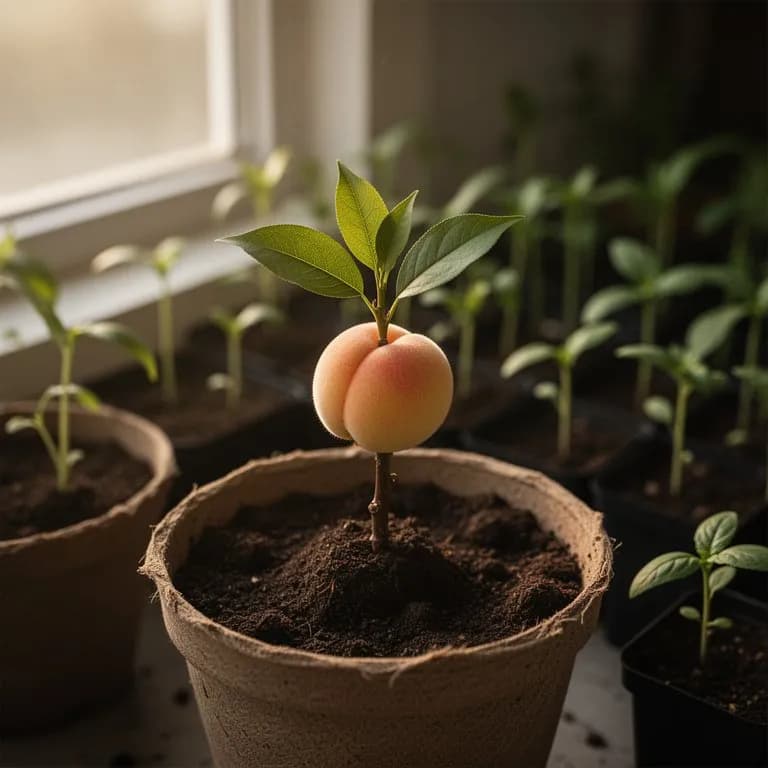
A peach tree seedling ready for transplanting in early spring.
Peach trees need well-drained sandy loam soil with a pH of 6.0 to 6.5. Heavy clay soil must be amended or avoided, as wet roots cause root rot. Apply 1 pound of 10-10-10 fertilizer per year of tree age in early spring, up to a maximum of 5 pounds. Spread fertilizer in a ring under the drip line. Excessive nitrogen promotes soft growth susceptible to disease and delayed fruit ripening. Supplement with calcium if soil tests indicate deficiency.
Check Your Zone
See if Peach Tree is suitable for your location.
-26°C – 36°C
-15°F – 97°F
Mature peach trees are hardy to approximately -26°C (-15°F) when fully dormant, though flower buds are killed at around -15°C (5°F). Optimal growing season temperatures range from 20°C to 30°C (68°F to 86°F). Sustained heat above 36°C (97°F) can cause sunscald on fruit and heat stress. Most varieties require 400 to 1000 chill hours below 7°C (45°F) during winter dormancy to break bud and produce fruit reliably.
Common issues affecting Peach Tree and how to prevent and treat them organically.
Peach leaf curl is the most common issue and is entirely preventable with a properly timed dormant copper spray. Fruit drop at marble-size is normal and desirable, but excessive drop may indicate poor pollination or frost damage to blossoms. Short tree lifespan of 12 to 20 years is normal for peaches. Gummosis on the trunk can indicate borer damage, bacterial infection, or winter injury. Inadequate winter chill hours in warm climates results in poor bloom and erratic leaf emergence.
Plant garlic, chives, and tansy near peach trees to deter borers and aphids. Basil and marigolds attract pollinators and beneficial insects. Nitrogen-fixing clover between rows improves soil fertility without excessive nitrogen. Avoid planting tomatoes and potatoes near peach trees, as they can harbor verticillium wilt. Strawberries make a productive understory crop in young peach orchards.
- 1Choose a planting site with full sun exposure of at least 6 to 8 hours per day and well-drained soil with a pH between 6.0 and 7.0 to ensure healthy root development.
- 2Select a cultivar matched to your local chill hour accumulation. Planting a high-chill variety in a warm climate or a low-chill variety in a cold climate will result in poor fruit set.
- 3Prune peach trees annually during dormancy using an open-center or vase shape to maximize sunlight penetration and airflow throughout the canopy.
- 4Thin fruit aggressively when fruitlets are about 2 cm in diameter, leaving one peach every 15 to 20 cm along each branch to ensure large, flavorful fruit and prevent branch breakage.
- 5Apply a preventive fungicide spray at the bud swell and pink bud stages each spring to control peach leaf curl, which cannot be treated once symptoms appear.
- 6Water deeply and consistently during fruit development, providing 2.5 to 5 cm of water per week. Irregular watering during the final swell stage causes fruit splitting.
- 7Apply a balanced fertilizer such as 10-10-10 in early spring before bloom and again after harvest. Avoid excessive nitrogen, which promotes vegetative growth at the expense of fruit quality.
- 8Protect the trunk from sunscald and borer damage by painting the lower trunk and scaffold branches with white latex paint diluted 50 percent with water.
- 9Monitor for oriental fruit moth and plum curculio using pheromone traps starting at petal fall, and apply targeted insecticide treatments only when pest thresholds are exceeded.
- 10Harvest peaches at the firm-ripe stage when the background color has changed from green to yellow and the fruit separates from the branch with a gentle twist.
Peaches are ripe when the ground color changes from green to yellow or creamy white, the fruit yields to gentle pressure, and it releases easily from the branch with a slight twist. The red blush is not an indicator of ripeness. Harvest every 2 to 3 days during the ripening period, as fruit on the same tree ripens unevenly over 1 to 2 weeks. Handle peaches gently, as they bruise very easily. Pick into shallow containers to prevent crushing bottom fruit.
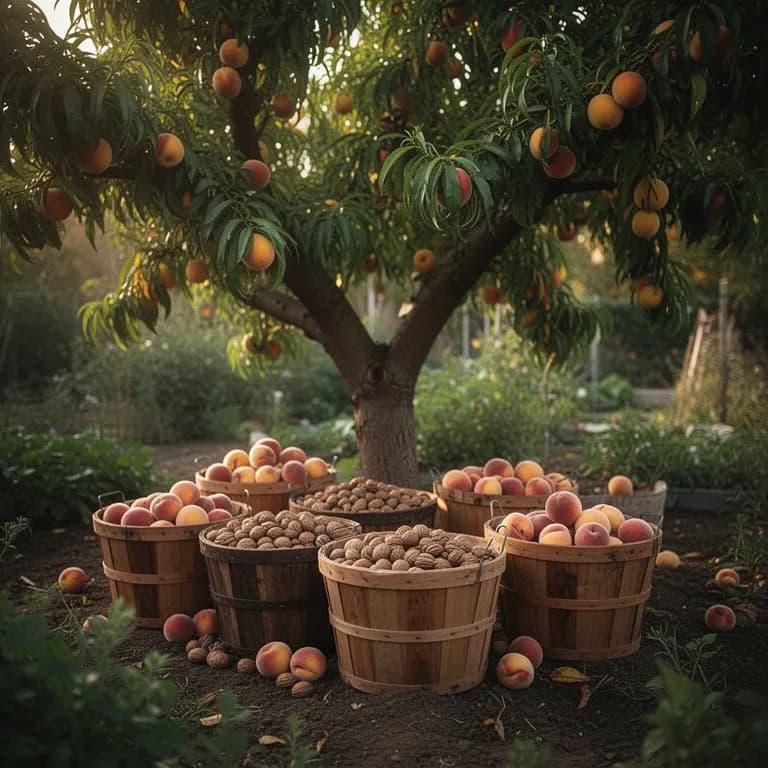
Fully ripe peaches with a warm golden blush ready for harvest.
Ripe peaches keep for only 3 to 5 days refrigerated. Slightly underripe fruit can be held at room temperature for 1 to 3 days to finish softening. Peaches freeze beautifully: peel, slice, toss with a little lemon juice, and freeze flat on baking sheets before bagging. Canning peaches in light syrup preserves them for up to a year. Peaches also make excellent jam, chutney, dried fruit, and fruit leather.
Plan your garden with ease
Love growing Peach Tree? Use our free garden planner to design your beds, track planting dates, and get personalized care reminders.
Nutritional Info
Per 100g serving
39
Calories
Health Benefits
- Low in calories with only 39 kcal per 100 grams of fresh fruit
- Good source of vitamin C, providing about 11 percent of the daily value per serving
- Contains beta-carotene and other carotenoids that support eye health
- Provides dietary fiber that aids digestion and promotes satiety
- Contains phenolic compounds with antioxidant properties
- Supplies small amounts of niacin, vitamin E, and vitamin K
💰 Why Grow Your Own?
A single mature peach tree can produce 30 to 70 kg of fruit per season, worth $90 to $280 at average retail prices of $3 to $4 per kilogram. With a productive lifespan of 15 to 20 years, one well-maintained tree can yield over $2,000 worth of fruit during its lifetime, easily offsetting the initial cost of the tree and annual care expenses.
Quick Recipes
Simple recipes using fresh Peach Tree
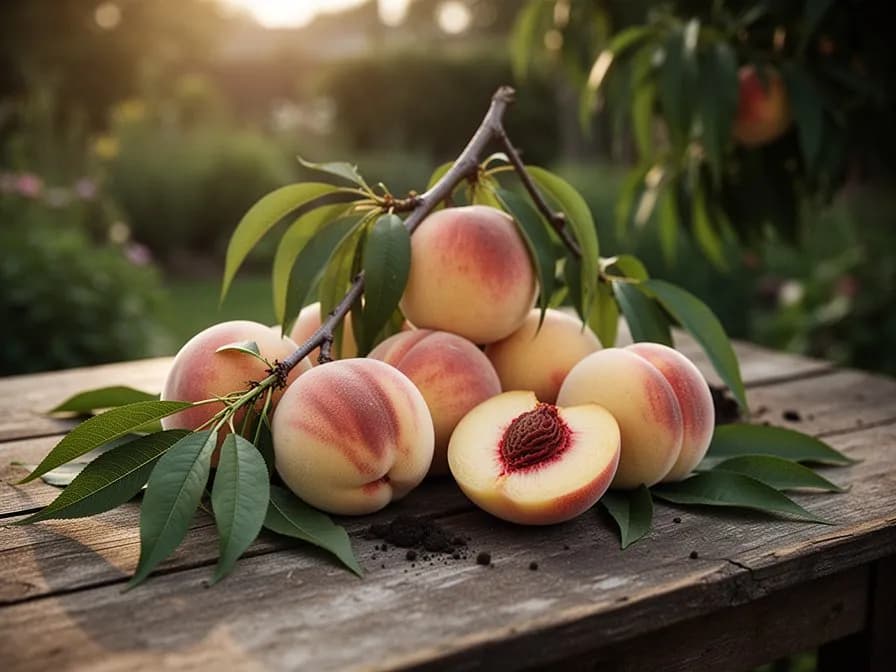
Grilled Peach Halves with Honey and Thyme
10 minutesHalved peaches are grilled cut-side down until caramelized, then drizzled with honey and sprinkled with fresh thyme leaves. The heat intensifies the natural sugars and creates a smoky-sweet flavor perfect as a summer dessert or side dish.
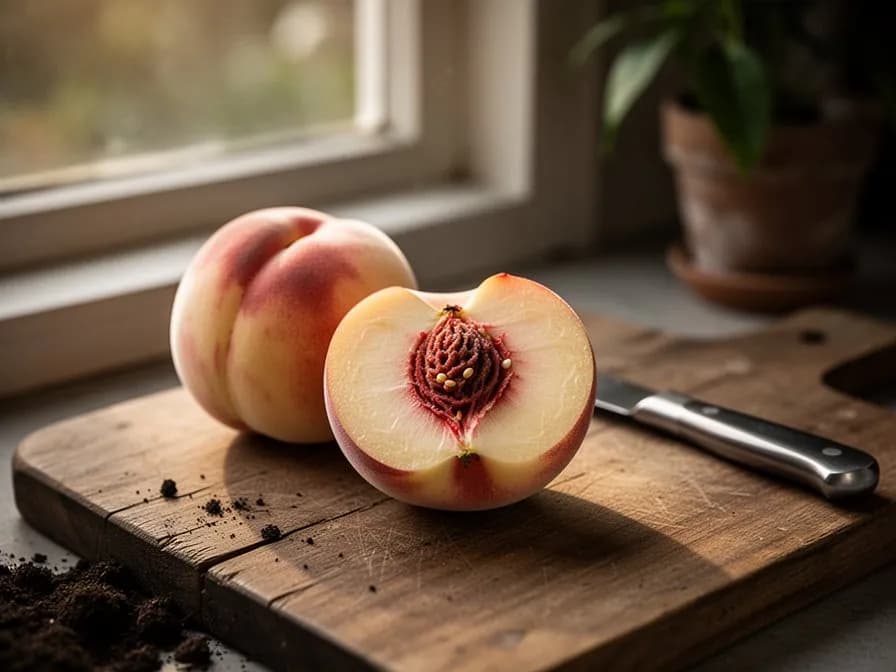
Fresh Peach Salsa
15 minutesDiced fresh peaches are combined with red onion, jalapeno, cilantro, and lime juice to create a bright and fruity salsa. Excellent served with grilled chicken, fish tacos, or tortilla chips for a refreshing summer appetizer.
Classic Peach Cobbler
20 minutes prep, 45 minutes bakingSliced fresh peaches are tossed with sugar, cinnamon, and a touch of lemon juice, then topped with a simple buttermilk biscuit dough and baked until golden and bubbling. A timeless Southern dessert best served warm with vanilla ice cream.
Yield & Spacing Calculator
See how many Peach Tree plants fit in your garden bed based on the recommended 500cm spacing.
0
Peach Tree plants in a 4×4 ft bed
0 columns × 0 rows at 500cm spacing
Popular Varieties
Some of the most popular peach tree varieties for home gardeners, each with unique characteristics.
Redhaven
The standard by which all peaches are measured. Medium-sized, freestone fruit with firm yellow flesh and excellent flavor. Ripens in mid-July.
Elberta
Classic late-season freestone peach with large golden fruit ideal for canning and fresh eating. Very productive and widely adapted.
Contender
Extremely cold-hardy variety whose flowers tolerate late spring frosts better than most peaches. Good flavor and medium-large freestone fruit.
Reliance
One of the hardiest peach varieties, surviving to minus 25 degrees Fahrenheit. Medium-sized, freestone fruit with sweet flavor. Ideal for northern growers.
Bonanza
Genetic dwarf peach reaching only 5 to 6 feet tall, perfect for container growing. Full-sized fruit with good flavor despite the compact tree.
Peaches are delicious fresh, in cobblers and crisps, and in ice cream. Yellow-fleshed peaches have a classic tangy-sweet flavor, while white-fleshed varieties are milder and sweeter. Freestone varieties are easier to pit for cooking, while clingstone types are often preferred for canning due to firmer flesh. Peaches pair beautifully with bourbon, ginger, basil, and cream. They are a good source of vitamins A and C, potassium, and dietary fiber.
When should I plant Peach Tree?
Plant Peach Tree in February, March, April. It takes approximately 1095 days to reach maturity, with harvest typically in July, August, September.
What are good companion plants for Peach Tree?
Peach Tree grows well alongside Garlic, Basil, Marigold. Companion planting can improve growth, flavor, and natural pest control.
What hardiness zones can Peach Tree grow in?
Peach Tree thrives in USDA hardiness zones 5 through 9. With greenhouse protection, it may be grown in zones 3 through 10.
How much sun does Peach Tree need?
Peach Tree requires Full Sun (6-8h+). This means at least 6-8 hours of direct sunlight daily.
How far apart should I space Peach Tree?
Space Peach Tree plants 500cm (197 inches) apart for optimal growth and air circulation.
What pests and diseases affect Peach Tree?
Common issues include Peach Leaf Curl, Brown Rot, Peachtree Borer, Oriental Fruit Moth. Prevention through good garden practices like crop rotation, proper spacing, and companion planting is the best approach. See the detailed pests and diseases section above for symptoms, prevention, and treatment for each.
How do I store Peach Tree after harvest?
Ripe peaches keep for only 3 to 5 days refrigerated. Slightly underripe fruit can be held at room temperature for 1 to 3 days to finish softening. Peaches freeze beautifully: peel, slice, toss with a little lemon juice, and freeze flat on baking sheets before bagging. Canning peaches in light syrup ...
What are the best Peach Tree varieties to grow?
Popular varieties include Redhaven, Elberta, Contender, Reliance, Bonanza. Each has unique characteristics suited to different growing conditions and culinary preferences. See the varieties section above for detailed descriptions.
What soil does Peach Tree need?
Peach trees need well-drained sandy loam soil with a pH of 6.0 to 6.5. Heavy clay soil must be amended or avoided, as wet roots cause root rot. Apply 1 pound of 10-10-10 fertilizer per year of tree age in early spring, up to a maximum of 5 pounds. Spread fertilizer in a ring under the drip line. Exc...
How long does it take for a peach tree to produce fruit?
Most peach trees begin bearing fruit 2 to 4 years after planting, depending on the rootstock and growing conditions. Full production is typically reached by year 5 or 6. Dwarf varieties on size-controlling rootstocks often fruit a year earlier than standard trees.
Do I need two peach trees for pollination?
No. Peach trees are self-fertile, meaning a single tree can pollinate its own flowers and produce fruit without a second variety nearby. However, having pollinating insects like bees visit the blossoms improves fruit set and yields.
Why are the leaves on my peach tree curling and turning red?
This is almost certainly peach leaf curl, a fungal disease caused by Taphrina deformans. It infects new leaves as buds open in cool, wet spring weather. Once symptoms appear, the infection cannot be reversed that season. Prevent it by applying a fungicide spray at bud swell before leaves emerge, typically in late winter.
When is the best time to prune a peach tree?
Prune peach trees in late winter while they are still dormant but after the coldest weather has passed, typically in January or February in most temperate climates. Pruning too early in fall can stimulate tender new growth vulnerable to frost, while pruning too late can remove developing flower buds.
How do I prevent brown rot on my peaches?
Brown rot (Monilinia fructicola) thrives in warm, humid conditions. Prevent it by thinning fruit to improve air circulation, removing any mummified fruit from the tree and ground, avoiding overhead irrigation, and applying fungicide sprays at shuck split and again two to three weeks before harvest.
Can I grow a peach tree from a pit?
Yes, but the resulting seedling will not be genetically identical to the parent tree and may produce fruit of unpredictable quality. To grow from a pit, cold-stratify the seed in a damp paper towel in the refrigerator for 8 to 12 weeks, then plant in potting mix. For reliable fruit quality, purchase a grafted tree from a nursery.
Ready to Grow Peach Tree?
Add Peach Tree to your garden plan and start designing your perfect layout.

Vladimir Kusnezow
Gardener and Software Developer
Zone 6b gardener. Growing vegetables and fruits in soil and hydroponics for 6 years. I built PlotMyGarden to plan my own gardens.
Jump to Section