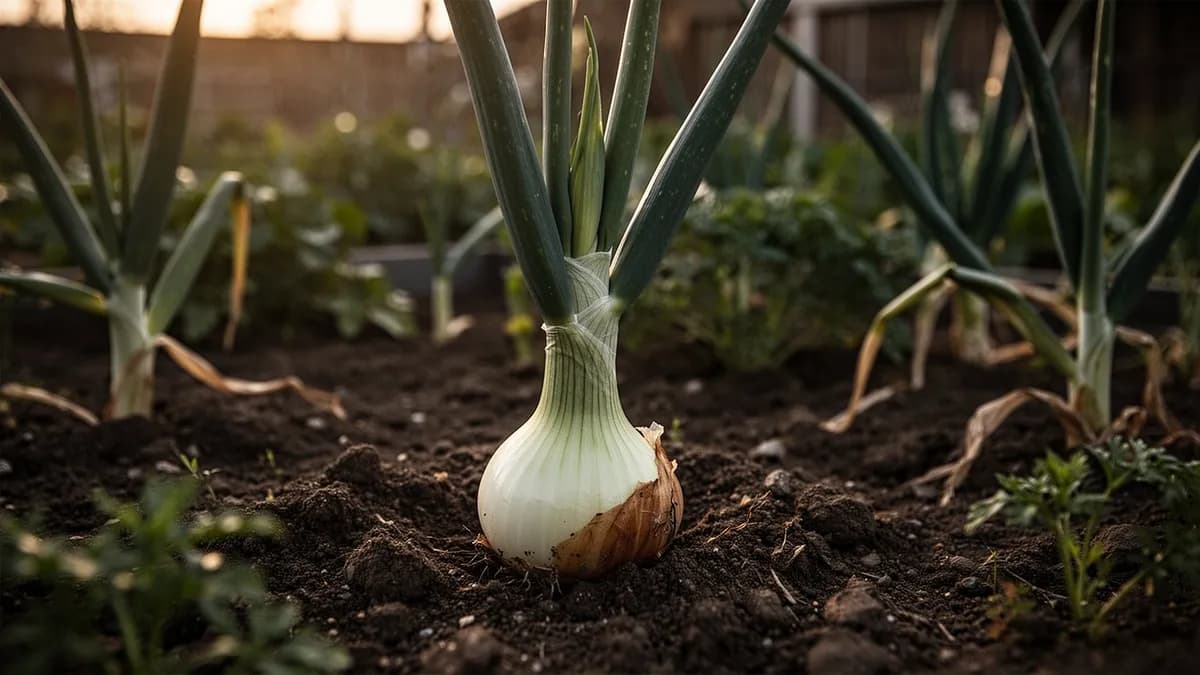
Torpedo Onion
Allium cepa
At a Glance
It's planting season for Torpedo Onion! Start planning your garden now.
An Italian heirloom also called Rossa di Tropea, with an elongated torpedo shape and gorgeous magenta-pink skin. The flesh is incredibly sweet and mild, making this one of the best onions for eating raw in salads and sandwiches. The elongated shape produces uniform slices ideal for grilling and caramelizing. Plants need a long growing season and long day length to size up properly in northern latitudes.
Planting & Harvest Calendar
Growth Stages
From Seed to Harvest
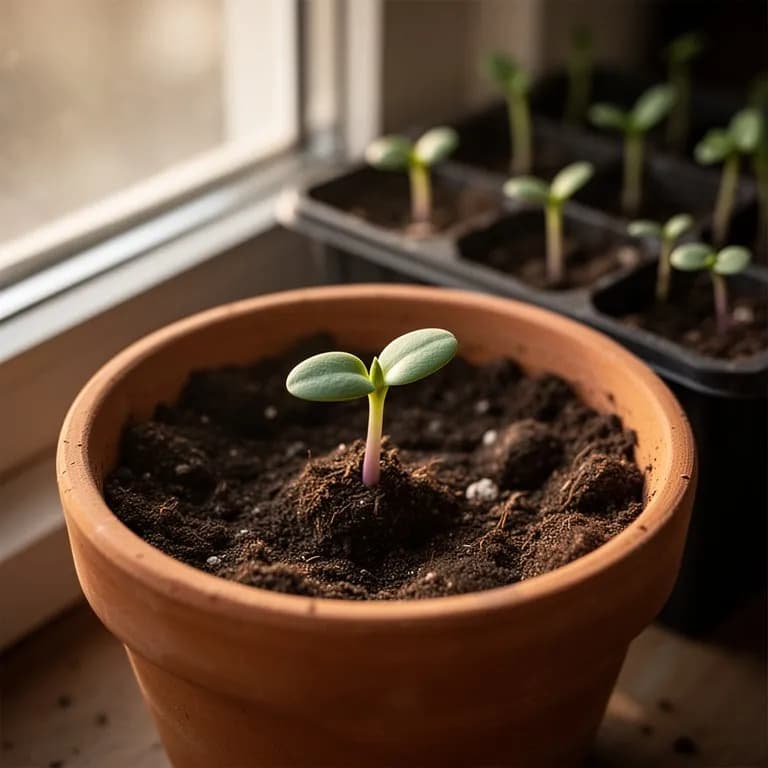
Seed Starting
Days 0–14
Torpedo onion seeds are tiny and slow to germinate, taking 7-14 days at optimal temperatures. The first visible growth is a single thin, grass-like leaf (the flag leaf) that emerges in a loop before straightening upright. Seeds must be started indoors 10-12 weeks before the last frost because these long-season onions need every available growing day to produce full-sized bulbs.
💡 Care Tip
Sow seeds 0.5 cm deep in deep cell trays or soil blocks filled with fine seed-starting mix. Maintain soil temperature at 18-21°C (65-70°F). Provide 14-16 hours of strong light daily from sowing — even before emergence — to produce stocky seedlings rather than weak, floppy ones.
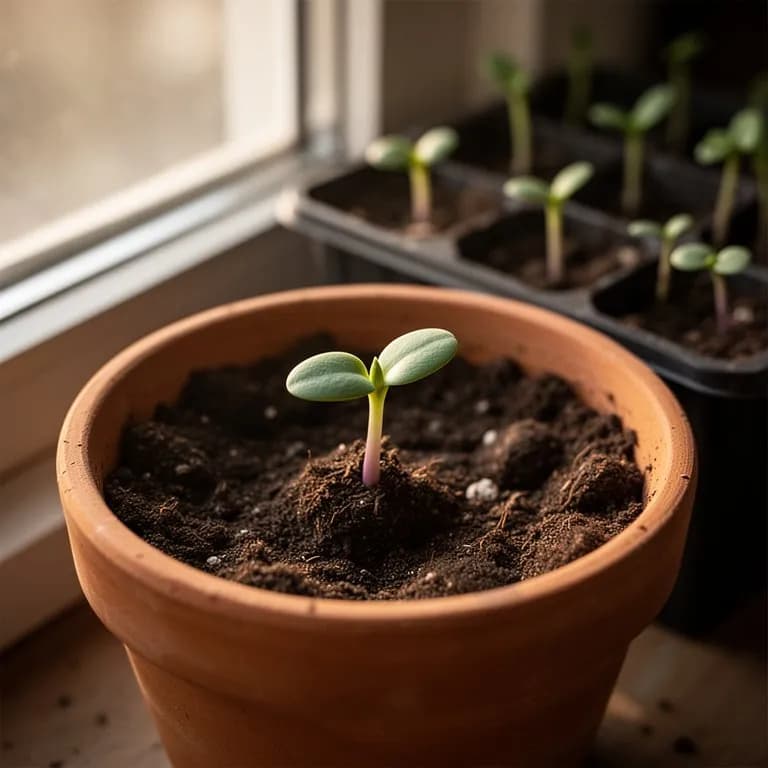
Torpedo onion seedlings started indoors 10-12 weeks before last frost — trim tops to 10 cm when they begin to flop
Monthly Care Calendar
What to do each month for your Torpedo Onion
May
You are hereMain transplanting month for zones 4-6. Seedlings should be pencil-thick with 4-5 leaves. Keep beds weed-free — onions compete poorly with weeds. Water consistently and begin side-dressing with nitrogen-rich fertilizer every 3 weeks to maximize leaf count.
Did You Know?
Fascinating facts about Torpedo Onion
The most famous torpedo onion in the world is the Cipolla Rossa di Tropea, which carries IGP (Indicazione Geografica Protetta) status from the European Union — a legal certification that only onions grown in the specific coastal zone of Calabria between Amantea and Nicotera can bear the Tropea name.
Torpedo onions require a long growing season of 110 days or more, so start seeds indoors ten to twelve weeks before the last frost. Sow seeds thinly in trays with fine seed-starting mix, barely covering them, and maintain a temperature of 18-21 degrees Celsius. Germination takes seven to fourteen days. Trim seedling tops to 10 cm when they flop over to encourage stocky growth. Harden off and transplant outdoors when soil temperatures reach 10 degrees Celsius.
Space transplants 12-15 cm apart in rows 30 cm apart in fertile, well-drained soil. Torpedo onions are intermediate to long-day varieties, requiring 14 or more hours of daylight to initiate bulbing. Consistent moisture is essential during the bulb formation phase, but reduce watering as tops begin to yellow and fall over. A balanced fertilizer every three weeks during active growth supports bulb expansion.
These onions are ready when about half the tops have fallen over naturally. Stop watering at this point and allow the bulbs to cure in the ground for a few days before lifting. The elongated shape makes them prone to sunburn during curing, so provide shade or cure indoors. Handle gently as the soft, sweet flesh bruises easily.
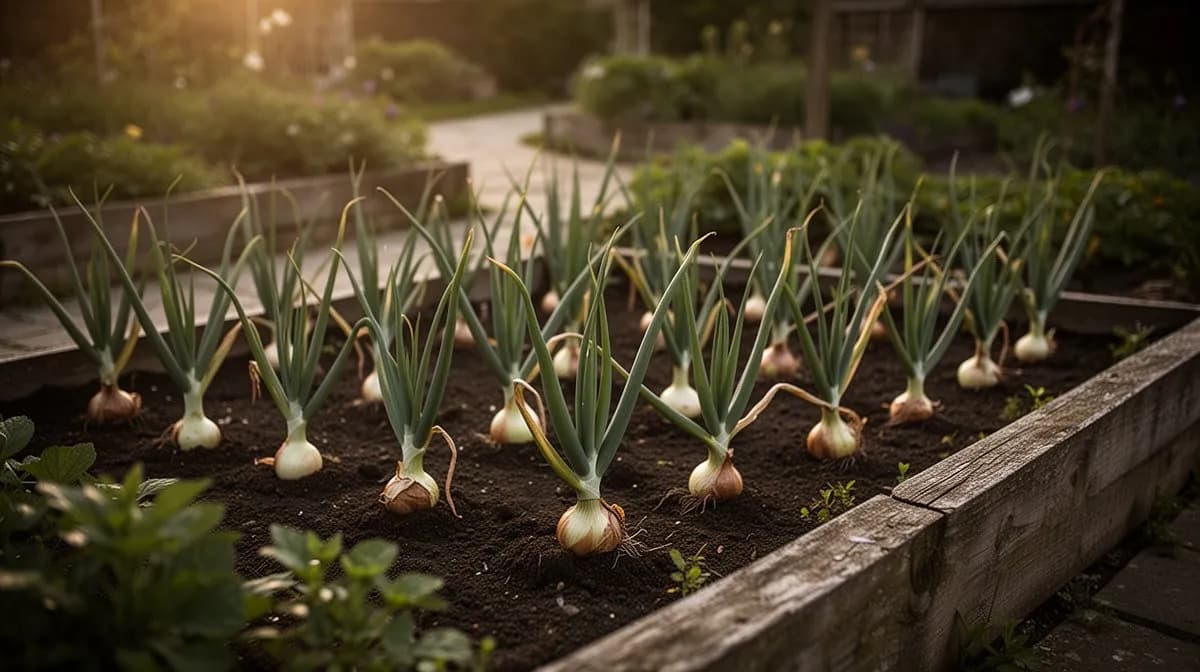
Torpedo onions growing in full sun with straw mulch to retain moisture during the critical bulb expansion phase
The torpedo onion (Allium cepa) traces its roots to the ancient Mediterranean world, where elongated onion varieties were cultivated by the Greeks, Romans, and Phoenicians. The specific lineage of the Italian torpedo onion is believed to have arrived on the Calabrian coast of southern Italy through Phoenician traders who established colonies along the Tyrrhenian Sea more than 2,500 years ago. The sandy, well-drained coastal soils and mild maritime climate of Calabria proved ideal for developing the sweet, mild onion that would eventually become famous worldwide.
The town of Tropea, perched on dramatic cliffs above the sea in the province of Vibo Valentia, became the epicenter of torpedo onion cultivation. Over centuries, Calabrian farmers selected for the most elongated bulb shapes, the deepest magenta color, and above all, the mildest, sweetest flavor. The resulting variety — Cipolla Rossa di Tropea — became so renowned that it earned IGP (Protected Geographical Indication) status from the European Union in 2008, legally protecting its name and geographic origin. Only onions grown in the designated coastal strip of Calabria, from Amantea in the north to Nicotera in the south, can carry the Tropea name.
Beyond Italy, torpedo onion varieties spread throughout the Mediterranean and eventually worldwide. The Red Long of Florence (Rossa Lunga di Firenze) is a Tuscan relative, while the French Simiane and various Spanish torpedo types share the same elongated genetics adapted to local conditions. In the 20th century, Italian immigrants brought torpedo onion seeds to the Americas, where the variety gained devoted followings among home gardeners and specialty growers. Today, torpedo onions are cultivated commercially in Italy, France, Spain, and increasingly in California and other warm-climate regions of the United States. They remain a premium specialty product, commanding higher prices than standard onions in gourmet markets worldwide.
Start torpedo onion seeds indoors ten to twelve weeks before the last frost date. Sow seeds in deep cell trays or soil blocks, planting two to three seeds per cell about 0.5 cm deep. Maintain temperatures of 18-21 degrees Celsius for germination. Provide fourteen to sixteen hours of bright light daily. Thin to one seedling per cell when they have two true leaves. Trim tops to 10 cm height when they begin to flop to encourage thicker stems. Begin hardening off two weeks before transplanting by gradually exposing to outdoor conditions. Transplant when seedlings are pencil-thick and soil temperature is at least 10 degrees Celsius.
Torpedo onions require deeply worked, loose soil to accommodate their elongated shape without restriction. Sandy loam with a pH of 6.0 to 6.8 is ideal. Incorporate well-rotted compost to a depth of 25 cm and add bone meal for phosphorus, which supports bulb development. Avoid heavy clay soils that can distort the torpedo shape. Apply a balanced organic fertilizer at transplanting and side-dress with nitrogen-rich amendments like blood meal every three weeks during the vegetative growth phase. Stop nitrogen application once bulbing begins to promote proper curing and storage quality.
Check Your Zone
See if Torpedo Onion is suitable for your location.
13°C – 24°C
55°F – 75°F
Torpedo onions grow best in moderate temperatures between 13-24°C (55-75°F). They are half-hardy — young transplants tolerate light frosts to about -3°C (27°F) but are damaged by sustained hard freezes. Bulb initiation is triggered primarily by day length (14+ hours) rather than temperature, but warm days of 20-27°C (68-80°F) during the bulbing phase promote rapid expansion and good sugar accumulation. Temperatures above 30°C (86°F) can cause premature bolting, especially if combined with drought stress. The mild Mediterranean climate of their native Calabria — warm but rarely extreme — produces the sweetest, most perfectly formed bulbs.
Common issues affecting Torpedo Onion and how to prevent and treat them organically.
The most common issue is bolt-resistant torpedo onions running to seed prematurely due to cold stress during early growth. Avoid transplanting too early and protect from late cold snaps. Short, stubby bulbs instead of the characteristic torpedo shape often result from compacted or heavy clay soil. Double bulbs are caused by temperature fluctuations during the bulbing period. Sunscald during curing produces green, bitter patches on exposed bulbs. Poor storage life is usually due to insufficient curing or harvesting before the neck has fully dried. Splitting occurs from irregular watering during bulb expansion.
Torpedo onions pair well with carrots, as the onion scent helps mask carrots from carrot fly. Plant alongside lettuce and beets, which benefit from the pest-deterrent qualities of alliums. Tomatoes and peppers are good neighbors, though avoid shading the onions as they need full sun. Chamomile planted nearby may improve onion flavor and vigor. Avoid planting near peas, beans, and other legumes, as alliums inhibit their nitrogen-fixing ability. Keep away from asparagus, which can be stunted by nearby allium plantings.
- 1Start seeds early and do not rush transplanting. Torpedo onions need a full 110+ day growing season, so starting indoors 10-12 weeks before last frost is non-negotiable. Late-started plants run out of growing time before bulbs can fully size up.
- 2Trim seedling tops to 10 cm whenever they begin to flop — this may seem counterintuitive, but trimming redirects energy from floppy leaf length into root development and stem thickness. Pencil-thick stems at transplant time are the single best predictor of large bulbs at harvest.
- 3Soil preparation is critical for good shape. Torpedo onions need deeply worked, loose, stone-free soil to develop their characteristic elongated form. Compacted or rocky soil produces stubby, misshapen bulbs. Double-dig beds or grow in raised beds filled with sandy loam for the best results.
- 4Keep beds obsessively weed-free. Onions have shallow, sparse root systems and narrow upright leaves that cannot compete with weeds for light, water, or nutrients. Even modest weed pressure can reduce bulb size by 50% or more. Mulch lightly with straw after transplanting.
- 5Water is everything during bulb expansion. Torpedo onions need consistent, even moisture from transplanting through the start of top fall-over. Irregular watering during the bulbing phase causes splitting, double bulbs, and thick necks that resist curing. A soaker hose on a timer is ideal.
- 6Stop nitrogen fertilizer when bulbing begins. Late nitrogen promotes soft, lush growth that is susceptible to neck rot in storage and delays the natural curing process. Switch to a potassium-focused feed (like wood ash tea) to promote bulb firmness and storage quality.
- 7Handle harvested bulbs like eggs. The elongated torpedo shape and high water content make these onions much more prone to bruising and mechanical damage than round onions. Use a fork to loosen soil before lifting, and never pull bulbs by their tops — the neck can tear, inviting storage rot.
- 8Cure thoroughly before storage. Torpedo onions need 2-3 weeks of curing in a warm (24-30°C / 75-85°F), dry, shaded, well-ventilated location until the neck is completely dry and paper-thin when squeezed. Under-cured onions develop neck rot within weeks of storage.
Torpedo onions are ready to harvest when about half the green tops have fallen over naturally, typically in late July through August. Bend remaining upright tops gently to speed the curing process. After a few days, loosen soil with a fork and lift bulbs carefully. The elongated shape is prone to damage, so handle with care. Cure in a single layer in a warm, dry, well-ventilated area out of direct sunlight for two to three weeks until the neck is completely dry and the outer skin is papery. Trim roots and cut tops to 2 cm for storage.
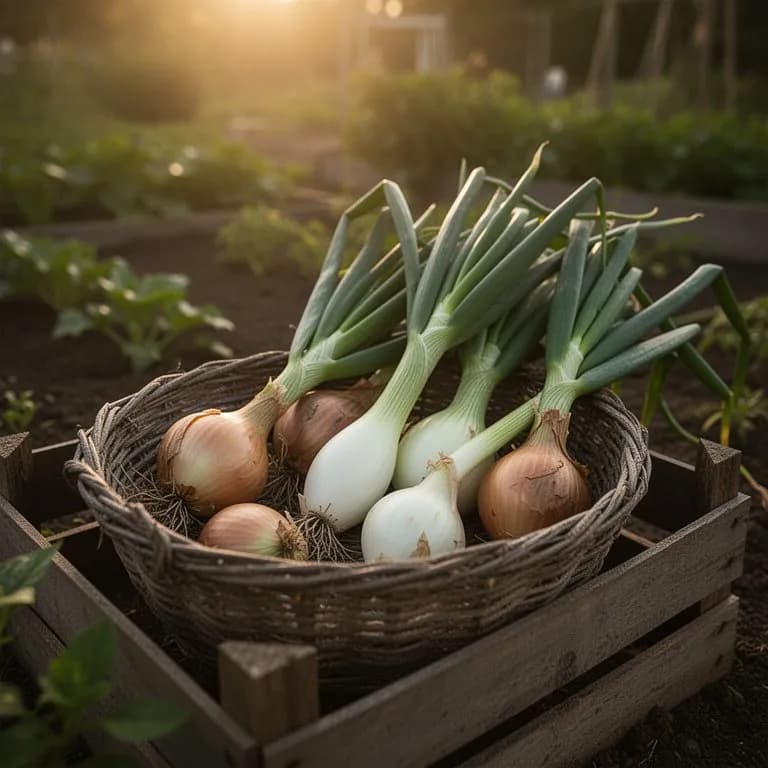
Lifted gently with a fork after tops fall over — the elongated shape demands careful handling to prevent bruising
Torpedo onions have a shorter storage life than round onions due to their high sugar content, typically lasting two to three months in cool, dry conditions at 5-10 degrees Celsius. Braid them by their tops for attractive storage. Slice and freeze on trays for convenient cooking use year-round. Pickle thin torpedo onion rings in red wine vinegar for a tangy condiment. Caramelize large batches slowly and freeze in portions for quick use in soups and sauces. The sweet flesh also dehydrates well into crispy onion chips for snacking.
Plan your garden with ease
Love growing Torpedo Onion? Use our free garden planner to design your beds, track planting dates, and get personalized care reminders.
Nutritional Info
Per 100g serving
40
Calories
Health Benefits
- Contains quercetin, a powerful flavonoid antioxidant concentrated especially in the outer pink-red layers — red and pink onion varieties have significantly higher quercetin levels than white or yellow types
- Rich in organosulfur compounds (thiosulfinates and cepaenes) that are released when the onion is cut or chewed, and which have been studied for anti-inflammatory and antimicrobial properties
- Provides chromium, a trace mineral that plays a role in insulin signaling and blood sugar regulation
- Good source of prebiotic fructooligosaccharides (FOS) and inulin, which feed beneficial Bifidobacteria and Lactobacilli in the gut, supporting digestive health and immune function
- Contains anthocyanins in the pigmented outer layers — the same class of antioxidants found in berries and red wine — contributing to the vibrant magenta color and providing additional cardiovascular protective benefits
- Low calorie density with meaningful amounts of vitamin C, B6, and folate — nutrients that support immune defense, red blood cell formation, and homocysteine metabolism
💰 Why Grow Your Own?
Torpedo onions are a premium specialty product, commanding $4-8 per pound at farmers markets and gourmet grocers — and authentic IGP Cipolla di Tropea imported from Italy can sell for $10-15 per pound at specialty shops. A single $3-4 seed packet contains 200+ seeds, enough to grow far more onions than any household needs. Growing 40-50 bulbs from a single packet can produce 5-10 kg of torpedo onions worth $50-150 at retail prices. The savings are even more dramatic considering that torpedo onions are often only available seasonally at specialty markets, while home growers can harvest and store them for months.
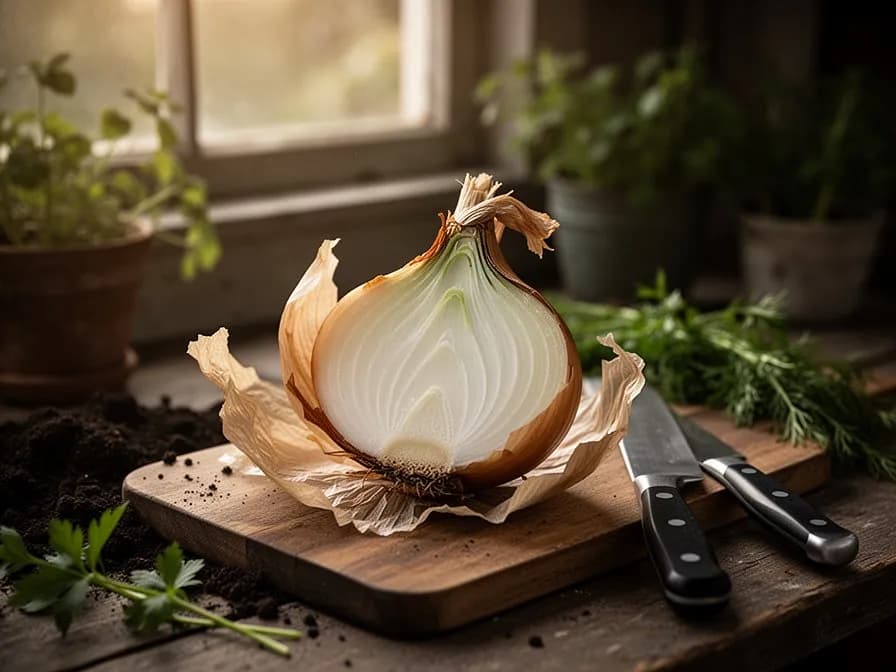
The cross-section reveals layers of sweet, mild flesh with beautiful pink-to-white gradients
Quick Recipes
Simple recipes using fresh Torpedo Onion
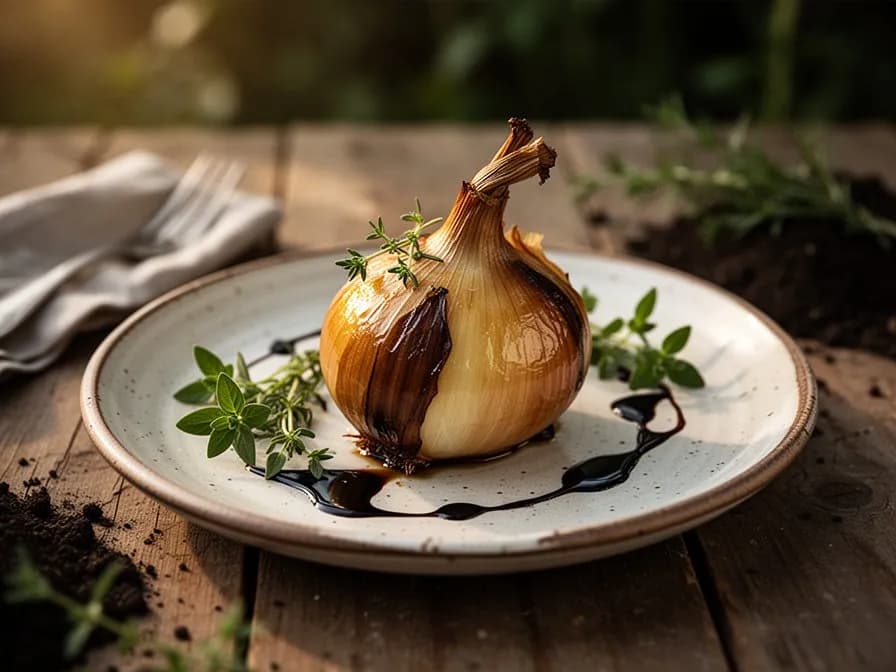
Grilled Torpedo Onion Rings with Balsamic Glaze
20 minThick cross-cut rings of torpedo onion brushed with olive oil and grilled over high heat until deeply charred and sweet. A balsamic reduction drizzled on top creates a perfect balance of smoky, sweet, and tangy. The torpedo shape produces uniform rings that hold together beautifully on the grill.
Classic Italian Torpedo Onion and Tomato Salad
10 minThe simplest and most iconic way to enjoy torpedo onions — thinly sliced raw and tossed with ripe summer tomatoes, fresh basil, and the best olive oil you have. The extraordinary sweetness of Rossa di Tropea means no soaking in water is needed to tame harshness.
Slow-Caramelized Torpedo Onion Jam (Cipollata)
50 minA traditional Calabrian condiment that concentrates the natural sugars of torpedo onions into a thick, glossy, deeply flavored jam. Slow cooking in red wine and a touch of vinegar produces a sweet-savory spread that is extraordinary on crostini, alongside cheese, or stirred into pan sauces.
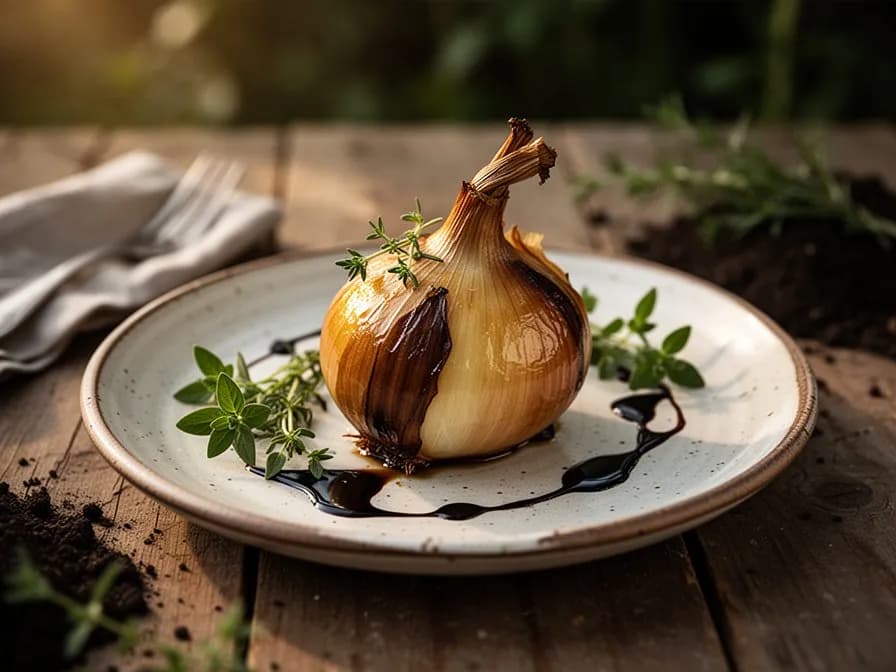
Grilled torpedo onion rings — the high sugar content produces exceptional caramelization
Yield & Spacing Calculator
See how many Torpedo Onion plants fit in your garden bed based on the recommended 15cm spacing.
64
Torpedo Onion plants in a 4×4 ft bed
8 columns × 8 rows at 15cm spacing
Popular Varieties
Some of the most popular torpedo onion varieties for home gardeners, each with unique characteristics.
Rossa di Tropea
The classic Italian torpedo onion from Calabria with deep magenta skin, sweet white flesh, and outstanding raw eating quality.
Red Long of Florence
An Italian heirloom with deep red skin and pink-white flesh, extremely sweet and mild when eaten raw in salads.
Cipolla di Certaldo
A Tuscan variety with purple-red skin and flat torpedo shape, prized for its balanced sweet-sharp flavor in regional dishes.
Simiane
A French torpedo type with pale copper skin and very sweet white flesh, excellent for caramelizing and gratins.
Torpedo onions are treasured for raw eating in Italian cuisine, where their sweet, mild flavor shines in summer salads and panini. Slice into thick rings and grill until charred and sweet. Roast whole in the oven until meltingly soft inside. Caramelize slowly for French onion soup with exceptional depth of flavor. The uniform torpedo shape produces perfect rings for frying. Pickle in balsamic vinegar for an elegant antipasto. Simmer in a traditional Italian onion jam called cipollata.
When should I plant Torpedo Onion?
Plant Torpedo Onion in March, April, May. It takes approximately 110 days to reach maturity, with harvest typically in July, August, September.
What are good companion plants for Torpedo Onion?
Torpedo Onion grows well alongside Carrot, Lettuce, Tomato. Companion planting can improve growth, flavor, and natural pest control.
What hardiness zones can Torpedo Onion grow in?
Torpedo Onion thrives in USDA hardiness zones 4 through 10. With greenhouse protection, it may be grown in zones 2 through 11.
How much sun does Torpedo Onion need?
Torpedo Onion requires Full Sun (6-8h+). This means at least 6-8 hours of direct sunlight daily.
How far apart should I space Torpedo Onion?
Space Torpedo Onion plants 15cm (6 inches) apart for optimal growth and air circulation.
What pests and diseases affect Torpedo Onion?
Common issues include Onion Thrips, Downy Mildew, Onion Fly, Botrytis Neck Rot. Prevention through good garden practices like crop rotation, proper spacing, and companion planting is the best approach. See the detailed pests and diseases section above for symptoms, prevention, and treatment for each.
How do I store Torpedo Onion after harvest?
Torpedo onions have a shorter storage life than round onions due to their high sugar content, typically lasting two to three months in cool, dry conditions at 5-10 degrees Celsius. Braid them by their tops for attractive storage. Slice and freeze on trays for convenient cooking use year-round. Pickl...
What are the best Torpedo Onion varieties to grow?
Popular varieties include Rossa di Tropea, Red Long of Florence, Cipolla di Certaldo, Simiane. Each has unique characteristics suited to different growing conditions and culinary preferences. See the varieties section above for detailed descriptions.
What soil does Torpedo Onion need?
Torpedo onions require deeply worked, loose soil to accommodate their elongated shape without restriction. Sandy loam with a pH of 6.0 to 6.8 is ideal. Incorporate well-rotted compost to a depth of 25 cm and add bone meal for phosphorus, which supports bulb development. Avoid heavy clay soils that c...
Why are my torpedo onions forming short, round bulbs instead of the elongated torpedo shape?
The most common cause is compacted or heavy clay soil that physically restricts the bulb from elongating. Torpedo onions need deeply worked, loose, sandy soil to develop their characteristic shape. Other causes include starting with the wrong variety (some 'torpedo' onions sold by generic seed companies are not true elongated types) and planting too deeply. The bulb should form partially above the soil line — do not hill soil around the developing bulbs. For the best shape, grow in raised beds filled with loose sandy loam worked to at least 25 cm depth.
Can I grow torpedo onions from sets or do I need to start from seed?
True torpedo onion sets are rarely available commercially. Starting from seed is the standard and preferred method, which is why you need to plan 10-12 weeks of indoor growing time. Some garden centers sell transplant bundles of torpedo onion seedlings in spring — these are a convenient option if available. Avoid any 'torpedo onion sets' that look like small round bulbs, as these are usually mislabeled standard onion sets that will not produce the elongated shape.
Why did my torpedo onions bolt (send up flower stalks) instead of forming bulbs?
Bolting is triggered by cold stress during the early growth phase. If transplants experience sustained temperatures below 7°C (45°F) for 10+ consecutive days, the plant interprets this as a full winter cycle and switches to reproductive mode, sending up a flower stalk instead of forming a bulb. Avoid transplanting too early, protect young plants from late cold snaps with row covers, and start with well-hardened seedlings. Bolted onions can still be eaten but will not store well — use them fresh within a few days of harvest.
How long can I store torpedo onions, and why do they not keep as long as regular onions?
Torpedo onions typically store for 2-3 months under ideal conditions (5-10°C / 40-50°F, low humidity, good air circulation), compared to 6-8 months for high-sulfur storage onions. The shorter storage life is a direct consequence of the same trait that makes them delicious: their high sugar content and low pyruvic acid levels provide less natural antimicrobial protection against storage pathogens. To extend your supply, slice and freeze surplus onions, pickle them in vinegar, or make large batches of slow-caramelized onion jam.
What is the difference between Rossa di Tropea and Red Long of Florence?
Both are Italian torpedo-type onions, but they differ in origin, shape, and flavor. Rossa di Tropea is from Calabria in the south, has deeper magenta-pink skin, a more pronounced spindle shape, and is celebrated for its exceptional sweetness — it carries IGP protection. Red Long of Florence (Rossa Lunga di Firenze) is a Tuscan variety with darker red skin and a slightly less tapered shape, with a flavor that balances sweetness with a mild sharpness. Both are excellent for raw eating, but Tropea is considered the sweeter of the two. In the garden, Florence tends to be slightly more vigorous in cooler climates.
Do torpedo onions need long days to form bulbs, or can I grow them in southern latitudes?
Most European torpedo onion varieties (including Rossa di Tropea and Red Long of Florence) are intermediate to long-day types, requiring 13-15 hours of daylight to initiate bulbing. They perform best at latitudes 35°N and above — roughly the latitude of North Carolina, Tennessee, or southern Europe. In the deep south (below 30°N), these varieties may not receive enough daylight hours to trigger proper bulbing. Gardeners in southern latitudes should look for short-day or intermediate torpedo varieties, or plant in late autumn for a spring harvest when day length is increasing through the critical threshold.
Ready to Grow Torpedo Onion?
Add Torpedo Onion to your garden plan and start designing your perfect layout.

Vladimir Kusnezow
Gardener and Software Developer
Zone 6b gardener. Growing vegetables and fruits in soil and hydroponics for 6 years. I built PlotMyGarden to plan my own gardens.
Jump to Section