Loquat
Eriobotrya japonica
At a Glance
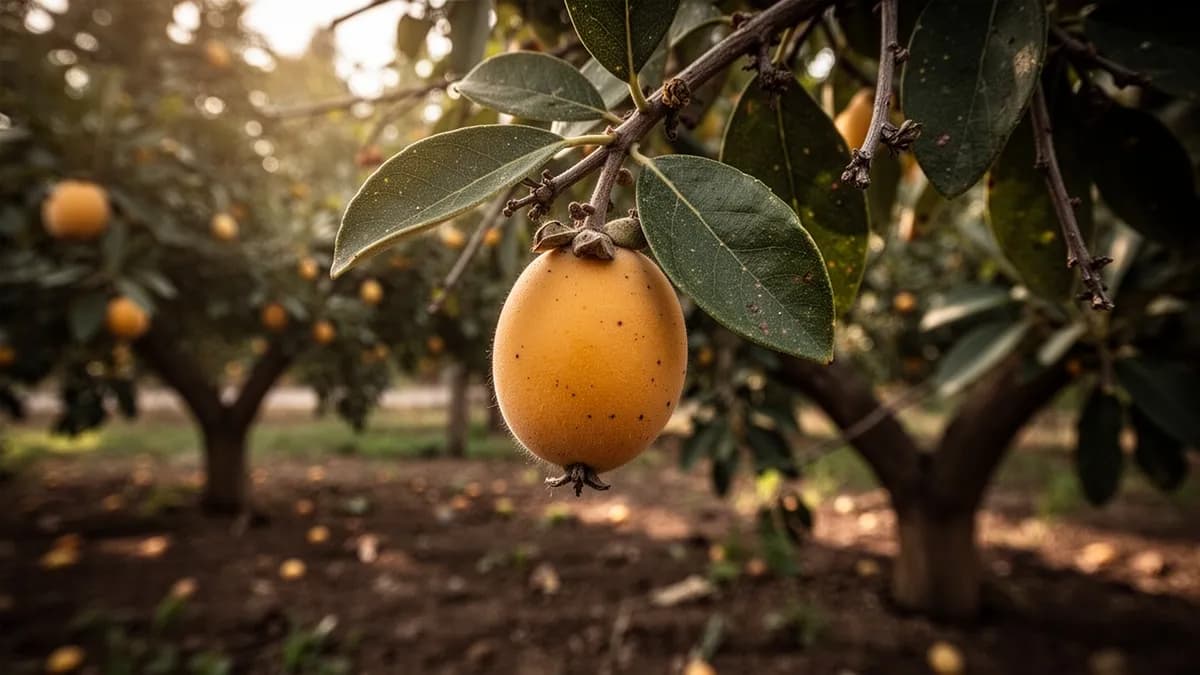
An evergreen tree that flowers in autumn and produces clusters of sweet, apricot-flavored fruits in early spring. Loquats are one of the few fruit trees that ripen during the typically fruitless late winter and spring months. The attractive, large-leaved trees also serve as handsome landscape specimens in mild climates.
Planting & Harvest Calendar
Growth Stages
From Seed to Harvest
Germination & Seedling
Days 0–60
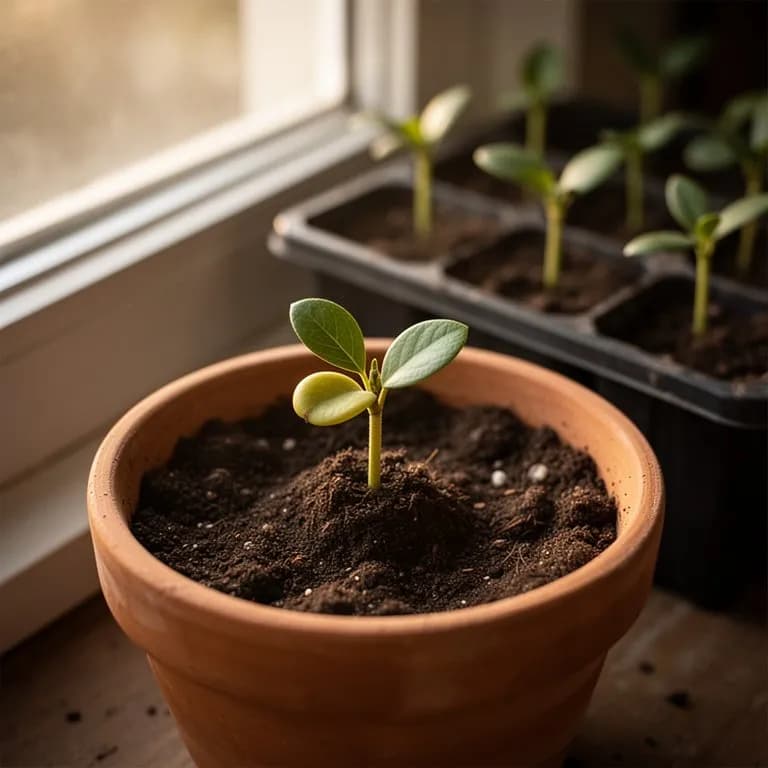
Seeds germinate within 2-4 weeks when kept warm and moist. Seedlings develop their first true leaves — large, leathery, and deeply veined — within 6-8 weeks. Growth is vigorous if warmth and moisture are consistent.
💡 Care Tip
Keep soil consistently moist but never waterlogged. Provide bright indirect light and temperatures above 15°C (59°F) to encourage strong early growth.
Monthly Care Calendar
What to do each month for your Loquat
June
You are hereContinue monitoring for pests including aphids and scale. Water deeply during dry spells. Apply a second balanced feed if growth appears slow.
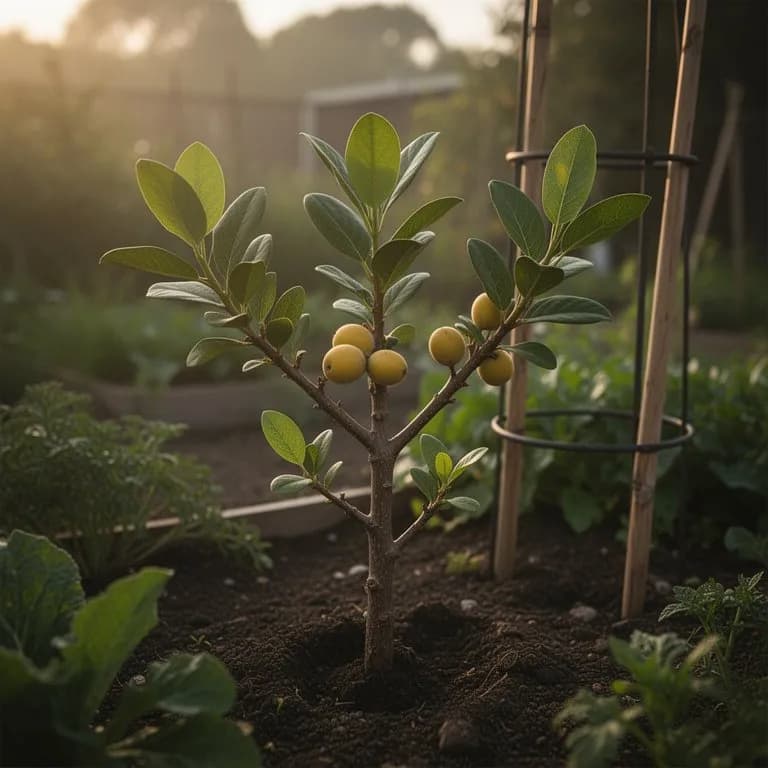
The large, prominently veined leaves of the loquat are a distinctive ornamental feature and provide dense shade.
Did You Know?
Fascinating facts about Loquat
Despite its name, the loquat (Eriobotrya japonica) is not closely related to the kumquat — it is actually a member of the rose family, Rosaceae, making it a distant relative of apples, pears, and strawberries.
Loquats need full sun and well-drained soil with a pH of 6.0 to 7.0, though they tolerate a range of soil types from sandy to clay. Plant container-grown trees in spring or fall in zones 8 to 11, spacing 15 to 25 feet apart for standard trees. In marginal climates, plant against a south-facing wall for extra warmth and wind protection. Water deeply at planting and maintain consistent moisture through the first growing season.
Loquats flower in autumn and set fruit through winter, making them vulnerable to freeze damage during their fruiting period. Temperatures below 28 degrees Fahrenheit will damage flowers and developing fruit, though the tree itself is hardy to about 10 degrees. In cooler areas, grow loquats as ornamental trees or in large containers that can be moved to shelter during cold snaps.
Prune after harvest in spring to maintain size and shape. Loquats respond well to pruning and can be kept to 10 to 15 feet in managed settings. Thin fruit clusters when fruitlets are pea-sized, leaving four to six fruits per cluster to produce large, well-developed fruit. Water regularly during fruit development from winter through spring, reducing irrigation in summer after harvest when the tree is semi-dormant in hot climates.
The loquat (Eriobotrya japonica) originated in the cool hill regions of south-central China, where it grew wild in mountain forests at elevations between 200 and 2,400 metres. Cultivation in China dates back at least 2,000 years, with the fruit prized not only as food but as a medicinal plant — its leaves, fruit, and seeds all appearing in classical Chinese herbal texts. The tree was introduced to Japan more than a thousand years ago and became so thoroughly embedded in Japanese culture and horticulture that Western botanists initially assumed Japan was the plant's true origin, leading to the species epithet japonica.
Arab traders and travellers carried the loquat westward along ancient trade routes, and by the tenth century it had been established in parts of the Middle East and North Africa. Spanish and Portuguese explorers and colonists introduced the tree to the Mediterranean basin in the sixteenth and seventeenth centuries, where it naturalised so successfully in Spain, Italy, and Greece that it is now considered part of the cultural landscape of those regions. Today, Mediterranean Europe — particularly Spain and Malta — produces some of the world's finest loquats commercially.
The tree reached the Americas via European colonists, first appearing in California and Florida by the nineteenth century. In Brazil, introduced by Japanese immigrants in the early twentieth century, large-scale commercial cultivation developed around the Serra Gaúcha highlands. The loquat also established itself across South Africa, Australia, and New Zealand through colonial-era horticultural exchange networks.
Throughout its history, the loquat has held cultural significance beyond its role as a food crop. In China and Japan it is a recurring motif in classical painting and poetry, symbolising prosperity and the arrival of spring. Its medicinal reputation — particularly the use of leaf extract as a cough remedy — endured from ancient Chinese pharmacopoeia into modern commercial cough preparations sold across Asia. In the Mediterranean it is associated with home gardens and family orchards, passed between generations as prized named varieties. Despite its long history of cultivation, the loquat has never achieved the global commercial dominance of other subtropical fruits, remaining primarily a fruit of home gardens, local markets, and regional culinary traditions — qualities that many growers consider a mark of authenticity and distinction.
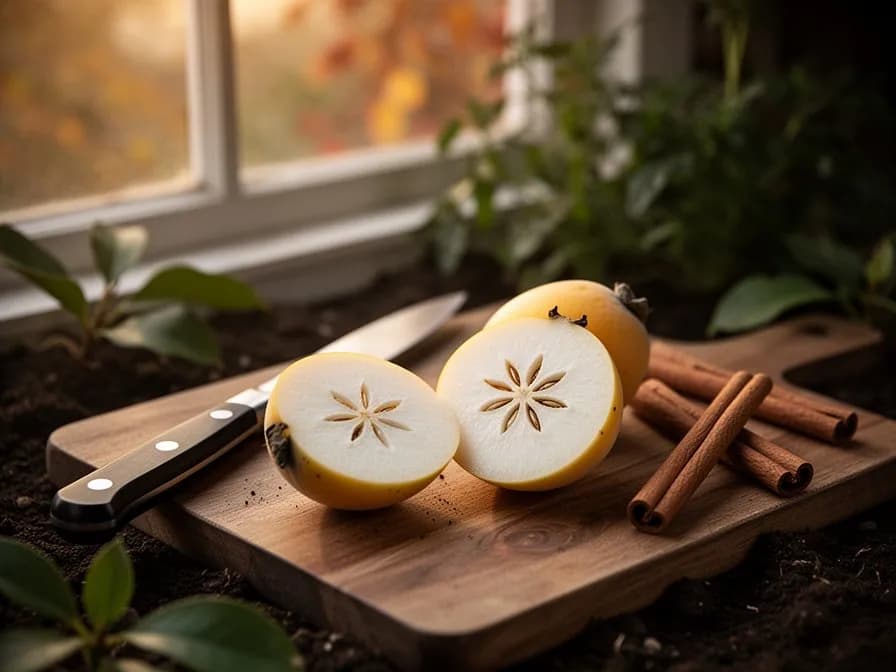
A mature loquat tree can produce hundreds of fruits per season, making it one of the most rewarding backyard trees in mild climates.
Loquat seeds germinate readily but must be planted fresh, as they lose viability within a few weeks of extraction. Remove the brown seed coat and plant one inch deep in moist potting mix. Germination occurs in two to four weeks at 70 to 80 degrees Fahrenheit. Seedling loquats grow vigorously and can reach transplanting size within one year. However, seedlings may not produce fruit identical to the parent tree and can take six to ten years to bear. Named varieties are propagated by grafting or air layering for consistent fruit quality.
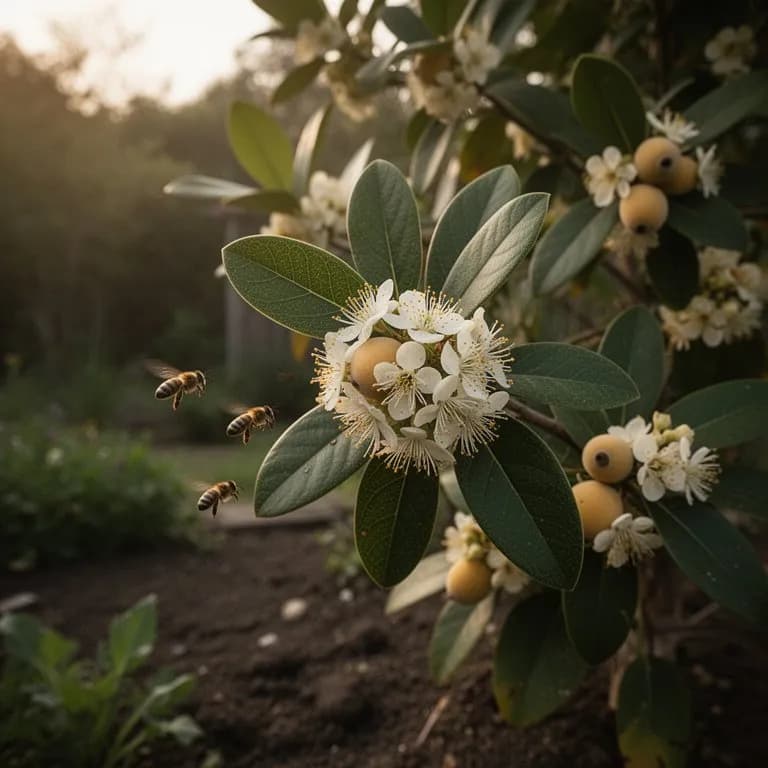
Loquat flowers bloom in autumn and early winter, filling the garden with a sweet, honey-like fragrance.
Loquats adapt to most well-drained soils including sandy, loamy, and even moderately alkaline conditions. Ideal pH is 6.0 to 7.0 but they tolerate up to 8.0. Apply a balanced citrus or fruit tree fertilizer three times per year in mild climates: early spring after harvest, midsummer, and early fall before bloom. Young trees benefit from more frequent light fertilization during the growing season. Avoid excessive nitrogen, which promotes leaf growth at the expense of fruit. Mulch with organic material to conserve moisture and moderate soil temperature.
Check Your Zone
See if Loquat is suitable for your location.
-5°C – 30°C
23°F – 86°F
Loquats are among the hardier subtropical fruits, tolerating brief frosts down to approximately -5°C (23°F) once mature and well established. However, open flowers and small fruitlets are damaged at temperatures below -2°C (28°F), so the critical period for frost protection is from October through February when flowering and early fruit development occur. The tree grows best and produces the highest quality fruit where summer temperatures are warm but not excessively hot — ideally between 15°C and 25°C (59-77°F). Prolonged summer heat above 38°C (100°F) can cause fruit sunburn and reduce next season's flowering. Cool winters are actually beneficial, as a period of cool temperatures helps trigger and synchronize flowering. Loquats perform poorly in tropical lowland climates where temperatures never cool below 15°C, as the flower buds fail to set properly without a chilling period.
Common issues affecting Loquat and how to prevent and treat them organically.
The primary limitation for loquats is cold sensitivity during the winter fruiting period. Flowers and young fruit are damaged at 28 degrees Fahrenheit, resulting in no crop in cold winters even though the tree survives. Birds are extremely attracted to the sweet fruit and can strip a tree in days without netting. Fruit fly infestations are a major issue in warm climates and can render the entire crop inedible. The large seeds take up much of the fruit, giving a relatively low flesh-to-seed ratio compared to other fruits.
Loquats work well as understory trees beneath taller palms or large shade trees in tropical landscapes. Plant pollinator-attracting flowers nearby to support autumn bloom pollination, though most varieties are self-fertile. Low-growing subtropical herbs like lemongrass and ginger complement loquat plantings. In mixed orchards, loquats provide winter and spring fruit when other trees are dormant. Their large evergreen leaves provide year-round screening and windbreak value for more tender plants.
- 1Plant loquats in a sheltered, south-facing position against a warm wall in cooler temperate climates — the wall radiates heat overnight, protecting flowers and fruitlets from damaging frosts and extending the range of the tree significantly northward.
- 2Grafted varieties are strongly preferred over seedling trees for garden planting: grafted trees fruit in 2-3 years, produce fruit true to the parent variety, and often remain smaller and more manageable than the vigorous seedlings that can grow into large trees over time.
- 3Thin fruit clusters to 4-6 fruits per panicle shortly after the fruitlets reach marble size — this concentrates the tree's energy into fewer, larger, better-flavored fruits and greatly reduces the risk of branch breakage under a heavy crop.
- 4Never prune a loquat between late summer and late spring, as this risks removing the current season's flower buds or developing fruitlets — confine all major pruning to the period immediately after harvest in spring when next season's buds have not yet formed.
- 5Loquats growing in containers need repotting every 2-3 years into a slightly larger pot with fresh, free-draining compost; root-bound plants flower and fruit poorly, and the pot must have generous drainage holes to prevent the waterlogging that causes root rot.
- 6In regions where the fire blight disease (Erwinia amylovora) is present, be vigilant — loquat is susceptible, and the tell-tale shepherd's crook wilting of shoots should be removed immediately by cutting well below the infected tissue with sterilized tools to prevent spread.
- 7Top-dress container-grown loquats monthly during the growing season with a high-potassium liquid fertilizer from late summer through to flowering, as potassium directly supports flower quality, fruit set, and the development of sugars that give ripe loquats their distinctive sweetness.
- 8Birds are very fond of ripe loquats and can strip a tree within days of the fruit ripening — draping the tree with fine horticultural netting before the fruit begins to colour is the most reliable protection, and the investment in good quality netting pays off many times over.
- 9Allow a few fallen ripe loquats to remain under the tree briefly in spring — the fragrant, fermenting fruit attracts beneficial ground beetles and other predatory insects that help control soil-dwelling pests around the root zone throughout the season.
- 10When growing from seed for rootstock or experimentation, use fresh seeds removed directly from ripe fruit and sow immediately, as loquat seeds lose viability quickly when dried or stored — fresh seeds typically germinate within 3-4 weeks when kept warm.
Loquats ripen from late February through May depending on climate, with peak harvest typically in March and April. Fruit is ripe when it turns from green to deep golden-orange and softens slightly. Taste-test for sweetness, as color alone can be misleading. Harvest by cutting the entire fruit cluster from the branch with pruning shears. Ripe loquats bruise easily, so handle gently. The fruit does not continue ripening after picking, so only harvest when fully colored and sweet. In warm climates, the harvest window spans several weeks.
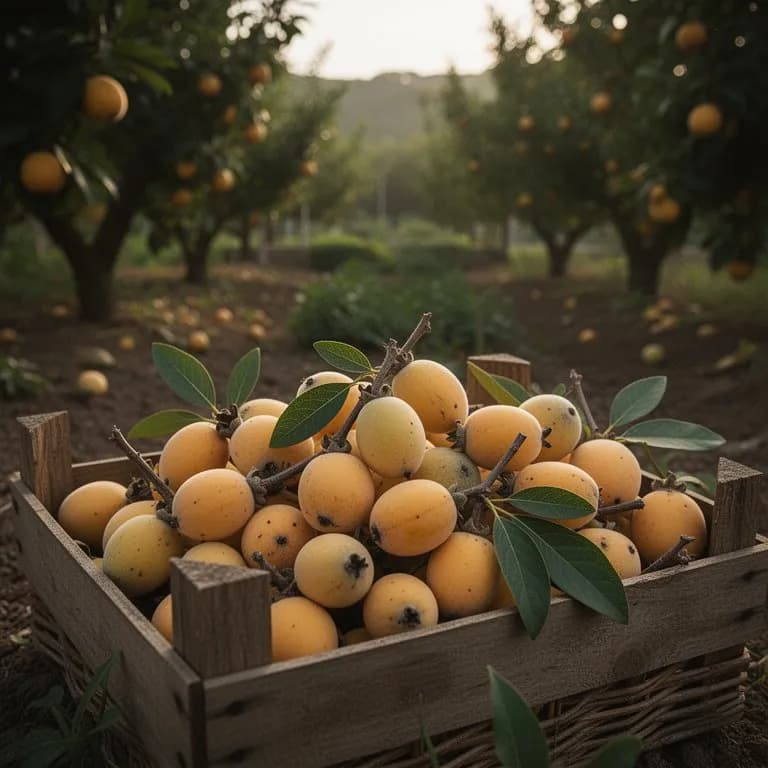
Loquats ripen in clusters, turning from green to golden-orange when ready to harvest in late winter to early spring.
Fresh loquats are highly perishable and last only three to five days at room temperature or about two weeks refrigerated. Their short shelf life is why loquats are rarely seen in supermarkets. Preserve the harvest by making loquat jam, which has a beautiful apricot-like flavor and color. The fruit makes excellent jelly, chutney, and syrup. Loquats can be canned in light syrup or frozen after peeling and seeding. Loquat wine and liqueur are traditional preparations in many Mediterranean and Asian cultures.
Plan your garden with ease
Love growing Loquat? Use our free garden planner to design your beds, track planting dates, and get personalized care reminders.
Nutritional Info
Per 100g serving
47
Calories
Health Benefits
- Rich in beta-carotene and other carotenoids that give the fruit its golden colour and support eye and immune health
- Good source of potassium, supporting healthy blood pressure and cardiovascular function
- Contains pectin, a soluble dietary fiber that supports digestive health and healthy cholesterol levels
- Provides folate, manganese, and magnesium in moderate amounts supporting overall metabolic health
- Naturally low in calories and high in water content, making it an excellent choice for weight-conscious diets
- Contains chlorogenic acids and other polyphenol antioxidants linked to anti-inflammatory and anti-diabetic effects in preliminary research
💰 Why Grow Your Own?
A single mature loquat tree producing a conservative 30-50 kg of fruit per season represents approximately $150-300 worth of fresh specialty fruit at farmers market prices, where loquats — rarely found in supermarkets — typically command $4-8 per kilogram. Beyond fresh eating, a heavy crop can yield dozens of jars of jam, bottles of liqueur, or batches of dried fruit worth considerably more. Given that a young grafted loquat tree costs $20-60 and begins fruiting in 2-3 years, the return on investment is substantial within the first few seasons, and the tree continues producing for decades with minimal input cost.
Quick Recipes
Simple recipes using fresh Loquat

Loquat & Ginger Jam
45 minutesA beautifully golden, warmly spiced jam that captures the sweet-tart flavor of fresh loquats. Spread on toast, stir into yogurt, or serve alongside soft cheese. The ginger adds a subtle warmth that complements the floral notes of the fruit perfectly.
Chilled Loquat & Honey Smoothie
5 minutesA refreshing, naturally sweet smoothie that showcases the delicate apricot-like flavor of ripe loquats. Ready in minutes and perfect for breakfast or a mid-morning snack during the brief spring harvest season.
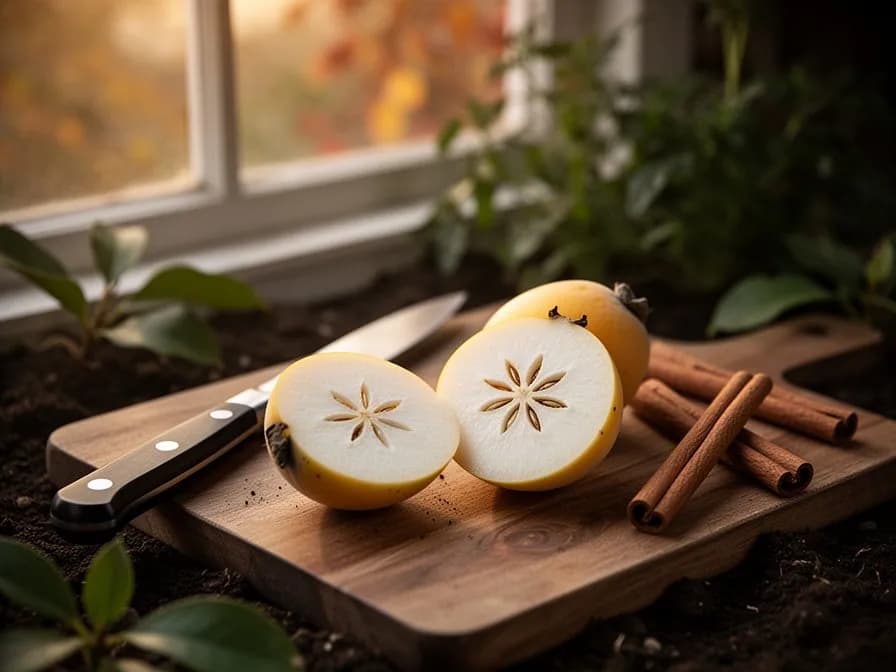
Roasted Loquat & Almond Tart
1 hour 15 minutesA stunning tart in which loquats are briefly roasted to concentrate their sweetness before being arranged over an almond frangipane filling. The combination of buttery pastry, nutty filling, and caramelised fruit is irresistible and makes full use of a bumper harvest.
Yield & Spacing Calculator
See how many Loquat plants fit in your garden bed based on the recommended 360cm spacing.
0
Loquat plants in a 4×4 ft bed
0 columns × 0 rows at 360cm spacing
Popular Varieties
Some of the most popular loquat varieties for home gardeners, each with unique characteristics.
Gold Nugget
A popular California variety with large, sweet, golden-orange fruit in heavy clusters; reliable and productive.
Champagne
White-fleshed fruit with a delicate, sweet flavor and excellent eating quality; one of the best flavored varieties.
Big Jim
Extremely large fruit with orange flesh and mild, sweet flavor; a productive and vigorous grower.
Tanaka
A Japanese variety with large, pear-shaped orange fruit and bold, tangy-sweet flavor; widely grown worldwide.
Loquats are best eaten fresh when perfectly ripe, tasting like a sweet blend of apricot, plum, and citrus. Peel the thin skin and remove the large seeds before eating. They make outstanding jam and preserves with a flavor reminiscent of apricot conserve. Loquat pie and cobbler are popular in the American South. The fruit pairs well with vanilla, ginger, and cinnamon in desserts. In Asian cuisines, loquats are used in sweet soups and compotes. Loquat syrup is a traditional cough remedy in Chinese medicine.
When should I plant Loquat?
Plant Loquat in March, April. It takes approximately 730 days to reach maturity, with harvest typically in March, April, May.
What are good companion plants for Loquat?
Loquat grows well alongside Basil, Marigold. Companion planting can improve growth, flavor, and natural pest control.
What hardiness zones can Loquat grow in?
Loquat thrives in USDA hardiness zones 8 through 11. With greenhouse protection, it may be grown in zones 6 through 12.
How much sun does Loquat need?
Loquat requires Full Sun (6-8h+). This means at least 6-8 hours of direct sunlight daily.
How far apart should I space Loquat?
Space Loquat plants 360cm (142 inches) apart for optimal growth and air circulation.
What pests and diseases affect Loquat?
Common issues include Fire Blight, Fruit Fly, Pear Blight Canker. Prevention through good garden practices like crop rotation, proper spacing, and companion planting is the best approach. See the detailed pests and diseases section above for symptoms, prevention, and treatment for each.
How do I store Loquat after harvest?
Fresh loquats are highly perishable and last only three to five days at room temperature or about two weeks refrigerated. Their short shelf life is why loquats are rarely seen in supermarkets. Preserve the harvest by making loquat jam, which has a beautiful apricot-like flavor and color. The fruit m...
What are the best Loquat varieties to grow?
Popular varieties include Gold Nugget, Champagne, Big Jim, Tanaka. Each has unique characteristics suited to different growing conditions and culinary preferences. See the varieties section above for detailed descriptions.
What soil does Loquat need?
Loquats adapt to most well-drained soils including sandy, loamy, and even moderately alkaline conditions. Ideal pH is 6.0 to 7.0 but they tolerate up to 8.0. Apply a balanced citrus or fruit tree fertilizer three times per year in mild climates: early spring after harvest, midsummer, and early fall ...
Why is my loquat tree not producing any fruit despite flowering well each autumn?
The most common cause is frost damage to the flowers or young fruitlets during winter. Loquat flowers are cold-sensitive, and even a brief temperature drop to -2°C (28°F) can kill open flowers or destroy small developing fruitlets, leaving the tree apparently fruitless despite a good floral display. Other causes include insufficient chilling hours in a tropical or very mild climate (preventing proper flower set), poor pollination due to wet or cold weather during the flowering period, or very heavy pruning in late summer or autumn that removed the flowering wood. Protect flowering trees from frost with horticultural fleece and ensure the tree is sited in a sheltered position.
How do I know when loquats are ready to harvest, and how should I store them?
Loquats are ready to harvest when they have turned fully golden-orange with no remaining green tinge, feel slightly soft under gentle pressure (similar to a ripe apricot), and separate easily from the stalk with a slight twist. Taste is the best final indicator — a ripe loquat is sweet, fragrant, and has a pleasant balance of tartness. Unripe loquats do not improve significantly once picked, so allow them to ripen fully on the tree. Fresh loquats are highly perishable — they keep for only 2-3 days at room temperature and up to 2 weeks when refrigerated. For longer storage, peel and stone the fruit and freeze, or cook into jam, syrup, or chutney.
Can I grow a loquat tree from the seeds inside the fruit?
Yes, loquat seeds germinate readily if planted fresh — sow immediately after removing from ripe fruit, as viability drops sharply within a few weeks. Plant seeds 3-4 cm deep in free-draining potting mix, keep warm (ideally above 18°C), and expect germination in 3-6 weeks. However, be aware that seed-grown loquats are highly variable in fruit quality and typically take 6-10 years to begin fruiting. For reliable fruit production with a known variety, grafted trees purchased from reputable nurseries are strongly recommended. Seeds are best used for producing rootstock onto which superior varieties can be grafted.
Is the loquat the same as the kumquat, and are all parts of the plant safe to eat?
Despite the similar-sounding names, loquats and kumquats are entirely unrelated plants — the kumquat is a small citrus fruit, while the loquat is a member of the rose family, related to apples and pears. The similarity in name comes from both words having roots in Cantonese Chinese. Regarding safety: the flesh of ripe loquat fruit is completely safe to eat and highly nutritious. However, the seeds (pips) inside the fruit contain amygdalin, a compound that can release small amounts of hydrogen cyanide when metabolized, and should not be eaten. The leaves are not eaten raw but are used medicinally in herbal teas and traditional preparations, particularly in East Asian medicine.
My loquat has developed brown, water-soaked lesions on the young shoots and flowers. What is wrong and how do I treat it?
This is almost certainly fire blight (Erwinia amylovora), a bacterial disease that affects many members of the rose family including loquat, apple, pear, and quince. The characteristic symptom is the rapid browning and wilting of shoots in a hooked 'shepherd's crook' shape, along with brown, water-soaked lesions that may produce a sticky bacterial ooze in humid conditions. Act immediately: cut all infected material at least 30 cm below the visible infection using tools sterilized between each cut with a 10% bleach solution. Dispose of infected material by burning or sealed bagging — do not compost it. Avoid excessive nitrogen fertilization, which promotes the lush soft growth that fire blight colonizes most aggressively.
What is the best loquat variety for a small garden, and can it be grown in a container?
For small gardens, look for named compact or dwarf varieties such as 'Mogi' (a Japanese variety with excellent sweet flavor and moderate tree size), 'Gold Nugget' (a Californian selection with large, firm fruit on a manageable tree), or 'Champagne' (a popular Australian variety with pale yellow, exceptionally sweet flesh). All loquats can be grown in large containers of at least 50-60 litre capacity with free-draining, slightly acidic compost. Container culture naturally restricts root growth and keeps the tree smaller. Repot every 2-3 years, ensure excellent drainage, and water and feed more frequently than in-ground trees, as container plants dry out quickly and have limited nutrient reserves.
Ready to Grow Loquat?
Add Loquat to your garden plan and start designing your perfect layout.

Vladimir Kusnezow
Gardener and Software Developer
Zone 6b gardener. Growing vegetables and fruits in soil and hydroponics for 6 years. I built PlotMyGarden to plan my own gardens.
Jump to Section