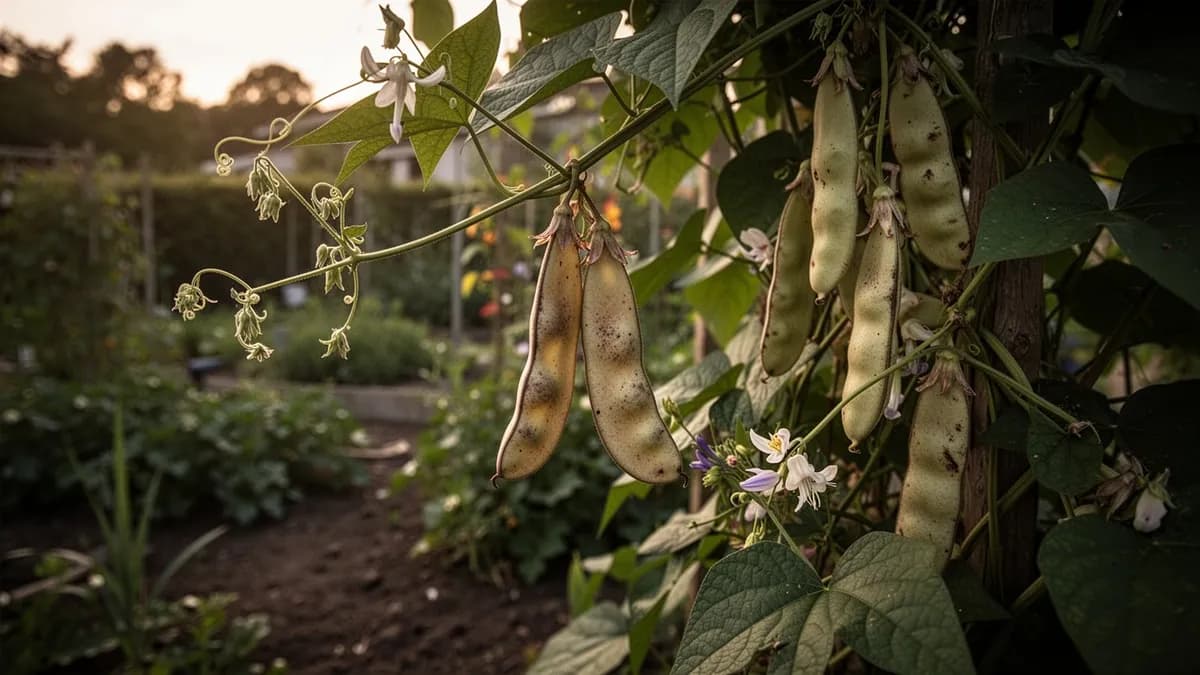
Hyacinth Bean
Lablab purpureus
At a Glance
It's planting season for Hyacinth Bean! Start planning your garden now.
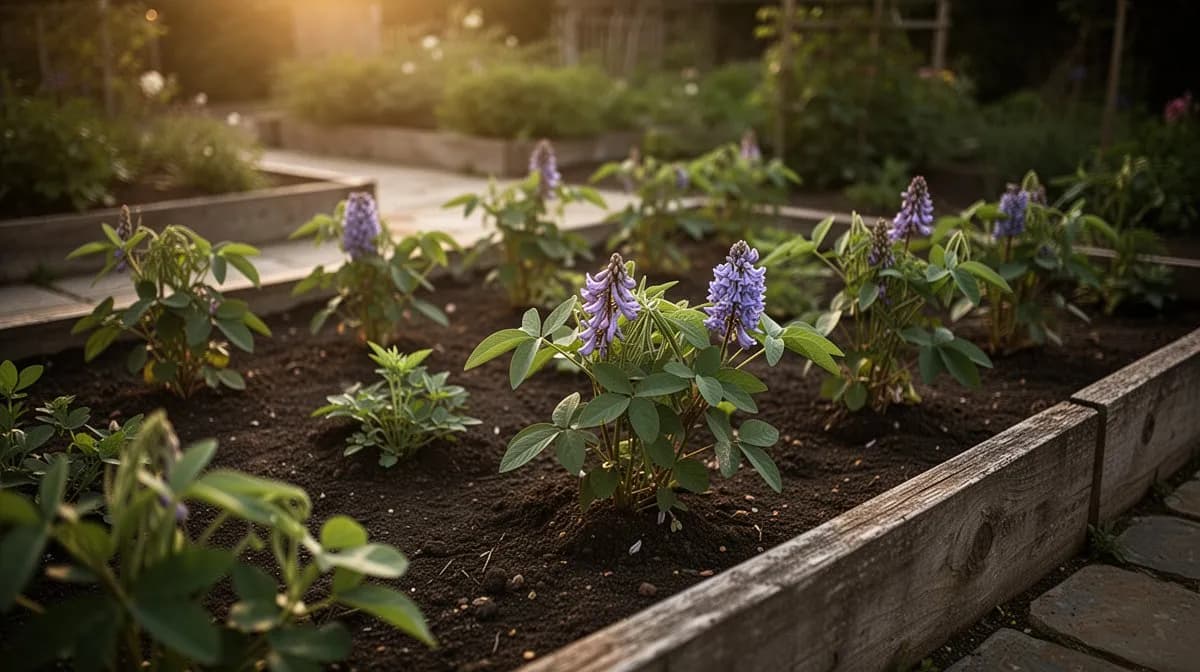
A stunning ornamental and edible vine producing purple flowers and glossy purple pods on vigorous twining stems. Young pods are edible when cooked, but mature dried beans require thorough soaking and boiling to remove anti-nutritional compounds. Plants can climb 15 feet or more and make an excellent living screen or arbor cover in summer. The combination of purple stems, pink flowers, and magenta pods creates a dramatic garden display.
Planting & Harvest Calendar
Growth Stages
From Seed to Harvest
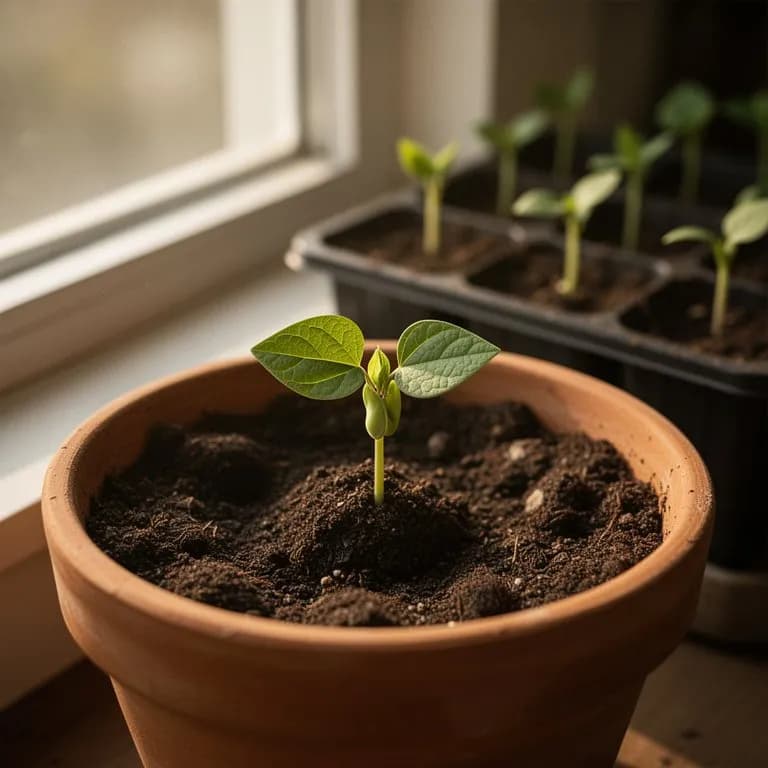
Seed Germination
Days 0–14
Seeds germinate rapidly in warm soil, with the thick cotyledons pushing through the surface within 7-14 days. The seeds are large and easy to handle, making them excellent for beginner gardeners and children. Germination requires soil temperatures of at least 18°C (65°F) and consistent moisture.
💡 Care Tip
Soak seeds in warm water for 12-24 hours before planting to speed germination. Plant seeds 2.5 cm deep and 15-20 cm apart at the base of a sturdy trellis or support structure. Avoid planting in cold, wet soil where seeds will rot.
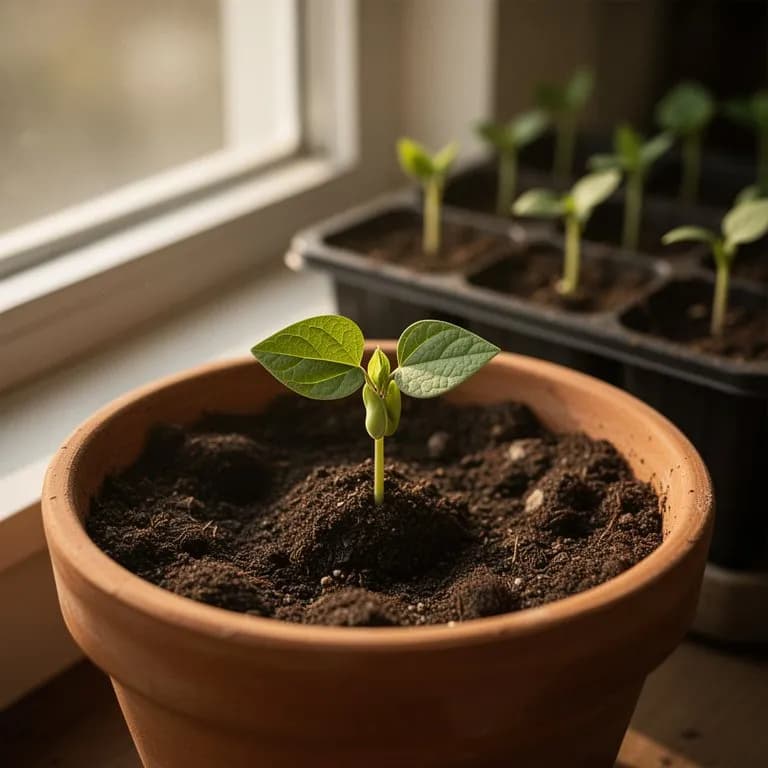
Hyacinth bean seedlings emerge quickly in warm soil and immediately begin producing their distinctive three-part leaves
Monthly Care Calendar
What to do each month for your Hyacinth Bean
June
You are hereVines begin climbing aggressively as temperatures rise. Guide vines onto supports and train laterally to encourage branching and more flower production. Water deeply once per week — established vines are surprisingly drought-tolerant. Watch for aphids on tender growing tips.
Did You Know?
Fascinating facts about Hyacinth Bean
Hyacinth bean (Lablab purpureus) is one of the oldest cultivated crops in the world, with archaeological evidence of its cultivation in India dating back over 3,500 years — yet it remains virtually unknown in Western gardening despite being a dietary staple for hundreds of millions of people.
Hyacinth beans are vigorous tropical vines that double as ornamental and edible plants. Direct sow seeds one inch deep and six inches apart after the last frost when soil is at least 65 degrees. Provide a strong trellis, arbor, or fence at least eight to ten feet tall, as these powerful climbers grow rapidly. Seeds germinate in seven to fourteen days in warm soil. Soak seeds overnight before planting to speed germination.
These heat-loving vines thrive in full sun and warm temperatures. They tolerate a range of soil conditions but grow best in moderately fertile, well-drained soil. Water regularly during establishment and flowering. As nitrogen-fixing legumes, hyacinth beans need little additional fertilizer. The stunning purple stems, pink-purple flowers, and glossy magenta pods make this plant a showstopper in the ornamental garden.
In zones 7-9, grow as an annual planted after the last frost. In zones 10-12, hyacinth beans may persist as short-lived perennials. Plants grow slowly at first but explode with growth once summer heat arrives, quickly covering structures. Harvest young, tender pods for cooking or allow pods to mature for dried beans. Note that mature dried beans require thorough soaking and boiling to remove anti-nutritional compounds before eating.
A garden arch smothered in hyacinth bean — few plants offer this combination of edible harvest and ornamental beauty
Hyacinth bean (Lablab purpureus) is one of the most ancient cultivated legumes, with origins in tropical Africa — likely in the region spanning modern-day Ethiopia, Sudan, and East Africa. Archaeological evidence suggests it was among the earliest crops domesticated in the Indian subcontinent, with remains found at Neolithic sites dating to approximately 1500 BCE. From its dual centers of diversity in Africa and South Asia, the hyacinth bean spread along ancient trade routes to become a staple food crop across tropical and subtropical regions worldwide.
In India, hyacinth bean has been cultivated for millennia and holds deep cultural significance. Known as 'sem' in Hindi, 'avarekai' in Kannada, and 'mochai' in Tamil, it is a dietary cornerstone in states like Karnataka, Tamil Nadu, and Maharashtra, where fresh pods and dried beans appear in curries, stir-fries, and festival dishes. In South India, avarekai season (roughly November through February) is a celebrated culinary event with dedicated festival markets and dozens of traditional recipes. The bean is equally important in East African cuisines, particularly in Ethiopia, Kenya, and Tanzania, where dried hyacinth beans provide essential protein in regions with limited access to animal sources.
Thomas Jefferson introduced hyacinth bean to American gardens at Monticello in the early 1800s, growing it primarily as an ornamental climbing vine. This ornamental tradition persists today — in Western countries, hyacinth bean is widely sold as a decorative annual vine, with gardeners admiring its purple flowers and magenta pods while often unaware of its millennia-old culinary heritage. Today, India is the world's largest producer, growing hyacinth bean across millions of hectares both as a food crop and as a nitrogen-fixing cover crop that improves soil fertility. In recent years, agricultural researchers have renewed interest in hyacinth bean as a climate-resilient crop, recognizing its exceptional drought tolerance, ability to thrive in poor soils, and dual-purpose value as both food and soil improver in an era of increasing food insecurity.
Direct sow hyacinth bean seeds after the last frost when soil reaches 65 degrees. Soak seeds overnight in warm water before planting one inch deep and six inches apart. Seeds germinate in seven to fourteen days. In short-season areas, start seeds indoors three to four weeks before the last frost in individual pots to minimize root disturbance during transplanting. Provide support immediately after planting as vines grow rapidly once established.
Hyacinth beans are adaptable to most well-drained soils with a pH of 6.0 to 7.0. They tolerate poor soil better than many ornamental vines. As nitrogen fixers, they improve soil fertility. Apply phosphorus and potassium at planting to support flowering. Avoid excess nitrogen which promotes vegetative growth over flowering. Compost worked into the soil before planting is sufficient for most conditions.
Check Your Zone
See if Hyacinth Bean is suitable for your location.
20°C – 35°C
68°F – 95°F
Hyacinth bean is a true tropical legume that thrives in warm to hot conditions. Growth slows significantly below 15°C (60°F), and the vine cannot tolerate any frost. Seeds germinate best at 21-27°C (70-80°F) and will rot in cold, wet soil below 15°C (60°F). The optimal range for vigorous growth and pod production is 20-35°C (68-95°F). Unlike many garden vegetables, hyacinth bean handles heat above 35°C (95°F) remarkably well, continuing to flower and set pods when temperatures would stress most other crops.
Common issues affecting Hyacinth Bean and how to prevent and treat them organically.
The most important safety concern is that mature dried beans contain anti-nutritional compounds and must be thoroughly soaked and boiled before eating. Young pods are safe when cooked. Plants are slow to start in cool weather and need warm soil to germinate reliably. Without a strong support structure, the heavy vines can collapse. In short-season climates, start seeds indoors three to four weeks before the last frost for earlier production.
Hyacinth beans make excellent companions for tall crops like corn that benefit from the nitrogen they fix. They can share a trellis with other climbers if given enough space. The flowers attract pollinators including butterflies and hummingbirds, benefiting the entire garden. Avoid planting near other vigorous climbers that may compete aggressively. The dense foliage provides shade for heat-sensitive crops grown below.
- 1Always cook hyacinth beans thoroughly before eating. Raw and undercooked beans contain cyanogenic glucosides and lectins that cause nausea and digestive distress. Boil shelled beans for at least 20-30 minutes with one water change, and cook young pods for a minimum of 10-15 minutes. Proper cooking completely destroys these compounds.
- 2Build your trellis before you plant, and build it stronger than you think necessary. A mature hyacinth bean vine with full foliage and hundreds of pods can weigh over 20 kg and acts like a sail in wind. A flimsy support will collapse by August — use sturdy posts, heavy wire, or a permanent arbor structure.
- 3Soak seeds for 12-24 hours before planting or nick the hard seed coat with a file or nail clippers. Hyacinth bean seeds have an extremely tough outer coat that can delay germination by weeks if left untreated. Soaked seeds typically germinate in 7-10 days versus 3-4 weeks without treatment.
- 4Inoculate seeds or soil with Rhizobium bacteria specific to Lablab species if growing hyacinth bean in a bed for the first time. Proper nodulation allows the vine to fix its own nitrogen from the atmosphere, reducing the need for nitrogen fertilizer and improving soil fertility for subsequent crops.
- 5Train vines horizontally along the top of fences and arbors rather than allowing them to grow straight up. Horizontal training exposes more growing points to sunlight, dramatically increasing flower and pod production compared to a single vertical stem.
- 6Harvest young pods at 5-7 cm for snap bean use — at this size the strings are minimal and the beans inside have not yet developed their toxic compounds to concerning levels. Longer, mature pods are better used for shelling beans that will be boiled thoroughly.
- 7Hyacinth bean is a short-day flowering plant, meaning flowering is triggered by decreasing day length in late summer and autumn. In northern latitudes, this means the heaviest harvest comes in September and October. Starting seeds early indoors gives the vine maximum size before flowering begins.
- 8Save seeds from your most productive, earliest-flowering vines. Over several generations, this simple selection process adapts the variety to your specific climate and day length, resulting in earlier and heavier harvests each successive year.
For edible pods, harvest when young and tender, about three to four inches long, before beans inside develop significantly. At this stage, pods can be cooked like snap beans. For dried beans, allow pods to mature fully on the vine until brown and papery. Important: mature dried beans must be thoroughly soaked for at least 12 hours and boiled for 30 minutes or more to remove anti-nutritional compounds. Never eat raw or undercooked hyacinth beans.
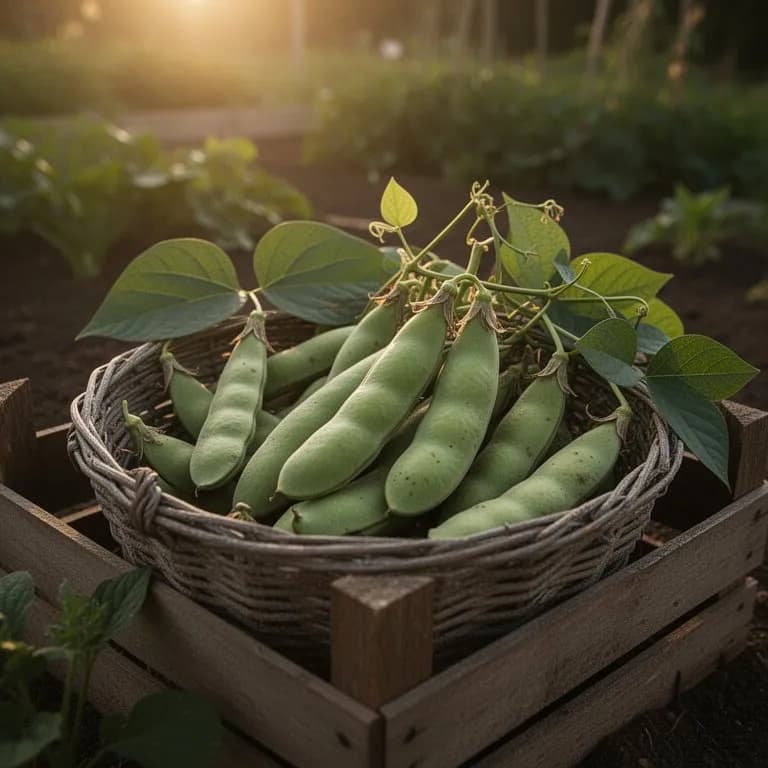
The striking magenta-purple pods are as ornamental as any flowering vine and completely edible when young
Young tender pods keep in the refrigerator for up to one week. Blanch and freeze young pods for up to six months. Dried beans store in airtight containers for over two years. Always cook dried beans thoroughly before eating. The flowers are also edible and can be used fresh as garnishes. Seeds saved for planting keep well in cool, dry storage for two to three years.
Plan your garden with ease
Love growing Hyacinth Bean? Use our free garden planner to design your beds, track planting dates, and get personalized care reminders.
Nutritional Info
Per 100g serving
50
Calories
Health Benefits
- High in plant-based protein at approximately 7g per 100g of cooked beans, making it a valuable protein source in vegetarian and vegan diets across South Asia and East Africa
- Excellent source of dietary fiber with 4.5g per 100g, supporting digestive regularity and helping to maintain stable blood sugar levels after meals
- Rich in iron and other minerals essential for oxygen transport and energy metabolism — particularly beneficial for populations with limited access to animal protein
- Contains phosphorus and calcium that contribute to bone health and cellular energy production throughout the body
- Provides B vitamins including folate and thiamine that support nervous system function and are critical during pregnancy for fetal development
- As a legume, hyacinth beans are naturally low in fat and cholesterol-free, with a low glycemic index that makes them suitable for diabetic-friendly meal planning
💰 Why Grow Your Own?
Hyacinth bean seeds cost $2-5 per packet, and a single vine produces an enormous harvest of edible pods, shelling beans, and dried beans. Fresh hyacinth beans (known as sem, val, or avarekai) sell for $6-12 per pound at South Asian grocery stores and specialty markets when available — and they are frequently out of stock or unavailable outside major cities. Growing just 3-4 vines can save $50-100 per season on fresh beans alone. The dried beans, which sell for $4-8 per pound in specialty shops, add further savings. Factor in the ornamental value that replaces a separate decorative climbing vine ($15-30 saved on ornamental plants), and hyacinth bean is one of the highest-value crops you can grow per square foot of garden space.
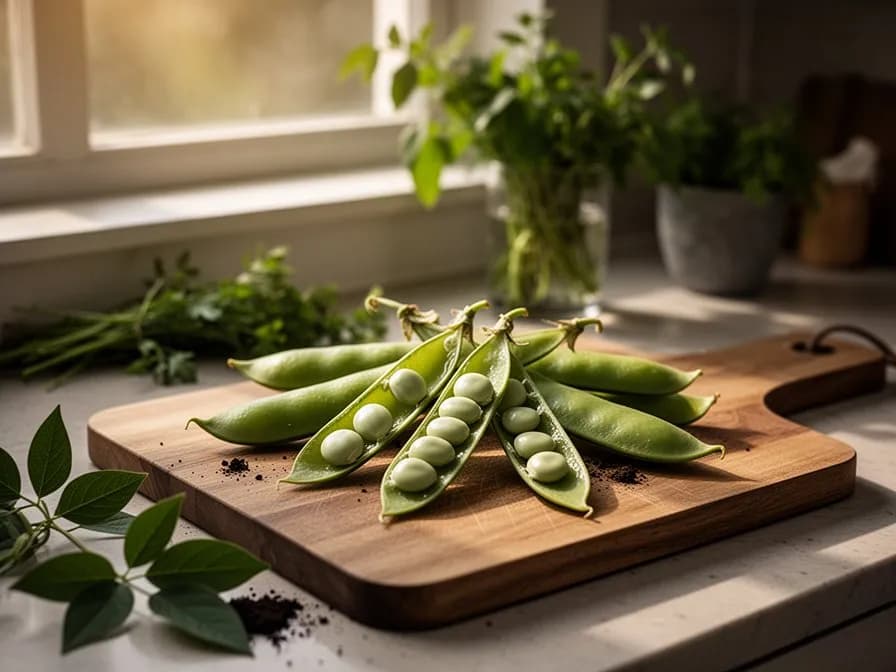
Dried hyacinth beans with their characteristic white hilum stripe — these store for years and are the most common form used in South Asian cooking
Quick Recipes
Simple recipes using fresh Hyacinth Bean
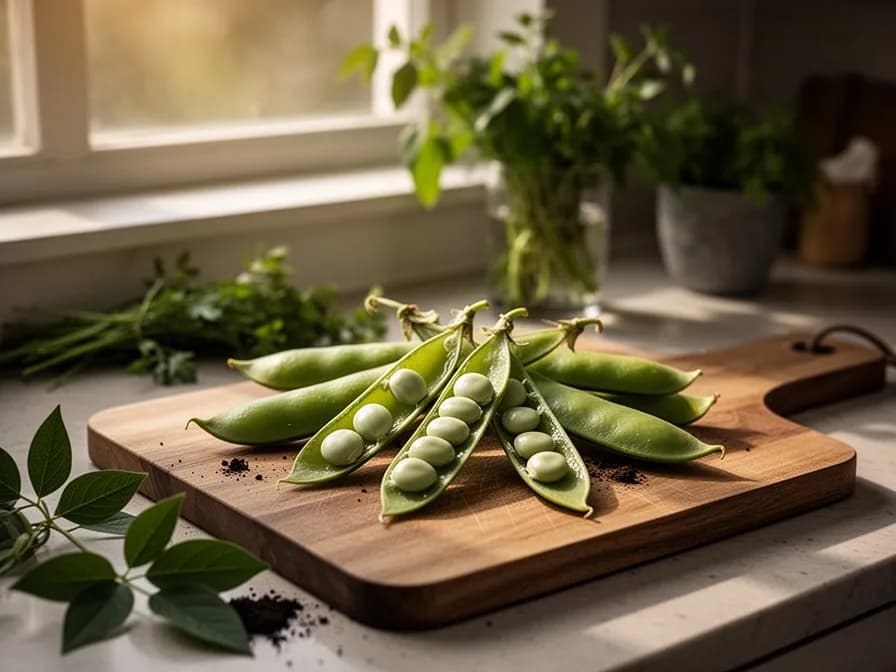
South Indian Avarekai Palya (Stir-Fried Hyacinth Beans)
30 minA classic Karnataka-style dry stir-fry where fresh hyacinth bean pods are cooked with mustard seeds, curry leaves, and freshly grated coconut. This everyday dish highlights the bean's nutty, earthy flavor in a simple and satisfying preparation.
Hyacinth Bean Dal with Coconut Milk
45 minDried hyacinth beans simmered until tender and finished in a creamy coconut milk sauce with warming spices. This comforting dal is a staple protein source across South India and pairs perfectly with steamed rice or flatbread.
Stir-Fried Hyacinth Bean Pods with Garlic and Chili
20 minYoung, tender pods quickly stir-fried at high heat with garlic and chili until slightly charred and crisp-tender. This Chinese-inspired preparation preserves the bean's fresh flavor and satisfying snap while adding bold aromatics.
Avarekai curry — a beloved South Indian dish showcasing fresh hyacinth beans in a fragrant coconut and spice sauce
Yield & Spacing Calculator
See how many Hyacinth Bean plants fit in your garden bed based on the recommended 30cm spacing.
16
Hyacinth Bean plants in a 4×4 ft bed
4 columns × 4 rows at 30cm spacing
Popular Varieties
Some of the most popular hyacinth bean varieties for home gardeners, each with unique characteristics.
Ruby Moon
Stunning ornamental variety with deep purple pods, magenta flowers, and burgundy stems. Both decorative and edible.
Silver Moon
White-flowered variety with green pods and lighter stems. Less dramatic than purple types but equally productive.
Purple Hyacinth
Classic variety with vibrant purple stems, pink-lavender flowers, and glossy purple pods. Vigorous grower to 15 feet.
Young, tender pods can be stir-fried, steamed, or sauteed like snap beans. They have a slightly sweet, bean-like flavor. In Indian cuisine, both young pods and mature beans are used in curries and dal preparations. Dried beans must be soaked overnight and boiled thoroughly before use in any recipe. The flowers are edible and make beautiful garnishes for salads and desserts. In Southeast Asia, young leaves are also eaten as cooked greens.
When should I plant Hyacinth Bean?
Plant Hyacinth Bean in May, June. It takes approximately 90 days to reach maturity, with harvest typically in August, September, October.
What are good companion plants for Hyacinth Bean?
Hyacinth Bean grows well alongside Corn. Companion planting can improve growth, flavor, and natural pest control.
What hardiness zones can Hyacinth Bean grow in?
Hyacinth Bean thrives in USDA hardiness zones 7 through 12. With greenhouse protection, it may be grown in zones 5 through 13.
How much sun does Hyacinth Bean need?
Hyacinth Bean requires Full Sun (6-8h+). This means at least 6-8 hours of direct sunlight daily.
How far apart should I space Hyacinth Bean?
Space Hyacinth Bean plants 30cm (12 inches) apart for optimal growth and air circulation.
What pests and diseases affect Hyacinth Bean?
Common issues include Japanese Beetles, Powdery Mildew, Aphids. Prevention through good garden practices like crop rotation, proper spacing, and companion planting is the best approach. See the detailed pests and diseases section above for symptoms, prevention, and treatment for each.
How do I store Hyacinth Bean after harvest?
Young tender pods keep in the refrigerator for up to one week. Blanch and freeze young pods for up to six months. Dried beans store in airtight containers for over two years. Always cook dried beans thoroughly before eating. The flowers are also edible and can be used fresh as garnishes. Seeds saved...
What are the best Hyacinth Bean varieties to grow?
Popular varieties include Ruby Moon, Silver Moon, Purple Hyacinth. Each has unique characteristics suited to different growing conditions and culinary preferences. See the varieties section above for detailed descriptions.
What soil does Hyacinth Bean need?
Hyacinth beans are adaptable to most well-drained soils with a pH of 6.0 to 7.0. They tolerate poor soil better than many ornamental vines. As nitrogen fixers, they improve soil fertility. Apply phosphorus and potassium at planting to support flowering. Avoid excess nitrogen which promotes vegetativ...
Are hyacinth beans poisonous? Is it safe to eat them?
Raw hyacinth beans contain cyanogenic glucosides and lectins that can cause nausea, vomiting, and digestive distress. However, these toxic compounds are completely destroyed by proper cooking. Boil shelled beans for at least 20-30 minutes, discarding the first cooking water. Young pods should be cooked for a minimum of 10-15 minutes. Billions of people across South Asia and Africa eat hyacinth beans safely every day — the key is thorough cooking, just as with kidney beans and lima beans.
What is the difference between ornamental and edible hyacinth bean varieties?
Botanically, ornamental and edible hyacinth beans are the same species (Lablab purpureus), and all are technically edible when properly cooked. However, varieties bred for culinary use in South Asia — such as those sold as 'sem,' 'val,' or 'avarekai' — have been selected over generations for tender pods, larger beans, better flavor, and lower levels of anti-nutritional compounds. Ornamental varieties sold at Western garden centers prioritize flower color and pod display. For the best culinary experience, seek out named culinary varieties from South Asian seed suppliers.
Why is my hyacinth bean vine growing vigorously but not flowering?
Hyacinth bean is a short-day plant, meaning it requires decreasing day length to trigger flowering. In most temperate climates, flowering naturally begins in late summer as days shorten below approximately 13 hours. Excessive nitrogen fertilization can also delay flowering by promoting vegetative growth. Reduce or eliminate nitrogen fertilizer, ensure full sun exposure, and be patient — the flowers will come as autumn approaches. In tropical regions near the equator, where day length is relatively constant, flowering is less dependent on photoperiod.
Can I grow hyacinth bean in a container on a balcony?
Yes, but use a large container of at least 30-40 liters with excellent drainage. Provide a tall, sturdy trellis or let the vine climb balcony railings. Use a well-draining potting mix and water deeply every 2-3 days in hot weather. Container-grown vines produce less than garden-grown plants but still yield an attractive ornamental display and a meaningful harvest of pods and beans. Choose a compact variety if available and feed with a balanced liquid fertilizer every 2 weeks.
How do I store dried hyacinth beans, and how long do they last?
Shell fully dried pods and spread the beans in a single layer to air-dry for an additional week indoors. Store in airtight glass jars or sealed containers in a cool, dry, dark location. Properly dried hyacinth beans remain viable for cooking for 2-3 years and as planting seed for 3-4 years. For long-term storage, adding a food-safe desiccant packet to the jar helps prevent moisture absorption. Check stored beans periodically for signs of insect damage or mold.
Does hyacinth bean improve soil fertility like other legumes?
Yes, hyacinth bean is an excellent nitrogen fixer. Symbiotic Rhizobium bacteria in its root nodules convert atmospheric nitrogen into plant-available forms, adding an estimated 20-40 kg of nitrogen per hectare to the soil over a growing season. After harvest, cutting the vine at ground level and leaving the roots in place allows the nitrogen-rich root nodules to decompose and feed subsequent crops. In tropical farming systems, hyacinth bean is widely used as a cover crop and green manure specifically for its soil-building properties.
Ready to Grow Hyacinth Bean?
Add Hyacinth Bean to your garden plan and start designing your perfect layout.

Vladimir Kusnezow
Gardener and Software Developer
Zone 6b gardener. Growing vegetables and fruits in soil and hydroponics for 6 years. I built PlotMyGarden to plan my own gardens.
Jump to Section