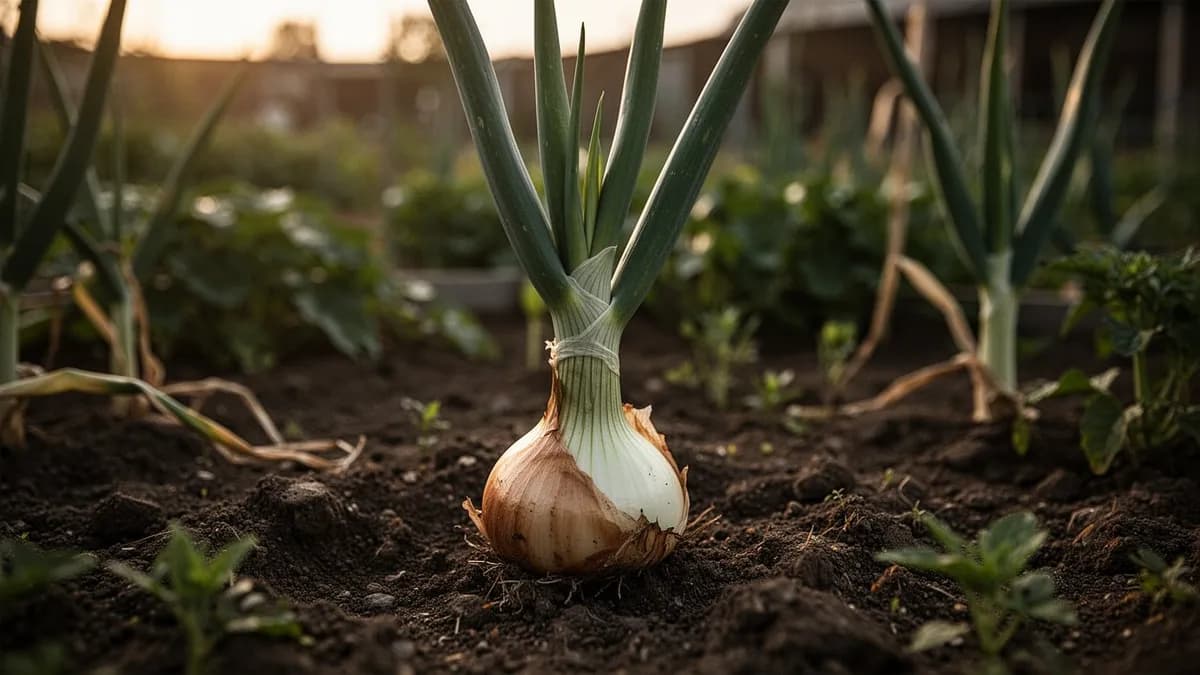
Egyptian Walking Onion
Allium x proliferum
At a Glance
A fascinating perennial onion that produces clusters of small bulbils at the top of its stalks, which bend over and root where they touch ground. This walking habit allows the plant to slowly migrate across the garden over the years. The top-set bulbils, green stalks, and underground bulbs are all edible with a strong, pungent onion flavor. Extremely cold-hardy and virtually maintenance-free once established in the perennial garden.
Planting & Harvest Calendar
Growth Stages
From Seed to Harvest
Bulbil Planting
Days 0–21
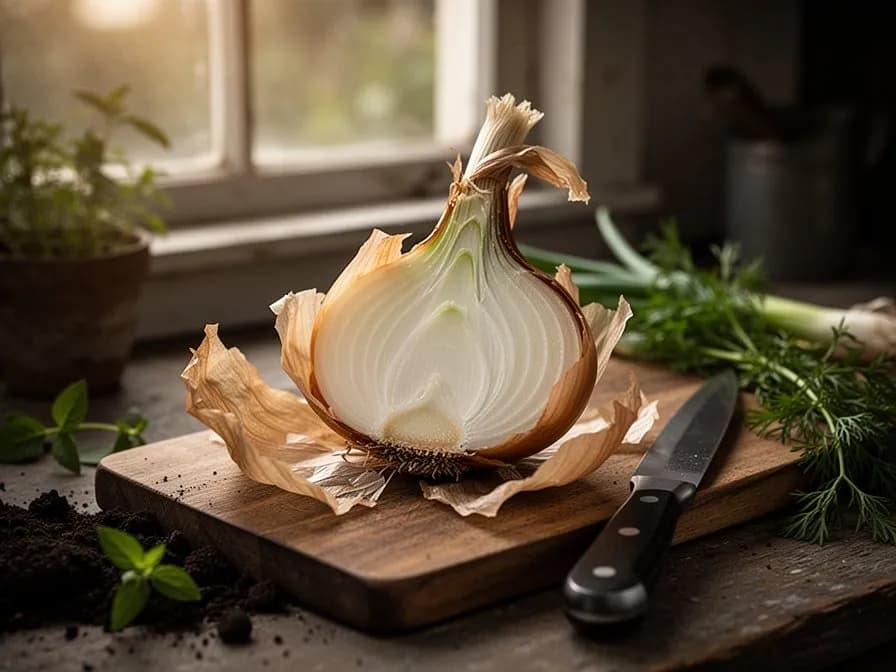
Topset bulbils or underground divisions are planted 2-5 cm deep in well-drained soil. Unlike most alliums, Egyptian walking onions are almost never grown from true seed. Bulbils begin rooting within 1-2 weeks and send up their first slender green shoots. Fall planting is ideal, allowing roots to establish before winter dormancy.
💡 Care Tip
Plant bulbils pointed end up, 15-20 cm apart, in autumn for the strongest spring establishment. Water gently at planting but avoid saturating the soil — bulbils rot easily in waterlogged conditions.
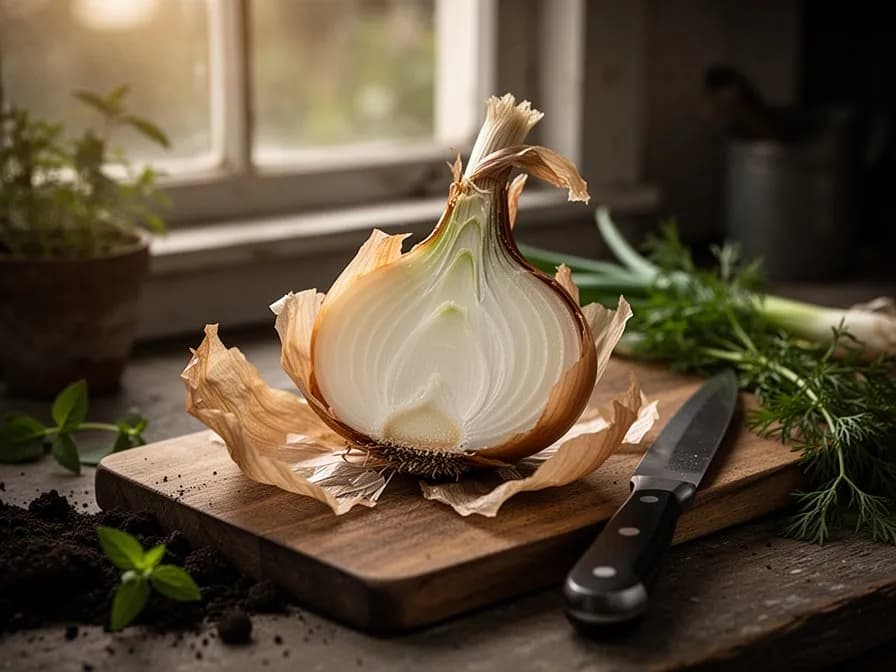
Topsets (bulbils) form where most alliums would flower — these aerial bulbs are the plant's primary means of reproduction
Monthly Care Calendar
What to do each month for your Egyptian Walking Onion
May
You are hereGrowth is vigorous and greens are at peak quality before flower stalks emerge. This is the last month for the best-flavored leaf harvests. Begin watching for the thick central stalks that signal topset production is starting.
Did You Know?
Fascinating facts about Egyptian Walking Onion
Despite the name 'Egyptian,' this onion has no confirmed connection to ancient Egypt. The name likely arose from 19th-century seed catalog marketing that associated unusual plants with exotic origins. Its true origin is believed to be somewhere in Central Asia or possibly a natural hybrid that appeared in European gardens.
Plant Egyptian walking onion bulbils or top-sets in fall or early spring, pressing them one to two inches deep into well-prepared soil. Space bulbils six to eight inches apart in rows twelve inches apart. These incredibly hardy perennials establish quickly and begin producing harvestable green stalks within the first season. They tolerate a wide range of conditions but perform best in full sun with well-drained, moderately fertile soil.
Once established, Egyptian walking onions require minimal care. They emerge early in spring as one of the first green alliums available and continue producing through fall. The tall hollow stalks grow two to three feet high before producing clusters of bulbils at the top in midsummer. The weight of the bulbils causes the stalks to bend over, and where they touch soil, the bulbils root and establish new plants, creating the characteristic walking habit.
Allow the plants to spread naturally for a self-maintaining perennial patch, or harvest excess bulbils to control expansion. Water during extended dry periods but otherwise these tough plants are drought-tolerant once established. Top-dress with compost annually in early spring to maintain soil fertility. Divide overcrowded clumps every three to four years by digging and replanting the underground bulbs in refreshed soil.
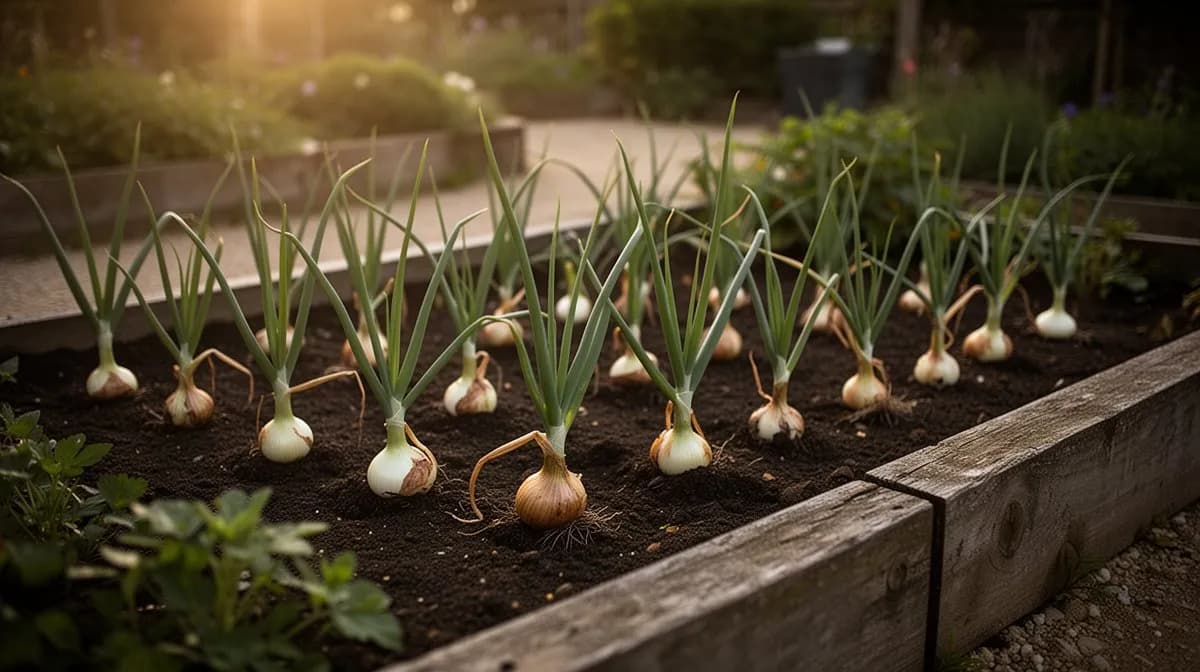
A dedicated patch becomes a permanent self-sustaining onion supply requiring almost zero maintenance
The Egyptian walking onion (Allium x proliferum) is a perennial allium believed to be a naturally occurring hybrid between the common onion (Allium cepa) and the Welsh bunching onion (Allium fistulosum). Despite its evocative common name, there is no reliable evidence linking this plant to ancient Egypt. The 'Egyptian' label most likely originated from 19th-century European and American seed catalogs that routinely attached exotic-sounding names to unusual plants to boost sales. Botanical evidence suggests the hybrid arose somewhere in Central Asia or in European gardens where both parent species were cultivated in close proximity.
The plant has been grown in European kitchen gardens since at least the 17th century, valued for its extreme hardiness, self-propagating nature, and the fact that it provides fresh allium flavor in three forms: pungent green tops in early spring, small topset bulbils in summer, and shallot-like underground bulbs year-round. It became a favorite of cottage gardeners and rural homesteads because it never needed replanting, never needed purchasing, and thrived on neglect. In North America, walking onions arrived with early European settlers and quickly became a fixture of frontier gardens from New England to the Midwest.
The plant's unique method of locomotion — bending its topset-laden stalks to the ground where the bulbils root and start new plants — earned it the 'walking' descriptor and fascinated gardeners for centuries. A single planting can persist and slowly migrate across a garden for decades without any human intervention. Today, Egyptian walking onions remain a cult favorite among permaculture practitioners, perennial-garden enthusiasts, and self-sufficiency gardeners who appreciate a reliable, zero-maintenance allium that produces abundantly year after year in zones 3-10.
Egyptian walking onions are not typically grown from true seed. Instead, propagate by planting top-set bulbils or dividing underground bulb clusters. Plant bulbils one to two inches deep in fall or early spring, spacing six to eight inches apart. They root quickly and begin growing within two to three weeks. For faster establishment, plant larger underground bulb divisions which produce harvestable stalks in the first season. Fall planting allows bulbils to establish roots over winter for vigorous spring growth. Share excess bulbils with other gardeners to spread this remarkable perennial.
Egyptian walking onions adapt to most soil types but prefer well-drained, moderately fertile soil with a pH of 6.0 to 7.0. Amend planting areas with two inches of aged compost at establishment. Annual top-dressing with compost in early spring maintains fertility for perennial patches. These plants are not heavy feeders and excessive nitrogen produces lush foliage at the expense of bulb and bulbil development. A balanced organic fertilizer applied once in spring is sufficient. Good drainage is essential to prevent bulb rot, especially during winter dormancy.
Check Your Zone
See if Egyptian Walking Onion is suitable for your location.
10°C – 24°C
50°F – 75°F
Egyptian walking onions are cool-season growers that produce their best foliage and bulb development at 10-24°C (50-75°F). They tolerate extreme cold during dormancy, surviving winter temperatures down to -40°C (-40°F) in zone 3 without protection. Summer heat above 30°C (86°F) slows leaf growth and can trigger early dormancy of the greens, though the underground bulbs remain viable. The plant thrives in the temperature swings of continental climates and performs best where springs are cool and long.
Common issues affecting Egyptian Walking Onion and how to prevent and treat them organically.
The walking habit can make Egyptian walking onions invasive in small gardens if not managed. Harvest excess bulbils before they root to control spread, or grow in a dedicated perennial bed with clear boundaries. Floppy stalks in mid-season are normal as the weight of developing bulbils causes bending; this is the natural propagation mechanism. Sparse bulbil production can result from insufficient sun or overly rich soil. Underground bulbs may be small in the first year; allow two to three years for substantial bulb development. These onions rarely have serious pest or disease issues.
Egyptian walking onions serve as excellent perennial companion plants for carrots and tomatoes, helping deter carrot rust fly and aphids with their strong scent. Plant at the edges of perennial beds where their walking habit adds interest without invading annual crop rows. They make effective border plants around orchard trees, deterring browsing animals with their pungent scent. Avoid planting near peas and beans, as alliums inhibit legume growth. Their early spring emergence provides ground cover before other perennials wake up.
- 1Start with topset bulbils or divisions from an established colony, not seed. Egyptian walking onions rarely produce true seed, and even when they do, germination is unreliable. Bulbils planted in autumn establish the fastest and emerge strongly the following spring.
- 2Choose a permanent location with full sun and well-drained soil. These are long-lived perennials that will occupy the same spot for decades. Raised beds or slopes with excellent drainage are ideal — the underground bulbs rot in waterlogged winter soil.
- 3Give them room to walk. Plant colonies where they have space to spread naturally, or plan to harvest topsets regularly to contain them. A dedicated perennial allium bed alongside chives and garlic chives works beautifully.
- 4Harvest greens by cutting outer leaves at the base rather than pulling entire plants. Take no more than one-third of the foliage at a time to keep the plant producing vigorously. The hollow leaves regrow quickly in cool weather.
- 5Divide congested underground clumps every 3-4 years in early spring or autumn. Lift the entire clump, separate into individual bulbs or small clusters, and replant immediately at the original depth and spacing. This reinvigorates production.
- 6Use topset bulbils at every stage. Tiny green bulbils are mild and can be sliced into salads. Mature reddish bulbils are pungent and perfect for pickling or cooking. Dried bulbils store for months in a cool, dry place for autumn planting.
- 7Egyptian walking onions are remarkably pest- and disease-free. Their strong allium oils repel most insects, and the perennial root system resists the onion maggot that devastates annual onion crops. Avoid overhead watering to prevent occasional downy mildew in humid climates.
- 8In zones 3-5, apply a light straw mulch after the ground freezes in autumn. Remove mulch in early spring to let the soil warm quickly — walking onions break dormancy earlier when they feel the warming sun directly on the soil surface.
Egyptian walking onions offer three harvestable parts throughout the season. Snip green hollow stalks anytime they reach eight inches or taller for use like scallions. Harvest the top-set bulbils when they are plump and beginning to develop papery skins in mid to late summer; these have the strongest flavor. Dig underground bulbs in fall or early spring when they reach one to two inches in diameter. The underground bulbs are smaller than regular onions but intensely flavored. Always leave enough bulbils and plants to maintain the perennial patch.
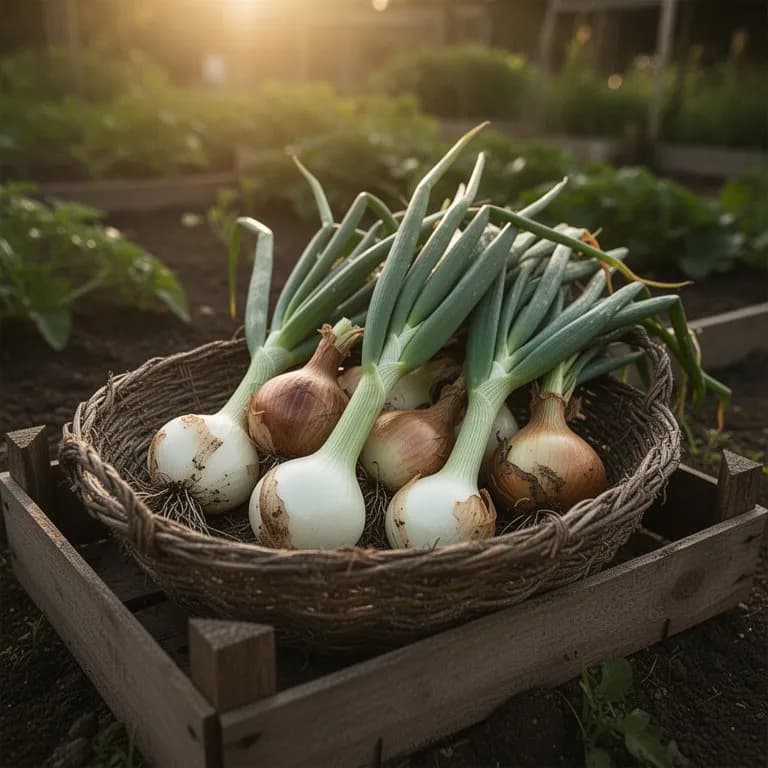
Every part is edible — topset bulbils, hollow green leaves, and the underground shallot-like bulbs
Fresh green stalks store in the refrigerator for up to two weeks wrapped in damp paper towels. Top-set bulbils keep at room temperature in a mesh bag for several weeks, or refrigerate for up to two months. Underground bulbs store like regular onions in a cool, dry, well-ventilated location for one to two months. For freezing, chop green stalks and freeze in small portions. Bulbils and underground bulbs can be pickled in vinegar for tangy condiments. Dehydrate sliced bulbils at 125 degrees Fahrenheit for a pungent dried seasoning.
Plan your garden with ease
Love growing Egyptian Walking Onion? Use our free garden planner to design your beds, track planting dates, and get personalized care reminders.
Nutritional Info
Per 100g serving
40
Calories
Health Benefits
- Rich in quercetin and other flavonoid antioxidants concentrated in the outer layers of the bulbils, which may help reduce inflammation and support cardiovascular health
- Good source of vitamin C, providing approximately 13% of the daily value per 100g of greens, supporting immune function year-round
- Contains allicin and other organosulfur compounds when crushed or chopped, the same bioactive compounds found in garlic that have demonstrated antimicrobial and blood-pressure-lowering properties
- Provides chromium, a trace mineral involved in insulin signaling and blood sugar regulation, in higher concentrations than many common vegetables
- The green tops are a good source of vitamin K, essential for blood clotting and bone metabolism, similar to scallions and chives
- Low calorie density with approximately 40 calories per 100g while providing meaningful amounts of dietary fiber, folate, and manganese
💰 Why Grow Your Own?
Egyptian walking onions are a one-time investment that pays dividends forever. A few starter bulbils ($5-10 from a specialty nursery or free from a fellow gardener) multiply into a permanent, self-sustaining colony within 2-3 years. Considering that fresh scallions cost $1-3 per bunch and specialty shallots run $6-12 per pound at farmers markets, a well-established walking onion patch easily saves $30-60 per year in fresh allium purchases — and the savings compound every year as the colony expands with zero additional cost.
Quick Recipes
Simple recipes using fresh Egyptian Walking Onion
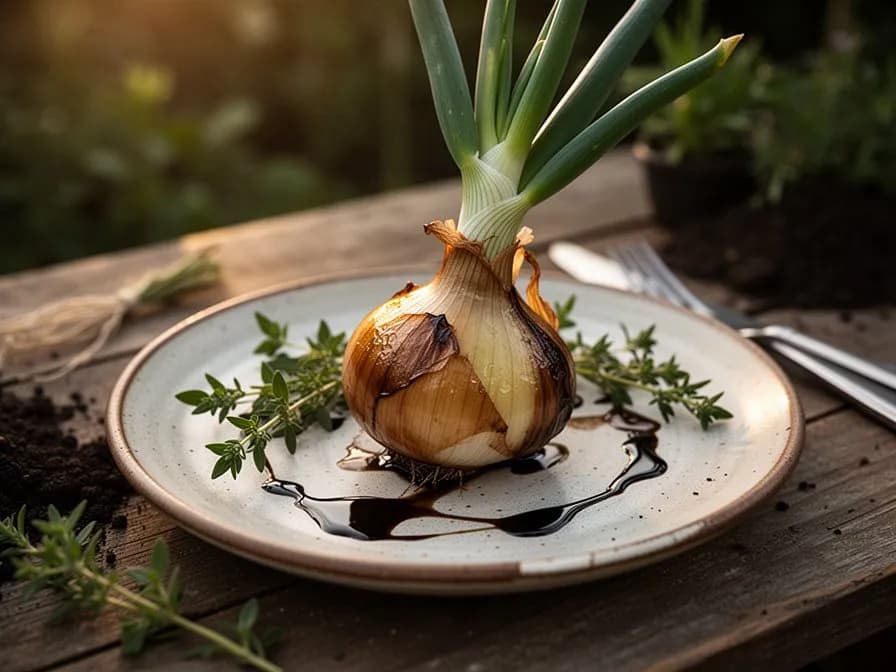
Pickled Walking Onion Bulbils
15 min + 1 weekTiny topset bulbils pickled in a tangy brine with mustard seed and bay leaf — they transform into crisp, complex cocktail onions far superior to anything from a jar. Perfect on charcuterie boards, in martinis, or as a pungent garnish.
Walking Onion Green Pancakes
25 minA riff on Chinese scallion pancakes using the robust hollow greens of Egyptian walking onions. The stronger onion flavor and slightly meatier texture create a more savory, deeply flavored version of this classic street food.
Walking Onion Compound Butter
10 minFinely chopped walking onion greens and minced bulbils folded into softened butter with a pinch of flaky salt. Melted over grilled steak, tossed with pasta, or spread on crusty bread, this keeps the complex allium flavor on hand all week.
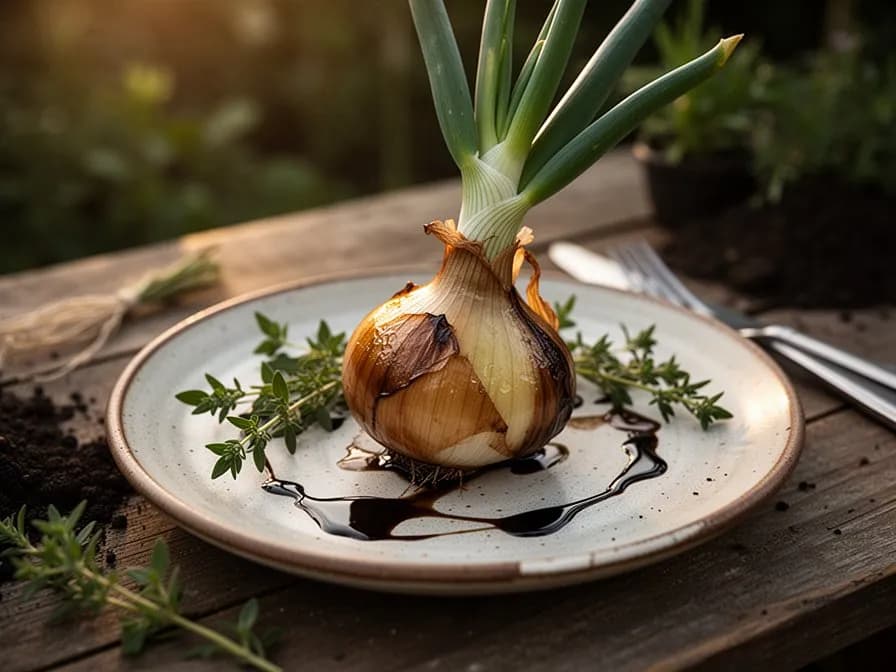
Pickled topset bulbils make tangy cocktail onions with a complex shallot-like depth of flavor
Yield & Spacing Calculator
See how many Egyptian Walking Onion plants fit in your garden bed based on the recommended 20cm spacing.
36
Egyptian Walking Onion plants in a 4×4 ft bed
6 columns × 6 rows at 20cm spacing
Popular Varieties
Some of the most popular egyptian walking onion varieties for home gardeners, each with unique characteristics.
Red Egyptian
Reddish-skinned variety with particularly strong flavor in both bulbils and underground bulbs, very cold-hardy.
Catawissa
Historic variety sometimes producing two tiers of bulbils on the same stalk, creating a dramatic tiered appearance.
McCullar White Top-Set
White-skinned selection with milder flavor than red types, good for fresh eating and pickling.
Every part of the Egyptian walking onion is edible with an intensely pungent onion flavor. Use the green hollow stalks like scallions in salads, soups, and stir-fries. The top-set bulbils have the strongest flavor and excel in pickling, sauces, and any recipe calling for shallots or pearl onions. Underground bulbs can be used anywhere a strong onion flavor is desired. Roast bulbils with root vegetables, add chopped stalks to omelets, or mince for marinades and dressings. The flavor mellows considerably with cooking.
When should I plant Egyptian Walking Onion?
Plant Egyptian Walking Onion in March, April, September, October. It takes approximately 90 days to reach maturity, with harvest typically in May, June, July, August, September.
What are good companion plants for Egyptian Walking Onion?
Egyptian Walking Onion grows well alongside Carrot, Tomato. Companion planting can improve growth, flavor, and natural pest control.
What hardiness zones can Egyptian Walking Onion grow in?
Egyptian Walking Onion thrives in USDA hardiness zones 3 through 9. With greenhouse protection, it may be grown in zones 1 through 10.
How much sun does Egyptian Walking Onion need?
Egyptian Walking Onion requires Full Sun (6-8h+). This means at least 6-8 hours of direct sunlight daily.
How far apart should I space Egyptian Walking Onion?
Space Egyptian Walking Onion plants 20cm (8 inches) apart for optimal growth and air circulation.
What pests and diseases affect Egyptian Walking Onion?
Common issues include Onion Thrips, Onion Maggot, Downy Mildew, White Rot. Prevention through good garden practices like crop rotation, proper spacing, and companion planting is the best approach. See the detailed pests and diseases section above for symptoms, prevention, and treatment for each.
How do I store Egyptian Walking Onion after harvest?
Fresh green stalks store in the refrigerator for up to two weeks wrapped in damp paper towels. Top-set bulbils keep at room temperature in a mesh bag for several weeks, or refrigerate for up to two months. Underground bulbs store like regular onions in a cool, dry, well-ventilated location for one t...
What are the best Egyptian Walking Onion varieties to grow?
Popular varieties include Red Egyptian, Catawissa, McCullar White Top-Set. Each has unique characteristics suited to different growing conditions and culinary preferences. See the varieties section above for detailed descriptions.
What soil does Egyptian Walking Onion need?
Egyptian walking onions adapt to most soil types but prefer well-drained, moderately fertile soil with a pH of 6.0 to 7.0. Amend planting areas with two inches of aged compost at establishment. Annual top-dressing with compost in early spring maintains fertility for perennial patches. These plants a...
How do Egyptian walking onions actually 'walk' across the garden?
The plant produces clusters of small bulbils (topsets) at the top of tall stalks instead of flowers. As the bulbils mature and grow heavier, the stalk bends under their weight until the cluster touches the ground. The bulbils then root into the soil and grow into new plants roughly 30-60 cm from the parent. Over several seasons, a colony can migrate several meters across a garden bed through this repeated topple-and-root cycle.
Are Egyptian walking onions actually from Egypt?
Almost certainly not. Despite the common name, there is no reliable historical or botanical evidence connecting this plant to ancient Egypt. The name likely originated from 19th-century seed catalogs that used exotic names to market unusual plants. The plant is believed to be a natural hybrid between the common onion and the Welsh bunching onion, probably arising in Central Asian or European gardens where both parents grew nearby.
Which parts of the Egyptian walking onion are edible?
Every part of the plant is edible. The hollow green leaves can be used like scallions or chives with a stronger onion punch. The topset bulbils can be eaten raw, pickled, or cooked — they have a concentrated shallot-like flavor. The underground bulbs taste like small pungent shallots and are excellent for cooking. Even the young green stalks before topsets form can be sliced and used as robust scallion substitutes.
How do I keep Egyptian walking onions from taking over my garden?
The simplest method is to harvest all topset bulbil clusters before the stalks bend to the ground and root. Check plants regularly in midsummer and clip or pick off mature topset clusters for kitchen use. You can also grow them in a raised bed or contained area with defined borders. If the colony has already spread, dig up unwanted plants in spring or autumn and share them with fellow gardeners.
Can I grow Egyptian walking onions in containers?
Yes, though they are better suited to garden beds. Use a container at least 30 cm deep and wide with excellent drainage. Plant 3-5 bulbils per pot in well-draining potting mix. Place in full sun and keep soil moist but never waterlogged. Container plants produce fewer and smaller topsets than in-ground colonies. Repot or divide every 2 years as the underground bulb clusters become congested.
When is the best time to plant Egyptian walking onions?
Autumn is the ideal planting time. Bulbils planted in September or October develop strong root systems before winter dormancy and emerge vigorously the following spring. Spring planting also works but produces slower establishment and a smaller first-year harvest. Plant bulbils pointed end up, 2-5 cm deep and 15-20 cm apart, in well-drained soil with full sun.
Ready to Grow Egyptian Walking Onion?
Add Egyptian Walking Onion to your garden plan and start designing your perfect layout.

Vladimir Kusnezow
Gardener and Software Developer
Zone 6b gardener. Growing vegetables and fruits in soil and hydroponics for 6 years. I built PlotMyGarden to plan my own gardens.
Jump to Section