Mammoth Dill
Anethum graveolens 'Mammoth'
At a Glance
It's planting season for Mammoth Dill! Start planning your garden now.
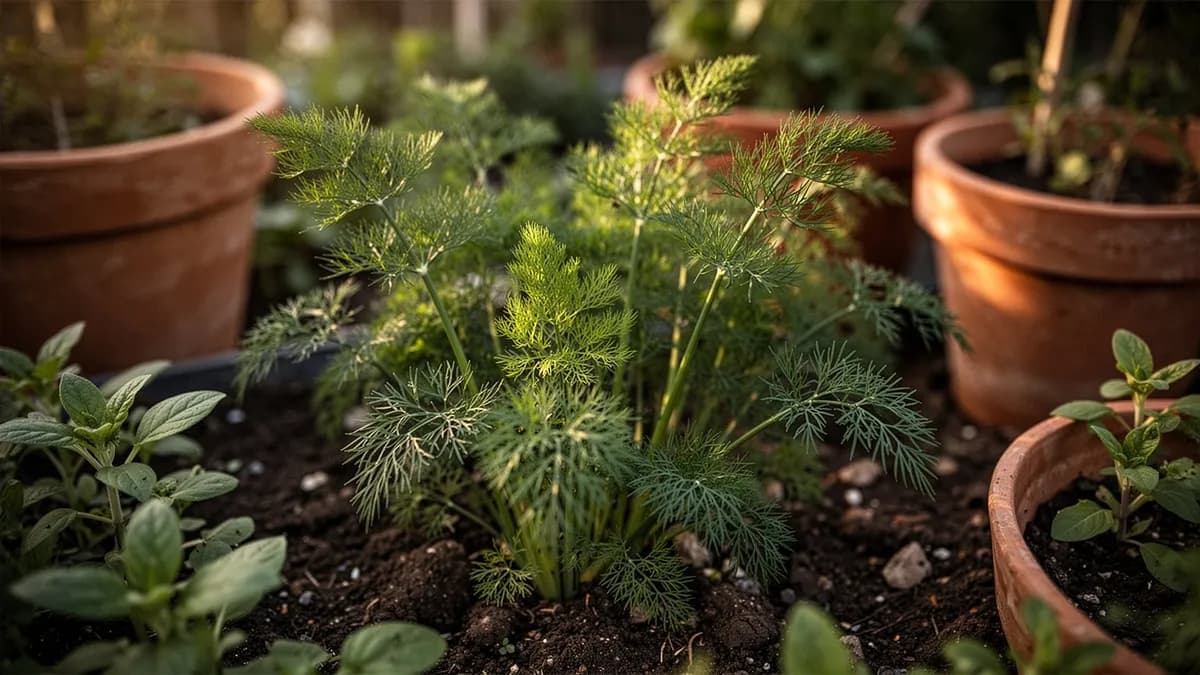
The tallest dill variety, reaching 4 to 5 feet with enormous seed heads perfect for making dill pickles at scale. Mammoth dill is the classic pickling variety, producing umbrella-sized flower heads that fit perfectly in wide-mouth canning jars. Stake plants or grow alongside tall crops for support in windy locations.
Planting & Harvest Calendar
Growth Stages
From Seed to Harvest
Seed Germination
Days 0–14
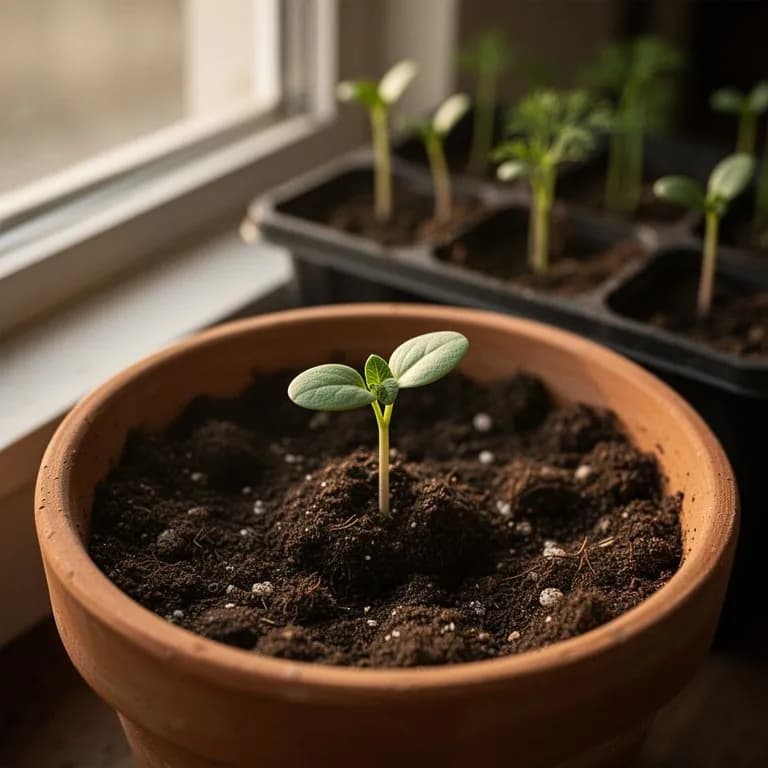
Dill seeds are slow to germinate compared to many herbs, typically taking 10-14 days in soil temperatures of 15-21°C (60-70°F). The tiny seeds require light to germinate and should be pressed gently into the surface rather than buried deeply. A single thread-like cotyledon emerges first, giving the seedling a grass-like appearance that is easy to mistake for a weed.
💡 Care Tip
Sow seeds no deeper than 6 mm and press lightly into moist soil. Keep the surface consistently moist with gentle misting — dill seeds dry out quickly and will fail to germinate if the soil crust hardens. Soaking seeds overnight in warm water can speed germination by 3-4 days.
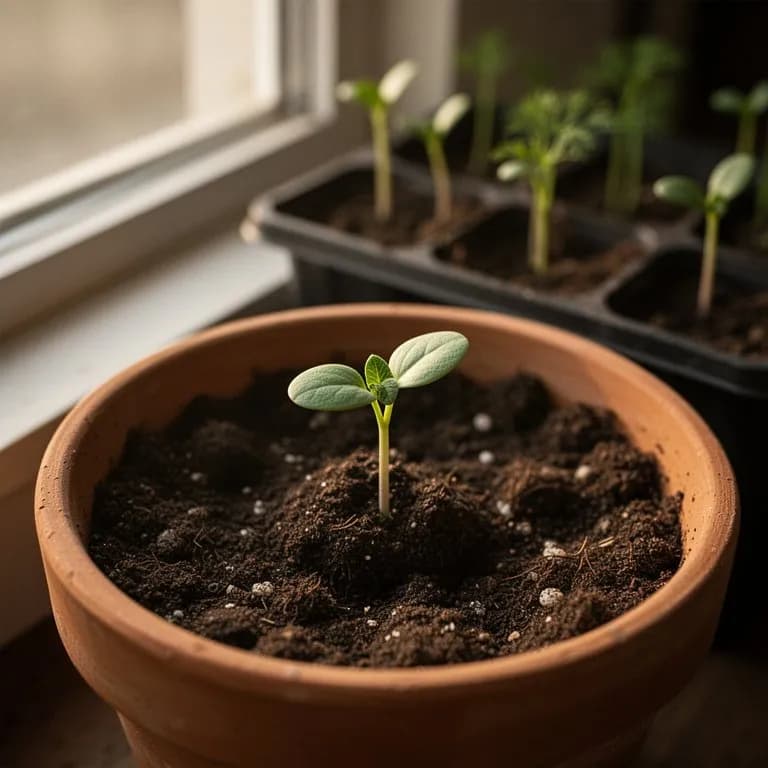
Dill seedlings emerge with slender grass-like leaves about 10 days after sowing
Monthly Care Calendar
What to do each month for your Mammoth Dill
May
You are hereSeeds germinate and seedlings establish rapidly in warming soil. Begin the second succession sowing for continuous harvest. Water regularly but avoid overwatering — dill prefers slightly dry conditions to soggy soil. Start harvesting outer fronds from early sowings once plants have at least five branches.
Did You Know?
Fascinating facts about Mammoth Dill
Mammoth dill is the tallest commonly grown dill variety, regularly reaching 120-150 cm (4-5 feet) in height — earning its name from its imposing stature in the garden. Its large flower umbels can span up to 25 cm across, dwarfing those of standard dill by nearly double.
Mammoth dill is the classic tall dill variety grown specifically for its enormous seed heads, which are the backbone of traditional dill pickle making. Plants grow 4 to 5 feet tall with large umbrella-shaped flower heads that fit perfectly in wide-mouth canning jars. Plant in full sun with well-drained soil with a pH of 5.5 to 7.5. Direct sow seeds as soon as the soil can be worked in spring.
Dill has a taproot and transplants poorly, so always direct sow. Space seeds 6 to 12 inches apart in rows 18 inches apart. For a continuous supply of fresh dill weed (leaves), succession sow every 3 weeks. For pickle-sized seed heads, sow a single large planting in spring timed so heads mature during cucumber harvest season, typically 65 to 70 days later.
Mammoth dill's tall stature means it may need support in windy locations. Plant in blocks rather than single rows for mutual support, or stake individual plants. The hollow stems are strong but can snap in heavy rain or wind. Water moderately; dill is fairly drought-tolerant but produces more lush foliage with consistent moisture. Allow some plants to self-sow for a perpetual dill patch.
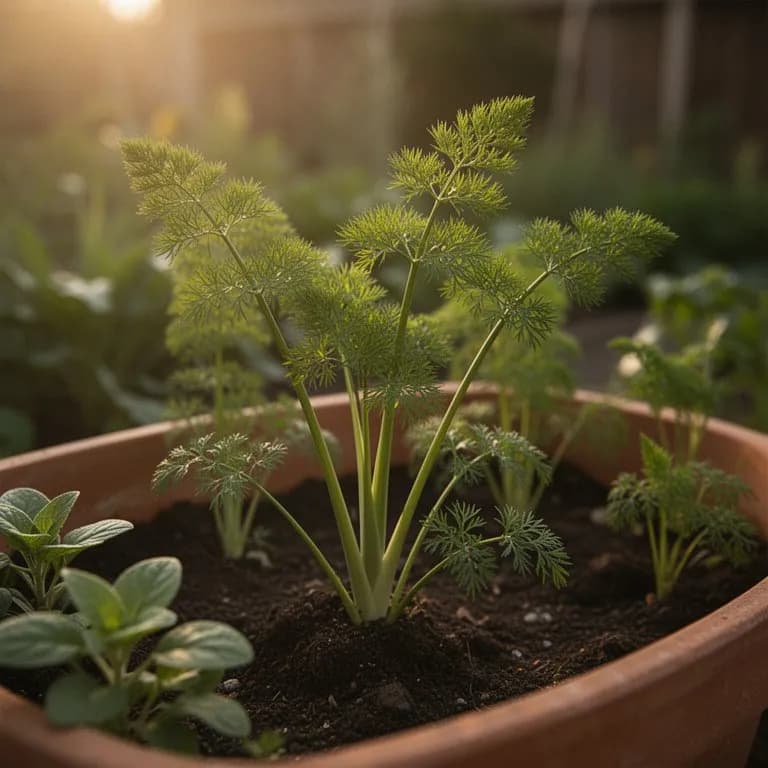
The fine, thread-like foliage of Mammoth dill provides dill weed for months of continuous harvest
Dill (Anethum graveolens) is native to the eastern Mediterranean region and western Asia, with its center of origin likely in the area spanning modern-day Turkey, Iran, and the Caucasus. It is one of the oldest cultivated herbs, with archaeological evidence of dill seeds found in late Neolithic Swiss lake dwellings dating to approximately 4000 BCE. The ancient Egyptians were among the first to document its medicinal properties — the Ebers Papyrus of 1550 BCE prescribes dill as a remedy for headaches and digestive complaints.
Dill was highly valued in the ancient Greek and Roman worlds. Greek athletes rubbed dill oil on their bodies before competitions, and Roman gladiators were fed dill-infused meals for strength. The herb spread across Europe along Roman trade routes and became a staple of medieval gardens, where it was grown for both culinary and supposed magical purposes — including protection against witchcraft and the evil eye. Charlemagne reportedly ordered dill to be grown in all royal gardens throughout the Holy Roman Empire.
The Mammoth variety (also known as Long Island Mammoth or Mammoth Long Island) was developed by American seed growers in the 19th century, selected specifically for its exceptional height, large seed heads, and vigorous foliage production. It became the preferred variety for the burgeoning American pickling industry centered in the eastern United States, where its large umbels provided the ideal combination of aromatic seeds and flavorful fronds for packing into pickle jars.
Today, dill is cultivated worldwide from Scandinavia to India, and Mammoth remains one of the most popular open-pollinated varieties for home gardeners. It is especially prized in Eastern European, Scandinavian, and Middle Eastern cuisines, where it appears in everything from pickled herring and borscht to tzatziki and rice dishes. India is the world's largest producer of dill, where it is known as 'sowa' and used both as a culinary herb and in traditional Ayurvedic medicine for digestive and respiratory ailments.
Direct sow Mammoth dill seeds outdoors as soon as the soil can be worked in spring. Scatter seeds on the surface and press in lightly or cover with a quarter inch of fine soil. Dill prefers cool soil for germination. Seeds germinate in 10 to 14 days. Thin to 6 to 12 inches apart. For pickle-making, sow a large block timed to mature when cucumbers are ready. For continuous dill weed, succession sow every 3 weeks from early spring through mid-summer.
Mammoth dill grows well in average to rich, well-drained soil with a pH of 5.5 to 7.5. It tolerates a range of soil types from sandy to clay. Amend with compost before sowing for best results. A light application of balanced fertilizer at planting provides adequate nutrition for the season. Avoid excessive nitrogen that promotes tall, weak stems prone to lodging. Keep soil moderately moist for lush foliage production.
Check Your Zone
See if Mammoth Dill is suitable for your location.
15°C – 25°C
59°F – 77°F
Dill is a cool-season herb that thrives in moderate temperatures. Seeds germinate in soil as cool as 10°C (50°F) and young plants tolerate light frost down to -2°C (28°F). The ideal growing range of 15-25°C (60-77°F) produces the best foliage flavor and delays bolting. When temperatures consistently exceed 27°C (80°F), dill bolts rapidly to flower, reducing foliage harvest. In hot climates, plant dill in partial afternoon shade and use succession sowing every 3 weeks to ensure a continuous supply before each planting bolts.
Common issues affecting Mammoth Dill and how to prevent and treat them organically.
Lodging (falling over) is the primary issue with Mammoth dill due to its exceptional height. Provide support in windy locations or grow in protected areas. Early bolting in hot weather reduces leaf harvest; sow in cool seasons for best foliage production. Self-sowing can become aggressive if seed heads are left to shatter. Dill and fennel should not be planted near each other, as they can cross-pollinate and produce off-flavored hybrid offspring.
Dill attracts many beneficial insects including parasitic wasps, ladybugs, and hover flies. Plant near brassicas like cabbage and broccoli, where the attracted predators help control cabbage worms. Dill is a classic companion for cucumbers, which benefit from improved pollination. Keep away from carrots and tomatoes, as dill may inhibit their growth. Never plant near fennel to prevent cross-pollination.
- 1Direct-sow dill rather than transplanting whenever possible. Dill develops a long, sensitive taproot that does not recover well from disturbance. If you must start indoors, use deep biodegradable pots (at least 10 cm) that can be planted directly into the soil without removing the seedling.
- 2Sow seeds in succession every 3-4 weeks from early spring through mid-summer for a continuous supply of tender dill weed. Each planting provides prime foliage for about 4-6 weeks before bolting, so staggered sowings ensure you always have fresh, leafy plants available.
- 3Do not plant Mammoth dill near fennel. The two species are closely related and will cross-pollinate readily, producing hybrid seeds with muddled, unpleasant flavors in both crops. Keep them at least 100 meters apart if saving seeds for replanting.
- 4Harvest dill weed in the morning after the dew has dried but before the midday heat. Essential oil concentration — and therefore flavor — peaks in cool morning conditions. Cut entire stems rather than picking individual leaves for the most efficient harvest.
- 5Stake or cage Mammoth dill plants in exposed or windy locations. At 120-150 cm tall with heavy flower heads, the hollow stems are prone to snapping in strong wind or after heavy rain. A simple ring of twine around a few bamboo stakes provides adequate support.
- 6Allow at least two or three flower heads to mature and drop seed each season for a self-sowing colony. Mammoth dill volunteers readily in loose, well-drained soil, and the self-sown seedlings often perform better than carefully tended transplants because their taproots develop undisturbed.
- 7Grow dill near cucumbers, lettuce, onions, and brassicas as a companion plant. The large flower umbels attract parasitic wasps, lacewings, and hoverflies that prey on aphids, cabbage worms, and other common garden pests — providing natural biological pest control.
- 8Freeze fresh dill for the best preserved flavor. Spread chopped fronds on a baking sheet, freeze for one hour, then transfer to freezer bags. Frozen dill retains its bright color and flavor for 6-8 months, far superior to dried dill which loses most of its delicate essential oils.
- 9Water consistently but moderately — dill prefers evenly moist soil but is surprisingly drought-tolerant once established and will bolt prematurely in waterlogged conditions. A deep watering once or twice per week is better than frequent shallow watering.
- 10If swallowtail butterfly caterpillars appear on your dill, consider planting a few extra sacrificial plants rather than removing them. These striking green-and-black striped larvae transform into beautiful black swallowtail butterflies and rarely cause enough damage to affect your harvest significantly.
Harvest dill leaves (dill weed) any time after plants have several sets of feathery foliage. Snip leaves from the top of the plant. For seed heads used in pickling, harvest when seeds have turned from green to tan-brown but before they shatter. Cut the entire flower head with 6 to 8 inches of stem and place in canning jars with cucumbers, or hang upside down to dry. Fresh green seed heads are preferred for pickles, as they contribute both seeds and aromatic dill flavor.
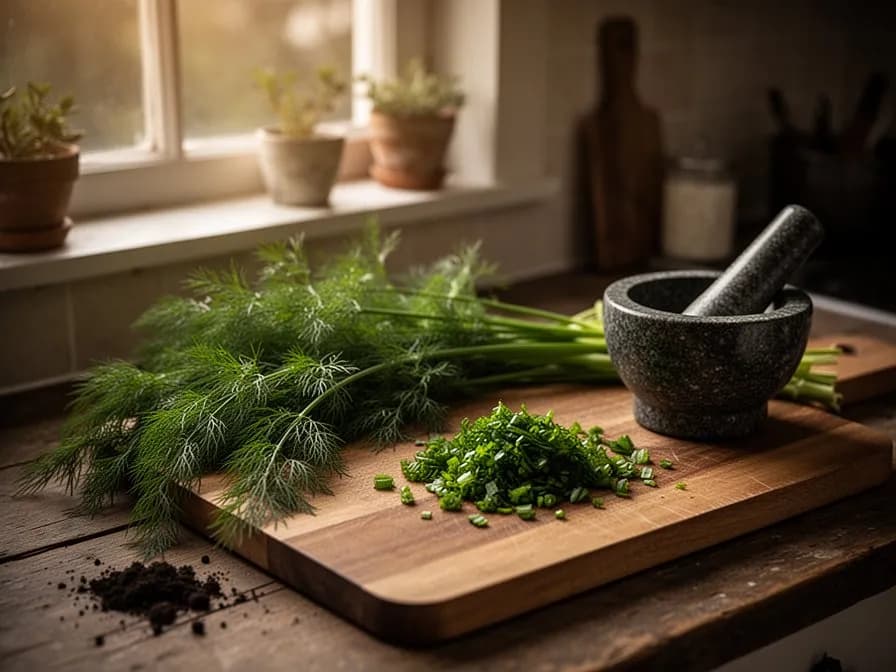
Dill seeds form in flat oval pairs on the drying flower heads — each umbel can produce hundreds of seeds
Fresh dill weed stores in the refrigerator for about a week in a damp paper towel. For longer storage, freeze chopped dill in ice cube trays with water or oil. Dill seed heads for pickling should be used fresh when possible; freeze any extra in sealed bags. Dried dill weed retains mild flavor for 6 months in airtight jars. Dill seeds, once fully dried, store for 3 to 4 years in airtight containers. Toast seeds briefly before using to intensify flavor.
Plan your garden with ease
Love growing Mammoth Dill? Use our free garden planner to design your beds, track planting dates, and get personalized care reminders.
Nutritional Info
Per 100g serving
43
Calories
Health Benefits
- Exceptionally rich in vitamin A — 100g of fresh dill provides 154% of the daily value, primarily as beta-carotene, supporting eye health, immune function, and skin integrity
- Outstanding vitamin C content at 85mg per 100g (94% DV), making dill one of the most vitamin C-dense herbs and a powerful antioxidant that protects cells from oxidative damage
- Excellent source of manganese providing 1.26mg per 100g (55% DV), a trace mineral essential for bone formation, blood clotting, and metabolism of amino acids and carbohydrates
- Contains significant iron at 6.59mg per 100g (37% DV), making it one of the most iron-rich herbs — useful for supplementing plant-based diets when used generously in cooking
- Rich in calcium with 208mg per 100g (16% DV), contributing to bone health and muscle function when dill is used as a regular dietary herb rather than occasional garnish
- Provides folate (150mcg, 38% DV) and riboflavin (0.3mg, 23% DV), B vitamins essential for energy metabolism and healthy red blood cell production
💰 Why Grow Your Own?
Fresh dill weed is one of the most expensive herbs at the grocery store, typically costing $2-4 for a small bunch (about 30g) that wilts within a few days. A single $2-3 seed packet of Mammoth dill produces 15-25 plants, each yielding multiple harvests of fronds over several weeks — easily 500g or more of fresh dill per plant over the season, worth $30-60 at retail prices. The large seed heads also provide dill seeds for pickling and spice use, replacing $4-6 jars of dried dill seed. Once established, Mammoth dill self-sows prolifically, giving you a permanent free supply of this premium herb year after year without any additional seed cost.
Quick Recipes
Simple recipes using fresh Mammoth Dill
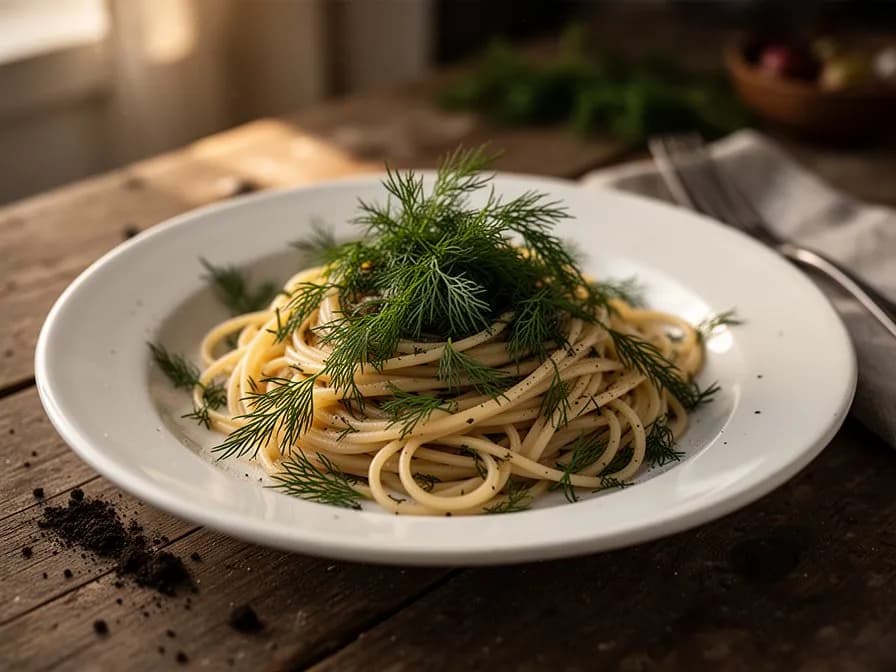
Classic Refrigerator Dill Pickles
20 min + 48 hrs chillingCrisp, tangy dill pickles made without canning equipment — simply pack fresh cucumbers with Mammoth dill, garlic, and a simple brine, then refrigerate. Ready to eat in 48 hours and perfect for showcasing your homegrown dill fronds and seed heads together.
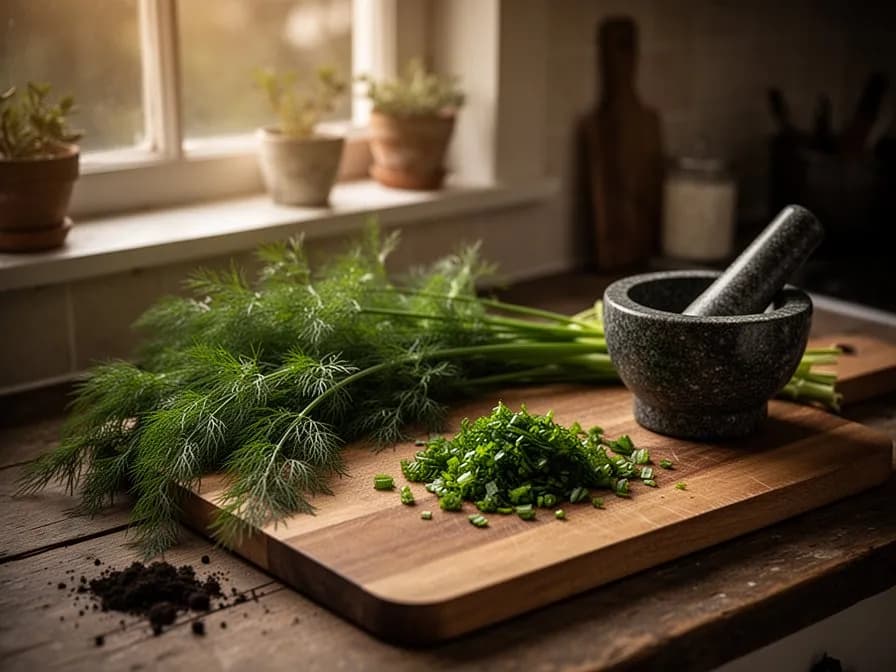
Scandinavian Dill and Lemon Salmon
25 minPan-seared salmon fillets finished with a bright, creamy dill and lemon sauce — a celebration of the timeless Nordic pairing of fresh dill and salmon. The sauce comes together in minutes and transforms a simple weeknight dinner into something elegant.
Herbed Yogurt Dill Dip (Tzatziki-Style)
10 minA cool, refreshing dip packed with fresh dill, cucumber, and garlic — perfect for summer gatherings alongside pita bread, raw vegetables, or grilled meats. Uses a generous amount of fresh dill weed for maximum herbal flavor.
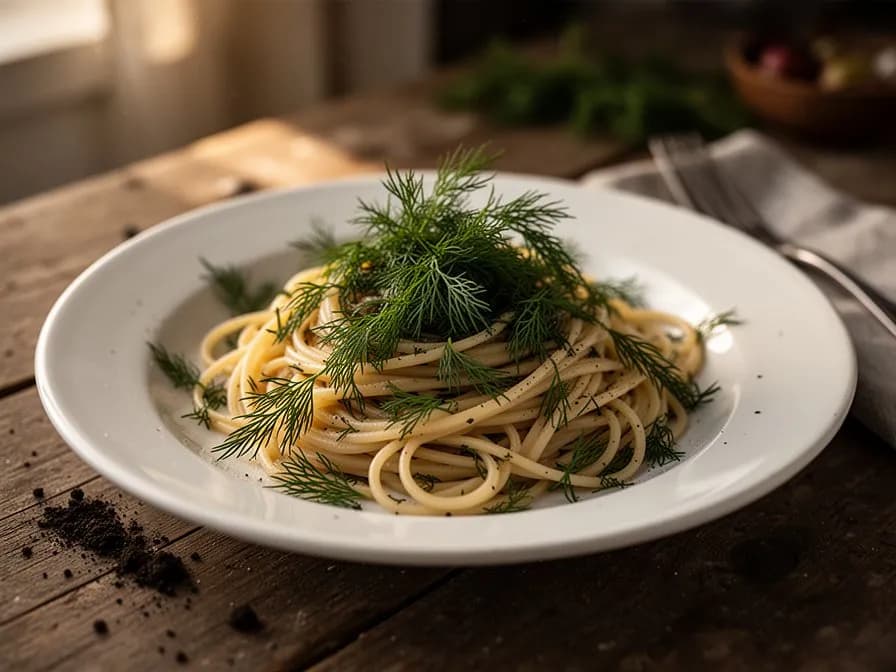
The quintessential use for Mammoth dill — homemade dill pickles with fresh fronds and seed heads
Yield & Spacing Calculator
See how many Mammoth Dill plants fit in your garden bed based on the recommended 30cm spacing.
16
Mammoth Dill plants in a 4×4 ft bed
4 columns × 4 rows at 30cm spacing
Popular Varieties
Some of the most popular mammoth dill varieties for home gardeners, each with unique characteristics.
Mammoth
The classic tall pickling dill at 4 to 5 feet with enormous seed heads. Fast-growing and vigorous. The standard variety for dill pickle production.
Bouquet
A smaller variety at 2 to 3 feet with proportionally large seed heads. Better for small gardens and containers. Good dual-purpose variety for both leaves and seeds.
Fernleaf
A compact dwarf variety at 18 inches, bred for leaf production rather than seeds. Very slow to bolt. Best for continuous dill weed harvest rather than pickling.
Mammoth dill serves dual culinary purposes: the feathery leaves (dill weed) and the seed heads are both valuable. Fresh dill weed is essential in Scandinavian cured salmon (gravlax), potato salads, cucumber salads, and creamy dill sauces. The seed heads are indispensable for traditional kosher dill pickles, used fresh or dried in the brine. Dill seeds flavor breads, soups, and fish dishes. Pair dill with salmon, potatoes, cucumbers, eggs, and cream-based sauces.
When should I plant Mammoth Dill?
Plant Mammoth Dill in April, May. It takes approximately 40 days to reach maturity, with harvest typically in June, July, August.
What are good companion plants for Mammoth Dill?
Mammoth Dill grows well alongside Cucumber, Cabbage, Lettuce. Companion planting can improve growth, flavor, and natural pest control.
What hardiness zones can Mammoth Dill grow in?
Mammoth Dill thrives in USDA hardiness zones 3 through 11. With greenhouse protection, it may be grown in zones 1 through 12.
How much sun does Mammoth Dill need?
Mammoth Dill requires Full Sun (6-8h+). This means at least 6-8 hours of direct sunlight daily.
How far apart should I space Mammoth Dill?
Space Mammoth Dill plants 30cm (12 inches) apart for optimal growth and air circulation.
What pests and diseases affect Mammoth Dill?
Common issues include Parsleyworm (Black Swallowtail Caterpillar), Aphids. Prevention through good garden practices like crop rotation, proper spacing, and companion planting is the best approach. See the detailed pests and diseases section above for symptoms, prevention, and treatment for each.
How do I store Mammoth Dill after harvest?
Fresh dill weed stores in the refrigerator for about a week in a damp paper towel. For longer storage, freeze chopped dill in ice cube trays with water or oil. Dill seed heads for pickling should be used fresh when possible; freeze any extra in sealed bags. Dried dill weed retains mild flavor for 6 ...
What are the best Mammoth Dill varieties to grow?
Popular varieties include Mammoth, Bouquet, Fernleaf. Each has unique characteristics suited to different growing conditions and culinary preferences. See the varieties section above for detailed descriptions.
What soil does Mammoth Dill need?
Mammoth dill grows well in average to rich, well-drained soil with a pH of 5.5 to 7.5. It tolerates a range of soil types from sandy to clay. Amend with compost before sowing for best results. A light application of balanced fertilizer at planting provides adequate nutrition for the season. Avoid ex...
What is the difference between Mammoth dill and regular dill?
Mammoth dill (also called Long Island Mammoth) is a taller, more vigorous variety of common dill (Anethum graveolens). It typically reaches 120-150 cm compared to 60-90 cm for standard varieties like Bouquet or Fernleaf. Mammoth produces larger flower umbels (up to 25 cm across), making it the preferred choice for pickling since the big seed heads pack neatly into jars. The flavor is essentially the same as other dill varieties, but the larger plant size means more foliage per plant for fresh use.
How do I prevent dill from bolting too quickly?
Dill is naturally a fast-bolting annual, especially in warm weather, but you can extend the foliage harvest by pinching off the central flower bud as soon as it appears, growing in partial afternoon shade during hot summers, keeping plants well-watered, and choosing slow-bolt varieties like Fernleaf for foliage production alongside Mammoth for seed heads. The most reliable strategy is succession sowing — plant a new batch every 3-4 weeks so you always have young, leafy plants as older ones bolt.
Can I grow Mammoth dill in a container?
Yes, but use a deep container — at least 30 cm deep and 25 cm wide — to accommodate dill's long taproot. Use well-draining potting mix and place in full sun. Container-grown dill bolts faster than garden-grown due to root restriction and heat from the pot, so expect a shorter harvest window. Smaller varieties like Fernleaf are generally better suited to containers, but Mammoth works if you stake the tall stems and accept earlier bolting.
Is dill weed the same as dill seed in recipes?
No — they are different ingredients with distinct flavors and culinary uses. Dill weed (the feathery leaves) has a bright, delicate, grassy-anise flavor best added at the end of cooking or used raw in salads, sauces, and garnishes. Dill seed has a stronger, warmer, slightly bitter taste similar to caraway and is used during cooking in pickles, breads, soups, and spice blends. They are not interchangeable in recipes — using seed where weed is called for will produce an entirely different result.
Why is my dill turning yellow?
Yellowing dill can indicate several issues: overwatering or poor drainage causing root rot (the most common cause), nitrogen deficiency in poor soil, natural aging as the plant completes its life cycle and goes to seed, or aphid infestation draining the plant's resources. Check the soil moisture — dill prefers moist but not soggy conditions. Yellowing at the base while the top grows normally is often a sign of overwatering. If the entire plant yellows and it has already flowered, it is simply completing its natural annual life cycle.
Can I save seeds from Mammoth dill to plant next year?
Absolutely — Mammoth dill is an open-pollinated variety, so saved seeds grow true to type. Allow flower heads to mature fully on the plant until the seeds turn brown and begin to loosen. Cut the heads into a paper bag, let them dry for 1-2 weeks, then shake out the seeds. Store in a labeled airtight container in a cool, dark place. Dill seeds remain viable for 3-5 years. The only caution is to keep dill far from fennel, as they cross-pollinate easily and the resulting seeds produce plants with poor flavor.
Ready to Grow Mammoth Dill?
Add Mammoth Dill to your garden plan and start designing your perfect layout.

Vladimir Kusnezow
Gardener and Software Developer
Zone 6b gardener. Growing vegetables and fruits in soil and hydroponics for 6 years. I built PlotMyGarden to plan my own gardens.
Jump to Section